The Naturalist's Diary for April

From the The Naturalist’s Diary of  April 1826
The breath of Spring is on thee, Aspley Wood (near Woburn in Bedfordshire).
Each shoot of thine is vigorous, from the green,
Low-drooping larch, and full unfolded bud
Of sycamore, and beech, majestic queen!
With her tiara on, which crowns the scene
With beauty,–to the stern oak, on whose rind
The warmest suns and sweetest showers have been,
And soft voice of the fond Favonian wind:–
His thousand lingering leaves reluctantly unbind
But of all other trees, a clustering crowd
Bow their young tops rejoicingly to meet
The breeze, which yet not murmurs over-loud,
But wastes on Nature’s cheek its kisses sweet,
To woo her from dark winter;–the wild bleat
Of innocent lambs is on the passing gale,
Blending with pastoral bells; and at my feet,
From  yon warm wood the stockdove’s plaintive wail
Wins to the curious ear o’er the subjected vale.

                         Wiffen’s Aonian Hours.

            In this picturesque and beautiful description of the poet, the effects of Spring on forest scenery are faithfully delineated, and convey to the mind a vivid representation of the beauties to be observed by those who mark the gradual progress of vegetation. But in Nature, beauty is almost always combined with utility; and while the senses are feasted with the great variety of colours and odours abounding among flowers and plants, the contemplative mind naturally considers the beneficial effects that result from this beautiful combination of vegetable wonders. All is connected (observes M. Mirbel) in the vast system of the globe, and order emanates from the equipoise of conflicting phenomena. Animals carry off the oxygen of the atmosphere, replacing it by carbonic acid gas; and are thus at work to adulterate the air, and render it unfit for respiration. Vegetables take up acid gas, retain the carbon, and give out oxygen; and are thus purifying the air tainted by animals, and re-establishing the necessary proportions between its elements. In Europe, while our vegetables, stripped by the severity of the season of their foliage, no longer yield the air contributing to life, the salutary gas is borne to us by trade winds from the southernmost regions of America. Winds from all quarters of the world intermingle thus the various strata of the atmosphere, and keep its constitution uniform in all seasons, and at all elevations. The substances which are produced by the dissolution of animal and vegetable matter, diluted with water, are absorbed by plants, and constitute a portion of the nourishment by which they are maintained; plants in turn become the food of animals, and these again the prey of others which subsist on flesh. In spite of this perpetual state of war and destruction, nothing perishes, for all is regenerated. Nature has ordained that the two great divisions of organized beings should depend the one upon the other for support, and that both the life and death of individuals should be equally serviceable in keeping up the races of them.

            The arrival of the swallow, about the middle of this month, foretells the approach of summer, whose coming, however is too often retarded by the return of Winter in an angry mood, hurling his last hail-storms at the ‘proud-pied’ and flower-wreathed head of April.

            After the swallow, the next bird that appears is the nightingale (Motacilla luscinia) whose praises have been chimed by poets of every clime, and have occupied many a page in this month’s Diary of our previous volumes. In our climate, the nightingale seldom sings above six weeks, generally commencing the last week in April.
Nightingale

            That beautiful bird the wryneck next makes its appearance, preceding the cuckoo by a few days,–whose note that tells of the advancing Spring, and its floral pleasures, is hailed with delight by every lover of Nature.

            The other summer birds of passage which arrive this month, make their appearance in the following order: the ring-ousel; the redstart, frequenting old walls and ruinous edifices; the yellow wren, the swift, the white throat, the grasshopper lark, the smallest of the lark kind; and the willow wren, which, as well as house-wren, destroys many pernicious insects. The kite now approaches farmhouses, and villages in search of food and materials for constructing his nest; at other times, unless pinched by hunger, he cautiously avoids man, and all his haunts.
Blacksmith Lapwing

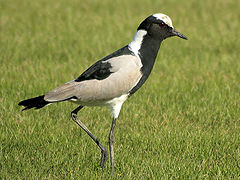
            In April, or early in the next month, the lapwing, or pee-wit (Tringa vanellus), lays her eggs, and sits, for she makes no nest. A few pairs will retire to heaths, downs, or ploughed fields during the season of incubation, but the greater portion of them fix their stations upon the banks of the dikes of marshes, or the great drains in our fenny districts. The feathered tribe are now busily engaged in forming their temporary habitations, and in rearing and maintaining their offspring.

            The vine expands its empurpled leaves. Honesty, or moonwort, is in flower; and the new sprung leaves of the sweet chestnut, in their turn, are playing in the breeze.

            Various kinds of insects are observed in this month; as the jumping spider, seen on garden walls; and the webs of other species of spiders are found on the bushes, palings, outsides of houses. The Iulus terrestris appear, and the death-watch beats early in the month. The wood-ant begins to construct its large conical nest. Little maggots, the first state of young ants, are now to be found in their nests. The shell-snail comes out in troops; and the stinging-fly and the red-ant appear.
            The mole-cricket is the most remarkable of the insect tribe seen about this time. The blue-flesh-fly, and the dragon-fly, are frequently observed towards the end of the month. The great variegated Libellula, which appears, principally, towards the decline of summer, is an animal of singular beauty. The cabbage butterfly, also, now appears. The black slug abounds at this season.

            Of the beetle tribe now on the wing, the Scolytus destructor may be noticed for its extraordinary powers of injuring trees. It is described, in Kirby and Spence’s Introduction to Entomology, as feeding on the soft inner bark only, and as making its attacks in such vast numbers, that 80,000 have been found on a single tree. The leaves of the trees infested become yellow; the trees themselves die at the top, and soon entirely perish. Their ravages have been long known in Germany, and the insect is formally mentioned in the old liturgies of that country.

            The dung of animals swarms at this season with minute Coleoptera; several species of the Lepidoptera will also be found by carefully inspecting garden pales, gates in lanes &c. Many species of bees may be seen sucking the pollen from the sallow which blossoms at this season. Sand and gravel pits should be carefully examined, and under the stones and clods of earth many insects will be discovered.”—Samouelle’s Introduction to British Entomology, p. 315.

            The progress of vegetation is general and rapid in this month. The sloe puts forth its elegant flowers; a host of others follow, among which may be named the ash, ground-ivy, and the box tree. The wild and garden-cherry, the plum, gooseberry and currant trees, the sycamore, the apricot and the nectarine, are in flower:–the garden now is full of

Crimson hues
Of the first tint, by April brought
To the sweet peach-bud.
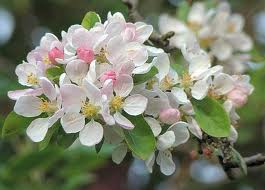
Apple Blossoms

            The blossoms of the apple and pear present to the eye a most agreeable spectacle, particularly in those counties which abound with orchards. The almond-tree, whose blush colour blossoms make their appearance before any leaves are seen, is among the earliest of the flowering fruit-trees, and forms a splendid ornament to the shrubbery in the months of March or April.

            The beech, the larch, and the elm, are now in full leaf. The larch also exhibits its red tufts or flowers, which soon expand into cones, and the fir tribe show their cones also. Many lovely flowers are showered from the lap of April; among them may be named jonquil, anemone, ranunculus, polyanthus, and the crown-imperial. The double-white, the yellow, and some others of the earlier tulips, are fully opened in this month; but the more illustrious varieties will not blow for some weeks.

            The yellow star of Bethlehem in woods; the vernal squill among maritime rocks; and the wood-sorrel, are now in flower. This and the wood anemone have both white blossoms, and inhabit shady woods.

            The way-side violet is still seen and loved for its own and for remembrance sake; and the hedge-banks are now studded with primroses the bright yellow of those flowers, beautifully contrasted with the surrounding green of the budding trees, offers a most agreeable spectacle to the lover of Spring scenery. Other flowers which adorn our fields at this time are the checquered daffodil, the lady-smock, the hare-bell, and the cowslip.
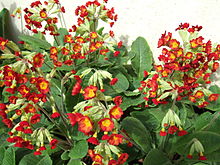
Red-Flowered Cowslip

Obituary of the Duchess of Devonshire

Georgiana by Sir Joshua Reynolds, 1775-6
Huntington Art Gallery
Obituary of the Duchess of Devonshire

The Universal Magazine of April 1806

Died at Devonshire house, Piccadilly, aged 49, on the 30th of March, after a short but severe illness, her grace, Georgiana, Duchess of Devonshire. She was eldest daughter of the late Earl Spencer, and Georgiana, his countess, daughter of Stephen Poyntz, Esq. was born June 7, 1757, and married to the present Duke of Devonshire, June 6, 1774. She was educated under the immediate inspection of her venerable mother, the present Countess Dowager Spencer, and indicated even from her infancy the most flattering promises of worth and loveliness, and on her presentation at court, like a comet above the horizon, all inquiries centered in who was to be the happy man destined to receive the fair hand of so much grace and beauty.

Gainsborough’s Georgiana, on display at Chatsworth

The young Duke of Devonshire was reserved for the honour and soon after the union of this noble pair, her grace not only became the head, but actually gave, the fashion to every article of female dress, not an apron, gown, cap or bonnet but were Devonshire. So high a station did the duchess retain among the fashionable world, that when the contest with America brought our military into camps, then was her grace found dressed in the uniform of the Derby militia of which the Duke of Devonshire was colonel, and from that time every lady, young or old, became dressed a la militaire. At the first drawing room which the duchess attended after her marriage, she was accompanied by all the distinguished females of the two great families from which she was descended, and to which she was allied. It is asserted that she was literally loaded with jewels, even to produce inconvenience. In the course of the summer of 1792, the Duchess of Devonshire visited the continent, in company with her mother, the Countess Spencer, and her sister Lady Duncannon, both of whom were in declining states of health. During this excursion her grace mixed with the company of several foreign literati, among whom we may enumerate Sausure, Tissot, Lavater, Necker, and the English historian Gibbon; on this occasion public fame attributed to her a short descriptive poem, not void of taste, entitled, the Passage of the Mountain of St Gothard. During the latter part of her life the duchess did not appear in the gay world so much as she had formerly done, yet at the institution of the Pic Nic society in 1801, she stood forward as one of its principal promoters; but the formidable opposition which was organized against these theatrical dilettanti, soon became more than a match for the subscribers to this favourite dramatic project. In the cause of one of the greatest statesmen of the age, (we allude to Mr. Fox) she interested herself frequently and essentially; and in the Westminster election of 1784, her grace took so active a part in favour of that gentleman as subjected her in some degree to the censure of public opinion. The disorder which terminated the life of this distinguished personage, is said to have been an abscess of the liver, the attack of which was first perceived about four months ago, while she sat at table at the Marquis of Stafford’s, and which from that period so increased its feverish progress, as eventually resisted all the efforts of the first medical skill. Her mind was richly stored with useful as well as ornamental endowments; she was well read in history, but the Belles Lettres had principally attracted her attention. Though forced into female supremacy by that general admiration which a felicitious combination of charms had excited, she yet found leisure for the systematic exercise of a natural benevolence, which yielding irresistibly and perhaps too indiscriminately, to the supplications of distress, subjected her to embarrassments that the world erroneously imputed to causes less amiable and meritorious. Her grace has left issue, 1. Lady Georgiana Cavendish, born July 12, 1783, married March 21, 1801 to Viscount Morpeth. 2. Lady Henrietta, born August 12, 1785. 3. William George, Marquis of Hartington, born May 21, 1790.
Hart, later the 6th Duke of Devonshire, on display at Chatsworth

The Thames Diamond Jubilee Pageant

Victoria here, reporting on several favorite topics all at once: the Queen, the Diamond Jubilee, watercraft, and music…based on the latest issue of BBC Music, one of the magazines I try to read each month.  In the March 2012 issue, The Full Score reports on the line-up for the Thames Pageant, the ten official musical barges which will parade downstream from Hammersmith to Greenwich on June 3, 2012.  How I wish I could be there!!  For more on the Pageant, click here.

A long-ago royal barge

In the first of the musical barges, the Royal Jubilee Bells will announce the parade, in the midst of a thousand other vessels authorized to be on the river that day.  It is reported that more than 2,000 applications to join the eclectic fleet — from kayaks to yachts — had to be turned down to preserve some sort of traffic flow on the river.

Barge Two will carry the musicians of the Academy of Ancient Music performing Handel’s Water Music, composed in 1717 for a river procession honoring King George I.  The familiar music is a favorite of concert-goers worldwide.

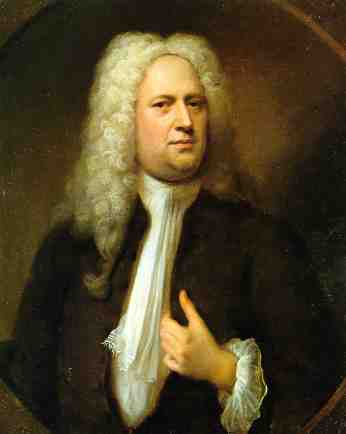
                                      Handel in 1733, by Balthasar Denneer (1685–1749)

George Frideric Handel (1685-1759) was born in Germany and trained under continental masters in Germany and Italy.  He came to London in 1712 and composed dozens of pieces for orchestra, many operas and oratorios, most famously The Messiah, first performed in 1742.

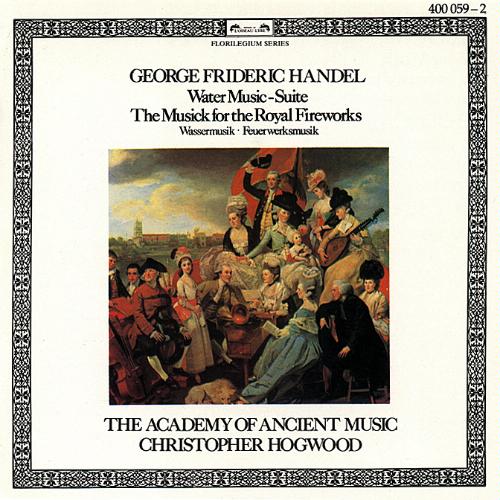
Water Music CD from the AAM

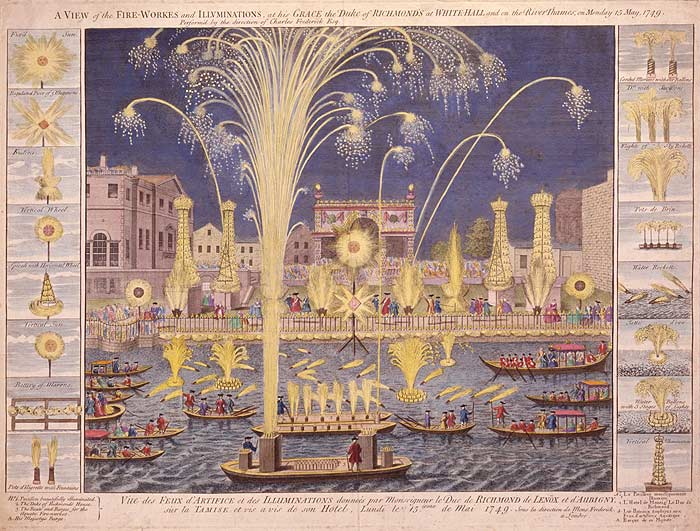
Handel’s Suites of Water Music were first performed on a Thames barge for the entertainment of George I and his guests.  The music was so enthusiastically received that the musicians played them over and over until well into the wee hours.  The AAM will also perform selections from the Royal Fireworks Suite by Handel, composed for George II in 1749, performed as fireworks and illuminations lit up the Thames near the Duke of Richmond’s.

Barge #3 will carry the Herald Fanfare Trumpeters and on #4, the Band of Her Majesty’s Royal Marines will hold forth, heading a group of small vessels which took part in the Dunkirk Evacuation in 1940. 

Her Majesty’s Royal Marine Band in a dry land performance

The Jubilant Commonwealth Choir will be on Barge #5, followed by the Shree Muktajeevan Pipe Band and Dhoul Ensemble on #6.  This group sounds quite fascinating.  For more information, click here.

Shree Muktajeevan Pipe Band and Dhoul Ensemble

Barge #7 will bring an ensemble playing new music created for the occasion by ten prominent UK composers, each taking as inspiration a movement from Handel’s Water Music.

The Mayor’s Junior Jubilee Brass Band will perform on Barge #8. Still to be determined is Barge #9.

On the final musical barge, #10, the London Philharmonic Orchestra will perform favorites from the Proms.

The new royal barge

Since I will not be in London (boo-hoo) for the great event, I am hoping that arrangements have been made to capture the flotilla on the Thames for the rest of us — on a DVD.  [Or could we suggest to BBC America that they take a day off from that predictable cursing chef and the Top Gear nutcases and Dr. No (how many times???) to bring us something we really want to see on June 3?  I fear it is too much to hope for.  Nevertheless, I will keep my fingers crossed.]

For more pictures and all the details, check out the Daily Mail’s article, here.

Tom Sully, Artist Extraordinaire

On March 11, 2012, Jo Manning wrote here of her experiences associated with the current exhibition The Look of Love at the Birmingham (AL) Museum of Art, for which she wrote selections in the catalogue.  She rhapsodized about the talent and charm of Tom Sully, a contemporary artist who has painted several types of miniatures: portraits, eyes, and pets, as well as accomplishments in many other formats.  We wanted to know more about him; what follows is our interview with artist Tom Sully.

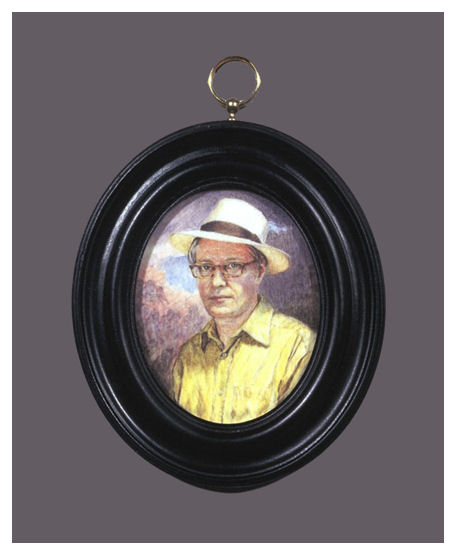
Tom Sully: Self Portrait, 2010, watercolor on ivory, 2 7/8 x 2 3/8 in.

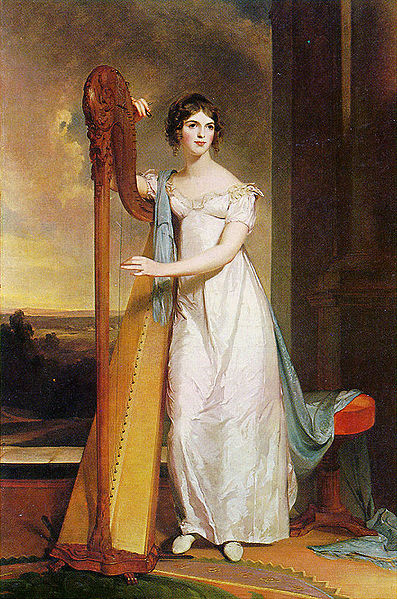
Number One London:  You have a very famous great-great-great-grandfather, renowned portraitist Thomas Alfred Sully (1783-1872), who painted Queen Victoria and Thomas Jefferson, among others. How did it affect you having the same name as your grandfather and being an artist as well?

Thomas A. Sully (1783-1872), Lady with a Harp: Eliza Ridgely, 1818
Tom Sully:  As a young man I found Victorian art cloying.  I decided to go to art school in California where few had ever heard of Thomas Sully.  When I arrived in New York afterwards, theories of deconstruction held sway in the art world.  While all my peers were making conceptual art, I turned to illustration for my living, since you still needed to know how to draw for that.  My first portrait commission was from The New Yorker, who hired me to paint a singer performing at The Rainbow Room.  It was then that I took Sully’s Hints To Young Painters down from the shelf and got to work.

Tom Sully: Garland, 2012, oil on linen, 24 x 20


NOL:  Have there been other people in the arts in your family?

TS: Sully’s parents were actors and all his siblings were actors and musicians.  His children painted – the most promising, another Thomas, unfortunately died young.  I’m descended from Sully’s son Alfred, an army general who painted Native American scenes while serving in the Dakotas.  The most recent artist family member of note is Thomas O. Sully, a celebrated New Orleans architect who bridged the 19th and 20th centuries.  His grandfather, the portraitist’s brother, had moved to Louisiana in the early 1800s.  When he wasn’t designing Queen Anne-style Garden District mansions, the architect loved to hunt and fish in the Louisiana countryside. I feel a connection to him when I go into the bayous and swamps to find subjects for landscapes.

Tom Sully:  After Henry Inman, 2011, oil on linen, 15 x 12 in.
NOL: You have painted portraits, landscapes, and other relatively large-scale oil paintings for years. What inspired you to paint portrait miniatures?

TS: In 2001 I saw an amazing traveling exhibition. Love and Loss, American Portrait and Mourning Miniatures, organized by Robin Jaffee Frank at Yale University Art Gallery.  What intrigued me was that these are intimate portraits, full of heartfelt, personal associations. These charged images sustained a current between people otherwise separated by the vagaries of life and geography, the daily routine, or even death. An image of a family member or loved one, small enough to be held in the hand and carried  on your person, can take on the properties of a talisman. When worn, they become a public emblem of affection. The
y were and can still be used today as a catalyst in courtship.  To me, this is portraiture at its best and about as far away from the institutional boardroom portrait as you can get!  The show included a miniature Sully had painted to mourn the death of his mother. Of course, the technique and sheer artistry of these paintings is incredible.  It took me awhile to track down the materials and get up the nerve to work so small. 

NOL:  Do you paint in the traditional technique with tiny stippled dots of watercolor on ivory?

TS: Yes, I use a combination of stippling and hatching, applying small amounts of paint and waiting for each layer to dry before adding the next, gradually and patiently building up richness and depth while achieving a likeness.  A little like the rabbit hole in Alice in Wonderland, this small space becomes your world.
Tom Sully:  Susan Tying Her Necklace, 2011, watercolor on ivory, 2 7/8 x 2 3/8 in.
NOL:  Do you work from photographs or do your miniature subjects pose while you sketch or paint?

TS:  I like to work from photographs that I take myself.  I find photography a useful conceptual tool – we can try out different angles on the face, different hairstyles, clothing, jewelry and lighting until we are happy with the composition in one or more of them.  The photos do not then become “the be all and end all” but what Degas called an “aide de memoire.” While I paint, I improve on the photos.  Sentiment, emotion and empathy continually inform my hand.  My ancestor said, “from long experience I know that resemblance in a portrait is essential; but no fault shall be found with the artist, at least by the sitter, if he improve the appearance”. 

NOL:  How did you learn about the availability of woolly mammoth ivory? 

TS:  My first efforts were on Ivorine, a 20th century ivory substitute, and then vellum mounted on card.  One supplier led me to another until I found someone in Dorset who could obtain mammoth ivory from Siberia where research crews have been finding whole woolly mammoths preserved in the permafrost.  He has since sold his business but fortunately I have a pretty good stockpile.  

Tom Sully: Eric, His Eye, 2011, watercolor on ivory, 3/4 x 5/8 in.
NOL:  What led you to painting eye portraits?
TS:  My interest was piqued by an article about eye portraits that I found in a 1904 issue of The Connoisseur.  When a portrait commission took me to Philadelphia, I was spellbound by the collection at the Philadelphia Museum of Art.  They are surely the most startling and, as portraits exchanged between lovers, the most romantic form of the art.  There is a mystery to eye portraits that I’m unable to explain.  It may come in part from seeing such an arresting image in so small a format – they are usually no bigger than one-half to three-quarters of an inch.  In the Look of Love show currently at the Birmingham Museum of Art, there are stick pins and rings with images even smaller!  In my experience of painting these, people that know the portrait subject immediately recognize them from this one fragment.  I also find that they resonate well with a contemporary art audience.  As I said to my wife one day,  “eye portraits are so damn strange that they may as well be cutting-edge contemporary art!”

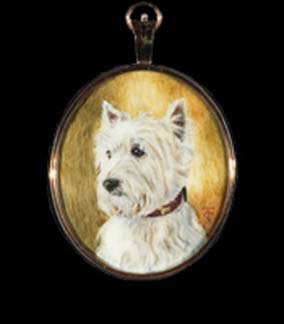
Tom Sully: Lucy, watercolor on ivory, 2/2 x 2 1/8 in.
NOL:  We noticed on your website that you also paint dogs.

TS:  I love painting dog portraits.  One need only look at the work of Sir Edwin Landseer to see that dog painting is serious business. Dogs are great to w
ork with since they are less self-conscious than we are.  A British client hired me to paint miniatures of his two bulldogs.  When one of them died about six months later, we realized we had been unknowingly prescient. I painted a West Highland Terrier in Palm Beach who was so poised that she must have been a fashion model in a previous life.
Tom Sully: Solomon, 2006, watercolor on ivory, 2 1/2 x 2 1/16 in.
NOL: What do you charge for a portrait miniature?


TS:  I charge $3,000 for a head and shoulders to half-length portrait miniature and $2,500 for an eye portrait.  These prices include the cost of a locket in rose gold, yellow gold or sterling silver.

NOL:  Tell us about your current work?

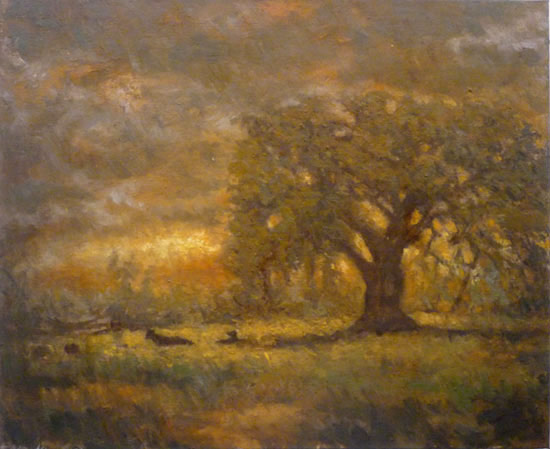
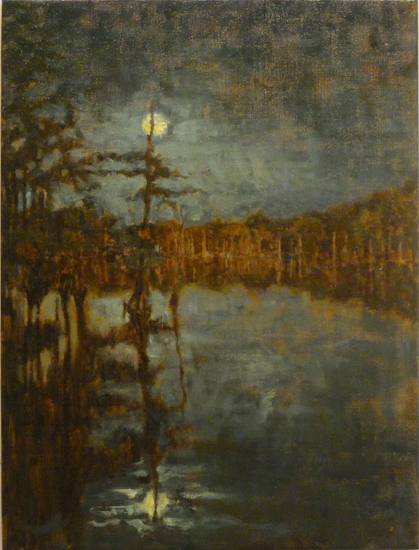
TS:  I’m currently painting an eye portrait commission for a client in Birmingham, Alabama.  I’m also working on a body of Louisiana inspired landscapes for a show in New Orleans this fall.  I used to live there and began exploring the countryside for landscape subjects during the evacuation from Hurricane Katrina.  The bayou country and especially the swamps, which seem to exist outside of time and civilization, are a great subject for a painter with a Romantic bent.
Tom Sully: Grand Coteau Oak, 2012, oil on linen 22 x 27 in. 
NOL:  What are your upcoming exhibitions?

TS:  Louisiana Reveries: Landscapes by Thomas Sully, October 6 – 31, 2012;
Jean Bragg Gallery of Southern Art, 600 Julia Street, New Orleans, Louisiana.
Tom Sully:  Nocturne in Blue and Gold, 2011, oil on linen 24 x 18 in.

NOL:  Many thanks to you, Tom Sully. Your life and work are fascinating. 
Visit Tom Sully’s website here to see more of his work.
Tom Sully: Night Flight, 2012, oil on linen, 17 x 24 in.

The Civil War Connection: Lord Palmerston and the Battle of Antietam

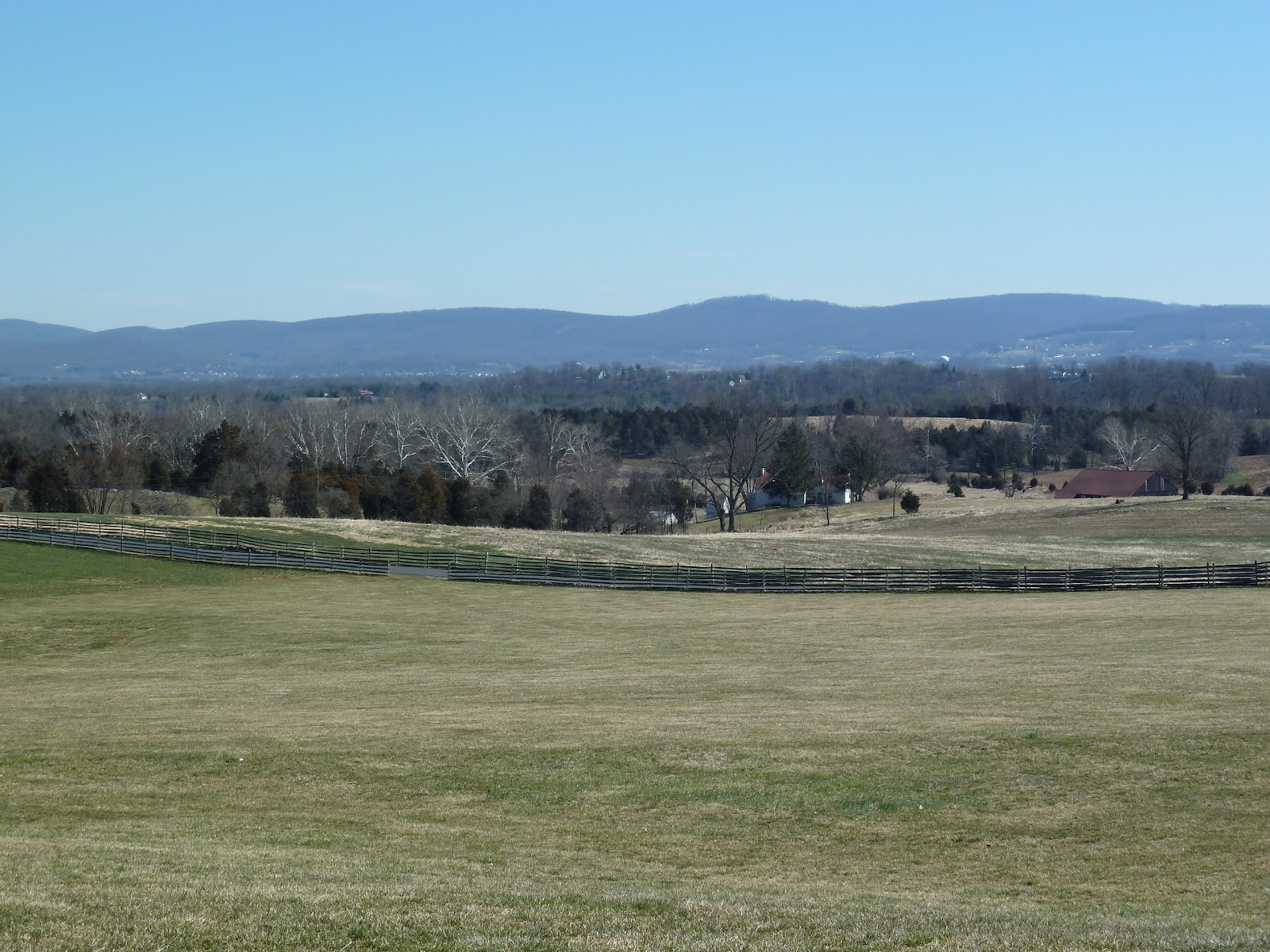
I recently visited the Antietam National Battleground in Maryland where the bloodiest day in U.S. military history took place on September 17, 1862. And it has a direct connection to our usual British topics.

Antietam National Battleground, Maryland
On a warm and sunny March day, we drove into the foothills of the Maryland mountains to visit Antietam, well run by the National Park Service.  Like many U.S. Civil War battlegrounds, this one is so quiet and peaceful today that it is difficult to envision the carnage that took place almost 150 years ago. 
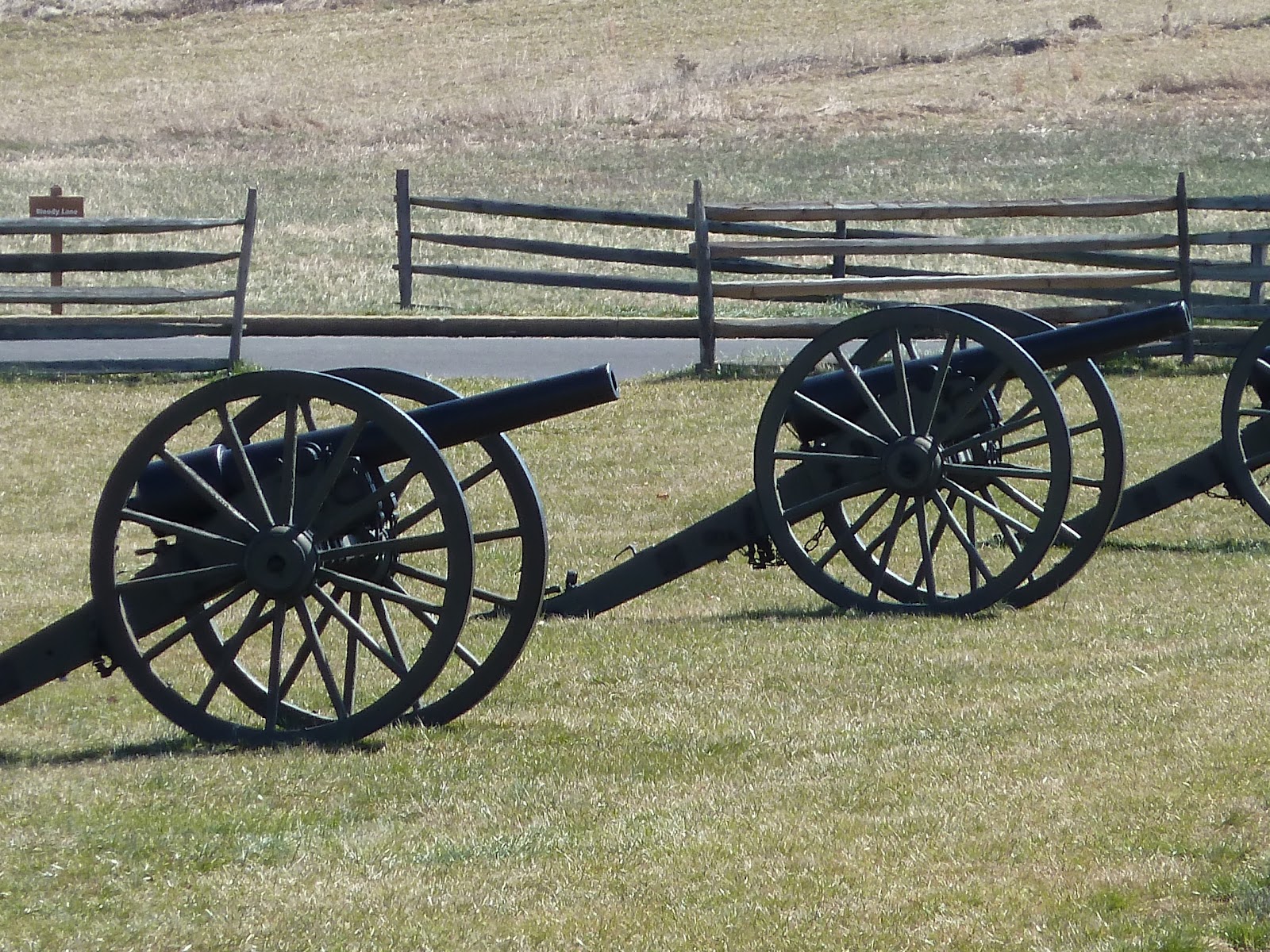
The grounds are marked with many cannons and memorials to the various regiments which fought here on the side of the Union and for the Confederacy (in the south, it is known as the Battle of Sharpsburg, a nearby village).
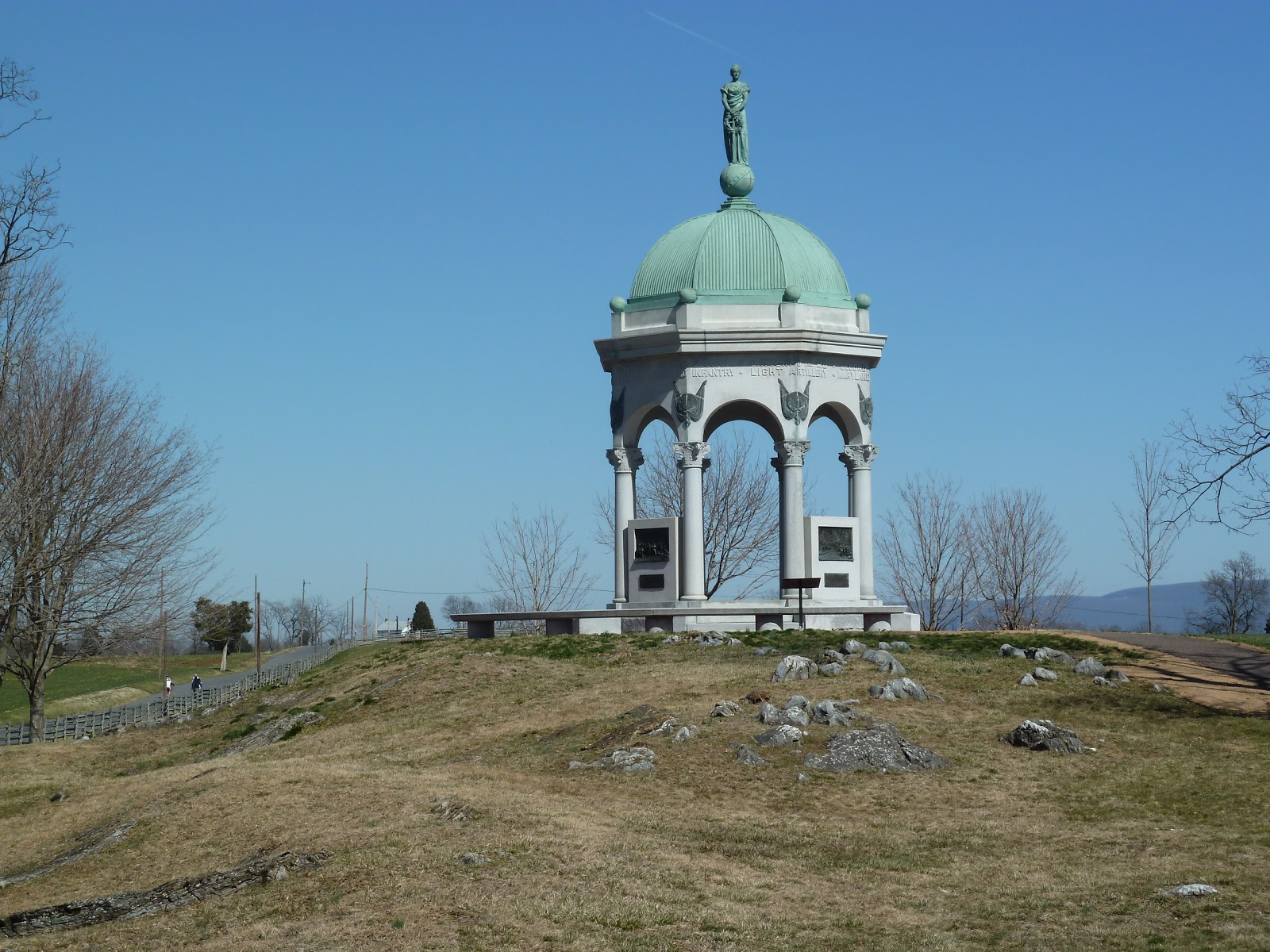
Maryland State Monument, the only one dedicated
 to troops from that state who served on both sides

The calm beauty of the area belies it bloody past.  After viewing a film presentation on the battle and its aftermath, we purchased a CD for our car which took us on a driving  tour of the principal sites. At each one, we could park and listen to the description, then walk around the locale and talk with the very knowledgeable volunteer guides — who  spend their weekends telling visitors about the people who fought here and what happened to many of them.  Special thanks to Jim, Marty and Dave  who told us so many facts and personal stories.

A future U.S President was among the Union troops. William McKinley (1843-1901), 25th President, was later promoted to the officer corps.  His mentor in the 23rd Ohio Infantry, Rutherford B. Hayes (1822-1893), to become the 19th U.S. President, had been recently wounded and did not fight at Antietam.

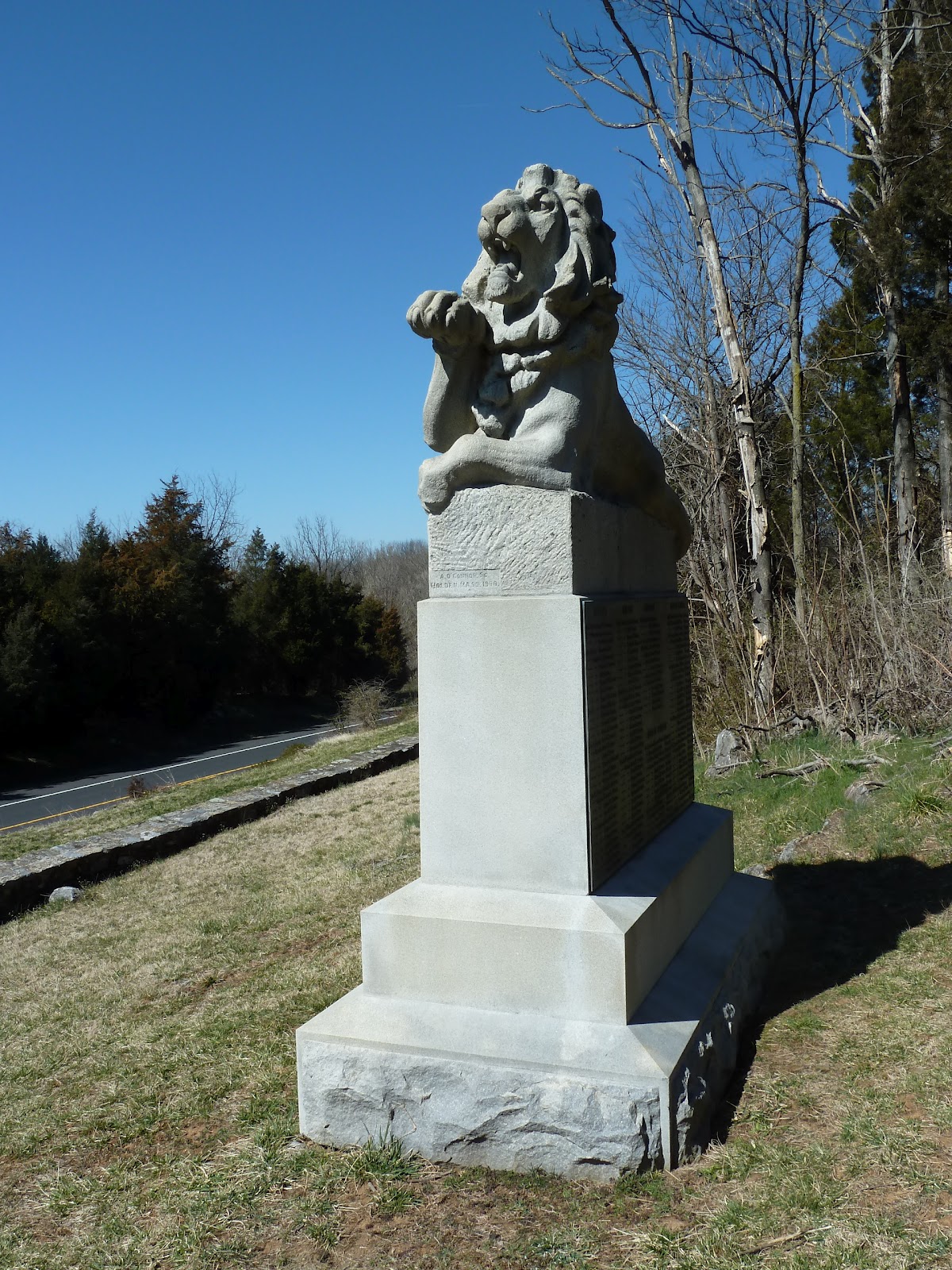
Monument to the 15th Massachusetts Volunteer Infantry
Skipping ahead to the outcome of the battle, the Union troops prevailed although the losses on both sides were horrendous and crippling.  The appearance of a strategic Union victory, however, was said to have caused Lord Palmerston, British Prime Minister at the time, to abandon his inclination to support the Confederacy.  Both the British and the French governments declined to take part in mediating the conflict.  Some observers — many as a matter of fact — believe that Palmerston was hoping to teach the upstart United States a lesson.

Lord Palmerston (1784-1865) by Francis Cruikshank, 1855
In addition, the success of the Union troops spurred President Lincoln to issue the Emancipation Proclamation in September, 1862, which freed all slaves living in Confederate states and further contributed to the British decision not to support the Confederacy.

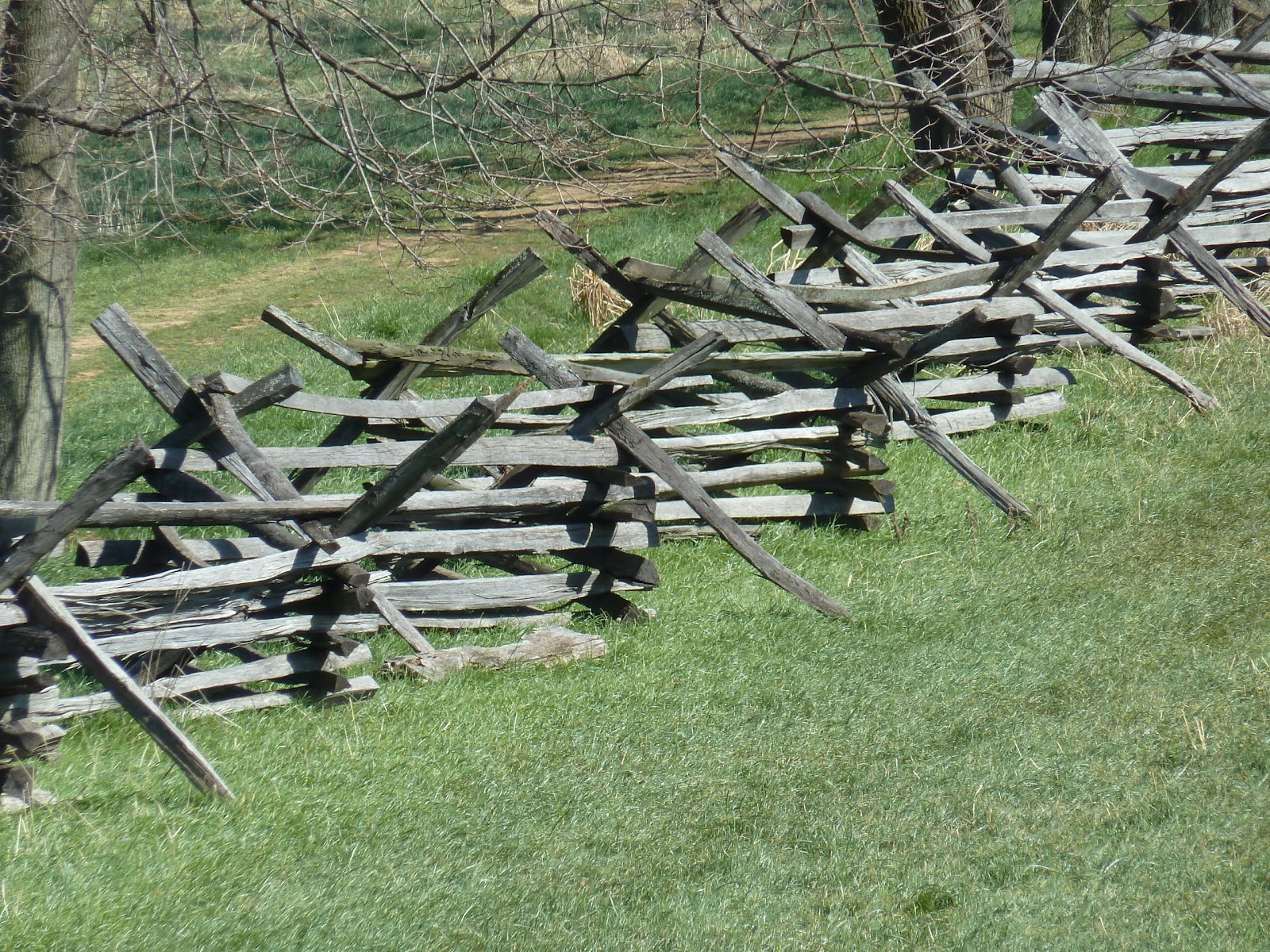
The self-supporting (nail-less) fences
Another noteworthy matter is the role that photography played in popular views of war.  For the first time, photographers, foremost among them Matthew Brady, set up their equipment and took photos of the battleground littered with the dead and dying.  When these scenes were published, the public was horrified. People were used to seeing engravings (think Currier and Ives) of gallant charges with flags flying, not piles of grotesquely twisted bodies.

.

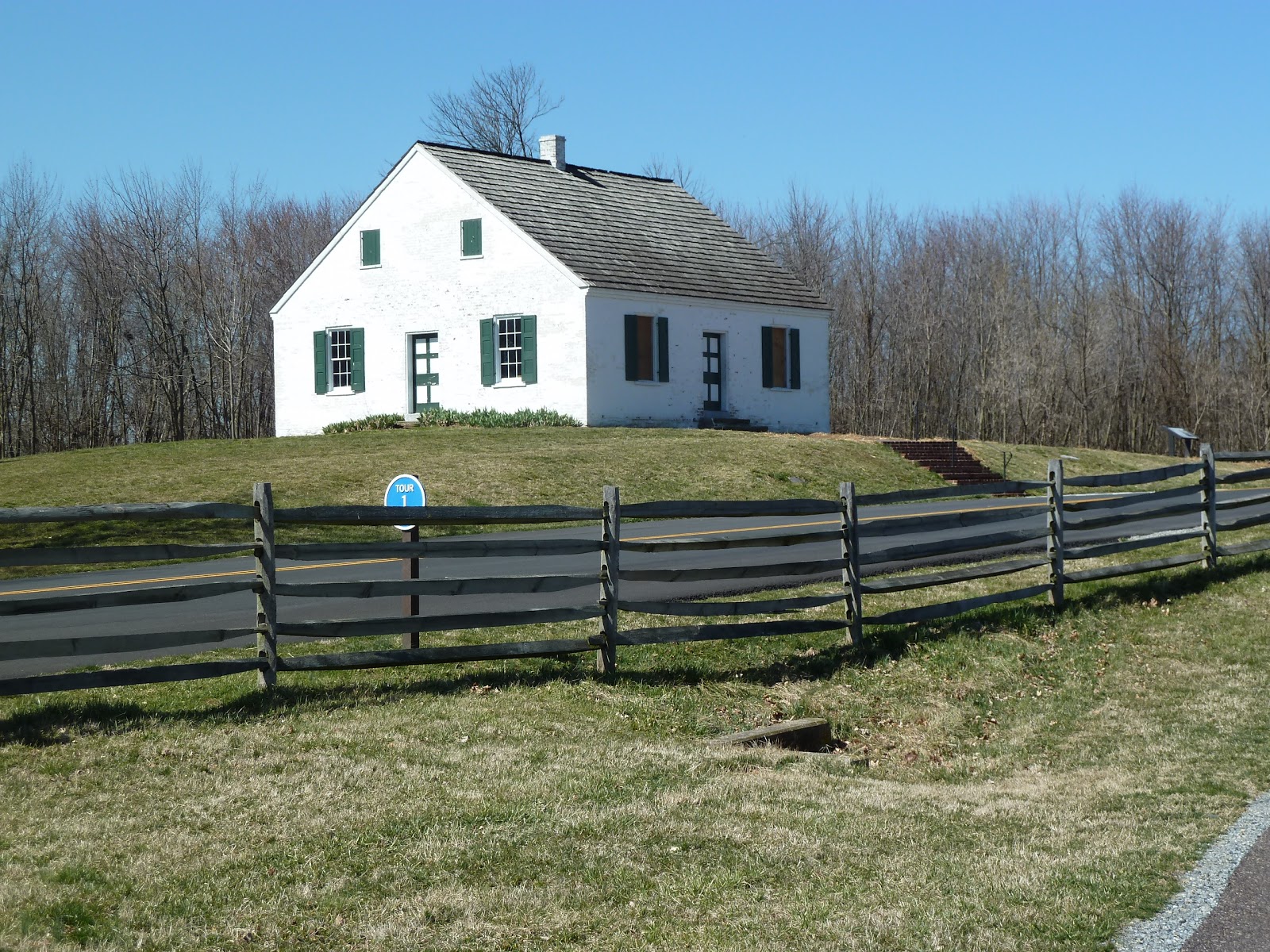
Ironically, much of the fighting was done around the Dunker Church, which belonged to a German Christian sect advocating peaceful resolution of all conflicts.

Dunker Church
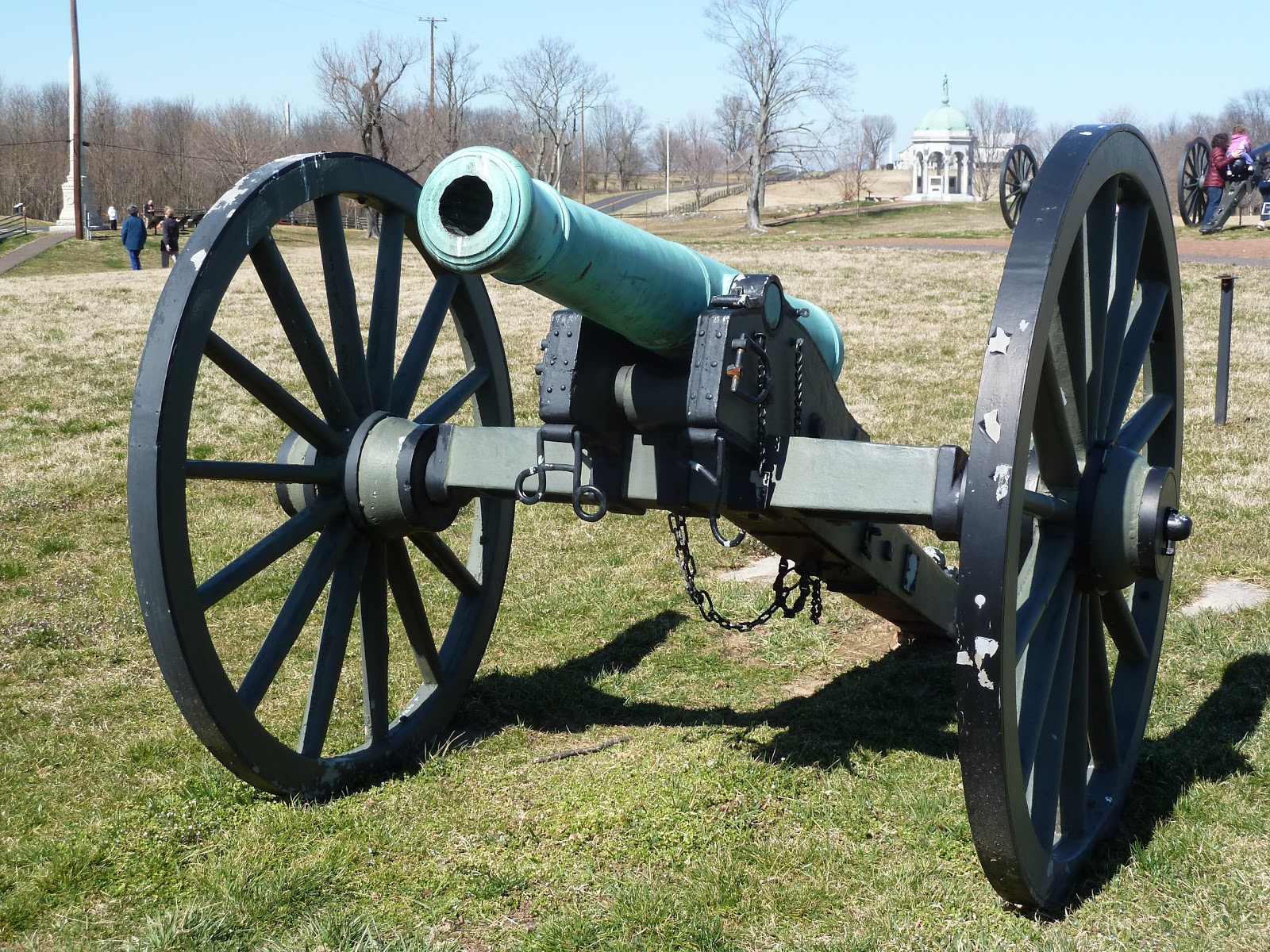
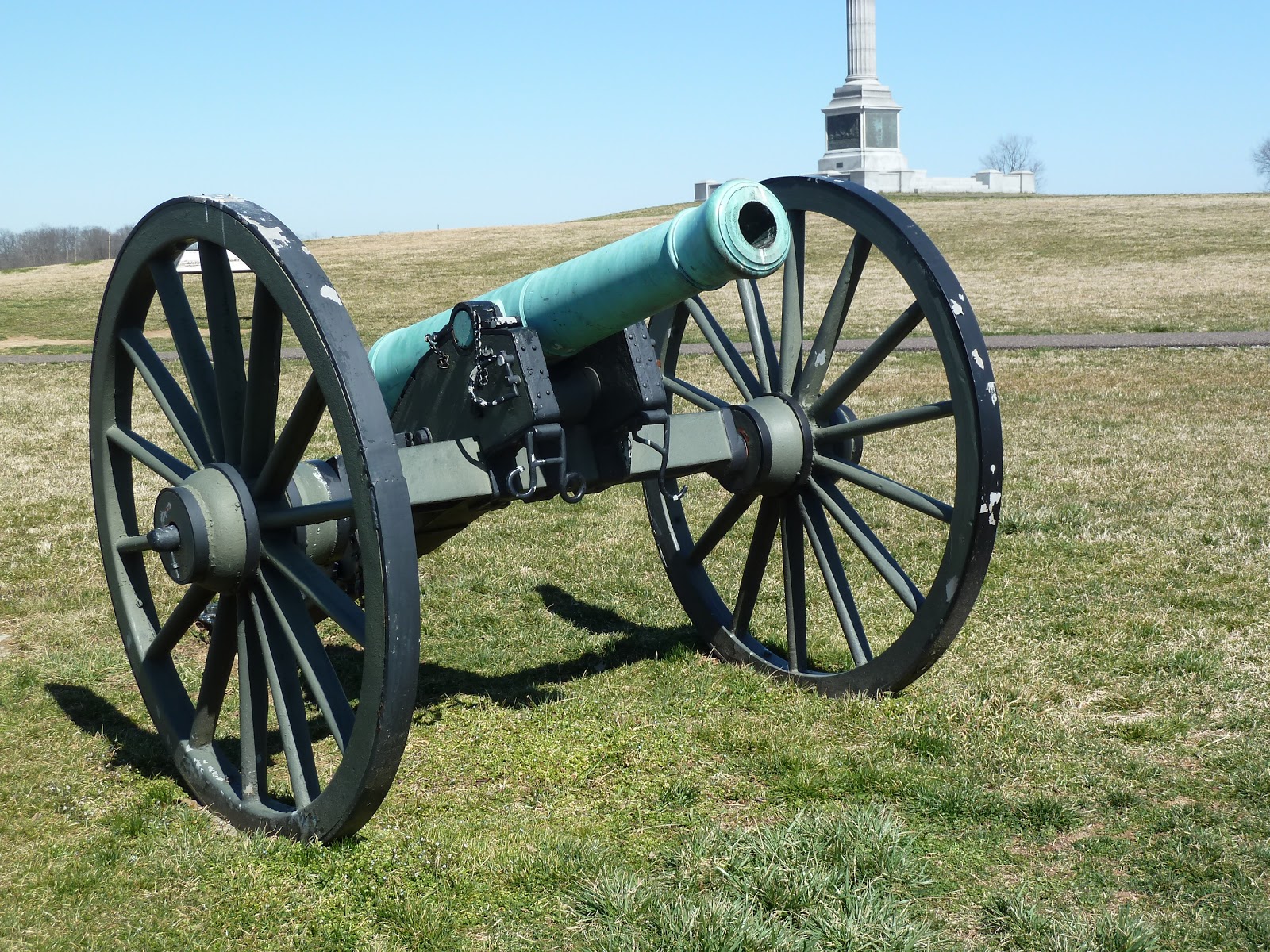
A Napoleon cannon
The American Civil War was fought with weapons very similar to those used in the Napoleonic Wars. The armies had more rifles, thus more accurate shots. And some of the canons, such as the first ones in the second picture of this post, were rifled as well, which improved their accuracy too. Those just above and below were almost exact duplicates of the cannons used in the Peninsular War and at Waterloo.

 A “Napoleon” cannon
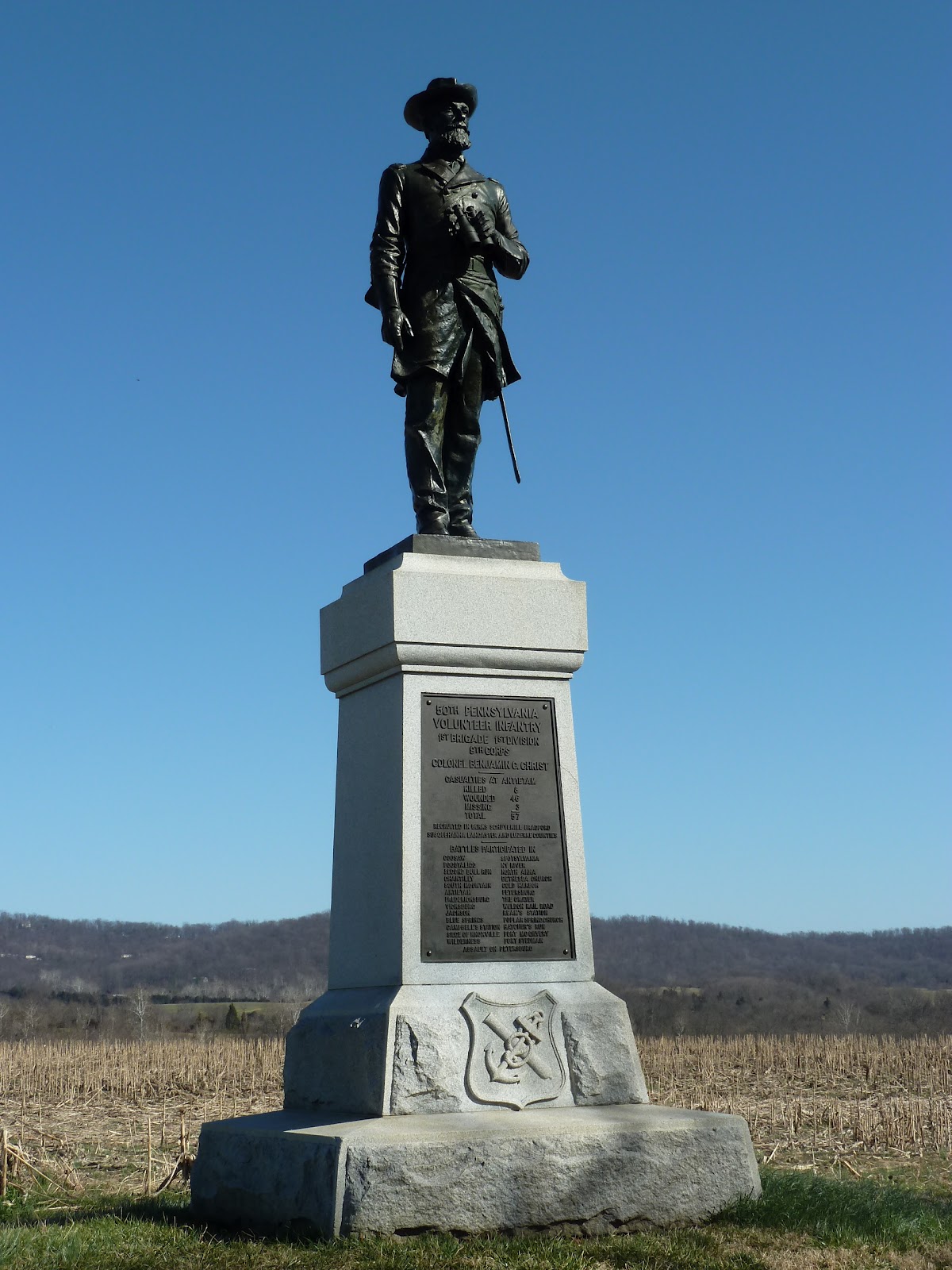
Monument to the 50th Pennsylvania Volunteer Infantry

All day the battle raged back and forth among the cornfields, hills and hollows of the area, with each side moving forward and then retreating as the advantage changed from side to side.
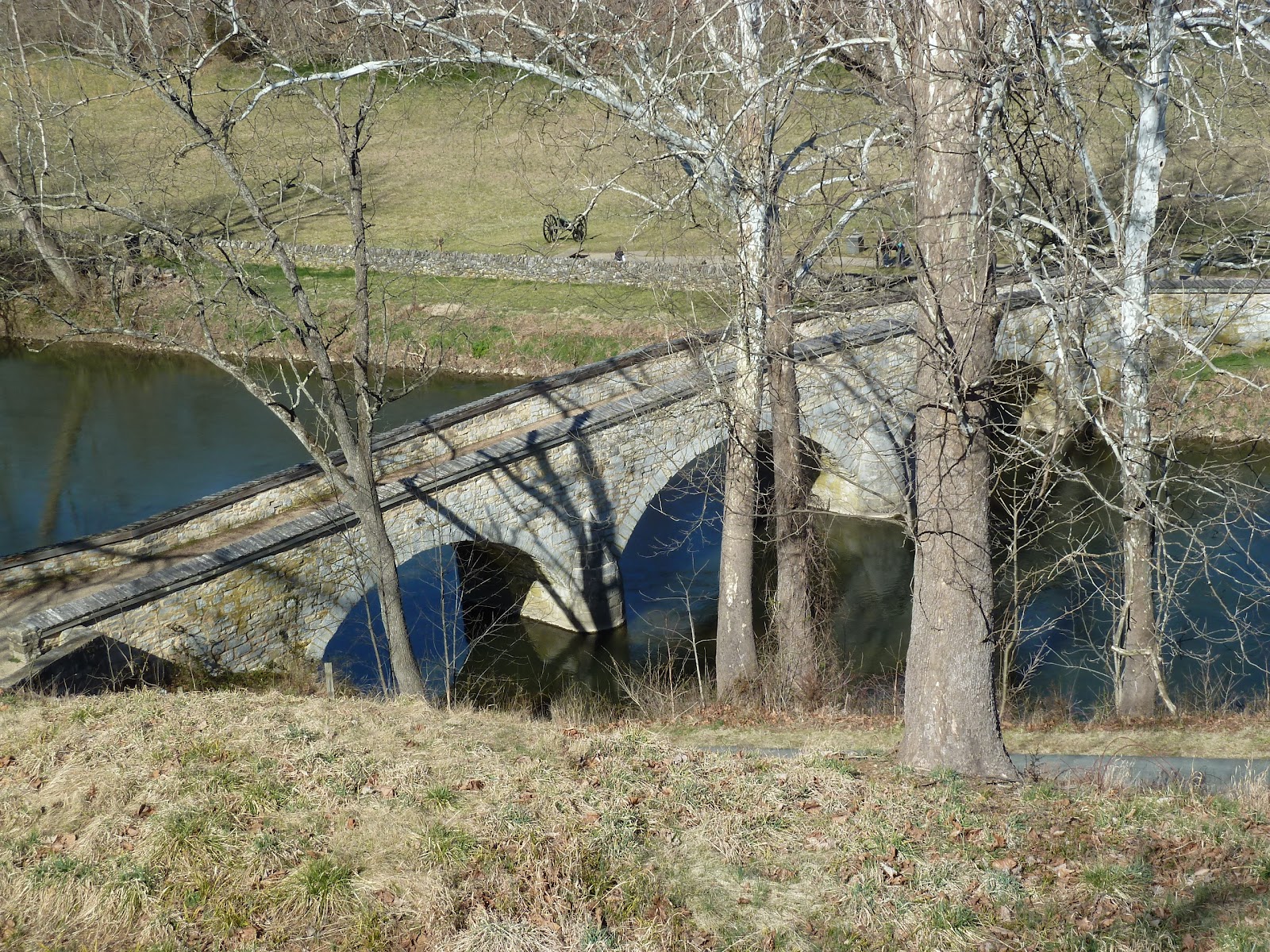
Burnside’s Bridge
In the afternoon, at the beautiful old stone bridge over Antietam Creek now known as Burnside’s Bridge, northern troops led by Major General Ambrose Burnside, gained the upper hand, causing the southerners to withdraw.  But more fighting followed as fresh troops arrived on both sides.
Late in the day, there was an undeclared truce as both armies tried to comprehend the extent of their losses.  Some units had only a handful of their men remaining unhurt.

But wait, it was not only men that fought.  As the above ladies who volunteer at the site told us, there were some women among the troops.  They managed to pass as men throughout the war, an amazing  feat in itself.   No one can come up with the exact number but we have the personal accounts of some who recorded their experiences for posterity.

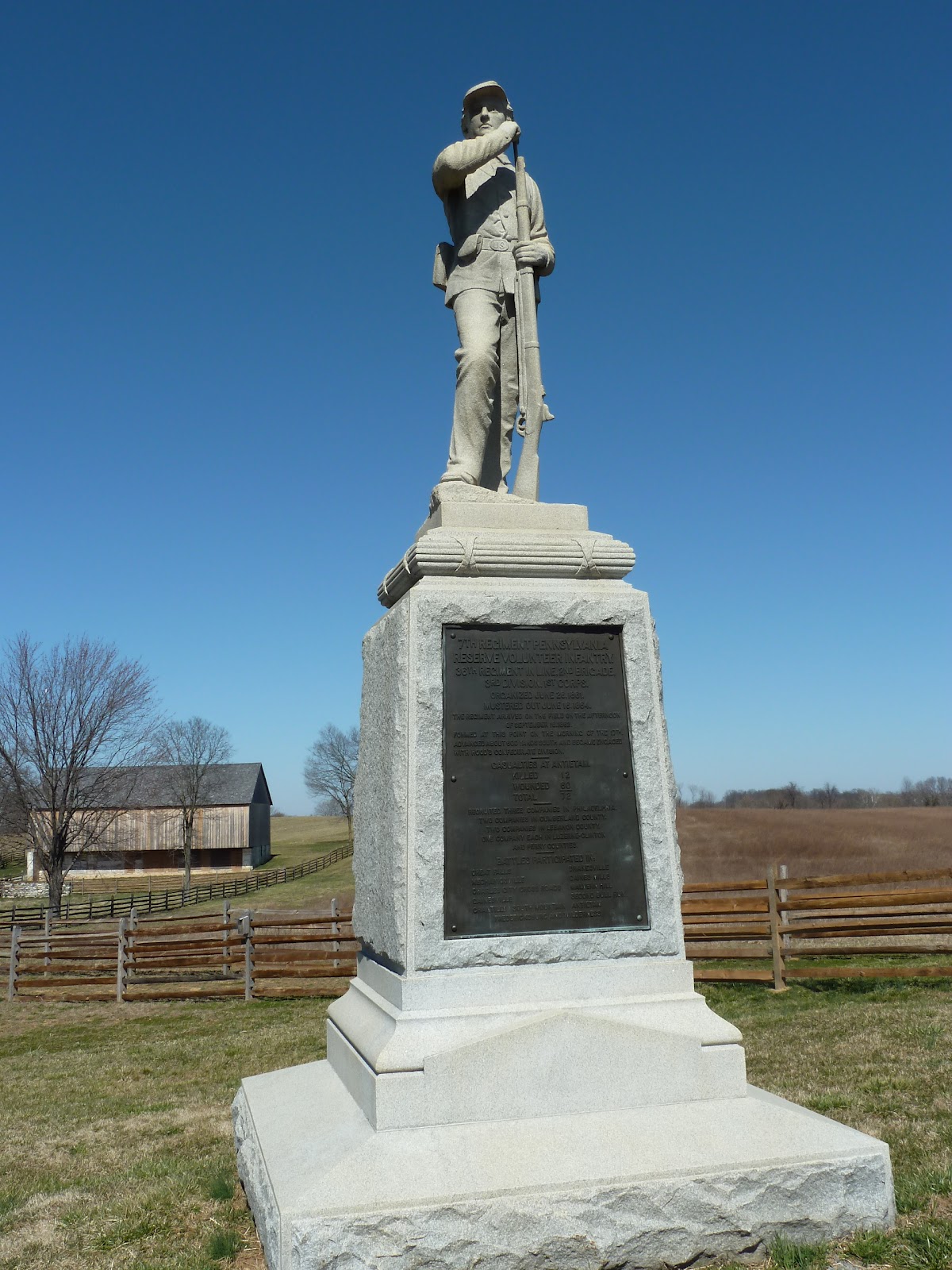
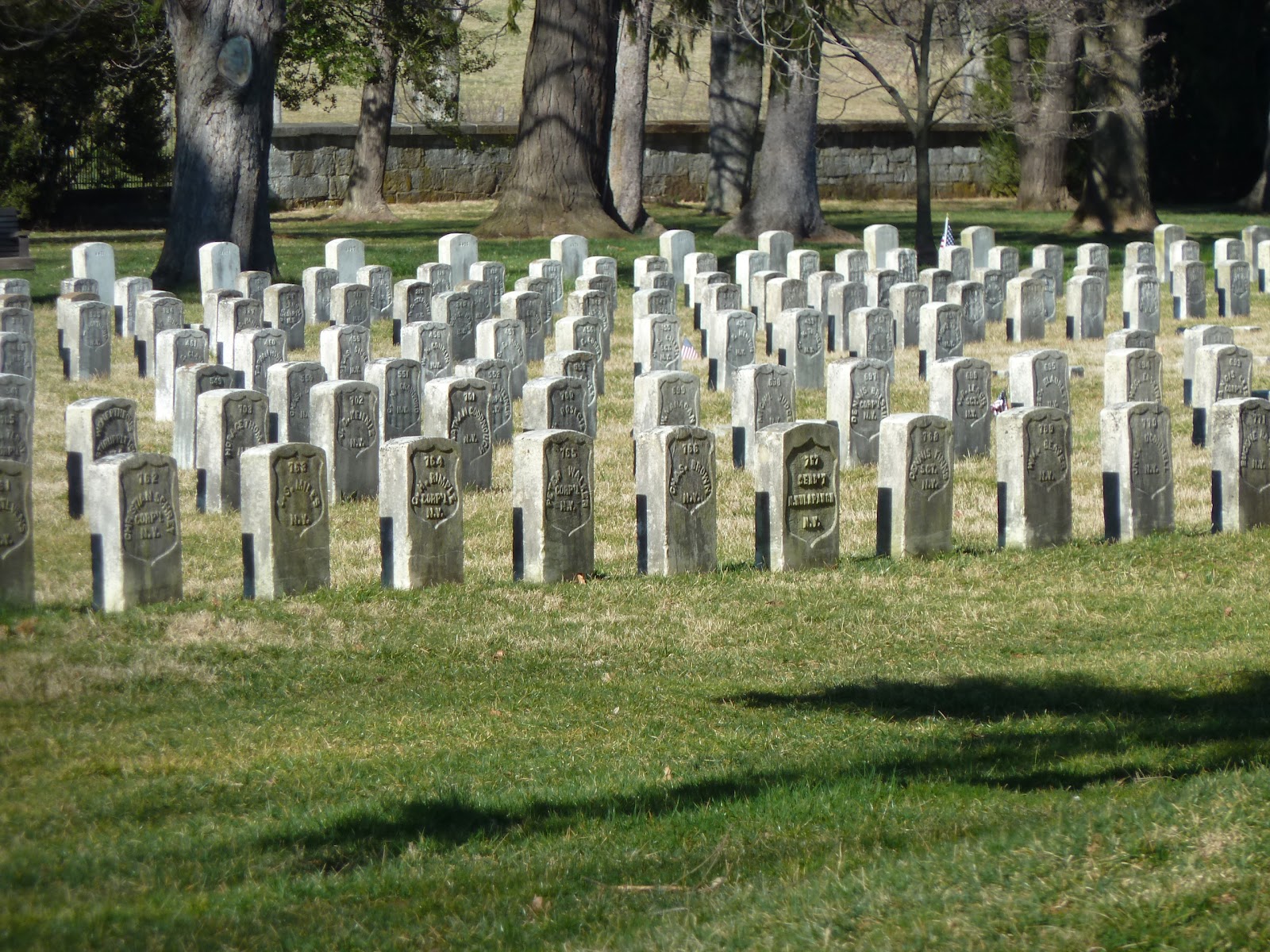
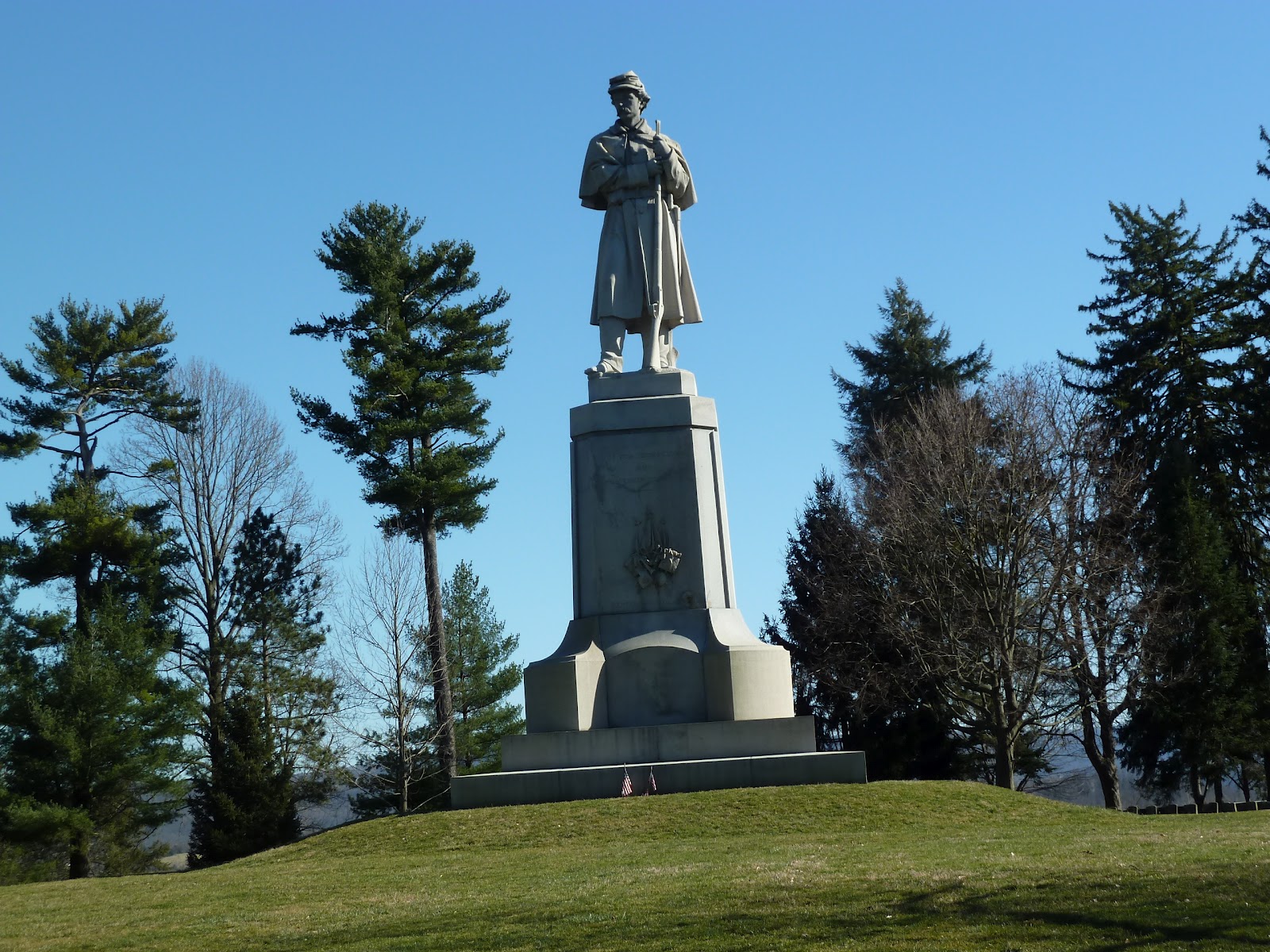
Fittingly, the final stop on the battlefield tour is at the Union Cemetery where many thousands are buried, including a number still unidentified. The cemetery is watched over by the monumental statue of an infantry private, called Old Simon
And as a final comment, the guides told us that President Lincoln was most unhappy that his commander, General George McClellan was so cautious. McClellan did not pursue Lee’s army back across the Potomac and into Virginia.  Perhaps, if he had followed up quickly, the war would have been over in weeks or months instead of three more years of fighting.
More than 3,600 died that day, and many more of the additional 20,000 casualties never recovered.  Though the result of the battle was a tactical draw, the South failed to defeat the North in the first battle on Northern territory.  The North managed to reverse its previous record of mostly losses.  Less than a year later, at Gettysburg, the tide of the
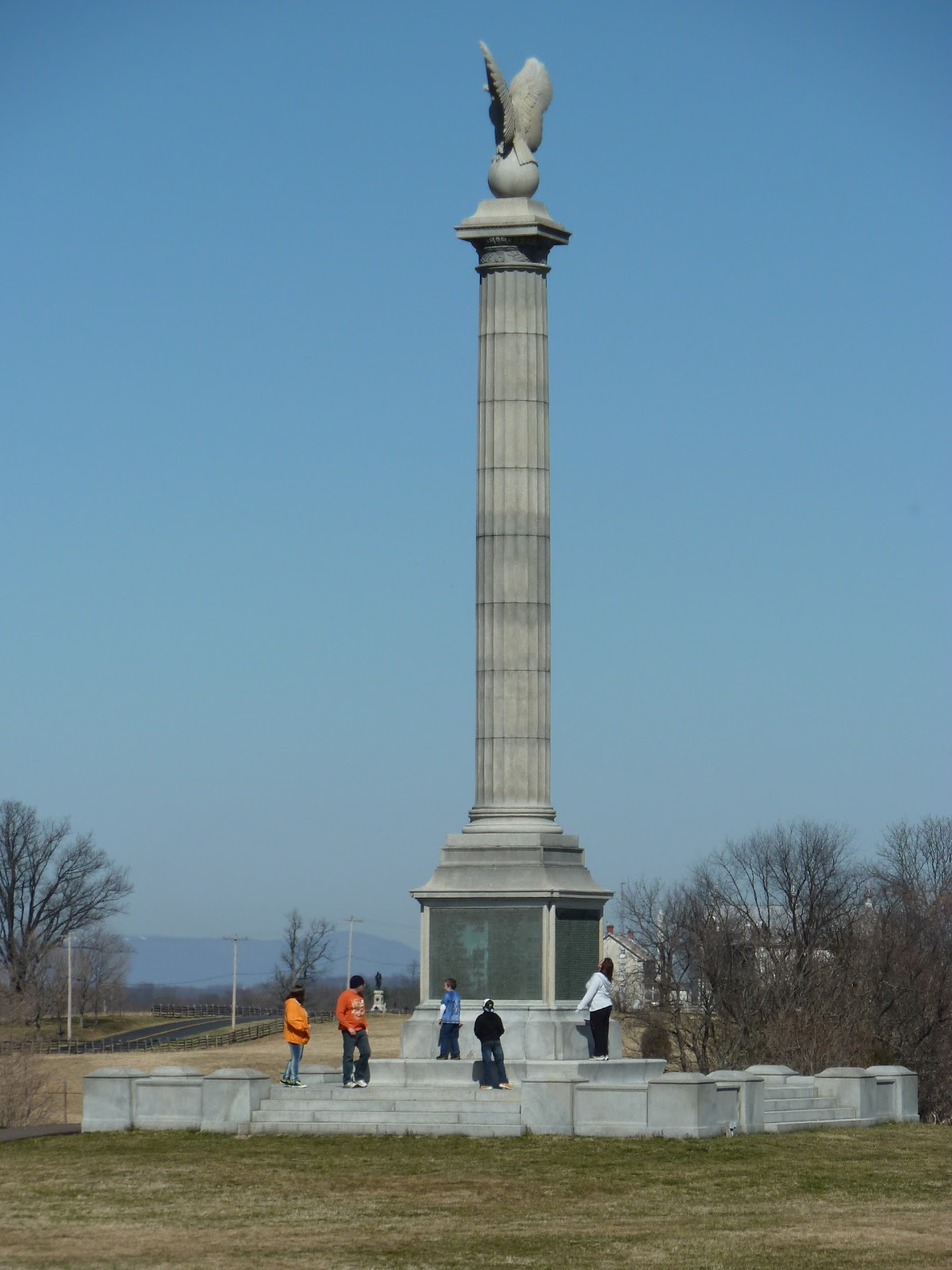
war would change in favor of the North.
New York State Monument
For more details on the battle and the upcoming 150th Anniversary of the Battle of Antietam, click here.