







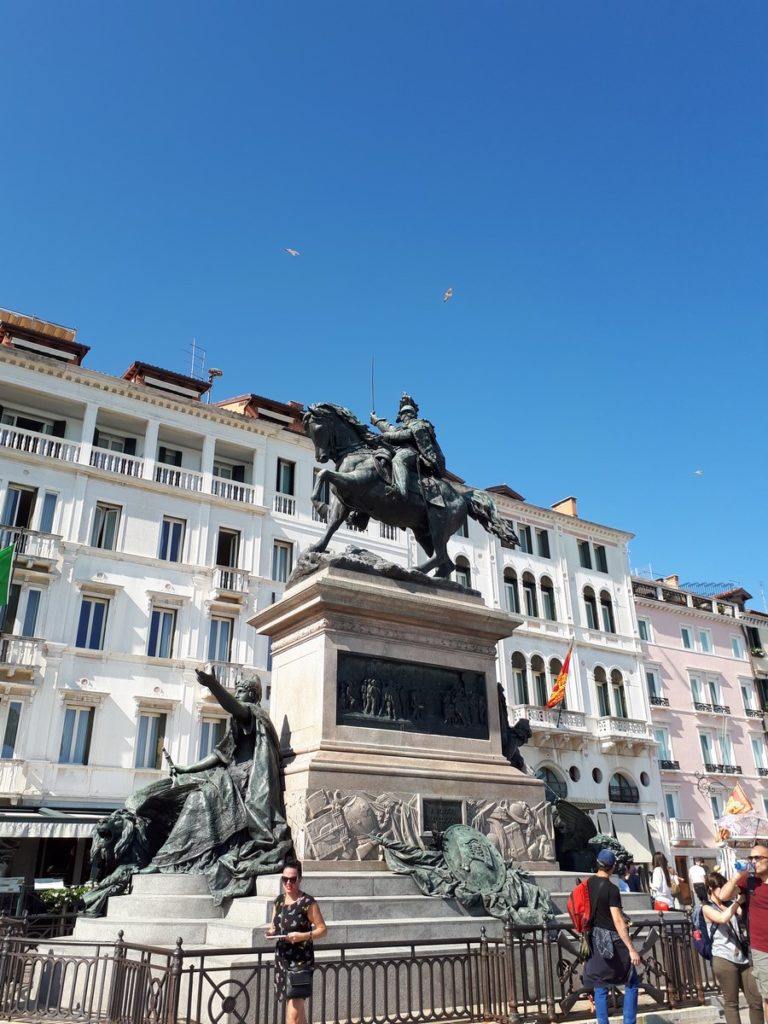
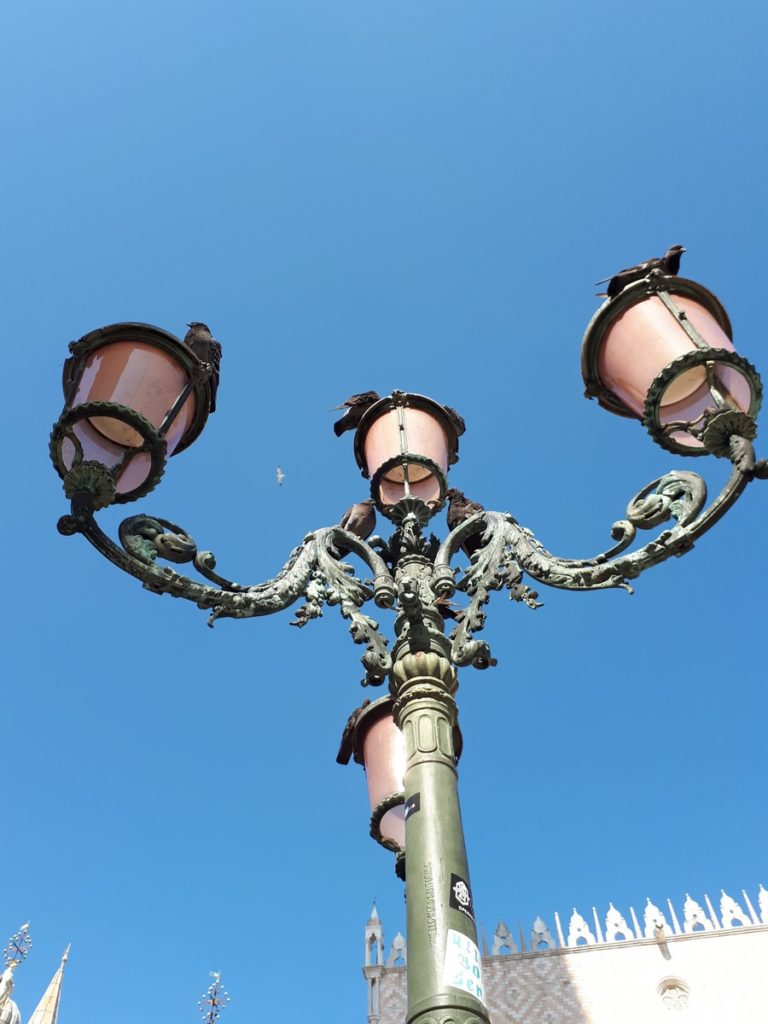
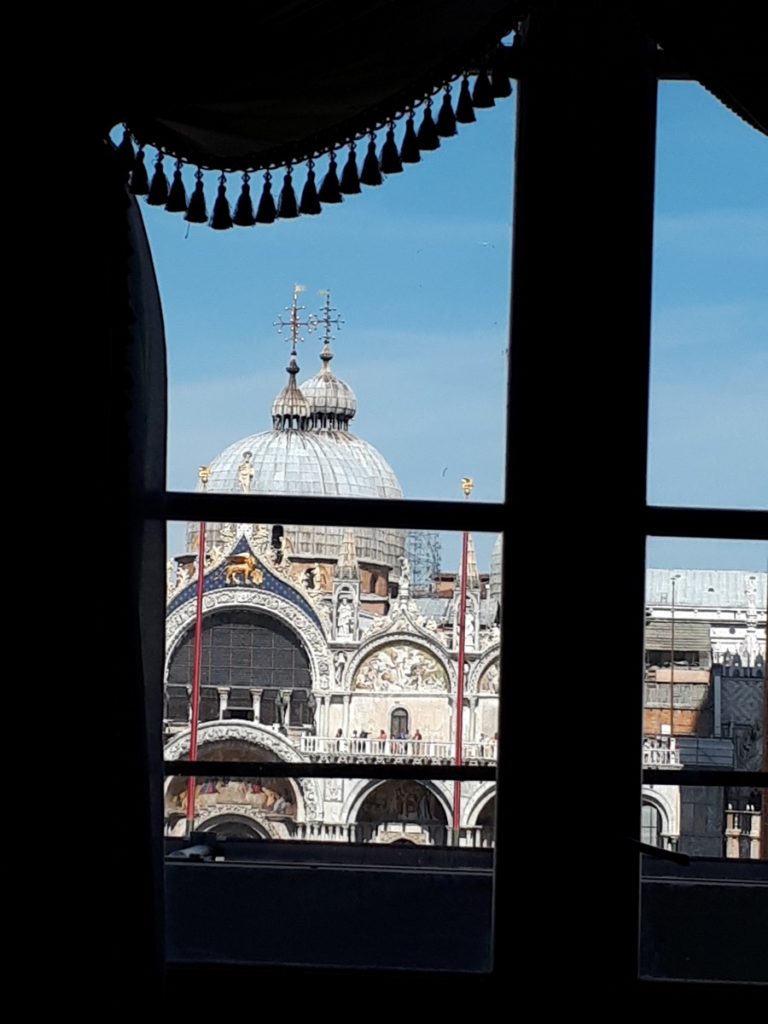

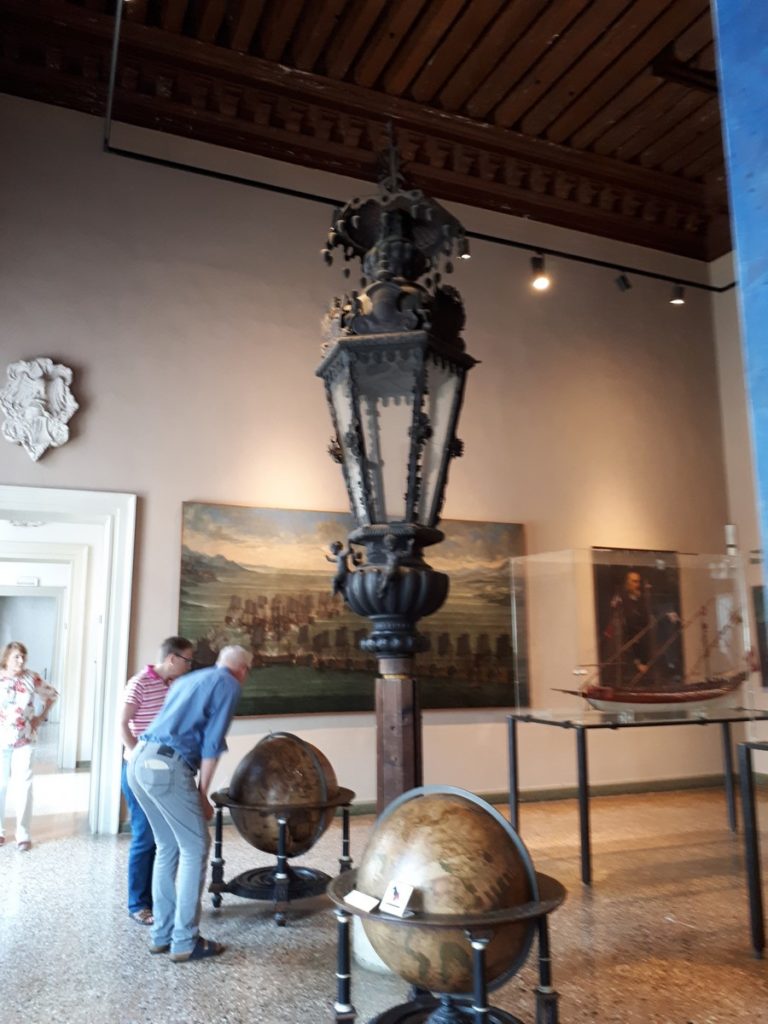
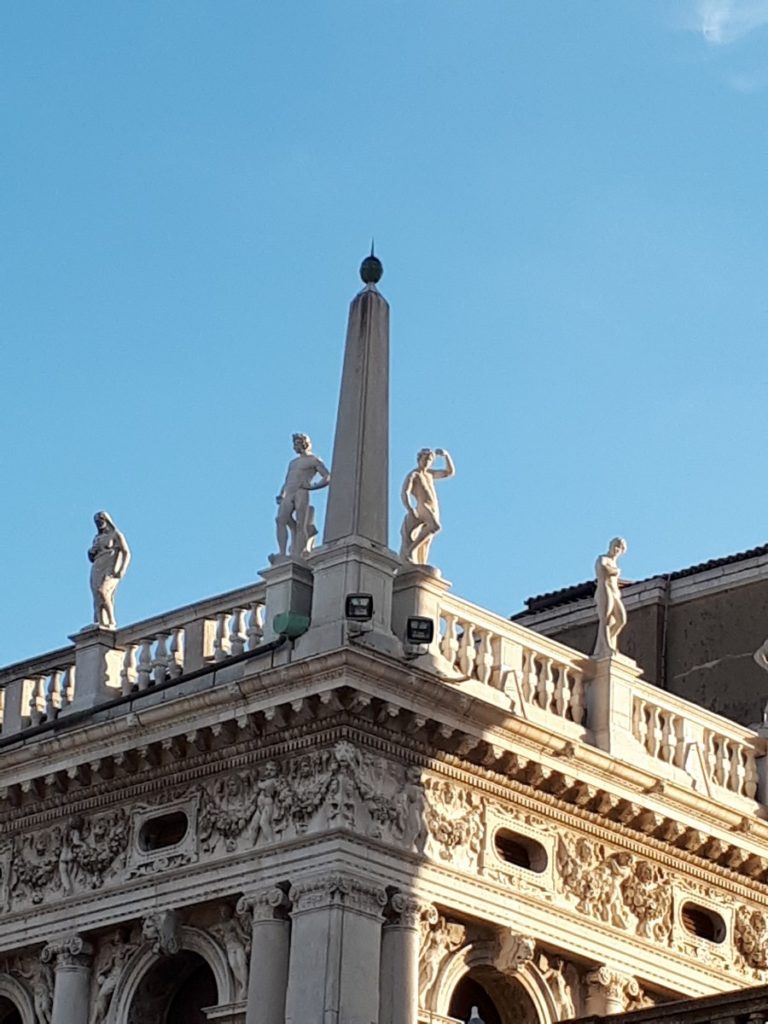

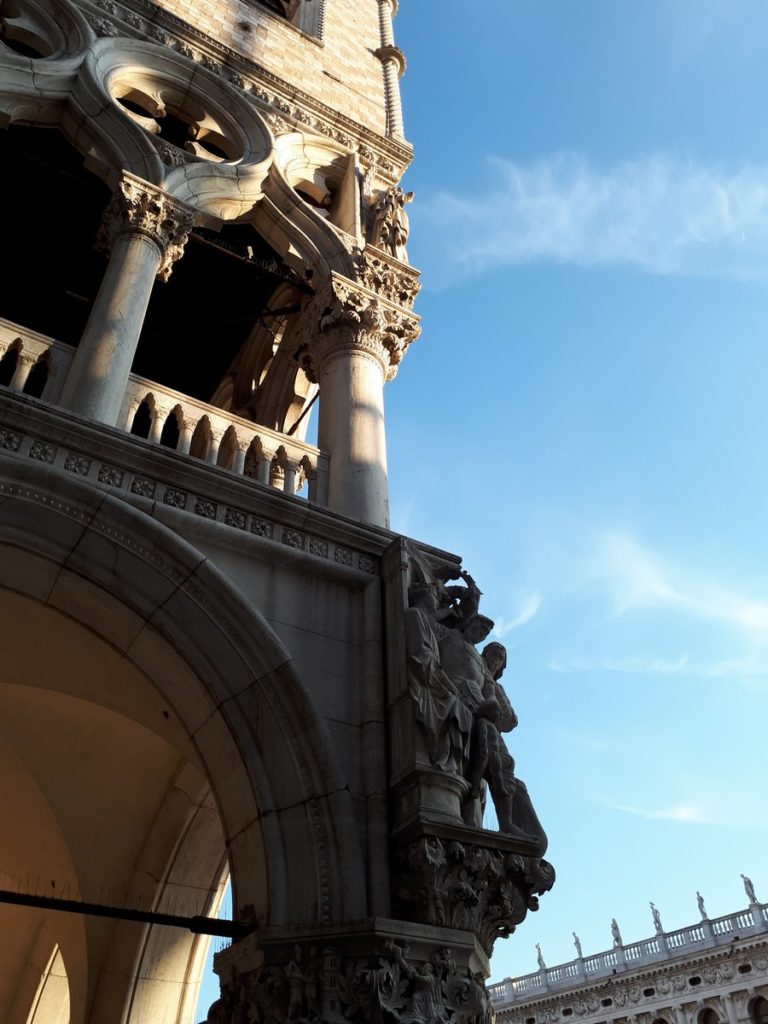
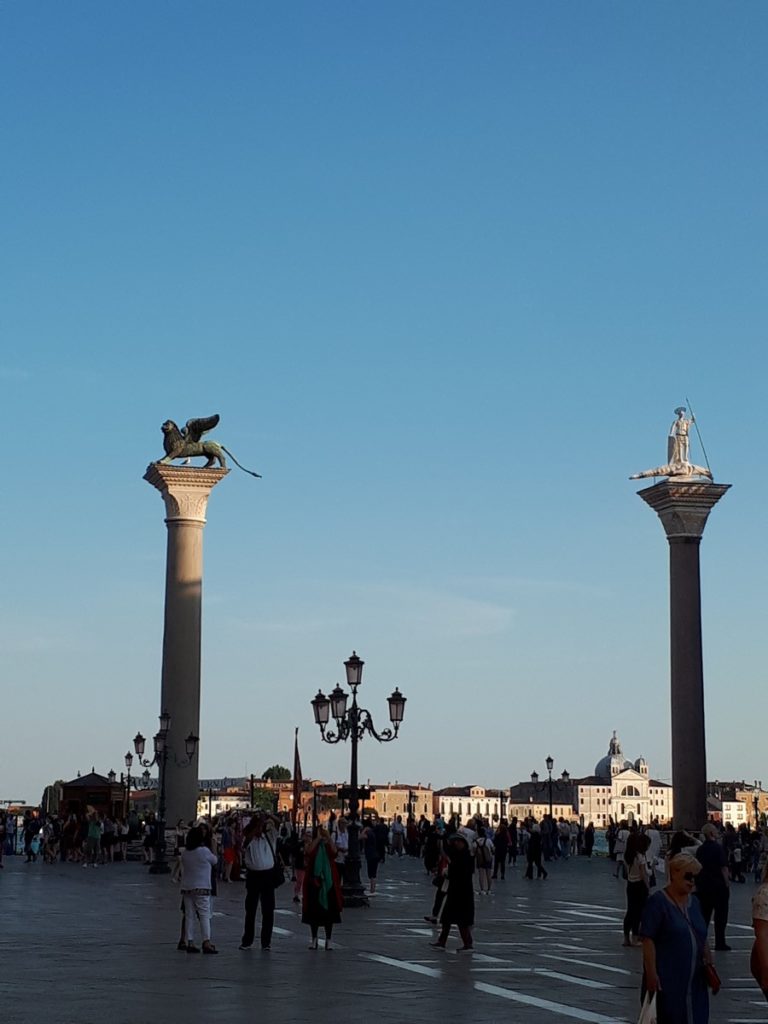

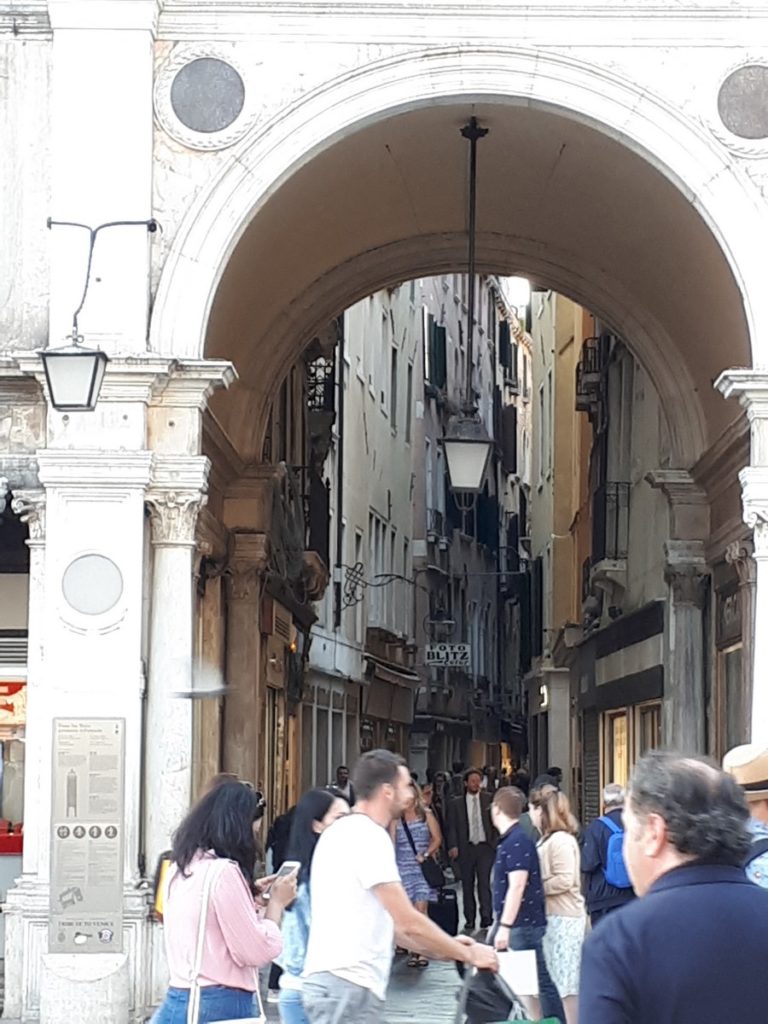
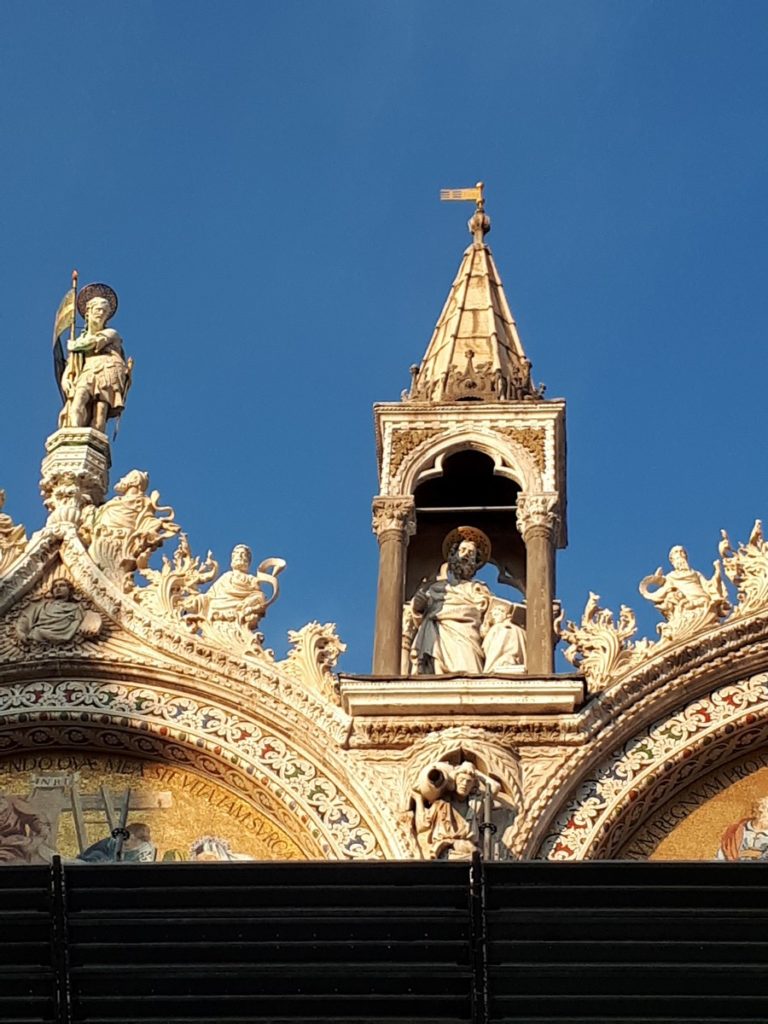
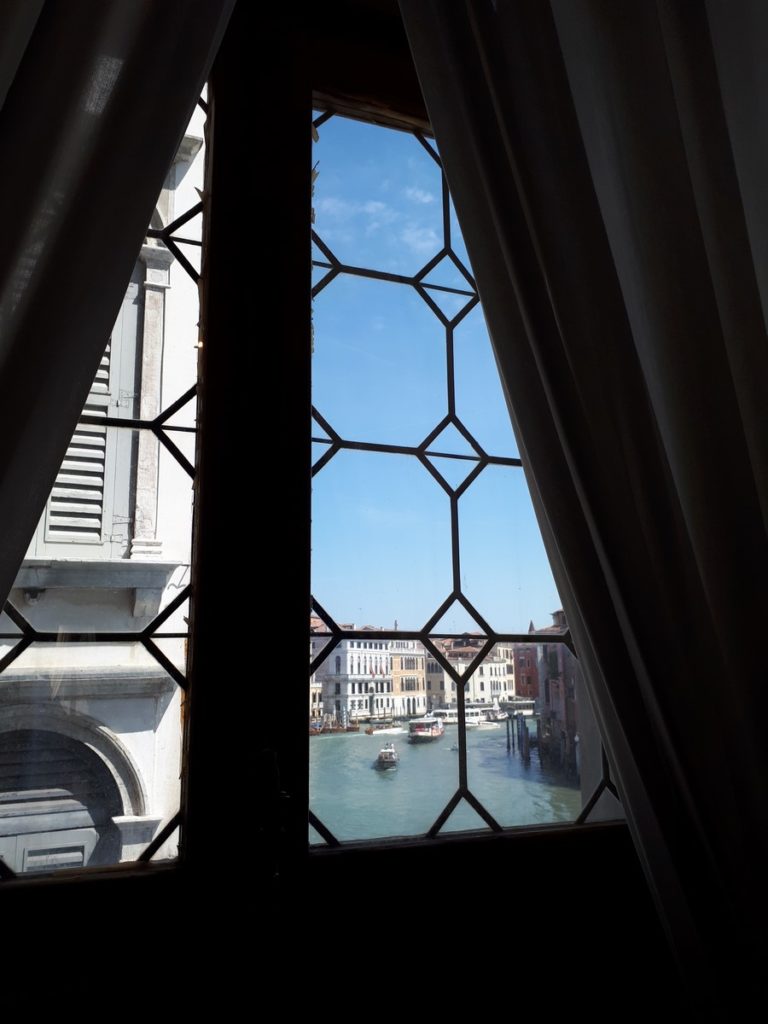
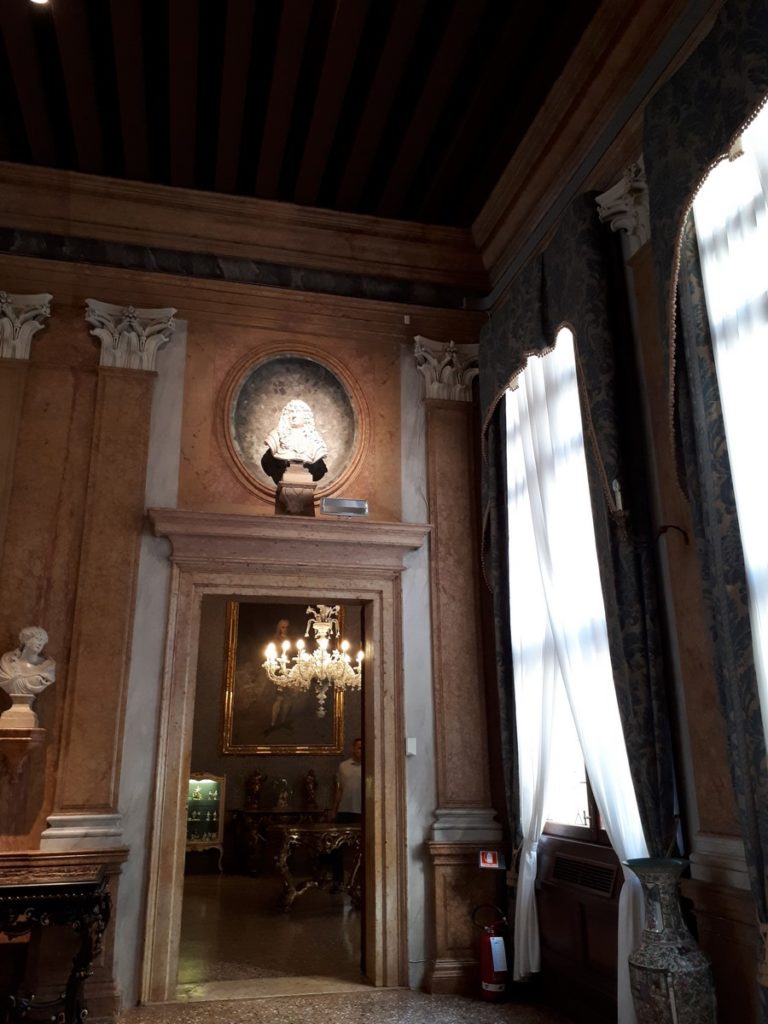

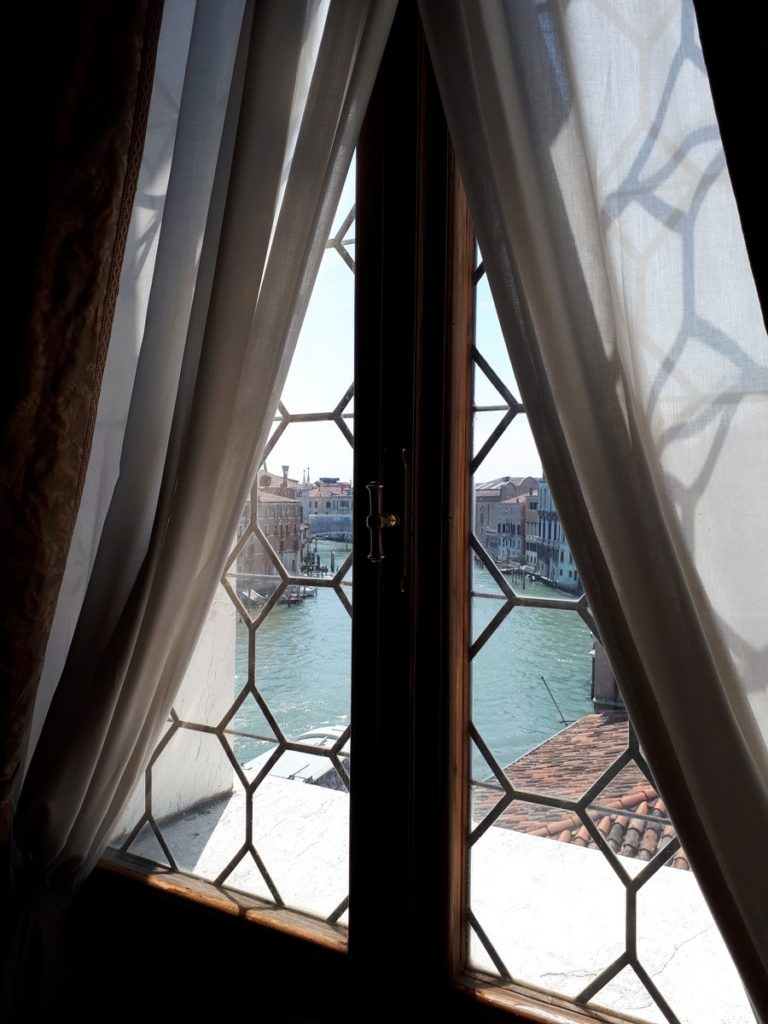
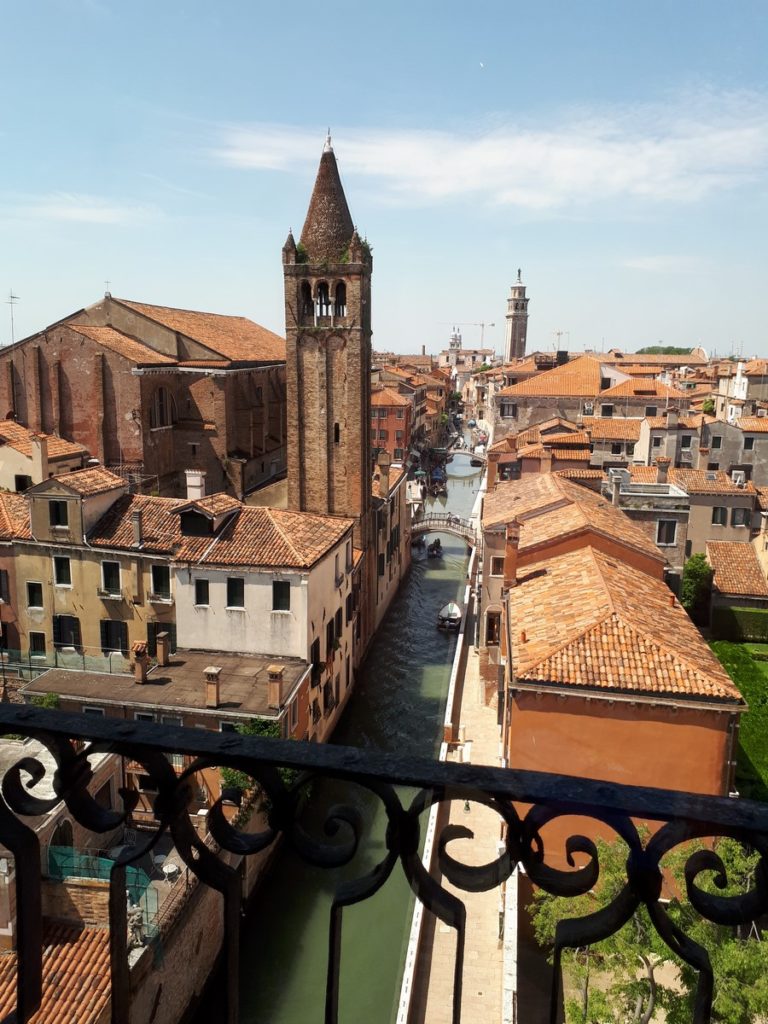
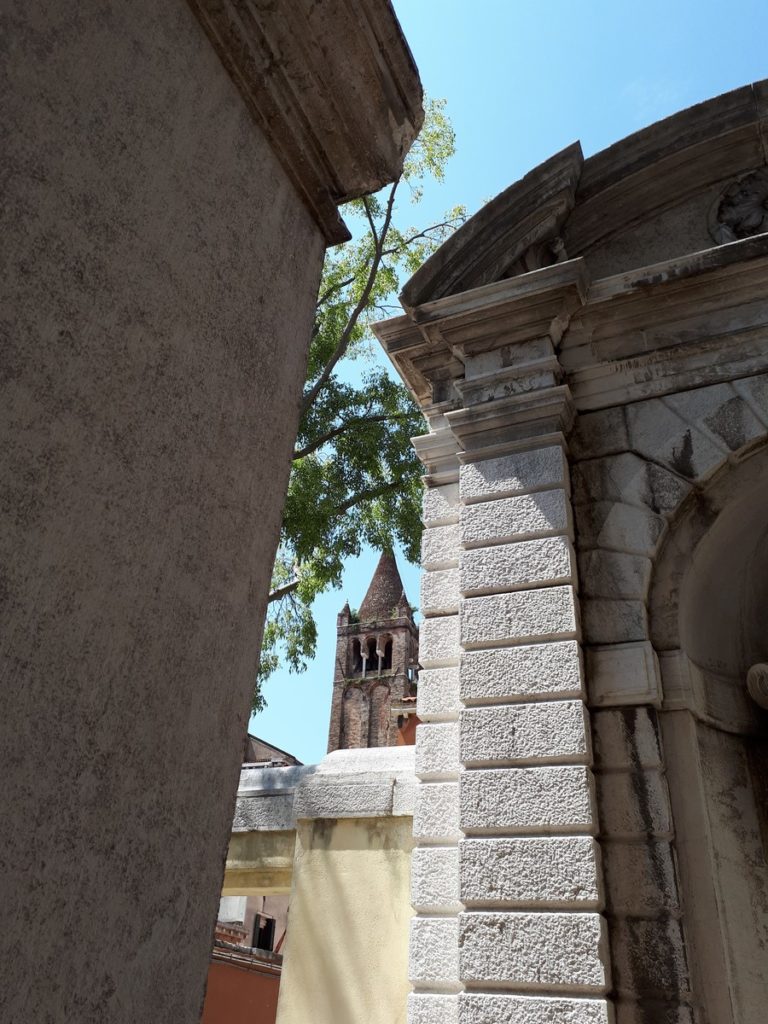

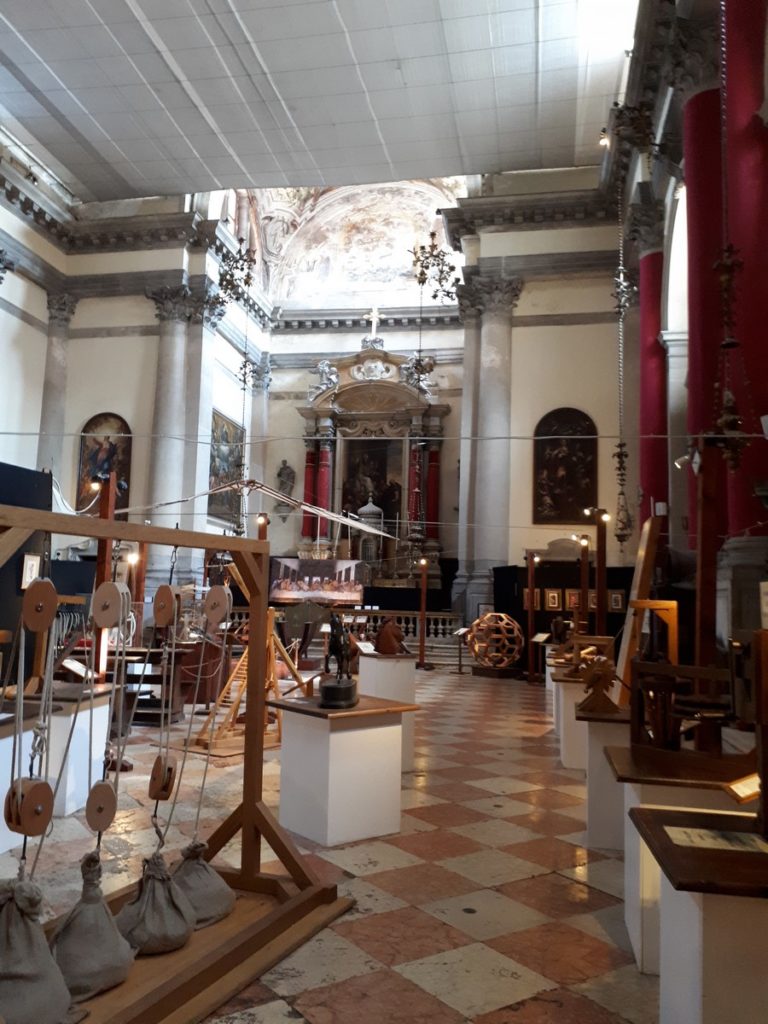
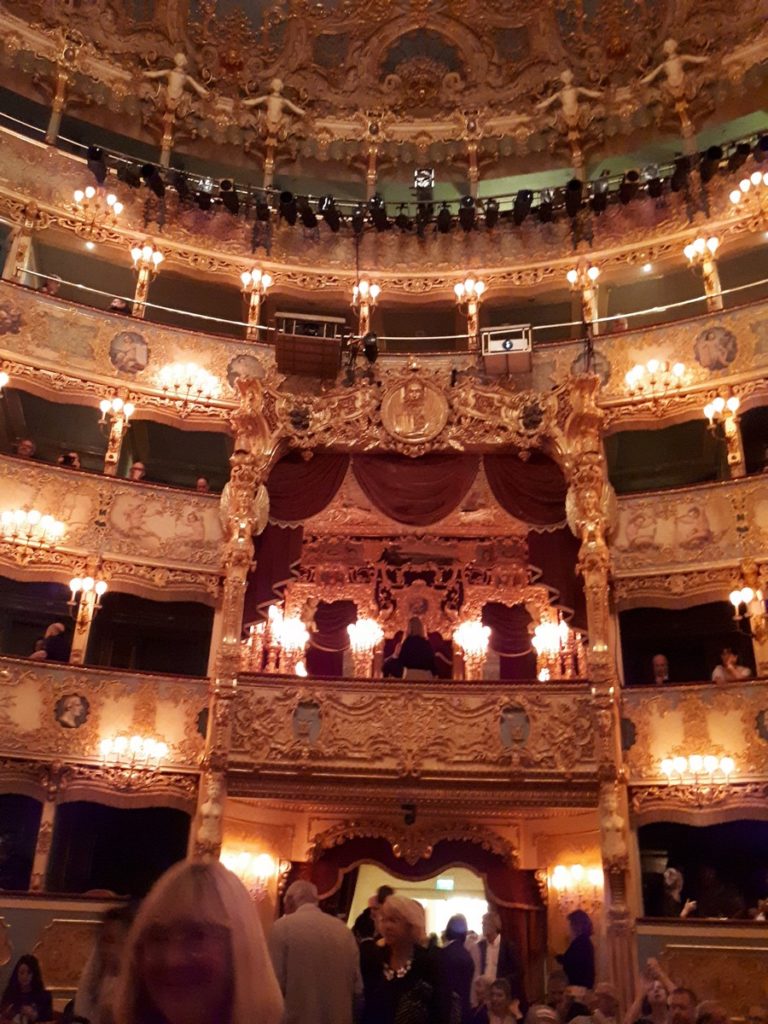
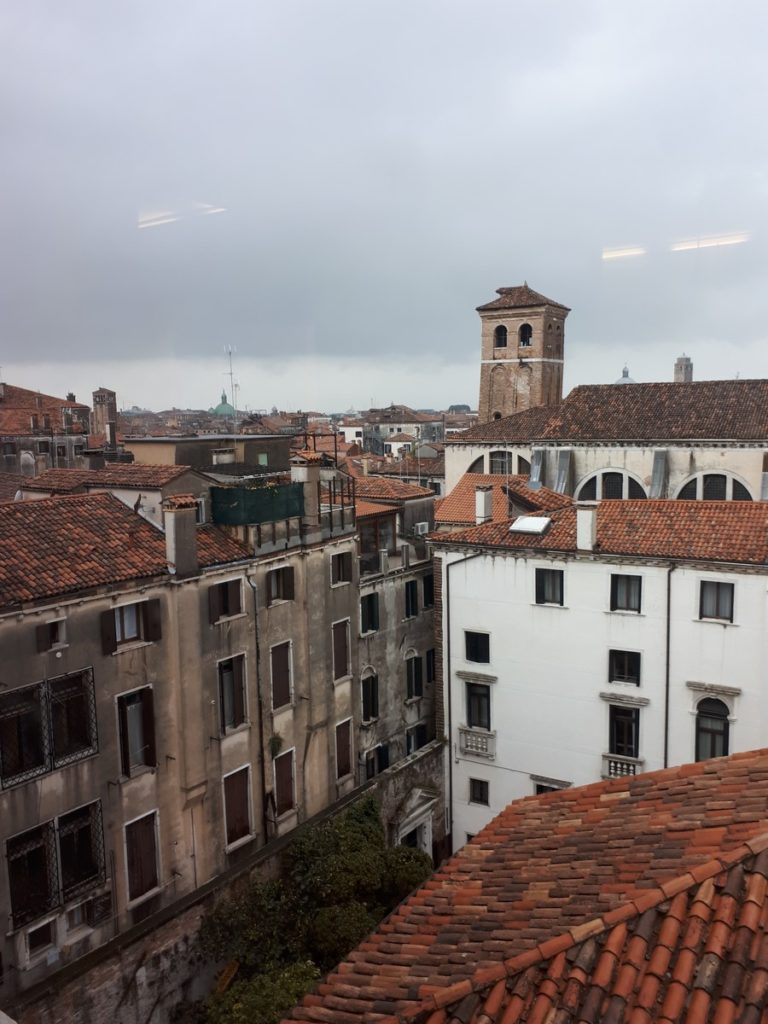
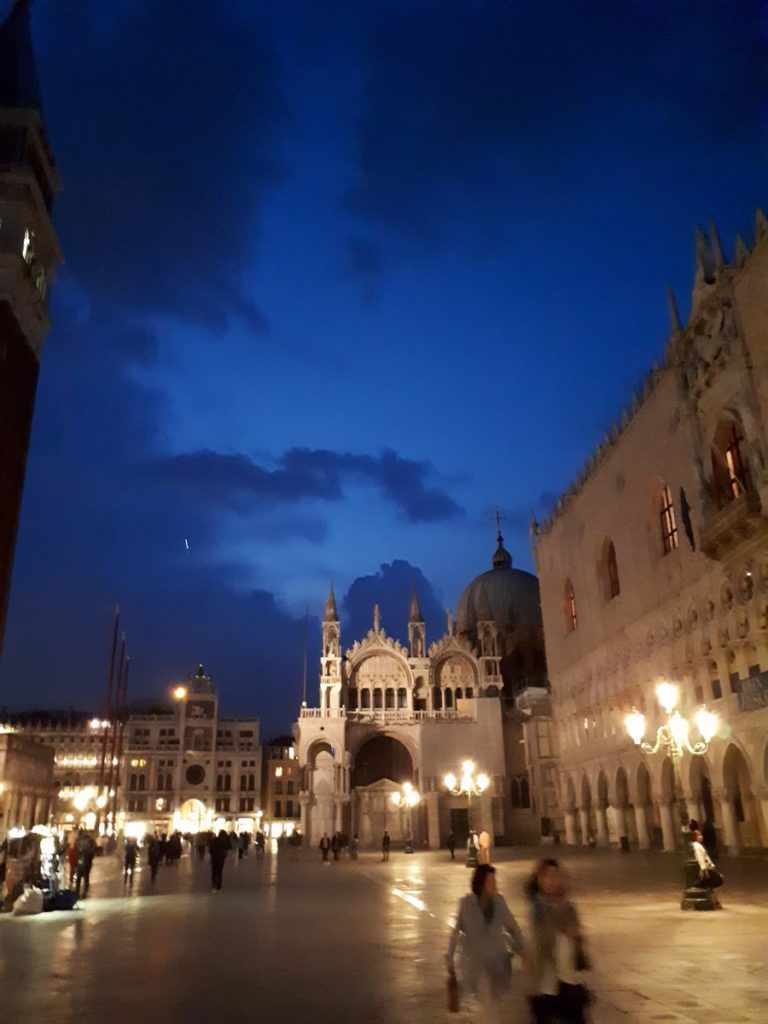
After dinner on our first night in Venice, Victoria and I decided to stroll on to St. Mark’s Square, or Piazza San Marco as it’s known locally. For a description of the Square and its buildings, I’ll quote Wikipedia: “The Square is dominated at its eastern end by the great church of St Mark.
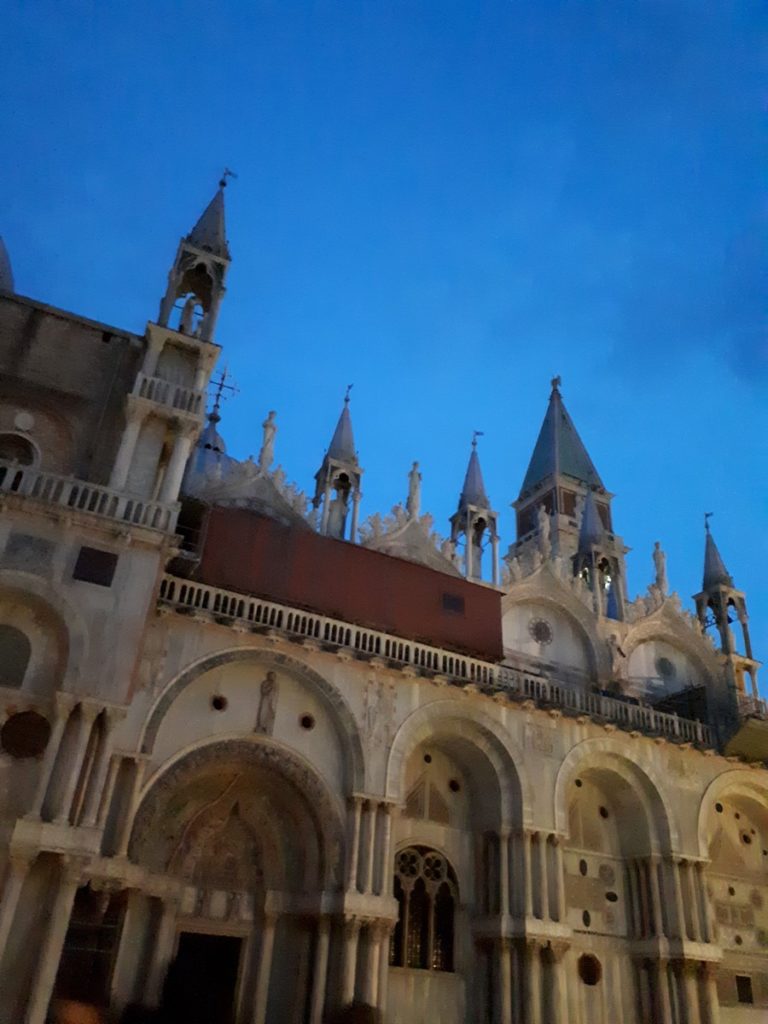

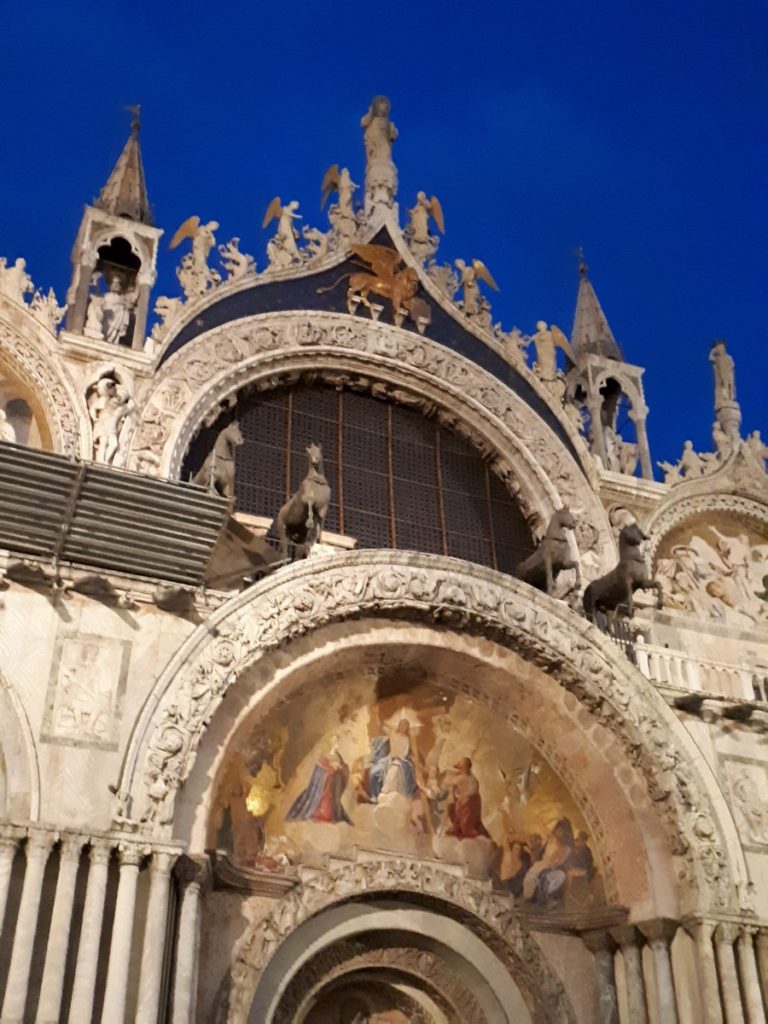
“The church is described in the article St Mark’s Basilica, but there are aspects of it which are so much a part of the Piazza that they must be mentioned here, including the whole of the west facade with its great arches and marble decoration, the Romanesque carvings round the central doorway and, above all, the four horses (see photos above) which preside over the whole piazza and are such potent symbols of the pride and power of Venice that the Genoese in 1379 said that there could be no peace between the two cities until these horses had been bridled; four hundred years later, Napoleon, after he had conquered Venice, had them taken down and shipped to Paris.”
Note: After the Battle of Waterloo, during the Allied Occupation of Paris, the Duke of Wellington ordered that the horses be returned to the Basilica. A Captain Dumaresq, who had fought at the Battle of Waterloo and was with the Allied Forces in Paris, was selected by the Emperor of Austria to take the horses down from the Arc de Triomphe and accompany them on their return to their original place at St Mark’s. The horses remained in place over St Mark’s until the early 1980s, when the ongoing damage from growing air pollution forced their replacement with exact copies. Since then, the originals have been on display just inside the Basilica.
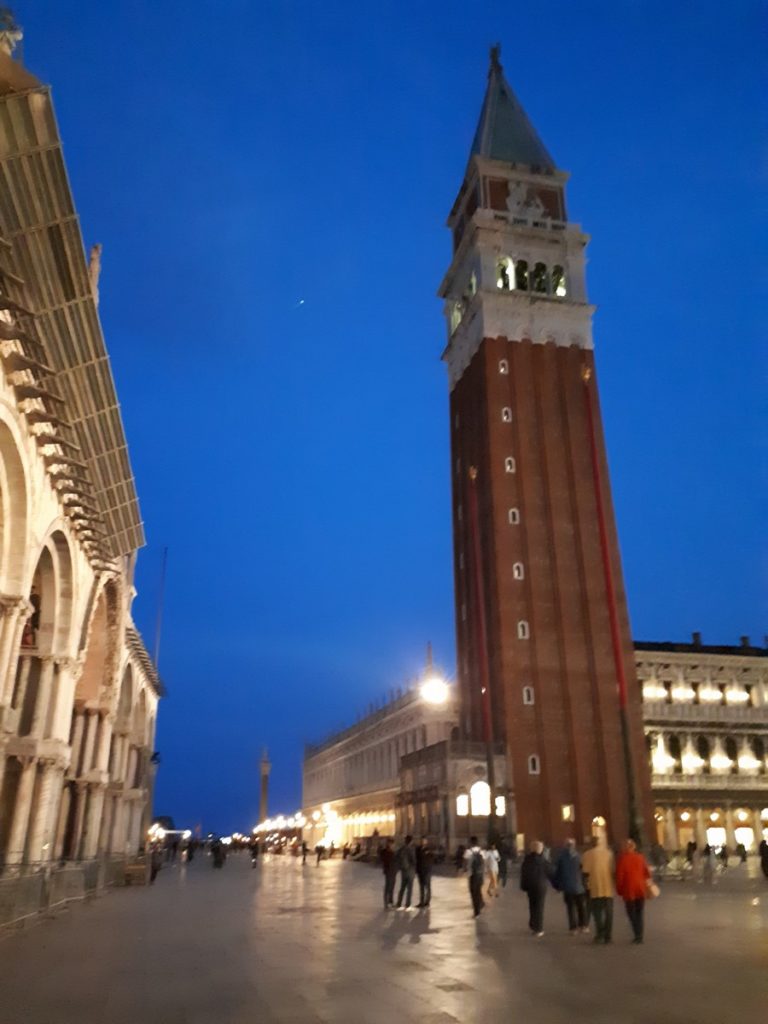
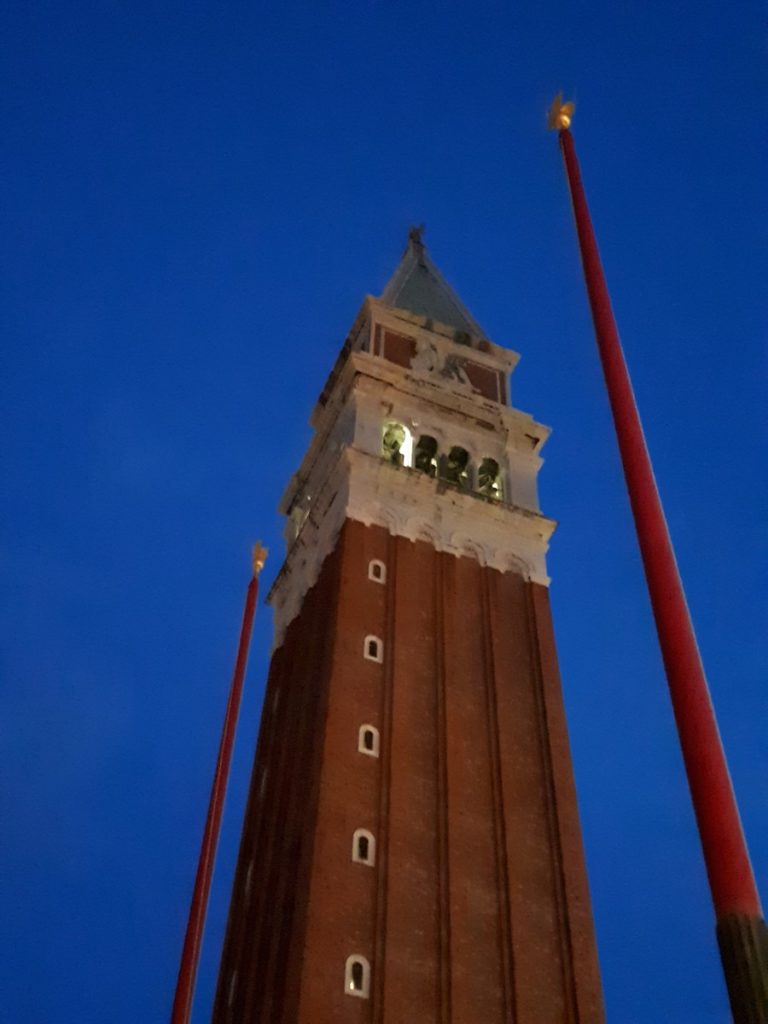
” . . . standing free in the Piazza, is the Campanile of St Mark’s church (last restored in 1514), rebuilt in 1912 ‘ com’era, dov’era ‘ (as it was, where it was) after the collapse of the former campanile on 14 July 1902.”
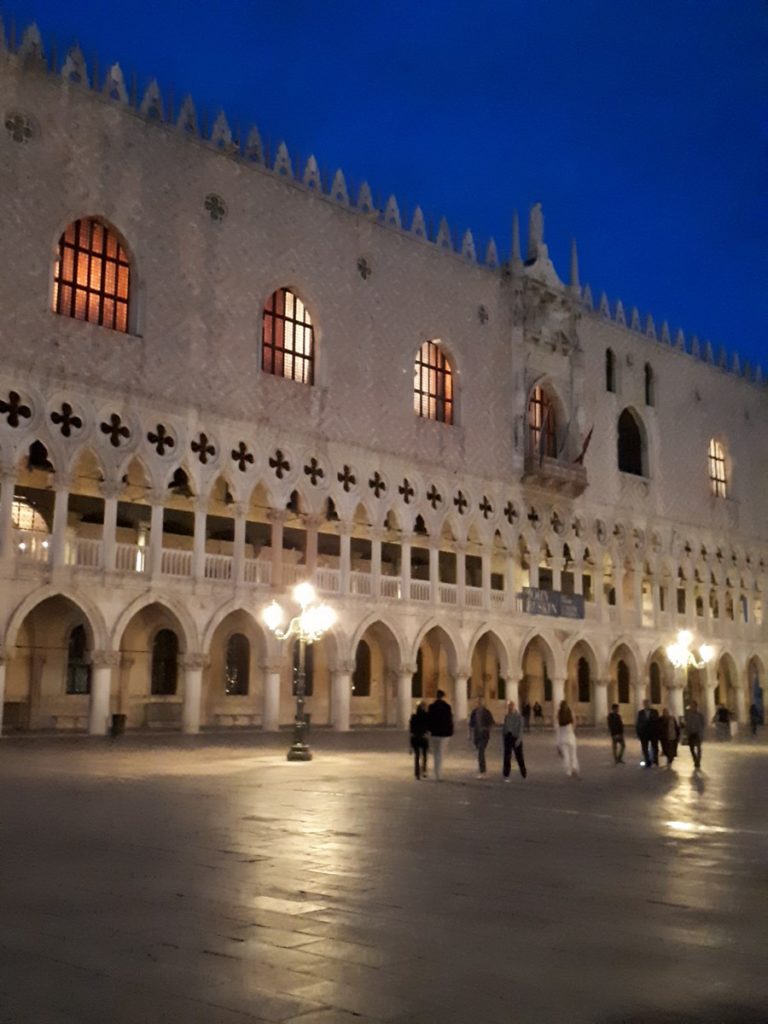
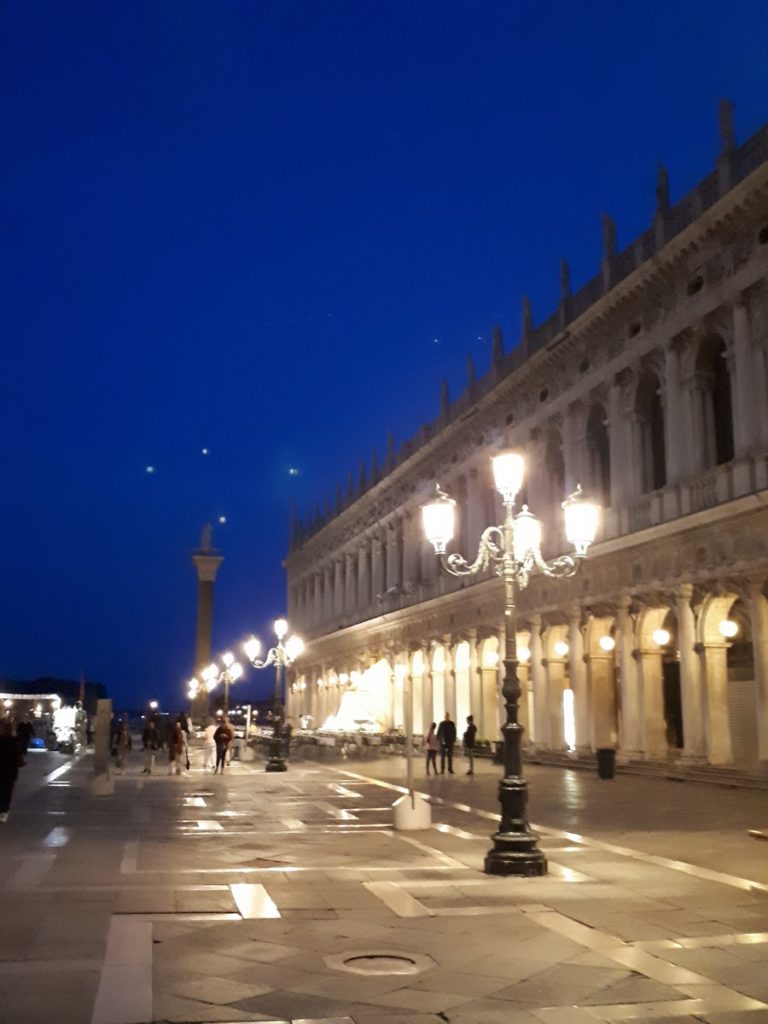

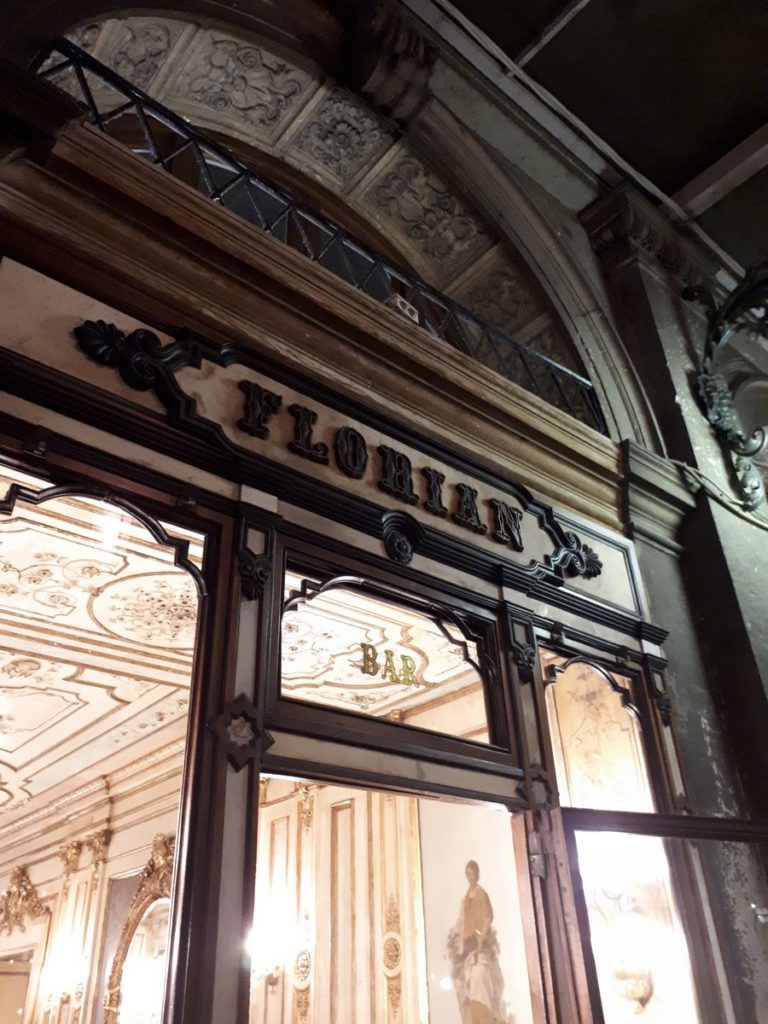
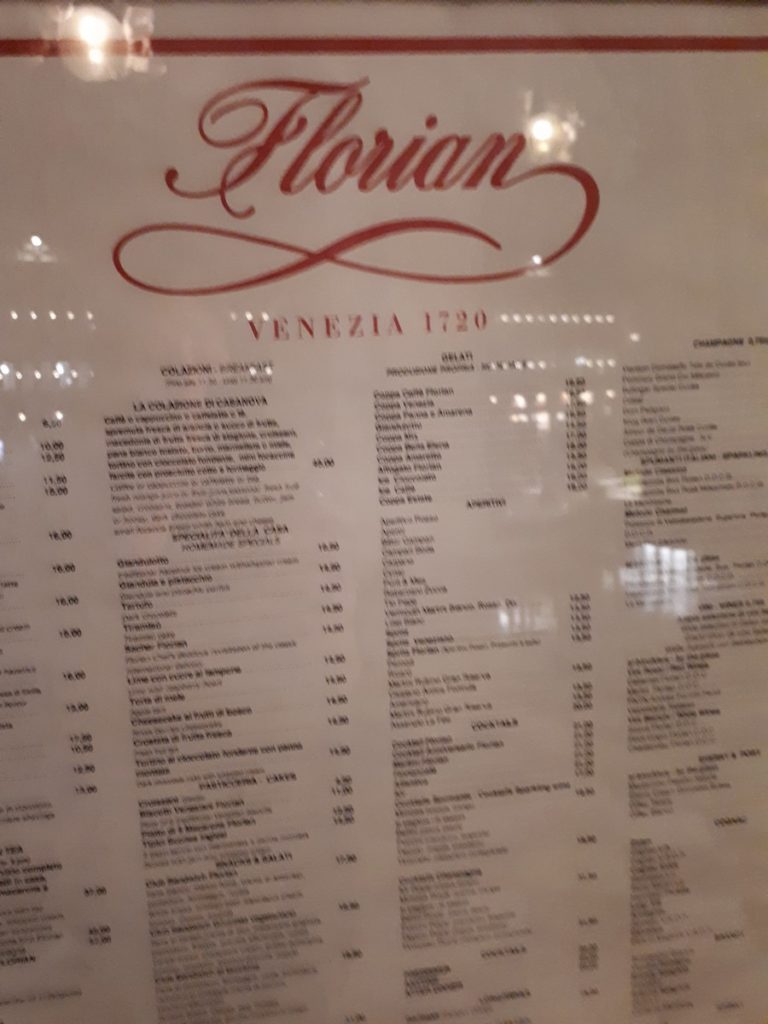
Another landmark in the Piazza is Florian’s, or Caffè Florian, which claims to be the worlds oldest coffee house, since 1720. In actuality, the first coffeehouse in London was opened in 1652 in St Michael’s Alley, Cornhill, by a Pasqua Rosée. Never mind, Florian’s can still claim it’s famous patrons over the centuries, including Casanova and Napoleon, Lord Byron, Wagner, Dickens and Henry Joyce. From Florian’s website: “While the finest wines and coffees from the Orient, Malaysia, Cyprus and Greece were being served inside, history was unfolding outside. Its windows witnessed the splendour and fall of the Serenissima Republic of Venice and the secret conspiracies against French and then Austrian rule; later, its elegant rooms were used to treat the wounded during the 1848 uprising. Right from the beginning, Caffè Florian has had a glittering clientele, including Goldoni, Giuseppe Parini, Silvio Pellico and many others.”
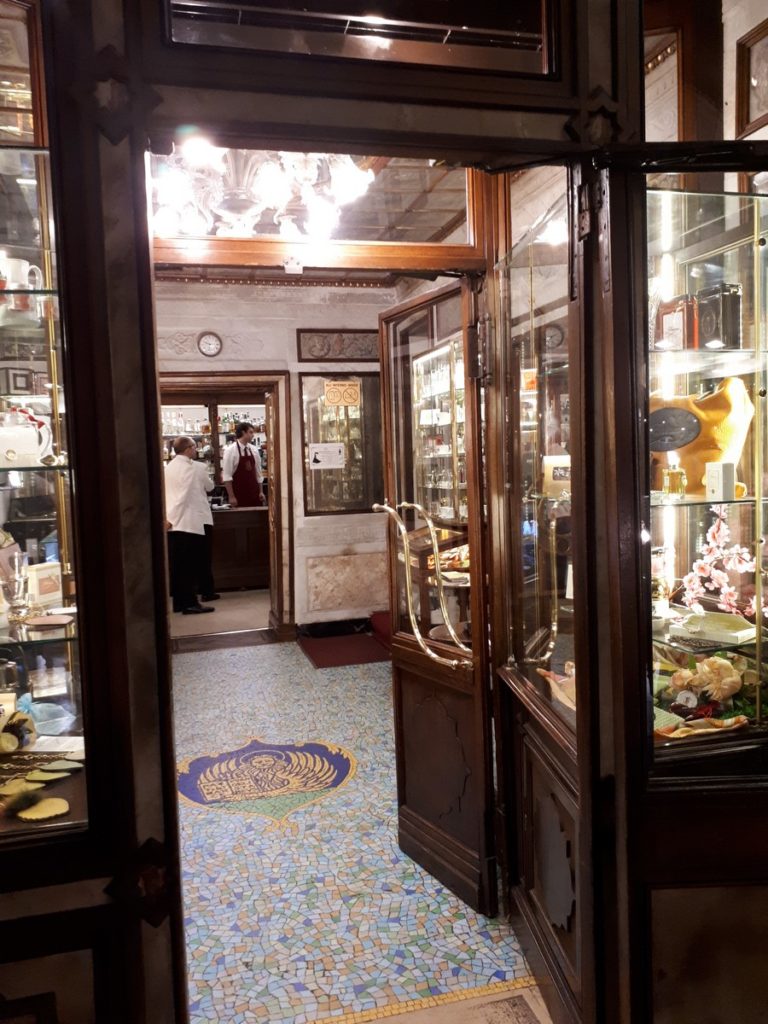
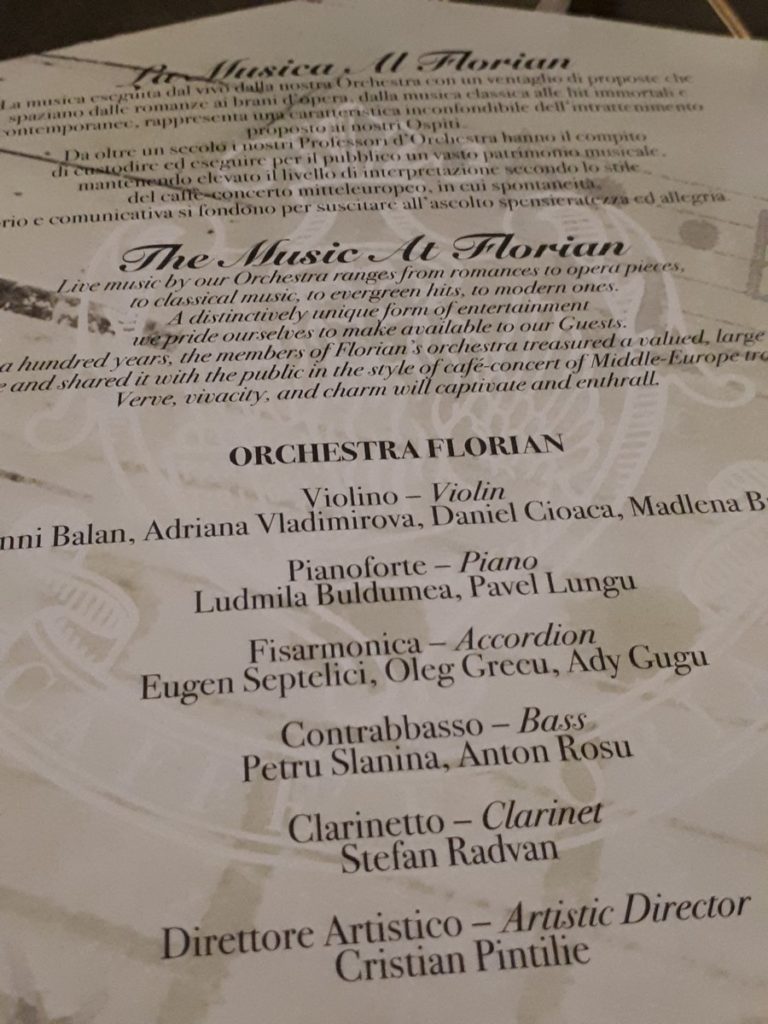
Naturally, Vicky and I couldn’t pass Florian’s without having a drink and listening to the band.
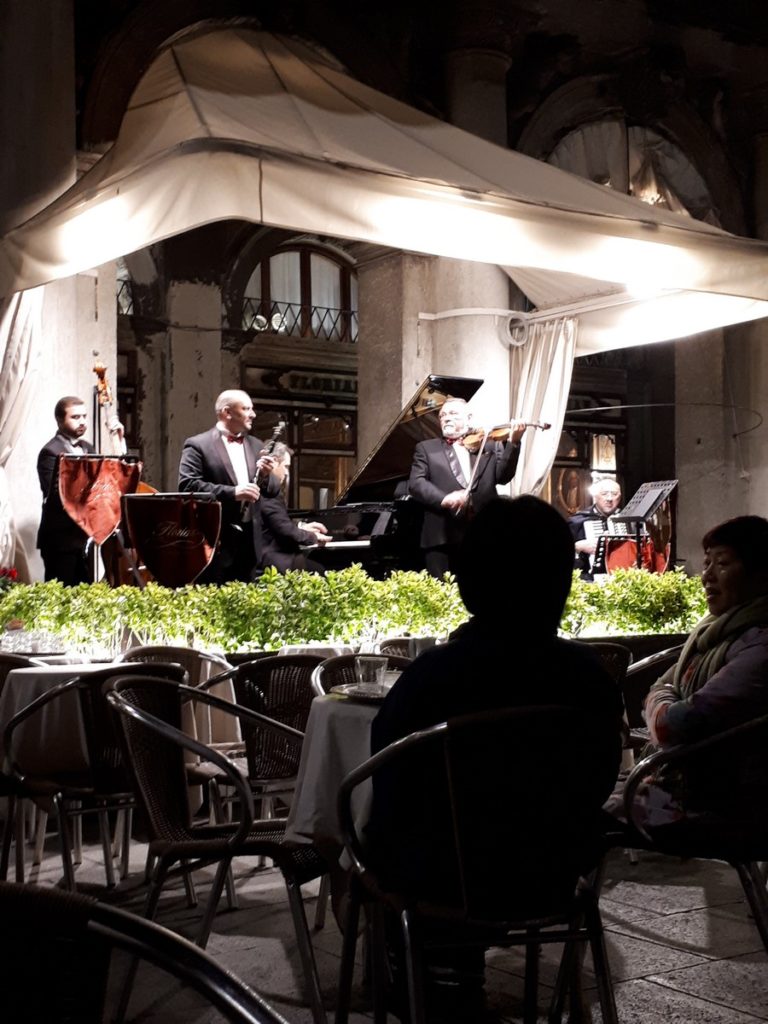

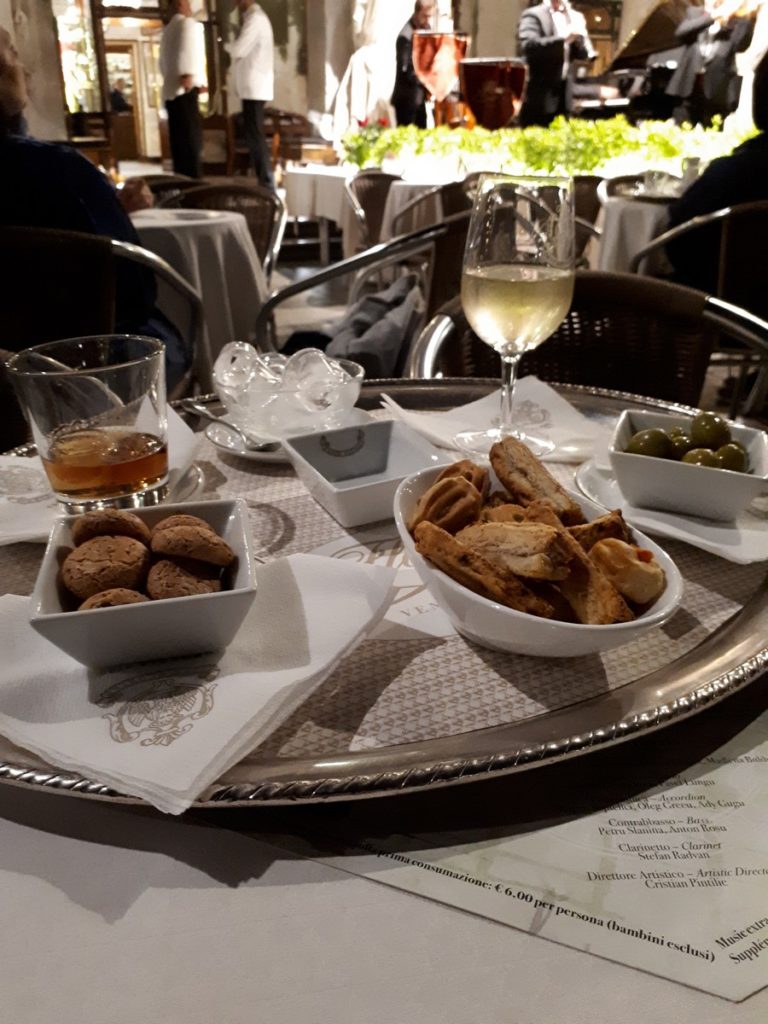
 I ordered an amaretto and Vicky had a glass of prosecco. Once again, Venetian hospitality was on display in the form of the unexpected olives, biscotti and cookies that accompanied our drinks.
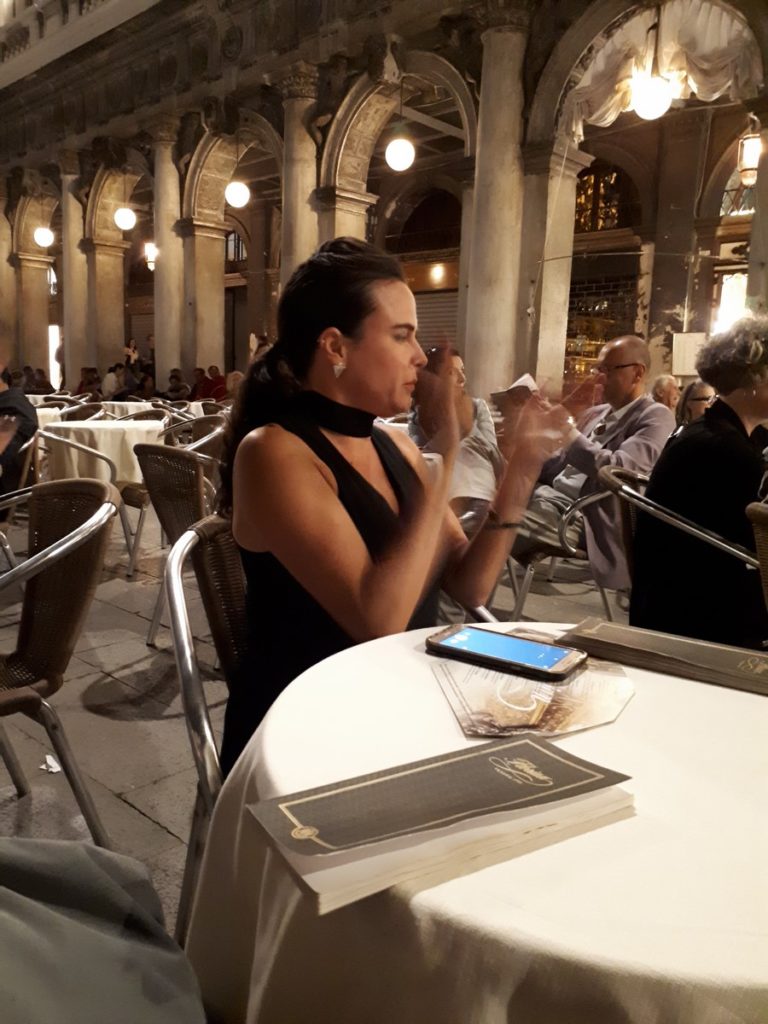
We sat companionably and enjoyed our drinks, the warm, starlit night and the music for quite a while. Again, very civilized. In fact, we liked Florian’s so well that we went back the next night, when my daughter Brooke arrived to join us in Venice. She seemed to enjoy it, too. If it was good enough for Lord Byron . . . .
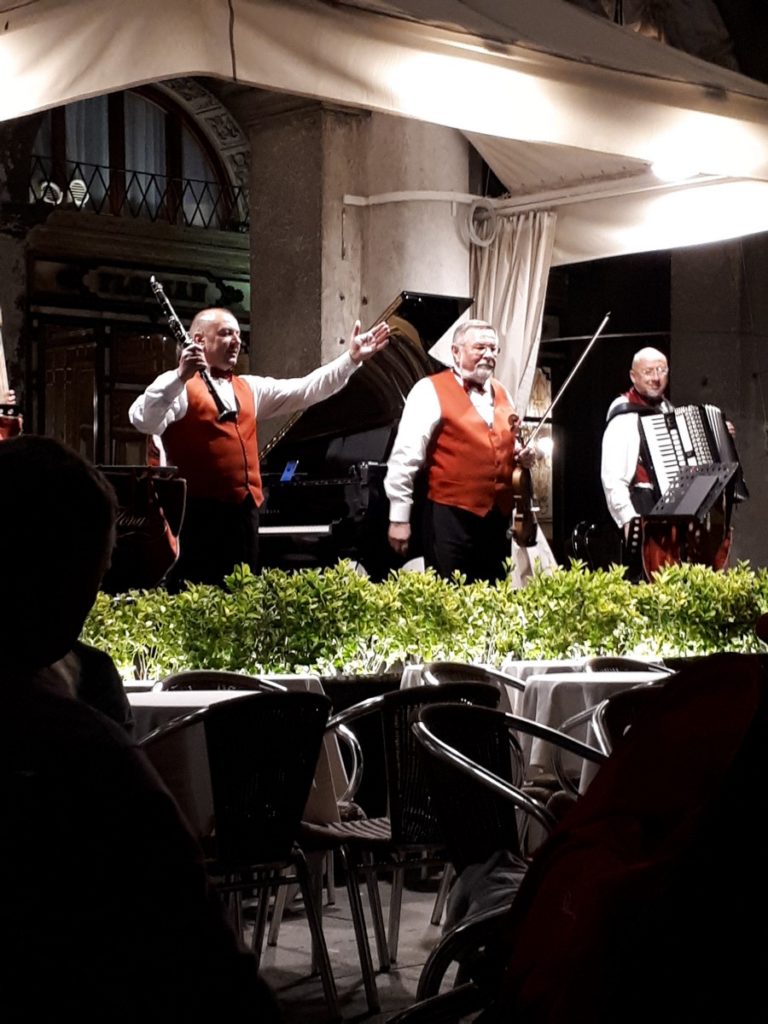 You can listen to the band in this video I took on the night –
Back in January of 2018, I was at Vicky’s condo in Naples, Florida, spending the week with her as at the time, I was living in the Panhandle. We sat in the living room, discussing plans for our upcoming trip to the UK in order to undertake some Wellington research at several archives in the south of England. Naturally, there would be a few weekends during the weeks we’d be away, meaning that the archives would be closed and we’d be free to do other things.
“Have you been to Beaulieu?” Vicky asked me.
“No. Put it on the list. Have you been to Osborne House? We could easily get there from Southampton.”
“Oh, great idea. I’ve never been. That’ll be fun!” For a while we were both silent, each of us checking our social media. After a bit, Vicky said, “You know, I’d love to go back to Venice. It’s been years since Ed and I went and I’d really like to see it again.”
“I’ve never been to Venice,” I said. And then we both looked up from our devices, our eyes met and it was a true Lucy and Ethel moment. In the space of the next couple of hours, we’d booked our hotel, flights and sketched out a working itinerary.
And so it came about that once we’d completed our Wellington research in England, we flew across the Channel and on to Venice.
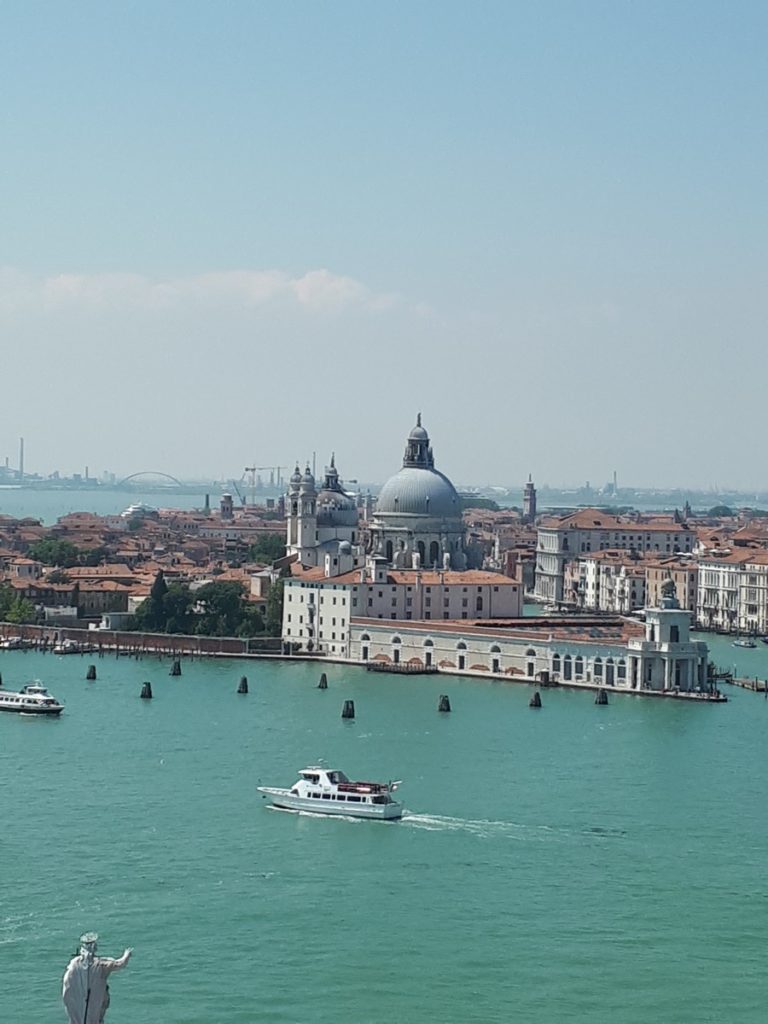
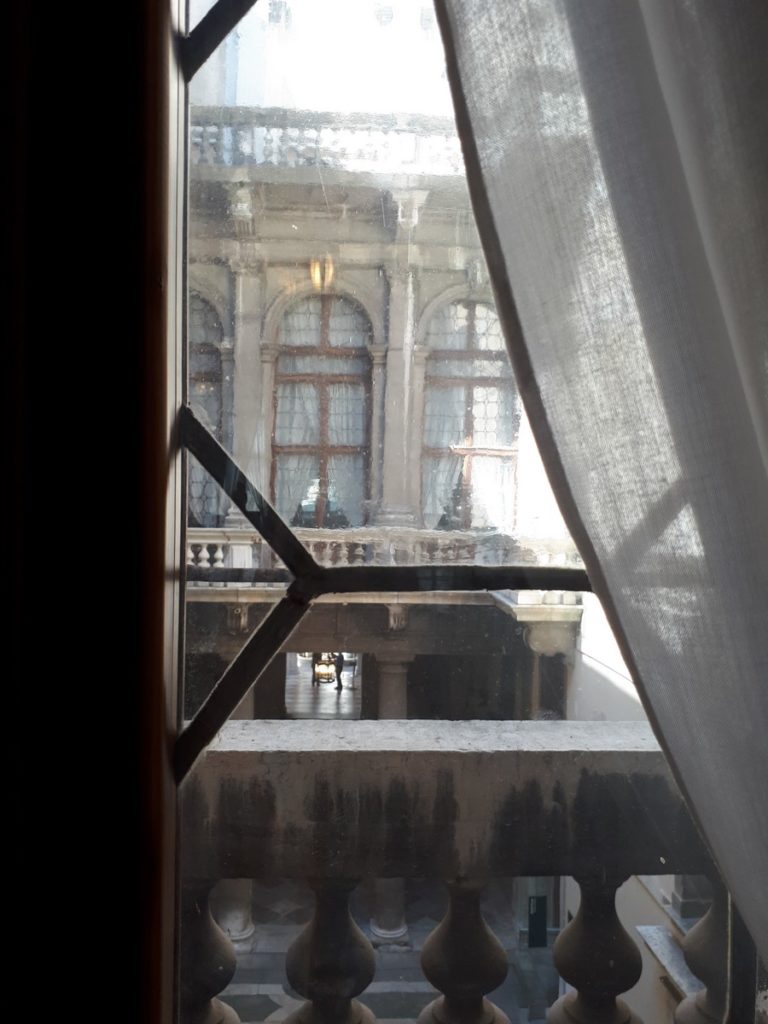
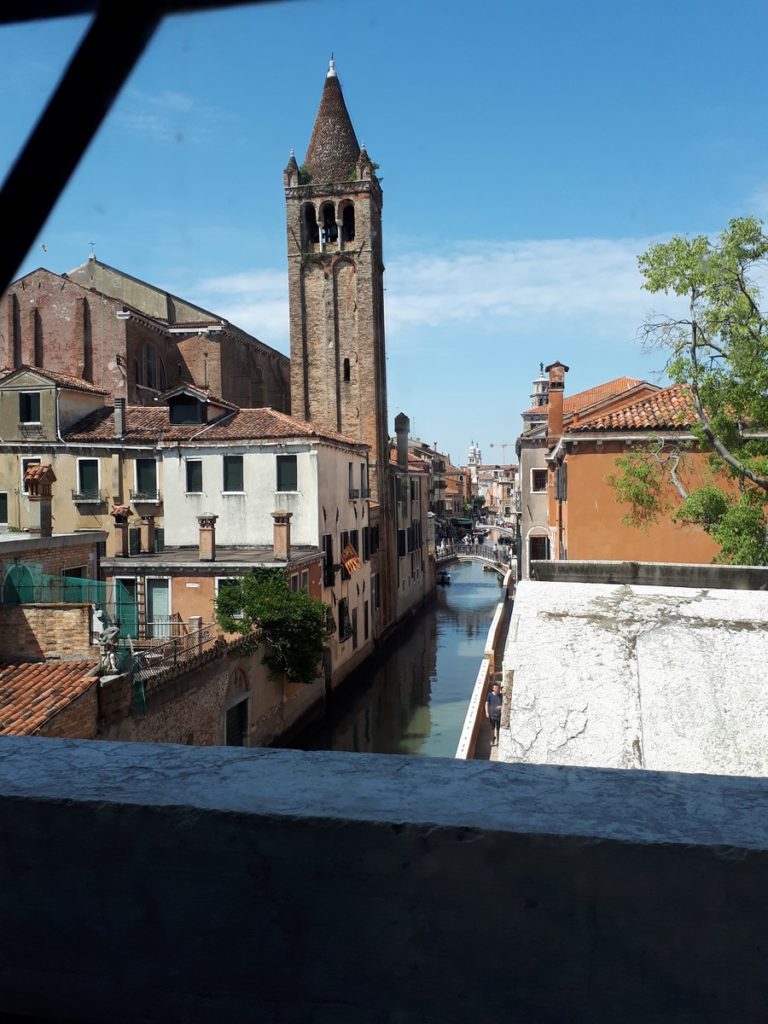
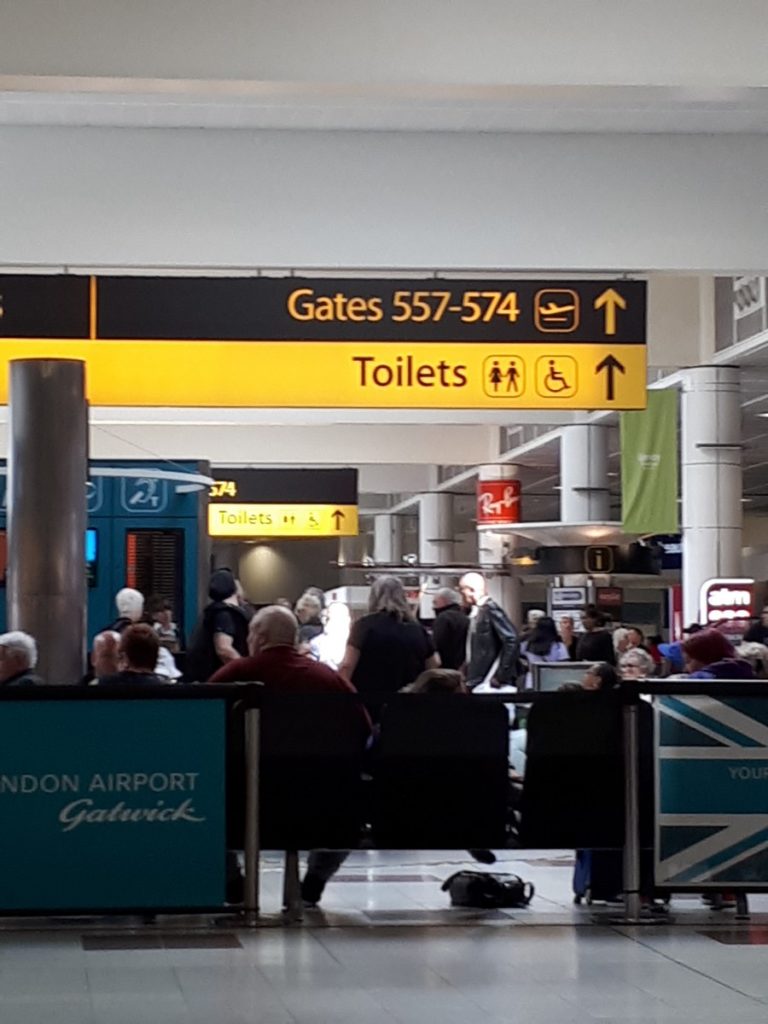
Upon arrival, Vicky and I walked for what felt like miles through the terminal to the water taxi departure point. I have to say, my first glimpses of Venice were not particularly impressive.
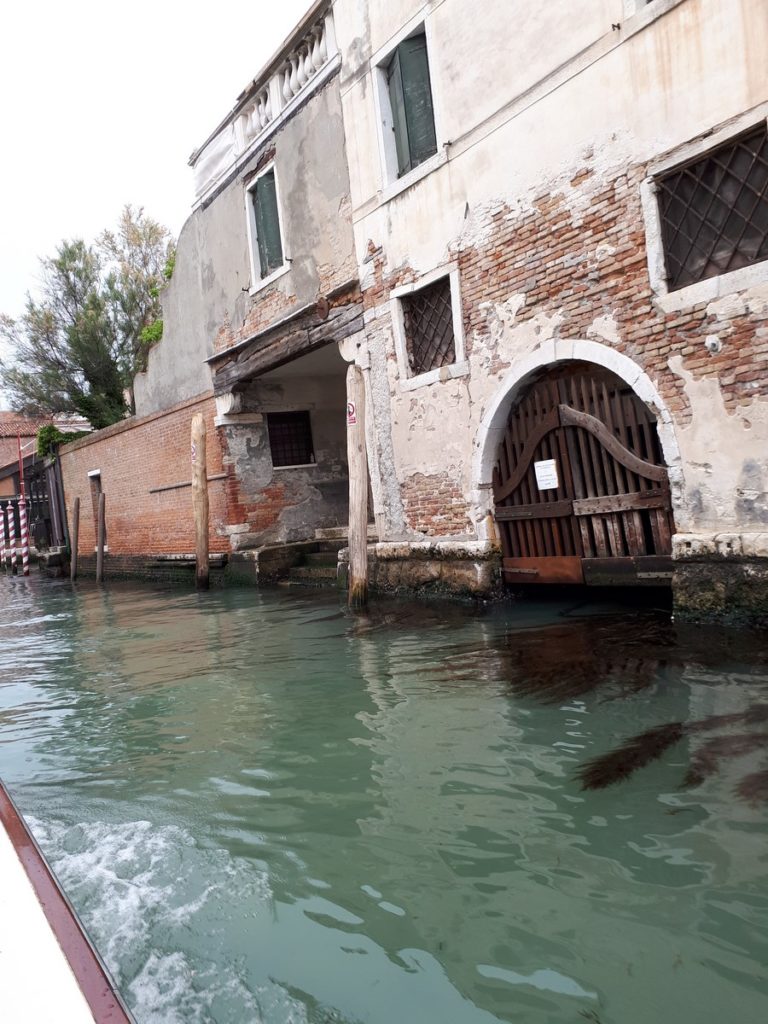
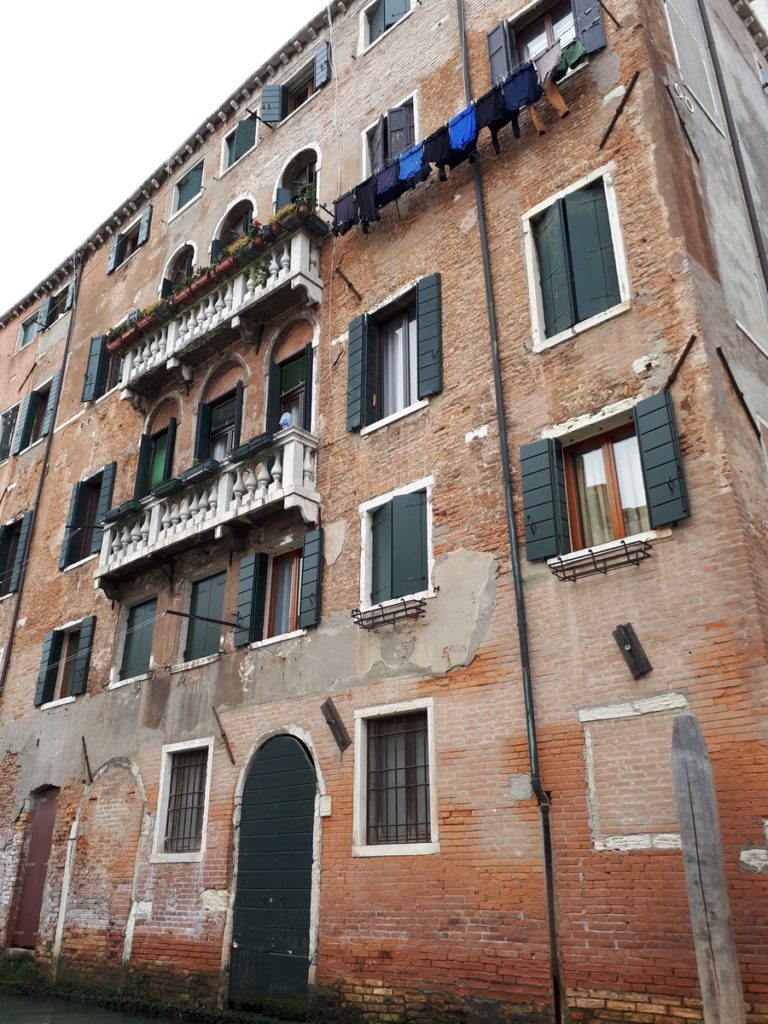
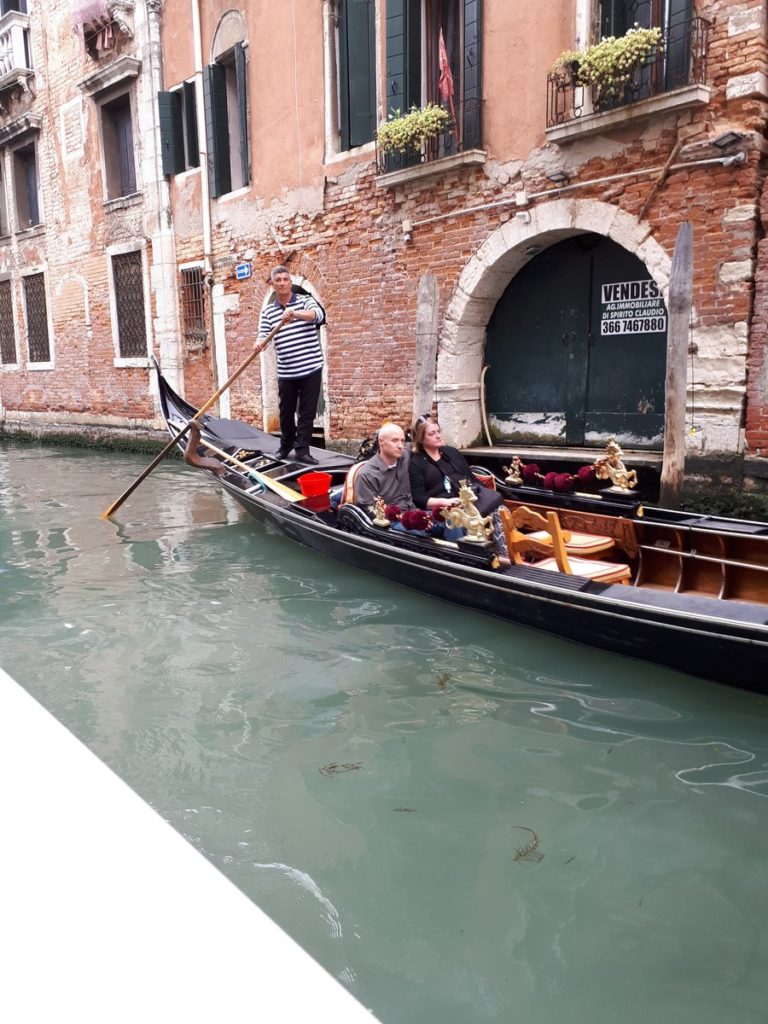
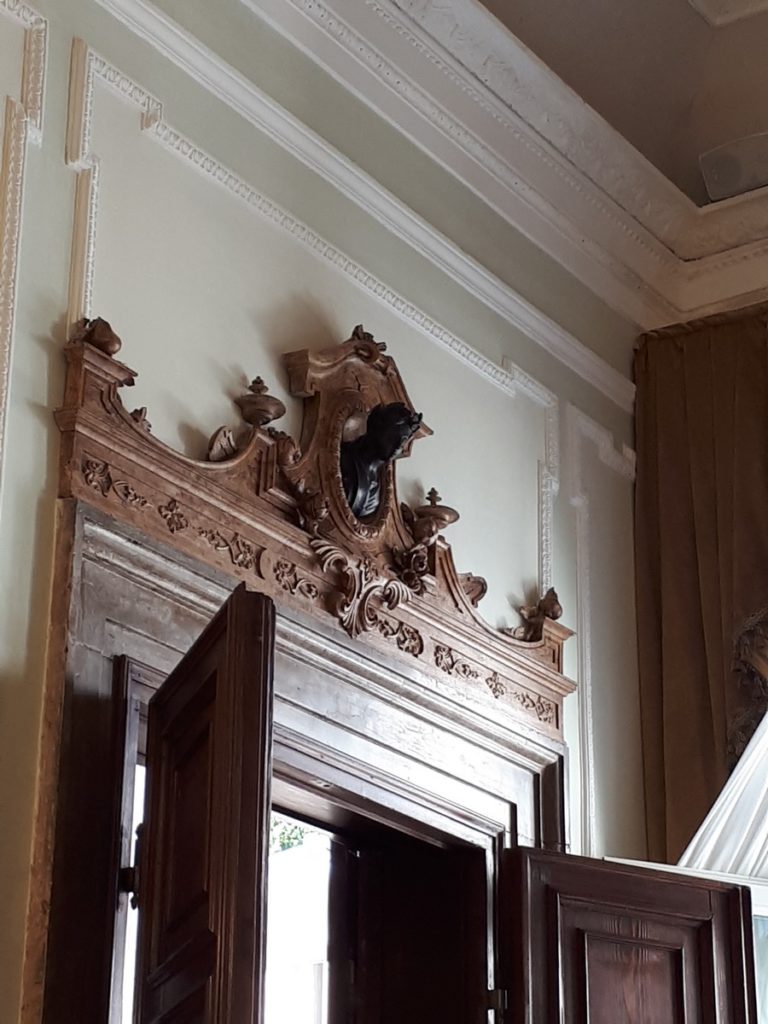
But things looked up once we’d arrived at our home for the next week, the Hotel Ai Cavalieri.
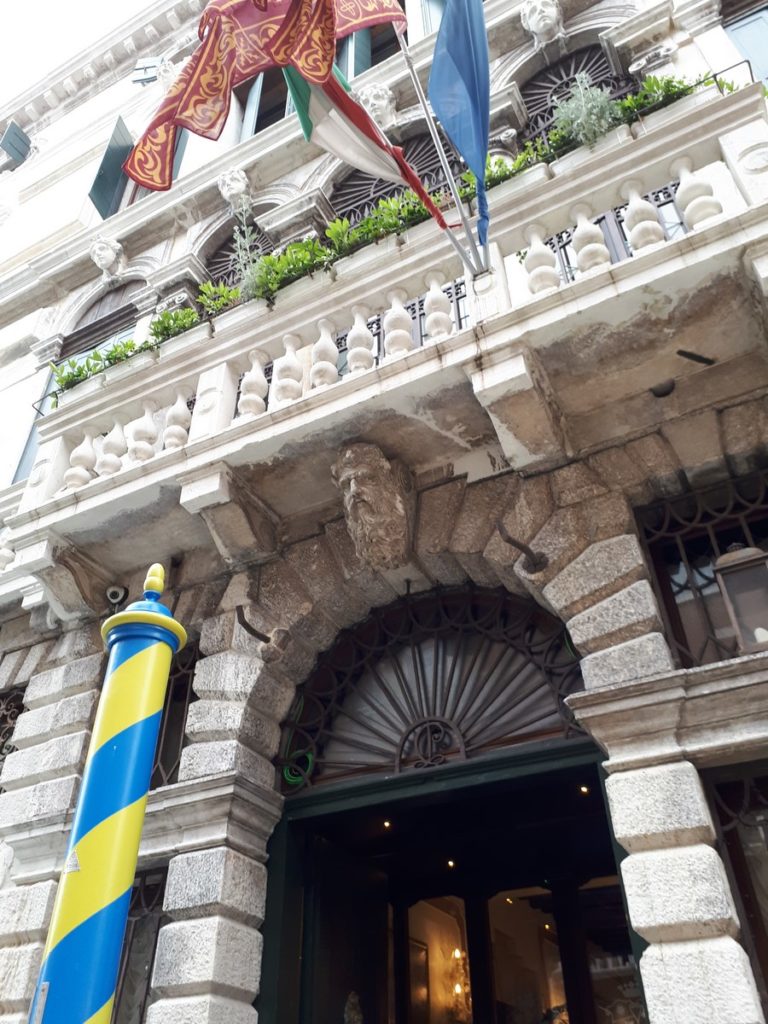
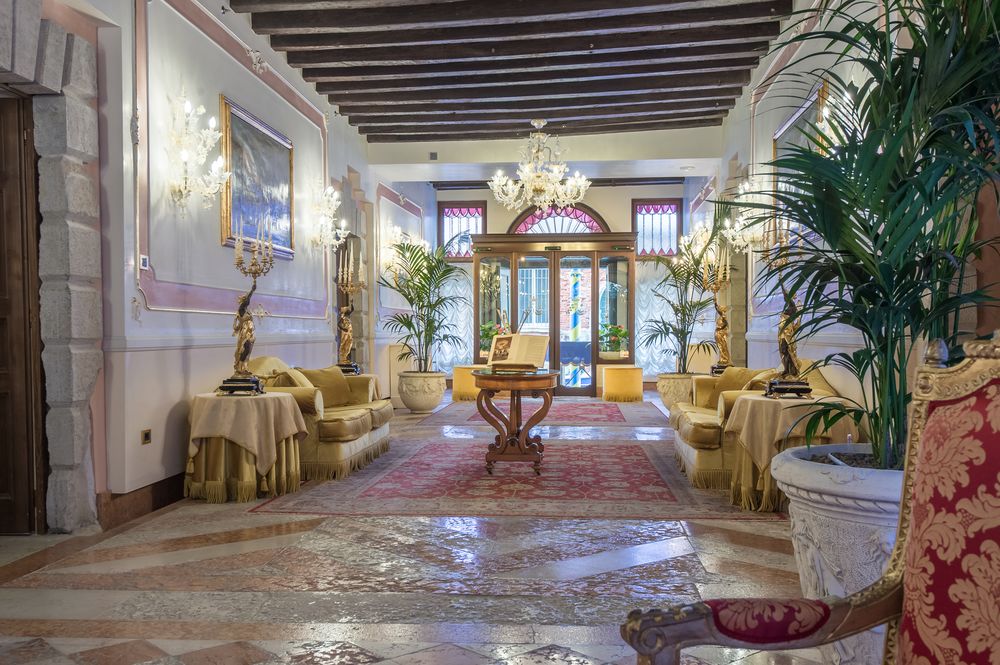
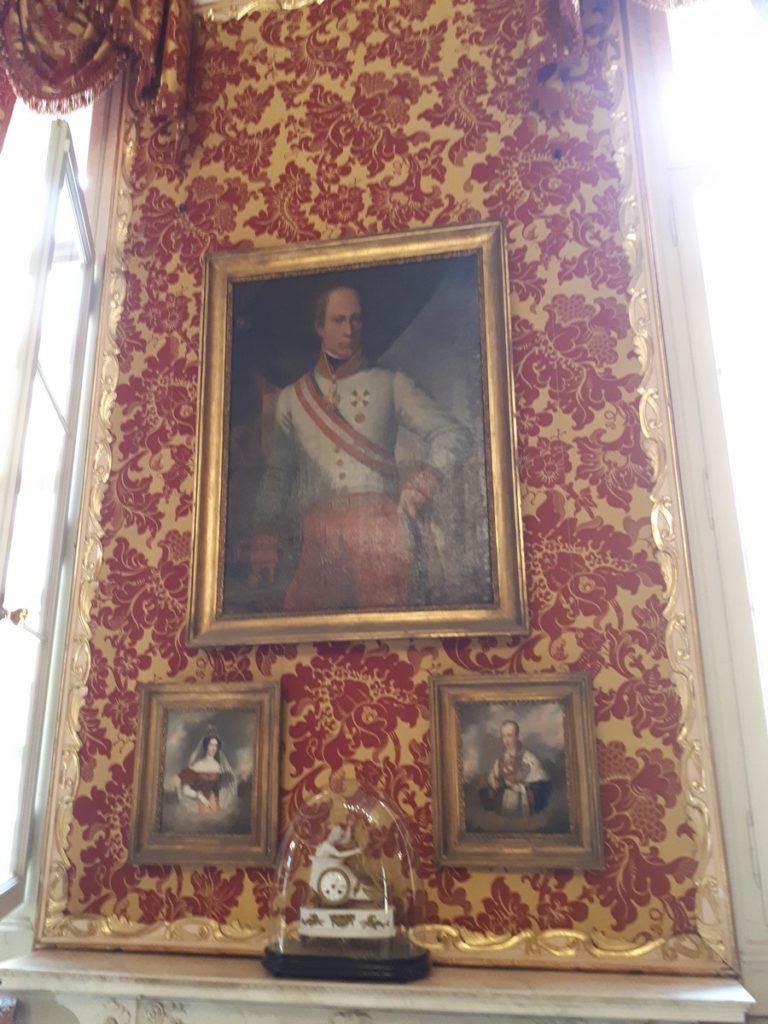
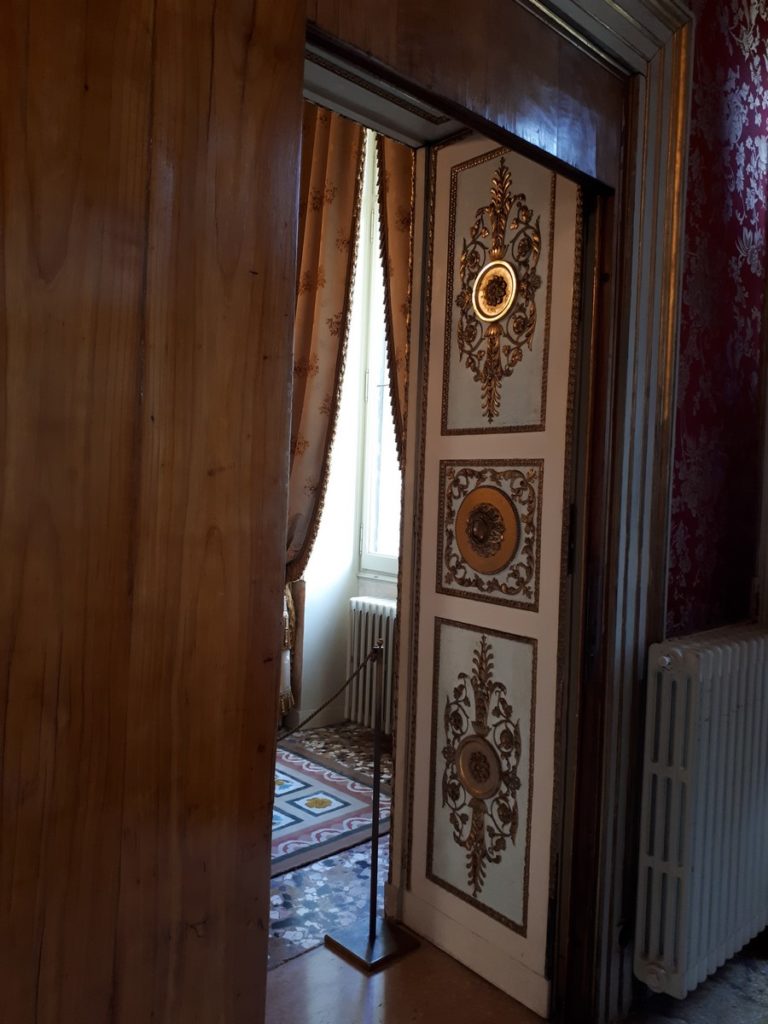
After check-in, we were shown to our room, which was quite large, well appointed and very red.
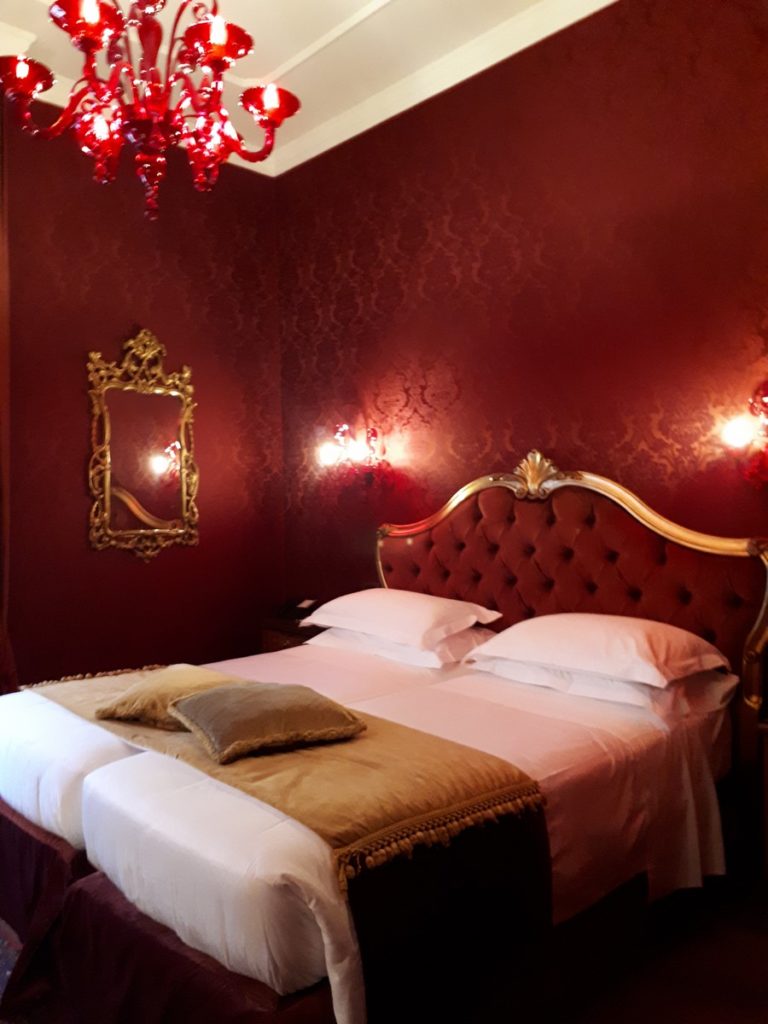


“Is it me, or do you feel like we’ve landed in a brothel, too?” I asked.
“It’s a lot of red. Look, even the chandeliers are red.”
“Everything is red. Every thing.”

Except for the bathroom.
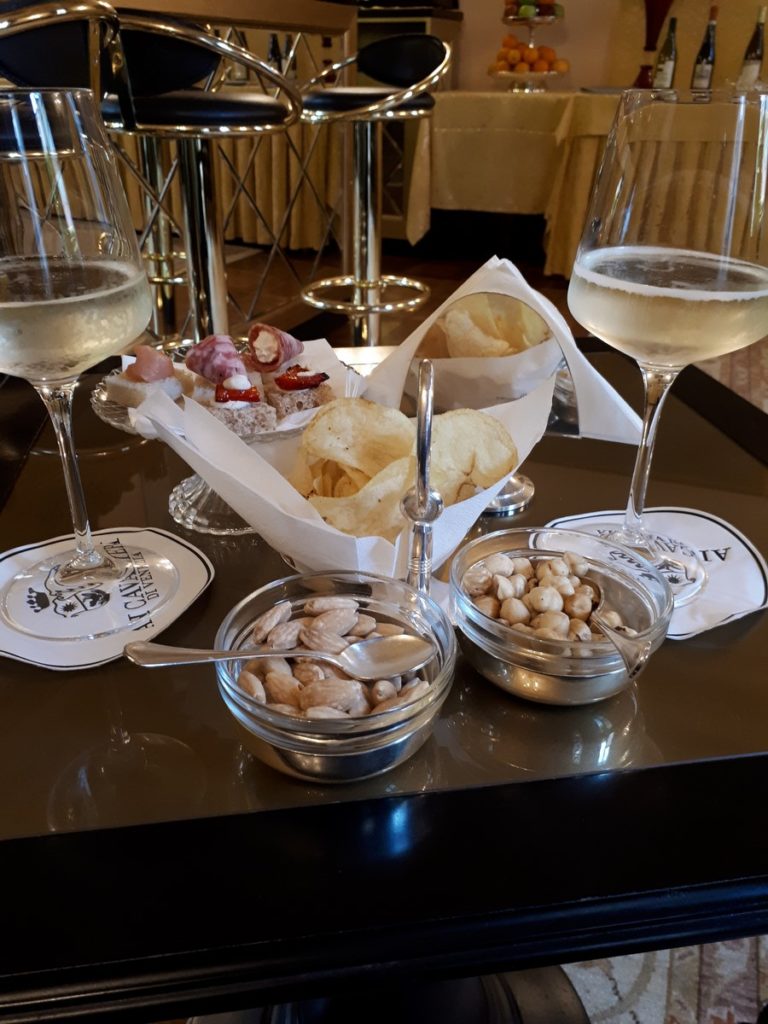
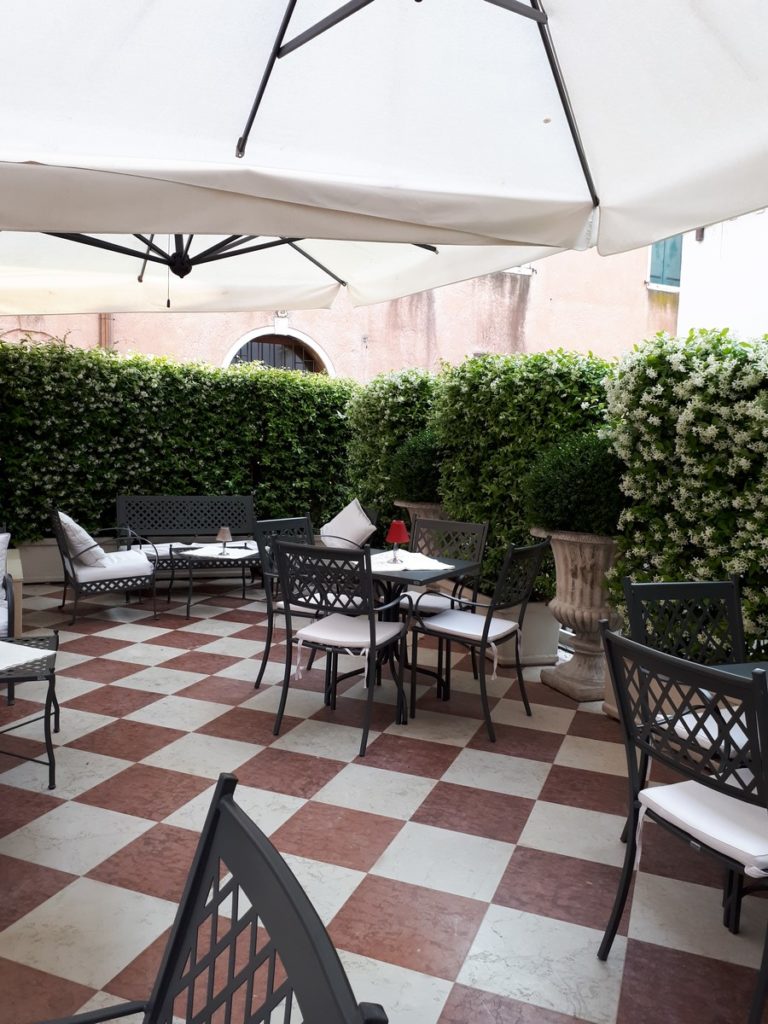 Feeling in need of a drink, Vicky and I headed to the terrace bar and, as we were in Venice, ordered two glasses of prosecco. Which were served to us along with nuts, crisps and canapes. Very civilized, indeed.
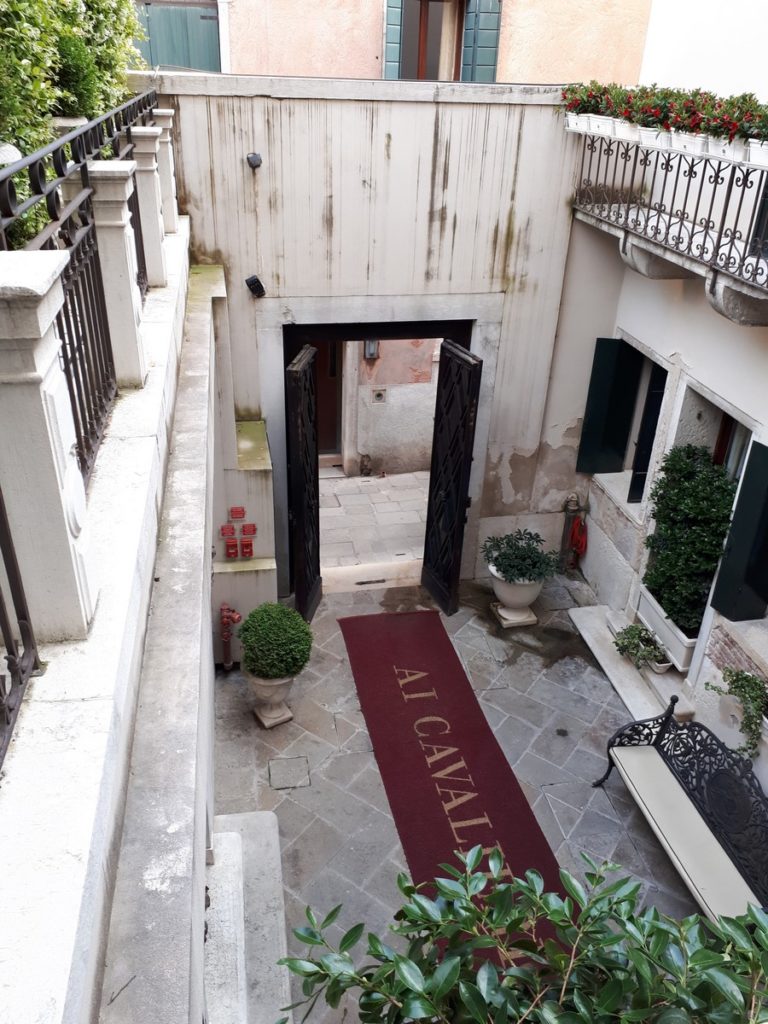
Eventually, we roused ourselves and headed out into Venice in order to explore our neighborhood.
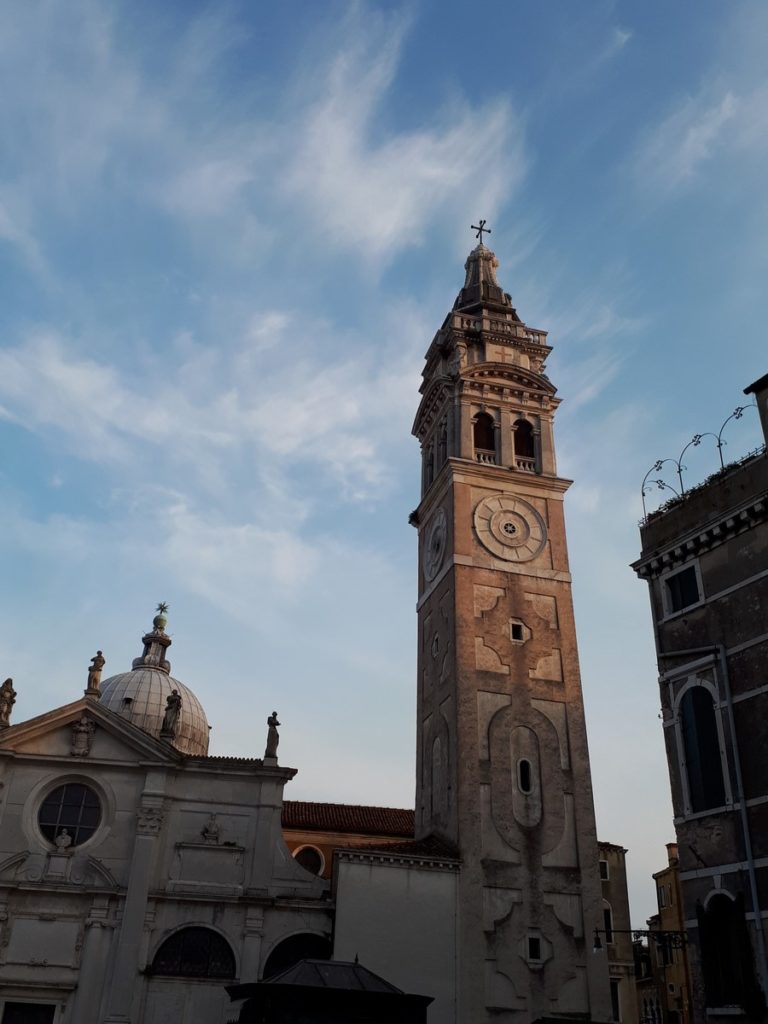
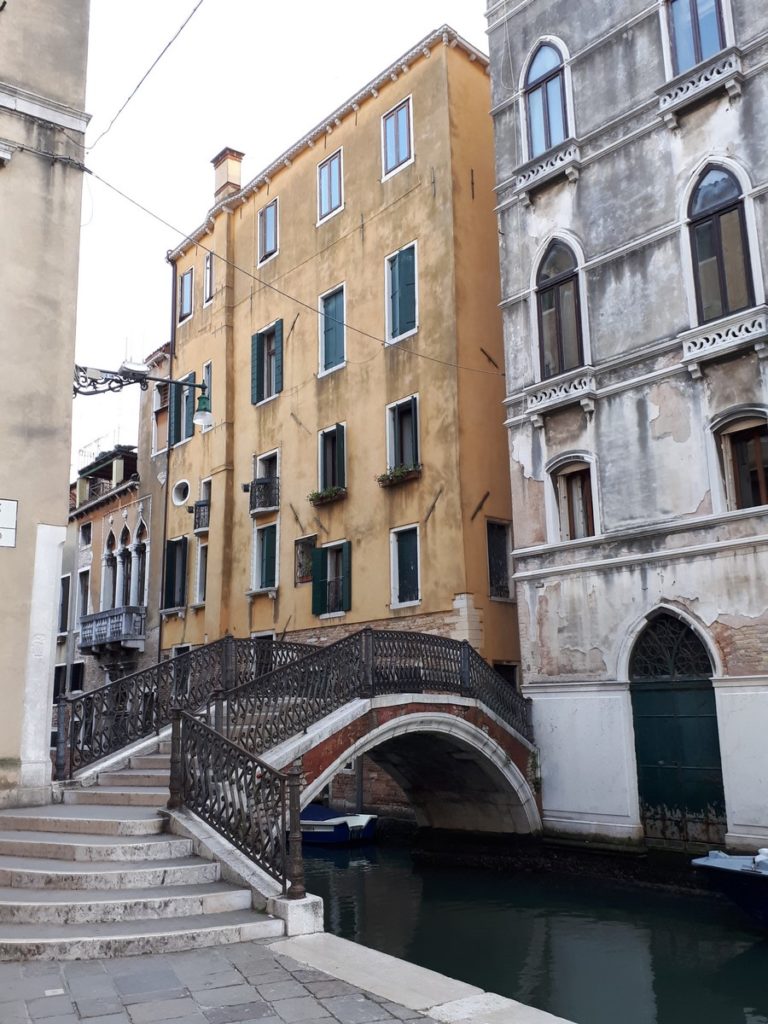
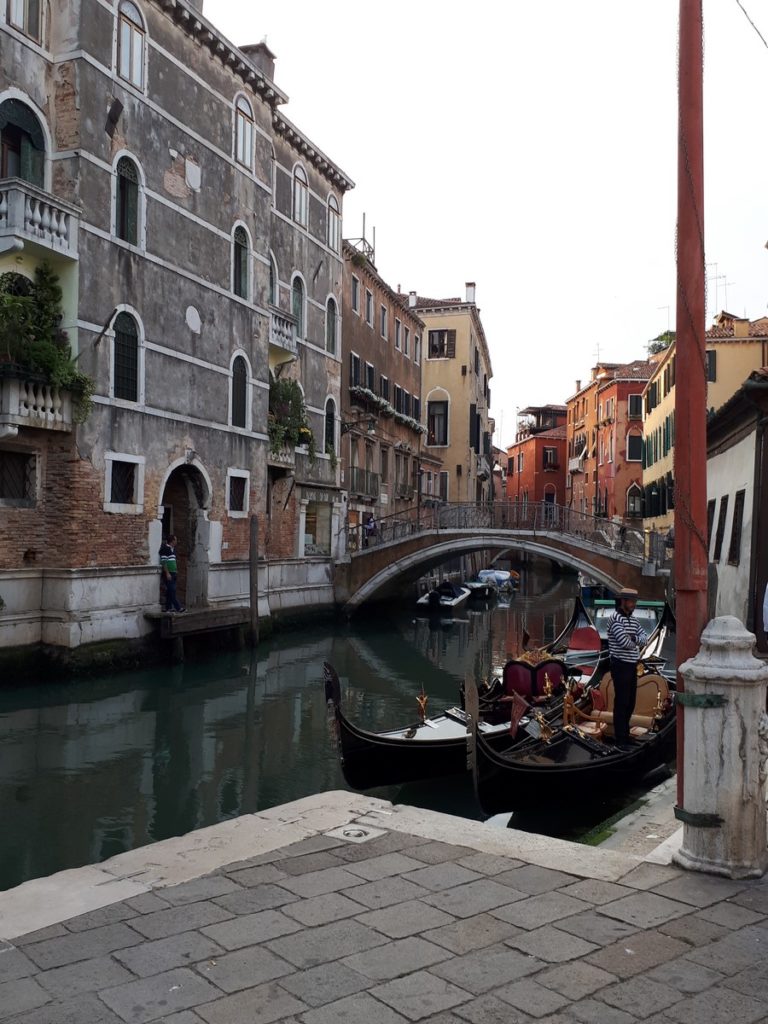
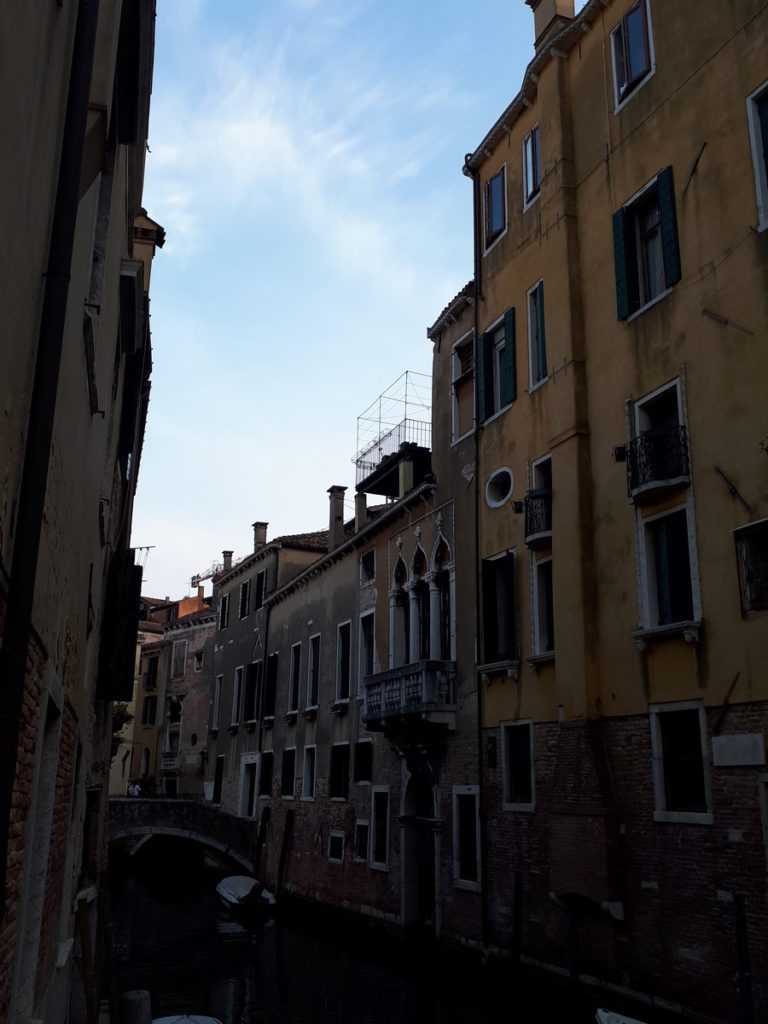
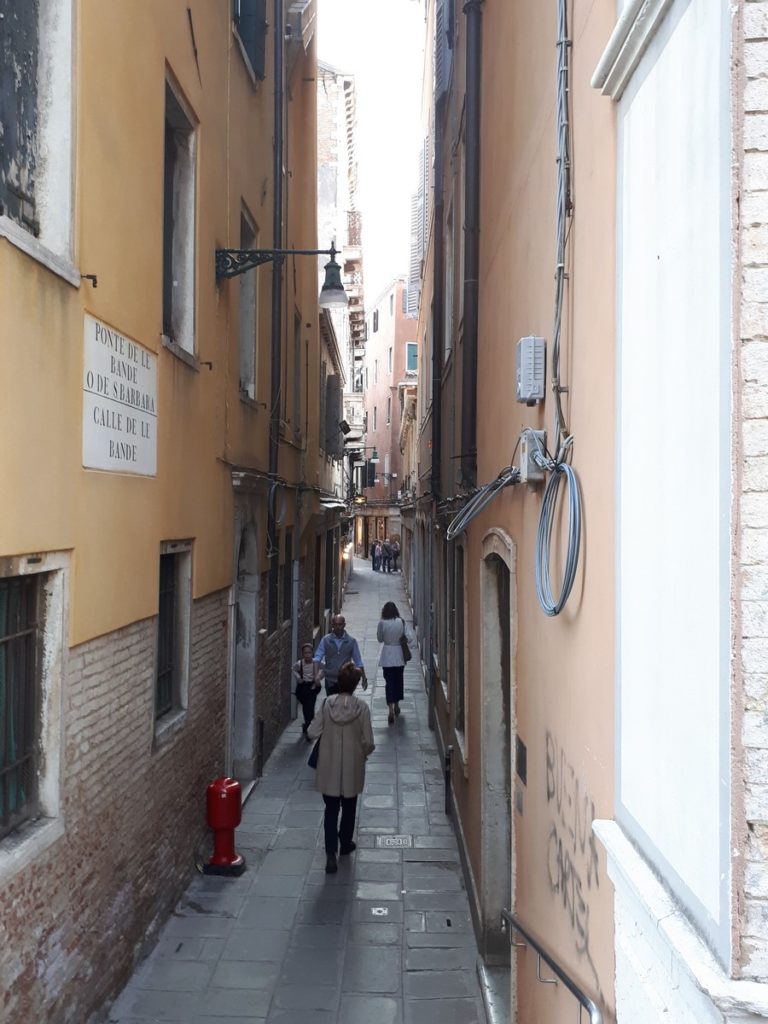
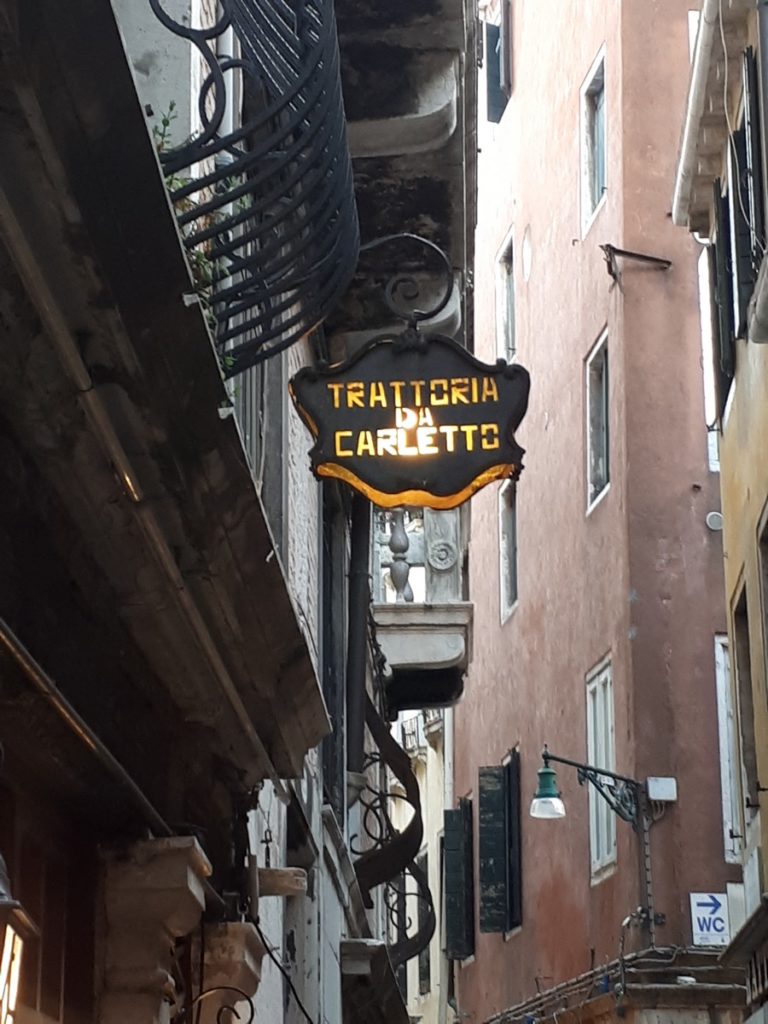
A bit later, we found a restaurant that had been recommended to us by our concierge.
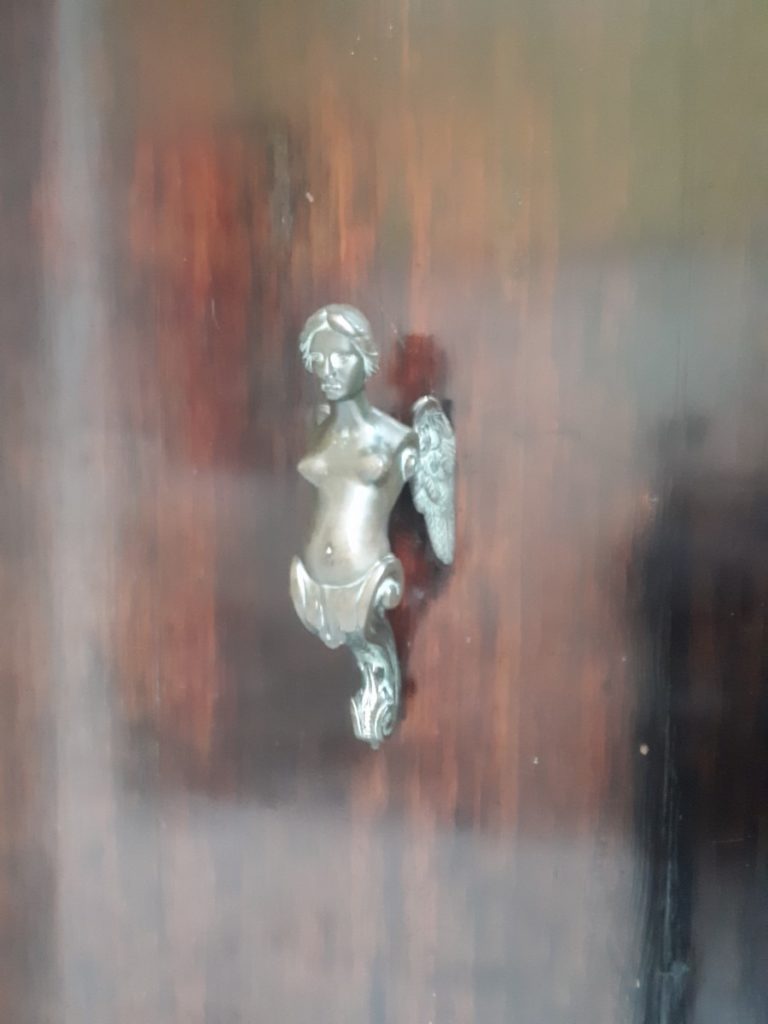
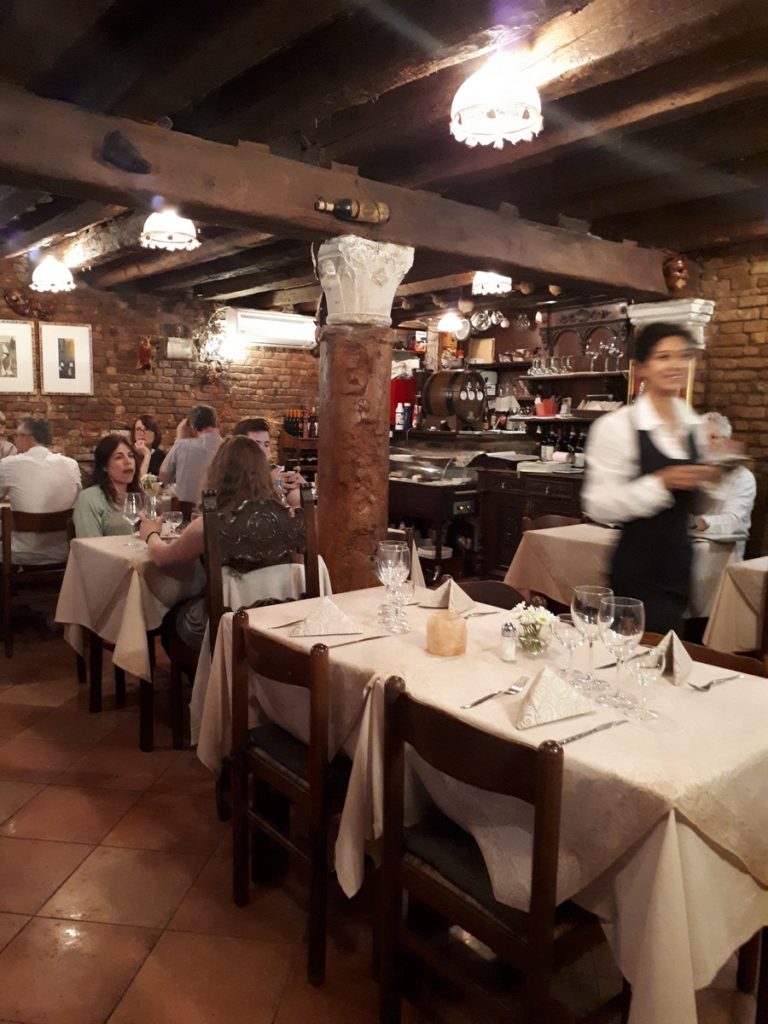
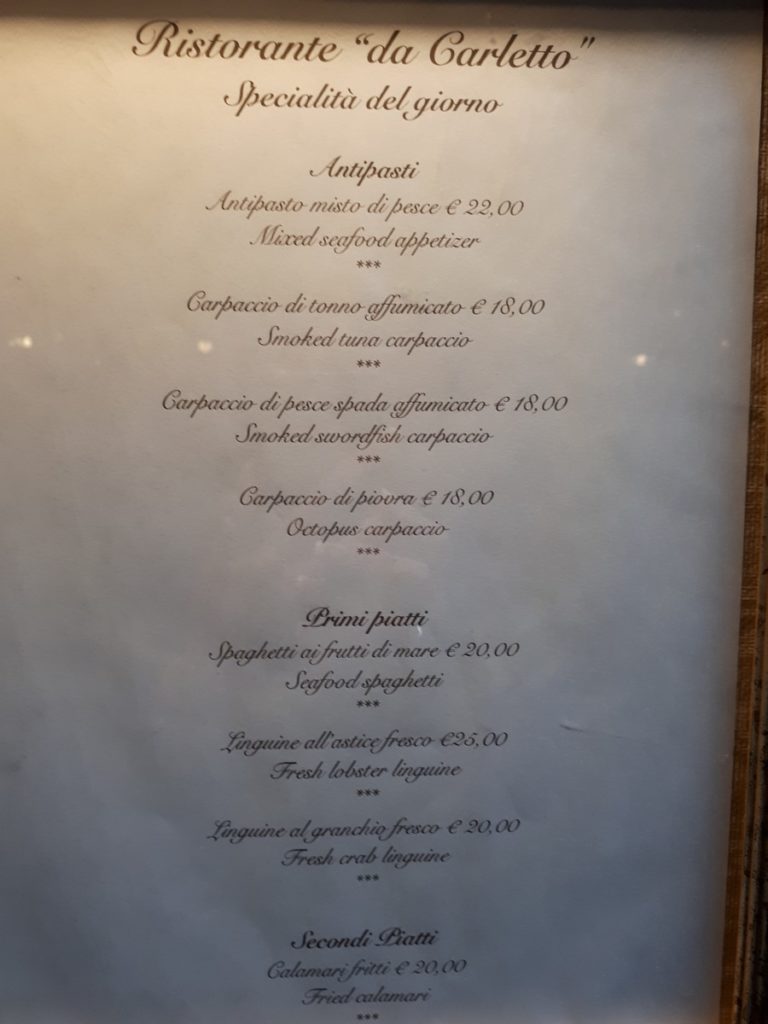
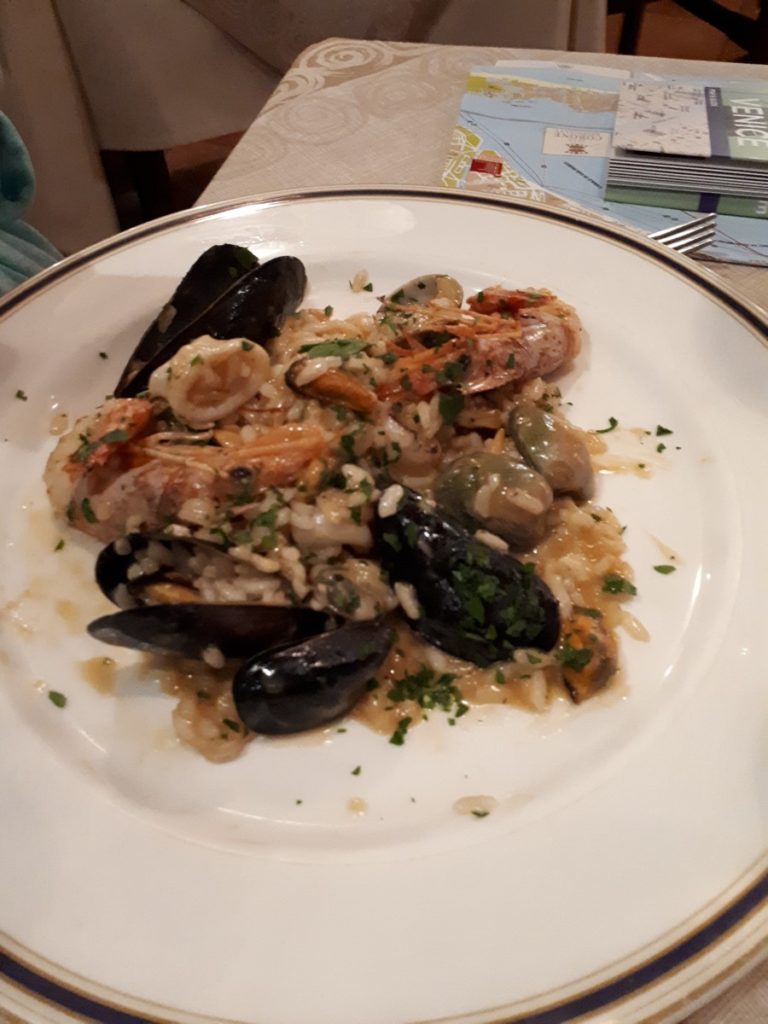
Vicky opted for the seafood risotto.
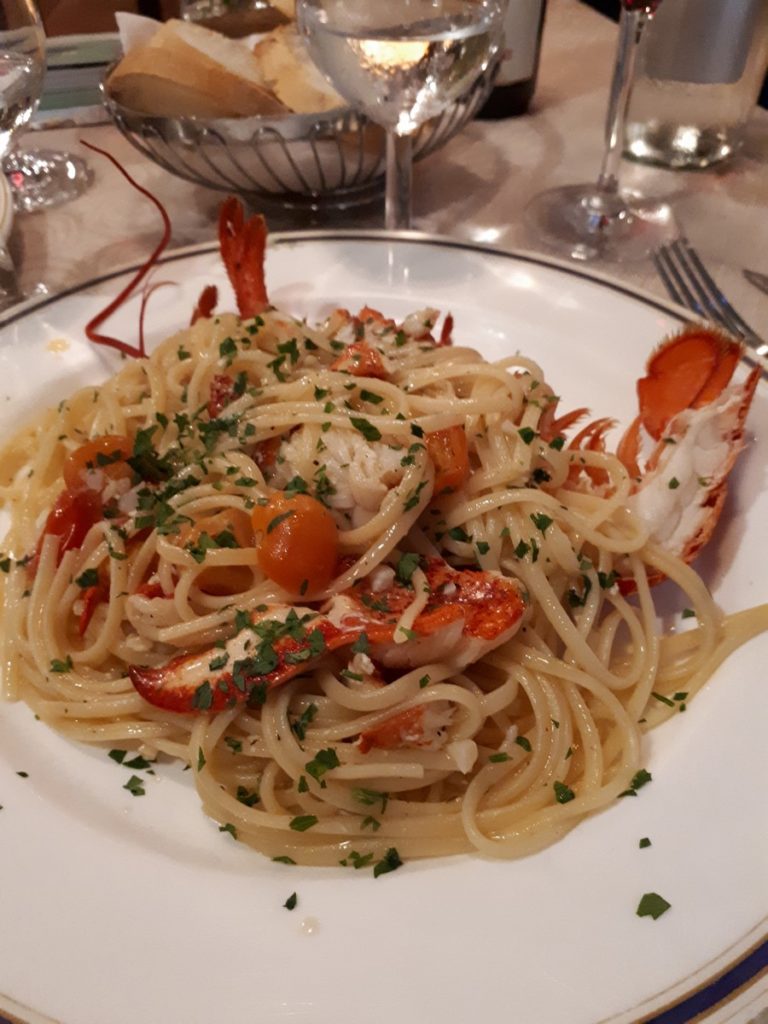
And I had the linguine with lobster. Both dishes were wonderful, the wine was excellent and the service was spot on. A really intimate spot with a neighborhood feel and freshly prepared food.
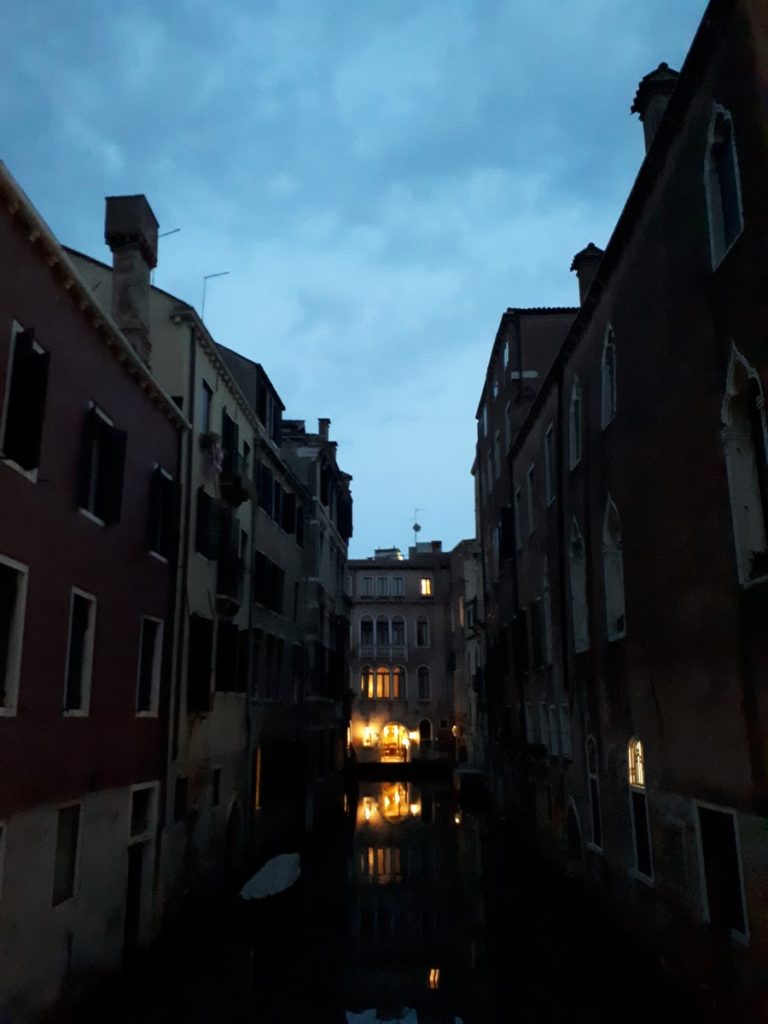
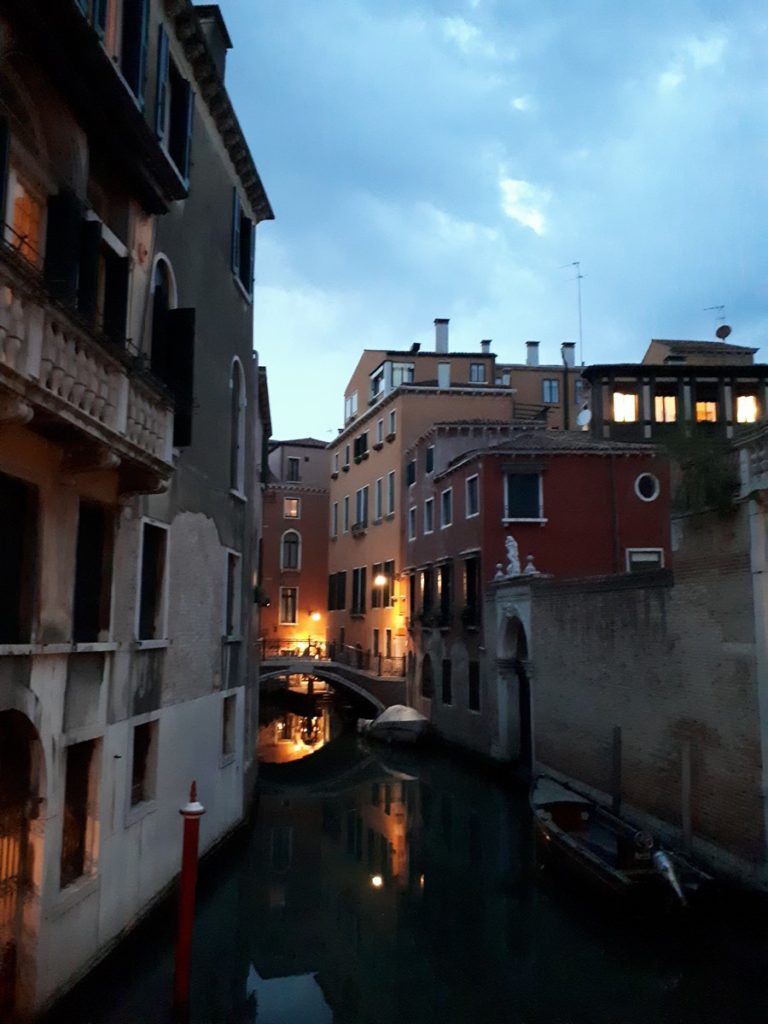
Finding your way around Venice by day is tricky enough, by night it’s almost impossible as everywhere looks the same as everywhere else. Literally. If you leave your hotel (any hotel) and make a left or a right (it doesn’t matter which) you will shortly come to a bridge over a canal. Crossing this, you will shortly come to a square which features shops, restaurants and the obligatory church. There will inevitably be a confusing number of streets, or alleyways, leading off of the square. Choose one (doesn’t matter which) and it will lead you to a canal which, once you cross the bridge, will bring you to another square that will look exactly like the square you just left. And so it goes. Eventually, Vicky and I did make it back to our hotel, and our red room, but of course, each time we ventured out, finding our way home again proved to be a challenge. Once, we left our hotel and walked for about twenty minutes, convinced we had Venice licked, only to find ourselves right back at our own front door. The adventure continues . . . .
Louisa Cornell
As the Christmas celebrations slow down, Scots gear up for Hogmanay, the celebration of New Year’s Eve. A Scots word of uncertain heritage, Hogmanay (pronounced, roughly, HUG-ma-nay) might come from ancient Greek (“holy month”), French (“the new year”), or Gaelic, or Norse, or… Whatever etymological theory you subscribe to, the holiday itself is all Scottish! The age-old traditions associated with Hogmanay have been recorded at least since the 16th century and hold firm to this day.
The earliest modern era accounts record it as a Scottish custom as noted by Chamber’s 1856 Book of Days :
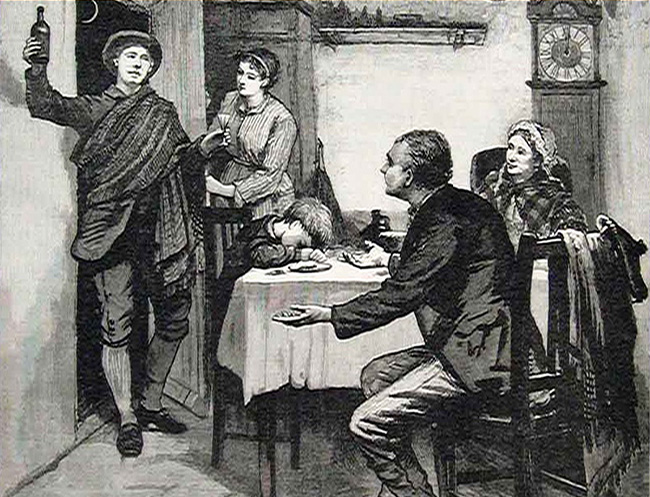
“There was in Scotland a first footing independent of the hot pint. It was a time for some youthful friend of the family to steal to the door, in the hope of meeting there the young maiden of his fancy, and obtaining the privilege of a kiss, as her first-foot. Great was the disappointment on his part, and great the joking among the family, if through accident or plan, some half-withered aunt or ancient grand-dame came to receive him instead of the blooming Jenny.”
The part of the ritual that is far older than that, which makes it one of the oldest and most intriguing traditions for a New Year’s Eve in Scotland is the tradition of the First Footer. “The First Footer” is a Scottish New Year’s tradition where the first person to cross the threshold after midnight on New Year’s Eve is considered to bring luck for the new year. The ideal “first footer” was and remains a tall, dark-haired man. This preference for dark hair is believed to stem from the days of Viking invasions when a blonde stranger would be seen as a threat. According to tradition, the first footer should never be a woman, why has been lost to the mists of time.
The first footer usually brings gifts like a lump of coal or some peat (representing warmth), salt (representing health), shortbread (a traditional Scottish biscuit) or black bun (representing flavor,) and a dram of whisky (representing good cheer).
Black bun is a type of rich fruit cake completely covered with pastry. It was originally eaten on Twelfth Night in Scotland but is now more associated with Hogmanay. Here is a recipe should you want to add Black Bun to your New Year’s Eve traditions!
Auntie Lesley’s Black Bun Recipe
Ingredients
Pastry Case
Filling
Method
1. Grease a loaf tin. Rub butter into flour, salt and baking powder, mixing in cold water to make a stiff dough.
2. Roll out pastry and cut into five pieces, using bottom, top and sides of the tin as a rough guide.
3. Press the bottom and four side pieces of pastry into the tin, pressing overlaps to seal the pastry shell.
4. Sift flour and spices, baking powder, cream of tartare and salt. Bind together with soaked fruit mixture and sugar, mixed peel, pepper, egg and milk.
5. Pack filling into the pastry-lined tin and add pastry lid, pinching edges and using egg to seal well. Lightly prick surface with a fork and make four holes in the bottom layer of pastry using a skewer. Depress the centre slightly (pastry lid will rise as it cooks).
6. Brush top of pastry case with beaten egg to glaze.
7. Bake in pre-heated oven at 325OF/160OC/Gas Mark 3 for 2½ to 3 hours, until a skewer comes out clean.
As you can see, people in Scotland knew how to celebrate the New Year in grand style as well!
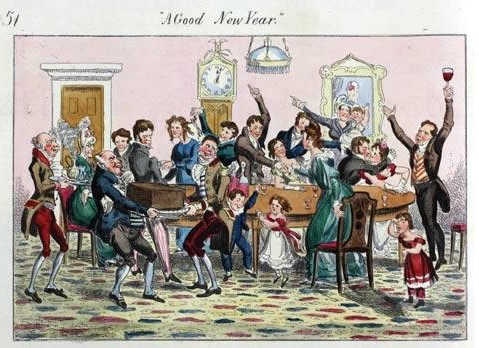
As for today, I will confess I would love to celebrate Hogmanay at least once in Scotland from the First Footer to the Black Bun to the singing of Auld Lang Syne. Until then, Kristine, Victoria, and I wish each and every one of you a very Happy New Year and may all your first footers be dark-haired and bring you much good luck!
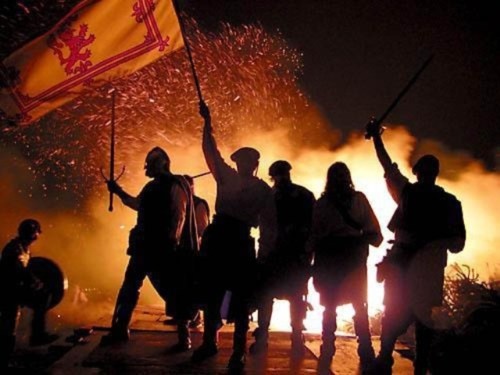
AULD LANG SYNE
https://www.youtube.com/watch?v=9lht2mRd2kQ