On The Shelf – Discovering New Authors – R. F. Delderfield

Victoria, here. When starting a new post on Discovering New Authors for our readers, I decided to go back to one of my old favorites, R. F. Delderfield.  And in doing so, I have found a bunch of novels he wrote that I haven’t read.  Hallelujah!!!  Lots of fun to come. 

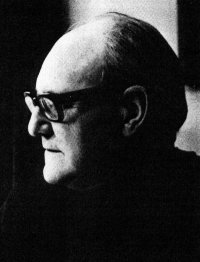
Ronald Frederick Delderfield (1912-1972) was born in London and was anything but an aristocrat.  His father supported causes like women’s suffrage and temperance, becoming active in politics and eventually co-owner and editor of a newspaper in Exmouth, Devon.  Delderfield started work at the paper in 1929 and had his first play produced in Birmingham in 1936. After the war, he wrote more dramas and continued his reporting.

His first novel, Seven Men of Gascony, published in 1949, is the story of seven soldiers in Napoleon’s army up to and including the Battle of Waterloo. Makes my eyes dance just to think of it.

Two Few For Drums (1964) tells of British soldiers in the Peninsular War in Portugal. A young and inexperienced officer must lead his squad through enemy territory to rejoin Wellington’s army. Oh, another joy awaiting.

I remember Delderfield’s books from the paperback library of my father, who prided himself on his English heritage and was always eager for more books by favorite English authors.  I believe I read the Swann trilogy when they were high on the NY Times bestseller list in the early 70’s.


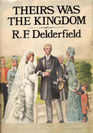
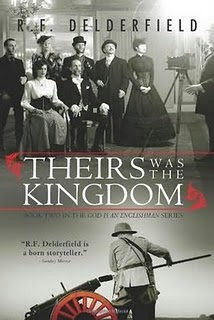
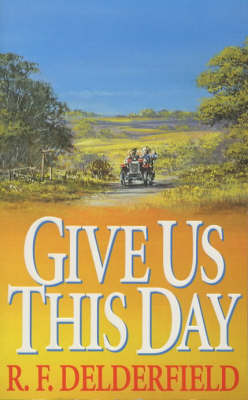
Recalling the titles from 1970-73: God is an Englishman, Theirs Was the Kingdom, and Give Us This Day, brings back some dim memories of long, enjoyable summer afternoons  at the lake.  These titles were recently re-issued by Sourcebooks.

In the year of his death, Delderfield’s autobiography For My Own Amusement came out.  I am eager to read this, and from reports,  it is written in his straight-forward, detailed and often funny style.  So I will get busy at the library and/or on the used book sites to find these volumes.

I also remember reading Diana (1960-62), and another trilogy A Horseman Riding By (late 60’s): Long Summer’s Day, Post of Honour and The Green Gauntlet.

Now all I have to do is decide where to start, on the books I haven’t yet read or to re-read the old favorites. But wait!! There’s more!!


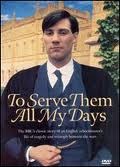
As I check around, I am finding that several of the books and series have been done on film or tv! Oh, wonderful. I can rent or buy them on DVD too. How did I miss them the first time around?

Here is my advice: If you haven’t yet sampled R. F. Delderfield, get cracking.  Start with whatever you can can get your hands on fastest, and settle in for a comfortable read. These are not breathless thrillers nor passion-sparked eroticism, nor are they stories of princesses or sheikhs or billionaires. They are good, old-fashioned sagas with long descriptive passages and meandering plots. But if you love English history and a good meaty read, I predict you will love R. F. Delderfield.

Ronald Frederick Delderfield 1912-1972

Your Lover's Eye

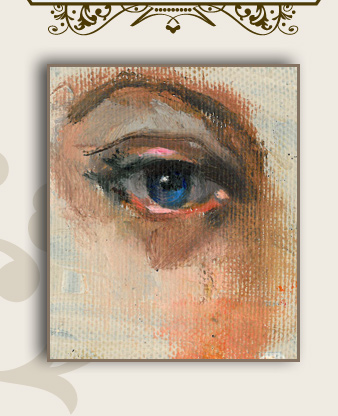
Through artist Victoria Carlin, the tradition of painting lover’s eyes survives in the 21st century. Recently, guest blogger Jo Manning did a series of posts on lover’s eyes for us and explained their history and the story behind these cherished keepsakes. Today, the cost of purchasing these antique eyes is astronomical, but through Victoria’s brush, you can now have a portrait done of your own, or your lover’s, eye at an affordable price, thus the tradition endures.

Victoria studied at the School for Visual Arts and the Student’s Art League of New York. Additionally, she studied at Jerusalem’s Betzalel Academy of Art. Victoria  eads painting workshops in Italy, England, Canada and the United States. Victoria’s talents and reputation as a serious fine artist has brought her numerous and prestigious commissions for portraits of both private and public figures. Victoria’s work hangs locally as well as internationally in Israel, Ireland and Ecuador.

After much success in the world of fine art, Victoria has now followed her passion – blending her superb talent with a rich heritage of romanticism – making her exquisite pieces available to everyone, as the perfect gift for that special loved one.

As Victoria recently explained –

“I first became aware of lover’s eye when I saw one in either France or England. I fell instantly in love. I have worked as a commissioned portrait artist for the past 17 years. My goal as a fine artist is to communicate on a two dimensional canvas not only how that person looks, but who they are, the visual essence of the person. I found that if one were able to paint the feeling of the eyes in the portrait, then the commission was a success… that the soul, that life spark was in the painting of the eye.
“In today’s modern world, people no longer commission an artist to paint a portrait of their love ones. Once one is exposed to the world of honoring, remembering and showing love through portraiture, most people would love to have one. Sadly for many the cost is beyond their budget.

“This made me realize that a relatively small amount of money, which would otherwise be spent on gifts such as flowers, lingerie or jewelery, one could commission an artist create a fine art painting of that person’s eye – a lover’s eye.”
Victoria knows how much a lover’s eye can mean to someone as a momento because she has a very special story of her own regarding these keepsakes –

“My fiance and I had been high school sweethearts who parted and went on to create big lives with children and careers. Then, the stars re-aligned and we discovered that we were both single again. I had been dating someone else and was about to send him my own lover’s eye when Ron stepped back into my life and I just knew then that the other guy was not meant to receive this keepsake. It became very personal, as though I were sending a part of me. . . Ron was so touched by my lover’s eye its now on his desk front center and is, he says, one of his most precious things.”
Victoria has been commissioned to paint several children’s eyes and her eyes have become popular as wedding day gifts. You can find more examples of Victoria’s work and read more about her at her website, My Lover’s Eye.

A Christening at Holdernesse House


 The Royal Lady’s Magazine, and Archives of the Court of St. James’s

April 1831
Royal Court Fete at Holdernesse House
(the name was changed to Londonderry House in 1872)

The preparations for this unique and splendid entertainment were completed on Wednesday morning; and a brilliant illumination which was displayed in front of the Drawing-room suite of windows, was lighted by 6 o’clock. It consisted of the Shield of England, surmounted by a Royal Crown, with the word “Adelaide”
beneath, and enclosed by an immense wreath of laurel; every part being in the exact colours of the object sought to be represented; and on each side was a star, with the letters W. A. A Guard of Honour of a hundred men, commanded by Captains Hulse and Clinton, was stationed outside the mansion in readiness to receive the Royal visiters on their arrival. Considerably before six o’clock the whole of the select company invited to be present at the Christening and the Banquet had arrived, and were assembled in the grand yellow Drawing-room, where the ceremony was to take place. Before the above hour the Royal Family had also arrived, with the exception of the King and Queen.


Holdernesse House

At length, shortly after six o’clock, her Majesty arrived. Her Majesty was accompanied by the Landgravine of Hesse Homburg, and attended by a numerous suite, and escorted by a guard of honour. On her Majesty’s carriage drawing up at the door of Holdernesse House, the noble host, Lord Londonderry, advanced and assisted her Majesty to alight. The Queen then took the arm of Lord Londonderry. The Marchioness of Londonderry was waiting to receive her Majesty at the foot of the grand staircase, which her Majesty ascended leaning on the arm of Lord Londonderry, and was by him conducted to the Grand Drawing-room, where the company were assembled, and the Ceremony of the Baptism was to be performed. Her Majesty and the noble host were preceded to the drawing-room by Lord Castlereagh, the eldest son of Lord Londonderry, bearing wax-lights; and they were immediately followed, first by the Landgravine of Hesse Homburg and the Marchioness, and then by the ladies and gentlemen of her Majesty’s immediate suite. During this period the vestibule and all the mansion resounded with the national anthem, which was played by the band of the 3d foot guards, stationed at the foot of the grand staircase.

Immediately on the arrival of the Queen and her suite, the ceremony of the christening was performed, by his Grace the Archbishop of York, who was assisted by the Rev. W. R. Wyatt, Lord Londonderry’s chaplain. The infant is fifteen months old, and was named Adelaide Emmelina Caroline; the male sponsor to the ceremony being the Duke of Rutland; and the two female sponsors, the Queen and Lady Caroline Wood, sister to the Marchioness of Londonderry. After the ceremony was concluded, her Majesty presented to the infant a gift of a superbly-chased silver-gilt cup and stand.


The Sculpture Gallery, Holdernesse House

 Immediately after the ceremony of the Baptism was concluded,  the band in the vestibule struck up the national anthem, and the Queen was conducted by the Marquis of Londonderry into the Statue Gallery, where a splendid banquet was prepared. The banquet table was placed in the centre of the saloon, at the right hand of the noble host, in the centre of the table, on the side opposite the door,—not at either extremity. On the left of the Marquis was the Margravine of Hesse Homburg; and opposite to him the Marchioness of Londonderry was seated. The other guests were placed in the order of their precedence.

The Dresses of some of the distinguished guests were splendid.

Her Majesty was attired in a rich white Monde dress over a satin slip; beautiful lace lappets. Head-dress of diamonds, and white ostrich plume; brilliant necklace and ear-drops.

The Landgravine of Hesse Hamburg.—A plain white crape dress, full lappets of white blonde, and bandeau and bouquet of brilliants.

The Duchess of Cumberland.—A white blonde and satin dress, richly embroidered with gold, a beautiful crimson cashmere beret, with an embroidery in front, composed of brilliants, and necklace also of brilliants.

The Duchess of Gloucester.—A white crape dress over satin slip. Head-dress of beautiful pearls.

The Princess Lieven.—A pink crape dress, richly embroidered in silver lama, and the body very handsomely ornamented with diamonds. Head-dress, a pink terry velvet beret, with feathers and brilliants.

The Marchioness of Londonderry. — A beautiful white blonde-lace dress over a while satin slip; a isone entirely composed of brilliants. Head-dress, brilliant garland of diamonds, with a comb ornamented with large pearls ; an eselavage necklace, composed of immense pear-shaped pearls and diamonds. Her Ladyship also wore a bouquet of costly brilliants at her left breast, and three rows of pearls suspended from the left epnulette by a lozenge of brilliants, terminating on the right side towards thejwaist. Head-dress, an immense tiara of diamonds, surmounted by moveable pieces, with a plume of fifteen rich ostrich feathers. The most conspicuous part of this nttire was the zone or cincture of brilliants, full two inches in width, and consisting of one entire mass of brilliants, divided only by the invisible setting of each.

The Duchess de Dino.—A blue “Arabesque” gauze and gold robe, elegantly trimmed with feathers and vine-leaves; plume of ostrich feathers, with brilliants.

The Marchioness of Salisbury.—A very rich white satin dress, trimmed with oriental gold. Corsage trimmed with rich blonde lace; enamels and di
amonds. Head-dress, ostrich feathers and diamonds.

Countess of Jersey.—A grenat and white gauze dress, ” crochettee” with gold, trimmed with gold ribbon and aiguillettes, feathers.

Lady Robert Peel.—A tulle blonde dress, elegantly trimmed with white and gold gauze ribbon. A white crape hat and feathers, ornamented with costly diamonds.

Lady Ann Beckett.—Rich white satin dress embroidered with gold; a profusion of beautiful diamonds, and a splendid plume of ostrich feathers.

Lady Sophia Lennox.—A white satin dress, neatly and tastefully trimmed with silver lama; a rich and delicate plume of white ostrich feathers, with diamonds.

The Duke of Gloucester.—A. military full uniform.

The Duke of Sussex.—The full Windsor uniform, with several orders.

Prince Leopold.—In the uniform of a British Field Marshal.

The Prince of Orange.—The same.

Prince Talleyrand.—A richly embroidered’ Court Dress, with several orders.

Prince Esterhazy.—A splendid Austrian Hussar Uniform.

The Duke of Devonshire.—A richly embroidered Court Dress, of the most costly description, with the ribbon of the Order of the Garter, and a garter embroidered with beautiful brilliants; and several diamond stars of different orders and diamond epaulettes, and diamond knee and shoe buckles. As Lord Chamberlain, his Grace wore the gold key.

Note: Holdernesse/Londonderry House stood in Park Lane, London, and was demolished in 1962.

Upstairs, Downstairs

OMG! They’ve cut scenes from the original BBC version shown in the UK, the most important to U/D fans being Rose’s return to Eaton Place. A scene loaded with memories and pathos. You may recall I had the scene up in the sidebar last week. Click here to see it, so that you won’t be denied. Philistines!

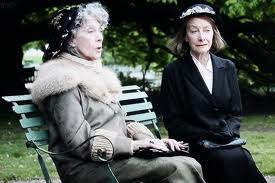
Now that I’ve got that off my chest, I must say that I love Maud, Lady Holland, world traveler and owner of an adorable monkey. They’ve taken the ubiquitous “crotchety, severe old matriach of the family” and changed her up into a delicious and fiesty lady who deserves more screen time. I’ll teach you to smoke, indeed! You can read an interview in which Eileen Atkins discusses her role here.

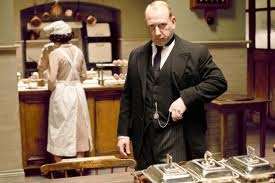
Adrian Scarborough plays Mr Pritchard, the new butler, to perfection. Worlds away from Mr. Hudson, as he should be, whilst being both efficient and a mess, quirky and slightly mysterious. Is he a good guy or a bad guy?

Madame Tussaud – The Novel

Kristine’s post about the Duke of Wellington visiting the wax museum has inspired me (Victoria) to write about a book I recently enjoyed: Madame Tussaud by Michelle Moran.  It is a fictional biography, well-researched but using the kind of emotional depth and intimacy of fiction.  I found the book fascinating and very well-written.  I admit I have never been to one of Madame Tussaud’s institutions;  I would love to see the historical personages, but I have always assumed there was a lot more attention to current rock and film stars — and I wouldn’t recognize them much less care about them.  I guess I have always  classified  wax museums as tourist traps. I know lots of people love them — but I’m not a  fan of the institution.

However, reading the story of Marie Grosholtz and her family gave me a true appreciation of what they were trying to accomplish with their salon, including making a lot of money, and the lengths to which they went to conform to popular trends in a time of incredible turmoil.

Michelle Moran is the author of  several historical novels. Click here for her website.  The picture left shows Ms. Moran (r) with the figure of her subject, Madame Tussaud, at the Hollywood Museum. I have read reports of a film of the book in the works.  And why not? Madame lived a long, event-filled life. Marie Grosholtz was born in 1761 in Strasbourg. Her widowed mother took her to Bern, Switzerland, where they lived in the household of Dr. Curtius, a physician who specialized in creating wax models, first for teaching purposes, eventually for exhibition. They moved to Paris in 1765 and Dr. Curtius began to exhibit his figures in lifelike settings. Marie was an eager student and by the time she was a teen, she began to mold and scuplt the heads of famous persons for their exhibit. She also spent time with the royal family at Versailles, teaching the king’s sister to scuplt saints.  While she split her time between the sumptuous royal palace and Dr. Curtius’s house, associates of her family were involved in the tumult leading up to the Revolution.

 The events of these days are well chronicled by Moran as seeen through the eyes of Marie, a young woman in her late twenties, searching for love, yet obsessed with perfecting her art and making money.  During the Reign of Terror, she accommodated the mob by creating death masks from heads fresh from the guillotine. At right, one of the displays from the wax museum.  Ugh. However, she felt some loyalty to King Louis XVI and Marie Antoinette, deploring the chaos when they fell.

Marie spent time in the prison that held the future Empress Josephine and Grace Elliot, mistress of the Duc d’Orleans. Though both Josephine’s first husband and the Duc lost their heads, the three women were among the survivors.  While in prison, Marie met Francois Tussaud, and they married after the Terror came to an end. It was not a  happy marriage; he succumbed to drink and gambling, and was a constant drag on her accomlishments.  In 1802, Madame Tussaud and her elder son took some of their figures on tour to England, where they stayed and established the wax museum that still bears her name.

At left, wax figures of Marie Antoinette and Louis XVI. Eventually, after her husband’s death, she was reunited with her mother and her second son.  She ran her business with her sons until her death in 1850.


Going back to the proposed movie of Madame Tussaud, the costumes are already available, and they even won an oscar for the designers who worked on Sofia Coppola’s 2006 film Marie Antoinette. I remember my very ambiguous reaction to this movie. The youthful queen was such a Valley Girl, so frivolous and, frankly, stupid, I could hardly bear it. Yet I realize she might very well have been such a little fool. Certainly as portrayed by Michelle Moran, she made some very poor decisions.  But the costumes and settings and the composition of the shots — all were brilliant.

I think I will get the DVD and watch it with the sound off.  I not only
despised the dialogue and how it was delivered, but I seem to recall a quite jarring musical track.  Please send in your views of this movie.

Anyway, I’d love to see those brilliant costumes again. Haven’t we learned that in all the Jane Austen films and tv series, the British reuse the costumes over and over? I seem to recall a fun blog post by someone listing which dress was worn where. Did I mention the sets? And the gardens.  Much of the movie was actually filmed in Versailles and in its gardens.

One of the books Michelle Moran used as a resource for her novel
Madame Tussaud  is Antonia Fraser’s Marie Antoinette.  As a long-time admirer of Fraser’s books, both her historical works and the detective series, I think I will briefly turn my back on British bios and try this one.

And just to prove that everything on this blog really can be traced back to the Duke of Welllington, Lady Antonia was born into the family Pakenham, one and the same with the 1st Duchess of Wellington. Fraser is the daughter of Elizabeth Longford, biographer of the Duke, whose two-volume work has never been surpassed for insight into the life of the great man.