The Ill Fated Marriage of George IV

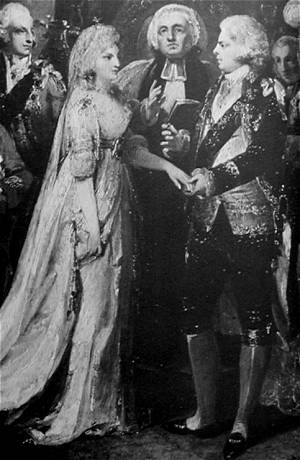
On 8 April 1795 at the Chapel Royal, St James’s Palace took place the marriage of The Prince of Wales to his cousin, Princess Caroline of Brunswick. No love match, the Prince was marrying Caroline in exchange for Parliament’s agreement to pay off his astronomical debts. In fact, the Prince had previously, and quasi-secretly, married Maria Fitzherbert on 15 December 1785, in the drawing room of her house in Park Street, London. Whilst the marriage wasn’t announced with a public hue and cry, it was still public knowledge.

From Mrs. Fitzherbert and George IV by William Henry Wilkins (1905):

The denials of the Prince’s friends counted for little, for people remembered how emphatically the rumour of the marriage between the Duke of Gloucester and Lady Waldegrave had been denied, and yet it proved to be true after all. The accounts of Mrs. Fitzherbert’s marriage were categorical, and the fact that she was supported and visited by many ladies of the first fashion lent the weight of corroborative evidence. With the public the opinion gained ground that a marriage had taken place. The Marquis of Lothian wrote to the Duke of Rutland, March 4, 1786, “You ask me my opinion respecting the Prince’s marriage. I think it has all the appearance of being true. I believe, when he has been spoken to about it, he has been violent, but I cannot find out that he has denied it peremptorily. He has said to one of the most intimate in his family [household], when asked on the subject, that he might answer, if asked the question, in the negative. But surely a report of this sort, were it not true, should be publicly contradicted, and I am amazed that some member of Parliament has not mentioned it in the House. Most people believe it, and I confess I am one of the number. Though I dined alone with him, and you know the general topic of his conversation about women, he never mentioned her to me amongst others. I am very sorry for it, for it does him infinite mischief, particularly amongst the trading and lower sort of people, and if true must ruin him in every light.”


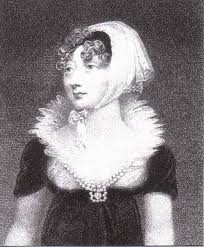
Maria Fitzherbert


It may be supposed that the topic was not confined to private letters. The press, then far less restrained than now, continued to teem with scarcely veiled innuendoes and scandalous rumours. Some journals maintained that “some sort of marriage” had taken place, others stoutly denied it. Nor did the caricaturists, those inevitable satirists on the follies of the day, linger behind. Prints and cartoons on the subject of the marriage were published in great number and variety; they were exposed in the shop windows, and even sold in the streets, to the great delight of the vulgar. All, or nearly all, of them were wide of the facts, and many were exceedingly scurrilous. It was an age of coarseness, and the licence permitted to the caricaturists was great.

Rumour and innuendo aside, the marriage was illegal, as under the Royal Marriage Act, the Prince of Wales, being below the age of 25, could not marry without the Kng’s permission. He most especially could not marry a Roman Catholic. Now, there’s alot more to the story – much more than we have room for in this post – but suffice to say that George, Prince of Wales was fairly forced by his father, King George III, to settle down, to marry and to beget himself an heir. Unfortunately, George loathed Princess Caroline on sight, taking offence at her looks, her voice, her personality, her manner and, it seems fair to say, her very existence.

Nevertheless, the marriage ceremony which took place on April 8th, at which the Prince of Wales was attended by three unmarried groomsmen including: the 30-year-old friend the 5th Duke of Bedford and the 3rd Duke of Roxburghe, a 54-year-old favorite of George III. The Prince was also attended by his friend, the 17-year-old Coronet George “Beau” Brummell. And whilst he was not attended by her, also present was the Prince’s current mistress, Frances, Lady Jersey.


Caroline, 1804 by Sir Thomas Lawrence


The Prince of Wales arrived for the wedding very drunk and was obviously reluctant to proceed with the ceremony, hesitated frequently in his responses and cried openly in front of the company. In fact, at one point in the ceremony, his father actually had to urge him to say his lines and get the business concluded. The Prince looked not at all at his bride but frequently at his mistress, the 42-year-old Lady Jersey, the wife of the 60-year-old fourth Earl of Jersey, George Bussy Villiers.

After the ceremony, the King and Queen held a drawing-room for the couple in the Queen’s apartment in St. James Palace. Caroline seemed pleased and chatty. The Prince was silent and morose until near the end of the evening when he recovered his composure enough to become “very civil and gracious.” This upturn did not last long, as soon the Prince of Wales became so drunk that he spent his wedding night passed out on the floor in front of the bedroom fireplace. He finally awakened early in the morning and performed his conjugal duties, which resulted in a daughter, Princess Charlotte, nine months later when, coincidentally, the couple split up, never again to live as man and wife.

From the Pen of Horace Walpole


Princess Amalie


A Letter from Horace Walpole to the Earl of Hertford
Strawberry Hill, Easter Sunday, April 7, 1760
Your first wish will be to know how the King does: he came to Richmond last Monday for a week; but appeared suddenly and unexpected at his levee at St . James’s last Wednesday; this was managed to prevent a crowd. Next day he was at the drawing-room, and at chapel on Good Friday. They say, he looks pale; but it is the fashion to call him very well:—I wish it may be true. The Duke of Cumberland is actually set out for Newmarket to-day: he too is called much better; but it is often as true of the health of princes as of their prisons, that there is little distance between each and their graves. There has been a fire at Gunnersbury, which burned four rooms: her servants announced it to Princess Amalie (daughter of King George III) with that wise precaution of “Madam, don’t be frightened!—” accordingly, she was terrified. When they told her the truth, she said, “I am very glad; I had concluded my brother was dead.”—So much for royalties!


Northumberland House
. . . . . Now, for my disaster; you will laugh at it, though it was woeful to me. I was to dine at Northumberland-house, and went a little after hour: there I found the Countess, Lady Betty Mekinsy, Lady Strafford; my Lady Finlater, who was never out of Scotland before; a tall lad of fifteen, her son; Lord Drogheda, and Mr. Worseley. At five, arrived Mr. Mitchell, who said the Lords had begun to read the Poorbill, which would take at least two hours, and perhaps would debate it afterwards. We concluded dinner would be called for, it not being very precedented for ladies to wait for gentlemen:—no such thing. Six o’clock came,—seven o’clock came,— our coaches came,— well! we sent them away, and excuses were we were engaged. Still the Countess’s heart did not relent, nor uttered a syllable of apology. We wore out the wind and the weather, the opera and the play, Mrs. Cornelys’s and Almack’s, and every topic that would do in a formal circle. We hinted, represented—in vain. The clock struck eight: my lady, at last, said, she would go and order dinner; but it was a good half-hour before it appeared. We then sat down to a table for fourteen covers; but instead of substantiate, there was nothing but a profusion of plates striped red, green, and yellow, gilt plate, blacks and uniforms!

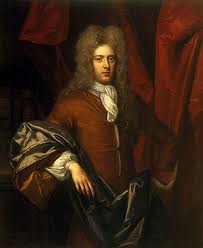
James Ogilvy, 5th Earl of Findlater

My Lady Finlater, who had never seen these embroidered dinners, nor dined after three, was famished. The first course stayed as long as possible, in hopes of the lords: so did the second. The dessert at last arrived, and the middle dish was actually set on when Lord Finlater and Mr. Mackay arrived! — would you believe it?—the dessert was remanded, and the whole first course brought back again !— Stay, I have not done:—just as this second first course had done its duty, Lord Northumberland, Lord Strafford, and Mekinsy came in, and the whole began a third time! Then the second course, and the dessert! I thought we should have dropped from our chairs with fatigue and fumes! When the clock struck eleven, we were asked to return to the drawing-room, and drink tea and coffee, but I said I was engaged to supper, and came home to bed. My dear lord, think of four hours and a half in a circle of mixed company, and three great dinners, one after another, without interruption;—no, it exceeded our day at Lord Archer’s! Mrs. Armiger, and Mrs. Southwell, Lady Gower’s niece, are dead, and old Dr. Young, the poet. Good night!

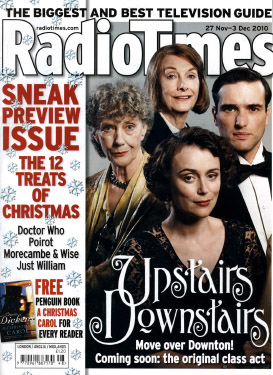
Upstairs, Downstairs Returns!

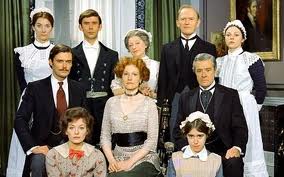
Over the past four decades, the original series of Upstairs, Downstairs has been watched by more than one billion people in more than 40 countries, inspiring a whole new generation of period dramas, including the recent PBS series Downton Abbey. Seemingly the whole of England sat round their tellies on Sunday nights following the fortunes of the Bellamy Family. When the series ended in 1977, Alistair Cooke, the program’s host, declared that there should be a national day of mourning. This Sunday night, for the first time since it went off the air, Upstairs, Downstairs will debut three new episodes (with more to follow in 2012), providing a long-awaited sequel to the original series, which followed the aristocratic Bellamys and their below-stairs help from the pre-First World War era to the 1930 market crash.

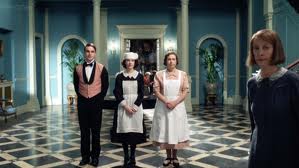
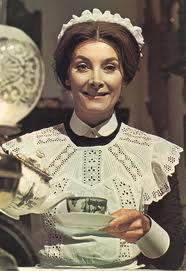
Co-produced by the BBC and Masterpiece on PBS, the latest Upstairs, Downstairs picks up in 1936 with an all-new cast joining the series’ co-creator and star Jean Marsh, who plays Rose once again. Series co-creator Eileen Atkins (Cranford) also stars, as do Keeley Hawes, Ed Stoppard and Art Malik (The Jewel in the Crown).

The new series opens with a new couple moving into 165 Eaton Place, requiring the help of Rose, who’s now the proprietor of a domestic employment agency, with the hiring of servants. Their privileged lives are soon threatened by world affairs, including the abdication crisis of Edward VIII and the rise of fascism at home and abroad.

As the British series returns to the U.S. Sunday on PBS’ “Masterpiece,” only six years have passed since the day in 1930 when the last of the Bellamys and their servants vacated 165 Eaton Place, and yet Jean Marsh, who last starred as Rose 35 years ago, is still very much Rose.

“Thank you very much,” Marsh replied when told so in a PBS news conference this past January.

“But the problem was when we were talking about it, I said, ‘I’ll need some help. You know, because it’s 35 years, not six years.’

“And they said, ‘Oh, yes, everything will be easy and wonderful and you look good,’ and then it’s on HD, which is so ferocious. I wasn’t allowed to wear real makeup and the lighting was ferocious. And I looked and I thought, ‘Oh, they’ll all think that I’m 120.”

Having already seen the new series when I was in London in December, I can heartily recommend it and am confident you won’t be disappointed in this new production, airing in three parts on April 10, 17 and 24, 2011 at 9 p.m. A second series of Upstairs, Downstairs is in the works. Joy!

Of course, nothing can take the place of the original cast and the original series.

The original cast. (Poor Helen! Poor Captain James – the cad. And Ruby . . . no doubt still single. If only she’d put on a dab of lipstick . . . What’s Mrs. Bridges cooking/baking? Smells lovely. And that Sarah, oh! Cheeky girl. Up to no good, she is. Has Miss Elizabeth returned yet from the States? And Lady Prudence, no doubt still dropping round for glasses of sherry . . . . )

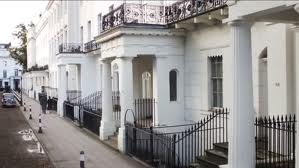
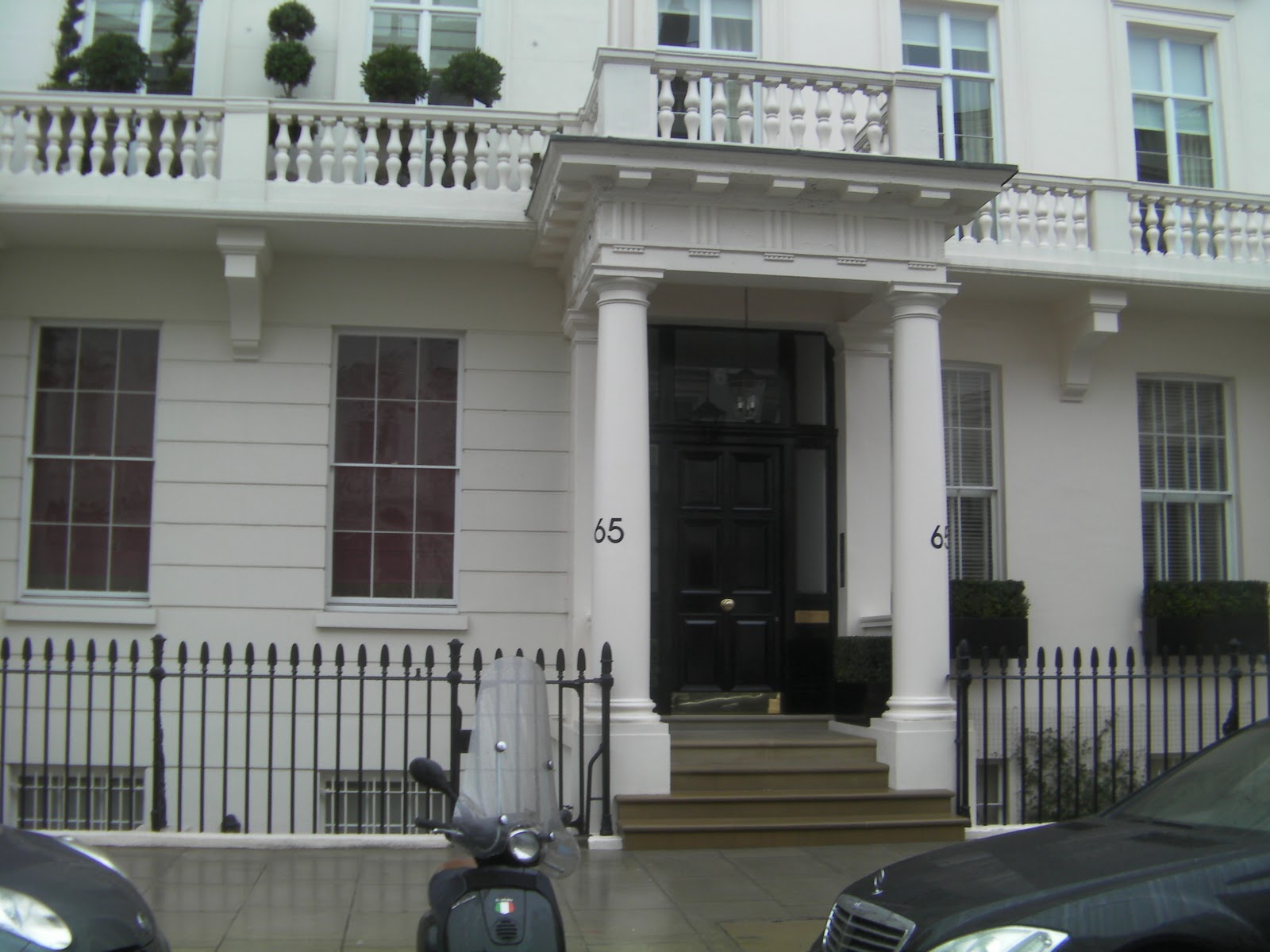
You may recall that I made my own pilgrimage to (1)65 Eaton Place in December, when I took this photo –

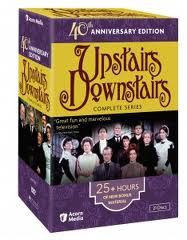
Really, the cab driver thought I was mad. We were on our way to Paddington Station and I asked to stop in Eaton Place first so that I could take a picture of a certain house. Usually unfappable, this particular cabby couldn’t hold his tongue as curiosity got the better of him. “What’s so special about that address, then?” he asked. And I told him as I took a last look at the Bellamy house, hoping for a fleeting glimpse of Richard Bellamy. Or Mr. Hudson. Or even Rose herself. I’m happy to tell you that now we can all catch glimpses of the original characters whenever we like, as a special 40th Anniversary edition of the original series is now available for $130.99 ($50 – $60 less than at other sites) at Amazon. Click on the picture below for details. The set includes a bonus 25 hours of commentaries, interviews and extras. I ordered my copy yesterday, along with a DVD of the spin-off series, Thomas and Sarah.


Style from Elizabeth I to Elizabeth II

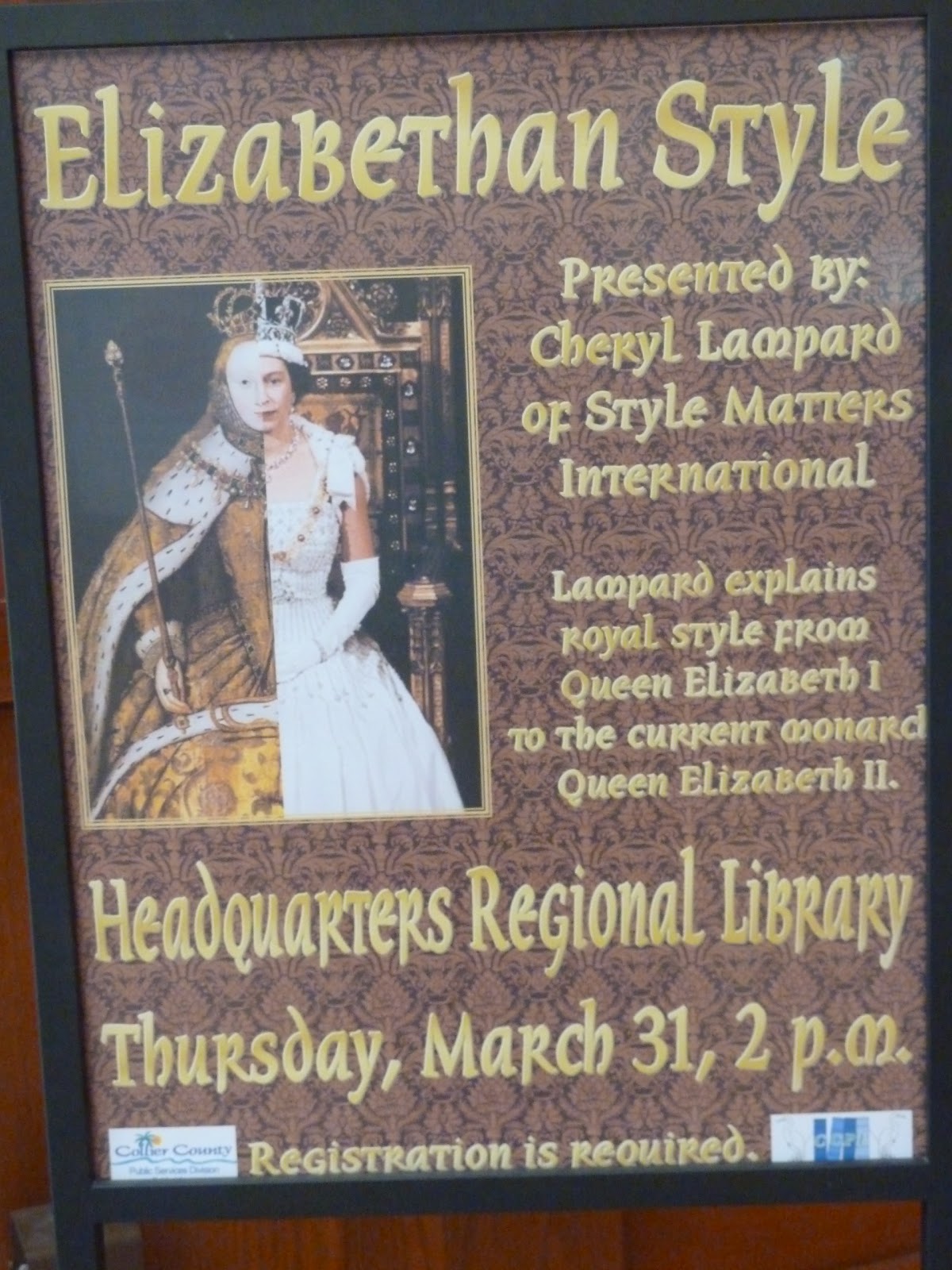
Victoria here, reporting on a delightful presentation I attended in Naples, FL, at the public library. Presenter Cheryl Lampard, who is a consultant on fashion, make-up and image, spoke on royal style to an eager group of mostly females who peppered her with questions at the end of her talk — mostly about the upcoming royal wedding. What did she think the Queen would wear?  What about the royal limousine, THE dress and so forth.  I can reliably report that here in FL, the audience for the great event will be huge.

Cheryl Lampard’s business is Style Matters International, based in Naples. Click here for her website.


Ms. Lampard’s power point talk began with a discussion of “Dress for Success” Elizabethan style. Ms. Lampard says, “Your image is your brand” and that applies to royalty as well as to the rest of us.  Elizabeth I needed to project an image of power nobles to foreign diplomats to the great mass of her subjects.  The luxury and splendor of her clothing represented the powers and strength of the nation over which she ruled.

Elizabeth I inherited her father’s fine taste and flair for showmanship. The first Elizabethan  Era is celebrated for its achievements, particularly in the arts, e.g. Shakespeare.
At left, Elizabeth I (1533-1603) as a girl, whose future was anything but assured. Nevertheless she outlasted her half-brother, Edward, and her half-sister Mary, to take the throne in 1558 at age 25. She ruled for 44 years, overcoming both internal threats (e.g. Protestants vs. Catholics) and external threats from continental powers.

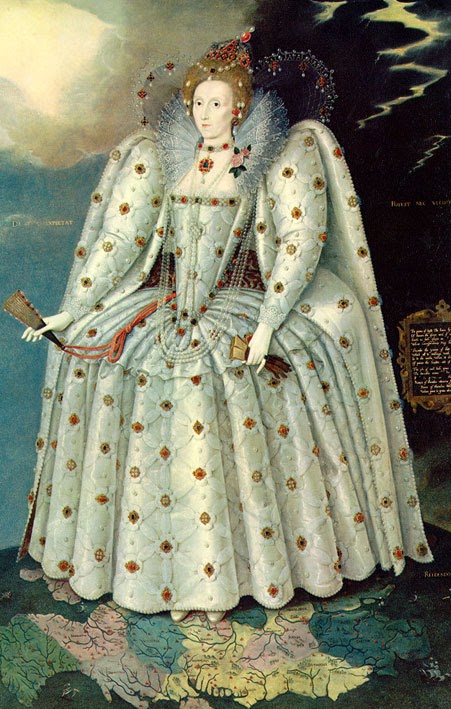
In the painting, Tudor style prevailed in dress, jewelry, hair and make-up. As Ms. Lampard pointed out, nothing is new when it comes to fashion; we see cycles of clothing and make-up styles throughout history.  A primary example: the wasp waist.  Clothing emphasized the narrowness of the waist in contrast to the wide skirts and sleeves. As time went on, Elizabeth I’s fashions exaggerated the small waist, as well as sumptuousness in fabric and decoration.


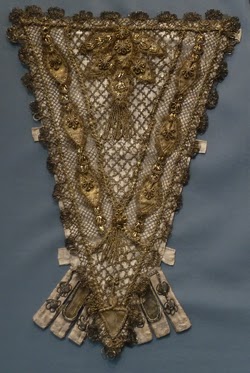
To emphasize the narrowness of the wasp waist, women wore a “stomacher,” in the shape of a triangle across the chest and pointing down at the waist.  Often richly decorated, the stomacher was a separate piece of clothing that was tied or otherwise fastened on and used with a variety of gowns.

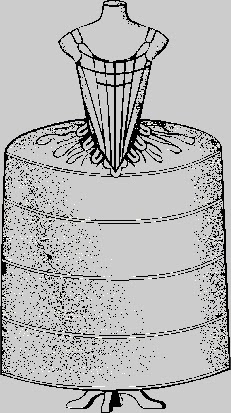
A set of hoops called a farthingale spread out the skirt and widened the gown from hips to floor. Both the stomacher and farthingale were stiffened with wood, whalebone, ivory or mother-of-pearl.

In order for the skirt to fall in graceful folds, often it was necessary to use a bumroll below the waist.

The effect was obviously to make the waist look small in comparison to the hips, carrying the hourglass figure to extremes.  Full sleeves and wide shoulders add to the illusion.

The Armada Portrait (at Woburn Abbey with other versions and/or copies elsewhere) shows Elizabeth I in a setting rich with important  and impressive symbolism. The gown of expensive satins and silks is crusted with jewels, emphasizing the prosperity and magnificence of the court. Her hand rests on the globe, to portray England’s dominance of the sea, and on either side of her head, two stages of the 1588 defeat of the Spanish Armada can be seen.

By late in Elizabeth I’s reign,  everything was exaggerated.  The skirts were  amazingly wide and heavy. The sleeves look like her arms would be nearly unmovable. The tall r
uffs would make turning her head uncomfortable.

 
The make-up, too, was dangerous.  Pale skin was admired, signifying that the person never had to work in the outdoors. In another recurring fashion trend, this white make-up was lead- based well into the 19th century, poisonous to the system and causing pockmarks on the face. Fashion can be foolish indeed.


Ms. Lampard described many more details about Elizabethan fashions, the sleeves, the  ruffs, (tall, starched, and probably scratchy), and the discomfort endured for the sake of image.  She jokingly compared these fashions with today’s exaggerated platform stiletto-heeled shoes. 


Moving to the Victorian period, she discussed the return of the wasp waist, the continued need for the monarch to project an image of stability and power, and the adoption (forever and ever) of Victoria’s white wedding gown as the standard for brides worldwide.  Formerly, she said, silver had been the usual color for royal brides.

Victoria became the mother of nine children, then endured a long period of mourning after her husband’s death. But she knew how to dress for the role of head of the empire.
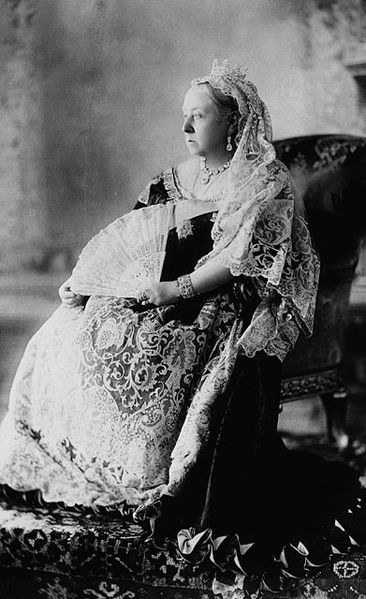
Even in the 1880’s Victoria kept up appearances. Below, a photograph of Queen Victoria
for her Diamond Jubilee in 1897.


Moving on to today’s era, the second Elizabethan Age, we see again in the young Princess Elizabeth, the recurrence of the wasp waist, for her 1947 wedding gown and a few years later for her coronation in 1953.

Wedding gown, 1947, by Norman Hartnell

Coronation gown, 1953, by Norman Hartnell

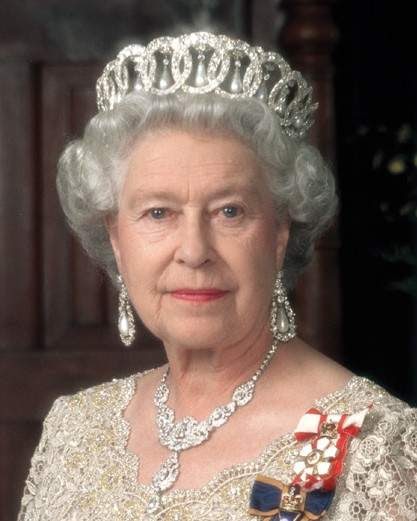
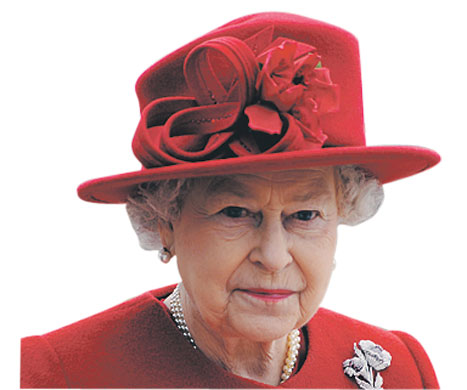
Although the current Queen Elizabeth has not been in the forefront of fashion trends, she too has recognized her obligation to represent her nation in a modern way.  For ceremonial events, of course, she is suitably gowned, crowned and bejeweled.  For her day-to-day activities, Ms. Lampard said, she can be particularly admired for her choice of hats.  Designing a hat that is flattering, attractive and capable of having the monarch’s face visible is not an easy job.
Here are a few views of the Queen’s headgear.

Here is a gallery from CBS News of Queen Elizabeth II’s hats.

All in all we had a wonderful time last week covering centuries of royal fashion and chatting about the wedding to come.  Many thanks, Cheryl Lampard of Style Matters International.

The Birthday of Jane Digby el Mezrab

Today, in the midst of turbulent international events, we have a great deal of  curiosity and concern about the middle east.  So did the British of the 19th century, dealing as they did with the Ottoman Empire and its 600-year rule over a large part of the world.  By the 19th century, its eventual disintegration was well underway…think of Byron fighting for Greek independence, for example. Though trade and commerce continued, the middle east was not an area familiar to most of 19th century Britain. The stories of intrepid women travelers who went there to live are particularly fascinating.   
Mary S. Lovell has written the story of our birthday girl’s adventurous life, published in 1998, and titled in the U.S. Rebel Heart.  
BBC Photo


Lovell is the author of many biographies: Bess of Hardwick, Beryl Markham, the Mitford Sisters, and Amelia Earhart. 
 Her book about the Churchills will be released this month in the UK and in May in the US.
For her website, click here.
Jane Elizabeth Digby, Lady Ellenborough (1807-1881), moved to Damascus in the early 1850’s,  following a path forged by Lady Hester Stanhope  (1776-1839) after the death of her uncle, Prime Minister William Pitt the Younger in 1805.  Lady Hester’s story will be forthcoming on this blog in the future.
 Jane Digby was exceptionally beautiful but apparently unlucky at finding enduring  love for many years.  She was raised in the wealthy and aristocratic household of her father, Admiral Sir Henry Digby, and her mother  Mary Coke, daughter of the lst Earl of Leicester. Before she was 20 years old, Jane married Edward Law, second Baron Ellenborough, later the Earl of Ellenborough, who was Governor General of India 1842-44.  Jane was Ellenborough’s second  wife and bore him (supposedly) one son who lived only two years.  They were divorced in 1830, after undergoing the almost-impossible process of ending a marriage in those days, proving her adultery through several through several decisions of legal and ecclesiastical courts and culminating in an act of the House of Lords.
1831 Painting of Jane Digby, Lady Ellenborough
by Joseph Karl Stieler


Jane had many affairs, often with very prominent men, including (but not limited to) King Ludwig I of Bavaria, King Otto of Greece (son of Ludwig), Austrian statesman Prince Schwarzenberg, and her cousin, George Anson. In all she married four times and had several children, most of whom died very young. Her daughter by Schwarzenberg was raised by the Prince’s sister in Basel.

To follow the progress of her many affairs and marriages is like reading a scandalous travelogue She finally settled in Syria with her fourth husband, Sheikh Medjuel el Mezrab, who was two decades younger than she was. She wore Arab dress and spent part of each year living a nomadic life in the desert with her husband’s tribe. In Damascus, they lived in an elegant villa and entertained many Europeans, including the famous traveler, explorer and author Richard Burton and his wife.

It is often noted in connection with Jane Digby that her great great grandniece was Pamela Churchill Harriman, nee Digby (1920-1997), U. S. Ambassador to France 1993-1997, whose life of romance with world statesmen could be considered a 20th century version of Jane’s own story. Her three husbands were Randolph Churchill, Leland Hayward, and Averill Harriman.

She was also linked in the popular press with many other prominent men, among them Edward R. Murrow, Prince Aly Khan, Baron Elie de Rothschild, William S. Paley, Gianni Agnelli, and Stavros Niarchos. 

Though we might, while wishing her happy birthday, call Jane Digby “one of a kind,” but she obviously left a legacy to her descendants.