Shakespeare's Sisters: Women Writers 1500-1700

At the Folger Shakespeare Library in Washington, D. C., I recently visited a fascinating exhibition entitled Shakespeare’s Sisters: Voice of English and European Women Writers, 1500-1700. The exhibition website is here.

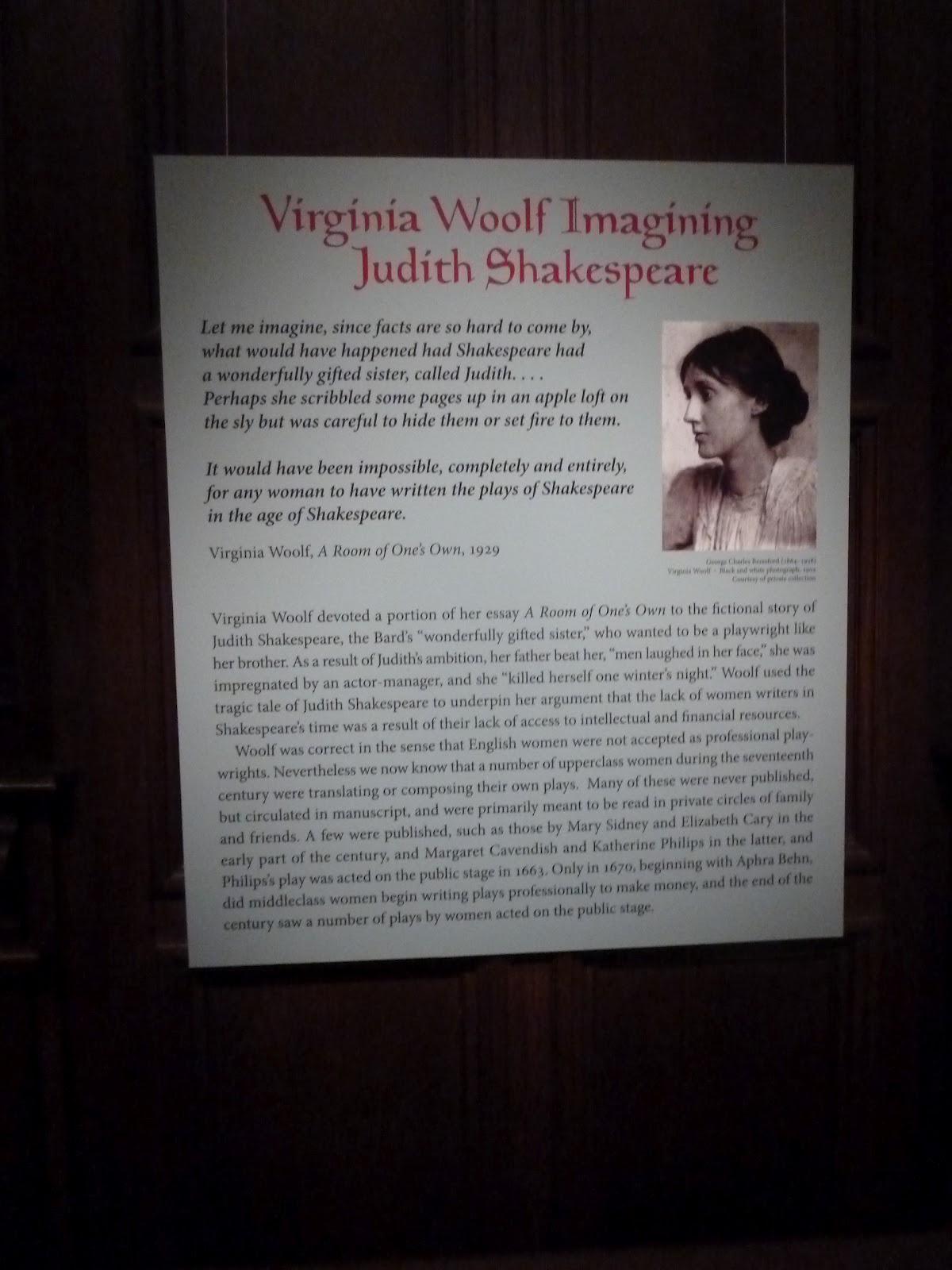
The exhibition began with a famous passage from Virginia Woolf’s 1929 volume A Room of One’s Own: “(W)hat would have happened had Shakespeare had a wonderfully gifted sister, called Judith, let us say…it needs little skill in psychology to be sure that a highly gifted girl who had tried to use her gift for poetry would have been so thwarted and hindered…that she must have lost her health and sanity.”

In Woolf’s day, little was known about women who might have written — and even published — in Shakespeare’s day.  But recent scholarship has brought to light a number of such writers and some of their work is shown in this exhibition. 

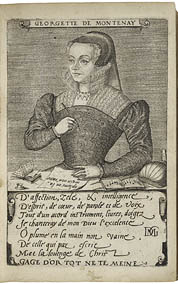
Georgette de Montenay, Emblemes ou devises Chrestiennes, 1619
Folger Shakespeare Library Collection

Obviously, due to the age and fragility of the books shown, photographs of them were not allowed, and due to the low light level, my photographs of the text panels are sometimes rather dim.  Sorry about that, but I thought you’d rather see them as is than not.  Refer to the website for the texts.

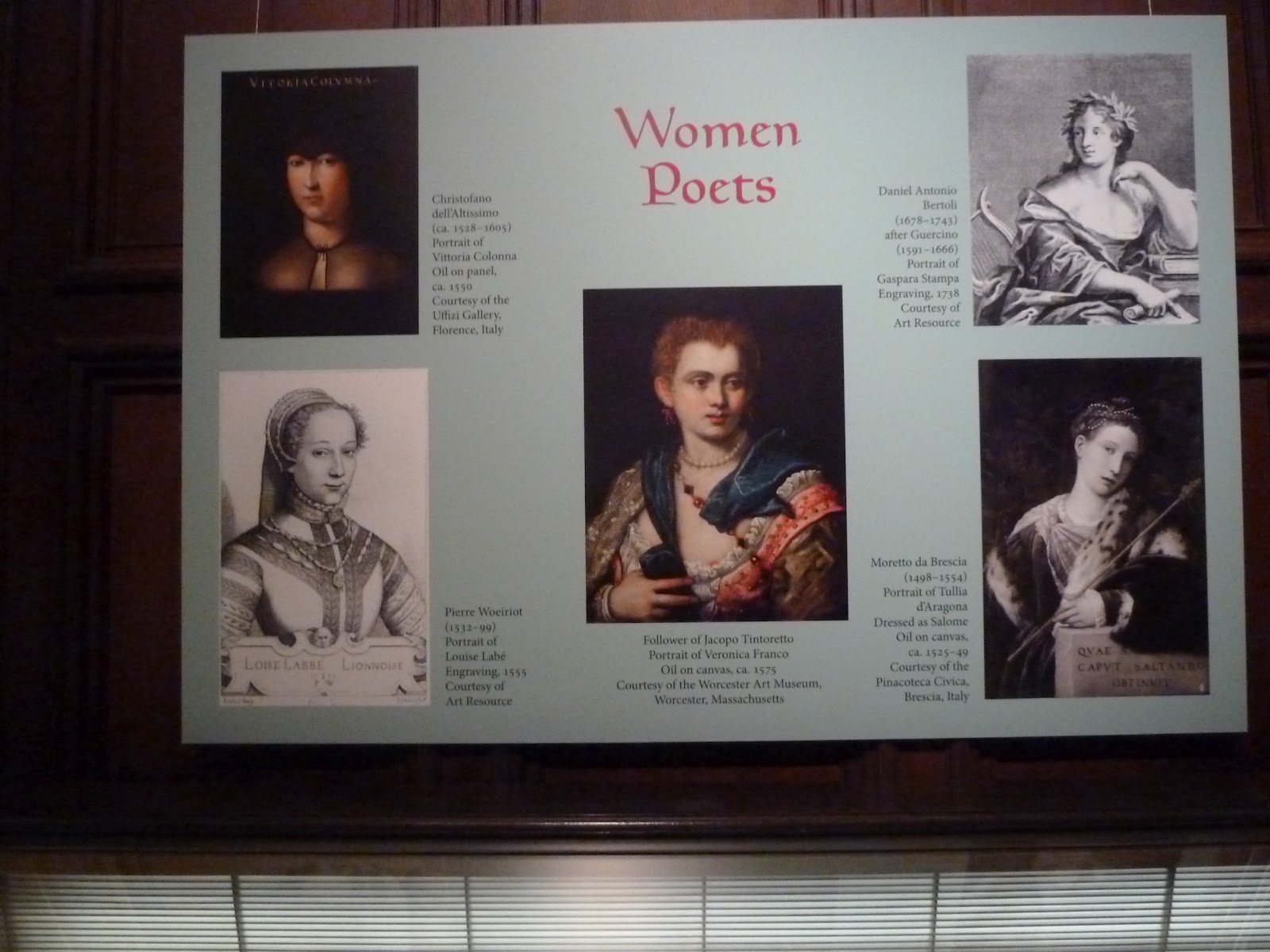
The exhibition is divided into several sections covering such subjects as Religious Writing, Love and Romance, and Families and Salons.  Below, a panel celebrating poetry.  In the center is Veronica Franco (1546-1591), a Venetian poet and courtesan.

The portrait of Franco is said to be by Tintoretto.  A biography, The Honest Courtesan, by Margaret F. Rosenthal, was the basis of a film about Franco’s life.

The film, titled in the U.S. Dangerous Beauty (1998) starred Catherine McCormick as Franco, Jacqueline Bisset and Rufus Sewell.  I cannot vouch for the accuracy of the film’s story, but it does emphasize Franco’s writing talents as well as giving sumptuous views of 16th century Venice and its inhabitants.
To my knowledge, no one has filmed a life of Lady Anne Clifford, but her life would be good material for a creative screen writer and director. 
A reproduction of a triptych (attributed to Jan van Belcamp) showing Lady Anne Clifford on either side; in the center panel is Margaret Russell, Countess of Cumberland, and George Clifford, 3rd Earl of Cumberland, with their two sons, is on display.
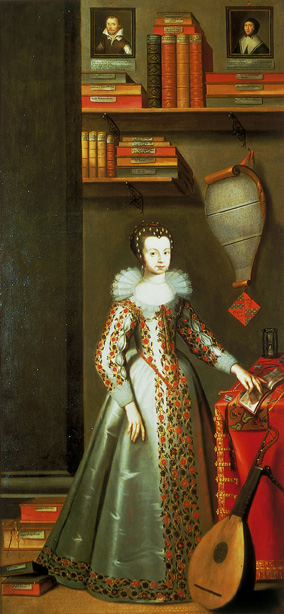
Here is a closer view of Lady Anne Clifford at age sixteen.
Lady Anne Clifford was raised in the Court of Elizabeth I; she married the Earl of Dorset and later of Pembroke.  Not only is she well known for her letters and diaries, she was also a dedicated patron of the arts and literature. She fought for her legal rights to the family estates for almost forty years before she gained success.  She was truly a Renaissance woman. Below, Lady Anne at age 56.


Vita Sackville-West (1892-1962) wrote about Lady Anne in her study of her family and its great estate, Knole and the Sackvilles, published in 1922, and in introducing her works.
Vita Sackville-West
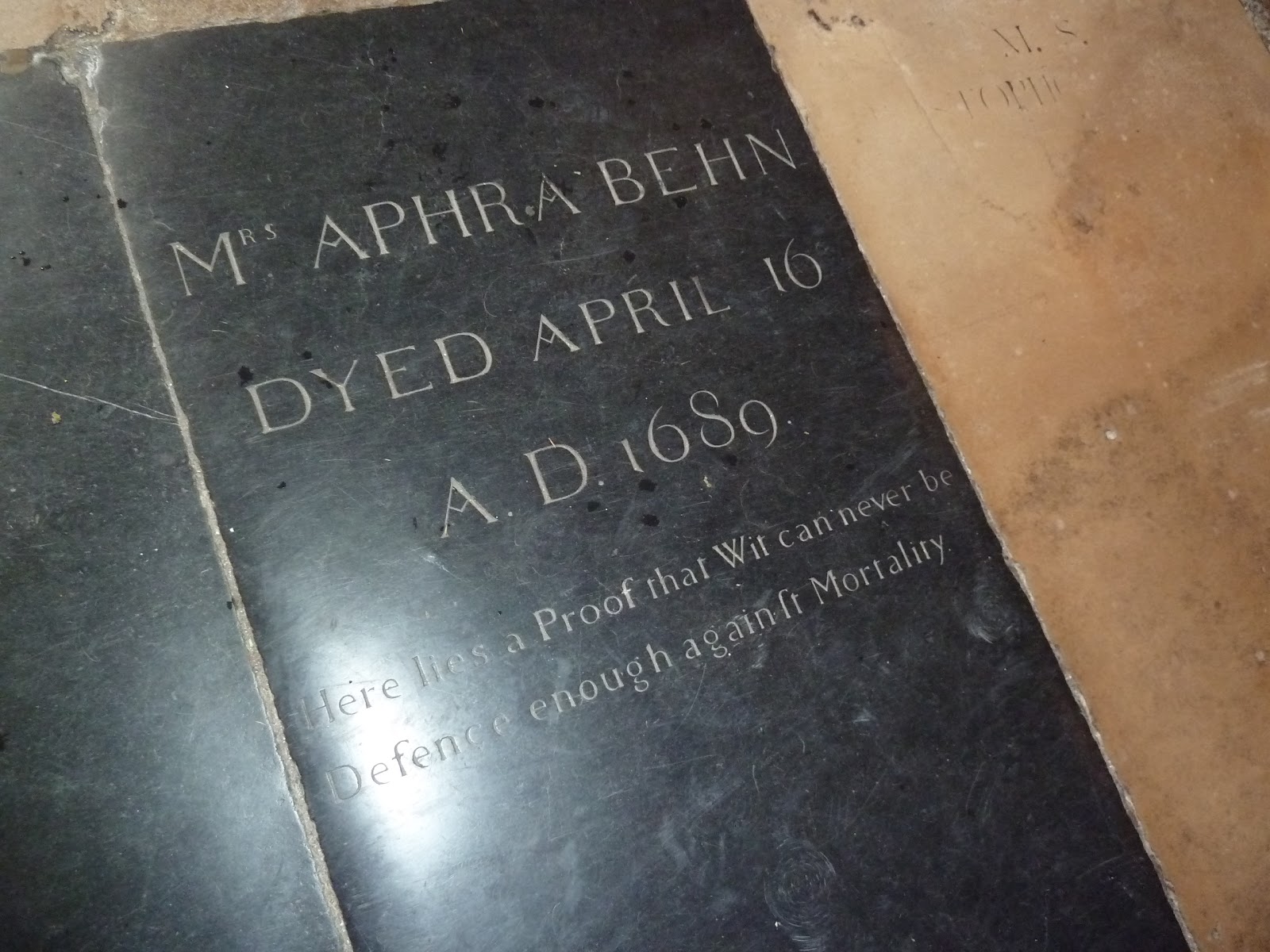
Sackville-West, close friend and colleague of Virginia Woolf, also wrote a biography of another of the exhibition’s subjects, Aphra Behn (1640-1689).  Best known as a playwright, Behn also wrote novels and poetry.  Her plays were very popular in the Restoration era theatre in England.
Aphra Behn by Mary Beale
Gravestone of Aphra Behn, in the Cloister of Westminster Abbey, London
The inscription: Here lies a Proof that Wit can never be 
Defense enough against Mortality

I recommend spending time on the exhibition’s website, Shakespeare’s Sisters, for many further insights into this fascinating topic: Voices of English and European Women Writers, 1500-1700.

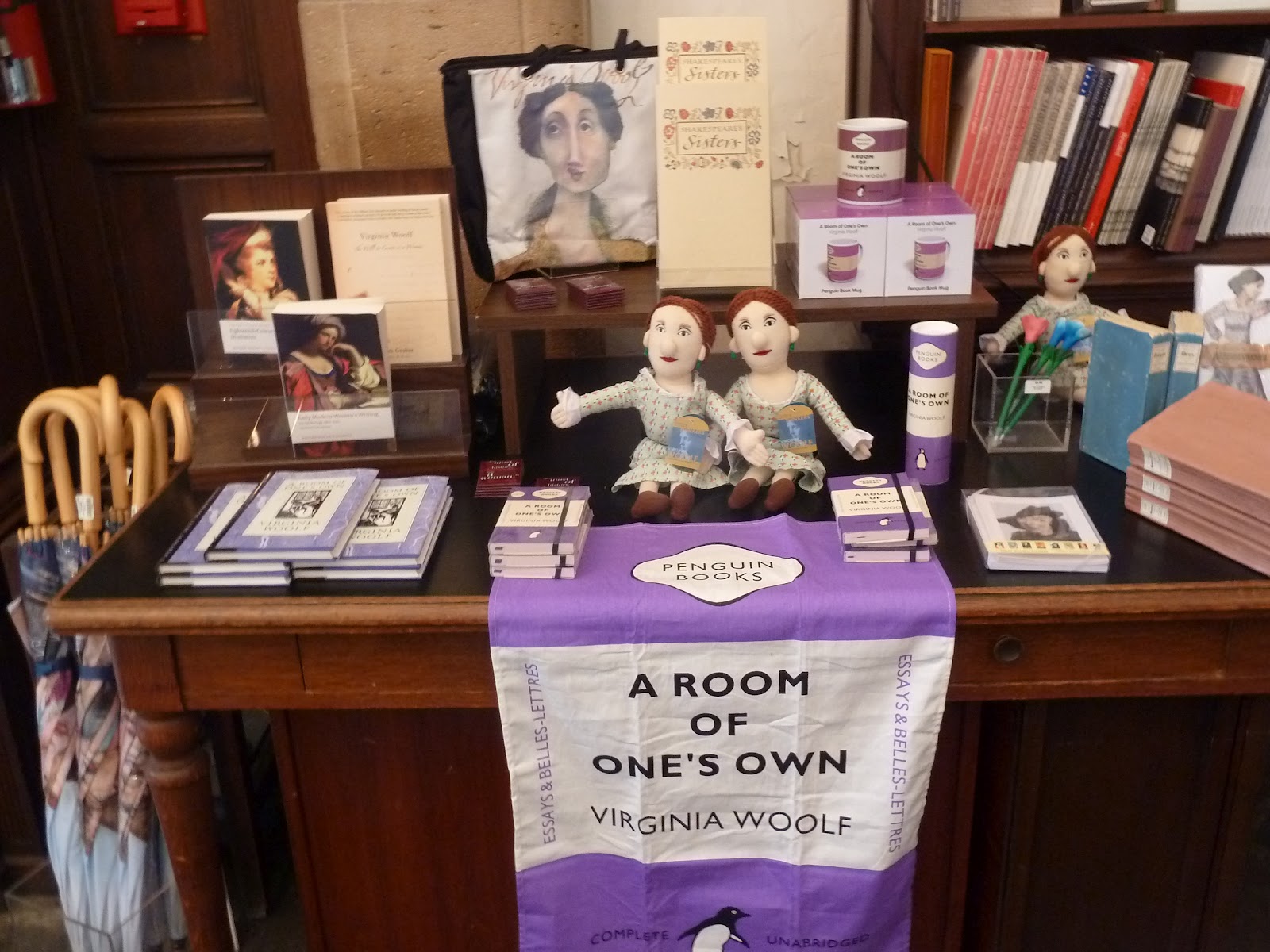
Below, the Folger Shop.

I would be remiss if I did not give the website of the Folger Shop which has wonderful books, catalogues, cards, and assorted items relating to the Woman Writers exhibition as well as to Shakespeare and his era.  I highly recommend a visit to the Folger when you come to Washington, D.C.  And what’s more: admission is free!

The Folger Shakespeare Library

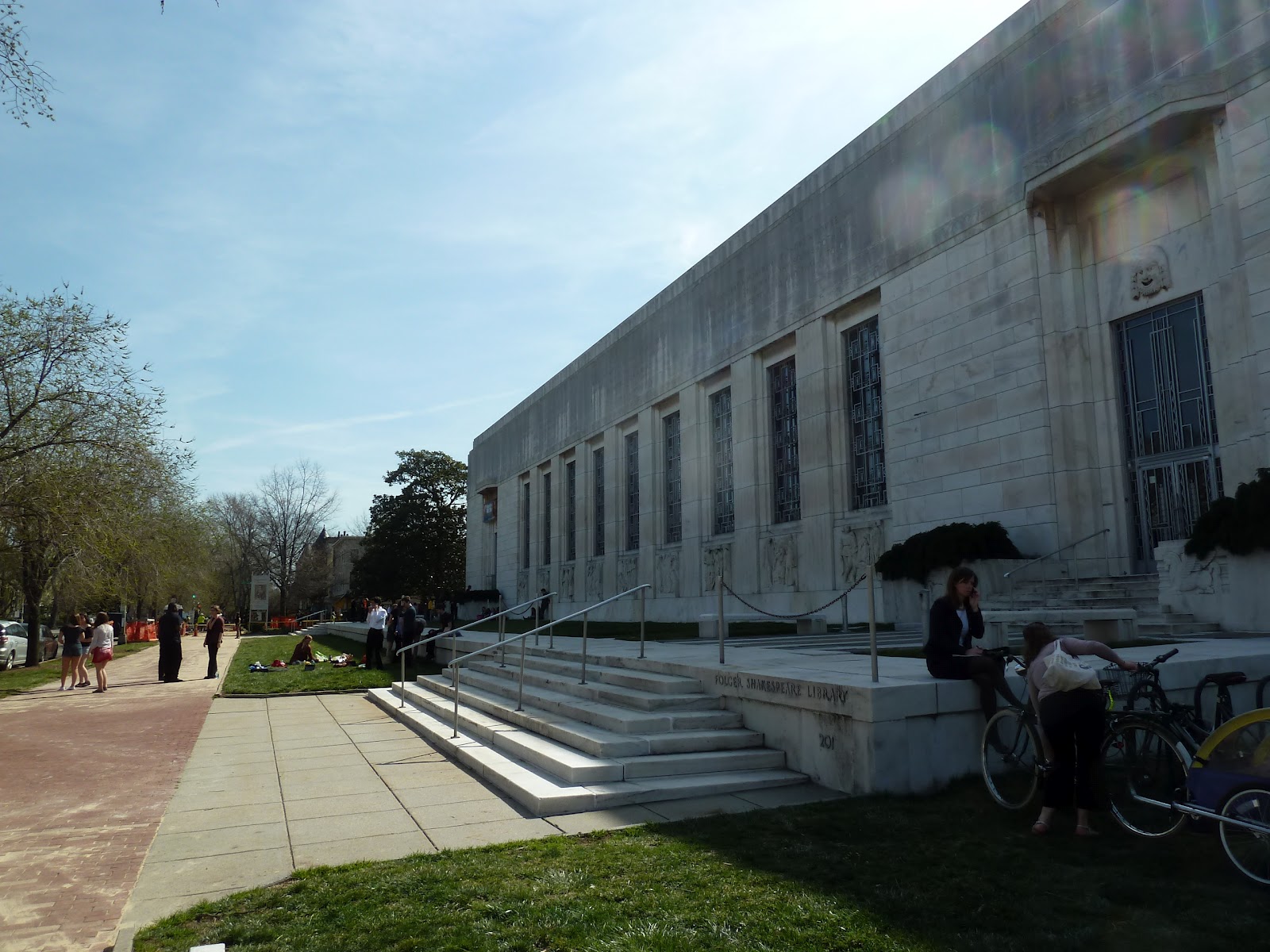
Near the U.S. Capitol and the Library of Congress in Washington, D.C.,  stands the Folger Library, repository of 82 Shakespeare First Folios — the largest collection in the world by far of these precious volumes.

The Folger Library, 201 Capitol St. SE, was the gift to the United States of  Henry Clay Folger (1857-1930) and his wife, Emily Jordan Folger (1858-1936).  Mr. Folger and his wife were lifelong lovers of Shakespeare and collectors of his works, including First Folios, Quartos, artwork, mementos of performances, and additional material related to the Elizabethan Era and the theatre.

They planned the library as a repository of their collections and as a permanent institution in the U.S. for the scholarly study of Shakespeare and his era and the continuing appreciation of reading and performing his works.  Built at a cost of $2 million, the library opened in 1932 with an original endowment of $10 million. The Folger is administered by the Trustees of Amherst College in Massachusetts, alma mater of H. C. Folger.
On the day I visited in March, students were performing snippets of the Bard’s plays and having a hilarious time doing so, under the direction of a professional actress in Elizabethan costume, and before an audience of fellow students, parents and teachers.
Below, a view of the Folger’s theatre, without the gleeful group, but showing all its timbered glory.  The theatre is also used for fully staged productions, literary and theatrical awards ceremonies, performances of the Folger Consort, and other activities.
Folger Shakespeare Library, Elizabethan Theatre

The Folger presents many special exhibitions.  The one I visited, Shakespeare’s Sisters, was enlightening. I will blog about it soon.

Central to the Folger’s mission is scholarship.  Imagine how privileged one would be to receive a reader’s card and be able to conduct research here in the Reading Room.  When I visited, we were allowed only a peek at the premises, which are reserved for serious studies.  At the end of the room is the immense window depicting the Seven Ages of Man (from As You Like It).
The window, designed especially for the Folger, was executed by the Philadelphia stained glass studio of Nicola D’Ascenzo (1871-1954) in 1932.
Emily Jordan Folger by Frank O. Salisbury, 1927
Henry Clay Folger, by Frank O. Salisbury, 1927
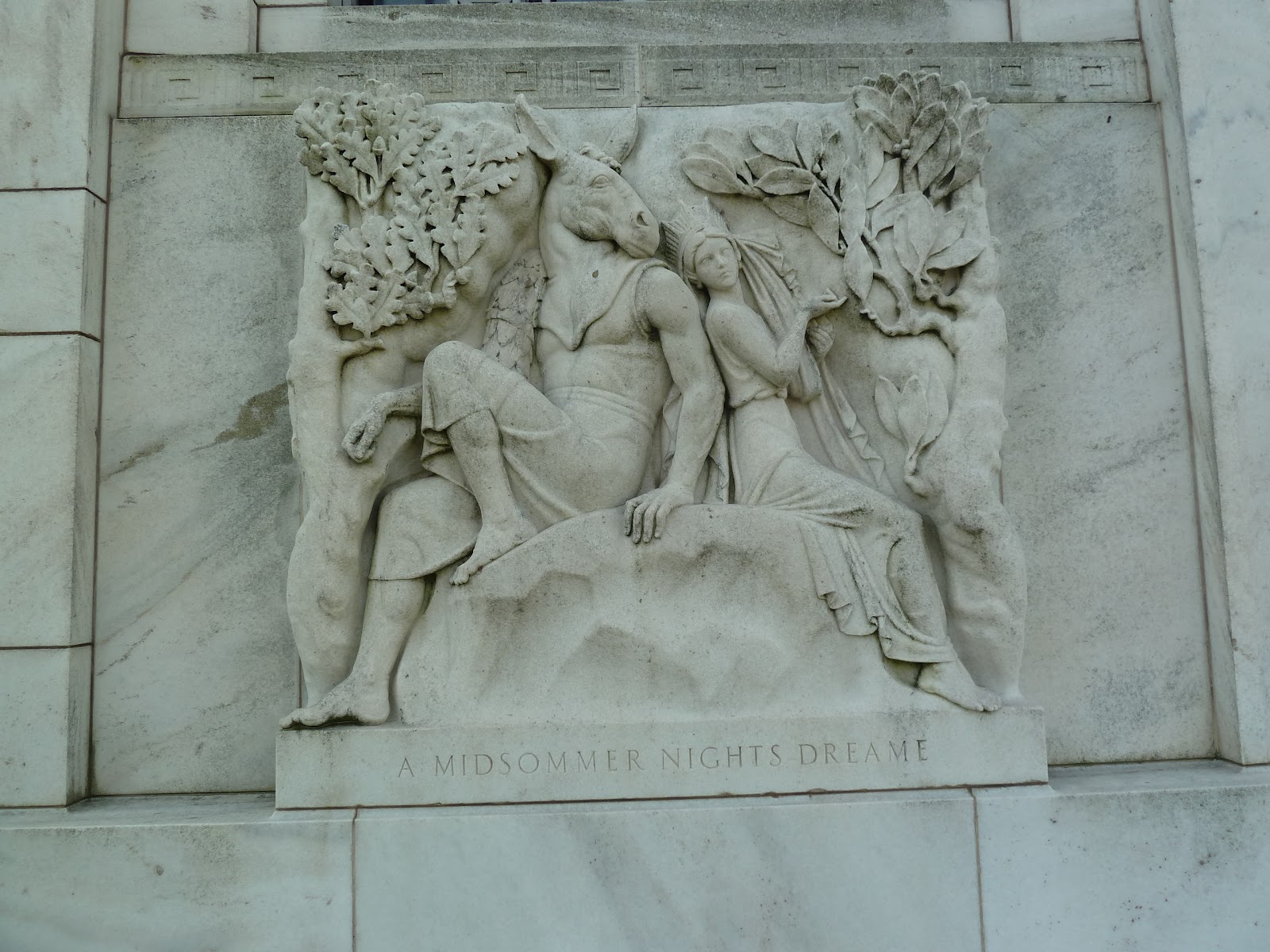
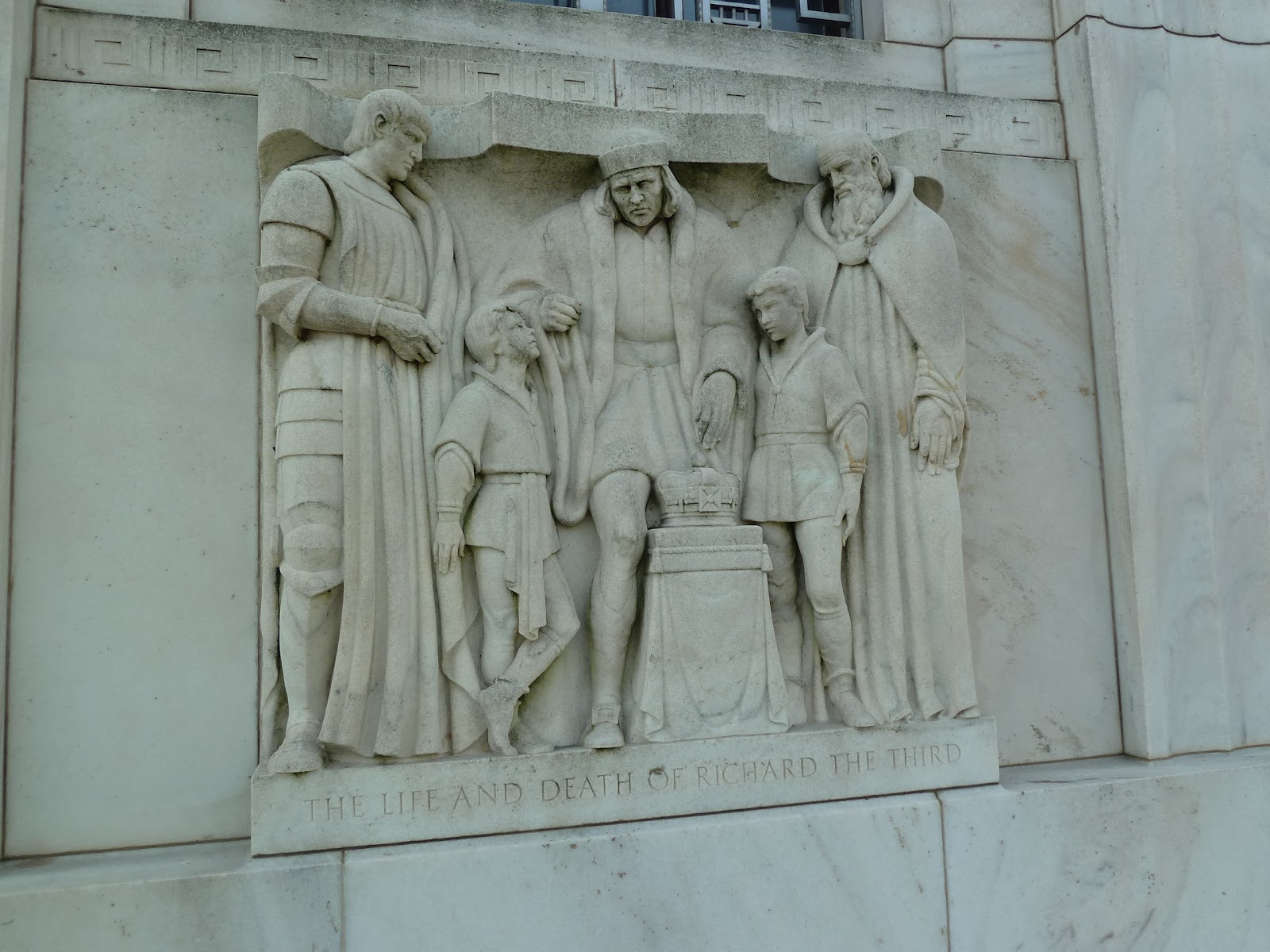
On the exterior of the building, scenes from Shakespeare’s favorite plays are captured in white marble bas relief sculptures.  Above, a Midsummer Night’s Dream.  Below, Richard III.
Though the Folger’s mission focuses on a writer from hundreds of yeara go and his world, the library’s resources and  techniques are decidedly up-to-date.  Their website (here) is excellent, worth hours of browsing.  Many parts of the collection are available digitally, as described here.  Hamnet is their free on-line catalogue.   The Folger has blogs, facebook pages, and can be found on itunes, youtube and twitter, among other sites.  The Conservation Lab is in the forefront of preserving fragile and delicate materials.
First Folio, Folger Shakespeare Library
In 2011, the Folger sponsored an exhibition “Fame, Fortune, and Theft: The Shakespeare First Folio,”   which told many stories of the creation, acquisition, sales and losses of these precious documents. Since the Folger has the world’s largest collection of First Folios (82 at present), it was the perfect venue to explore the topic.  First Folios, in case you have forgotten your college Shakespeare facts, are editions of the Bard’s plays published in 1623, which contained many plays never before published. In the world today, just over 230 First Folios are known to exist. 
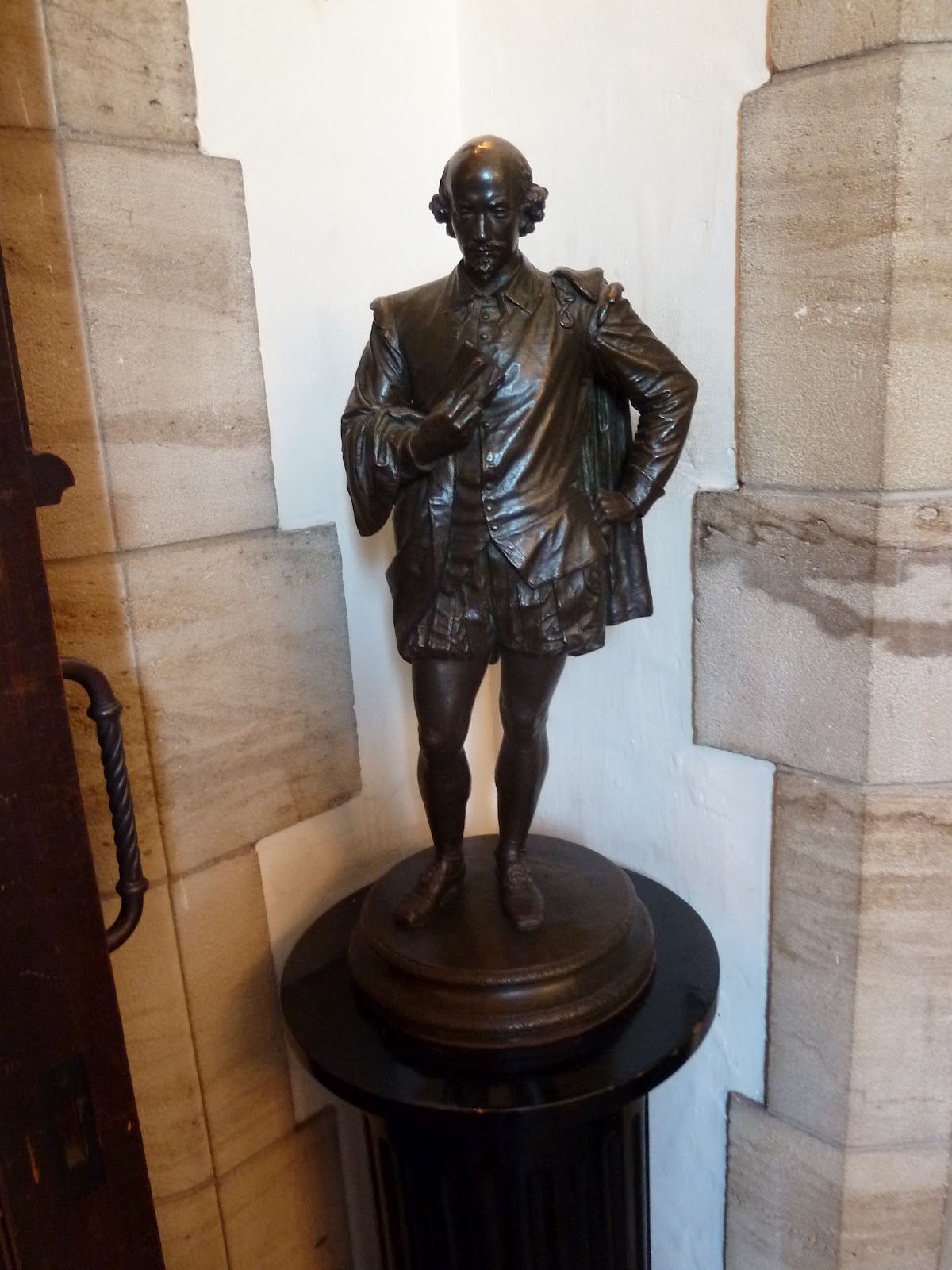
One of many representations of Shakespeare at the Folger
 The Founder’s Room
Portrait of Elizabeth I, the “Sieve” portrait
by George Gower, 1579
in the Folger Collection
The above costume replicating the Elizabethan gown in the portrait was worn by actress Michael Learned in the 2003 Folger Theatre production of Elizabeth the Queen by Maxwell Adnerson (1888-1959).  Ms. Learned required the assistance of a dresser to put on the costume which weighed more than twenty pounds.
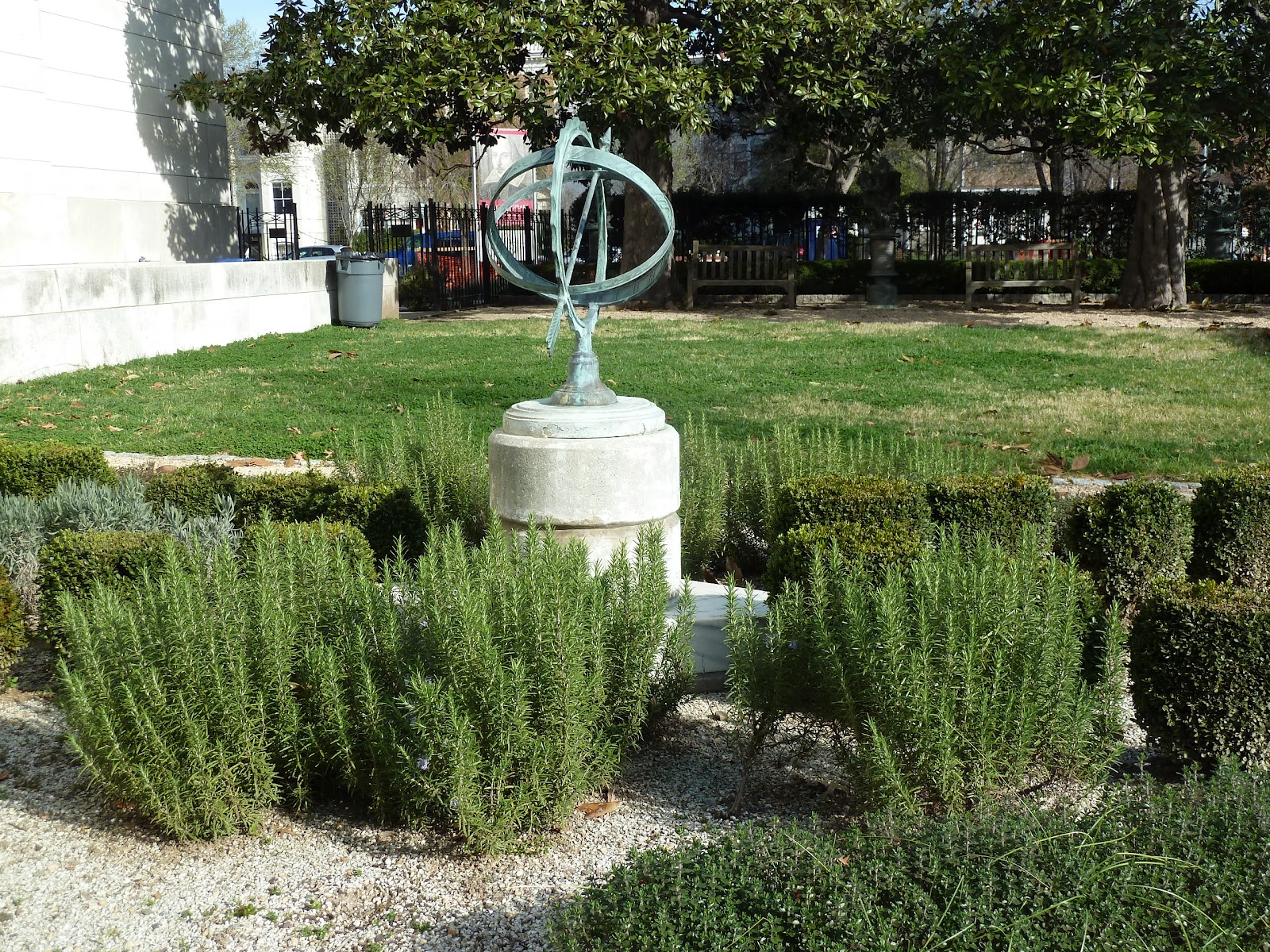
Washington’s warm March weather favored growth in the library’s Elizabethan Garden
Watch for our report on Shakespeare’s Sisters:
Voices of English and European Women Writers,
1500-1700, on display at the Folger Shakespeare Library to May 20, 2012

Fab Photos of Queen Elizabeth II at the V and A

Kristine and Victoria are sad to report that we will miss the V and A Museum’s exhibit of Cecil Beaton’s photographs of Queen Elizabeth II, which is scheduled to close in London on April 22, 2012.  We will share  little of it with you today, and here is the website.  Below is the schedule for additional presentations of the exhibit in the UK, Canada, and Australia.

Beaton’s talents for portrait photography were unrivaled, and he exercised them fully when the subject was the Queen.

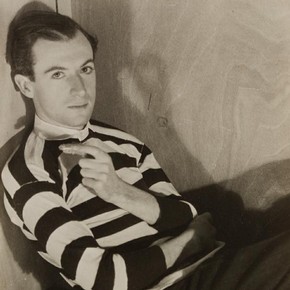
Curtis Moffat, ‘Cecil Beaton’  about 1925
Gelatin silver print; Museum no. E.1556-2007
Sir Cecil W. H. Beaton (1904-1980) created hundreds of iconic portraits of celebrities ad designed sets and costumes for theatre and film.  As a photographer for Vogue magazine, he lived what he saw, and was named to Hall of Fame of the Best Dressed List.  Among his best known work
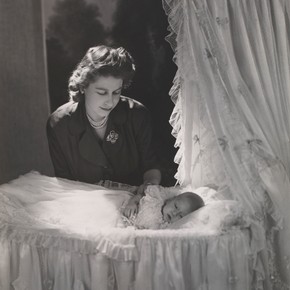
Princess Elizabeth by Cecil Beaton, March 1945
 Museum no. PH.1746-1987
Princess Elizabeth and Prince Charles, Gelatin silver print, December 1948, Buckingham Palace
Museum no. PH.218-1987

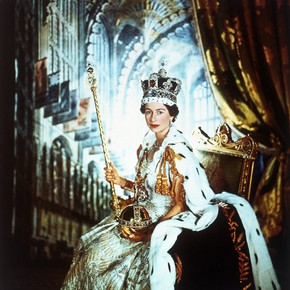
Beaton photographed Queen Elizabeth before she came to the throne in 1952, and he took her official Coronation portrait.

Queen Elizabeth II by Cecil Beaton, 2 June 1953
Museum no. PH.311-1987

Beaton was renowned for his romantic portraits of Queen Elizabeth, the Queen Mother.

Queen Elizabeth, Buckingham Palace Garden, 1939
Gelatin silver print Museum no. E.1374-2010
Queen Elizabeth II by Cecil Beaton tours throughout 2012, the year of the Queen’s Diamond Jubilee.
United Kingdom

Dundee, McManus Gallery – 30 September 2011 – 8 January 2012

Leeds City Museum – 8 May – 24 June 2012
Norwich Castle Museum – 7 July – 30 September 2012
Laing Art Gallery, Tyne & Wear – 13 October – 2 December 2012

International
Fine Art Gallery, Ballarat, Australia – 25 February – 15 April 2012
Royal British Columbia Museum, Victoria, British Columbia, Canada – 1 June – 3 September 2012
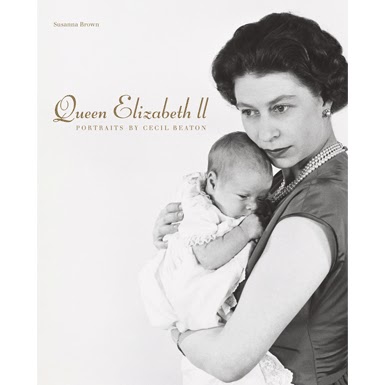
Perhaps the only compensation for missing this exhibition is that the book Queen Elizabeth II: Portraits by Cecil Beaton by Susanna Brown is available from the V and A Shop, here.
From the book’s description:  “… This fascinating book explores Beaton’s long relationship with the Queen and the royal family, and describes how his royal portraits shaped the monarchy’s public image from the 1930s to the late 1960s… [and] moulded the world’s perception of a princess, monarch and mother.”

The Naturalist's Diary for April

From the The Naturalist’s Diary of  April 1826

The breath of Spring is on thee, Aspley Wood (near Woburn in Bedfordshire).
Each shoot of thine is vigorous, from the green,
Low-drooping larch, and full unfolded bud
Of sycamore, and beech, majestic queen!
With her tiara on, which crowns the scene
With beauty,–to the stern oak, on whose rind
The warmest suns and sweetest showers have been,
And soft voice of the fond Favonian wind:–
His thousand lingering leaves reluctantly unbind
But of all other trees, a clustering crowd
Bow their young tops rejoicingly to meet
The breeze, which yet not murmurs over-loud,
But wastes on Nature’s cheek its kisses sweet,
To woo her from dark winter;–the wild bleat
Of innocent lambs is on the passing gale,
Blending with pastoral bells; and at my feet,
From  yon warm wood the stockdove’s plaintive wail
Wins to the curious ear o’er the subjected vale.

                         Wiffen’s Aonian Hours.

            In this picturesque and beautiful description of the poet, the effects of Spring on forest scenery are faithfully delineated, and convey to the mind a vivid representation of the beauties to be observed by those who mark the gradual progress of vegetation. But in Nature, beauty is almost always combined with utility; and while the senses are feasted with the great variety of colours and odours abounding among flowers and plants, the contemplative mind naturally considers the beneficial effects that result from this beautiful combination of vegetable wonders. All is connected (observes M. Mirbel) in the vast system of the globe, and order emanates from the equipoise of conflicting phenomena. Animals carry off the oxygen of the atmosphere, replacing it by carbonic acid gas; and are thus at work to adulterate the air, and render it unfit for respiration. Vegetables take up acid gas, retain the carbon, and give out oxygen; and are thus purifying the air tainted by animals, and re-establishing the necessary proportions between its elements. In Europe, while our vegetables, stripped by the severity of the season of their foliage, no longer yield the air contributing to life, the salutary gas is borne to us by trade winds from the southernmost regions of America. Winds from all quarters of the world intermingle thus the various strata of the atmosphere, and keep its constitution uniform in all seasons, and at all elevations. The substances which are produced by the dissolution of animal and vegetable matter, diluted with water, are absorbed by plants, and constitute a portion of the nourishment by which they are maintained; plants in turn become the food of animals, and these again the prey of others which subsist on flesh. In spite of this perpetual state of war and destruction, nothing perishes, for all is regenerated. Nature has ordained that the two great divisions of organized beings should depend the one upon the other for support, and that both the life and death of individuals should be equally serviceable in keeping up the races of them.

            The arrival of the swallow, about the middle of this month, foretells the approach of summer, whose coming, however is too often retarded by the return of Winter in an angry mood, hurling his last hail-storms at the ‘proud-pied’ and flower-wreathed head of April.

            After the swallow, the next bird that appears is the nightingale (Motacilla luscinia) whose praises have been chimed by poets of every clime, and have occupied many a page in this month’s Diary of our previous volumes. In our climate, the nightingale seldom sings above six weeks, generally commencing the last week in April.
Nightingale

            That beautiful bird the wryneck next makes its appearance, preceding the cuckoo by a few days,–whose note that tells of the advancing Spring, and its floral pleasures, is hailed with delight by every lover of Nature.

            The other summer birds of passage which arrive this month, make their appearance in the following order: the ring-ousel; the redstart, frequenting old walls and ruinous edifices; the yellow wren, the swift, the white throat, the grasshopper lark, the smallest of the lark kind; and the willow wren, which, as well as house-wren, destroys many pernicious insects. The kite now approaches farmhouses, and villages in search of food and materials for constructing his nest; at other times, unless pinched by hunger, he cautiously avoids man, and all his haunts.
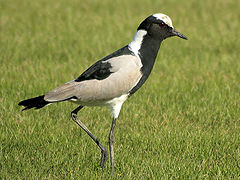
Blacksmith Lapwing

            In April, or early in the next month, the lapwing, or pee-wit (Tringa vanellus), lays her eggs, and sits, for she makes no nest. A few pairs will retire to heaths, downs, or ploughed fields during the season of incubation, but the greater portion of them fix their stations upon the banks of the dikes of marshes, or the great drains in our fenny districts. The feathered tribe are now busily engaged in forming their temporary habitations, and in rearing and maintaining their offspring.

            The vine expands its empurpled leaves. Honesty, or moonwort, is in flower; and the new sprung leaves of the sweet chestnut, in their turn, are playing in the breeze.

            Various kinds of insects are observed in this month; as the jumping spider, seen on garden walls; and the webs of other species of spiders are found on the bushes, palings, outsides of houses. The Iulus terrestris appear, and the death-watch beats early in the month. The wood-ant begins to construct its large conical nest. Little maggots, the first state of young ants, are now to be found in their nests. The shell-snail comes out in troops; and the stinging-fly and the red-ant appear.

            The mole-cricket is the most remarkable of the insect tribe seen about this time. The blue-flesh-fly, and the dragon-fly, are frequently observed towards the end of the month. The great variegated Libellula, which appears, principally, towards the decline of summer, is an animal of singular beauty. The cabbage butterfly, also, now appears. The black slug abounds at this season.

            Of the beetle tribe now on the wing, the Scolytus destructor may be noticed for its extraordinary powers of injuring trees. It is described, in Kirby and Spence’s Introduction to Entomology, as feeding on the soft inner bark only, and as making its attacks in such vast numbers, that 80,000 have been found on a single tree. The leaves of the trees infested become yellow; the trees themselves die at the top, and soon entirely perish. Their ravages have been long known in Germany, and the insect is formally mentioned in the old liturgies of that country.

            The dung of animals swarms at this season with minute Coleoptera; several species of the Lepidoptera will also be found by carefully inspecting garden pales, gates in lanes &c. Many species of bees may be seen sucking the pollen from the sallow which blossoms at this season. Sand and gravel pits should be carefully examined, and under the stones and clods of earth many insects will be discovered.”—Samouelle’s Introduction to British Entomology, p. 315.

            The progress of vegetation is general and rapid in this month. The sloe puts forth its elegant flowers; a host of others follow, among which may be named the ash, ground-ivy, and the box tree. The wild and garden-cherry, the plum, gooseberry and currant trees, the sycamore, the apricot and the nectarine, are in flower:–the garden now is full of

Crimson hues
Of the first tint, by April brought
To the sweet peach-bud.

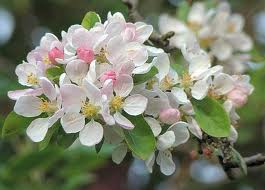
Apple Blossoms

            The blossoms of the apple and pear present to the eye a most agreeable spectacle, particularly in those counties which abound with orchards. The almond-tree, whose blush colour blossoms make their appearance before any leaves are seen, is among the earliest of the flowering fruit-trees, and forms a splendid ornament to the shrubbery in the months of March or April.

            The beech, the larch, and the elm, are now in full leaf. The larch also exhibits its red tufts or flowers, which soon expand into cones, and the fir tribe show their cones also. Many lovely flowers are showered from the lap of April; among them may be named jonquil, anemone, ranunculus, polyanthus, and the crown-imperial. The double-white, the yellow, and some others of the earlier tulips, are fully opened in this month; but the more illustrious varieties will not blow for some weeks.

            The yellow star of Bethlehem in woods; the vernal squill among maritime rocks; and the wood-sorrel, are now in flower. This and the wood anemone have both white blossoms, and inhabit shady woods.

            The way-side violet is still seen and loved for its own and for remembrance sake; and the hedge-banks are now studded with primroses the bright yellow of those flowers, beautifully contrasted with the surrounding green of the budding trees, offers a most agreeable spectacle to the lover of Spring scenery. Other flowers which adorn our fields at this time are the checquered daffodil, the lady-smock, the hare-bell, and the cowslip.

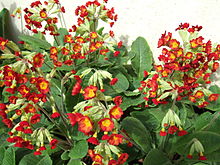
Red-Flowered Cowslip

Obituary of the Duchess of Devonshire

Georgiana by Sir Joshua Reynolds, 1775-6
Huntington Art Gallery
Obituary of the Duchess of Devonshire

The Universal Magazine of April 1806

Died at Devonshire house, Piccadilly, aged 49, on the 30th of March, after a short but severe illness, her grace, Georgiana, Duchess of Devonshire. She was eldest daughter of the late Earl Spencer, and Georgiana, his countess, daughter of Stephen Poyntz, Esq. was born June 7, 1757, and married to the present Duke of Devonshire, June 6, 1774. She was educated under the immediate inspection of her venerable mother, the present Countess Dowager Spencer, and indicated even from her infancy the most flattering promises of worth and loveliness, and on her presentation at court, like a comet above the horizon, all inquiries centered in who was to be the happy man destined to receive the fair hand of so much grace and beauty.

Gainsborough’s Georgiana, on display at Chatsworth

The young Duke of Devonshire was reserved for the honour and soon after the union of this noble pair, her grace not only became the head, but actually gave, the fashion to every article of female dress, not an apron, gown, cap or bonnet but were Devonshire. So high a station did the duchess retain among the fashionable world, that when the contest with America brought our military into camps, then was her grace found dressed in the uniform of the Derby militia of which the Duke of Devonshire was colonel, and from that time every lady, young or old, became dressed a la militaire. At the first drawing room which the duchess attended after her marriage, she was accompanied by all the distinguished females of the two great families from which she was descended, and to which she was allied. It is asserted that she was literally loaded with jewels, even to produce inconvenience. In the course of the summer of 1792, the Duchess of Devonshire visited the continent, in company with her mother, the Countess Spencer, and her sister Lady Duncannon, both of whom were in declining states of health. During this excursion her grace mixed with the company of several foreign literati, among whom we may enumerate Sausure, Tissot, Lavater, Necker, and the English historian Gibbon; on this occasion public fame attributed to her a short descriptive poem, not void of taste, entitled, the Passage of the Mountain of St Gothard. During the latter part of her life the duchess did not appear in the gay world so much as she had formerly done, yet at the institution of the Pic Nic society in 1801, she stood forward as one of its principal promoters; but the formidable opposition which was organized against these theatrical dilettanti, soon became more than a match for the subscribers to this favourite dramatic project. In the cause of one of the greatest statesmen of the age, (we allude to Mr. Fox) she interested herself frequently and essentially; and in the Westminster election of 1784, her grace took so active a part in favour of that gentleman as subjected her in some degree to the censure of public opinion. The disorder which terminated the life of this distinguished personage, is said to have been an abscess of the liver, the attack of which was first perceived about four months ago, while she sat at table at the Marquis of Stafford’s, and which from that period so increased its feverish progress, as eventually resisted all the efforts of the first medical skill. Her mind was richly stored with useful as well as ornamental endowments; she was well read in history, but the Belles Lettres had principally attracted her attention. Though forced into female supremacy by that general admiration which a felicitious combination of charms had excited, she yet found leisure for the systematic exercise of a natural benevolence, which yielding irresistibly and perhaps too indiscriminately, to the supplications of distress, subjected her to embarrassments that the world erroneously imputed to causes less amiable and meritorious. Her grace has left issue, 1. Lady Georgiana Cavendish, born July 12, 1783, married March 21, 1801 to Viscount Morpeth. 2. Lady Henrietta, born August 12, 1785. 3. William George, Marquis of Hartington, born May 21, 1790.

Hart, later the 6th Duke of Devonshire, on display at Chatsworth