Walking St. James's, Part One

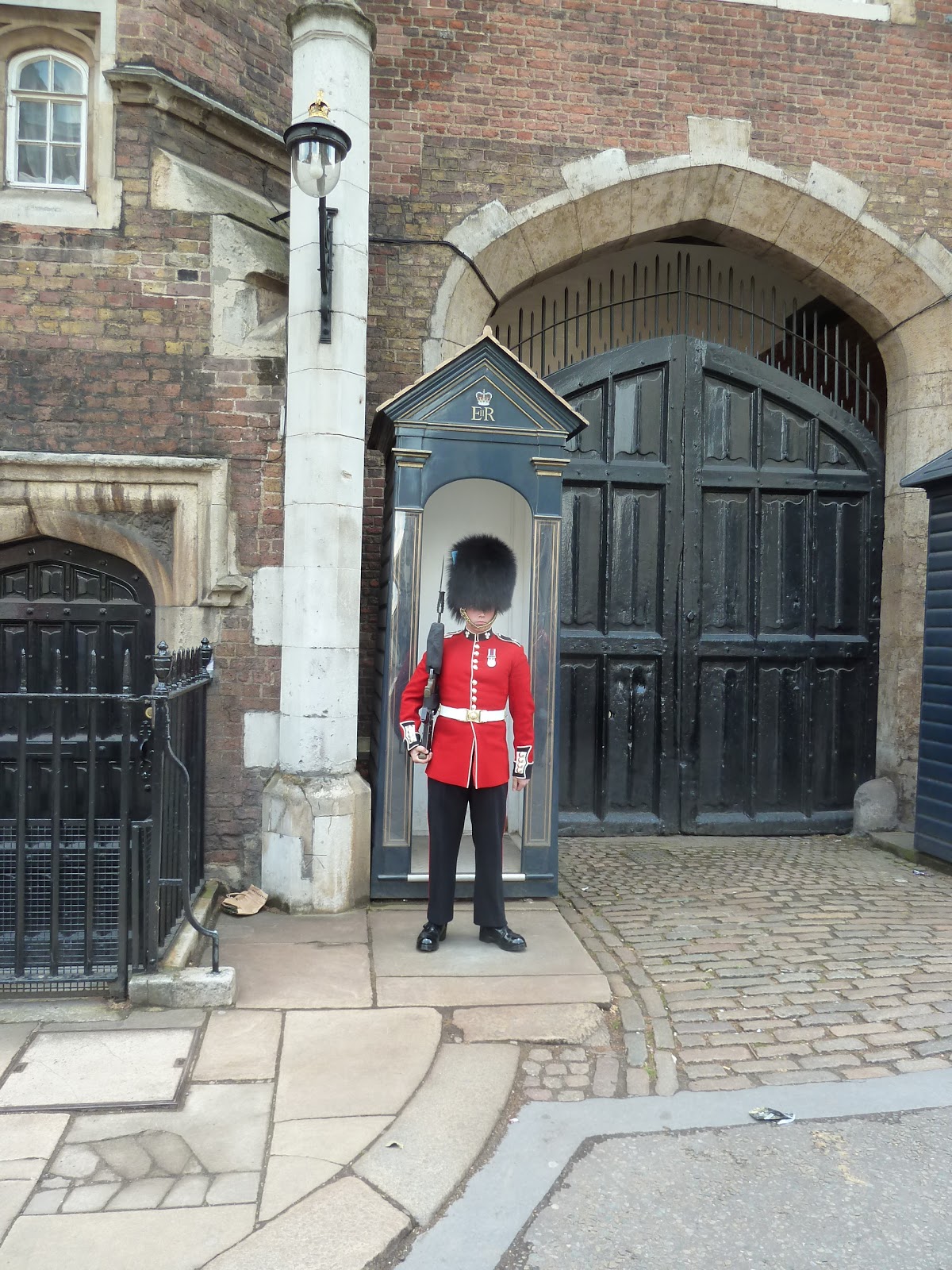
St. James’s Palace

My pictures of London’s St. James’s over the years show astonishing similarity of views, but I keep trying to capture the essentials of the area and manage to fail.  St. James’s is the area around St. James’s Palace and was once, in the reign of the Stuarts, where “everyone” lived.  Before Kensington, before Belgravia, before Mayfair, St. James’s Square was — and is — the Place To Be.  Only the most exclusive clubs, the most distinguished businesses and retailers, the most luxurious hotels…the creme de la creme of London.

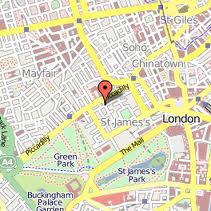
map of St. James’s
St. James’s is bordered on the east by Haymarket, on the north by Piccadilly, on the south by the Mall and St. James’s Park, and on the west by Green Park.  Once part of the royal hunting grounds itself, like the Parks, the area of St. James’s was granted by Charles II to Henry Jermyn (Earl of St.Albans) to develop as a residential neighborhood adjacent to St. James’s Palace.

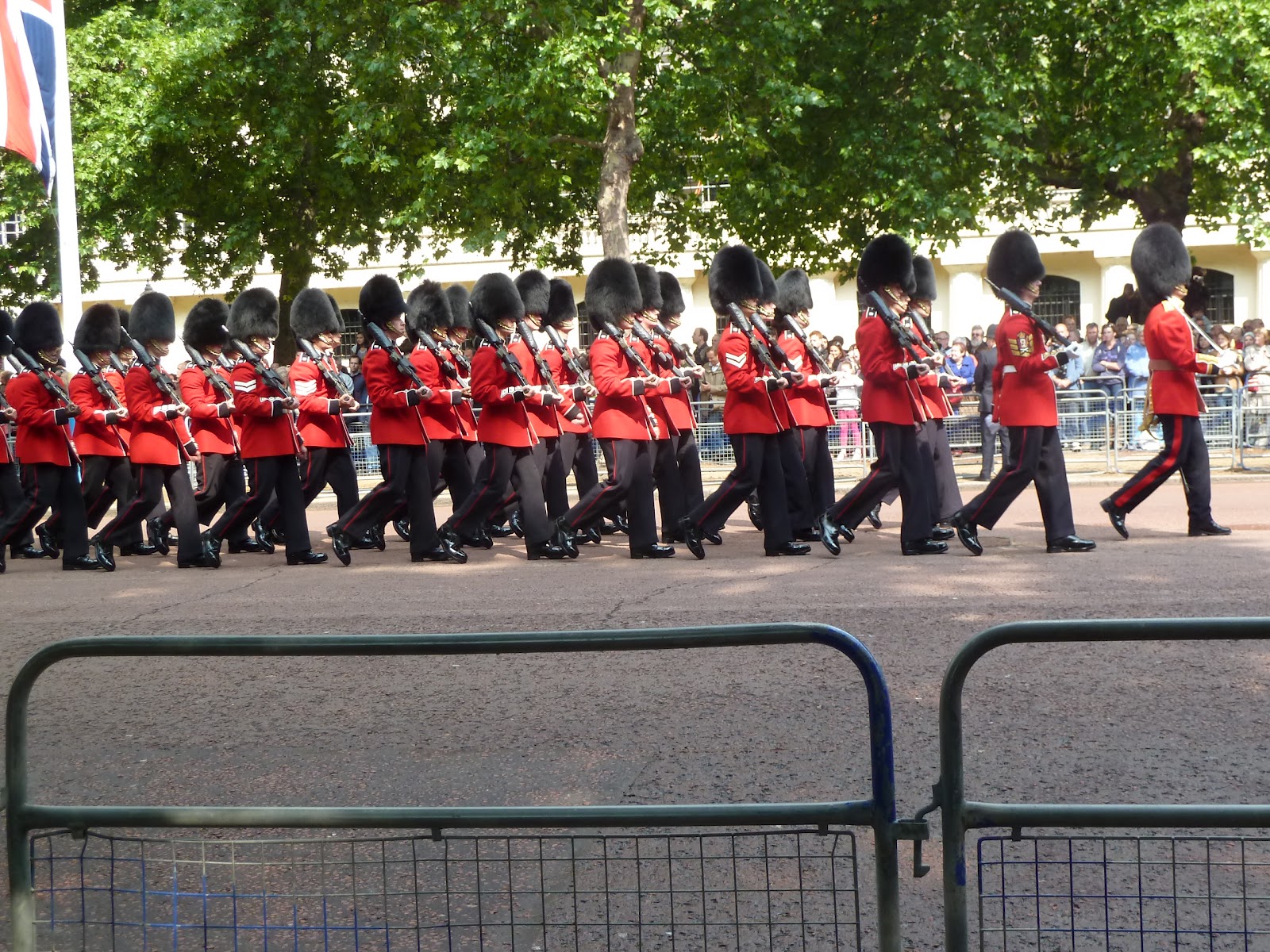
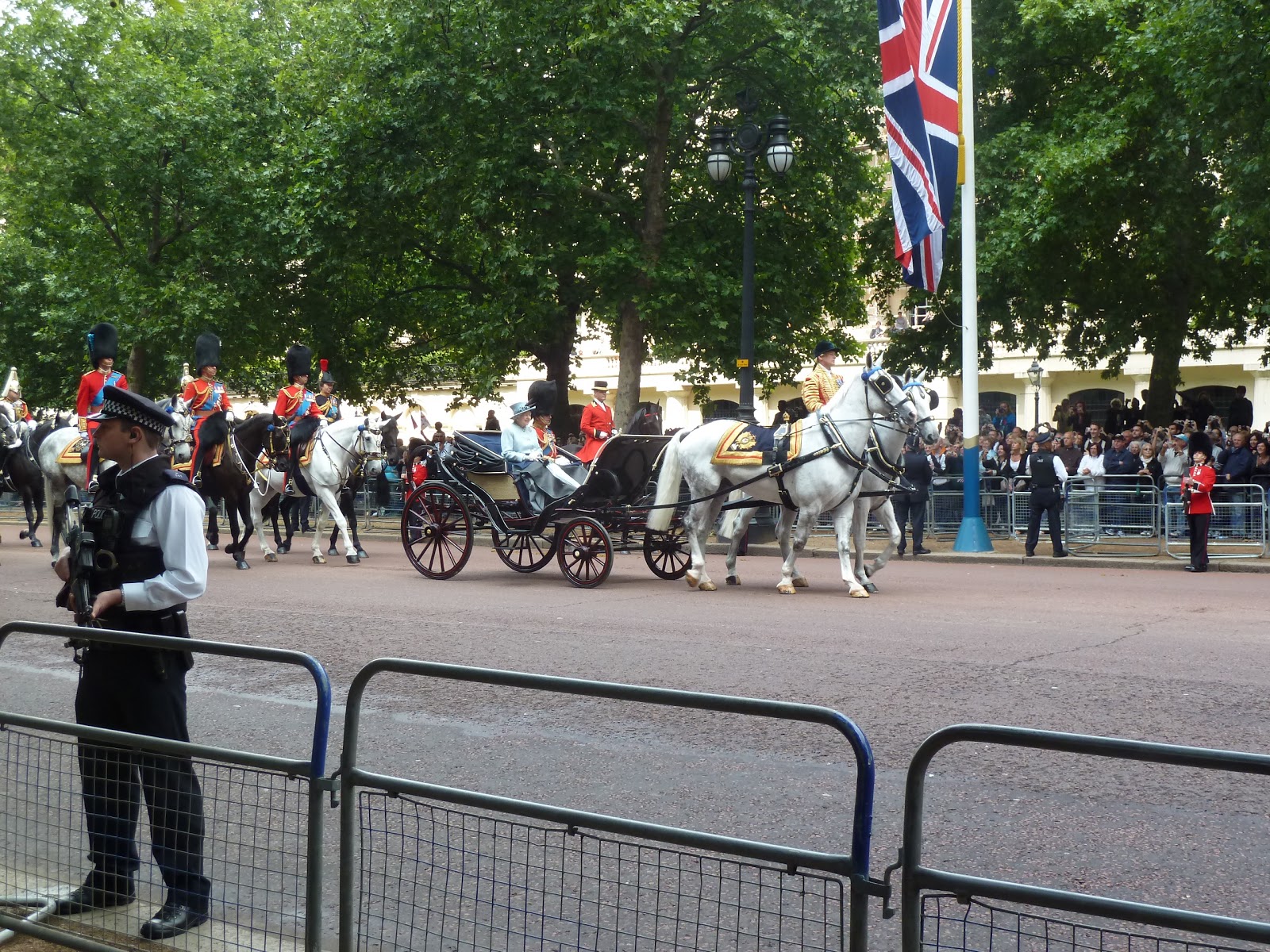
Last June (2011), I watched the Queen and Royal Family, accompanied by a FEW of her  Guards, parade from Buckingham Palace along the Mall toward the parade ground at Horse Guards for the annual Trooping the Colour.  See this blog of July 30, 2011, for more.
The Queen was accompanied by the Duke of Edinburgh, beside her and following were Prince Charles, Prince William, and Princess Anne on horseback.in their uniforms as Colonels of Guards regiments.

While the Queen was reviewing her troops, I took the opportunity to wander around St. James’s and snap more pictures.  I walked up the steps from the Mall between the two large buildings that comprise Carlton House Terrace, once the site of the Prince Regent’s fantastic Carlton House, demolished in 1825.

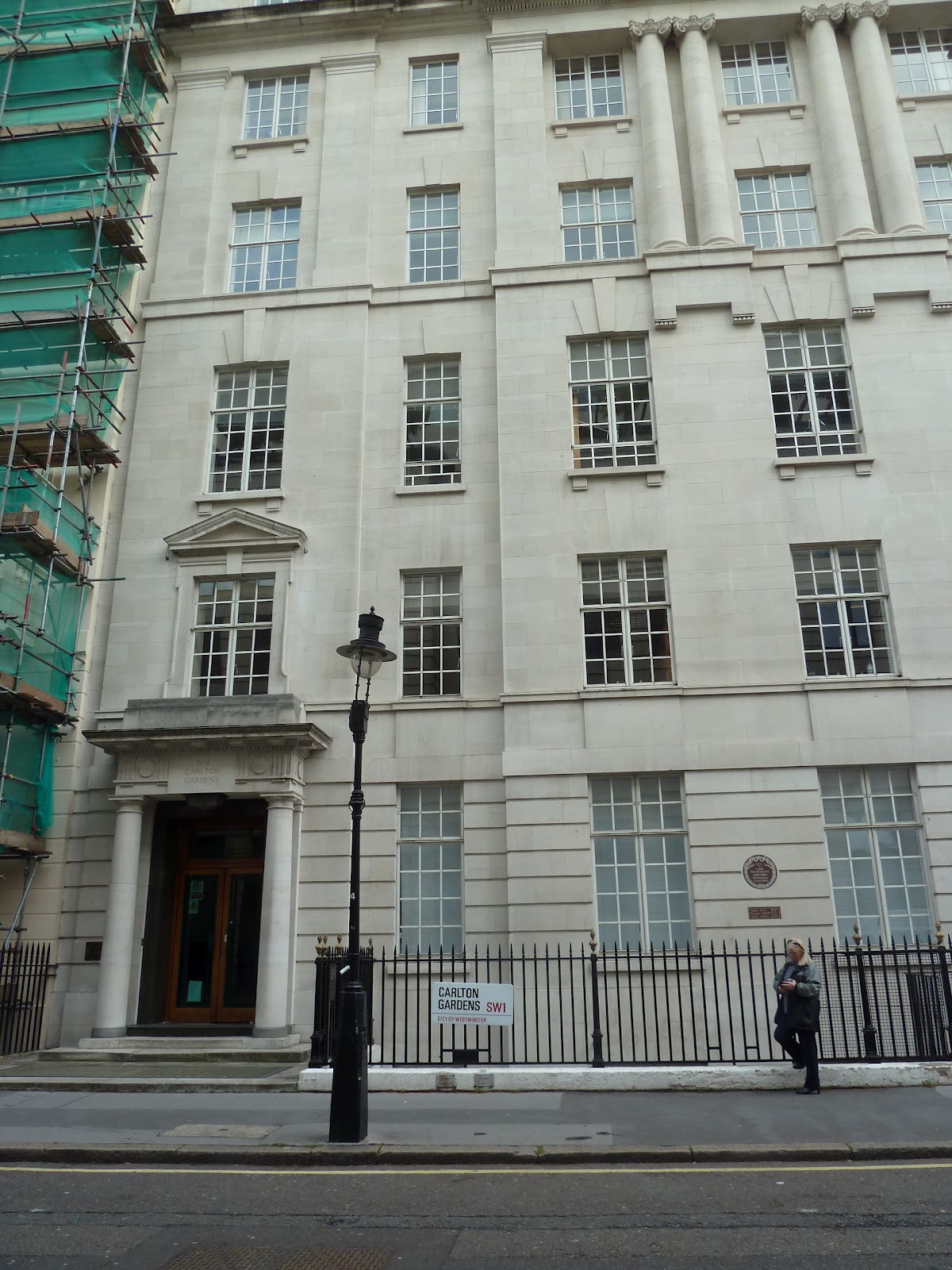
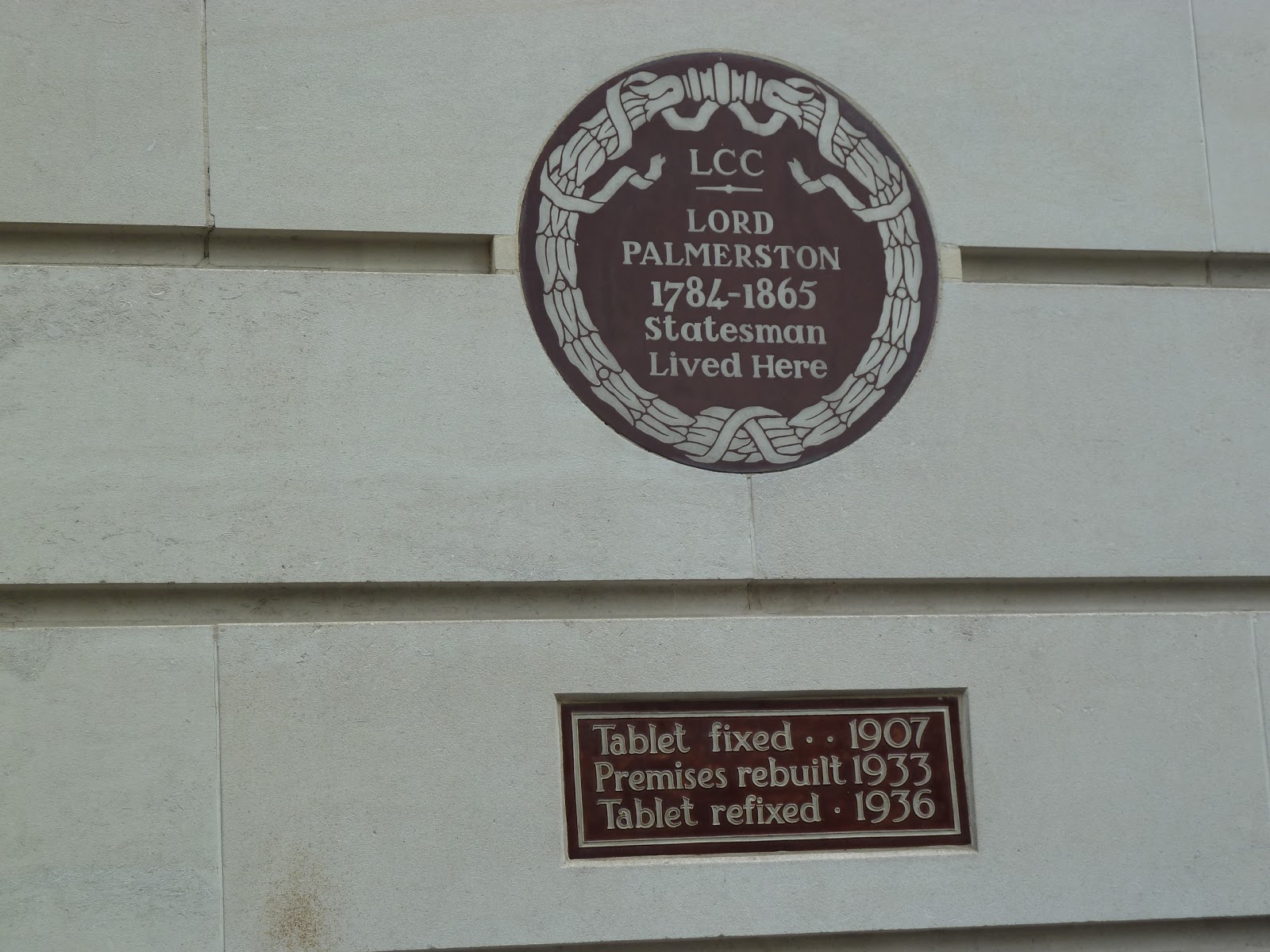
The large townhouses which comprise the Terrace wings and Carlton Gardens are mostly offices now but once housed distinguished figures such as Lord Palmerston. 
Waterloo Place is not much more than a parking lot, sadly. 
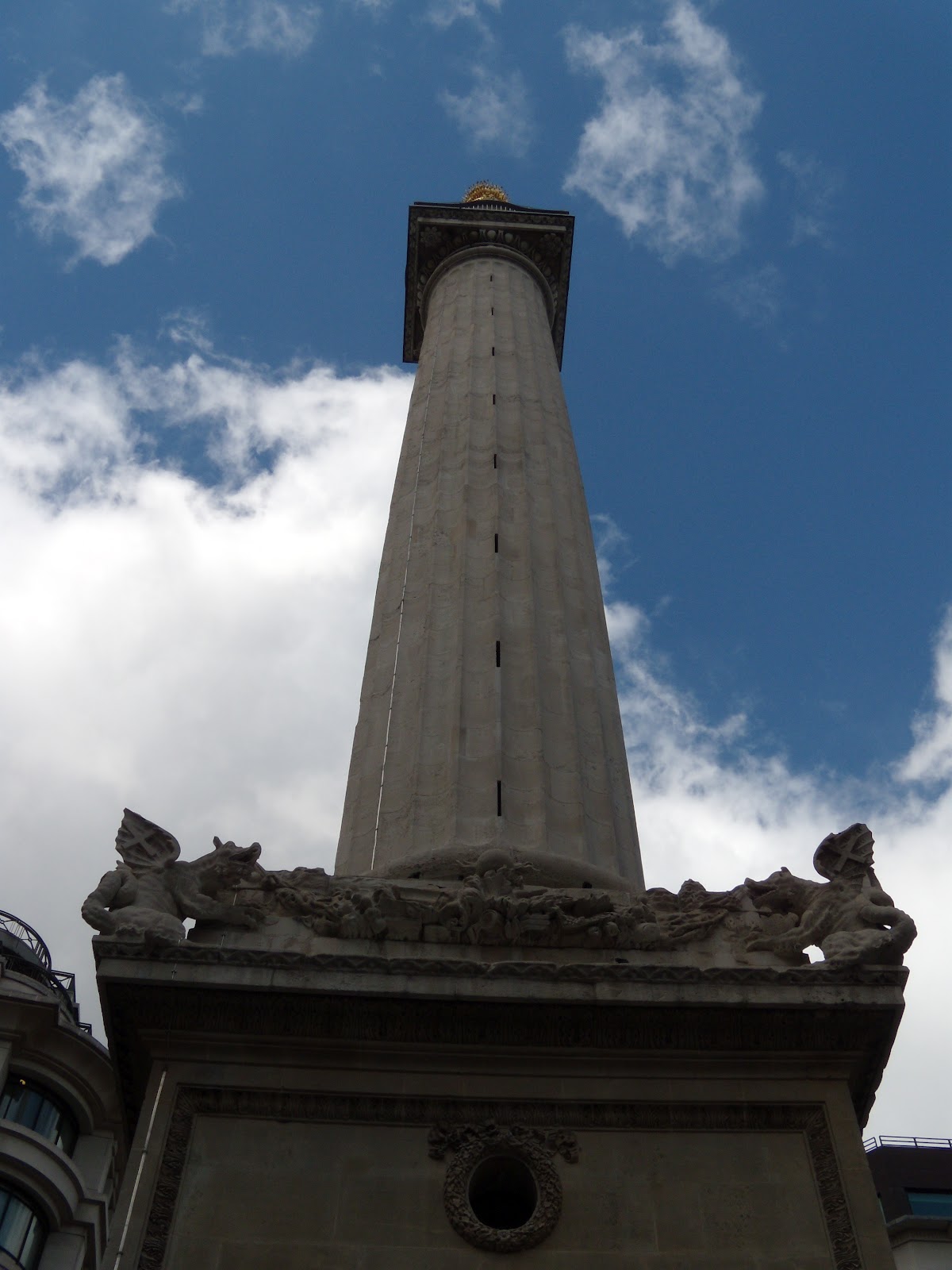
Waterloo Place with Duke of York Column
The large monument is to the Duke of York, son of George III and brother of George IV.
Waterloo Place was to be the terminal point of the great development of Regent Street, stretching from the Mall to Regent’s Park, as designed by architec
t John Nash for George IV, and for which Carlton House itself was demolished.  But unlike the nearby Trafalgar Square, it has never become a public gathering place of importance.
Looking in the other direction, north, up Regent Street.
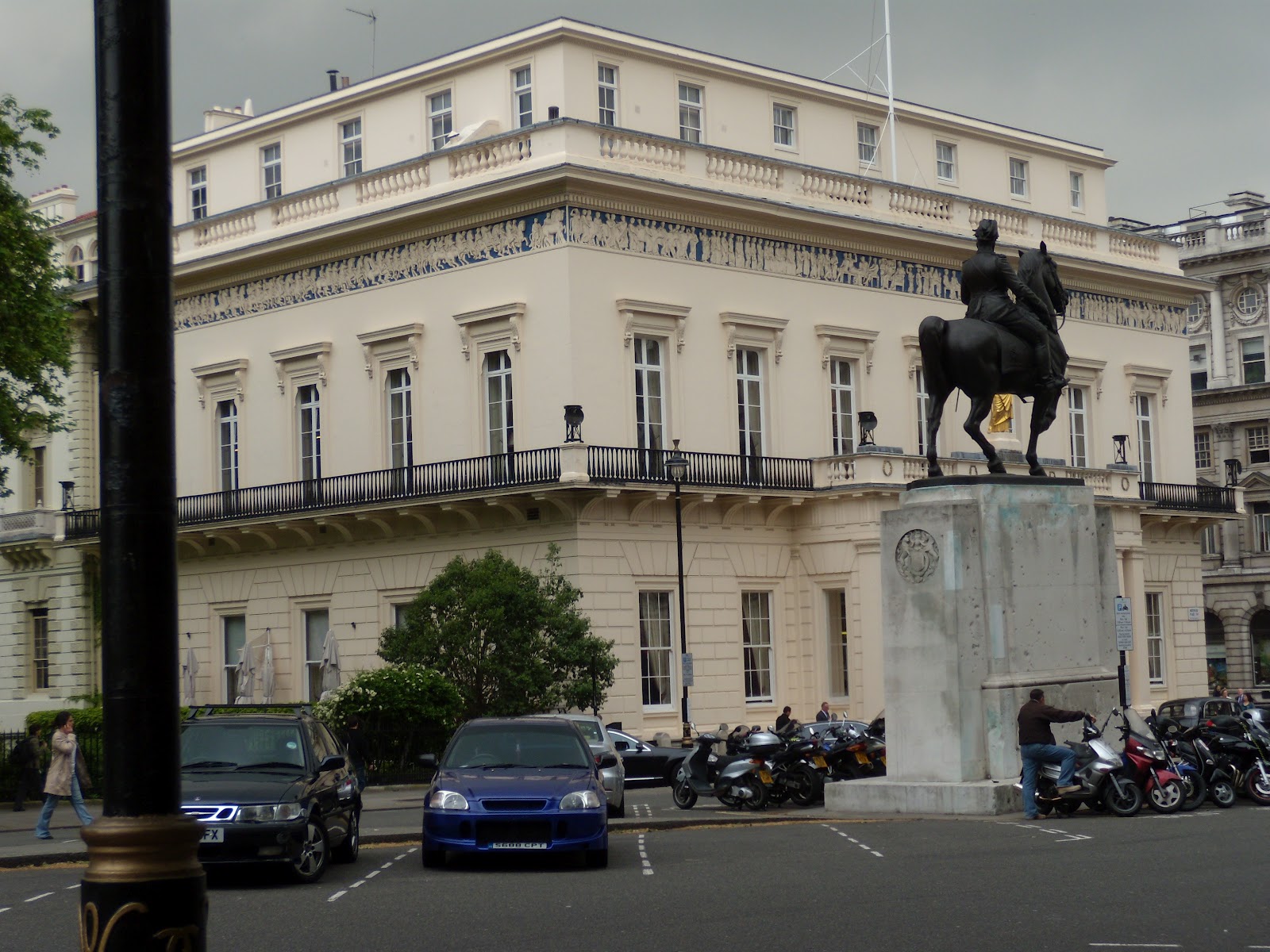
 One one side  of Waterloo Place is the Traveller’s  Club and on the other is the Athenaeum with its garden.  I assume all the distinguished members were at Horse Guards, for it appeared to be rather deserted. 
Atheneaum, with equestrian statue of Edward VII
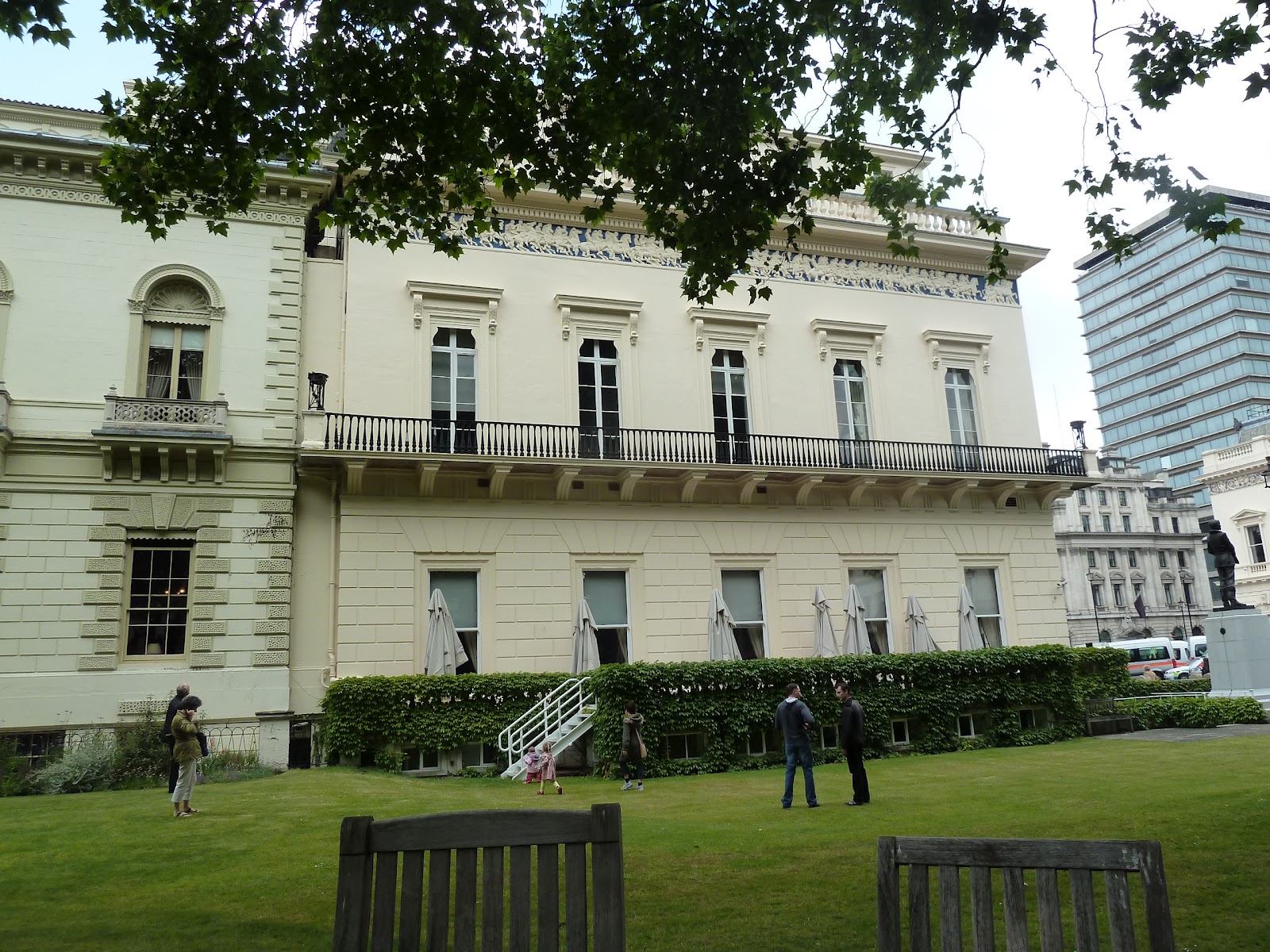
Athenaeum and Garden
Athenaeum Entrance
Things were pretty quiet with everyone watching for the Queen’s return, so I turned west and walked down Pall Mall.
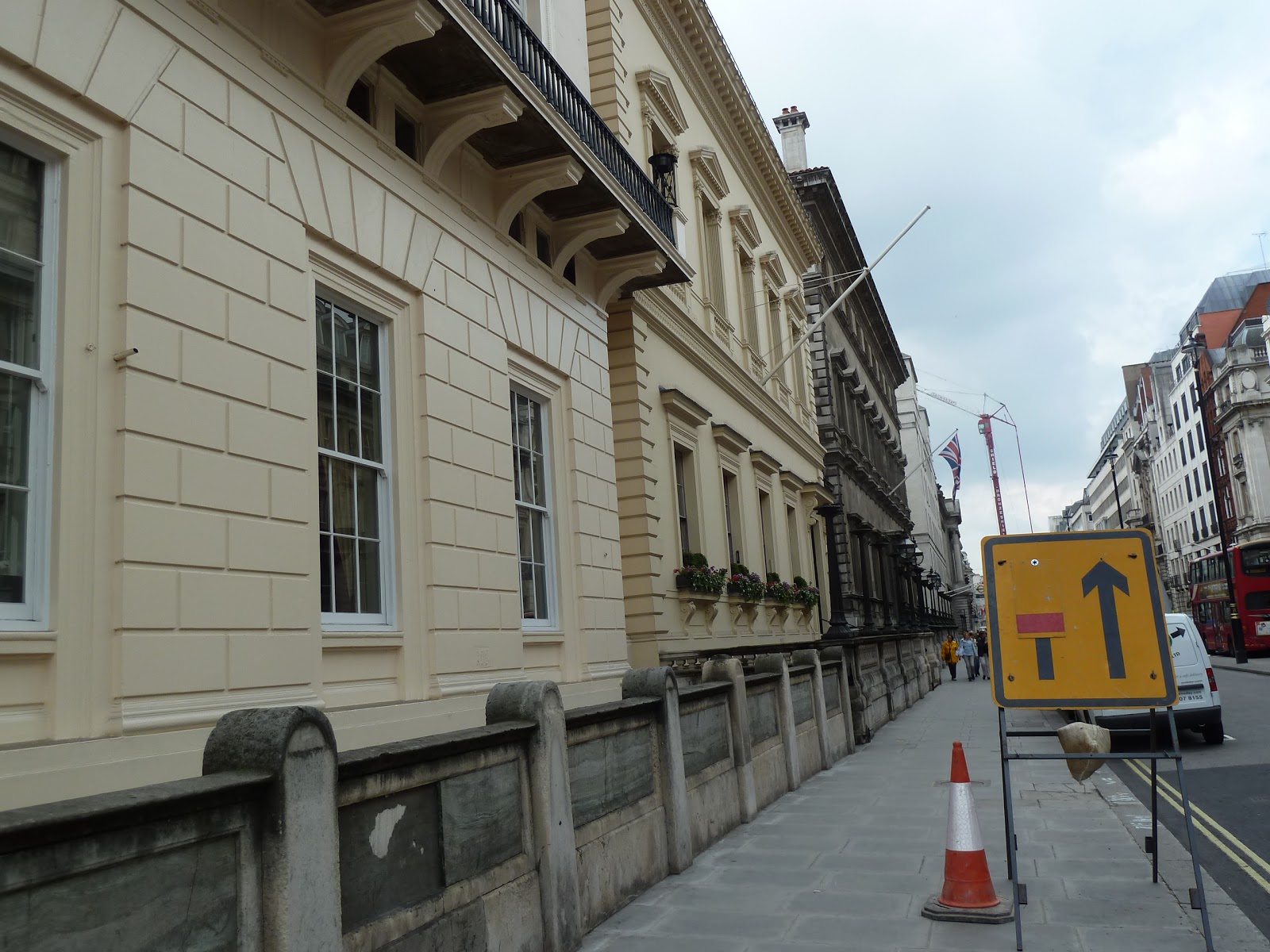
Above, looking west on Pall Mall with London’s ever present traffic diversions
  At 87 Pall Mall is the elegant facade of Schomberg House with its Coade Stone figures supporting its portico.
Just a few steps farther is the handsome 79 Pall Mall with its lovely window set off by pink geraniums looking out at the busy street.
A building on this site, still part of the Crown Estate, was given to Nell Gwynne (1650-1687), the little orange seller who became the Restoration Theatre’s most famous actress — as well as being one of the mistresses of Charles II.

I’ll continue with my St. James’s Views soon…next stop, Marlborough House and St. James’s Palace.  How I long to return…there’s so much more to explore in just this one small area of London.

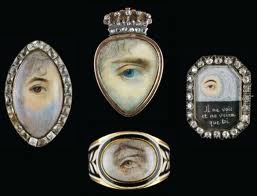
Another 'Look of Love"

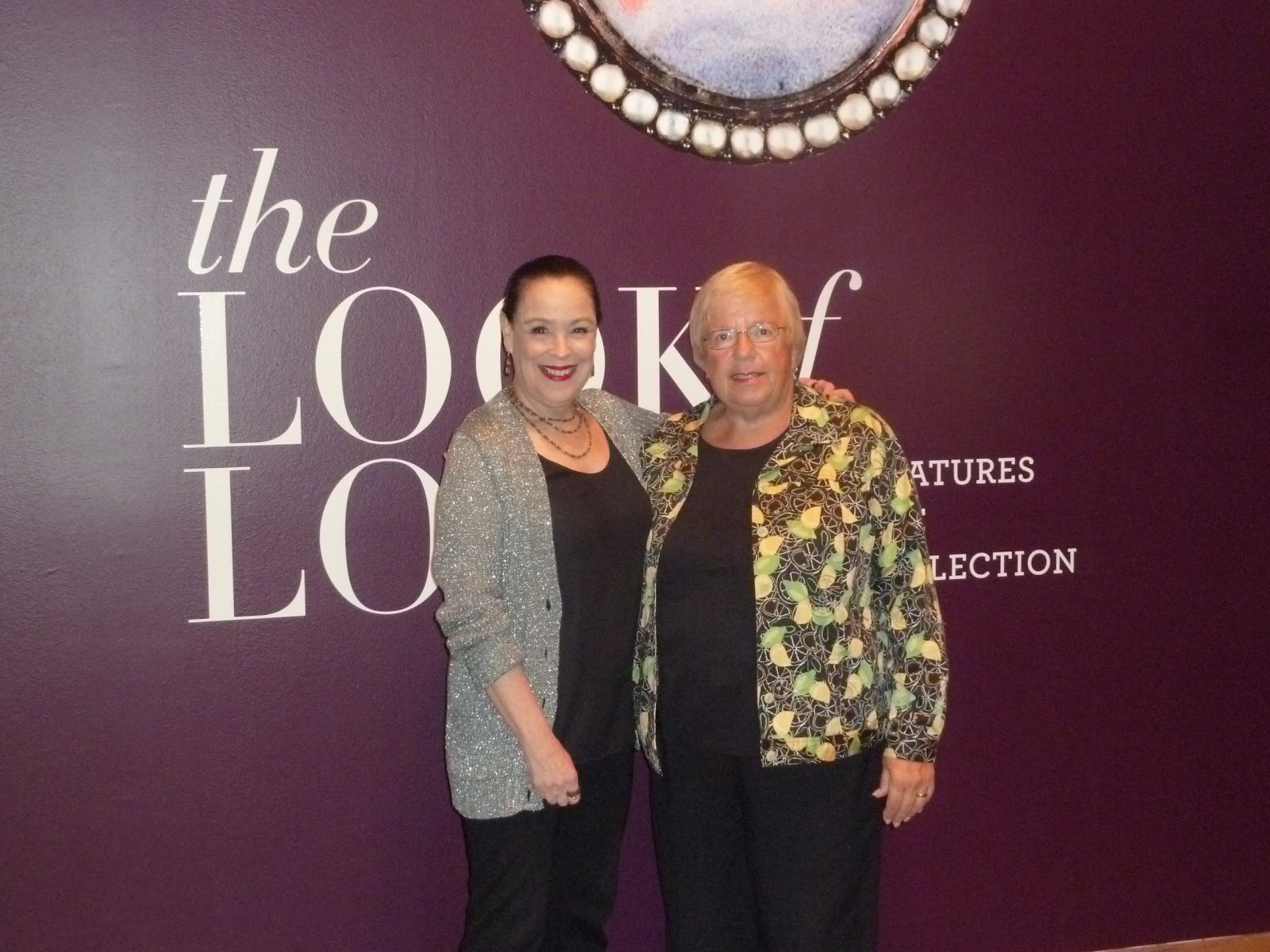
Victoria here, having recently toured the exhibit “The Look of Love” at the Birmingham Museum of Art in Alabama (on my way home from a winter in Florida near Kristine and Jo).

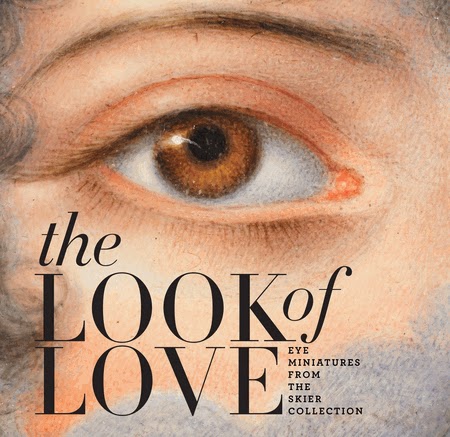
This was my first ever visit to Birmingham and thus my first taste of the delicious museum of art, which we began with luncheon at Oscar’s Restaurant (delicious, indeed!) before approaching our target: The Look of Love: Eye Miniatures from the Skier Collection.

The museum was filled with children. probably school tours, and they seemed particularly attracted to the museum shop, like all kids everywhere, seeking a memento of their visit.

I had read about the exhibition on line in articles published all over (see Jo Manning’s piece here), and in the catalogue, which absorbed my attention cover to cover.  Even if you are not fortunate enough to make your way to Birmingham before June 10, this catalogue will give you an excellent view of all the pieces accompanied by several scholarly articles and Jo Manning’s delightful fictional vignettes.

Nan Skier and Victoria at the exhibition

I was fortunate to be introduced on-line (by Jo Manning) to Nan Skier, and we met in person at the exhibition.  We had an enlightening chat about the unique collection she and her husband, Dr. David Skier, have amassed.  To hear her tell how they got started, listen to this interview via Skype with Polish television.


The very tiny objects, from as small as less than half a square inch to a wallet containing  both a lover’s eye and miniature of a hand, and a tea cup decorated with an eye, are exhibited in a darkened room in handsome cases and vitrines under pinpoints of light. Thus my pictures are both dark and a little blurry since they are enlarged quite a bit.  The better pictures here are the official pictures by the professional photographer Sean Pathashema.

 Above is one of the cases on which the Lover’s Eyes are displayed with descriptions below. Though it might be hard to photograph, the layout is very effective in presenting the delicate objects in the best possible manner.
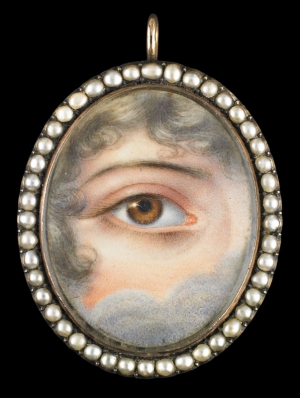
Gold oval pendant surrounded by seed pearls, ca. 1830. Brown right eye with clouds
1 7/8 (with hanger) x 1 3/8 x 1/4 in.

gold teardrop-shaped brooch surrounded by split pearls, ca. 1790; Blue right eye.
 3/4  x  1 1/4  x  1/4 in.
The Lover’s Eyes in the Skier Collection are all similar — yet no two are alike. Most of them are worn as jewelry — rings, pendants, bracelets, e.g.
Bracelet surmounted with miniature in gold surround with drop pearl;
Plaited hairwork on reverse;
 Restrung with four strands of cultured pearls; Gray right eye.
 1 5/8 x 2 x 1/4 in. (surround only)
Many are set with precious stones: there are examples of pearls, diamonds, garnets, coral and turquoise, among others. 
Yellow gold brooch with border of thirty-two natural oriental half pearls in a floral motif
with eight small turquoise stones;
oval locket back with woven brown hair under glass, c. 1820
brown right eye; 1 x 1 1/8 x 1/4 in.
Rose gold oval brooch surrounded by double asymmetrical rows of seed pearls;
 suggestion of cloud border; convex backing with Prince of Wales hair plumes;
 brown right eye; 1 x 1 1/4 x 1/4 in.
Heart shaped gold ring with Hessonite garnet surround
crowned with a flower and ribbon motif, c. 1790. Blue right eye.
 on reverse of ivory lozenge is a sepia and embroidered hairwork image depicting interlocking hearts
 in front of an oak.  15/16 x 5/8 x 7/8 in.
Every one of these objects must have a story — of love or of loss.  But few can be identified by either sitter or artist.  History has made them unknown, and this gives a particularly poignant and mysterious twist to the exhibition. In a brilliant move, however, the catalogue contains several fictional stories — what MIGHT have been.  Jo Manning is the author and her imagination took wing. Highly recommended.
So-called “Memory Box” made of embossed and painted paper
containing eye miniature, c. 1830. Brown left eye.
1 1/8 x 1 1/4 x 5/8 in.
A patch box, a stick pin, the wallet, and the teacup — what many uses have been found for the lover’s eyes.  Nan and I discussed the fact that many of the eyes portrayed are from the left side, and we speculated on how such a choice could be made — by the artist, the sitter or the person who made the commission?

Rose gold pendant surrounded by blue enamel with half pearls.
 Brown left eye. 1 x 11/16 x 1.8 in.

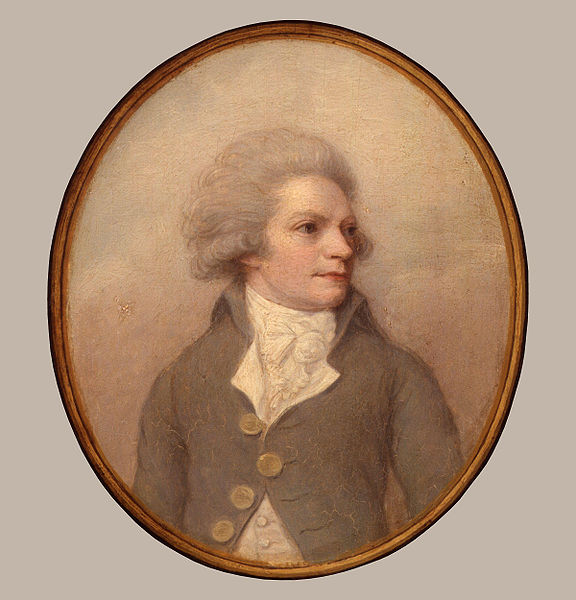
Richard Cosway, self-portrait (1742-1821) c. 1790
National Portrait Gallery, London

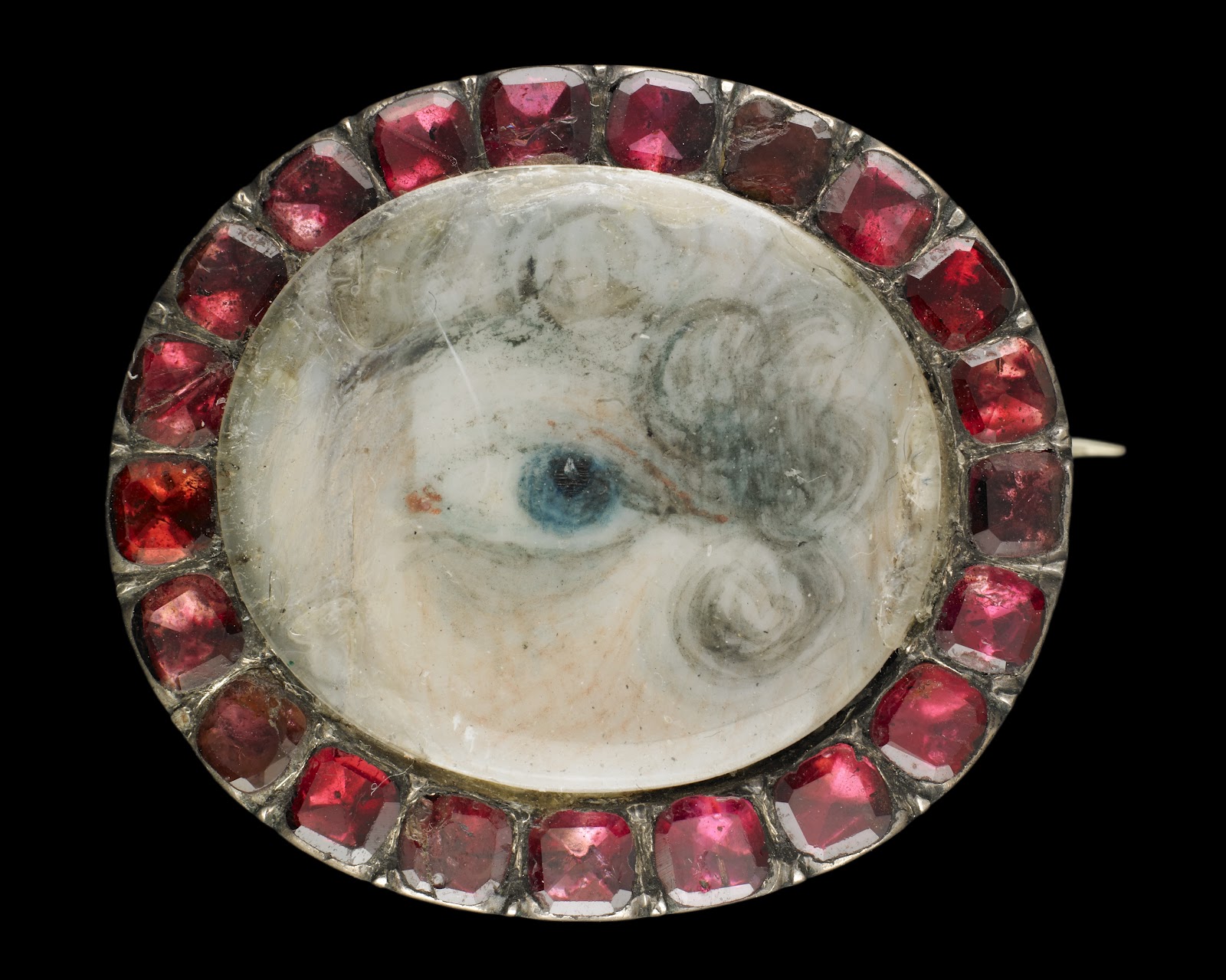
It amused me to note that one of the few lover’s eyes that an be identified by its artist is by Richard Cosway (1742-1821) greatly celebrated in his day as a painter and a close friend of the Prince Regent, later George IV.  And yet, this particular piece is one of very few that is not bejeweled, but instead decorated with paste (fake) red stones. Rather ironic, I thought.

Gold oval brooch surrounded by foil-backed red pastes, c. 1790. Blue left eye surrounded by curls
Attributed to Richard Cosway

Many thanks to Nan Skier for gracious hospitality and fascinating discussion.

The Look of Love is a most interesting and beautiful exhibition.  You have a month, until June 10, 2012, to make it to Birmingham. Hurry!
 I will report on other treasures in the Birmingham Museum of Art shortly.

Mycroft Holmes to the Rescue!

Little did Arthur Conan Doyle realize when he wrote his Sherlock Holmes novels that some time in the future, say in the early 21st century, it would be Sherlock’s brother Mycroft who would step into the role of hero. Actually, two heroic roles, as there are two Mycroft Holmes coming to the rescue of the now derelict Undershaw, the Surrey home of Sir Arthur Conan-Doyle – Stephen Fry (above top), who plays Mycroft in the Robert Downey, Jr. big screen version of that story, and Mark Gatiss (above lower) who plays Mycroft in the BBC series Sherlock.

Undershaw, above in its heydey and as it stands today, is where Conan Doyle lived with his wife, Louise, from 1897 to 1907. Conan Doyle commissioned his house specially to take into account the prognosis for his wife Louise, who was suffering from TB and only expected to live a few months. In order to infuse the interiors with lots of healing natural light, Doyle instructed the architect to include oversized windows in his design.


It was whilst living at Undershaw that Conan Doyle became a Deputy Lieutenant of Surrey, and joined the local Chiddingfield Hunt and the golf club and from there that he entered the Boer War as a volunteer army surgeon. It was also at Undershaw that Conan Doyle wrote The Hound of the Baskervilles in 1902. Literary visitors to the house during Conan Doyle’s residency included Bram Stoker, the author of Dracula, who came to interview Conan Doyle, and Virginia Woolf. After 1907, when Conan Doyle sold the property, Undershaw fell into various hands until, from 1924 until 2004, the house was used as a hotel. Since then, the house has stood empty and remains boarded up in a half hearted attempted to save it from further vandalism.

Last year the local authority, Waverley Borough Council, stepped in to prevent the house being turned into 13 different “dwellings.” At the time, it was owned by a company called Fossway. Christopher Atkins, from RDA Architects, speaking on their behalf, says: “It might have been his [Conan Doyle’s] house once, but it has been through a number of different versions since. If it’s left alone, it’ll fall to pieces. The developer’s intention is to provide a number of houses within the existing building and that will then provide the funding to enable it to be restored to its original position.”

Oppostion against the scheme has been great and those working to turn the property into a Sherlock Holmes Museum include local MP and Culture Secretary Jeremy Hunt, Sir Christopher Frayling, Stephen Fry and UPT patron Mark Gatiss, who co-created the BBC series Sherlock and who plays Sherlock’s brother Mycroft in that series. Together, they have formed the Undershaw Preservation Trust.

Stephen Fry has been vocal in his beliefs – the actor, writer, television presenter and film director, who has contributed to three documentaries on Conan Doyle and his character Sherlock Holmes, is a patron of the Conan Doyle library and was once the youngest member of the Sherlock Holmes Society of London.

“There has never been a time when Conan Doyle has gone out of fashion, or interest in him, his ideas and his creations has dropped off the radar,” said Fry. “But there has certainly never been a time when he has been more keenly appreciated and valued than now. . . . As an admirer of Doyle and his achievements, I urge Waverley Borough Council to reconsider what future ages will adjudge [to be] a foolish, short-sighted and wanton act of vandalism. . . . There is real value in Undershaw. If it is thought about, it can attract new generations of tourists to the area, it can be an enormous source of local pride. Please, please, have another think.”

As well, the Victorian Society, which has long been pushing for the Grade II-listed house to be given greater protective status from English Heritage, is also fighting to preserve Undershaw. “We are pushing for Grade I-listing,” says spokeswoman Heloise Brown. “English Heritage originally turned it down on the grounds that Conan Doyle wasn’t on quite the same level as other authors such as Jane Austen or Elizabeth Gaskell. Our argument is that Sherlock Holmes has such immense and universal appeal – there are 400 appreciation societies around the world – that the house really deserves extra protection.”

Visit the Save Undershaw website for further information. You can also visit the Help to Save Undershaw blog here.

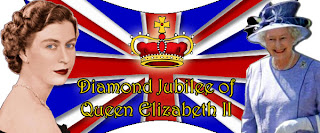
How to Throw a Diamond Jubilee Party

(Click on photos to go to retailer’s websites)

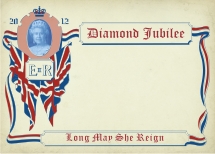
Even the most non-domestic host can throw a good Jubilee party as long as they employ some slight of hand and a bit of dazzle. Below, we offer suggestions that might ensure that your guests won’t notice that a few corners have been cut. Every good party begins with the invitations and we think these are a hoot –

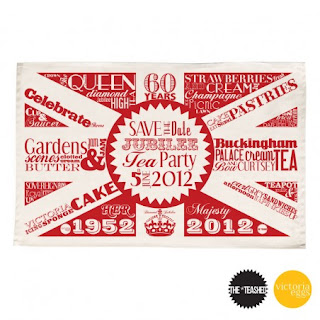
Once your invitations have been addressed (think Hyacinth Bucket) and posted, you may want to break out your Jubilee tea towel before beginning party day preparations. In any case, holding the tea towel when guests arrive will serve to give the impression that you’ve been making some sort of effort on their behalf, however marginal.

Now, first things first – the cocktails, complete with rim decorations from John Lewis –

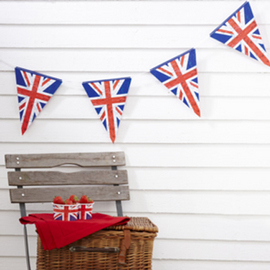
(Note: If you distract them with these rim flags, your guests may not realize they’re drinking Tesco’s champers). Right, now that we’ve got the drinks sorted, you’ll want to hang some bunting

And inflate some balloons

Don’t forget to hand round the royal flags to be enthusiastically waved by guests

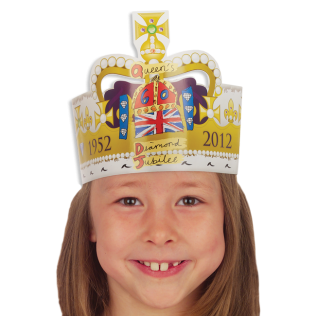
You may perhaps also wish to hand round a few Jubilee hats

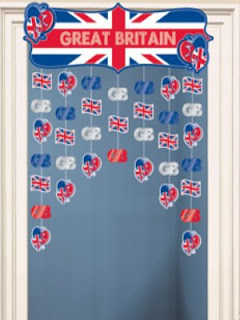
Or perhaps not . . . . but do have some door curtains handy for guests to walk through. Nothing says “party” like getting one’s hair caught up in bits of string and tatty paper Union Jacks.

Once you’ve seen to it that your guests have been suitably lubricated and tousseled, they’ll no doubt want to be fed. The expectation of a nosh or nibble is not, after all, unreasonable.

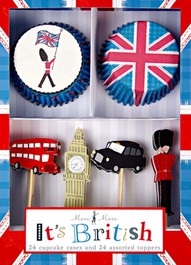
If a full on, Gordon Ramsay-like spread is beyond your capabilities, we suggest that you serve Coronation chicken sandwiches. Nothing could be easier. You’ll find the quick “cheat” version of the recipe here. Afterwards, dazzle your guests by serving up some Fairy cakes (cupcakes) you’ll have baked using the brilliant kit below

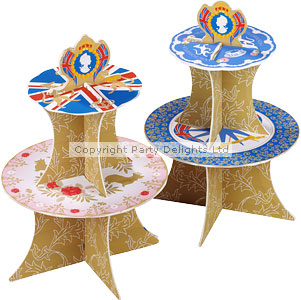
Simply use a boxed cake mix, some store bought icing and make up for it all by serving your Fairy cakes on these royal cake stands

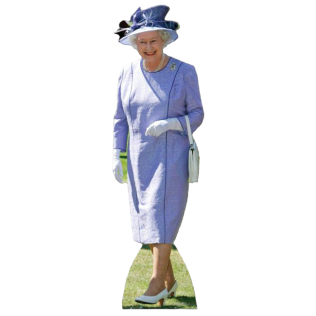
Whatever you do, don’t forget to have Her Majesty on hand in order to thank your guests for coming as they leave
With any luck, they will have drank themselves silly and be on such a sugar high from all those Fairy cakes that they may not realize they’re speaking to a cardboard cut-out. 

The Town Crier

Town Criers have been a mainstay of English towns since the Medieval period, at least. Employed by the town or city, town criers dispensed various and sundry news and proclamations to the citizens, most of whom were illiterate and so depended upon verbal receipt of the news. This much I knew, though I don’t suppose I gave the position of Town Crier a second thought, assuming that they didn’t do much beyond walk about a town crying “all’s well” upon the hour. However, I was recently reading The Life of Frances Power Cobb as Told By Herself, (1904), who was born in Dublin in 1822, and came upon the following passage: “Two years later, when I was seven years old, I was naughty enough to run away again, this time in the streets of Bath, in company with a hoop, and the Town Crier was engaged to “cry” me, but I found my way home at last alone.”

Intrigued, I found the following excerpt from An Old Town By The Sea by Thomas Bailey Aldrich (1894) which was written of the town of Boston, but one assumes that town criers were of a similar description both sides of the Pond:

“The last of the cocked hats had gone out, and the railway had come in, long before my time; but certain bits of color, certain half obsolete customs and scraps of the past, were still left over. I was not too late, for example, to catch the last town crier — one Nicholas Newman, whom I used to contemplate with awe, and now recall with a sort of affection. Nicholas Newman — Nicholas was a sobriquet, his real name being Edward — was a most estimable person, very short, crosseyed, somewhat bow-legged, and with a bell out of all proportion to his stature. I have never since seen a bell of that size disconnected with a church steeple. The only thing about him that matched the instrument of his office was his voice. His “Hear All!” still deafens memory’s ear. I remember that he had a queer way of sidling up to one, as if nature in shaping him had originally intended a crab, but thought better of it, and made a town-crier. Of the crustacean intention only a moist thumb remained, which served Mr. Newman in good stead in the delivery of the Boston evening papers, for he was incidentally newsdealer. His authentic duties were to cry auctions, funerals, mislaid children, traveling theatricals, public meetings, and articles’ lost or found. He was especially strong in announcing the loss of reticules, usually the property of elderly maiden ladies. The unction with which he detailed the several contents, when fully confided to him, would have seemed satirical in another person, but on his part was pure conscientiousness. He would not let so much as a thimble, or a piece of wax, or a portable tooth, or any amiable vanity in the way of tonsorial device, escape him. I have heard Mr. Newman spoken of as “that horrid man.” He was a picturesque figure. Possibly it is because of his bell that I connect the town crier with those dolorous sounds which I used to hear rolling out of the steeple of the Old North every night at nine o’clock — the vocal remains of the colonial curfew.”

And from Printer’s Ink,Volume 28-29 (1899)

“In former days, when local papers were few and far between, the town crier was an important personage. He was appointed by the pariah, and his election generally carried with it offices of beadle, verger and gravedigger, and his emoluments were fairly remunerative. Day after day he was seen, either in the town or surrounding villages, dressed as a parish beadle, and carrying a bell, which, after ringing twice or three times, he began: “Oh, yez. This is to give public notice that Master George will sell by public auction at the Town Hall, by order, the household furniture and other effects.” Then followed details, and the windup, “God save the Queen.”

“As a gossip of the first water, and knowing the goings on and little town scandals, he was a welcome guest everywhere when on his rounds, and there was no local public function, church, chapel, election or any other meeting but what he bad a finger in. When the newspaper stamp duty was abolished, and the local press sprang into existence in all directions, the town crier was gradually elbowed out until he became practically extinct.

“In one place, however, the town crier in all his glory is yet in evidence, and that is in the pretty town of Bedford. Mr. Stock, a well-known local advertising agent and billposter of portly and handsome presence, may be seen, dressed in a grandly laced scarlet coat, knee breeches and cocked hat to match. The old gentleman ambles about the town daily on his rounds, an object of curiosity to visitors and awe to the town boys. Long may he flourish as a survival of the good old custom!”

Surpisingly, further research uncovered the fact that the office of Town Crier is alive and well, on both sides of the pond. As Wikipedia informs us: “Many local councils in England and Wales reinstated the post of town crier from the mid 1990s onwards (e.g. Chester). Many are honorary appointments or employed part time by the council. As of October 2010, there were 144 towns in England and Wales with town criers registered with the Ancient and Honourable Guild of Town Criers. They mainly perform ceremonial duties at civic functions. Local councils with a paid town crier often make them available for charity events.

“There are several town crier guilds in both Canada and the United States. Theses include the Ontario Guild of Town Criers, the Nova Scotia Criers’ Guild and the American Guild of Town Criers. Since 1981, The Rocky Mountain Town Crier, presently based out of Calgary, Alberta, Canada, has represented Invermere, British Columbia at Buckingham Palace & the Mansion House & the House of Commons in London England. Nelson Phillips, the Rocky Mountain Town Crier has been Proclaimed the Honourary Town Crier of Banff, Scotland, Calgary, Scotland, & Airdrie, Scotland. He visited these 3 locations and read Proclamations from the Mayors or Government Officials, of the communities with the same name . . . . In competition, Nelson has placed 2nd at Lytham St. Anne, for best shout and 3rd at Kingsbridge Devon, for best dressed. On November 7, 1984, The Rocky Mountain Town Crier was made a member of Calgary’s “Walkway of Fame” when he read Proclamations from Her Majesty Queen Elizabeth II, Prime Minister Brian Mulroney & Mayor Ralph Klein acknowledging the 100 Anniversary of Calgary Alberta as a Town. Nelson’s footprints and Hand prints were placed in cement.”