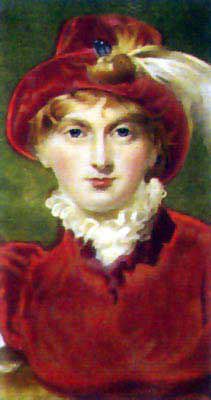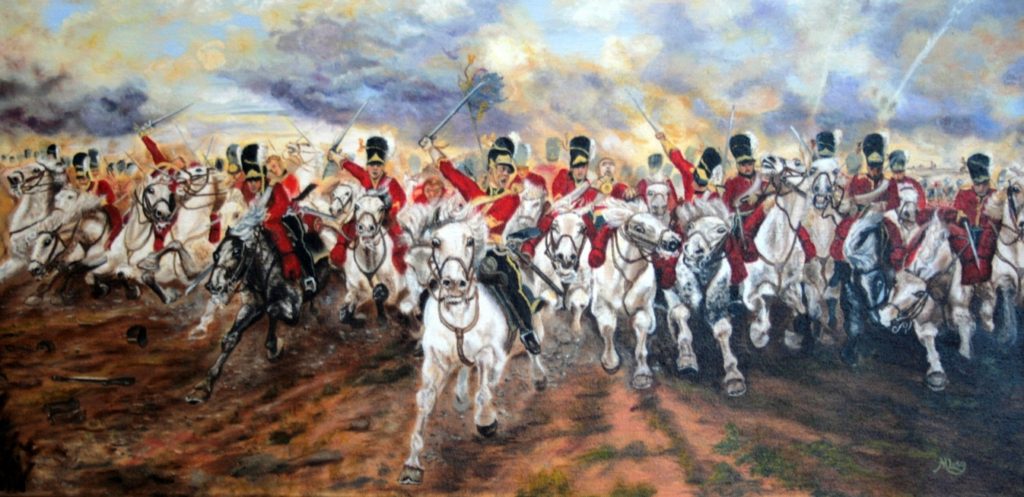
THE HON. KATHERINE ARDEN’S ACCOUNT OF WATERLOO

This post was originally published here on June 11, 2011
 This April, Number One London Tours will be hosting the 1815: London to Waterloo Tour, offering an unprecedented opportunity to experience life during these times, from Fashionable London to the Battlefield at Waterloo, we will be visiting sites related to both worlds and to both countries, meeting many of the people involved in the Battle and it’s aftermath on both sides of the Channel. One of these people will be the Honourable Katherine Arden, who has left this first hand and heartfelt record of life in Brussels before and after the Battle. She attended the Duchess of Richmond’s Ball and was on the ground, as it were, in the days following the Battle.

The following letter was written by the Hon. Katherine Arden, daughter of the first Lord Alvanley (Richard, 1744-1804) and sister of William Arden, 2nd Lord Alvanley (1789-1849) , the famous dandy who squandered his fortune and died unmarried; the title went to their younger brother. With her mother and sister, she was resident in Brussels at the time of the great battle, and took an active part in nursing the wounded. The letter is addressed to her aunt, Miss Bootle Wilbraham, afterwards, Mrs. Barnes. It is franked from Windsor to Ormskirk in Lancashire by Miss Arden’s uncle, Mr. E. Bootle Wilbraham (afterwards Lord Skelmersdale), July 17, 1815. The letter was later published in the Cornhill Magazine in 1891.

Brussels, Sunday 9th (July)

My Dearest Aunt, I can assure you most truly that I did not require reminding, to fulfill the promise I made you of writing, and every day since our return from Antwerp I have settled for the purpose, but what with visiting the sick, and making bandages and lint, I can assure you my time has been pretty well occupied. As my patients are, thank goodness, most of them now convalescent, I think the best way I can reward my dear Aunt’s patience, is by giving her a long account of our hopes, fears, and feelings from the time the troops were ordered to march down to the present moment. (If you are tired with my long account, remember you expressed a wish in Mama’s letter to hear all our proceedings.)
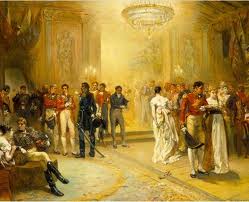
On Thursday the 15th of June, we went to the great ball that the Duchess of Richmond gave, and which we expected to see from Generals down to Ensigns, all the military men, who with their regiments had been for some time quartered from 18 to 30 miles from this town, and consequently so much nearer the frontiers; nor were we disappointed, with the exception of 3 generals, every officer high in the army was to be there seen.

Though for nearly ten weeks we had been daily expecting the arrival of the French troops on the Frontiers, and had rather been wondering at their delay, yet when on our arrival at the ball, we were told that the troops had ordered to march at 3 in the morning, and that every officer must join his regiment by that time, as the French were advancing, you cannot possibly picture to yourself the dismay and consternation that appeared in every face.
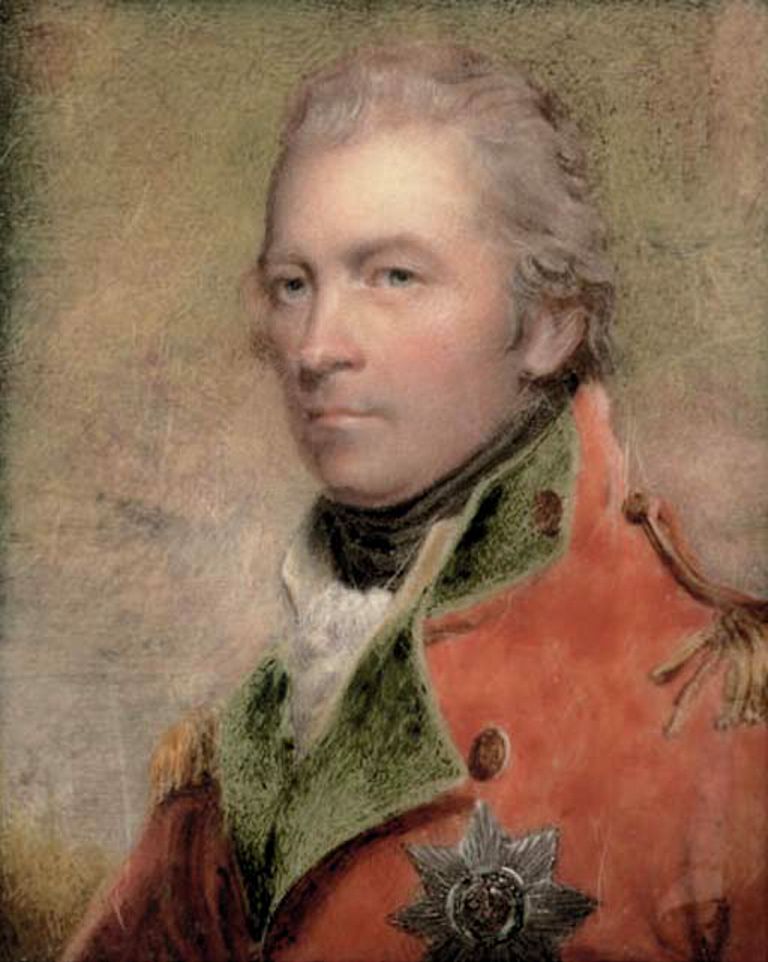
Charles Lennox, 4th Duke of Richmond by Hoppner

Those who had brothers and sons to be engaged, openly gave way to their grief, as the last parting of many took place at this most terrible ball; others (and thank Heaven ranked amongst that number, for in the midst of my greatest fears, I still felt thankfulness, was my prominent feeling that my beloved Dick (her brother) was not here), who had no near relation, yet felt that amongst the many many friends we all had there, it was impossible that all should escape, and that the next time we might hear of them, they might be numbered with the dead; in fact, my dear Aunt, I cannot describe to you my mingled feelings, you will, however, I am sure, understand them, and I feel quite inadequate to express them.
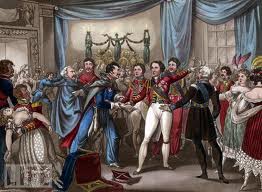
We staid at the ball as short a time as we could but long enough to see express after express arrive to the Duke of Wellington, to hear of Aides de Camp arriving breathless with news, and to see, what was much more extraordiniary than all, the Duke’s equanimity a little discomposed. We took a mournful farewell of some of our best friends, and returned home to anything but repose.

The morning (Friday June 16) dawned most lovelily, and before seven o’clock we had seen 12,000 Brunswickers, Scotch, and English pass before our windows, of whom one third before night were mingled with the dust. Mama took a farewell of the Duke as he passed by, but Fanny and myself, at last wearied out, had before he went, retired to bed. The first person that we saw in the morning brought us the news, that the advanced guard of the French had in the night come on as far as Genappe, 18 miles off, and had had several skirmishes with the Prussians.
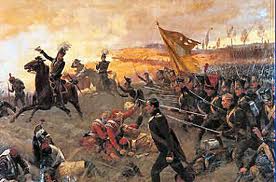
This intelligence, as you may suppose, did not tend to compose us, but still everything went on in quiet calmness, when (Gracious heavens, never never shall I forget it), at three o’clock a loud cannonading commenced, which upon the ramparts was heard nearly as plain as we do the Tower guns in London; it went on without intermission till 8 o’clock, when it was thought to appear more distant, and therefore hopes were entertained that the French had retreated; nothing certain was known, but it was reported that the Prussians had been principally attacked, and were rather giving way when the Highlanders and the regiments who had marched from here in the morning joined them, and compleately repulsed the French.

So far the news was good, but still the English had fought, and what our loss was, nobody knew; however, we bore up pretty well till above twelve o’clock, a gentleman (Mr. Leigh, of Lyme in Cheshire) came from off the field of battle, where he had been looking on, with the intelligence that there had been a dreadful battle, the Duke of Brunswick was killed, and that the Brigade of 1st Guards and the Highlanders were literally cut to pieces. I will not attempt to say what we felt, for it would be quite vain.
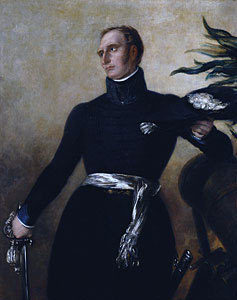
The Duke of Brunswick, killed at Quatre Bras

I must only tell you that that Regiment of Guards contained all our greatest friends, independent of our having to regret them as Englishmen. The next morning by six o’clock, Saturday 17th numbers of Belgians and others of our brave Allies came flying into the town, with the report that the French were at their heels, but this intelligence occasioned but a temporary fright, as a bulletin was published officially saying that we had gained a great victory, and the French were retreating (neither of which was true). About ten o’clock the real horrors of war began to appear, and though we were spared hearing cannonading, yet the sights that we saw were infinitely more frightful than anything we had heard the day before. I mean the sight of wounded.
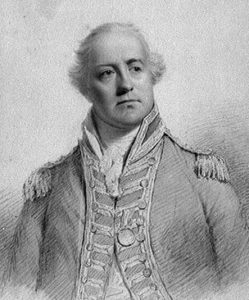
Sir James Gambier, 1st Baron Gambier

I must tell you before I proceed, that Sir James Gambier (the Consul General to the Paysbas, who is the best man that ever was) came to us about eight o’clock, and told us that there really had been a severe engagement, but that we had the advantage, that though the Guards had suffered most dreadfully, yet that their loss was not quite so great as had been reported, but that the Highlanders were literally nearly annihilated, after having performed prodigies of valor; and very good proof had we how dreadfully they had suffered, by the numbers who were brought in here, literally cut to pieces. Our house being unfortunately near the gate where they were brought in, most of them passed our door; their wounds were none of them drest, and barely bound up, the wagons were piled up to a degree almost incredible, and numbers for whom there was no room, were obliged, faint and bleeding, to follow on foot; their heads being what had most suffered, having been engaged with cavalry, were often so much bound up, that they were unable to see, and therefore held by the wagons in order to know their road. Everybody, as you may suppose, pressed forward, anxious to be of some service to the poor wounded Hero’s but the people had orders that those who could go on should proceed to Antwerp, to make room for those who were to follow (dreadful idea), and therefore we could be of no further use to them than giving them refreshments as they passed.
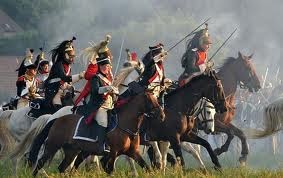
In the middle of the day, we heard further particulars of the last night’s battle, and if all danger had been removed far from us, which Heaven knows was very far from being so, we still should have felt nervous at the danger that had nearly befallen us. Conceive it having been run so near, that the French were within ten minutes of getting possession of the road to Brussels, which had they once gained, in all probability they would have reached the town in three hours.

Providence, however, ordered it otherwise, and the Guards, who had marched from Enghien 27 miles off, arrived at the lucky moment, and got possession of the road. They were shortly afterwards joined by the Highlanders, who some of them fought with their knapsacks on, having marched 20 miles and accordingly were enabled to keep their ground against the French.

The conduct of the English soldiers on that day was perfect, and would have been sufficient to have immortalized them, without the addition of the Sunday’s battle, after which the Duke of Wellington said he should never feel sufficiently grateful to the Guards for their conduct on both days, which from the Duke means more than it would from anybody else.

Napoleon Bonaparte

Our Hero, Wellington, who had been deceived with the intelligence given him (for it is said that Bony had bribed most of his outposts), and had no idea that the French were so near, nor advancing in such force, was so distressed when he discovered the truth, that as usual totally regardless of his personal safety, he was exposing himself in the most dreadful way (I am speaking of the Friday’s business at Quatre Bras, so named from four roads meeting), and already a party of French horse, having marked him out, were rushing on him with the greatest violence, when the Highlanders, who saw his danger, and it is said he never was in so great before, rushed between him and the French, and with the lives of hundreds, saved his still more precious one. On coming off the field, the Duke told some whom he met with, that their conduct had been noble and he should make a good report of them; of the 92nd regiment, out of seven hundred men, but one hundred and fifty remain to share the glory.
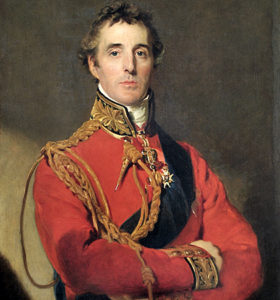
Arthur Wellesley, 1st Duke of Wellington c.1815 by Sir Thomas Lawrence

But to resume my narrative. We remained the whole of Saturday, in great suspense, to know that the armies were about, and whether the French were really retreating as had been reported; about four o’clock in the day, we were dreadfully undeceived, by being told from very good authority that instead of the enemy it was Lord Wellington who had retreated, and who with his whole army were within ten miles of the town; the reason given for his doing so, was that the Prussians had been attacked on the Friday evening whilst they were quietly cooking, and that having lost a tremendous number of men, Blucher had judged it prudent to retire, which being the case, he had left Lord Wellington’s left flank so exposed, that it was impossible for him to remain where he was, and that he had therefore retreated to a strong position near Waterloo, whilst our cavalry were engaged in playing before them, to hide, as much as possible, their retreat from the French.

It was likewise added, that it was to be hoped that the Prussians would rejoin the English, as at that present time, the armies were near nine miles asunder, and that orders had been issued by the Duke for all baggage to be sent from the army through this town, and for the wounded, if possible, to be moved from it. All this looked so like retreating on the town, that we were told we must have horses ready, and everything prepared to go at an instant’s notice, which accordingly we commenced doing, and from that hour 4 o’clock till eight in the morning (Sunday June 18) when we were fairly in Antwerp, were, I hope, the most harassing 16 hours I ever passed, or ever shall.

From that time the baggage wagons passed in such quick succession, that they formed cavalcades through the town, as not only those who were ordered to go, but those who desired to stay with the army, passed through, a general panic having seized all the officers’ servants, by which means many have lost all they had, and everybody is minus something.
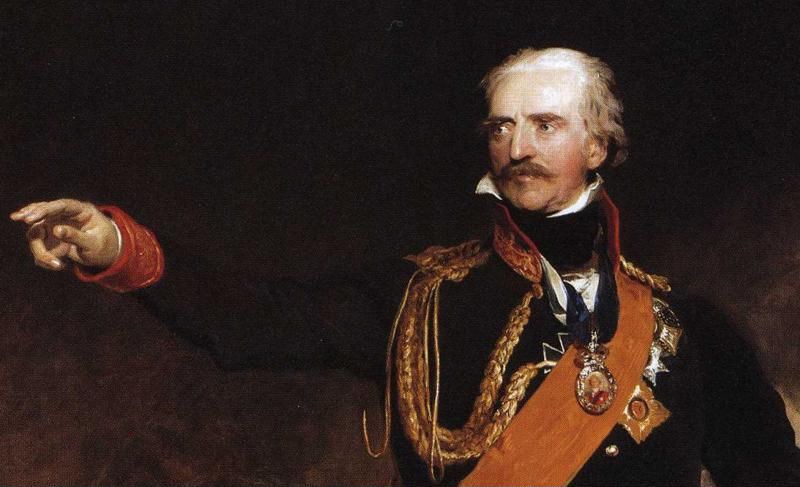
Field Marshall Gebhard Leberecht von Blücher

About every half-hour a man was heard scampering down the street calling out that the French were coming; some, indeed said they were at the gates, and though we knew that that could not be true, yet it was impossible to know how much foundation there was for saying so. About seven o’clock (Saturday June 17) our friend Sir James Gambier arrived to say that he hoped our things were nearly packed up, as though it was not necessary to go immediately, yet that he begged our things might be put to the carriage as we might be obliged to start at an instant’s notice, for it was known that the Prussians were not joined, and if Buonaparte were to attack that night, there was no knowing what the event might be. (We have since heard, that if he had done so, the tide of affairs would in all probability have turned completely for him instead of being as it is now).
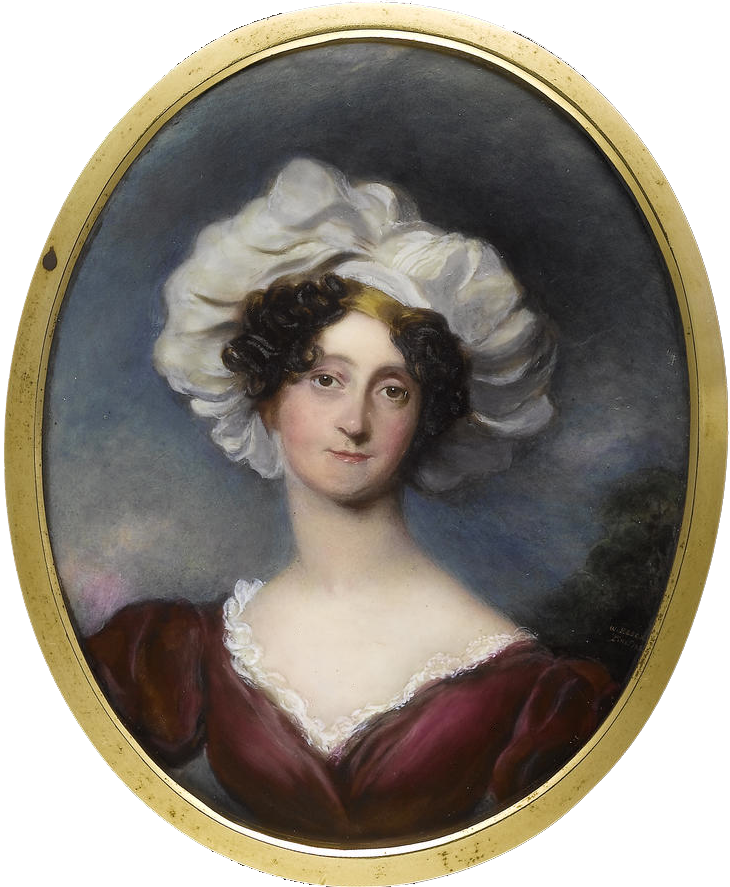
Lady Charlotte Greville

After Sir James went, we went out to see what our friends intended doing; we found that some were gone, others going, and all were prepared for the worst. We accordingly agreed, that at the time Lady Charlotte Greville went, we would accompany her, as everybody told us if we waited for the worst we could never get away; and as we knew for certain that Buonaparte had promised his soldiers after he had drawn 20,000,000 francs from the town, that they should have three days pillage of it, which, as the enraged French soldiery are not the most kind hearted possible, and as the English could expect no mercy for them, we though it madness to put ourselves in such danger, and accordingly everything was got ready. To increase the horror and noise, about ten o’clock, a most horrible storm of wind and rain came on, which lasted without intermission till three o’clock, when the wind abated, but the rain continued at intervals, the whole of Sunday, to which the whole of our poor soldiers were exposed with the additional hardship of having very little to eat, as they had been so continually changing their place for the last two days, that the officers have since told us, that for nearly eight and forty hours, they had barely two pounds of bread to eat; luckily, the Sunday morning, after the dreadful night they passed, the common men had a double supply of spirits, which enabled them to fight as they did.

The baggage wagons and fuyards [fugitives] continued passing, without intermission, and what with being deafened with the noise, and worn out with anxiety, we were in a terrible state of fatigue, when at half past two (Sunday the 18th) Lady Charlotte sent to say the Mayor of the town had sent to advise all the English to quit the town, and that she was waiting for us. We accordingly joined her, and though we were very much impeded by the road being blocked up with wagons in which were numbers of the wounded, lying exposed to all the inclemency of the weather, and were several times in danger of being overturned, yet providentially we arrived safe at Antwerp about eight o’clock (Note: The distance from Brussels to Antwerp by road is about twenty-seven miles). We found the greatest difficulty in getting a hole to put our heads in, but at last succeeded: Lady Charlotte proceeded on the Hague immediately, but we remained to wait the event. We were told by many people that the rain would prevent them fighting, which gave us ease for the time, and though we spent the day in great suspense, yet we were saved the dreadful indescribable anxiety of those who remained here; never can I be sufficiently thankful that we left this place. For the first time for three nights, Fanny and myself were enabled to sleep, and the next morning, Monday (the 19th) we were awoke, with the delightful news, that a decisive victory had been obtained, and that the French were retreating in disorder. The account of killed and wounded which we then heard made us shudder; how much more dreadful was it, when the whole list was made out! There are 724 English officers killed and wounded, and nearly 11,000 common men, without Hanoverians.

The conduct of the English infantry in the battle of Sunday was something so extraordinary, that Cambaceres, Buonaparte’s A.D.C. who was taken, said Buonaparte himself had said that it was useless to fight against such troops, nothing could make them give way. They were formed into hollow squares, upon which the French cavalry, particularly the Cuirassiers, who wear complete armour, poured down, but without any avail, not one of their squares were ever broken, though perhaps from being six or eight lines deep, they came at last to only one.


Hougoumont, pre-renovation

There is a little wood and a farm-house in the midst of the field of battle, which is called Hougemont, and which it was necessary for the English to maintain possession of: 500 of the Guards under Lord Saltoun and Co. Macdonnell were put into it, to defend it, and though they were attacked by above 10,000 French, and the Farm-house was set fire to, and burnt to the ground, yet our Invincible countrymen still maintained possession of it, and finally repulsed the enemy. Do not you feel, while you hear these accounts, that your national pride increases every instant, and that you feel more thankful than ever that you are English born and bred? I have that sort of enthusiasm about me, that I almost feel inclined to shake hands with every soldier I meet walking in the streets. The light cavalry, I am sorry to say, for the first time in their lives, did not behave like Englishmen; the 7th Hussars and 23rd dragoons refused to advance when they were ordered, and poor Lord Uxbridge, who is as brave as a lion, and doats upon his regiment (the 7th) went up to Lord Wellington in the midst of the engagement, and said in the bitterness of his heart, My cavalry have deserted me! The heavy dragoons behaved admirably, and the horse Guards and Blue’s who though they have been in Spain, were never before personally engaged, performed prodigies.—The Duke of Wellington has since said, that he never exerted himself in his life as he did on that day, but that notwithstanding, the battle was lost three times; he exposed himself in every part of the line, often threw himself into the squares when they were about to be attacked, and did what it is said he never had done before, talked to the soldiers, and told them to stand firm; in fact, I believe without his having behaved as he did, the English would never have stood their ground so long, till the arrival of 30,000 fresh Prussians under Bulow finished the day, for as soon as the French saw them, they ran.
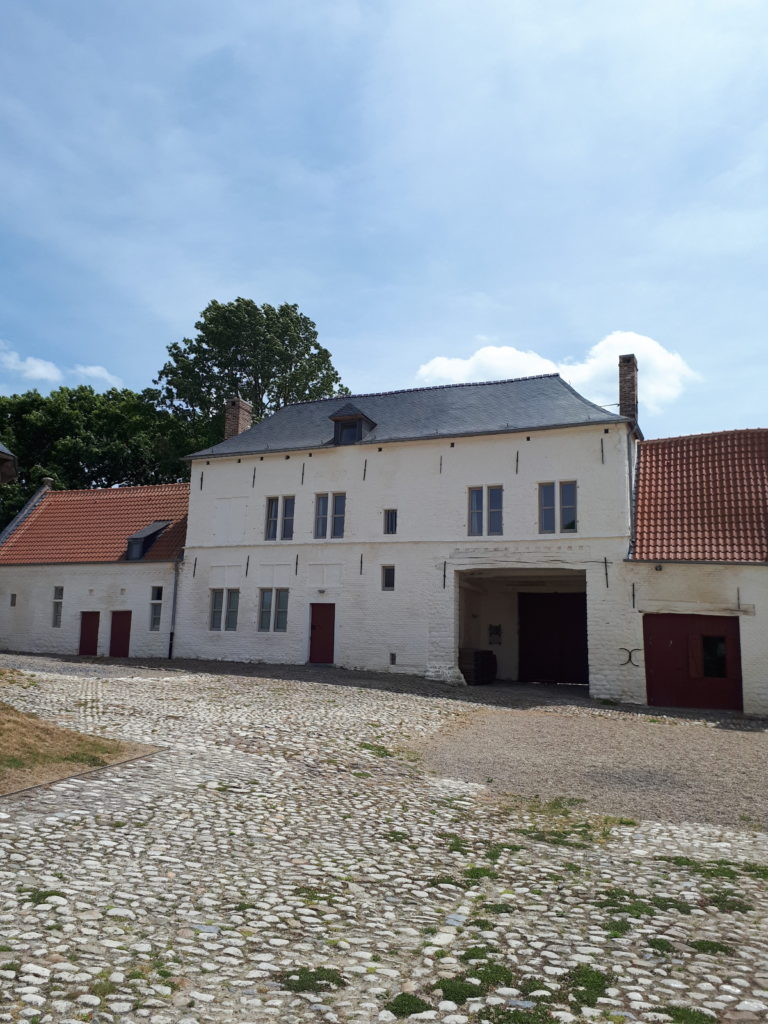
Hougoumont today

The conduct of the French cavalry is represented as having been most beautiful, and nothing could have withstood them but our soldiers. The day after the battle, when the Duke had leisure to consider the loss he had sustained in both officers and men, he was most deeply affected, and Mrs. Pole, who breakfasted with him said the tears were running down upon his plate the whole time. How much more noble the Hero appears when possessed of so much feeling!

You ask how we like the Duke, and whether he is haughty? To men, I believe he is, very often, but all his personal staff are extremely attached to him, and towards women his manners excessively agreeable and very gallant; we like him vastly. We went a few days since to see the field of battle, and everything offensive was removed, a most interesting visit; we went with an A.D.C. of Gen. Cooke, (who poor man, the General, has lost his arm), and who explained to us all about the battle.—I am quite ashamed, my dear Aunt, to think how much I have written; pray forgive me.  END

If you’d like to experience Waterloo first hand, to travel through history with us as we return to the year 1815, please click the link below to be taken to the Tour website.

The 1815 London to Waterloo Tour, April 2018 – find complete details here.

THE WRETCHED LOVE LIFE OF SIR THOMAS LAWRENCE – Part Four – Jo Manning

Now for a closer look at this National Portrait Gallery retrospective… There are some surprising portraits here, not the least the paintings of the Waterloo generals, Wellington, et al., and an amazing capture on canvas of the saintly William Wilberforce, the great anti-slavery crusader. But although it is the beautiful, sensually painted women who draw the eye, it is the eye-stopping portrait of a young man who may hold a clue to the centuries-old puzzle of Thomas Lawrence’s sexuality.

In her review of the National Portrait Gallery exhibit in The Observer (October 24th, 2010), Laura Cumming asks the viewer to “consider Lord Mountstuart of Bute in Spanish costume, his manhood barely concealed in skin-tight trousers. Silhouetted against a stormy sunset in his Byronic black cloak (Lawrence arguably pioneered the look, Byron was only seven at this time), Mountstuart treads upon the toy landscape below. His body is wildly elongated, his face more or less Hispanicised and yet all these implausibilities are somehow swept aside by the sensuous conviction of the paint.”

That depiction of the young lord’s “manhood” caused quite a stir at the time. Lawrence thrusts Mountstuart’s thrusting hips and bulging thighs, encased in skin-tight trousers, right into the viewer’s face. It’s not subtle, not by any means, and this reproduction hardly does it justice, for seeing it up close and personal is an entirely different experience, one that stops the viewer dead in his tracks, and my feeling is that it is intentional, that Lawrence wanted the viewer’s face rubbed into that young buck’s manhood.

Or was it his own face that he wanted to rub into Mountstuart’s crotch? It’s unsettling. And it’s also revealing that the 1923 Grieg edition of Farington’s diaries censures what Farington said about this portrait in May of 1794. Luckily, the editors of the Yale edition had no such qualms.

Lord Mountstuart of Bute (1767-1794)


Farington wrote in his diary on the 5th of May, 1795, that King George III “started back with disgust” when he saw the portrait on display at the Royal Academy exhibition for that year. From the exhibition catalog (edited by A. Cassandra Albinson, Peter Funnell and Lucy Peltz), a comment and quote from an early 19th century book of anecdotes has more to say on this painting: The unbridled sexuality of this portrait, led another critic to sarcasm: ‘We wish he had been a Bishop, as then his Cassoc [sic] might hide those eccentricities…at which delicacy must blush, and modesty turn aside.”

The editors kindly enlarge that part of the portrait — “those eccentricities” in question — for the further edification of the reader on page 124 of the catalogue. Pretty blatant, this, and, to me, it’s significant that Lawrence was never so blatant in his painting of dashing young trousered men again.

In Lawrence’s later years one woman in particular appeared to provide him with companionship, Isabella Wolff, who first met him when she sat for her portrait in 1803. Isabella was the daughter of Norton Hutchinson, a prominent East India trader and the estranged wife of Jens Wolff. A merchant, shipbroker, merchant, and collector who served as the Danish Consul, Jens Wolff was of Anglo-Danish heritage.

The couple had separated after 18 years of marriage and had one son, Herman St. John Wolff, who may have been born any time between 1810 and 1814 (or perhaps before those dates). The lack of certainty as to the correct birth date of Herman Wolff has led to speculation that he was the son of Isabella and Thomas Lawrence. Is there anything to back this up? Lawrence did appear to be fond of the boy and went on trips to the continent with him, but is that enough to make a case for paternity? It is also possible that Herman was Wolff’s son by another woman, not his wife Isabella. The jury is still out on this one.

Lawrence and Isabella Wolff knew each other for at least twenty-six years. She’d sat for a portrait in 1803, while she was still married to Jens Wolff, and they’d become close, even intimate, friends. Indeed, the artist John Constable, writing to his wife in 1824, simply stated what was being said at the time in London art circles: “A Mrs. Wolfe came in the evening. She is very pretty; & talks incessantly of all the arts & sciences… She is quite an intimate of Sir Thomas Lawrence, who has often drawn her. Her husband, from whom she is parted, in the Danish consul & in every sense of the world a Wolfe.”

Very odd, that comment, that Jens Wolff is “in every sense of the world a Wolfe,” because there was gossip in a newspaper, the Literary Gazette, very shortly after Lawrence’s death that he had been involved with a “Mrs. W, the wife of a foreign minister, whose brutal treatment [had thrown] her upon the protection of Sir T. Lawrence.” Had Jens Wolff been a wife beater? Was that what Constable was alluding to?

They were definitely close, as evidenced by this letter to her that survives, written from Rome in late June of 1819, when Isabella was about 50 and Lawrence only a couple of years older. He wrote:

My Bed Room Window is so small that only one Person can conveniently look out of it, but it looks over the Pope’s garden and St. Peters, Monte Mario &c., and as sweet Even’g closes I often squeeze you into it tho’ it does hurt you a little by holding your arms so closely within mine.

It reads real. Real and affectionate. This is not the Lawrence so many described as a manipulative social climber, overly charming, out to seduce by the sweetness of his words and the timbre of his voice. Isabella Wolff and Lawrence were definitely close, but how close is still a matter for conjecture. The bulk of their correspondence, unfortunately, was apparently censured both by his first biographer and by Lawrence’s relatives. Richard Holmes, however, dismissed her role in the painter’s life as simply “maternal.”

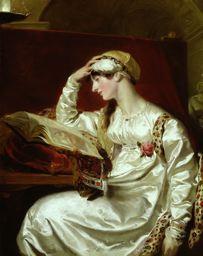
Isabella Wolff, 1803-1815, now at the Art Institute of Chicago

Contemporaries agree that Isabella Wolff was a great source of inspiration for him; she seemed to serve him as a beloved muse. (As perhaps, Sarah Siddons had, so many years before?) The portrait above was one that Lawrence could not seem to give up. He worked on it for over twelve years. (He also drew her many times.) At the Royal Academy exhibit in 1815, this portrait held pride of place. It was his only painting at that exhibition of a female subject.

The philosopher and critic William Hazlitt called it “a chef d’oeuvre of style…enough to make the Ladies vow that they will never again look at themselves in their glasses, but only in his Canvasses.” The critical reaction at the time to the portrait of Isabella Wolff was uniformly positive.

Mrs. Wolff’s is a classical pose, Grecian inspired, and, indeed, she is shown studying a book open to an image of the Delphic Sibyl. There is something of the Greek priestess in her attitude, with her hand on her head, and critics have suggested that being cast as a sibyl, as one of those priestesses who looked into the future and passed judgments, may fit with the role she played as mentor and muse in Lawrence’s life. It is an eye-catching portrait fraught with feeling.

Isabella Wolff died in 1829; Thomas Lawrence died unexpectedly – he had not been ill — very soon thereafter, in 1830. Whether or not their relationship was sexual in nature – whether they might have had a child together – whether he was heterosexual, bisexual, or homosexual — is irrelevant to the obvious closeness of their friendship. I would not hesitate to say she most probably meant a great deal to him and that the shock of her death no doubt hastened his demise. And that, at the end, is what is important, that his life, as it neared its end, at long last, did have what anyone would not hesitate to call love. It was surely about time.

The End

THE DEATH OF KING GEORGE V

By Victoria Hinshaw

King George V
King George V died 82 years ago of lung disease.  Grandson of Queen Victoria and grandfather to Queen Elizabeth II, his death was expected (he had been a heavy smoker and ill for some time).  However, controversy surrounding his death surfaced a few decades ago when the diary of his lead attending physician, Lord Dawson of Penn, was revealed.  In his notes after the death, Dawson wrote he administered to the king a lethal dose of drugs, morphine and cocaine, ensuring that George V would die before midnight. Dawson  was motivated by a desire to preserve the King’s dignity, protect the family (and realm) from a long period of confusion, and probably to allow the announcement of the King’s death to be made in the morning newspapers instead of the afternoon press, the latter considered less authoritative and more sensational.


Prince George, age 5, 1870

George Frederick Ernest Albert was born in 1865, the second son of Albert, Prince of Wales (later King Edward VII, 1841-1910), and Princess Alexandra (1844-1925).  Throughout his early life, he did not expect to inherit the throne, but in 1892,  his elder brother, Prince Albert Victor, died of pneumonia and George became second in line to the throne, after his father, and was named Duke of York.  Albert had recently become engaged to Princess Mary of Teck (1867-1953), known as May, and after a suitable period of mourning for him, May and George became engaged with the approval of Queen Victoria. The wedding took place in 1893.

After the death of Queen Victoria in 1901, her son Edward VII ruled for just over nine years before he suffered fatal heart disease. George, during his father’s reign, was Prince of Wales. When  he took the throne as George V, the troubles in Europe which led to World War I were already well underway.  George V was a first cousin of both German Kaiser Wilhelm and Tsar Nicholas II of Russia.  Family ties, sadly, did not prevent the catastrophe to come.

The war and its aftermath occasioned many changes in Great Britain  and the Empire. The family name of the royals was changed from Saxe-Coburg-Gotha to Windsor. Stirrings in Ireland and other territories had long-reaching consequences, not to mention the rush of technological change.  George V was the first King to address his people by radio, as recently portrayed in the film The King’s Speech, the story of George V’s son, George VI. Below, King George V as portrayed in the film by famed British actor Michael Gambon.

Michael Gambon as George V
In the film, George V is portrayed as a stern father, intolerant of the shortcomings of his sons.  His eldest son, known as David, succeeded him as Edward VIII, but reigned for less than a year, abdicating to marry the American divorcee Wallis Simpson.  In turn, George V’s second son became King George VI.  In many stories about George V’s life, we learn he expressed his hope that David would never marry and have children, because he (Geroge V) wanted nothing to come between the throne and his granddaughter Elizabeth, the present Queen, called Lilibet.

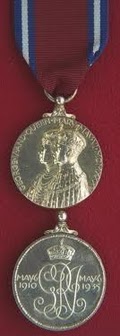
George V reigned for  just over 25 years. Upon the celebration of his Silver Jubilee in 1935, he was touched at the affection expressed for him by the people of the nation and the empire. The occasion was marked by many tributes and a wide variety of souvenirs, including china, medals and stamps, the latter reflecting the King’s hobby of collecting.
When I first began to write about George V’s death, I had no idea of the controversy that arose  about fifty years after the event.  Though the existence of Lord Dawson’s diary and its revelation of how the death was hastened had been known to a few, it was not made public until 1986, fifty years after the death. A few hours before he administered the final drugs, Dawson told the nation, “The King’s life is moving peacefully towards its close.”
Lord Dawson of Penn,  ©National Portrait Gallery
According to the New York Times of November 28, 1986, a biographer of George V, Kenneth Rose, said he now considered that Dawson had murdered the King.  But there was no official statement from Buckingham Palace, just the remark that it all happened a very long time ago and all those involved were now dead. Whether or not members of the King’s family were consulted or knew of the injections is not known.
After the tumultuous years of his  reign — world war, the first Labour government, influenza epidemics, extension of women’s rights to vote,  general strike,  the great depression — perhaps a case of euthanasia is not so shattering.  But it was a surprise to me.
To quote Dawson’s diary, for January 20, 1936: “At about 11 o’clock it was evident that the last stage might endure for many hours, unknown to the patient but little comporting with the dignity and serenity which he so richly merited and which demanded a brief final scene. Hours of waiting just for the mechanical end when all that is really life has departed only exhausts the onlookers and keeps them so strained that they cannot avail themselves of the solace of thought, communion or prayer. I therefore decided to determine the end and injected (myself) morphia gr. 3/4 and shortly afterwards cocaine gr. 1 into the distended jugular vein.”
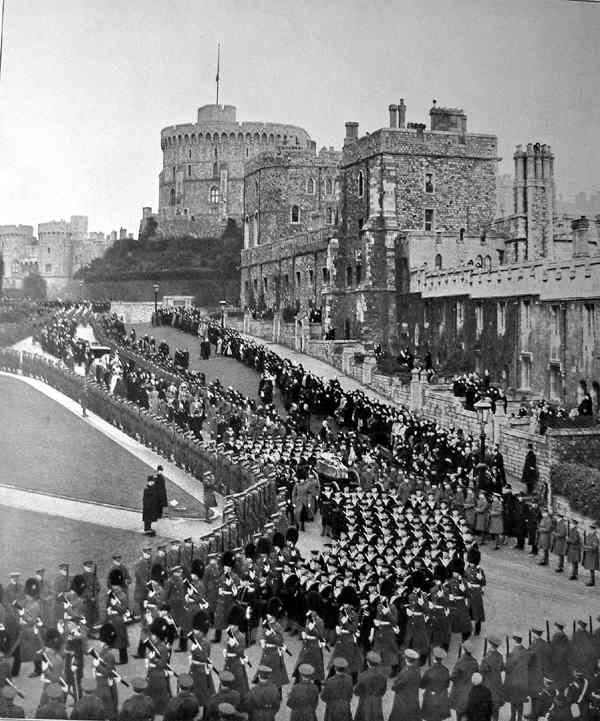
George V died before midnight. Below, the funeral cortege moves through Windsor.
Queen Mary lived on until 1953. She is buried beside her husband in St. George’s Chapel, Windsor Castle.

THE WRETCHED LOVE LIFE OF SIR THOMAS LAWRENCE – Part Three – Jo Manning

Lawrence achieved a knighthood in the spring of 1815, thanks to Prinny’s patronage, and was sent by him to the continent to paint portraits of the heroes and distinguished others of the recent battle of Waterloo – which greatly enhanced his prestige and stature amongst his fellow artists — and he became president of the officially-sanctioned society of artists, the Royal Academy, in 1820, when Prinny ascended to the throne. (The artist arrived back in London in March of 1820 to find that he had succeeded Benjamin West.) Lawrence’s reign as head of the RA was to last only ten years, however; he passed away in 1830, only sixty years old, at the height of his powers.

Like a number of other 18th-century artists, Lawrence’s popularity waned during the Victorian era, but his reputation has revived in the 20th century. The lack of public access to most of his work might have been one of the reasons for his lack of recognition. Nonetheless, several striking portraits have since firmed up his reputation. One of them is of the actress Elizabeth Farren (a full-length portrait in the collection of New York’s Metropolitan Museum of Art, seen below). Farren was a cold and calculating woman of low origins who parlayed her looks and popularity as an actress into aristocratic gold, snagging the wealthy Earl of Derby as her prize. The portrait is stunning; it’s difficult to take one’s eyes away from the tall, willowy woman commanding the space on that canvas.

Elizabeth Farren, later the Countess of Derby, circa 1790
Sarah Barrett Moulton aka Pinkie, 1794, at California’s Huntington Library


Arguably his most famous portrait – in terms of recognition by the general art-loving public – is probably the one dubbed Pinkie, which, along with Gainsborough’s Blue Boy, has been much reproduced. (Indeed, they could be veritable bookends, that boy in blue, this girl in pink.) The iconic portrait of this young girl, Sarah Barrett Moulton, was painted in 1794, when Lawrence was in his mid-thirties.

Jonathan Buttal (or Buttall) aka The Blue Boy, circa 1770, was painted by Gainsborough and is also in the collection of the Huntington Library

Lawrence was a wonderful painter of very small children as well as of adolescents like Sarah Moulton. One painting many people recognize – though they probably would not be able to identify the artist – is The Calmady Children, painted in 1823, seven years before his death. A charming image much reproduced in greeting cards, it is in this current exhibition at the National Portrait Gallery.

The Calmady Children, 1823, Metropolitan Museum of Art


Part Four Coming Soon!

THE WRETCHED LOVE LIFE OF SIR THOMAS LAWRENCE Part Two – Jo Manning

As to the mystery of his debts, critics have laid Lawrence’s money problems to the demands of his large family, whom he supported. He’d supported them for a very long time, beginning at the age of 10. (He was 13 when the ad put in by his father in the Bath Chronicle ran.) His Royal Academy colleague Joseph Farington, the painter famous for his rich gossipy diary of the Georgian art world covering the years 1793 until his death in 1821, supports this widely-documented view. (Note: Yale University recently updated and enlarged the standard 1923 edition of the Farington Diary.)

Lawrence, R.A., allows his Father for the support of his family near £300 a year. He pays for his own lodgings in Bond-street 200 guineas a year. His price for his portraits is 40 guineas for a three-quarter, 80 guineas for a half-length, and 160 guineas for a whole-length. –October 28, 1793

Bear in mind that in today’s currency, we are talking some 70 to 80 times that £300. In today’s values, it’s almost $50,000+ a year, an enormous, enormous amount for those times. (A guinea = one pound and one shilling.) Lawrence’s family would have lived high off the hog indeed!

A further comment on Farington and his diaries is appropriate here. Joseph Farington (1747-1821) was an inveterate gossip and social climber who made much of his marriage to a cousin of the prestigious Walpole family. Although purporting to be a friend of many of his RA colleagues he was envious of most of them and often nasty when commenting about them in the diary he kept for many years. He played politics and was a major manipulator of the other RA members and not to be trusted. (He was, frankly, a snake.) The diary only surfaced a hundred years after his death, in 1921, when the volumes were auctioned off by his family. None of his long-deceased colleagues and those whom he called friends was privy to the intimate details in these pages.

Lawrence’s father was a failure in every business he’d attempted and, as we can see, had lived off his son’s earnings as a young artist from the time he was a mere child. But, even with having to support this family of parasites, it’s hard to imagine, with the prices Lawrence charged for a painting, that he could ever have fallen into such deep debt. On what else could he squander so much money? He lived in well-appointed homes, yet there’s no report he lived extravagantly, kept expensive mistresses, or that he gambled (the latter the downfall of many a Regency gentleman). So, on what, then, could he have spent his money?

One possibility was his ever-growing collection of Old Master paintings and sculptures. He did amass a very large collection – some 4,000 works! — as did his fellow artists Reynolds and Romney, among others, but not to the extent of his. (The collection was auctioned off at his death to pay off debts.) The possibility that intrigued me, though, was that perhaps someone was blackmailing him to keep his clandestine activities – such as a double life in London’s gay underworld — quiet.

Although there’s is no hard proof, the critic Richard Holmes, in his essay for Thomas Lawrence Portraits for the National Gallery, does suggest he was quite possibly bisexual. I do believe Lawrence was super-charged, sexually – some might say over-sexed – and if he were indeed bisexual it could explain his personality and his inability to commit to one person. His so-called friend, Farington, who called him “a male coquet,” noted he was overly intimate with his female sitters, subjecting them to long, close sittings that might not have been necessary; could he have been thus with male sitters as well? That, however, seems not to have attracted notice.

James Northcote, the pupil of Reynolds and his first biographer, made another interesting remark about Lawrence that is cited in David Piper’s The English Face (1957). Piper says, “Northcote called him ‘a sort of man-milliner painter – a meteor of fashion’.” The term “man-milliner” is 18th century slang for homosexual, and Piper goes on to say, “Northcote was biased and extremely jealous, but his criticism is not entirely unjust.”

Indeed, Lawrence’s sexuality, his possible gender confusion, could have been a destabilizing force that went on to affect all facets of his personality and may well have been connected to his monetary woes.


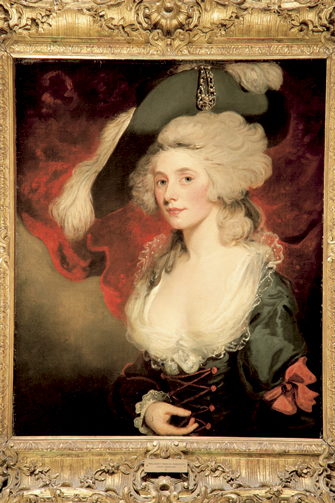
Mary Darby Robinson, by Hoppner

Leaving these speculations aside for the time being, the other references I found of note concerned the deep, often bitter rivalry between John Hoppner and Lawrence. Hoppner was a successful artist with great ambition, but he was too soon eclipsed professionally by the younger man and it did not sit well with him. (Though Hoppner was a skilled portraitist, his heart was not in painting portraits but in landscape painting. In the late Georgian era, however, painting portraits paid the bills.)

Hoppner’s most well-known portrait is probably that of Mary Robinson aka Perdita, first mistress of King George IV when he was the Prince of Wales. (The painting is now owned by the Chawton House Library.) Hoppner, whose parents were German and whose mother was in service to Queen Charlotte, had nursed the ambition of being named court painter — perhaps counting on these German connections to be appointed — but it never happened.

Farington noted that the rivalry would often revolve around petty incidents but was not the less vicious for all that. In the spring of 1801, the two artists squabbled over the placement of canvases at an RA exhibit, which resulted in Lawrence’s portrait of the Princess of Wales not being shown.

Hoppner will not exhibit on account of Lawrence monopolizing a center place by sending canvasses & figures of an uncommon size. —April 6, 1801

A dispute brought to trial in Sheriffs Court over a payment owing to Stubbs, the era’s most renowned painter of horses, from one of his patrons had Lawrence as witness on Stubbs’s side and Hoppner on the other. Farington remarked that Hoppner “was very violent against the claim of Stubbs,” but that a full judgment was made in Stubbs’s favor over his testimony. It appeared that nothing was too small over which they locked horns, such was their rabid dislike one for the other.

One almost has to feel sorry for Hoppner, for no other artist really had much of a chance against Lawrence, who, in addition to being immensely talented and personally charming, became a favorite of the royal family. The charm was innate; it was said that he had a seductive voice which he used to great effect and that he spoke in a “low, soft whisper…calculated to please.” Nancy Frazier, in the Penguin Concise Dictionary of Art History (2000), on those who were not so taken with Lawrence’s charm and even less with his talent, commented that: To some critics, he never seems to have gone beyond virtuoso flattery and an ability to give pleasure…[and that he was obsessed with] …charming his way through cosmopolitan society.

But charm worked for him. Though early in his career he’d painted a portrait of Queen Charlotte that King George III was said not to have cared much for, his son the Prince of Wales – popularly known as Prinny and later King George IV –championed him. (That George did not get along with his father also probably helped his relationship with Thomas Lawrence.)

The artist also squeaked by with another possible problem that might have affected his relation
ship with the royals. As Richard Holmes writes, “[In 1806] Lawrence is implicated in the ‘Delicate Investigation’ into alleged impropriety with the Princess of Wales [Prinny’s wife, Caroline] and has to give testimony defending his name against imputations of improper behavior.” The allegations grew out of malicious gossip from a former page at Montague House, according to the biographer Flora Fraser, during the time that Lawrence was painting Princess Caroline’s portrait.

Given his seductive approach to his sitters, however, and the natural flirtatiousness of the Princess Caroline, it’s not difficult to see how his attentions could have been misread and misunderstood. He could not, however, have been so foolish as to hit on Prinny’s wife, even given that gentleman’s abhorrence of her. He would have been signing his own death sentence.


Detail from a Thomas Lawrence portrait of Princess Caroline of Brunswick, the rejected wife of the Prince of Wales


To quote Fraser, “Lawrence stayed several nights at Montague House in the winter of 1800, so as to lose no time when Princess Charlotte [the daughter of the Prince and Princess who also sat for him] came from Shrewsbury House in the morning.” In his defense when he was accused of improper behavior, along with another man, a Captain Manby, Fraser says:

“Perceval had shown to Mr. Thomas Lawrence and to Captain Manby the examinations which incriminated them as possibly guilty of high treason. Manby and Lawrence made depositions indignantly countering the charges against them… Lawrence rebutted…testimony that he had stayed behind a locked door with the Princess. [He declared that] ‘nothing passed between her Royal Highness and myself which I could have had the least objection for all the world to have seen and heard.’ “

(Note: Perceval was Spencer Perceval, at that time attorney general, later chancellor of the exchequer, and then prime minister, who holds the not-so-wonderful distinction of having been the only prime minister ever assassinated. He was murdered in 1812; Princess Caroline underwent the humiliation of a public trial in the summer of 1820, sans Perceval.)


Part Three Coming Soon!