The year 1839 marked the start of photography as we know it today. Both Louis Daguerre (1787-1851) and William Henry Fox Talbot (1800-1877) had been experimenting independently for several years on their different photographic processes when Daguerre announced his discovery to the world in Paris on 7 January 1839.
This prompted Talbot to display the results of his negative/positive process to the Royal Institution in London (the same organization as today presents the BBC Christmas Lectures) on 25 January 1839. He then presented a Paper to the Royal Society on 31 January 1839, describing his process as “photogenic drawing.”
Talbot sent examples of his work in early February 1839 to Sir David Brewster, who was later to become the first President of the Photographic Society of Scotland (PSS) and an Honorary Member of Edinburgh Photographic Society (EPS).
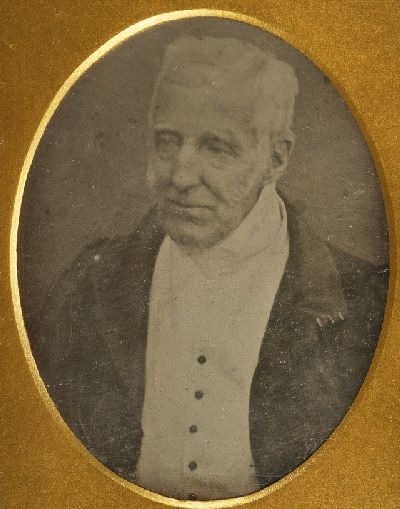
Many people did not take to Daguerreotypes, as they thought they were too stark, too unflattering – too real, as there was none of the softening of imperfections previously available in portraiture. In fact, the Illustrated London News reported that when Wellington was shown the finished Daguerreotype of himself, above, “He looked at it for a moment, shook his head, and, with a half smile and half frown of recognition, muttered ‘Very old! Hum!’ and turned away in thought.”
The Daguerreotype of Wellington was taken by Claudet, a Frenchman who had studied under Daguerre and who later set up studios in London. It has been estimated that he made up to 1,800 pictures per year.
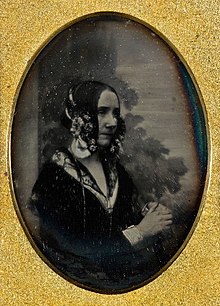
Ada Lovelace by Claudet, 1843
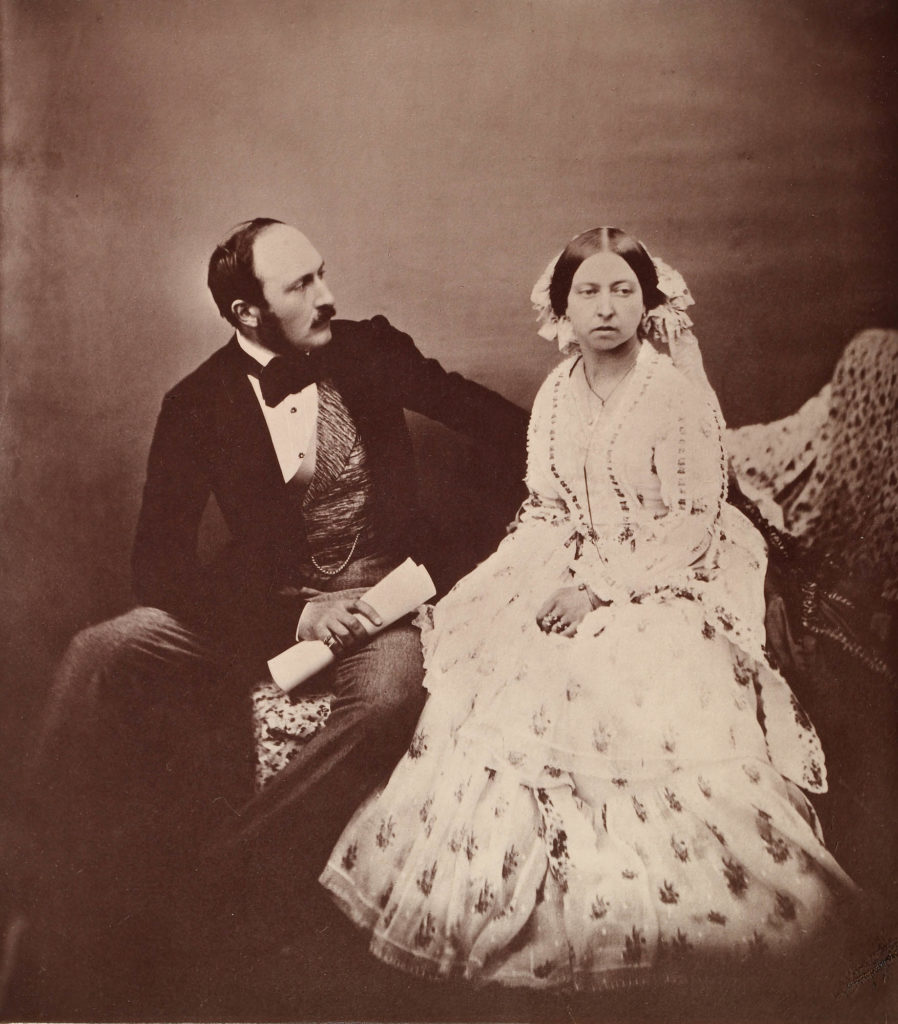
The announcements about photographic techniques by Talbot and Daguerre were made about eighteen months into the reign of Queen Victoria, and about eighteen months before she married Prince Albert. Both Queen Victoria and Prince Albert became keen enthusiasts of photography and collectors of photographs. Prince Albert became the first Patron of PSS. He died in the year that EPS was established.
Queen Victoria and Prince Albert, Buckingham Palace, 1854
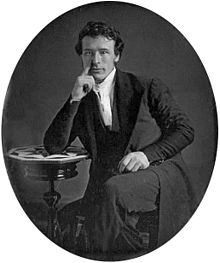
The image above of the Queen and Prince Albert was made by John Jabez Edwin Mayall (17 Sept 1813 – 6 March 1901) a British daguerreotypist who began his career in Philadelphia. With his partner, Samuel Van Loan, Mayall operated from 140 Chestnut Street in 1845-6, until his return to London, where he opened, at 433 The Strand, ‘The American Daguerreotype Institution’, styling himself ‘Professor High-School’ (or Highschool). Photographer by appointment to Queen Victoria and creator of iconic images of 19th-century Britain and British notables, Mayall ran numerous studios in London and later Brighton, where he became mayor in 1877. Several of his sons also became photographers, using the business name Mayall.
John Jabez Edwin Mayall, self portrait, 1844
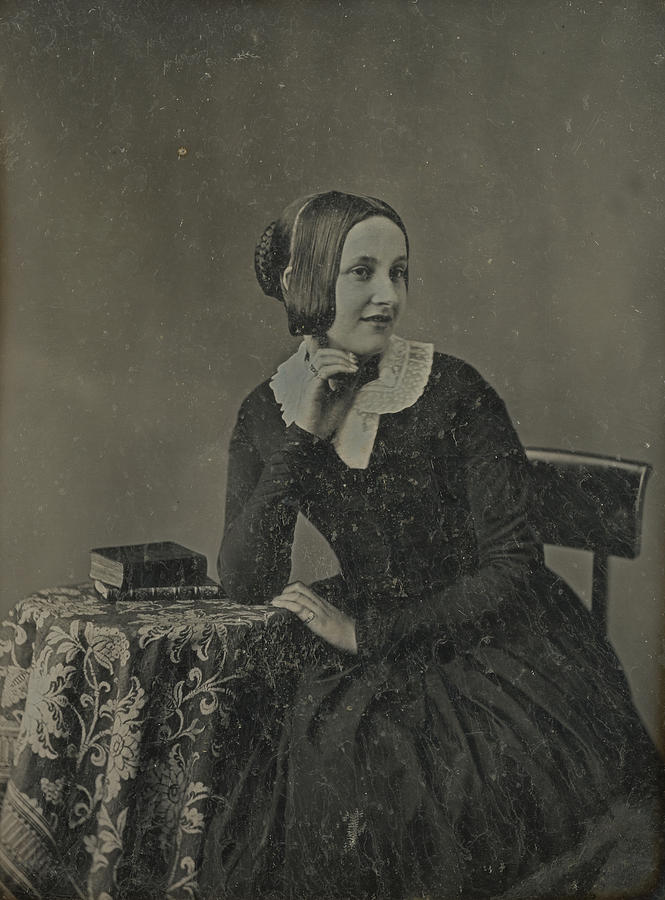
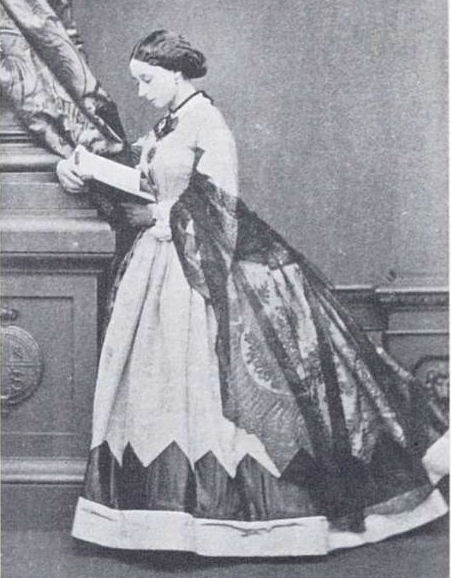
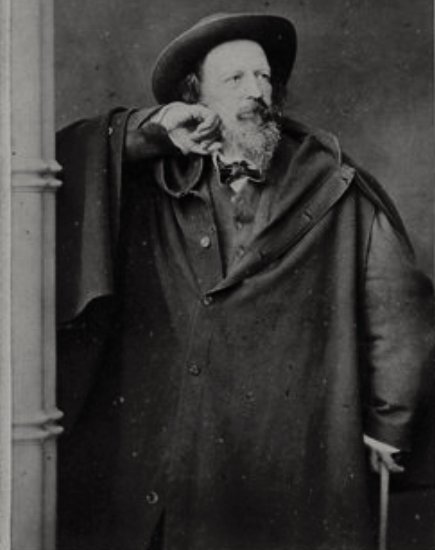
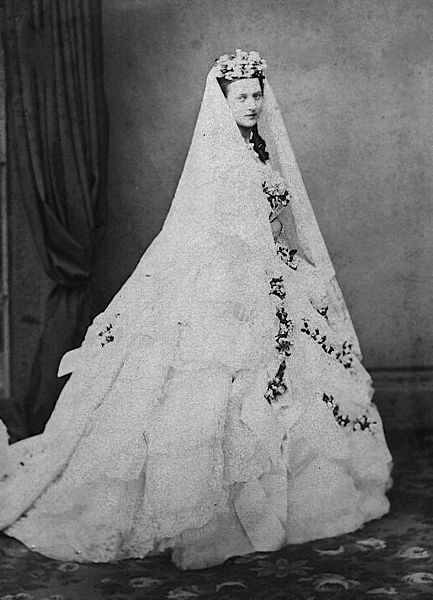
Caroline Herschel by Mayall, 1853Princess Alice by Mayall, 1861Alfred, Lord Tennyson by Mayall, National Portrait GalleryPrincess Alexandra in her wedding gown, Mayall, 1863
You will find The Daguerreian Society website here.
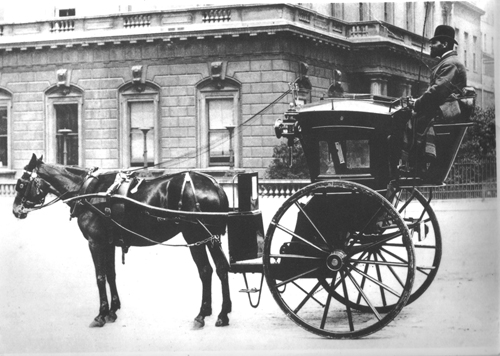
From The Horse-World of London by William John Gordon (1893)
. . . . Our cab horses are generally Irish, many of them being shipped from Waterford. They come over unshod, in order that they may do no damage, and to keep them quiet they have their lips tied down; and what with this lip-tying, and the sea passage, and the change of climate, it takes them about eight weeks to get into working order, during which they are gradually drilled into shape, first in double harness and then in single harness, round the squares and quiet thoroughfares.
As a rule, they are four years old when they arrive, they cost 30L, they last only three years, and they are then sold to go into the tradesman’s cart; but horses are rising in value, and cost more to buy and fetch more to sell than they used to do. This, of course, refers to the bulk of the horses, which, as in the omnibus service, are mostly mares. There are some that cost more, some that cost less; some that last longer, some that do not last as long; and on the cab-rank there is a fair sprinkling of British horses and a few foreigners, but the thoroughbreds of whom we have heard are as rare as the doctors, warriors, and members of the Athenaeum Club who are said to drive them.
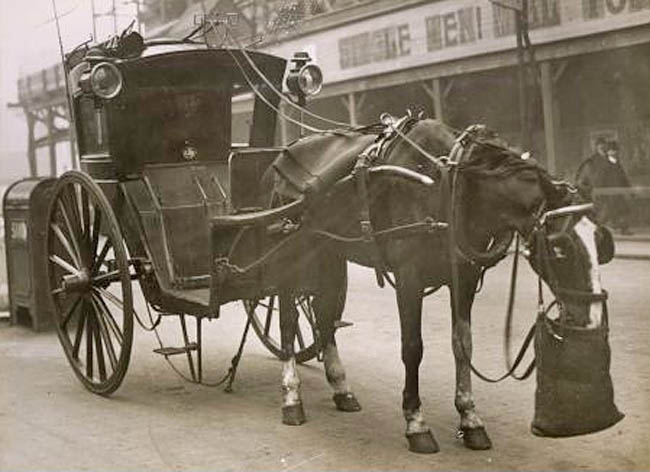
A cab horse is well fed; hansom horses average a sack of corn each a week; and they want it, for in the six days during the season they are driven over two hundred miles. There is nothing out of the way in a day’s work of forty miles; and this with a weight of half a ton behind, including the cab and driver, but not the passengers. The way in which the horse is worked varies in different yards and with different men. There are over 3,500 cab-owners in London, and as some of them own a hundred and more cabs, there must be a large number who have but one or two cabs, and perhaps two or three horses, when the horses have a hard time of it. Many are worked on the ‘one horse power’ principle, in which the cab, generally a four-wheeler, goes out at eight in the morning and comes back at eight at night. The fourwheelers that frequent the railway stations have two horses, the first going out at seven in the morning and returning about two in the afternoon, the second going out to stay at the station till ten, and then perhaps loitering about the theatres with a view to picking up a last fare.
When a horse is bought by the cab-master it is occasionally numbered, but oftener named from some trivial circumstance connected with its purchase, or from some event chronicled in the morning newspapers. A whole chapter might be written on the names of the London cab horses, which are assuredly more curious than elegant. Three horses we know of bought on a hot day were Scorch, Blaze, and Blister; three others bought on a dirty morning were Mud, Slush, and Puddle; two brought home in a snowstorm were named Sleet and Blizzard; four that came in the rain were Oilskin, Sou’-wester, Gaiters, and Umbrella. Even the time of day has furnished a name, and Ten o’clock, Eight-sharp, and Nine-fifteen have been met with . . . Some horses are named from the peculiarities of the dealer or his man, and in one stable there were at one time Curseman, Sandyman, Collars, Necktie, Checkshirt, and Scarfpin. The political element is, of course, manifest, and in almost every stable there are Roseberies and Randies, Salisburies and Gladstones, Smiths and Dizzies. Some stables are all Derby winners, some all dramas, some all songs, some all towns. It is the exception for a horse to be named after any peculiarity of its own, unless it be an objectionable one; and it would never do to give it a Christian name, with or without a qualifying adjective, which might lead to its being mistaken for one of the men in the yard.
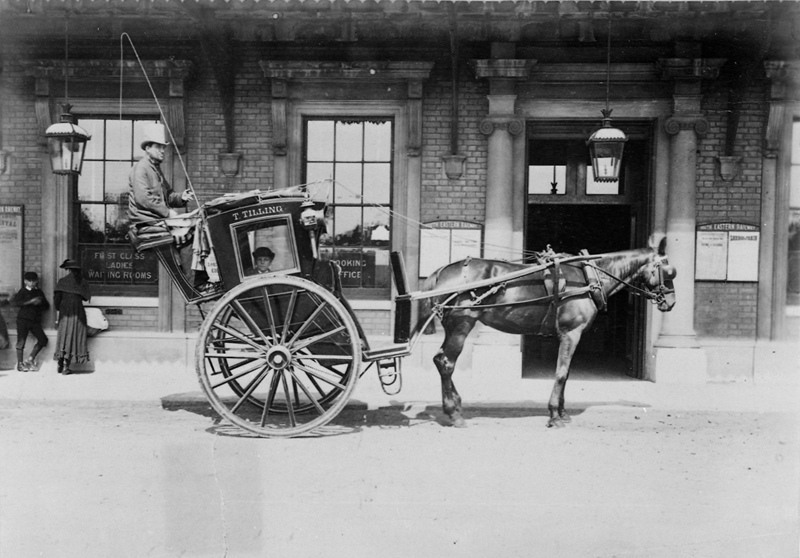
The favourite colour for a cab horse is brown; the one least sought after is grey. A grey horse will not do in a hansom, unless for railway work where the cabs are taken in rotation and the quality or colour of the horse is of no consequence. Why clubland should object to grey horses is not known, but the fact remains that a man with a grey horse will get fewer fares with him than with a brown one. One explanation is that the light hairs float off and show on dark clothes, but this is hardly satisfying, and it seems safer to put the matter down to fashion. Anyhow, a hansom cabman will not take out a grey horse if he can help it, unless it be an exceptionally ‘gassy’ one, gassy being ‘cabbish’ for showy. But not so a four-wheeler man; if he can have a grey horse he will, the reason being that if ever a housemaid goes for a cab she will, if she has a choice, pick out the grey horse. At least, so says the trade, which may, of course, be prejudiced or romancing; but the prejudice or the romance is known all over London.
London has 600 cabstands, exclusive of those in the City and on private ground, such as the railway stations. A few of these are always full; a few have never had a cab on them even though they may have existed for years. The 600 cabstands on an average afford accommodation for eleven vehicles each. The rest of the cabs are either carrying passengers or else plying empty along such streets as Piccadilly, where they are a nuisance to all but those who want cabs. The same thing may, however, be said of the cabstands, and, considering the convenience that ‘ crawlers’ afford, it is only the very strenuous reformer who would abolish them entirely, if it were possible to do so.
Out of the 15,000 cabmen, about 2,000 are convicted every year for drunkenness, cruelty, wilfull misbehaviour, loitering, plying, obstruction, stopping on the wrong side of the road, delaying, leaving their cabs unattended, etc, etc. The cabman who ‘knows his business best’ is the one who can crawl judiciously without getting into trouble with the police, resulting for a first offence in the famous ‘two-and-six and two,’ which means half-a crown fine and a florin costs.
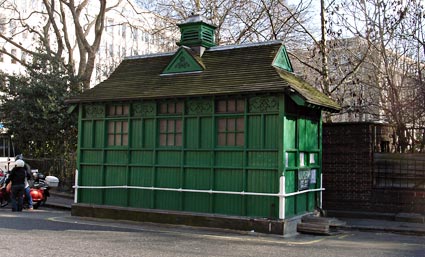
At many of the stands there is a ‘shelter,’ which is much larger inside than a glance at the exterior would lead one to suppose. The shelters are generally farmed from the Shelter Fund Society by some old cabman. They are the cabman’s restaurants, and the cabman, as a rule, is not so much a large drinker as a large eater. At One shelter lately the great feature was boiled rabbit and pickled pork at two o’clock in the morning, and for weeks a small warren of Ostenders was consumed nightly.
Only a handful of cabmen’s shelters or tea huts remain in London, with several still serving refreshments.
The two-wheeler improves every year. There are many hansoms now in London as good in every way as private carriages, and these will often have a fifty guinea horse in their shafts. The four-wheeler improves but microscopically, and, though it becomes no worse than it used to be, it touches a depth which is by no means desirable. Most cabs are varnished twice a year, some are varnished but once, and that, of course, is just before inspection day, when the new annual licence is applied for. On that morning many a newly varnished mockery will journey gingerly to Clerkenwell, and just satisfy the inspector’s lenient eye, returning triumphantly with the inside and outside plates and the stencilled certificate on its back, which show that the vehicle has passed muster, and that the owner has paid 21. for a licence to work it in the London streets. Besides the 21., the owner has to pay fifteen shillings carriage duty to Somerset House; and, for a licence and the badge to drive, the cabman has to pay to the police five shillings.
The cabman has to pass an examination as well as the vehicle, but the vehicle is examined every year, while the cabman is only examined once, and then not in personal appearance, though there may be a bias that way, but in an elementary knowledge of London topography. The knowledge required is not very great, and 1,500 candidates apply in a year, but it is interesting to note that out of every 100 candidates 34 are ‘ploughed’—a much higher percentage of rejections than exists among the vehicles.
The cabman takes his licence to the owner whom he desires to make his ‘master.’ He takes the cab out on trust, leaving his licence as a deposit so long as he remains in the same employment. The engagement is terminable at any time, and when the man changes masters his old master has to fill in on the back of his licence the length of time he has been in his service. At the end of the year the man takes the endorsed licence accounting for his year’s work to New Scotland Yard, and there gets a clean one covering another twelve months.
The amount paid by the man for the day’s hire varies with the vehicle, the master, and the season. It is much less really than it is nominally, owing to the numerous occasions on which allowances are made for bad luck and bad weather. Continuous wet is not cabmen’s weather; what they like is a showery day, or, what is better, a fine morning and a wet afternoon, or a series of scorching hot days when people find the other means of conveyance too stuffy for comfort. Although the amount is frequently stated to be more, the average for hansoms during the last year over several yards was nine shillings for the first three months in the year, then a rise every week of a shilling a day to the end of May, when it remained at the maximum of eighteen shillings till the second week in June, when it dropped a shilling a week down to the nine shillings at which it will remain for the rest of the year. The height of the London cab season is thus from the Derby week to the Ascot week, the one day being the Thursday after the Derby. If you wish to go to the Derby in a hansom you pay 31., of which 11. is extra profit, it being estimated that the man would have taken 21. if he remained in London. And, curiously enough, the distance to and from Epsom is the average day’s journey of a London cab horse.
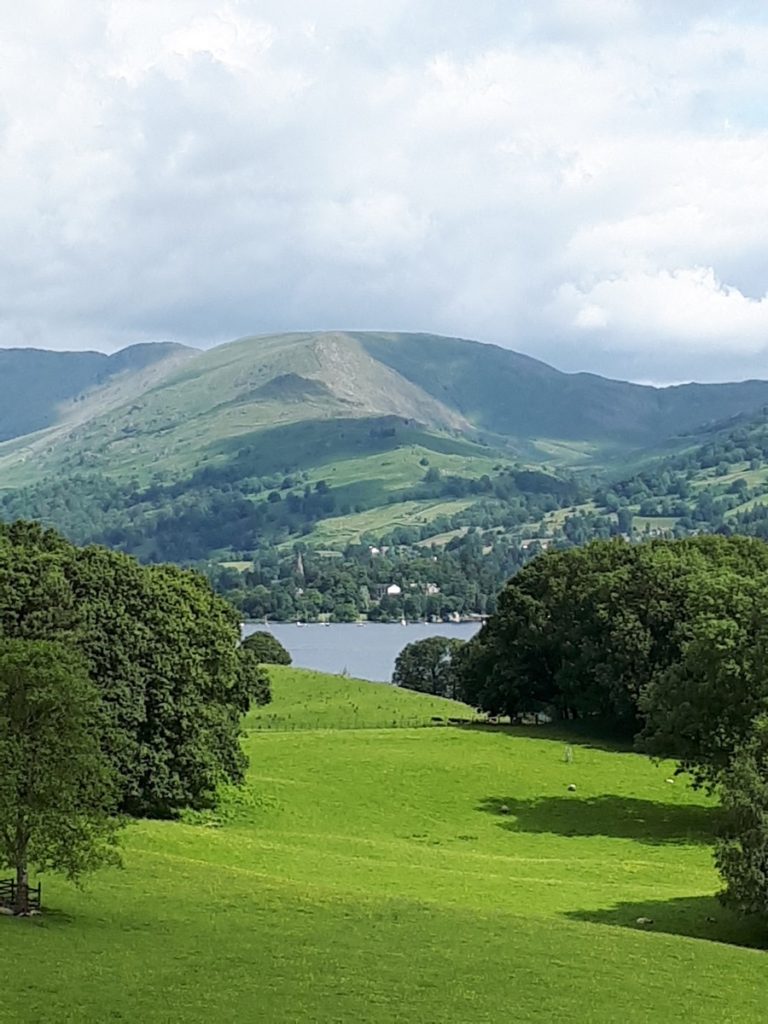
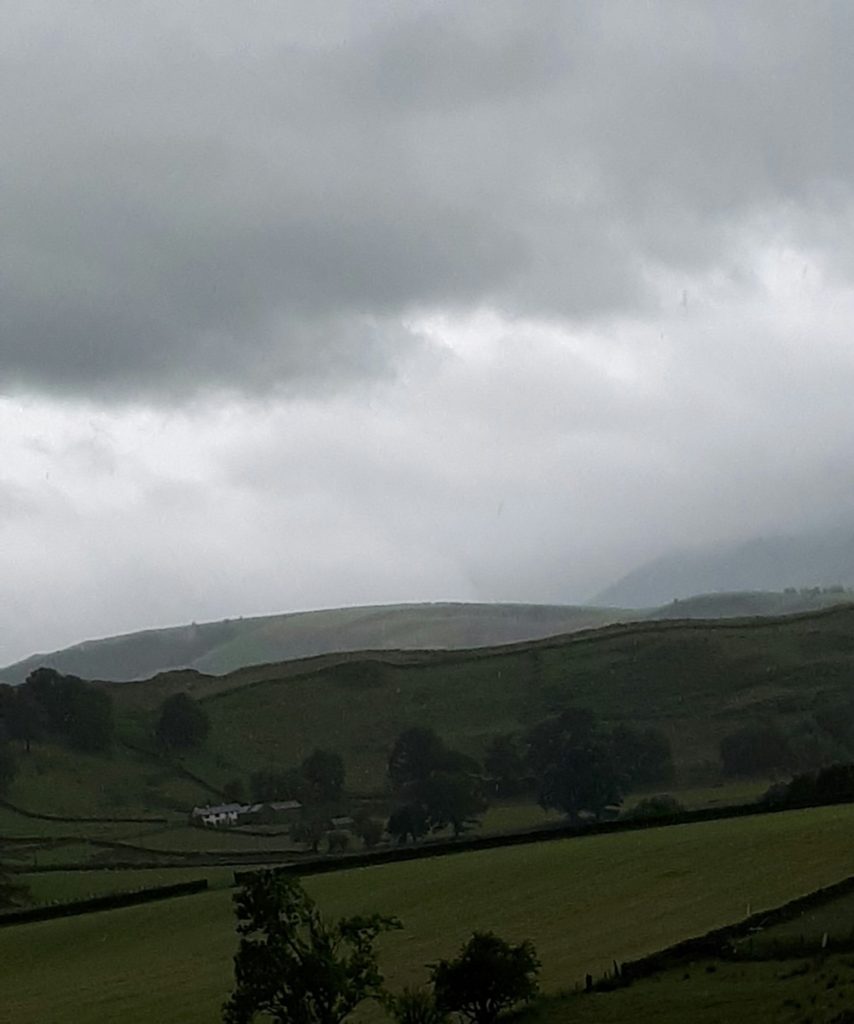
It was a truly magical experience visiting the Lake District in Cumbria, in northwest England, last year with Number One London Tours. We saw beautiful vistas, blue lakes, a real stone circle, charming villages, and historic houses. So when I needed a setting for A Lady Becomes a Governess, where else was I going to pick but the Lake District, with its’ ever changing, romantic landscapes? In many ways it became like visiting the area again. The sights I saw on the tour are sprinkled throughout the book. William Wordsworth even makes an appearance. It made the book a pleasure to write.
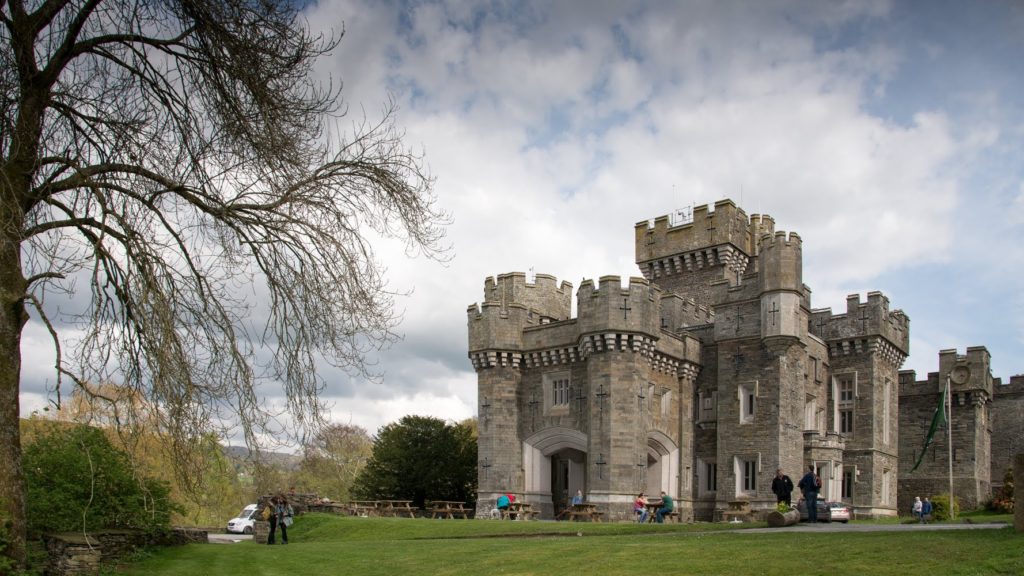
I needed a country house for my hero and the tour gave me several examples. I wanted something very different than a typical Georgian mansion. I was tempted to use Wray Castle, because it was so over the top gothic, but, alas, it was not a real castle, but a gothic revival built in 1840.
Wray Castle
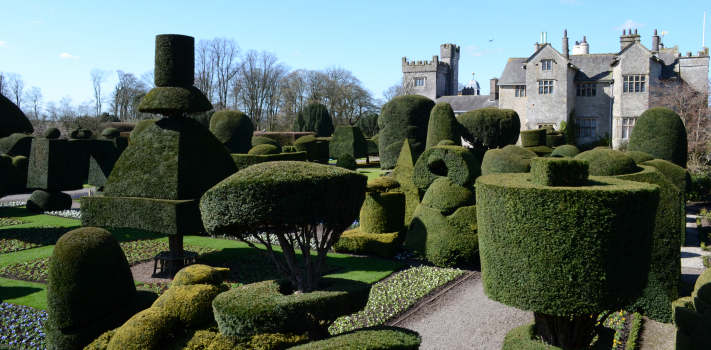
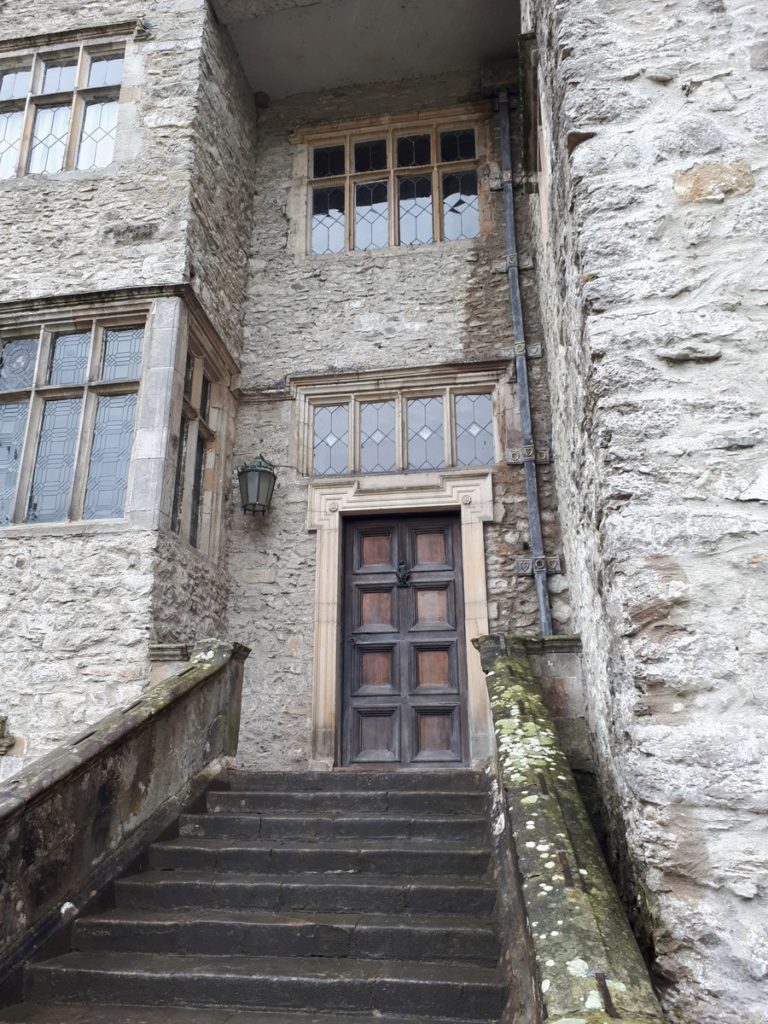
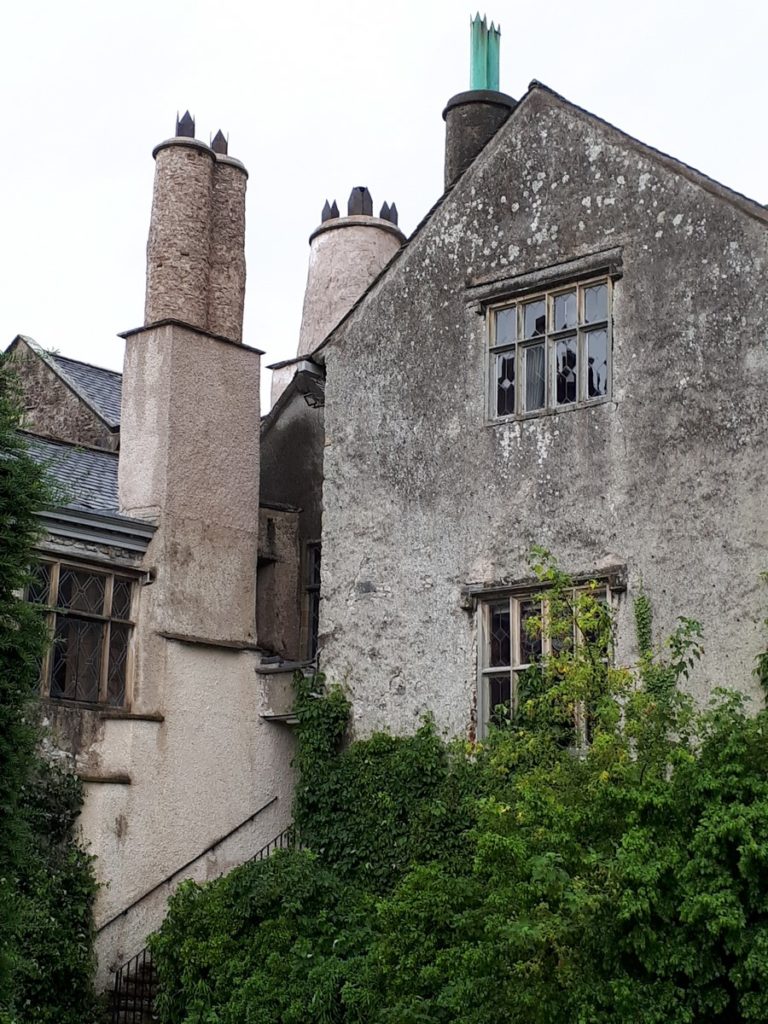
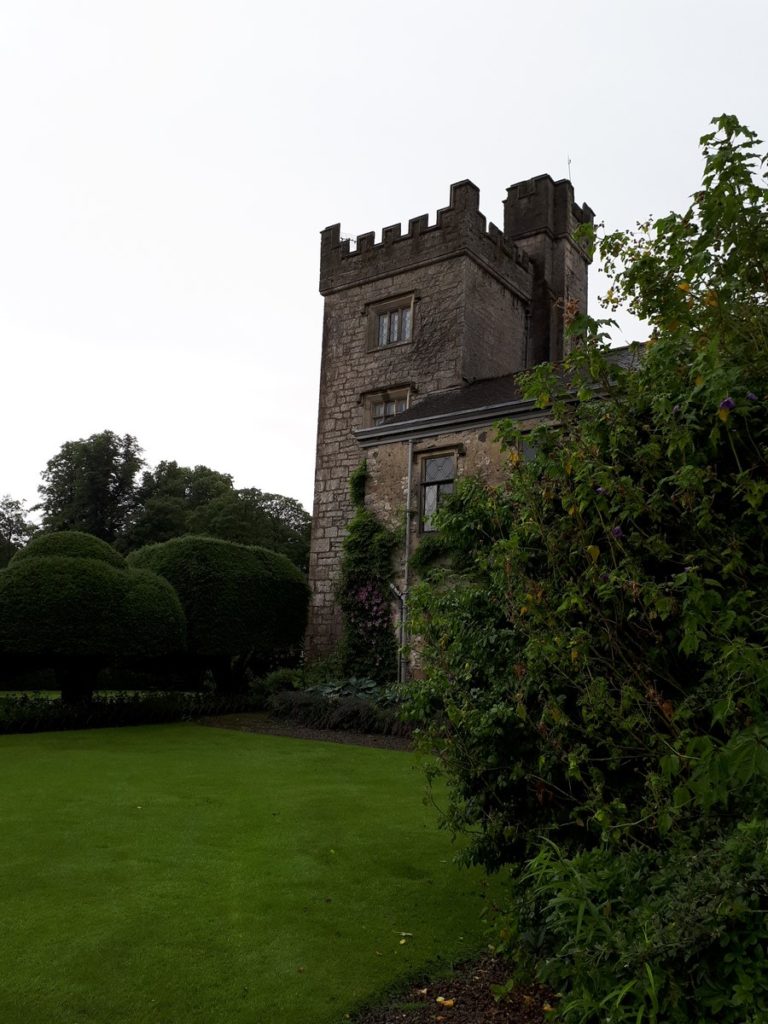
I finally decided on Levens Hall, now owned by the Bagot family, originally a medieval pele tower built in 1350. In the 1500s the Bellingham family expanded the house and added the oak paneling and plasterwork that makes Levens so distinctive. In the 1600s the park and gardens were added by new owner Colonel James Grahme, who brought in French gardener, Guillaume Beaumont. The park and gardens have remained remarkably intact from Beaumont’s design. The topiary is a wonder to behold, so naturally, it had to appear in the book. Further additions to the house were again made in the early 1800s.
Some floorplans online and room images helped me visualize the setting as it was in the the Regency, the time period of my book, and as I saw it on the tour. I did have to make a few alterations to the house to suit the book, though. For one thing, I had to add an imagined children’s wing to the house and, unfortunately, those details were not part of the tour or shown in any online images.
Speaking of the Regency period, Kristine and I were most excited to visit Levens Hall on the tour as the house features a “Wellington Trail” – Sir Charles Bagot married Lady Mary Wellesley, niece of the Duke of Wellington, and it is through this connection that so many fascinating artifacts have been handed down through the family. The collection was truly impressive.
Now that I’ve “lived” in the house through the writing of A Lady Becomes a Governess, I wish I could visit Levens Hall again to see how close my version was to the real place. In fact, the Lake District is a place to which I’d be more than delighted to return – especially for the hot chocolate and marshmallows!
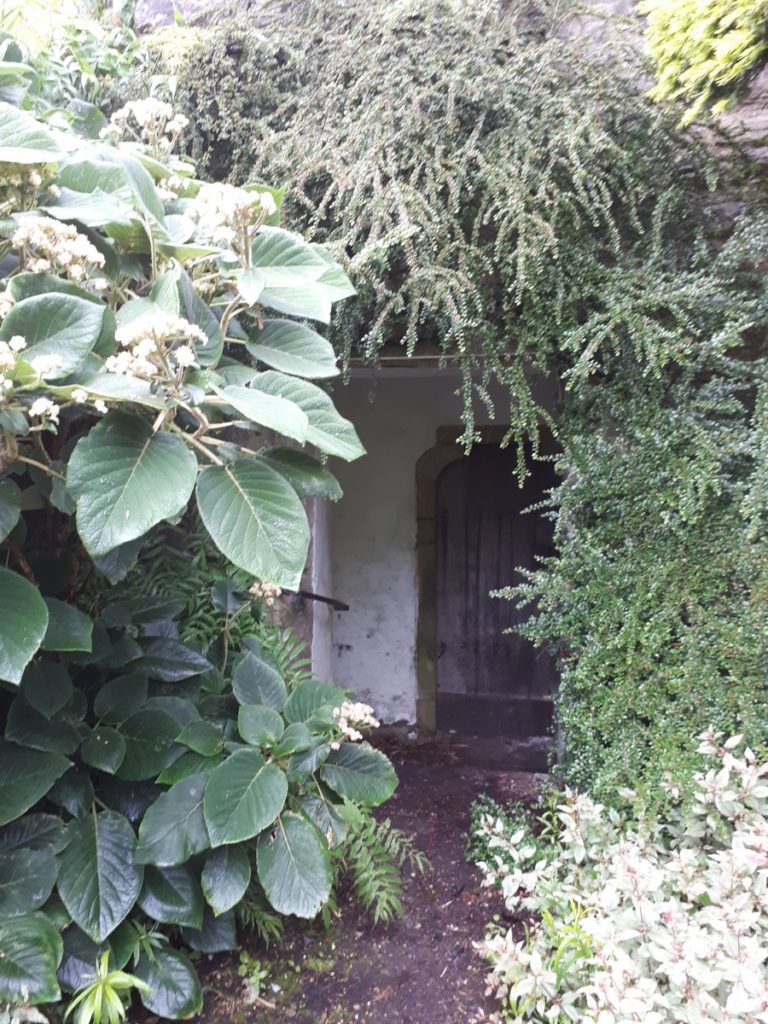
Hot chocolate at the Gardener’s Cottage, Tatton Park
A Lady Becomes a Governess is dedicated to Kristine, because, after all, without her and her Number One London Tours, this book would not have been written.
Book 2 of the Governess swap will include another setting from last year’s trip with Kristine. Bath! And, because I’m going on Number One London Tours Scottish Writers Retreat in September, expect a future book set in Scotland.
I have a great friend in Beth Elliot. Those of you who follow this blog and my posts on Facebook will know that Beth and I try to get together whenever I’m in England. And you may recall that Beth was my saviour when my phone was stolen in London, taking me to buy a new one and following that up with a fabulous day out in Greenwich. This time over, Victoria Hinshaw and I spent a few days doing research on the Duke of Wellington at the Museum of English Rural Life (MERL), located in Reading.
As it turns out, Beth lives just outside of Reading, in the very same town in which our hotel was located. Needless to say, we had the opportunity to see each other often. What does need to be said is that Beth went out of her way to accommodate Vicky and myself, picking us up at the train station, driving us where we needed to go, joining us for dinner nightly and taking us to hidden villages and places of interest on our days off. She was even kind enough to bring us back to her home on several occasions, giving us lunch, wine, laughs and the opportunity to see her fabulous garden and to unwind in her incredibly comfy front room.
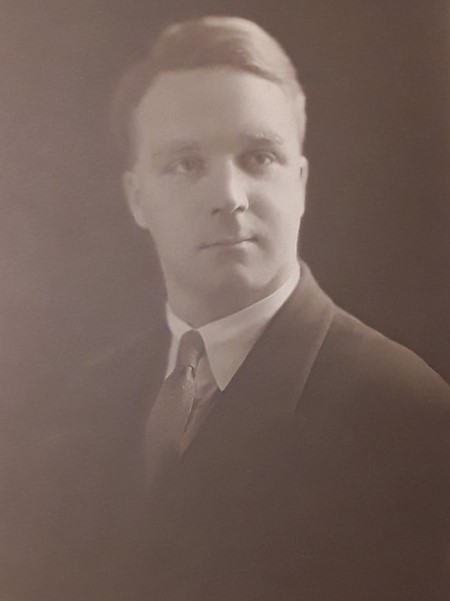
Since Beth, Vicky and I first met in 2010, during Number One London’s Duke of Wellington Tour, she and I have shared personal histories and family stories, and I was most enchanted with her stories of her beloved Uncle Frank, who was Financial Editor for the Times. Frank Wright was born in 1900 and graduated from Manchester University before joining the staff of the Manchester Guardian, moving in 1924 to it’s London office as Assistant Chief Editor, going on afterwards to join the Times of London.
Uncle Frank
What I knew about Uncle Frank was that he and his wife, Auntie Marie, had never had children of their own and so looked upon Beth as a most favourite niece. Beth spent many hours with Uncle Frank and Auntie Marie, but what sticks in my mind most are Beth’s stories of going with Uncle Frank to his London office. Once the day’s business was done, Uncle Frank would ask Beth what she most wanted to do, and would then grant her wishes, regardless of the fact that most of the places she chose were at opposite ends of London. Off they’d go, Uncle Frank indulging the wishes of his favourite little girl and Beth enjoying his undivided attention.
So, when Beth mentioned during our last visit that she had some things of Uncle Frank’s she was set to take to the charity shop, I had to ask –
“Wait. What? What sort of things?”
“Oh, just some old clothes. I’ve got a Chinese robe he bought in the 30’s at Harrods.”
“Wait. You’re giving Uncle Frank’s 1930’s Chinese robe from Harrod’s to the charity shop?!”
“Do you want to see it?”
“Er. Yes!”
Off she went, up the stairs and back down. “I have this, too,” she said, laying a treasure on the table before me.
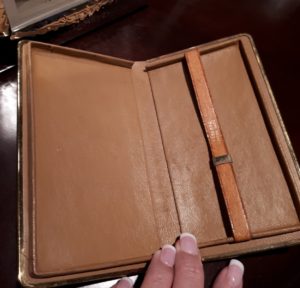
“It’s Uncle Frank’s cigarette case,” she said.
“And it’s leather. And embossed with his initials.” Upon opening it, I saw the Harrod’s stamp. I picked it up and inhaled the smell of leather and tobacco.
“Would you like it?” Beth asked.
“What? Don’t you want it?”
“I don’t smoke. And besides, what am I ever going to do with it. If you think you can use it, please take it.”
I stared at her. Stunned. “I don’t smoke, either. But I’d love to have it. Are you sure?”
“Yes. I’ve got to have a clear out. And here’s the robe I told you about.”
“Try it on,” Beth urged.
Silently I prayed, please, Uncle Frank, be the same size as me. Please. I slipped the robe on and . . . it fit. Like a glove.
“I love it,” said I, looking at myself in the mirror and running a hand over the black silk lapel. “How does it look?”
“It looks fabulous on you,” offered Vicky.
“Do take it if you want it,” said Beth. “It’s only going to be given away otherwise.”
“I can’t believe you’re giving this away.”
“I can’t believe you want it,” said Beth. “Hang on, I’ve got some other bits if you want to see them. Come with me out to the garden, they’re in the shed.”
In the shed?!
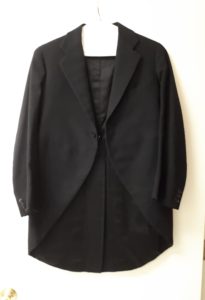
After a quick rummage, Beth came out with a rather large box, which held a morning suit – tailed jacket, waistcoat and striped pants. Even a pair of spats.
Holding out the jacket, Beth said, “Here, give it a try.” I took it from her and attempted to get into it. Dash it all, it didn’t fit.
“It’s too small!” I lamented.
“It isn’t,” Beth said.
“There’s no way I can get it on,” I wailed.
“Here, give it to me,” Beth said, in her no nonsense way. “Now, you stand there and I’m going to slip it on you. You don’t think Brummell got into his coats without help, do you? Gentlemen needed a valet to don their coats. Turn your back to me and put your arms down at your sides and I’ll slip this on you.”
I complied, doubtfully. Beth slid the coat sleeves up over my arms, gave it a yank and settled it upon my shoulders. “There. I told you it would fit. Go look in the mirror.”
I obeyed. Reader, it fit. As though it had been tailor made for me.
“Wow,” said Vicky.
“How does it look?”
“Wow,” repeated Vicky. “Do you like it?”
“Like it?! I love it.”
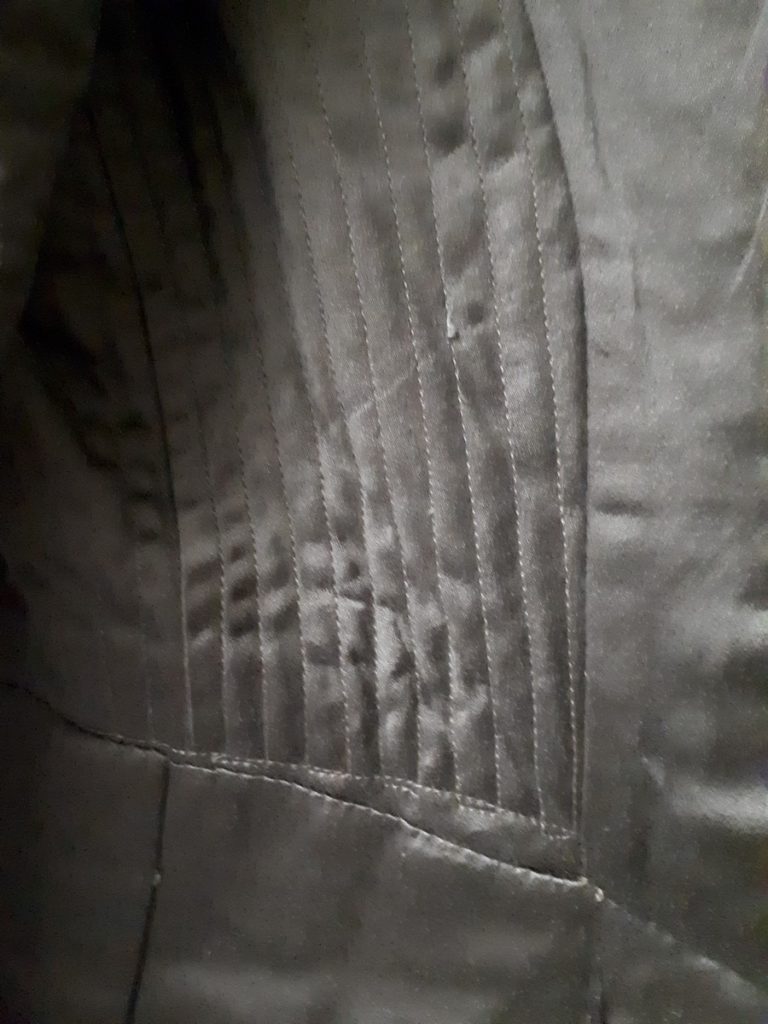
“Here, take the waistcoat, too,” offered Beth. It, too, fit like a dream. Once I’d removed the coat, Beth directed my attention to the construction details inside, gorgeous attention to detail and quilting that had gone out of fashion many decades ago.
“Try the pants on,” suggested Beth. I did, but while Uncle Frank and I seemed to be the same size from the waist up, we varied widely from the waist down. Or it was the style of the striped trousers that defeated me – I looked like a clown in the baggy trousers.
“No,” said Beth, “those won’t do. But there are a few final things you must see.”
I didn’t care about anything else. The robe and coat were each beyond my wildest dreams. But who was I to say no?
This time, she came through with a hat box. Opening the lid, we found a leather collar box and, upon opening that, we discovered that it still held a number of collars, as well as collar and cuff studs. Beneath that was a gentleman’s white silk dress scarf. And under that were the hats. Three hats. And what hats they are!
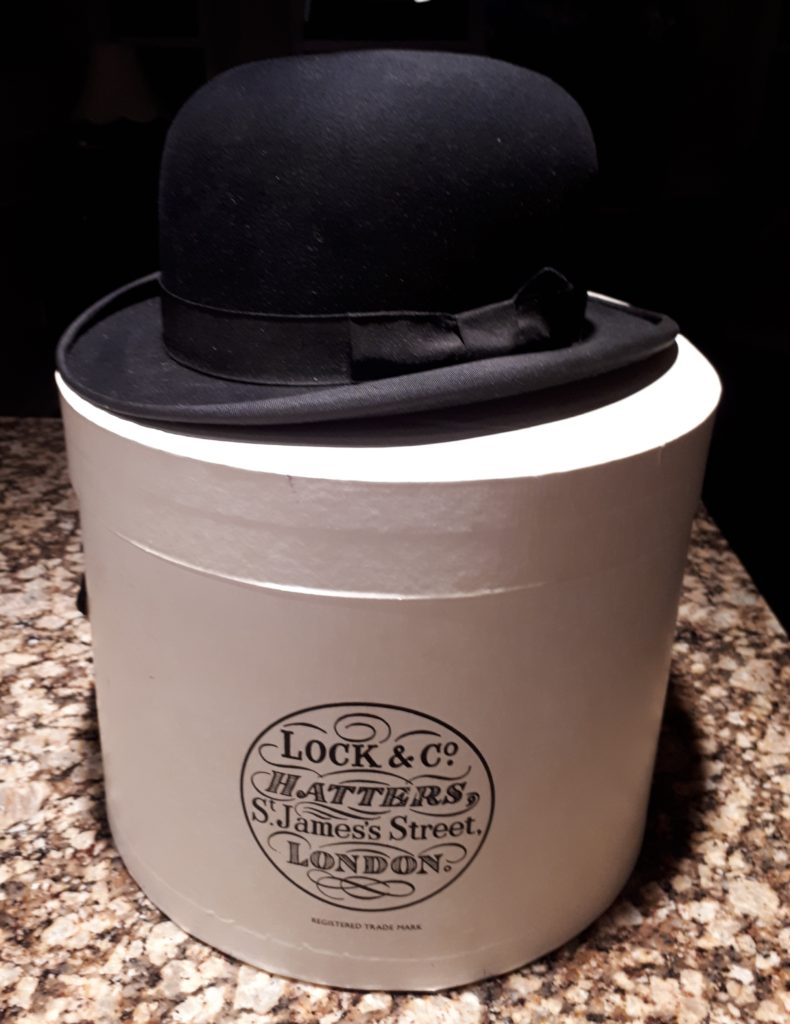
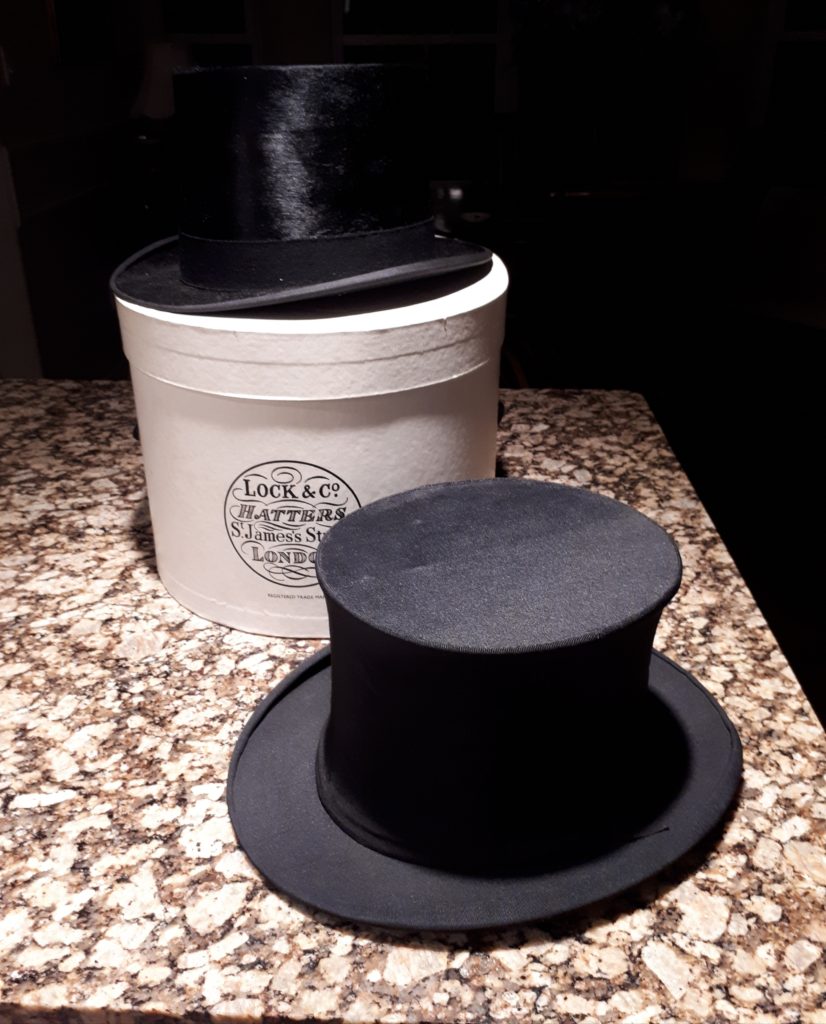
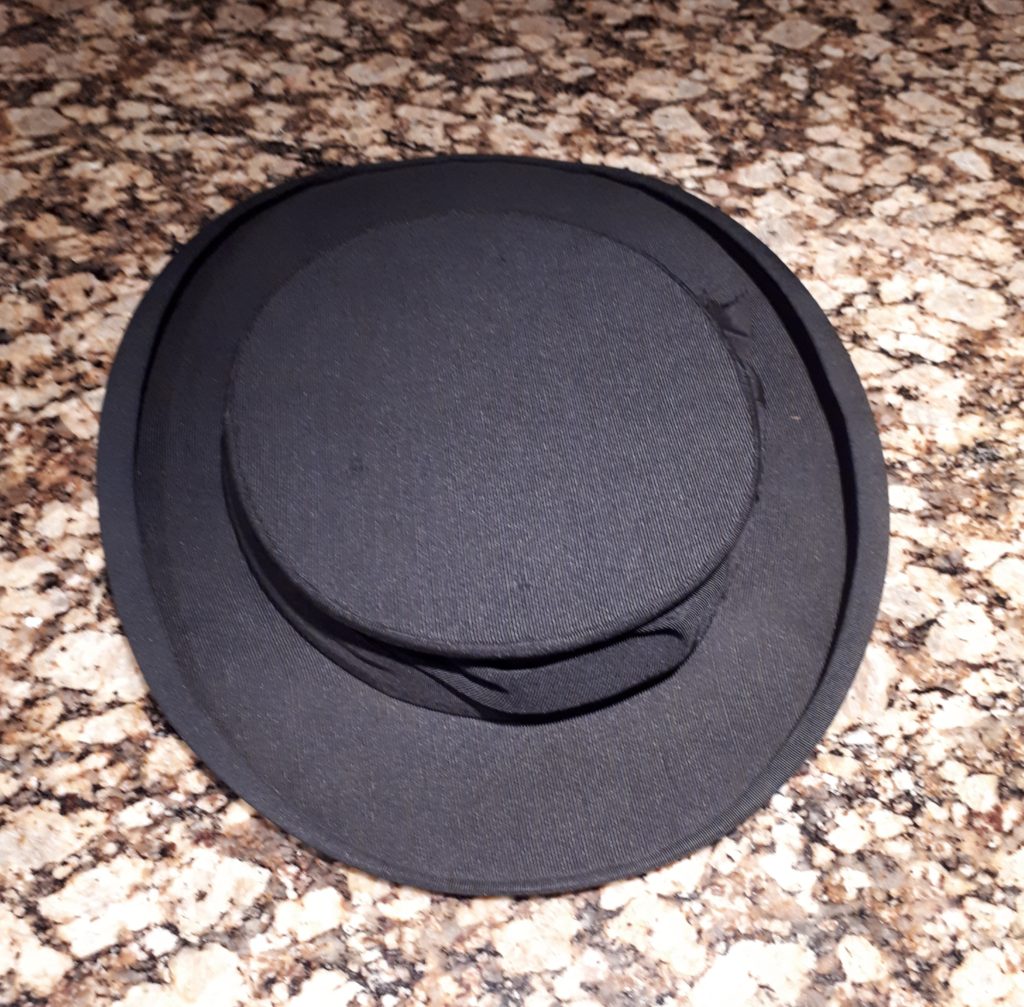
“Try them on,” Beth prompted. After a stunned moment, I lifted the first hat, a derby, and put it on. Again, it fit as though it had been made to fit my head alone. Then there were two top hats, one a traditional beaver hat, the other a silk, collapsible opera hat. Each one fit. And looked deuced fine atop my head, if I do say so myself.
Derby hat.The two top hats.Beaver top hat.Gentleman’s collapsible silk top hat, meant to be worn to the theatre or Opera.
“Do you think you can fit this all into your suitcase?” Beth asked, once I’d left off admiring myself in the mirror.
“Never. We’ll have to ship it. Are you absolutely certain that you want me take it all?” I asked. “I mean, I know what Uncle Frank meant to you.”
“Uncle Frank would be thrilled that they were being given to someone who can enjoy them. Believe me, you’re doing me the favour by allowing me to clear all this out of my attic and shed. I just can’t believe that you actually want it all. I’ll go and fetch a box and we can pack these up.”
While Beth was gone, Vicky asked, “What in the world are you going to do with all that suff?”
“I’m going to wear it. At writer’s conventions and seminars. And maybe on Sundays. All my costuming needs have been taken care of in one fell swoop!”
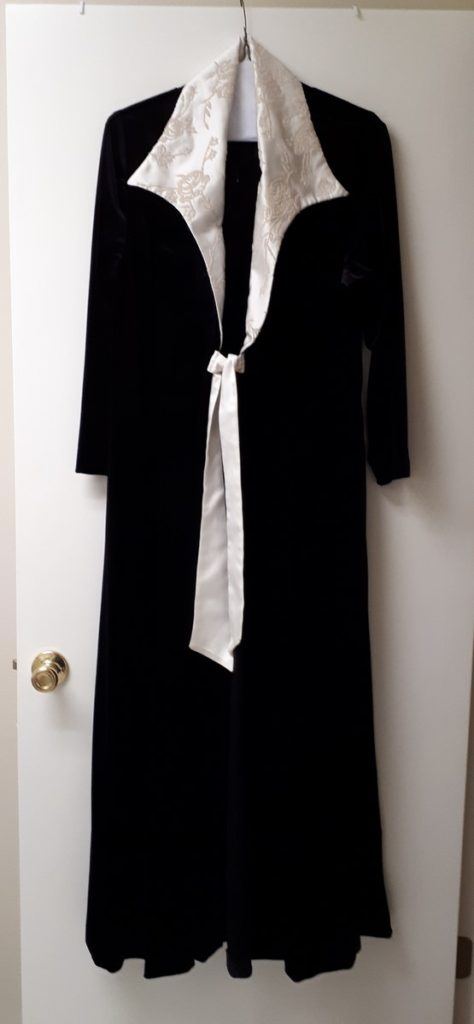
My costuming needs had been take care of, and not only by Uncle Frank. I had found the beauty below in a charity shop in Bath for twenty quid before meeting up with Vicky and Beth.
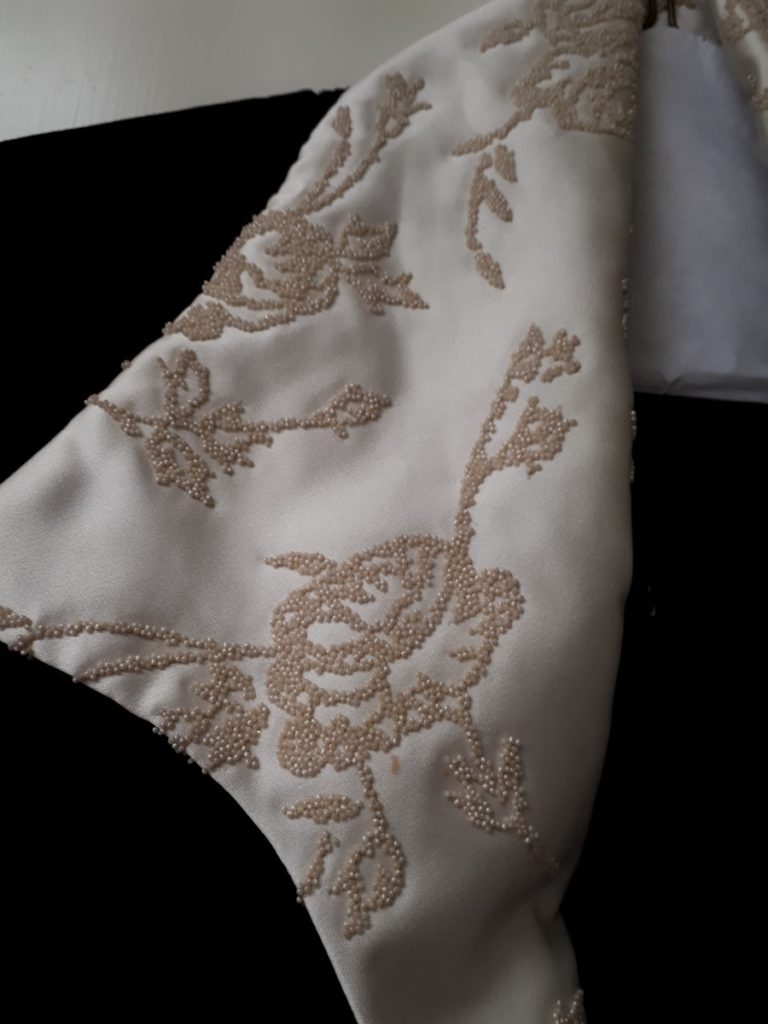
Black velvet robe.Detail of the bead work on the collar.
Next day, Beth boxed up my treasures – and tied up the boxes with string. I’ll let you digest that for a bit. String. A lost art. I could wax lyrical and write an entire post about the string, but I’ll spare you. Shortly thereafter, Beth and I walked down to her local Post Office and shipped the boxes off to my address in America. And they both arrived long before I made it home.
I’m thrilled to report that all of Uncle Frank’s clothing has now been dry cleaned and they are hanging in my closet, just waiting for their first airing at the upcoming Romance Writers of America (RWA) Conference in Denver. Now all I need is a valet.
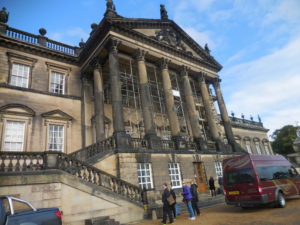
The story of Wentworth Woodhouse (WW) is intensely interesting — and convoluted. Since I am a great devotee of all things British, and especially the great country houses and the people who lived in them, I was particularly excited to visit the estate with Number One London Tours 2017 Country House Tour.
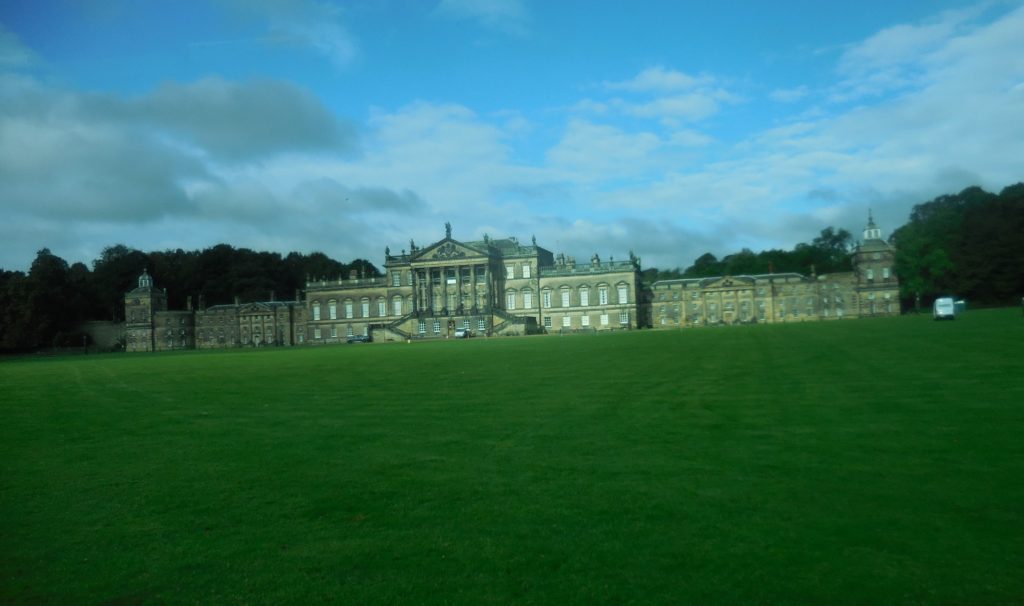
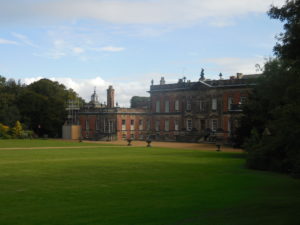
Wentworth Woodhouse
WW has been open to the public for only a few years. I was eager to see it, reputedly the largest private house in Europe, if perhaps one of the strangest.
The land has been in the hands of the family since the 13th century. The present structure was begun in the 1720’s by Thoms Watson Wentworth, 1st Marquess of Rockingham (1693-1750), on the site of a previous house. The baroque style, in red brick, did not find favor with the Marquess and his friends among the Whig aristocracy.
West Facade
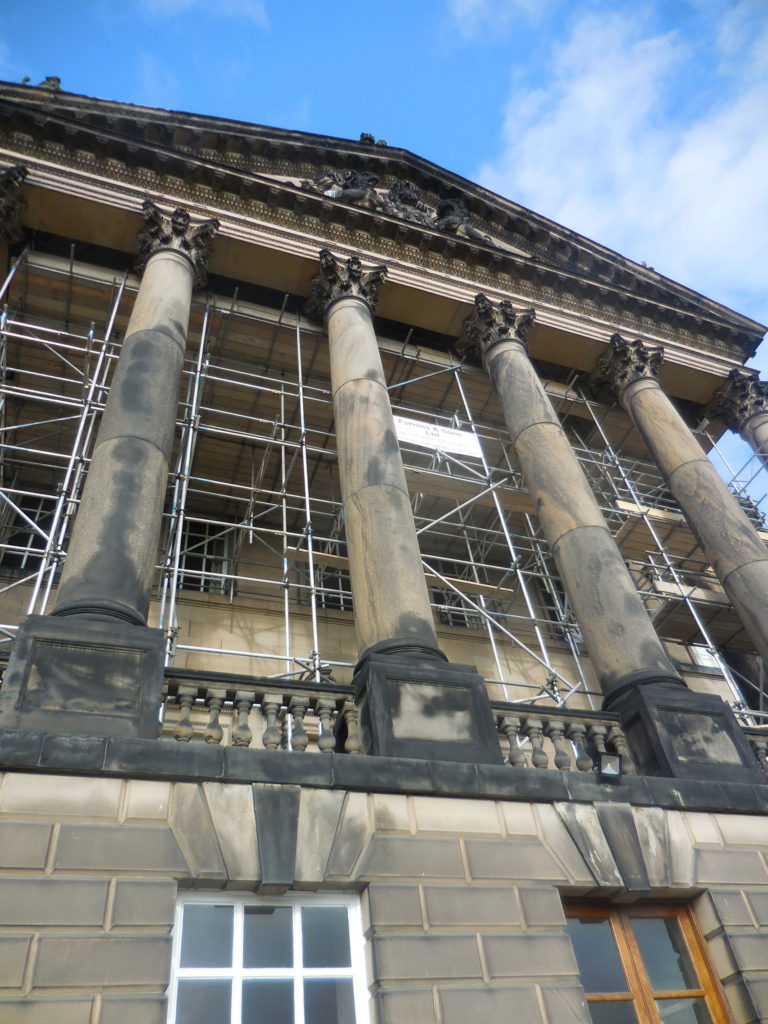
Almost as soon as it was completed, Rockingham built another house, facing West, this time in the Palladian style favored by his social set and political allies. The two back-to-back wings are joined together in an area perhaps saved from an earlier 17th century house. The estate and political influence both went to his son, Charles Watson Wentworth (1730-1782), 2nd Marquess of Rockingham, eventually Prime Minister and holder of numerous public offices.
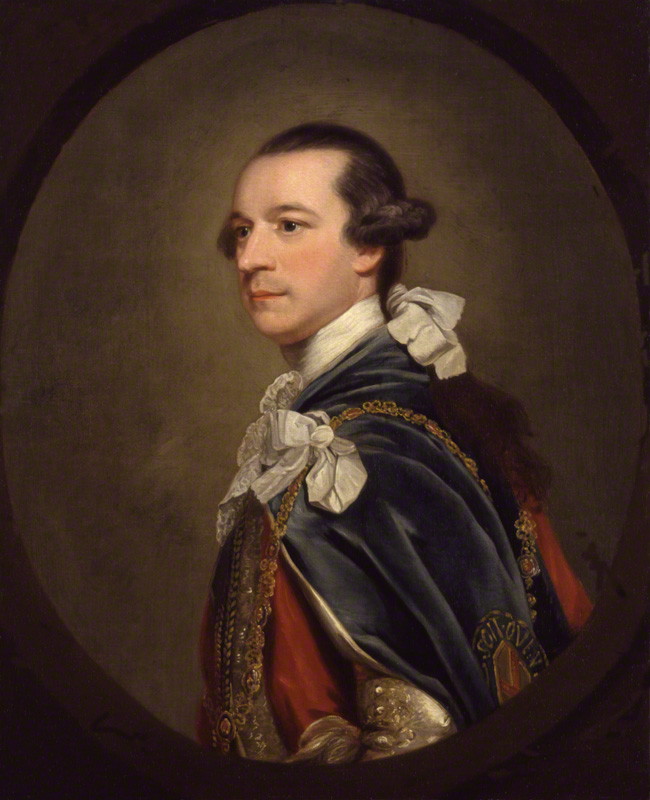
2nd Marquess of Rockingham, after Sir Joshua Reynolds, oil on canvas (1766-1768)
The 2nd Marquess and his wife had no sons; therefore in 1782, the estate passed to his nephew, William Wentworth-Fitzwilliam, 4th Earl Fitzwilliam, and the marquess’s title, Rockingham, became extinct.
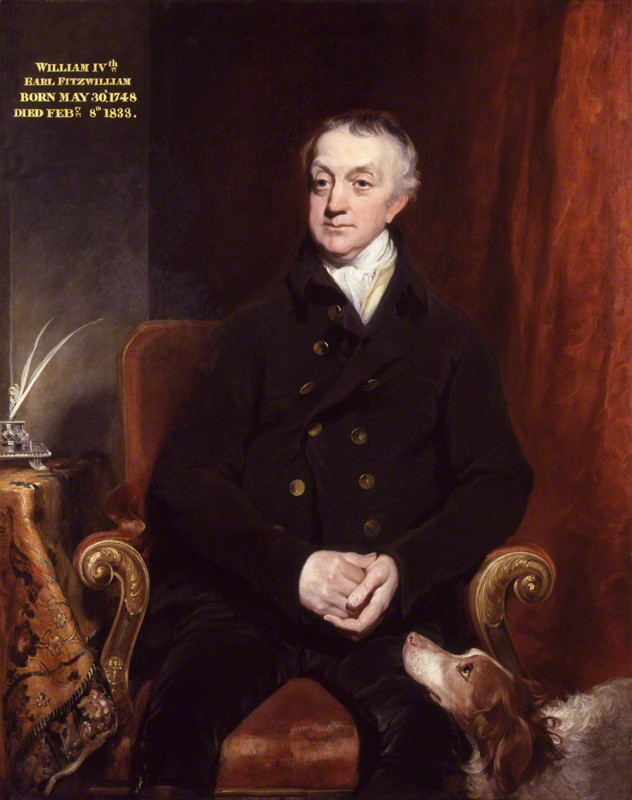
2nd Earl Fitzwilliam by William Owen, oil on canvas, exhibited 1817
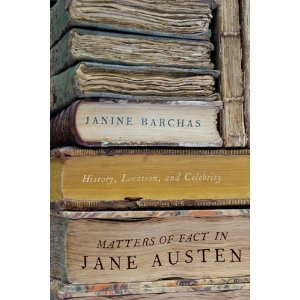
If most of these names have a familiar ring, don’t be surprised. Refer instead to Janine Barchas’ book Matters of Fact in Jane Austen.
Matters of Fact in Jane Austen by Janine Barchas
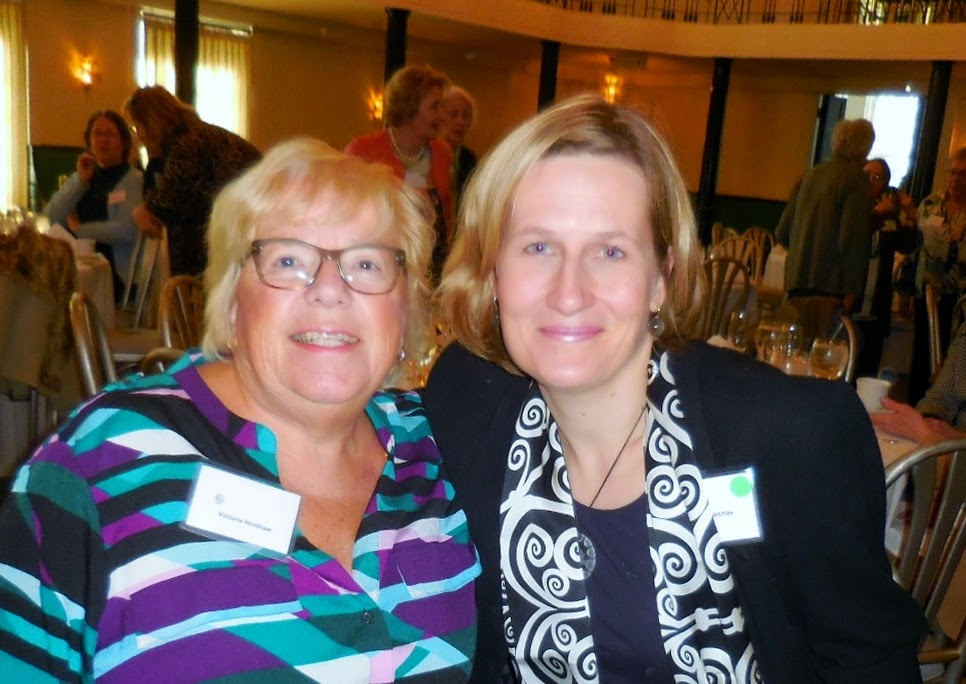
I can’t resist posting the following picture which shows Dr. Barchas and me at a Chicago JASNA event.
Victoria (l) and Janine Barchas
Dr. Barchas traces the origin of many of the family names used by Jane Austen in her novels. Among relatives of the Fitzwilliams were the D’arcys, as used in Pride and Prejudice. Woodhouse is the family name of Emma. Wentworth is Captain Frederick’s family name in Persuasion. The Watsons is one of Austen’s two unfinished novels. Austen’s contemporary readers would have instantly recognized the names of these leading British families, though 200 years later, they come as a revelation. For the source of many other names used by Jane Austen, check the book by Dr Barchas.
East Facade
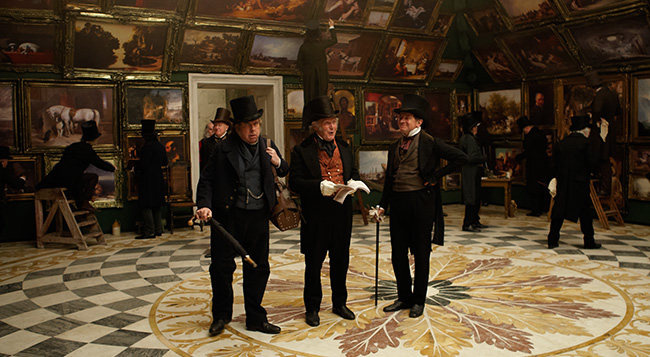
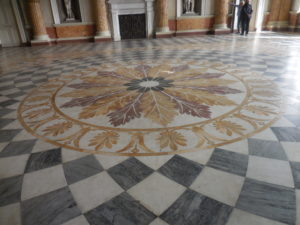
The Wentworth Woodhouse Preservation Trust was established to preserve and restore the estate, after many years of problems and neglect. Restoration will be a huge and expensive job, probably aided by the frequent use of the property for film and television dramas. We saw it in Mr. Turner, the 2014 film about J. M. W. Turner, the celebrated and eccentric artist, where the Marble Hall was staged as the annual exhibition of the Royal of Arts — note that floor.
Mr. Turner, 2014
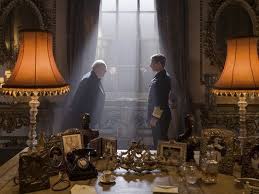
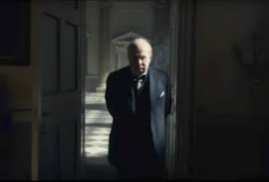
The film Darkest Hour has been highly praised. WW stands in for Buckingham Palace where Churchill meets with His Majesty George VI.
WW as Buckingham Palace in Darkest HouseGary Oldman as Winston Churchill in Darkest Hour
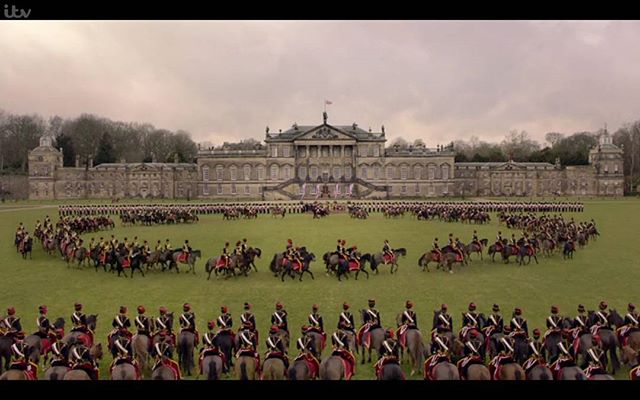
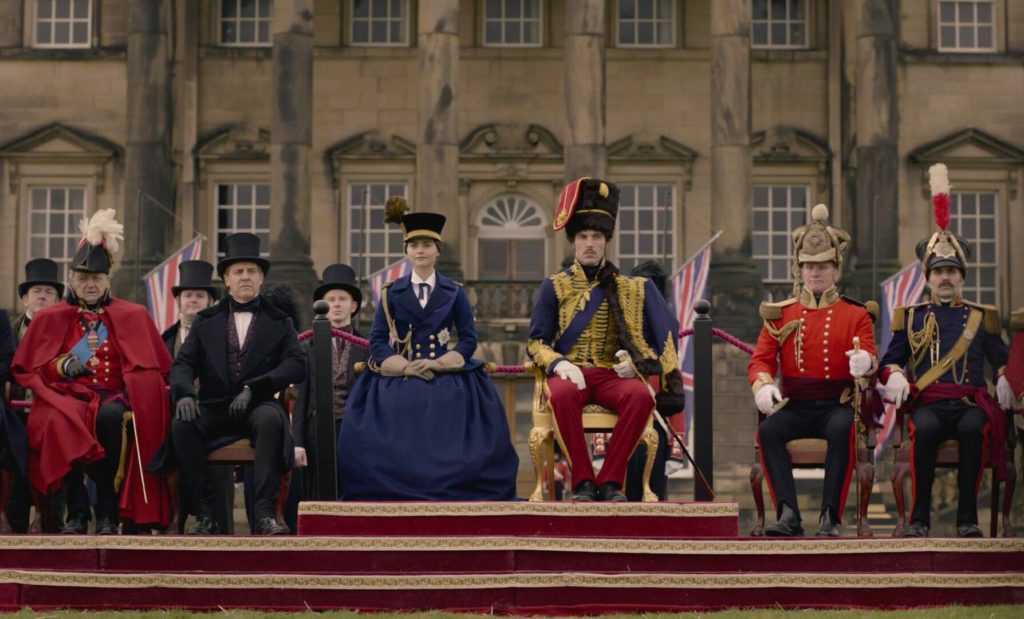
Many scenes in the television series Victoria were filmed at WW, including the review of the regiment on the front lawn.
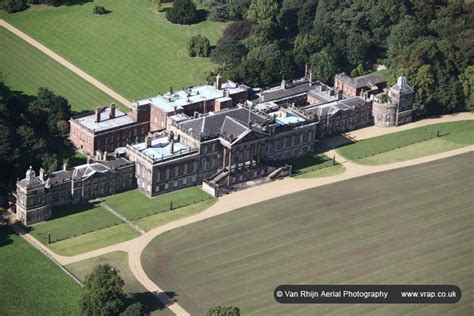
An ariel view of the adjacent houses shows how they are joined, and in that area where they meet are remnants of the earlier 17th-century structure. It is estimated that there are five miles of corridors inside.
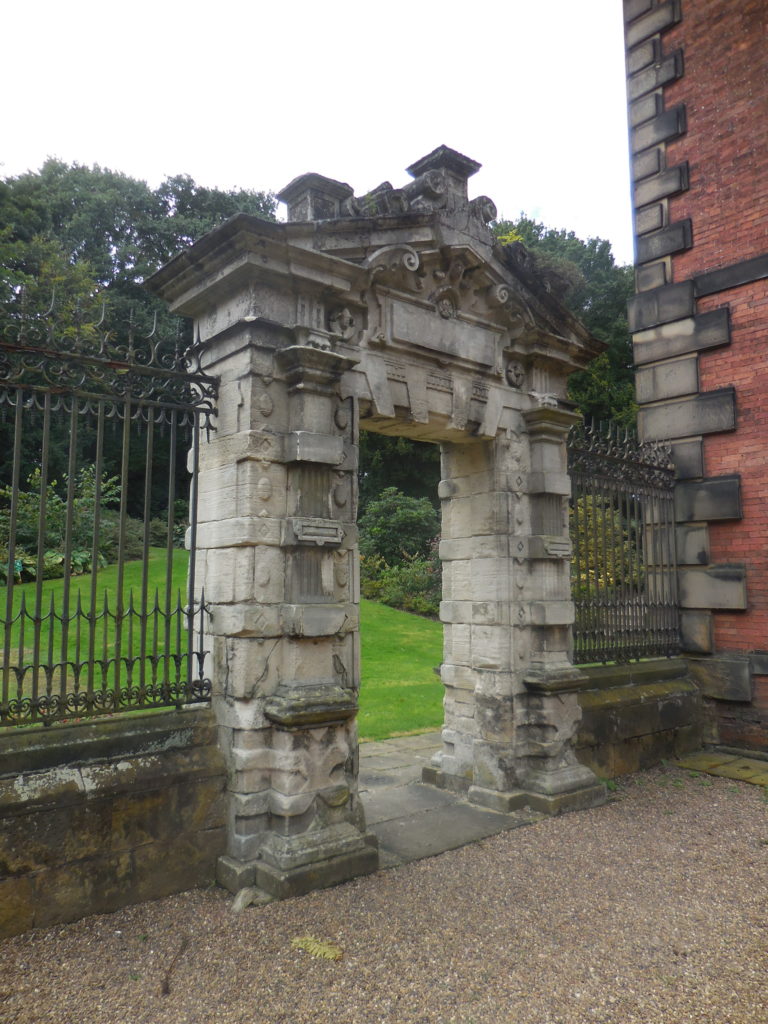
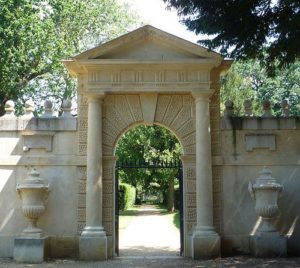
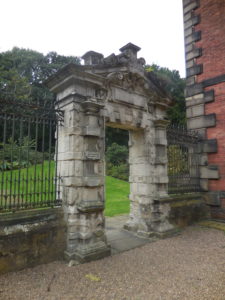
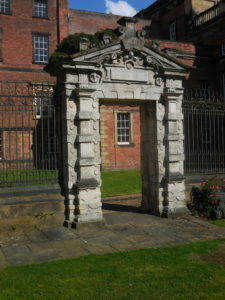
Very little is left of the 1630 house but this garden gateway. Inigo Jones was probably the architect of this Wellgate. Below, compare it to the garden gate at Chiswick.
17th c. gate, reputedly by Inigo Jones
Chiswick House
The previous house built in 1608, of which only traces remain, was otherwise incorporated into one (or both?) of the present houses.
Improvements were well underway when we visited in the autumn of 2017. Simply fixing the roof–said to be nearly four acres in size–will take up most of the initial grant from the government of 6.6 million pounds.
The Fitzwilliam family was one of the richest and most powerful in Britain in the 19th century. Coal mined on the estate supported them in near-regal style and employed thousands in nearby villages and as tenants on the land.
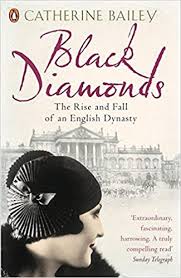
The Story of Wentworth Woodhouse and its families
The 2014 nonfiction book Black Diamonds by Catherine Bailey reads like a novel as it relates the dramatic ups and downs of the estate and its residents. Highly recommended.
If you will permit another aside, the story of the last 8th Earl Fitzwilliam, has interesting features.
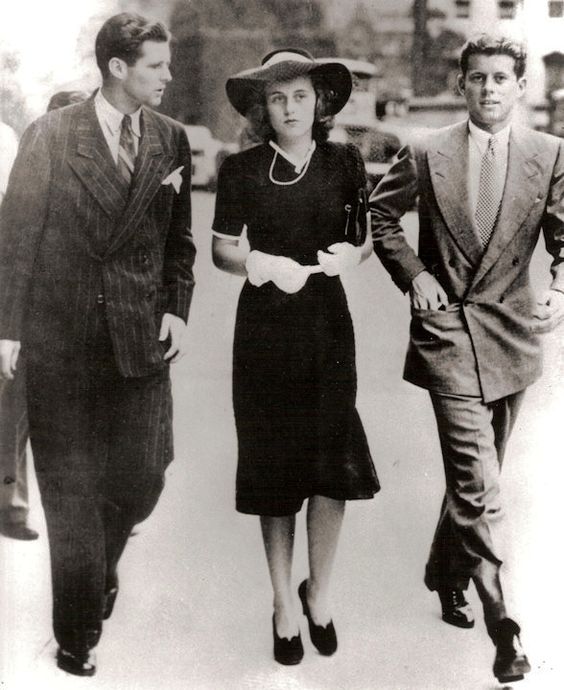
Joe, Kathleen and Jack Kennedy
His romance with Kathleen “Kick” Kennedy was frowned upon by the very Catholic Kennedy family, especially by her parents, who were none too pleased when Kick converted to the Church of England.
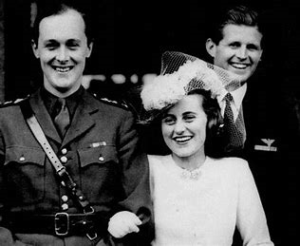
Billy and Kathleen Cavendish with Joe Kennedy
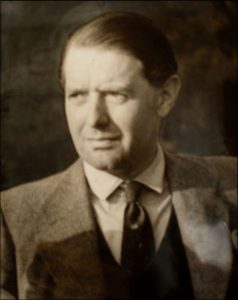
Nevertheless, they married in May 1944. Only her older brother Joe attended the wartime wedding. Just four months later, Billy was killed in action in Belgium. Joe, eldest of the Kennedy brothers, died in August 1944. The widowed Kathleen later began a relationship with Peter Wentworth-Fitzwilliam, 8th Earl Fitzwilliam, who was married and the father of a daughter. Kick and Peter died together in a plane crash on their way to the Riviera in 1948.
Peter Wentworth-Fitzwilliam 1910-1948
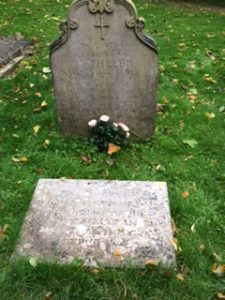
She is buried near Chatsworth in the churchyard at Edensor, another of the ill-fated Kennedy children whose lives have been so tragic.
grave of Kathleen Kennedy Cavendish
Upon the death of Billy, Andrew Cavendish, second son of the 10th Duke, became the Marquess of Huntington and eventually the 11th Duke of Devonshire. His Duchess, Deborah, nee Mitford, was particularly instrumental in making the family estate of Chatsworth in Derbyshire, into one of Britain’s premier stately homes. Deborah, or Debo as she was familiarly known, was the author of many books, died in 2014 at age 94.
stones placed on her grave
The complex story of Wentworth Woodhouse is far from over. At the death of Peter Fitzwilliam, the estate was undergoing extensive strip coal mining, sometimes right up to the door, which weakened the house foundations as well as ruining the gardens. Postwar austerity and crippling death duties required putting the house on the market, and who, pray tell, might want to own such a white elephant? Most of the furnishings were auctioned and eventually the property was leased to Lady Mabel College for the training of female physical education students.
Entering Wentworth Woodhouse, September 2017
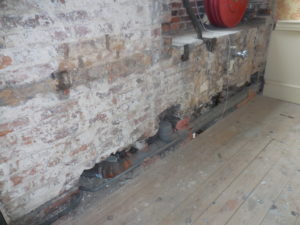
After several decades of changing ownership and sporadic attempts to halt deterioration, in 2017 the WW Preservation Trust acquired the property and a grant for the renovation of the house. They have a daunting task at hand. When we visited, only a few rooms had furniture, and evidence of sinking accompanied general decline.
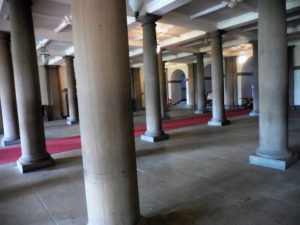
Pillared HallPillared Hall
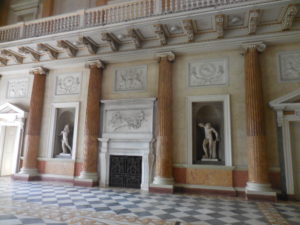
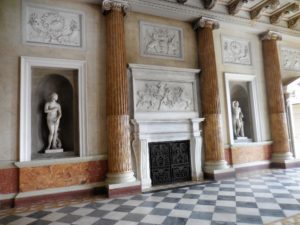
This forest of pillars on the ground floor supports the Marble Saloon above.
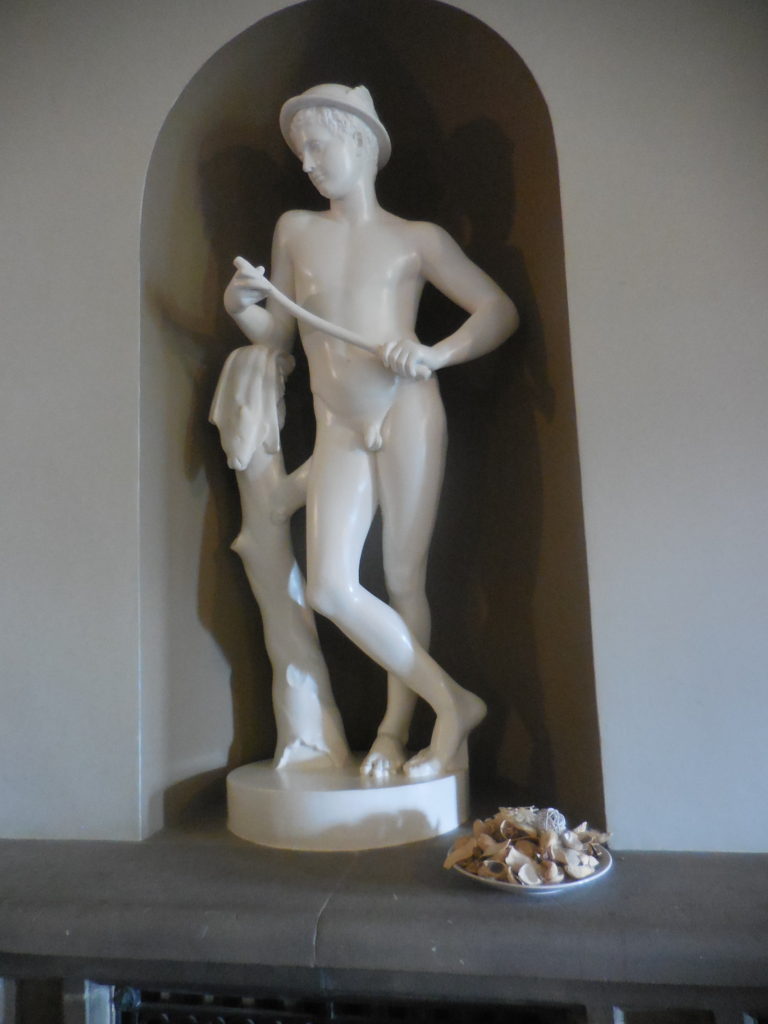
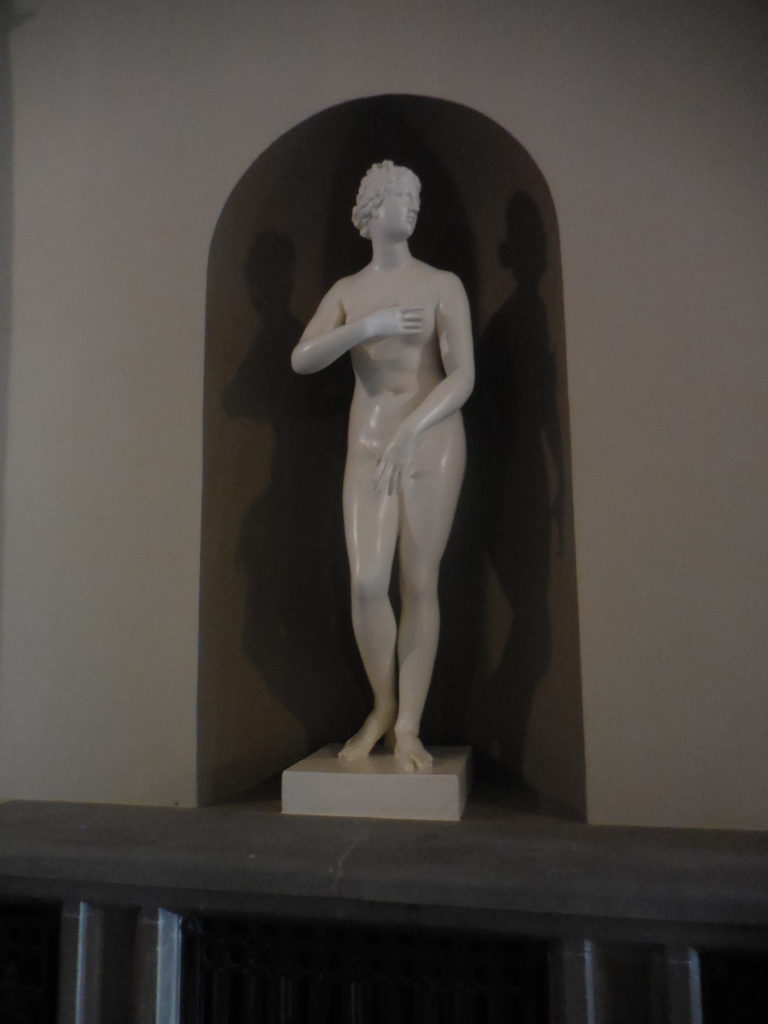
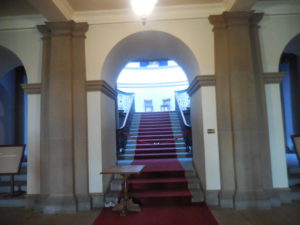
Mercury, one of many sculptures in the alcovesDiana or Venus?Staircase to Marble Saloon
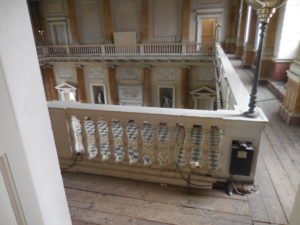
Upstairs, the room is magnificent, particularly the patterned floor.Marble Saloon from the BalconyOur guide
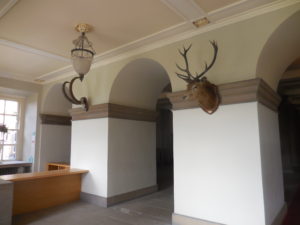
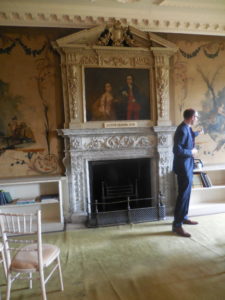
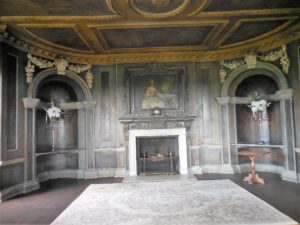
Most of the rooms are without furnishings or temporarily provided with furniture for meetings, parties, and conferences, by which the Trust hopes to help fund restorations.
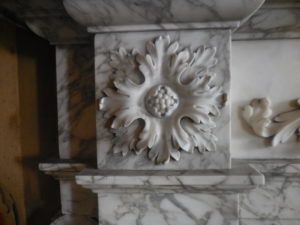
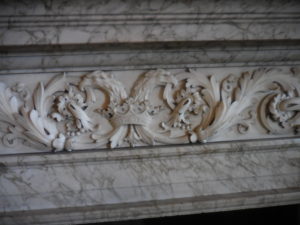
Marble decor
But the remaining features of the house are stunning, as in the details of this fireplace surround.
The Van Dyck Room
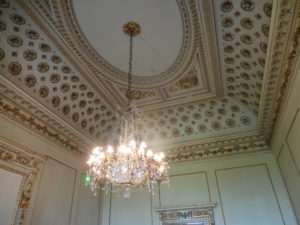
The Van Dyck Room boasts a magnificent chandelier.
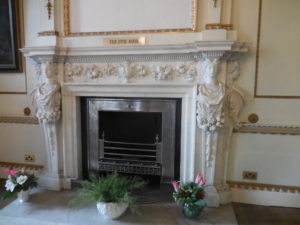
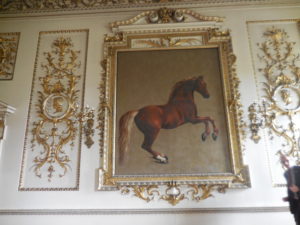
The Whistlejacket Room continues the white and gilt decor; it is named for the painting above (though it is a copy) by George Stubbs , c. 1762, of a famous racing stallion owned by the family, Whistlejacket, winner of many races. The original Stubbs work was acquired by the National Gallery in London, where the original now hangs, for £11 million in 1997.
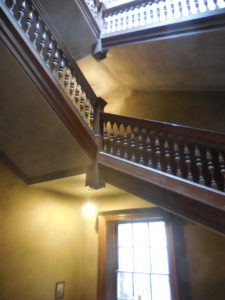
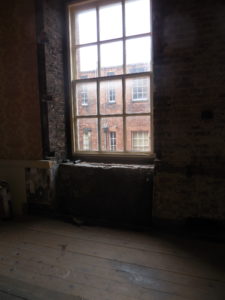
Upstairs, most of the attractive decor came to an abrupt halt. One room was preserved as it would have been for a student at Lady Mabel College in the 1950’s, but I am sorry to say I missed taking a shot there. Most of the upper floor was in need of considerable restoration.
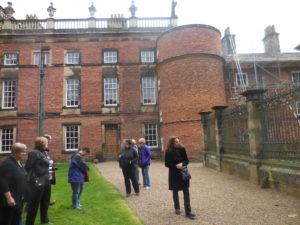
After touring the chapel, we went outside to see where and how the two houses were combined with remnants of the original house built a century earlier.
By this time, I believe our tour participants were gob-smacked by the size and condition of the estate. But even more was ahead.
The Wellgate
The gateway, reputedly by architect Inigo Jones, remains from the old house.
The South Terrace
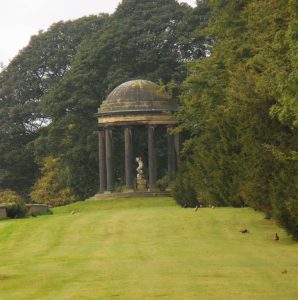
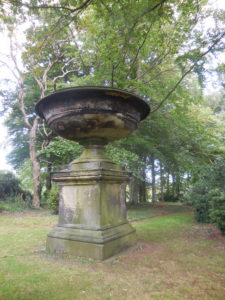
The Gardens are in need of considerable restoration also, but the land itself is interesting and worth seeing. Some garden decorations remain.
At last we were far enough away to achieve a perspective on the lovely West facade, the baroque house.
If you have managed to stay with us for this long, I will reward you with the other side of the Inigo Jones Gate:
Would you like a first-hand view of some of England’s most beloved stately homes? We’d love to have you along on the 2019 Country House Tour –