The London and Waterloo Tour – Victoria and Albert: Art in Love at the Queen’s Gallery

Victoria and I are looking forward to the Victoria and Albert: Art in Love exhibit at the Queen’s Gallery, Buckingham Palace. The Exhibition features 400 items from The Royal Collection including gifts exchanged by Victoria and Albert such as drawings, paintings, sculpture, furniture, musical scores and jewellery and encompasses their mutual love of music and art. The display also touches upon Prince Albert’s work on ‘The Great Exhibition of the Works of Industry of all Nations in 1851’ as well Queen Victoria in the years after Albert’s death in 1861.

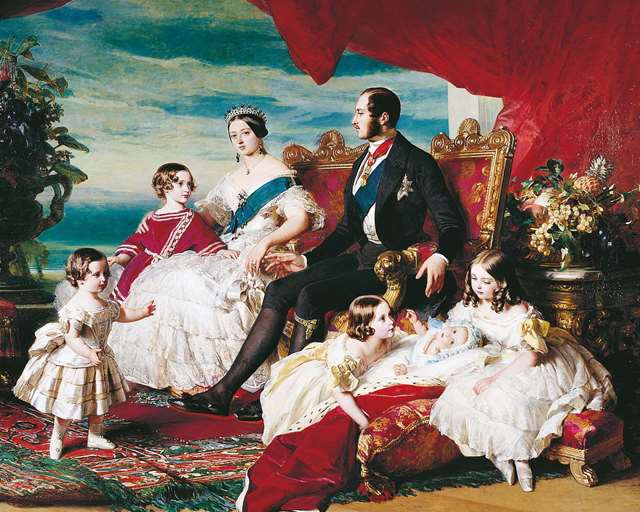
Works by the couple’s favorite artist, Franz Xaver Winterhalter, are on display, as are photographs taken of the Royal couple. A German painter first recommended to Queen Victoria by Louise, Queen of the Belgians, Winterhalter came to England in 1842 and subsequently worked regularly for the queen and her family over the next two decades. Winterhalter was granted the largest number of royal commissions and produced numerous formal portraits, including the one pictured above, which Queen Victoria commissioned in 1843 as a surprise for her husband’s 24th birthday. The artist presents the Queen in an intimate pose, leaning against a red cushion with her hair half unravelled from its fashionable knot.

Winterhalter (at left) was born in the Grand Duchy of Baden in 1805. He excelled at painting and drawing as a teen and went to Munich where he studied at the Academy of Arts. By the late 1830’s he drew attention as a painter of royal subjects. He traveled and painted in almost every court of Europe until the last few years of his life. Though art critics were never very enthusiastic about his work, his portraits were well executed and conveniently flattering.


Costumes are also displayed in the exhibit, including Queen Victoria’s costume for the 1851 Stuart Ball  designed by French artist Eugène Lami. The French silk gown is rich in lace and brocade.
You can take a really in-depth video tour of the exhibition here and/or visit the Royal Collection website.


Winterhalter’s The First of May 1851, at right,  shows the Duke of Wellington presenting a casket to his one-year-old godson, Prince Arthur, Duke of Connaught, who is supported by Queen Victoria. Behind these figures and forming the apex of a pyramidal composition is Prince Albert, half looking over his shoulder towards the Crystal Palace in the left background. Both the Duke of Wellington and Prince Albert are dressed in the uniform of Field Marshal and wear the Order of the Garter. The painting derives its title from the fact that both the Duke of Wellington and Prince Arthur were born on 1 May, which was also the date of the inauguration of the Great Exhibition in Hyde Park.
 The painting was commissioned by Queen Victoria, but Winterhalter clearly encountered some difficulties in devising an appropriate composition. In the queen’s words, he ‘did not seem to know how to carry it out’ and it was Prince Albert ‘with his wonderful knowledge and taste’ who gave Winterhalter the idea of using a casket, instead of the gold cup the Duke had actually presented to the child. The painting hangs at the Duke’s country home, Stratfield Saye.

Above, Victoria and Albert with their children in 1846, Buckingham Palace

More Magnificence at the Yale Center for British Art, Part Two

Victoria here again, effusing about my visit to New Haven CT to experience in person the delights of Thomas Lawrence: Regency Power and Brilliance.  At left is a self-portrait painted in 1787-88, the earliest work in the exhibition, I believe. It certainly shows great technical ability and promise.  Lawrence was only about eighteen at the time. According to the catalogue essay by Lucy Peltz (Curator of 18th-century Paintings, National Gallery, London), he wrote home at the time from London: “Excepting Sir Joshua, for the painting of a Head, I would risk my reputation with any painter in London.”  Amazing confidence for one so young.  But he had been a prodigy since early youth, encouraged by his innkeeper father to sketch customers to the extent that young Tom was the family’s primary support.  He had occasional stretches of formal education at the Royal Academy, but his career outstripped almost all advice and pedagogy. By 1789, he was painting a portrait of the Queen at Windsor.

Charlotte of Mecklenburg-Strelitz  (1744-1818) married King George III in 1761 when she was seventeen years old. She bore him fifteen children.  When she sat for Lawrence, rather unwillingly it seems, she was about 45 years old and disturbed by the King’s recent bouts of peculiar illness, both mental and physical. The events of 1789 in France did not help. Queen Charlotte had  been painted by many artists, including Allan Ramsay,
Benjamin West, Johann Zoffany, Reynolds, and Gainsborough. Neither the Queen nor the King liked the Lawrence and never paid him. But it was highly praised at the 1790 Royal Academy exhibition and is now in the collection of the National Gallery, London.

Arthur Atherley (1771-1844) was painted in 1792 when he was about age twenty. Exhibited simply titled “Portrait of an Etonian,” the painting was said by one reviewer to be comparable to Sir Joshua (Reynolds), certainly high praise for Lawrence, the relative newcomer to the London art scene.

Mary Hamilton, Later Mary Denham, d. 1837
graphic and red and black chalk, executed in 1789

Mrs. Hamilton read to Lawrence and her husband, artist William Hamilton, while they drew antique statues in the evening.  This drawing was probably a gift to the couple, though Lawrence sent it to the RA for exhibition in 1789.  As Lawrence’s star rose, however, Hamilton’s career did not flourish and the two men grew apart.

William Lock, the Younger (1767-1847), drawn in black chalk on canvas, sometime between 1795 and 1800.

One of the strengths of this exhibition is the excellent selection of drawings by Lawrence, which are far less familiar then his dazzling oil portraits, but equally pleasing to the visitor. 

Lock was part of the “charmed circle” of families that Lawrence became part of, including the Angersteins and Locks. He drew and painted many members of the families and particularly their children.

William Lock’s sister Amelia married John Angerstein in 1799.

This portrait of John Julius Angerstein (1796-1823) was painted in 1790. Angerstein was a wealthy insurance broker in the City of London and one of Lawrence’s earliest supporter, as patron, friend and banker.  He was important to the development of Lloyd’s of London, and was a prominent art collector.  He was born in Russia, and it has been rumored that he was the illegitimate son of Catherine the Great, but it is more likely that he was of much more modest birth. Nevertheless, he acquired a considerable fortune.  Lawrence advised Angerstein on some of his old master purchases. After his death, the collection was purchased by the government to be part of the new National Gallery which now sits above Trafalgar Square.
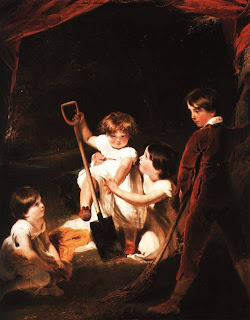
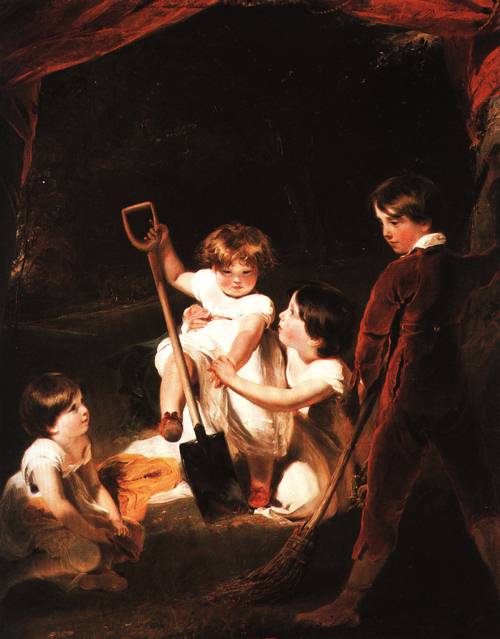
These Children of John Angerstein, painted in
1807, were the grandchildren of John Julius Angerstein, above. The choice of pose is unusual in that wealthy children of privileged families are rarely portrayed with shovel and broom. The catalogue essay speculates that the elder Angerstein’s philanthropic interest in children would promote, “the hoped-for future for children…the right to play outdoors and enjoy autonomy, and to influence one another through action and word. If a child sweeps as young John Julius Angerstein does, he should do so for enjoyment. In this way the children embody the promise of philanthropy for future generations.”
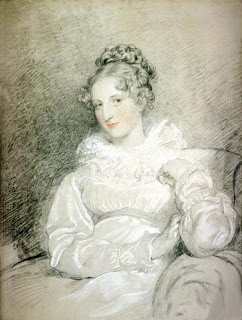
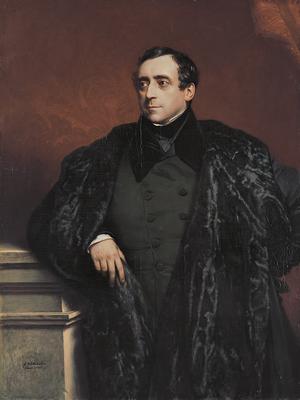
Countess Therese Czernin (1798-1896), drawn in 1819, was the daughter of an Austrian general. Apparently it remained in the family of the countess and was not known until it was sent to an auction in 1985, where it was revealed as the work of Lawrence. It is now owned by a private collection.  It makes one wonder what other treasures might be lurking in some old castle attic. Another work by Lawrence? A letter from Jane Austen?  A lover’s eye ring?  If you find anything in your castle, please send word.
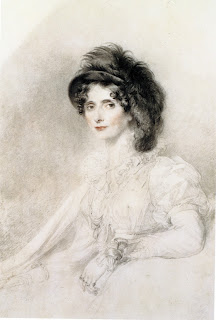
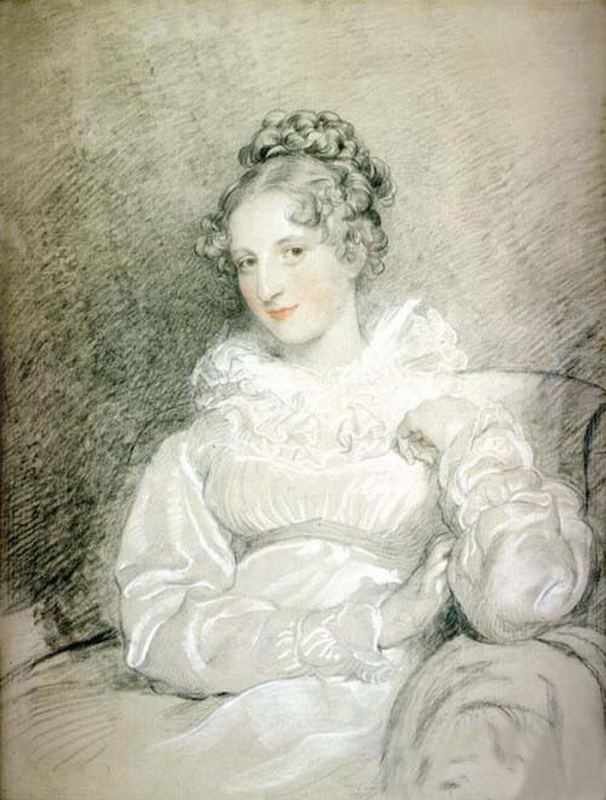
Several years ago, I stayed at the National Trust Hotel that is part of Ickworth, an estate in Suffolk, built by the Earl Bishop, Frederick Hervey (1730-1803),  4th Earl of Bristol and Bishop of Derry (see our post of 3/9/11).  He built his remarkable house in the last decades of the 18th century. One of his daughters was Lady Elizabeth Hervey (1757-1824), who married John Foster in 1776.  After having two sons with Foster, Bess left him and in 1782 became the close friend and confidante of Georgiana, Duchess of Devonshire. She enjoyed a rather warm relationship with William Cavendish (1748-1811), 5th Duke of Devonshire, as well and bore the duke two children who were raised with the three legitimate Cavendish children. Speculating on the precise nature of this menage a trois tickles our imagination.  After Georgiana died in 1806, Lady Elizabeth became the 5th duke’s second wife in 1809. He did not survive long, dying in 1811, but she lived on as the Duchess of Devonshire until 1824.  If she indeed resembled this portrait drawn by Lawrence when she was age 63 or so, one might understand what kind of charisma the lady had.
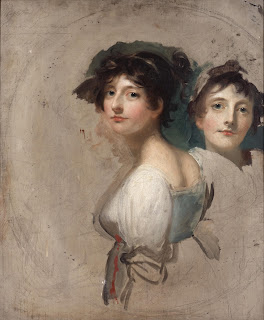
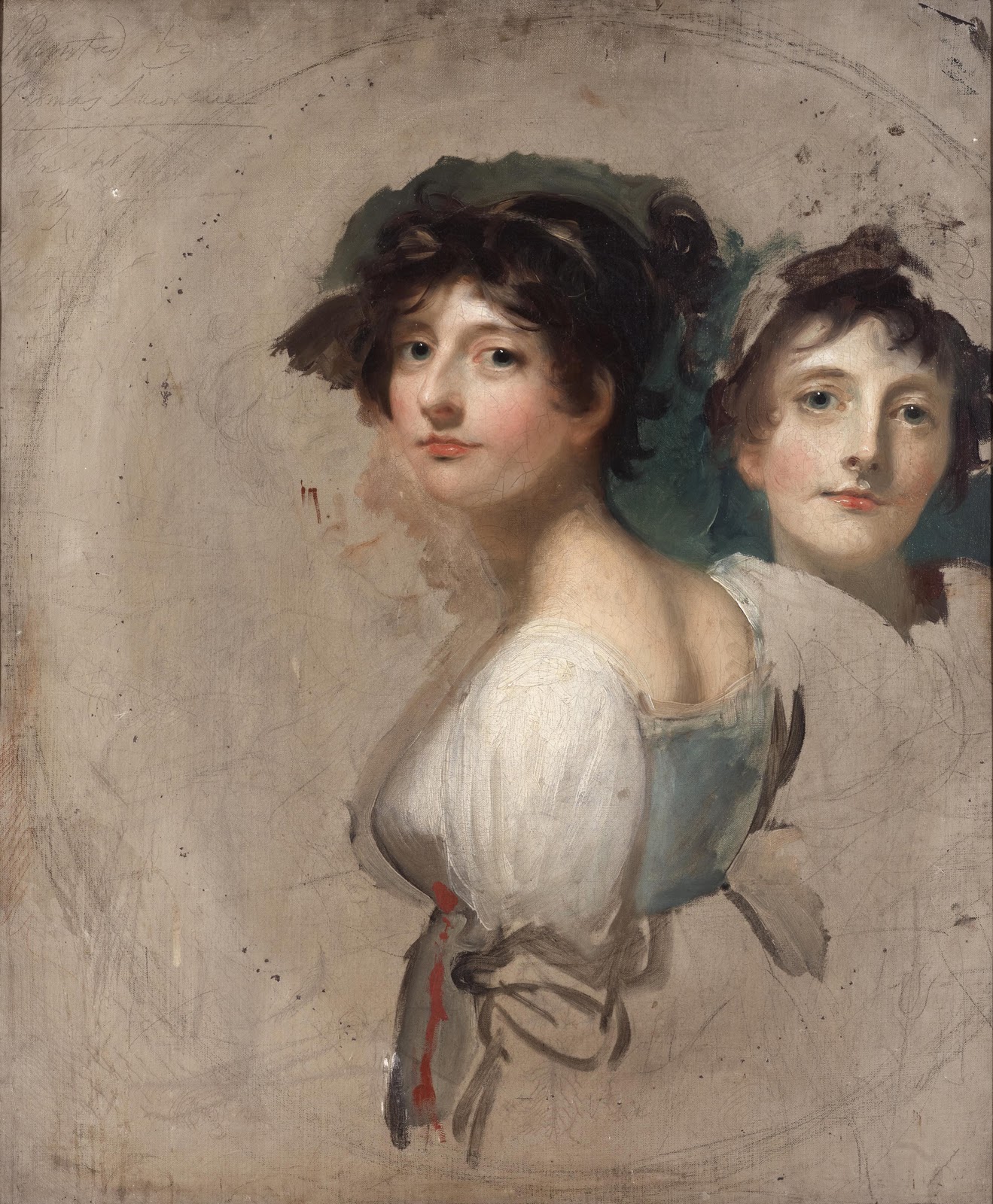
Occupying an interesting point between chalk drawings and a finished painting is this unfinished portrait of Emilia, Lady Cahir, later Countess of Glengall (1776-1836) done in 1804-05.  There are three heads here, though it is difficult to see the one on the left.  It is visible in the exhibition if you look closely.  You might be able to make out the lips and the nose of the left-most head just below and to the left of the center head’s chin.

The work was perhaps done at a house party at Bentley Priory where Emilia and Thomas Lawrence both played roles in theatricals. Bentley Priory belonged to the Marquess of Abercorn and was the scene of many country house theatricals.

Charles William (Vane-)Stewart, later 3rd Marquess of Londonderry (1778-1854) was painted in 1812. The catalogue says it is “celebrated as one of the ultimate icons of British military portraiture.”

As Undersecretary for War and one of Wellington’s Adjutant-Generals, Stewart cuts a glamorous and colorful figure.  His uniform is of a cavalry officer, a dashing hussar, with the details and medals highlighted. The portrait also represents a turning point for Lawrence, bringing him an introduction to the Prince Regent and eventual commissions for the Waterloo Chamber portraits (detailed in my next post on the Yale exhibition).

George James Welbore Agar-Ellis, later 1st Lord Dover  (1797-1833), painted  a decade later in 1823-24, shows Lawrence extending his bravura palette of colors into the world of the civilian male.  He was particularly fond of Agar-Ellis who proposed that Parliament purchase the collection of the Late J.J. Angerstein (see above) for the nucleus of a national collection.

To complete this trio of handsome Regency heroes, the portrait at left, again over life size, seems to sum up everything about an aristocrat in his element: Lord Granville Leveson-Gower (1773-1846), later 1st Earl Granville, whose expression, almost a smirk, is absolutely perfect. He was painted in 1804-06 when he was serving as British Ambassador to Russia. Later he was ambassador France.

A younger son of the 1st Marquess of Stafford, he married Lady Harriet Elizabeth Cavendish (1785-1862), known as Harry-O, daughter of the 5th Duke of Devonshire and his wife, Georgiana, in 1809.  They had five children and raised the two by-blows Granville fathered with his mistress, Harry-O’s  aunt, Lady Harriet Bessborough.  He was raised to the peerage as a Viscount in 1815 and to the title of Earl Granville in 1833.

This painting of Lord Granville Leveson-Gower dates from 1804-1809 and is part of the YCBA’s Paul Mellon Collection
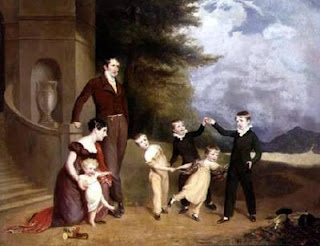
  
  Though it might not sound like an auspicious beginning for a marriage, with Granville’s several affairs kn
own to Harry-O, apparently it grew into a strong relationship, as both partners also grew in religious fervor — along with many of the formerly-loose members of Regency society as the years passed into Victorian sobriety and admiration for moral rectitude. At right, a painting of the happy Granville family by Thomas Phillips. Definitely NOT a Lawrence and not in the exhibition.
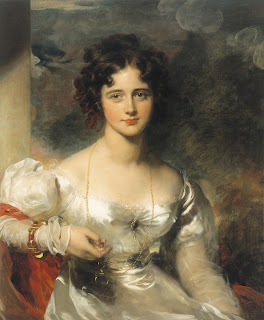
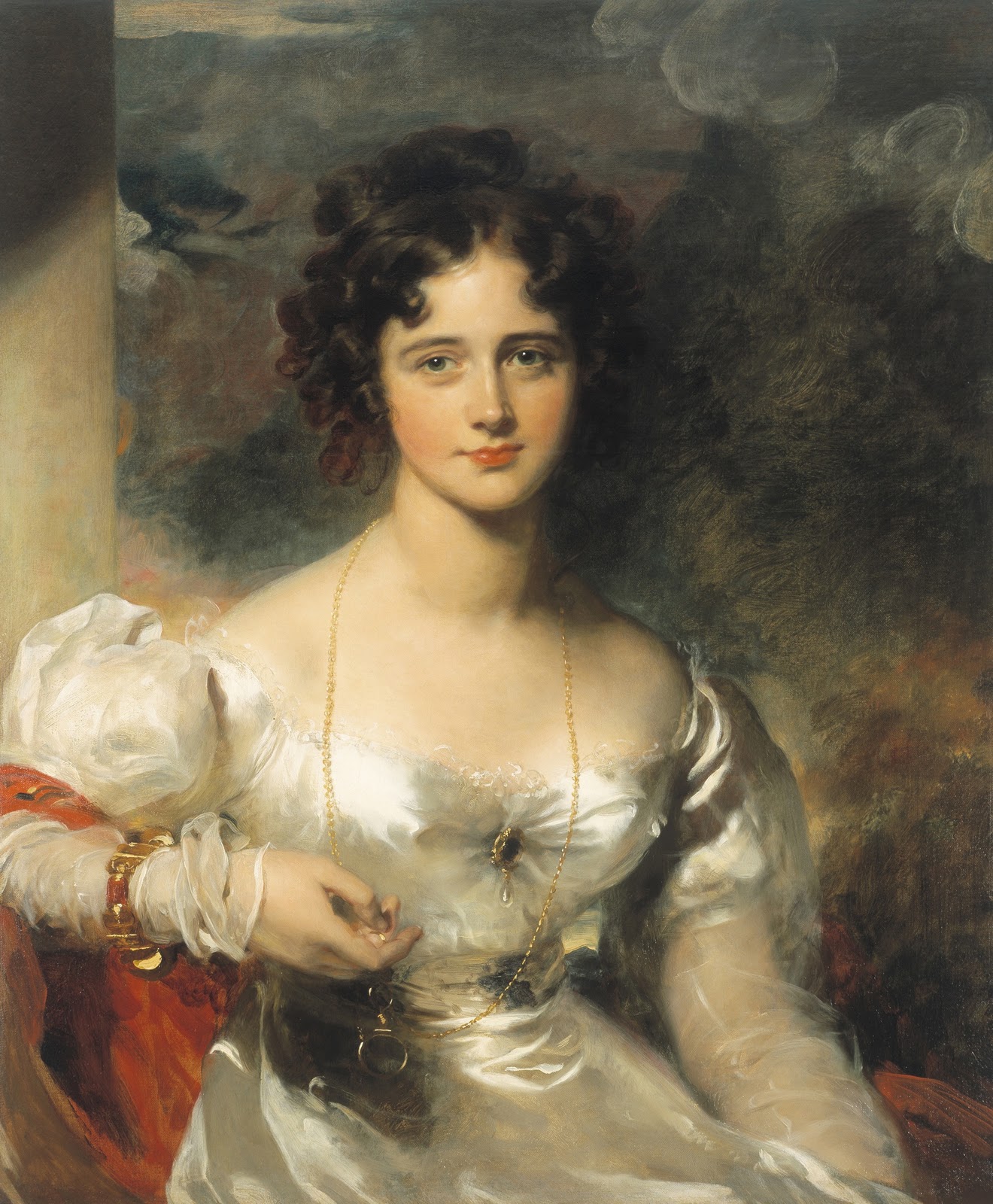
Rosamund Hester Elizabeth Pennell Croker, later Lady Barrow (1809-1906) was painted by Lawrence in 1826. When exhibited at the RA in 1827, it was highly praised and often surround by admiring patrons.
 
In the catalogue essay, Cassandra Albinson writes, “Lawrence felt one could judge artists’ skill by how they executed white satin, as in the dress depicted here.”  I would say this one is very skillful!

Notice that she lived a very long life, reaching the age of  96 or 97. 
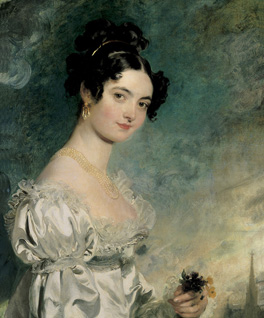


Lady Selina Meade, later Countess of Clam-Martinics
 (?1797-1872 ) was painted in Vienna in 1819 and exhibited at the RA the next year. Observers called attention to the highlights of her pearl earrings and gold headband as perfect compliments to her beauty. Note also the excellence of the white satin.  The catalogue contends she had been courted by Lord Granville Leveson-Gower but in 1821 she married an Austrian, Karl Graf von Clam-Martinics.  
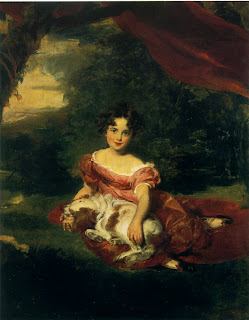


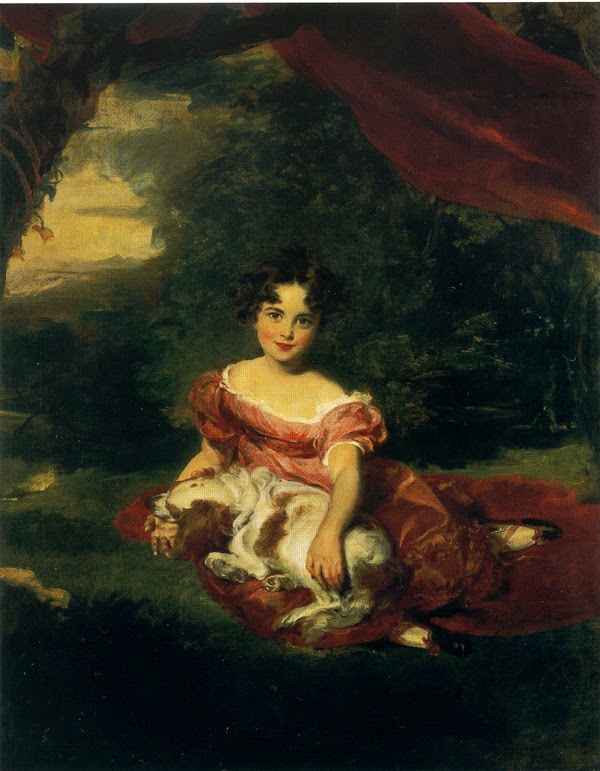
Julia Beatrice Peel  (1821-93) was  painted in 1826-28 when she was about 6 years old. Another adorable child, like we saw in my earlier post on this exhibition. One of Lawrence’s true gifts was his ability to portray the beauty and innocence of children. Julia Peel was the daughter of Sir Robert Peel (1788-1850) who was Home Secretary at the time of the portrait. Later he served as Prime Minister 1834-35 and again 1841-45.  He founded the London police force; they are still called Bobbies, after him. Julia married George Augustus Frederick Child Villiers, who  became the 6th Earl of Jersey, so she was another Lady Jersey.  This portrait, like that of Leveson-Gower, is shown only at Yale.
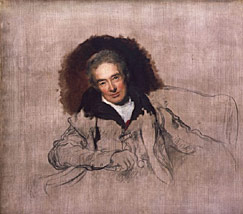

William Wilberforce (1759-1833) is the man who campaigned for more than twenty years to end the slave trade, which was accomplished in 1807. In 2006, there was an excellent movie about his life, titled Amazing Grace. I recommend it; though it has a few historical inaccuracies, the gist is correct. Making up for any deficiencies in the facts are the excellent performances by a fine cast: Ioan Gruffudd as Wilberforce, Romola Garai as Barbara Spooner, Benedict Cumberbatch as William Pitt the Younger, Albert Finney as John Newton (who wrote the famous hymn), Michael Gambon as Charles James Fox (who actually died before the bill passed), and Rufus Sewell as Thomas Clarkson.
 

Here is a final self portrait by Lawrence, painted in 1825, five years before his death.  Like the Wilberforce and many other of his canvasses, it was unfinished.  Lawrence left a huge number of semi-completed pictures in his Russell Square studio some of which had already been paid for.  He also left numerous debts. 

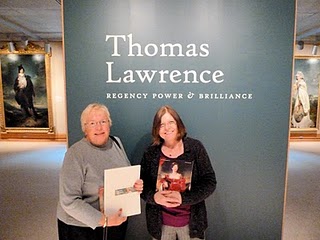
I would never presume to be able to divide the pictures into the two categories of the Power and the Brillliance, but I almost have done so in this post — the Brilliance. And in my third post, I will concentrate on the Power. Stay tuned.  And just to remind you of how lucky I was to have a fellow writer as a companion, here is a repeat of us in front of the exhibition, Diane Gaston on the right. 
Dinner with the Queen


Charles Greville

 From the Greville Memoirs

March 11th. (1838) — I dined yesterday at the Palace, much to my surprise, for I had no expectation of an invitation. There was a very numerous party:—the Hanoverian Minister Baron Miinchhausen, Lord and Lady Grey, the Chancellor, the Roseberys, Ossulston, Mahon, etc. We assembled in the round room next the gallery, and just before the dinner was ready the Queen entered with the Duchess of Kent, preceded by the Chamberlain, and followed by her six ladies. She shook hands with the women, and made a sweeping bow to the men, and directly went in to dinner, conducted by Miinchhausen, who sat next to her, and Lord Conyngham on the other side. The dinner was like any other great dinner. After the eating was over, the Queen’s health was given by Cavendish, who sat at one end of the table, and everybody got up to drink it: a vile, vulgar custom, and, however proper it may be to drink her health elsewhere, it is bad taste to have it given by her own officer at her own table, which, in fact, is the only private table it is ever drunk at. However, this has been customary in the two last reigns. George III never dined but with his family, never had guests, or a dinner party.


Queen Victoria’s mother, the Duchess of Kent

 “The Queen sat for some time at table, talking away very merrily to her neighbours, and the men remained about a quarter of an hour after the ladies. When we went into the drawing-room, and huddled about the door in the sort of half-shy, half-awkward way people do, the Queen advanced to meet us, and spoke to everybody in succession, and if every body’s ‘palaver ‘ was as deeply interesting as mine, it would have been worth while to have had Gurney to take it down in short-hand. The words of kings and queens are precious, but it would be hardly fair to record a Royal after-dinner colloquy. . . . After a few insignificant questions and answers, —gracious smile and inclination of head on part of Queen, profound bow on mine, she turned again to Lord Grey. Directly after I was (to my satisfaction) deposited at the whist table to make up the Duchess of Kent’s party, and all the rest of the company were arranged about a large round table (the Queen on the sofa by it), where they passed about an hour and a half in what was probably the smallest possible talk, interrupted and enlivened, however, by some songs which Lord Ossulston sang. We had plenty of instrumental music during and after dinner. To form an opinion or the slightest notion of her real character and capacity from such a formal affair as this, is manifestly impossible. Nobody expects from her any clever, amusing, or interesting talk, above all no stranger can expect it. She is very civil to everybody, and there is more of frankness, cordiality, and good-humour in her manner than of dignity. She looks and speaks cheerfully: there was nothing to criticise, nothing particularly to admire. The whole thing seemed to be dull, perhaps unavoidably so, but still so dull that it is a marvel how anybody can like such a life. This was an unusually large party, and therefore more than usually dull and formal; but it is much the same sort of thing every day.”

Staying With Friends – Part Two

Continuing in our quest for Stately Homes at which to stay, we bring you some of the more impressive –


Stapleford Park


Surrounded by the magnificent 500 acres of Capability Brown landscaped grounds Stapleford Park is the perfect country sporting estate and sits in the heart of Leicestershire, near Melton Mowbray, minutes from Rutland Water. The Hall was the seat of the Sherard family, later the Earls of Harborough and from 1894, of Baron Gretton. Today, guests sleep in rooms decorated by Wedgwood, Turnbull and Asser and Crabtree and Evelyn.


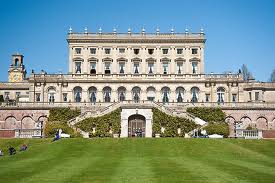
Cliveden House

Located on the River Thames just outside London in Berkshire, Cliveden House is one of those stately homes where one wishes the walls could talk. According to their website: The first house was built in 1666 by the 2nd Duke of Buckingham. A notorious rake, schemer and wit, he created Cliveden as a hunting lodge where he could entertain his friends and mistress. Since then it has twice been destroyed by fire, only to emerge, phoenix-like, more stunning than before. The house has played host to virtually every British Monarch since George I and has been home to three Dukes, an Earl and Frederick Prince of Wales.

Queen Victoria, a frequent guest, was not amused in 1893 when the house was bought by William Waldorf Astor, America’s richest citizen. When he gave it to his son and daughter-in-law in 1906 Cliveden became the hub of a hectic social whirl where guests included everyone from Charlie Chaplin to Winston Churchill, and President Roosevelt to George Bernard Shaw.


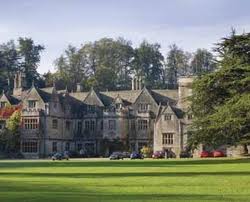
Bibury Court

 Bibury Court Hotel is set in a stunning Jacobean Mansion built in 1633. It dates from the late 16th Century, and was then extended in 1633 by Sir Thomas Sackville, the illegitimate son of the 1st Earl of Dorset who was ‘Knight and gentleman-usher in dailie waiting on the King’ (James I). Charles II is reputed to have visited the Court when he attended Bibury Races, as did the Prince Regent during the reign of George III.

The house remained in the Sackville family for several generations and through the female line passed to the Cresswells. It was them who, owing to a disputed will and years of litigation, sold the house in the last century to Lord Sherbourne. Charles Dickens is said to have written ‘Bleak House’ with this court case in mind. The interior was remodelled for Estcourt Cresswell in 1759. Later it fell into disrepair in the 1920s being refurbished for the Clark family in 1922 in whose ownership it remained until 1968 when it was sold after the death of Lady Clark, and turned into a hotel.  It is situated in the beautiful Cotswolds area which is sprinkled with historic market towns, charming villages and centuries old country manors.

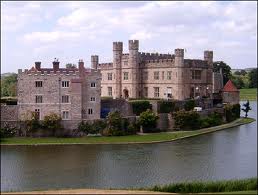
Leeds Castle

Well, really, what can one say about Leeds Castle? All you really need to know is that they have 14 bedrooms and three cottages on the estate that you can book by contacting them in advance. History? You want the history of the Castle? Click here.

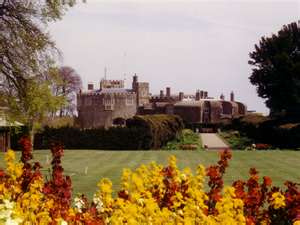
Of course, we personally think the pentultimate place to stay at is Walmer Castle, once home to the Duke of Wellington as Walmer Castle was the official residence of the Lord Warden of the Cinque Ports – a title previously held by both the Duke of Wellington (23 years) and the Queen Mother. The Duke used Walmer often and preferred it to any other home, inviting a stellar line-up of guests to stay for extended periods. The Duke’s great good friend, the widowed Charles Arbuthnot, lived with Wellington at Walmer and they regularly walked the grounds together, often strolling the battlements of the Castle. Wellington’s housekeeper at Walmer fondly called the elderly pair, “our two dear old gentlemen.” Arbuthnot died in 1850 at Apsley House, the Duke of Wellington died in 1852 at Walmer Castle. Today, guests can stay in either the Greenhouse Apartment overlooking the kitchen garden which has supplied the castle for more than 300 years or the Garden Cottage with a master bedroom overlooking the Castle. For a look at all properties available to rent from English Heritage, click here.

Staying With Friends

Alas, there are very few ways in which we British History afficianados can truly recreate and experience what life was like in centuries past. However, it is possible to get the flavor of what it must have been like to travel down to the country and stay with friends at their Stately Pile for a few days. We’ve found a few magnificent estates that are now hotels. True, they have modern day conveniences and you most likely won’t be greeted at the door by the family butler or offered a candelabra to light your way to your room, but it’s the closest we can come to experiencing true country house hospitality.

Oatlands Park Hotel

Located 18 miles outside of London in Surrey, Oatlands has a royal pedigree and strong Regency connections – Brummell and Alvanley were both frequent guests of the owners, the Duke and Duchess of York, who leased the property from the Crown in 1790. In 1794 the mansion was burnt down and was then rebuilt in the Gothic style of the period. After the death of the Duchess of York in 1820, the whole property was sold. It was bought by Edward Hughes (Golden) Ball Hughes in 1824 (although it was not until after the Duke’s death in 1827 that the sale was finally concluded) and again remodelled in 1830. Hughes had actually tried to dispose of the estate by public auction in 1829 but this part did not sell. He let the Mansion and the adjoining parkland to Lord Francis Egerton for a seven-year period in 1832 and renewed for a similar period in 1839. The arrival of the London and South Western Railway in 1838 made the area ripe for ‘a daily commute to town’ and in 1846 the estate was broken up into lots for building development and sold at three public auctions in May, August and September of that year. Following a period of private ownership by James Watts Peppercorne, the house became a hotel in 1856 known as the South Western (later Oatlands Park) Hotel. The present day Oatlands Park Hotel occupies the site where the Oatlands Mansion (Oatlands House) once stood and no doubt so long as you’re paying for your room, management will allow you to bring your Fat Friend along.


Armathwaite Hall

Located in the Lake District, Armathwaite Hall stands on the previous site of the Manor of Bassenthwaite, given to the illegitimate brother of Allan, the Second Lord of Allerdale and Gospatrick took on the name de Bassenthwaite. Another family, the Highmore family, who owned the Hall 1540 to 1748, offered hospitality to the infamous Bonnie Prince Charlie and the Duke of Cumberland during the 1745 uprising at their other residence in Carlisle. In 1748 James Spedding, Squire to Lord Egremont of Cockermouth Castle acquired the Hall and it stayed in his family for three generations until it was sold to Sir Frederick Fletcher-Vane in 1796. This family extended the Hall in 1817 by building a courtyard, a chapel and partially extending the building towards the lake. Four generations of the Fletcher-Vane family resided here until 1850 when it was sold to Mr. Boustead. Hotel guests can book in for a spot of clay shooting or archery.

Thornbury Castle

When Henry VIII came to the throne, the Duke of Buckingham, owner of Thornbury Castle in Gloucestershire, stood in high favour with his Royal Master. He was the most affluent and most honoured nobleman in the country – Constable of England. He was the King’s Lieutenant and commanded in his absence. He was with his Sovereign in 1513 at the Battle of the Spurs in Picardy, and in 1520 whilst on his way to France to take part in the campaign of the Field of the Cloth of Gold, he visited Tonbridge where he had a large estate and had cause to dismiss a steward called Kynvett. To avenge himself the steward passed on to Cardinal Wolsey certain indiscreet words uttered by the Duke. It is not known for certain whether Buckingham had serious thought regarding the throne, but he was the great grandson of Edward III’s youngest son, Thomas of Woodstock, and if Mary Tudor’s succession at that time was denied he thought he stood heir to the throne. Henry VIII certainly seems to have thought there was some danger because on the Duke’s return from France he was arrested and taken to London, where he was found guilty of high treason and executed on Tower Hill.

Henry VIII appropriated the castle and for 33 years it remained a royal demesne, and in 1533 he and Anne Boleyn spent 10 days here. Mary Tudor also spent some years here as a princess, and upon her death in 1554 she returned the Castle to the descendants of the late Duke. For the next two centuries the castle was unoccupied and fell into ruin. In the 1850s the Castle became once more a family residence, being home to the Howards, then the Clifford family, Kenneth Bell MBE, The Baron and Baroness of Portlethen, and now forms part of the von Essen private collection of country house hotels.

Ickworth House

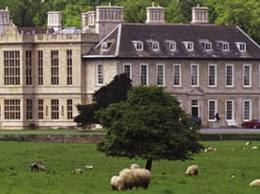
Ickworth House, now the Ickworth Hotel , is simply steeped in scandal. This from Wikipedia: Ickworth House is a country house outside Bury St. Edmunds, Suffolk, England. It is a neoclassical structure topped by a giant rotunda in a park laid out by Capability Brown. Ickworth had been in the ownership of the Hervey family from the 15th century. The house, park, and a large endowment were given to the National Trust in 1956 in lieu of death duties. As part of the handover agreement, a 99-year lease on the 60-room East Wing was given to the Marquess of Bristol. The Letter of Wishes of the 4th Marquess of Bristol stated that accommodation should always be available for the head of the Hervey family (the Marques of Bristol) at Ickworth. However, in 1998 the 7th Marquess of Bristol, partly for financial reasons, and partly in response to an eviction suit stemming from his behaviour on the property, sold the remaining lease on the East Wing to the National Trust. The Trust subsequently refused to re-sell the leasehold to the 8th Marquess of Bristol on his succeeding to the title in 1999. There is now a 27-bedroom hotel in the East Wing.

Part Two Coming Soon!