Travels with Victoria: A Visit to the Guggenheim Museum in Bilbao

I am going to stretch the boundaries of this blog a little here to relate this visit to our usual focus on the U.K.  Let’s see.  Many large museums, such as the Tate(s) and the Guggenheim(s) have developed a number of branch venues over recent years. The Tate has not only the Tate Britain and the Tate Modern; there is the Tate Liverpool and the Tate St. Ives. The Guggenheim is not only in New York City and at Peggy Guggenheim’s mansion in Venice. They have art museums in Bilbao, Spain; Berlin; and under construction, in Abu Dhabi. I guess it is the wave of the future in the rarefied world of the large art institutions. And provides the excuse for my post about Bilbao.

Santander Spain

Our ship docked at the Spanish port of Santander on the north coast of Spain. This incredibly lovely natural harbour was the spot through which the British troops of General Wellington were supplied throughout much of the Peninsular War. But little is left of the old city due to a disastrous fire in 1941. 
We drove to Bilbao, a trip of about an hour, through countryside that was evocative of Switzerland rather than what I expect of Spain. Of course, Switzerland has no ocean beaches and we saw many on our drive. But the mountainous terrain, the lush green vegetation, even the look of the residential architecture was Alpine. A nice surprise.

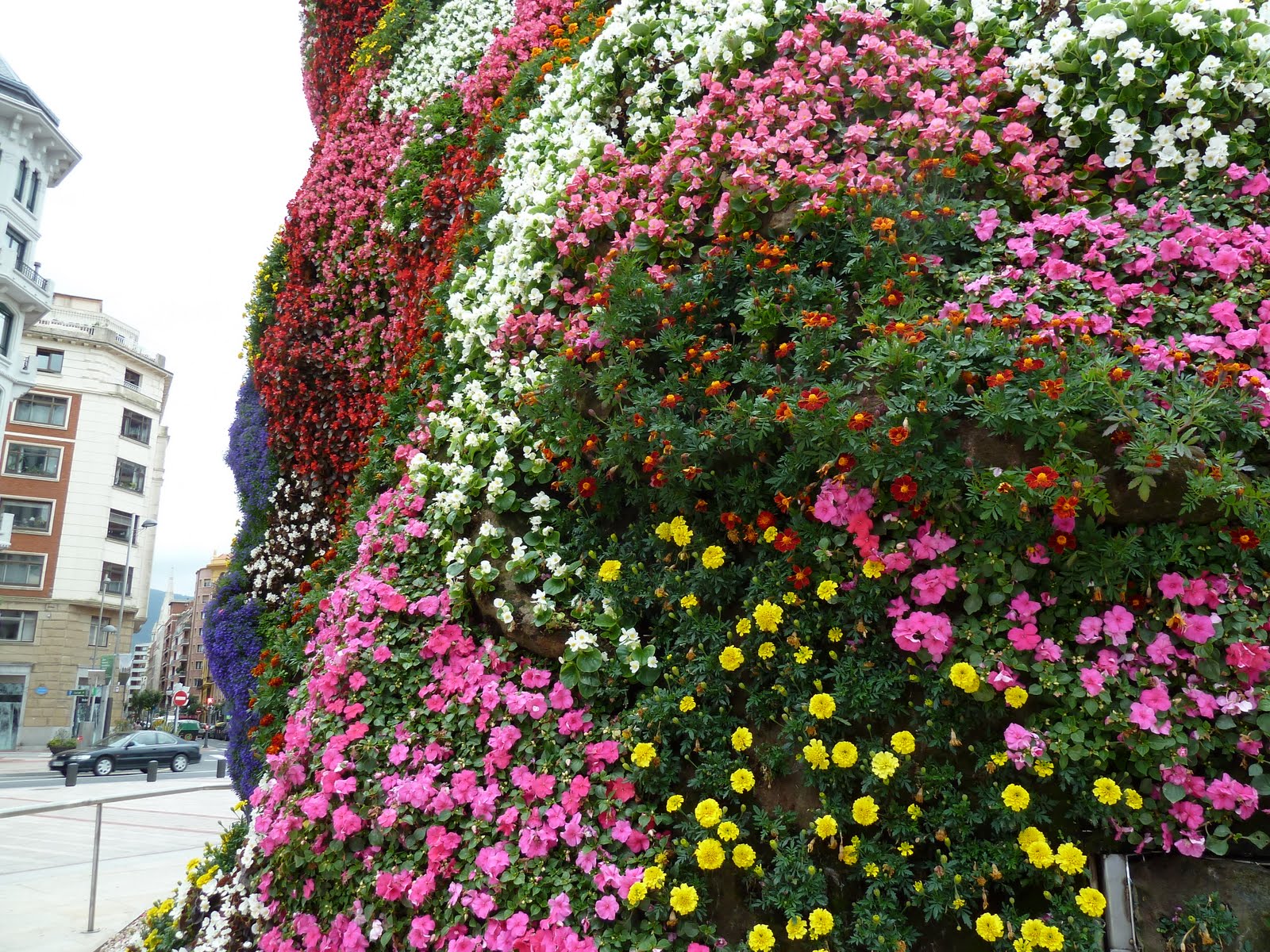
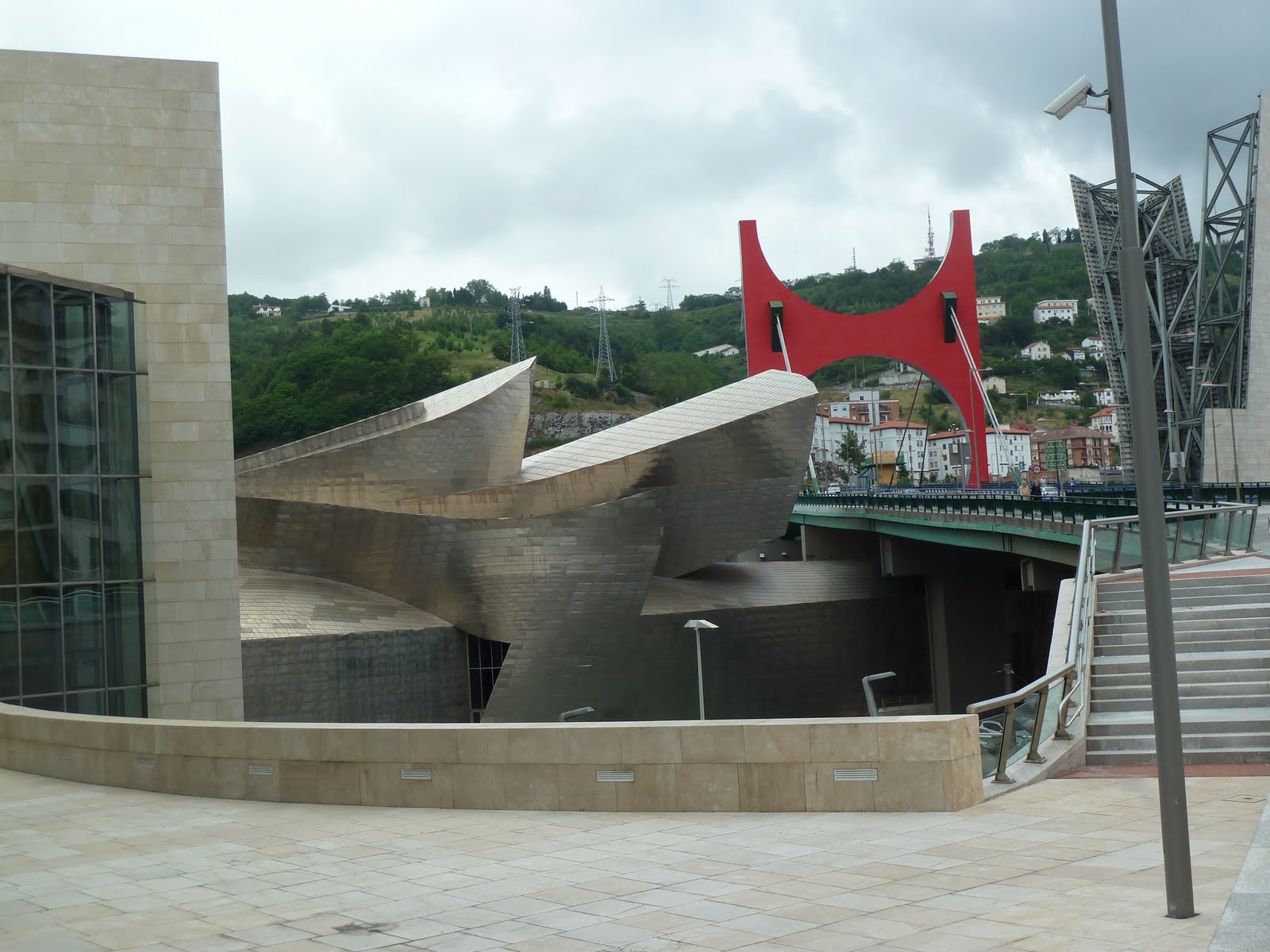
Bilbao has truly become a destination city since the construction of the signature museum building by Frank Gehry.  Gehry’s unique style is popular worldwide; despite the almost random look of the huge structural elements of the buildings, the interiors are brilliantly functional and efficient.  On the large plaza in front of the main entrance stood Jeff Koons’ gigantic flower-bedecked puppy, which had everyones’ cameras clicking away.

close-up of the puppy’s colorful blooms

On the waterfront plaza stands Maman (1999), from the Spider series by Louise Bourgeois (1911-2010). And here’s another little connection to all things British — it was first shown inside the great turbine hall in the Tate Britain.

The Frank Gehry building, the Guggenheim Collection and the exhibitions here have had their desired effect. Bilbao has attracted many more activities, structures and events along with all attention.
One of my favorite contemporary architects is Santiago Calatrava (see Milwaukee’s art museum here), who has designed the lovely Zubizuri foot bridge near Bilbao’s Guggenheim.
Calatrava also designed the Bilbao airport terminal, below.

Back to the Guggenheim, Bilbao…and more of my 100’s of shots, taken on a cloudy day. People told us that this region of Spain  has a cloud, misty, rainy climate, somewhat akin to the northwest coast of the US.  Certainly was on our visit.

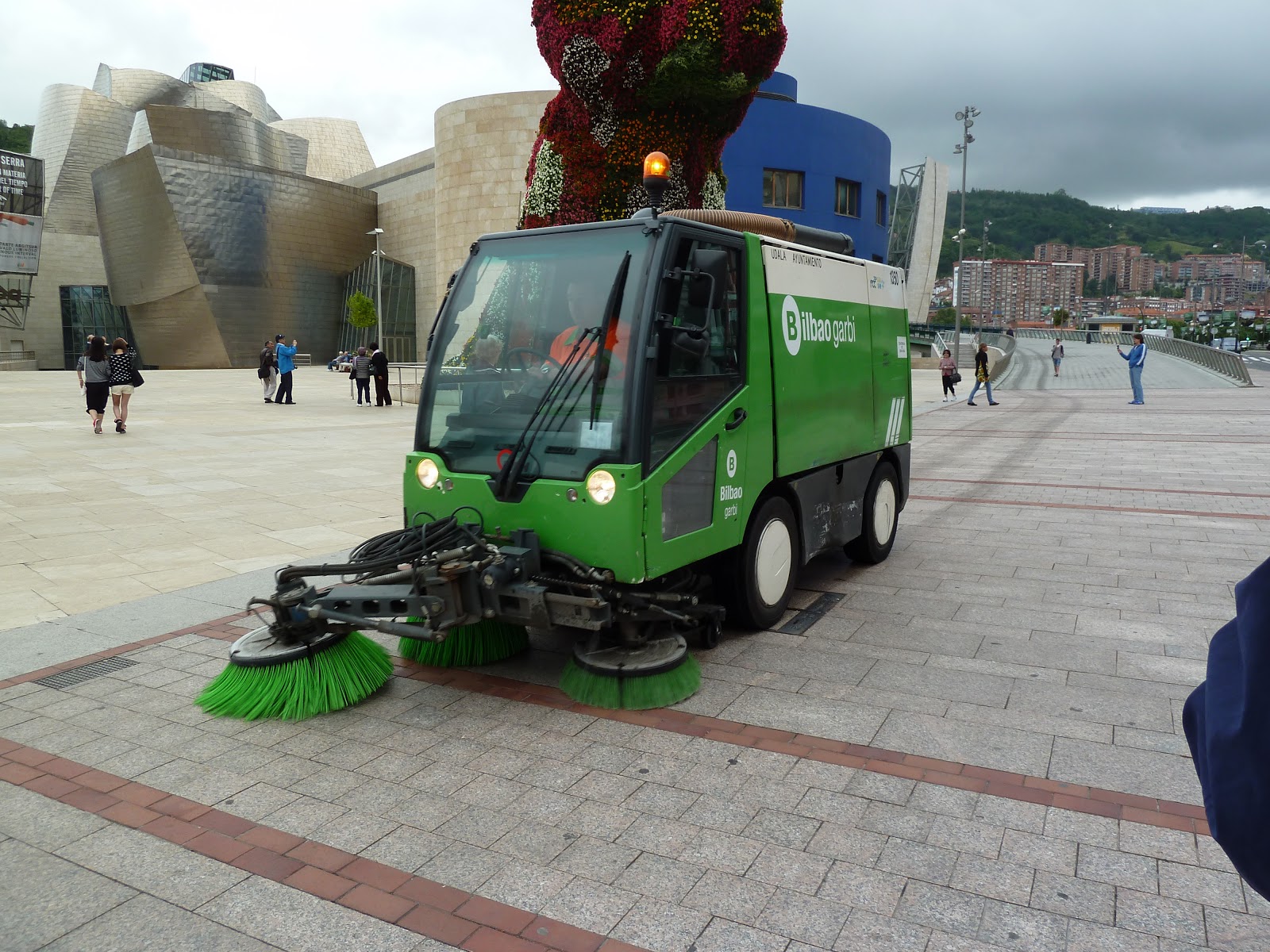
The green street sweeper made a bright contrast to the steel and concrete.

Adios, Spain. Bienvenue, France…Bordeaux is next.

Miss Marple in The Pale Horse Sunday

Julia McKenzie is back as Agatha Christie’s detective with a gentle smile and probing mind in the all-new episode The Pale Horse (July 10). Miss Marple’s old friend is found murdered, and when she receives a list of names sent by the victim before his death, Miss Marple seeks justice.

From the Masterpiece website: “Fair is foul and foul is fair in the hamlet of Much Deeping, where the Pale Horse Inn is run by a trio of entrepreneurial witches, and the annual celebration of the town’s witch trials of 1664 is about to commence. Arriving just in time is Miss Marple (Julia McKenzie, Cranford), who has set her knitting aside to pursue the murderer of her old friend, Father Gorman. Armed with a cryptic list of names sent to her by the good clergyman just prior to his death, Miss Marple follows clues as she joins the assemblage of eccentric guests and infiltrates the witches’ sanctum santorum. But when a fellow guest at the Pale Horse Inn is found dead, the tidily tailored and unassuming sleuth must determine whether black magic or something even more sinister is at work.”

What do you think – are you getting used to Julia McKenzie in the role of Miss Marple? For a review of actresses who have owned the role in the past, take a look at a past post on the subject here and then let us know who you’re favorite Miss Marple is/was.

Travels With Victoria: From Lisbon to A Coruna, Spain


Lisbon from the Tagus River


Victoria here, recently back from a month in Europe, which started with a two week cruise up the Atlantic coast of Portugal, Spain and France, ending in Dover. We began our Cruise from Lisbon to Dover  by flying to Madrid to enter the EU, then on to Portugal. With an extra day to stroll the pleasant streets of Lisbon, we took a Metro (subway) ride to the waterfront. Once we found the spot where our ship would dock the next day, we toured the nearby National Army Museum.
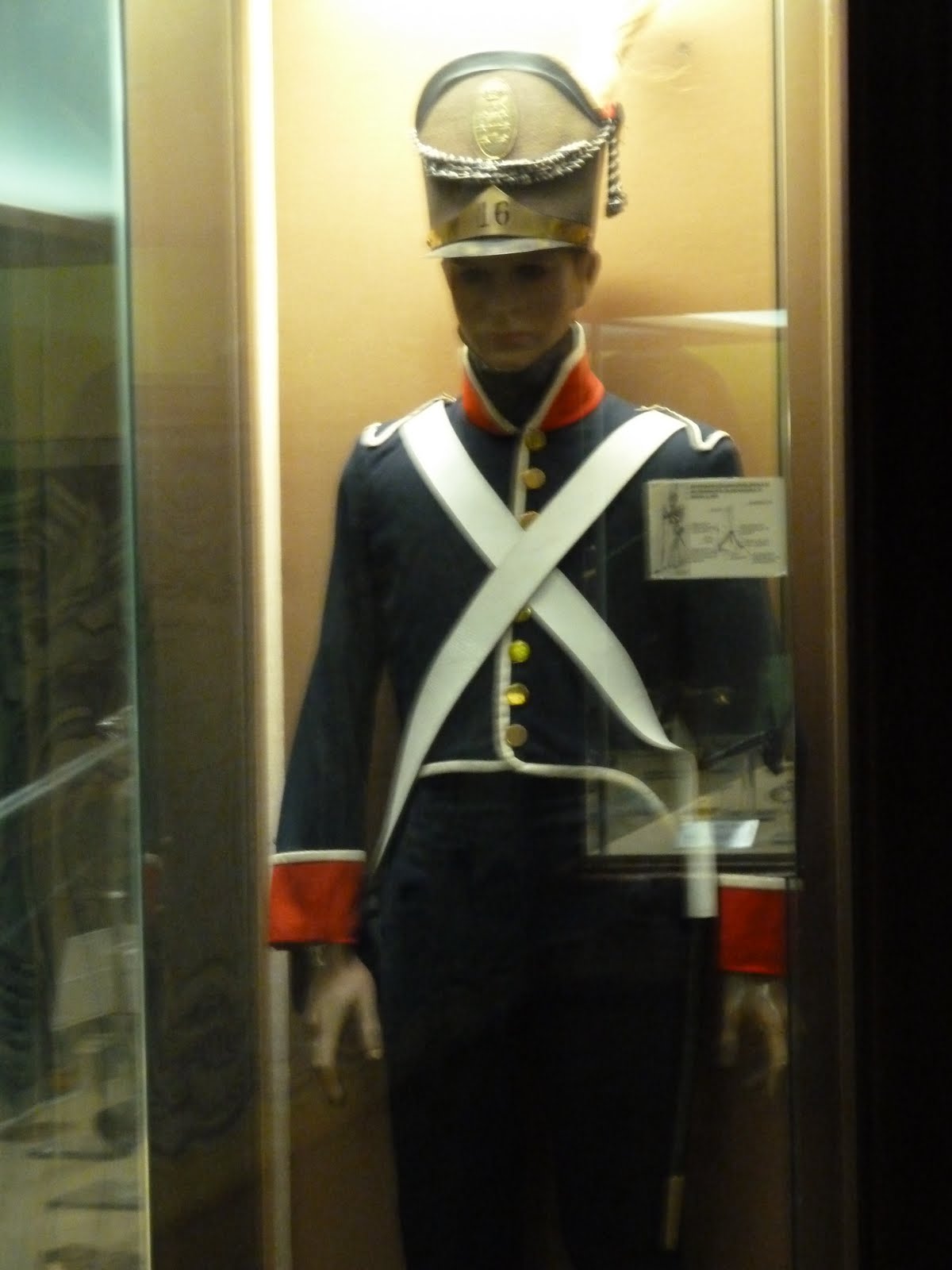
I was very naughty and snapped a forbidden photo (without my flash, of course) of a Portugese uniform from the Peninsular War. (Why are many museums so eager to forbid pictures?)
In the courtyard of the museum, they were quite amenable to pictures.  Significant scenes from the military history of Portugal were executed in blue and white tiles. Magnificent.
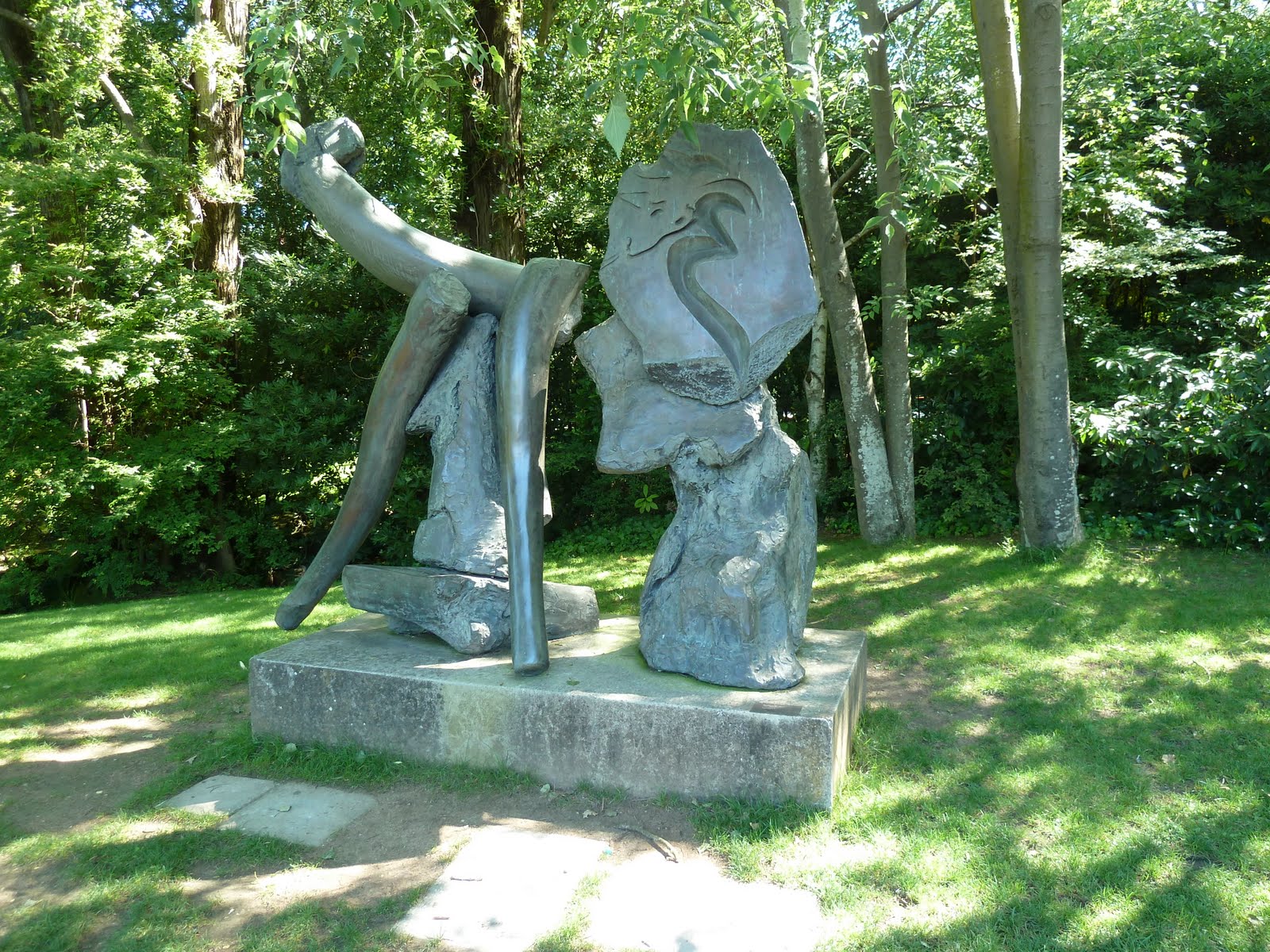
The grounds of the Foundation Gulbenkian offered us a perfect venue for a morning stroll before we departed Lisbon the next day. The two museums, the institute, and the library on the grounds were the gift of the late philanthropist Calouste Gulbenkian, and they house great treasures of the world’s artistic and cultural heritage.


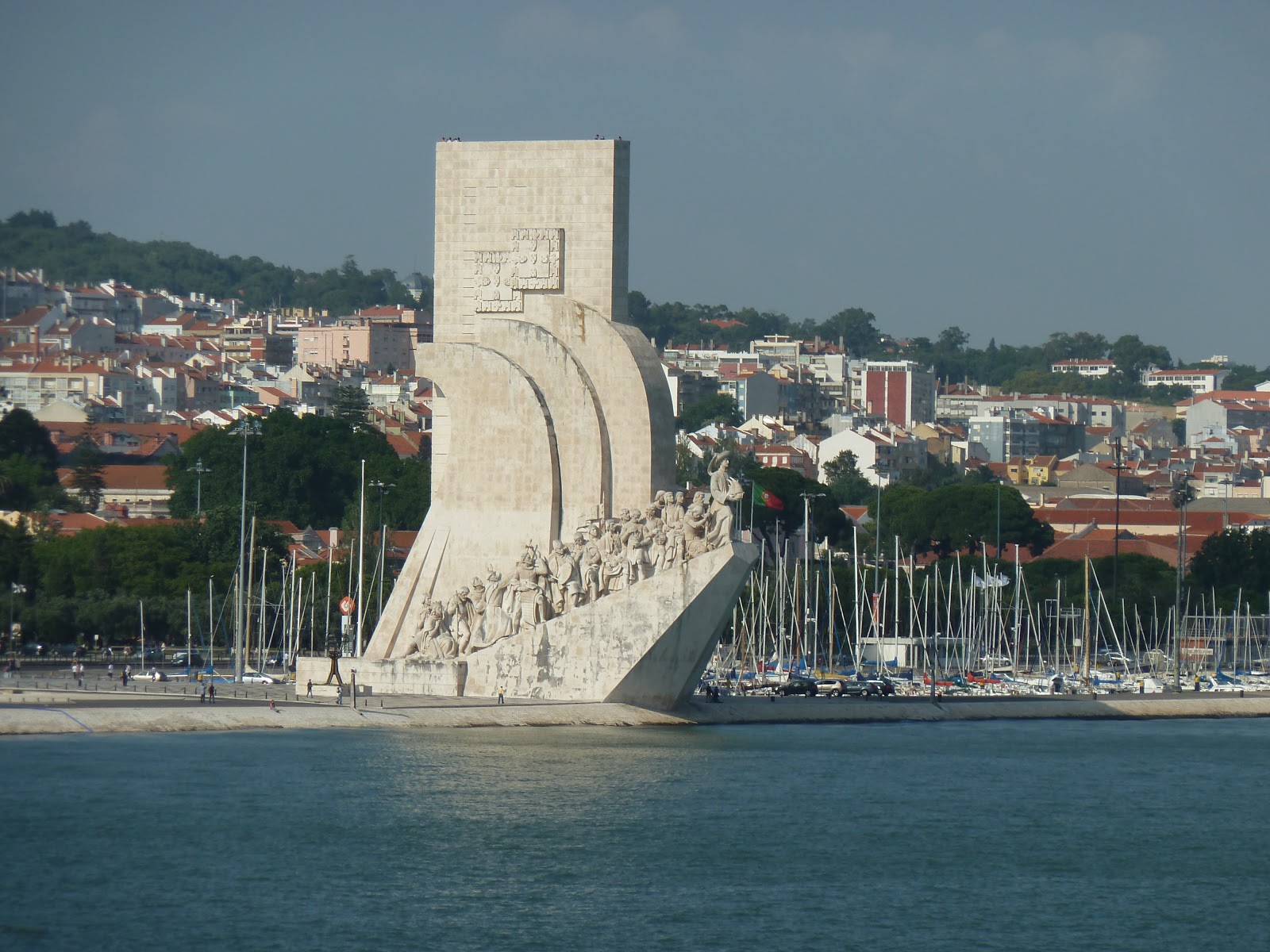
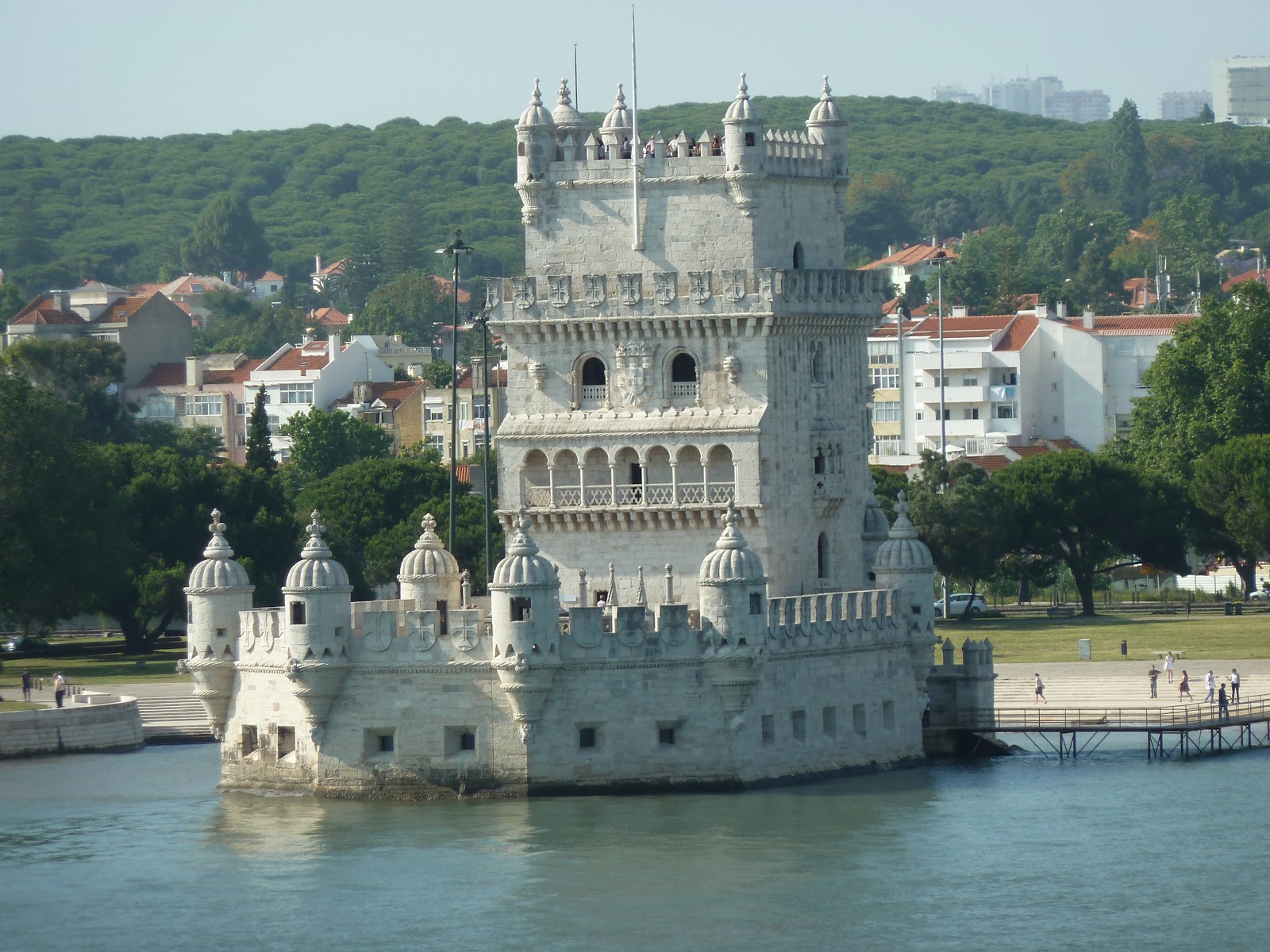
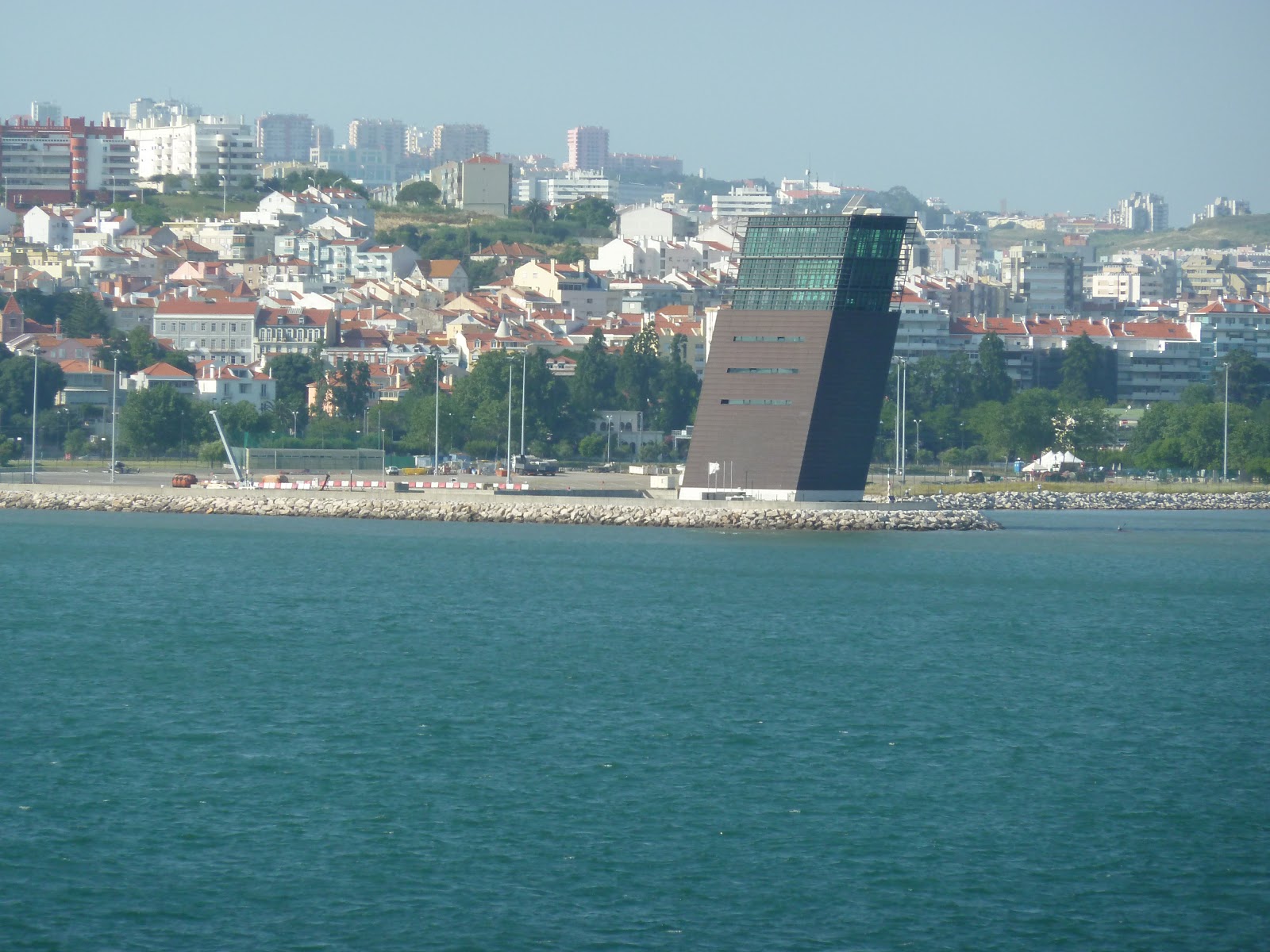
We left Lisbon on a sunny afternoon, cruising out of the Tagus River into the Atlantic.  We passed by three towers, representing entirely different architectural styles.  First is the monument to the discoveries, (e.g. Prince Henry the Navigator and Vasco da Gama) who led the way for European exploration of the globe, erected in the 20th century; next, the 16th century Tower of Belem, a real gem; and finally the contemporary Tower of Navigation, which guides traffic into and out of the Port of Lisbon.

 
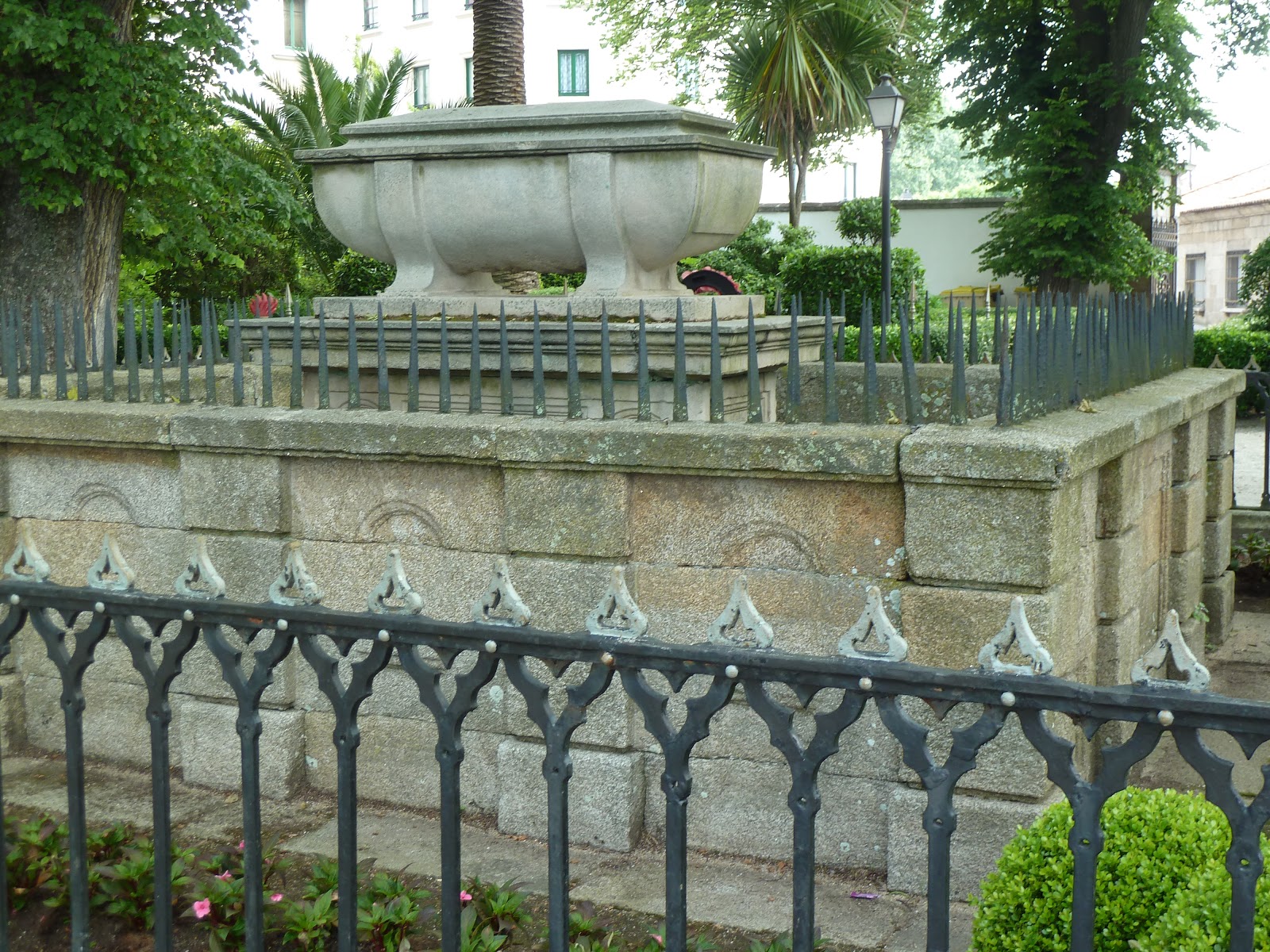
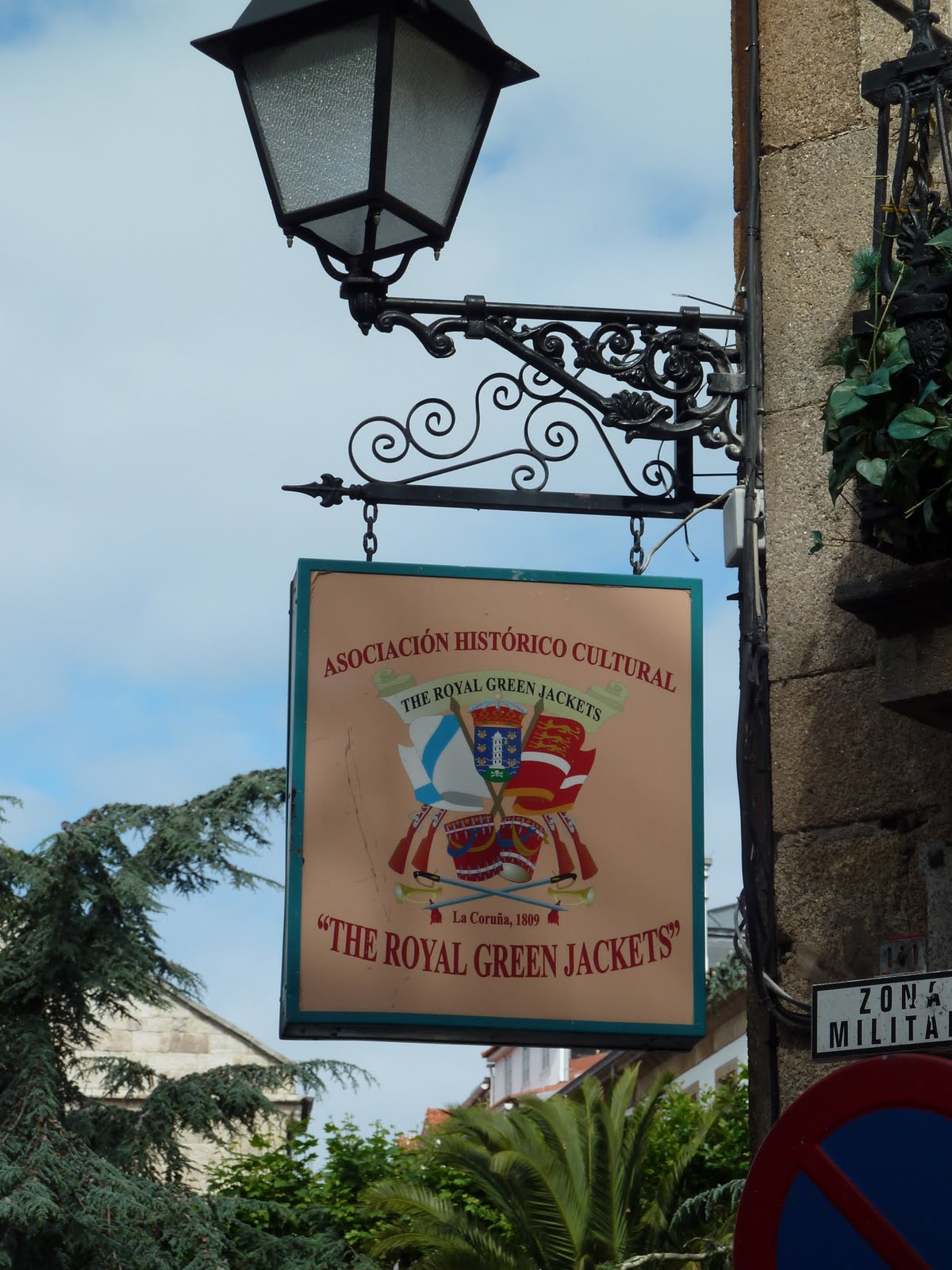
After a day at sea, we arrived at A Coruna, Spain (aka Corunna), a charming city on the Atlantic, with a busy harbor and magnificent beaches.  We walked around the Ciudad Vieja (Old Town) and found San Carlos Gardens,  the beautiful park where  Moore is buried.  It is marked, “In Memory of General Sir John Moore who fell at the Battle of Elvina while covering the embarkation of the British troops, 16 January 1809.”  We also passed a small organization (closed, sadly, at the time) with another kind of memorial  to the British troops in the Peninsular Wars: The Royal Green Jackets.

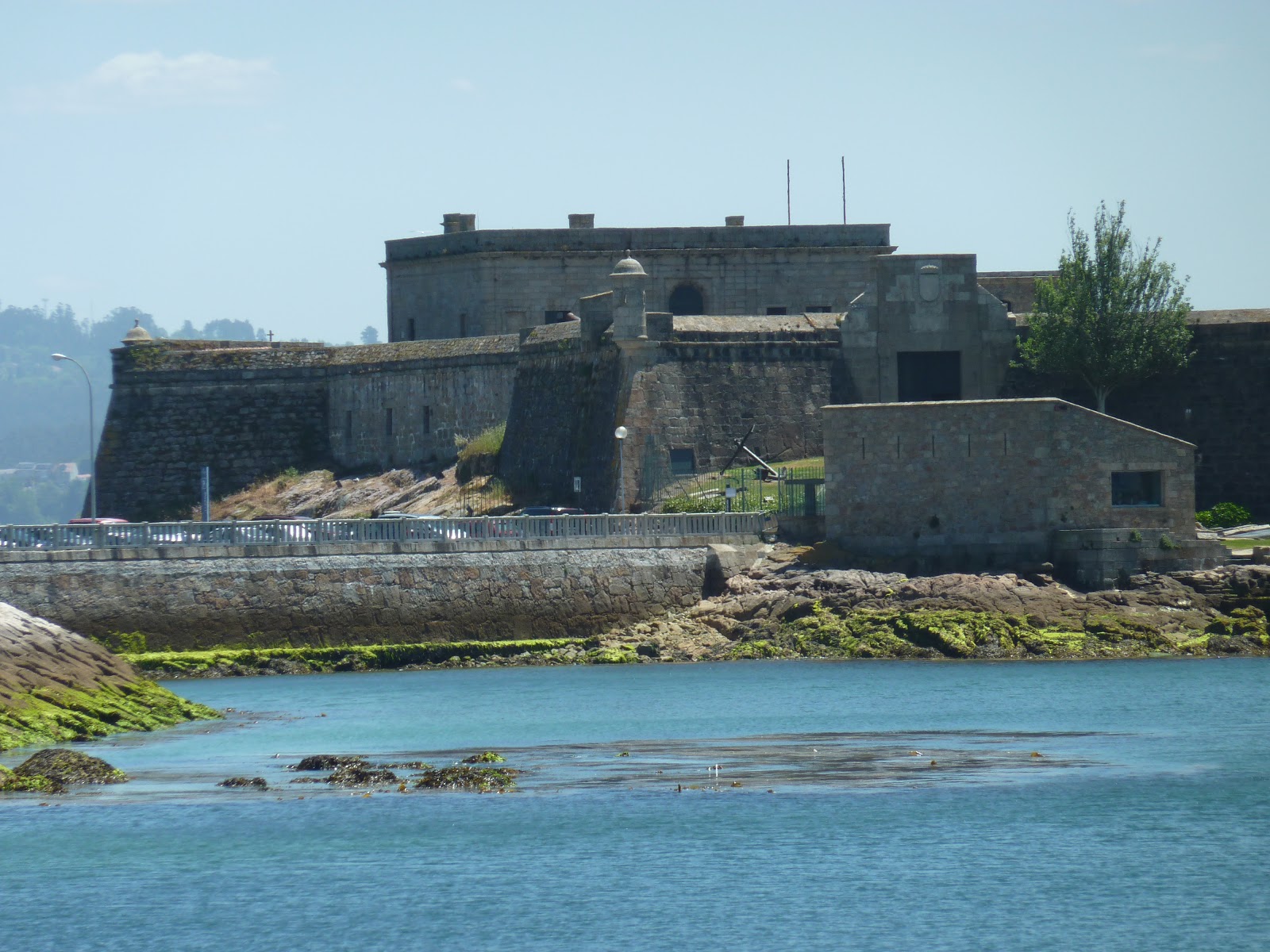
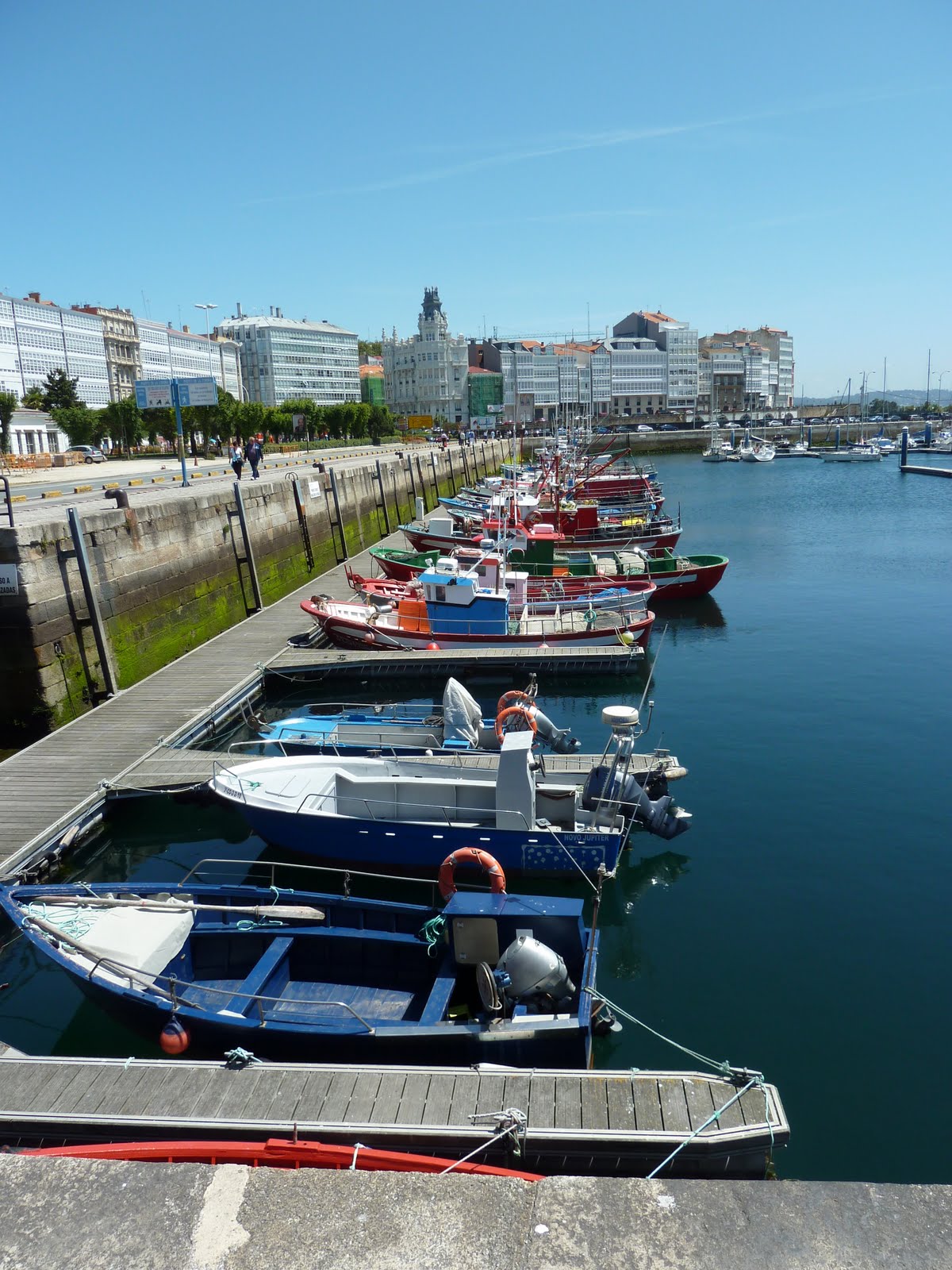
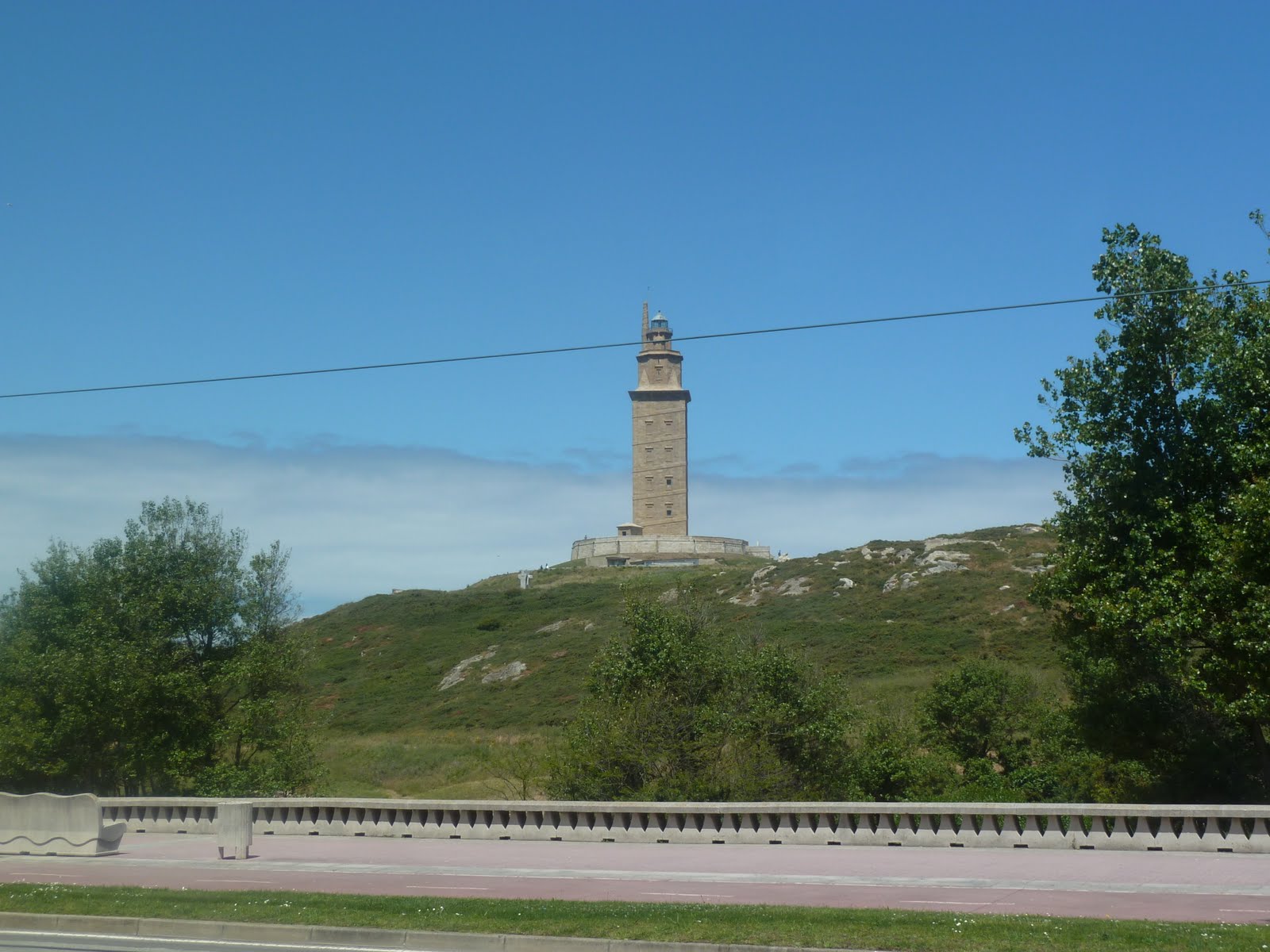
It was a quiet Sunday in A Coruna with a few tourists in the plaza in front of the Palacio Municipal, a regatta out in the harbor, many families out enjoying the fresh breeze, and riding bikes around the extensive seashore from harbor to beaches to the soccer stadium. A small but picturesque fort guards the harbor (and helped turn away the raids of Sir Francis Drake) and on a western-most peninsula is the famous Tower of Hercules, a lighthouse with origins in the Roman Empire. Beside our ship, the fishing boats were all in port for Sunday, but the neighboring marina was a little busier with leisure boating.

Palacio Municipal
San Anton Castle


fishing boats in port

This beautiful beach wasn’t as empty as it looks in my picture!
Tower of Hercules

 I can well imagine a leisurely holiday here in A Coruna…but that will have to wait for a while.
Next Stop: Santander, Spain

Mrs. Sage, The First Englishwoman Aeronaut

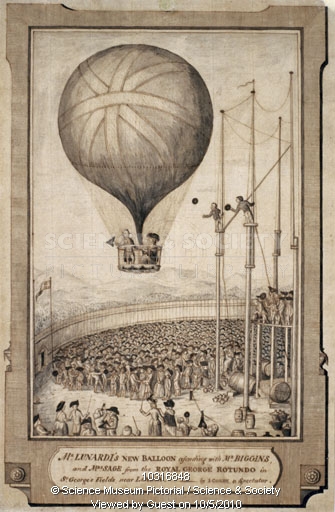
Mrs Laetitia Sage became the first English woman to fly in a hydrogen balloon in Vincent Lunardi’s ascent of 29 June 1785. Vincent (or Vincenzo) Lunardi (1759-1806), was Italian secretary to the Neapolitan ambassador in London and had made the first ascent in a hydrogen balloon in Britain on 15 September 1784 from Moorfields in London. Unfortunately, the combined weight of Mrs Sage and the other two passengers, George Biggin and Colonel Hastings, was too much for the balloon. Lunardi and Hastings agreed to stay behind, allowing Mrs Sage and Biggin, a wealthy Etonian, to continue alone. Together they flew in a red, white and blue balloon from St. George’s Fields in London, over St James’s Park and Piccadilly, before landing over two hours later in fields near Harrow.

Mrs Sage was described as Junoesque, and apparently weighed in at over 200 pounds. In a later account, Mrs. Sage blamed herself for the balloon going over the weight limit, as she hadn’t volunteered her exact weight to Mr. Lunardi and he’d been too polite to ask it of her. The gondola was draped in swags, but the gate had a neat arrangement of lacing so that the watchers on the ground could see the people up in the air. Upon exiting the gondola,  Lunardi failed to do up the lacings of the gondola door. As the balloon sailed away over Picadilly The beautiful Mrs Sage was on all fours re-threading the lacings to close the door.


Watercolour sketch by Cordy, a spectator, showing Lunardi’s
second balloon carrying George Biggin and Mrs Sage

 
The flight followed the line of the Thames westwards finally landing heavily in Harrow on the Hill where the balloon damaged a hedge and gouged a strip through the middle of an uncut hayfield, leaving the farmer ranting abuse and threats. The honour of the first female aeronaut was saved by the young gentlemen from Harrow school who had a whip-round to pay off the farmer and then carried Mrs Sage bodily, in triumph, to the local pub. Mrs. Sage later published her experience as Britain’s first female aeronaut, an account which realized two printings.

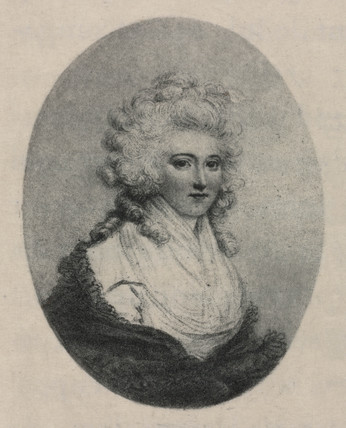
Meet Mrs. Vesey


Copyright National Portrait Gallery

Elizabeth Vesey was the daughter of Sir Thomas Vesey, Bishop of Ossory. She first married William Handcock and then Agmondisham Vesey, M.P., Accountant-General of Ireland. She was one of the Bluestocking Circle, along with Mrs. Elizabeth Montagu, Elizabeth Carter and Fanny Burney. The following excerpt refers to the botanist Benjamin Stillingfleet (1702-71), who was welcomed at one of Elizabeth Montagu’s salons even though he had arrived absent-mindedly wearing the blue woollen stockings normally worn by working men, instead of the more formal white silk, hence another theory on how the term “blue stocking” was coined.

From Mrs. Montagu by R. Huchon

. . . . Stillingfleet had taken refuge in the cultivation of his garden, which gave him health, and in the study of botany and harmony, which procured him some pleasure. He was often seen at Bath or about town, doubtless stooping in his gait and plunged in his mildly pessimistic thoughts. His accomplishments as a scholar and a wit made him a favourite with Mrs Montagu and the other learned ladies. One day, about 1750, he was at Bath, and received an invitation to “a literary meeting at Mrs Vesey’s.” He “declined to accept it,” Mme d’Arblay informs us, “from not being, he said, in the habit of displaying a proper equipment for an evening assembly. ‘Pho, pho” cried Mrs Vesey, with her wellknown, yet always original simplicity, while she looked inquisitively at him and his accoutrement, “don’t mind dress! Come in your blue stockings!” With which words, humorously repeating them as he entered the apartment of the chosen coterie, Mr Stillingfleet claimed permission to appear according to order. And those words ever after were fixed in playful stigma upon Mrs Vesey’s associations.” It seems a confirmation of this account that, on 13th November 1756, a friend of Mrs Montagu’s should write to her that “Monsey,” the physician of Chelsea Hospital, “swears he will make out some story of you and Stillingfleet before you are much older; you shall not keep blew stockings at Sandleford for nothing.” And Mrs Montagu herself, in the following March, having mentioned Stillingfleet in a letter to Monsey, said of him: “I assure you our old philosopher is so much a man of pleasure, he has left off his old friends and his blue stockings, and is at operas and other gay assemblies every night.” Stillingfleet and his “blue stockings” there-fore became interchangeable terms among his acquaintances. As Boswell observes : “Such was the excellence of his conversation, that his absence was felt as so great a loss that it used to be said: We can do nothing without the blue stockings; and thus by degrees the title was established.” Wherever Stillingfleet appeared, there were the Blue Stockings. By a very natural process, the name extended from Mrs Vesey’s parties to those of Mrs Montagu and others. It even crossed the Channel at the end of the century.


Benjamin Stillingfleet

 Since the institution and its ” title” in all probability originated with Mrs Vesey, it would be unjust to pass her over in silence. She formed a strong contrast with Mrs . Montagu in her disposition and manners. She seemed “of imagination all compact,” and her friends had affectionately nicknamed her “the Sylph,” for, like an “etherial” being, she lived and thought “in a world of her own.” In her actual work-a-day life she was none too happy. Fondly attached to her second husband, Agmondesham Vesey, of Lucan, near Dublin, “for many years a member of the Irish House of Commons and Comptroller and Accountant-General for Ireland,” she had not succeeded in fixing his affections. “He has many amiable qualities,” Mrs Carter said in 1774, “and would have many more if he formed his standard of action from his own mind, for I am inclined to think he is not vicious so much from inclination as from the example of the world. If it was a fashionable thing for wits and scholars and lord – lieutenants and other distinguished personages to be true to their wives, probably our friend would not have found him an unfaithful husband.” This disappointment had doubtless enhanced Mrs Vesey’s flightiness and her dissatisfaction with the things of this world: “She scarcely ever enjoys any one object,” Mrs Carter wrote to Mrs Montagu, “from the apprehension that something better may possibly be found in another. It is really astonishing to see how this restless pursuit counteracts all the feelings of her amiable and affectionate heart. There are few things, I believe, that she loves like you and me; yet, when she is with us, she finds that you and I, not being absolute divinities, have no power of bestowing perfect happiness, and so from us she flies away, to try if it is to be met with at an assembly or an opera.”1 Ever ingenious at difficulties and little distresses, she lived in “a perpetual forecast of disappointment.” One day she fancied that she was losing her senses, or else she felt her memory going and her power of expressing herself decreasing. The joys of friendship were spoilt for her by the bitter thought of their transitoriness. “Is it reasonable,” Mrs Carter exclaimed on reading her complaints, “to wish to reject the possession of any real good, merely because it may happen not to be a perpetuity?” She had “a mind formed for doubt,” she said of herself, and her bias towards scepticism, though undecided, alarmed her pious friends by its intermittent recurrence.

. . . . Her fears were so great of the horror, as it was styled, of a circle, from the ceremony and awe which it produced, that she pushed all the small sofas, as well as chairs, pell mell about the apartments, so as not to leave even a zigzag path of communication free from impediment: and her greatest delight was to place the seats back to back, so that those who occupied them could perceive no more of their nearest neighbour than if the parties had been sent into different rooms: an arrangement that could only be eluded by such a twisting of the neck as to threaten the interlocutors with a spasmodic affection.

But what most contributed to render the scenes of her social circle nearly dramatic in comic effect, was her deafness. . . . She had commonly two or three or more ear-trumpets hanging to her wrists, or slung about her neck, or tost upon the chimney-piece or table. The instant that any earnestness of countenance or animation of gesture struck her eye, she darted forward trumpet in hand to inquire what was going on, but almost always arrived at the speaker at the moment that he was become, in his turn, the hearer. And after quietly listening some minutes, she would gently utter her disappointment by crying: ‘ Well, I really thought you were talking of something.’ A
nd then, though a whole group would hold it fitting to flock around her, and recount what had been said, if a smile caught her roving eye from any opposite direction, the fear of losing something more entertaining would make her beg not to trouble them, and again rush on the gayer talkers. But as a laugh is excited more commonly by sportive nonsense than by wit, she usually gleaned nothing from her change of place and hastened therefore back to ask for the rest of what she had interrupted. But generally finding that set dispersing or dispersed, she would look around her with a forlorn surprise and cry: “I can’t conceive why it is that nobody talks to-night. I can’t catch a word.” Yet with all these peculiarities Mrs Vesey was eminently amiable, candid, gentle and even sensible, but she had an ardour to know whatever was going forward and to see whoever was named, that kept her curiosity constantly in a panic, and almost dangerously increased the singular wanderings of her imagination.

Mrs. Vesey died in 1789.