Travels with Victoria: Mont St.Michel

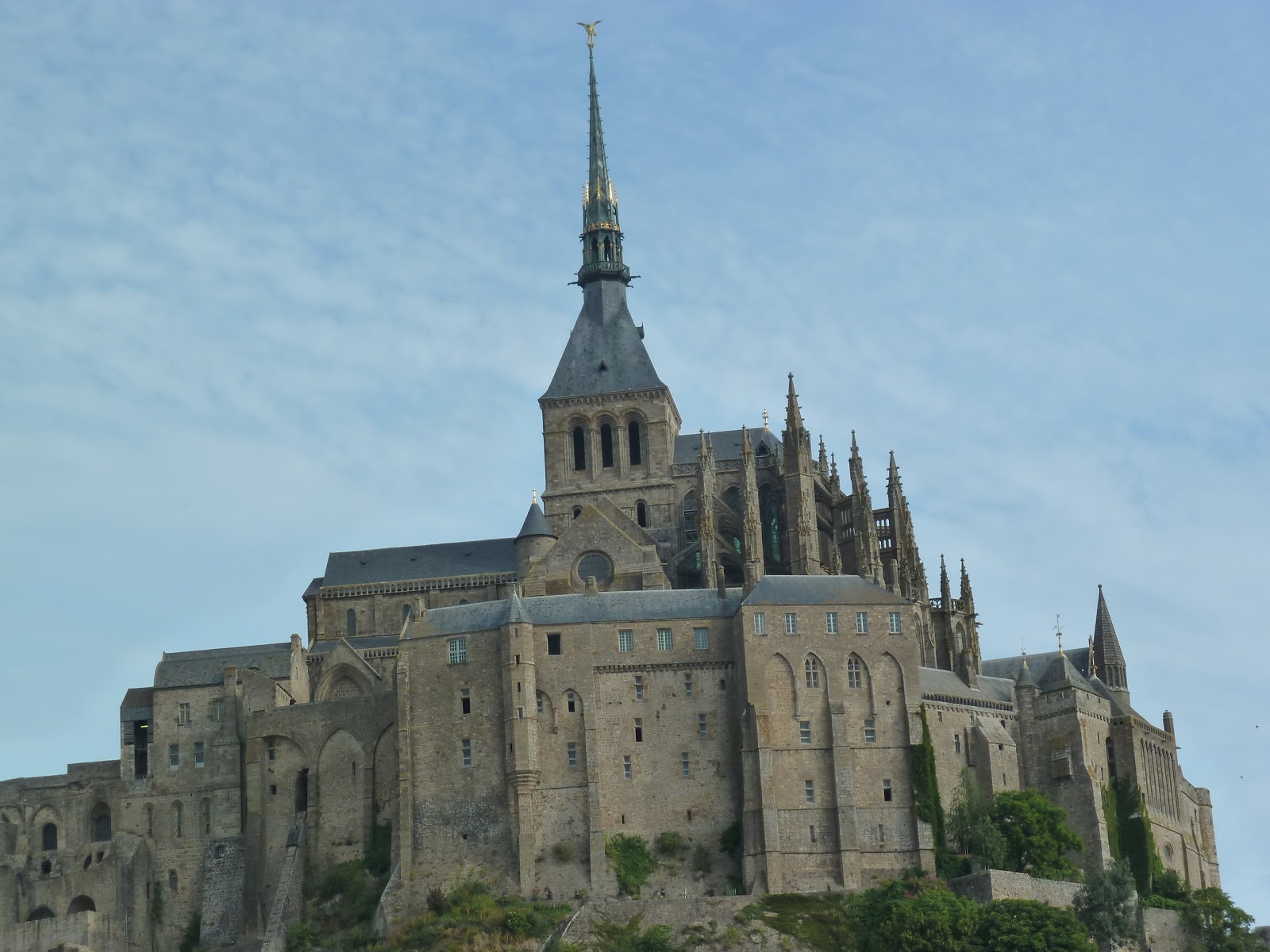
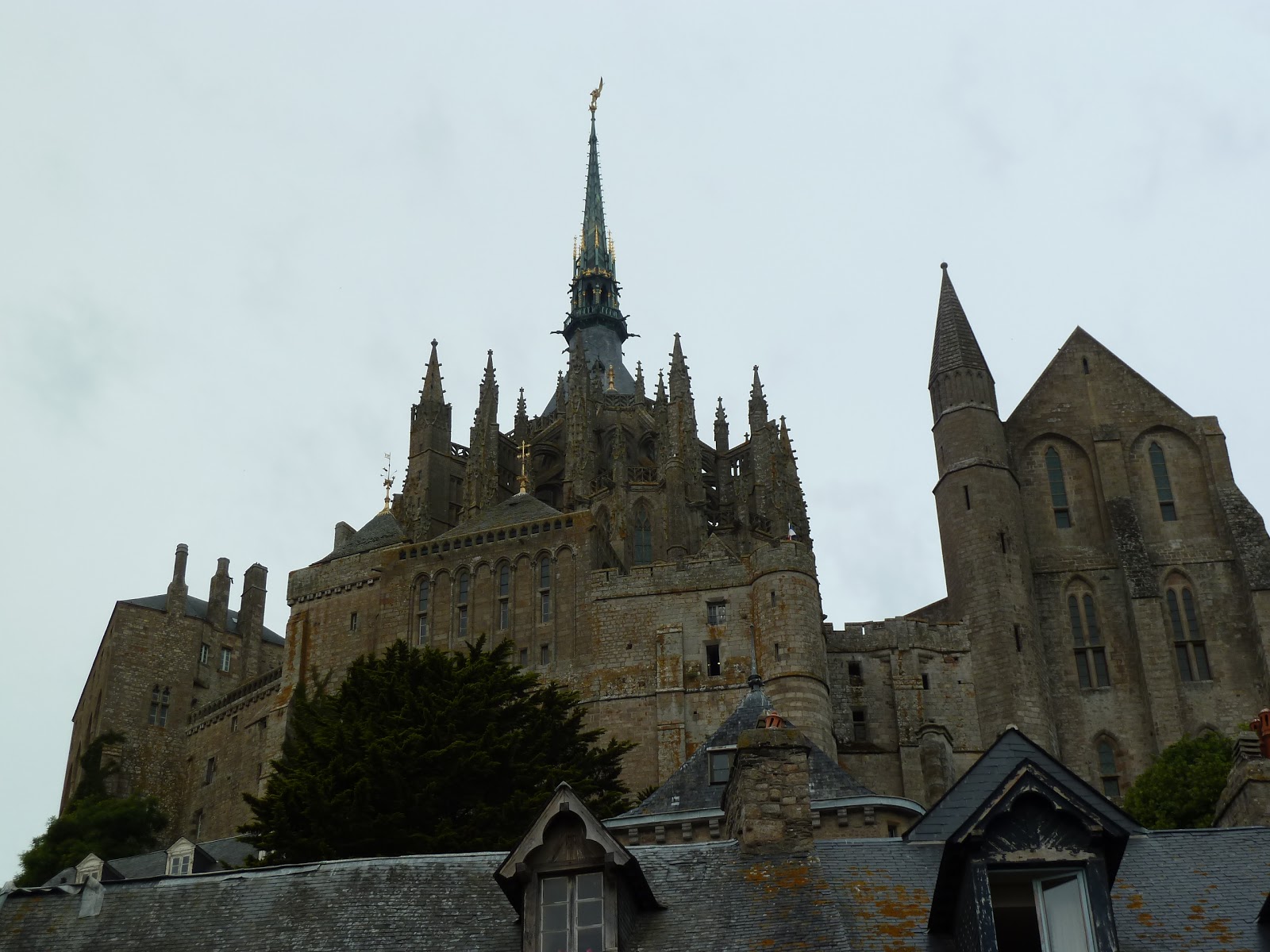
This view of Mont St. Michel (website) is such an iconic image, I truly feared that visiting would be rather anti-climactic.  Like seeing Big Ben or the Parthenon or the Grand Canyon, however, it was a new and fresh experience.  Well, yes there were hundreds of tourist buses and hordes of people from all over the world climbing the steep streets and filling the many shops and restaurants along the way.
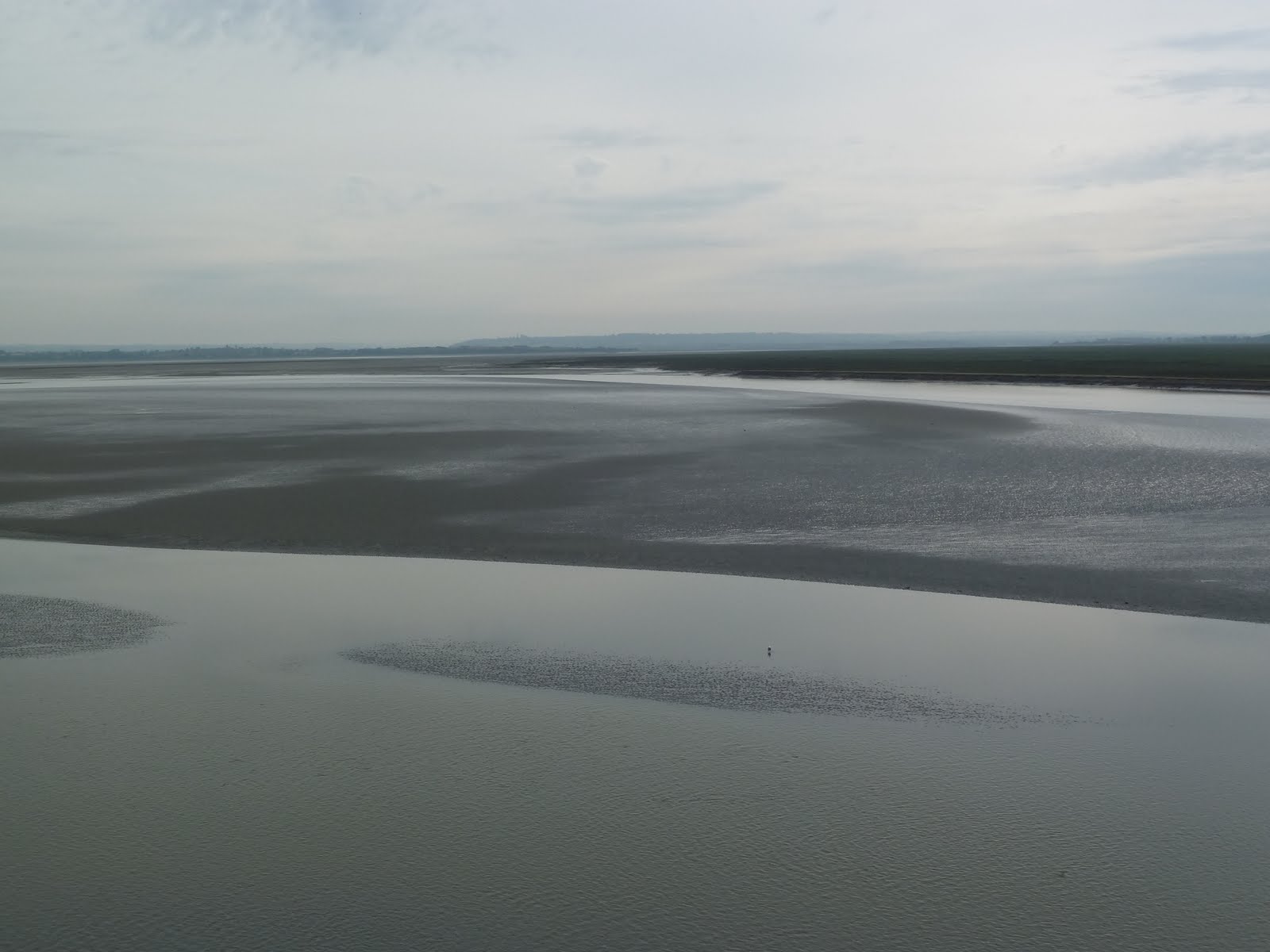
And, dear reader, I did not make it to the top. Not even close! It was the worst day of my dreadful cold and though it may not look steep in the picture above, it exhausted my clogged lungs in no time at all.  I managed to find a lovely viewpoint from which I snapped the top — and the low tidal sands that stretch for miles all around the island.
Those coming down to join us in a cup of latte said it was quite lovely at the top, a monastery that is mostly empty other than hundreds of gapers.  The monks of the early 11th century suported William of Normandy in his conquest of England. In return, the order received an island off Cornwall, also known as St Michel’s Mount, which also draws many tourists.

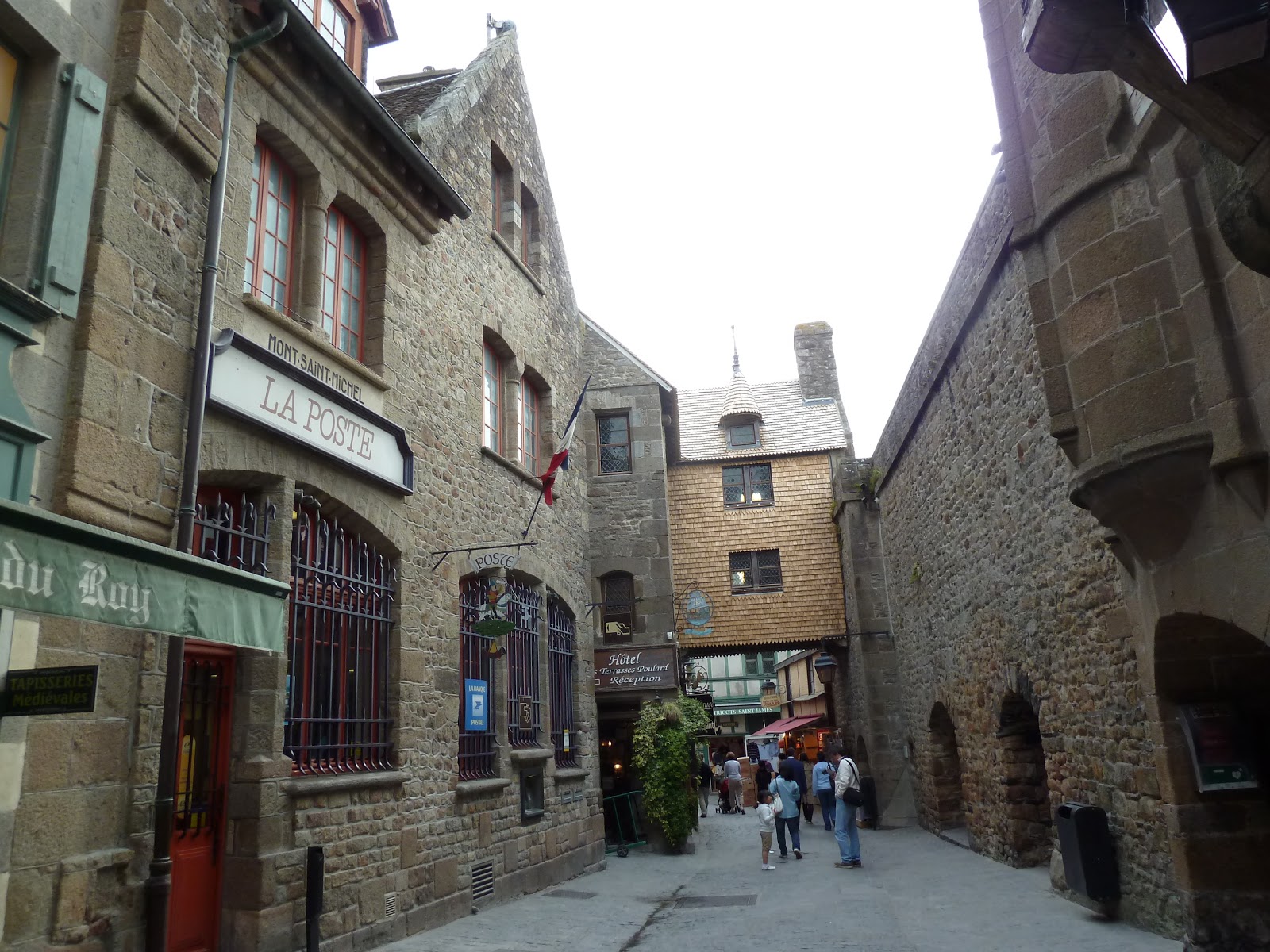
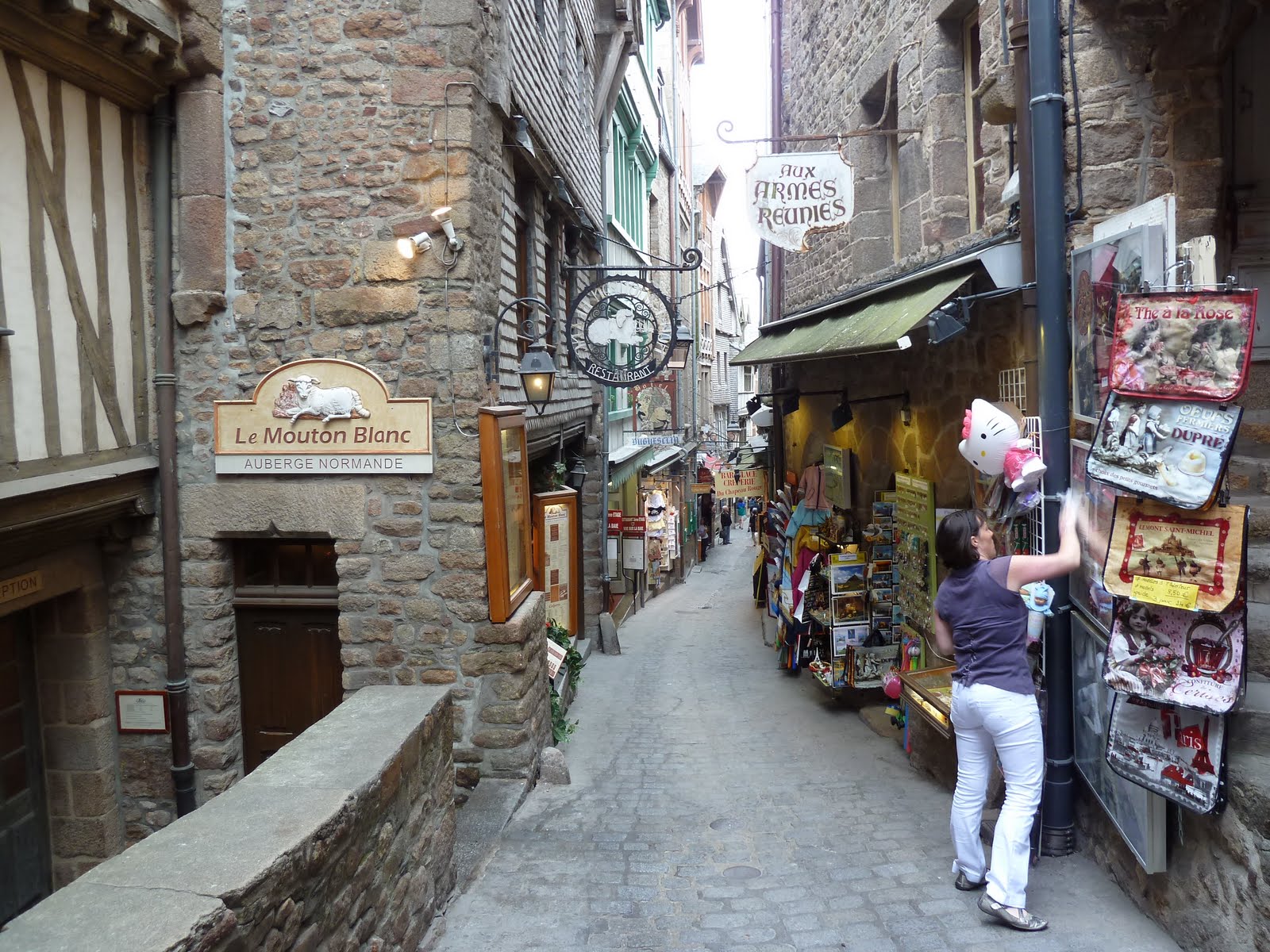
In reviewing my photos, I am amused to see that I managed to exclude almost all the tourists. You’ll have to take my word for it — huge groups going up and coming down, narrow streets in which it seemed one could lose balance and tumble for ages if one wasn’t very careful. With all those people, one would have taken out a regiment on the fall.

Above, a couple of visitors try to get out of the way of the little front-end-loaders they use to take supplies up and bring the trash down.  After the French Revolution, the Mont was abandoned, then turned into a prison.  In the mid-19th century, many French intellectuals, including Victor Hugo, petitioned the government to return Mont St. Michel to its original purpose as a pilgrimage site. Would I be too cynical if I said that most of the ‘pilgrims’ seemed to be more interested in taking photos (like me) or buying souvenirs than any spiritual purpose?

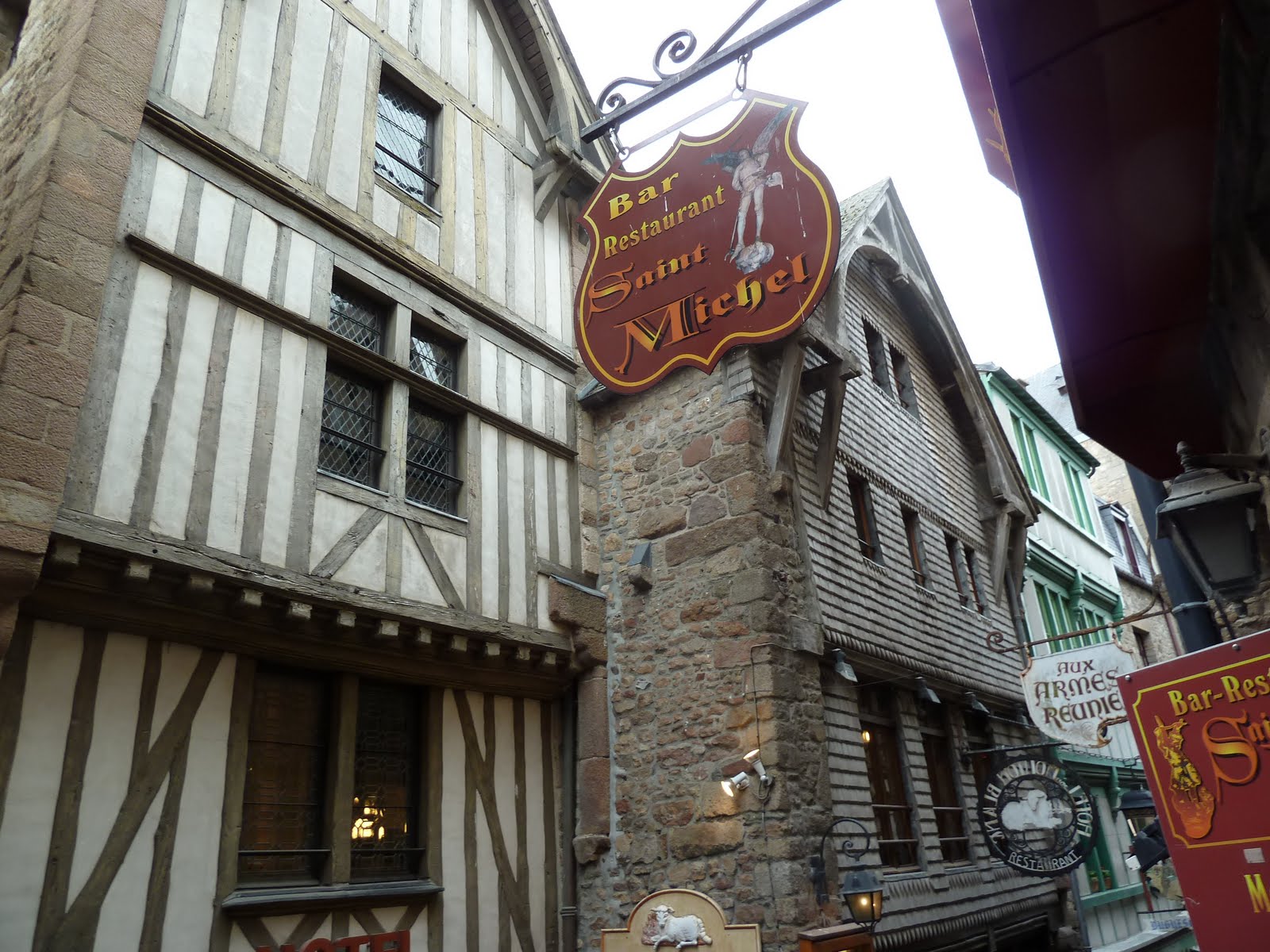
Restaurants on the Mont are famous for their fluffy omelets.  But not a chicken in sight.

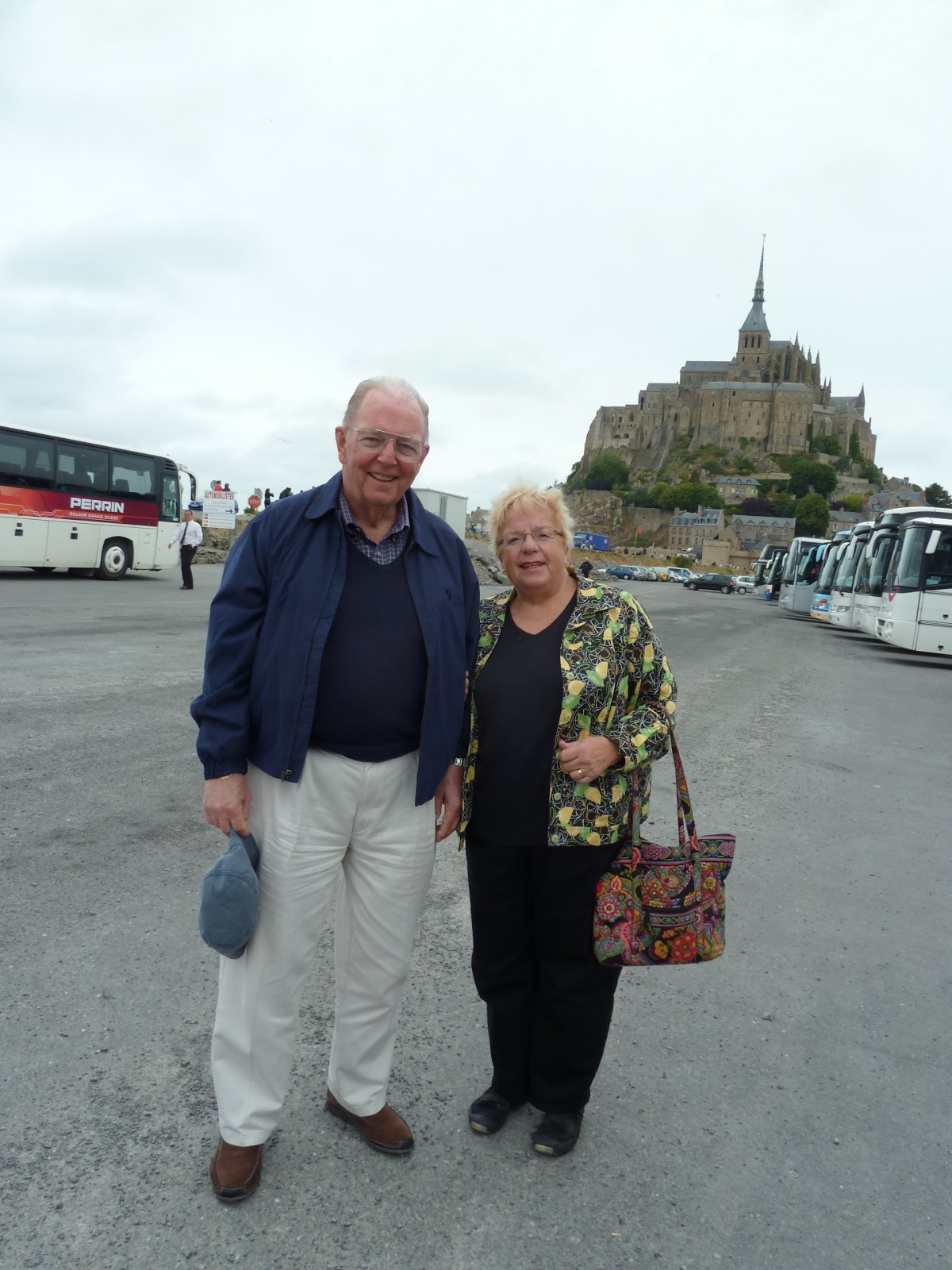
After it was all over, we posed with the Mont and a few of the coaches that filled the car park — next to a sign that said, loosely translated, “This parking lot will not flood today.”  The site is famous for its rapidly shifting tides and until the soon-to-be-rebuilt causeway was created, it was not unusual for people to be stranded on the Mont.

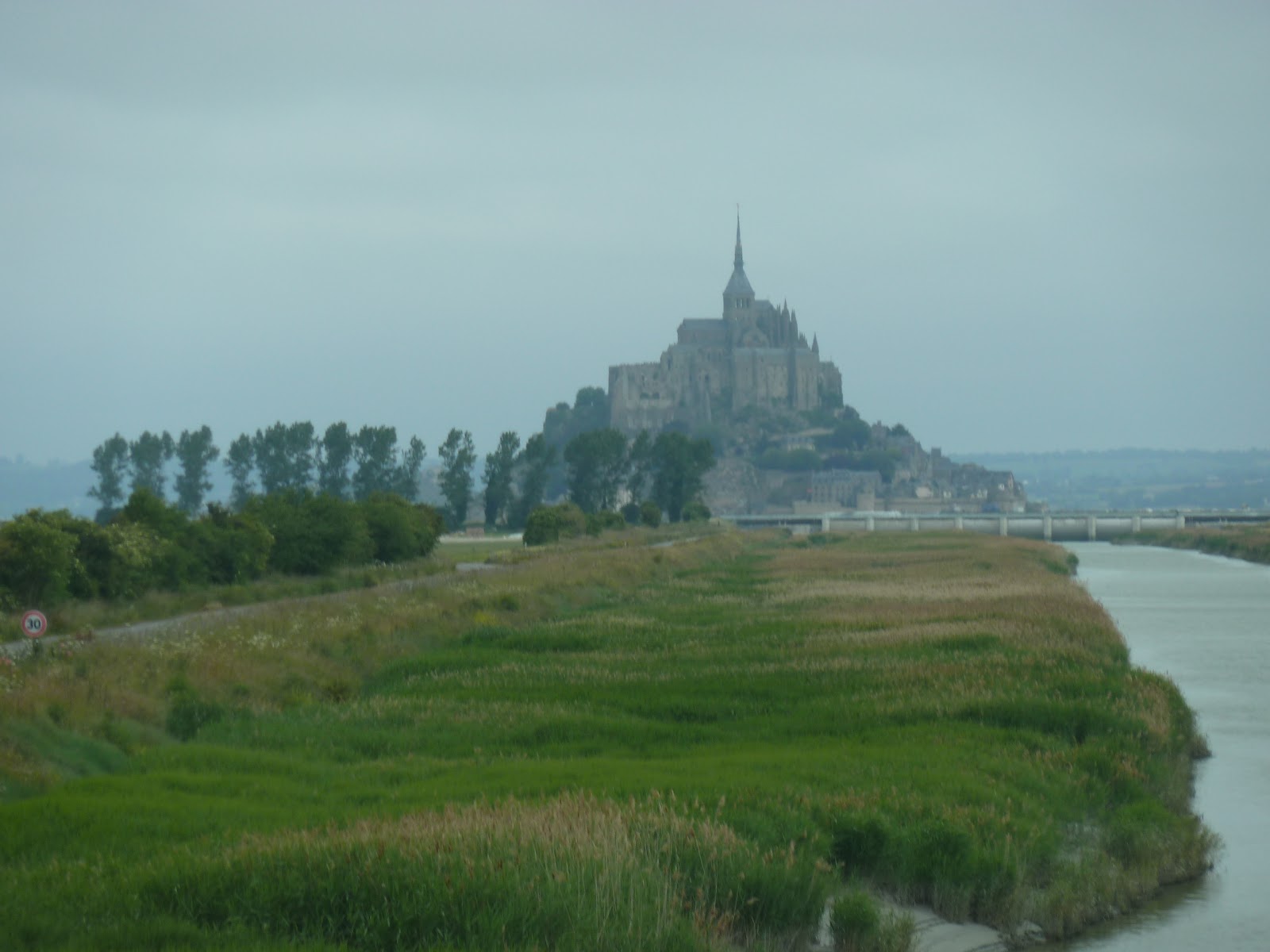
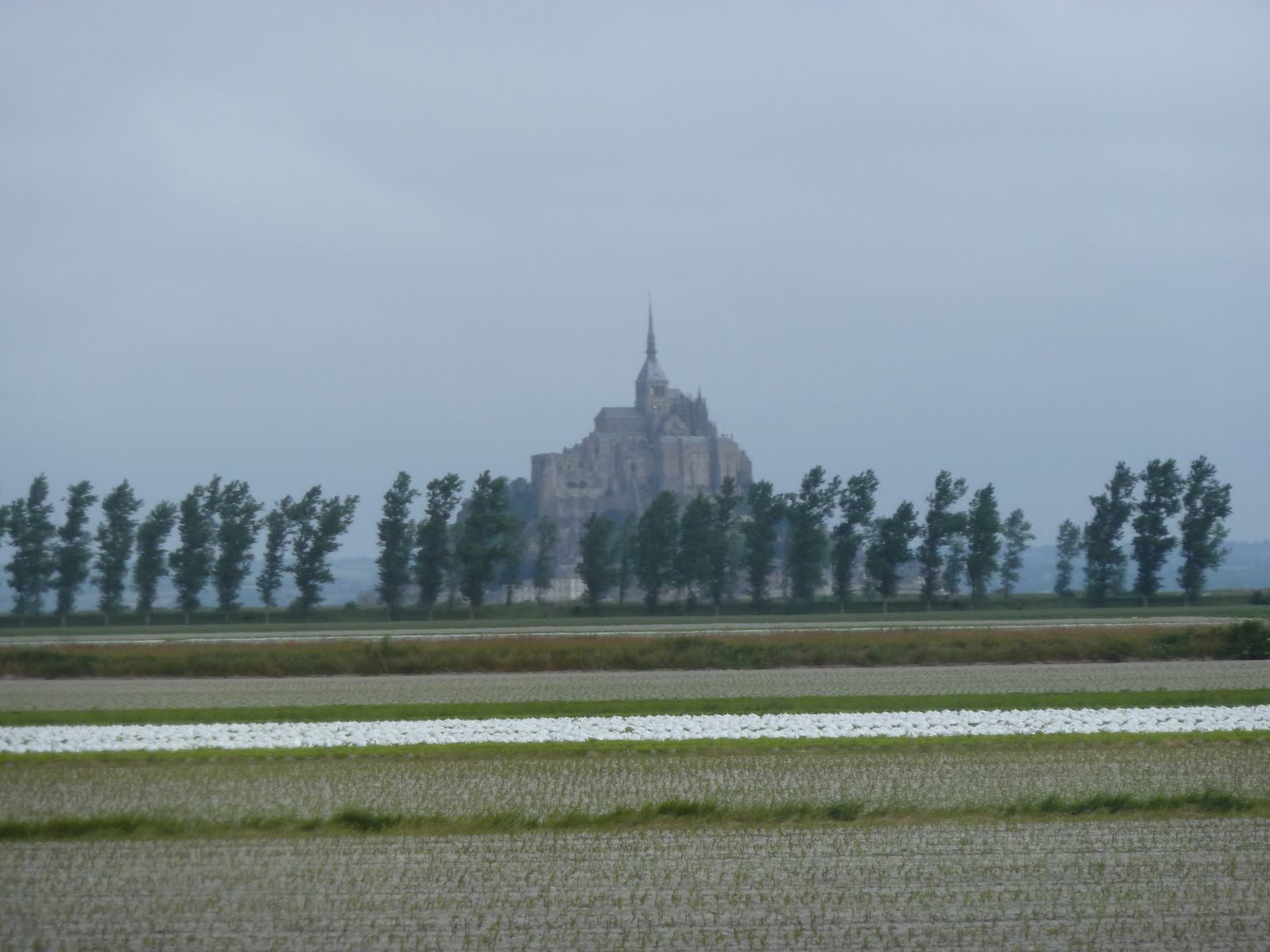
As we drove back to St. Malo, the Mont was always there, a sort of brooding presence in the mist.

Rufus Sewell on Masterpice…Sunday, July 17

Victoria, here. Be still, my heart!  I know I have been busy and preoccupied these past weeks, but RUFUS SEWELL, my #1 heart throb actor, on PBS Masterpice this week?   And I almost missed it???

Luckily, I did not fall asleep during Miss Marple last Sunday, though I came close.   Not that the show was boring — just that things have been catching up with me. So I nearly missed the promo for the next week’s presentation: Zen, the story of a detective in Rome. Here is the PBS description of the three episodes.

It will come as no surprise to regular readers of this blog that I, Victoria, am a fan of Rufus. From the first moment I saw him as Septimus in Tom Stoppard’s brilliant play Arcadia in London many years ago, I have followed his career with special interest.  See my blog of  8/11/2010 for more pictures and comments on his various film, stage and tv appearances.

Though he is admired as a versatile actor in a wide variety of roles, Rufus Sewell has never hit the pinnacle of  acting, the BIG role that thrusts a performer into the stratosphere of stardom.  Though he has played many character parts, he also excelled in the leading man roles that capitalize on his dark good looks and sexy eyes. 

Perhaps these three episodes in which he stars as Aurelio Zen, a Venetian-born detective in Rome, will do the trick. Or then again, perhaps he doesn’t care to be a household name.  The episodes ran first in the UK on the BBC, based on novels by Michael Dibdin.

The three episodes are Vendetta (screening July 17), Cabal (screening July 24) and Ratking (on July 31).  Watch with me and let me know if you think this is the break-through role for Rufus.

With The Beau Monde in New York City

On Tuesday, June 28, 2011, the Regency chapter of Romance Writers of America, met at the Marriott Marquis Hotel in advance of RWA’s national convention. More on the Beau Monde here. The day’s activities celebrated the 200th anniversary of the English Regency, which began in 1811 when George, Prince of Wales, became Regent for his incapacitated father, George III.

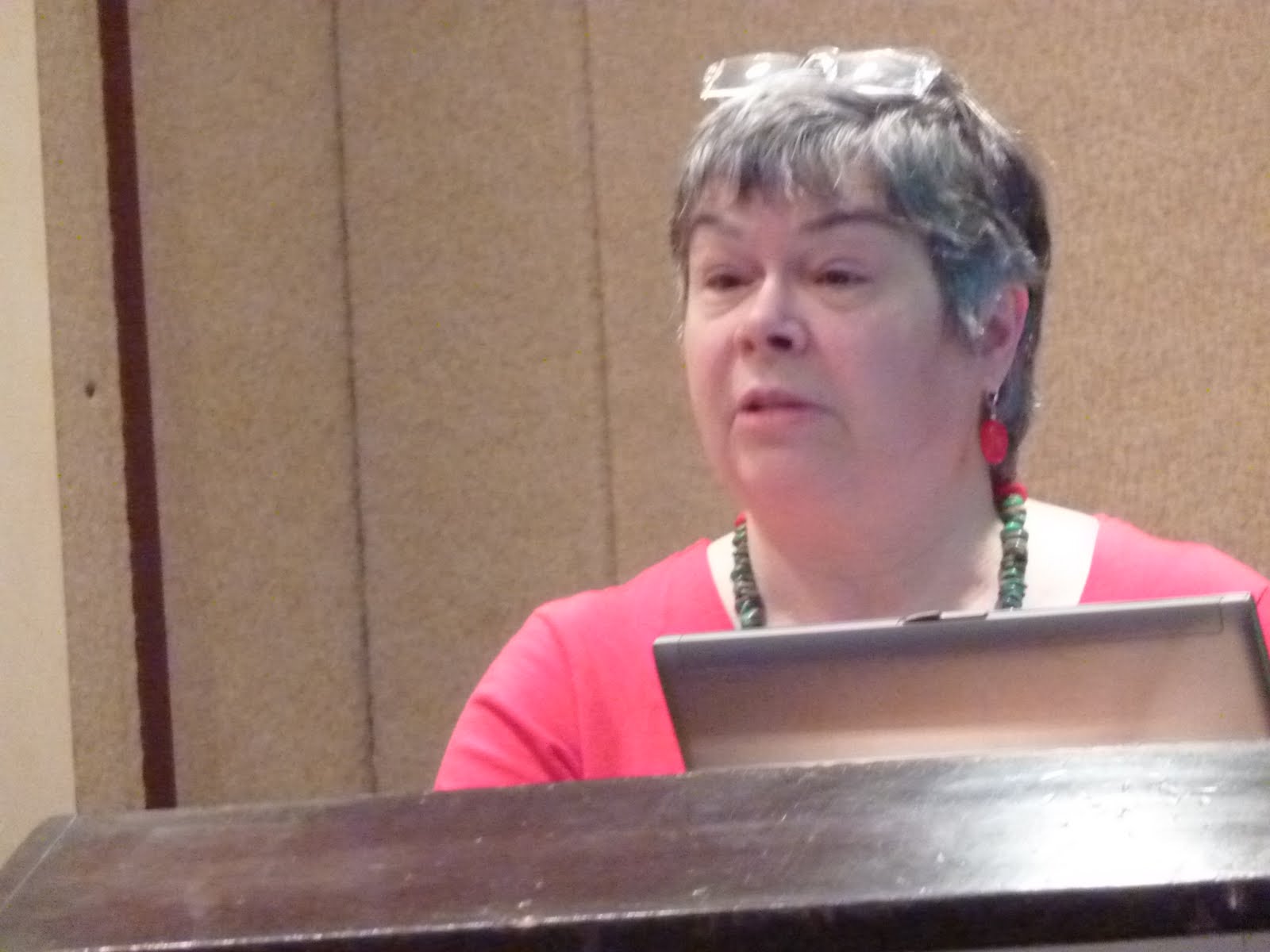
Mary Jo Putney, Keynote Speaker
The conference was ably arranged by Karen Erickson, chair; along with Isobel Carr, Melissa Golden,
Susan Gee Heino, Mary Gramlich, Kate Pearce, Sally MacKenzie, Janet Mulany and Sharon Sobel. Many more members contributed to the silent auction. We had a fine menu of presentations.

Jo Ferguson spoke on Location: Traveling to England for research.

Janet Mullaney’s topic was Saints, Sinners, Slavery and Sugar.

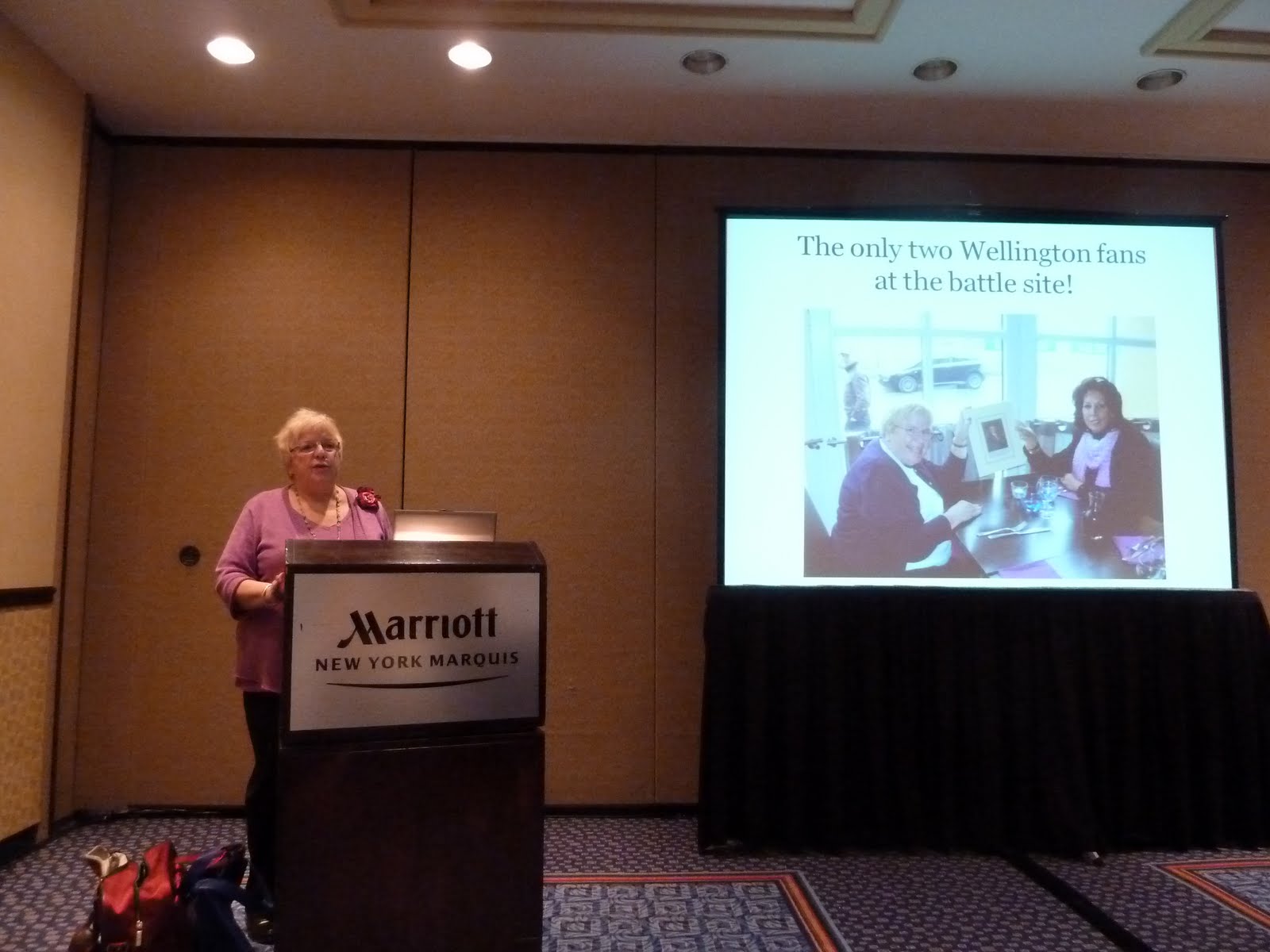
Victoria Hinshaw spoke about the Battle of Waterloo, here showing a slide of Vicky, left, and Kristine with the Duke of Wellington at the battlesite in 2010. 

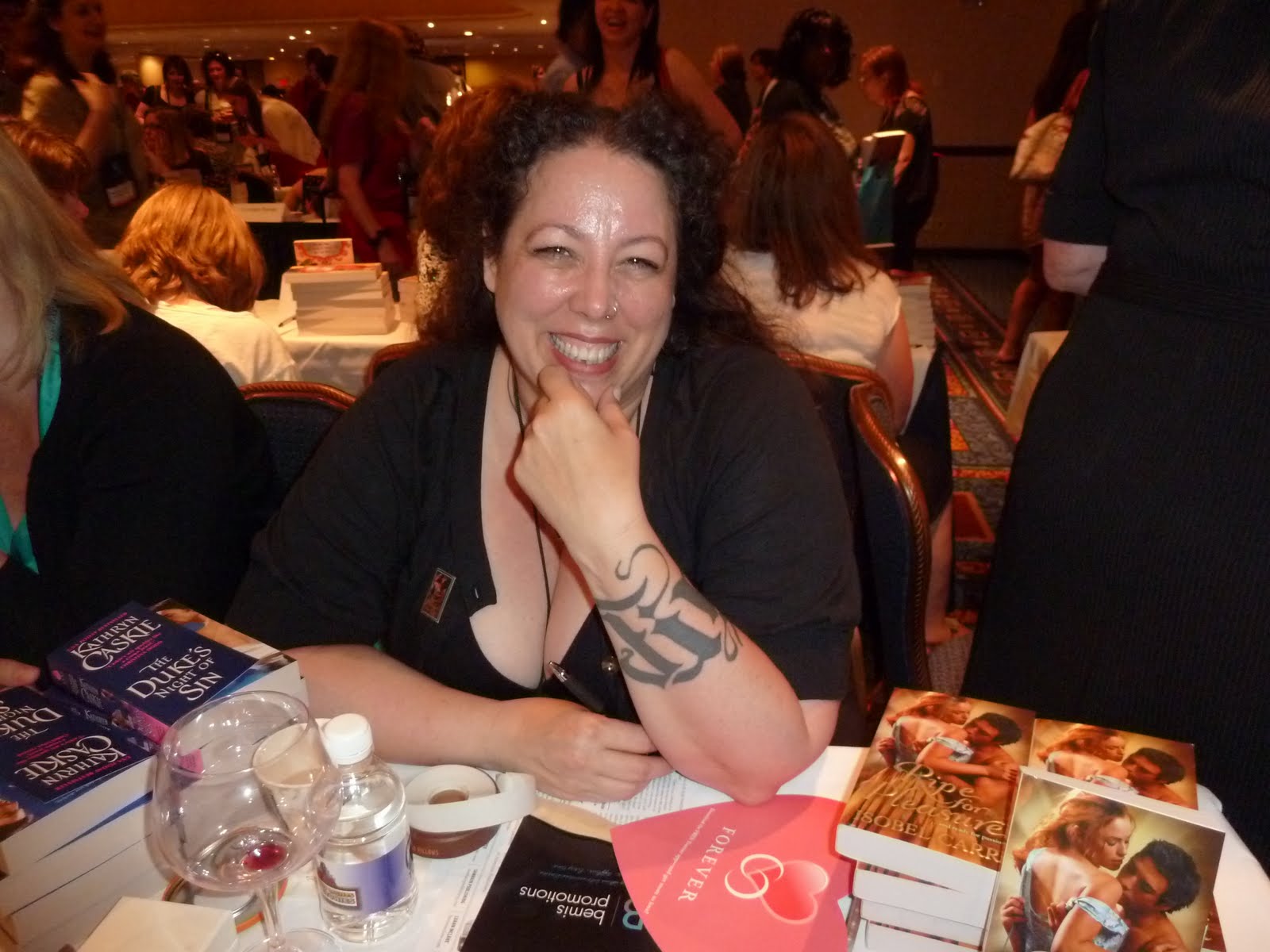
I missed a picture of Isobel Carr and Delilah Marvelle who spoke on The Culinary World of Regency England, but I caught up with Isobel later at the Literary Signing.  Sorry, Delilah!

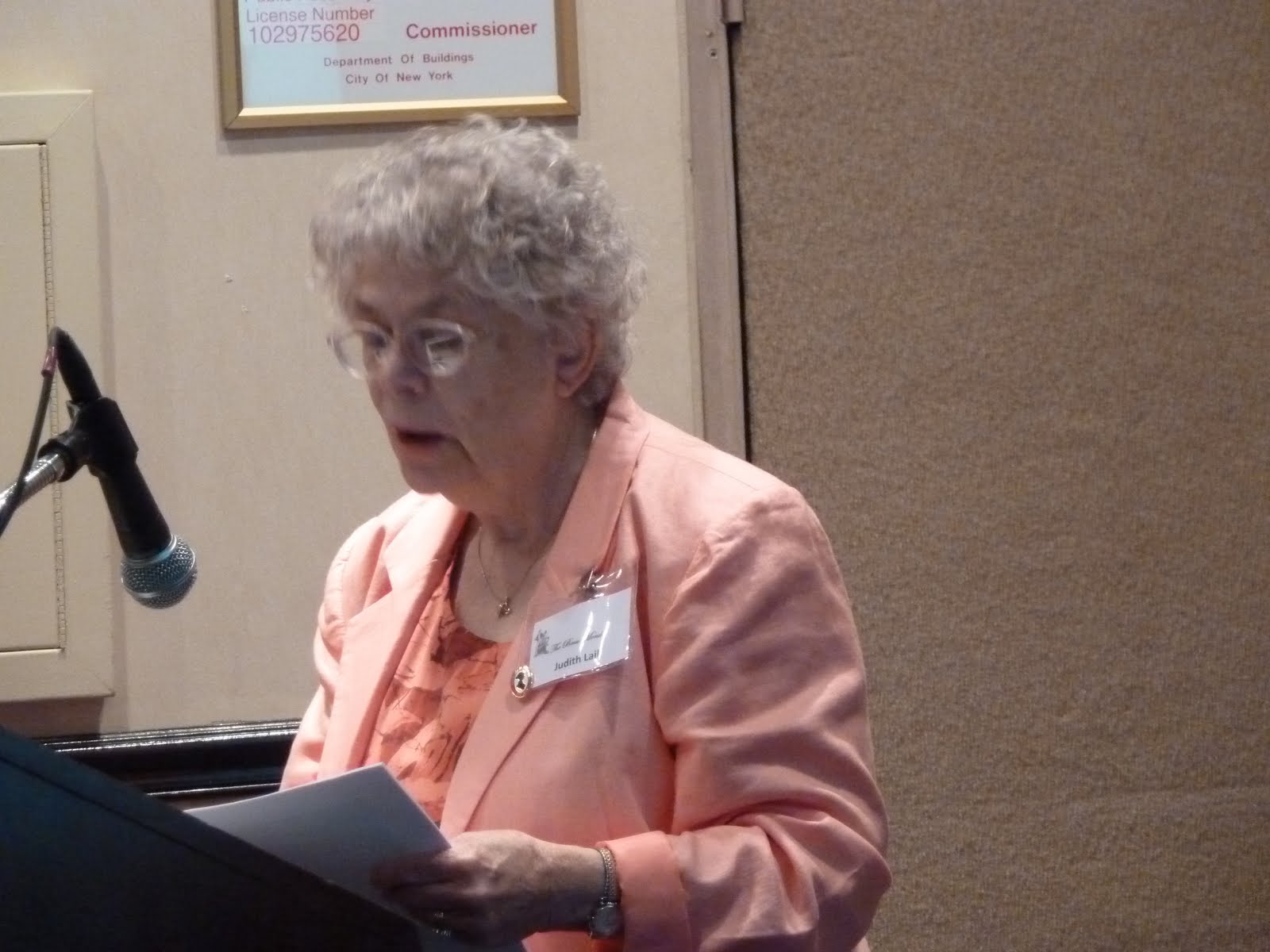
Judith Laik told us all about Women Scientists in the late Georgian and early Nineteenth Century periods.

Paula A. Baxter spoke on Setting the Scene: Putting Authentic Period Interiors and Furnishings into Your Writing.

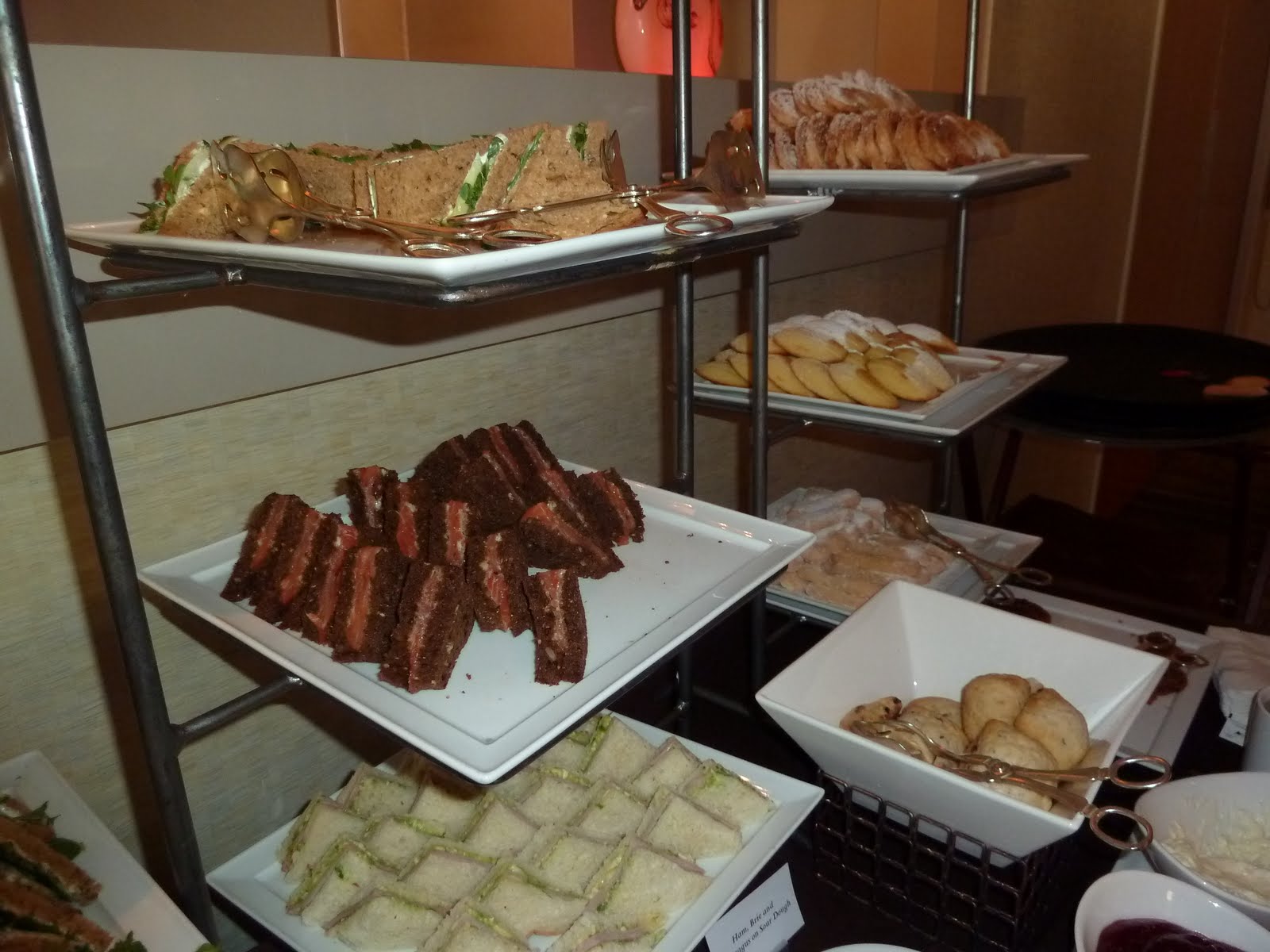
The menu at tea was equally tempting.

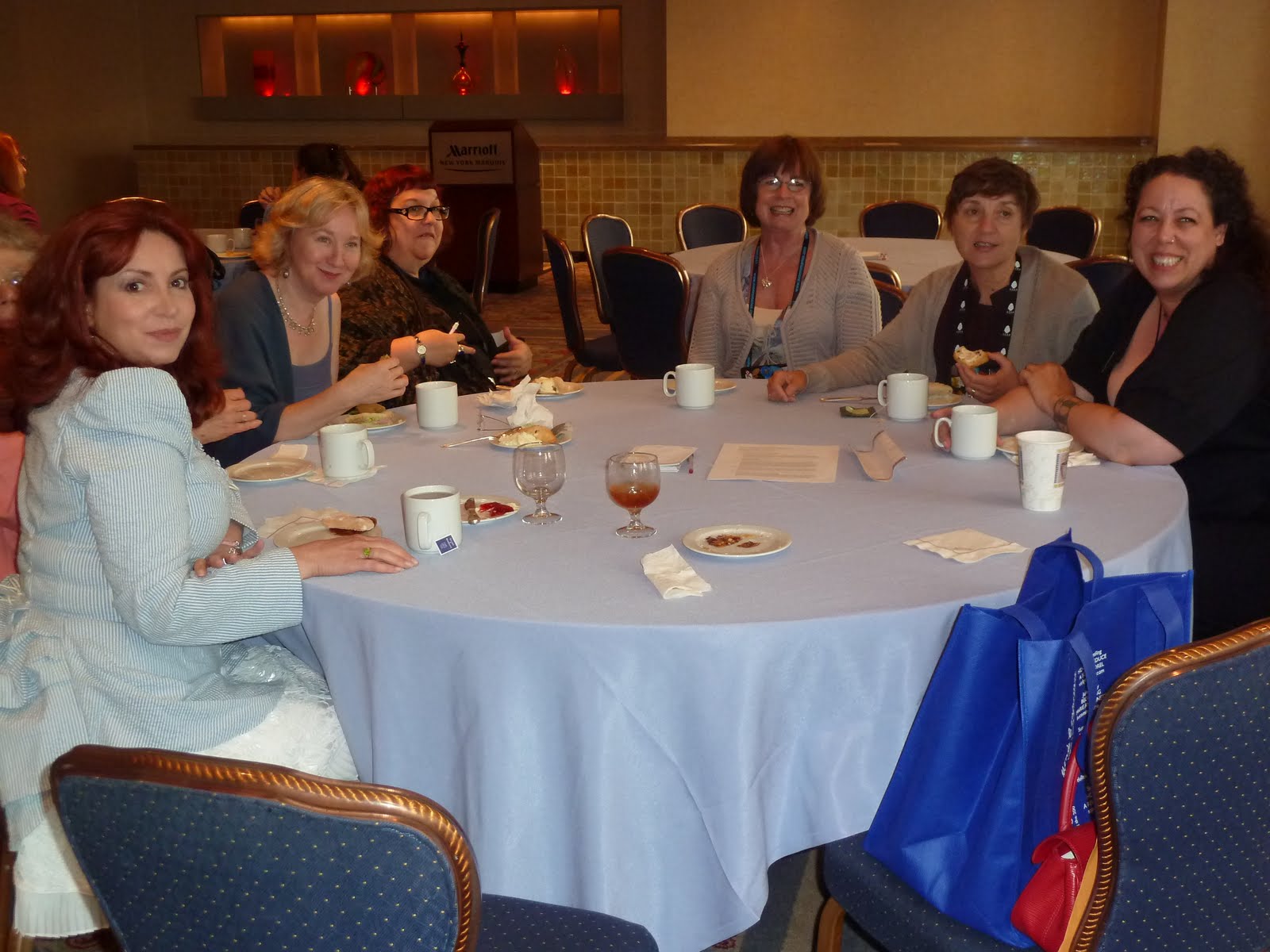
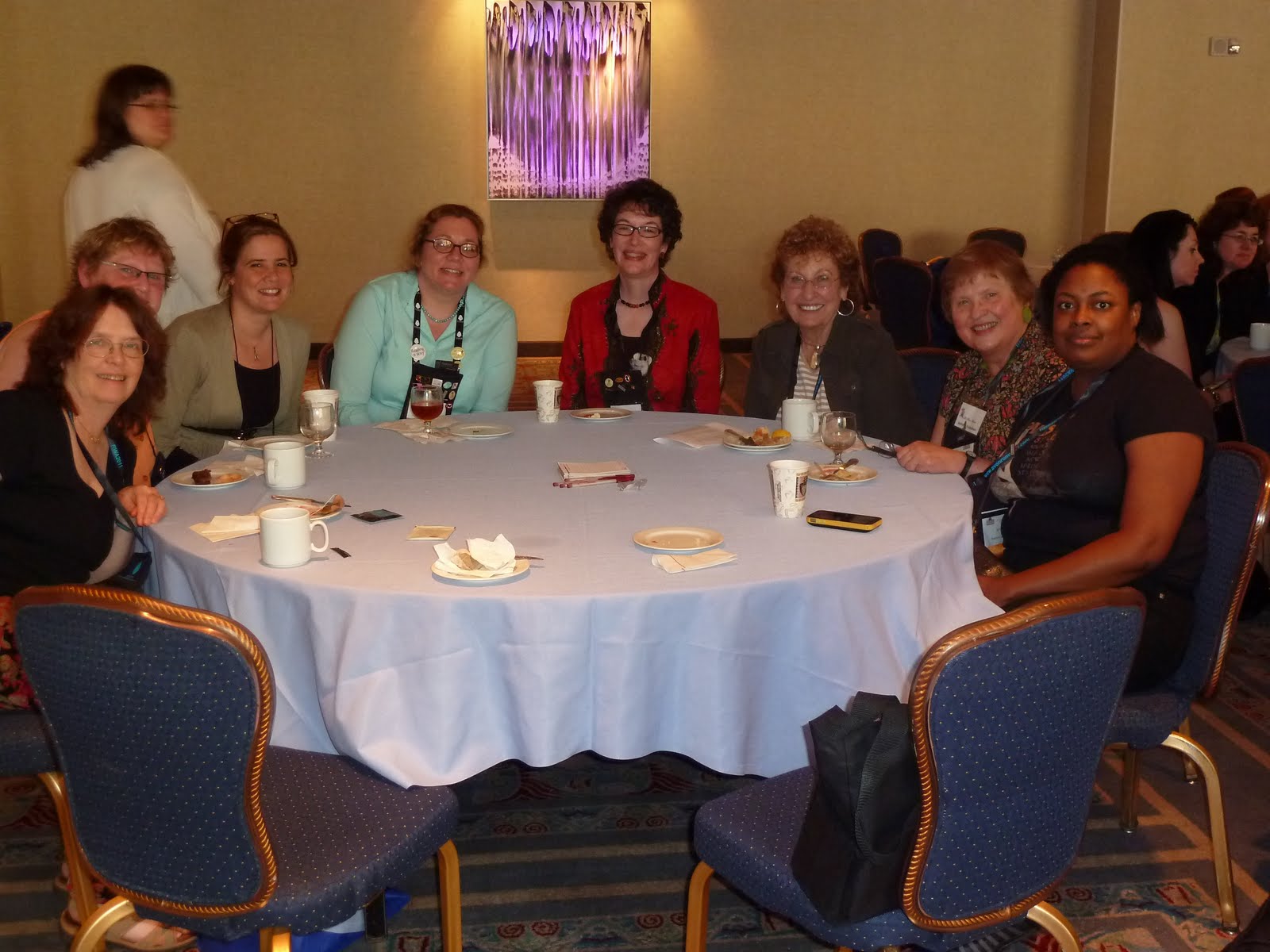
Below, a few tables of writers fulfilling two basic purposes of the meeting:  networking and noshing.

Left, our pal Louisa Cornell, and right, Victoria, who prepares to give her earlier talk.

The Beau Monde took a break for the National Literacy Signing, and Sally MacKenzie was ready to meet her fans.

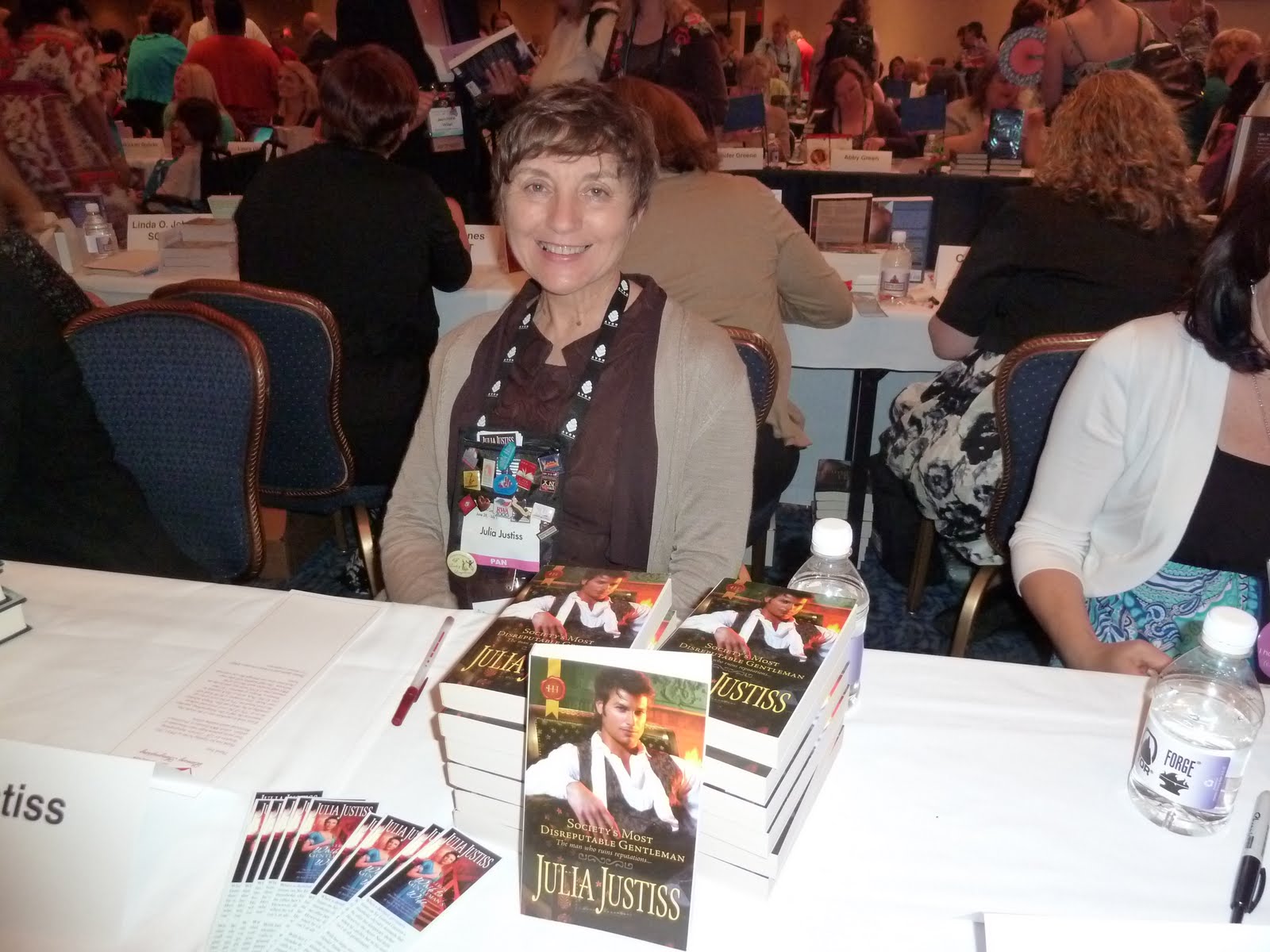
And so was Julia Justiss, another of the 100’s of authors who donated their time to benefit  literacy.

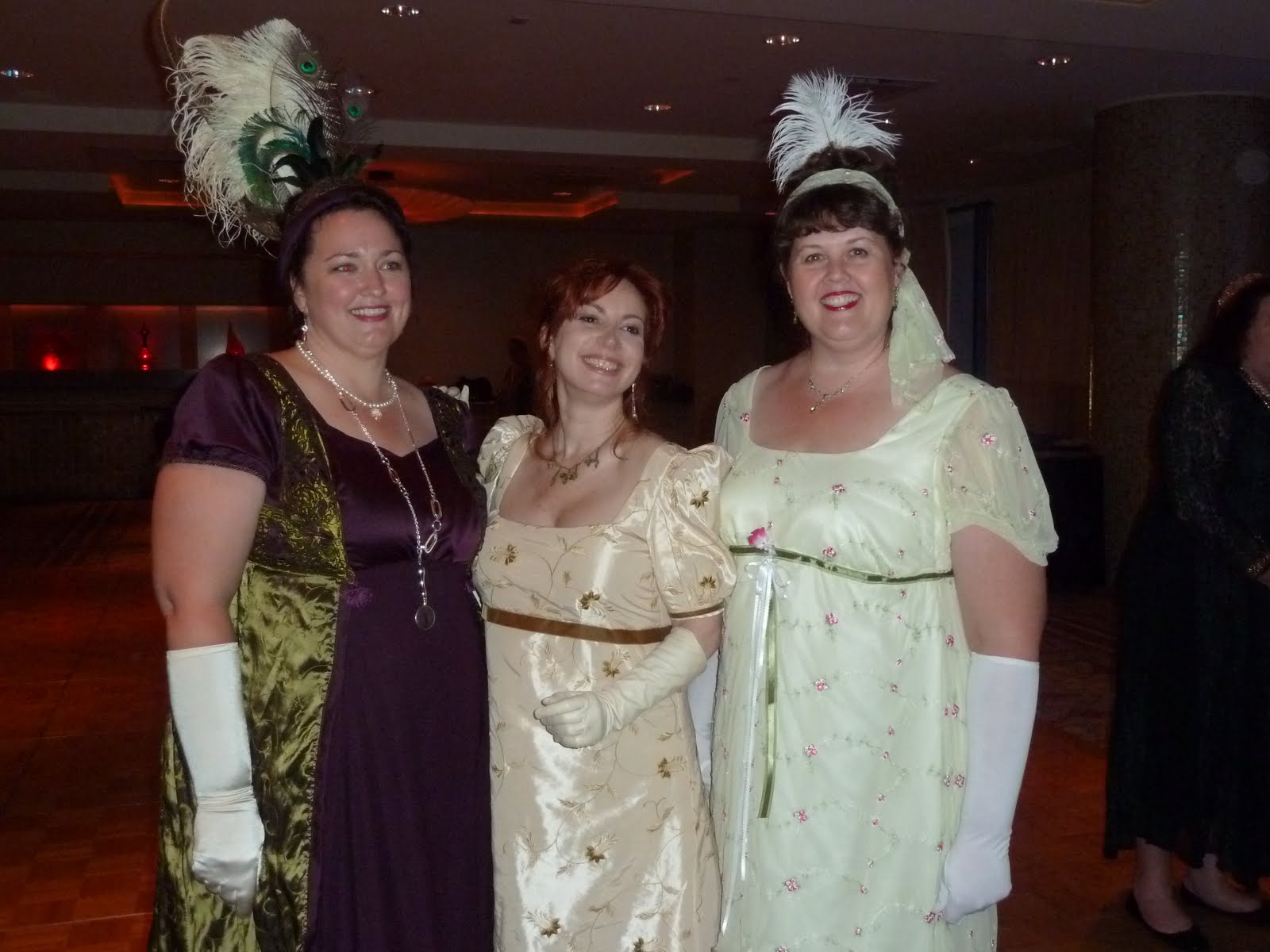
At the evening soiree, Beau Monde President Regina Scott prepared to lead the dancing. But where was Reggie, or more properly in true Beau Monde style, Sir Reginald?

More eager dancers, l-r, Sheri (Mysterious Lady), Leslie Carroll, Susan Gee Heino.

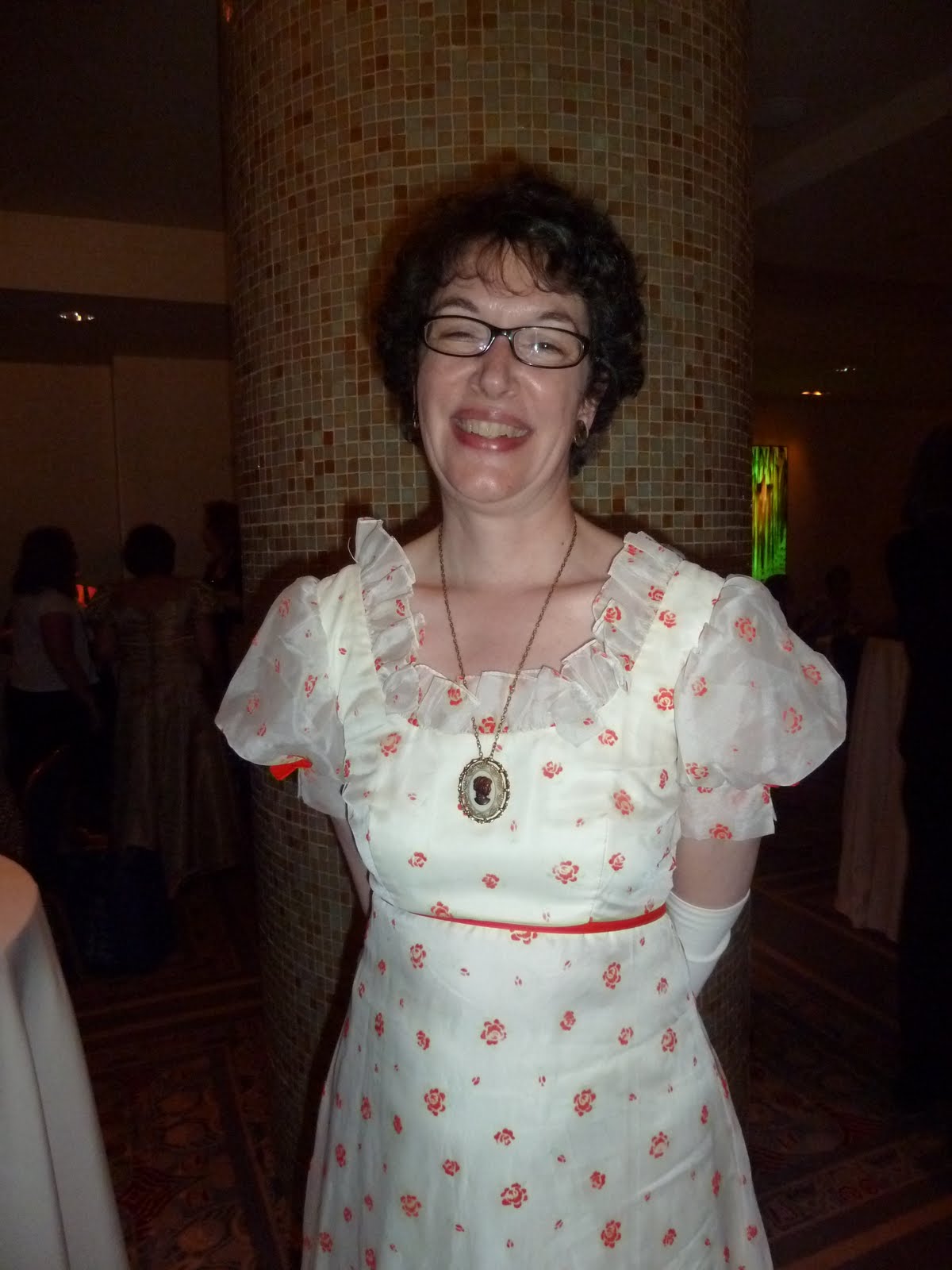
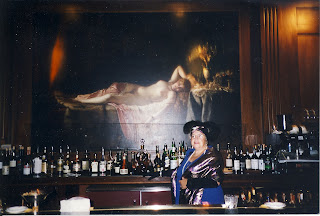
And now for a funny picture I found in a file of old RWA stuff.  This was taken at the first Beau Monde Conference held in Dallas in 1996.  A group of us had met at the last Marriott Marquis Hotel RWA conference two years before; we decided we could not arrange much for Hawaii the next year.  So we  organized for a great time in Dallas. The chapter started a pre-conference meeting tradition that continues to the present.   I appear below as The Dowager Duchess, whose late husband left her EVERYTHING because he had fallen in love when he saw the portrait of her long ago (above the bar in the penthouse of the Dallas hotel next to  the balloroom where we met).  Sadly,  the dress was later decorated by a glass of red wine and retired from the fray.

Travels with Victoria: The Isle of Guernsey

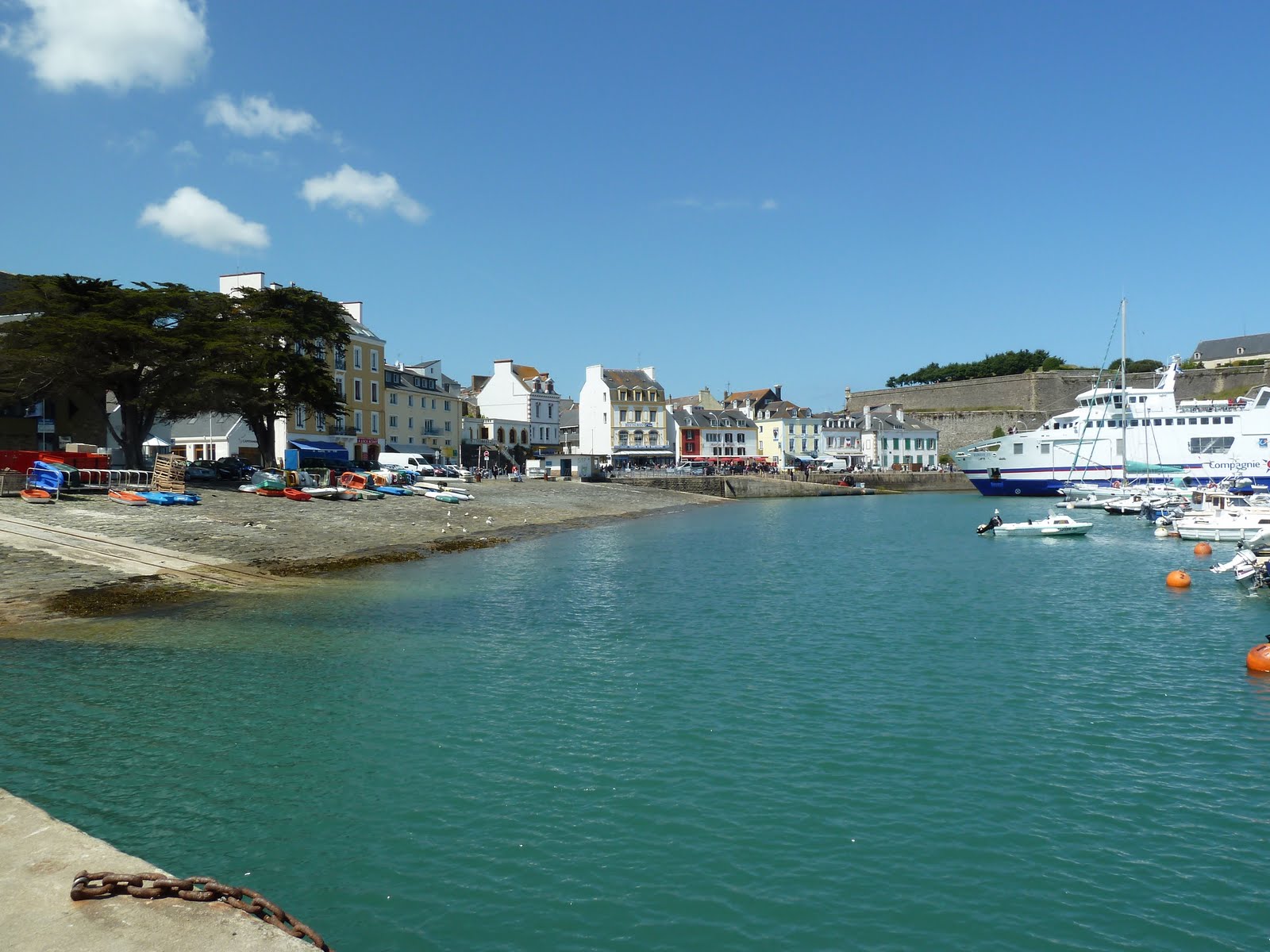
Continuing our cruise from Lisbon to Dover in late May and early June 2011, we stopped at Belle-Ile-en-Mer, above, off the coast of Brittany.  Like almost every other stop on this cruise, I’d enjoy going  back for more. One if the most famous people associated with Belle Ile was Sarah Bernhardt (1844-1923), who had a holiday home here and entertained many of Europe’s leading cultural figures.

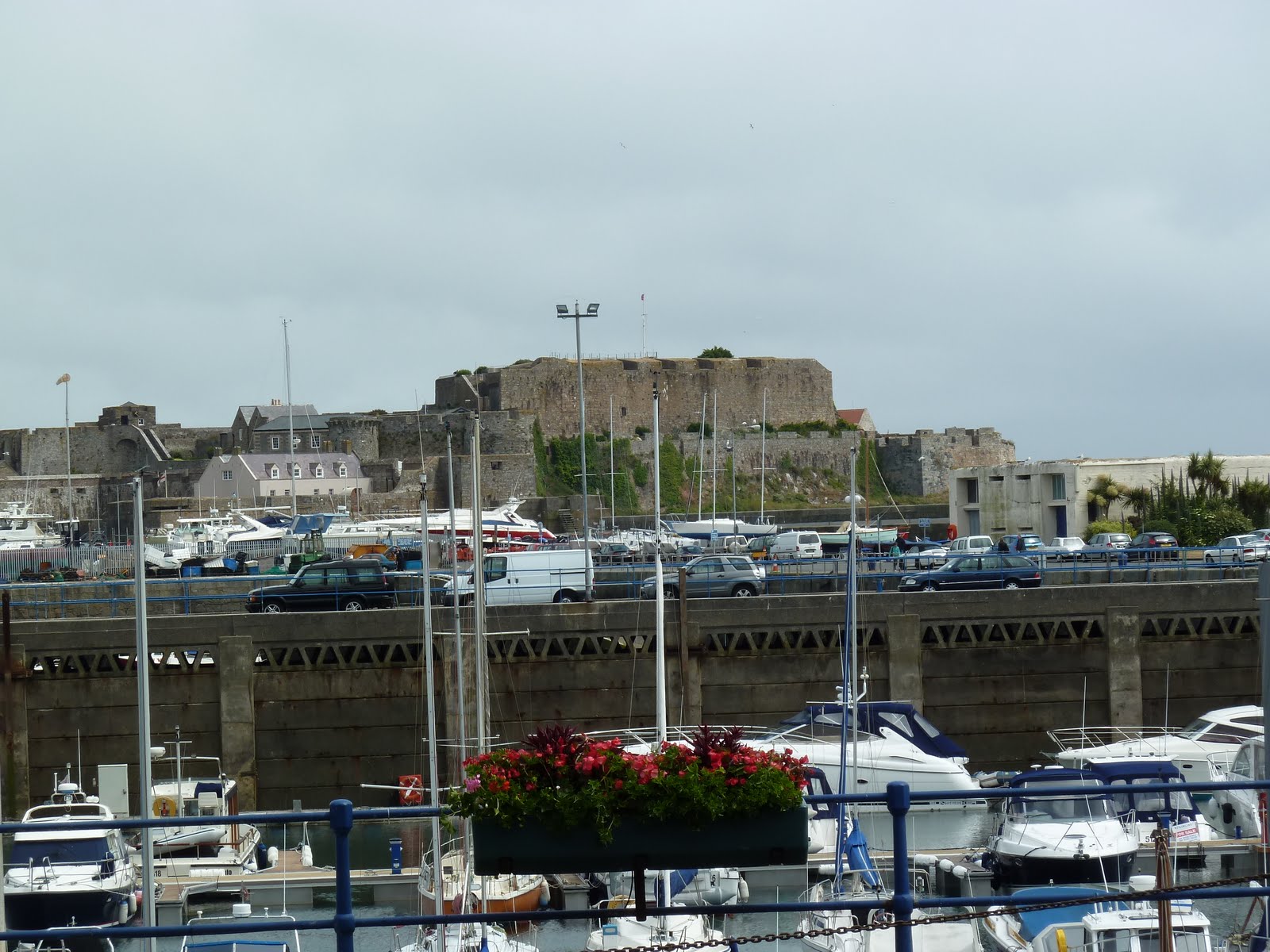
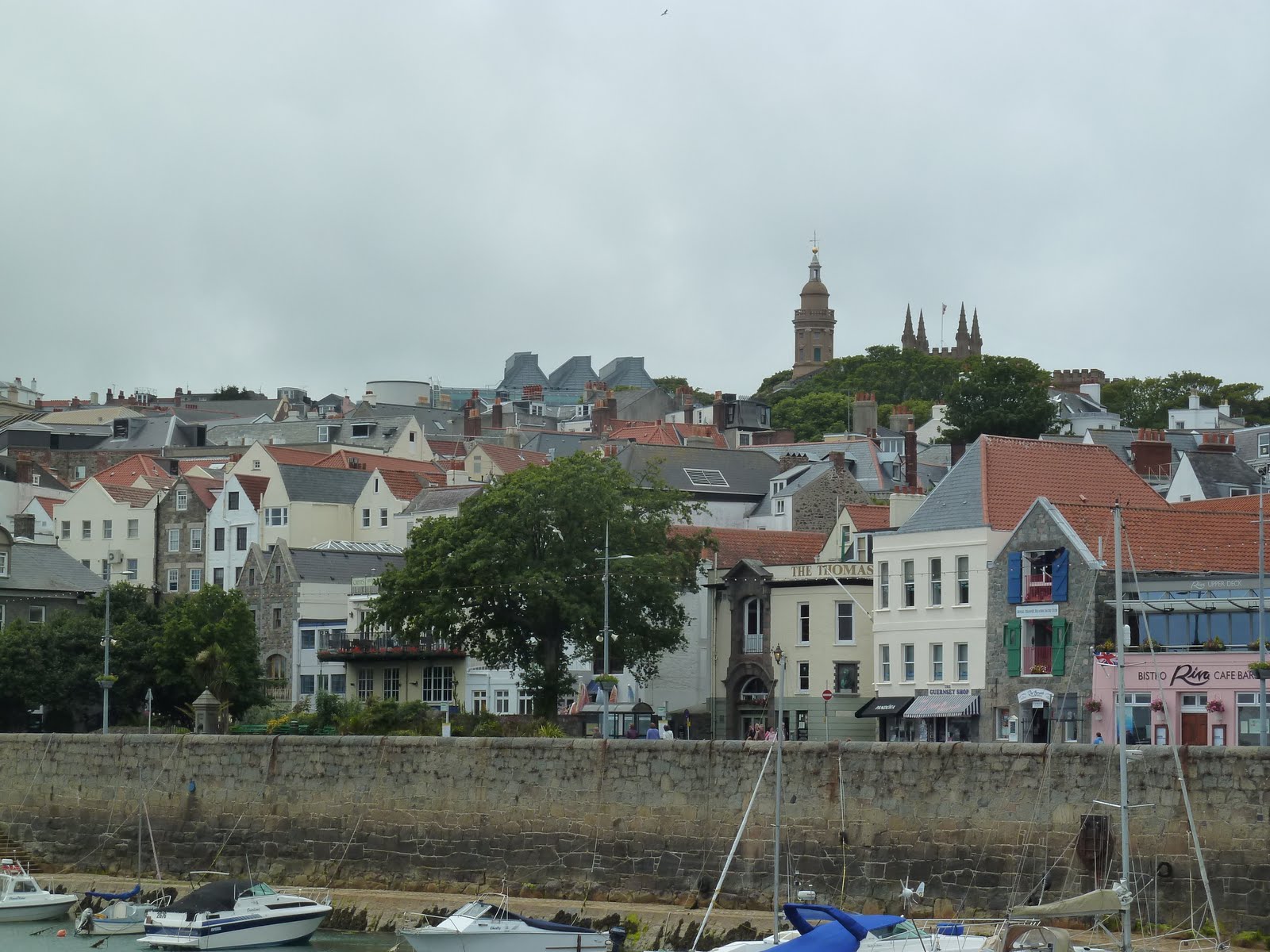
Arriving in St. Peter Port, Guernsey, I hardly knew where to focus my attention — the distant Castle Cornet, the activity in the harbor or on the colorful waterfront line of shops.

Before I read the wonderful novel The Guernsey Literary and Potato Peel Pie Society, I admit that the only associations I made with the two main Channel Isles were the famous breeds of Guernsey and Jersey cows.  So here are a few wiki-facts.  Both are Bailiwicks of Great Britain, crown dependencies, a particular form of governing not quite part of the U.K. (they have their own currencies), but not independent either. Residents are British citizens, but you will often hear French spoken. Guernsey has a population of 65,000+ and Jersey has nearly 90,000.  Both islands are popular tourist destinations, only a few miles off the coast of Normandy; cruise ships like ours are more likely to stop in Guernsey.  Both islands are known for their relaxed living, quaint ways, and convoluted history. 
 
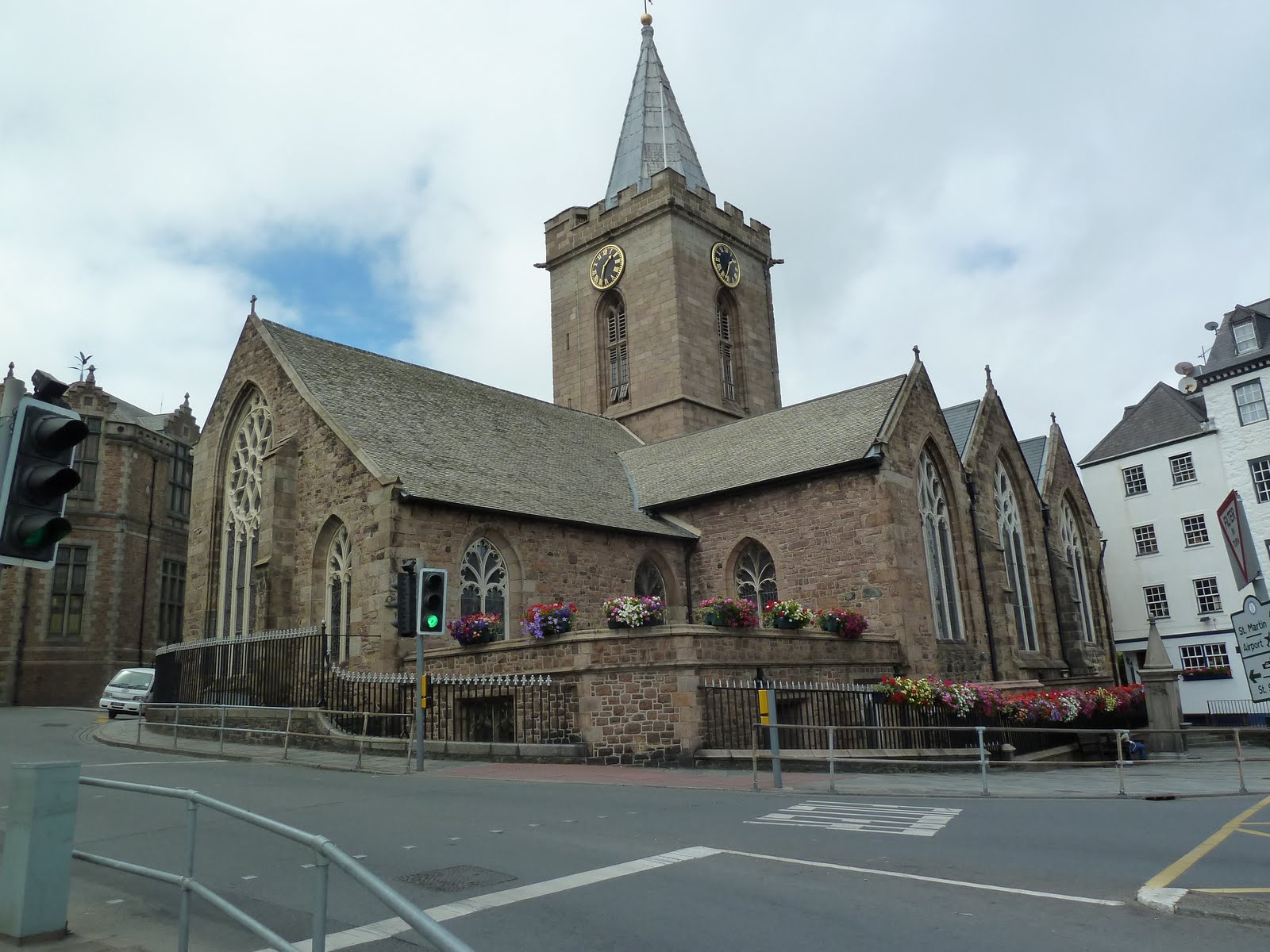
Parish Church of St. Peter Port
We took a ride on the local bus all the way around Guernsey, which was particularly fun. Both tourist and residents use the buses and we eagerly eavesdropped on conversations about everything from the weather to the International Court.  The trip, which took about 90 minutes, passed neolithic sites, such as burial tombs, wide beaches, rocky coasts sprayed by wild waves, Napoleonic-era martello towers and a fort, Nazi bunkers dating from the German Occupation, and bright new cottages surrounded by colorful gardens.

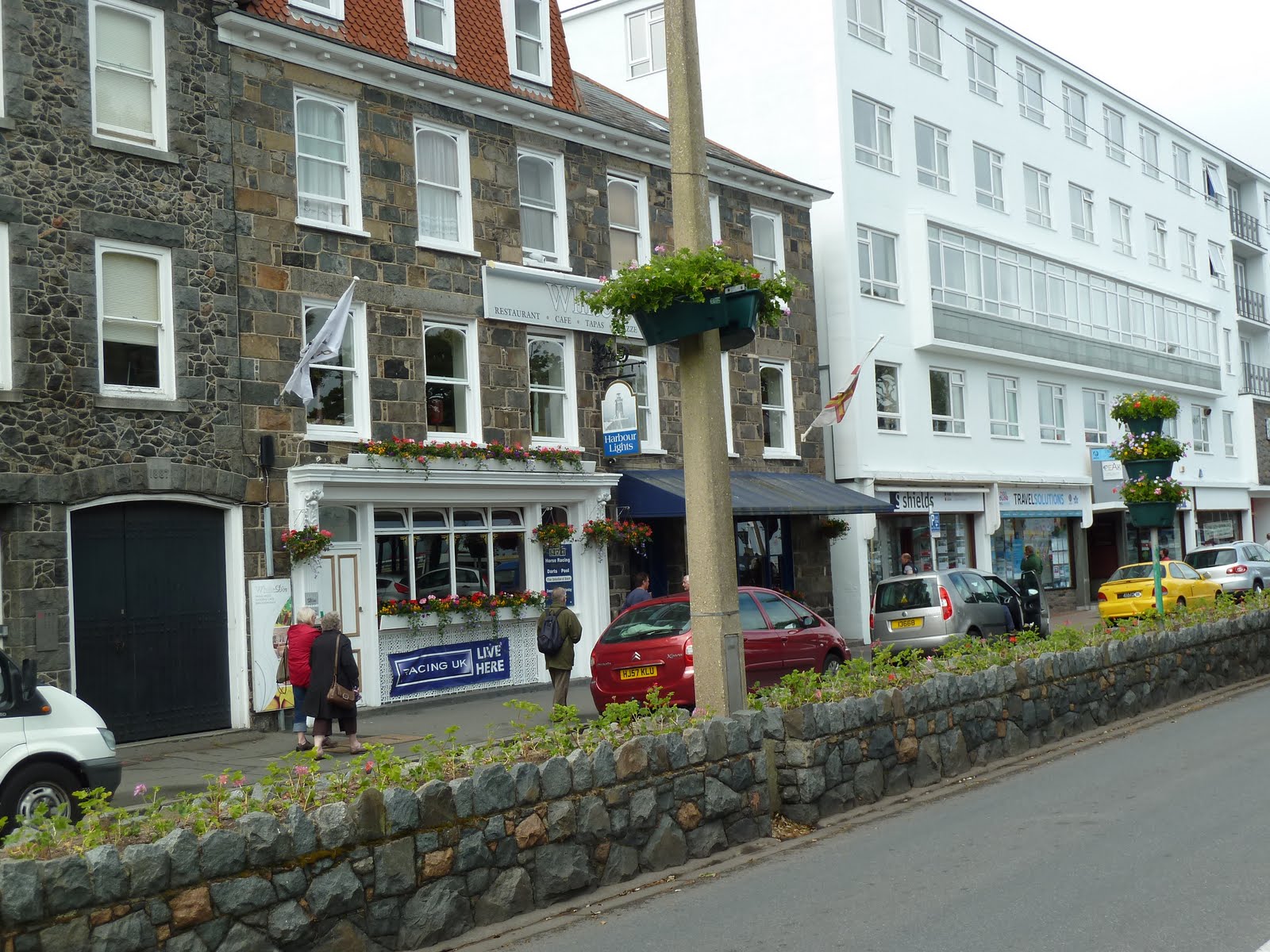
Waterfront shops in St. Peter Port

 Unlike tour busses, the local conveyance did not stop for photo ops, so I can’t share any of the sights along our ride.  I suggest you plan a trip and see for yourself.


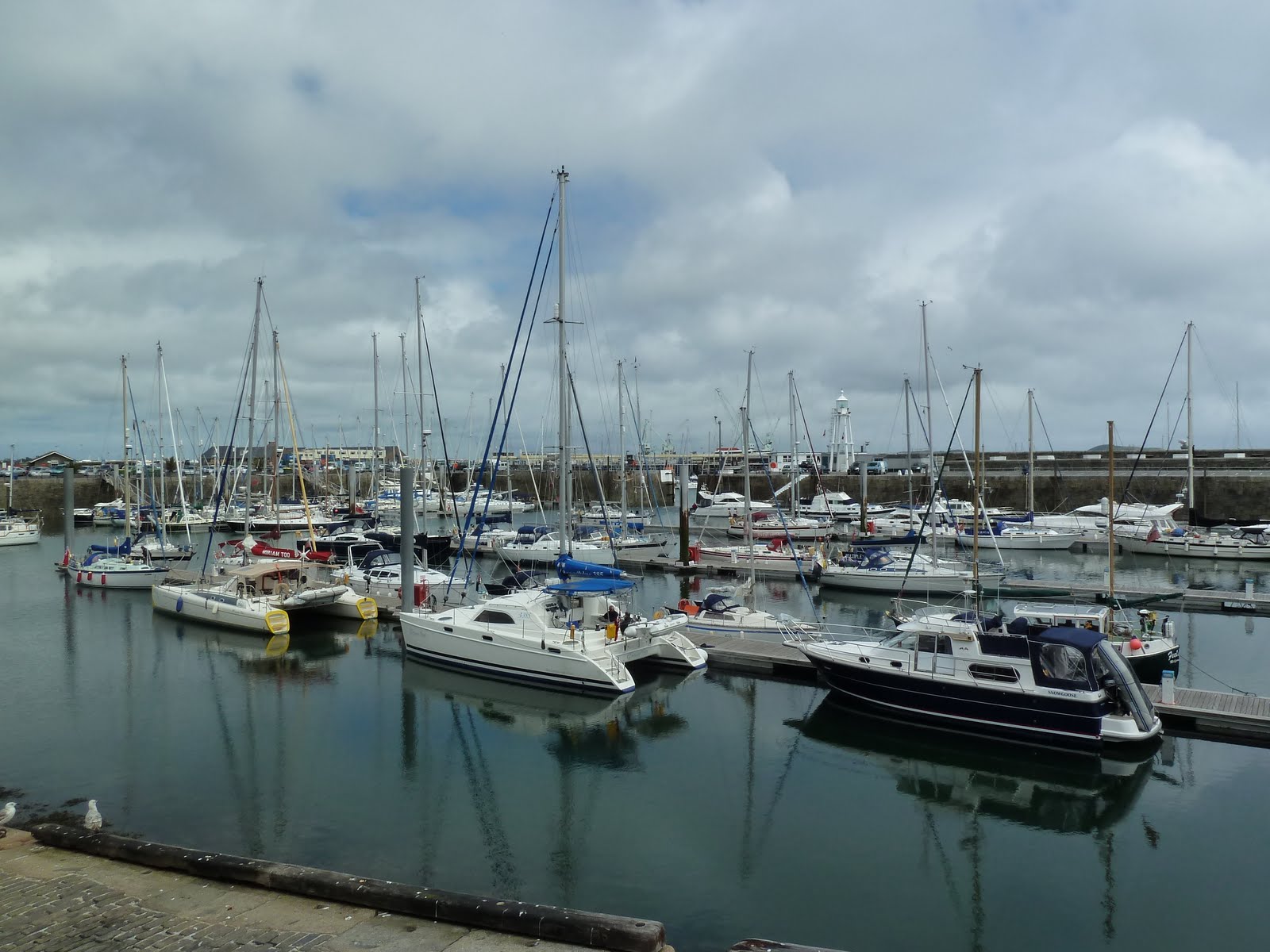
St. Peter Port Harbour

Our next stop was St. Malo, Brittany, from which we drove to see Mont St. Michel, an amazing sight no matter how many times you have see the pictures. More about it in my next post.

Travels With Victoria: To Sip a Rich Bordeaux

Our ship cruised up the Garonne River to reach the wine capital of France, the city of Bordeaux. All along the shores of the river were vineyards and chateaux, villages and woods, truly idyllic scenes.

The lovely Seabourn Pride docked right downtown and we could stroll all over the charming city of Bordeaux.

The Quay as we arrived

From the ship’s deck we saw the jardin.

Later, we walked in the shade through the perfectly spaced trees – so very French!!

At Chateau Paloumey…the final products.

One cannot visit Bordeaux without tasting the wines and we had the marvelous opportunity to visit
Chateau Paloumey (website here) where we indulged in a Blending Workshop.  We tasted three one-year old wines, a Merlot, a Cabernet Franc, and a Cabernet Sauvignon. Our instructor told us how to judge the color, aroma and taste of the young wines, at the very point at which a professional would choose to blend the three in the best proportions for future aging in the barrel and eventual bottling.

Due to a warm spring, in May they were predicting a very early harvest.

I can truly say that I have no future as a blender of fine wines.  I wasn’t very good at it — but I learned a lot and have a new appreciation of how the complexities of the various wines can enhance each other.  Bordeaux reds, like we tasted, need a long period of aging.  Blending after only one year in the barrel requires long years of experience. I recommend leaving this process to the experts!

Chateau Paloumey is owned by Martine Cazeneuve, who is one of a group of six women wine-makers in the region. They have banded together for promotional activities and probably managed to shake up the centuries-old male-dominated wine business of the region.  You go, girl!

Above are two shots of the Place de la Bourse (stock market) and the miroir d’eau, developed to reflect the beautiful 18th century buildings.  It is a broad raised slab of stone covered with
a half inch or so of water, a perfect mirror, and also a great place for the kids to splash on a hot day.

The Cathedral of St. Andre has a gothic facade…

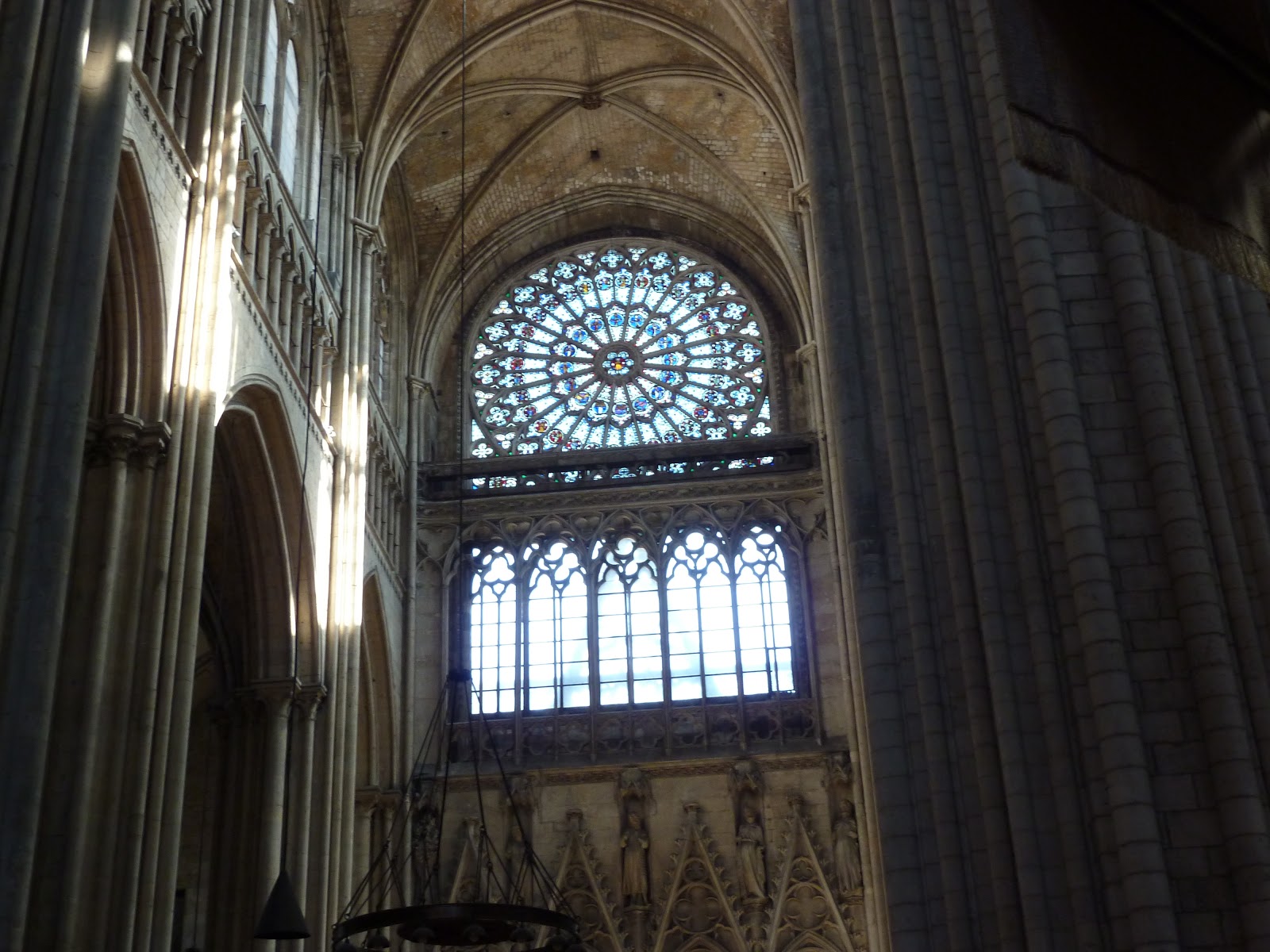
             …and brilliant stained glass windows — as well as many sacred chapels and tombs.

We usually try to visit the leading art museum in major cities — and Bordeaux has a honey! The Musee des Beaux Arts has a wonderful collection, covering many centuries. Naturally, I gravitated to the 18th and 19th century galleries and was reward by finding many interesting pictures and even a few old friends.

                Above is a portrait of John Hunter (c.1789) by Sir Thomas Lawrence (1769-1830).

              Countess Elisabeth of Salisbury (1769) is the work of Allan Ramsay (1713-1784).

Eugene Delacroix (1798-1863) painted this representation of ‘Greece on the Ruins of Messolonghi’ in 1828,  the site of Byron’s death in 1824 in the war for the independence of Greece.

A typical shop in Bordeaux where I was very tempted to buy French lavender plants, but I could not imagine keeping them alive and getting them home.  This was my very first visit to Bordeaux, which has a population of over a million in the metro area, the sixth largest city in France. I found it a delight and well worth another visit. In the meantime, I will comfort myself with Bordeaux — by the bottle!

Next stop: Guernsey