Travels with Victoria: Arriving in Dover

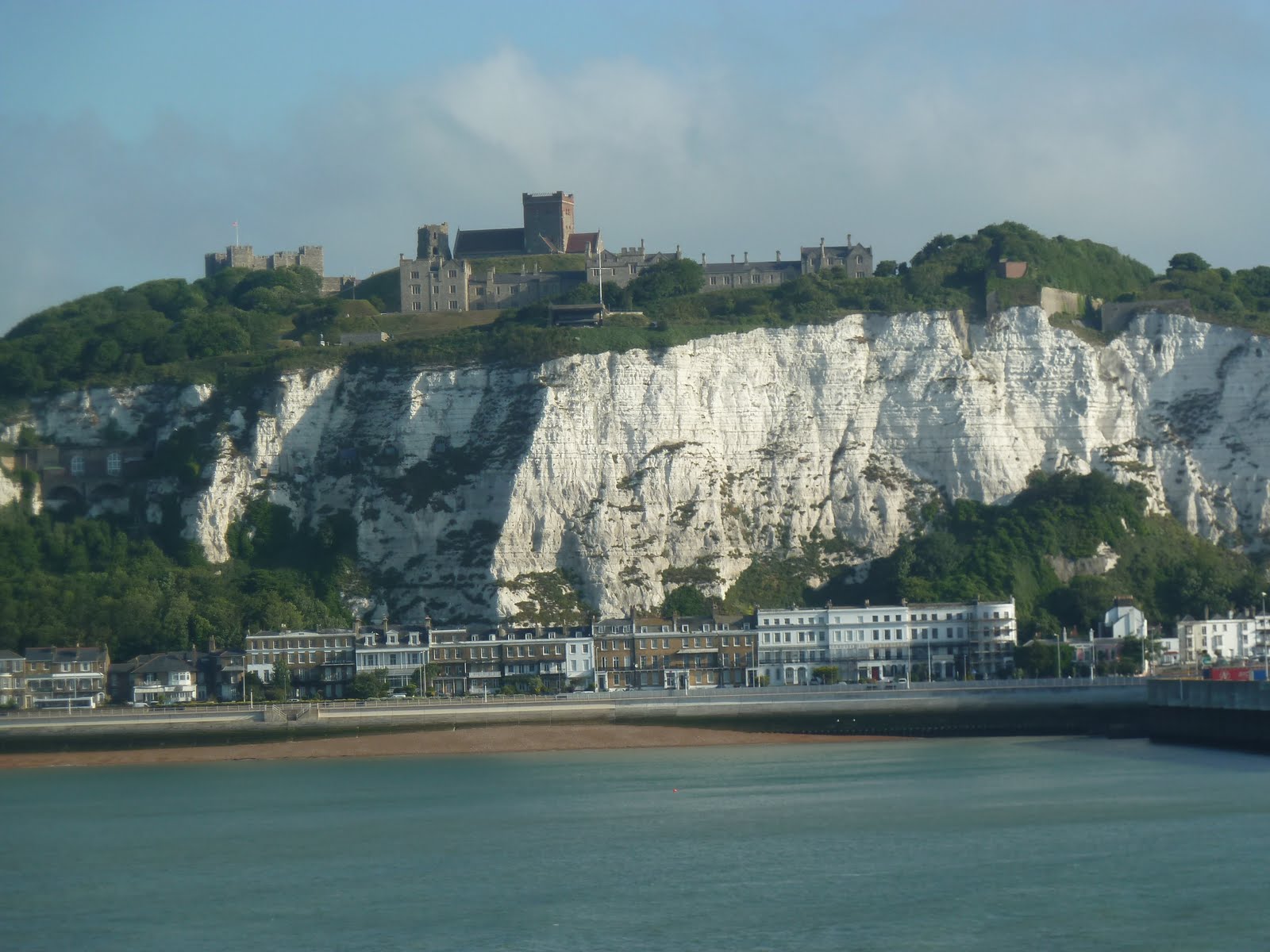
Sunrise over the English Channel on June 3, 2011.  I didn’t notice any bluebirds, but I definitely could not miss the white cliffs! And Dover Castle at the top.

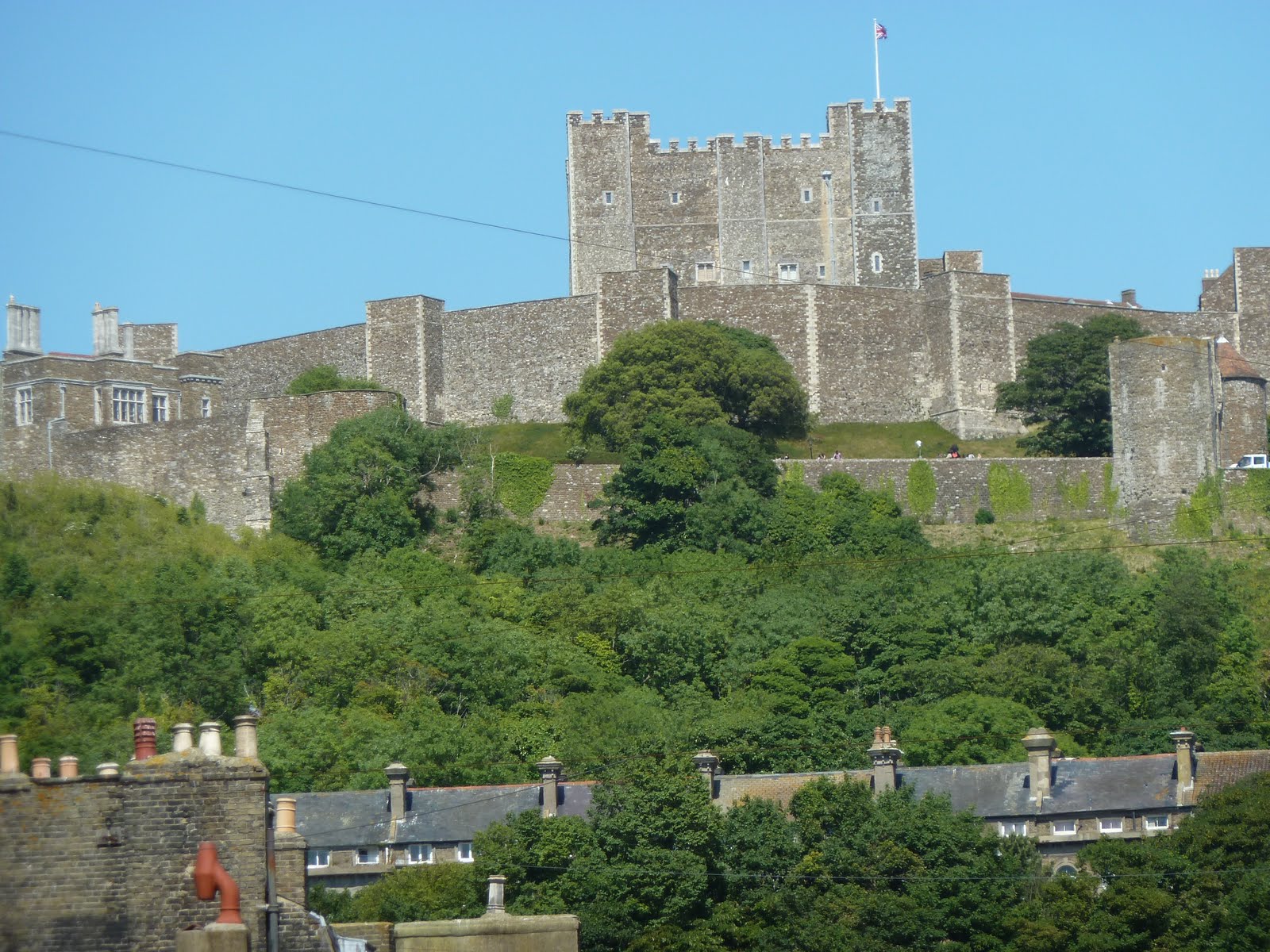
Here’s a closer view of the Castle — which has been in use for more than 900 years, from the time of  Henry II to the present day. And pre-Roman earthworks have been found, making the use of the channel bluff for defense more than 2,000 years old – or more. It has been a continuing process of adaptation and rebuilding, and it’s not over yet.

Currently tourists are invited to tour the World War II secret tunnels, including protected command centers deep under the surface.  Below, reversing the perspective, from the castle to the harbour.

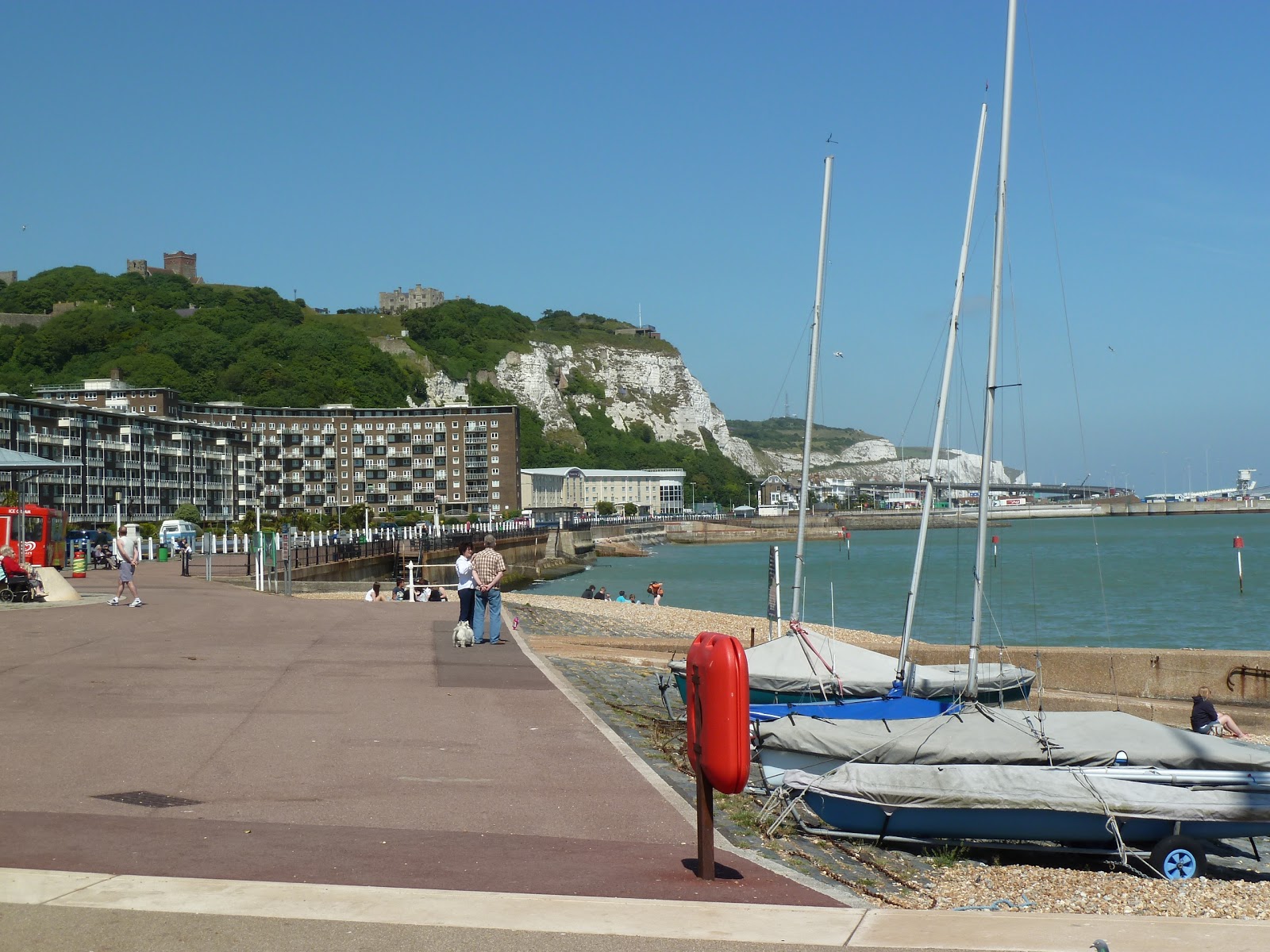
Dover, beyond the castle, is a busy port with ferries arriving and departing almost every hour of the day. From Dover to Calais (and vice versa) is still a popular route, even since the opening of the chunnel and the Eurostar rail service to Paris and Brussels. Along the harbour, the promenade is often full of strollers , sailors, sun bathers and tourists.
Our hotel was across the street from this promenade, and had a lovely outdoor cafe perfect for watching the passing scene.
If you watched the recent repeat of the Poirot episode entitled The Clocks (2009), you would have a very good view of Dover Castle and the promenade, but the residential street in the film was actually in London.

Above, scenes  from The Clocks, by Agatha Christie

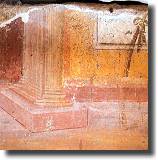
We also walked around the town (found an excellent pub, not to our surprise) and toured the Roman Painted House, excavated in the center of Dover, with continuing explorations going on today. It boasts the finest painted frescoes in Britain from the Roman period. Below, an overview of the site, and below that, one of the frescoes.
From Dover, we visited the charming town of Sandwich and nearby Walmer Castle, at which the Duke of Wellington died in 1852. Next in the series…

Travels with Victoria: Monet's Garden at Giverny

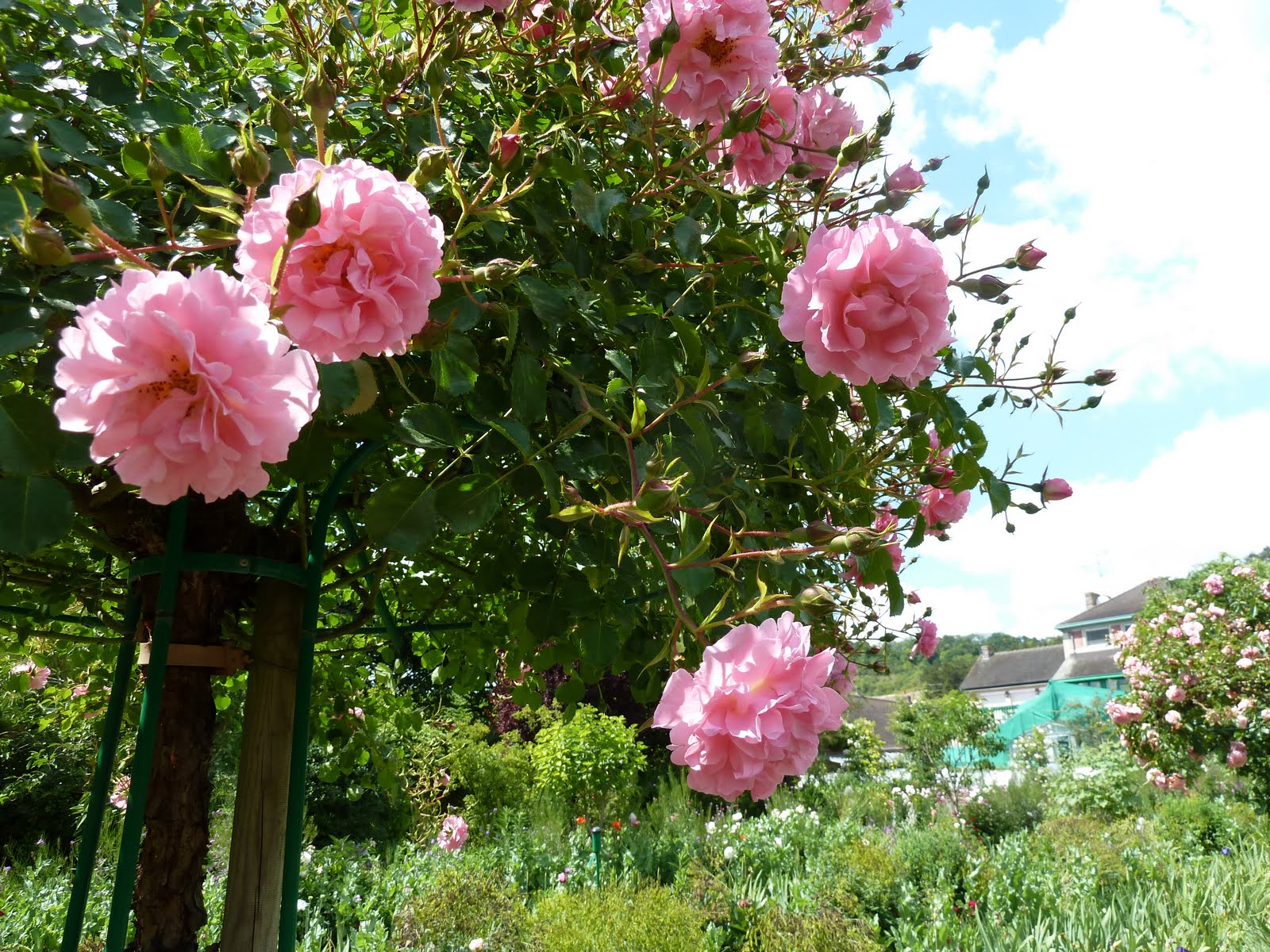
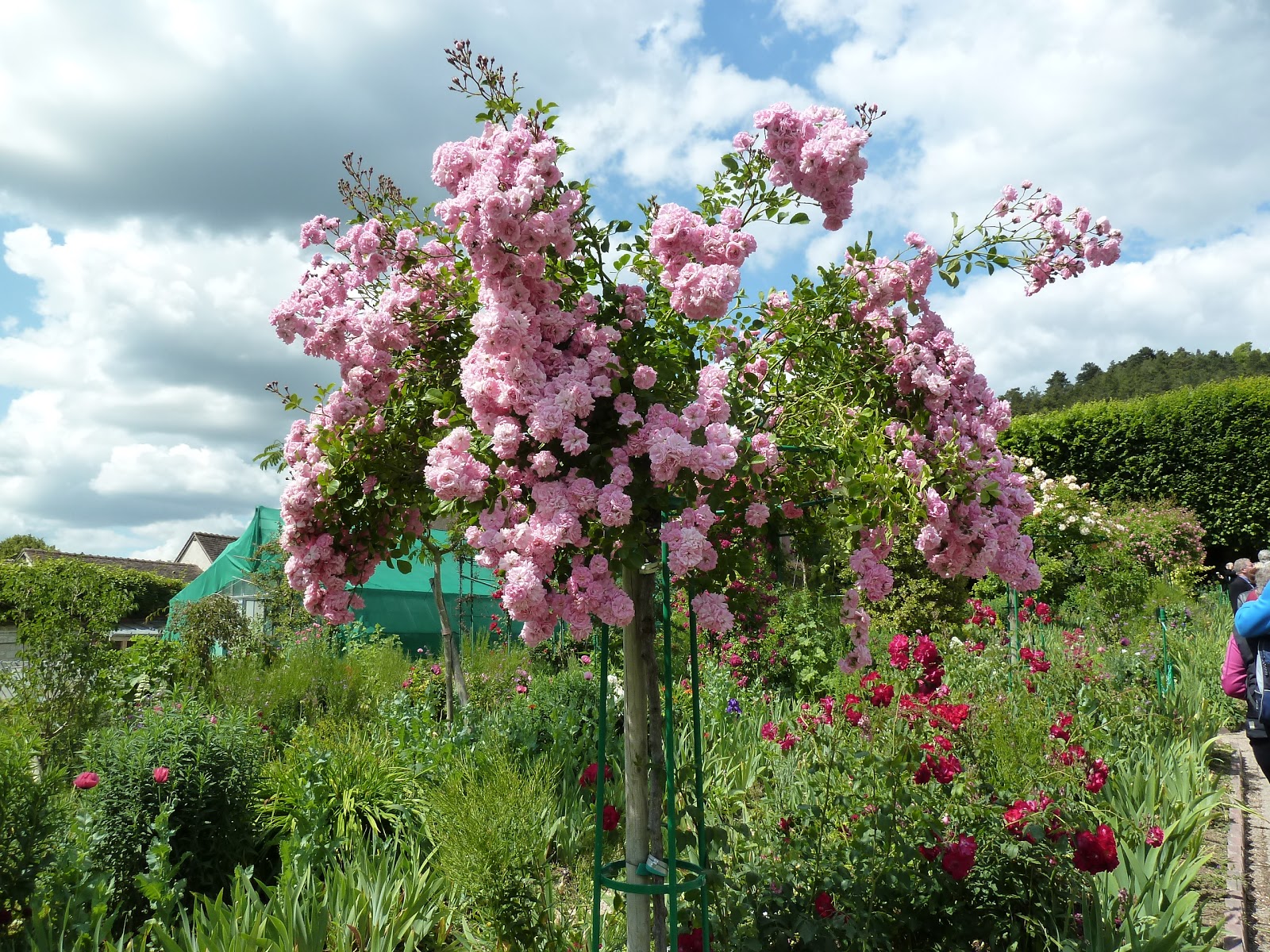
The rose trees stand in front of Claude Monet’s pink house with green shutters at Giverny on the Seine. Here is the website of the Foundation Claude Monet for more details about the house and gardens.

I haven’t exactly formulated a Bucket List of things I MUST do, but visiting Monet’s home would definitely have been included.  I grew up loving all the Monet works in the Chicago Art Institute and loving all the stories about how the Impressionists were shunned by the Art World at first and then triumphed by becoming so popular in the 20th (and 21st) centuries that their work is almost considered low-brow all over again!  It’s that old saw: (over) familiarity breeds contempt, I guess.

Claude Monet (1840-1926) began living at Giverny in 1883, eventually purchasing the property and devoting himself to cultivating his garden and painting it for almost 43 years.  He was one of the founders of the movement known as Impressionism, and his works can be found in almost all major (and many minor) art museums in the world.  When they come on the market, they are sold for millions of dollars, pounds or euros.

While on board the ship, I read Claude and Camille by Stephanie Cowell, an engaging novel about Monet’s first love. It fit in perfectly with this visit to the house where he lived with Camille’s sons and his second wife who had a large family herself.

Though I tried to cut from my pictures as many of the visitors as I could, I thought it was quite crowded on the day we visited, but guides assured us that it was actually a slow day.  Particularly as we negotiated the rooms inside the house, it seemed packed.

No pictures were allowed inside, but I did follow many others in sneaking a shot out the window at the garden from above.  This website reveals all and will lead you to many more accounts and pictures of Monet’s life, his paintings, and his garden.

Monet was obsessed with the play of light on his subjects. He painted the same or similar scenes over and over in various light and weather conditions: haystacks, cathedral facades, landscapes, and of course, his garden.

As of June 1, 2011, an Englishman called James Priest took over as head gardener.  His background includes training at the Royal Botanic Gardens, Kew, and many years working with Gilbert Vahe, who rescued and redeveloped Monet’s Giverny gardens. 

The garden is divided by the road through the village, and the two halves — one near the house and the other mainly the pond — are joined by a walkway under the now-busy road.

Perhaps Monet’s most famous paintings are those he did of this pond and its waterlilies. 

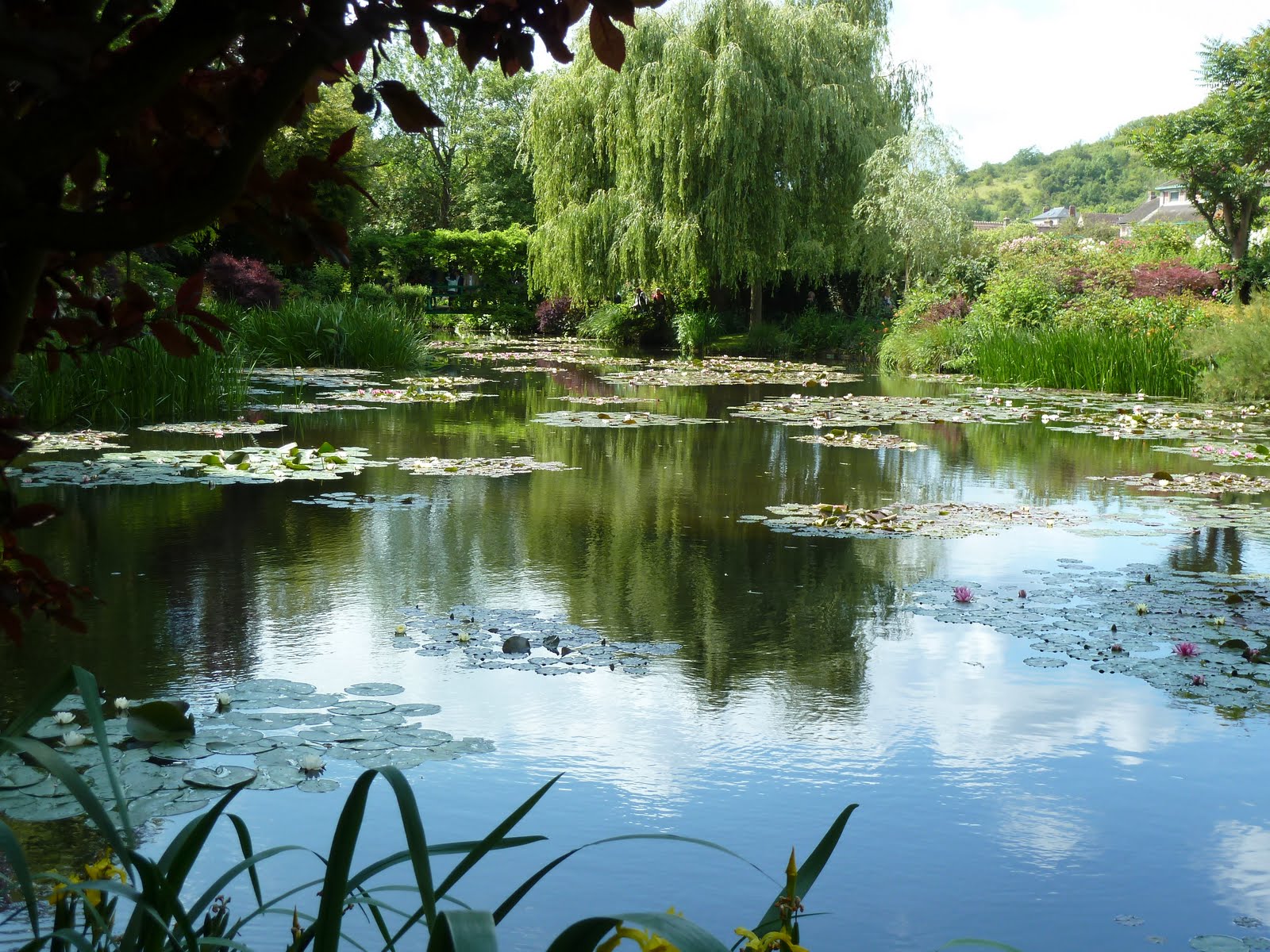
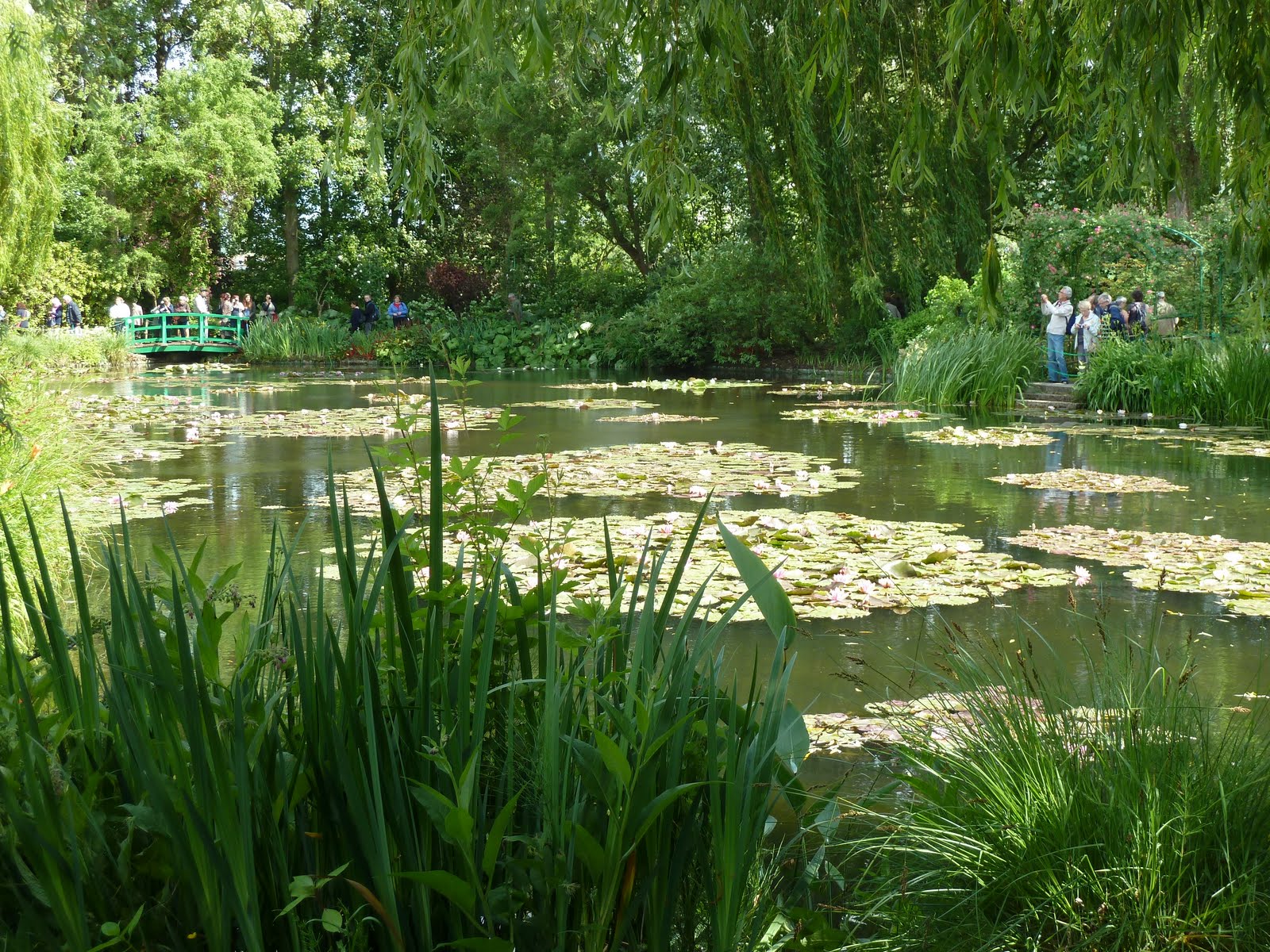
The pond is much larger than I expected, with more than one little Japanese bridge — at least today.

The version of Water Lilies he painted in 1916, below, hangs in the Boston Museum of Fine Arts.

And below, my photo of the water lilies in the pond on June 1, 2011.

Below, another painting, from 1904

 Can you tell the difference?  And, just for good measure, here are a two more of my pond photos…

Thank you, Claude Monet, for bringing so much pleasure to so many people.  Perhaps I will revisit Monet and take a look at the many paintings he did in England someday.
This is next to the last of my posts from our cruise.  After returning to the English Channel from the Seine, we crossed to Dover….soon.

RWA in New York

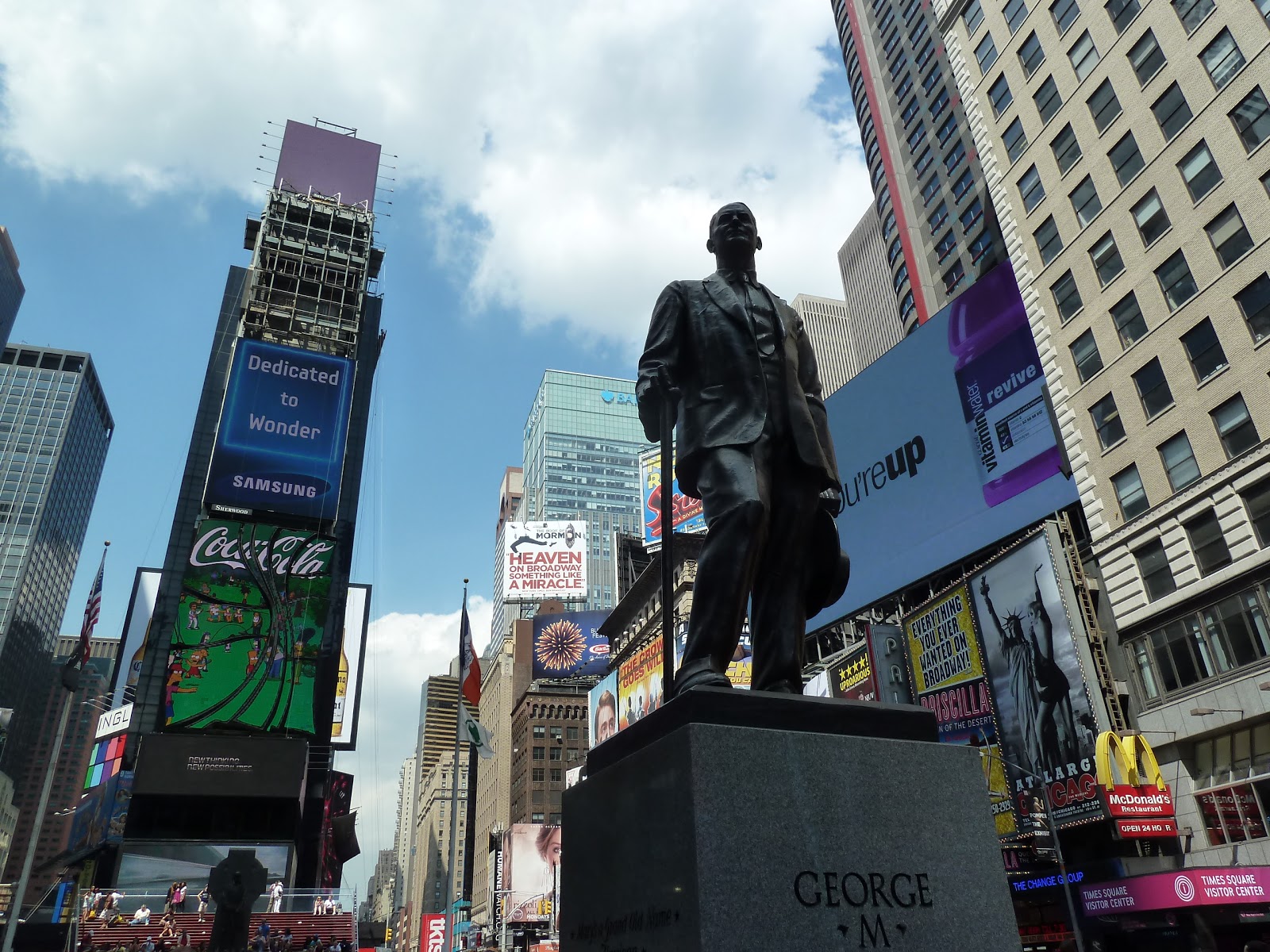
Victoria here, with my report on the Romance Writers of America Conference in New York City, June 29 to July 1, 2011, at the Marriott Marquis Hotel on Times Square.  I attended soon after returning from my European adventures so I was definitely in the early-to-bed group and probably missed half the excitement. Below, the statue of George M. Cohan, one of the fathers of the Broadway musical.

Before the official start of the conference, my roommate and travel buddy, Judith Laik, and I took in the Frick Museum at 90th and Fifth Avenue.

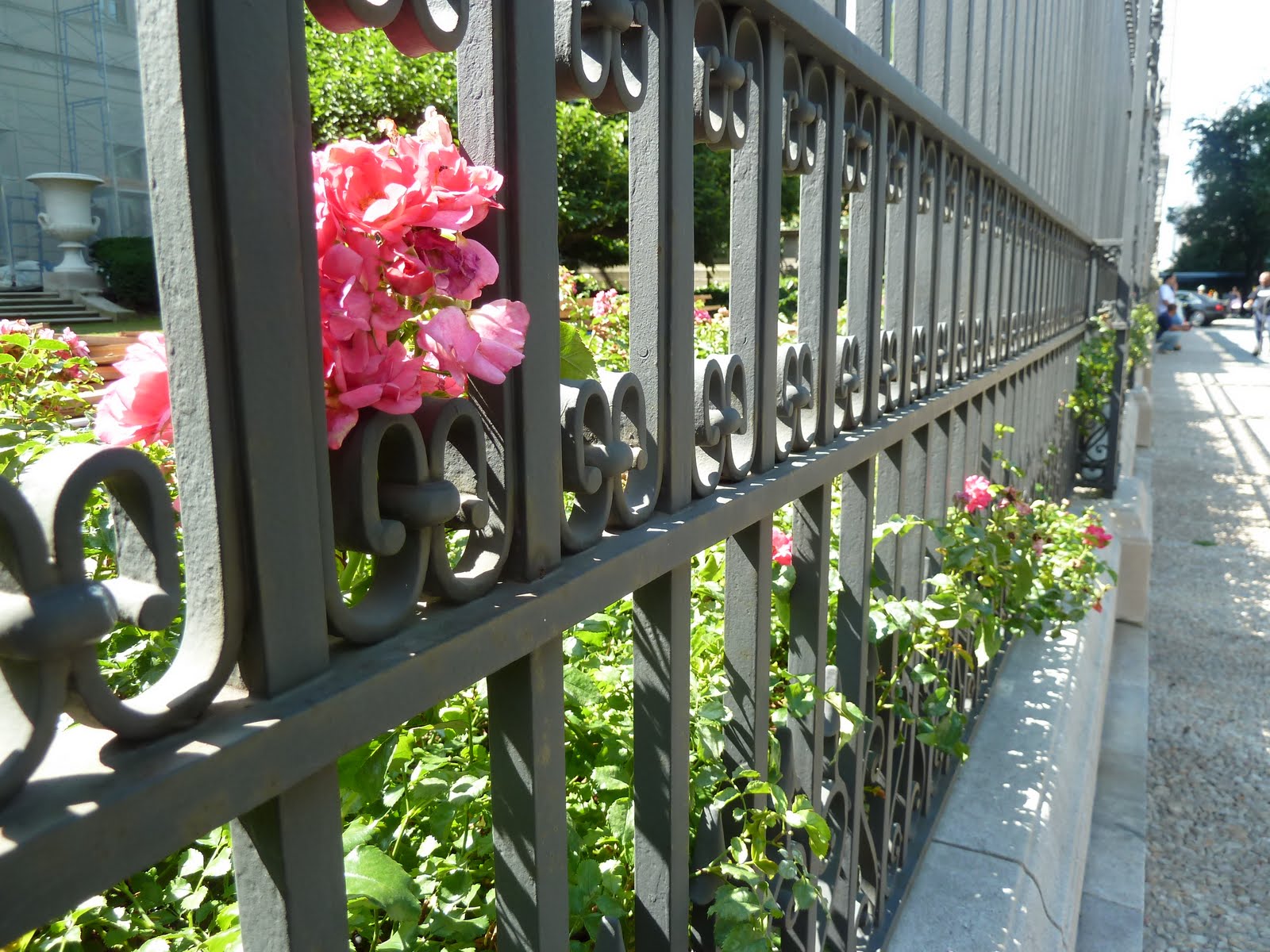
Their pretty gardens were full of scaffolding, sad to say. But a few roses clung to the fence on Fifth.

This building was the residence of the Henry Clay Frick (1849 -1919) family from its completion in 1912 to the point at which it was turned into a museum for his collection of old masters. Some additional construction was needed but part of the very nice atmosphere there is the feeling that you’re in a home – just like your very own nest, of course.  Don’t we all have Vermeers, Gainsboroughs and Rembrandts on our walls and priceless ceramics on precious antique tables? 
One must acknowledge that Frick was a notorious robber baron, but that makes his little gem in Manhattan no less delightful to visit.
After the opening luncheon, I moderated a workshop given by Jennifer Kloester (left) and Sabrina Jeffries entitled “Keeping it Real: Regency Research Georgette Heyer Could Believe In.” Jennifer is the author of Georgette Heyer’s Regency World and has a biography of GH coming out soon.   Sabrina has written more than two dozen novels, most set in the late Georgian period.

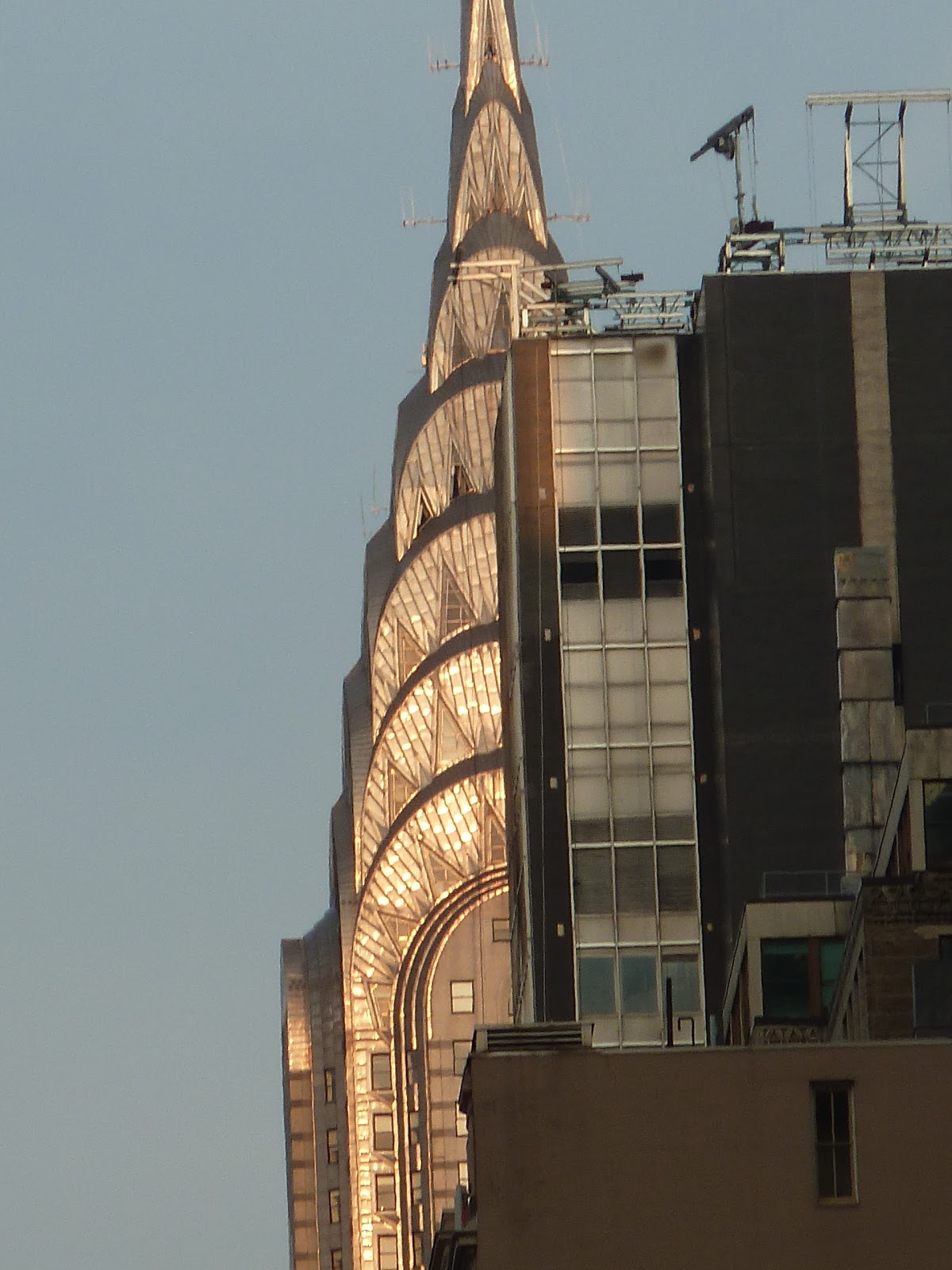
After an afternoon of meetings, we went out to catch a breath of fresh (?) air, and saw the rays of the lowering sun gild the Chrysler Building a few blocks away.

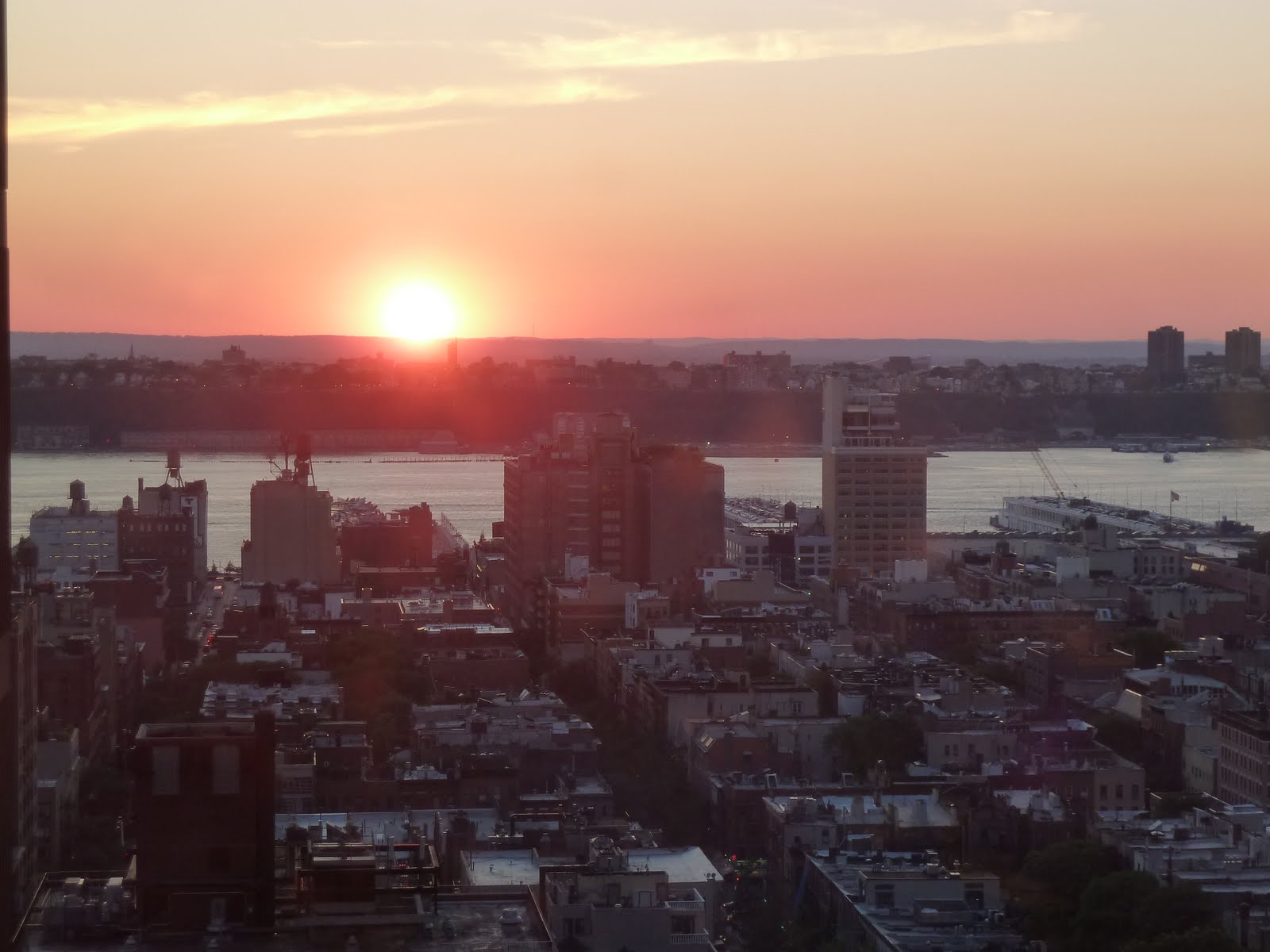
Sunset over the Hudson River from our room on the 22nd floor.

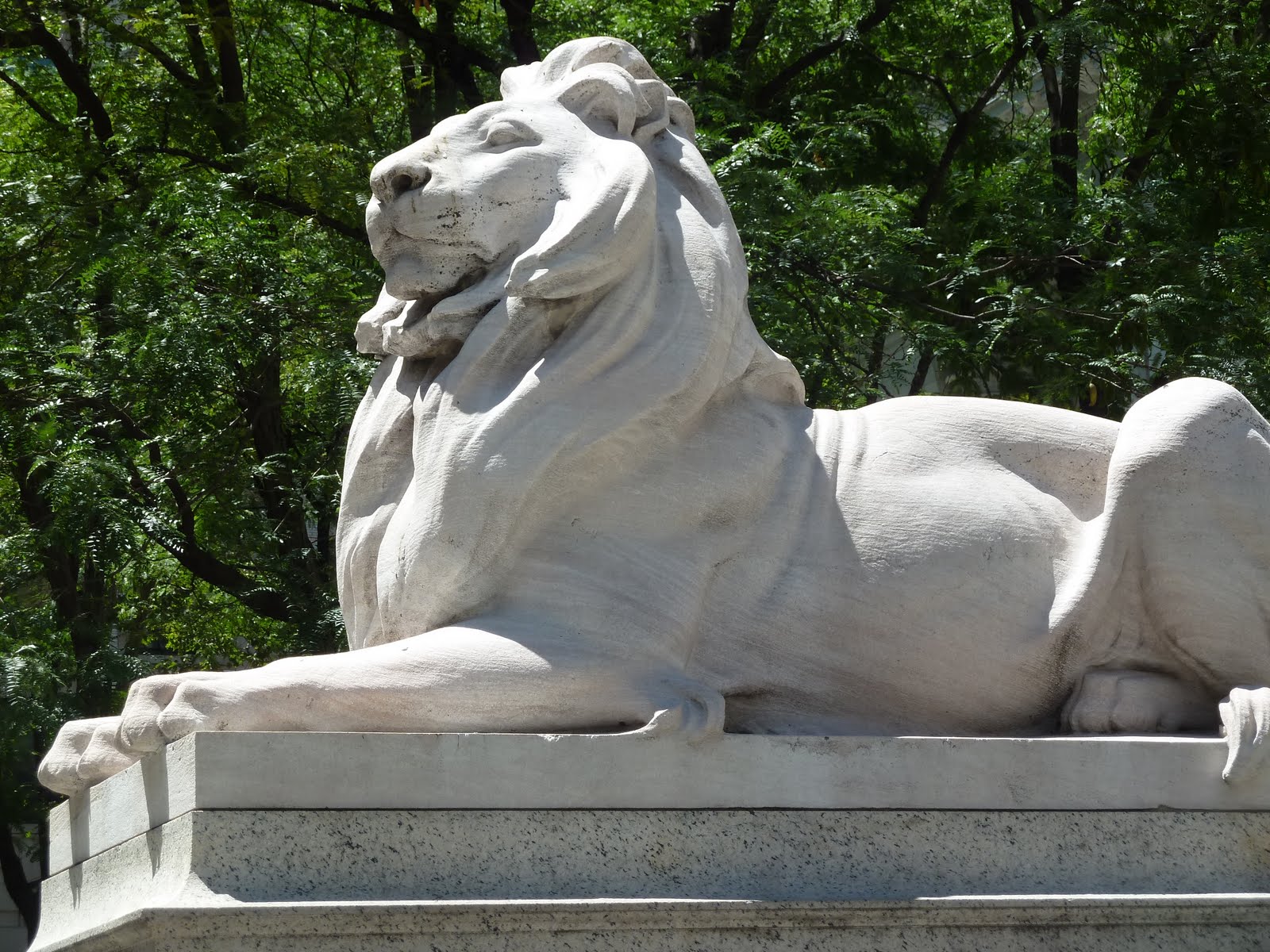
I managed to fit in a quick trip to the New York Public Library where I never fail to find an engaging snippet of knowledge in a brief visit.  Sometime I’ll spend an entire day there.  How about a month?

The noble beasts always get my respect.  Are they the guardians of all knowledge – or symbolic of the majesty of the contents behind them?  In case it looks like I spent most of my time flitting about the city, let it be known that I worked two full mornings as a volunteer at the editor-agent appointments desk, attended several workshops and PAN (Published Author Network) sessions and many other activities. And I spent a bundle on taxis.

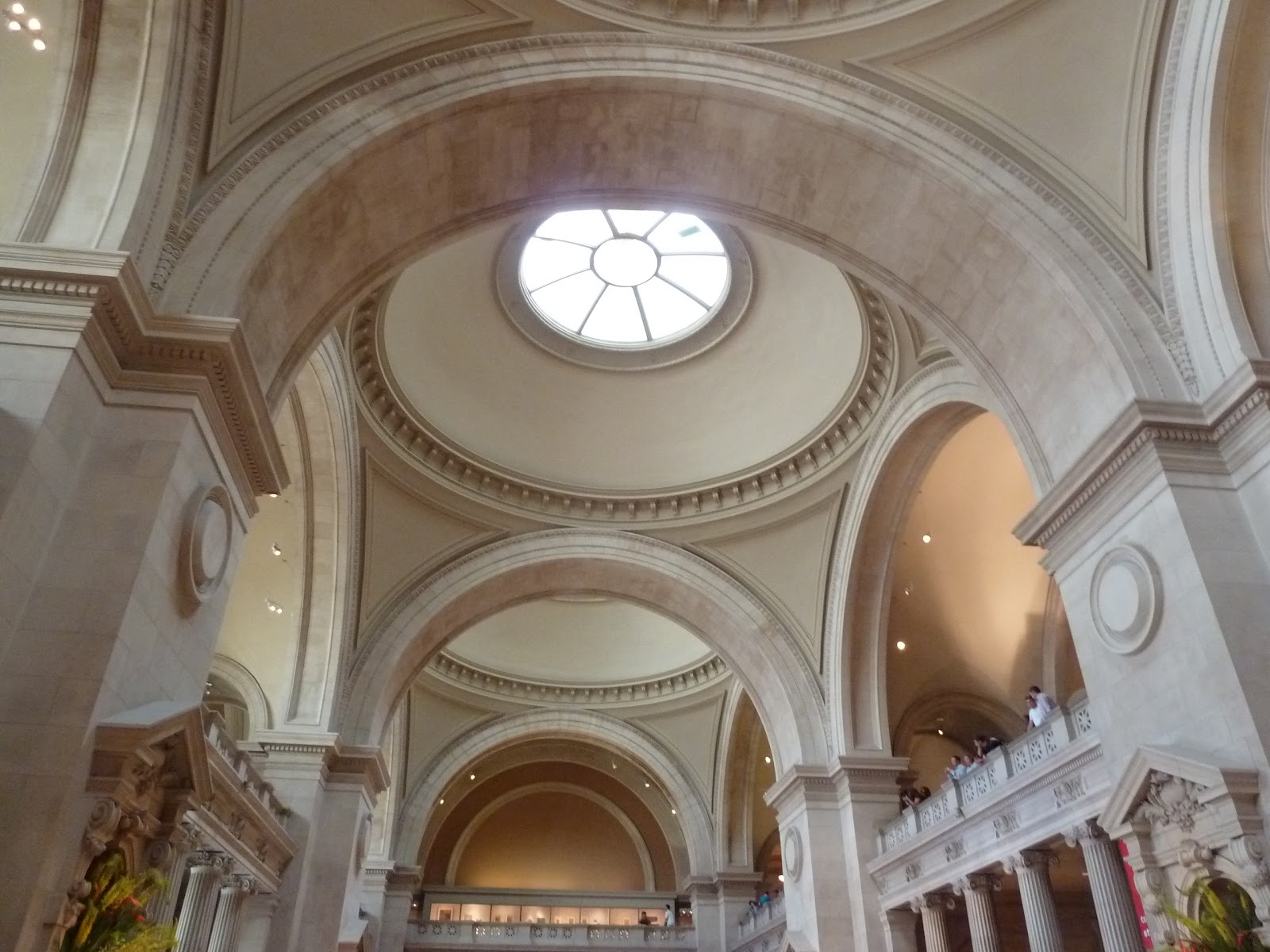
Before the RITA ceremonies on Friday night, Judith and I browsed through the Metropolitan Museum of Art. We could hardly do more than scratch the surface, but it was wonderful.

We found the British period rooms temporarily closed off, to our disappointment. As devotees of the Regency, we had looked forward to visiting a little bit of London in NYC. But in the American Wing, we found the colonial and federal period rooms almost as useful for our research.

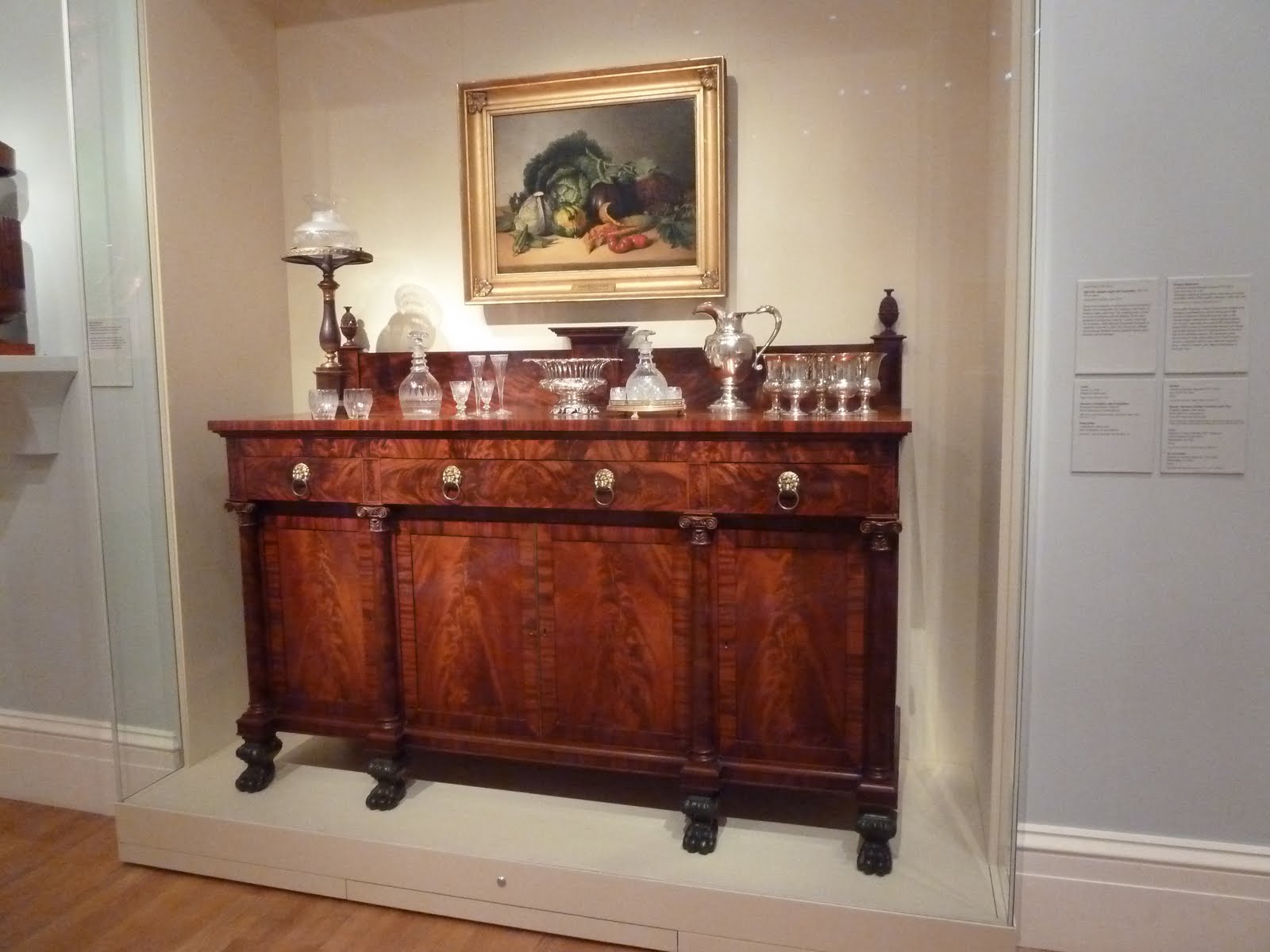
For example, this sideboard was made in New York City about 1812 by French emigre cabinet maker
Charles Honore Lannuier (1779-1819) of flame-grain mahogany veneers. Shown on top are decanters, flutes, and wineglasses, most of them made in Pennsylvania and New York.

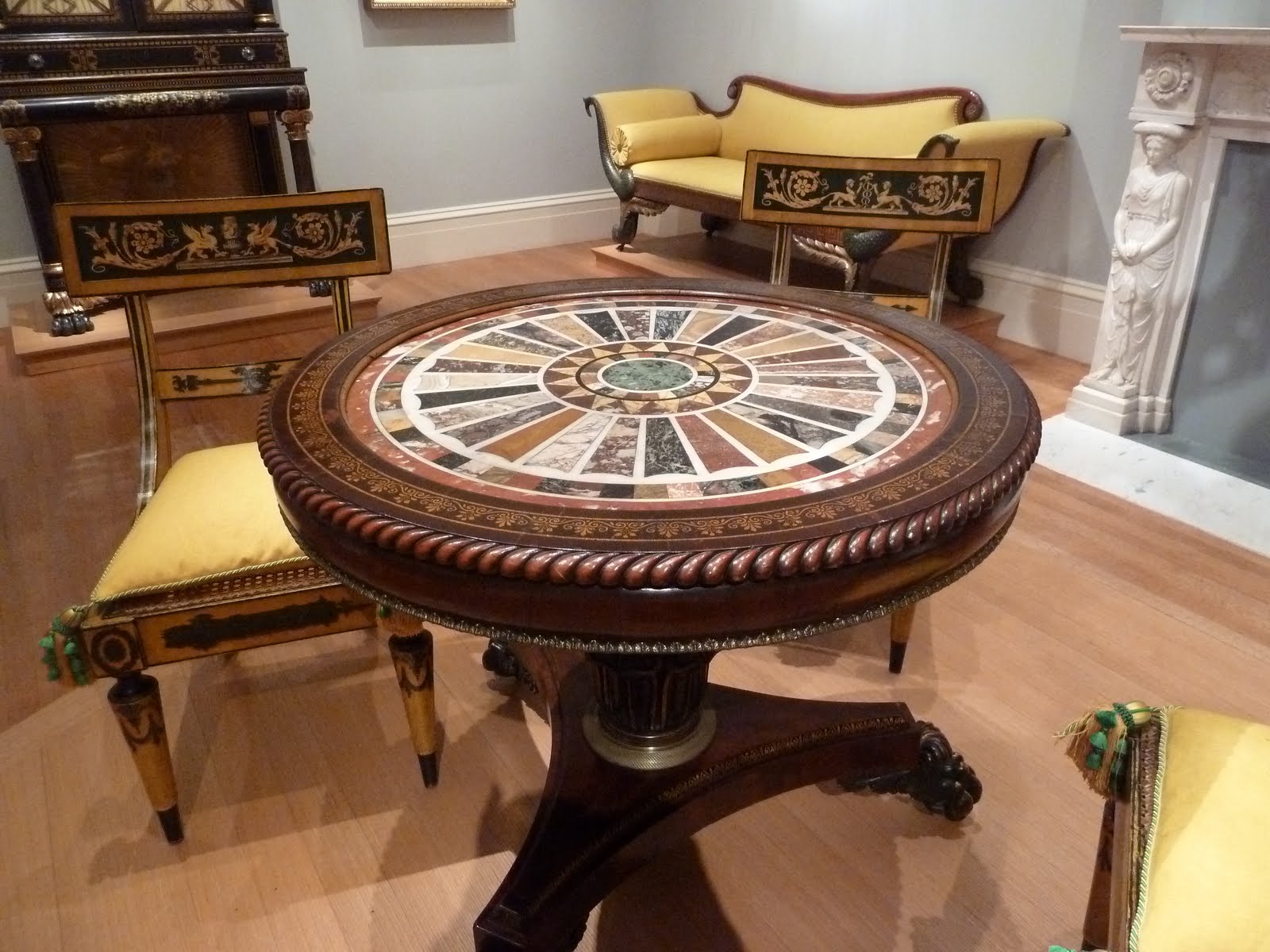
This table was made in Philadelphia, c. 1830, of mahogany, marble and brass by another French emigre, Anthony Quervelle (1789-1856). He also made tables for the East Room of the White House. The side chairs are attributed to the Baltimore workshop of John and Hugh Findlay, c. 1815-25.

Elsewhere in the Met, we stumbled upon Napoleon, in the form of a tapestry in wool, silk and metal thread, in its original pine frame. It is based on a 1805 portrait by Francois Gerard (1770-1837) of the emperor in his coronation robes. Woven in the workshop of Michel Henri Cozette (1744-1822) in the Gobelins Manufactory, 1808-11.

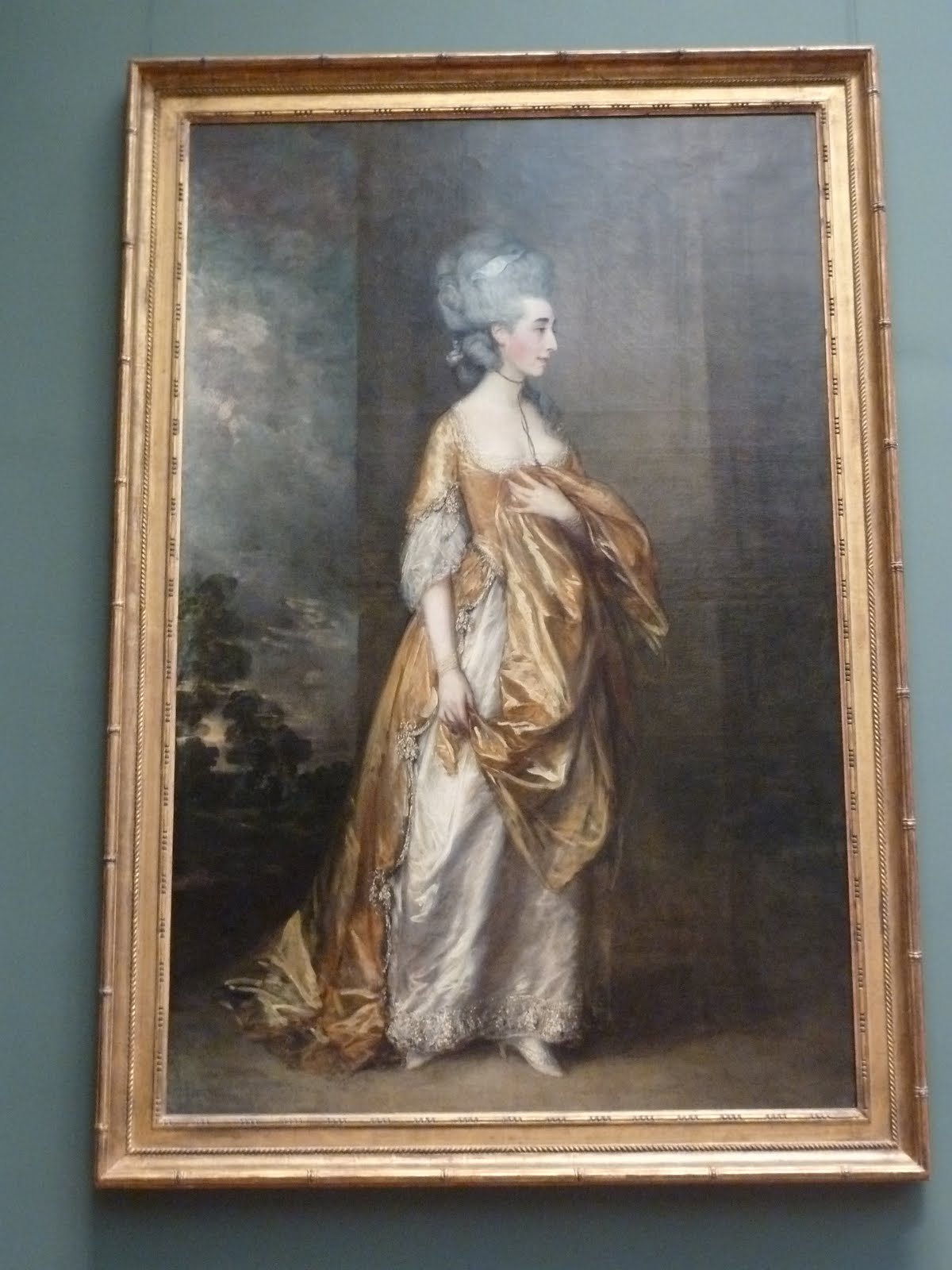
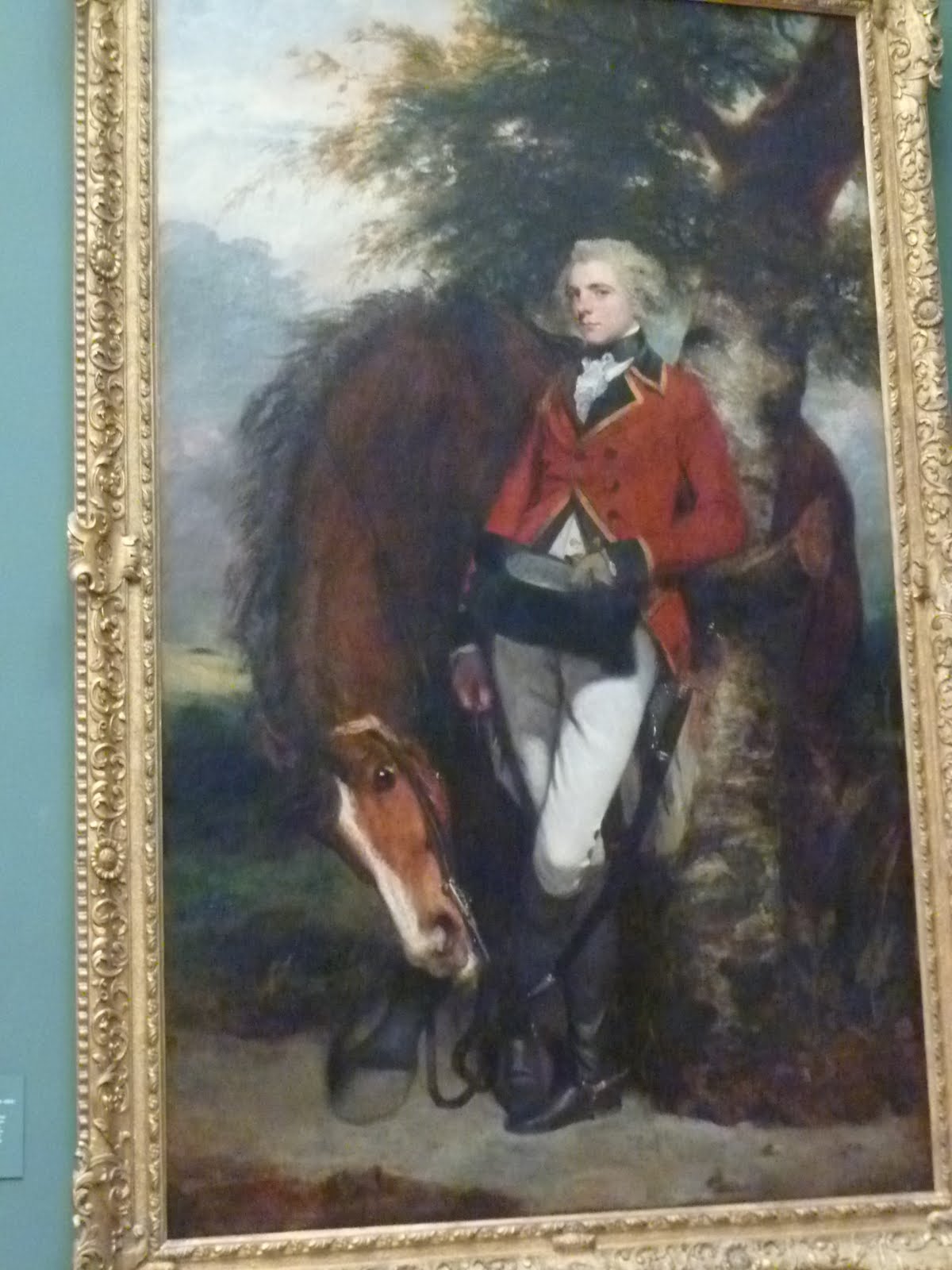
At last we found the British paintings — works by Reynolds, Gainsborough, Raeburn, Hoppner, Lawrence, and many more of our favorites.  Below, three examples.

John Hoppner (1758-1810): Mrs. Richard Brinsley Sheridan and Her Son
Thomas Gainsborough (1728-1788): Mrs. Grace Dalrymple Elliott
Sir Joshua Reynolds (1723-1792): Captain George  K. H. Coussmaker
Judith and I hustled back to the hotel for the awards ceremony which presented Ritas for published novels and Golden Hearts for unpublished manuscripts, sort of the Oscars for romance writers.
Rita

  The hustle and bustle was over for another year.  Several thousand women — and some men too — had a lot of sleep to catch up on.

Travels with Victoria: Rouen, France

Cruising the Seine — can you think of a more beautiful place to be on a warm sunny day at the end of May? Our ship navigated the broad mouth of the river and about 75 miles of curving river from the English Channel to Rouen past an idyllic countryside of neat farms, lush fields and contented cattle, past villas and villages.

Approaching the Pont Gustave Flaubert; the vertical lift bridge across the Seine at Rouen opened in 2008. At the right is the distant steeple of the cathedral (see below). 

A passing River Cruise ship, which can fit under the bridges; we saw many of these vessels which can go at least as far up river as Paris.

Rouen being the principal city of Haute-Normandie, one might expect the half-timbered buildings — and there were plenty of them.  This one houses a Monprix, part of a large French chain, roughly comparable to Target in the U.S.

One of the city’s more famous sights is the Gross Horologe, an astronomical clock.  It reminds me that we found a McDonald’s nearby, which we were looking for to use their worldwide free wi-fi.  In the several French McDs at which we stopped, a separate coffee bar served excellent cafe au lait. Nice sipping while we caught up on e-mail.  But that brings up another question: How come ships and hotels so often charge exorbitant rates for their internet access?  And then are so slow it costs a bundle just to read a few messages — while good ol’ Mickey D’s has good wi-fi service (most places) free, whether or not you buy a Big Mac?

Rouen’s Notre Dame Cathedral (above) was damaged and almost half of the city was destroyed by allied bombing attacks during World War II.  Restoration is complete, but constant renovation and repairs are needed to keep the oldest parts of the structure, dating from the 12th century, intact.

The cathedral houses a tomb of Richard Coeur de Lion (the LionHeart) who lived from 1157-1199. Richard was King of England and Duke of Normandy; his heart is buried here though other remains are buried elsewhere.

Joan of Arc was tried and executed by burning at the stake in Rouen in 1431, not a claim to fame that is celebrated in the city.

Here is a cheerier note, taken at a flower vendor’s colorful corner.

Claude Monet painted the facade of the Cathedral over and over in varying light and weather conditions.

One of Monet’s paintings of the cathedral on a misty day hangs in the Musee des Beaux-Arts de Rouen.

The above view of the Rouen Cathedral in full sunlight (1894) by Claude Monet belongs to the Musee d’Orsay, Paris.

                                          The Courtyard restaurant of the Rouen Art Museum.

 Rouen’s Hotel de Ville, aka City Hall.
Street Scenes
  Detail of old stone carving…

Coming soon: Visiting Monet’s Garden at Giverny