Speaking of Bridget Jones . . . .

Happy, happy, joy, joy! Just days ago, Colin Firth confirmed that plans for Bridget Jones 3 are well under way. Details remain sketchy, but the Christmas season will once again figure into the plot, as well as trouble with a capital T in the form of Daniel Cleaver. With luck, another hilarious fight scene between Mark Darcy and Daniel will also be in the cards. All of the main cast members are slated to return. You can read the article and Colin’s quotes here.

400th Anniversary of the King James Bible and Hatfield House

The year 2011 marks 400 years since the Bible was translated into the English language in the Authorized Version, aka the King James Bible. After a labor of more than seven years by 47 or more scholars, this third version in English was printed and has, ever since, been one of the most influential books in the English speaking world.

So, friends, eat drink and be merry, for in the fullness of time, you may have to become my brother’s keeper, for he fell flat on his face, though he is clearly the salt of the earth and only occasionally acts holier than thou. He is as old as the hills, but has had his fall from grace due to his feet of clay and his taste for forbidden fruit. In the twinkling of an eye, the powers that be could reach the root of the matter. As we sometimes say, the spirit is willing but the flesh is weak. So will you cast the first stone? Be a fly in the ointment? Or will you gird your loins, put your house in order and find your heart’s desire? Remember, we reap what we sow.

Okay, so that paragraph is a bit lame, but it illustrates how many familiar phrases — cliches really — come from the KJV.

Numerous celebrations, conferences, services, choral events and exhibitions have been going on all year. For upcoming events and more information, click here for the King James Bible Trust website with further information.  Of special interest is the website’s video on life in 1611.

King James

Images courtesy of King James Bible Online; for more, click here.

Many of the stories about the anniversary mention the coincidence of this Bible being written at roughly the same time Shakespeare’s works were performed and published.  William Shakespeare (1564-1616), the  English language’s most famous poet and playwright, must have known and seen the new bible. I wish I could find out what his reaction was, but so far I haven’t found any comments from Will.

The Chandos Portrait of Shakespeare, National Portrait Gallery
The period of the English Renaissance which brought us both the King James Bible and Shakespeare  was part of great changes in all aspects of life.  But even today, we recognize the timelessness of these great works. And celebrate them!

Another 400th anniversary marked in 2011 is for Hatfield House in Hertfordshire, home of the Marquess of Salisbury.  Here is their website.  And for my blog post on a Hatfield visit in 2010, see 8/13/10. I visited again last June (2011) and took a few more pictures.

Above is a shot I took from the staff and business entrance to the House, which is a big working enterprise. I was there to do some research in the Archive.

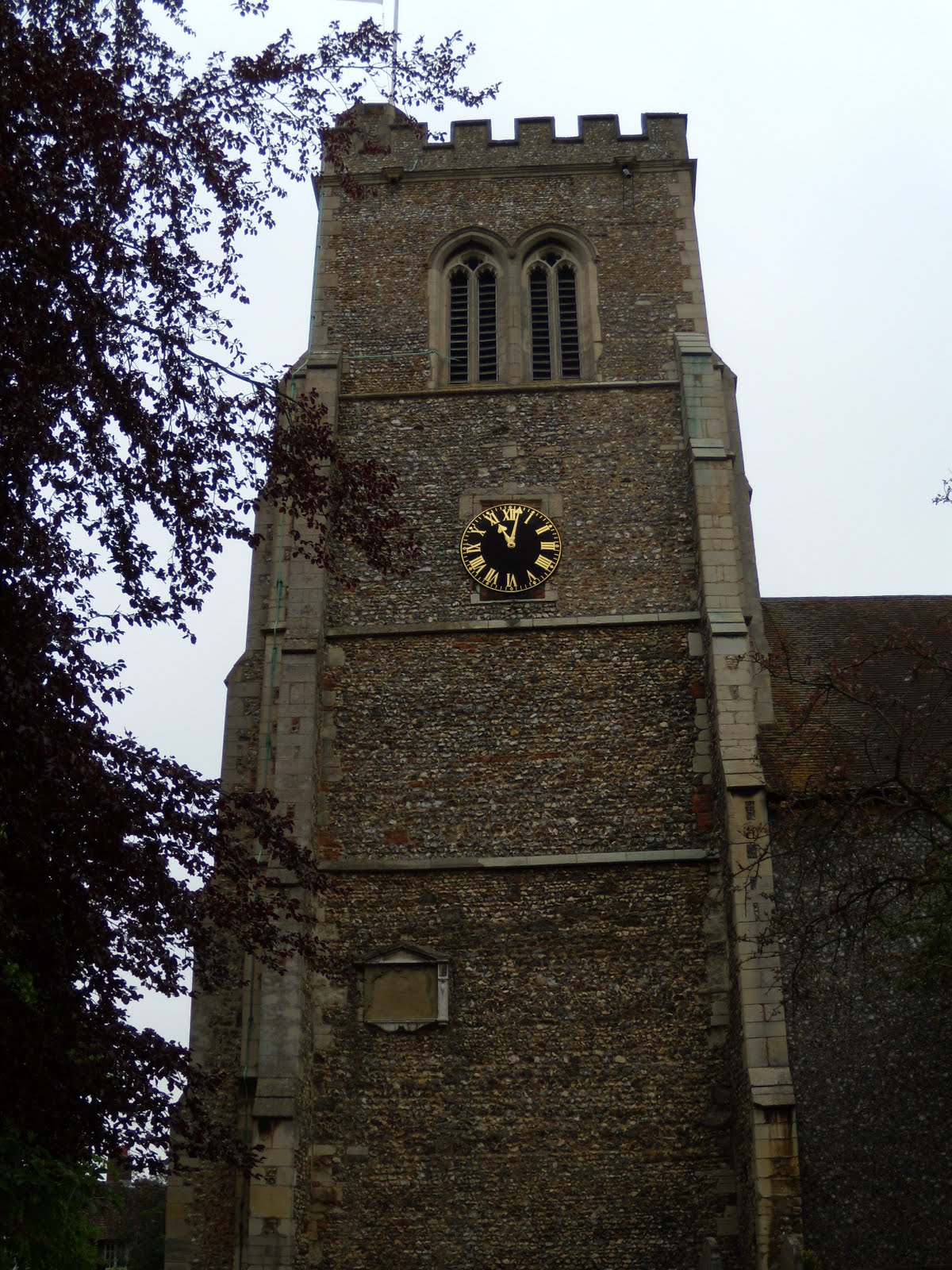
From near the same spot, one can gaze across the gardens to the Old Palace, where Elizabeth I lived as a child and young woman.  Just to the left of the Palace roof is the tower of the parish church, St. Etheldreda’s.
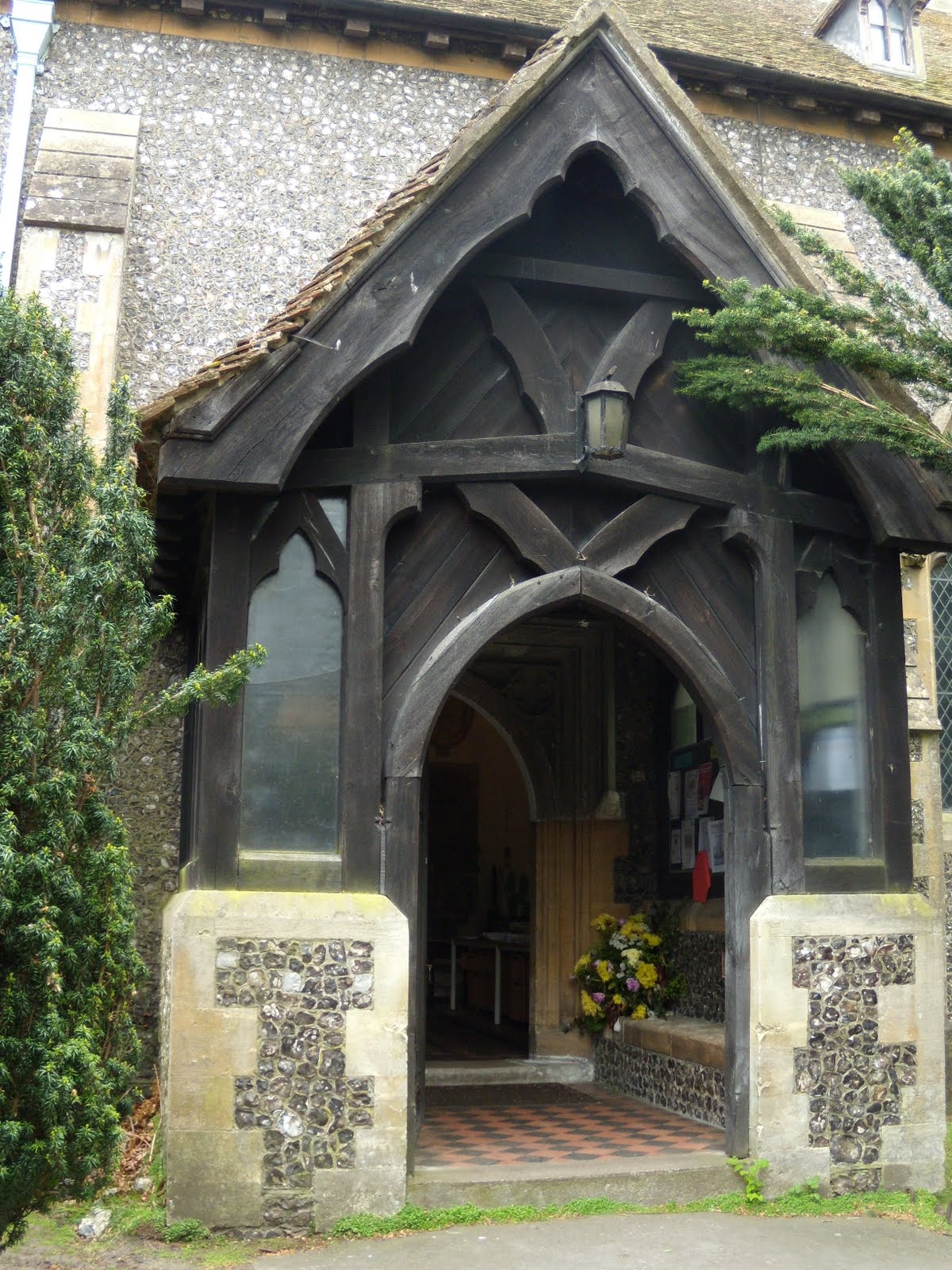
Below, the church in 2009. Here is their website.

Below, one of the handsome lamps that grace the park.

And finally, some of Lady Salisbury’s beautiful old roses.

2011 is a good year in many ways — and so apparently was 1611.

Moats, Five of 6,000

Victoria here. The Summer 2011 issue of the National Trust Magazine has a page of facts and figures with several fun items:
43 is the number of pubs owned by the NT; 200 bicycles are available to hire in Cumber Park Nottinghamshire; and 6,000 is the number of MOATS in the UK, “making them one of our nation’s most common medieval monuments.”
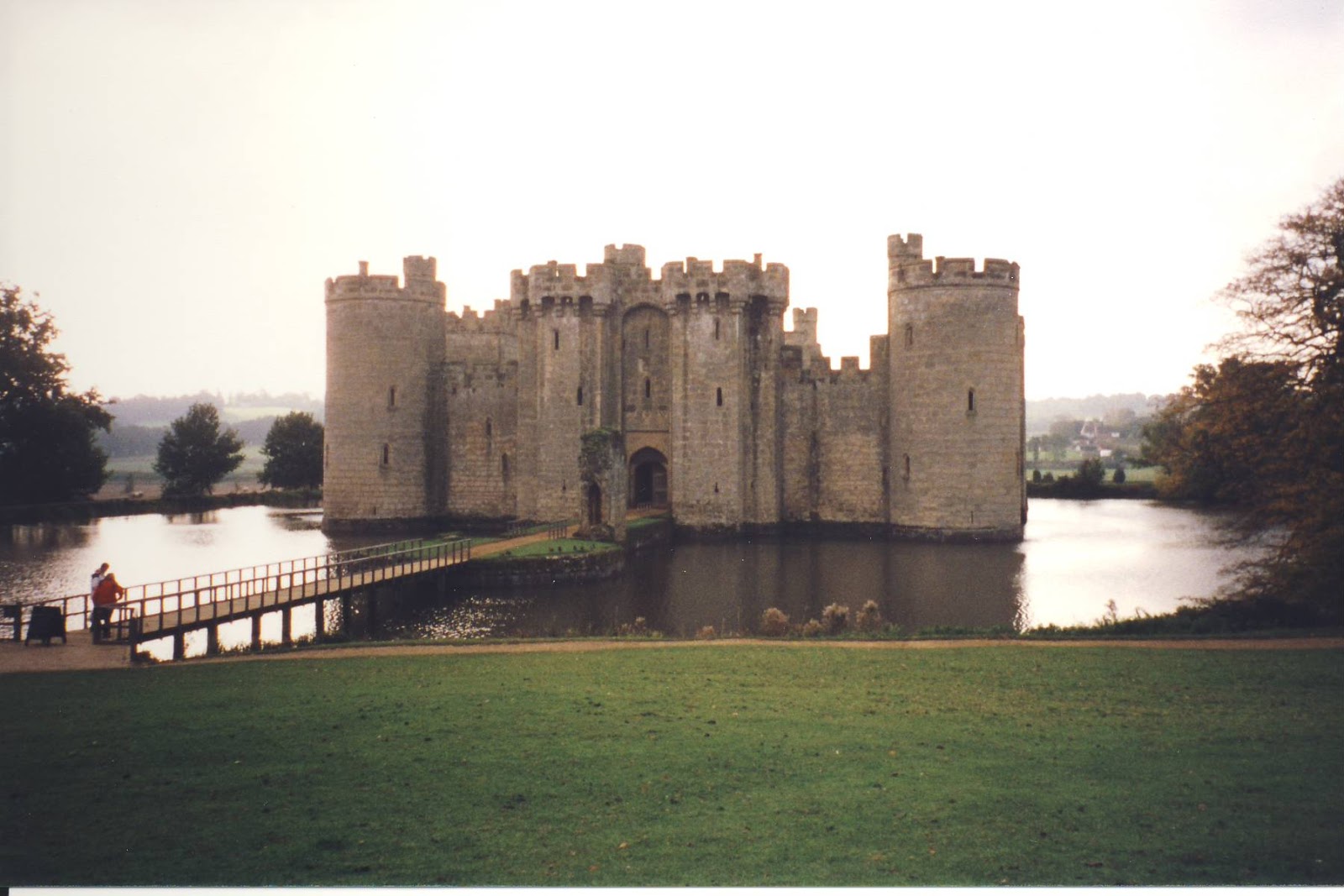
Bodiam Castle
I went to my picture collection to see how many moats I could account for. A recent one, though now a dry garden, was at Walmer Castle in Kent, which you can read about on this blog of 7/24/11.

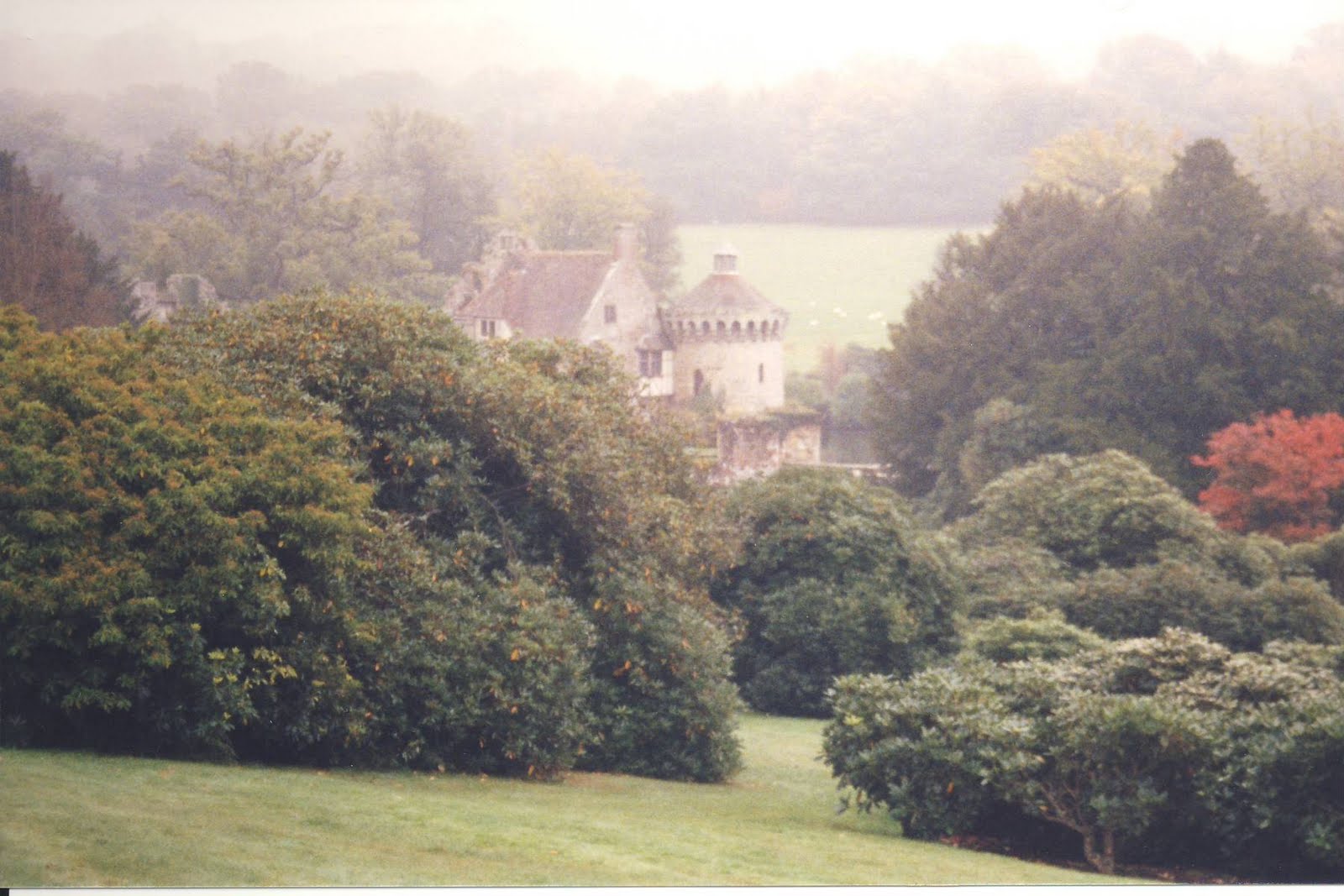
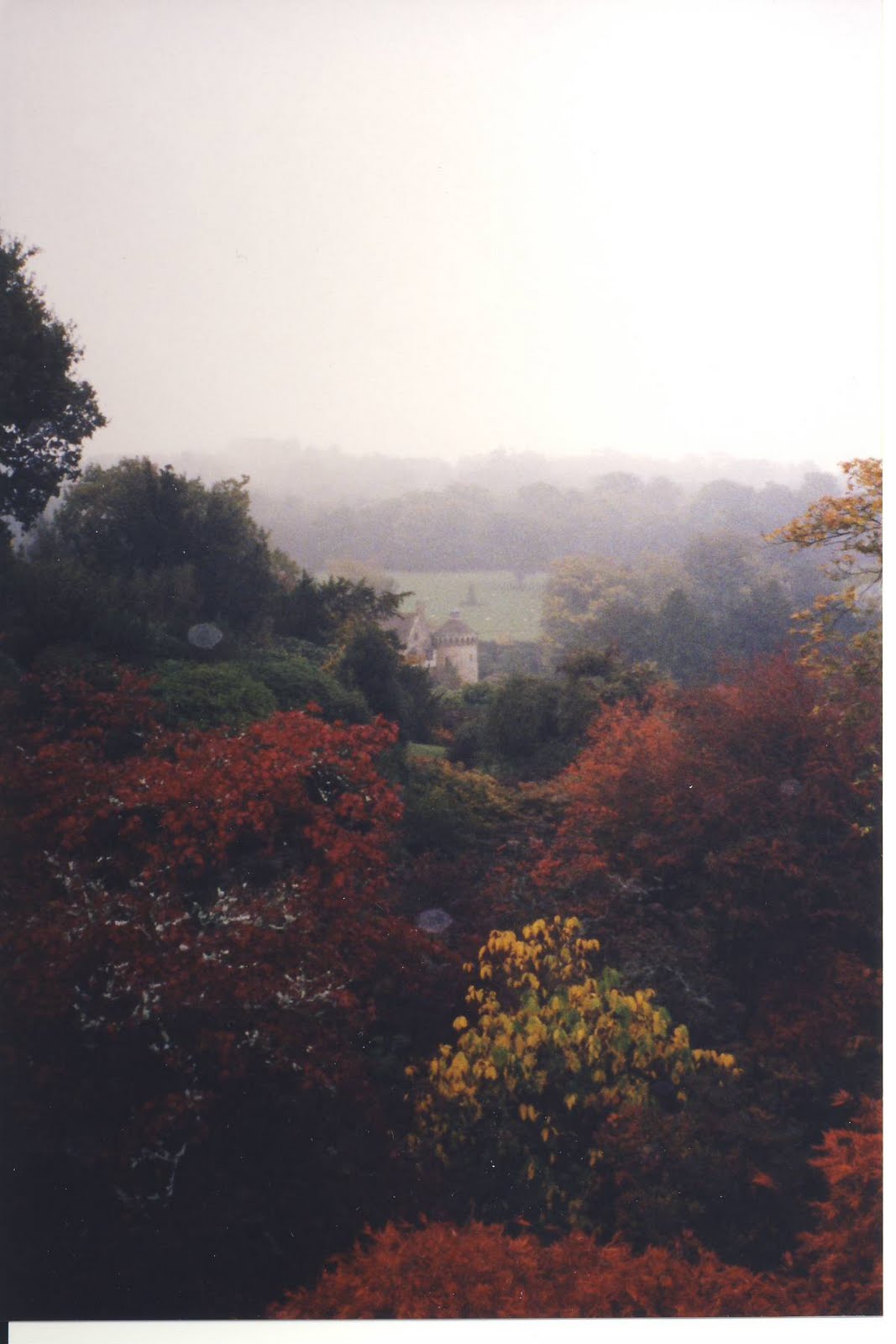
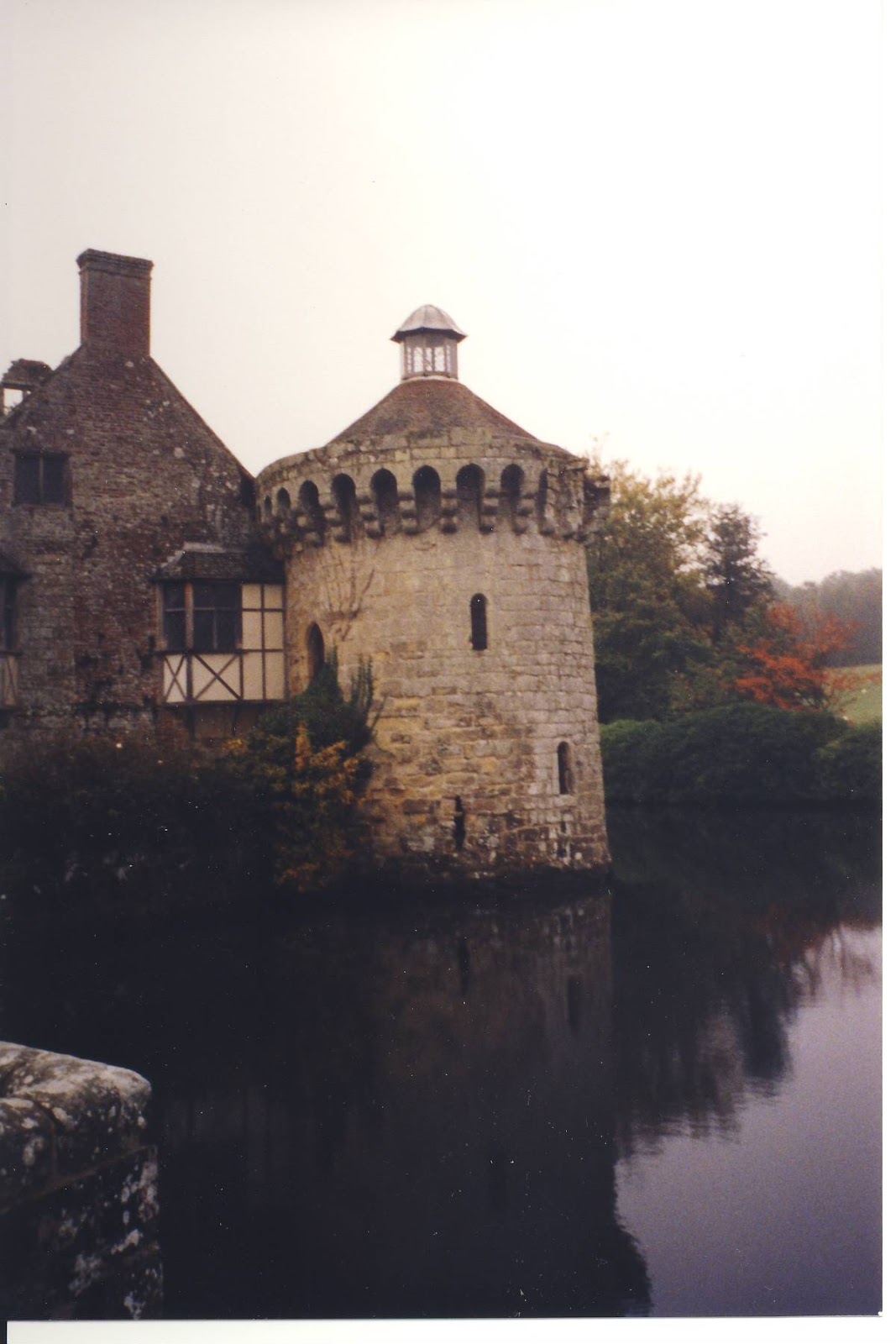
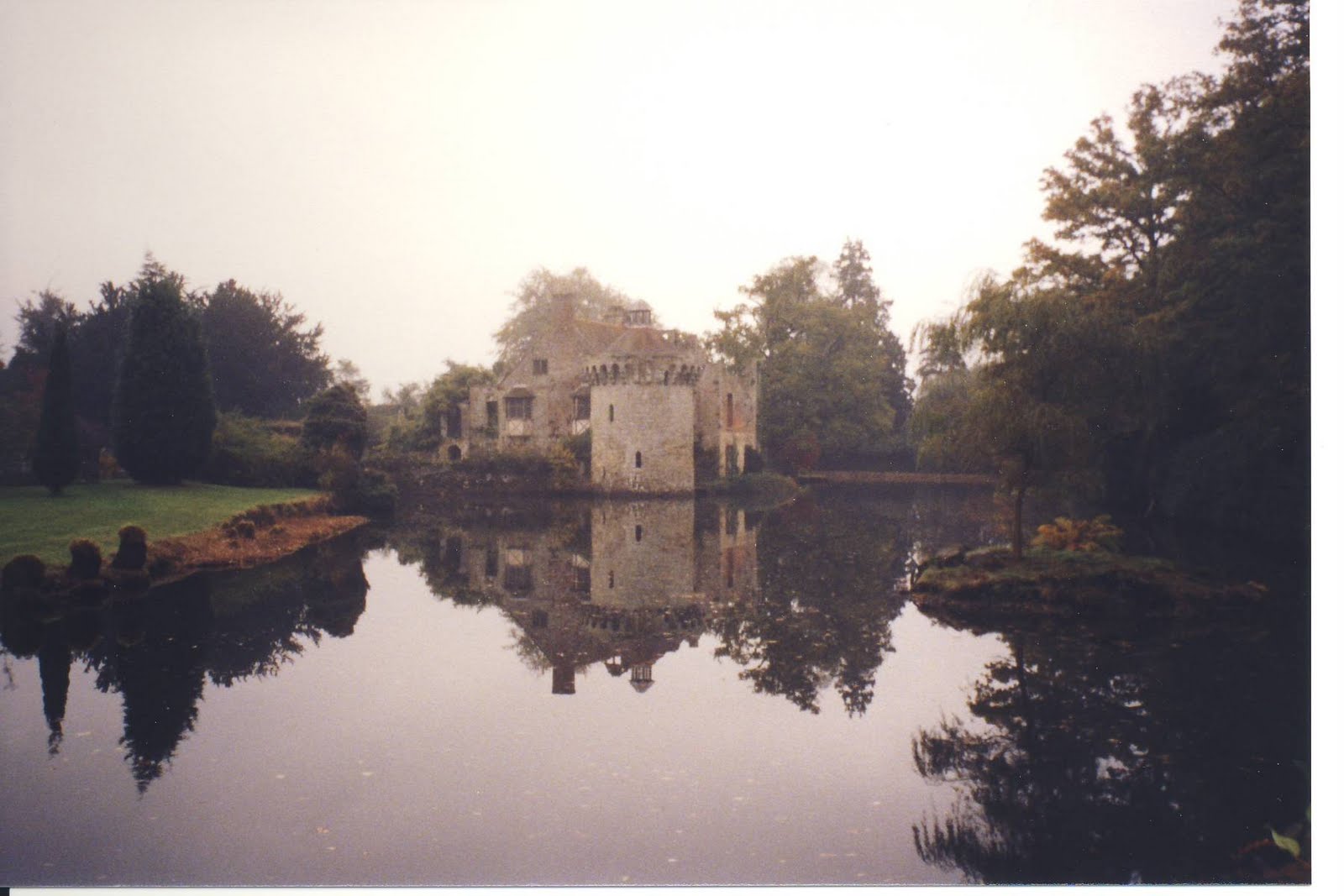
Perhaps my favorite is the moat at Scotney Castle, also in Kent.  The website is here.

Be sure to click on the photo gallery for lovely pictures, though none quite so atmospheric as the ones I took on a visit in late October mist.  The gardens have been planted for special beauty in the spring and autumn. 

 In the 19th century, the gardens were designed in the picturesque manner by William Sawrey Gilpin for the Hussey family; Gilpin’s uncle, the Rev. William Gilpin, had criticized the style of his contemporary Capability Brown as too smooth and tame.  
  The old castle, dating from  the 14th century,  was “selectively ruined” to provide a focal point for the garden, leaving only one round tower of the original four. 
In 1970, the garden was left to the National Trust.  The moat acts as a perfect mirror in the above romantic view.
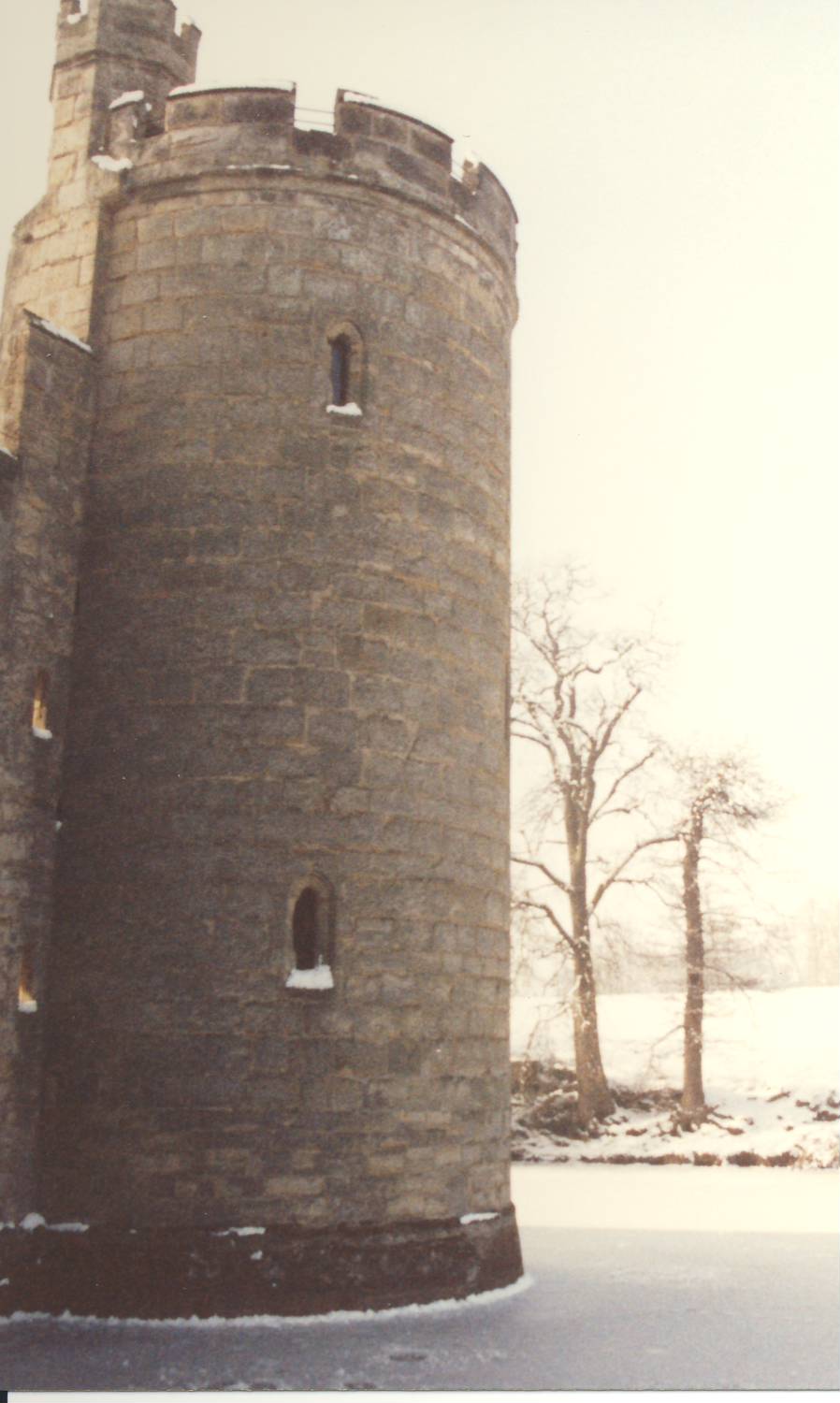
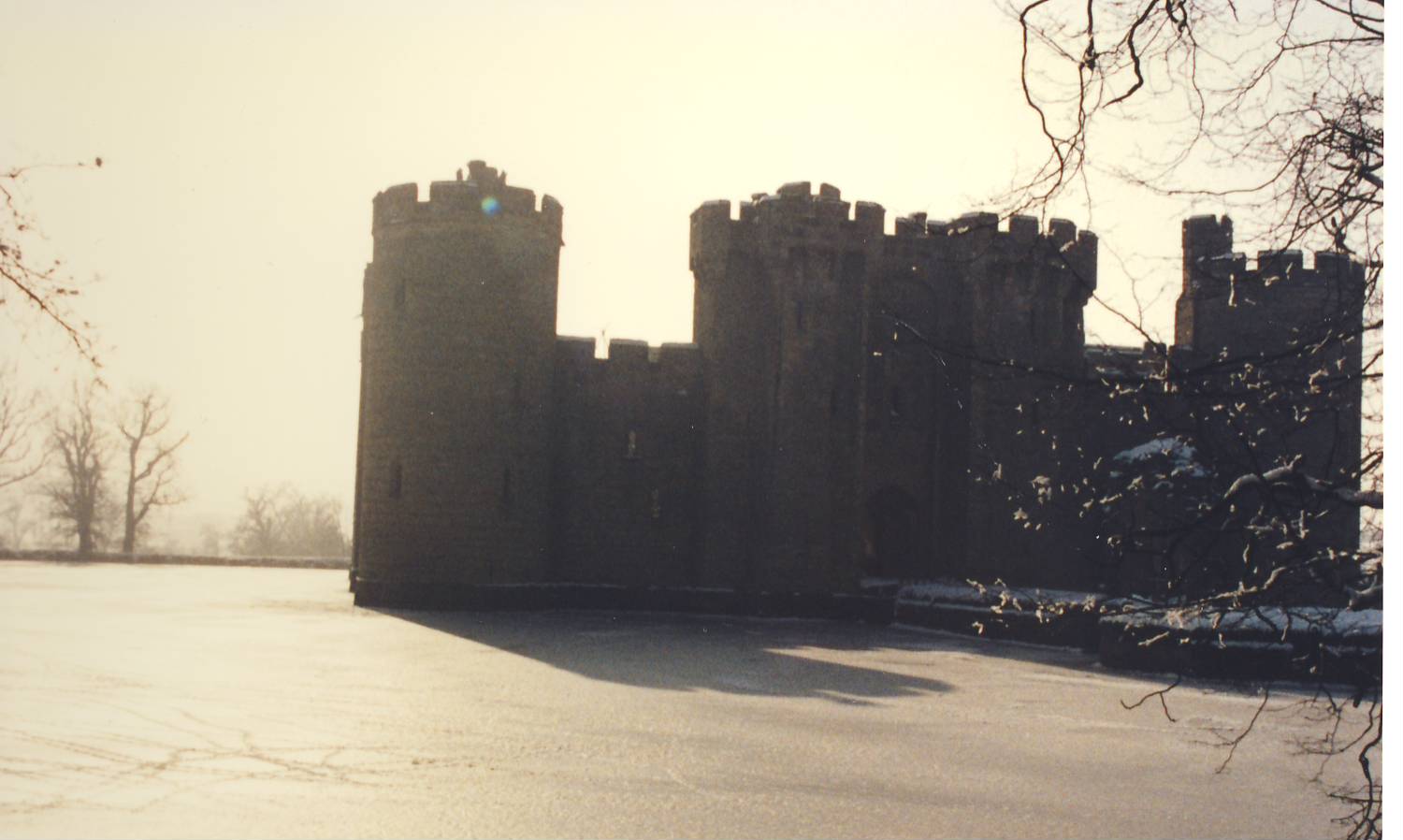
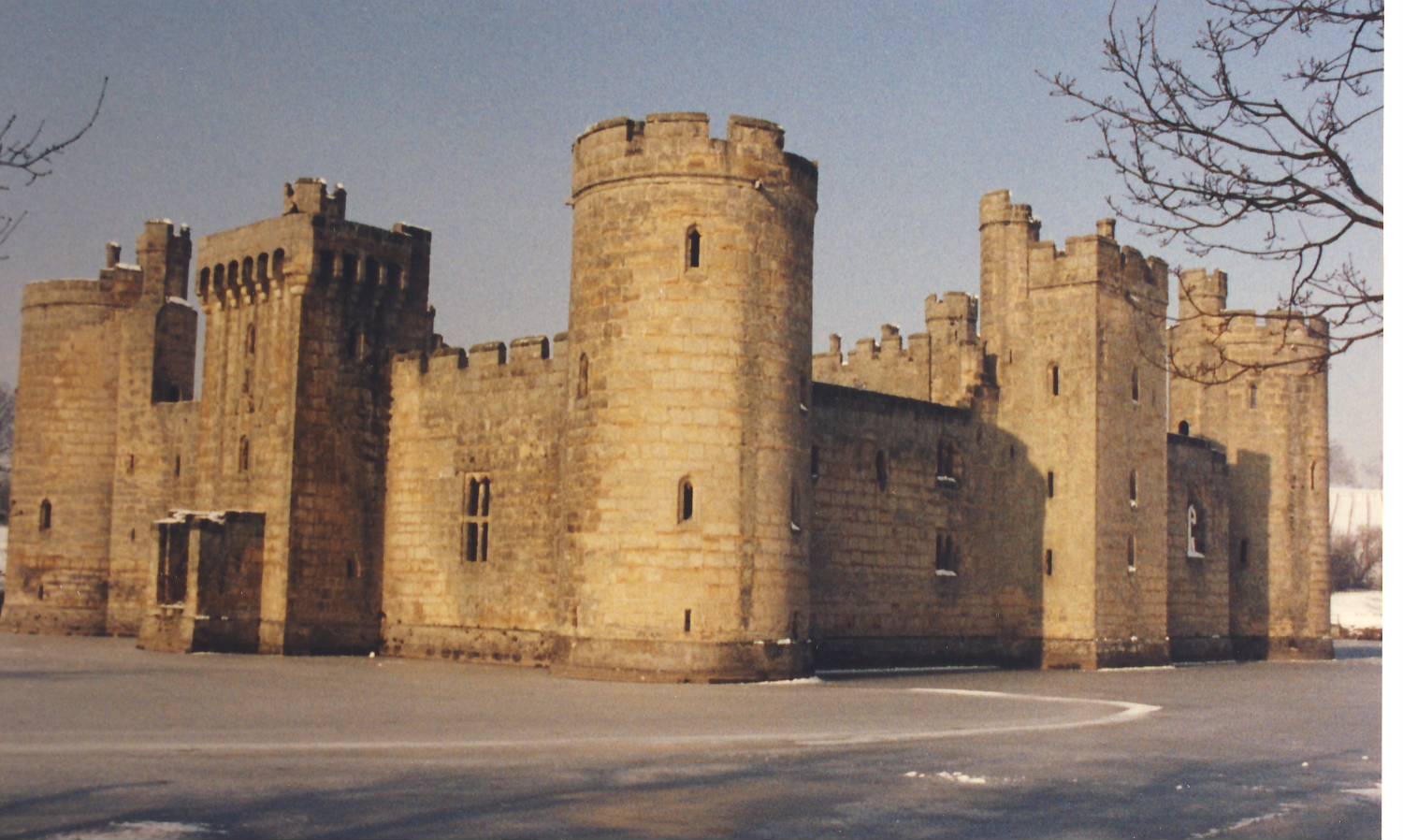
 In one of my several visits to Bodiam Castle in East Sussex, it was January and the moat was frozen.
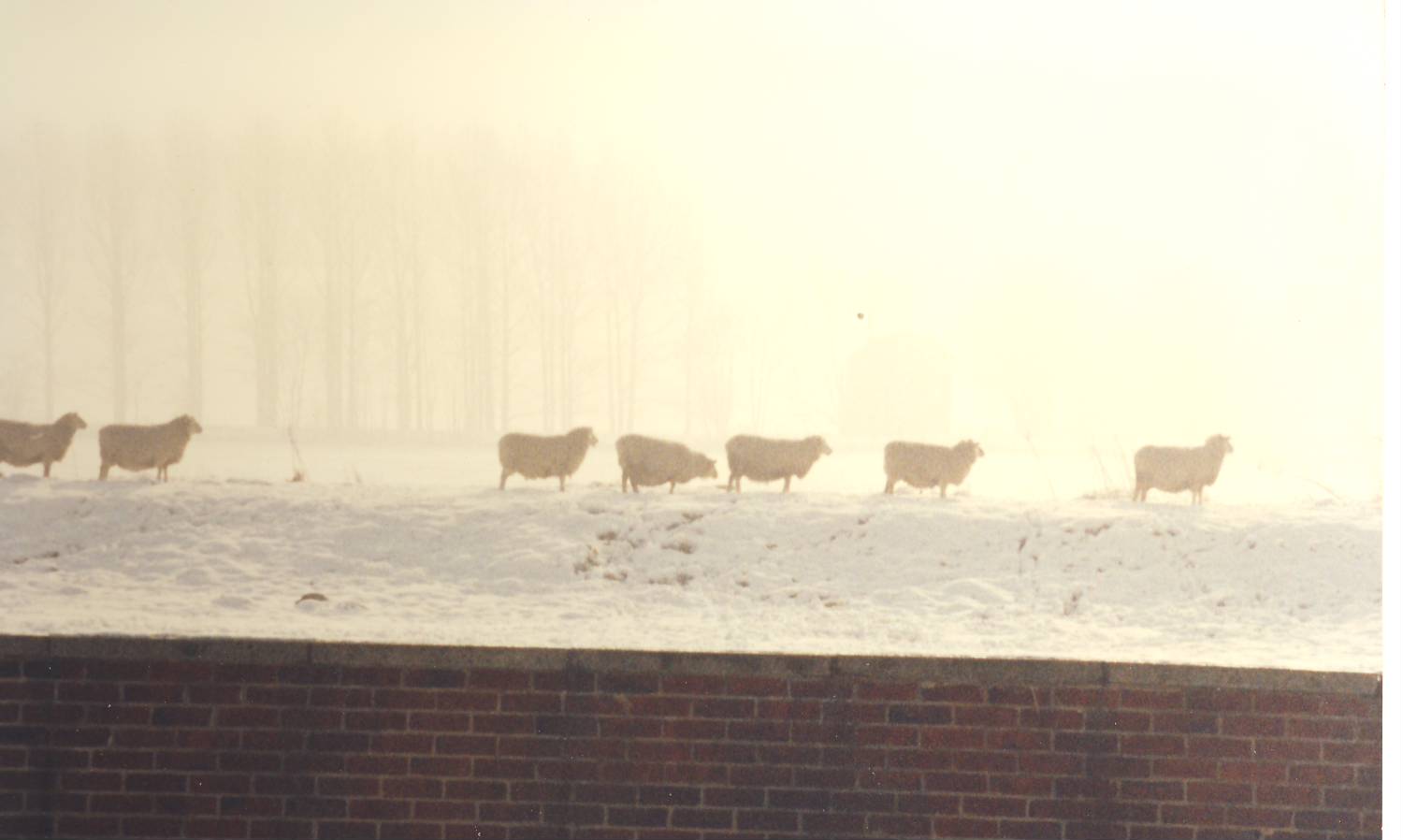
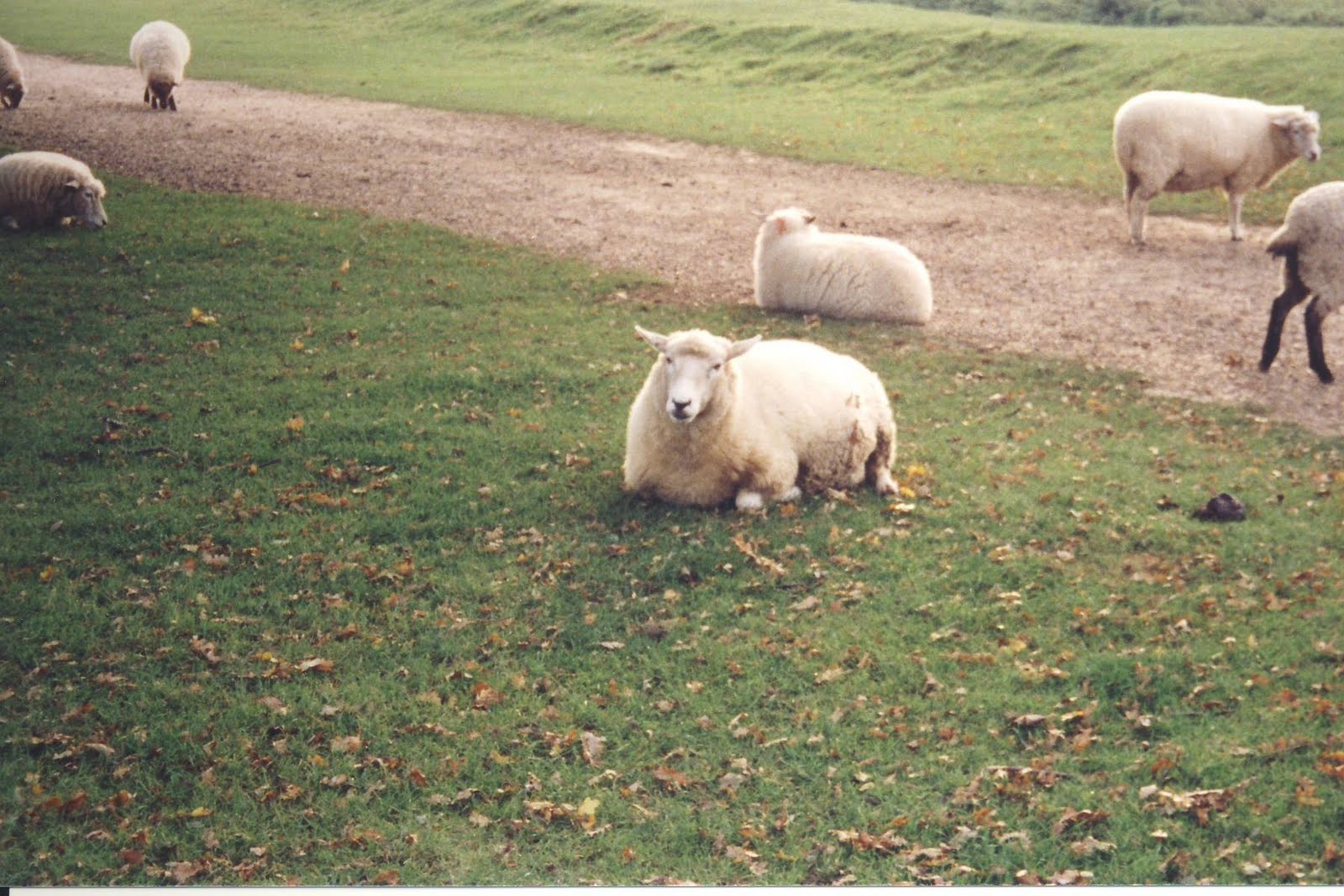
After a snowstorm, the site was deserted, silent and ghostly in the fog, shared only with the sheep who were bundled up against the wind in their finest fleece. My husband and I made our lonely way around the ruins, reading all the labels and trying to imagine how it would have looked when it was the lively center of a great community. 

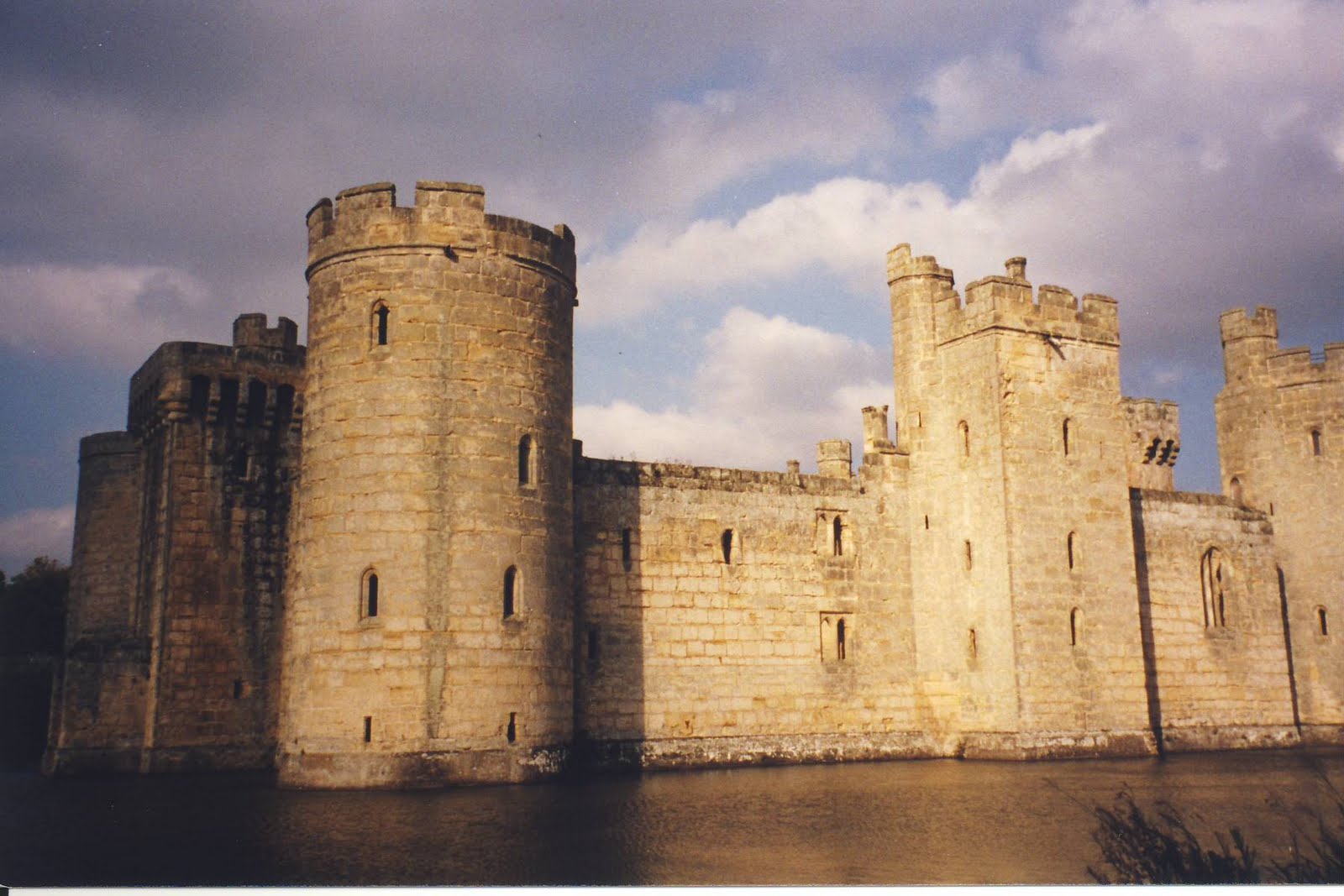
Another visit was in October, in bright sunshine. There were many more visitors, although I managed to take my snaps in between them!

Bodiam Castle was constructed in the late 14th century and though ruined during the Civil War when attacked by Parliamentary forces who eventually removed its roofs, it is relatively intact. George Curzon, 1st Marquess Curzon (1859-1925), purchased Bodiam in 1916 and managed a number of preservation and restoration projects there before presenting it to the National Trust in 1925, which has continued to protect the popular site.

The sheep were happier, it seemed, but you will note they had a good October start on
their winter coats.

Bodiam was used as the Exterior of Jane Austen’s Northanger Abbey
in the 1986 BBC version, even though it was never an abbey nor does it resemble the Northanger Austen describes.  Bodiam has also appeared in episodes of Dr. Who and Monty Python and the Holy Grail, among many other films and tv programs.

Both Bodiam and Scotney are NT sites easily accessible from London.  Two other popular tourist sites with lovely moats are Leeds Castle and Hever Castle, also not far from the City.

Leeds Castle, Kent

Hever Castle
Apparently I have more than 5,995 more moats to discover … where do I start?  Do you have a favorite moat?

Things We Covet

The new auction catalogue is available from Dominic Winter Book Auctions, who happen to offer alot more than antiquarian books and maps, as will be seen by the selections below, any and all of which Victoria and I would give our eye teeth to own. From their auction on Wednesday 21 September 2011 commencing at 11.00 a.m., a private collection of antique fans is on offer in Lots 257 to 325. Here are a few examples –

274 *
Card games. Royal Connections Fan, Connections, a New Game at Cards, Invented by their Royal Highnesses the Princess Elizabeth and Dutchess of York, which is played in the first Circles of Fashion, Publish’d as the Act directs Jany 11 1794, by Messrs Stokes, Scott & Croskey, No.19 Friday Strt. London, folding paper fan with leaf engraved in blue with the rules of a card game, and decoration incorporating the four suits, sl. rubbed in places, and a few fox spots, mounted on pierced bone sticks, 24.5cm (9.5ins) Provenance: Lady Schreiber’s great grandson. Not in the Schreiber Collection, but the Royal Collection holds an example of this fan.
£700-1000

288 *
Dancing. New Dance Fan for 1795, N.p., folding paper fan, the stipple eng. leaf printed in brown ink, with central wreath motifs containing musical emblems, and musical notation and choreography for sixteen dances, some light toning and rubbing, inscribed in an early hand on the verso “gift of my Br[other] Sollsmans[?] when he left London Mrs. Porters”, mounted on wooden sticks, 25.5cm (10ins) Provenance: Lady Charlotte Schreiber’s great grandson. Not in the Schreiber Collection. The dances include: “The Guillotine”; “The fall of Robespierre”; “The Prince of Wales’s delight”; “Lord Moira’s Fancy”; “Linley’s Choice”; and “Devonshire Dumplins”.
£400-600
294 *
Fortune-telling. Wheel of Fortune, J. Fleetwood, 48, Fetter Lane, c.1805, folding paper fan, the leaf stipple-eng. with four female heads surrounding the wheel of fortune representing 1.Bath Gypsy, 2.Norwood Gypsy, 3.Corsican Gypsy, 4.York Gypsy, with instructions on how to interpret the wheel, and information regarding reading physiognomy and the forecast of perilous days, including fore-telling Napoleon’s death, which ‘will be sudden either by suffocation or Drowning’, folds beginning to split sl. in places, mounted on wooden sticks, 19.5cm (7.5ins) Schreiber Collection 65, p.14 (coloured).
£600-800
304 *
King George III. N.p., c.1787, folding paper fan, the leaf with stipple-eng. port. of George III within gilt and sequined oval starburst frame, with banners either side hand-painted in gilt on a blue ground proclaiming ‘Long Live the King’, and onlaid flowers and birds with metal thread and sequins (sl. damage to one motif), mounted on bone sticks, 24.5cm (9.5ins) Provenance: great grandson of Lady Charlotte Schreiber. Exhibited: Fan Makers Hall, December 1980, catalogue no. 25. Similar to number 10, p.3 in the Schreiber Collection, but that in Schreiber is uncoloured and without the hand-finishing.
£200-300
You can find, and drool over, all fans on offer here.

The Crying Duchess

Richard Brinsley Sheridan

Mrs. Creevey to (her daughter) Miss Ord.

12 Sept., 1806.
“… I am going to Somerset House to enquire after poor Sheridan, who went from this house very ill at 12 o’clock last night. . . . He complained of sore throat and shivering, and his pulse was the most frightful one I ever felt; it was so tumultuous and so strong that when one touched it, it seemed not only to shake his arm, but his whole frame. … I lighted a fire and a great many candles, and Mr. Creevey, who was luckily just come home from Petty’s, began to tell him stories. . . . Then we sent for some wine, of which he was so frightened it required persuasion to make him drink six small glasses, of which the effect was immediate in making him not only happier, but composing his pulse. … In the midst of his dismals he said most clever, funny things, and at last got to describing Mr. Hare, and others of his old associates, with the hand of a real master, and made one lament that such extraordinary talents should have such numerous alloys. He received a note from Lady Elizabeth Forster, with a good account of Mr. Fox. It ended with—’try to drink less and speak the truth.’ He was very funny about it and said: ‘By G-d! I speak more truth than she does, however.’ Then he told us how she had cried to him the night before, ‘because she felt it her severe duty to be Duchess of Devonshire!’ *

Lady Elizabeth Foster by Angelica Kaufman

* Georgina, the Duchess of Devonshire, had died in March of this year. Lady Elizabeth married the Duke, but not till three years later, in 1809.