Excerpts from The Court Journal

Gazette of Fashionable Life
Saturday, November 2, 1833
COURT AND FASHIONABLE LIFE

— The King and Queen arrived at the Pavilion at Brighton on Saturday afternoon in a travelling chariot, preceded by outriders. On their Majesties’ arrival a Royal salute was fired from the battery, and a peal was rung on the bells of St Nicholas’ tower. In the evening the town was enlivened with a brilliant display of fire-works, which was seen by their Majesties and suite from the windows of the Palace.

— Their Majesties have appeared in public every day since their arrival. On Wednesday the Queen, accompanied by the Earl and Countess Howe, Miss Mitchel (Maid of Honour), Lord Elphinston, and Lieut.-Colonel Horace Seymour (Equerry in Waiting), walked for some time on the Old Steyne; from thence the Royal party proceeded to the chain pier, and after passing over that part lately damaged, went on to the extremity, where her Majesty embarked on board Captain Brown’s boat, which was rowed by Lieut. Colonel Seymour and the Gallant Captain, eastward, passing Kemp Town, to near Rottingdean, and back to the pier head, where her Majesty landed, and returned to the Palace, with her suite, after one o’clock.
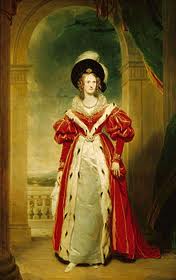
Queen Adelaide
— Her Majesty enjoyed a very delightful aquatic excursion on Thursday, in company with Lady Howe, Lord Errol, and Capt. Browne. The Royal party were at sea for more than two hours, and ventured, in consequence of the serenity of the day, upwards of four miles from the Chain Pier.
— We are happy to state that a letter has been received from his Royal Highness the Duke of Cumberland, which holds out some prospect of the restoration of the sight of Prince George. His medical attendant had reported to his Royal Highness that the applications he had made to the eyes of the young Prince were operating to the extent of his most favourable expectations, and he was far from being without hope that eventually a cure might be effected. The Royal Duke has, we believe, in consequence, engaged his house at Berlin for two years longer.
— The apartments of the Duchess of Kent and the Princess Victoria in Kensington Palace, are preparing for the reception of their Royal Highnesses, who are expected in town in the course of the ensuing week.

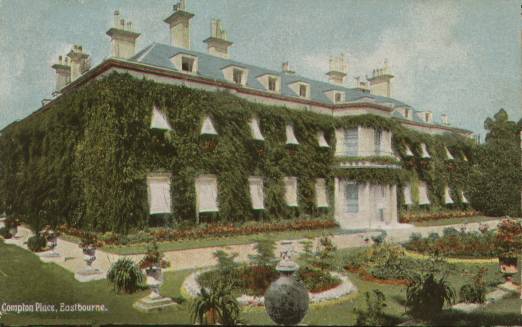
Compton Place
— The Earl and Countess of Burlington are expected to arrive at Burlington House, Piccadilly, in the ensuing week, where it is expected they will remain during the winter. The Earl and Countess are at present at his Lordship’s beautiful seat, Compton Place, Eastbourne.
— Lord Lansdowne comes to town shortly, from Bowood, Wilts; and Lord Grey is expected in a few days, from the North. The Minister’s presence is looked for in the Grand Civic Banquet at Guildhall, to attend which several other Members of the Administration will visit the metropolis.
— Lady Georgiana Curzon, daughter of the Earl and Countess Howe, is a great favourite with their Majesties, and very frequently accompanies the King in his carriage drives. Lady Georgiana, who is the only daughter of the Earl and Countess, is now in her eighth year.
— Lord Holland is again indisposed by an attack of gout. His Lordship is in treaty for the mansion of the Countess of Sandwich, in Dover street, as a temporary residence for the ensuing season.
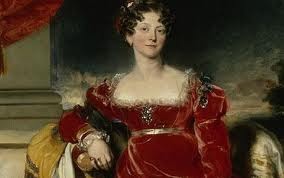
Princess Sophia by Lawrence
— A paragraph has gone the round of the papers, stating that her Royal Highness the Princess Sophia, and Sir Henry Halford, her physician, are to be married, if the Parliament will consent to an act, authorizing her Royal Highness to espouse a Commoner. The long and intimate friendship subsisting between the Princess and Sir Henry, seems to have given rise to this extraordinary story.
Haigh Hall

— Lord Lindsay, eldest son of the Earl of Balcarras, became of age on the 16th instant,when the event was celebrated at Haigh Hall, the seat of the Noble Earl, in Lancashire, and at Eastferry Abbey, in Fifeshire. Lord and Lady Balcarras and family have recenntly returned from a short Continental tour.
— Sir John Cam Hobhouse has taken the mansion and estate of Basildon Park, near Reading, where the Right Hon. Baronet, with his lady (a sister of the Marquis of Tweedale) and family, will reside until the commencement of the next season.
— The Marquis and Marchioness of Ailesbury have taken their departure for the Continent. They proceed on a visit, in the first instance, to the Count and Countess Daniskiold at S
tockholm. The stay of the Noble Marquis abroad is expected to be of some duration, his Lordship having much diminished his establishments, both at Tottenham Park, in Wiltshire, and in Grosvenor-squarc. The Marquis and Marchioness have been paying a farewell visit during the last week to the venerable Countess of Dysart (grandmother of her Ladyship), at Ham House, Richmond, where there was a party of the Tollcmache family assembled to meet them. Count and Countess Daniskiold (Lady Elizabeth Bruce) took their departure for Denmark some weeks ago. The Count is nearly allied to the reigning Royal Family of that country.
— Lord Ranelagh and Lord Lowther are on the Rhine with a very numerous circle of English fashionables. The Dowager Lady Ranelagh and the Lady Emily are also there.
— Lord Saye and Sele has been in town some days with his son, the Hon. Fynes Twisleton. His Lordship has quitted his late residence in Bruton-street for one more suitable in Lower Grosvenor-street.
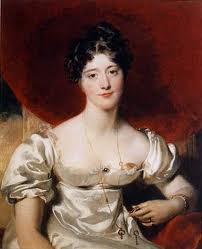
Marchioness of Londonderry
— The Marquis and Marchioness of Londonderry will entertain a large party of the Nobility, now in the North, at their magnificent seat, Wynyard House, in the ensuing month. The mansion has recently received a valuable acquisition in the splendid stained glass window, formerly the property of the Hon. Mrs Beaumont. French plays, in which the young daughters of the Marchioness (the Lady Seaham) are to sustain characters, will form part of the amusements.
— Lieut-General Sir Hussey Vivian and his bride have arrived in town from Dublin. The gallant General’s locum lenens, during his absence on leave, as Commandcr-in Chief of the Forces in Ireland, is Major-General Sir Edward Blakeney, K.C. B., of the Leinster district. Captain Charles Vivian, of the 7th Hussars, eldest son of Sir Hussey, is the new Military Secretary to his father, in the room of Colonel Lord Templemore, resigned. The duties, however, of this office are chiefly executed by the Assistant Secretary, Lieut. Siborn. The object of the gallant General’s journey to the metropolis is understood to relate to military arrangements connected with the Irish Coercion Act, the five Lieutenant-Colonels employed under the provisions of that statute having been withdrawn.
— The distinguished party assembled at the Duke of Grafton’s, at Euston Hall, have broken up and taken their departure for the Newmarket Houghton Meeting which will close the racing season for the present year.
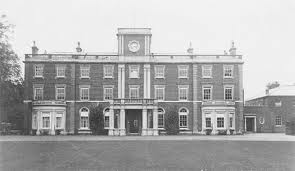
Sudbourne Hall

— Prince Esterhazy and his son have left Chandos House for Sudbourne Hall, the magnificent seat of the Marquis of Hertford, in Suffolk, which, since the departure of his Lordship for Italy, has been entitled ‘ Paradise Lost.’ The Prince from his long residence here is on the closest terms of intimacy with the Noble Marquis,who has accorded permission to his Highness and other persons of note to shoot over his preserves, which swarm with game from Sudbourne. The Prince proceeds to the Duke of Grafton’s, at Euston, for a week.

— The venerable Earl of Arran is seriously indisposed at Arran Lodge, Bognor.
— Sir Augustus Clifford, the Usher of the Black Rod, and his lady, the daughter of the late Lord John Townshend, are on their annual visit to his Grace the Duke of Devonshire, at Chatsworth, where a party of the Cavendish family are assembled. Sir Augustus Clifford, we believe, has not yet taken possession of the pleasant residence appended to his office, which is situated on the verge of the Thames, immediately behind the House of Lords. The house is, however, in a dilapidated condition, and will require substantial repairs before it can be fit for the reception of his family.
Court Carriages. — At the Congress of Vienna, the Emperor of Austria wishing that none of the Sovereigns or persons of their suite should use any carriages but his, ordered three hundred to be prepared all alike. At every hour of the day ai:d night, these carriages were at the service of his illustrious visitors—some of them with four horses, others with two, were to be met with in every direction.
Hornby Castle

— The Duke and Duchess of Leeds have been entertaining their relatives and friends at his Grace’s splendid establishment, Hornby Castle. Mr and Lady Charlotte Lane Pox have been staying during the last week at Gwydyr House, the magnificent mansion purchased by the Duke from Lord Willoughby d’Eresby. They return to Yorkshire in a few days.

— On Wednesday week, Earl Grey gave a Ball to his domestics, and their friends and acquaintances, at Howick Hall, amounting to nearly 200. Dancing commenced about nine o’clock, and was kept up with great spirit until five o’clock in the morning, when the company separated highly gratified. In the course of the evening, the Noble Earl and his amiable Countess, Viscount and Viscountess Howick, the Honourable Colonel and John Grey, Lady Georgiana Grey, Sir Henry and Lady Grey, of Falloden, the Hon. Mr, Mrs and Miss Ponsonhy, Lord Russell, and the Hon. H. T. Liddell, honoured the company with their presence, and part of them joined in the dance. It was held in the great entrance hall, and refreshments were served up to the company in the true style of old English hospitality.
The Bicentenary of Sense and Sensibility

Here we are, exactly two hundred years from the day that Jane Austen’s first published novel, Sense and Sensibility, was published. Wheeeee!!!  Hurrah for you, Jane.

Last April, the 25th to be exact, I blogged here about Miss Austen’s work in April, 1811, correcting proofs for her first novel, the work she could no more forget “than a mother can forget her sucking child.” In that letter from London to Cassandra at brother Edward’s estate of Godmersham in Kent, she hoped to see the published book, if not in June, then soon thereafter. But it was delayed until the very end of October.

If you are a published author, or if you know of one, then you are well aware of the excitement with which Jane Austen must have viewed the first advertisements for her novel, then to see it for sale and hold it in her hands.  Speaking for myself (Victoria here), such experiences were among the highlights of my life. And every author I have known felt the same way, so the sucking child analogy resonates, as so many people say these days (when did all these resonances become so widespread?) 


Jane Austen was back in Chawton by June 811 and we have no more of her letters until October 1812, so we cannot say what her reaction to seeing — holding — clasping her first novel was specifically. We have to use our imaginations. I see her holding the volumes high and spinning around the room in high excitement — but not in front of anyone.  All by herself. Perhaps only to Cassandra did she confide her delight.  Or perhaps went into the garden and just stared at that title page.  Sense and Sensibility, A Novel in three volumes, By A Lady.

Or perhaps, if the day it arrived in her hands was sunny, she skipped over to the walled garden of Chawton House and found a ripened apple to eat while she turned the pages of the finished product.  Once when I was at Chawton (it was 2003), the gardener gave some of us a tour and he pulled some apples from the old gnarled trees, assuring us that these were the exact trees from which Jane would have picked.  I felt like I was eating something VERY special.  I forgot to ask the last time I was there in 2009 whether they had successfully grafted shoots from these ancient apple trees onto younger stock as the Head Gardener was planning.

This anniversary has been celebrated all over the world and I am delighted to add my tuppence to the cheers I can hear all the way from your computer to mine.  Congratulations, my dear Jane. I feel a personal camaraderie with you today. Three cheers!!! Or, rather, several hundred.

The Wellington Connection: Mistaken Identity

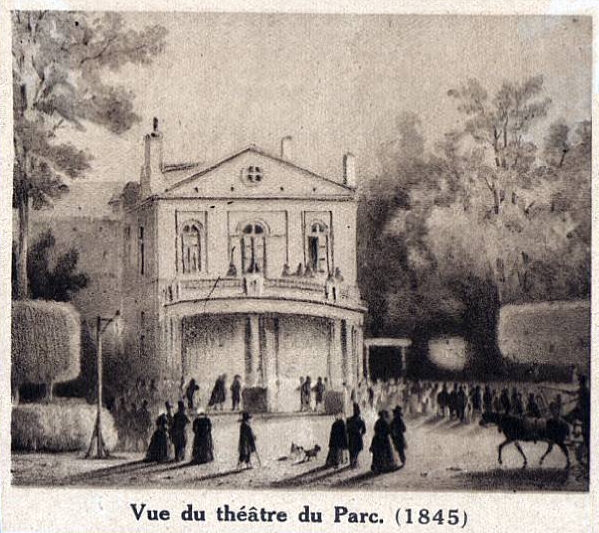
copyright the Brussels Bronte Group

From: Three Years With the Duke, or Wellington in Private Life (1853) by Lord William Pitt Lennox (younger son of the Duke of Richmond)

The theatre in the Park (in Brussels 1814) was opened, under the management of Mr. Penley, with a company of English players. The comedy of John Bull was the first performance, and attracted a most crowded and fashionable audience. Throughout the day, it had been hinted at the box-office, that the Duke of Wellington would probably attend the evening’s performance, and a private box had been kept back under this hope. The Duke’s avocations, however, prevented his making his appearance upon this occasion, as he had already informed the manager, when asked to patronise the play. This nearly led to a ludicrous mistake—a young officer and myself had been dining in company with the Duke, and, with that good-nature and consideration for which he was famed, he gave us permission to attend the theatre, telling us we might take his carriage after it had set him down. Upon reaching the Park, the carriage was recognised, and a crowd immediately followed it. As we gained the entrance of the theatre, the name of Wellington rent the air. This was communicated to the manager, who thrust his head out from behind the curtain, to give a signal to the leader of the band to play, “See the conquering hero comes!” The report spread like wildfire. The performances ceased—all eyes were anxiously fixed on the vacant box.

In the meantime, we had jumped out of the carriage, had tendered our money, and were surprised at the obsequiousness of the box-keeper, who, thinking we were the precursers of the Duke, begged us to walk into the lobby. The manager, or some official personage, had rushed into the private box to prepare the seats, and there awaited the welcome visiter. We now began to see the mistake that we had unwittingly caused; and, anxious to explain it, we approached the now open box-door. No sooner were our uniforms visible, than the band struck up the heart-stirring melody. In vain did we try to correct the error: the audience had risen, en masse; shouts re-echoed throughout the house; the curtain was drawn up, and the company came forward to sing the national song of “God save the King:” but no Duke of Wellington appeared.

For some minutes the cheers continued, when at length it was announced from the stage, that a slight mistake had occurred— that the avocations of the noble Duke had prevented his attendance; and, after the excitement had a little subsided, my young friend and myself sneaked quietly into the box, placing ourselves behind the curtain, fearful of calling the attention of the public to two mere urchins, who so unintentionally had nearly received the honours due to their chief.

Report from Fort Worth, part two

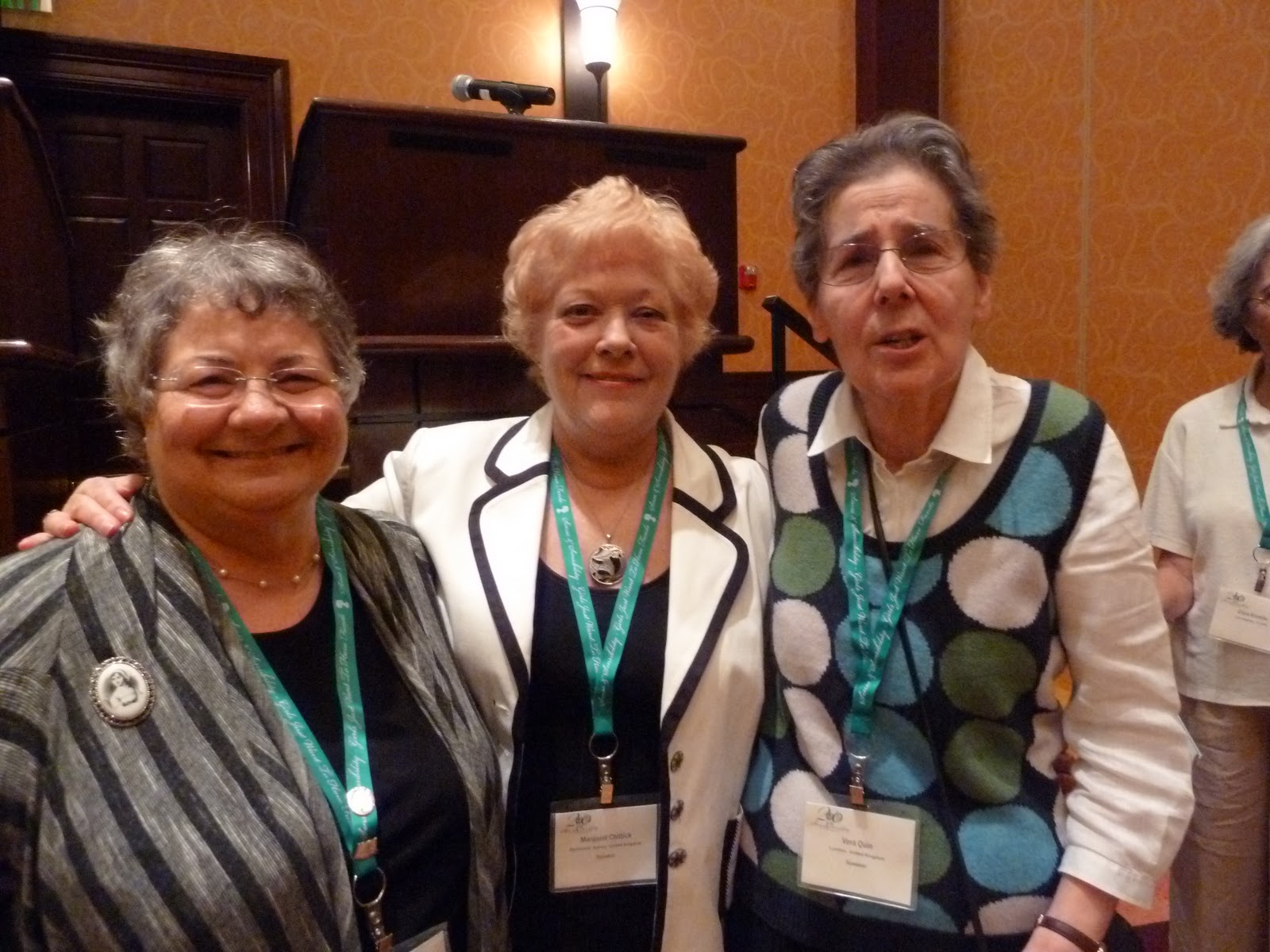
At the JASNA AGM, by Saturday, October 15, I have to admit I was becoming overwhelmed. The plenaries and break-out sessions were outstanding.  I was enjoying every minute but I was having a very hard time deciding among the many options for sessions. I luckily overheard a suggestion from some anonymous know-it-all and thus enjoyed the delightful presentation of Margaret Chittick and Vera Quin: “S&S is Full of Surprises.”

Claire Bellanti, Margaret Chittick & Vera Quinn

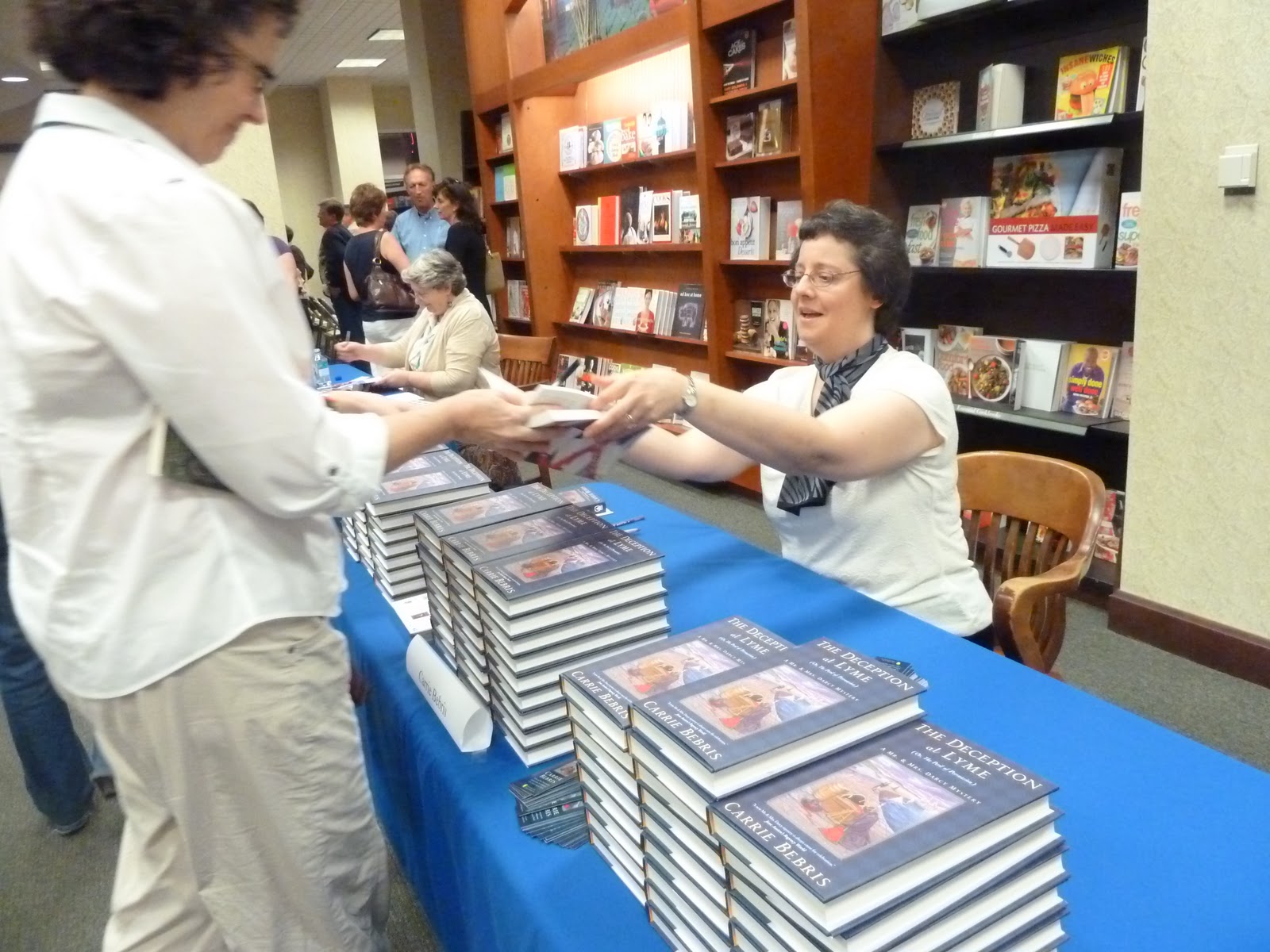
Carrie Bebris  spoke on “Gunsmoke: Dueling in Jane Austen’s Time” giving details about the Code Duello, the rules and the equipment, as well as stories about actual duels.  The only duel in S&S occurs off-stage and is referred to only briefly, but it was a clear indication of the seriousness with which Col. Brandon dealt with the wayward Willoughby — a matter of the highest honor.

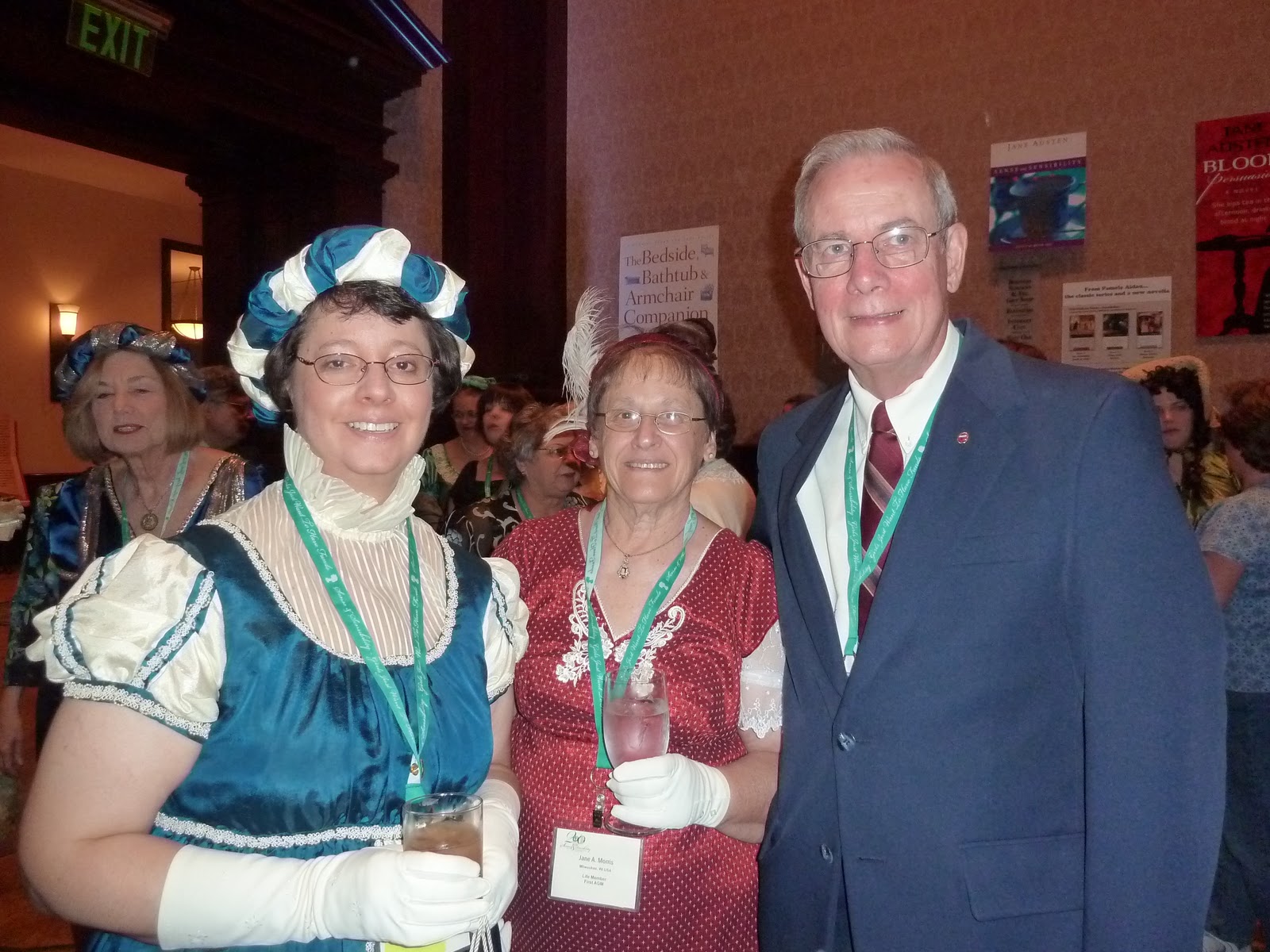
Here is Carrie, costumed later for the ball, with her parents Jane and Jerry Morris

My good pal Nina Davis came over from Dallas to spend some quality time at the JASNA AGM.  We spent a lot of time in the Emporium, where the temptations almost overcame us.

Nina and Vicky at the promenade
One of the highlights of the meeting was the talk by Andrew Davies, British screen writer of several Jane Austen adaptations including Pride and Prejudice (Colin Firth version, 1995), Emma (Mark Strong version, 1996) and Sense & Sensibility (BBC, 2008), among many others.  Not only was Mr. Davies’ presentation well received, he was a perfect guest, willing to pose for pictures with many of us, only a few of which I managed to record.
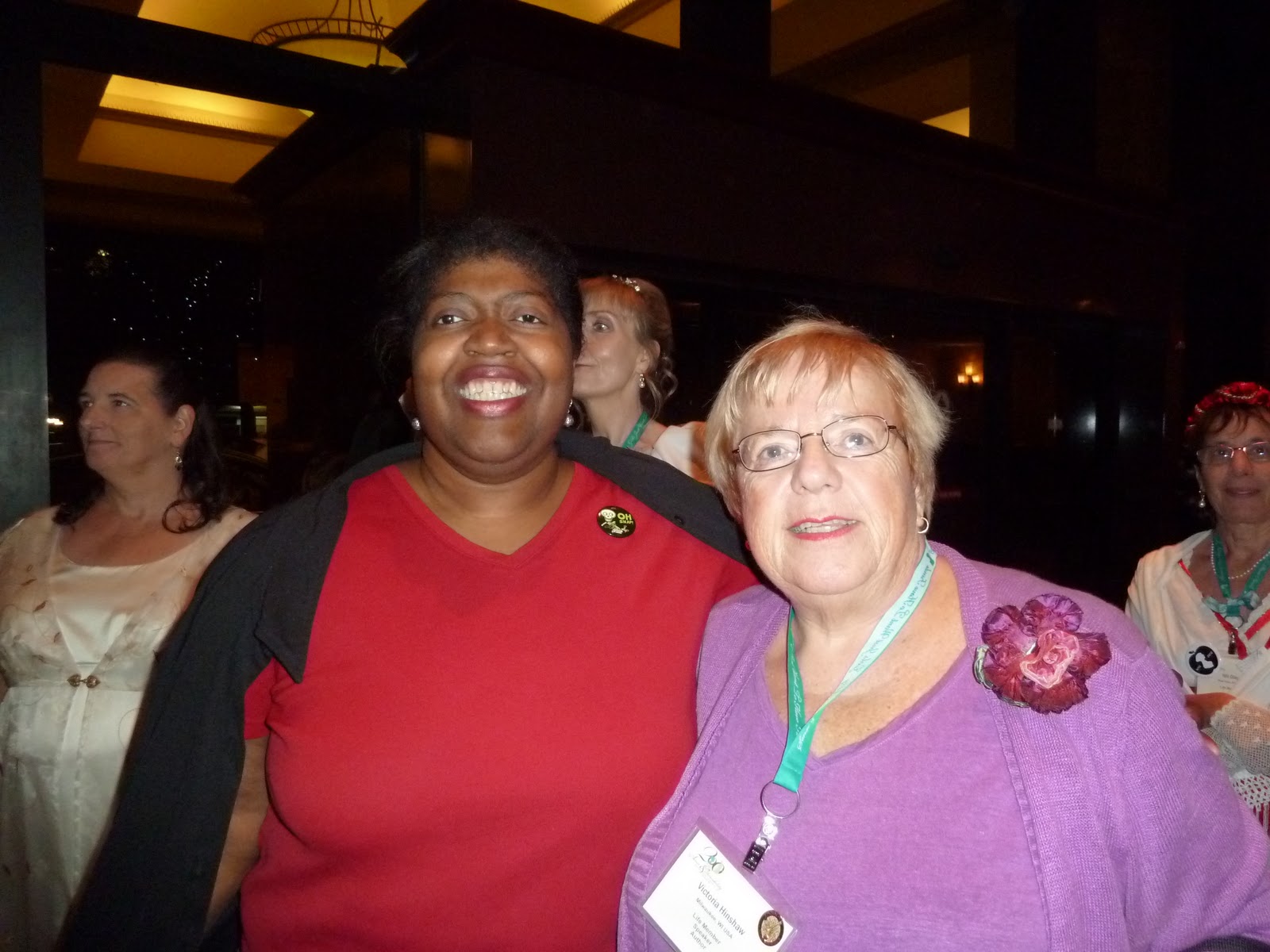
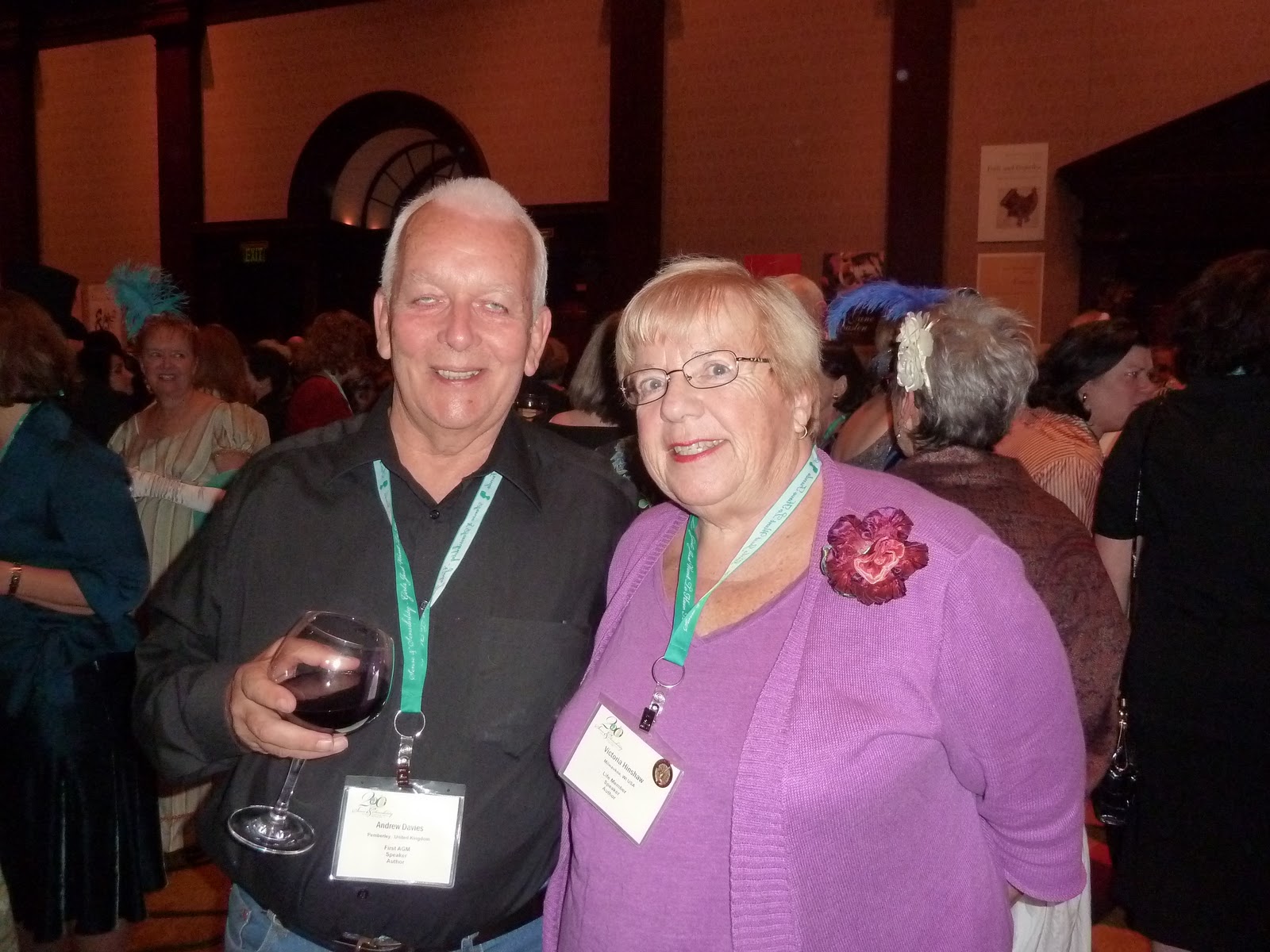
Andrew Davies and Victoria Hinshaw
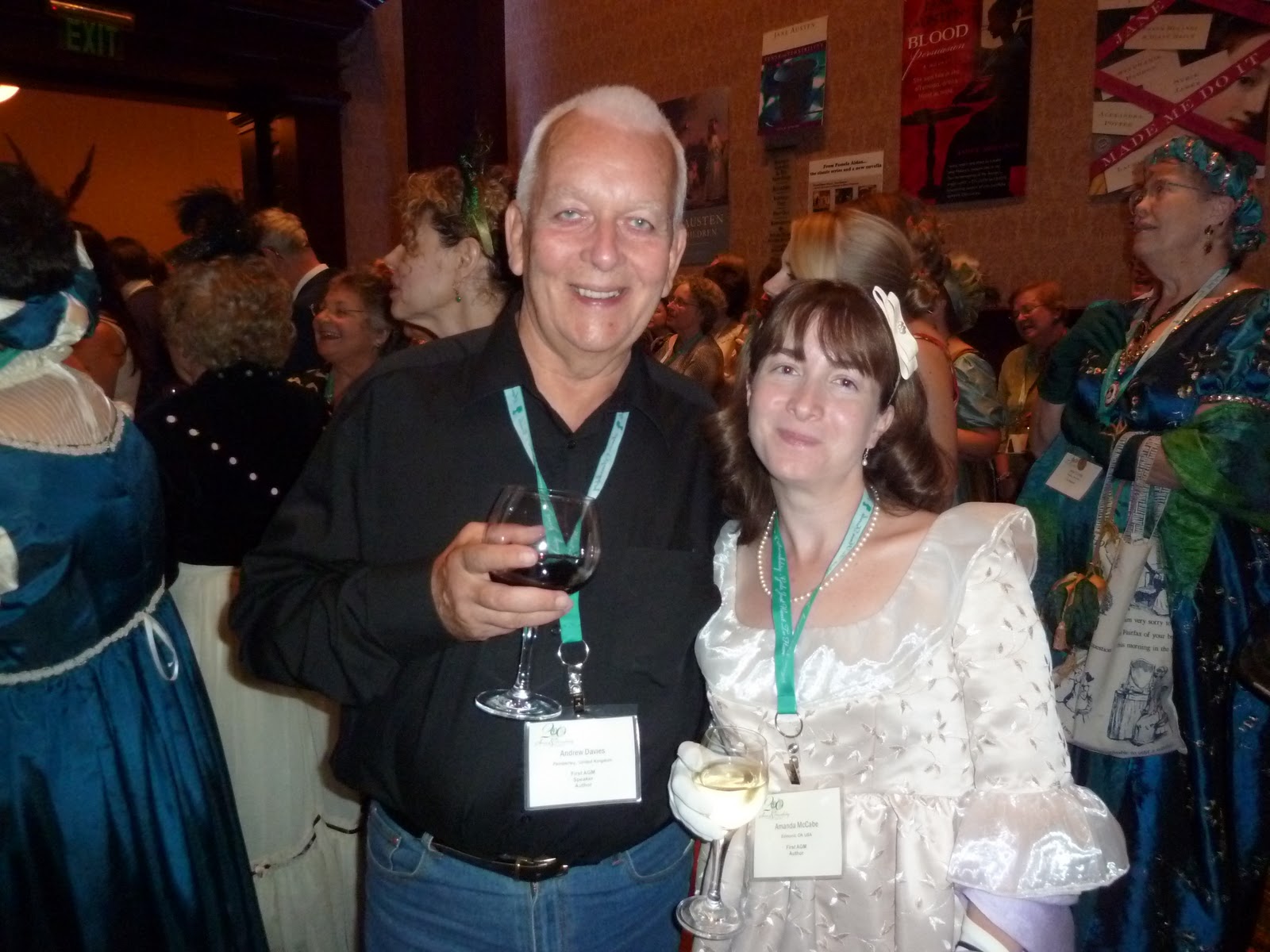
Andrew Davies and Amanda McCabe
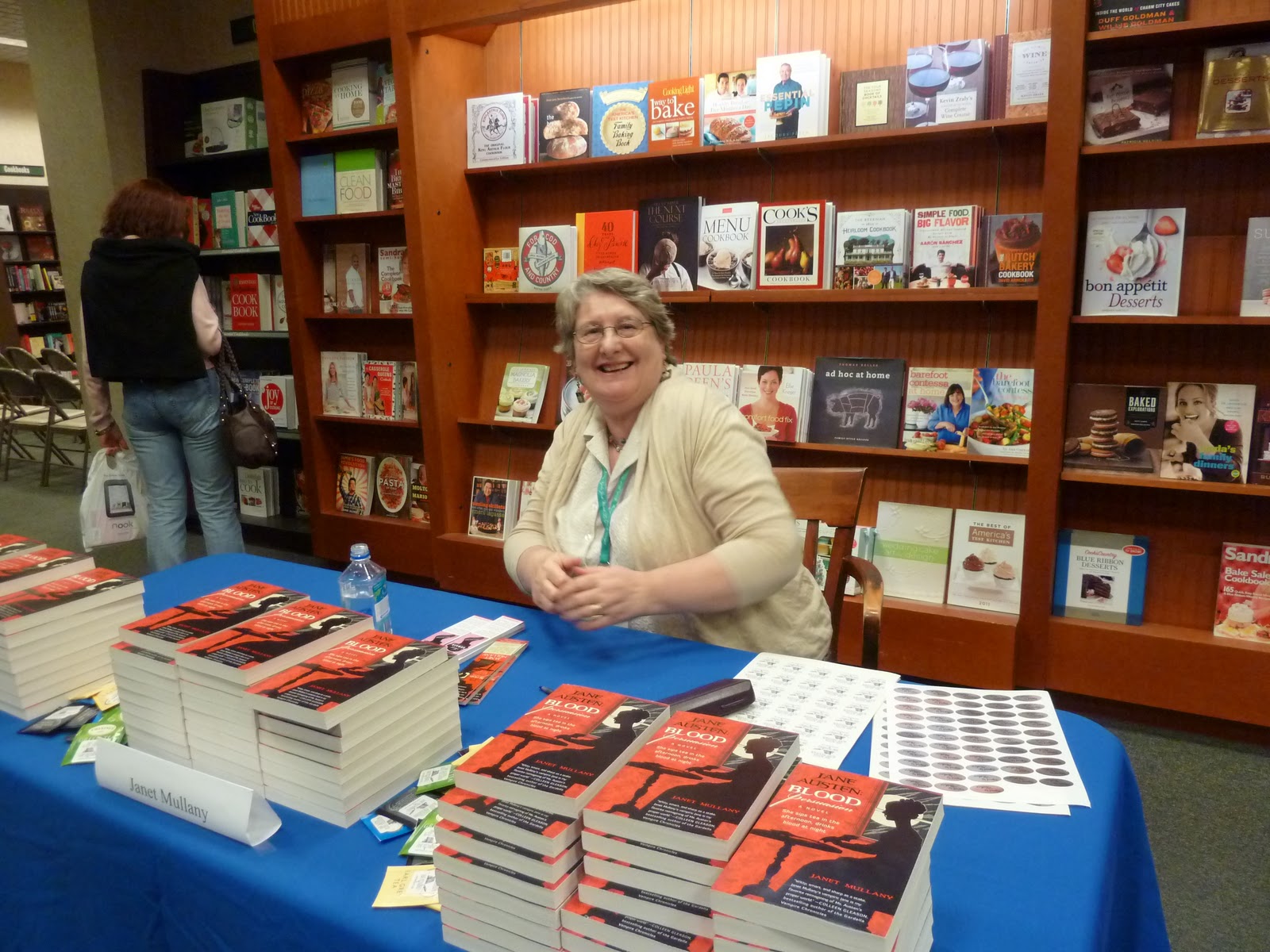
Andrew Davies and authors Amanda McCabe and Jane Mullaney
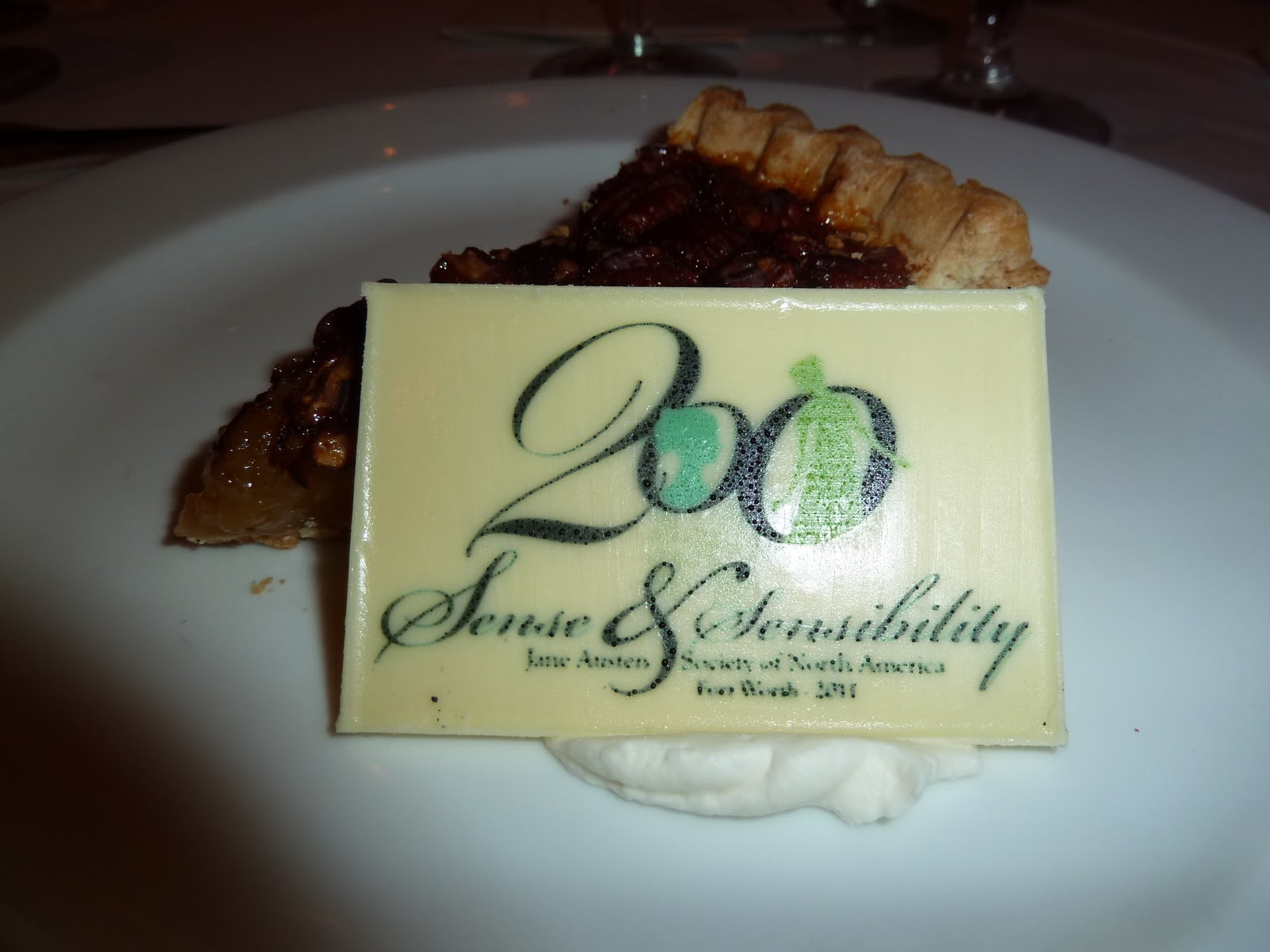
Below is the conference logo reproduced in white chocolate for a fitting denoument to the banquet.

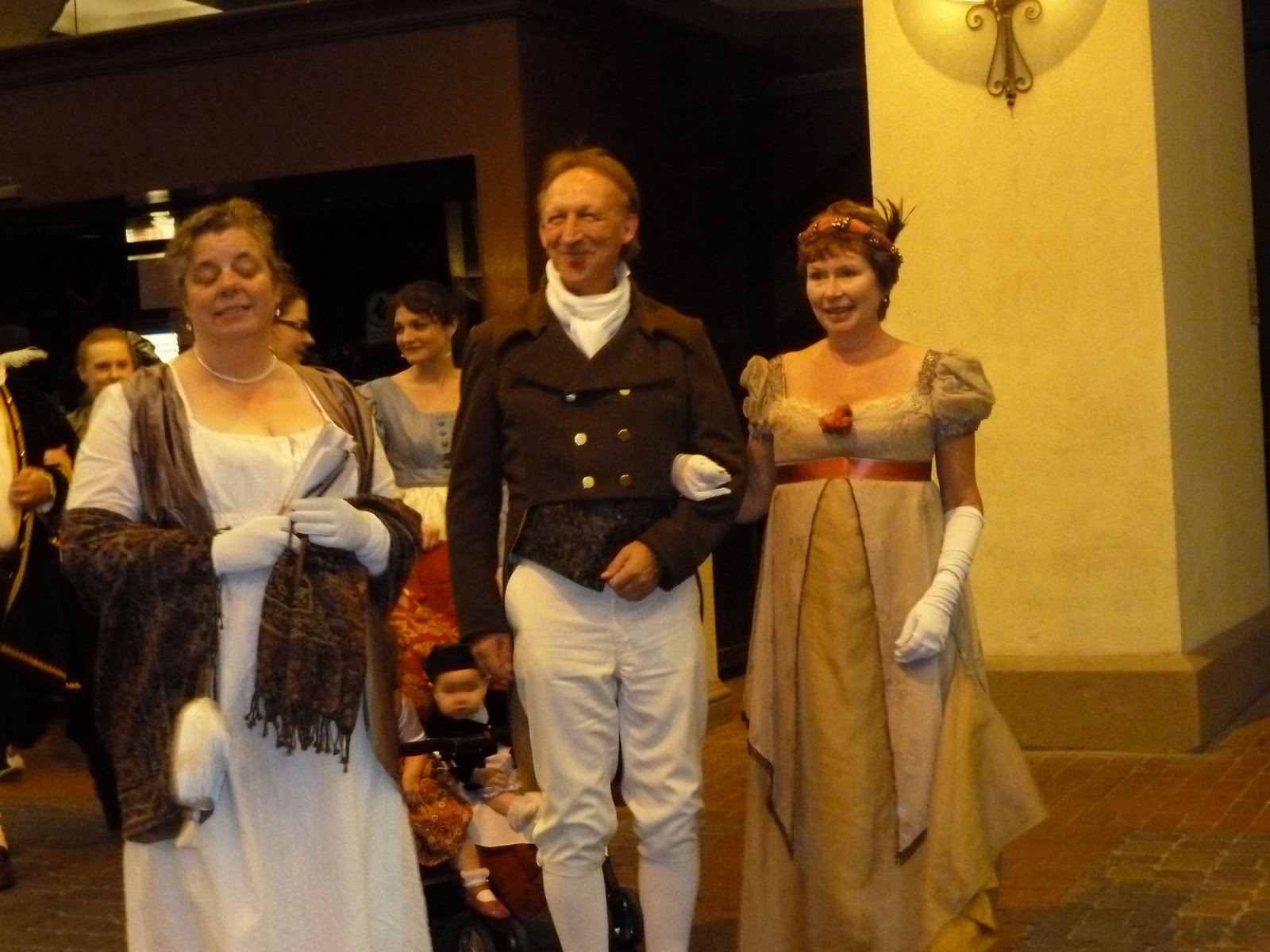
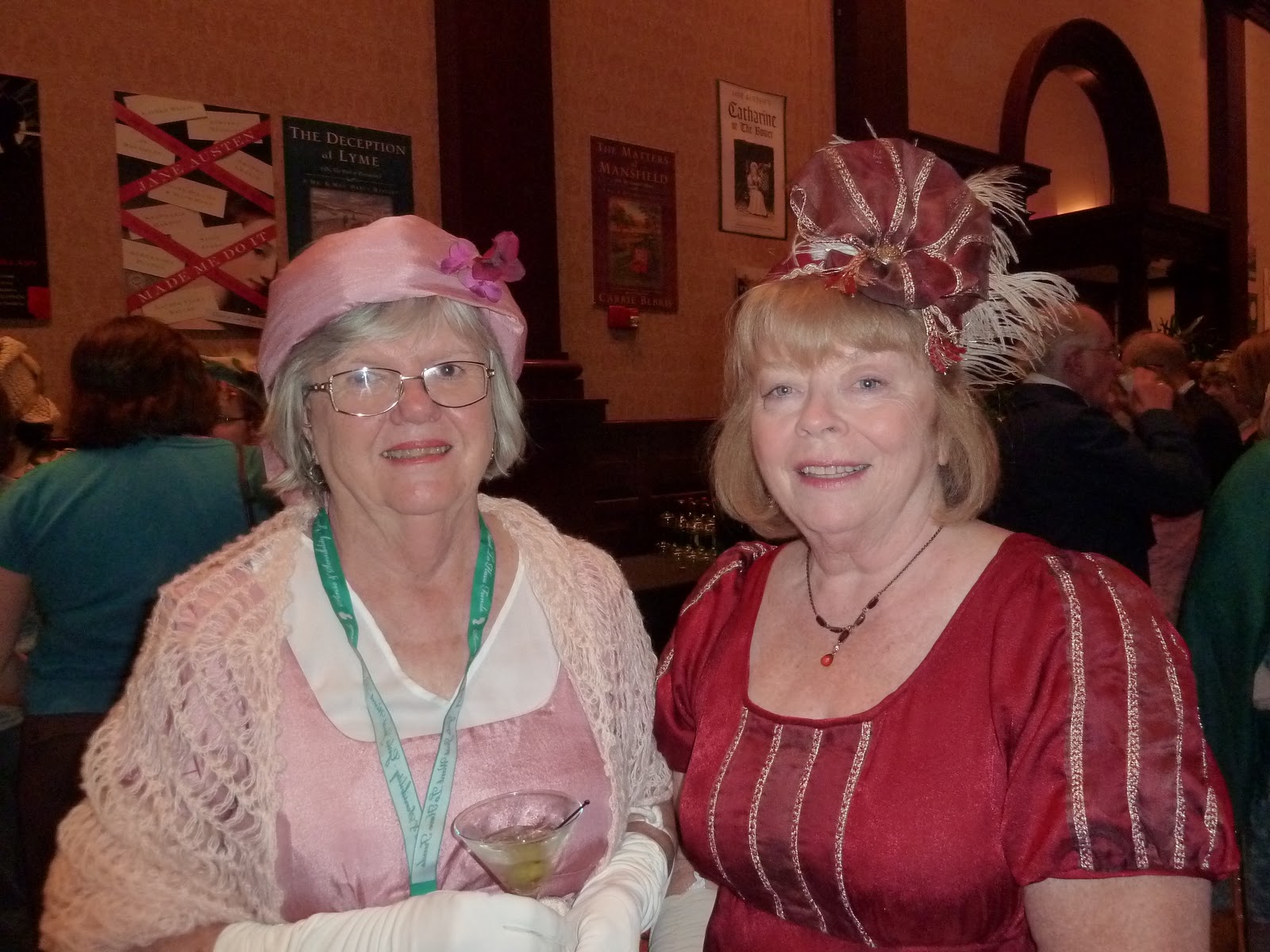
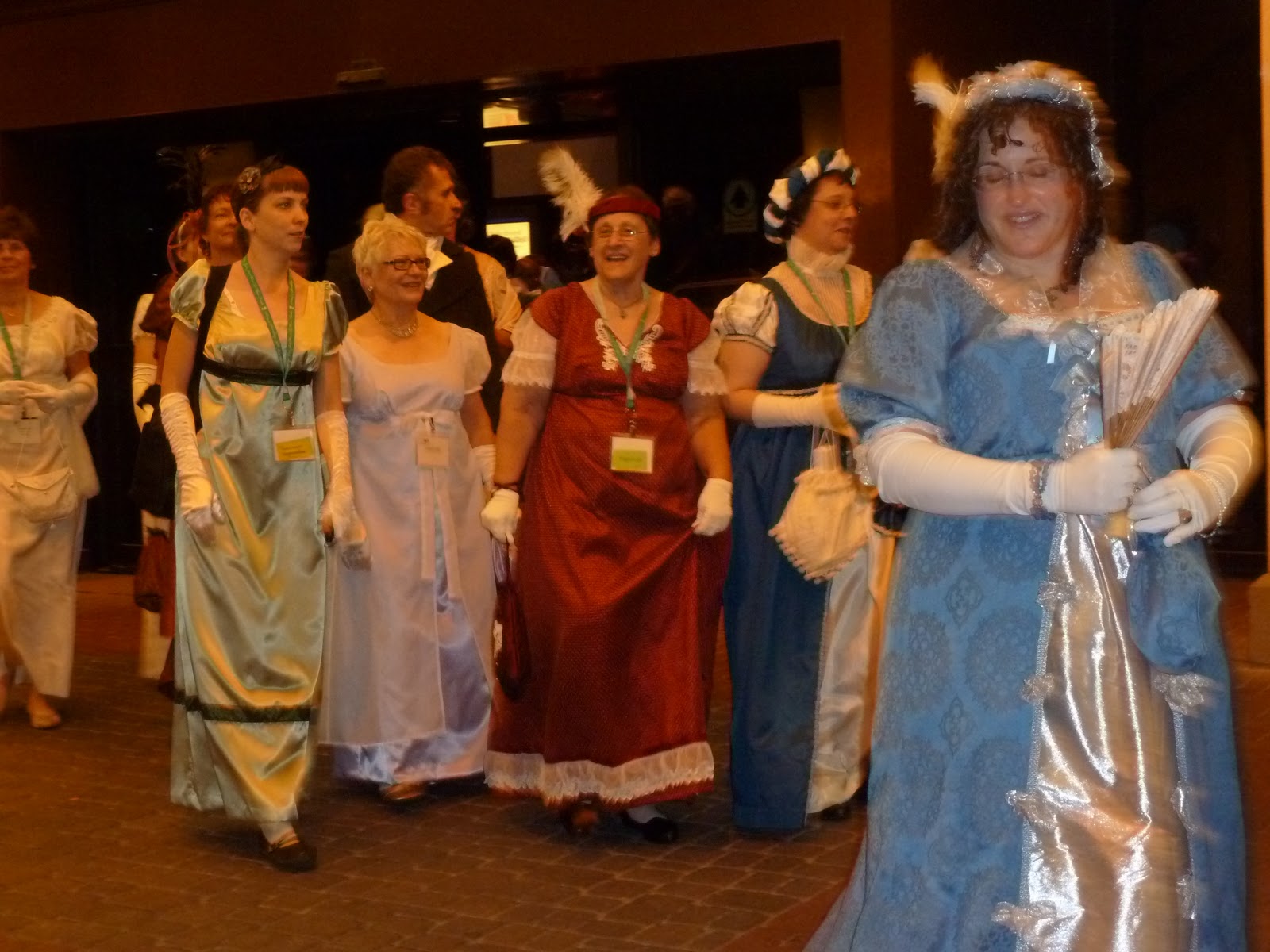
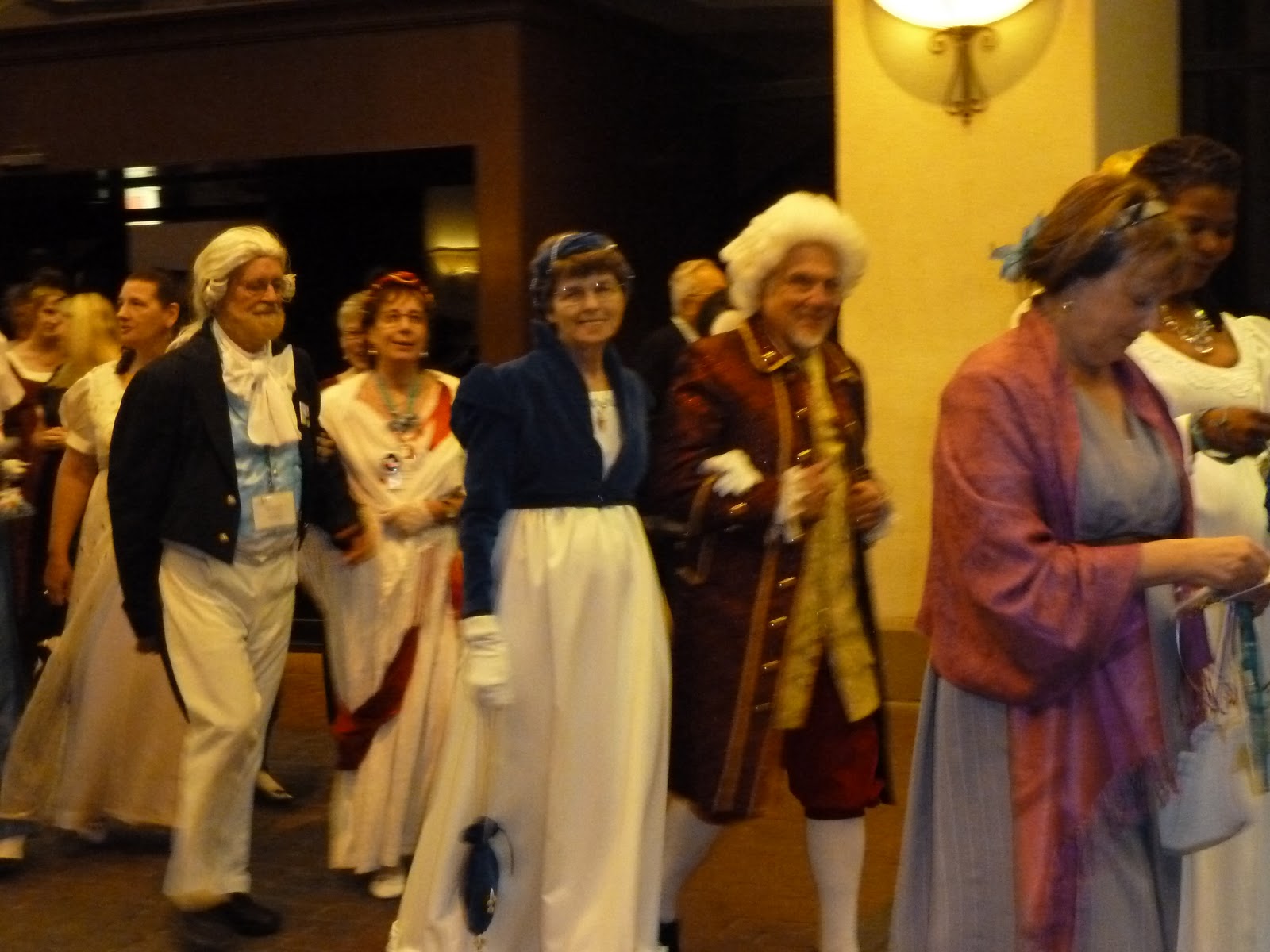
Following the banquest, many of the costumed attendees promenaded around the hotel and the neighborhood.

Sue Forgue of Chicago, proprietress of the Regency Encyclopedia

Unidentified stroller on the left, with Steve Lawrence of the Chawton House Library and Mrs. Lawrence.

Kathy O’Brien and Judy Beine of JASNA-WI
Strollers in costume
More delightful costumes

                    In the foreground, Judy Beine, Kathy O’Brien, Sara Bowen and Kim Wilson

                                                             Lori Davis and  Kim Wilson

Liz Cooper wore appropriate Texas attire to escort Andrew Davis on the promenade

After the brunch on Sunday, Nina and I — along with lots of other Janeites — visited the Kimball Art Museum in Fort Worth for the newly-opened exhibition on Caravaggio and His Followers.

For more information on the Kimball Art Museum, click here.

And here is more information on JASNA, the Jane Austen Society of North America.

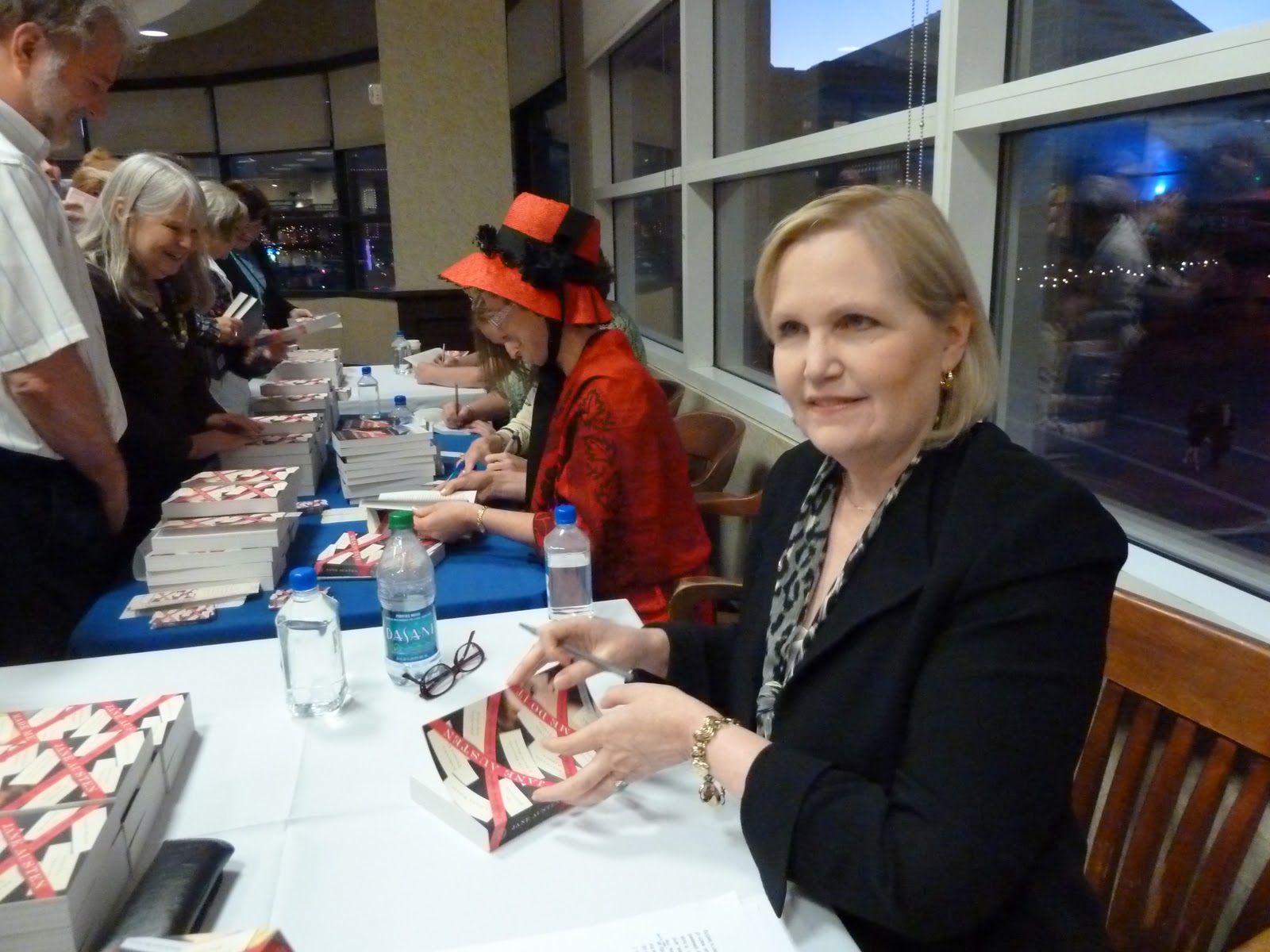
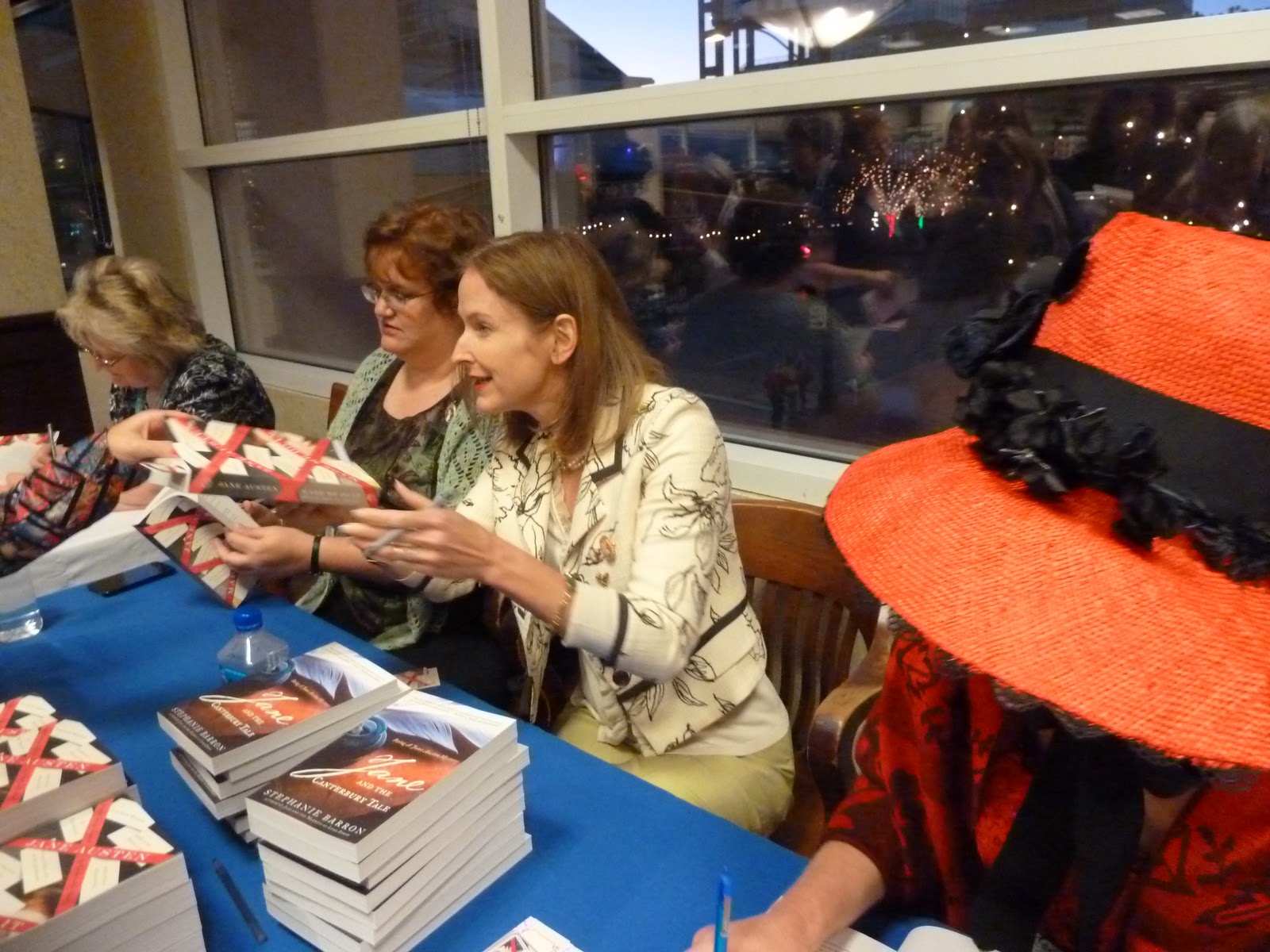
Watch for another post on the gala book launch held in Ft. Worth, comuing soon.

Next year, the JASNA AGM will be held in New York City, Brooklyn to be precise, October 5-7,. 2012where the topic is “Sex, Money and Power in Jane Austen’s Fiction.”

For your video invitation, click here.

Anonymous

Anonymous, opening on October 28th, is a political thriller advancing the theory that it was in fact Edward De Vere, Earl of Oxford who penned Shakespeare’s plays; set against the backdrop of the succession of Queen Elizabeth I, and the Essex Rebellion against her. The film stars Rhys Ifans, Vanessa Redgrave and David Thewlis.

Shakespearean conspiracy theories have been around for centuries and the film does not seek to advance one or the other, but rather it presents the facts and leaves it to the viewer to make up their on mind on the subject. The sets are gorgeous, the acting isn’t half bad and the costumes are as authentic as costume designer lisy Christl could make them.  Christl boiled, shrank, then dyed and painted the fabrics to transform them into director Roland Emmerich’s desired look for the authentic atmosphere of the political snake-pit of Elizabethan England and the movie’s picture style with low light that comes from candles and fireplaces.

“With the new developments in digital cinematography, we could really take advantage of candlelight and firelight,” says Director of Photography Anna Foerster. “For a period piece, using available light – candles, fireplaces, whatever comes in from outside – makes it real.” Together with Emmerich, she developed the look of the film from the paintings of Johannes Vermeer and Georges de La Tour. “Vermeer uses the soft, diffused daylight that comes in through windows; de La Tour would have a single source of light, a candle or a torch.”

Actress Joely Richardson in the role of Princess Elisabeth Tudor, later Queen Elizabeth I.

Visit the film’s official site here, where you can watch a trailer, as well as design your own coat of arms. A review of the film can be found at here at ScreenCrave.