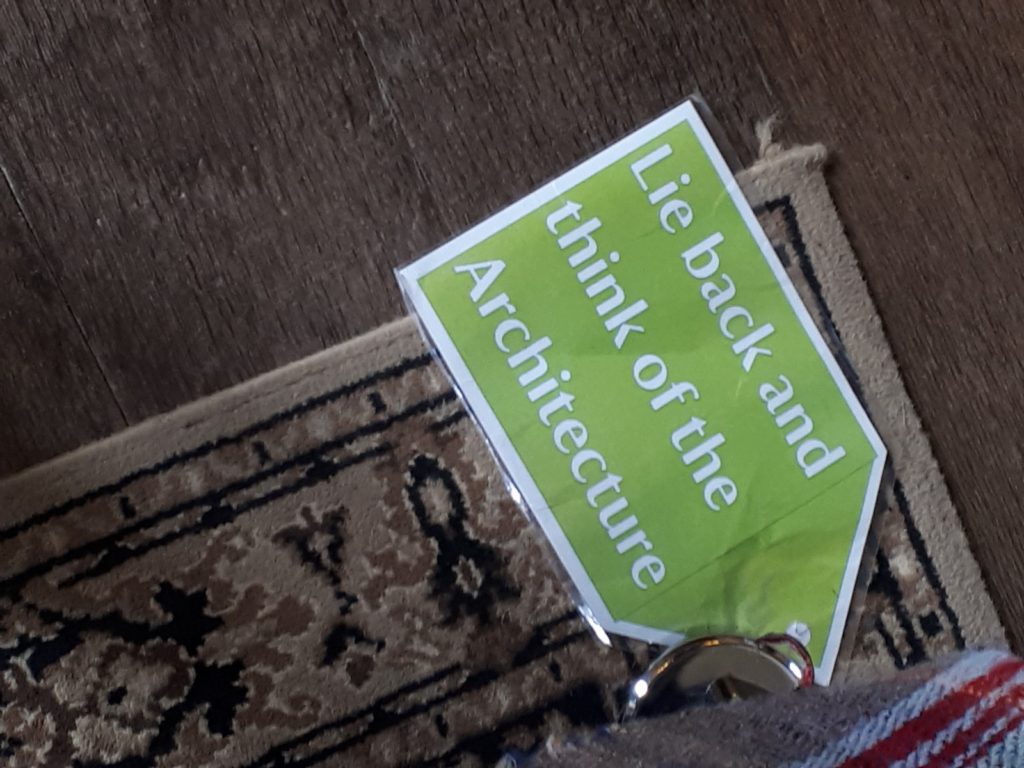
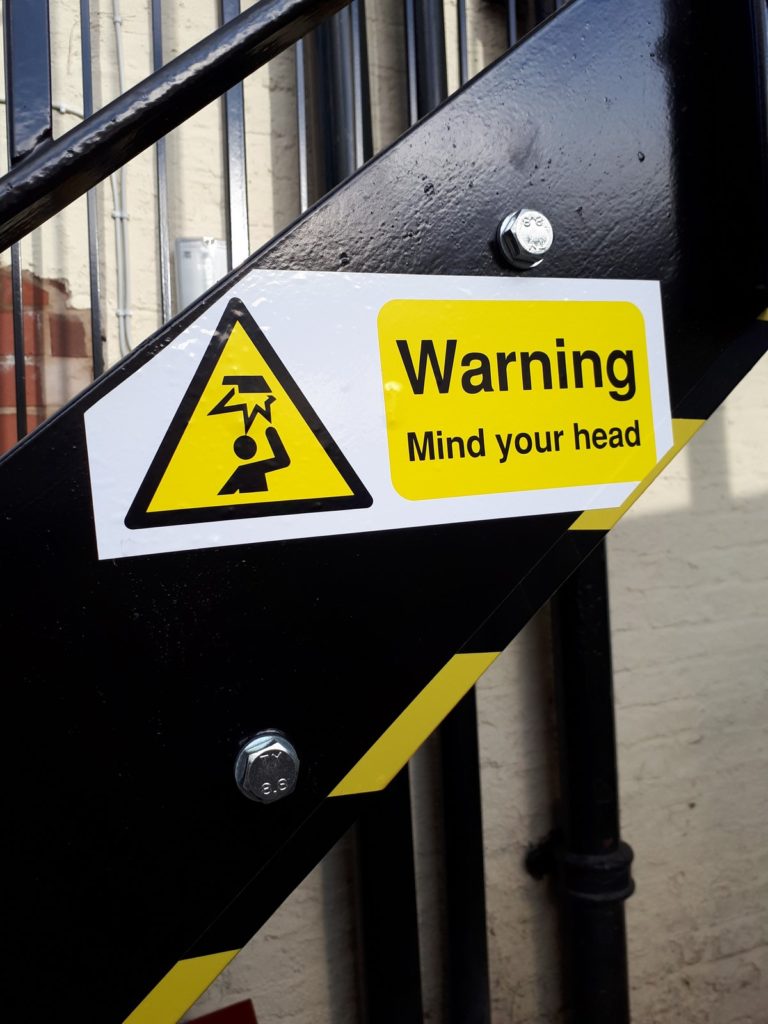
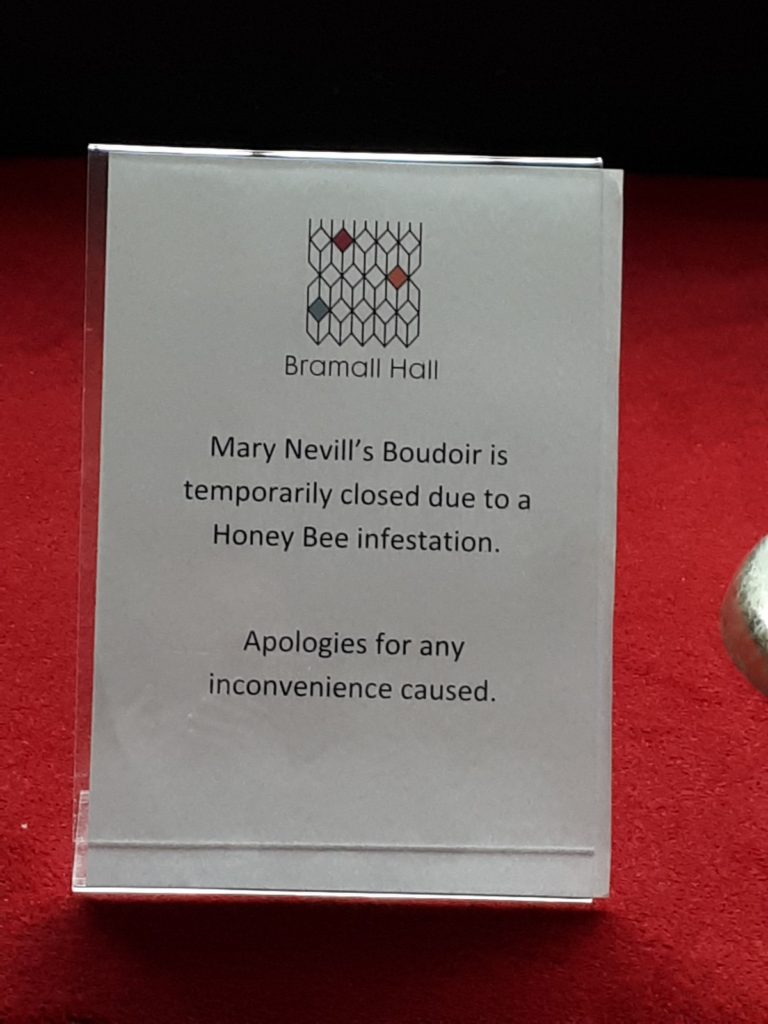
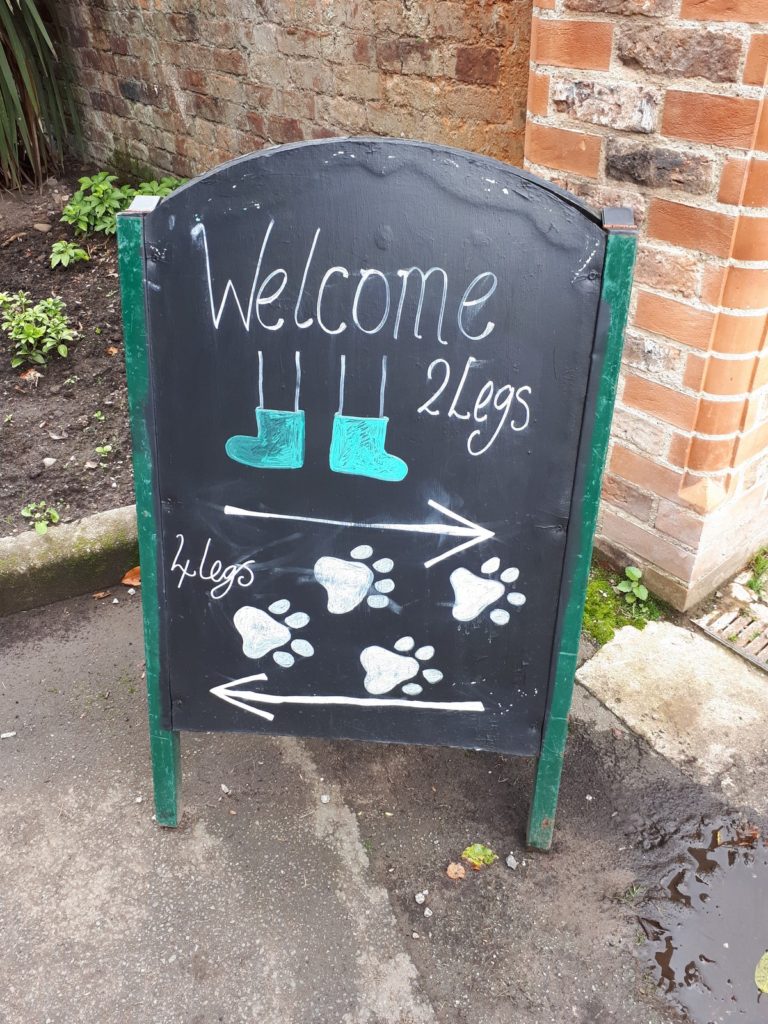
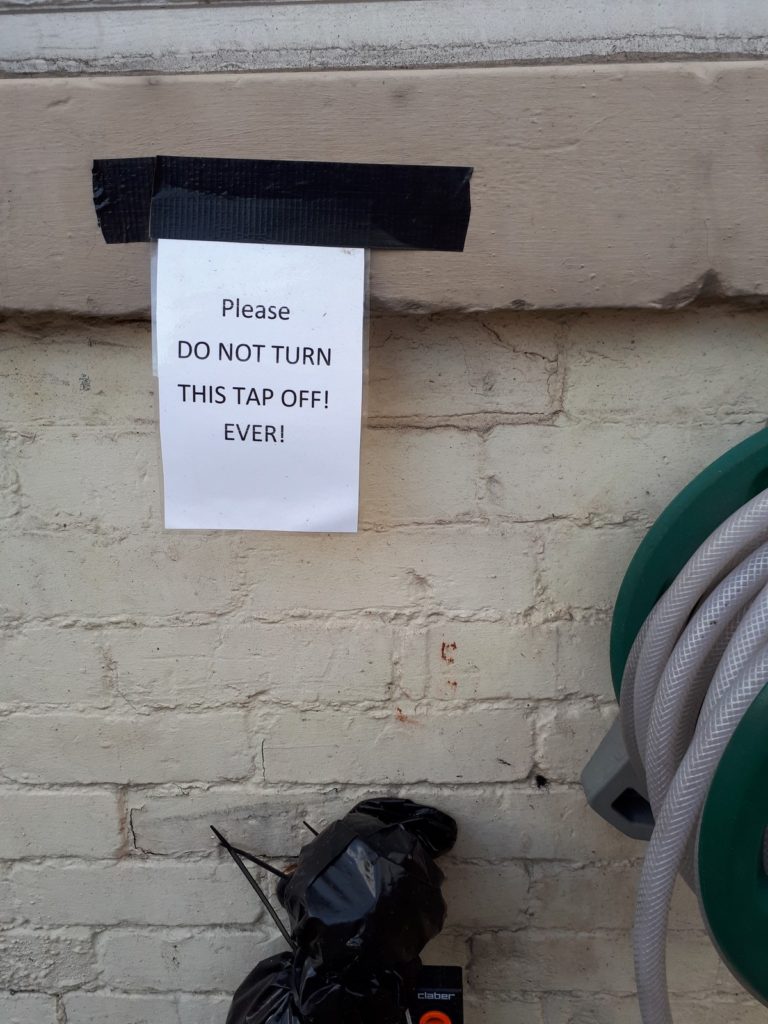
This is how I felt for almost the entire 2017 Number One London Country House Tour. I love visiting English Stately Homes and this Tour offered a stellar variety of periods, architectural styles, and decorative arts. Plus, our group was remarkably compatible and full of historical curiosity. We had great food, accommodating drivers, fun hotels, etc. etc. etc. Only thing I wished for was more energy!!!
See how our first hotel’s wall recognized our goals!
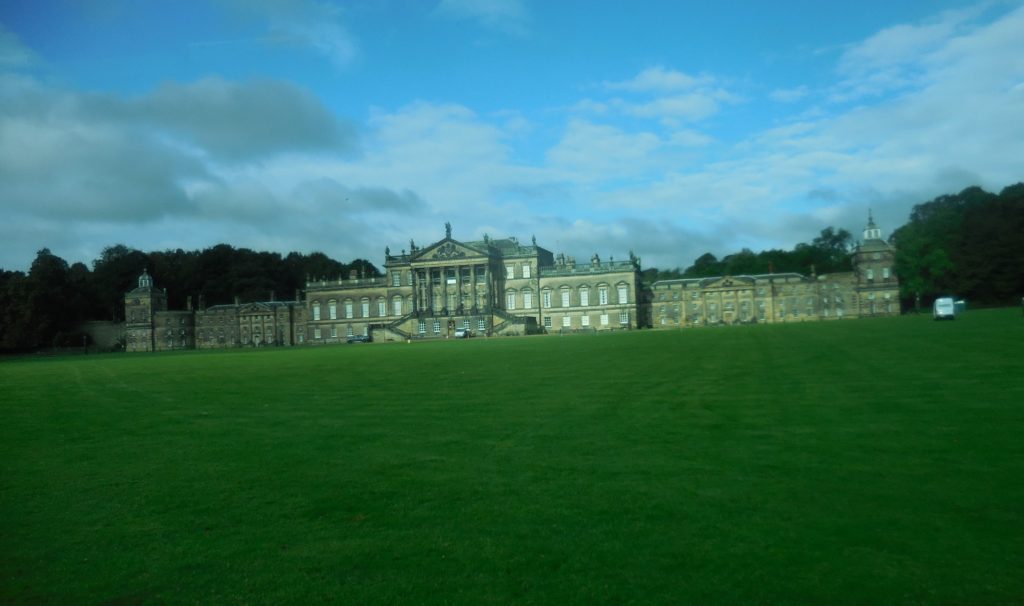
Our first stop was one I had been eagerly anticipating for several years. Wentworth Woodhouse has only recently opened to the public. As you can see from the pictures of the south facade, you have to get back a long distance to photograph the entire house, and this is only half of it.
Wentworth Woodhouse
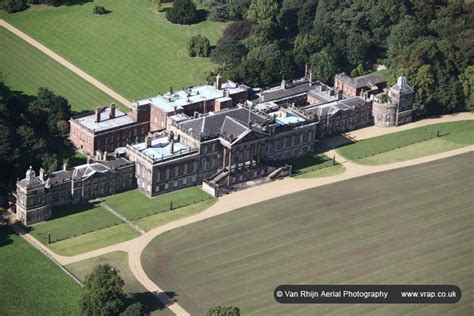
Said to be the largest private residence in Europe, Wentworth-Woodhouse in fact is two houses joined. The earlier west-facing house was begun by the 1st Marquess of Rockingham in the 1720’s in mellow red brick in the baroque style. A few years later, the same Marquess chose to build an even larger house, the east facade, constructed of sober grey stone in the Palladian style.
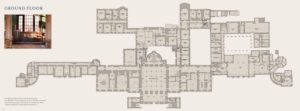
West FacadeEast FacadeThe floorplan of the house(s) and the aerial view show how there are actually two complete houses, back to back.
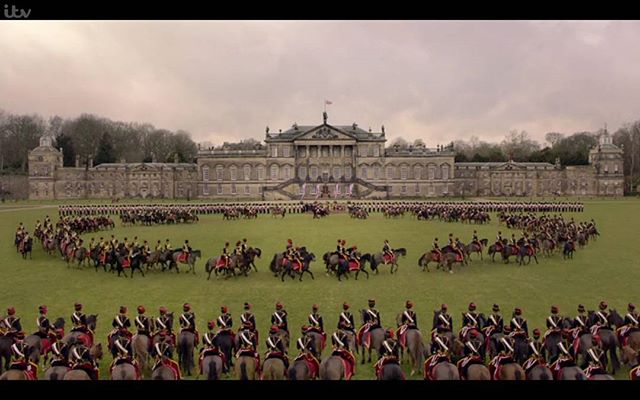
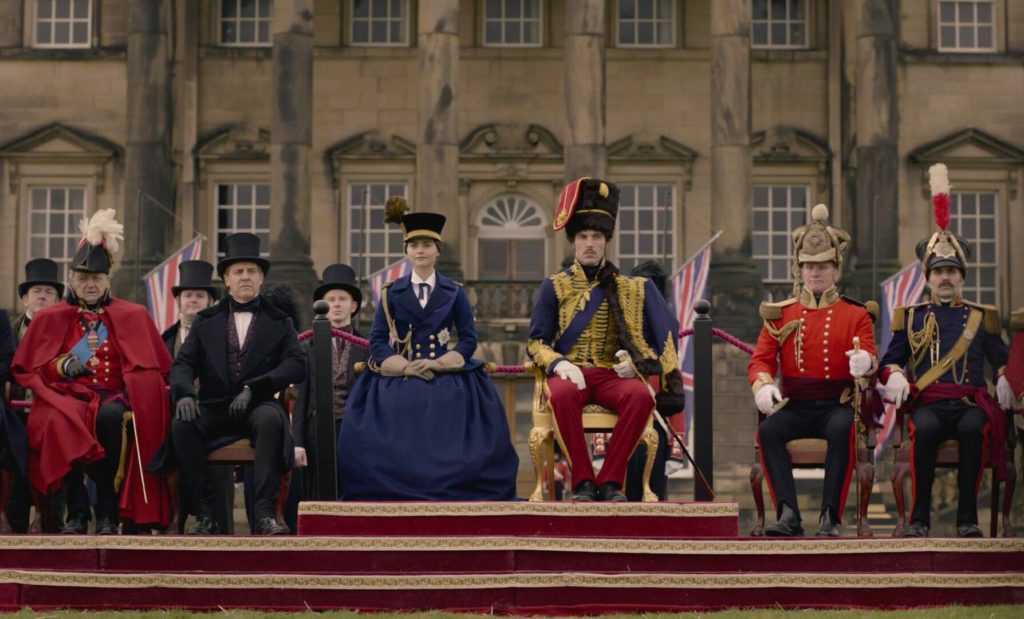
Recently WW, as I will refer going forward to Wentworth Woodhouse to save my fingers, has been seen in several films and on television. In Episode One of Season Two of Victoria, the scenes of the royal couple reviewing the regiment were staged in front of WW.
I will relate the full story of WW soon, and a long complicated tale it is. For the time being, just know that touring it was fascinating. Recently, the estate has been acquired by a Preservation Trust after many years as a school and then standing empty and abandoned for some time. Fortunately, the Trust will preserve and restore the house and the gardens.
Wentworth Woodhouse, September 2017
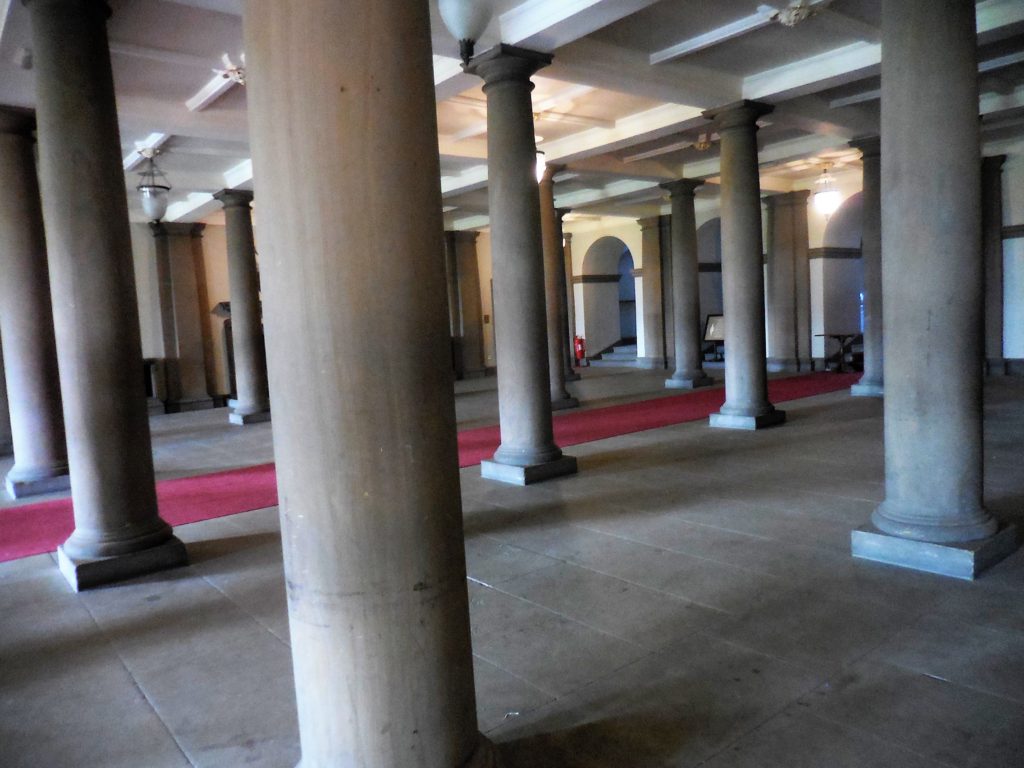
We entered on the ground level, to find a great forest of pillars, cleverly named the Pillared Hall.
And a noble staircase leading to the Piano Nobile, that is, the State Rooms.
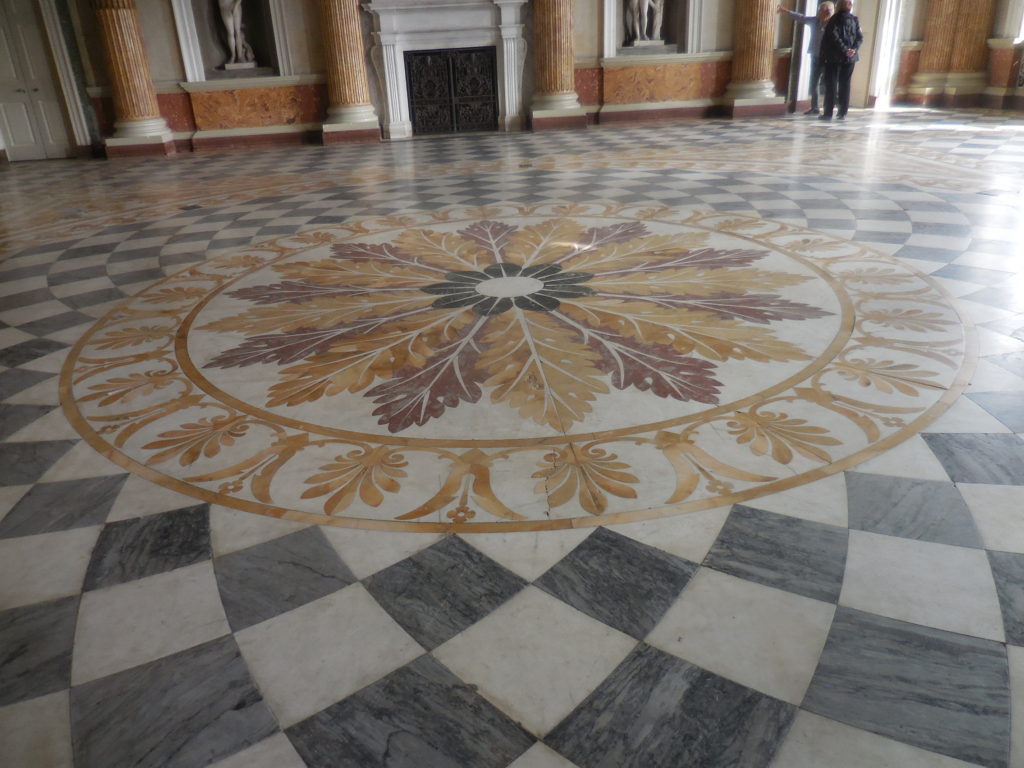
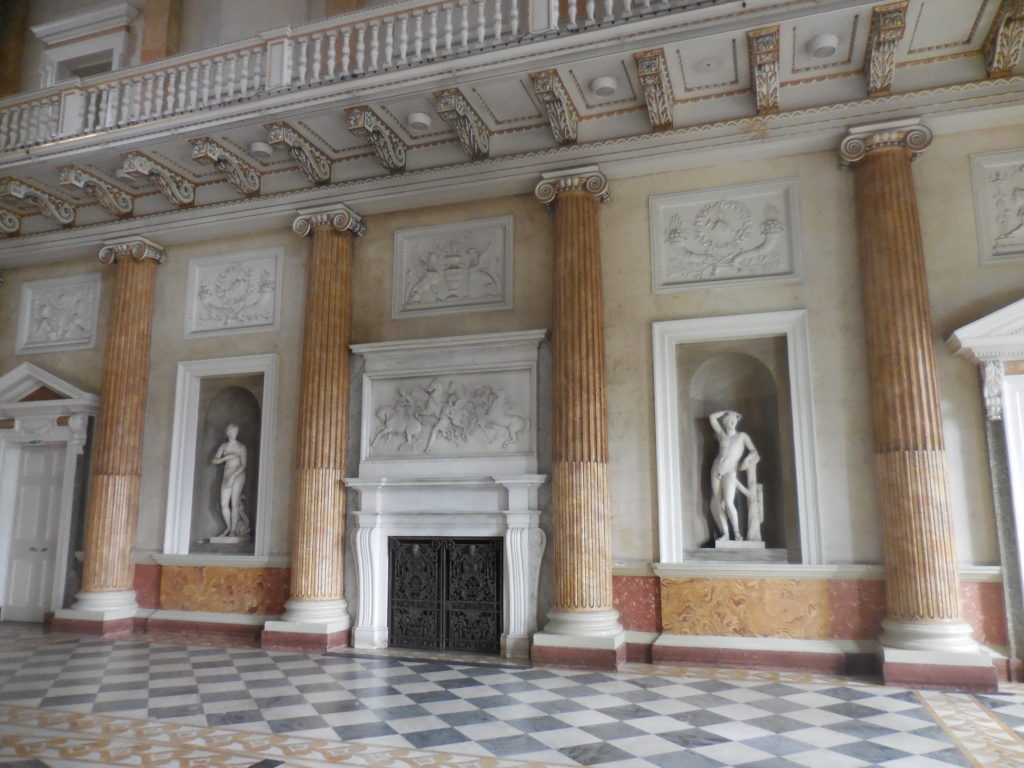
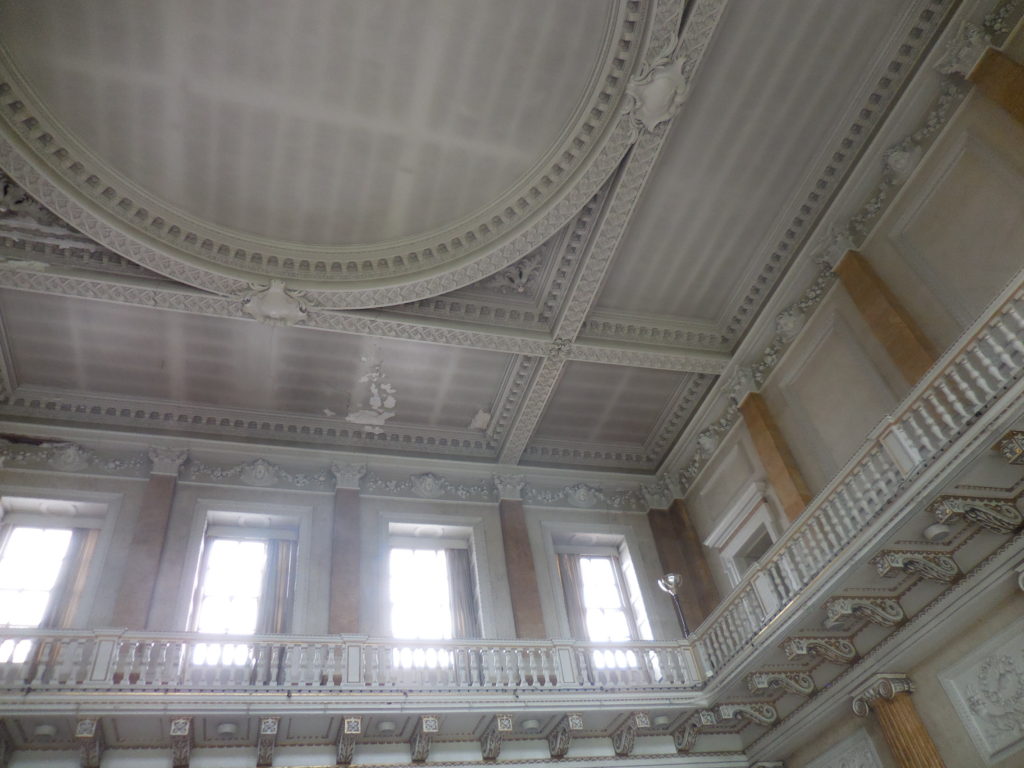
The Marble Hall, with its patterned floor and elaborately decorated ceiling.
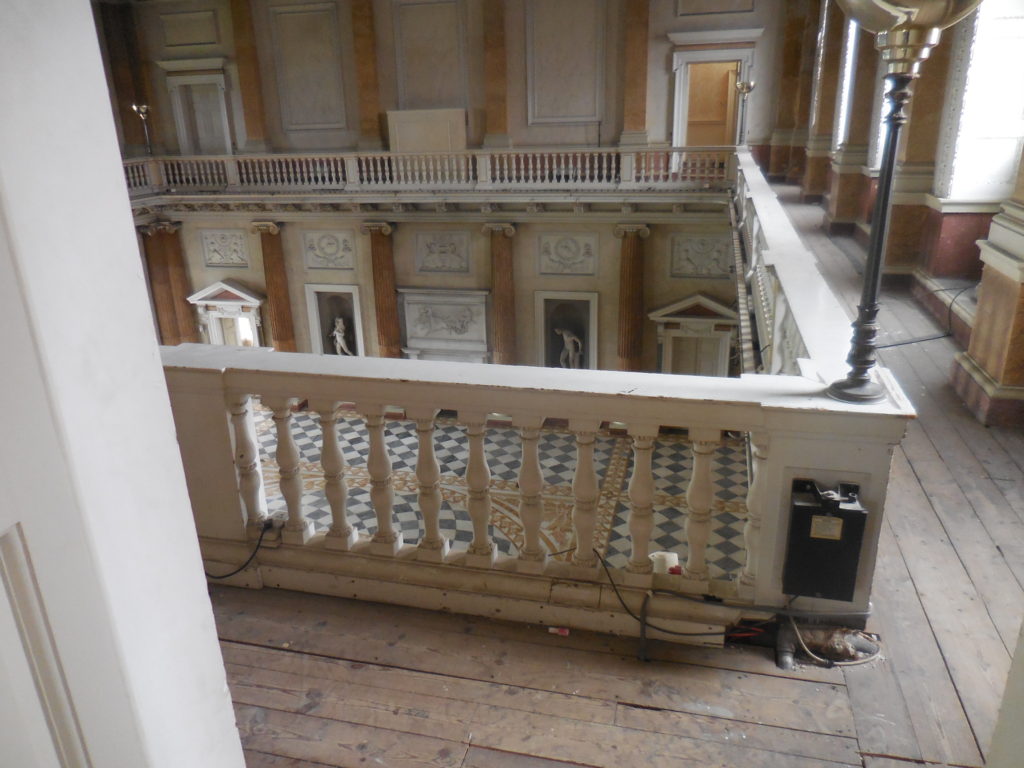
Looking down from the gallery
It is easy to see why there are so many pillars holding up this vast room, which was used for all sorts of gatherings, as a grand ballroom, as a gymnasium for the women’s college, and it also stands in for Buckingham Palace in the film Darkest Hour.
Most of the rooms are now empty, previous furnishings sold, stored, or lost. WW is a venue for business meetings and weddings, with the facilities able to accommodate either intimate gatherings or a virtual mob.
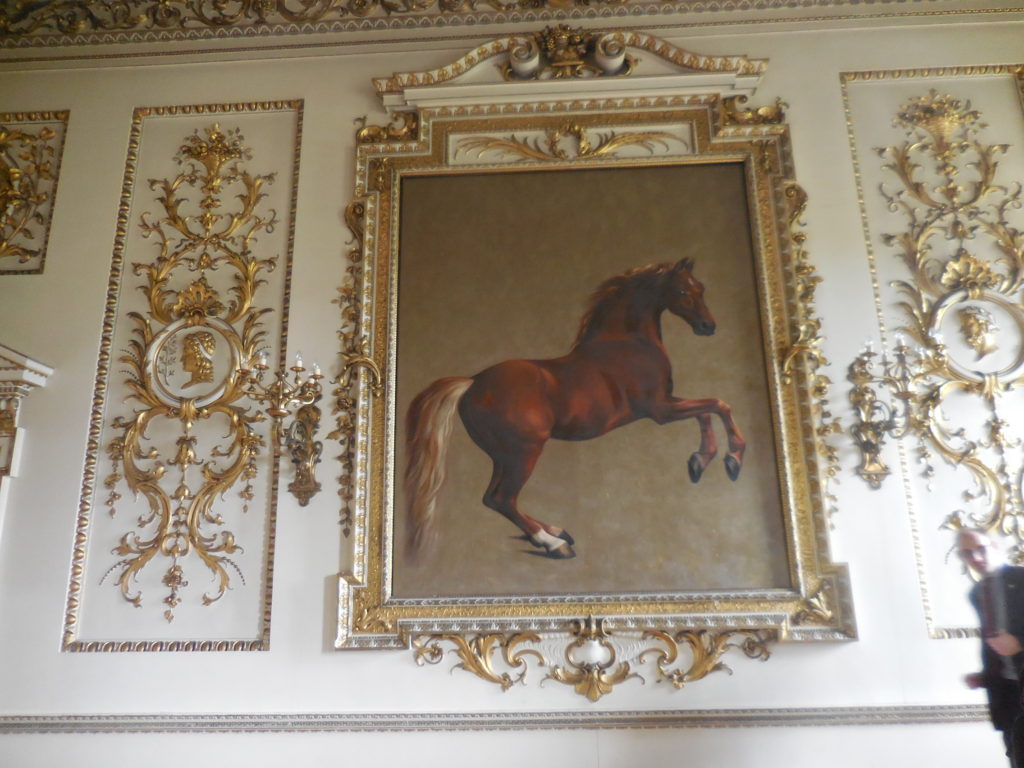
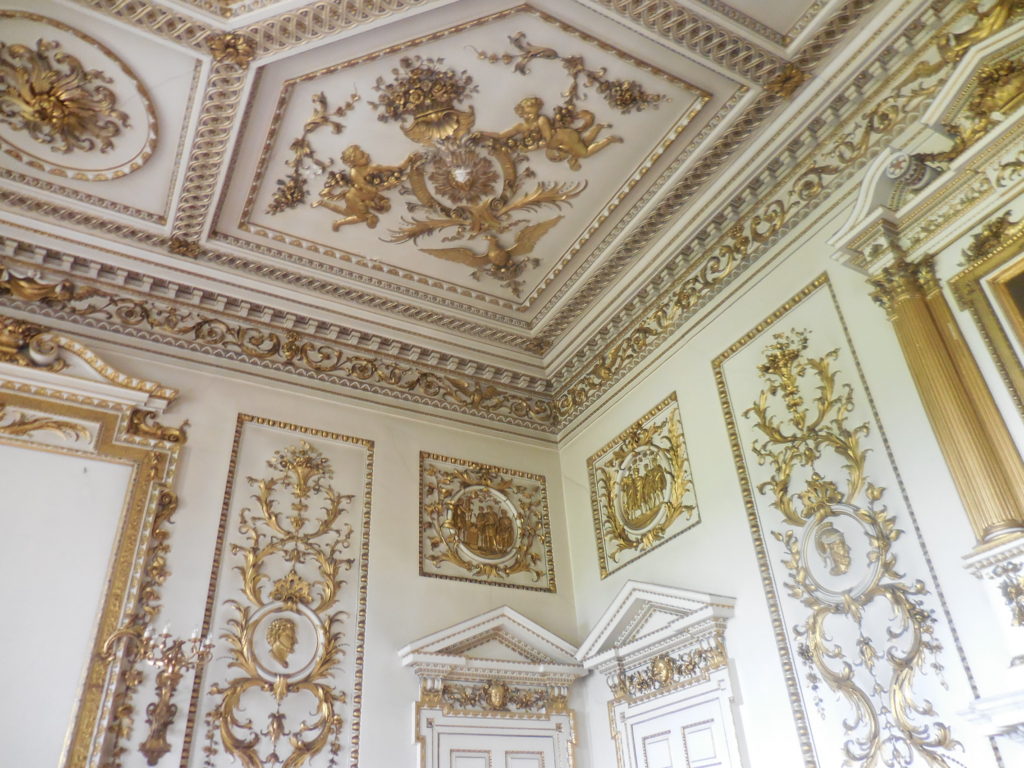
The Whistlejacket Room
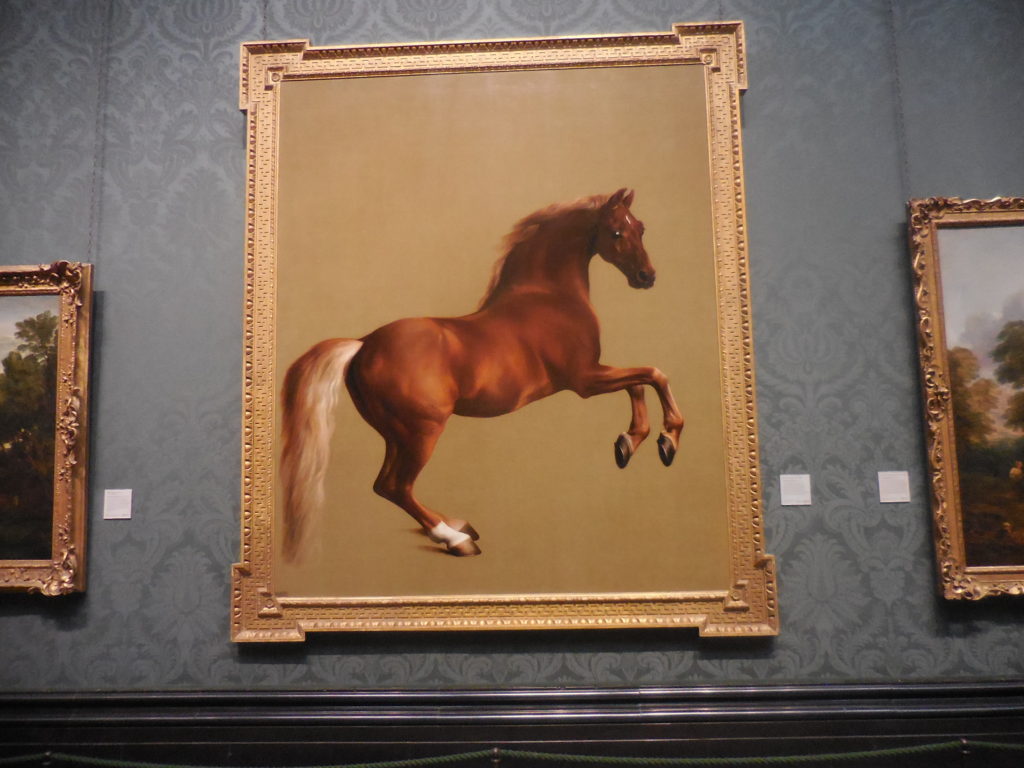
The gilded walls of this room once held the famous 1762 painting by George Stubbs of Whistlejacket, a champion racehorse owned by the 2nd Marquess of Rockingham. Sold to partially fulfill death duties, the canvas now hangs in London’s National Gallery, where I had visited at the beginning of my trip. The version at WW is a copy.
Whistlejacket by Stubbs at the National GalleryAnother corner of the Whistlejacket Room
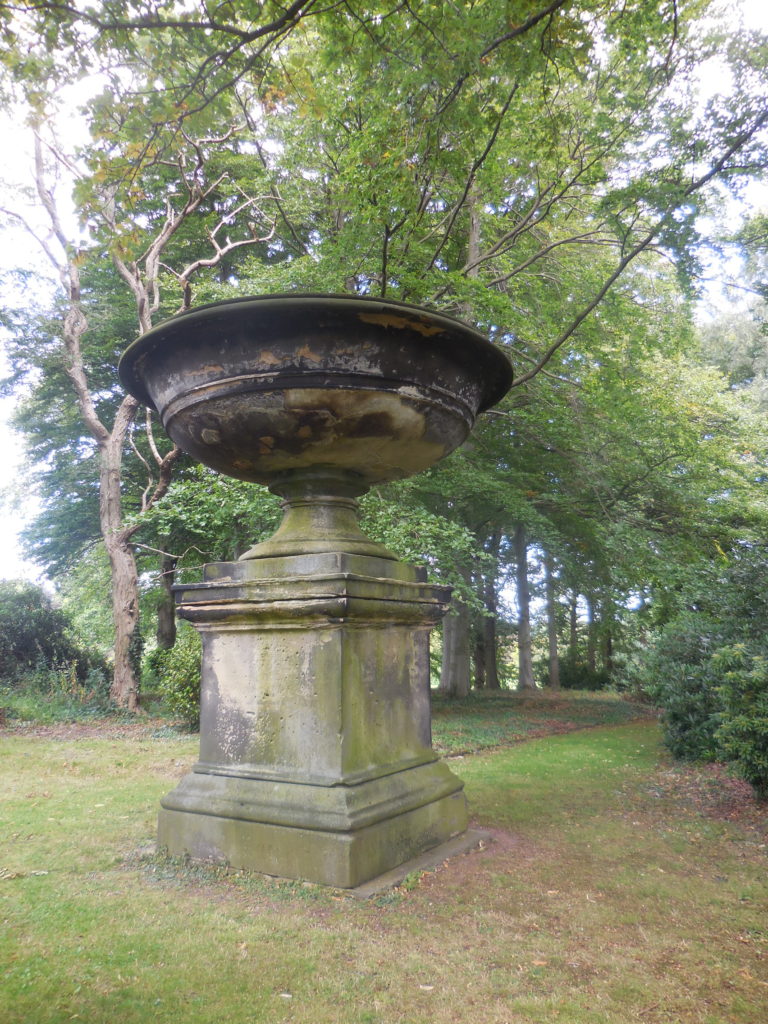
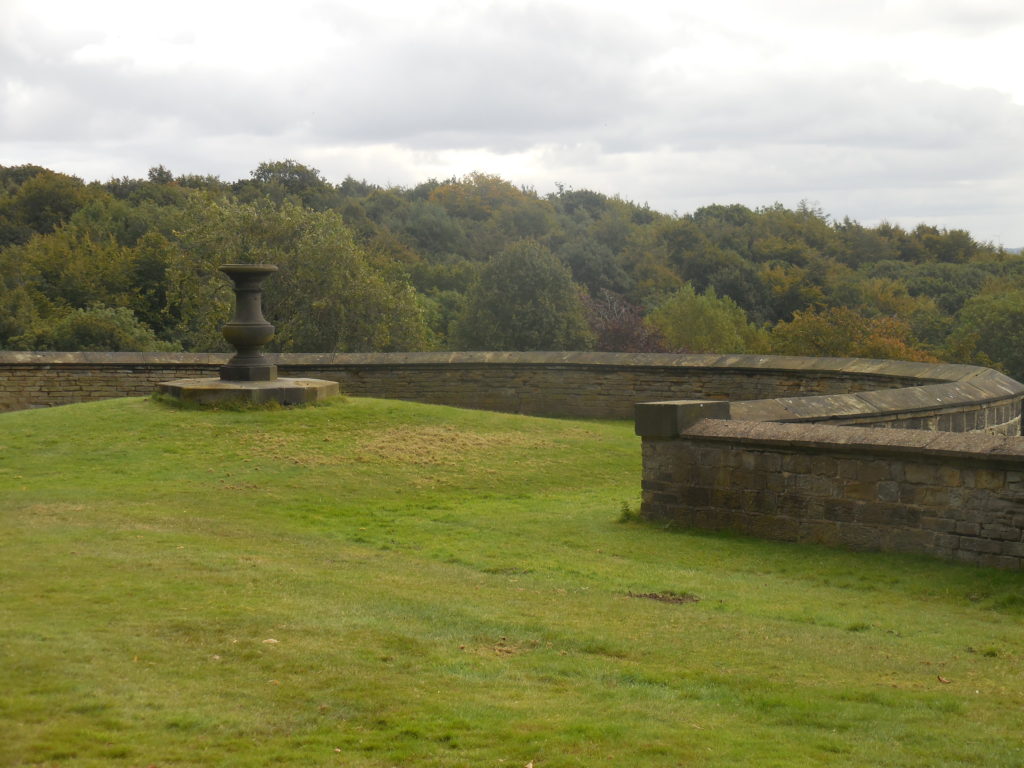
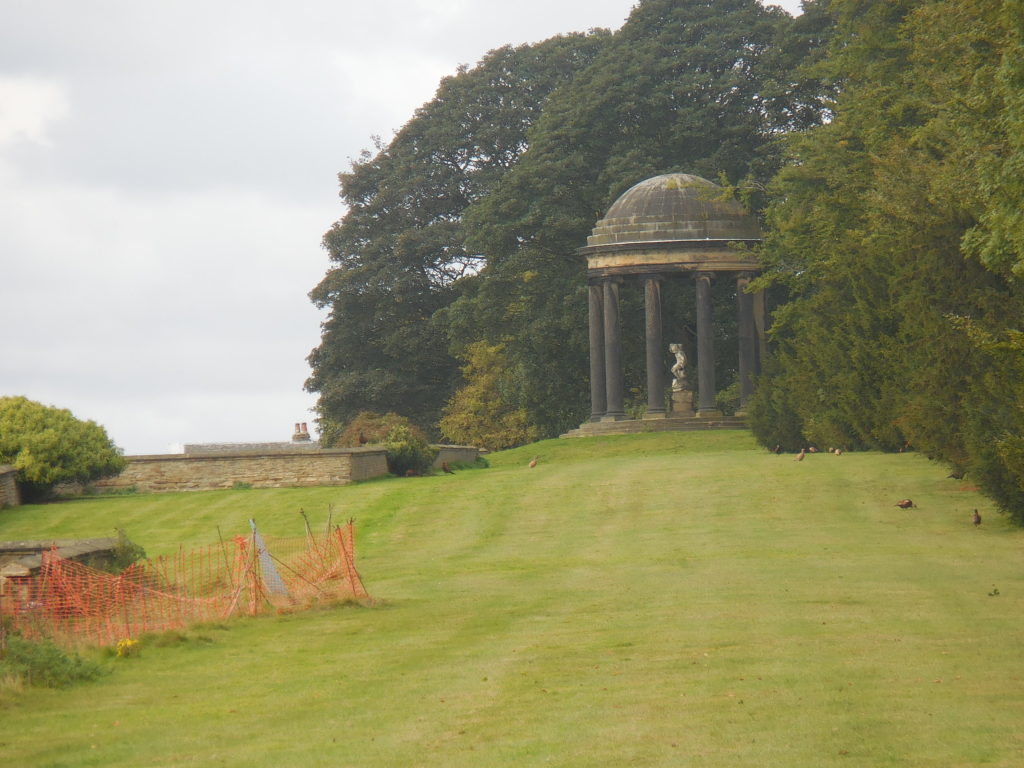
I will close with three views of the extensive gardens, which are being restored after wholesale destruction for strip mining of coal. Next time I will cover, more briefly, other houses we visited on Number One London’s 2017 Country House Tour.
The Giant UrnThe South TerraceThe Ionic Temple containing a statue of Hercules
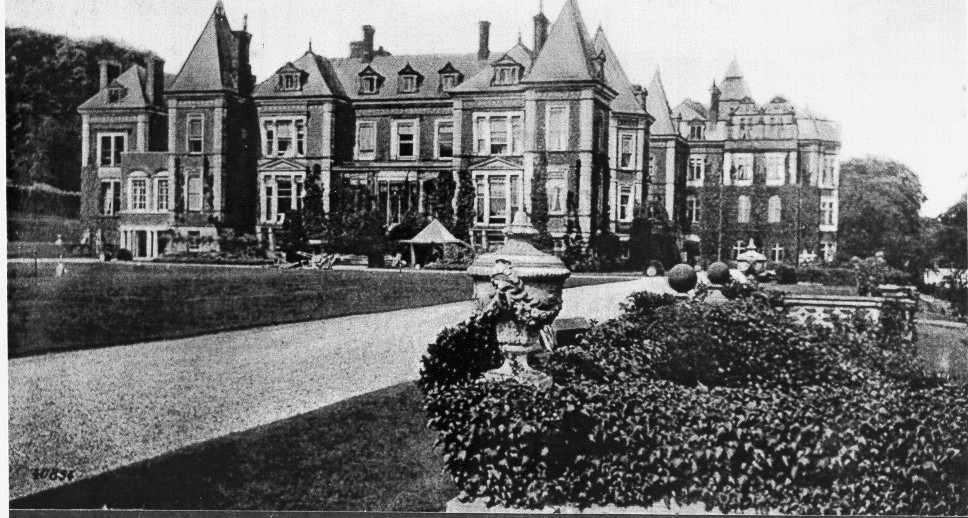
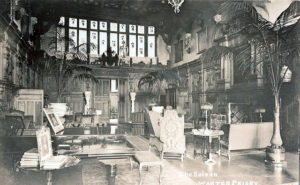
If you’re a regular visitor to this blog, you’ll know that I spend an inordinate amount of time researching anything and everything to do with the Duke of Wellington. Often, this research leads me down unexpected paths, as happened when I found myself stumbling upon Lady Nunburnholme and her home, Warter Hall, on the Lost Heritage website: The Victorian and Edwardian owners of Warter Hall (or Priory).
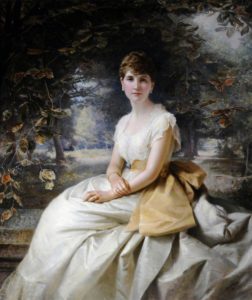
Florence Jane Helen Wellesley (1853-1932), Lady Nunburnholme, OBE by Edward Hughes, National Trust, Beningbrough Hall
The Formidable Lady Nunburnholme
“From the purchase of the Warter Estate by her husband in 1878 until its sale over 50 years later, the village of Warter and the lives of the villagers were dominated by Lady Nunburnholme.
“Born in London in 1854 Florence Jane Helen Wellesley was the eldest daughter of Colonel William Henry Charles Wellesley, a nephew of the great Duke of Wellington. She married Charles Wilson in 1871 and they lived at Cottingham, near Hull before moving to Warter Priory in 1878.
“(Local man) George Noble had many stories of Lady Nunburnholme:She was a Wellesley, the Duke of Wellington’s family. Warter Priory was full of Duke of Wellington’s busts and oil paintings. She used to say “I’ve got the blood and Mr Wilson has the money.” Which he had. … By jove she was a rum un, I’ll tell you that, yes, but when she was alright, she was alright, but by jove she was a goer on as we say… She liked entertaining and she was the boss, and it was no good anybody what worked there telling her off, for she would get his notice just after, you know, pack-up … she would nearly clear him off the place straightaway and pay him up… The butler used to say to me dad, and he was there a long time, and knew ’em all. “Bill”, he used to say “Devil’s abroad, she’s on the warpath … she’s playing devil with me and everybody else she’s come across – if you can find another job, getaway, out of road.”
“The Dowager Lady Nunburnholme died in 1932. The Warter estate had by then been sold by her grandson Charles John, 3rd Baron Nunburnholme. It was bought in 1929 by George Vestey who made Warter Priory his home until his death in 1968. Warter was then sold to the 4th Marquis of Normanby and the Guiness Trust.
“The Marquis bought Warter as a subsidiary shooting lodge and did not intend to live there as his principal family seat was at Musgrave Castle. The contents were auctioned in March 1969, the garden statuary the following September. Attempts were made to find a tenant but when one could not be found it was decided to demolish the house and a final auction of all the remaining furniture and fittings, down the last loo seat, was held in May 1972. Shortly afterwards the house was demolished, the splendid gardens bulldozed and the rubble used to fill in the nearby lake. The 5th Marquis of Normanby sold the Warter estate covering 11,910 acres (4,820 hectares) with 63 houses and cottages to a Hull-born businessman Malcolm Healey in 1998.”
Meeting Lady Nunburnholme thus was pleasantly surprising, but sadly Warter Priory’s fate was all too familiar. Since WWII, nearly 1,000 of Britain’s stately homes have vanished, either fallen to ruin or demolished when changes in social climate and the industrial landscape combined with diminished fortunes and death duties to sound the final bell on a way of life that had become unsustainable.
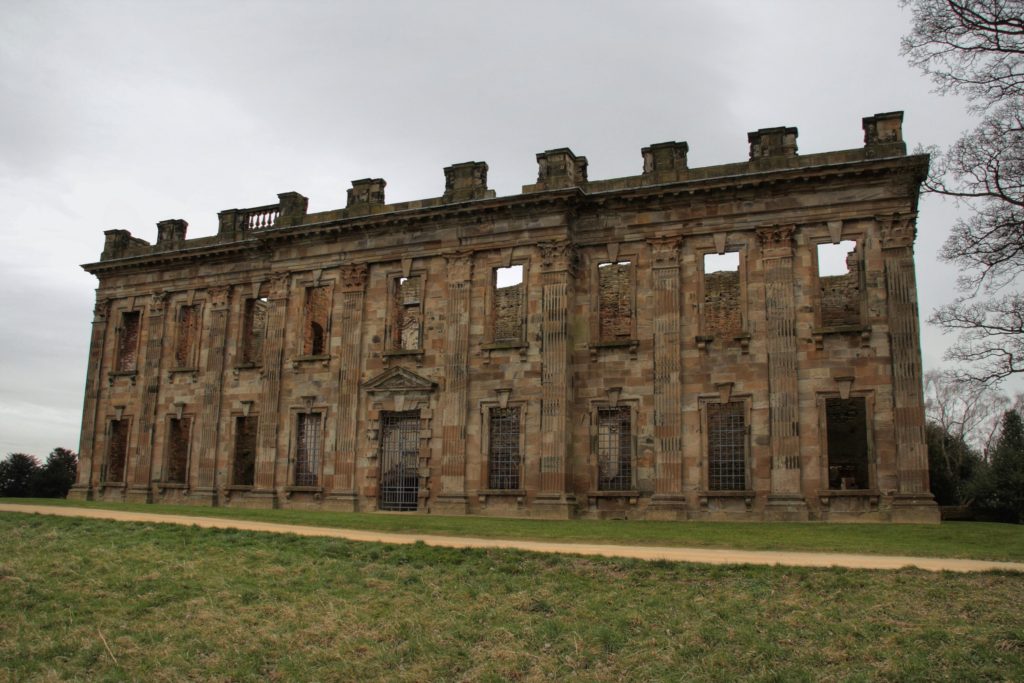
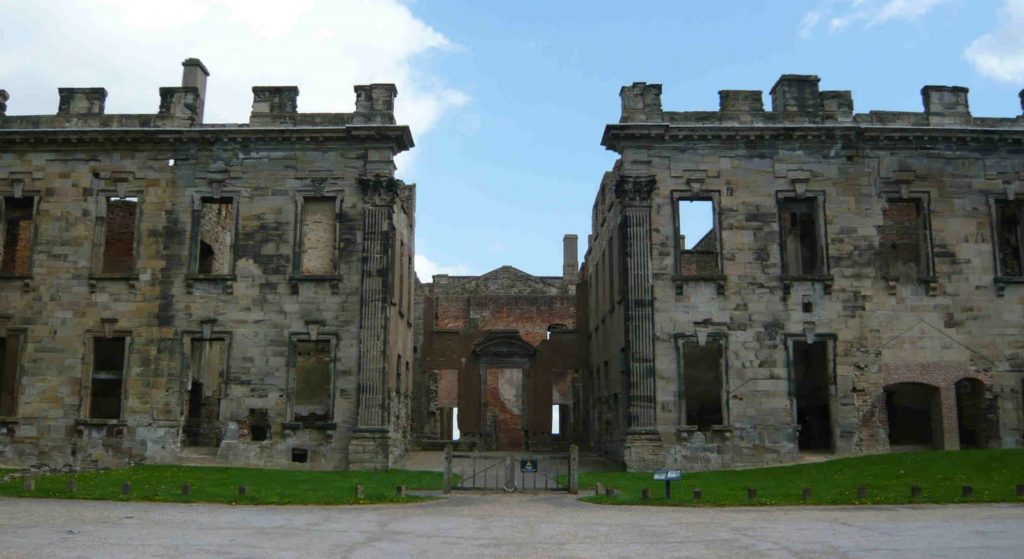
As we were going to be Derbyshire, I built a stop at Sutton Scarsdale into Number One London’s 2017 Country House Tour, as I wanted to show our guests the state that some of the houses were in when acquired by the National Trust or English Heritage. Sutton Scarsdale is a prime example of the condition so many important houses were allowed to fall in to after the second World War.
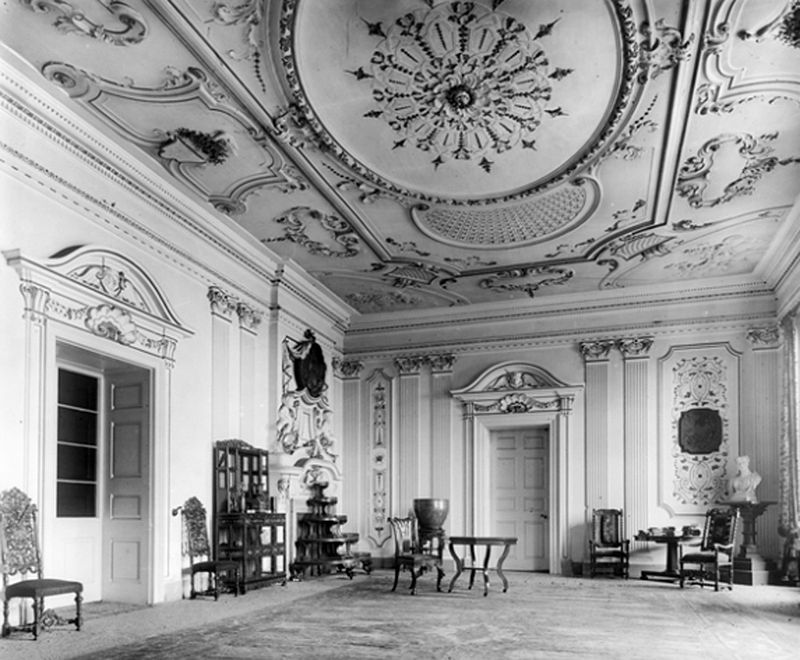
In 1724, Nicholas Leke, 4th Earl of Scarsdale commissioned the building of a design by architect Francis Smith, to develop a Georgian mansion with gardens, using parts of an existing structure. The estate was sold to the Arkwright family in 1824 and remained in their possession until 1919, when Major William Arkwright sold the house and grounds at auction. The estate was bought by a group of local businessmen who asset-stripped the house, with some parts of the building being shipped to the United States, where one room’s oak panelling was bought by William Randolph Hearst, who planned to use it at Hearst Castle. After many years in storage in New York City, Pall Mall films bought the panelling for use as a set in their various 1950s productions. Another set of panels are now resident in the Philadelphia Museum of Art.In 1946, the estate was bought by Sir Osbert Sitwell of Renishaw Hall, with the intention of preserving the remaining shell as a ruin. Scarsdale Hall is now in the care of English Heritage, who are in the process of restoring the structure.
Interior of Sutton Scarsdale, circa 1920
While the efforts of organizations such as English Heritage, the National Trust, the Landmark Trust and myriad local councils and organizations have helped to preserve so much historic property for us to enjoy, it remains heartbreaking to consider all the houses that have gone forever.
You can read the entire Wikipedia entry for Sutton Scarsdale here, and watch a YouTube video that captures the majesty of the property here. Do visit the Lost Heritage website at the link above and take some time to explore their extensive archives. Additionally, there’s a very good Daily Mail article on vanished country houses here.
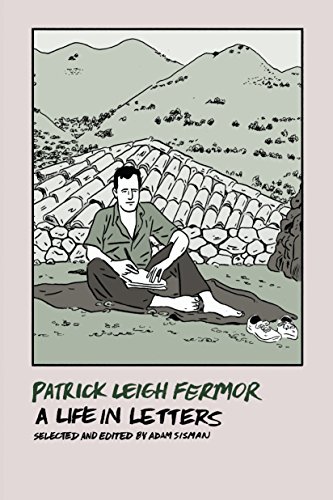
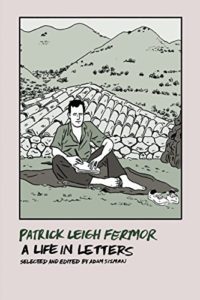
Selected and edited by Adam Sisman, a New York Review Book, 2016 (available through Amazon)
I have so much to thank James Lees Milne for, really. It was through reading his diaries and letters that I have found so many flamboyant, larger-than-life, madcap and interesting people. He introduced me to a circle of his friends and acquaintances and a time period that has become one of my favourite: England between and just after the War(s). One of the people Mr. Lees-Milne introduced me to is Patrick Leigh Fermor, whose author bio on Amazon reads thus:
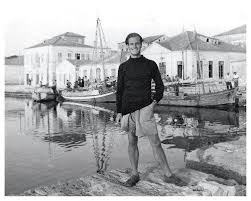
“In December 1933, at the age of eighteen, Patrick Leigh Fermor (1915-2011) walked across Europe, reaching Constantinople in early 1935. He travelled on into Greece, where in Athens he met Balasha Cantacuzene, with whom he lived – mostly in Rumania – until the outbreak of war. Serving in occupied Crete, he led a successful operation to kidnap a German general, for which he won the DSO and was once described by the BBC as ‘a cross between Indiana Jones, James Bond and Graham Greene’. After the war he began writing, and travelled extensively round Greece with Joan Eyres Monsell whom he later married. Towards the end of his life he wrote the first two books about his early trans-European odyssey, A Time of Gifts and Between the Woods and the Water. He planned a third, unfinished at the time of his death in 2011, which has since been edited by Colin Thubron and Artemis Cooper and published as The Broken Road.”
A potted history, to be sure, and a fuller bio can be found on Wikipedia. A respected British author and travel writer, PLF also felt a pull to Greece, where he travelled extensively and eventually built a house along with his wife, Joan.
Desk in Fermor’s garden near Kardamyli, 2007 copyright R. de Salis, Wikipedia
But it’s PLF’s circle of friends, also his correspondents, that make this book so interesting. Here again we meet Duff and Diana Cooper, the Devonshires, Andrew and Debo, Evelyn Waugh, Ann Fleming, Cyril Connolly, Lawrence Durrell and a host of others who seemingly all lived out sized lives and who are all people with whom one would have loved to share the odd shaker of martinis. The one slight quibble I had with this book is that it only contains PLF’s letters to people, and none from them, but this can hardly be seen as a flaw when the writing is this good.
While in an army hospital in Surrey recovering from pneumonia in February, 1940, PLF wrote the following to Adrian Pryce-Jones:
“Last night something marvellous happened. I am just being tucked up for the night, when I hear strange foreign noises outside the door, which opens, and in bursts Anne-Marie Callimachi (1) followed by Costa (2). She was dressed in black satin and dripping with mink, with pearls and diamonds crusted at every possible point, topped by the maddest Schiaparelli hat I’ve ever seen. Then Costa, who is very dark, with a huge grin, and quite white hair at the age of thirty. He was dressed in a bright green polo jersey over which he wore a very long black new coat with an immense astrakhan collar: both laden with huge presents. The nurses were struck dumb. Shrill squeals burst from us all, and then we were gabbling the parleyvoo like apes. The nurses fled in disorder. Then, of course, they couldn’t get a taxi as Anne-Marie had left the Rolls Royces etc. in London; but they had their luggage, and stopped the night at the hospital! We all pretended they were married, so the Sister, with girlish squeaks, got their room ready, with screens coyly arranged between the beds. By this time Costa was telephoning to the Ritz to say Her Highness wouldn’t be back that night, his voice echoing down the passages. The sensation in the hospital was absolutely phenomenal. Huge princely coronets on the luggage – such nighties! Slippers! Oh!! The hospital hasn’t recovered yet, and my glamour value among the nurses is at fever pitch. . . . They left this morning, Anne-Marie leaving a munificent cheque for the Hospital Fund, which I tendered with a languid gesture to the head doctor. Their passage will not be forgotten for ages!”
Fourteen years later, in September 1954, such hobnobbing with the cream of society was still in full flow. PLF writing to Ann Fleming from Hydra:
“Diana’s (Lady Cooper) presence proved a magnet for other yachts, first of all Arturo Lopez (3) in a vast sodomitical-looking craft, done up inside like the Brighton Pavilion, a mandarin’s opium den and the alcove of Madame de Pompadour. . . but this is nothing compared to five days ago, when a giant steam yacht (with a aeroplane poised for flight on the stern) belonging to Onassis came throbbing alongside. . . . On board were Lilia Ralli, several blondes, a few of the zombie-men that always surround the immensely rich, Pam Churchill & Winston Jr.”
We can forgive PLF his forays into the world of the rich and famous, not only because they’re so amusing, but as these brief interludes are tempered with quiet, bucolic and often mundane passages. To Jessica Mitford, PLF wrote in 1983, “Went to a marvelous sheep sale yester’een with Debo (her sister, Deborah, nee Mitford, Duchess of Devonshire), it was wonderful, faces like the whole of Gilray and Rowlandson, and an auctioneer haranguing, in what sounded like Finnish but was just rustic north country. This is the sort of whirl I like to live in.”
PLF’s friends were generous as well as amusing, several of them allowing he and Joan to use their homes whenever they chose, as was the case with Gadencourt, a manor house in Normandy owned by Sir Walter and Lady Smart – to Patrick Kinross, February 1952 – “They frightfully kindly let me live here for the whole winter. Why don’t you come and move in on your way home?” He also often stayed at a mansion owned by artist Niko Ghika on Hydra. PLF wrote, “He was seldom there, and, with boundless generosity, he lent it to Joan and me for two years.” Additionally, PLF was a regular house guest of such friends as Lady Diana Cooper, staying at her house in Chantilly and the Duke and Duchess of Devonshire, spending many Christmas’s with them at Chatsworth House. In February 1960 PLF wrote to Ann Fleming, “Christmas was glorious and went on for ages, consisting of Andrew, Debo and children, Andrew’s mother, Nancy (Mitford) and Mrs. Hammersley, for whom I developed a reciprocated passion. She strikes a wonderful note of bilious gloom about anything.”
Joan and Patrick would eventually build a house in Greece and spent many of their happiest years there, coming back to England regularly and staying at Joan’s family home in Devon. Occasionally, PLF stayed at the Easton Court Hotel in Devon, especially when he was seeking solitude in which to write. In a letter to Lady Diana Cooper, September 1956 –
” . . . . My muse and I are cloistered here, a gale howls down the chimney, cats and dogs come down on the sodden fields outside in an almost unbroken stream and a wind blows that would unhorn cows. I don’t think you’ve ever been here, but it’s a great retiring place for literary purposes, for E. Waugh, & Patrick Kinross and others – I first came here seven years ago with Patrick . . . and have been back several times in extremis . . . It is owned & run by an odd couple, Mrs. Carolyn Postlethwaite Cobb, an elderly American of very improbable shape, now largely bedridden, and her middle-aged ex-lover Norman Webb, a Devonshire chap she met a number of decades ago running a team of donkeys in Biskra or Fez. . . . ”
I found that PLF and I had a lot in common in the end, very odd considering that I’m neither a man, British nor a lover of all things Greek and that I come from a different generation. In a letter to his publisher, Jock Murray in July of 1953, PLF writes that he’d travelled through Greece, finally arriving in Missolonghi by sea:
“Here the great search for Byron’s shoes began. I hadn’t got Lady Wentworth’s (4) letter with me, containing the address . . . I asked all over the town – mayors, local bigwigs, etc. – for a old man who had a pair of Byron’s shoes. . . I tracked him down in the end, a very decent, wall-eyed old man called Charalambi Baigeorgas or Kotsakaris . . . along with a lot of scimitars, yataghans, pistols, powder horns, etc., he produced a parcel, already addressed, on the strength of my letters last year, to Baroness Wentworth. . . . Since then, though, he seems to have fallen in love with them, and (rather understandably) wants to leave them to his children. . . He undid the parcel, and produced a pair of slippers that looked more Turkish, or Moroccan or Algerian (or Burlington Arcade oriental) than Greek . . . . I enclose a sketch and a description of the colours . . . the age looks just about right. I made a tracing of both of them, also of the parts of the soles where the criss-cross tooling is worn smooth, in case it should corroborate, or conflict with, known facts about Byron’s malformation.”
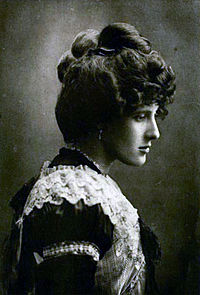
Lady Wentworth
Do admit, these are the sort of lengths I might conceivably go to if the artifact involved Wellington. There’s no information in the book regarding the outcome or provability of the shoe’s being Lord Byron’s but there is PLF’s description of Lady Wentworth herself, and it’ s a pip –
To Lady Diana Cooper, March 1954: “. . . The house (Crabbet Park, Sussex) is untidy as a barn – trunks trussed, and excitingly labelled `LD BYRON’S papers – LDY BYRON’S papers’ in chalk, pictures stacked, furniture piled, wallpaper, curtains etc. exactly the colour and shape of coloured Phiz or Leech . . . . gilt, faded plum and canary, v. grand and dusty. We had rather a mouldy luncheon, ending up with spotted-dog, in a room as full of papers, pictures, horsey accoutrements and favours as a jackdaw’s nest. Lady Wentworth was wearing, as usual, gym-shoes from playing squash, a Badminton skirt to the ground, a woollen shawl, a gigantic and very dishevelled auburn wig that looked as though made of strands from her stallions’ tails gathered off brambles, and on top of this a mushroom-like, real Sairey-Gamp mob-cap, but made of lace and caught in with a Nile-green satin ribbon. Rather a fine, hawky Byronic face under all this, but scarlet patches on the cheeks as from a child’s paint-box; I think she’s eighty-two or three – and a very thin, aristocratic, bleak voice – `have some more spotted-dog?’ sounding like a knell.”
PLF was a writer with projects constantly on the go, but he was easily distracted by passing fancies, often missing deadlines and being forced to write the dreaded mia culpa letter to editors or friends to which he’d promised pieces. In a letter to Lady Diana Cooper in November of 1975, PLF confesses: “Michael Stewart has sent us the Oxford Dictionary of English Place Names, which I’ve been deeply immersed in for the last two days: all their derivations, etc.” And to her son, John Julius Norwich, PLF writes: “Last year Jock Murray suddenly told me that about two hundred pounds had mounted up (in royalties) so I blew the lot on the DNB (Dictionary of National Biography) . . . so give me a few minutes notice and I can be pretty knowing about almost anyone in England – before 1900 – up to William Tytler (1711-1792) . . . it would be hard to find a more fascinating and time-wasting acquisition.” Both examples could be me to a T.
A Life In Letters is a delight, some parts reading like a travel book, other parts a glimpse into a vanished lifestyle, all of which is bound up with great friendships, anecdotal offerings and humour.
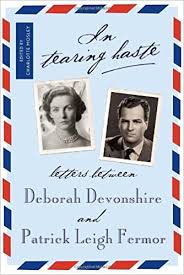
So, what will I read next? In Tearing Haste, edited by Charlotte Mosley, was one of PLF’s last projects and is a compilation of the letters exchanged between himself and Deborah, Duchess of Devonshire, over the course of a friendship that spanned more than forty years. However, having already read this when it was first published, I’m thankful that Patrick Leigh Fermor has led me to another possibility, as so often happens with the best books –
From a letter to Lawrence Durrell, November 1954 –
“. . . I’ve just got . . . Daphne’s (5) autobiography Mercury Presides . . . . which is rattling, splended stuff, not a bit the niminy-piminy society memoir you would think, but hell for leather, a mixture of lyrical charm and touchingness with a clumsy, rustic tough edge to it which is most engaging and terribly funny. Rather like the letters of Lady Bessborough or Caroline Lamb, half-sylph, half-stablehand.”
Leave a comment below in order to be entered
into a drawing to win a copy of this book!
Rumanian Princess Anne-Marie Callimachi.
Greek photographer Costa Achillopoulos.
Arturo Lopez-Willshaw, Chilean millionaire.
Judith Anne Dorothea Blunt-Lytton, whose mother had been Byron’s granddaughter.
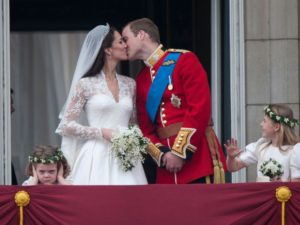
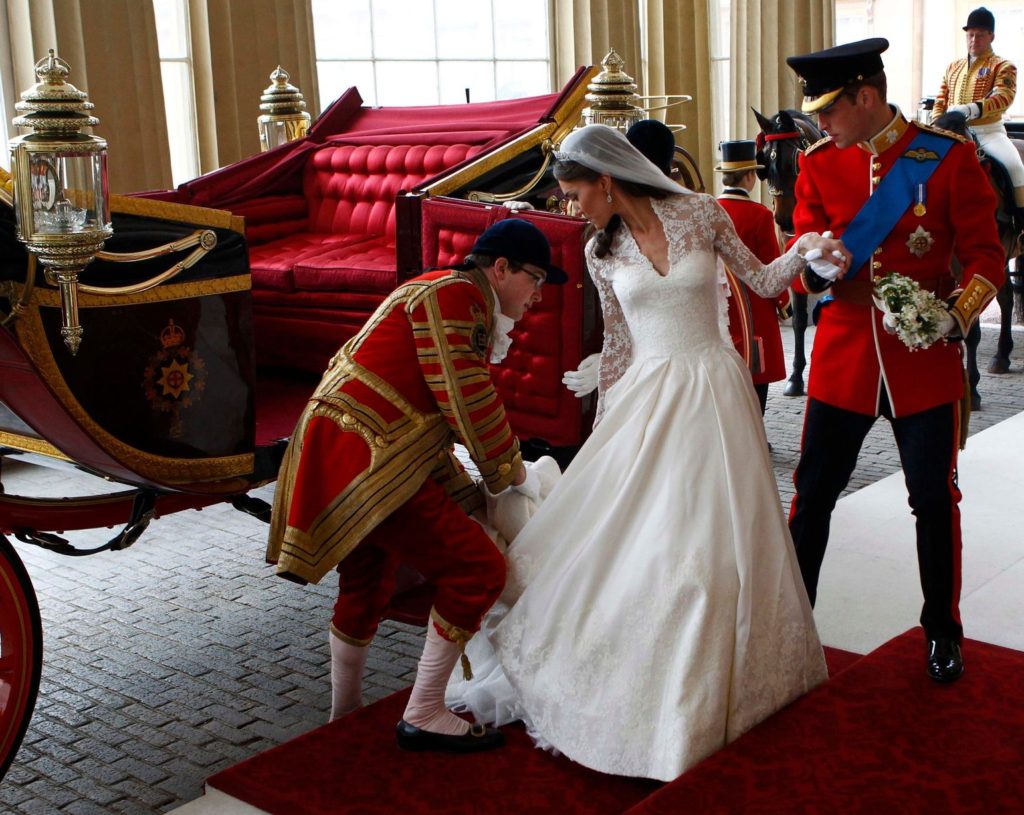
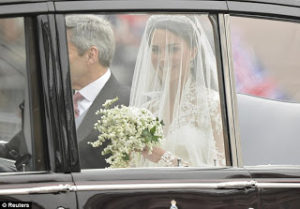
If you were reading this blog back in 2011, you may remember our coverage of the marriage of William and Kate on 29 April, 2011. Number One London certainly got into the spirit of things, bringing you all the news and speculation in posts during the months leading up to the wedding on subjects including wedding plans, the order of ceremony, the dress, wedding guests, photos, etc.
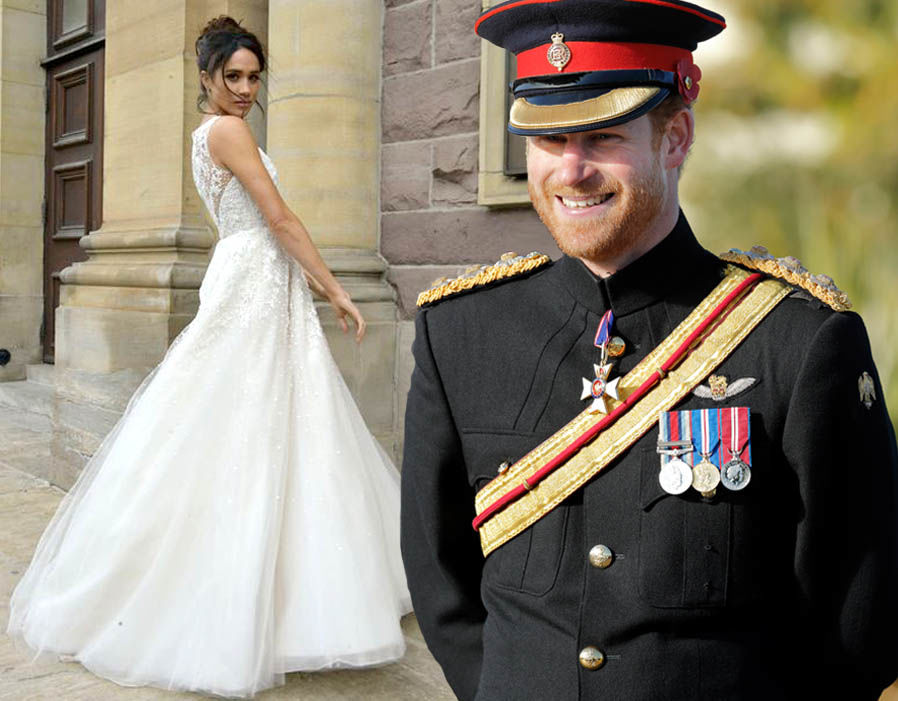
In fact, some of our posts regarding the Royal Wedding were among the most viewed on this blog and you can be sure we’ll be repeating the effort in the lead up to the wedding of Harry and Meghan on 19 May.
To see what’s in store, click here to see a round-up of our coverage of William and Kate’s wedding.
And click here to see our round-up of the wedding day itself. Scroll down to see the comments received in response to our commentary.
Once again, we’ll be posting weekly with all the news surrounding the upcoming wedding and we will again be posting in real time on the day, this time using Facebook as our platform.
We hope you’re as thrilled as we are about the upcoming nuptials and we can’t wait to share it all with you – again. It’s going to be another fun ride – Our first “Royal Wedding: Harry and Meghan” post will appear soon!



 I will relate the full story of WW soon, and a long complicated tale it is. For the time being, just know that touring it was fascinating. Recently, the estate has been acquired by a Preservation Trust after many years as a school and then standing empty and abandoned for some time. Fortunately, the Trust will preserve and restore the house and the gardens.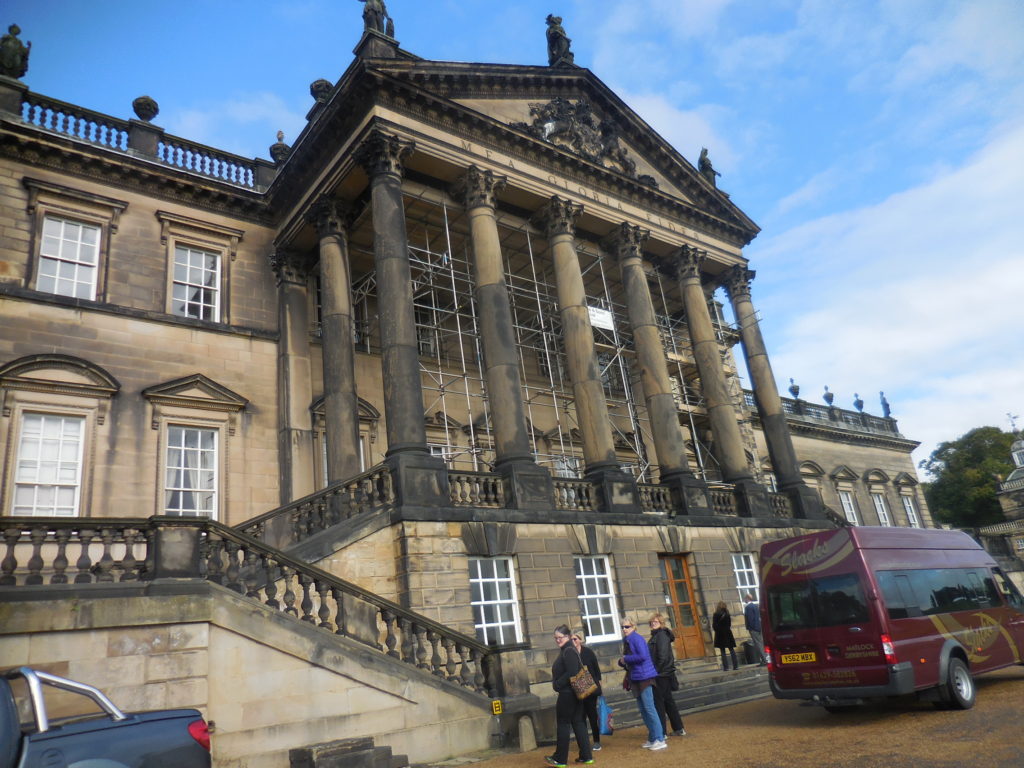
 And a noble staircase leading to the Piano Nobile, that is, the State Rooms.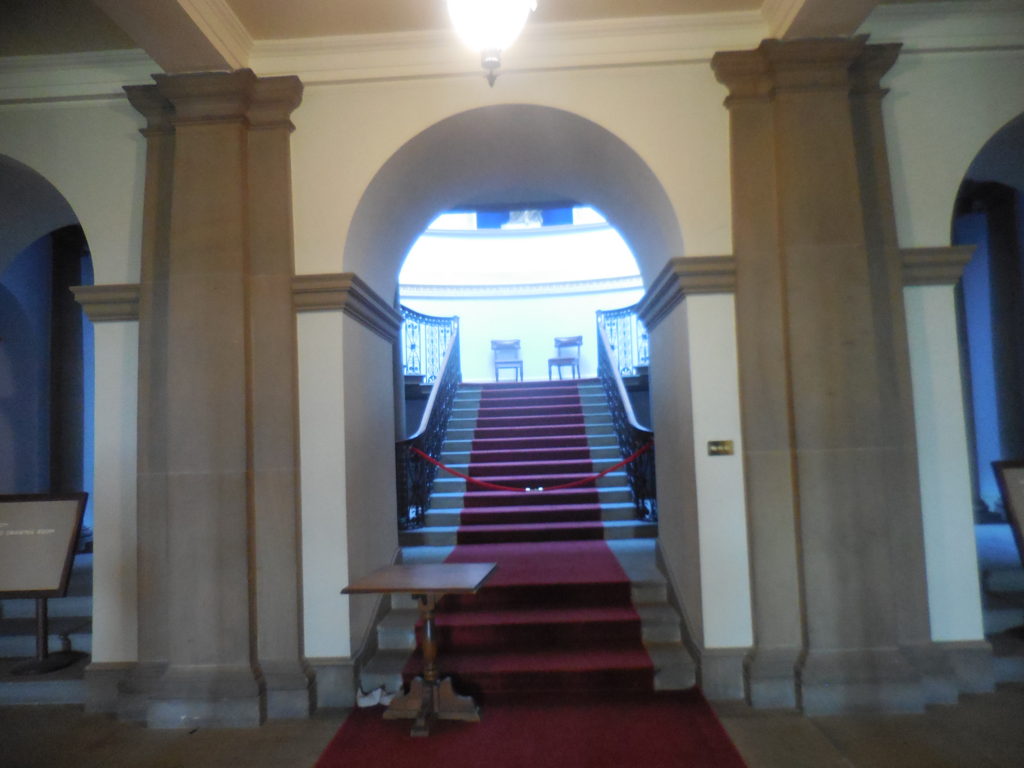

 Leave a comment below in order to be entered