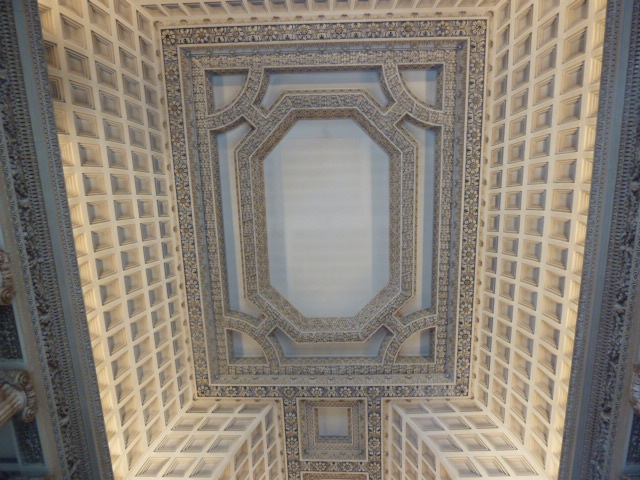
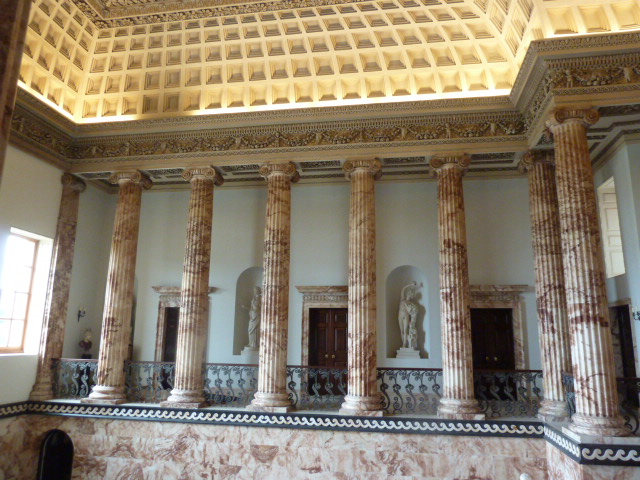
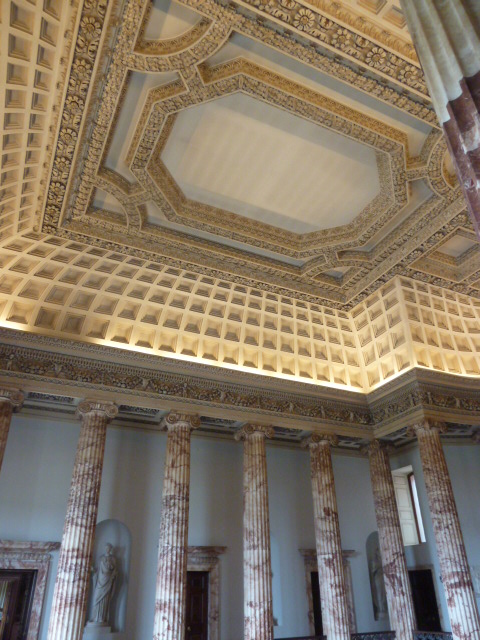
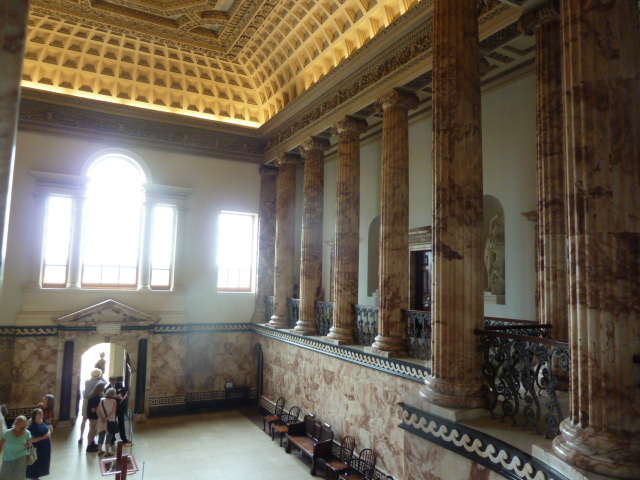
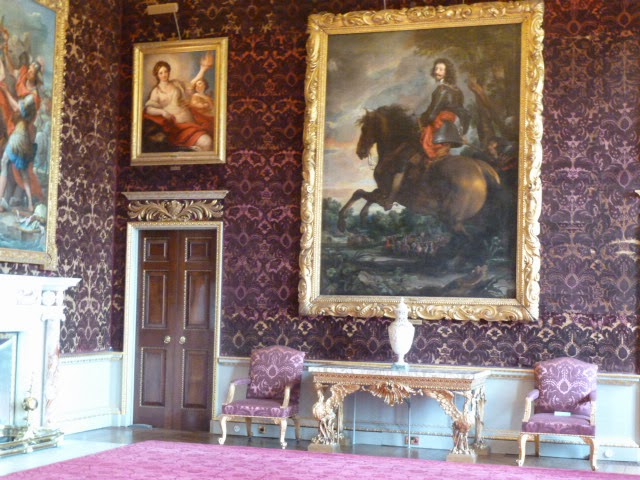
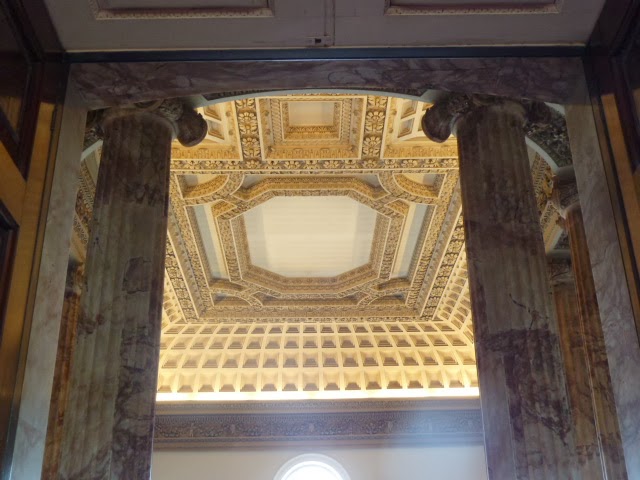
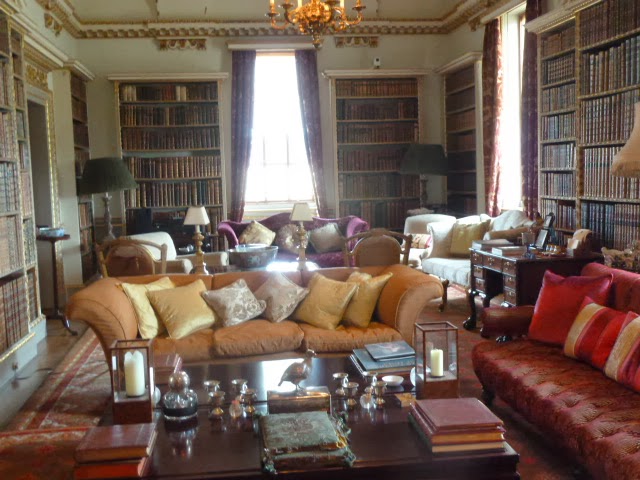
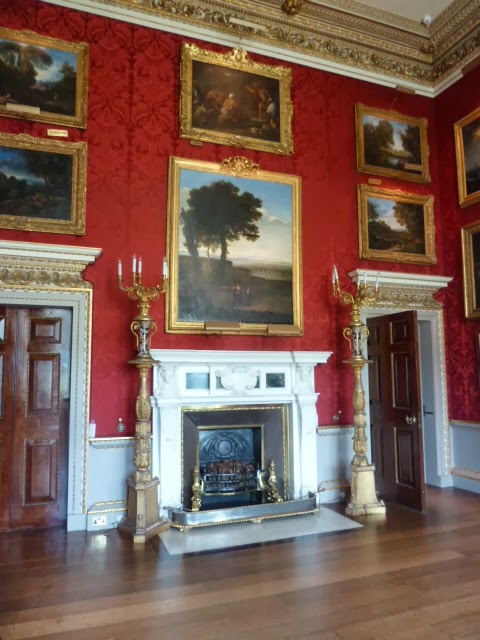
Visit Basildon Park with Kristine and Victoria…September 2014

We are busy investigating every aspect and all the details of our upcoming tour — which we hope YOU will join!  The details are here.


Victoria here, remembering her previous visit to Basildon Park and reprising a blog post from December, 2010 . . . And while you read it, think about how it will feel as you approach the great house…enter the halls and view the sumptuous rooms.  You will love every moment of it…and especially the fascinating story of the couple who turned it from a sad wreck of a place into a brilliant National Trust stately home.

from Sunday, December 26, 2010:

Basildon Park Rebirths

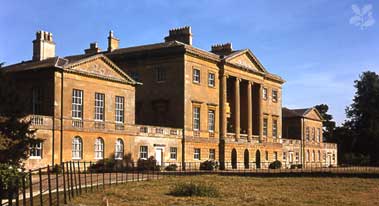
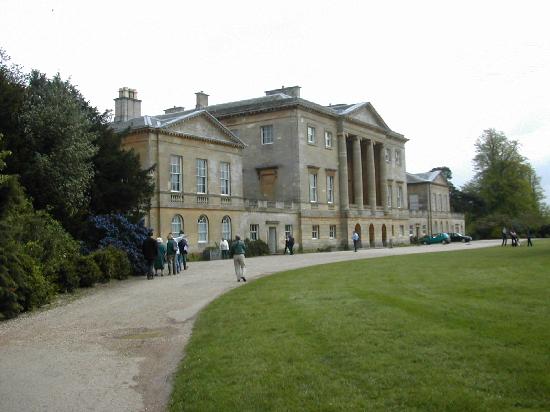
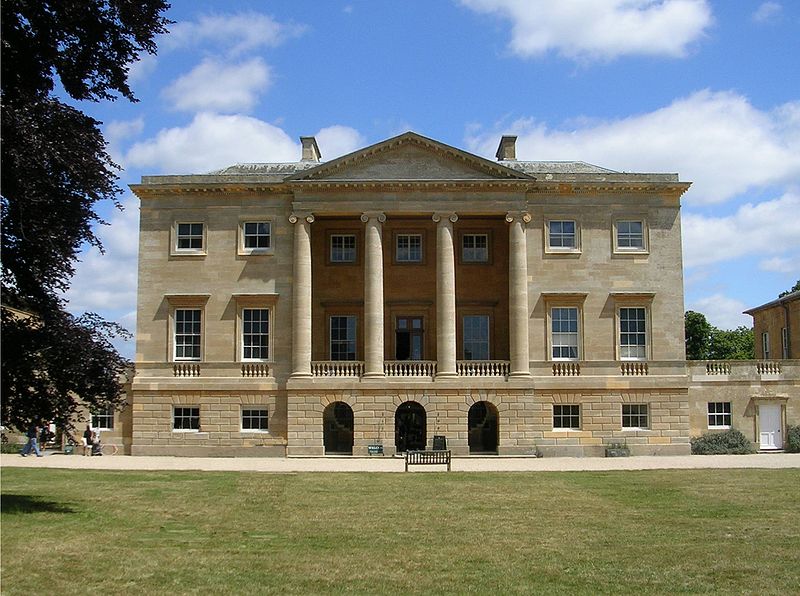
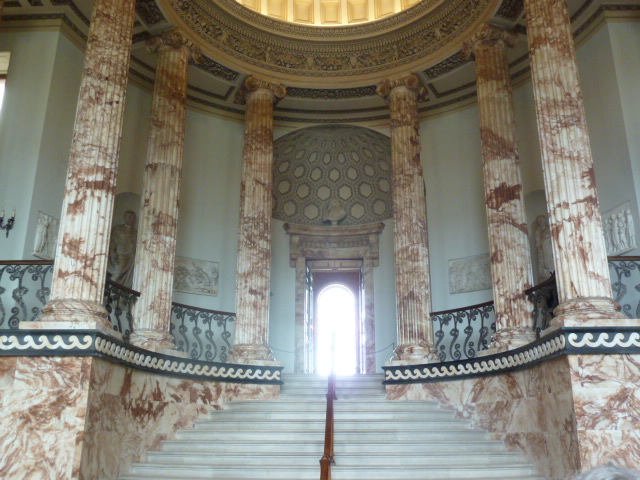
Basildon Park is in Berkshire overlooking the lovely Thames Valley, built in the 1770’s in the strict Palladian style by architect John Carr of York.

Basildon Park was abandoned about 1910 and stripped of its furnishings even including flooring, fireplace surrounds and woodwork. It was used to house troops or prisoners in both world wars. Some rooms were removed and reconstructed in the Waldorf Astoria Hotel in New York City (ballroom, below).

Basildon Park stood mostly empty and deteriorating until 1952 when Lord and Lady Iliffe, a newspaper tycoon and his wife, rescued the house. Lady Iliffe writes, “To say it was derelict is hardly good enough: no window was left intact, and most were repaired with cardboard or plywood; there was a large puddle on the Library floor, coming from the bedroom above, where a fire had just been stopped in time; walls were covered with signatures and graffiti from various occupants….It was appallingly cold and damp. And yet, there was still an atmosphere of former elegance, and a feeling of great solidity. Carr’s house was still there, damaged but basically unchanged.”

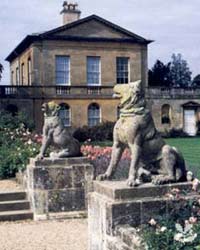
Views of the outside show the Bath stone construction. The Palladian window in the Garden Front  is in the Octagon Room.

The Iliffes were fortunate enough to find genuine Carr fireplaces and woodwork removed from other houses, mostly in Yorkshire. Carr employed meticulous craftsmen and used standard measurements so that the pieces were virtually interchangeable.

Again, Lady Iliffe: “Carr was such a precise architect that his mahogany doors from Panton (in Lincolnshire) fitted exactly in the sockets of the missing Basildon ones.” Thus Basildon is both authentic and a recreation in one.

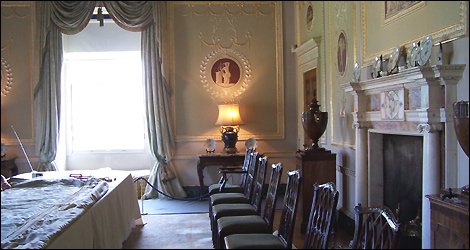
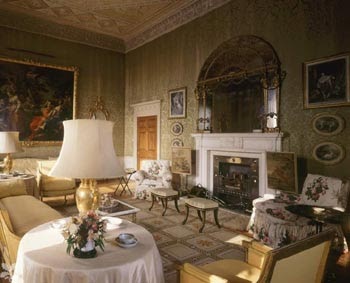
Lady Iliffe collaborated with leading designers of the English Country House style of decorating to fit out the house with a combination of antiques and

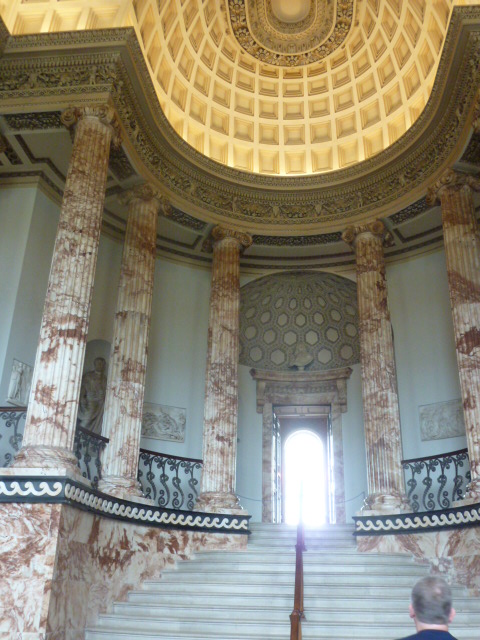
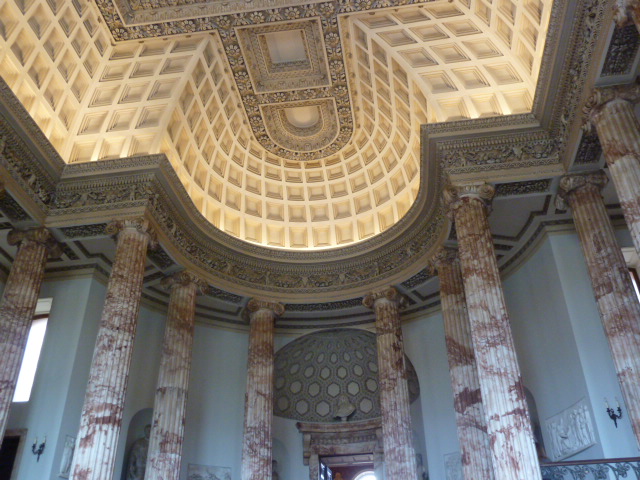
contemporary pieces, including the inevitable floral chintzes that simply drip with that country house charm. Right, the Octagon Room interior.

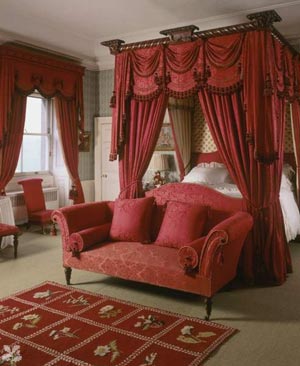
Upstairs the generously sized rooms were adapted to alternating bedrooms and huge bathrooms. It is a bit of a shock to see one of the perfectly proportioned rooms with its decorative plaster ceiling and elaborate woodwork and marble fireplace decked out with nothing more than the finest 1950’s plumbing fixtures.

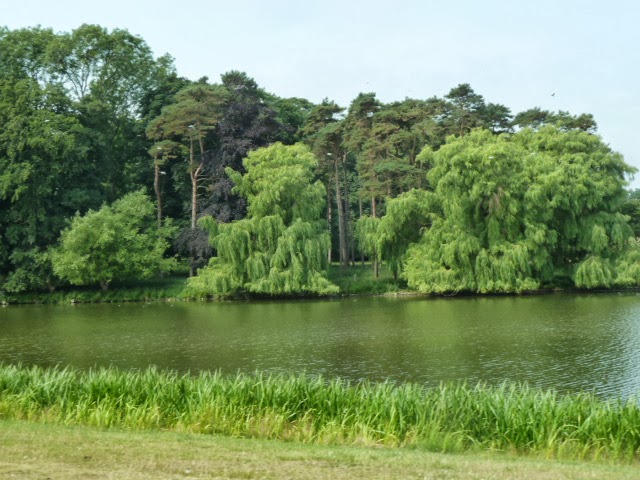
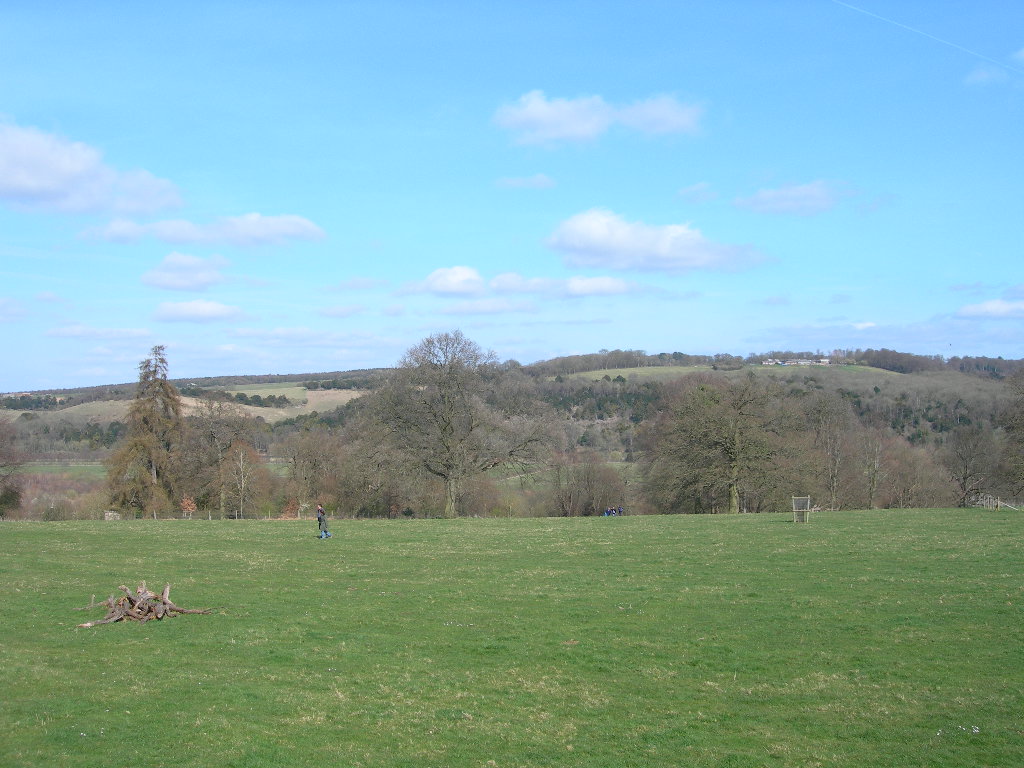
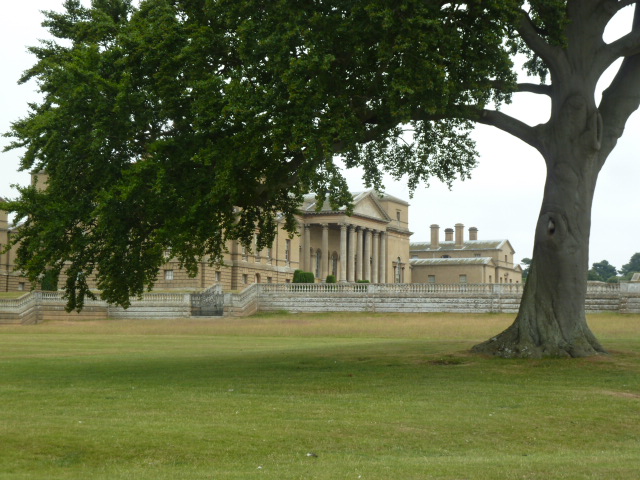
Basildon Park was built between 1776 and 1782 by Sir Francis Sykes, created a baronet in 1781. His roots were in Yorkshire and he chose Carr of York to build his house, a classical Palladian villa with a main block of rooms joined to pavilions on either side. The Sykes fortune was made during his service in India. Right is the view of the countryside.

In 1838, the Sykes family sold the house to James Morrison (d. 1857), a Liberal MP who had turned his London haberdashery business into an international concern. By the way, when he was a shopman at Todd and Co., he married his employer’s daughter, and eventually took over the firm. Morrison engaged architect John Papworth to design handkerchiefs for his company and later to remodel Basildon. Morrison had acquired a fine collection of paintings and was one of the founding fathers of the National Gallery in London. Papworth worked at Basildon from 1837 to 1842, making some changes to the Octagon Room and other interior designs, all in keeping with the original spirit of Carr’s house. Morrison’s daughter Miss Ellen Morrison was the last resident before Basildon Park fell into disuse.

Basildon Park was used to house soldiers during World War II, as were many country houses, and certainly suffered occasional, if not constant, abuse.
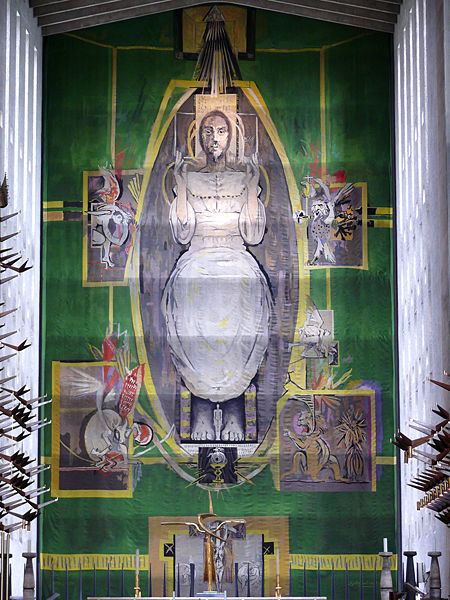
The Iliffes were collectors of the work of the distinguished English artist Graham Sutherland, whose gigantic tapestry adorns the modernist reconstruction of the Coventry Cathedral. (The 14th century cathedral was destroyed in 1940 by German bombs; a modern cathedral was built and filled

with works of contemporary art.) A number of Sutherland’s paintings and many studies for the tapestry he designed hang at Basildon. The Iliffe family  presented the house to the National Trust in 1978.

Basildon Park has often served as a set for costume dramas for the BBC and other producers. Here is a scene from the 2005 Pride and Prejudice, where Basildon enacted the role of Netherfield Park.
This picture shows how carefully designed temporary baseboards can hide 21th century electrical outlets or cable connections.

To Basildon Park in Berkshire now in the capable hands of the National Trust, we wish as many more rebirths as necessary to keep out the damp and bring in the tourists.

 Remember, Gentle Reader, you can join Kristine and Victoria and experience this fabulous mansion yourself.  Please check out all the details at THE WELLINGTON TOUR website.


More detailed reports on Tour Sites to come soon…
 

On The Shelf

Servants: A Downstairs History of Britain from the
Nineteenth Century to Modern Times
by Lucy Lethbridge (Norton 2013)


Even if you’ve been researching daily life in England for years and believe that you know all there is to know about servants by this time, I’m here to tell you that you don’t. And you certainly have never had the subject presented in such an entertaining manner. Lethbridge’s book is not so much an overview of bygone grandeur and servitude as it is an in-depth and personal look at the people who lived below stairs. Where did they come from? Why did they go into service? What did they think about their `betters’ and the other servants in the house? Along with solid facts and figures, Servants sparkles with wit, wisdom and the words of the servants themselves.

As Lethbridge writes – “In 1900 domestic service was still the single largest occupation in Edwardian Britain: of the four million women in the British workforce, a million and a half worked as servants, a majority of them as single-handed maids in small households.” The author goes on to introduce the reader to various servants and to provide insight on their backgrounds: “The extent to which Britain’s poor were stunted by disease and malnourishment was made fully apparent after the outbreak of the Second Boer War, when recruiting offices reported that a majority of the working-class recruits were unfit for active service, their diet consisting for the most part of little more than the `staples’ of bread, dripping and tea . . . . Lillian Westall found work as a maid-of-all-work almost impossible: just carting buckets of hot water up and down stairs needed almost the strength of a grown man – and a single maid in a small household would need to carry an estimated three tons of water a week. “This sort of work needed the stamina of an ox and years of semi-starvation meant I hadn’t this sort of strength.”

 Lethbridge allows the reader to hear the voices of the aristocrats, as well: “The `odd man,’ a vital fixture on an estate, was a manservant who never quite made the grade required to be a front-of-the-house type and was therefore used for pretty well everything, from carrying heavy luggage to helping with the cleaning. Huge houses could sustain great numbers of the very old and the very young and with their work went the rituals of their particularity, the vital necessity of which no-one thought of questioning. Lady Diana Cooper, who grew up at Belvoir Castle, Rutland, remembered the `gong man’ whose only job was to summon the household to meals by walking the corridors three times a day banging a gong: `He would walk down the interminable passages, his livery hanging a little loosely on his bent old bones, clutching his gong with one hand and with the other feebly brandishing the padded-knobbed stick with which he struck it.'”

Servants provides a peek behind the green baize door with examples of just how extensive, and invisible, the below stairs machinery was – at Belvoir Castle there were at least three lamp and candle men who labored continuously at snuffing wicks, filling lamps and cleaning and de-waxing glass – a full time job. That the great families of England took these labours for granted is made clear, as are the instances in which the same families often declared their loyalties to those who served: at Badminton House, seat of the Duke of Beaufort, the lamp man was totally blind and felt his way expertly about the corridors – and was still doing so in the 1920s. Servants is peppered with further anecdotes that illustrate the peccadilloes and peculiarities of the upper classes, all of which make for an engrossing read.

 Halfway through the book, Lethbridge brings us to the early 20th century and to the events – Great Wars, the Industrial Revolution – that would sound the death knells for England’s Stately Homes. Slowly, the great estates were losing ground and the previously, seemingly unending line of servants waiting to staff them grew thin. The grandest of these estates were the last to feel the effects.

 
“At Chatsworth, where thirty indoor staff were employed throughout the 1930’s, the only real change in the running of the house after the war was the jettisoning of the ancient role of Groom of Chambers, whose job of looking after the drawing rooms and writing tables was taken over by footmen. Lady Hambleden, born into the Herbert family and brought up at Wilton House before her marriage in 1928, remained almost untouched by the shift, so noticeable in most large houses, from male to female front-of-house staff, from butler to parlourmaid: `We did have quite a lot of staff: there was a butler – I think most people had butlers. I can only think of one person who had parlourmaids and everybody rather noticed it.’
 
“On the Rothschilds’ estate, at Waddeston in Buckinghamshire, the gardeners still sent the vegetables to the kitchen door every day in a specially constructed pony cart painted in the Rothschild racing colours of yellow and blue, the coachman who drove it dressed in a matching livery and cockade. At Woburn Abbey, the eleventh Duke of Bedford maintained until his death in 1940 not only a household of at least sixty indoor servants to attend solely to his wife and himself, but two separate, fully staffed residences in Belgrave Square, including four cars and eight chauffeurs; the Woburn parlourmaids were all Amazonian at over five foot ten, as had always been the Bedfords’ stipulation.”

Whilst it may seem odd to us in the 21st century that so va
st an army of servants was necessary to see to the needs of two people, Lethbridge provides many examples that show that, amongst the aristocracy, this was the norm, rather than the exception to the rule.
 
“In the house where Doris Winchester worked, the servants were so numerous that they ate more than twice the daily quantity of their two elderly employers: `If they had roast pheasant in the dining room and there was just the two of them they had one pheasant and I had to do five pheasants for the servants’ hall.'”
 
“Holland House was so vast that when George (Washington, a footman) first arrived he was instructed to go to the front door as people had been known to spend `days’ searching for the servants’ entrance in the maze of courtyards and passages behind. Waiting on Lady Ilchester (we lived there alone) was a butler, a footman, and odd man and second footman, housekeeper and four maids, a stillroom maid, a cook, two kitchen maids and tow scullery maids, a chauffeur, nine gardeners, a lady’s maid, a night nurse and a day nurse. The odd man was so old that he was unable to do any heavy work. `When I look back over my three years and a half years at Holland House,’ wrote Washington, ‘I can see now there was something particularly sad, almost unreal, about them. We were propping up something that belonged to another age, trying to pretend that what had passed still existed or even if it didn’t that if we tried hard enough to keep the old order of things going, it might come back.'”
 
The old way of life did not come back, but new ways of life intruded further upon the old order, a case in point being income tax and death duties – “In 1930 a correspondent wrote to The Times: `The result of any increased taxation in my individual case is that I shall have to reduce my servants by half. I now have eight dependent upon me and in order to require good and faithful servants I have made large inroads on capital.”

Modernization also intruded upon the aristocracy, who were more often than not slow to embrace it, as in the case of electricity, which many either chose to ignore or else disguised beneath echoes of the past –
 
“This taste for concealing new technology trickled down into the new houses of the middle classes, where the wireless, for example, was often hidden inside an especially constructed cabinet . . . . Sometimes the staff themselves were part of the pretence, maintaining an illusion of elaborate labour where technology had in reality made it redundant. At Flete House, in Devon, the footmen had to remove all the electric table lamps every morning and bring them back in as soon as it grew dark . . . . When electricity was finally installed at Woburn in the late 1920’s, the Duke of Bedford believed his guests would be so unaccustomed to this new form of illumination that he had black and white plaques made especially to go above all the switches, inscribed with the explanatory words `Electric Light.'”
 
Both World Wars also served to upset the old order of things by forcing women into traditionally male work, thus opening doors that led to new employment opportunities for those women who would otherwise have settled for a life in service. Lethbridge uses one of these modern women as an example
 
” . . . In 1939, Celia Fremlin, employed by the new social research group Mass Observation, embarked on a job (for investigative purposes) as scullery-maid for an elderly woman living, bed-bound, in a huge London house. Fremlin’s first experience was a surreal experience: That night her aged ladyship had decided to sup on a cup of Benger’s food (a malted milk drink, rather like Ovaltine) and a digestive biscuit. So like a vast machine set in motion, the eight members of the staff were mobilized as if for a full-time dinner party. First the housekeeper (1) had to come down to the kitchen to tell the cook that this was to be the menu tonight. Then I, the scullery maid (2) was dispatched to fetch the new tin of Benger’s from the store-room, and the special enamel saucepan. I handed them to the kitchen maid (3) who took the lid off and handed the tin to the cook, together with the other necessary apparatus. The cook (4) then set to work making the Benerg’s. Now the footman (5) came into action. He went to the butler (6) for the key to the cupboard which contained her ladyship’s silver tray. The butler gave him the key and waited while he took out the tray. Then the footman put the tray on his trolley and wheeled it to the kitchen, where the Benger’s and digestive biscuit were now standing in state awaiting him. He put them on the tray and wheeled it off to the hall. Here the tray was taken by the head housemaid (7). She took it up to her ladyship’s landing and knocked on her ladyship’s door. It was opened by the lady’s maid (8) who took the tray and disappeared.” Fremlin summarized the experience for her employers by writing, “It was like watching a hundred-ton crane picking up a safety-pin; like watching a huge sweet factory producing one peppermint bulls-eye; a vast machine that has forgotten how to stop working.”
 
One can’t help but wonder of the bed-bound peeress was Lady Ilchester herself.
 
Gradually, the scarcity of good servants began to trickle down to houses of all classes. So prevalent and recognizable did the servant problem become that Elizabeth Dashwood, writing as E.M. Delafield, made a living out of writing a weekly column about them for Time and Tide under the heading Diary of a Provincial Lady. These articles would later be collected and published as a book under that title. As Lethbridge points out, so universal had this problem become that it supplied content for several novelists of the day including Lettice Cooper (The New House) and Mary Wilde (A Housewife in Kensington).
 
From the 1930’s onward, refugees began to fill the ranks of the servant classes in England – Austrians, Germans Czechs, both male and female. Many of them, like parlormaid Rachel Perlmutter , a character portrayed in the latest incarnation of Upstairs, Downstairs, were over qualified for their positions, having themselves come from the professional classes in their native countries and often having had servants of their own before entering England. During the Second World War, many of the great houses were requisitioned by the government and the number of servants in homes of any size, large or small, were restricted by the government. With male and female servants having been restricted or having left to fight or take up war work on the home front, evacuees often found themselves expected to sing for their suppers, so to speak, taking up the work that still needed to be done in the houses, the kitchens, the gardens and the farms. The old order would never be the same again.
 
Afterwards, those who took up service, whether as cooks, lady’s maids or butlers gradually came to be seen as professionals who were hired through word of mouth, through classified ads or through the many domestic service registry offices that were cropping up around the country. Lethbridge follows the evolution of the those who serve right up to the present day where, quite naturally, the book ends. More’s the pity, as Servants was as engaging as any work of fiction whilst proving itself a ‘keeper’ for my research shelves.  


Lucy Lethbridge has written for a number of publications, including as writing articles for the Observer, the Sunday Telegraph, the Independent on Sunday and the Times Literary Supplement and is also the author of several children’s books, one of which, Who Was Ada Lovelace?, won the 2002 Blue Peter Award for non-fiction. She lives in London.
 

Victoria at Holkham Hall, Part One

I loved Holkham Hall!!! Frankly I had suspected it might be a letdown, an anticlimax after the brilliance of Houghton Hall.  I feared the comparison of back-to-back days at two stately homes would disappoint me in the second — and frankly, I had longed to see Holkham much longer than I yearned for Houghton — if that makes any sense.  But I needn’t have worried.
The Holkham Hall Estate website is here.

Holkham Hall
 

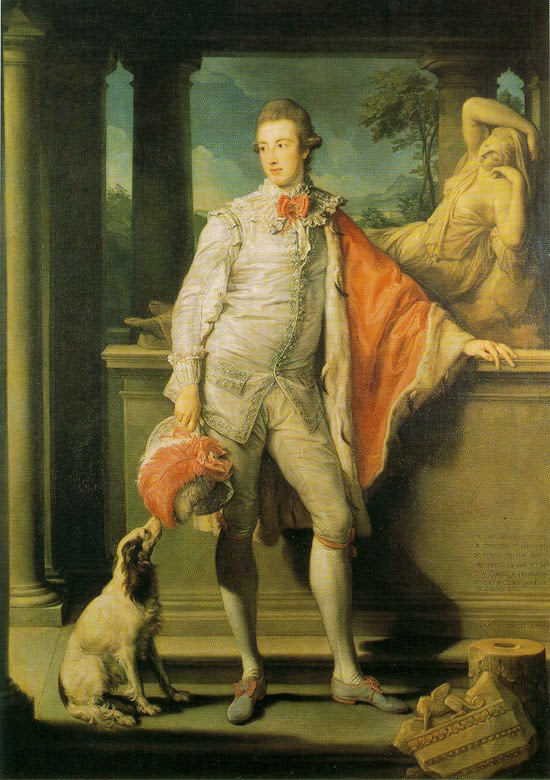
Magnificent is the word most frequently used to describe Holkham and the building surely lives up to its reputation as among the finest Palladian buildings in the realm.  And it has the added attraction of having been the home of a distinguished English gentleman, Thomas William Coke (1754-1842),  MP and agricultural innovator, later named (at age 83) to the revived title of the Earl of Leicester of Holkham.

portrait of Thomas William Coke (pronounced Cook)

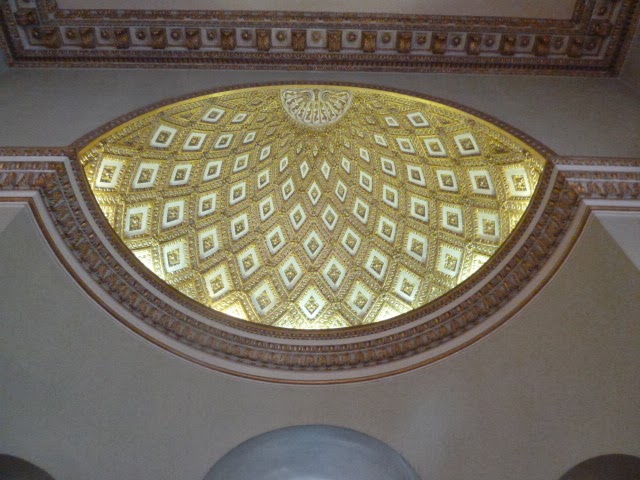
I admit that one of my favorite things about Holkham is that pictures are allowed everywhere.  I find it hard to understand why people restrict taking pictures of their premises, whether stately homes, museums, or whatever, as today’s digital cameras usually don’t need flash. Seems needlessly restrictive. Of course, when pictures are allowed, some people (moi?) will take too many!  As of the incredible Marble Hall, just inside the entrance to Holkham Hall.

50+ foot ceiling
 
 
I really found it hard to stop finding new perspectives to snap.  I really needed a wide-angle lens, didn’t I?  Even though it is named Marble Hall, the material used was actually Derbyshire Alabaster.


Visitors entering Holkham Hall
 
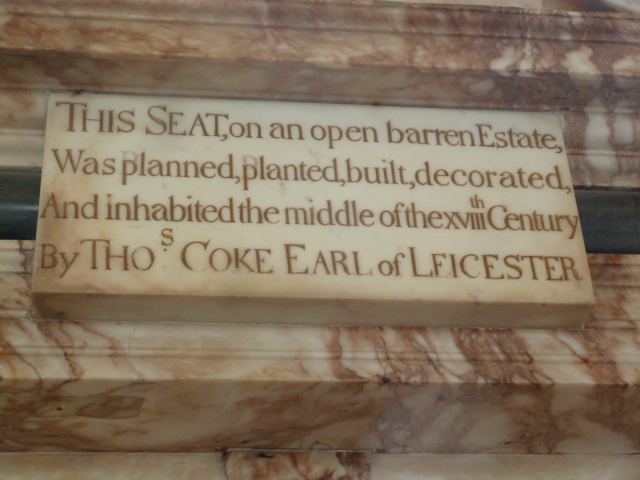
Over the door, Lady Leicester placed this sign, referring to
Thomas Coke, the great-uncle of Coke of Norfolk; they shared the same name and title  Sometimes it can be confusing as to which Thomas Cook, Earl of Leicester, is which.
 

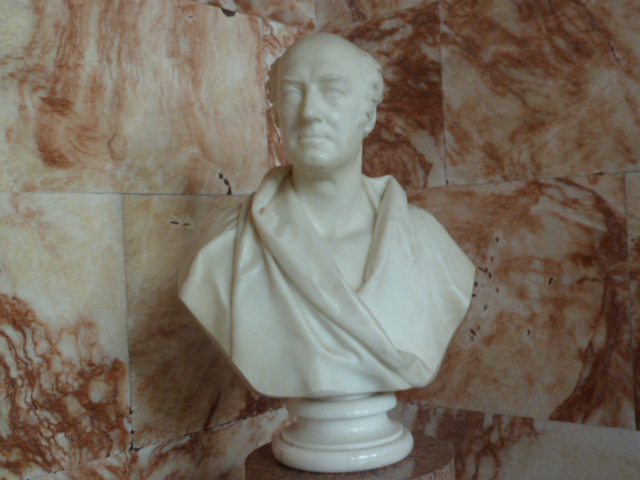
A Marble Bust of Coke of Norfolk
 
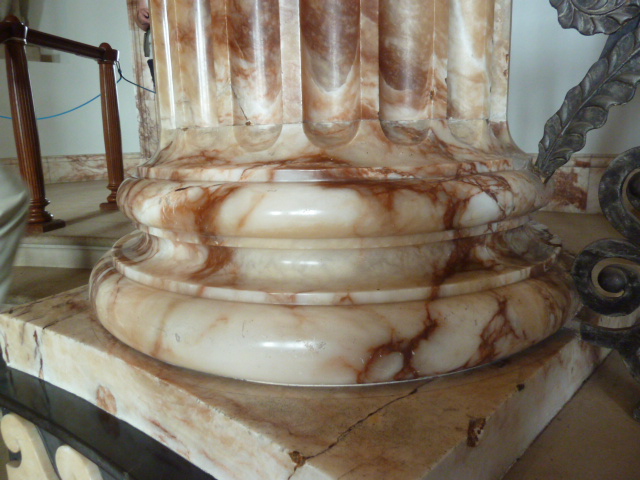
Column Base, of Derbyshire Alabaster
 
The family fortune was founded in the time of Henry VIII by Sir Edward Coke (1552-1634), Lord Chief Justice in the reign of James I.  A century later, Sir Edward’s descendant Thomas Coke
(1697–1759) built Holkham Hall for his family and to house his collection of art acquired on his grand tour; he was created lst Earl of Leicester of the Fifth Creation in 1744. Since his only son died young, the heir to Holkham Hall was his nephew Wenman Coke, father of Thomas William Coke.
 
&
nbsp;
 Thomas Coke, ca. 1715, painted by Francesco Trevisani (1656–1746), in Italy
 
 The Thomas Coke above shared many experiences and concepts with the men responsible for the Palladian “revolution” in England in the early to mid 18th century, from their days on the Grand Tour: Richard Boyle, 3rd Earl of Burlington (1694–1753);  architect Colen Campbell (1676–1729) author of  Vitruvius Britannicus, or the British Architect 1715-1725; and William Kent (c.1685–1748), architect and furniture designer, among others.  These men were also largely responsible for nearby Houghton Hall, visited in the two previous posts in this series.
 
 
Holkham Hall
 
 
‘Palladian’ refers to the architecture of Andrea Palladio (1508–1580), whose work in the Veneto region of Italy was based on the principles of proportion and symmetry of ancient Greek and Roman temples.  A brief taste of this style appeared in England in the work of Inigo Jones (1573–1652), but was not revived until long after the Civil War was over in 1660 (e.g. the Banqueting House, Whitehall; The Queen’s House, Greenwich; and Covent Garden’s St. Paul’s Church).
 
After the 1st Earl of Leicester died in 1759, his widow lived at Holkham until her death in 1775.  The estate then passed to the nephew Wenman, who lived there for only a few months before dying in 1776.  His son, Thomas William Coke (the future Coke of Norfolk) thus inherited the Holkham estate at age 22, after taking the Grand Tour.
 
Coke of Norfolk grew up on his father Wenman Roberts Coke’s estate in Derbyshire, much smaller than Holkham, but a good grounding for a man who dedicated his life to agriculture — and to political affairs.
 
 
Thomas William Coke,  1774, by Pompeo Batoni (1708–1787)
 
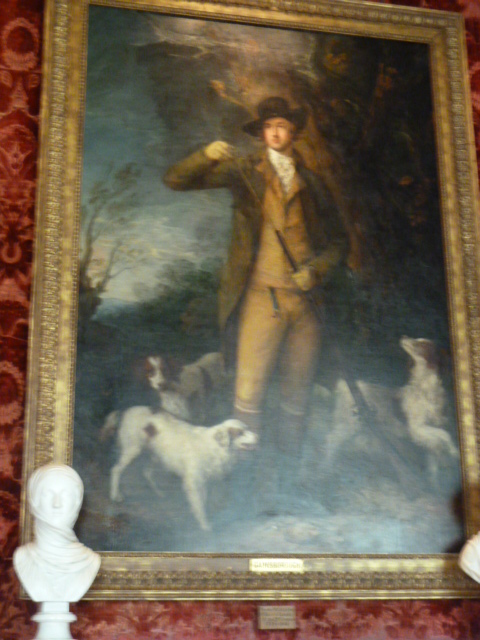
Thomas William Coke did little to change the grand house of his esteemed great uncle.  Instead, he turned his considerable energies to agriculture and politics.  He served in the House of Commons for many years, aligning himself mostly with the great land owners in the Whig Party.  He was an M.P. for Norfolk from 1776-1784, then again represented Norfolk between 1790 and 1832. 
  
 
Coke of Norfolk by Ramsay Richard Reinagle, 1815
 
Thomas William Coke’s first wife was Jane Dutton (1753-1800) with whom he had three

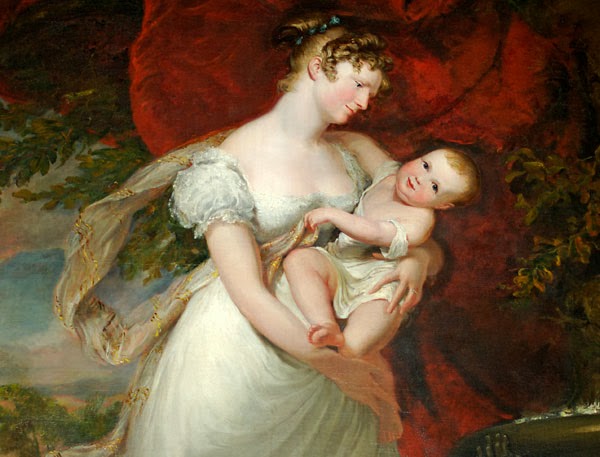
daughters, Ladies Jane, Anne, and Elizabeth.  After his wife’s death, Coke was a widower for many years.  At the age of 68 in 1822 he married Lady Anne Keppel (1803-1844), age eighteen. This September-May union led to the birth of several more children, including a male heir, Thomas William Coke (1822-1909), who became the second Earl of Leicester of the second creation. 
 
 
Lady Anne Coke, Countess of Leicester, and son Thomas, b. 1822
 
 
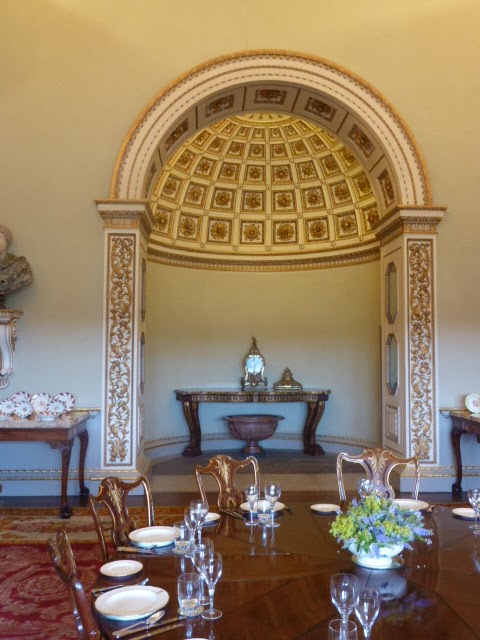
North State Dining Room
 
North State Dining Room
 
The Guidebook to Holkham Hall describes this room as having “austere splendor” but I must say I’d rather have dinner with the Earl at this lovely round table than at a long narrow one.  Unfortunately our invitation got lost in the mail. Truly a pity.
 
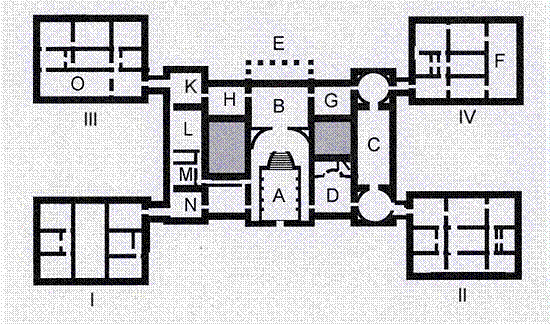
Plan of Holkham Hall
 
 
The Marble Hall is A in the plan above, the North Dining Room is D.  The Saloon, below is B.
 
The Saloon
 
 
Among the brilliant paintings in the house, the Van Dyke equestrian portrait of the Duc d’Arenberg is one of the most famous.  Below is the doorway into the Marble Hall from the Saloon. 
 
Looking into the Marble Hall from the Saloon
 
 
The inviting Library in the Family Wing (F)
 
The Landscape Room (K)
 
Most of these priceless paintings were originally purchased by (the first) Thomas Coke on his Grand Tour.  Included are works by Poussin, Claude, Grimaldi, Rosa, and others.
 
 
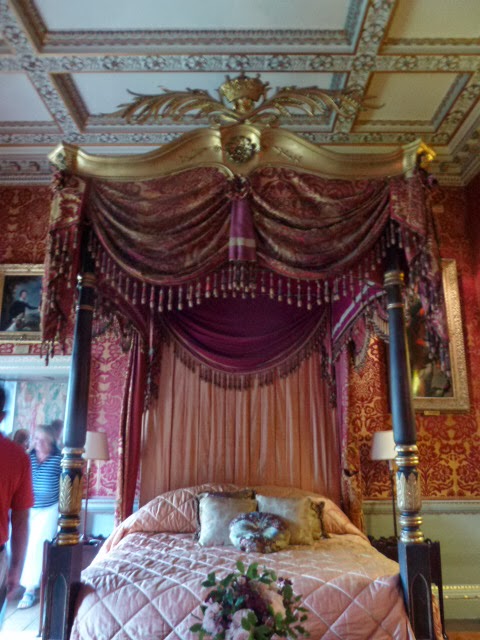
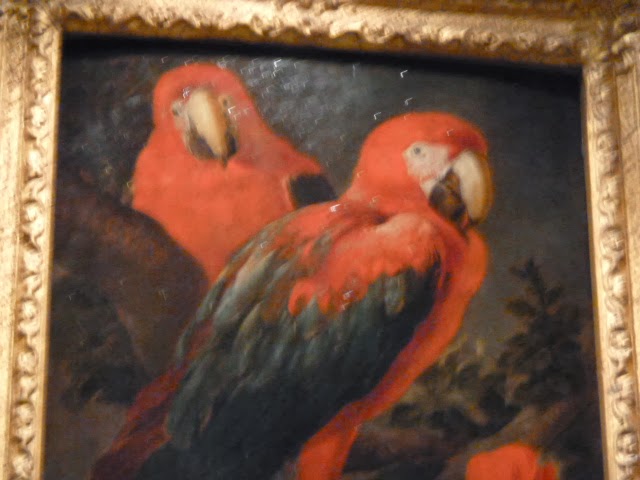
The Stunning Parrot Bedroom
 
The Parrots, for whom the room is named
 
 
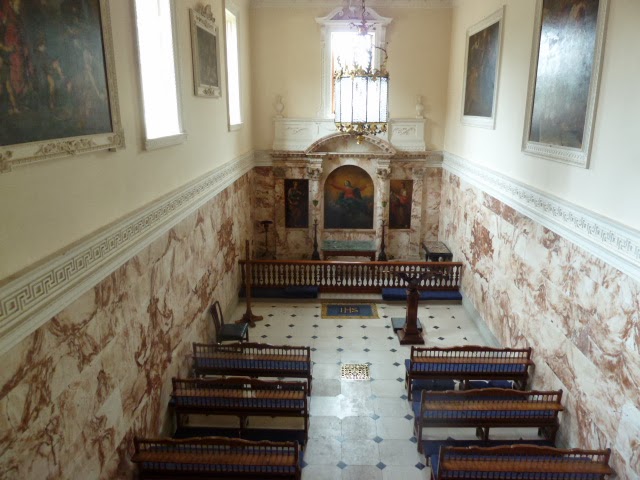
 The  handsome Chapel (O)
 
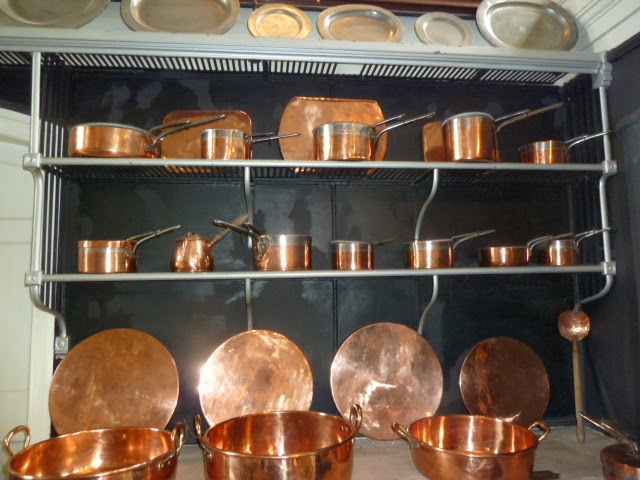
Stunning Cooper pans and bowls
 
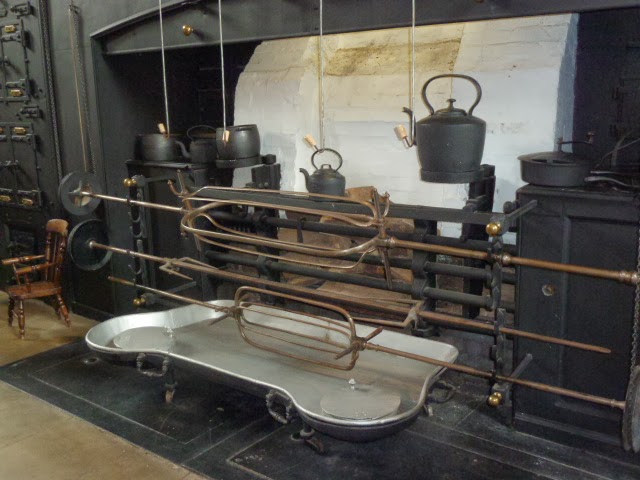
The gigantic kitchen fireplace, large enough to roast an ox
 
 
 I have run out of superlatives to describe the interior of Holkham Hall, so I will close for the time being, and leave a few more features of the estate for Part Two, coming soon.

NEW LONDON PASS


New London PassInfographic Provides
Virtual Snapshot of London’s Historic Royal Residences


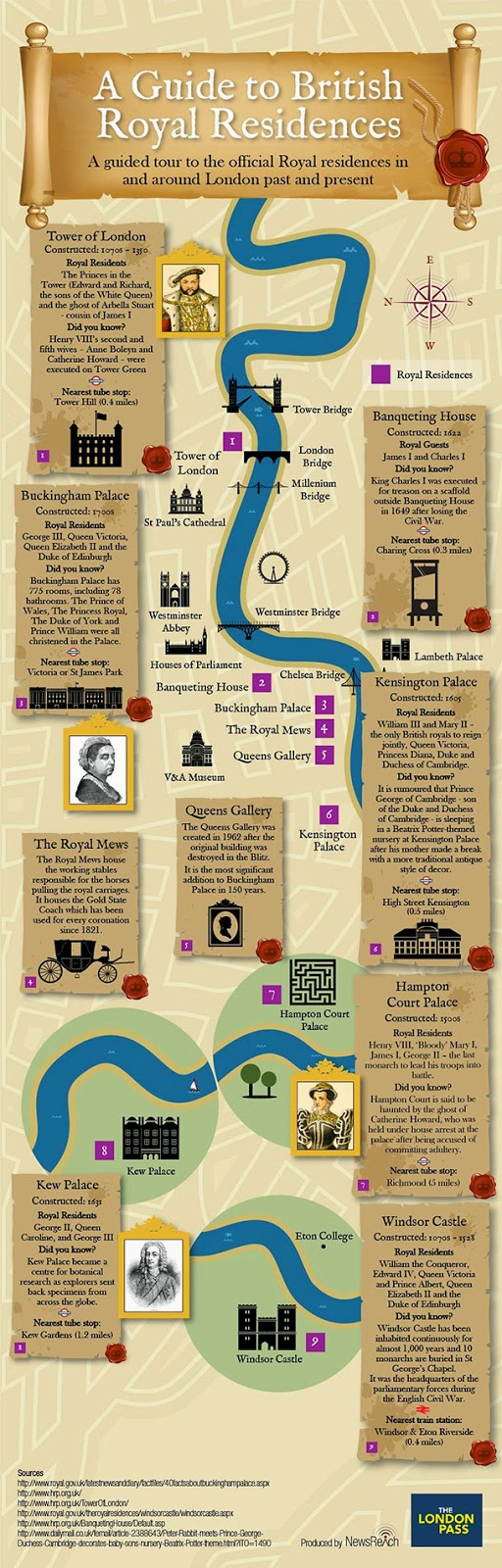
With international interest in the UK monarchy at an all-time high following the birth of Prince George, sightseeing specialist The London Passhas produced a brand new infographic offering a virtual introduction to all of the city’s historic Royal residences. The infographic explores all nine different Royal residences including BuckinghamPalace, The Tower of London and Kensington Palace, and celebrates nearly 1,000 years of fascinating heritage from Norman times to the present day.

London has a very rich and varied Royal history.  Almost all of the main Royal residences are based there and most are open for tourists to visit.  The LondonPass infographic enables visitors to the city to gain a quick insight into the stories behind each site, ensuring they choose the residences they will enjoy most on arrival in the UK’s capital.

Monarchy is the oldest form of government in the United Kingdom. Today, however, the Crown is a constitutional monarchy which means that while the sovereign is head of state, only an elected parliament has the ability to pass legislation. Each year, thousands of people meet members of the Royal Family and various events are held in Royal residences across Londonwhich boost tourism and help to draw in visitors. Buckingham Palace, the home of Queen Elizabeth II, is perhaps the most famous residence of them all. Kensington Palace has been a residence of the British Royal family since the 16th century, and today is the home of the Duke and Duchess of Cambridge, Prince George of Cambridge, Prince Harry and Princess Michael of Kent, among others.

Royal history has often had a dark side and Royal residents in the Tower of London were usually not there by choice: it was here that the young ‘Princes in the Tower’ allegedly met their end, while two of Henry VIII’s wives were executed on Tower Green.  ElizabethI was also briefly imprisoned here by her sister Mary but survived to become one of England’s greatest monarchs.

Other residences featured in the infographic, each with its own unique story to tell, are Banqueti
ng House, The Queens Gallery, The Royal Mews, Hampton Court Palace, Kew Palaceand Windsor Castle.

 The London Pass is a sightseeing card which gives tourists entry to a choice of over 60 popular tourist attractions in the city.  Once purchased, visitors simply show their card at the entrance or ticket office of any included attraction and are admitted with nothing further to pay; saving money on individual attraction admission fees and avoiding wasted time queuing for tickets.


Joining us on The Wellington Tour

Victoria here. As our previous posts have explained. Kristine and I have been gorging ourselves on tour books, maps, websites and playing with Pinterest (here) to plan a once-in-a-lifetime tour schedule for ourselves.  And FOR YOU!! So look at the website, read the fine print, and SIGN UP!

1st Duke of Wellington

With the help of Novel Explorations’ Patty Suchy, travel maven extraordinaire, we have put together an exciting — and do-able itinerary.  We plan to spend lots of time at each site, with knowledgeable guides and browsing time, all designed to maximize our enjoyment. 

Which brings up the ever-popular subject of gift shops.  Oooooh, do we love gift shops and bookstores.  And the best part is that you rarely have to carry off your purchases.  You can either have them shipped, or make a list and order from home on their websites. Or, if you want to be thoroughly briefed on sites we’ll visit, you can order the guide books before we embark.


I have to admit that I buy a lot of postcards.  Not necessarily to send to anyone, but to be sure that my photo albums have perfect views of each spot we visit. Postcards have the advantage of being inexpensive and easy to carry.

 One of my favorite purchases made at the Buckingham Palace Queen’s Gallery gift shop was a dozen carrier bags with the palace logo.  Some of my friends still love to tell about the comments they get from people in the grocery stores who see them carrying out their Buckingham Palace bags filled with carrots, bread, and peanut butter. Seems some folks expect them to be filled with caviar and truffles.

With two exceptions, I have visited all of our destinations, at least once. And I can’t wait to go back.  Who could ever get enough of Walmer Castle, its gardens and lovely view of the Channel from comfy chairs on the ramparts?  And prepare to be dazzled — and amused — by the extremes of the Brighton Pavilion.  It stands as a perfect representation of the excesses of the Prince Regent, later George IV. 

One of the most interesting things I remember from my previous visit to Basildon Park is the story of its restoration.  Major elements of the doors, windows and fireplace surrounds had been removed or damaged in the years it was given over to the war effort — and left derelict for a time. Though the house was over one hundred years old, fittings from demolished houses also designed by Carr of York, were perfectly adaptable, many fitting precisely.  In this day of so little standardization (have you ever tried using an unfamiliar mobile phone?), such precision is unusual.  But Carr did it in the mid 18th century.

Stratfield Saye, the country home of the 1st Duke of Wellington, greets you with a great statue. 

And inside, in the Hall, are the tattered battle flags of the French regiments Wellington conquered at
Waterloo almost 200 years ago. The stables still house that huge funeral car that carried the body of Wellington to his final resting place in St. Paul’s Cathedral in 1852.

The two places I have not visited will be a real treat.  Frogmore House in Windsor Park is rarely open. We will explore more about this “private hideaway” for the Royals in a future blog post.  We are lucky to be allowed in!  Like at Stratfield Saye, you can see how real people enjoyed their privacy and leisure in the comfortable rooms, quite a contrast to the Pavilion.

And of course, I am already salivating over the chance to see Highclere Castle, aka Downton Abbey.  To me, the best part of that series are the settings and costumes.  I love some of the actors, others not so much.  And darn it, too many characters have died off.  Plus, let’s face it, melodrama reigns.  Anyone for soap opera????  But who can resist that great house — or castle or abbey?

You are cordially invited to join us September 4-14, 2014!
Find Complete Itinerary and Details of the Wellington Tour Here

 .