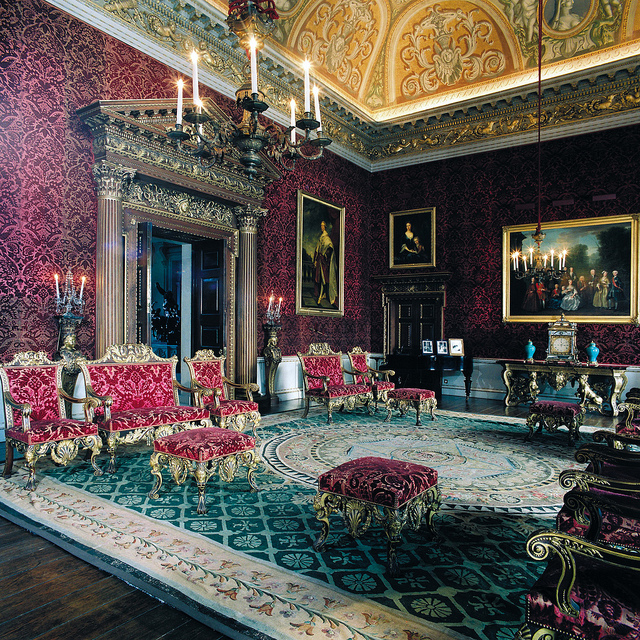
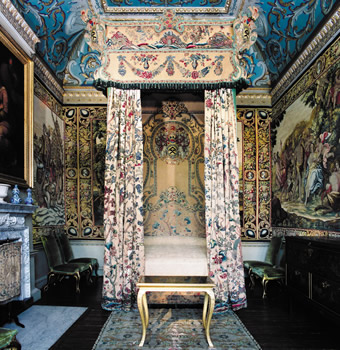
Victoria at Houghton Hall: The Kindness of Strangers, Part Two

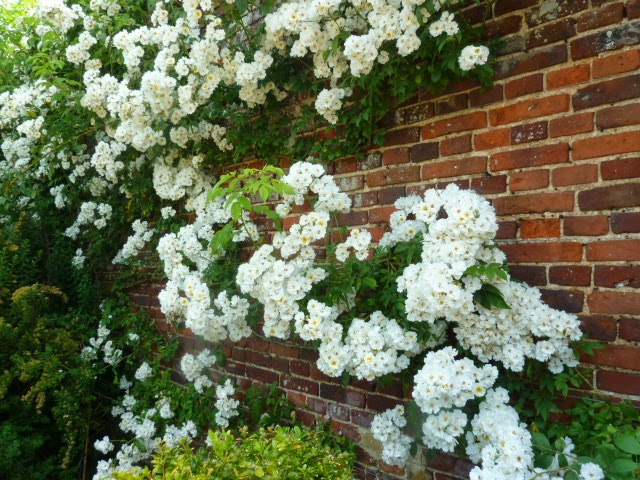
White Roses

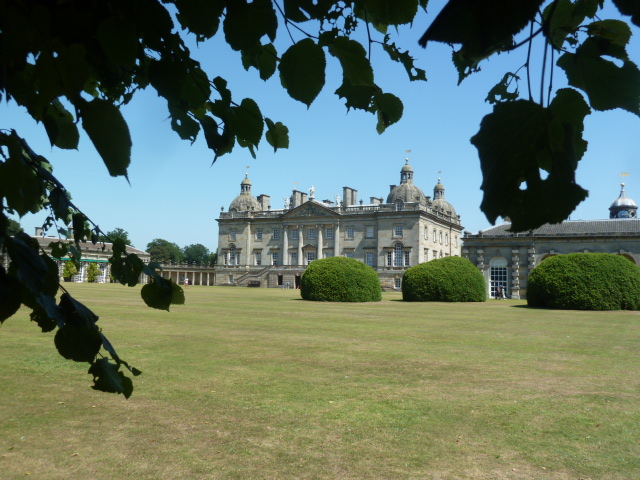
Houghton Hall is a large estate of more than 1,000 acres.  After spending over an hour in the house, I wanted to see it all.  Ed, my husband (the one with the sore foot), was much more interested in sitting in the shade on a hot afternoon than tramping through the stables, the sculpture park, the lawns, the walled garden, and the wilderness.  But I was determined!

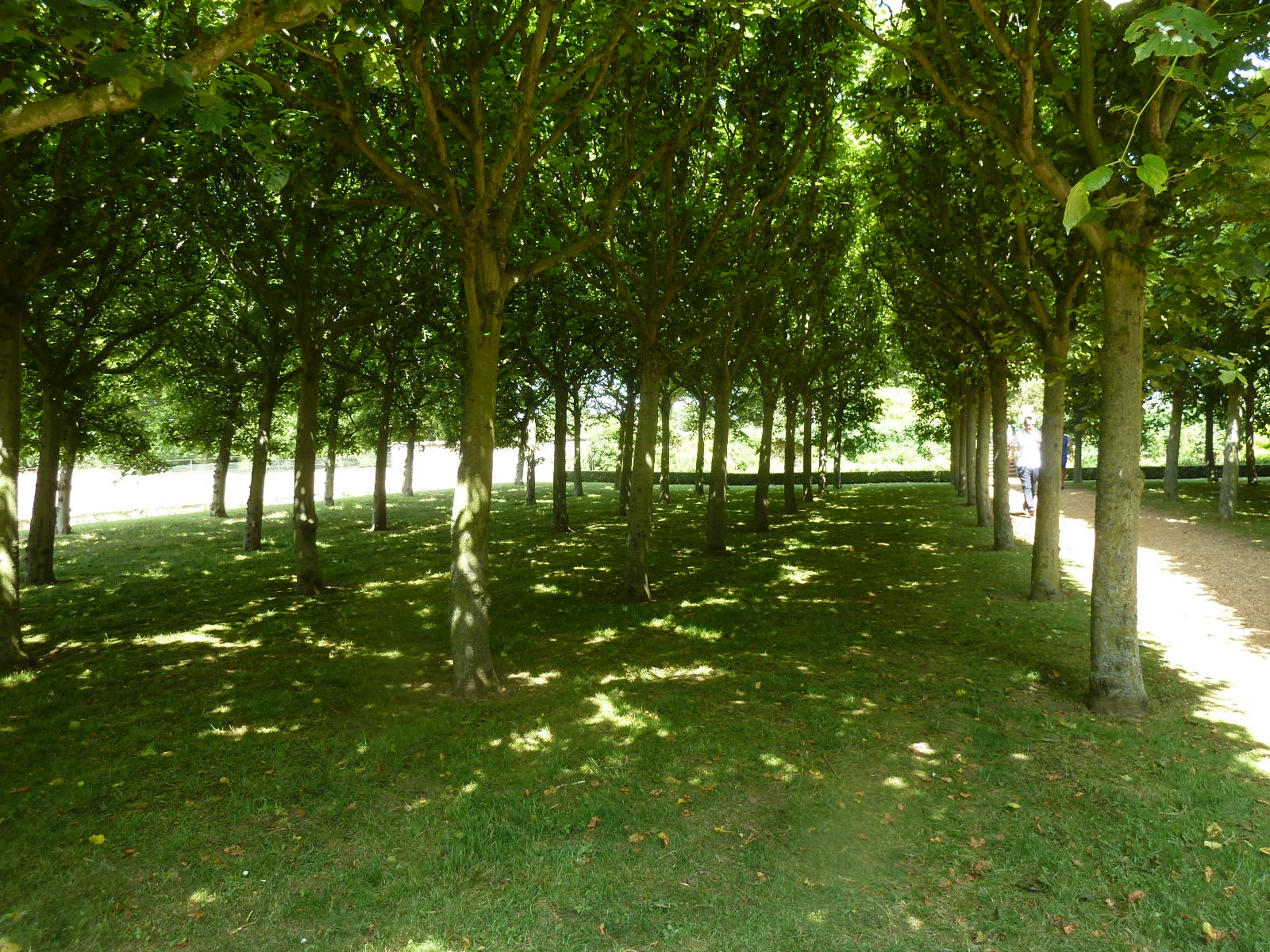
In a few years, there will be more shade
 
For the most part, Ed found plenty of shady resting spots.  I needn’t remind you that he was suffering,  trying not to limp, and keeping up a brave front while muttering under his breath.  I should have been more sympathetic, but when would I ever have another chance to roam around Houghton Hall?  I appreciated the fact he’d made it through the house and art exhibition, but nevertheless I simply had to see the whole thing.


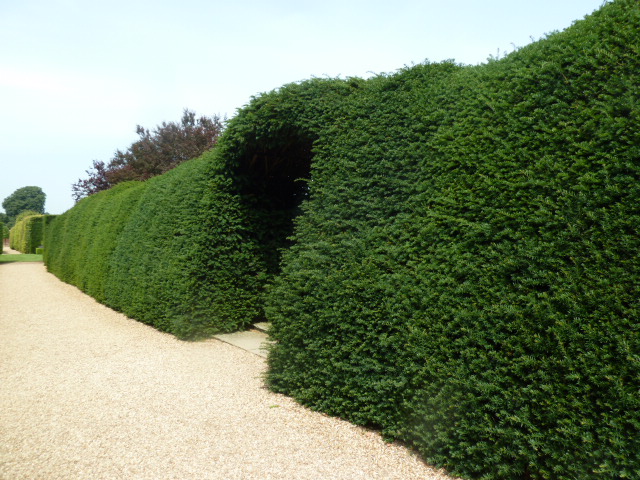
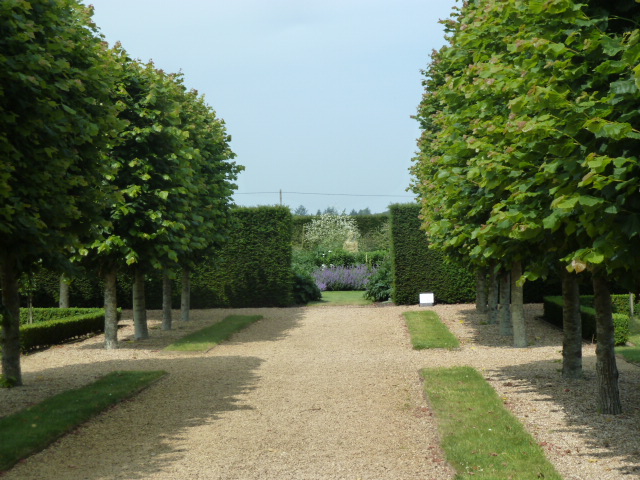
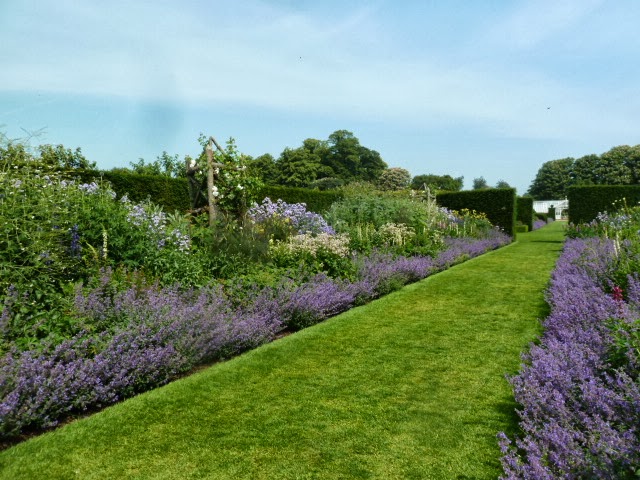
Amazing hedges
 
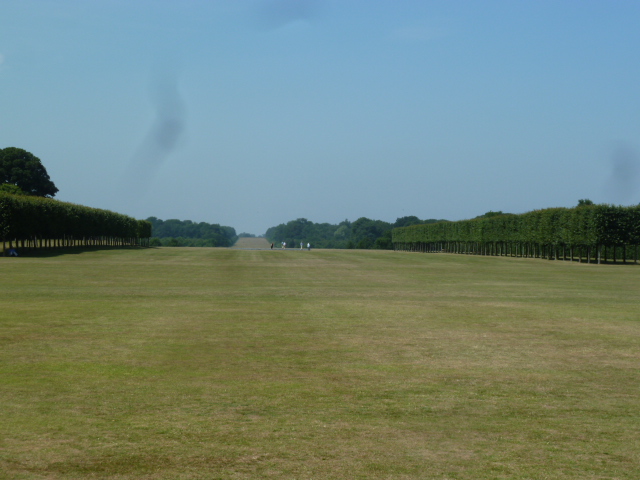
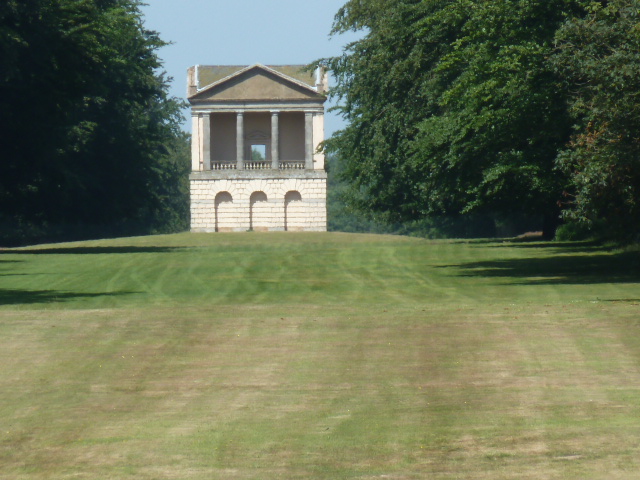
Let me be clear.  I didn’t make it through all 1,000 acres.   But I tried — sort of.  There is a wonderful folly at the end of a park view, below…I didn’t get there any closer than the photograph.
 

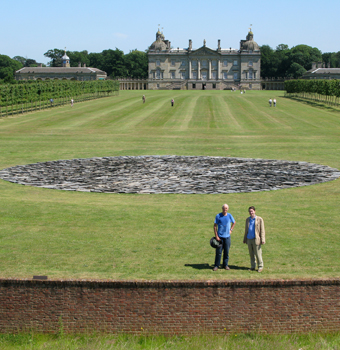
photo from the website showing the sculpture and the house
 
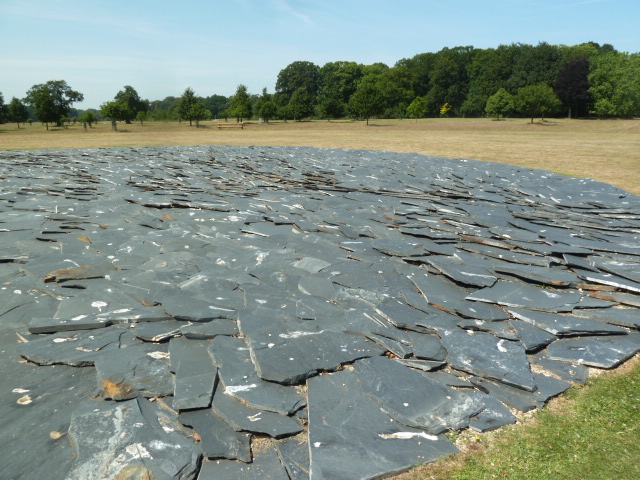
Full Moon Circle, by Richard Long, 2004
The folly I didn’t get to!


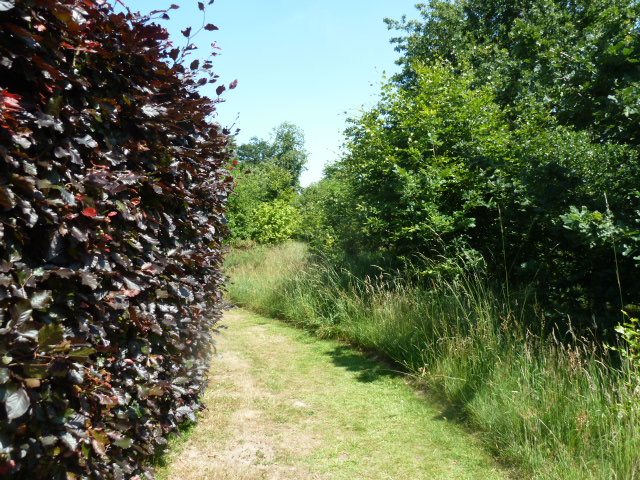
Lovely paths through the trees

 
the wilderness
 
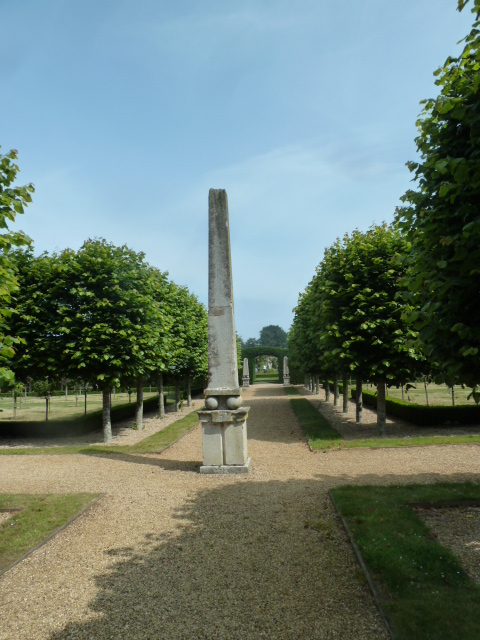
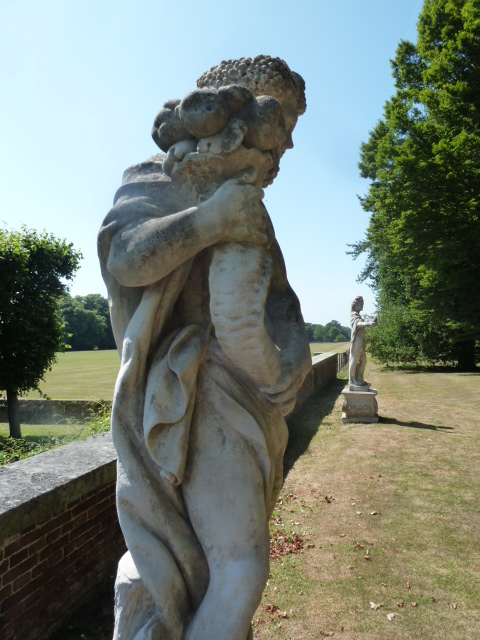
statuary

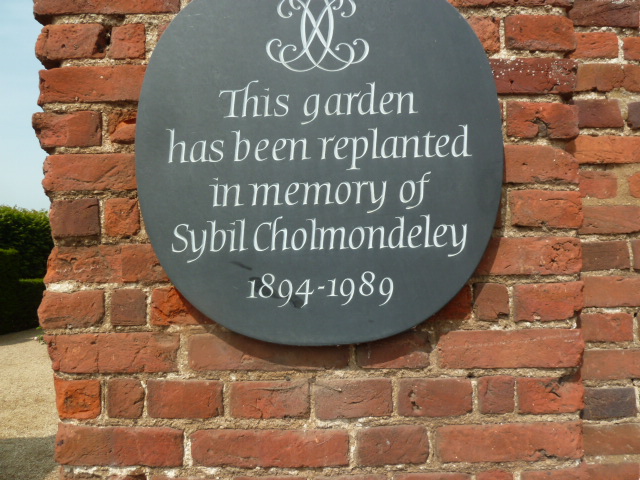
After the current Marquess of Cholmondeley inherited his title and estates in 1990, he began plans to open the house to the public and to create news gardens in honor of his grandmother, Sybil Sassoon, Marchioness of Cholmondeley (1894-1989).  She was the wartime superintendent of the Women’s Royal Naval Service (Wrens) and held other important posts.


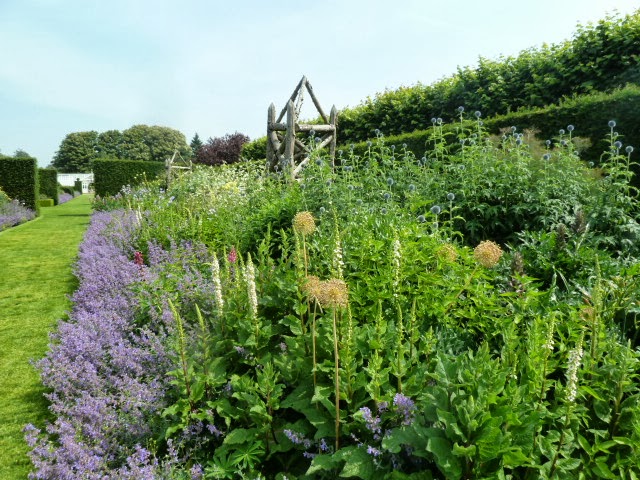
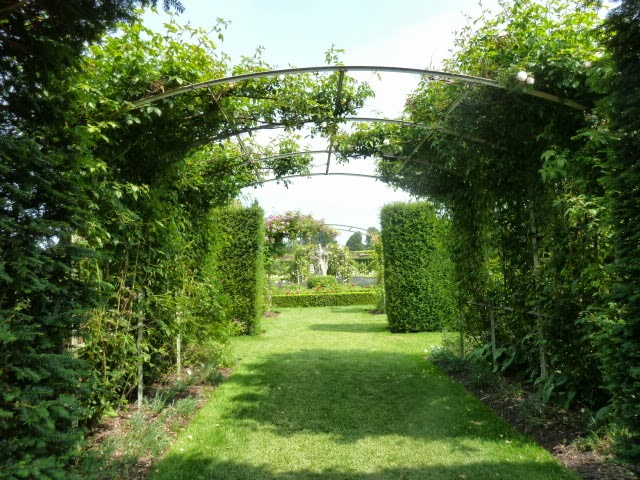
In the walled gardens are many beautiful “rooms” with various flowers and vegetables, pergolas, and sculptures, both ancient and contemporary. all joined by grassy paths and perfectly maintained. More than 150 varieties of roses can be found, though I didn’t count.


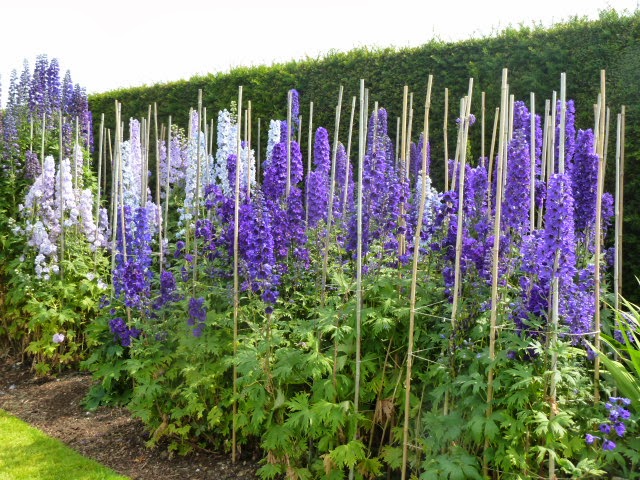
The Herbaceous Borders


,

An abundance of roses

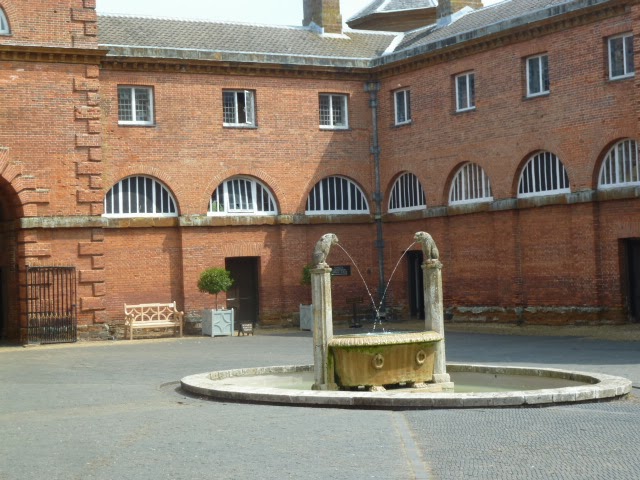
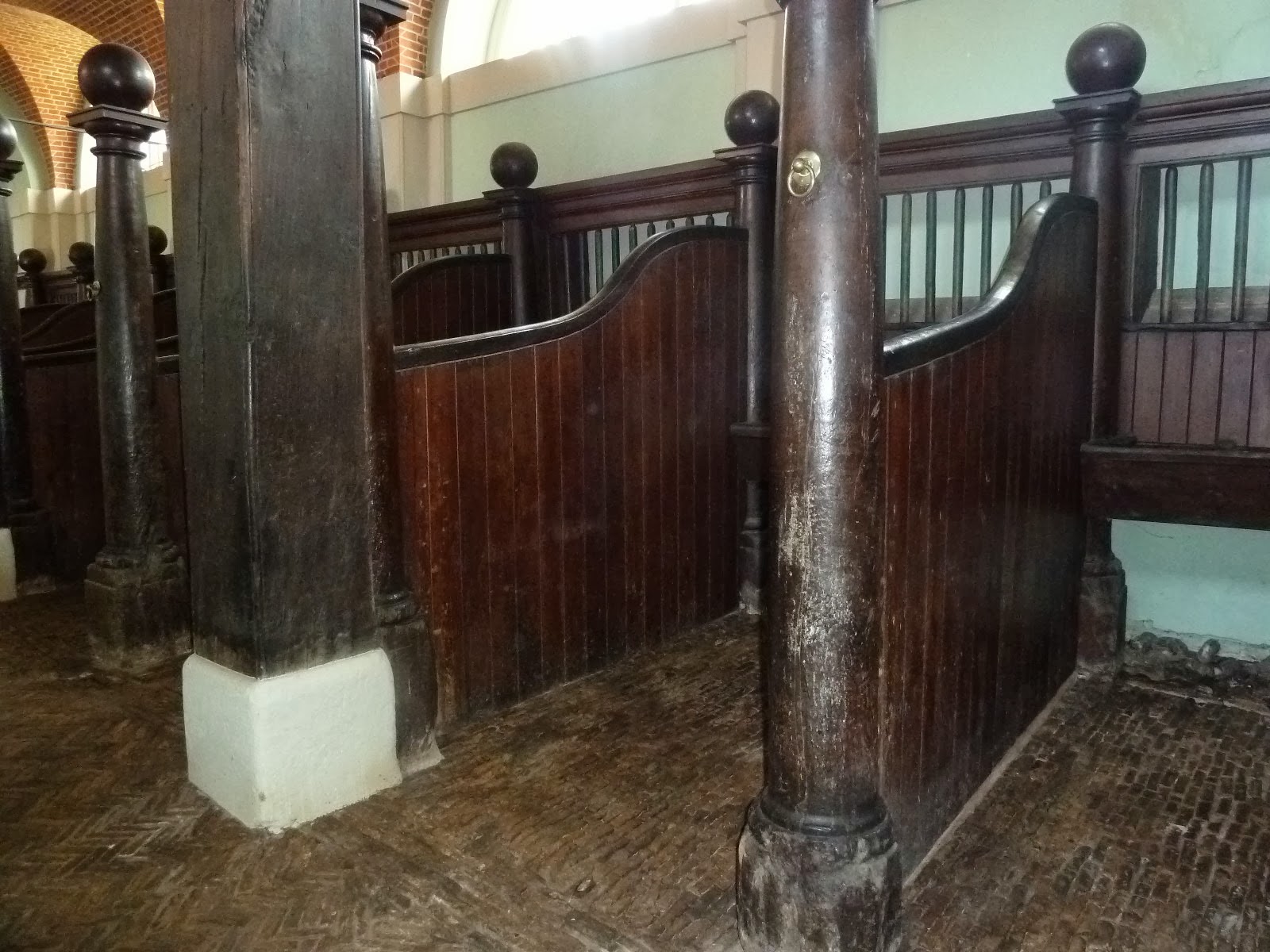
The stables date from 1735 and may have been designed by William Kent.  Now they are open for visitors, but  without their former residents!

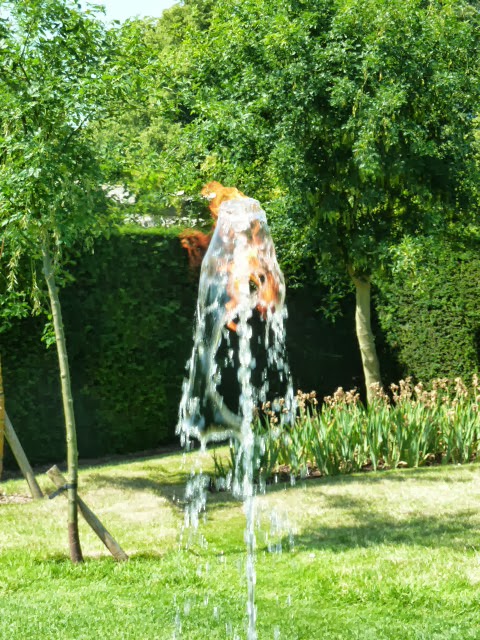
On display throughout the gardens are various contemporary works of art, including the Waterflame by artist Jeppe Hein. A rather astonishing column of water shoots into the air carrying an active fire.  I can only guess at how it is accomplished; it’s certainly unique among fountains I’ve seen anywhere.


In addition to the Hall, the pictures always there and those on special display, the gardens, the sculptures, and the stables, we enjoyed the tea room and the fantastic collection of the sixth Marquess’s  model soldiers, in which no pictures were allowed, sadly.  Those displays alone would be worth the trip!

HH114
Battle of Waterloo display
 
Visit the Houghton Hall Website here.
 

To finish off our day at Houghton Hall, our taxi driver appeared right on time and drove us to the Victoria Hotel at nearby Holkham Hall, where the next adventure awaited us.  Our confidence in the Kindness of Strangers was indeed fulfilled.  Ed was delighted to have a restful night, but I wonder how much walking he anticipated for the next day?  Maybe he had nightmares!!

A Guest Post – “Better it is to Get Wisdom than Gold.”

By Guest Blogger Mandi


Images and the journey itself courtesy of amitours.co.uk

Recently I took a ride in a cab through the Borough of Kensington and Chelsea. I was tasked with producing photos of the taxi in action; an out and about photo shoot. South Kensington in particular is an area I felt I was already very familiar with having gotten to know it well during my time at the Royal College of Art, where I’d studied two years previous. I was quite wrong! It’s quite interesting how used to your surrounding environment you get without ever actually paying it any particular attention. At the time I would walk around with my mind fixed on a destination, not necessarily absorbing myself with what was around me in the present.

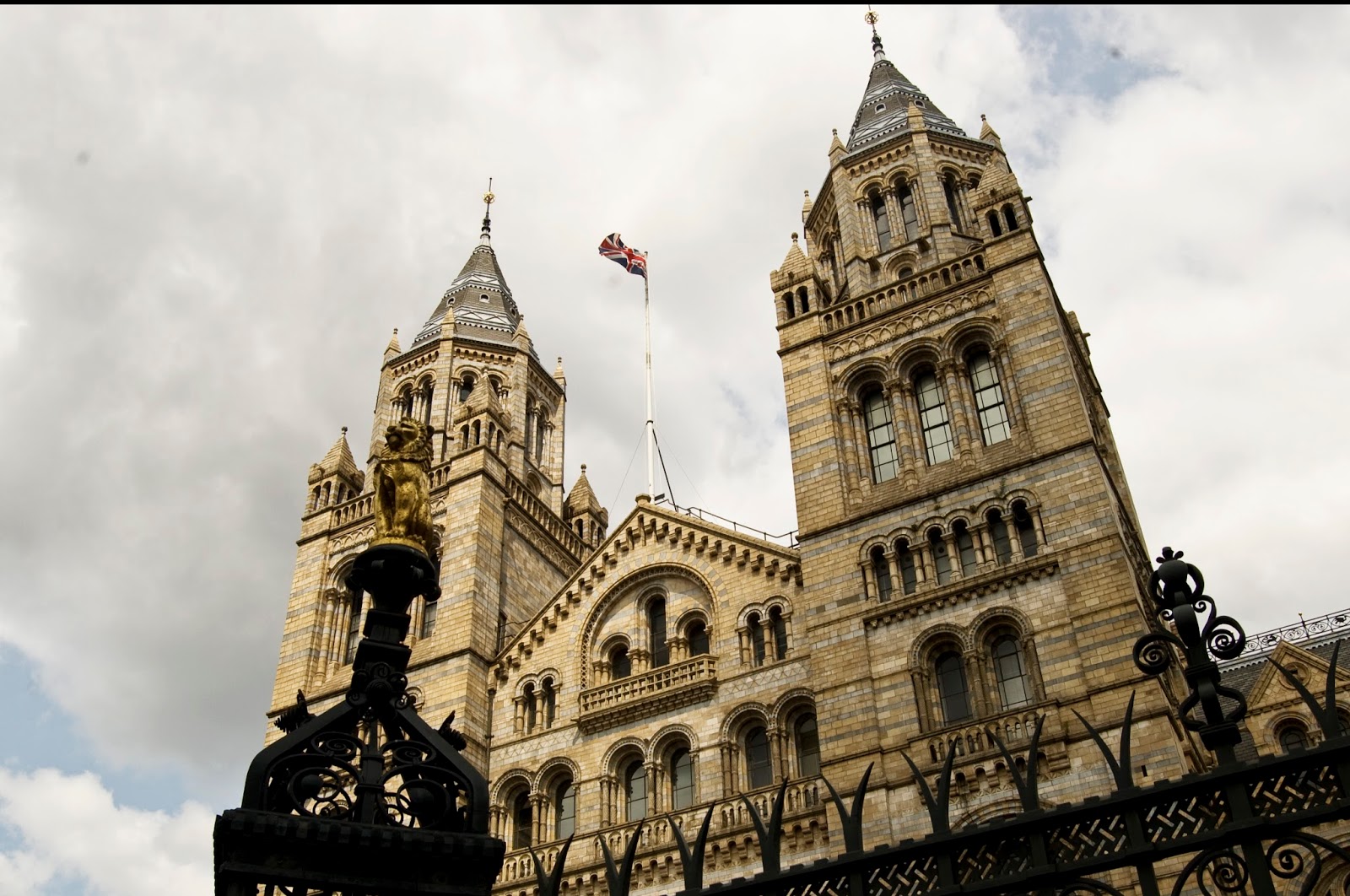
I already understood the anatomy of the area. The Royal college of Art, the Royal College of Music, the Imperial College, the V&A, the Natural History Museum (above), the Science Museum and the Royal Albert Hall. To me these were just all convenient nearby attractions. I had never thought of the reasoning for their close proximity until researching the area for the photo shoot. So here we are, the reason.

 Albertropolis!

In the summer of 1851 the Great Exhibition brought a celebration of creativity – the best of human creativity – to this small borough of London. Pulling together two realms that previously could not have been further apart: Science and Art. 

 
The Victoria and Albert Museum
 
 
The reconciliation between the two began at The Great Exhibition in nearby Hyde Park, then shortly after Prince Albert pushed for this area to be bought by the Royal Commission with the profits made. This area was then built up to encourage a community where science and art could coexist, if not crossover. The nearby museums could aid the practitioners of science and art alike.

Of course this was all built up overtime and a lot of the original institutions have long since vanished.  Interestingly the central axis of the Imperial College, the Royal Albert Hall and the Albert memorial are all aligned, appearing set to stay. This slight detail that goes unnoticed to the everyday visitor as it is only viewable from the Queen’s Balcony (rarely open to the public). The axis ties together the marriage of art and science: an arts institution, a science institution to the facilitator: Price Albert.

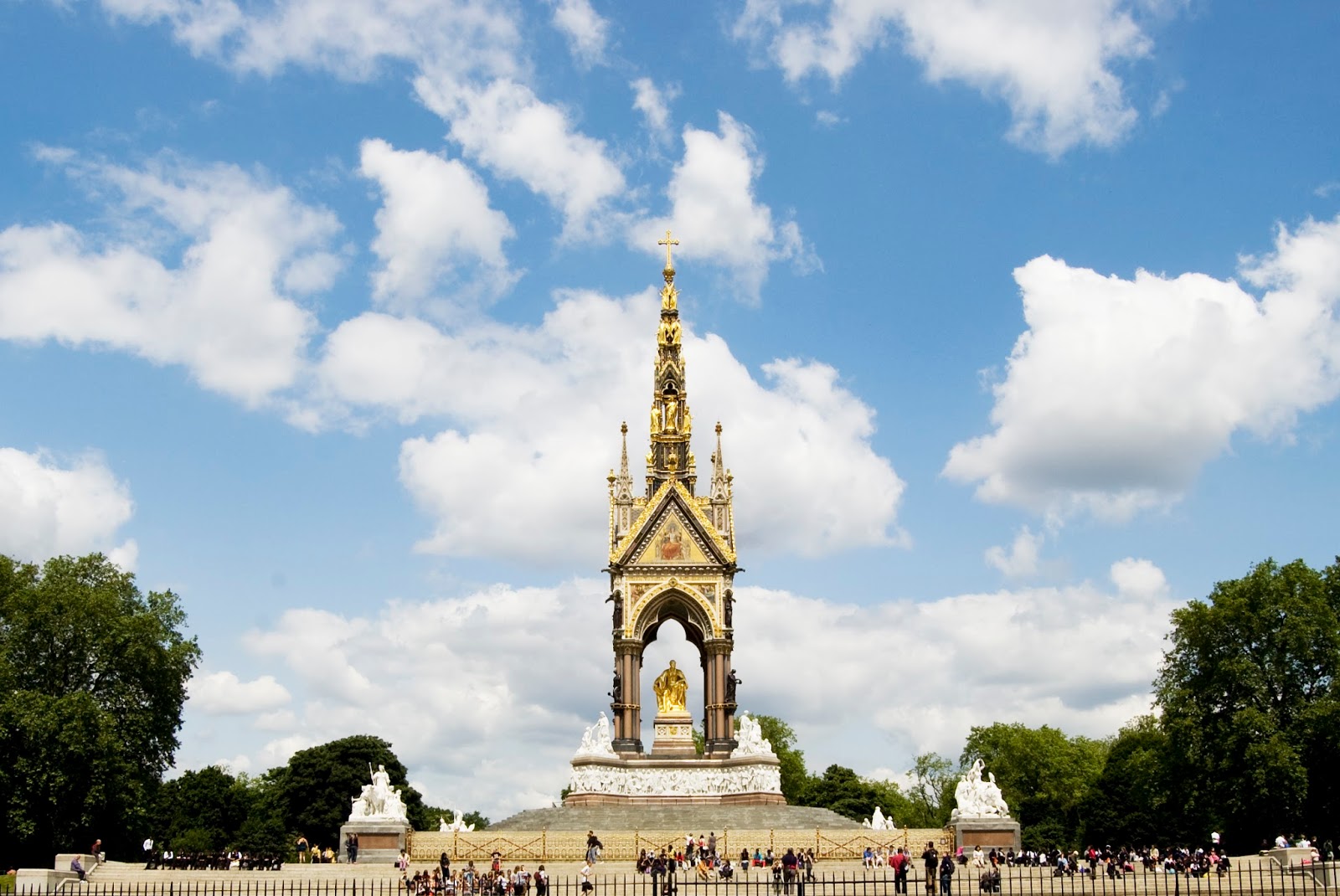
The Albert Memorial

“Better it is to Get Wisdom than Gold”

The memorial was commissioned ten years after The Great Exhibition because of Prince Albert’s sudden death in 1861. The area was affectionately named Albertropolis, although this is more or less forgotten these days as the area has become known as South Kensington. It’s a shame as we have a lot to owe him. Prince Albert was an advocate of self learning and encouraged the opening of museums and libraries to the public – before which these were places of the academic, the researcher. This was a truly ground breaking endeavour; one which we now take for granted.

Without Prince Albert I may have not received the education I did in one of the world’s most densely populated and successful cultural quarters. 
 
Visit the Amitours website, the friendliest taxi fleet in London, for all your taxi, minicab and airport transfer needs.

The Wellington Tour – Tea, Anyone?

Once Victoria and I had hammered out the itinerary for The Wellington Tour, we handed it over to Patty Suchy of Novel Explorations and asked her to work her travel agent magic as far as pricing and logistics were concerned. Before long, it was time for Victoria and I to call Patty and learn how she’d made out with the plans.

Patty:  Hello?

Victoria: Hey, Patty, it’s Kristine and Vicky.

Patty:  Well hello! You’re together?

Victoria: Yes, we’re together and ready to hear how you made out.

Patty:  I’ve got to tell you, this hasn’t been easy. You two picked several spots that are terribly difficult to get into.

Kristine: What do you mean, difficult to get into? Are you referring to Stratfield Saye, which seems as though it’s only open one day a year?

Patty: Yes, and Frogmore House, which is also rarely open. Not to mention Highclere Castle.

Victoria:  What about Highclere Castle?

Patty: It seems that since the all the Downton Abbey hoopla reached a fever pitch, they’ve been inundated with visitor and tour requests. They’ve had to limit visiting times and then there’s having to work around the shooting schedule for the show itself. They’re having to restrict admissions and they’re already booked up for months ahead of time. It’s very difficult.

Kristine: Are you saying we can’t get in?

Patty: No. I’m telling you that I’m still working on getting all the stars to line up as far as opening days for several of the places you want to include. The rest of the tour is no problem, but these three places are tricky. I’m still waiting to hear back from the people at Highclere.

Kristine: I was thinking it might be nice to have tea while we’re there.

Patty: Tea? You can have all the tea you like. They have tea rooms on site. Tea shouldn’t be problem.

Victoria: No, we meant an afternoon tea in the house or gardens. You know, little sandwiches and cakes and things.

Patty: Well, I’ll ask when I speak to them, but a special, dedicated tea service for the tour group might be costly.

Kristine: We’ll just tack it on to the tour price. It’s something Vicky and I would like to do and I think everyone would really enjoy it. It’s one of those once in a lifetime things.

Patty: I agree, it would be fantastic. Alright then, I’ll ask when I speak to their representative. Do you have any idea on dates for the tour?

I looked at Victoria, who shrugged her shoulders in reply.

Kristine: Let’s try to shoot for sometime when it won’t be freezing cold.

Patty: I’ll keep that in mind, but remember that one of the tours you and I did together a few years ago was in June and we all froze.

Kristine: Who could forget? Why don’t you see how the opening times work out and we’ll talk again in a few days?

And so a few days went by, with Victoria and I waiting on pins and needles, before we called Patty again.

Patty:  Hello?

Kristine: Hey, it’s Kristine and Vicky.

Patty:  Well, I have to tell you, I’ve had a rough few days trying to work all of this out. It’s been a struggle.

Victoria: I can appreciate that and we do appreciate all you’ve done, Patty.

Kristine: What’s the bottom line?

Patty: Bottom line is we keep Frogmore, Stratfield Saye and Highclere Castle on the itinerary.

Kristine: You’re a star!

Patty: But there isn’t going to be a Downton Abbey tea.

Victoria: There’s isn’t?

Patty: No. It’s just too expensive.

Kristine: How expensive?

Patty: Over a thousand dollars.

Kristine: So? What’s that, like fifty dollars added to the tour price per person?

Patty: That is the per person price.

Victoria: What’s the per person price?

Patty: Nearly a thousand dollars. Per person. Not in total.

Kristine: Are you telling me they’re charging at least twenty thousand dollars for afternoon tea? Who’s serving it, Bates and Mr. Carson themselves?

Patty: Mr. Bates can’t serve tea. He’s got a gimpy leg.

Victoria: For twenty thousand dollars, I’d better be seated next to Maggie Smith.

Patty: There are always the tea rooms.

Kristine: I suppose. More importantly, what did you hear from Stratfield Saye?

Victoria: Maybe we can have tea there with the Duke of Wellington. He’d probably charge less than twenty thousand dollars.

Patty: We can get into Stratfield Saye. Not a problem. However, in order to get into all of these places on the same tour, we’d have to schedule the Tour for September.”

Victoria and I looked at one another, trying to work out the pitfalls of a September Tour. We couldn’t come up with any.

Victoria: What’s wrong with September?

Patty: Nothing’s wrong with September. It’s really an excellent time to visit England. It just means that you two wouldn’t have a choice of the other months.

Kristine: You got anything planned for next September?

Victoria: Not that I can think of at the moment. And if I did, I’d rearrange it.

Kristine: We have no problem with September.

Patty: Good. I’ve blocked the tour out for the fourth through the fourteenth.

Victoria: Sounds good.

Patty: Okay. Now that we have our dates, I’ll work on firming up all the details.

We hung up and it wasn’t till much later that I realized the last day of the Tour would coincide with the last day of the Duke of Wellington’s life – September 14, 1852.

Click Here For Complete Details on

Victoria at Houghton Hall: The Kindness of Strangers, Part One

I had already planned to include Norfolk on my summer visit to England when I chanced upon the Vanity Fair magazine of May, 2013, describing the successful efforts of the Marquess of Cholmondeley to return the paintings collected by his ancestor Sir Robert Walpole to Houghton Hall for an exhibition (click here for the article). I literally salivated at the thought!

Click here to visit the website. Everything about this event appealed to me — the opportunity to see the Hall and its grounds, the glorious paintings to be seen, the fascinating story of Sir Robert Walpole and his career as England’s first Prime Minister in the reign of George I, and the equally interesting story of how his great collection of Old Masters was sold to Catherine the Great and subsequently a few of them re-sold by Stalin’s government to western museums, leaving most of them in the Hermitage and other Russian venues.

 
A work by Paris Boldone (1500-1571),
variously titled Two Women and a Soldier or
Venus, Flora, Mars and Cupid (Allegory), c. 1550
State Museum The Hermitage, St. Petersburg
 
 
Ed and I left Cambridge by train on another sunny, warm morning in July and arrived a bit over an hour later at King’s Lynn, a charming town I am sorry we had no time to explore.  In lieu of renting a car someplace along our route, we had decided to travel by taxi.  We’d left most of our gear in London, but had along a suitcase and a big computer bag.  Therein, the dilemma.  What to do with the bags while we toured Houghton? 
 
 
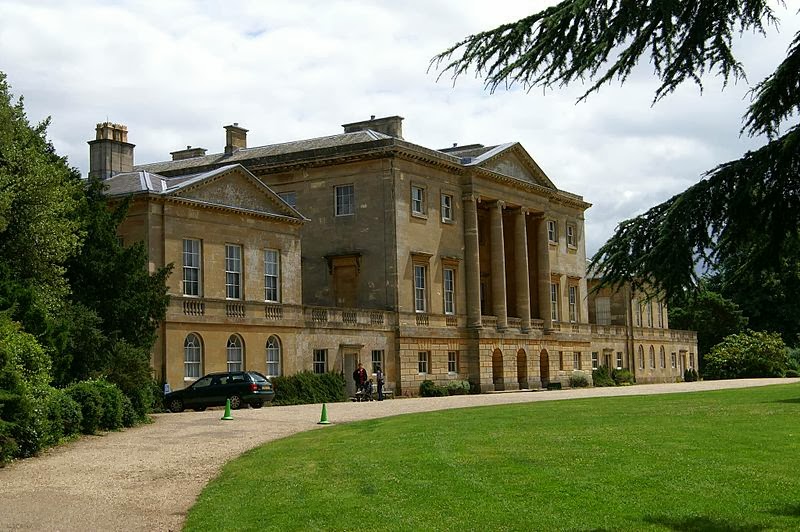
Houghton Hall, July, 2013
 
 
 Going first to our hotel at Holkham was considerably out of the way and would add time and many £££s to our trip.  Our taxi driver offered us an alternative.  We could leave our bags with him and he would return to meet us in the late afternoon and drive us to Holkham.  Well, we’d be in very deep trouble if our bags disappeared, wouldn’t we?  Ed and looked at each other, eyed the driver who seemed like a hearty Norfolk fellow, entirely trustworthy, and so we thanked him profusely and accepted his kind offer.  After all, it was England where everyone is honest — we hoped!  We set a rendezvous time — late in the afternoon so we could see everything!
 
We had plenty of time before our timed tickets were scheduled, so we wandered the gardens and had lunch in the convenient teashop. Lots of spots for Ed to take the weight off his foot.  More about the gardens in the next post.  I will skip ahead to entering the Hall itself, approaching through a cool grove of trees.


Coming in to the ground floor and surrendering our tickets, we realized the crowds were large, and seating would probably be at a premium. We were right
.  
 
Borghese Gladiator, in the Great Staircase

We began with the great staircase, which dimly turns around a magnificent life-size bronze sculpture of a gladiator.  

Sir Robert Walpole
workshop of Van Loo 


Houghton Hall was built by Sir Robert Walpole (1676-1745), Britain’s first and longest-serving Prime Minister, later the 1st Earl of Orford.  Over the many years of his power during the reigns of George I and George II, Walpole purchased a superb collection of Old Master paintings with which he filled the walls of his magnificent country house.  The splendor of house itself and its outstanding contents – paintings, tapestries, sculpture, furniture, even china, were part of Walpole’s technique of acquiring and maintaining political and cultural power among the peers of the realm.


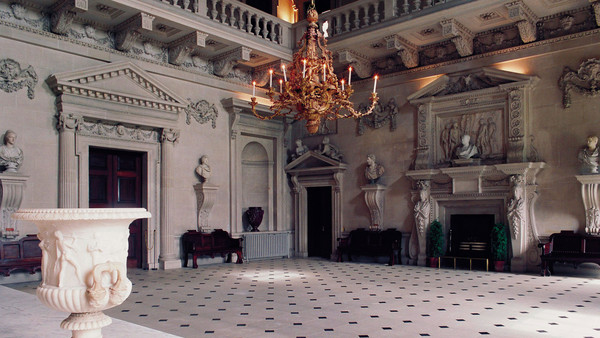
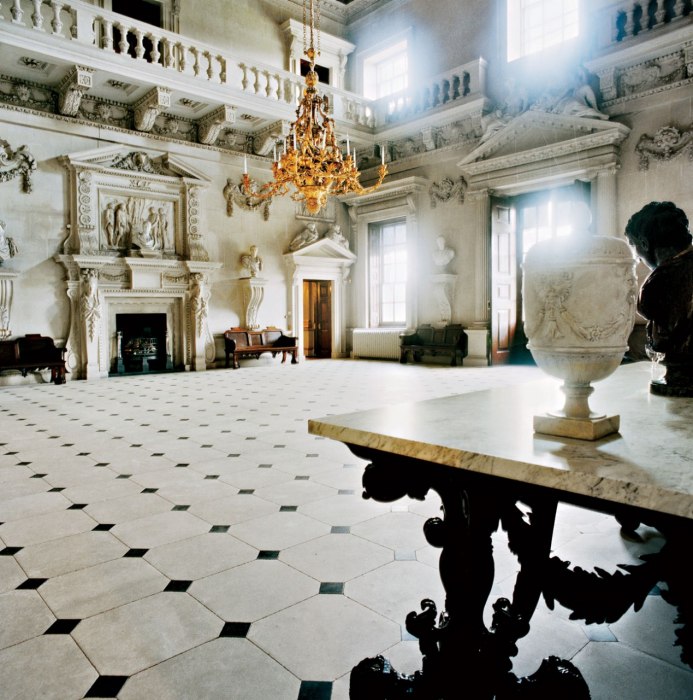
The Stone Hall
 
 
Walpole’s grandson, the 3rd Earl of Orford, sold a large portion of the great collection in 1779 to Catherine the Great, ruler of Russia, to pay off  accumulated family debts.  At the time, as well as today, it was considered a great loss for the British people, and it was one of the situations which led to the creation of the National Gallery, now presiding majestically over Trafalgar Square in London. At last, there was a non-royal venue for depositing the finest art of British collections.
 
 
The Stone Hall, ©Vanity Fair
 
 Houghton’s Stone Hall displays a collection of marble busts, some from ancient sources, others of Walpole himself and his colleagues.  The startling white of the Stone Hall is one of those abrupt changes in atmosphere that country house designers like, a complete change of atmosphere from subdued lighting to brilliance.
 
 
The Saloon

Built in the 1720’s, Houghton Hall results from the combined efforts of architects James Gibbs and Colen Campbell, in the Palladian style, somewhat imbued with the baroque.  William Kent designed the interior décor and furniture. The current resident of Houghton Hall is the family of the 7th Marquess of Cholmondeley (pronounced Chumley), a descendant of Walpole’s daughter Mary, who became the wife of the 3rdEarl of Cholmondeley in 1723. David Cholmondeley (b. 1960) serves as the Lord Great Chamberlain of the U.K. and is seen every year leading the Queen to the State Opening of Parliament.
 
In 2007, Queen Elizabeth II and the Lord Great Chamberlain,
 the 7th Marquess of Cholmondeley
  
 
The Marquess reportedly discovered an original plan of hanging the collection, so the paintings from the Hermitage have been hung much as they originally were when Walpole lived at Houghton Hall. The collection includes works by Rembrandt, Rubens, and Van Dyck as well as Poussin, Velazquez, and Murillo.
 
  
The Maratta Room

A whole room of the exhibition is given over to the work of Carlo Maratta. Most well known of his works might be the portrait below of Pope Clement IX.

 
Carlo Maratta, Portrait of Pope Clement IX, 1669
 
 
The Maratta portrait contrasts interestingly with the Portrait of Pope Innocent X, by Velazquez (1599-1660) which usually hangs in the National Gallery in Washington, D.C


Velazquez, Portrait of Pope Innocent X, 1599-1600, NGA
 
 
A second National Gallery painting in the exhibition is Franz Hals (1581-1666) Portrait of a Young Man. These two paintings were sold by the USSR to Andrew Mellon, who gave them to the NGA.
Frans Hals, Portrait of a Young Man, 1646/48, NGA
 
 
Green Velvet Bedchamber
 
Frankly, the splendor is far more than one can comprehend in a single visit.  I spoke with one lady who was there for the second time and she planned to return at least once more.  If only I’d had that opportunity! Not only are the paintings worth long contemplation; the house itself, the furnishings and décor are stunning.  I was so entranced by the whole scene that I forgot about Ed and his throbbing foot, but he managed to negotiate the crowds and dim light, even snagging a chair now and then (hopefully only those reserved for the guides and not one of the William Kent originals).
 
 
Embroidered Bedchamber
 
 
Not only the paintings but all the furnishings, the tapestries, the molded ceilings, every inch of Houghton Hall is worth contemplating. I valiantly tried to keep it all in my head, but I probably missed a great deal of it.  An abundance of riches indeed.
 
 
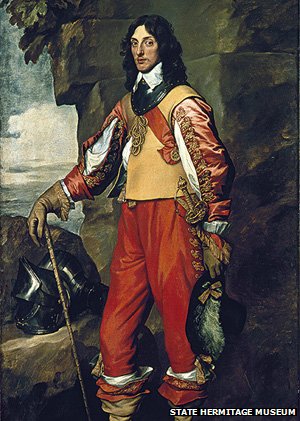
Portrait of Sir Thomas Wharton (detail)
by Anthony Van Dyck, 1639
State Hermitage Museum, St. Petersburg
 
The Exhibition has been extended to 24 November 2013.  I lingered as long as I could in each room but the press of the crowds required pretty constant movement.  I will spend many more hours looking at the catalogue and enjoying the memories.  I found Ed outside enjoying the breezes, as the house had been quite warm.


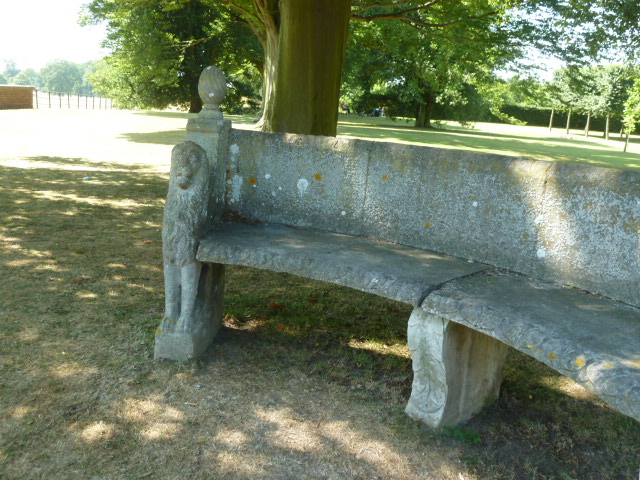
 He found a shady bench where we sat and simply tried to absorb what we’d seen.  Astonishing. Overwhelming. And we still had some of the garden to visit too.  More about that coming soon.