Victoria Visits Apsley House (without Kristine, alas!)
I hadn’t realized how little time Ed got to rest his aching foot at the Wellington Arch and walking around the neighborhood; that is, not at all.

Apsley House

So when we got into Apsley house, he was grateful to find some chairs and tables at which one could study books on Wellington’s life and accomplishments as well as the details on all the furnishings of his mansion.  I did entice him away for a few minutes here and there to look at the marvelous displays around the house, but he kept migrating back to those chairs!!

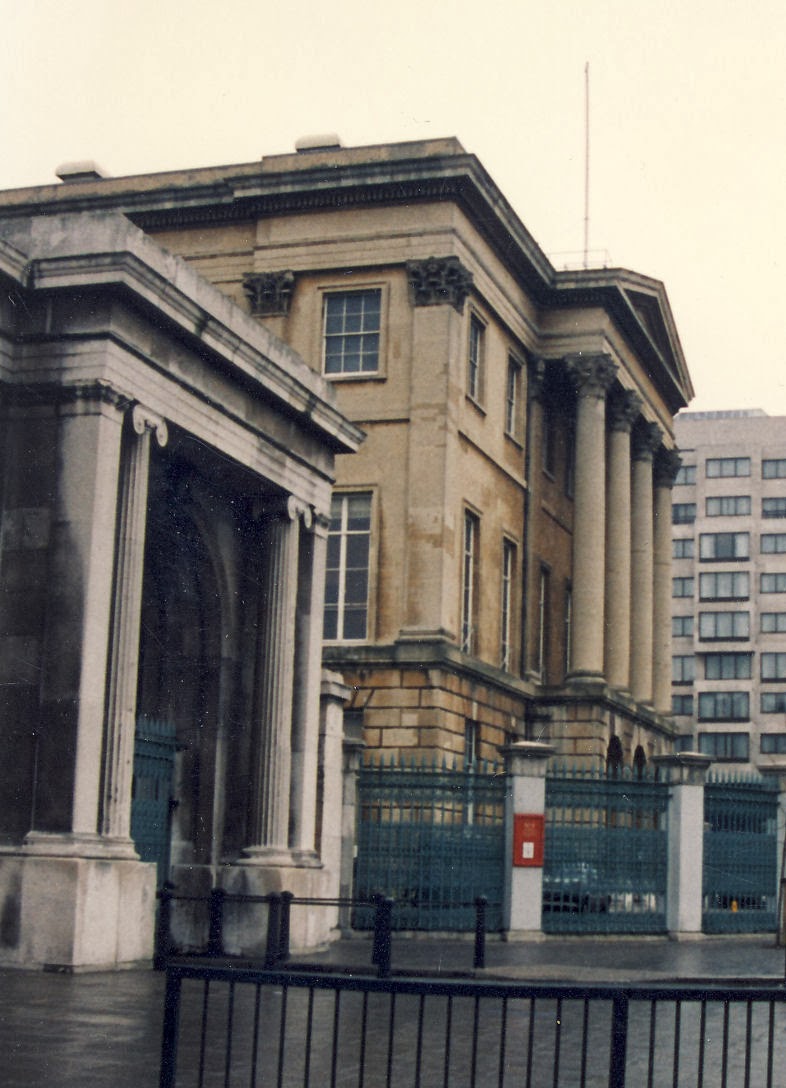
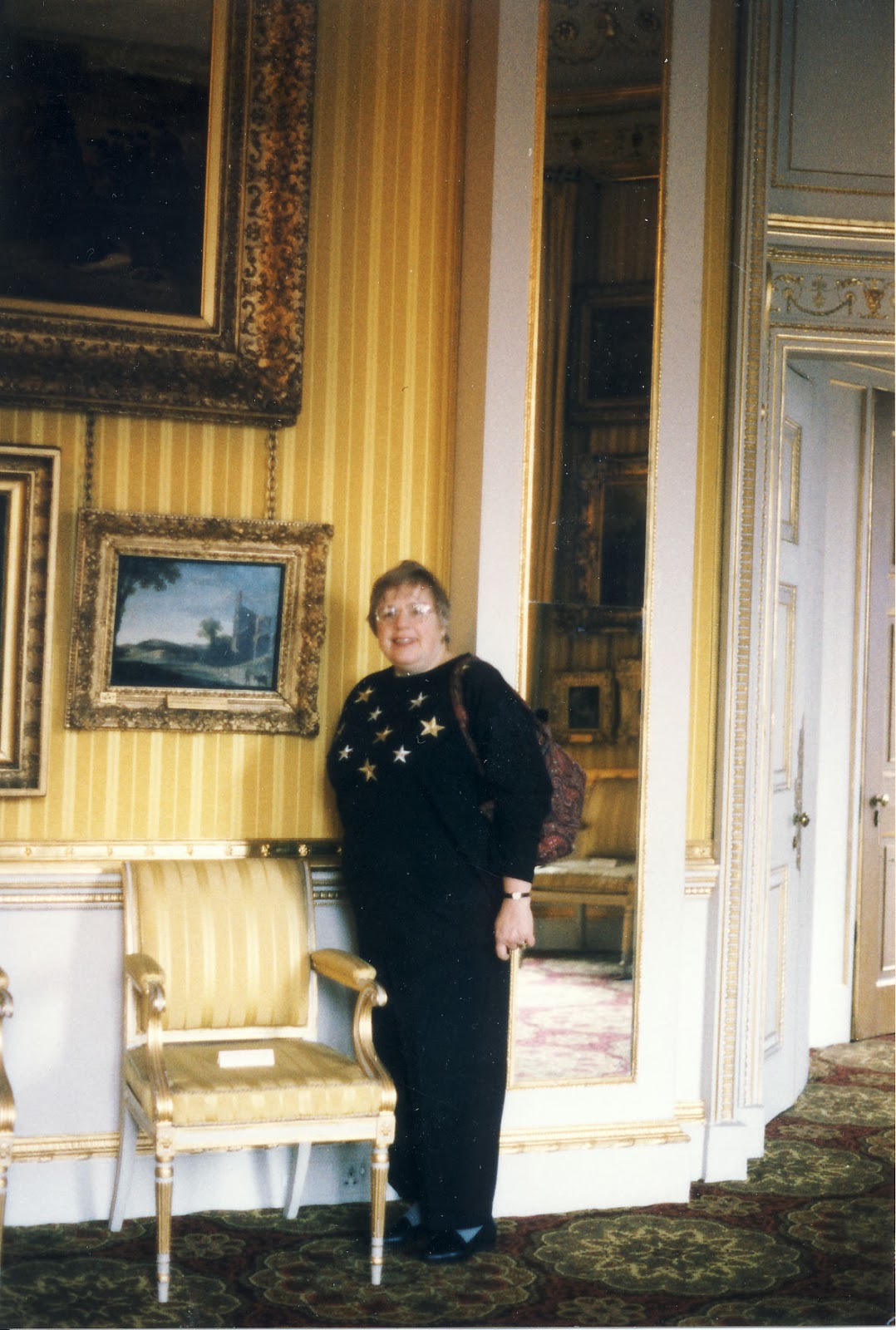
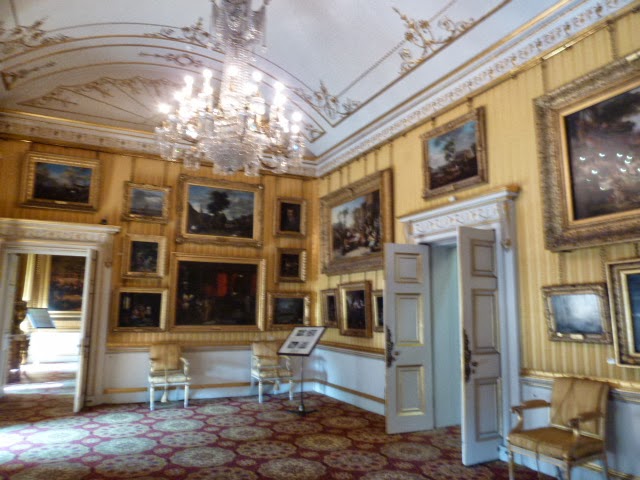
I am sad to say that English Heritage, which operates Apsley House, does not allow photographs — ages ago, when I visited while the house was operated by another group (the V and A?)  with my sister-in-law, Pat, we took several pictures.

Long ago, in Apsley House
  
  
Long ago, in Apsley House
 
 
The Waterloo Gallery, Pat’s photo
 
Regardless of the lack of picture-taking, I always enjoy visiting Apsley House.  There is so much to see, you need several visits to absorb it all. 


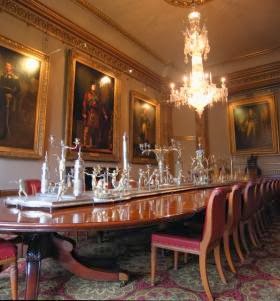
Above are two views of the elaborate Portuguese silver service on the dining table. Kristine has reported about her adventure with it when very dusty…to read about it, click here. Scroll down.  She also relates great info on the house.

Who would leave such a wonder undusted??
 
The silver service is 26 feet long and three feet wide; it was presented to the Duke in 1816 by the Portuguese Council of Regency.  Designed by D. A. de Sequeira, the service was made in the Military Arsenal in Lisbon from 1812 to 1816. The center group represents the Four Continents paying tribute to the armies of Britain, Portugal and Spain.
 
 
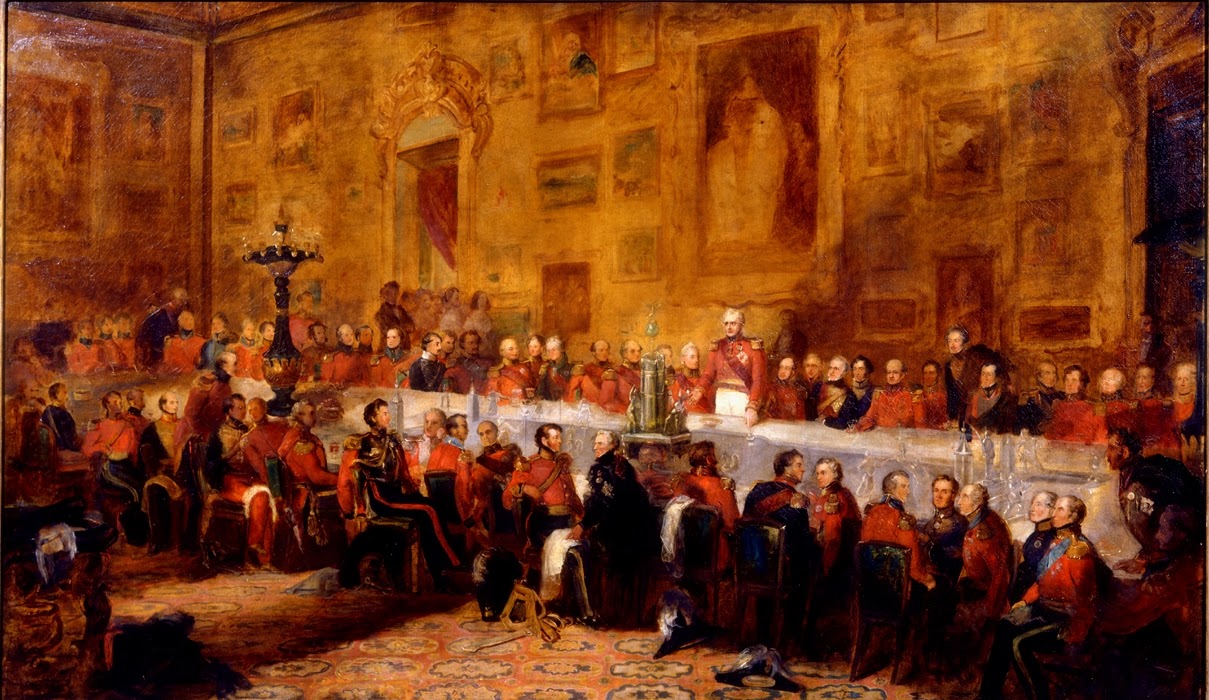
The Waterloo Banquet, 1836,
by Artist William Salter (1804-1875)
 
Salter wanted to portray the annual banquet on June 18 at Aspley House and got the assistance of the Duke’s niece, Priscilla, Lady Burghersh (later, Countess of Westmorland). Once the Waterloo hero was convinced, he gave Salter access to the house and its contents.  Many of his studies for the 83 people pictured can be found in the National Portrait Gallery, off Trafalgar Square. A guide to the identities is also found at Apsley House.
 
 
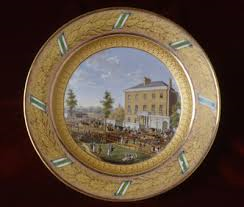
Apsley House on plate from the Saxon Service of Meissen porcelain, ca. 1818
 
 
There are several rooms of cases displaying all the gifts given to the Duke.  Below, our conversation.
 
rosewood showcases of china and plate 
 
Me: “All these gifts were given to the Duke of Wellington, many by the governments of the Allies, in gratitude for his victory over Napoleon.”
 
Ed:  “Oh.”
 
Me: “He received tureens and candelabra of silver, shields, vases, china services for hundreds, centerpieces and epergnes, not to mention elaborate military decorations…blah, blah, blah…”
 
Ed: “Oh.”
 
Me: “Swords, and scabbards, medals and jewels, etc. etc….”
 
Ed: “Can I go sit down again now?” 
 
Do you think he was a bit bored by the cases of china, silver and gilt?  What I was really waiting for was his reaction to the Canova sculpture.  We had traveled to Waterloo for the battlefield reenactment a few years before, and Ed was quite familiar with the popular images of Napoleon as short and stout. So when we came to the staircase, I looked for a reaction of shock — and I was not disappointed. 

 
Napoleon, sculpted by Canova, 1806
 
Obviously Canova portrayed Napoleon as the Emperor WANTED to appear! Except that Napoleon never liked the statue, saying it lacked dignity. This monumental sculpture, standing eleven feet and four inches, was installed in Apsley House in 1817. Ed got quite a laugh out of the fanciful figure, never anyone’s idea of what Napoleon looked like.  Imagine the surprise of the artist Canova when it was rejected instead of accepted as a reasonable, if flattering, likeness. THEN he (Ed) went back to grab a chair.
 
 Kristine and I can hardly get enough of these lovely things, and that is not to mention the extensive collection of paintings on the walls of every room.  But our husbands were definitely less than entranced.
 
More information about objects in the Apsley House collections associated with the peninsular war, click here.
 
 
The Waterseller of Seville, ca. 1620
 by Diego Velazquez (1599-`660)
 
Hanging in Apsley House are several hundred paintings, many of which were once in the Spanish Royal Collection.  Joseph Bonaparte had removed them from Madrid’s royal palaces and their transport wagons were captured by Wellington’s troops in 1813.  Though Wellington offered to return them, the restored Spanish government refused, eventually writing to the Duke in 1816: “His Majesty, touched by your delicacy, does not wish to deprive you of that which has come into your possession by means as just as they are honourable.”
 
The collection includes works by Brueghel, Velasquez, Rubens, and Van Dyck. An excellent catalogue of the Apsley House paintings and their history can be found here.

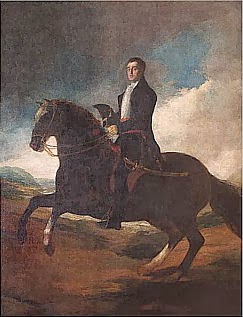
It is said that the Duke did not care for  Equestrian Portrait by Francisco Goya, and did not hang it in Apsley House.  It was at his country home, Stratfield Saye, in Hampshire until 1948 when it was hung at Apsley House. It is large, 294 x 241 cm, that’s almost 10 x 8 feet. Art historians have noted that the portrait is sketchy in nature, almost as though it was unfinished.  In fact it was done in a period of three weeks in Madrid from 12 August to 2 September 1812.  Contemporary x-rays reveal it was painted over a previous figure in a large hat, perhaps even Wellington’s enemy, Joseph Bonaparte, elder brother of the emperor and for about four years, King of Spain.

Goya: Equestrian Portrait of the Duke of Wellington, 1812
English Heritage, Apsley House

The portrait below, famous even though disliked by many prominent Wellington aficionados, including my distinguished colleague, was painted by Goya in 1812-14.  The faces on both paintings are very similar. 

Goya: Portrait of the Duke of Wellington, National Gallery
 
 
For the fascinating story of its convoluted purchase, theft from the National Gallery and the HEA (happy ever after), read Kristine’s account, here.
 
 
We look forward to sharing our tour of Apsley House with you on The Wellington Tour, 4-14 September, 2014.  Click the link for complete for details,


Tripping the Light Fantastic at the Brighton Pavilion

Victoria here, about to get out my Roget’s to look for synonyms for fantastic and over-the-top…for I am about to write of this incredible building.

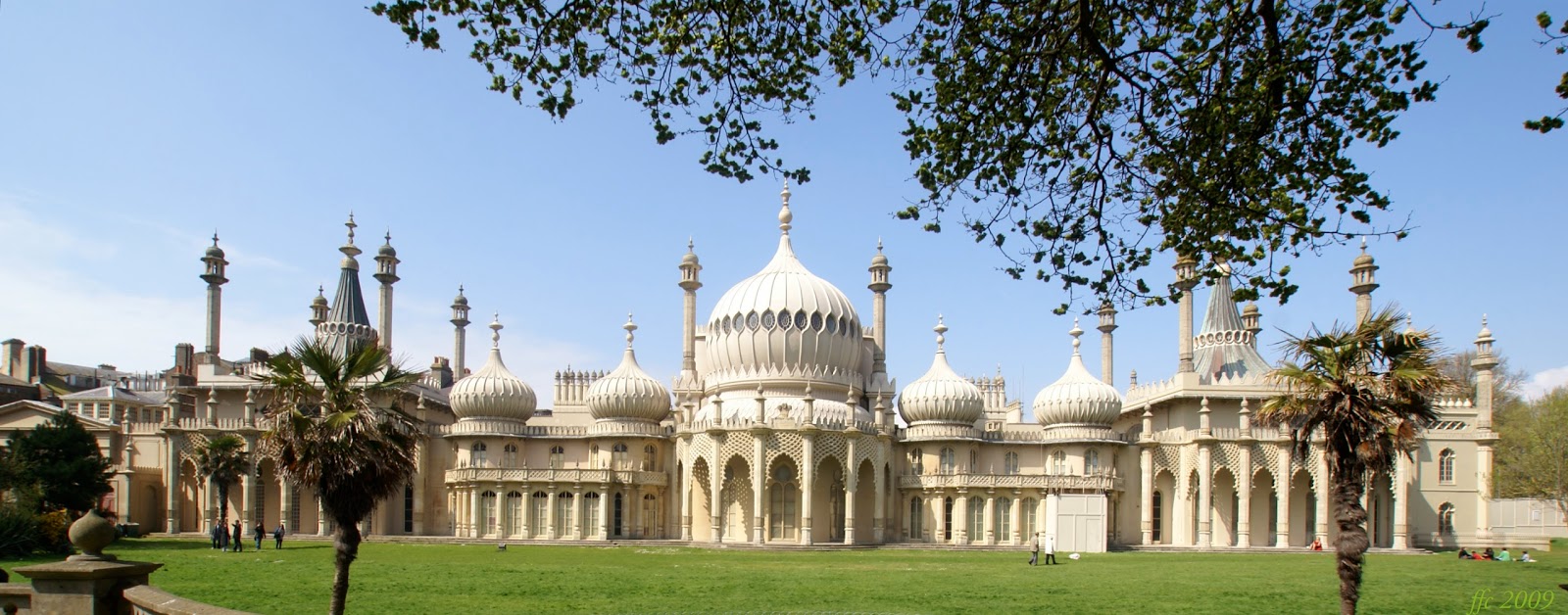
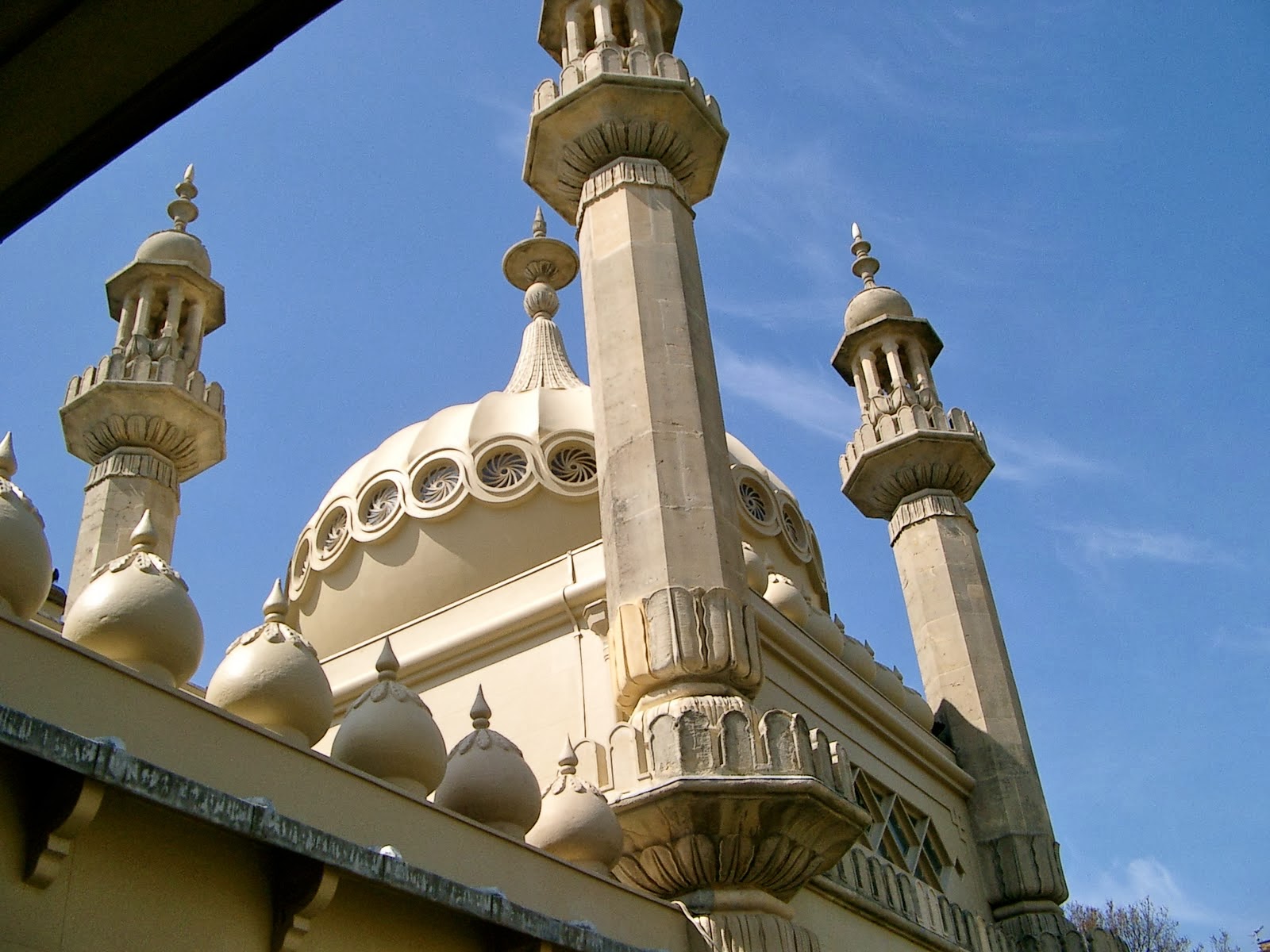
The Royal Pavilion, Brighton
 
The Wellington Tour, planned by Kristine, Patty Suchy, and me, will visit the Pavilion on September 9, 2014. For the rest of the itinerary and all the Tour details, go to:
 
We’d love to have you join us for this and other intriguing sites.
 
So what can one say about such a structure?  In its earliest incarnation, it was a simple farmhouse in the fishing village of Brighthelmstone on the Sussex coast.  In the late 18th century, the popularity of seaside spas was growing. Fashionable London came to drink the sea water and bathe in it as well.  As soon as George, Prince of Wales, later Prince Regent and eventually George IV (1762-1830) came to stay, Brighton became a center of Society.
 
 
  Prince George had a very high opinion of himself and his superior good taste.  Au contraire!  He did have taste alright, and much of it was excellent, but when it was bad, it was very, very bad. In the tradition of the Hanoverian royal family, our George and his father George III, were usually at odds in regard to almost every aspect of their lives: the King did not approve, and the more George could irritate his father, apparently the more he did it, primarily by buying and remodeling buildings, furnishing them expensively, and otherwise overspending his allowance and piling up debts. 
 
Maria Fitzherbert
 

Not to mention Prince George’s secret and illegal marriage to Maria Fitzherbert, about which his father may have known.  But this is not the place to discuss the many amours and several marriages of the Prince.  We’ve blogged about these topics before.  You might try the Forgotten Queen here or George IV’s ill-fated marriage, here.

The Marine Pavilion, Brighton; as it appeared about 1790

In the late 1780’s Henry Holland, an architect who had done considerable work on the Prince’s London residence, Carlton House, began transforming the farmhouse into the attractive house above. But it was not quite grandiose enough for the Prince, and before long, he chose architect John Nash, whose ideas matched the Prince’s in exaggerated scope and pomposity, to further alter the Pavilion.   

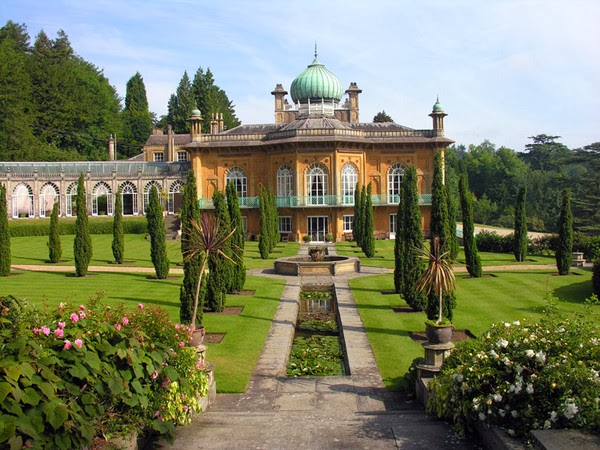
We told the story of Sezincote, the house that inspired the Prince’s fantasies,  here.

The Sezincote website is here.

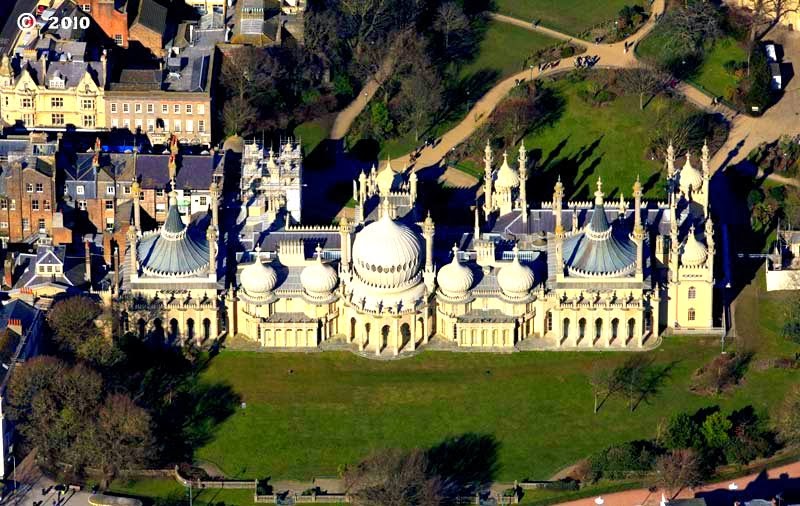
The exterior of the Pavilion is almost beyond description, definitely not pure Hindoo or Chinese, or any other of its supposed stimuli, but a sort of wedding-cake confection with a style all its own: domes, minarets, etc. etc.  One thing is for sure: you can’t ignore the Prince’s pleasure palace when you drive down the Old Steine toward the sea in Brighton.
      BTW, I believe the Steine or Steyne is pronounced Steen.

Aerial View

For the official website, click here.  In recent years, the gardens have been restored to their original splendor, or perhaps even more so.  Is that possible? Out-Georging George?  In interiors are as outré as the exterior.

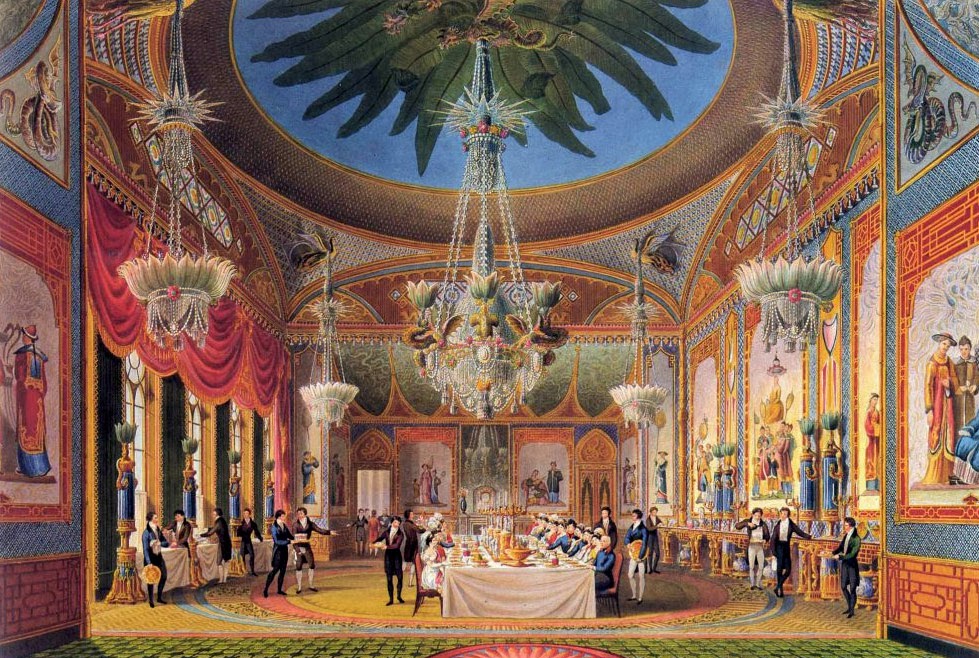
 Banqueting Room, from  John Nash‘s Views of the Royal Pavilion (1826).

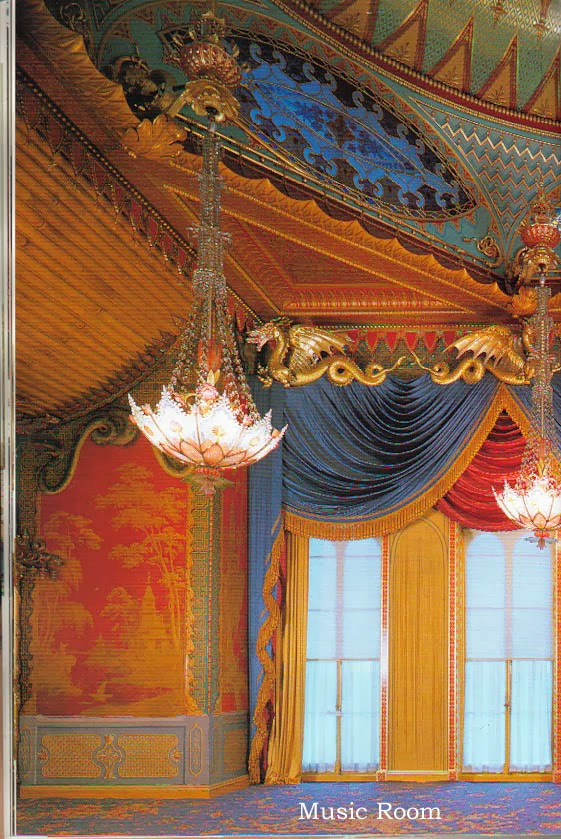
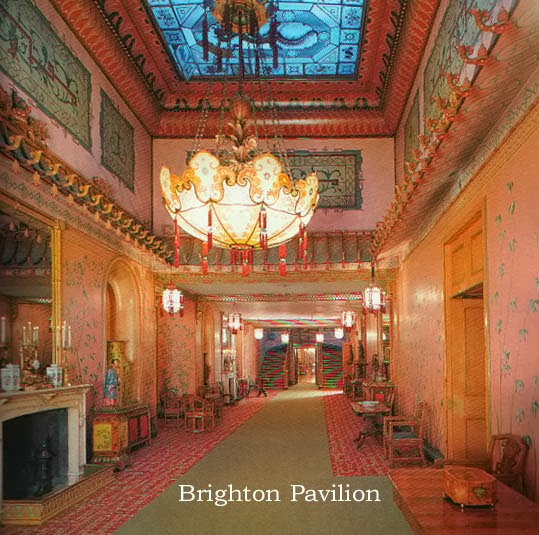
In the hopes that you will be able to join us at the Brighton Pavilion on the Wellington Tour next September, I will include some other views of the chinoiserie interiors, as a temptation.  Pictures will never quite do justice to the feast for the eye, however.

Music Room
 
The Long Gallery
 
The Banqueting Room
 
Chandelier Detail
 
The Great Kitchen
 
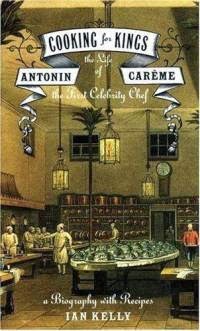
The Great Kitchen was designed with a high ceiling, for dispersal of heat and fumes, incorporated all the latest features for the creation of great banquets.  For a time, it was the “kingdom” of the great chef, Antonin Carême (1784-1833), the first celebrity chef.  Our pal, actor and author Ian Kelly, wrote a biography of Carême. For more information, click here.


The Brighton Pavilion is now owned and operated by the City of Brighton.  I suppose, after seeing the pictures above, it won’t be a surprise that Queen Victoria did not find the place to her liking.  She sold it to Brighton in 1850, though she kept many of the furnishings for use at Buckingham Palace and Windsor Castle.  Over the years, the Pavilion has been restored and developed into a popular tourist site.  Some of the furnishing have been loaned back to the Pavilion by HM The Queen.

Now here is the question, what did the Duke of Wellington think of it?  The Duke was a loyal servant of the crown and he followed George IV’s desires regarding the disposition of his personal effects after the King died.  But one can hardly imagine that the structure appealed to the Duke’s tastes any more than it did to Victoria’s. Fortunately, we have an account of the Duke’s reaction upon first seeing the Pavilion from the letters of Princess Lieven:

January 26, 1822 – “I wish you were here to laugh You cannot imagine how astonished the Duke of Wellington is. He had not been here before, and I thoroughly enjoyed noting the kind of remark and the kind of surprise that the whole household evokes in a newcomer. I do not believe that, since the days of Heliogabalus, there have been such magnificence and such luxury. There is something effeminate in it which is disgusting. One spends the evening half-lying on cushions; the lights are dazzling; there are perfumes, music, liquers – “Devil take me, I think I must have got into bad company.” You can guess who said that, and the tone in which it was said. Here is one single detail about the establishment. To light the three rooms, used when the family is alone, costs 150 guineas an evening; when the apartment is fully opened up, it is double that.”

In any case, the Duke had to spend a great deal of time in Brighton due to Royal summons, and we hope you will enjoy touring it with us.

The British Southern Belle?


By Guest Blogger Spencer Blohm

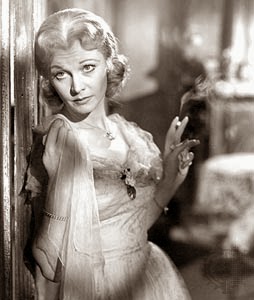
The Oscar winning actress Vivien Leigh, famous for her roles as Scarlett O’Hara in Gone with the Wind and Blanche DuBois in A Streetcar Named Desire, would have turned 100 on Nov. 5. Despite her convincing and famous performances as a Southern Belle, Vivien was actually born in British India and spent a majority of her life living in London. Let’s take a look back at the life and legacy of one of England’s finest actresses.

            Vivian Mary Hartley was born on November 5, 1913 in Darjeeling, British India to an English member of the Indian Cavalry and an Irish and Parsee-Indian mother. At the age of six, she was sent to attend the Convent of the Sacred Heart in Roehampton where she formed a friendship with another future actress, Maureen O’Sullivan. She then spent a few years attending various schools across Europe as she travelled with her father. Upon her return to England, she began her schooling at the Royal Academy of Dramatic Art. During this time she met and married Herbert Leigh Holman in 1931 and in 1933 gave birth to her daughter, Suzanne.

            Shortly thereafter she began her acting career and changed her name to Vivien Leigh. To her dismay she wasn’t deemed talented enough by her agent to do film, so she began her career on the stage. Shortly after her acting debut she starred in the 1937 play Fire Over England with Laurence Olivier. Their chemistry on stage translated off, and the two began an affair. They soon fell in love and moved in together despite the fact that neither one of their spouses would grant them a divorce.

            In 1938, the search for a Scarlett O’Hara had swept up Hollywood, and most of its actresses, in a tizzy of excitement. Vivien approached her agent and asked for his permission to play Scarlett, to which he replied that she was far too British to ever pass off being a Southern belle. However, she packed her bags for Hollywood to both visit Olivier and also attempt to get the part. Her audition and screen test were a hit and she won the role of a lifetime. However, her frequent clashes with both director Victor Fleming and her costar Leslie Howard took its toll on her, as signs of her notorious manic behavior first began to appear.


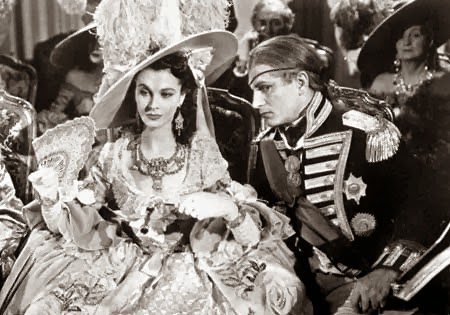
            She was able to finally marry Olivier in August of 1940 after both of their spouses agreed to divorce. That same year, she was a certified Hollywood star after the release of her critically and commercially successful film, Waterloo Bridge. Vivien and Olivier then starred in the thinly veiled pro-British propaganda film The Hamilton Woman (photo above), which was meant to stir pro-British sentiment among Americans. The film was favored by Winston Churchill, who became close personal friends with the couple. For her part in the war efforts, Vivien toured North Africa during 1943, performing for the allied troops before falling ill with tuberculosis.

        &nbs
p;  
Following a miscarriage in 1945 while filming Caesar and Cleopatra, Vivien’s bipolar disorder revealed itself to her husband, who was often the victim of her violent verbal and physical attacks. Following this, the couple began a theatrical tour in Australia and New Zealand where tensions among the couple rose as they were driven to the point of exhaustion by their schedule. However, upon her return to England, Vivien was cast in the West End production of A Streetcar Named Desire as Blanche DuBois (photo below). Soon after the play had finished its run, she was cast in the film adaptation in the same role. She earned rave reviews for her acting and secured her second Academy Award as well as a BAFTA.


In 1953, she took a role in the film Elephant Walk with Peter Finch. The two began an affair, and shortly after filming began Vivien suffered a mental breakdown and had to withdraw from the film. Her recovery took several months, during which she began working on the stage again with Laurence. However, in 1956 she suffered a second miscarriage which plunged her into a depression which lasted for months. It was during this period that her marriage to Olivier fell apart and by 1960 the couple had divorced. In his memoirs, Olivier discussed the toll that Vivien’s bipolar disorder took on their marriage and how it ultimately lead to its demise.

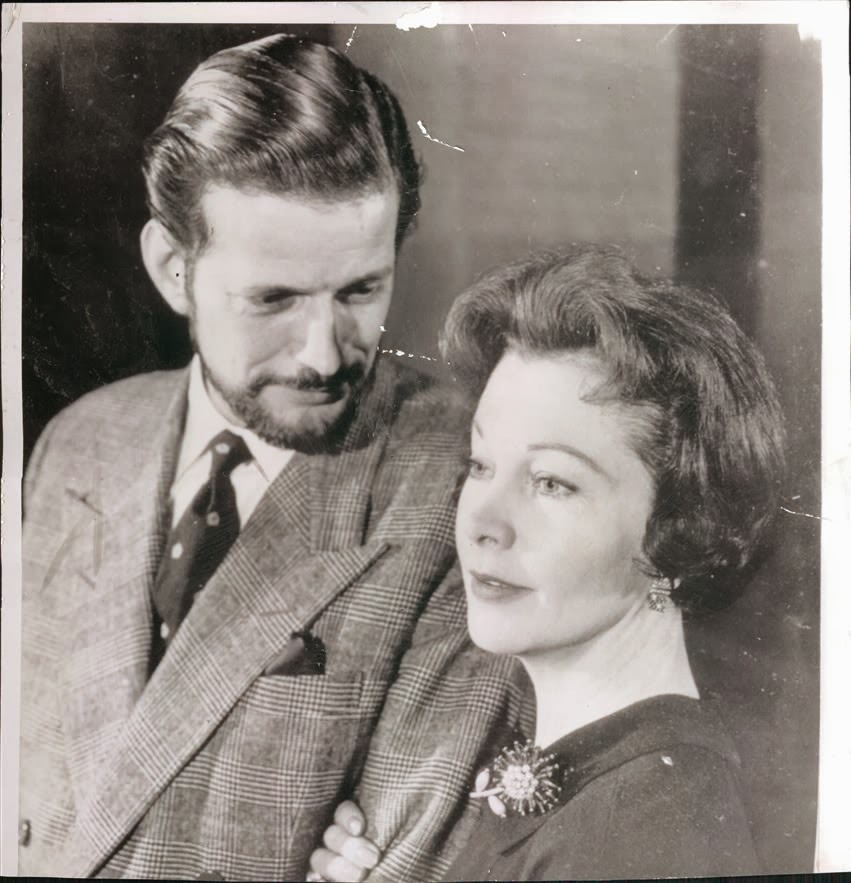
By this point she had started a relationship with actor Jack Merivale (photo below). Their relationship proved to be a calming one for Vivien, who was still enjoying success on the international theater circuit. In 1963, she won a Tony Award for her role in the musical Tovarich. She continued to balance her stage roles with film roles during the mid 60’s before she suffered from another bout of tuberculosis in 1967. She was found dead in her home by Merivale on July 7, 1967 after her lungs had collapsed.


Vivien was cremated and her ashes were scattered on the lake at her house near Blackboys, East Sussex. Her legacy lives on through the impressive body of work she produced and her incredible beauty. Although she was the perfect image of an English lady, she will always be remembered for her most successful screen roles as strong Southern belles.


About the Author: Spencer Blohm is a freelance entertainment, fashion, culture, and lifestyle author for SatelliteStarInternet.com. Despite his fascination with Old Hollywood even he was surprised that the ultimate Southern belle, Ms. Leigh, was in fact a Brit! He lives and works in Chicago where he is still mad at Scarlett for not getting of the stairs and chasing Rhett.

Victoria Visits the Wellington Arch

When we returned to London from our three-day trip — one each in Cambridge, at Houghton Hall, and at Holkham Hall, I had a busy agenda for the remaining few days of our trip.  Poor hubby Ed suffered every day from that very sore foot, aching now in addition to blisters, scrapes and — well, you get the picture.  I always gave him the option of staying put at the hotel, but he stoically limped onward.

Despite the fact that I had visited Apsley House several times, with Kristine, with Pat, my sister-in-law, and others, Ed had never been there.  So that was second on my list, just behind the Wellington Arch, which I’d never visited.  I’d walked past it plenty of times, but it had not been open before. A bit of web checking told me that the Arch recently opened exhibition space, at that time devoted to a study of the many past and current attempt to SAVE British heritage, particularly by protecting buildings and open spaces. 

The Wellington Arch website is here.

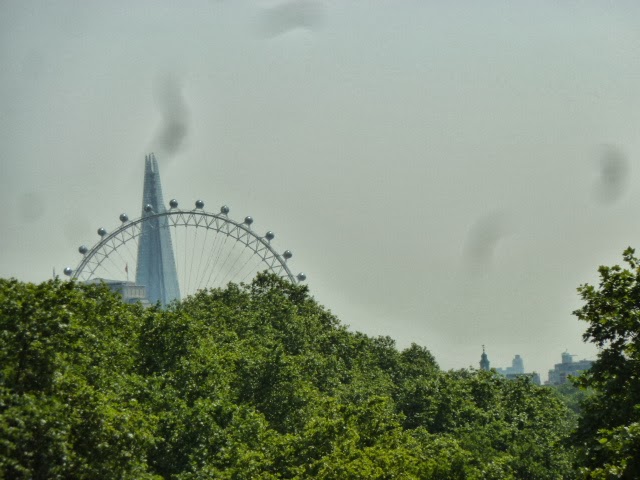
Soapbox alert!!!  It doesn’t take much beyond a glance at the London skyline to see how contemporary skyscrapers overpower and almost obliterate the beautiful early 20th century view of St. Paul’s Dome and the many graceful steeples and spires.  Okay, call me a traditionalist (Guilty!) but I wish the powers-that-be could have kept the tall buildings in groups away from the City, Mayfair and Westminster. Alas, it is far too late.

View from the Wellington Arch (including a few stray smudges)
 
I have nothing against tall buildings — I live in one.  But if they had been clustered in various neighborhoods away from the center of London, the beautiful skyline would have been preserved.  True of a few cities, Washington, D C for example.  No high rises downtown, all clustered in the surrounding communities to preserve the views of the Capitol and other monuments. End of soapbox. Please resume your usual activities.


At the height of the Roman Empire, triumphal arches were built to commemorate great events. Think of Rome’s Arch of Constantine, the Arch of Titus, and so on.  The French started building one in 1806 to mark Napoleon’s victory in the Battle of Austerlitz, but it remained unfinished for thirty years, now known as the Arc de Triomphe de l’Etoile in Paris.  Not to be outdone, the Prince Regent, later King George IV, wanted to memorialize British victory over France.
.

 
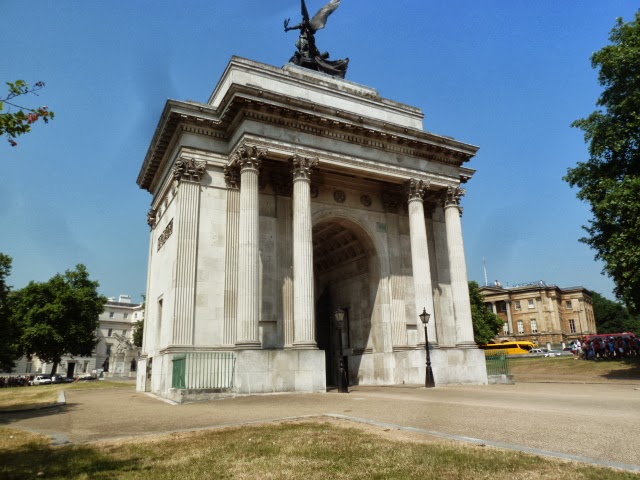
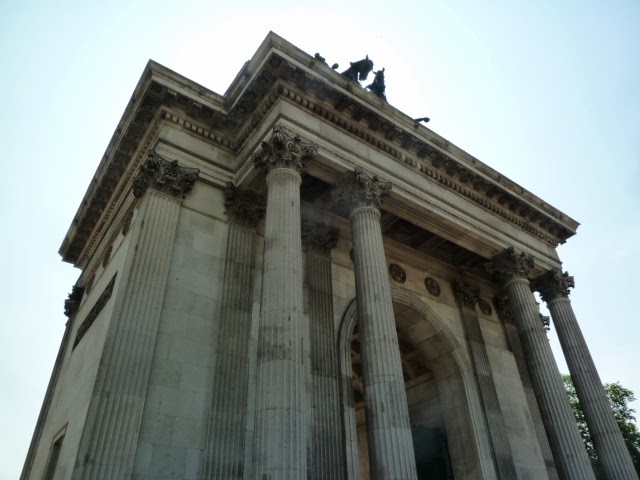
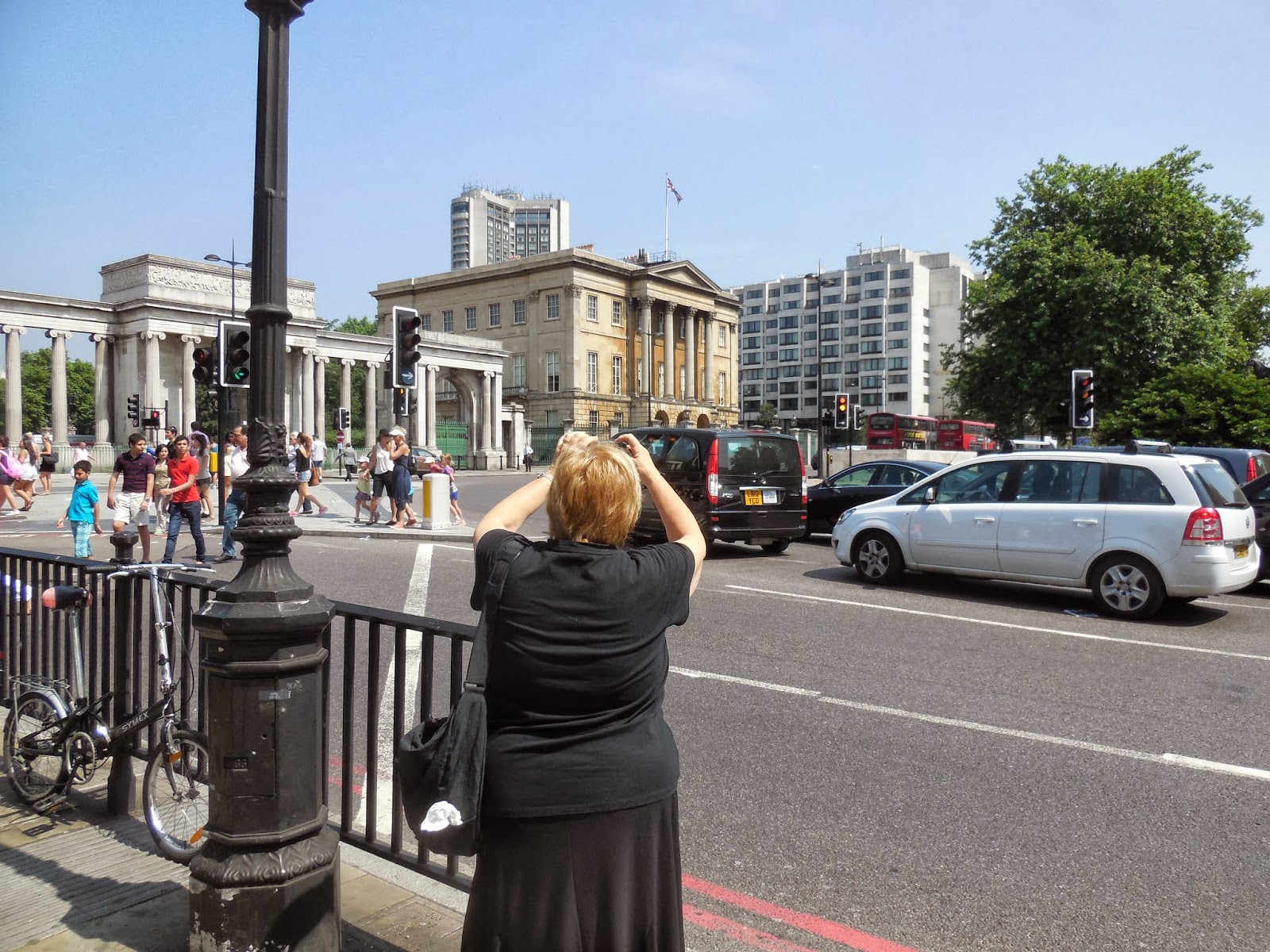
Wellington Arch; Apsley House at the far right
 
Both the Wellington Arch (aka the Green Park Arch and the Constitution Arch) and the Marble Arch were affected by political arguments over cost, design and placement in the 19th century.  Both were moved from their original positions and both stand relatively isolated in the middle of traffic circles surrounded by buses, autos, lorries and other noisy vehicles. Traffic too often trumps landscape. Whoops, soapbox again.
 
 
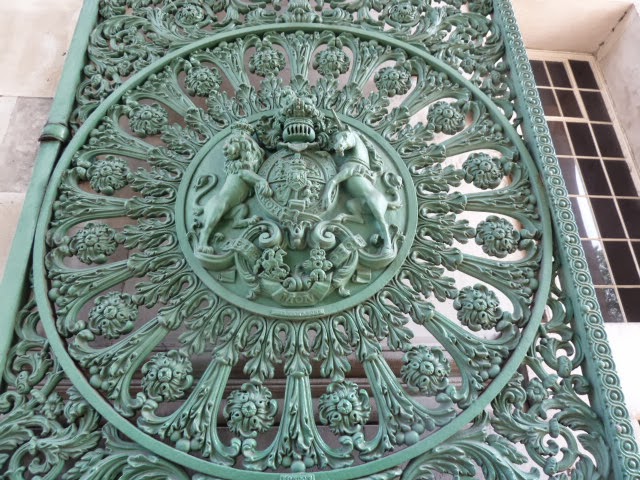
One of the gates, cast in iron by Joseph Bramah and Sons, restored recently
 
The Wellington Arch was designed by Architect Decimus Burton (1800-1881), as his name indicates, the tenth child in his family.  He worked with his father, also an architect and John Nash as well.  He also designed the Hyde Park screen next to Apsley House.
 
The Hyde Park Screen, 1825
 
 
This picture shows the screen in relation to Apsley House;
 the Wellington is Arch off the picture to the right
 
A few years ago, English Heritage took over the Wellington Arch and changed it from a small police into to a small gift shop with an exhibition space above.  There is access to the viewing balcony at the top as well, all by elevator.  Ed’s sore foot appreciated that particularly!
 
 
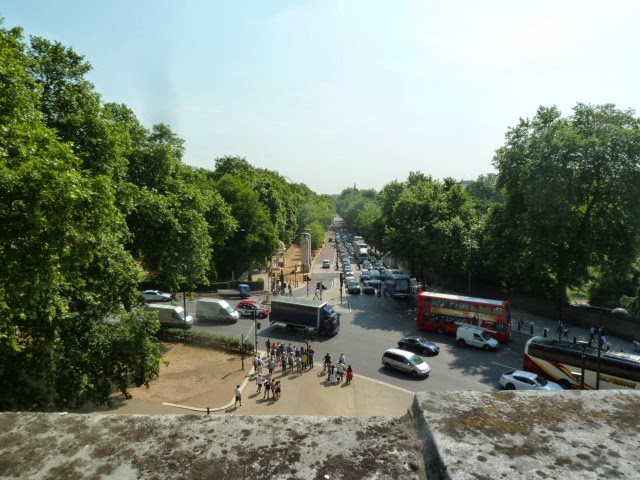
View down Constitution Hill towards Buckingham Palace
 
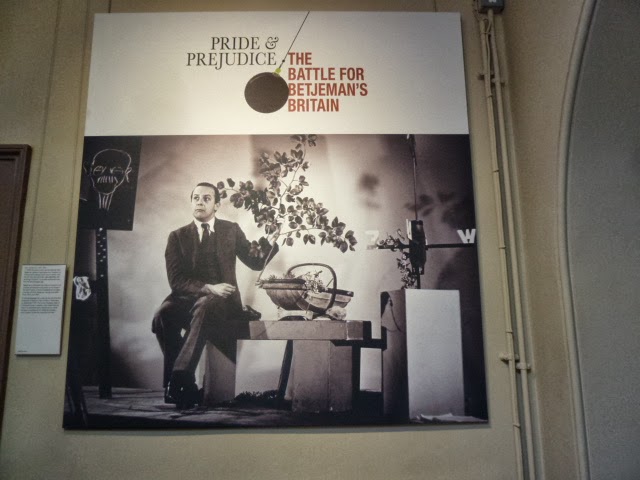
The Exhibition:  Pride and Prejudice: The Battle for Betjeman’s Britain
 
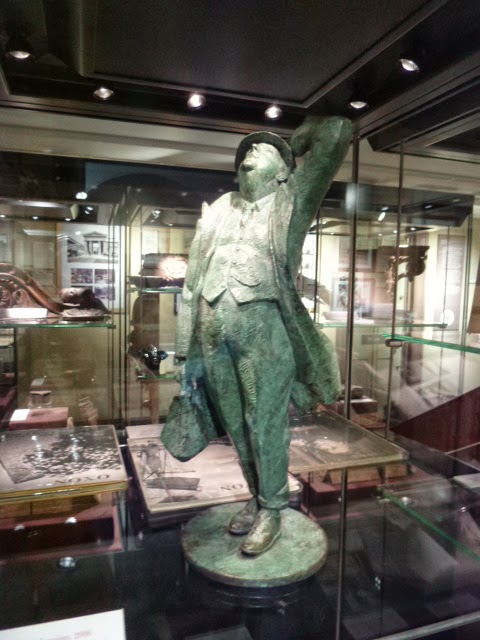
John Betjeman (1906-1984) was Britain’s Poet Laureate in addition to being a popular radio and tv commentator and an avid campaigner for the protection of architectural heritage.  Below, the maquette for his statue located in St. Pancras Station, one of the buildings he successfully fought to save.
 
John Betjeman (maquette) by sculptor Martin Jennings, 2006
 
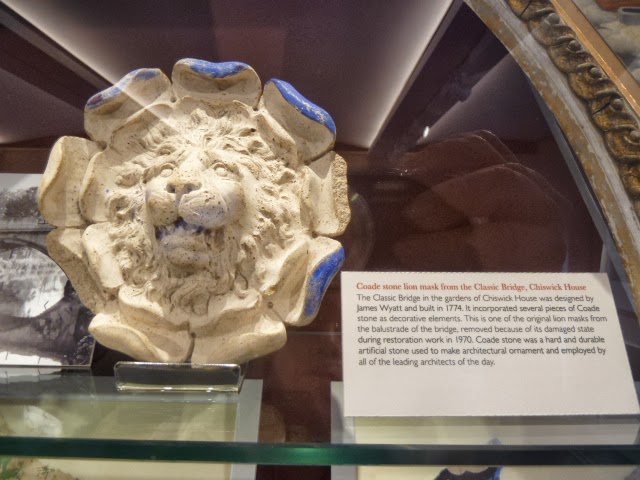
Coade Stone Lion Mask
 
The rosette above came from the Classic Bridge at Chiswick, designed by James Wyatt in 1774;
Coade Stone is artificial, often used by leading architects for statues and ornaments.
 
 
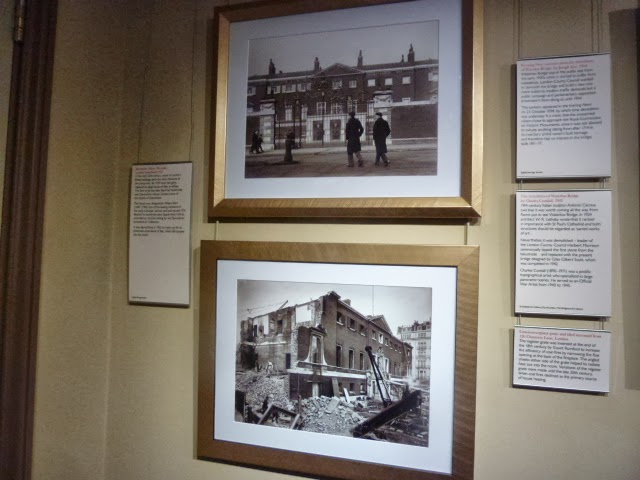
Devonshire House, before and during demolition
 
For more information on this exhibition, click here
 
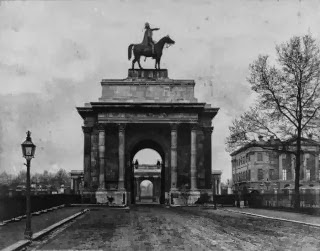
A group hoping to honor the Duke of Wellington erected a gigantic equestrian statue on top of the arch in 1846.  Being out of all proportion to the arch, the statue caused great criticism and even laughter.
 
view, about 1860
 
In 1882-83, The arch was dismantled and rebuilt in its present traffic-bound position. The Statue was moved to Aldershot (after much discussion) where it can be seen today.
 
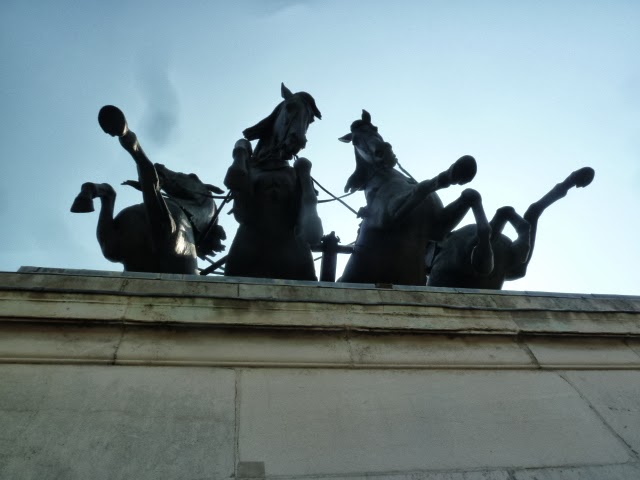
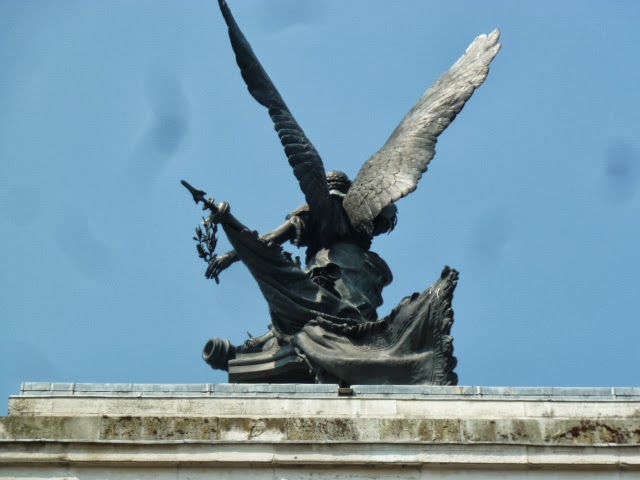
A few years later, in 1899, Adrian Jones (1845-1938) designed the Quadriga, four horses driven by a boy and crowned by the Angel of Peace.  It was completed in 1912.


From the front and from the back
 
 
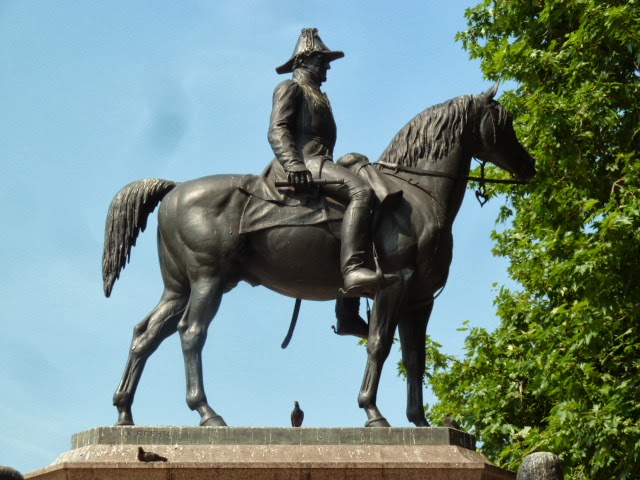
Wellington on Copenhagen holding his telescope
 

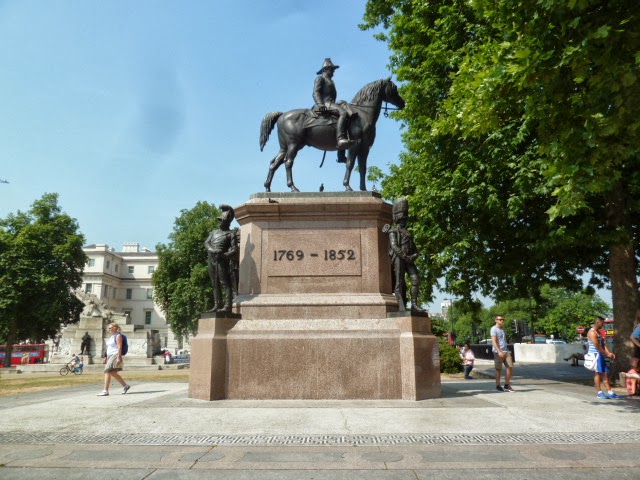
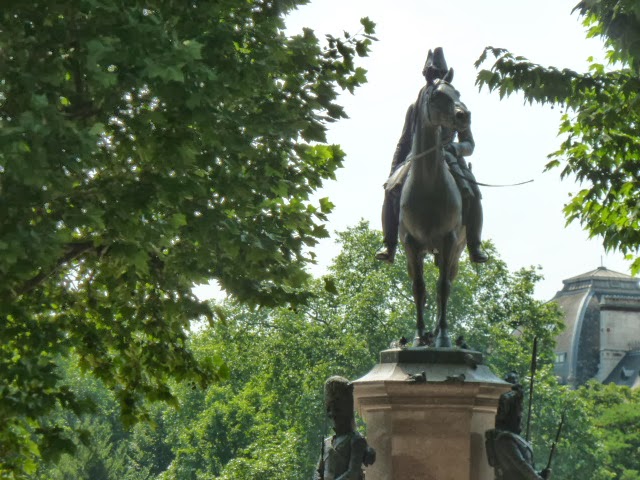
 Erected in 1888, the statue on the Arch grounds, across the road from Apsley House, was sculpted and cast in bronze by Sir Joseph Edgar Boehm (1834-1890).  Boehm was a favorite artist of the royal family and a teacher of sculptress Princess Louise, Duchess of Argyll (1848-1939), Queen Victoria’s fourth daughter.

 
The figures at the four corners of the red granite plinth are guardsmen from
Wellington’s troops: a Grenadier, a Welsh Fusilier, a Royal Highlander, and an Inniskilling Dragoon.


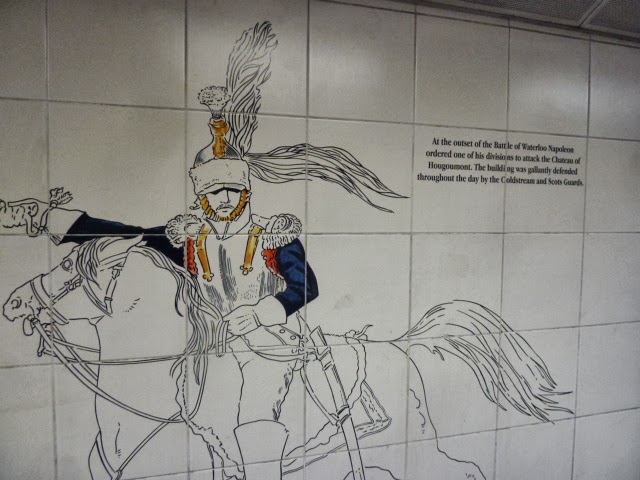
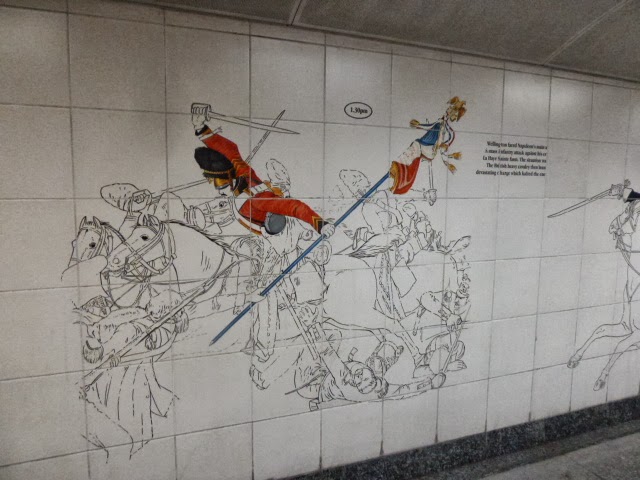
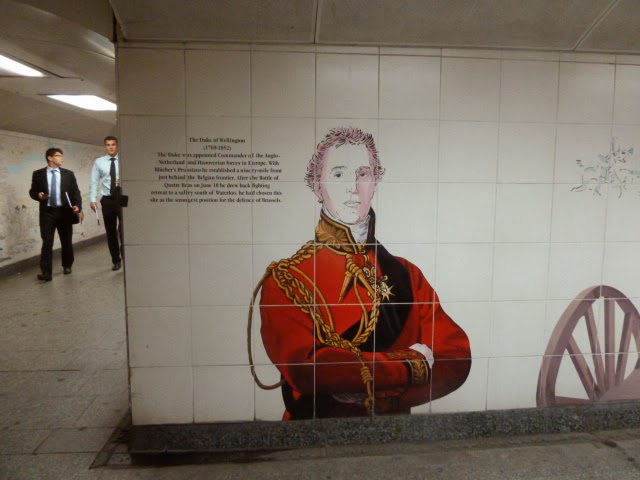
As I mentioned before, the Wellington Arch and the equestrian statue stand in the middle of a traffic circle, joined to the adjacent streets and the Hyde Park C
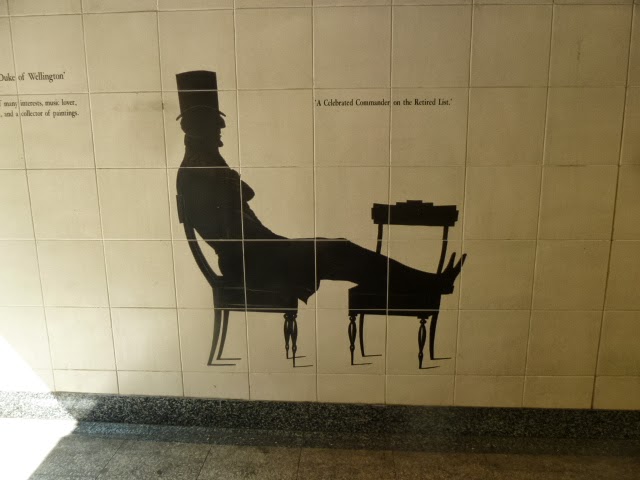
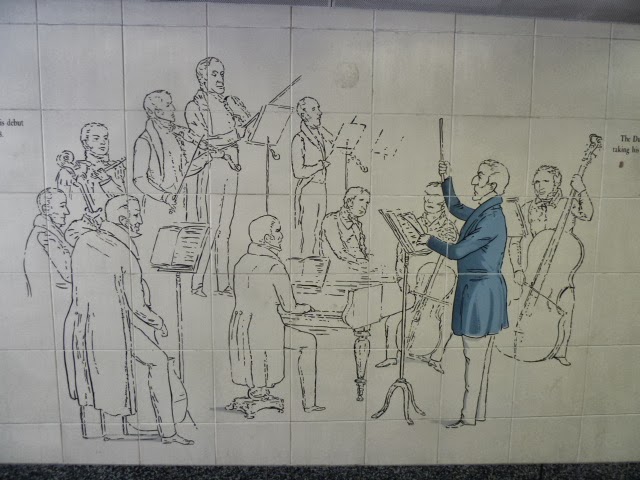
orner Tube stop by underground walkways.  The white tile walls are decorated with scenes of Wellington and his troops.  Below, a few examples as we walked — or I walked and Ed limped — to visit Apsley House.


 Next, Victoria and Ed visit Apsley House

The Magnificent Waterloo Chamber: The Wellington Tour

Victoria here, inviting you to join Kristine and me on The Wellington Tour, 4-14 September, 2014.  For details on our planned itinerary, costs and other info, click here.  Among the features of the tour is a visit to Windsor Castle and especially to its Waterloo Chamber.

Windsor Castle from the Thames
 
The Waterloo Chamber was constructed within the Castle to commemorate the victory of the Allied Armies over the French in the Battle of Waterloo, June 18, 1815.  Architect Sir Jeffry Wyattville (1766 – 1840) created the Chamber in 1824 out of several existing rooms. Parliament designated £300,000 for the project. Like most of King George IV’s inspirations, it ran well over budget, eventually costing about £1,000,000.  Wyattville also remodeled many other areas of Windsor Castle for George IV, William IV, and Queen Victoria; he was buried in the Castle’s St. George’s Chapel in 1840.
 

 Watercolour of the Waterloo Chamber in 1844 by Joseph Nash
 
 
Waterloo Chamber, currently
 
For a virtual tour of the entire Waterloo Chamber, click here.
 
Arthur Wellesley, 1st Duke of Wellington
Commander of the Victorious Allied Armies
 
The walls of the Waterloo Chamber are  filled with large portraits of the leaders of the Allied efforts.  Most of them are painted by Sir Thomas Lawrence  (1769-1830), the Regency era’s favorite artist.  Many were reproduced several times by his studio for numerous placements in other palaces, stately homes and distinguished galleries.
 
Prussian General Gebhardt von Blücher
Wellington’s Comrade-in-arms at Waterloo
Sir Thomas Lawrence 1816
 
The Prince Regent (later George IV) commissioned Lawrence to paint all the Allied Sovereigns, military leaders, and statesmen.  Lawrence traveled around Europe to complete the portraits.
 
Austrian Field Marshal Karl Philipp, Prince of Schwartzenberg,


Alexander I, Emperor of Russia (1777-1825)
painted by Sir Thomas Lawrence, 1818
 
According to the Royal Collection Website, “While working on the portrait Lawrence altered the position of the legs, much to the consternation of the Tzar and those courtiers attending the portrait sitting, especially when for a while the sitter was shown with four legs.”  Obviously, this condition was  corrected!
 
Pope Pius VII, 1819-20
 
The portrait of Pope Pius VII (1742-1823), painted in Rome, is widely agreed to be Lawrence’s masterpiece, both incisive and sympathetic.
 
While heads of state and leading generals were depicted full length, politicians and statesmen were honored with 3/4 length portraits, perhaps putting them in their place? 
 
  Viscount Castlereagh
Sir Thomas Lawrence, 1830
 
Robert Stewart (1769-1822), Viscount Castlereagh, later second Marquess of Londonderry, served as Secretary of State for War 1805-09, and  Foreign Secretary 1812-1822
 
 
Robert Banks Jenkinson, 2nd Earl of Liverpool
 
Robert Banks Jenkinson (1770-1828), 2nd Earl of Liverpool was Prime Minister from 1812 to 1827, and also preceded the Duke of Wellington as the Lord Warden of the Cinque Ports, about which more soon!!
 
In the words of the Windsor Castle guidebook, “Most of the twenty eight portraits were delivered after his [Lawrence’s] death on 7 January 1830. By this time work was already begun of the space of the Waterloo Chamber created by covering a courtyard at Windsor Castle with a huge sky-lit vault; the room was completed during the reign of William IV (1830-7)…the arrangement which survives to this day: full-length portraits of warriors hang high, over the two end balconies and around the walls; at ground level full-length portraits of monarchs alternate with half-lengths of diplomats and statesmen.”


The limewood carvings on the walls were removed from the former Royal Chapel before it was demolished in the 1820s.  The carvings date from the 1680’s, the work of renowned artist Grinling Gibbons.  According to the Castle Guidebook, “The Indian carpet was woven for this room by the inmates of Agra prison for Queen Victoria’s Golden Jubilee, finally reaching Windsor in 1894. Thought to be the largest seamless carpet in existence, it weighs two tonnes. During the 1992 fire it took 50 soldiers to roll it up and move it to safety.”
 
  Which brings up a sorrowful subject, the terrible fire of eleven years ago.
 
20 November, 1992
 
Extensive damage resulted from the fire though the Waterloo Chamber was only slightly damaged, due to the thickness of the walls.  Other areas were destroyed and eventually repaired.  To pay for the
£36.5 million repairs, the Queen opened  the State Rooms of Buckingham Palace to the Public, but only when she is in residence elsewhere.
 
When you tour Windsor Castle with Kristine and me, you will see the renovated areas and where the fire burned.  And we will view the Waterloo Chamber — and all the State rooms, most of them still very much as they were when redone for George IV by Sir Jeffry Wyattville.
 
Again to access more information on the Wellington Tour, go to


.