SWAN UPPING: AN ANNUAL EVENT

Every year the swans on the Thames River are caught, examined, and tagged in an annual census conducted by the Royal Swan Keepers and the Vintners’ and Dyers’ Livery Companies.  The process will begin on Monday, July 14, in Sunbury and end on Friday July 18 at Abingdon, Oxon.

David Barber, The Queen’s Swan Marker, hopes to find an increase in the number of cygnets:
“There have been reports of many successful breeding pairs with larger broods than normal, which is extremely positive news after several years of decreasing cygnet numbers…All cygnets and parent birds are checked for injuries during Swan Upping week and treated accordingly.”

Since the 12th century, the Crown owns all mute swans in the Realm, though the Queen only asserts this right on parts of the Thames. Long ago, swans were a delicacy on the dining table, but they are no longer eaten.

 In 2009, for the first time in centuries, the monarch observed Swan Upping.

Here is the official announcement for 2014.

Download a copy of the Swan Upping educational booklet here

The History of Swan Upping and a video explaining the annual ceremonies is here

More  history of Swan Upping is here.

Victoria here, bringing you some pictures of royal mute swans.  I took these a while ago.

Playing tag with the ducks?
 
 
Way too rude to be royal!
 
The swans in the picture above were gathered at the dock of the Thames Cruise Boats, hoping for a handout.  This Thames Cruise, perhaps complete with swan swarms, will be one of our final activities on the Duke of Wellington Tour, September 4-14, 2014.  Limited space remains and the final day for sign-up will be July 31.  But don’t wait. 


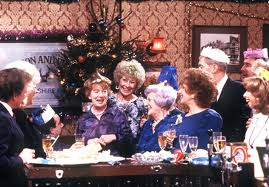
HELP! I'M ADDICTED TO CORONATION STREET- PART 2

As you may know, I’ve posted before about my Coronation Street addiction. Thanks to Auntie Corrie on YouTube, I’ve been able to start watching Coronation Street from 1976 on. I’m now up to the later part of 1988 and Auntie Corrie’s playlists are done – help! Of course, I could go on to the many websites that play later episodes – 2000 to present, say, but that’s the whole of the 90’s missed. Aaarrgggh.

And I’ve got to say, I’ve had too much to deal with already without missing out on an entire decade of Corrie.

Hilda’s gone!
Brian’s dead!

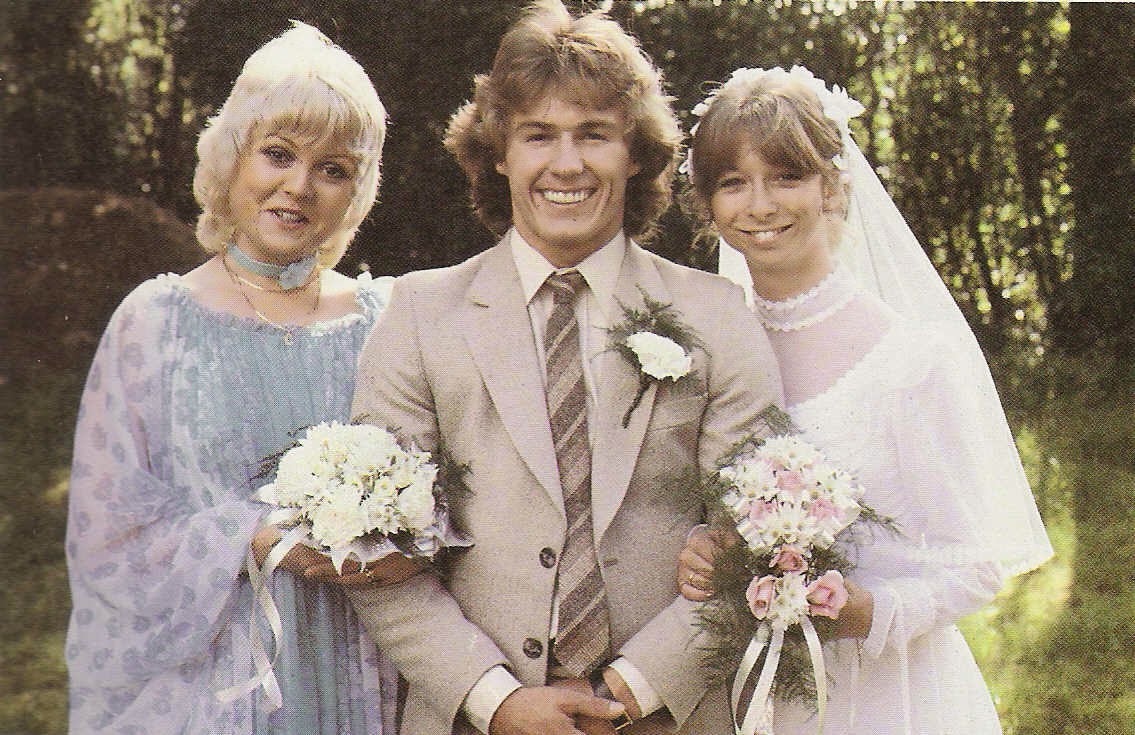
Bet’s married!

And there’s more – Ivy’s nuts! Gail’s with Martin! Mavis is married to Derek! Mike Baldwin’s still a cad!

All this may go some way to show why I’m dragging Victoria off to the wilds of Manchester whilst we’re in England for the Duke of Wellington Tour so that I can visit the tour of the Coronation Street set.

Is anyone else a Corrie fan? If so, please leave a comment here and let me know which decade of Corrie is your favorite.

Gorron, you know you’re a Corrie fan.

What are ya?

THE WELLINGTON CONNECTION: STRAWBERRY HILL

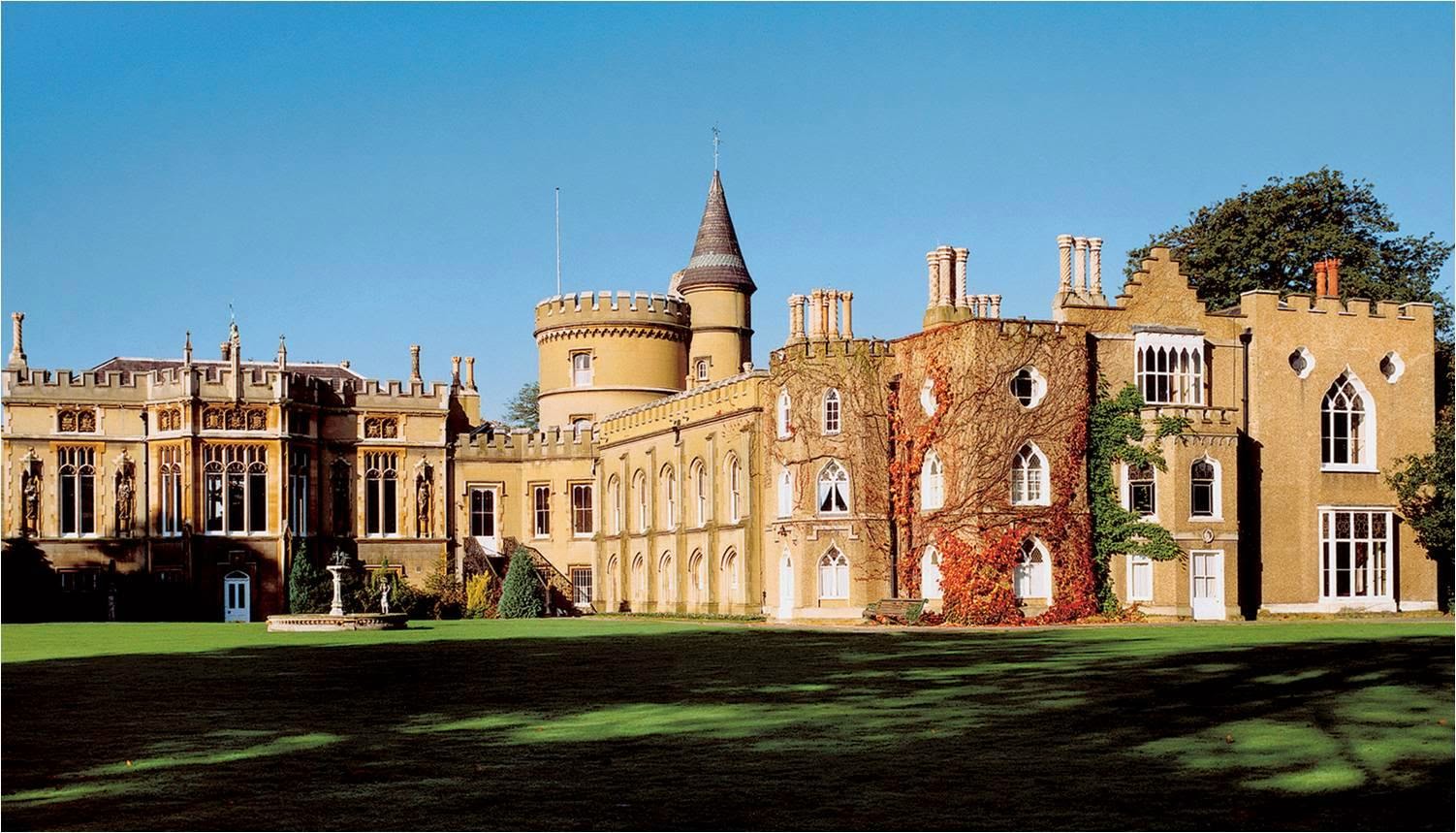
Strawberry Hill

From the Journal of Mrs. Arbuthnot, July 8, 1822

            Went to see Strawberry Hill with the Duke of Wellington, Lady G. Fane, my two girls and some men; it is a curious place, very much in the state in which it was left by Horace Walpole, very dull and shews a good deal of bad taste; but still I should have liked to have had more time to examine it. There are some curious pictures and statues in the house, the grounds are not particularly pretty and not well kept. We returned to Richmond to dinner and came back, as we went, by water. The day was beautiful and the banks of the river between Richmond and Twickenham are like fairy land.

Vicky has also visited and there are several posts on Strawberry Hill from the past; you can find them using the Search This Blog box located in the left hand sidebar.

SIR JOHN SOANE'S MUSEUM EXHIBITION: PEACE BREAKS OUT

During the summer of 1814, the Prince of Wales, as Prince Regent, planned a series of celebrations in London to mark the victory of the Allies over Napoleon — a temporary victory it turned out to be, but nonetheless, after so many years of war, everyone was eager to celebrate.  Napoleon had surrendered and was sent off to exile in Elba. The Prince Regent invited the heads of the Allied governments to London, but it did not turn out exactly as he wished. The guests often had ideas of their own for entertainment and some of the great fireworks displays turned into conflagrations, though the crowds viewing the extravaganzas did not seem to mind.

Czar Alexander of Russia came with his sister, the Grand Duchess of Oldenburg, who was rather obstreperous to say the least.; Prussian Field Marshal Blücher and Austrian Chancellor Prince Metternich, among others came to town and were feted by the Prince Regent and many, many others. 

A view of the Temple of Concord, in the Green Park; erected for the Grand Jubilee in Celebration of the Peace 1814. Artist: Augustus Charles Pugin; Ackermann Print, 1814 © Museum of London

Not only were there great celebrations in London. many eager tourists flocked across the Channel to enjoy the sights of Paris after the twenty years of war with France.  It needs no spoiler alert to point out that the Peace did not last until Napoleon escaped from Elba, had his Hundred Days, and lost at the Battle of Waterloo, June 18, 1815, a year later.  The second time, the Allies sent him farther away, to St.Helena.

Sir John Soane’s Museum, one of my favorite spot in London, is holding an exhibition, beginning June 20, 2014, on the results of that first peace in 1814. 

Peace Breaks Out! London and Paris in the Summer of 1814

20 June – 13 September 2014

Their website can be found here.

The museum describes their exhibition:  “In the summer of 1814 celebrations were held in London and across Britain on the occasion of the signing of the Treaty of Paris on 30 May. The treaty saw peace return to Europe after some twenty years of conflict with the exile of the Emperor Napoleon to Elba and the restoration of the Bourbon monarchy. The various events staged across the United Kingdom were the first such nation-wide celebration to mark a significant event – such as the Treaty.”


According to the museum, “The exhibition will include material from a private collection as well as material from the Soane. Soane was involved in the celebrations held for the official guests invited to London. He then travelled to Paris as soon as the peace of 1814 made such trips possible for British travellers (he made another, similar journey in 1819).  As one contemporary writer put it, the summer of 1814 saw: ‘the English popping across the Channel like champagne corks released from a bottle, eager to visit a country that had been so long out of bounds…’as one author has put it. The Paris that confronted them was one of marked contrasts between the splendours of its architecture, the metropolitan pleasures that it offered and the destitution of many of its inhabitants caused by two army occupations.”

Sir John Soane by Sir Thomas Lawrence

Here is further information from Dr Jerzy J. Kierkuć-Bieliński, Exhibitions Curator at Sir John Soane’s Museum:  “The Peace of 1814 and the subsequent congress of Vienna in 1815, after the final defeat of Napoleon at Waterloo, laid the geo-political framework of the European Empires that would dominate the Continent and much of the globe up to the outbreak of the First World War. The Allies who celebrated the signing of the Treaty as guests of the Prince Regent in London, would, almost exactly one hundred years later face each on the battlefields of Europe – this time as enemies. In many ways, to understand the origins of the First World War, one has to look at the events of 1814 and the false promise of lasting peace that it offered”

I am looking forward to visiting the exhibition this summer.  You can follow Sir John Soane’s Museum on Facebook here.

VIDEO WEDNESDAY


INSIDE NATURE’S GIANTS: THE HORSE

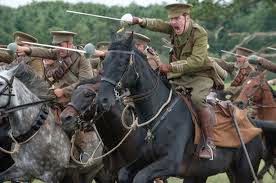
There is perhaps no creature more beautiful than the horse, nor a creature that has done so much to change the way humans live. In this episode of Inside Nature’s Giants, the history and evolution of the thoroughbred horse is explored – the thoroughbred on the track, at labor and in war. 


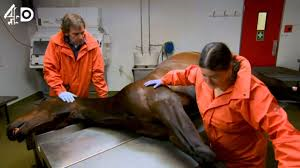
Also explored is just how the horse is able to run at such speeds and to maintain such stamina. How is the horse engineered? The physical make up of the horse is deconstructed to answer these and other questions. Did you know that a horses’ hoof is actually its’ finger? 


If you love horses, if you write about horses, if you’re awed by the beauty and power of the horse, I recommend that you watch this hour long documentary. 


Warning: Graphic content – portions of this documentary depict the deconstruction of a horse for purposes of anatomical explanation. If such a thing can be termed “tasteful,” this demonstration qualifies. At all times, the animal is treated with respect, and awe, by the veterinary surgeons, anatomists and pathologists performing the operation.