ONCE AGAIN WEDNESDAY: Who Wants to be (or look at) a Horse’s Behind?

by Victoria Hinshaw

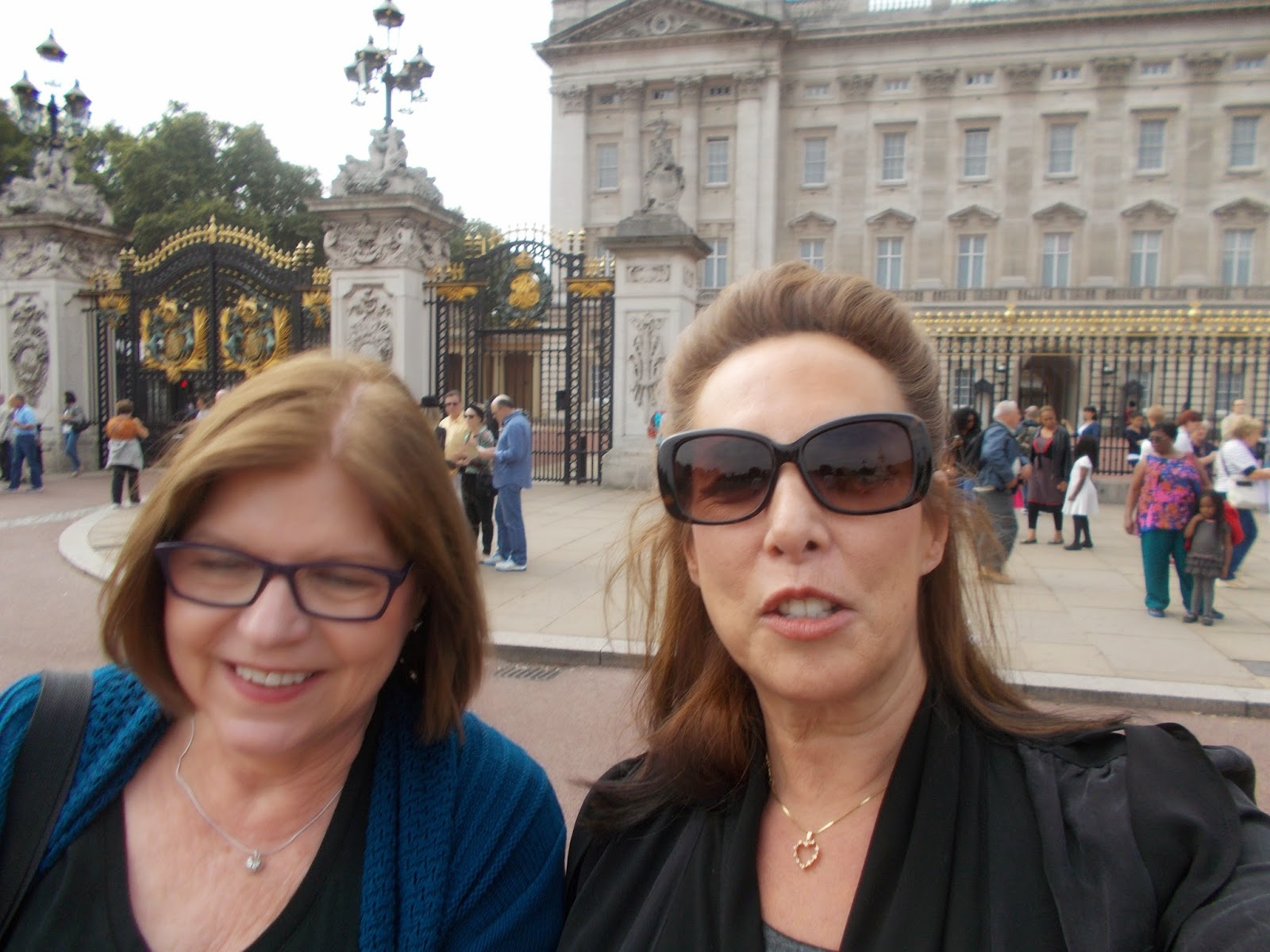
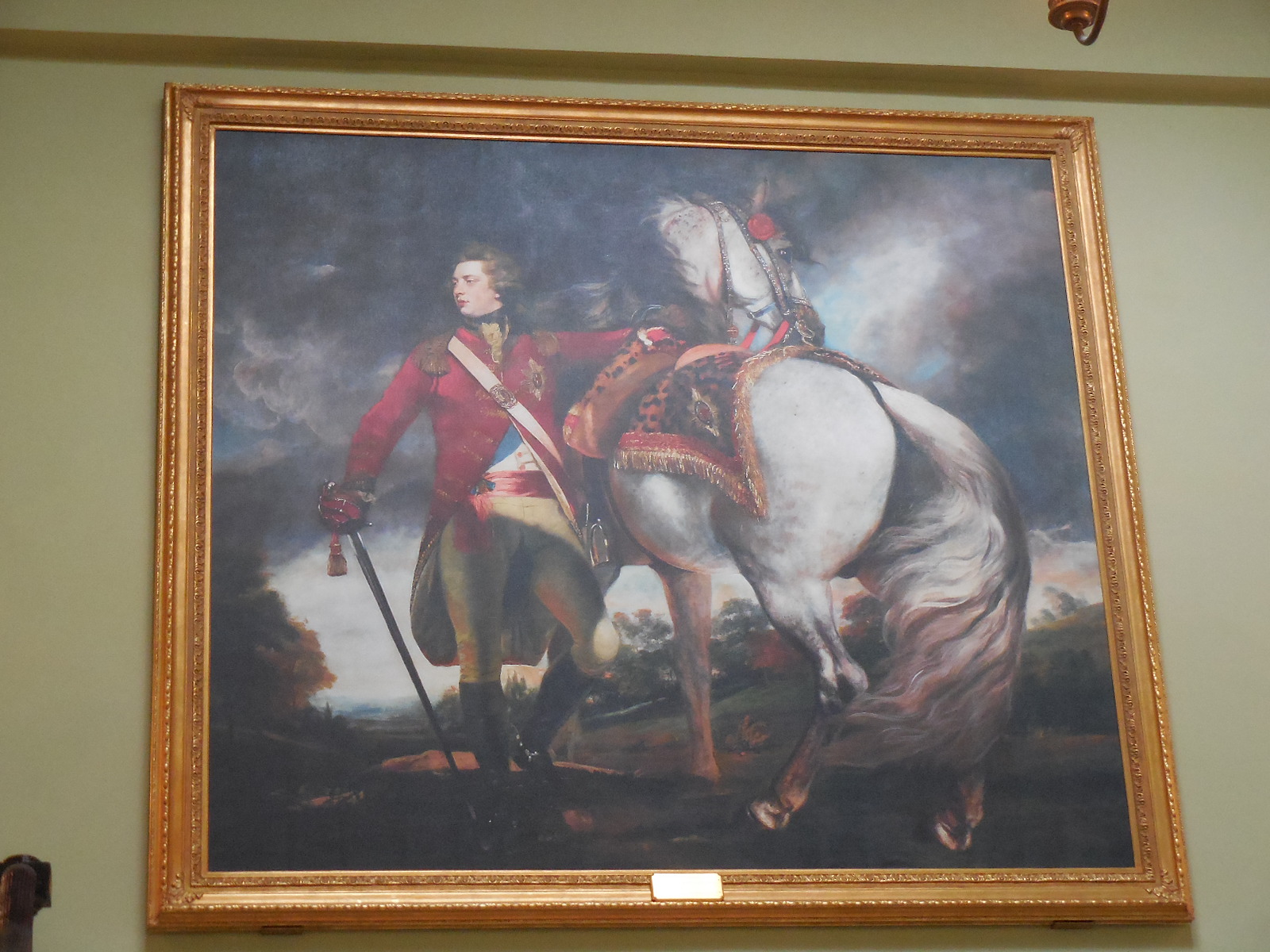
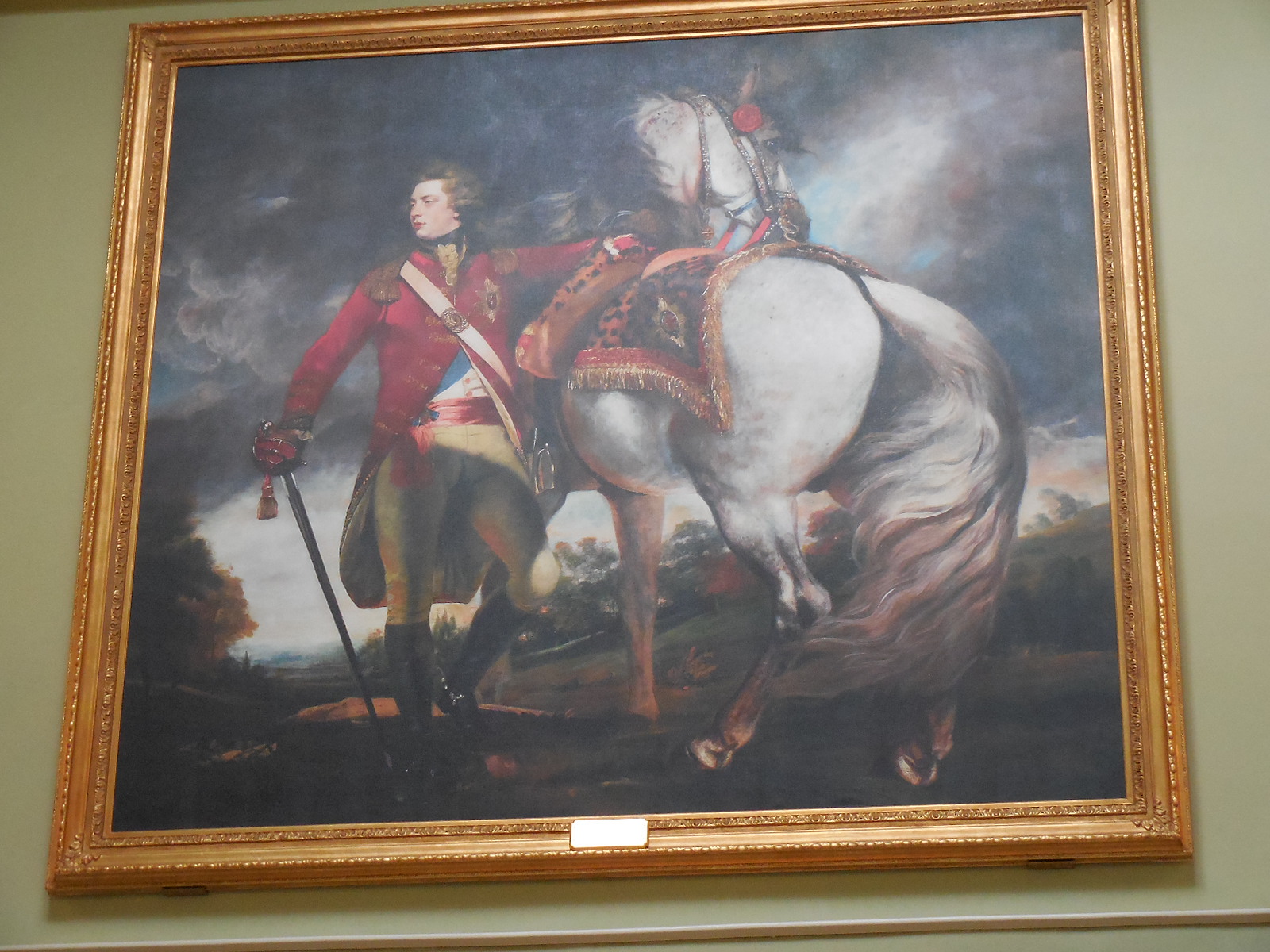
On our post-Wellington tour jaunt around London, Kristine and I found another copy of the painting discussed below as appearing in the 1995 Pride and Prejudice film as it hangs in Brocket Hall, Hertfordshire, depicting George, the Prince of Wales, and his horse’s behind.  It hangs in the Theatre Royal Drury Lane.


An engraving of the painting also appears in “What Jane Saw,”  a digital recreation of an exhibition at he British Institution in Pall all in 1813.  Click here to see the website and click again on the picture itself to read the description.
 

Originally published April 2010

In May of 2009, my husband and I visited Brocket Hall, formerly the home of Lord Melbourne, now part of a golf complex. The house, in excellent condition, serves as a venue for corporate events and weddings. Brocket is located near Hertford and Hatfield just north of London. Part of the original land of the adjacent country homes of the London wealthy has been developed into Welwyn Garden City.


The ballroom in Brocket was used for the interiors of Netherfield, the home rented by Mr. Bingley, in the 1995 BBC version of Jane Austen’s Pride and Prejudice. In the picture above, you see Mr. Darcy and Elizabeth leading the country dance. In the far background, you can barely make out a portrait of George, Prince of Wales, standing beside the rump of his horse. The painting, by Sir Joshua Reynolds, was presented to Elizabeth, Lady Melbourne (mother of the Prime Minister), who reputedly was the mistress of the Prince for a time.

Here is another view of the painting behind Mr. Darcy.

I laughed when I saw this painting, a copy of which I have been unable to locate on any website pertaining either to the Prince of Wales (later George IV) or Sir Joshua Reynolds.

The pose reminded me of a famous view of George Washington by Gilbert Stuart. A version of this painting hung in the Elgin Academy Art Gallery where I played at my piano teacher’s annual recital for her students and their parents. There are other versions of the Stuart portrait, chiefly belonging to the Boston Museum of Fine Arts.  I have always wondered how many of my fellow performers looked up in the middle of their playing to be faced with that horse’s . . . ah . . .tail.


George Washington by Gilbert Stuart
Since those youthful days, the question has arisen in my mind — why paint the rear end of the horse so prominently? In my search of the web for a copy of the Reynolds portrait above, I found some discussions of this exact point. But no one had a definitive answer. Someone suggested that the rear of the horse was a comment by the artist on the character of the subject. One writer said Stuart was not good at painting horses. Another said that men were so portrayed because they were prepared to jump on the horse and take off — being in a position on the horse’s left easily to reach the stirrup. Anyone have any views on this world-shattering question?
The Marquis of Granby, by Sir Joshua Reynolds

Above is another example. This is General John Manners, Marquis of Granby, who was painted by Reynolds in about 1765. He died before he succeeded to the title of Duke of Rutland. This painting hangs in the Ringling Museum of Art in Sarasota, Florida. The General was a popular figure, hence many pubs in England named The Marquis of Granby.

Above, another painting by Gilbert Stuart. The subject is Louis-Marie, the vicomte de Noailles (1756-1804), who fought with the Americans during the Revolution. He returned to France but was driven out after their revolution and moved to Philadelphia in 1793. He was a banker and a friend of Washington, neither of which explains why he is standing next to his horse’s rump.

Here is my final example, a portrait of Arthur Wellesley, the Duke of Wellington. It hangs at the country home of the Duke, Stratfield Saye.

I welcome any comments, clues, or links to additional poses of generals (or anyone) with their horses’ rumps.

OPEN HOUSE 2014: THE ARGENTINE AMBASSADOR'S RESIDENCE IN BELGRAVIA

OPEN HOUSE 2014: THE ARGENTINE AMBASSADOR’S RESIDENCE IN BELGRAVIA

For those of you reading on-line novel Belgravia by Downton Abbey’s Julian Fellowes, this will give you a few peeks at the neighborhood to supplement the material in the app.

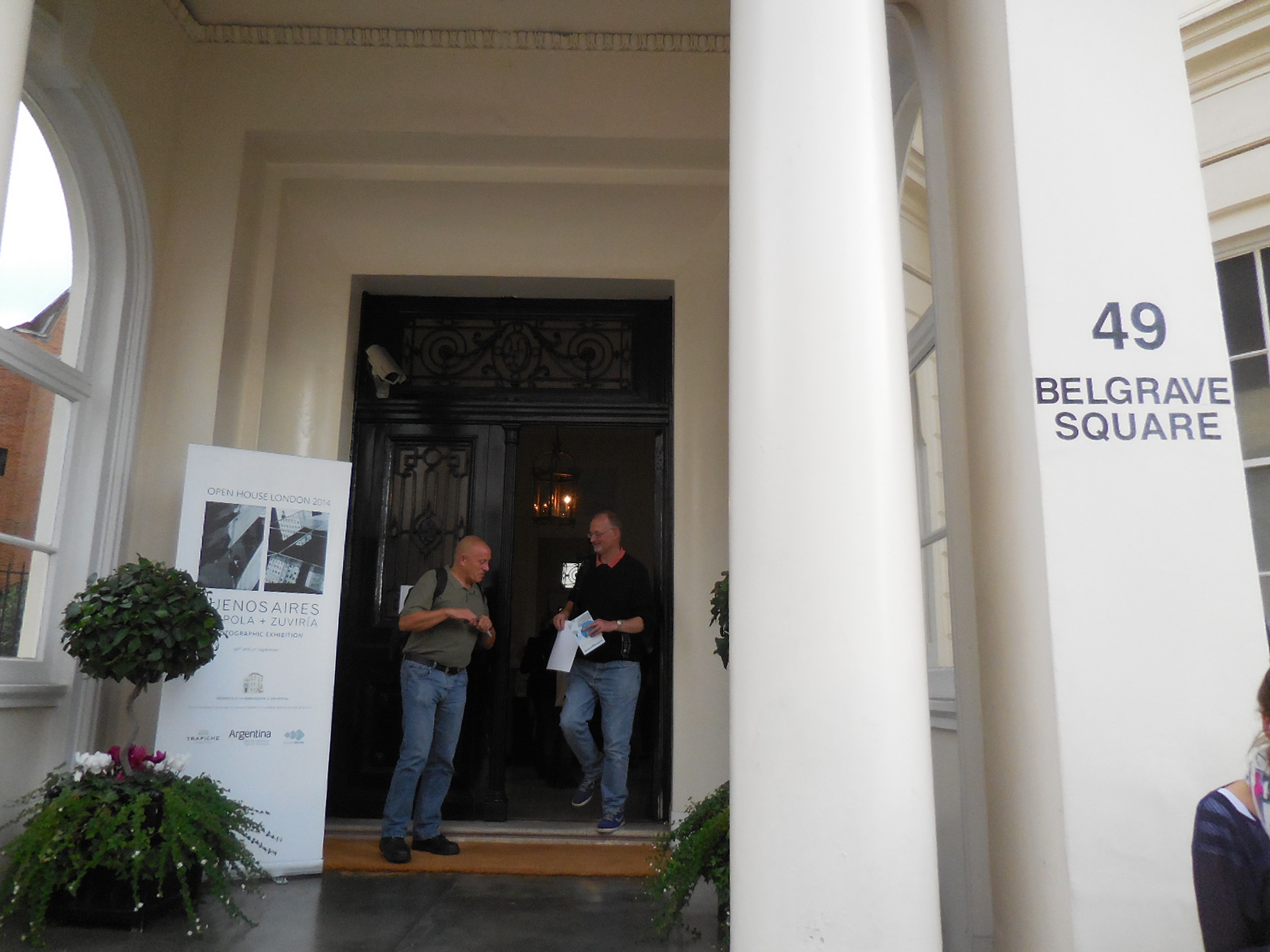
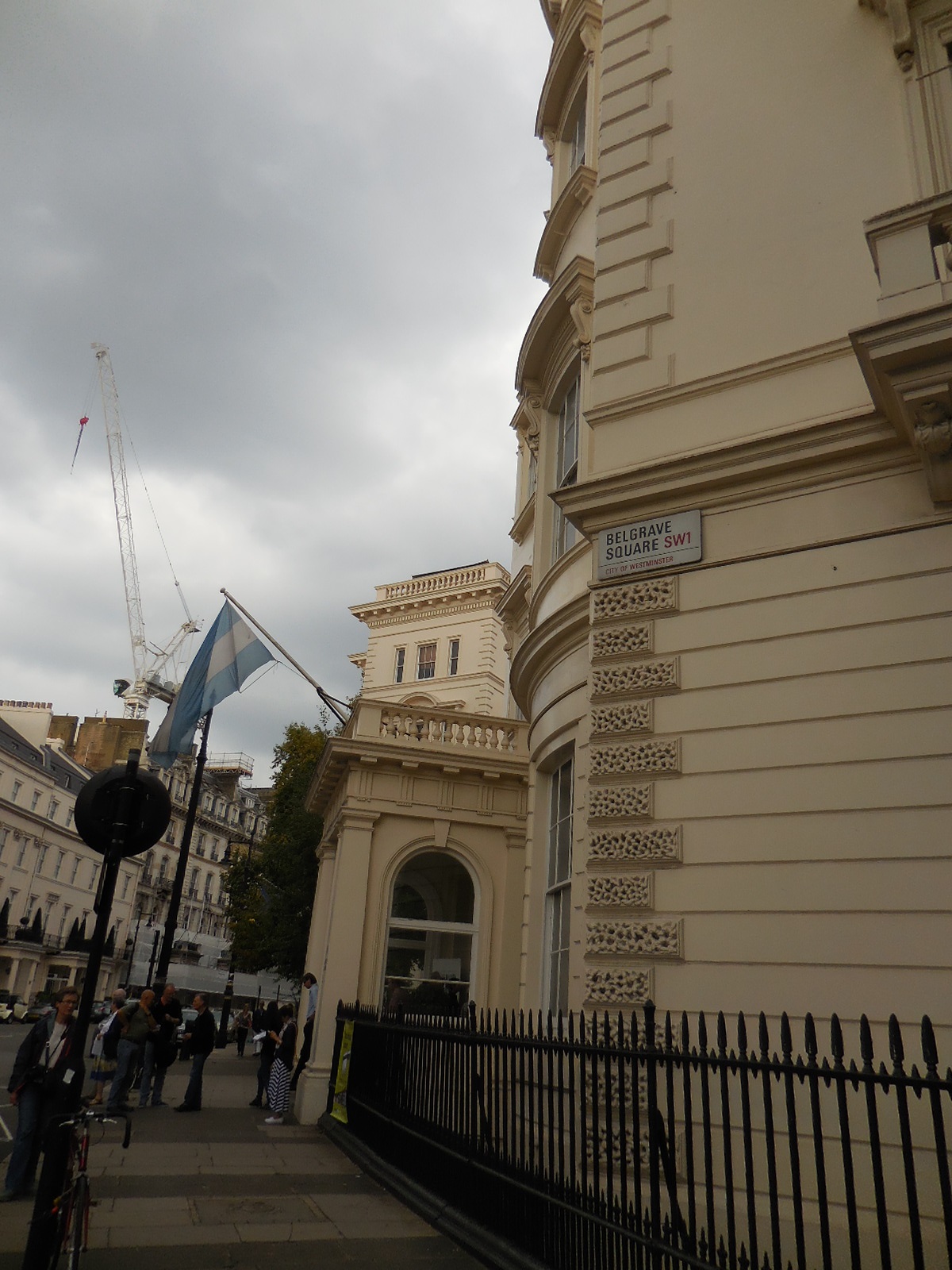
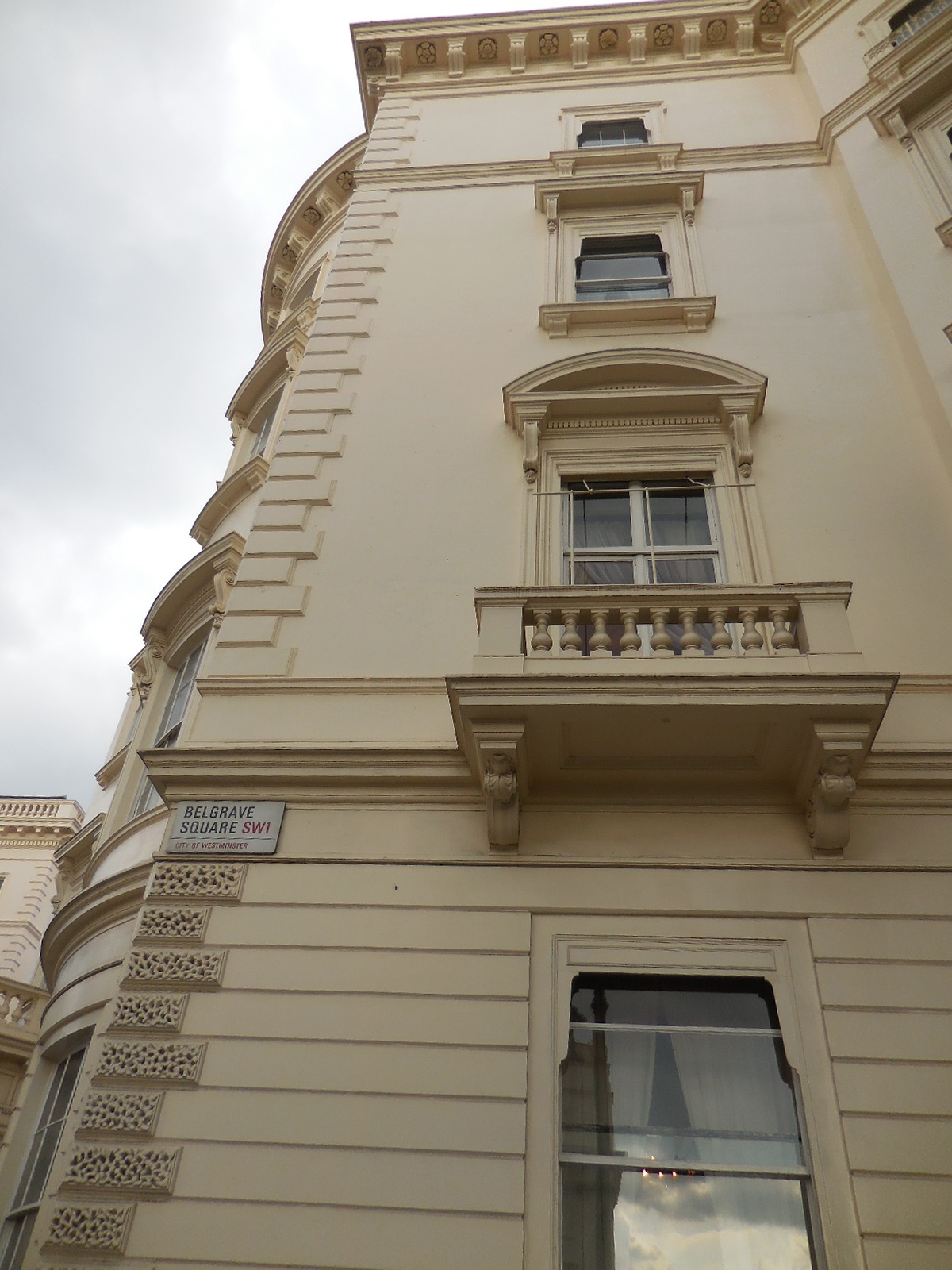
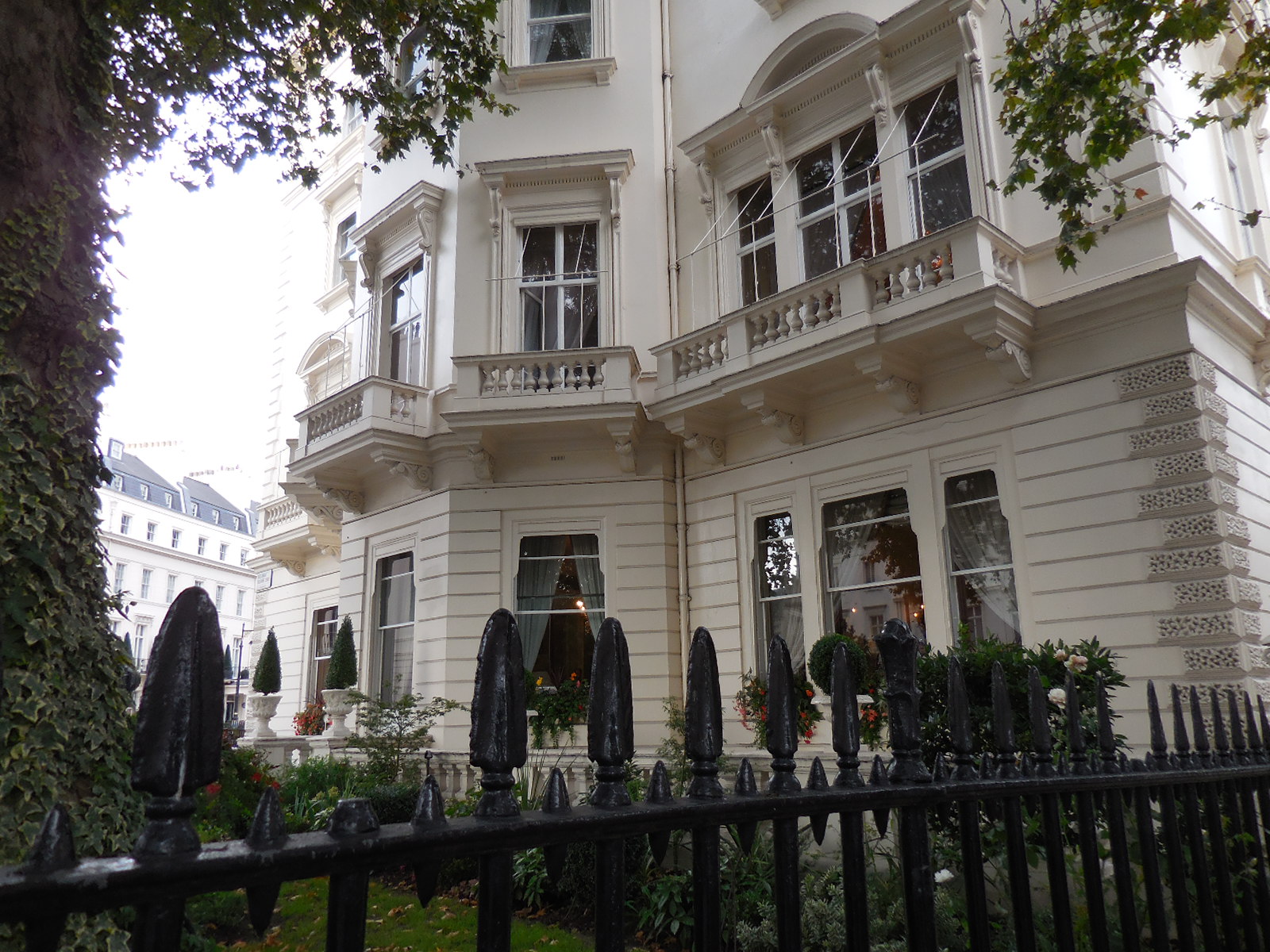
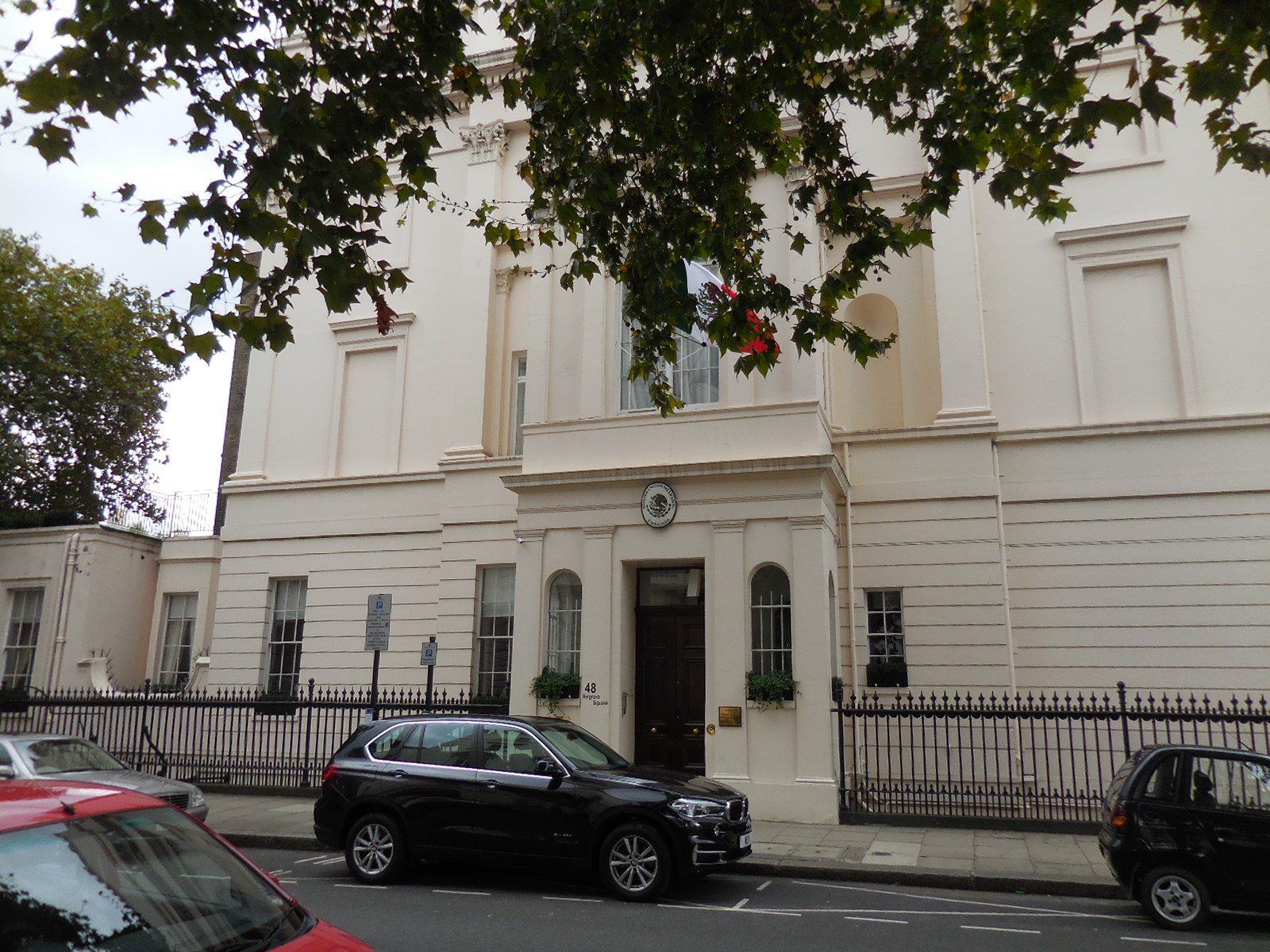
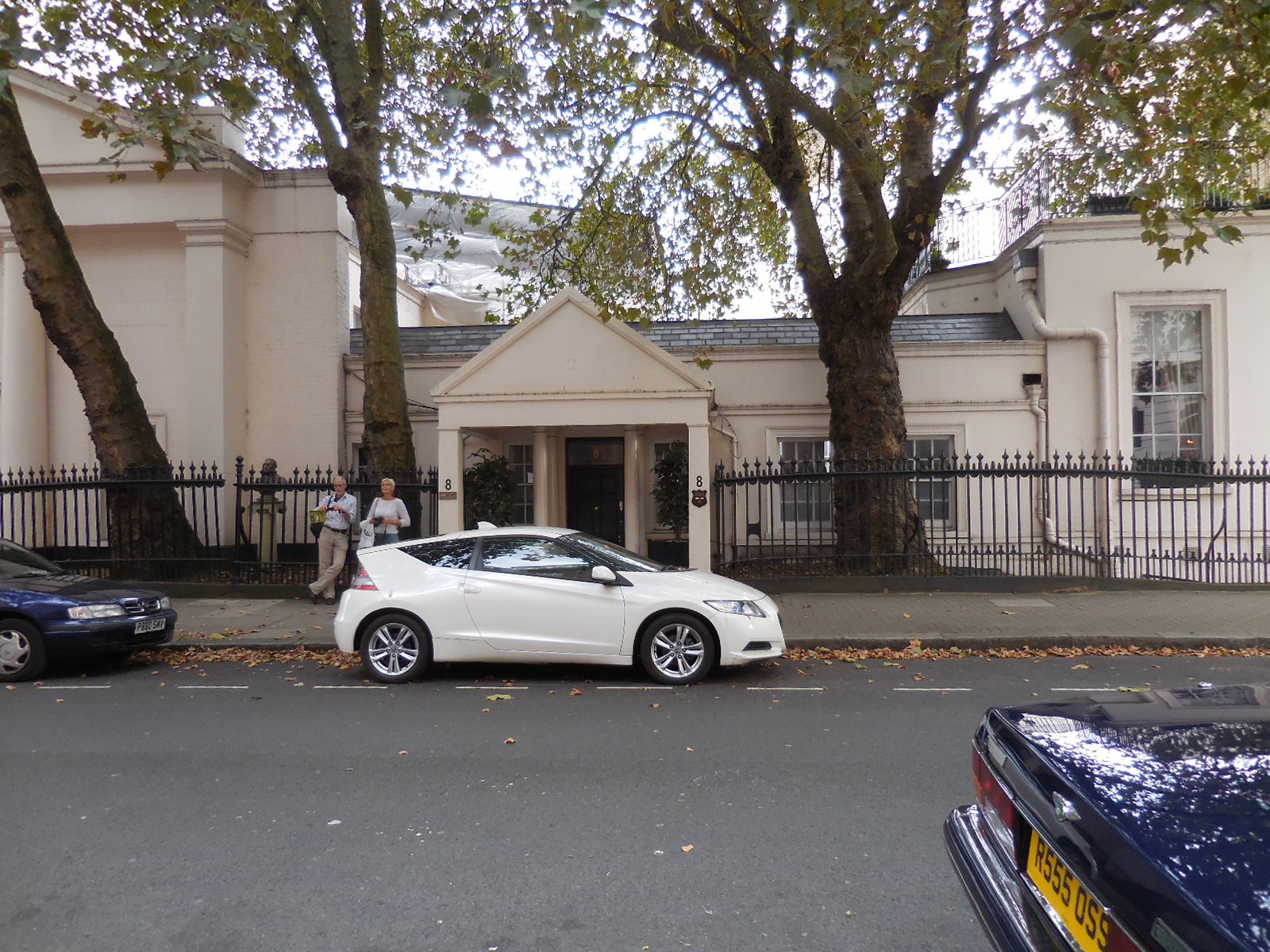
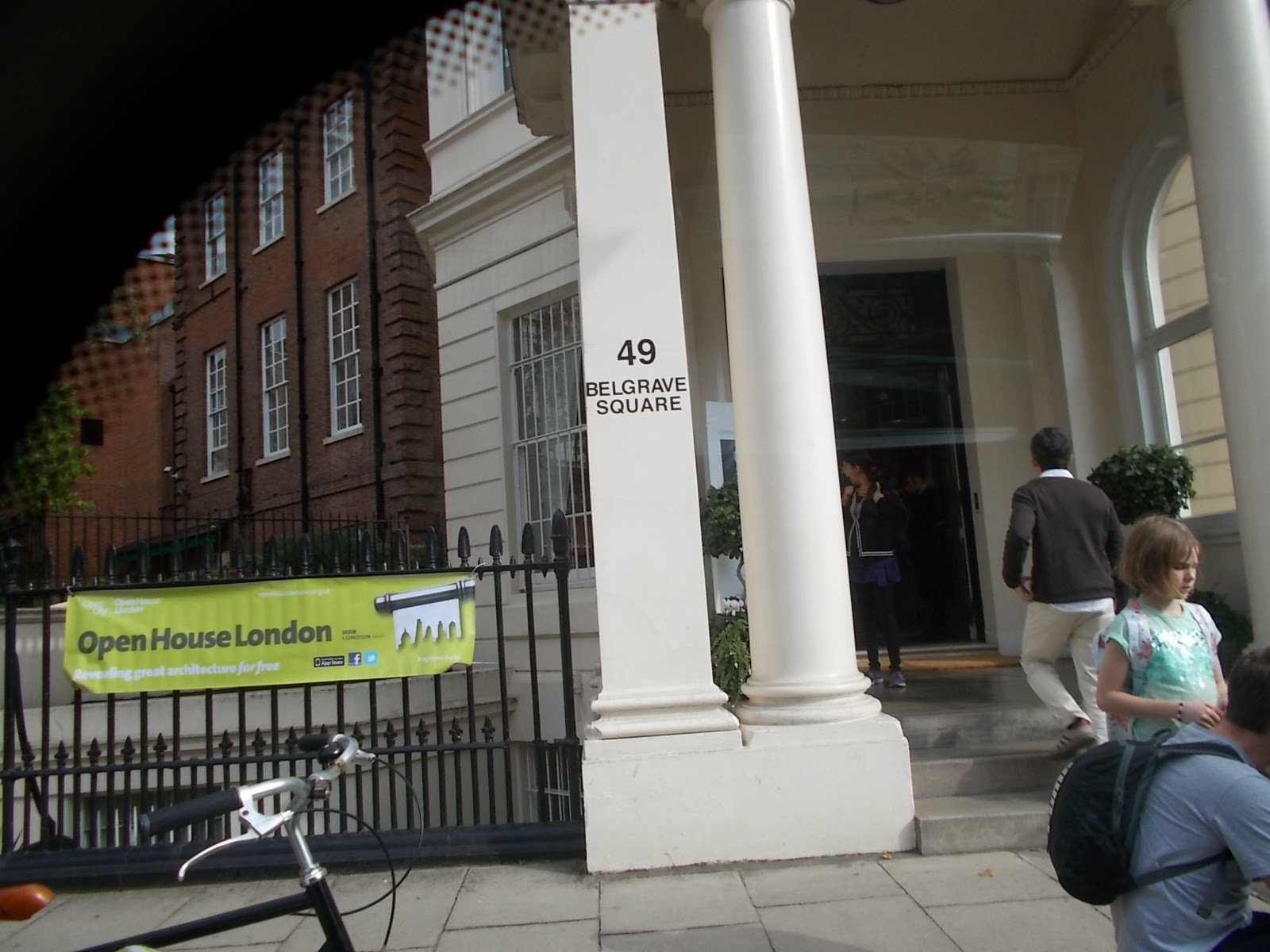
Entry of 49 Belgrave Square
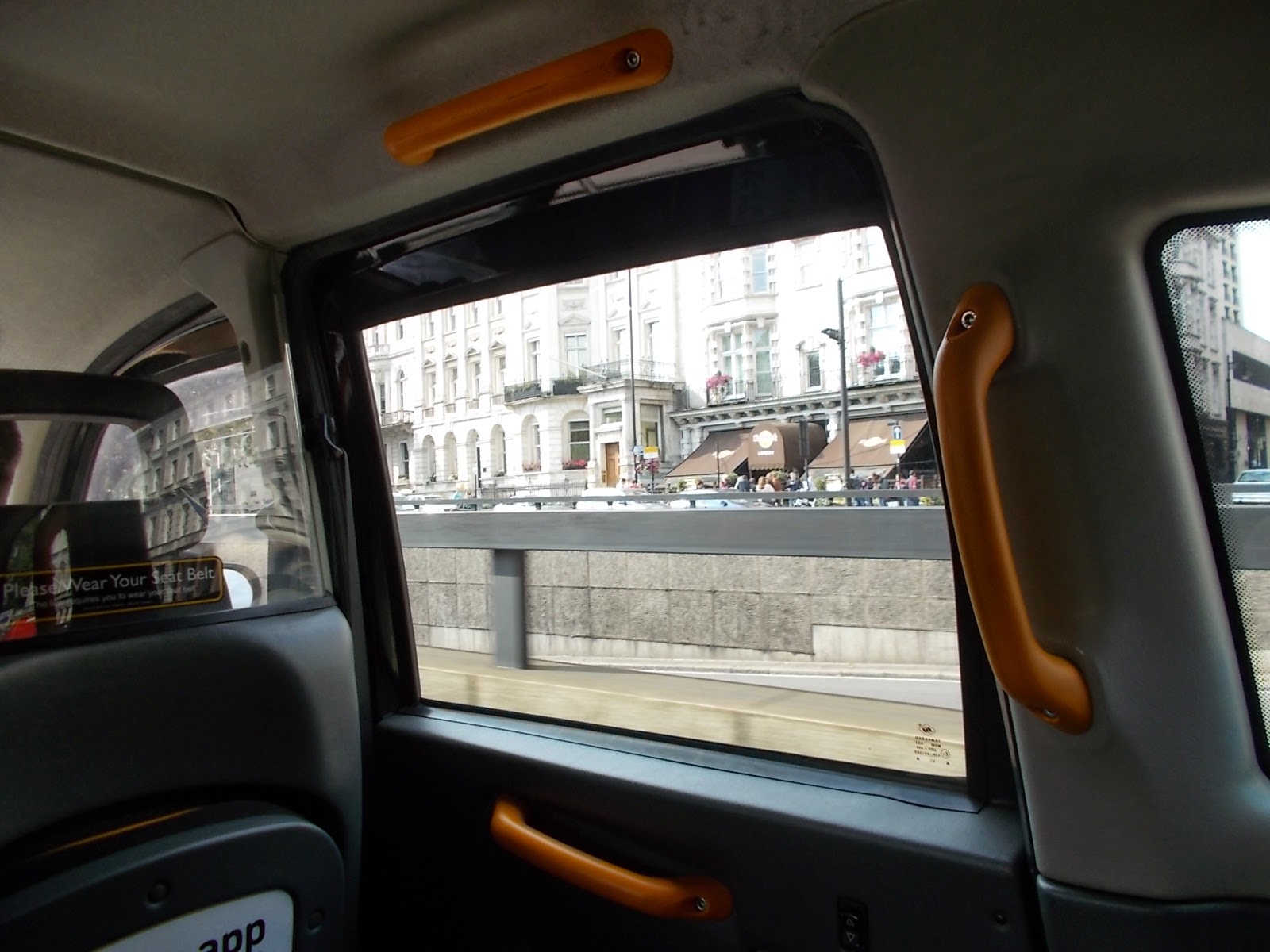
This was our last stop on Open City Sunday in September, 2014, and our Finale to the Pre- and Post-Duke of Wellington Tour.  Victoria here, admitting that Kristine and I were about exhausted.  In fact, beyond exhausted. But heck, we were in London and we couldn’t pass up ANYTHING.  So we took a taxi across town — or actually, not very far, to Belgrave Square from Whitehall.

In Belgravia, the atmosphere is quite different. It is primarily a residential neighborhood, though  rarely  single-family homes, for which these buildings were created. A number of embassies, institutions and apartments are now found here, and the attractive mews, once the home of the horses, carriages and grooms of the Victorian and Edwardian eras, are now quaint houses and condos.

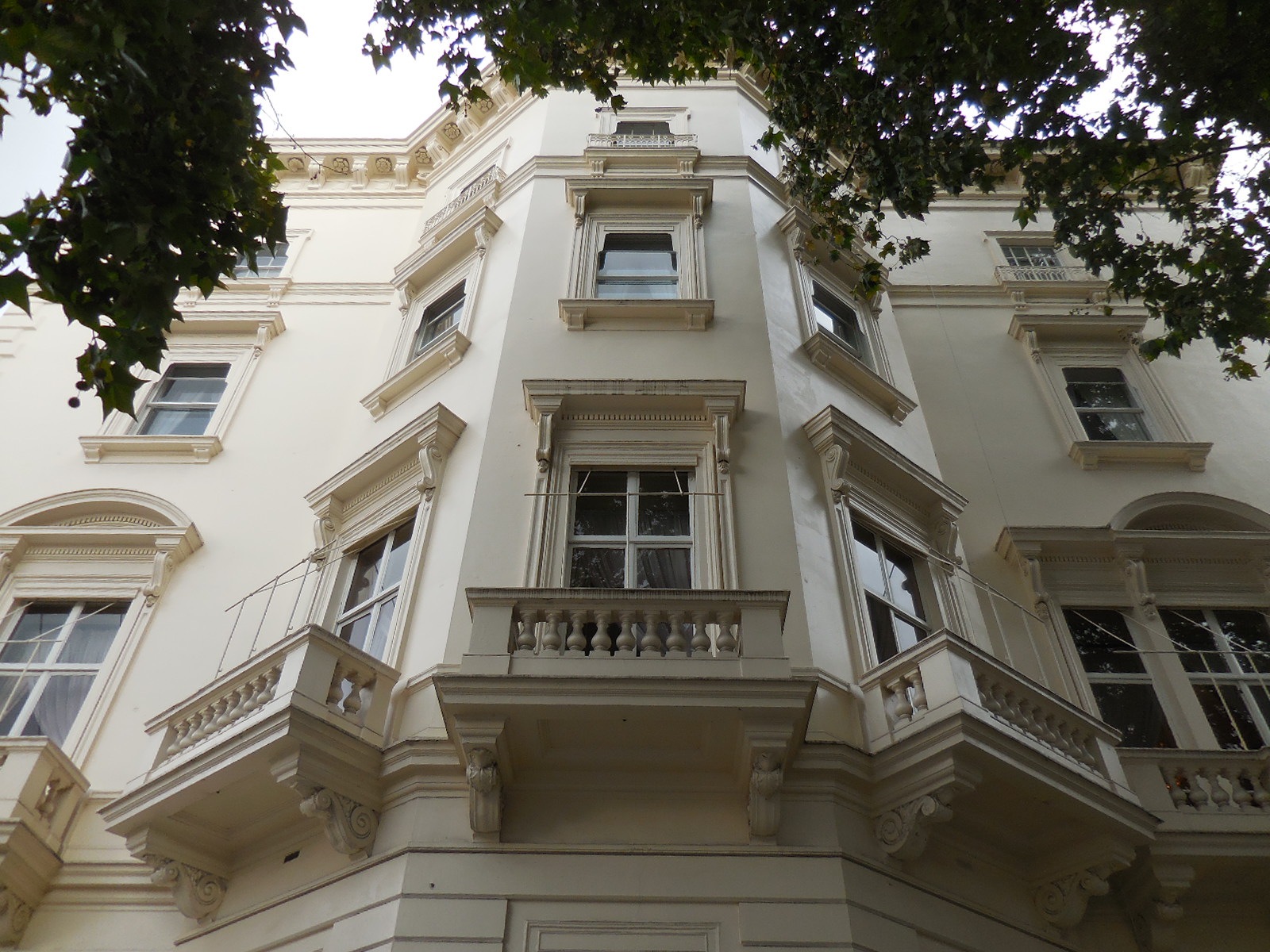
WE walked all around this particular house to see every angle…though sadly, no pictures were allowed in the elegant interior.

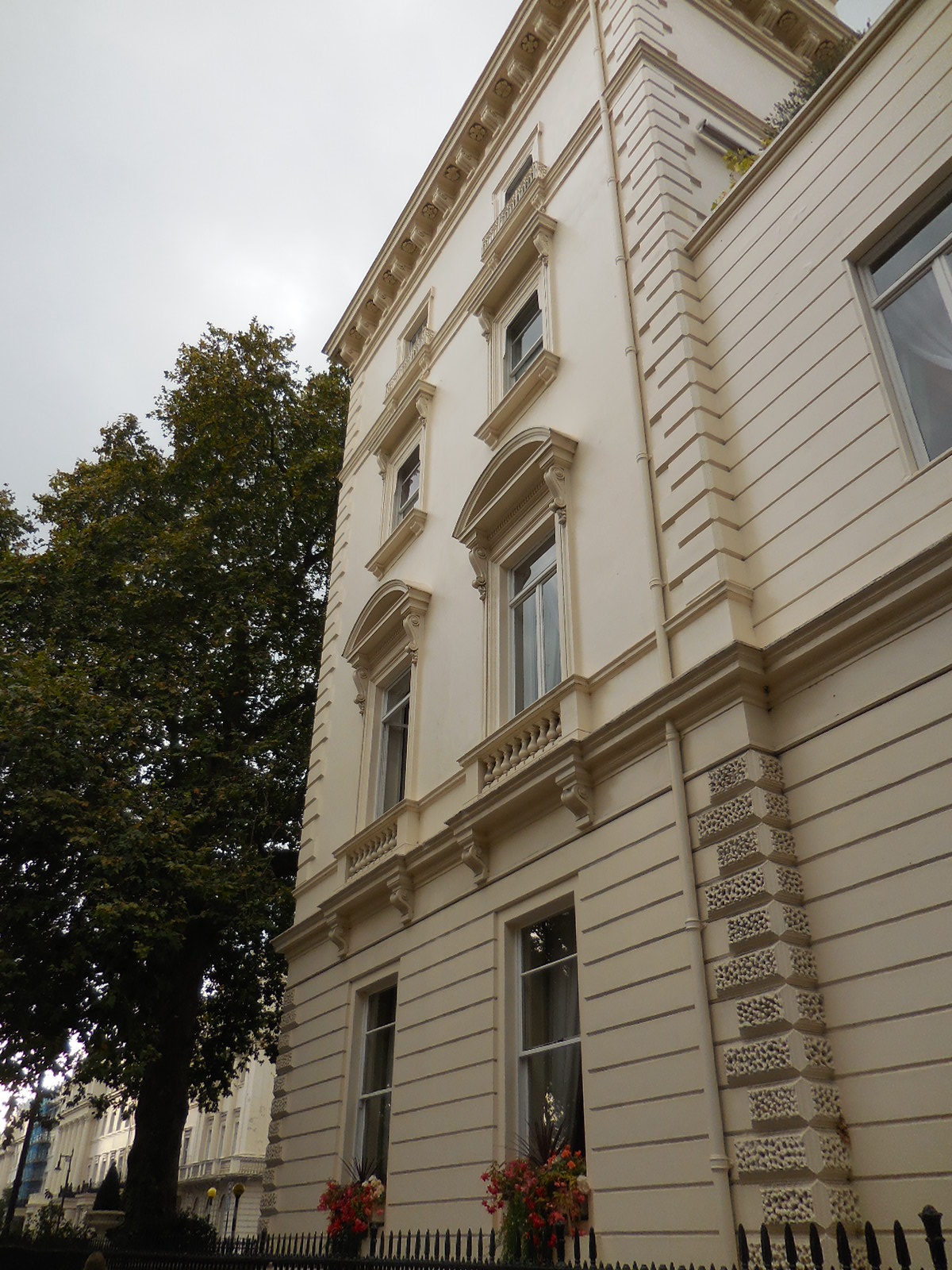
49 Belgrave Square was part of Thomas Cubitt’s development of the area in the 1850’s.  The houses were designed for wealthy London residents, with ample space for large families, many servants, and space for entertaining.   

Wikipedia tells us it is a Grade II listed house, first owned by Sidney Herbert, 1st Baron Herbert of Lea, and later by the Duke of Richmond, then the Beit family.

Sir Otto Beit in his study, 49 Belgrave Square by William Orpen, 1913,  Johannesburg Art Gallery

Wikipedia says, “The building was acquired by Argentina in 1936, and has since been used as their Ambassador’s official London residence…In World War II, the house became a meeting place and haven for Argentines who volunteered in the British forces, mostly as pilots.”

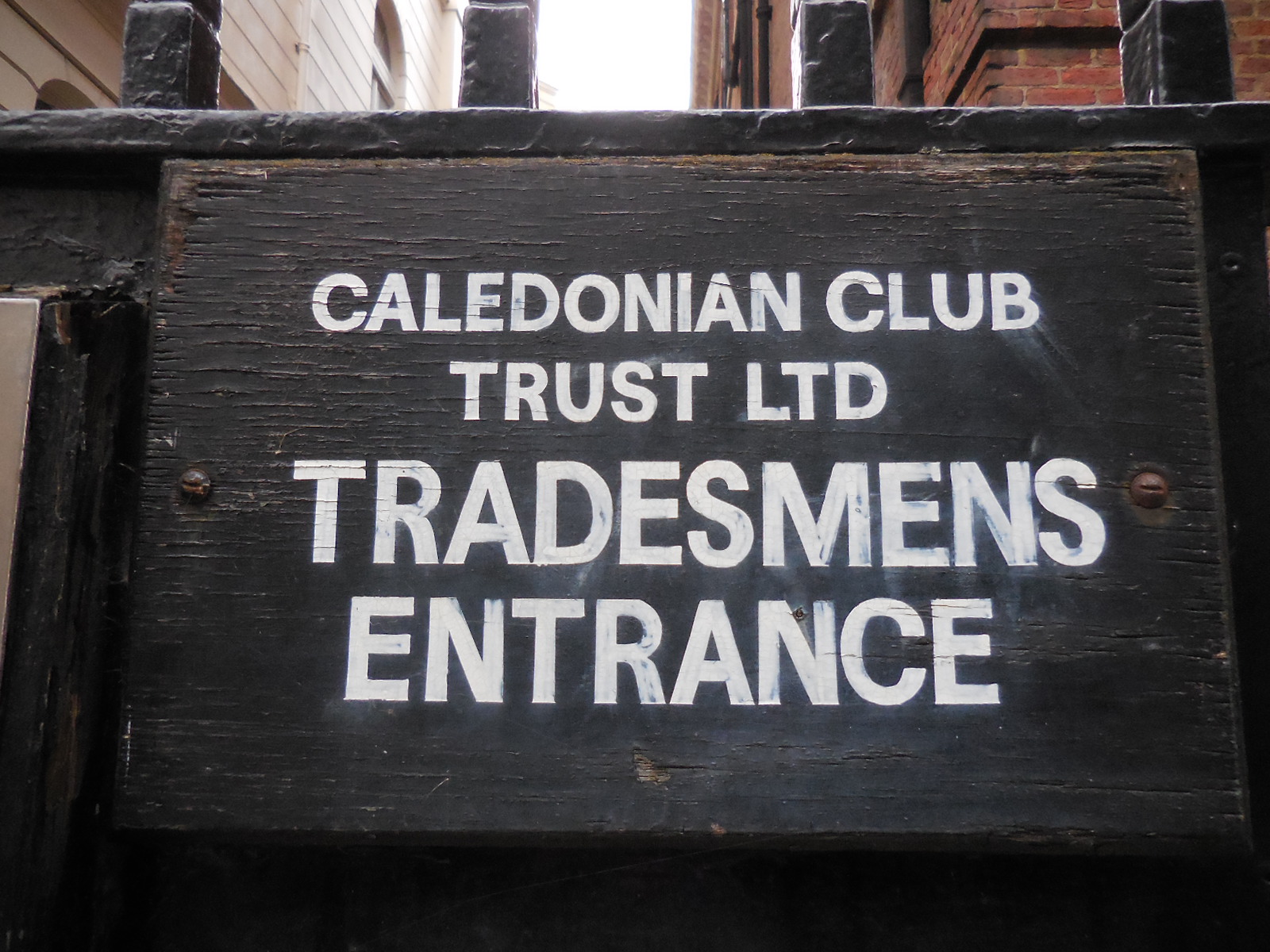
By now both Kristine and I had bluddy stubs for feet…and though we tried one more nearby club where the limited spaces had all been filled, we were satisfied with our day.  One more flight of stairs and I would have sat down and sobbed.

We couldn’t even broach this entrance!
As close to getting inside the Caledonian Club as we came

So, sated with all the sights we had enjoyed, we fumbled our way “home” to Hampstead, grabbed a bite of dinner, and sadly packed for our flights back to the States the next morning.

But, never fear, fellow travelers. Intrepid tour guide extraordinaire, Kristine herself, will be masterminding more tours in the near future. Watch this spot for further information and save your pennies, shillings, and pounds.

ONCE AGAIN WEDNESDAY: A Day at the Library of Congress in Washington, D.C.

by Victoria Hinshaw – originally published on March 22, 2010

The LOC Jefferson Building
What could be more fulfilling (at least on this side of the Atlantic) than a day doing research at the Library of Congress (LOC) in Washington, D.C.? I recently had such a lovely day that I want to share my fun with everyone. Sitting at a desk in the elegant Jefferson Reading Room is a great privilege.

Jefferson Building, Main Reading Room

The first step is to secure a Reader’s Card, for which you must bypass the Victorian elegance of the Jefferson Building for the sober functionalism of the Madison Building across Independence Avenue SE. When you present your picture identification (driver’s license or passport) you will be issued a card which admits you to the reading rooms, of which there are many for various purposes. If you go, be aware that all your possessions will be scanned at each entrance and all bags, purses and briefcases checked at the door (you can take your wallet, notebooks, etc. into the reading rooms). The researcher’s entrance into the Jefferson building is located at the corner of 2nd and Independence SE. No admission to the reading rooms is available from the other public entrances, but there is a viewing area above. All information on opening hours, rules, and regulations are on the LOC website.

The LOC is the largest library in the world. It was established about 1800 as a service for members of Congress, government officials, and the American public. Books cannot be checked out except by the first two groups or through OCLC interlibrary loan. However, the LOC is very available on the internet; you can spend hours exploring their site.

I had used the on-line catalogue to find the call numbers of the books I wanted and they were delivered to my desk quickly. While I waited for them, I found some useful materials in the open stacks of the reference collection. I became very absorbed in the content of my choices, so much so that I really did not spend as much time people-watching as I had expected. Over all, however, I would say that the patrons as well as the librarians represented a rather ordinary cross-section of the population.

Among the books I consulted were the six volumes by John Cam Hobhouse, Lord Broughton, Recollections of a Long Life; works by and about Horace Walpole, and The Diary of Lady Mary Clavering Cowper, Lady of the Bedchamber to the Princess of Wales, 1716-1720. Any one of my references could have occupied me for a full day.

Just so you know, there is a snack bar and a cafeteria available a short hike away. After lunch, I decided to consult the digital newspaper files and was able to conduct a search and access many articles from 18th and 19th century London newspapers. In this effort I was considerably aided by one of the librarians who helped me through the links to find the search engines and newspapers.

Many of the library’s services are available on line from any computer. There may be some charges involved for certain activities, but that will vary by the subject and purpose. For full instructions, consult the website. And don’t hesitate to try the Ask a Librarian section.

In the Great Hall, Jefferson Building

There are many advantages to working at the LOC in person. Primarily, I loved the ambience, the hushed sounds of papers rustling and whispered conversations in the reading room, the tap of my shoes on the old marble floors, even the weight of the heavy wooden doors. The buildings are fascinating, particularly the Great Hall, with its flamboyant Italianate decoration. On view for the public are many changing
exhibitions on a variety of topics. The big disadvantage – to your purse – is a wonderful gift shop with a bountiful offering of tempting items. Of course, they too are available on line.

Although I have been there many times (I actually lived in Washington for a few years), I can’t wait to go back. If you have a story about the LOC to share, please add it to Comments.

OPEN HOUSE: THE FOREIGN OFFICE

OPEN HOUSE DAYS: THE FOREIGN AND COMMONWEALTH OFFICE, SEPTEMBER, 2014

This vast building on Whitehall contains many architectural and decorative treasures, probably far more than we got to see. But perhaps that was a good thing, since so much tends to make one’s eyes glaze over. The building (FCO) is headed by the Secretary of Foreign and Commonwealth Affairs, who sits in the Cabinet.  The building, designed by George Gilbert Scott, was completed in 1868; it formerly housed four separate departments: the Foreign Office, The India Office, the Colonial Office, and the Home Office. 

We did not have a long wait in line before we entered, part of a throng as eager as we were to see what was inside.  The stairway was stunning.

Our first major stop was the Durbar Court, center of the old India Department. The interior of this section of the building was designed by Matthew Digby Wyatt who followed themes of the British in India.

The Durbar Court was so named in 1902 when the coronation “Durbar” of King Edward VII was held there. According to a text panel,  “Durbur” is an Indian 
word meaning court or formal ceremony.

We had to keep reminding ourselves to look downward to appreciate the fantastic floor designs.

One of many statues, this of Warren Hastings (1732-1818),  who was Governor General of India 1773-1785.

Edward Grey, 1st Viscount Grey of Falloden (1862-1933), Foreign Secretary

The Marquess of Wellesley (1760-1842), Governor General of India, 1797-1905

The Lucarno Conference Room

The Locarno Conference Room

The FCO hosted the signing of the Locarno Treaties on European peace in 1925.  These rooms were the scene of the formal ceremonies, many conferences, and diplomatic dinners. 
The elaborate Victorian interiors were restored from 1988 to 1992; the rooms are used for staff functions and diplomatic events.

The Locarno Dining Room

The ceilings and walls are exquisite.

The Grand Staircase

One of the Goetze murals, depicting the development and triumph of the British Empire.

Wall panels

During World War II, these areas were covered with temporary panels and much of the work to decipher Nazi signals took place here, the Enigma project.

In the 1960’s, proposals to demolish the FCO and replace it with a contemporary structure were considered, and fortunately, discarded in favor of restoration and listing as a Grade I protected site. 

Charles James Fox (1749-1806) was the first Foreign Secretary,
appointed in 1782, much to the disgust of King George III, who despised Fox and all his Whig cohorts.


OPEN HOUSE WEEKEND IN 2016 IS SEPTEMBER 17 AND 18.