THE DEATH OF KING GEORGE V

By Victoria Hinshaw

King George V
King George V died 82 years ago of lung disease.  Grandson of Queen Victoria and grandfather to Queen Elizabeth II, his death was expected (he had been a heavy smoker and ill for some time).  However, controversy surrounding his death surfaced a few decades ago when the diary of his lead attending physician, Lord Dawson of Penn, was revealed.  In his notes after the death, Dawson wrote he administered to the king a lethal dose of drugs, morphine and cocaine, ensuring that George V would die before midnight. Dawson  was motivated by a desire to preserve the King’s dignity, protect the family (and realm) from a long period of confusion, and probably to allow the announcement of the King’s death to be made in the morning newspapers instead of the afternoon press, the latter considered less authoritative and more sensational.


Prince George, age 5, 1870

George Frederick Ernest Albert was born in 1865, the second son of Albert, Prince of Wales (later King Edward VII, 1841-1910), and Princess Alexandra (1844-1925).  Throughout his early life, he did not expect to inherit the throne, but in 1892,  his elder brother, Prince Albert Victor, died of pneumonia and George became second in line to the throne, after his father, and was named Duke of York.  Albert had recently become engaged to Princess Mary of Teck (1867-1953), known as May, and after a suitable period of mourning for him, May and George became engaged with the approval of Queen Victoria. The wedding took place in 1893.

After the death of Queen Victoria in 1901, her son Edward VII ruled for just over nine years before he suffered fatal heart disease. George, during his father’s reign, was Prince of Wales. When  he took the throne as George V, the troubles in Europe which led to World War I were already well underway.  George V was a first cousin of both German Kaiser Wilhelm and Tsar Nicholas II of Russia.  Family ties, sadly, did not prevent the catastrophe to come.

The war and its aftermath occasioned many changes in Great Britain  and the Empire. The family name of the royals was changed from Saxe-Coburg-Gotha to Windsor. Stirrings in Ireland and other territories had long-reaching consequences, not to mention the rush of technological change.  George V was the first King to address his people by radio, as recently portrayed in the film The King’s Speech, the story of George V’s son, George VI. Below, King George V as portrayed in the film by famed British actor Michael Gambon.

Michael Gambon as George V
In the film, George V is portrayed as a stern father, intolerant of the shortcomings of his sons.  His eldest son, known as David, succeeded him as Edward VIII, but reigned for less than a year, abdicating to marry the American divorcee Wallis Simpson.  In turn, George V’s second son became King George VI.  In many stories about George V’s life, we learn he expressed his hope that David would never marry and have children, because he (Geroge V) wanted nothing to come between the throne and his granddaughter Elizabeth, the present Queen, called Lilibet.

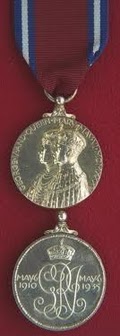
George V reigned for  just over 25 years. Upon the celebration of his Silver Jubilee in 1935, he was touched at the affection expressed for him by the people of the nation and the empire. The occasion was marked by many tributes and a wide variety of souvenirs, including china, medals and stamps, the latter reflecting the King’s hobby of collecting.
When I first began to write about George V’s death, I had no idea of the controversy that arose  about fifty years after the event.  Though the existence of Lord Dawson’s diary and its revelation of how the death was hastened had been known to a few, it was not made public until 1986, fifty years after the death. A few hours before he administered the final drugs, Dawson told the nation, “The King’s life is moving peacefully towards its close.”
Lord Dawson of Penn,  ©National Portrait Gallery
According to the New York Times of November 28, 1986, a biographer of George V, Kenneth Rose, said he now considered that Dawson had murdered the King.  But there was no official statement from Buckingham Palace, just the remark that it all happened a very long time ago and all those involved were now dead. Whether or not members of the King’s family were consulted or knew of the injections is not known.
After the tumultuous years of his  reign — world war, the first Labour government, influenza epidemics, extension of women’s rights to vote,  general strike,  the great depression — perhaps a case of euthanasia is not so shattering.  But it was a surprise to me.
To quote Dawson’s diary, for January 20, 1936: “At about 11 o’clock it was evident that the last stage might endure for many hours, unknown to the patient but little comporting with the dignity and serenity which he so richly merited and which demanded a brief final scene. Hours of waiting just for the mechanical end when all that is really life has departed only exhausts the onlookers and keeps them so strained that they cannot avail themselves of the solace of thought, communion or prayer. I therefore decided to determine the end and injected (myself) morphia gr. 3/4 and shortly afterwards cocaine gr. 1 into the distended jugular vein.”
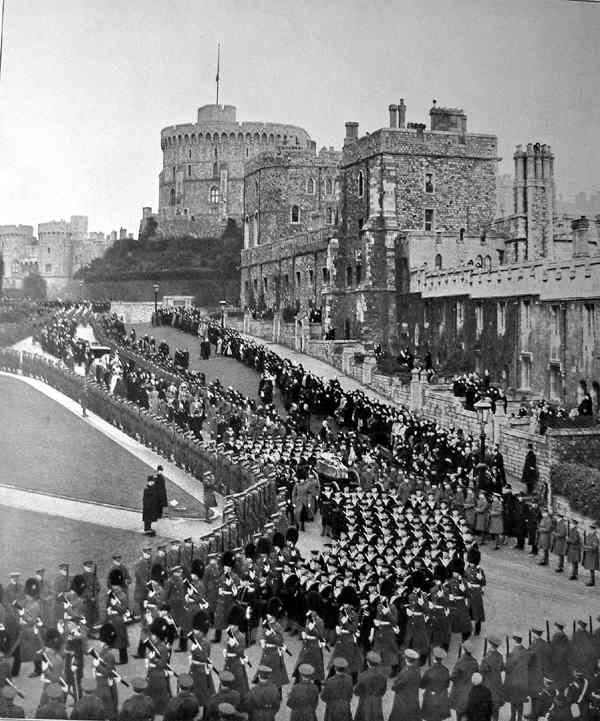
George V died before midnight. Below, the funeral cortege moves through Windsor.
Queen Mary lived on until 1953. She is buried beside her husband in St. George’s Chapel, Windsor Castle.

THE WRETCHED LOVE LIFE OF SIR THOMAS LAWRENCE – Part Three – Jo Manning

Lawrence achieved a knighthood in the spring of 1815, thanks to Prinny’s patronage, and was sent by him to the continent to paint portraits of the heroes and distinguished others of the recent battle of Waterloo – which greatly enhanced his prestige and stature amongst his fellow artists — and he became president of the officially-sanctioned society of artists, the Royal Academy, in 1820, when Prinny ascended to the throne. (The artist arrived back in London in March of 1820 to find that he had succeeded Benjamin West.) Lawrence’s reign as head of the RA was to last only ten years, however; he passed away in 1830, only sixty years old, at the height of his powers.

Like a number of other 18th-century artists, Lawrence’s popularity waned during the Victorian era, but his reputation has revived in the 20th century. The lack of public access to most of his work might have been one of the reasons for his lack of recognition. Nonetheless, several striking portraits have since firmed up his reputation. One of them is of the actress Elizabeth Farren (a full-length portrait in the collection of New York’s Metropolitan Museum of Art, seen below). Farren was a cold and calculating woman of low origins who parlayed her looks and popularity as an actress into aristocratic gold, snagging the wealthy Earl of Derby as her prize. The portrait is stunning; it’s difficult to take one’s eyes away from the tall, willowy woman commanding the space on that canvas.

Elizabeth Farren, later the Countess of Derby, circa 1790
Sarah Barrett Moulton aka Pinkie, 1794, at California’s Huntington Library


Arguably his most famous portrait – in terms of recognition by the general art-loving public – is probably the one dubbed Pinkie, which, along with Gainsborough’s Blue Boy, has been much reproduced. (Indeed, they could be veritable bookends, that boy in blue, this girl in pink.) The iconic portrait of this young girl, Sarah Barrett Moulton, was painted in 1794, when Lawrence was in his mid-thirties.

Jonathan Buttal (or Buttall) aka The Blue Boy, circa 1770, was painted by Gainsborough and is also in the collection of the Huntington Library

Lawrence was a wonderful painter of very small children as well as of adolescents like Sarah Moulton. One painting many people recognize – though they probably would not be able to identify the artist – is The Calmady Children, painted in 1823, seven years before his death. A charming image much reproduced in greeting cards, it is in this current exhibition at the National Portrait Gallery.

The Calmady Children, 1823, Metropolitan Museum of Art


Part Four Coming Soon!

THE WRETCHED LOVE LIFE OF SIR THOMAS LAWRENCE Part Two – Jo Manning

As to the mystery of his debts, critics have laid Lawrence’s money problems to the demands of his large family, whom he supported. He’d supported them for a very long time, beginning at the age of 10. (He was 13 when the ad put in by his father in the Bath Chronicle ran.) His Royal Academy colleague Joseph Farington, the painter famous for his rich gossipy diary of the Georgian art world covering the years 1793 until his death in 1821, supports this widely-documented view. (Note: Yale University recently updated and enlarged the standard 1923 edition of the Farington Diary.)

Lawrence, R.A., allows his Father for the support of his family near £300 a year. He pays for his own lodgings in Bond-street 200 guineas a year. His price for his portraits is 40 guineas for a three-quarter, 80 guineas for a half-length, and 160 guineas for a whole-length. –October 28, 1793

Bear in mind that in today’s currency, we are talking some 70 to 80 times that £300. In today’s values, it’s almost $50,000+ a year, an enormous, enormous amount for those times. (A guinea = one pound and one shilling.) Lawrence’s family would have lived high off the hog indeed!

A further comment on Farington and his diaries is appropriate here. Joseph Farington (1747-1821) was an inveterate gossip and social climber who made much of his marriage to a cousin of the prestigious Walpole family. Although purporting to be a friend of many of his RA colleagues he was envious of most of them and often nasty when commenting about them in the diary he kept for many years. He played politics and was a major manipulator of the other RA members and not to be trusted. (He was, frankly, a snake.) The diary only surfaced a hundred years after his death, in 1921, when the volumes were auctioned off by his family. None of his long-deceased colleagues and those whom he called friends was privy to the intimate details in these pages.

Lawrence’s father was a failure in every business he’d attempted and, as we can see, had lived off his son’s earnings as a young artist from the time he was a mere child. But, even with having to support this family of parasites, it’s hard to imagine, with the prices Lawrence charged for a painting, that he could ever have fallen into such deep debt. On what else could he squander so much money? He lived in well-appointed homes, yet there’s no report he lived extravagantly, kept expensive mistresses, or that he gambled (the latter the downfall of many a Regency gentleman). So, on what, then, could he have spent his money?

One possibility was his ever-growing collection of Old Master paintings and sculptures. He did amass a very large collection – some 4,000 works! — as did his fellow artists Reynolds and Romney, among others, but not to the extent of his. (The collection was auctioned off at his death to pay off debts.) The possibility that intrigued me, though, was that perhaps someone was blackmailing him to keep his clandestine activities – such as a double life in London’s gay underworld — quiet.

Although there’s is no hard proof, the critic Richard Holmes, in his essay for Thomas Lawrence Portraits for the National Gallery, does suggest he was quite possibly bisexual. I do believe Lawrence was super-charged, sexually – some might say over-sexed – and if he were indeed bisexual it could explain his personality and his inability to commit to one person. His so-called friend, Farington, who called him “a male coquet,” noted he was overly intimate with his female sitters, subjecting them to long, close sittings that might not have been necessary; could he have been thus with male sitters as well? That, however, seems not to have attracted notice.

James Northcote, the pupil of Reynolds and his first biographer, made another interesting remark about Lawrence that is cited in David Piper’s The English Face (1957). Piper says, “Northcote called him ‘a sort of man-milliner painter – a meteor of fashion’.” The term “man-milliner” is 18th century slang for homosexual, and Piper goes on to say, “Northcote was biased and extremely jealous, but his criticism is not entirely unjust.”

Indeed, Lawrence’s sexuality, his possible gender confusion, could have been a destabilizing force that went on to affect all facets of his personality and may well have been connected to his monetary woes.


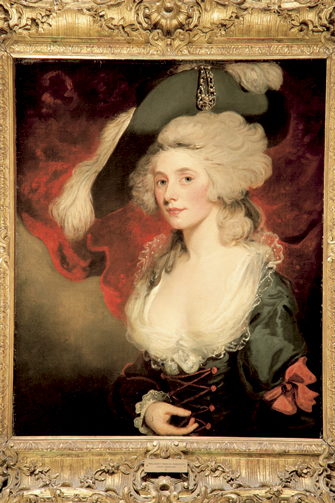
Mary Darby Robinson, by Hoppner

Leaving these speculations aside for the time being, the other references I found of note concerned the deep, often bitter rivalry between John Hoppner and Lawrence. Hoppner was a successful artist with great ambition, but he was too soon eclipsed professionally by the younger man and it did not sit well with him. (Though Hoppner was a skilled portraitist, his heart was not in painting portraits but in landscape painting. In the late Georgian era, however, painting portraits paid the bills.)

Hoppner’s most well-known portrait is probably that of Mary Robinson aka Perdita, first mistress of King George IV when he was the Prince of Wales. (The painting is now owned by the Chawton House Library.) Hoppner, whose parents were German and whose mother was in service to Queen Charlotte, had nursed the ambition of being named court painter — perhaps counting on these German connections to be appointed — but it never happened.

Farington noted that the rivalry would often revolve around petty incidents but was not the less vicious for all that. In the spring of 1801, the two artists squabbled over the placement of canvases at an RA exhibit, which resulted in Lawrence’s portrait of the Princess of Wales not being shown.

Hoppner will not exhibit on account of Lawrence monopolizing a center place by sending canvasses & figures of an uncommon size. —April 6, 1801

A dispute brought to trial in Sheriffs Court over a payment owing to Stubbs, the era’s most renowned painter of horses, from one of his patrons had Lawrence as witness on Stubbs’s side and Hoppner on the other. Farington remarked that Hoppner “was very violent against the claim of Stubbs,” but that a full judgment was made in Stubbs’s favor over his testimony. It appeared that nothing was too small over which they locked horns, such was their rabid dislike one for the other.

One almost has to feel sorry for Hoppner, for no other artist really had much of a chance against Lawrence, who, in addition to being immensely talented and personally charming, became a favorite of the royal family. The charm was innate; it was said that he had a seductive voice which he used to great effect and that he spoke in a “low, soft whisper…calculated to please.” Nancy Frazier, in the Penguin Concise Dictionary of Art History (2000), on those who were not so taken with Lawrence’s charm and even less with his talent, commented that: To some critics, he never seems to have gone beyond virtuoso flattery and an ability to give pleasure…[and that he was obsessed with] …charming his way through cosmopolitan society.

But charm worked for him. Though early in his career he’d painted a portrait of Queen Charlotte that King George III was said not to have cared much for, his son the Prince of Wales – popularly known as Prinny and later King George IV –championed him. (That George did not get along with his father also probably helped his relationship with Thomas Lawrence.)

The artist also squeaked by with another possible problem that might have affected his relation
ship with the royals. As Richard Holmes writes, “[In 1806] Lawrence is implicated in the ‘Delicate Investigation’ into alleged impropriety with the Princess of Wales [Prinny’s wife, Caroline] and has to give testimony defending his name against imputations of improper behavior.” The allegations grew out of malicious gossip from a former page at Montague House, according to the biographer Flora Fraser, during the time that Lawrence was painting Princess Caroline’s portrait.

Given his seductive approach to his sitters, however, and the natural flirtatiousness of the Princess Caroline, it’s not difficult to see how his attentions could have been misread and misunderstood. He could not, however, have been so foolish as to hit on Prinny’s wife, even given that gentleman’s abhorrence of her. He would have been signing his own death sentence.


Detail from a Thomas Lawrence portrait of Princess Caroline of Brunswick, the rejected wife of the Prince of Wales


To quote Fraser, “Lawrence stayed several nights at Montague House in the winter of 1800, so as to lose no time when Princess Charlotte [the daughter of the Prince and Princess who also sat for him] came from Shrewsbury House in the morning.” In his defense when he was accused of improper behavior, along with another man, a Captain Manby, Fraser says:

“Perceval had shown to Mr. Thomas Lawrence and to Captain Manby the examinations which incriminated them as possibly guilty of high treason. Manby and Lawrence made depositions indignantly countering the charges against them… Lawrence rebutted…testimony that he had stayed behind a locked door with the Princess. [He declared that] ‘nothing passed between her Royal Highness and myself which I could have had the least objection for all the world to have seen and heard.’ “

(Note: Perceval was Spencer Perceval, at that time attorney general, later chancellor of the exchequer, and then prime minister, who holds the not-so-wonderful distinction of having been the only prime minister ever assassinated. He was murdered in 1812; Princess Caroline underwent the humiliation of a public trial in the summer of 1820, sans Perceval.)


Part Three Coming Soon!

A TOUR GUIDE IN ENGLAND: A RETURN TO EDENSOR


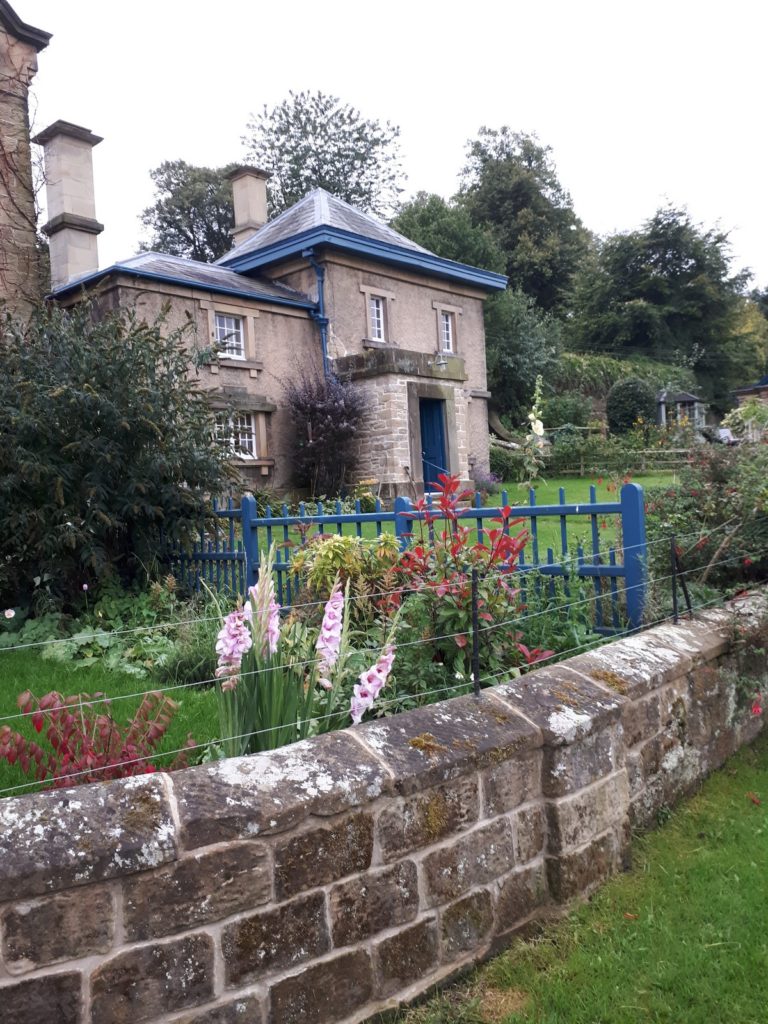
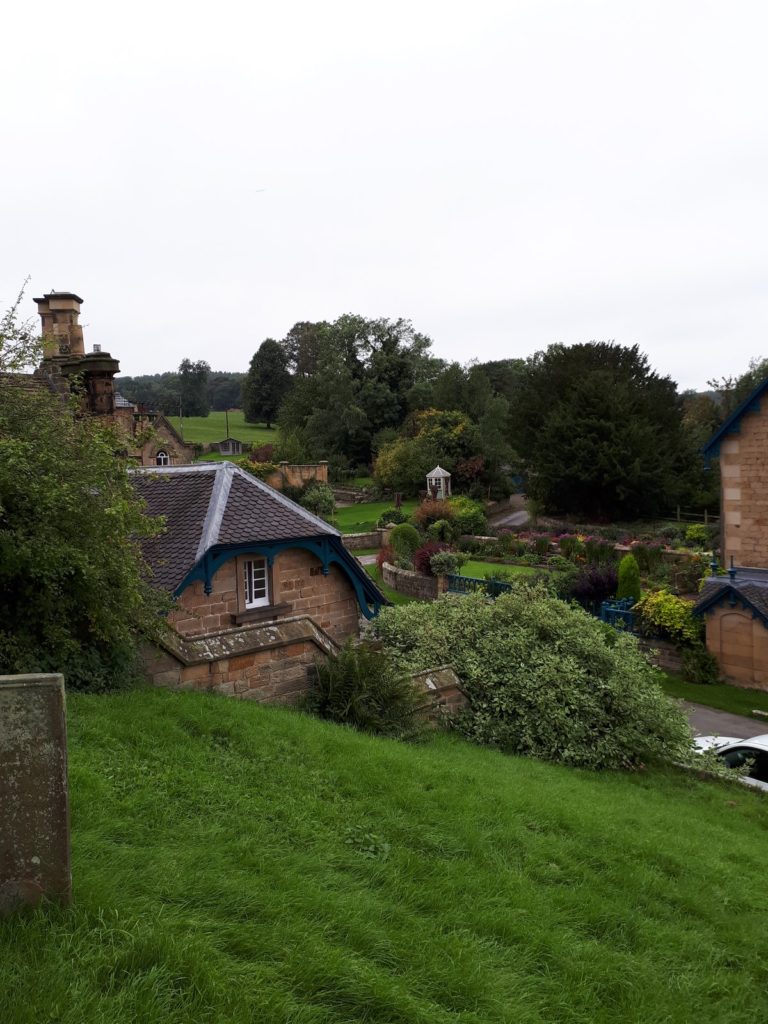
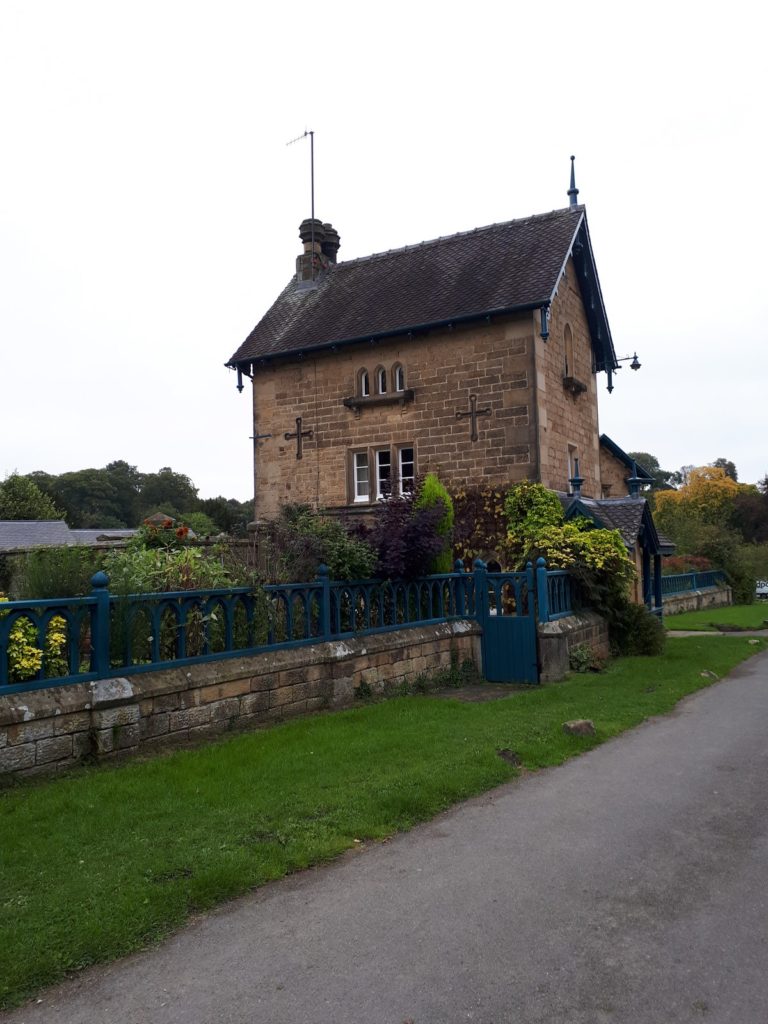
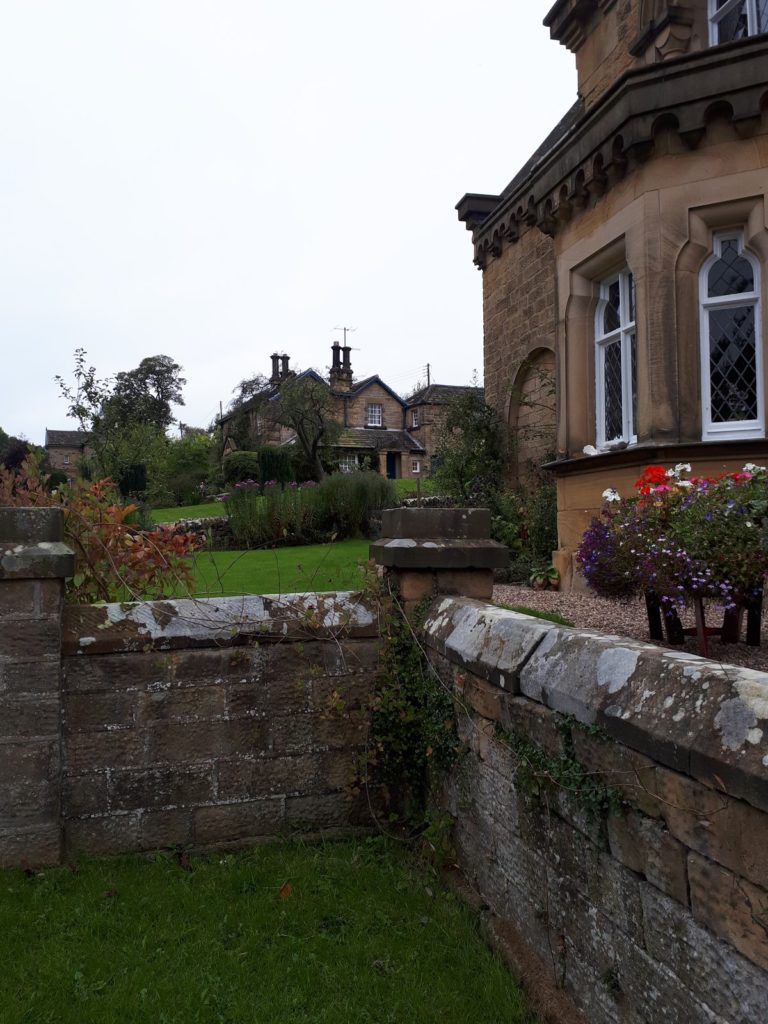
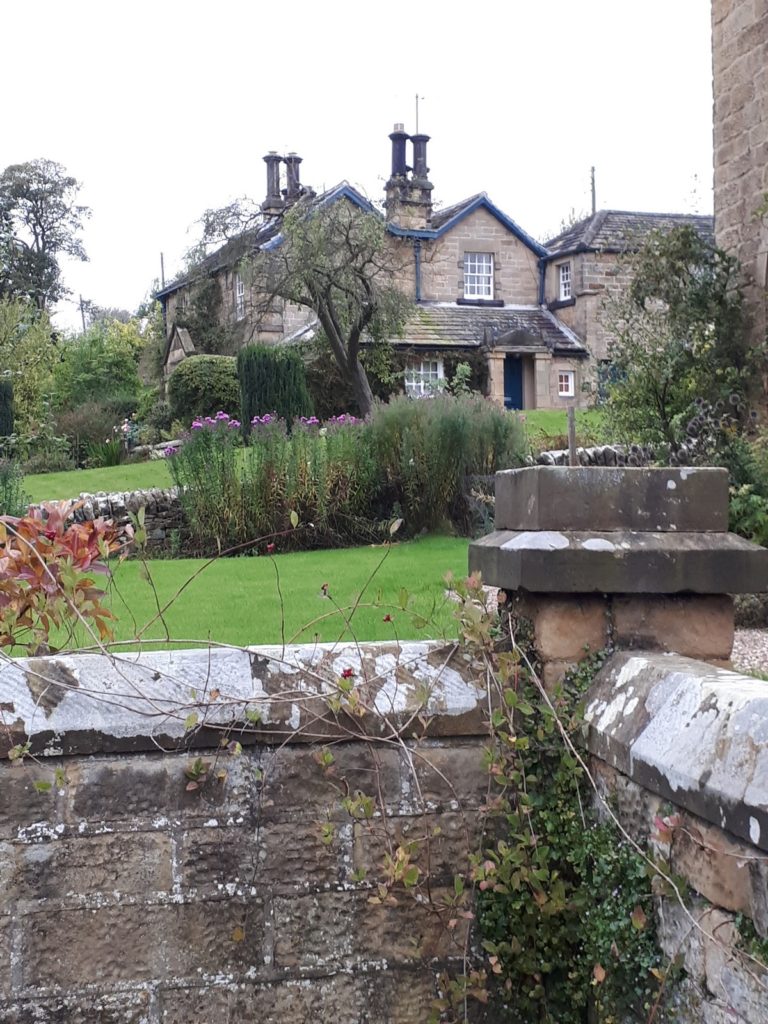
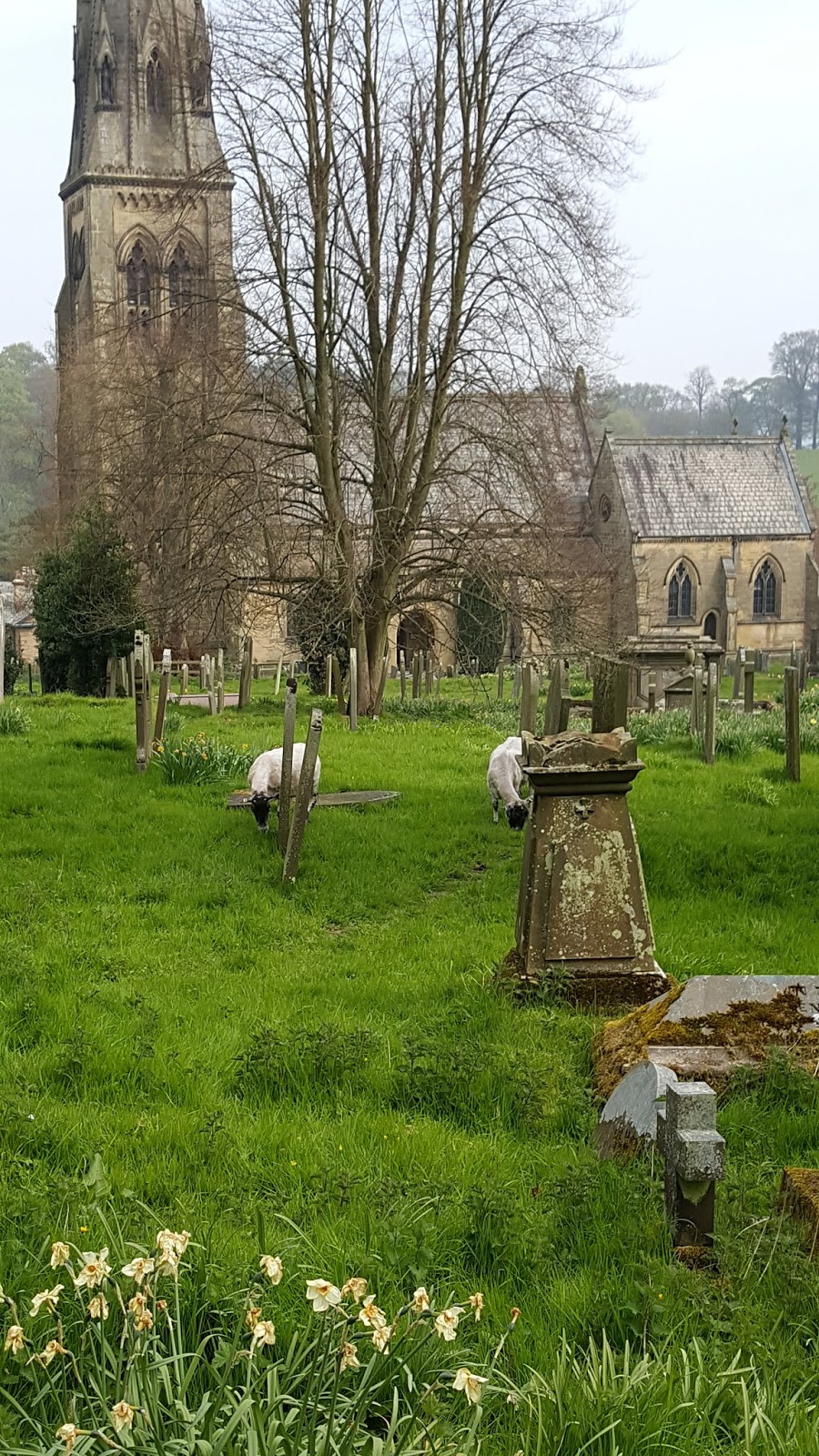
Two years ago, Diane (Perkins) Gaston and I had walked to Chatsworth House from Baslow, continuing on just over a rise for our first glimpse of Edensor, the picturesque model village built to the specifications of the 6th Duke of Devonshire with the help of Joseph Paxton. The entire village was moved over the hill from it’s original location just by the River Derwent, thus freeing up the view and leaving it idyllic as seen from the House. It is said that after being presented with a selection of designs for the houses in the village, the Duke could not make up his mind and so chose one of each style in the book. The result is that Edensor is a charming mix of designs ranging from Norman to Jacobean, Swiss-style to Italian villas. Only a few of the old buildings remained virtually untouched including parts of the old vicarage, two cottages overlooking the green, the old farmhouse which now houses the post office, shop and tea rooms, as well as the Gardener’s Cottage across the road. Today, as then, those who are fortunate enough to live in this charming village are either current or former employees of Chatsworth House.

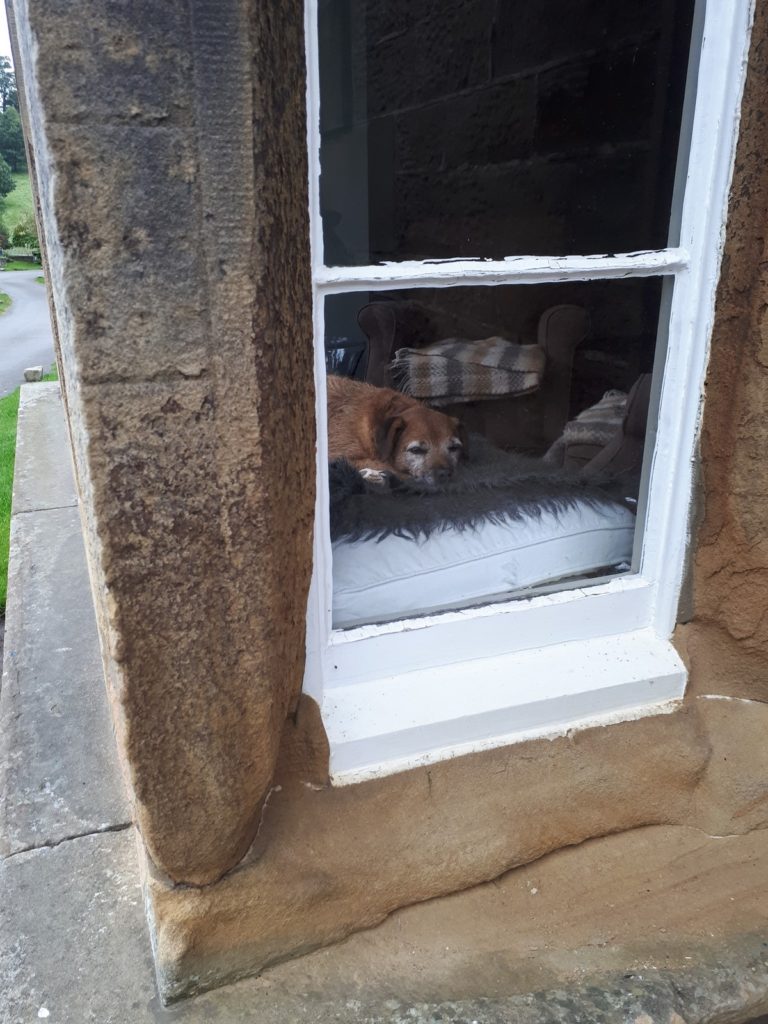
I had the opportunity to revisit Edensor in September on Number One London’s Country House Tour, when we were given a private tour of the village. The photo’s below are a mix of photos taken on both visits.


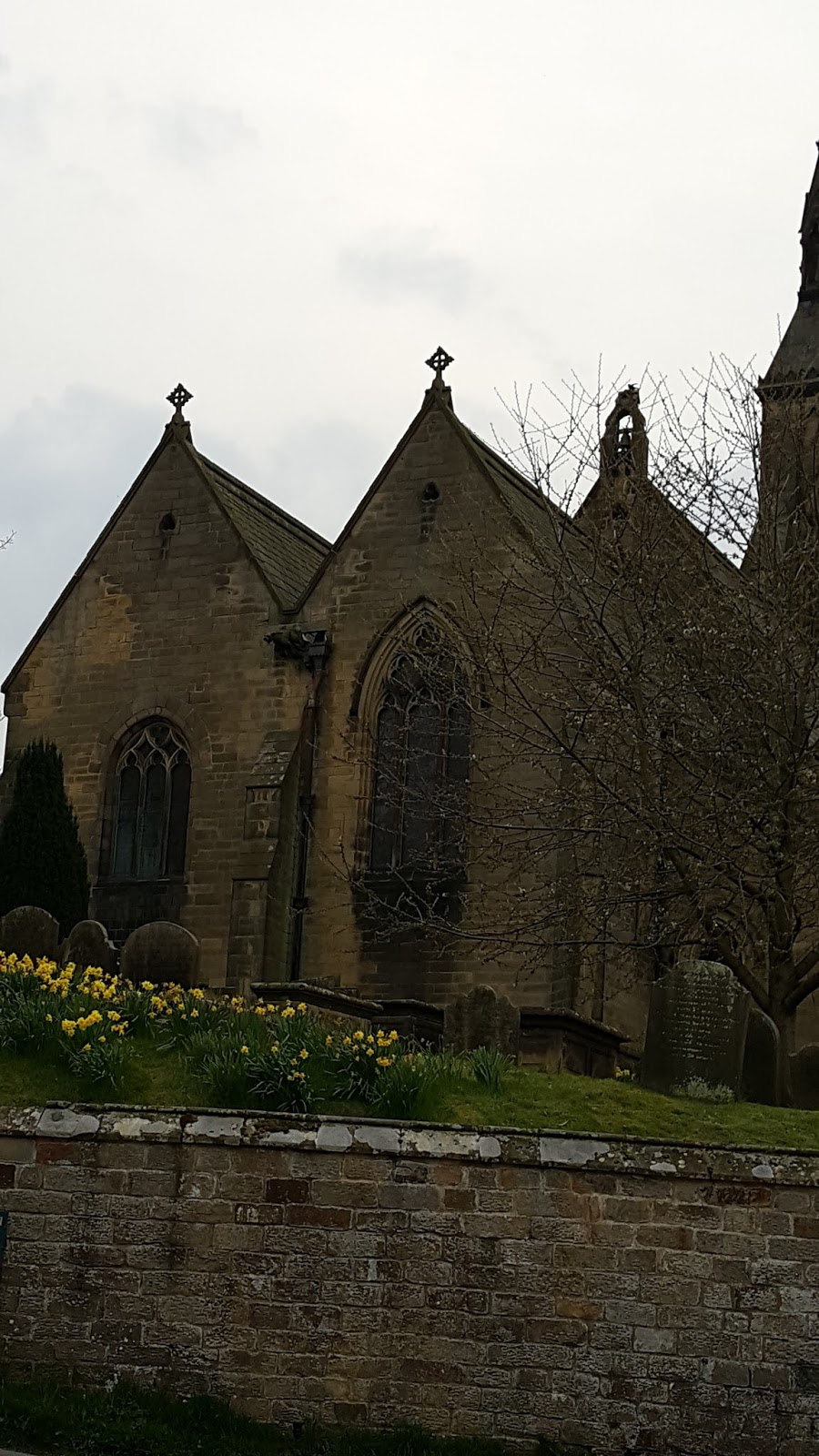
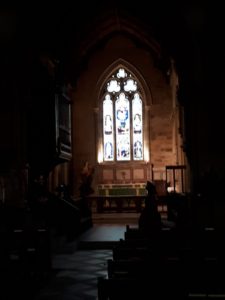
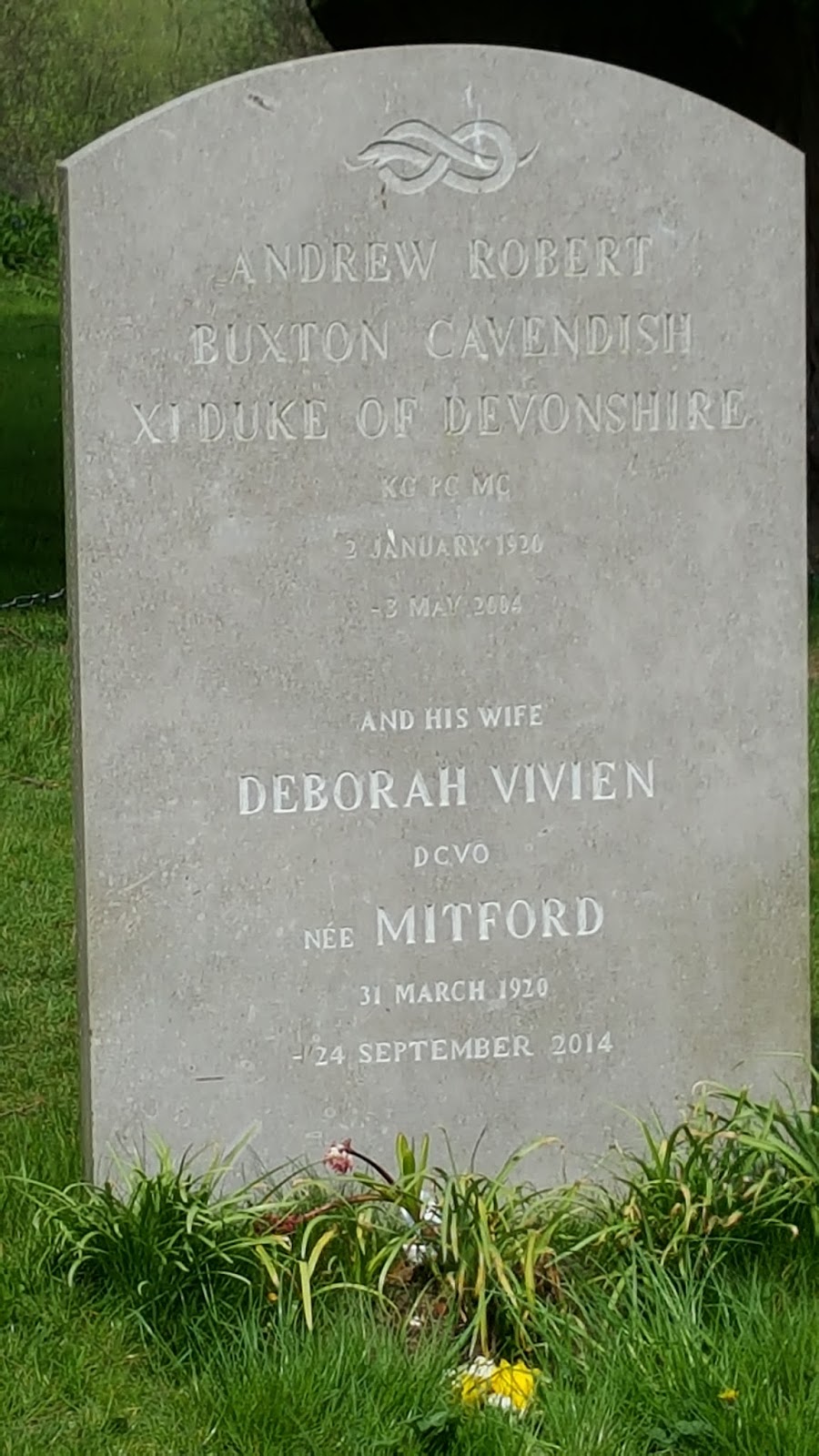
After a look round the picturesque village, we headed to Edensor’s St. Peter’s Church and it’s cemetery where Kathleen Kennedy Cavendish and Deborah Mitford Cavendish rest. Kathleen “Kick” Kennedy was the daughter of Joseph P. Kennedy, Sr. and Rose Kennedy, sister of future U.S. President John F. Kennedy, and wife of William Cavendish, Marquess of Hartington, heir apparent to the Duke of Devonshire.

They married in May 1944 and, sadly, he was killed on active service, only a few weeks later. Kathleen died in a plane crash in 1948, flying to the South of France on holiday with her new fiancé Peter Wentworth-Fitzwilliam, 8th Earl Fitzwilliam. The Cavendish family considered Kick one of their own and had her buried at St. Peter’s in the family plot.

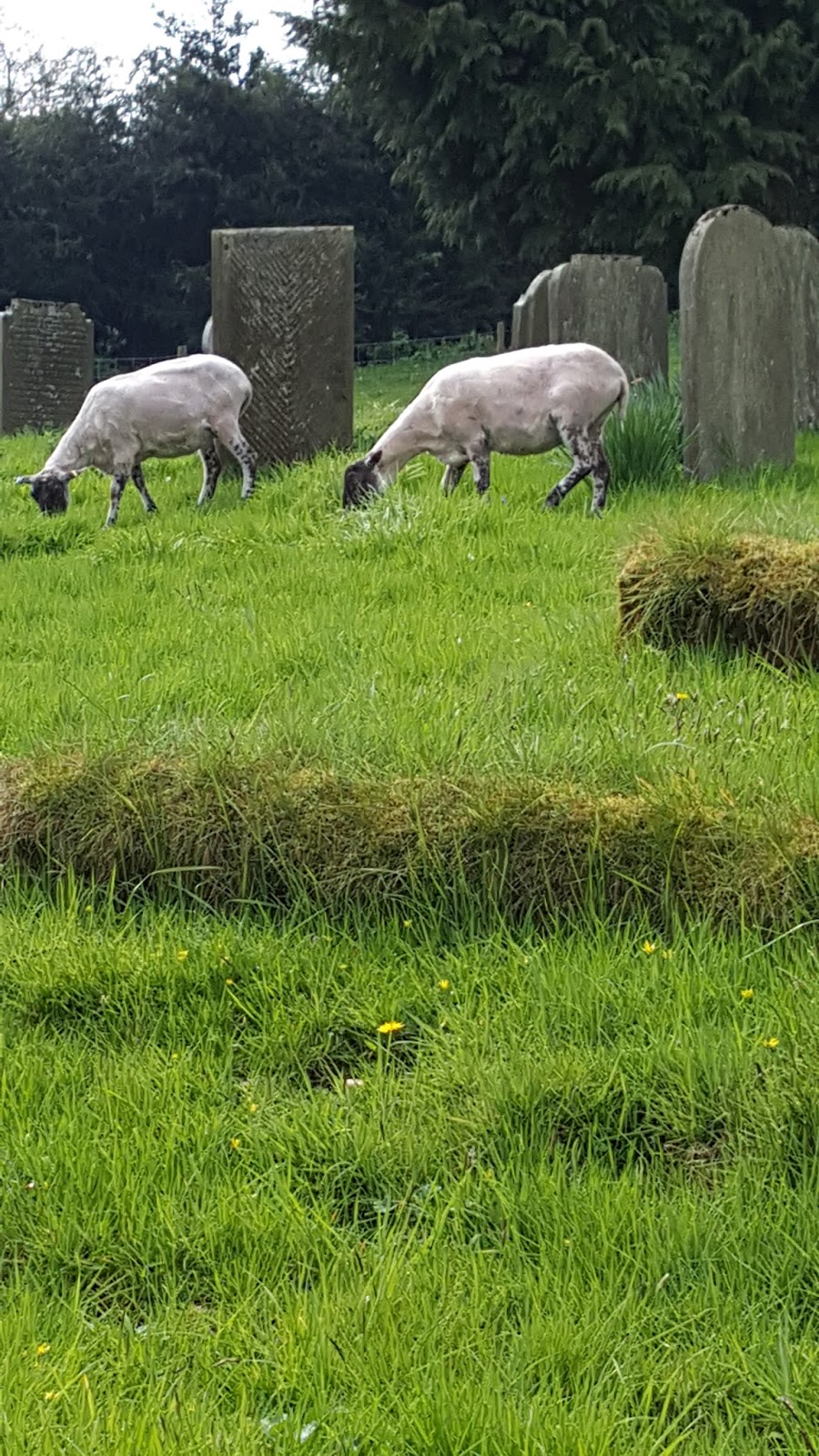
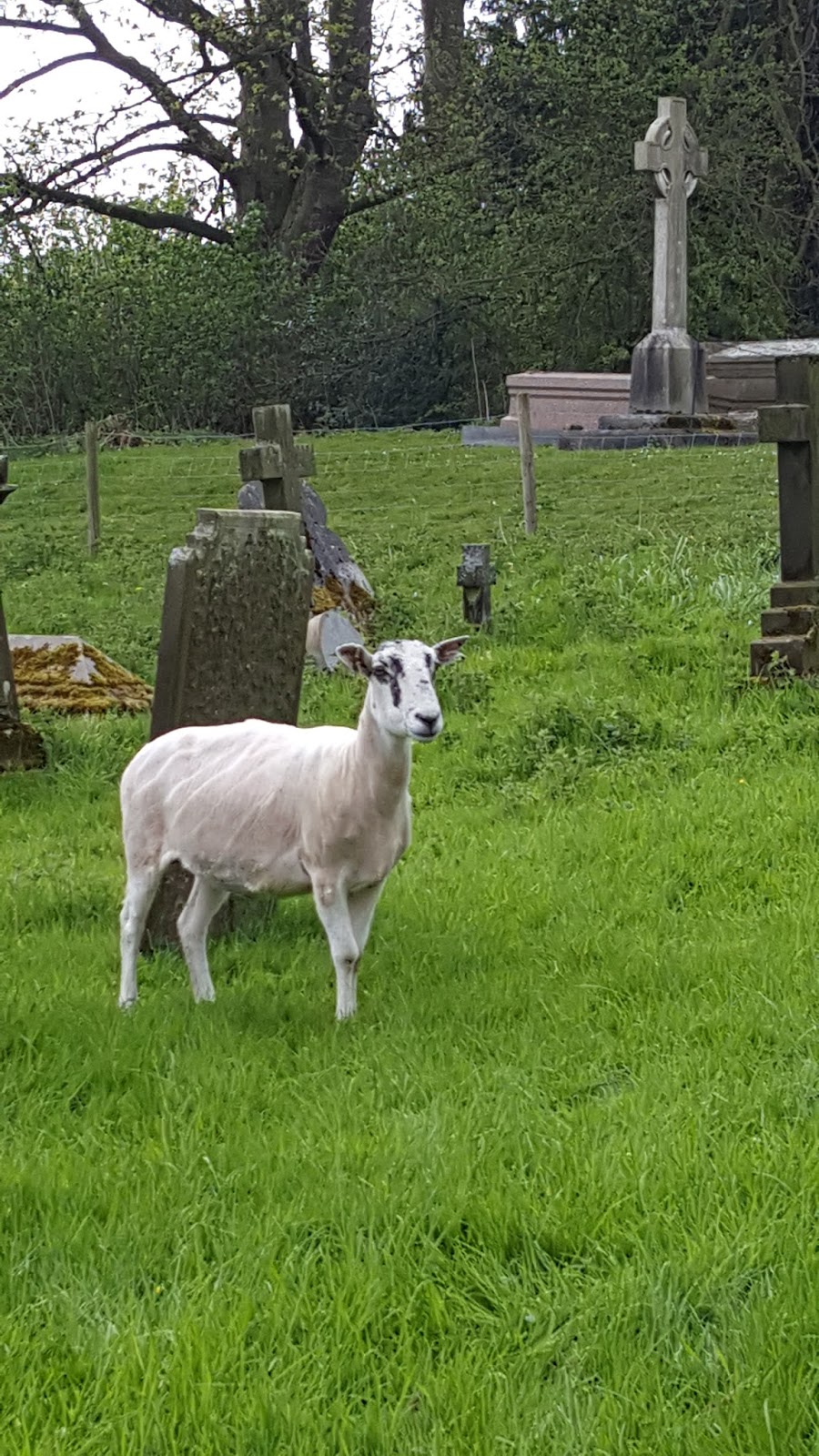
Edensor has a unique and charming way of keeping the graveyard tidy. 


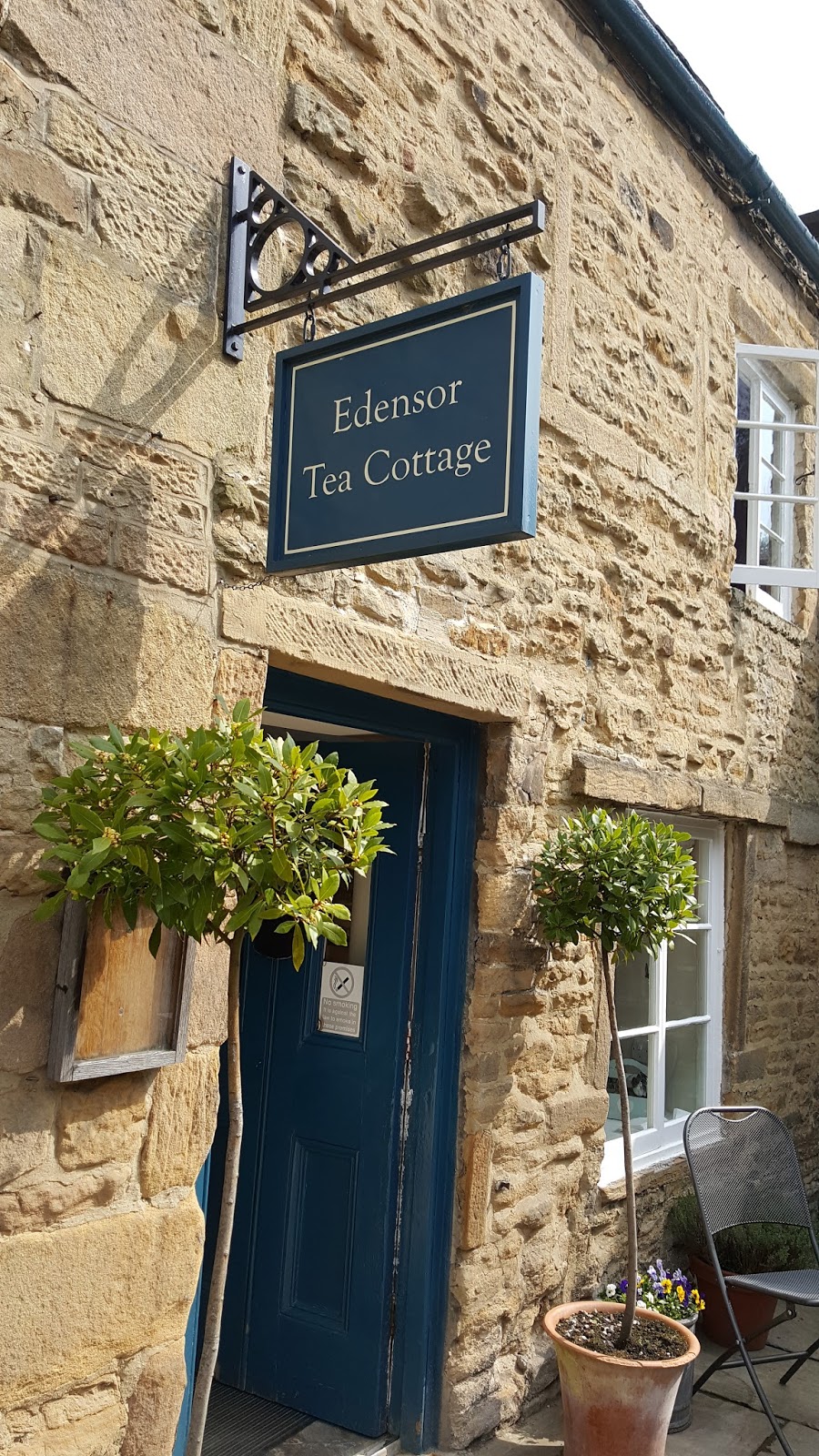
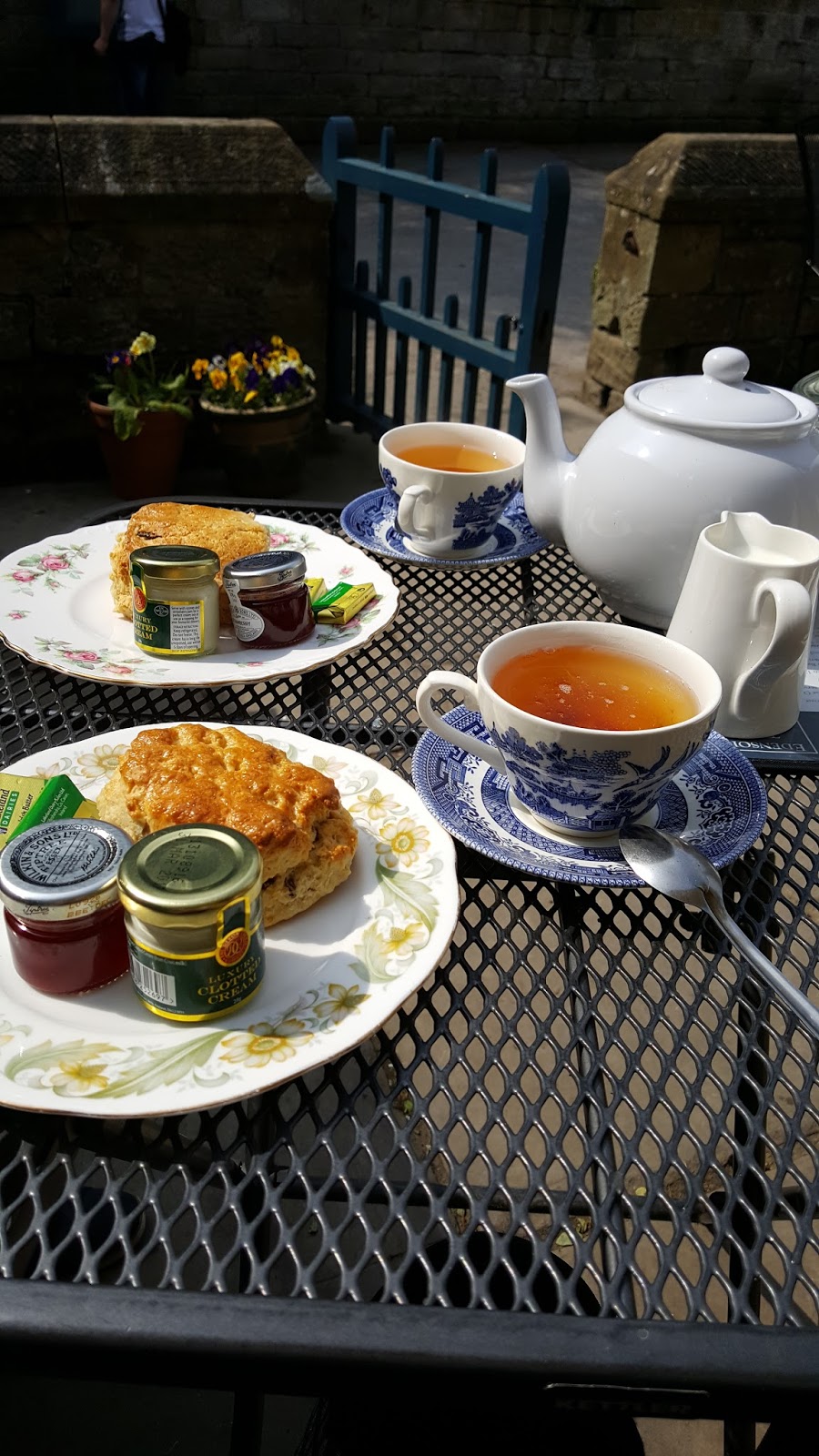
Before we left Edensor, there was time for another, more leisurely stop at the Tea Cottage. 


And one last look over a garden fence before heading back to Chatsworth House.


Would you like to see Edensor for yourself? We’ll be returning to the village during Number One London’s 2018 Upstairs, Downstairs Country House Tour!


THE WRETCHED LOVE LIFE OF SIR THOMAS LAWRENCE

On this day, the anniversary of the death of artist Sir Thomas Lawrence RA in 1830,  we begin a series by guest blogger Jo Manning that originally appeared in 2010 entitlted –

The Wretched Love Life of Thomas Lawrence (1769-1830), extraordinary painter, elusive personality…


Master Lawrence takes very striking likenesses of ladies and gentlemen

for a charge of one guinea for an oval crayon. —Bath Chronicle, 1782

There is an exhibition currently at the National Portrait Gallery in London: Thomas Lawrence, Regency Power and Brilliance. Only 54 paintings, but they are choice. Most of his work is held privately and several of the paintings in this exhibition are lent by owners who prefer to remain anonymous. (I met such an owner – his painting is not in this show – when researching My Lady Scandalous; he kindly allowed me to use a Lawrence painting on the condition that I not identify him.)

Actress Sarah Siddons by J. Dickinson

I came across the name of Thomas Lawrence for the second time when I was researching the life of Anna Foldsone (sometimes spelled Foldstone or Foltson, but later known as Anne Mee), a talented miniaturist, for a possible collective biography (tentatively titled Artists In Love) of six 18th century female artists. (That project, alas, is currently hanging fire.)

Lawrence, a friend of Anna’s journeyman painter father Joseph Foldsone, was cited as one of her teachers, and, later, after the death of her father when she was a teenager, as her fiancé. Apparently, nothing happened – as nothing seemed to happen with any of Lawrence’s relationships with women – he never married — and I could find little more on the subject of him and this very lovely artist.

Anna Foldsone, shortly after what did or did not happen with Lawrence, married an Irish barrister named Joseph Mee; it was not a happy marriage and she could have been on the rebound from Lawrence. Here’s a self-portrait of her below; she was known for her glorious, thick, curly blonde hair.

Anne Mee, by Anne Mee
There was, however, a good deal of speculation on his relationships with the Siddons women, Sarah, the mother, arguably the most famous actress of the time, and her two daughters, Sally and Maria. What exactly transpired is unknown, but there was enough gossip at the time to indicate he behaved like an utter cad, first wooing Sally and then dumping her for Maria; then he dumped Maria and went back to Sally! There was also speculation he was involved with their mother Sarah. Tragically, both sisters died young, probably of consumption, Maria in 1798 and Sally in 1803. Around 1904, Oswald Knapp exploited this scandal in his biography of Lawrence, An Artist’s Love Story. For the most part, biographers of Lawrence have tended to ignore his love life, which is readily understandable because it was such a mess, but it seems to me that the time seems ripe for a full-blown, warts-and-all biography of this talented, complicated man.

What’s so interesting in this sordid story of the Siddons daughters is that Sarah Siddons reportedly stayed friendly with the artist, who went on to paint a number of portraits of her, despite his questionable behavior with the two girls. Many years later, the writer Andre Maurois weighed in on this in a novel, remarking that it was the mother Lawrence was “in thrall” to, that she, not Sally, not Maria, was the object of his heated pursuits.

After the females in the Siddons family, Lawrence’s name was most closely linked with Isabella Wolff, with whom he might have fathered a son – though I doubt it — but more about that later, when I discuss the paintings in this current exhibition.

In addition to the great mystery of his love life there was the mystery of where all his money went; he had great financial problems despite his very successful career and his estate at his death was mired in debt. The first mystery leads me to wonder if the problem was that he may have been attracted to his own gender but felt he had to play the game of pursuing women. He was unable to commit to any one woman, yet he was an odd kind of womanizer; he appeared to show great, passionate, intense interest … and then it more or less fizzled out. His behavior was strange, erratic, immature, confused. I’ve yet to find any speculation – much less evidence — that Lawrence might have been gay, but closeted gay men were not that uncommon in Georgian England. Sodomy was punishable by hanging, however, so overt behavior carried the threat of death. One painting in particular in this exhibition set me onto this course of thought.

Part Two Coming Soon!