Victoria's Day One in London, Part One

After our two weeks in the Czech Republic and Germany last July, my husband Ed and I flew to London.  I had been preparing for months to cram our days in England with a maximum of activity. But Ed was of another mind.  He was limping on a very sore foot, and no matter what advice the Boots pharmacist gave us, the only way Hubby was comfortable was sitting down. Or prone on the mattress.

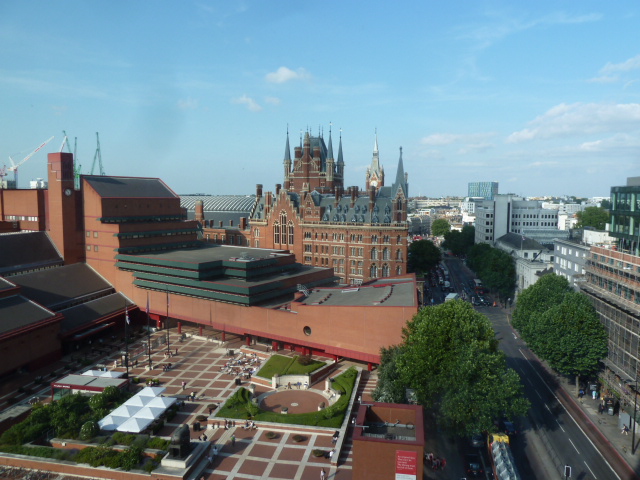
I was undeterred.  We checked into our hotel, the Pullman London St. Pancras, 100 Euston Rd.  On my various trips to London, I try to find hotels in different parts of the city, so I can get to know more of various neighborhoods.  Until recently, the Pullman was part of the French chain, Novotel; it’s had extensive renovation since its purchase by the Pullman chain. It is located immediately west of the British Library which is just west of the St. Pancras Hotel and Station, where the Eurostar operates.  Above, looking east from our floor.

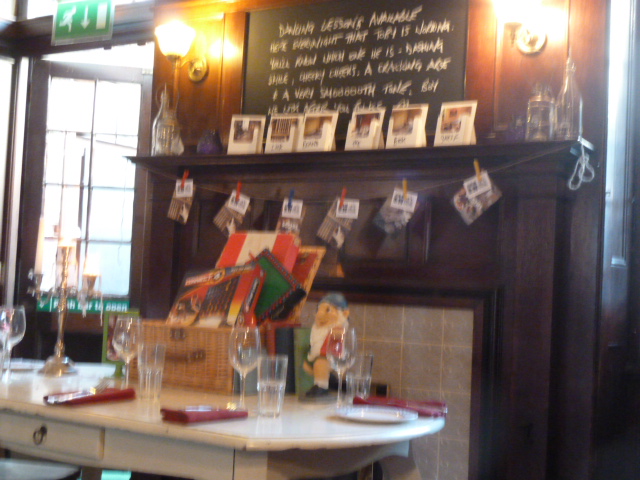
The little bistro where we had dinner featured a gnome on the table.  LOL.
 
Alongside the hotel, Charlton Street has an abundance of pubs, bistros and other small shops, many of which I suspect are under some threat from the extensive gentrification going on around there.  Since the Eurostar moved to St. Pancras, the entire neighborhood has been upgrading, with all the positive and negative features of the process. 
 
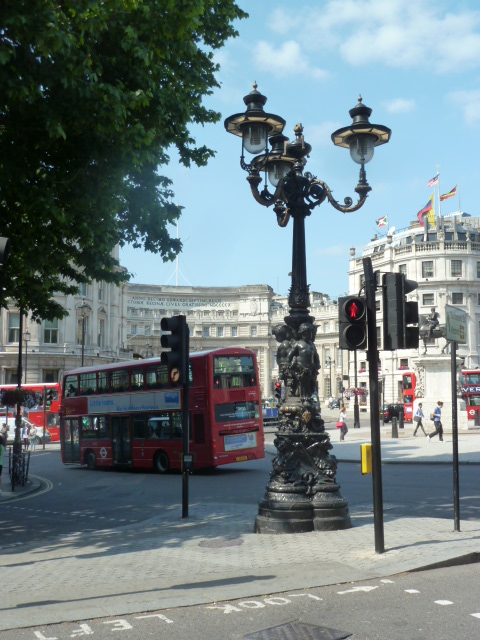
Before leaving for Cambridge, we had one full day in London. In the morning, we started by taking the tube to Charing Cross station and waving our greetings to Charles I as he looks down Whitehall.


Charles I
 
The bronze statue has an interesting history. Charles I (1600-49) took the throne of England after the death of the first Stuart King, his father James I, in 1625.  Hubert Le Sueur, a French sculptor, cast the statue in 1648, but before it was erected, the Civil War broke out and Charles I was beheaded.  The statue was sold for scrap, but the purchaser never broke it down, instead hiding it until after the Restoration in 1660 when Charles II was welcomed back as the new monarch. Charles II purchased the statue of his father and had it installed where it now stands, looking toward the site of his beheading in front of the Banqueting House, about halfway down Whitehall toward Parliament.
 
 
At the junction of The Strand and Whitehall
Charles I is behind the traffic light at the right
 
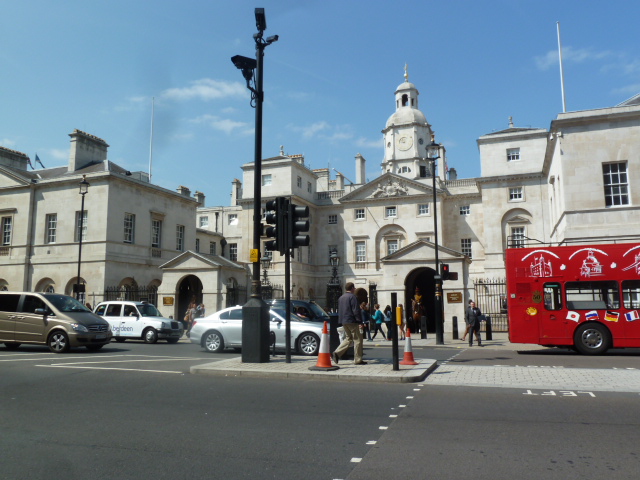
As Ed limped along, we made our way to Horse Guards.
 
“We’ve been there before,:” he reminded me, as if I needed to be told.
 
“Yes,” I replied, thinking if you only knew how many times.  “But we’ve never been to the Household Cavalry Museum.”
 
“Do they have places to sit down?” he said between clenched teeth.
 
“Of course,” I said, not really knowing if there was anything resembling a bench within 500 feet of the place.
 
Horse Guards on Whitehall
 
I tried to divert Ed from his painful left foot by pointing out the Palladian style of the building, completed in 1753  to the plans of William Kent.  “Remember the Kent name,” I said to Ed.  “We’ll run into him later in Norfolk.”
 
Ed looked skeptical.  “I thought we were in Kent a couple of years ago. What do you mean, run into him?”
 
“This time I mean William Kent, the 18th century architect, not the English county.  And definitely nor the cigarette brand I remember from college.” 
 
 Ed shrugged. 
 
 
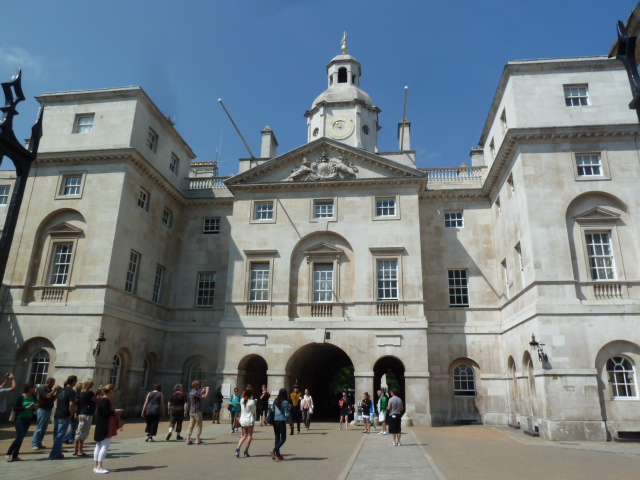
Entering Horse Guards
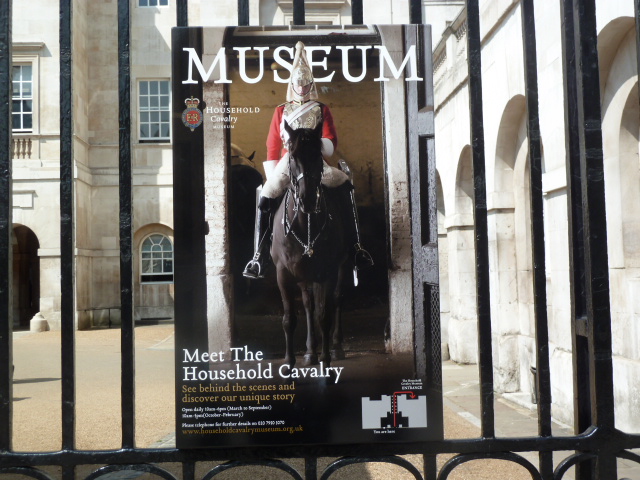
Museum Poster at the gate
 
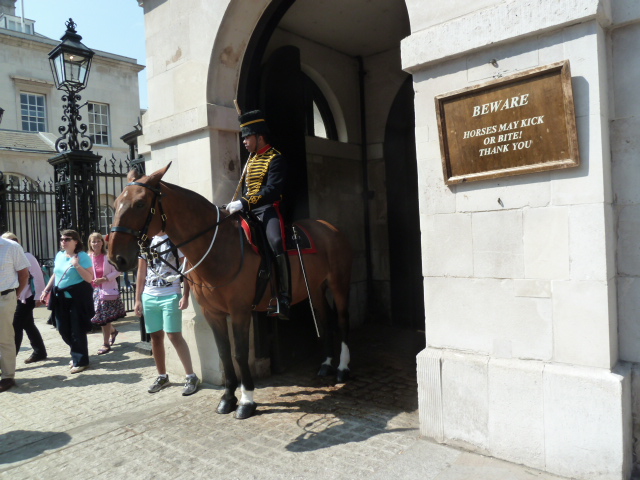
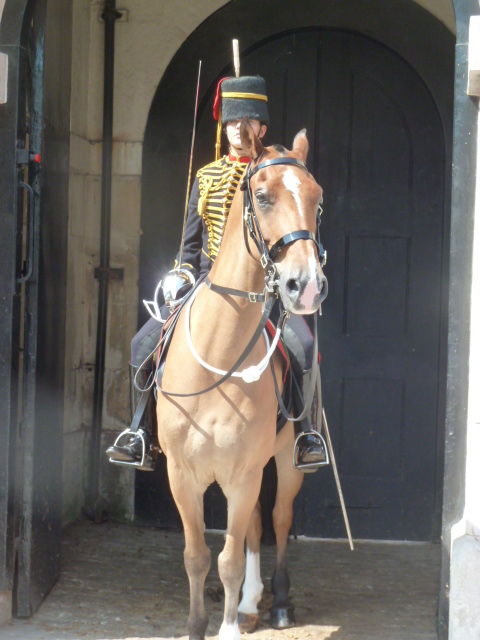
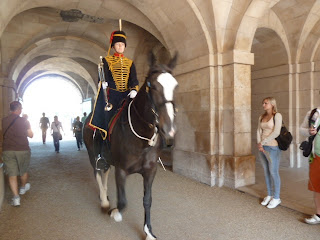
Though I’d visited many times, I had not known about the museum until Kristine and Greg went there (click here) and I had no idea where it was, though I didn’t dare admit it at that moment, not wanting to drag Ed one more step than he needed to make… but what was this?  In the place of the two red-coated guards always on either side of the gate, were riders in Black jackets. What was going on?


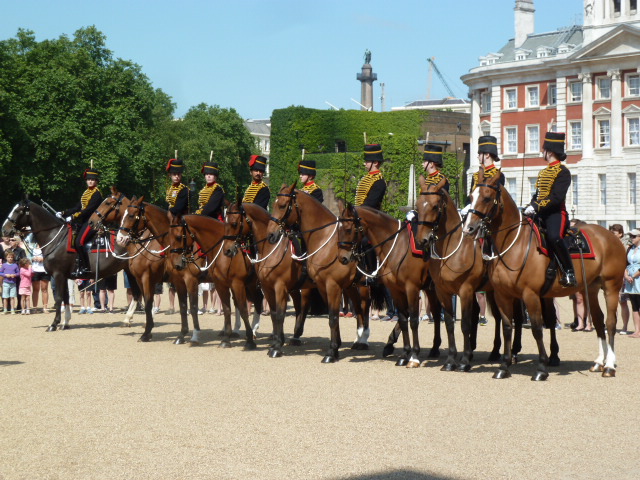
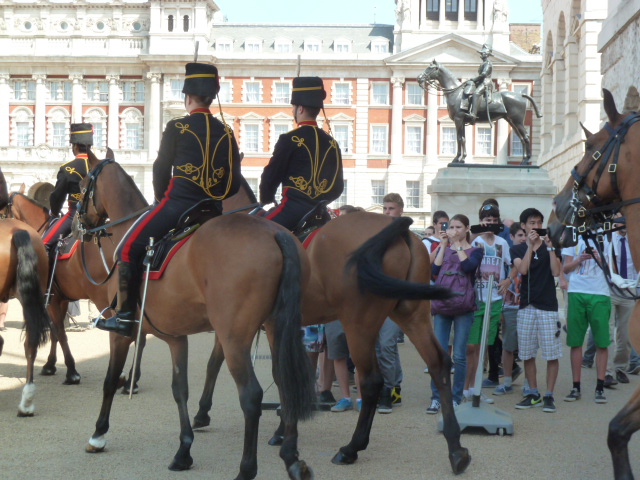
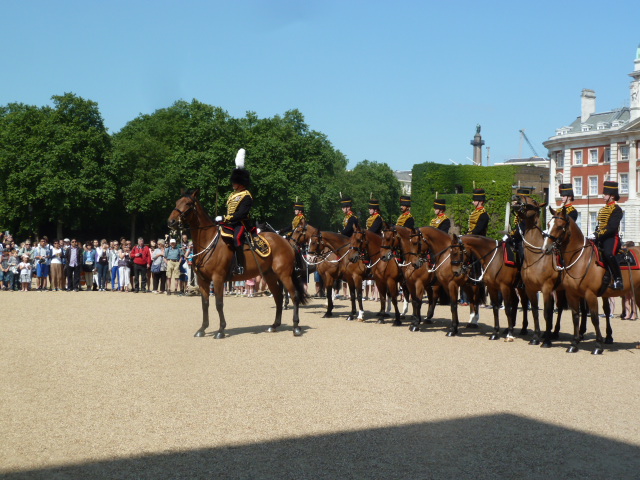
For a moment I wondered where I was,  But there were crowds of people pouring into the parade grounds behind the building.  Something was up.  We followed along and sure enough, there was a group of horses and riders in formation.

 
I think Ed even forgot his aching foot for a few minutes as we watched other riders join in. Below, the bugler arrives.


A good shot of the back of the uniforms.
 
 
There were scads of tourists and hundreds, perhaps thousands of cameras clicking away.  The riders formed up in a line headed by an officer.  Nothing more happened except that the horses stamped and tossed their heads. The riders stayed as motionless as possible.


Horse Guards Parade is the location of the annual Trooping the Color when the Queen reviews the Household Cavalry; it was the tiltyard for jousting of the old Palace of Westminster. During the 2012 Olympics, it was the scene of the Beach Volleyball competition.


Beach Volleyball at Horse Guards Parade, 2012


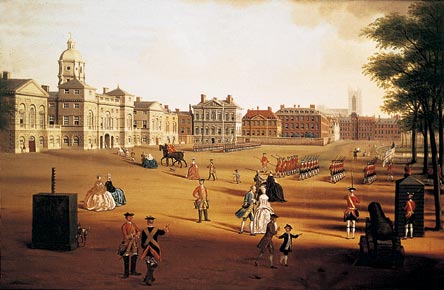
2nd Footguards on parade, by John Chapman, 18th Century
 
Quite a contrast among the views of Horse Guards, isn’t there?  I was happy to say that it showed no bad effects from the Olympics — looked just the same as it had the last time I saw it for the Trooping of the Color in 2011.  For that story, start by clicking here.

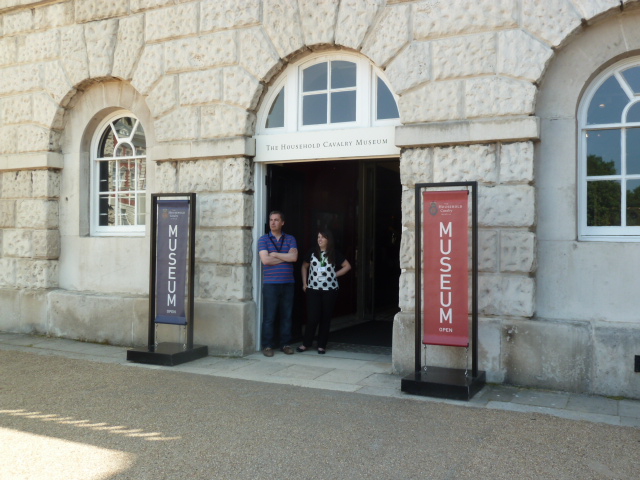
Household Cavalry Museum Entrance


As we stood there watching the unmoving tableau, I looked around for a place for Ed to sit and rest his foot.   Aha!!  The Museum entrance.  Certainly they’d have a bench!

In the next adventure, we solve the mystery of the unusual uniforms on the riders and complete our visit to Horse Guards.  And does Ed find a place to sit??  Coming soon.


A Pinterest Post

The theme of this Pinterest Post is “things that might appear in an historical novel set in London.”

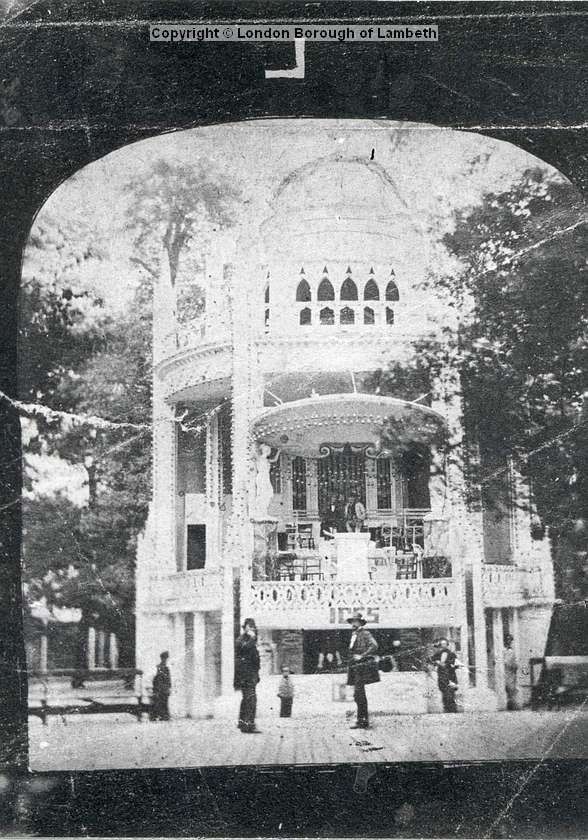
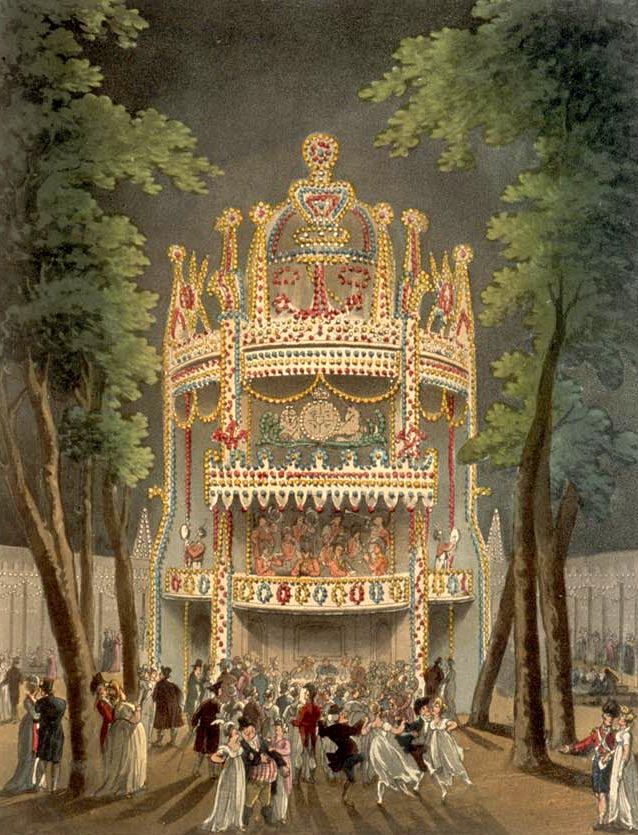
Date : c.1850 The Orchestra Stand at Vauxhall Gardens in the centre of the grove. The organ seen immediately below the roof with the orchestra seats below it and the supper-boxes on the ground floor. This is the first photograph I’ve ever seen of Vauxhall. If you know of others, please share. I must say, the image below paints a much more romantic view of the Gardens. Note: Vauxhall Gardens closed for the last and final time in 1859.


From what I can tell, this was pinned from author Jo Beverly’s Flicker page – small world, isn’t it?


The Crystal Palace fire, November 30, 1936 and the ruins of the Palace below.

 
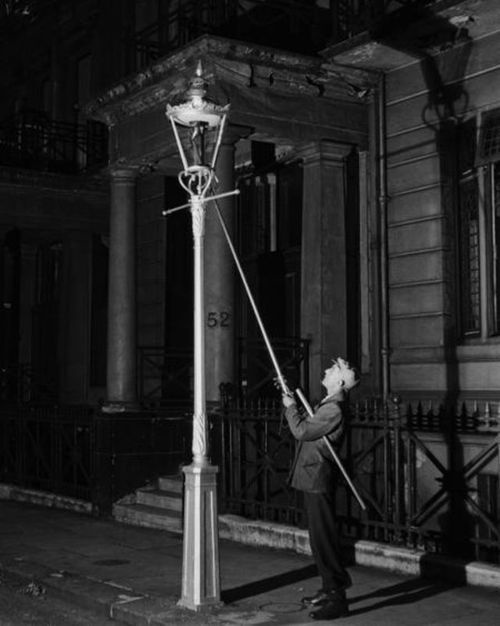
Lamplighter, c.. 1930


This water gate stood at the river’s edge, fifty yards from Samuel Pepys’ house. Built in 1626, as the triumphal entry for the Duke of Buckingham to York House, since the Victoria Embankment was completed in 1870 it has been marooned a hundred yards from the Thames. From  “In Search of Relics of Old London” at Spitalfields Life.

An Edwardian housemaid


1920’s chimney sweep


Coachman and Footmen of the 3rd Lord Egerton of Tatton outside 9 Seamore Place, Mayfair.
Before the Coronation of George V. Cheshire County Council/National Trust.


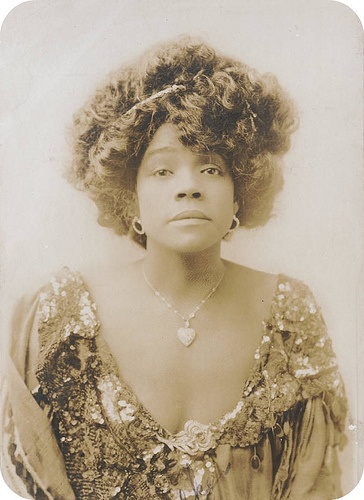
Aida Overton Walker dazzled early-twentieth-century theater audiences with her original dance routines, her enchanting singing voice, and her penchant for elegant costumes. One of the premiere African American women artists of the turn of the century, she popularized the cakewalk and introduced it to English society.

London Cabmen: c.1877, John Thomson
 
 
 1920’s – sheep grazing beside the Serpentine, Hyde Park


You can find all of my Pinterest boards here.

A Couple In England – Day 10 – Part Two

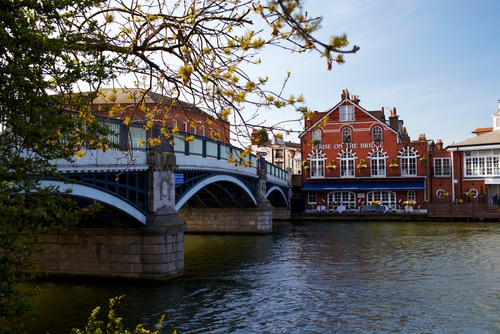
After leaving the Guildhall, Hester and I took a leisurely stroll down to the Thames and stood on the bridge.

“One day I’m going to come back and take the boat ride,” I sighed.

“You’ve never done the boat?” Hester asked.

“No. I never have the time. There’s always somewhere to rush off to see.”

“Speaking of which,” Hester said, looking at her watch, “we’d better get ourselves some lunch before it’s time for the kitchen tour at the Castle.”

So off we went and found ourselves a nearby restaurant, where we ordered tomato basil soup accompanied by warm bread with lashings of butter and two lattes. I can’t recall exactly what Hester and I discussed over the meal, though it had something to do with conducting research at the Royal Archives, the families (ours, rather than Royal) and other odds and ends. Afterwards, we made our way to the Castle.

“Tell me the truth,” I said to Hester as we made our way to the entrance, “are you heartily sick of my dragging you to the Castle? It seems like I make you do it every time I visit.”

“But I’ve never seen the kitchens,” she said. “I’m really looking forward to it.”

We arrived early enough for us to visit the gift shop.


I was on the hunt for a Golden Jubilee item to add to my collection and there wasn’t a shortage of items on offer. Which should I choose?  Hhhmmmm. Before I could decide, it was time for the Kitchen Tour, so Hester and I made our way over to the meeting point.


Above is a rendering of the vast Windsor Castle kitchen in late Georgian days. The present day kitchen tour “takes you behind the scenes to the oldest working kitchen in the country, in constant use for nearly 750 years. Today, staff of the Royal Household use the Great Kitchen to prepare food for both grand ceremonial occasions, such as State Banquets, and more informal events in the royal diary. Your guide will tell you about the devastating fire of 1992 and how restoration work uncovered the Great Kitchen’s original medieval structure. You will hear about royal dining, past and present, and have a fascinating insight into Windsor Castle as a working royal palace.” In addition, the tour includes the State Entrance and the medieval Undercroft, areas not normally open to the public.


 The copper cookware you see in the photo above all bear the cypher of King George IV and the cast iron stoves installed by Prince Albert are still in place, though now rarely used. The kitchens were deserted when we tour them, the photo below being one I swiped off the internet, as photography was not allowed.


As stated above, the tour also included halls and passages that are rarely on show, so that we found ourselves walking through stone corridors that appeared untouched since at least the Georgian era. It was a rare insight into this magnificent building.   


After the tour, we returned to the gift shop, where I finally made up my mind and purchased the Jubilee beaker above. It now holds pride of place on my living room mantle.

The Final Installment In This Series Coming Soon!

England's First Pedestrian Automobile Fatality

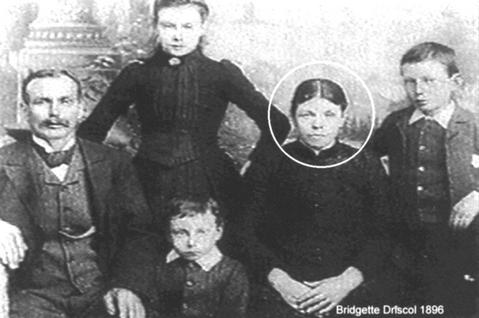
The first person world-wide who died as a result of being hit by a car (not in a car crash) was Mrs. Bridget Driscoll, a 44 year old pedestrian of Croydon, Surrey. As she and her daughter May crossed the road on the grounds of the Crystal Palace on 17 August 1896, a car being driven by Arthur James Edsall of Upper Norwood approached. According to witnesses, the car hit Mrs Driscoll “at tremendous speed,”of about 6 kilometres per hour. The inquest into Mrs Driscoll’s death lasted for about 6 hours, after which the jury returned a verdict of “accidental death.” No prosecution was made. It is rather ironic that the coroner at the inquest, Percy Morrison, stated, “This must never happen again.” You can read the full story at the BBC News Magazine website.

*The first pedestrian killed by a motor car in the United States was Henry Hale Bliss, who was hit by a car in New York City on 14 September 1899.

A Second Aside: Travels in Germany

Victoria here.  Before I go into raptures about my recent visit to England, I will wrap up our preceding couple of weeks on the continent.

My first awareness of the city of  Dresden was by reading Kurt Vonnegut’s 1969 novel Slaughterhouse-Five about the firebombing of Dresden near the end of WWII.  Vonnegut was an American prisoner of war and present for the bombing.


Little was left of the city after the attack.  Here is a picture I found, also available in many places as a postcard, showing the ruins. 


It is hard to believe today that once the city had little left intact, as it has been beautifully reconstructed mostly in the original styles. As in Berlin, the guides made sure our group of American and British tourists knew the story and that the US and UK  carried out the bombing, but they always added the attacks were in retribution for the bombing of Britain by the Germans and other war atrocities.

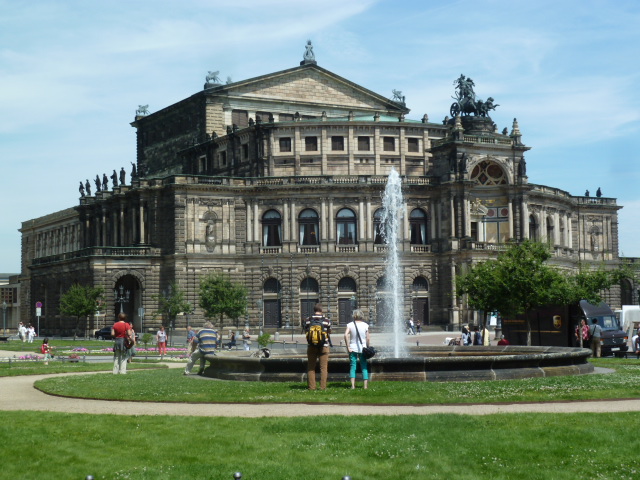
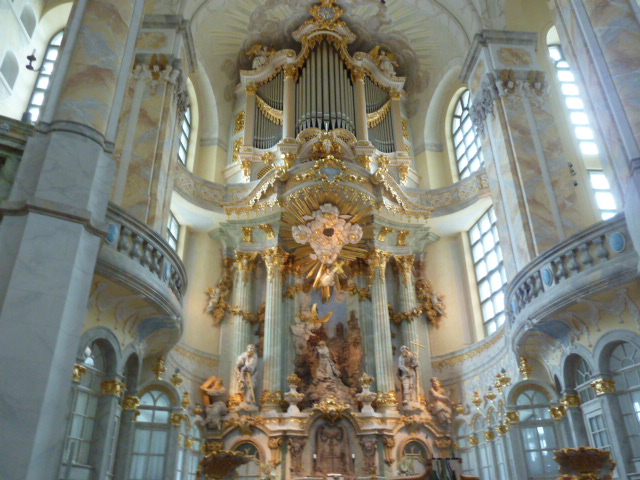
Below are a few views of the city which I found lively and prosperous today, full of fascinating art.

Residenzschloss

Semperopera

interior, Frauenkirche

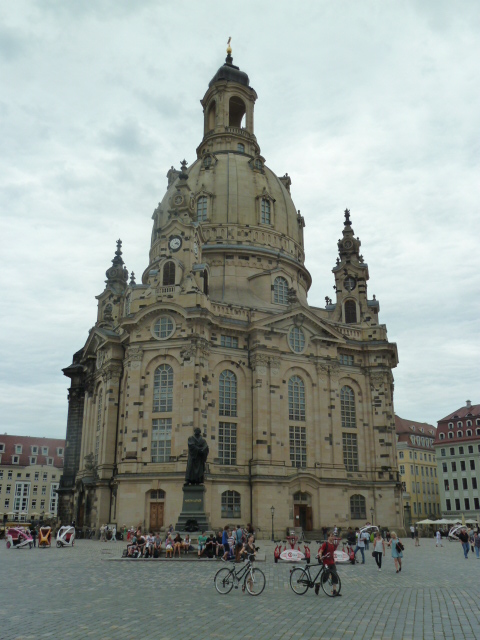
Frauenkirche

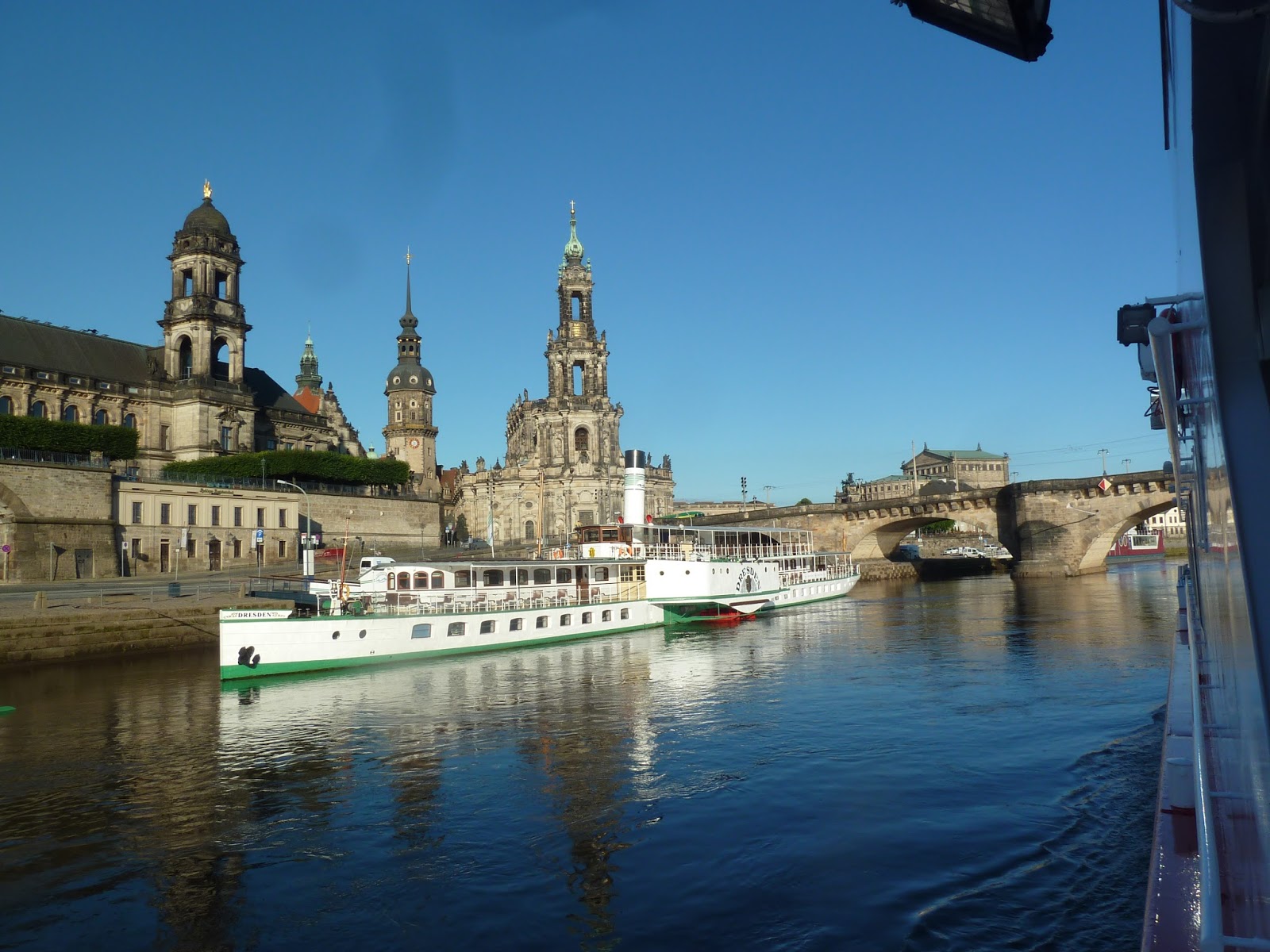
from the Elbe

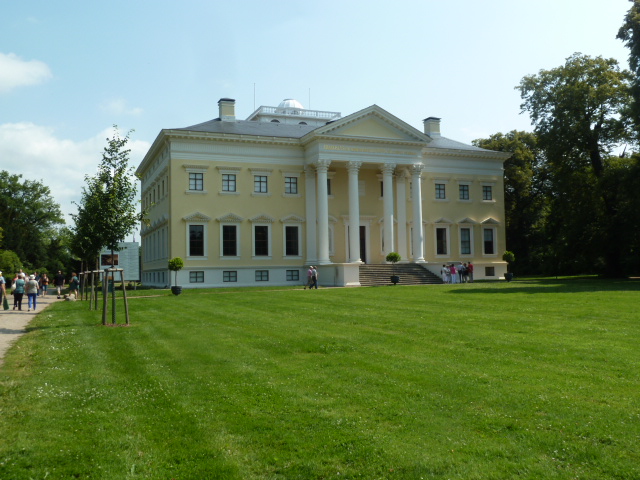
A bit farther down the river, we visited the Worlitz Garden near Dessau. Prince Leopold Friedrich Franz of Anhalt-Dessau (1740-1817) traveled through Holland and England when he was hardly more than a teen.  He loved the architecture and gardens he saw and created his own Landscape Garden and mansion in the Georgian style, completed in 1783.  It is now a UNESCO World Heritage site, a little bit of Capability Brown and his cohorts in Germany.  For more information, click here.
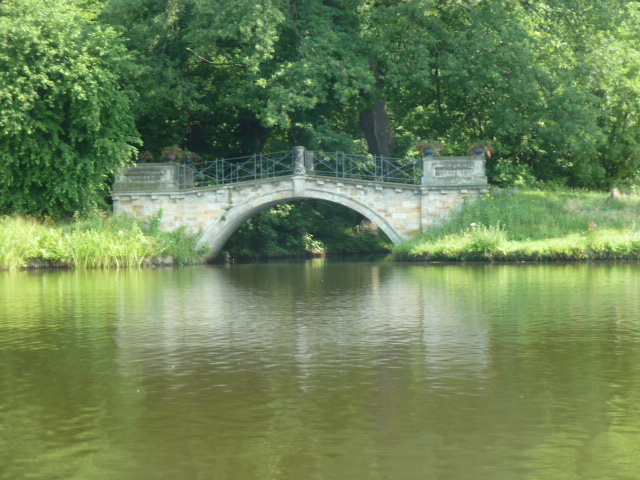
To the delight of Ed’s suffering foot, we took a boat ride around the lakes and canals, which looked like many gardens we’ve visited in Britain.

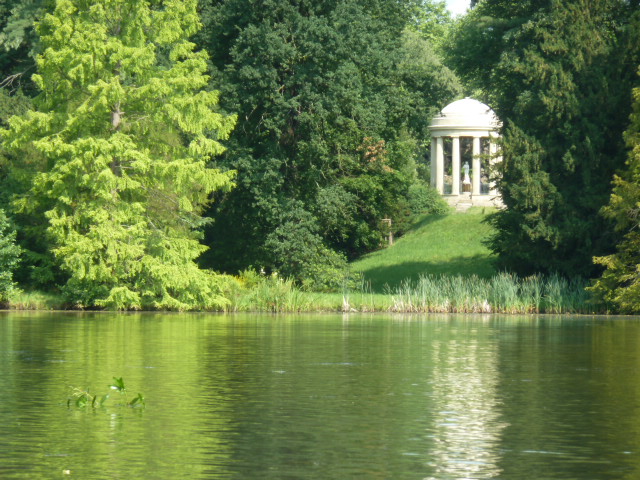
Venustemple
 

Gotisches Haus 


Landhaus
 

The guides pointed out the resemblance of the Landhaus to another famous house built about the same time in Washington, D.C., but I could find no specific information that the architects of either one consulted the other, just chose the currently fashionable neo-classic style for their buildings. The Landhaus was the work of Friedrich Wilhelm von Erdmannsdorff (1736-1800); the White House was built by architect Benjamin H. B. Latrobe (1764 – 1820).


The White House

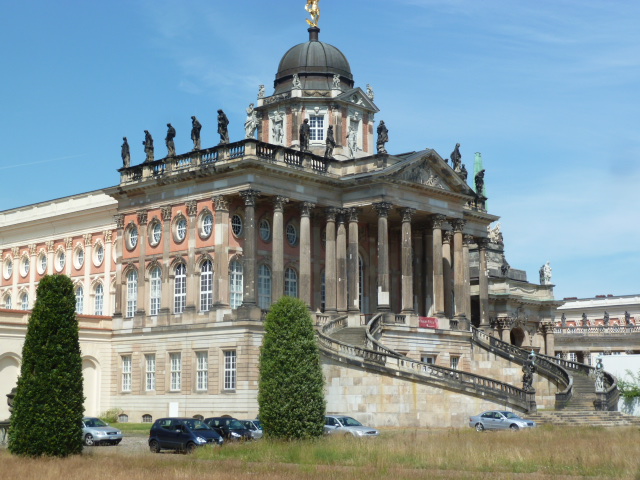
A few days later, we left the River Elbe and the MV Clara Schumann and bussed to Potsdam, on the outskirts of Berlin, where we toured the Neues Palais, vast structures in acres of parks,
worthy of several more days browsing. 

 
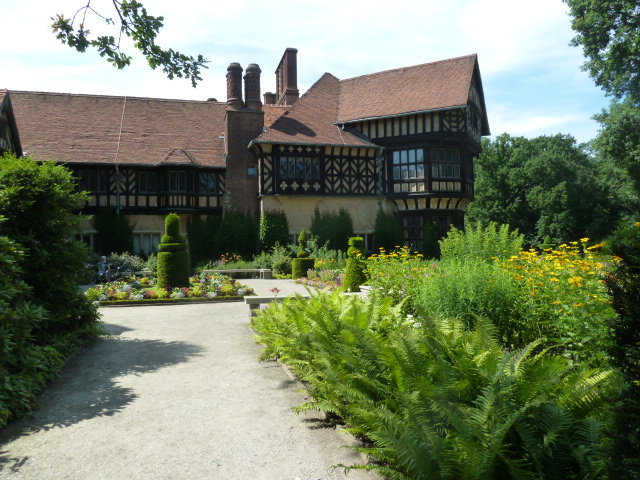
We made a stop at the palace where the Potsdam Agreement was drawn up in 1945, making plans for the governance of Germany.  To my utter surprise, it looked like a slice of Shakespeare’s England.


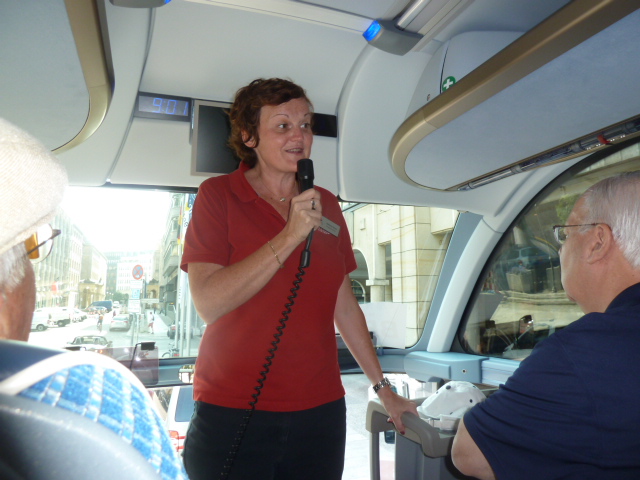
When we arrived in Berlin, we had to say farewell to our Cruise Director Stefanie who had so capably guided us all the way from Prague.  She is charming and witty and we thank her very much!


Here are a few views of our trips through Berlin…only a little truncated by Ed’s malady.  We did manage to see quite a lot as he soldiered on despite his pain. 

Berlin is in the midst of another great boom in building….crowded with every teenager in Europe and  from Japan, at least those who weren’t in London!


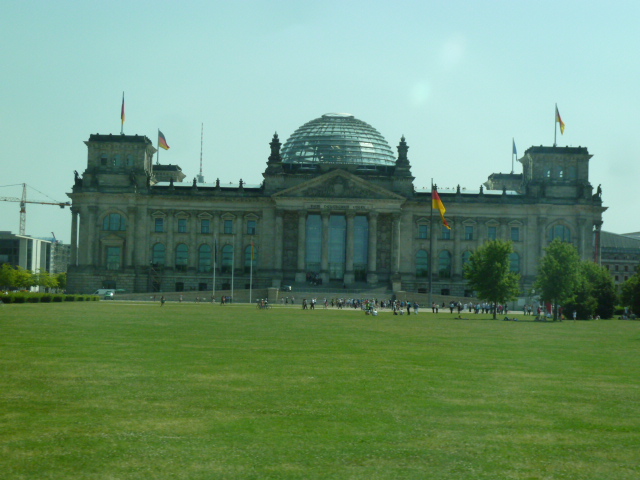
Reichstag
 

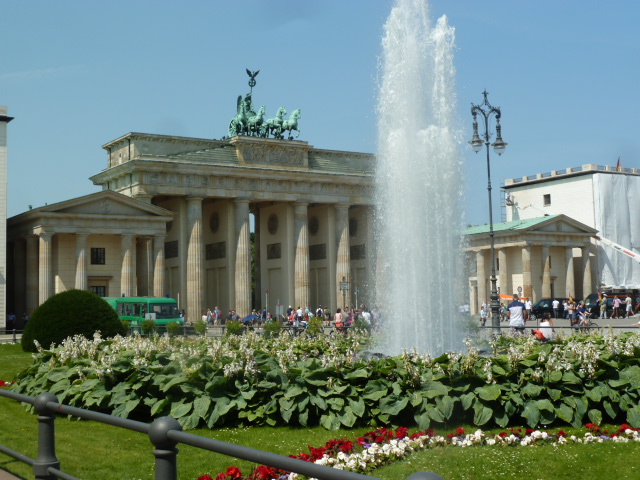
Brandenburger Tor
 

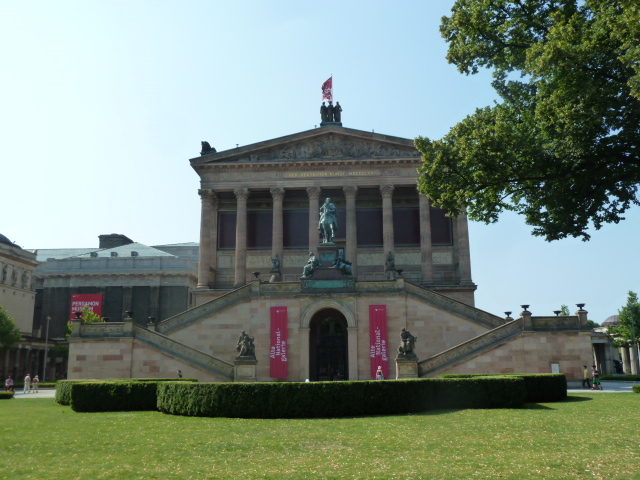
Neues Museum
 
 
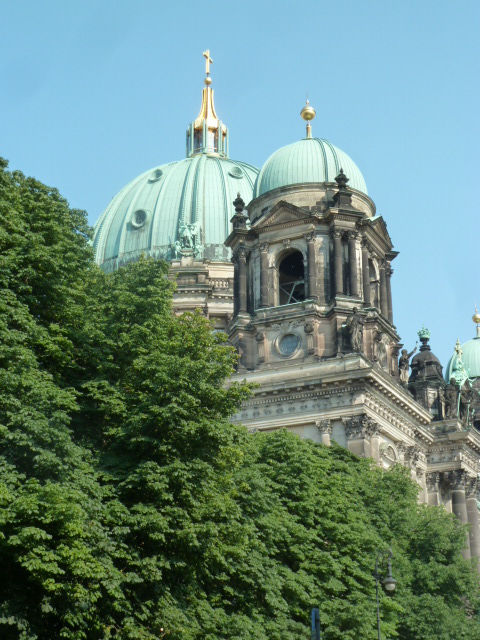
Berliner Dom

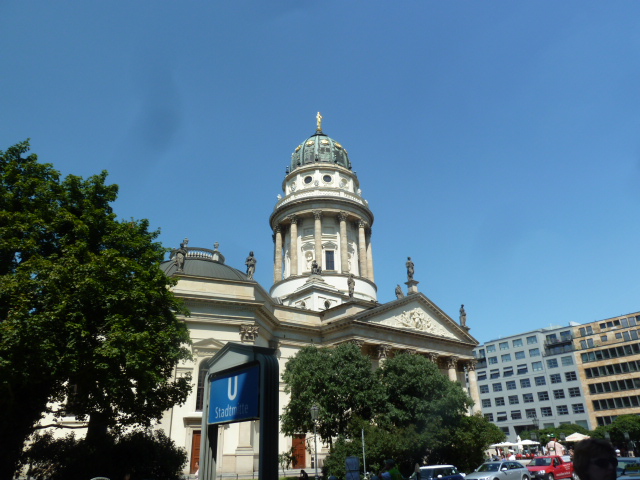
Deutscher Dom, now a museum of German history, on the Gendarmenmarkt
 
 
By the time we flew from Berlin to Heathrow to whirl through our seven days in London, Ed’s toe blisters were excruciating and even with many layers of bandages and padding, always hurting.  As I e-mailed to Kristine, at least we had avoided the cholera! 
 
Coming next: London, Cambridge, Houghton Hall, Holkham Hall, and more London