
Gallica Belgica was the name of a Roman province in northern Gaul. The region often called “the low countries” has been the scene of many wars, involving the French, the Habsburgs, the Austrians, the Spanish, and various Germanic peoples. Cities in the region were important trading partners of Britain across the North Sea.
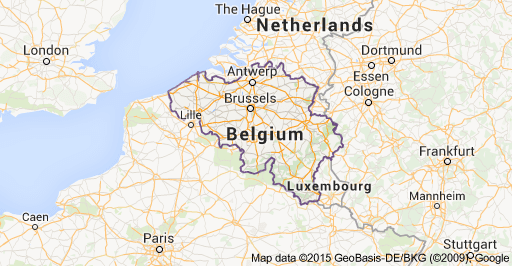
Under Napoleon, France absorbed parts of the low countries, which were brought together as the United Kingdom of the Netherlands in 1815 in a settlement agreed at the Congress of Vienna but carried out in effect by the man who became King William I of the United Kingdom of the Netherlands, a prince of the House of Orange-Nassau.

In 1815, King William insisted that his son, the young William, Prince of Orange, be given a leading role in the upcoming battles against Napoleon. The Duke of Wellington and his staff thought little of the military experience and capabilities of Slender Billy (who incidentally had been a suitor of Princess Charlotte of Wales — for more about her, see below). The unfortunate Prince was wounded in the battle; the Lion Mound, constructed 1820-26 at the site of the battle, is a memorial to him.

The Prince of Orange went on to be King William II of the Netherlands from 1840 to his death in 1849. The southern provinces had revolted and set up the Bellgian government in 1830-31. Shortly before William II died, Holland became a constitutional monarchy, which is the form of its government today.

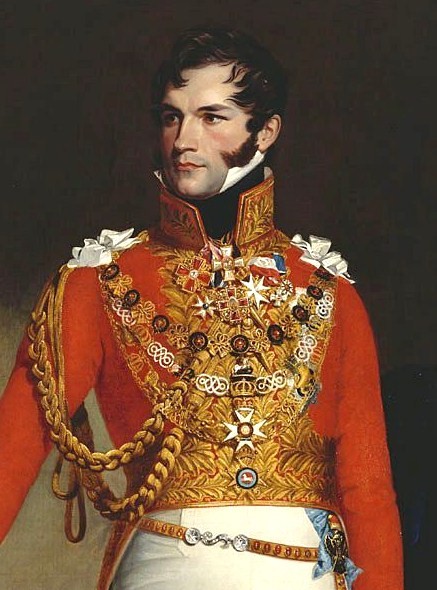
In 1830-31 the southern areas of the Kingdom of the Netherlands gained independence and set up the independent nation of Belgium as a constitutional monarchy. Chosen as first King of Belgium was Leopold I, formerly Prince of Saxe-Coburg, husband of the late Princess Charlotte of Wales
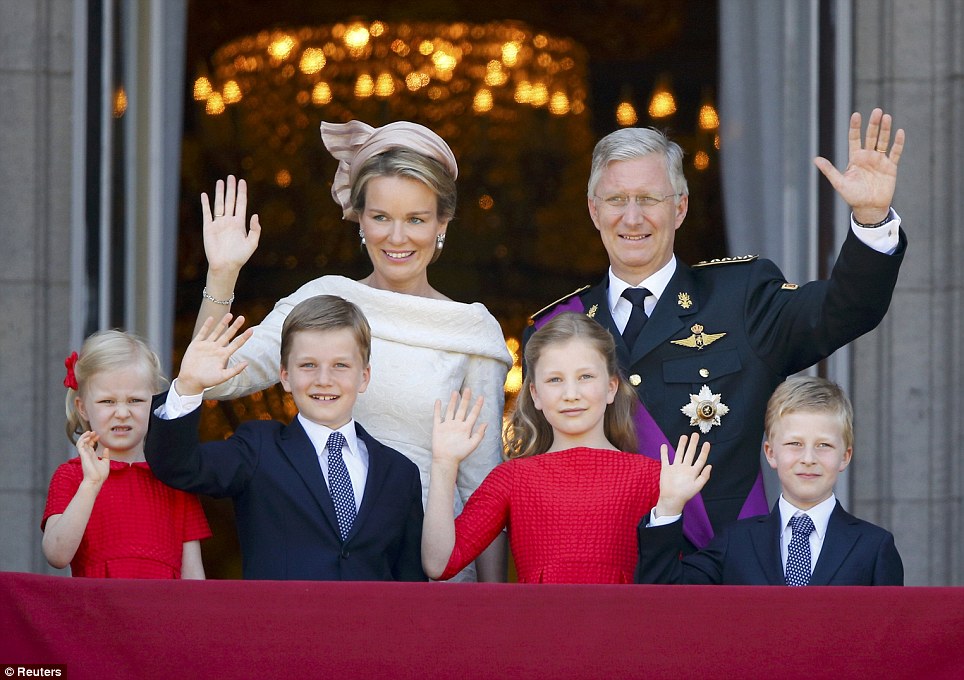
Princess Charlotte of Wales (1796-1817),was the daughter of the Prince Regent and his wife Caroline of Brunswick, Princess of Wales (1796-1821). The current Belgian royal family descends from Leopold and his second wife, Louise of Orleans (1812-1850), but Leopold retained important influence over British affairs.


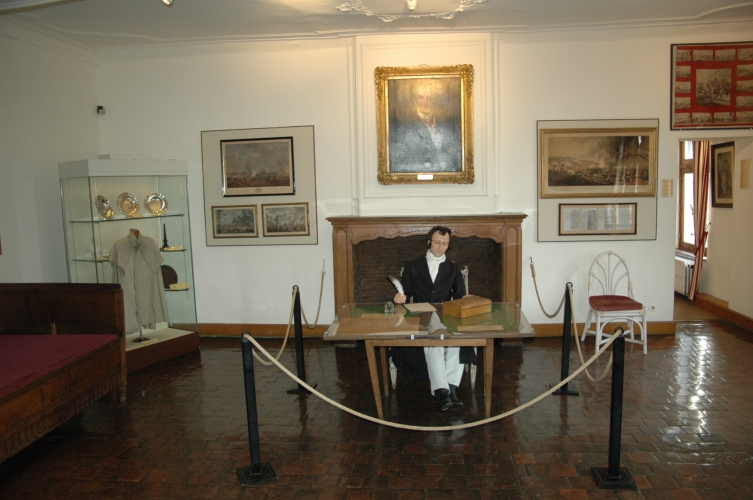
The town of Waterloo is a few miles south of the capital of Brussels, something now of a commuter bedroom community. The Duke of Wellington had investigated the ground south of Waterloo, near the farm of Mont St. Jean, and chose it as the site where he would stand and repel the attacking French armies of Napoleon. Wellington spent the night before the battle in the village inn, now the Wellington Museum.


The battle ground was a mile or so south of Waterloo, near the farm of Mont St. Jean.


The battlefield started as farmland, high with crops of rye and wheat, much as it is today. Heavy rains of the night before had inundated the area, making a sea of mud into which the crops were trampled by guns, horses, and men’s feet.


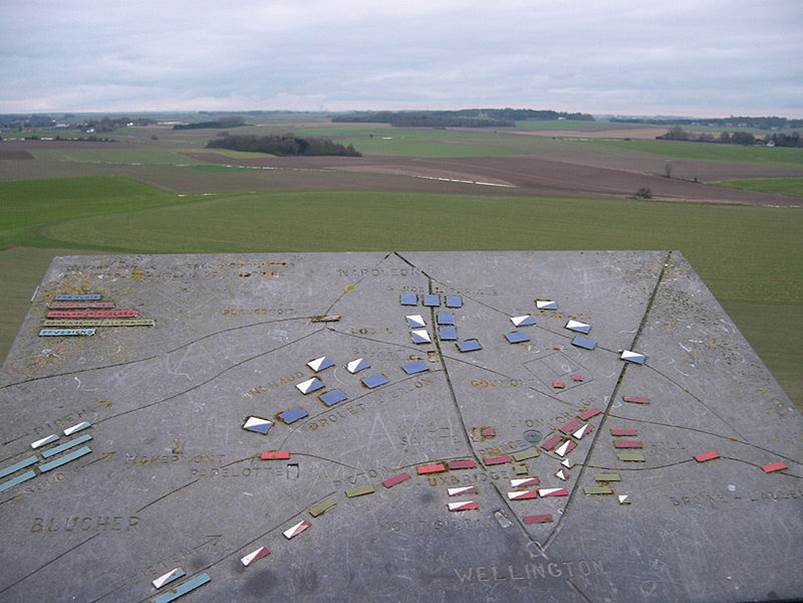
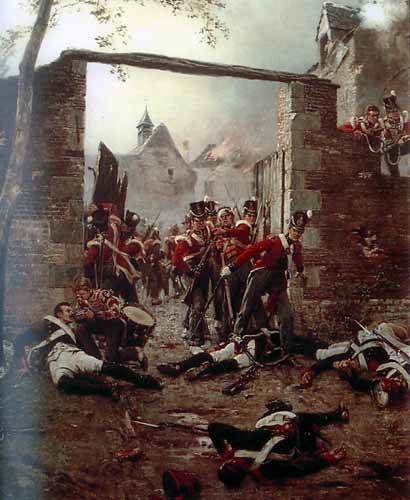
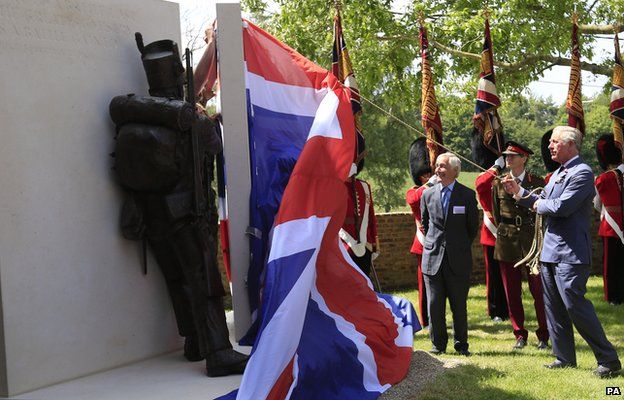
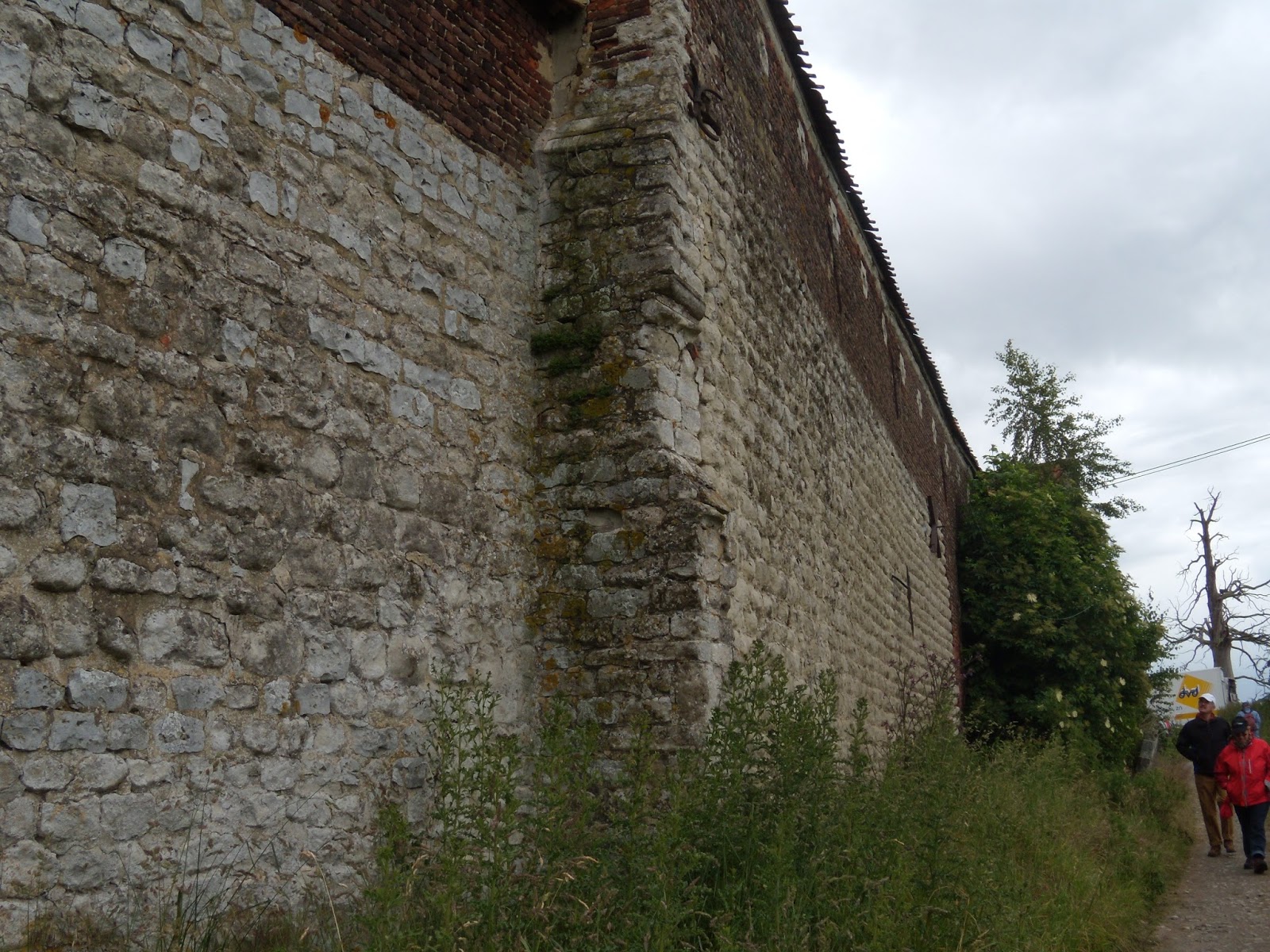
Two farms occupied the ground between the slight Ridge at Mont St. Jean and the opposing ridge before which Napoleon arrayed his troops on the morning of June 18, 1815. The smaller farm was La Haye Sainte, the largest Chateau Hougoumont. Both are still there.






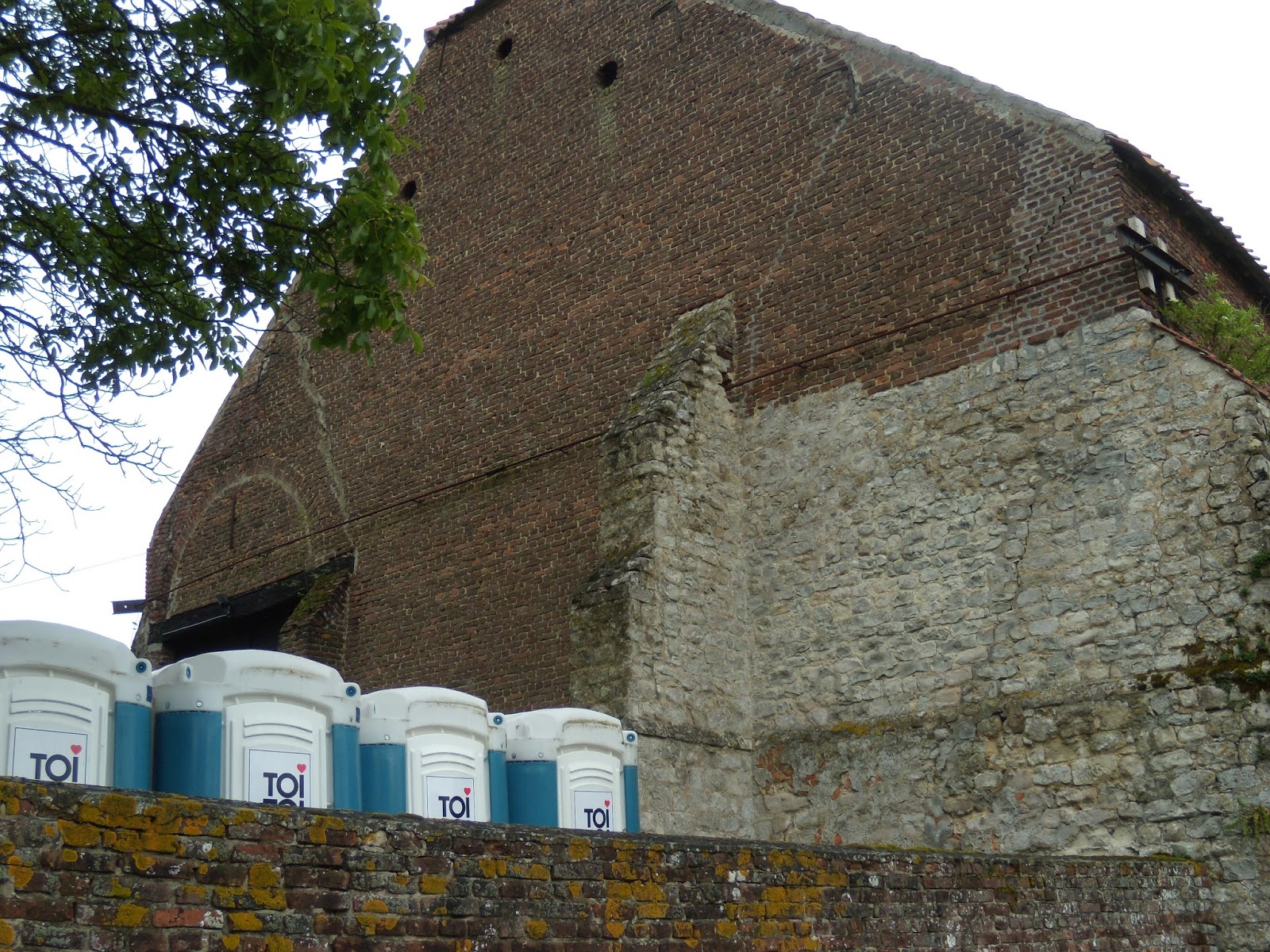


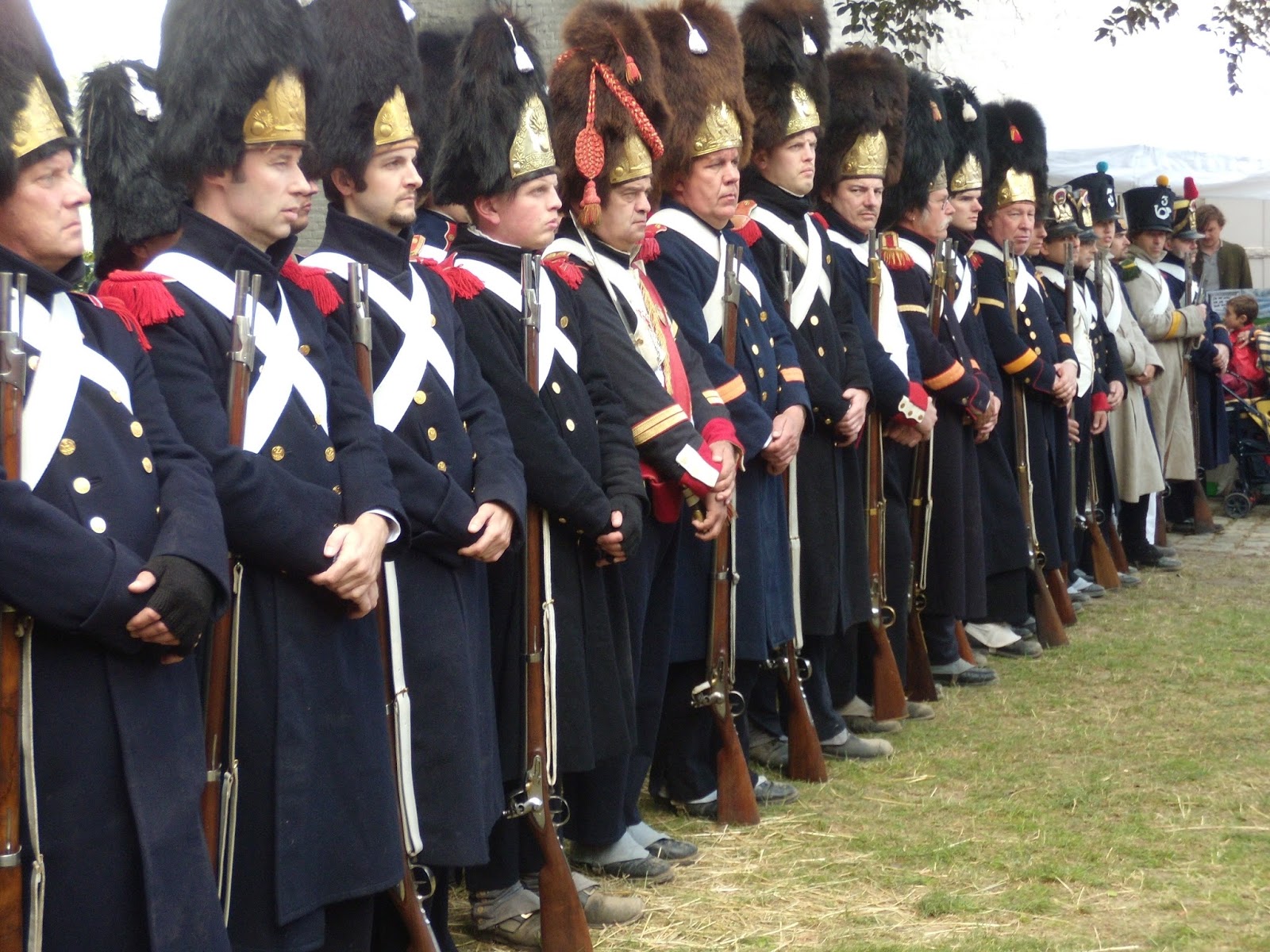
If you can travel to Waterloo and visit the other fascinations of Belgium, we highly recommend it!
THE NEWS FROM WATERLOO
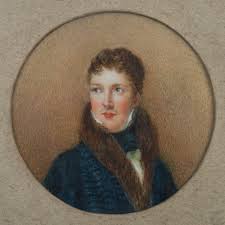
Everyone who has an interest in either the Duke of Wellington or the Battle of Waterloo has heard of Henry Percy, above, the officer sent from Brussels to London on a mission to deliver Wellington’s Waterloo Despatch – the official report that would unquestionably confirm the Allied victory at Waterloo.
Percy’s ride was recently recreated for the 200th Anniversry of the Battle of Waterloo and many legends, romantic or otherwise, have arisen from the Duchess of Richmond’s Ball, the Battle of Waterloo and Percy’s famous ride. Below you’ll see the uniform Percy wore to the Ball, during the Battle and for the duration of his ride to London – more from the Waterloo200 website here.

“This wallet or sachet of purple silk velvet and crepe, maker unknown, is traditionally said to be a lady’s handkerchief sachet. It played a vital role after the Battle of Waterloo, as it was in this case that the Waterloo Dispatch travelled back to London from Belgium. The Dispatch, carried by Major Henry Percy, was the Duke of Wellington’s account of the battle, and was the first news received by the British government of the Allied victory. The case is photographed on Major Percy’s uniform in which he fought at Waterloo.”
What we have not heard before now are the details of Percy’s journey to London and of the many others who played a part in the delivery of the Despatch. I’ve just finished reading Brian Cathcart’s excellent account of the story behind Percy’s ride and the many ways in which the Allied victory impacted Britain, English society and Europe as a whole.

From the publisher:


THE WELLINGTON TOUR: DINNER AT THE GRENADIER
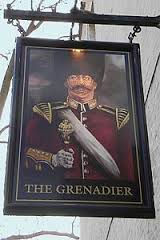
After spending our day steeped in All Things Wellington via visits to Apsley House, the Wellington Arch, the Tower and Horseguards, there really was no question as to how to end the day – with dinner at the Grenadier Pub, of course.

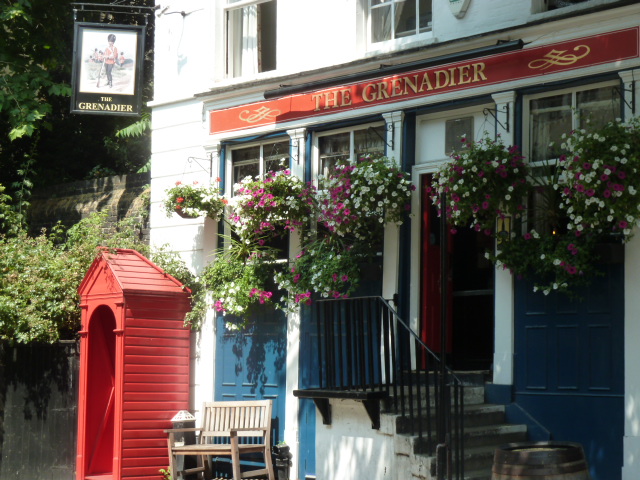
We’ve posted about the Grenadier in the past – here’s link with some good background and history. Read this post and then return here to finish reading this post about our Tour dinner.

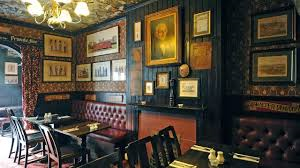


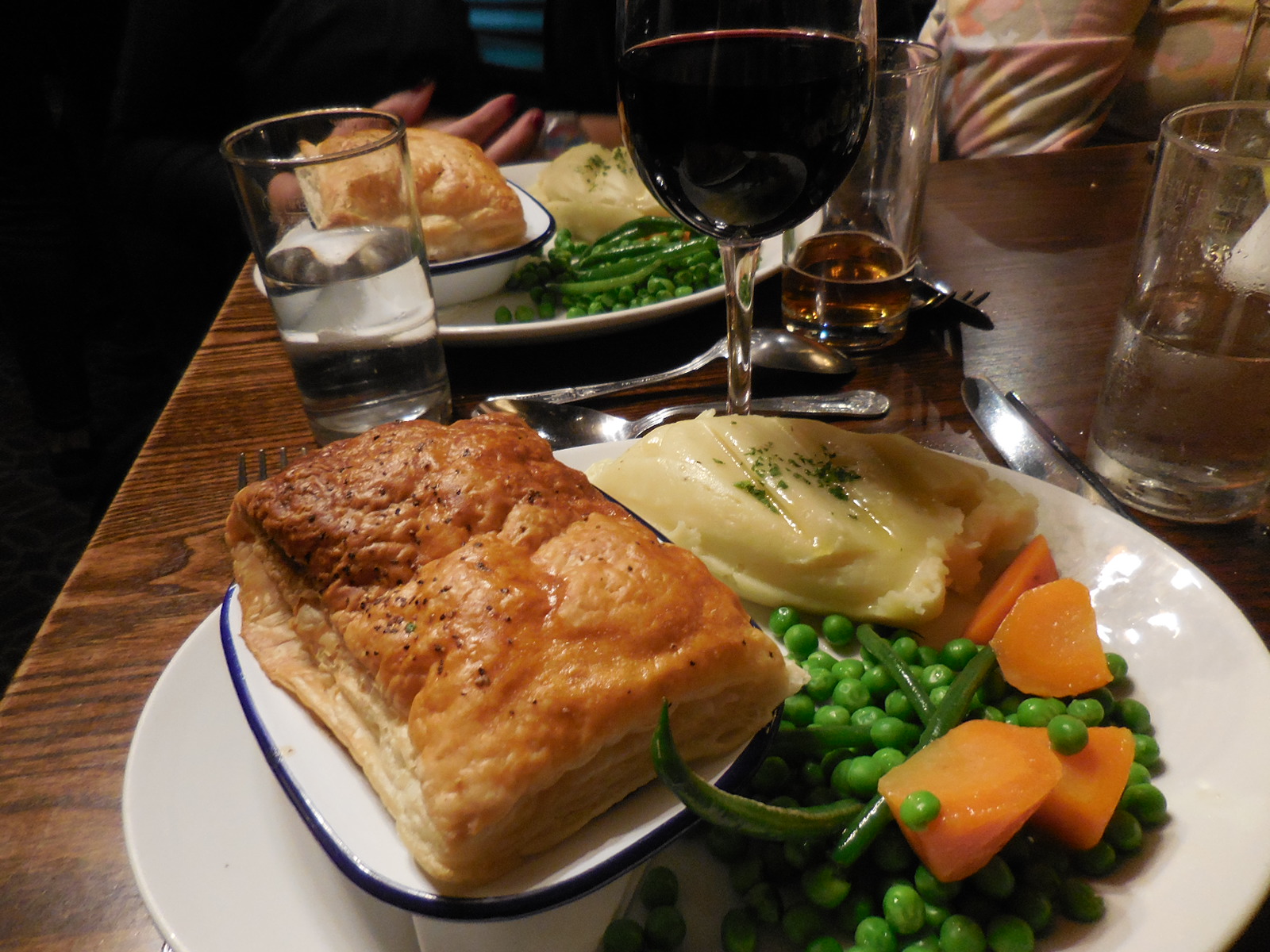
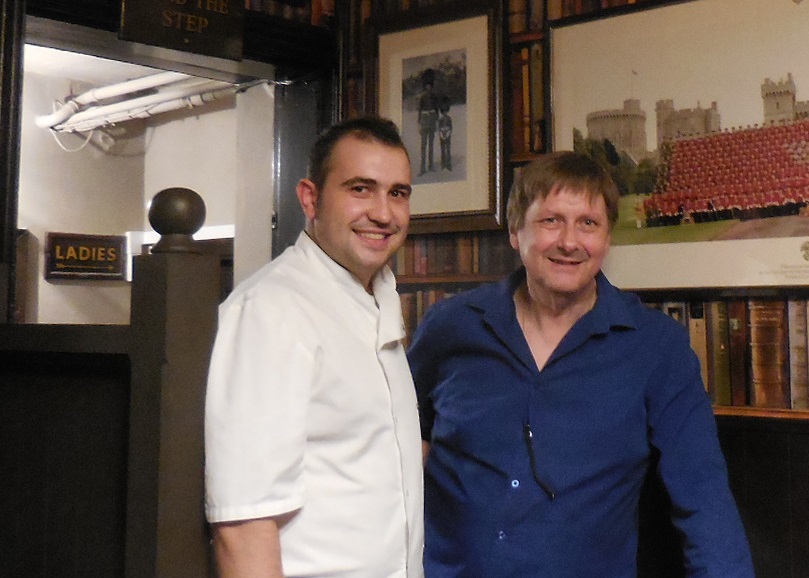


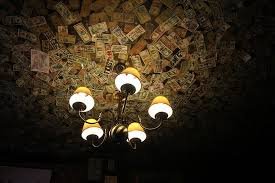

Much More Wellington Tour to Come!
NAPOLEON'S FAMILY AFTER WATERLOO

Empress Marie-Louise (1791-1847)

Marie-Louise was awarded the Duchy of Parma and other territories in the settlement after Napoleon’s first abdication in 1814. She fled home to Vienna with her son, never to see her husband again. The attendant on her flight, Count Adam Albert von Neipperg, later became her second husband and father of her three more children. After Neipperg’s death, her third husband was another chamberlain, Count Charles Rene de Bombelles. Both of these men had been placed in her entourage by Metternich, perhaps to keep her occupied and away from meddling in Austrian politics? Marie-Louise ruled as the Duchess of Parma until her death.

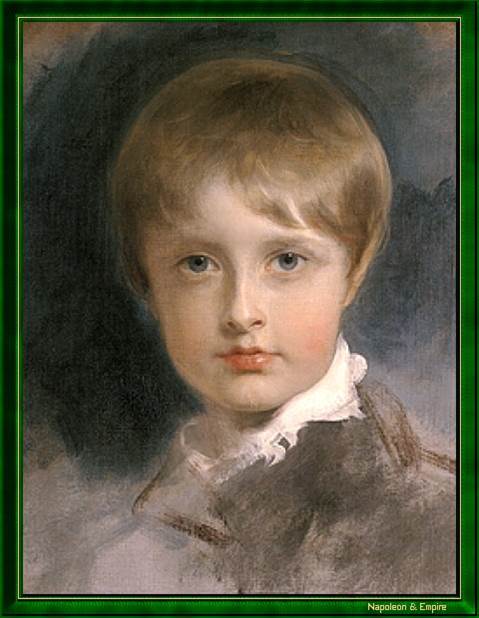


In 1831, the Duc de Reichstadt received a commission as head of a battalion, but he died soon thereafter of tuberculosis. He was twenty-one years of age.


Eugène de Beauharnais was the son of Josephine and her first husband Alexandre de Beauharnais, who was guillotined in the Terror. Napoleon adopted Eugène, and appointed him to command the Italian Army, which he commanded in the Russian campaign. He led the remainder of the army out of Russia in 1813, then fought in several more battles that year. When Napoleon abdicated the first time, Eugene moved to Munich with his wife, the daughter of King Maximilian of Bavaria. He died as Duke of Leuchtenberg and Prince of Eichstatt in 1824.
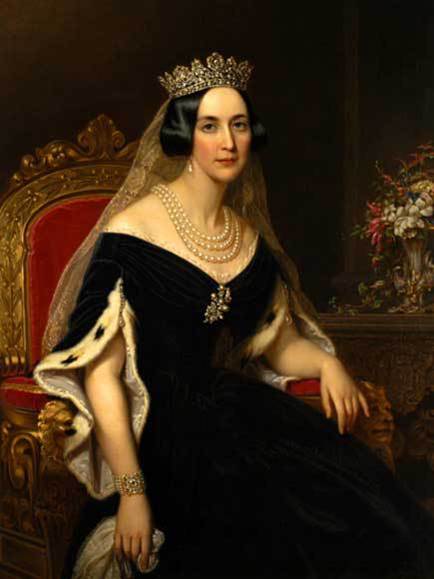
Eugene’s daughter, Princess Josephine of Leuchtenberg, married Oscar Bernadotte in 1823, who became Oscar I, King of Sweden, upon the death of his father King Charles XIV, a former Napoleonic general known as Count Jean-Baptiste Bernadotte until he was chosen as the Swedish Crown Prince in 1810.


Hortense (1783-1837), Josephine and Alexandre’s daughter, was also adopted by Napoleon. She married Napoleon’s younger brother Louis (1778-1846), King of Holland in the years 1806-10. Their son became Napoleon III (1808-1873) Emperor of the French in the years 1852-1870. He died in exile in England in 1873.

Napoleon III, Emperor of the Second French Empire, was the nephew of Napoleon I. He was born to Hortense and Louis as Louis-Napoleon. He became president of the 2nd French Republic in 1848, then Emperor four years later. He was captured by the Prussians in 1870 and exiled to England for the rest of his life.

Joseph lived in the U.S. from 1817 to 1832, in New Jersey, near Bordentown. He returned to Europe and died in Florence Italy in 1844.
Lucien Bonaparte (1775-1840) was the third brother, one who avoided a royal name until after Napoleon’s first restoration. Early on, he was a dedicated republican but nevertheless assisted Napoleon in gaining power.

In his later life, he was an active archaeologist. He married twice and had a total of thirteen children.

The fourth brother Louis Bonaparte (1778-1846) became the King of Holland 1806-1810(see above).

The youngest (fifth) brother to survive infancy, Jerome (1784-1860), was King of Westphalia (1807-1813). In 1803, he married Elizabeth “Betsey” Patterson (1785-1879) in Baltimore, Maryland.

Napoleon was outraged and ordered Jerome back to France to begin annulment and/or divorce proceedings. Betsy, now pregnant, came with him and they attempted to land in France but were turned away. Jerome went to Italy to reason with his brother Joseph. Meanwhile Betsey went to England where her son, Jerome Bonaparte II was born. Betsey and Jerome never saw one another again.
Jerome considered the marriage annulled and actually married again, but Betsey continued working for a divorce from him which she was granted in Baltimore in 1815. Betsey’s sister-in-law Marianne Caton Patterson, in a strange turn of events, later went to Europe with her Caton sisters and enjoyed an active social life. Though Marianne was admired by the Duke of Wellington, she chose to marry his elder brother, Richard, 1st Marquess Wellesley, in 1825, as his second wife. Though it was not known as a happy marriage, it endured until his death in 1842. Marianne (or Mary Ann as it is sometimes spelled) became a Lady of the Bechamber to Queen Adelaide in 1830.
Betsey lived to age 92, and died in Baltimore in 1879. Jerome Bonaparte II (1805-1870) married and had two sons, one of whom, Charles Joseph Bonaparte (1851-1921), served as U.S. Attorney General and Secretary of the Navy.
The eldest of Napoleon’s three sisters was known as Elisa (1777-1820). At various times in her life she was the Princess of Lucca nd Grand Duchess of Tuscany. She was married to a Corsican noble Felice Pasquale Baciocchi (1762-1841), who took the surname Levoy. They had four children, two of whom lived to adulthood. She preceded Napoleon in death.

Pauline Bonaparte, Princess Borghese, with their mother, supported her brother on Elba in his exile, also lived in Rome after 1815. She and her first husband, one of Napoleon’s generals, had one child, a son who died at age six.

With her second husband, Prince Borghese, she had no children. Pauline died at age 45 of tuberculosis. For more on her life, see the wonderful report on her found on Elizabeth Kerri Mahon’s blog, here.
Caroline Bonaparte (1782-1839) was the youngest of the sisters of Napoleon who survived infancy.
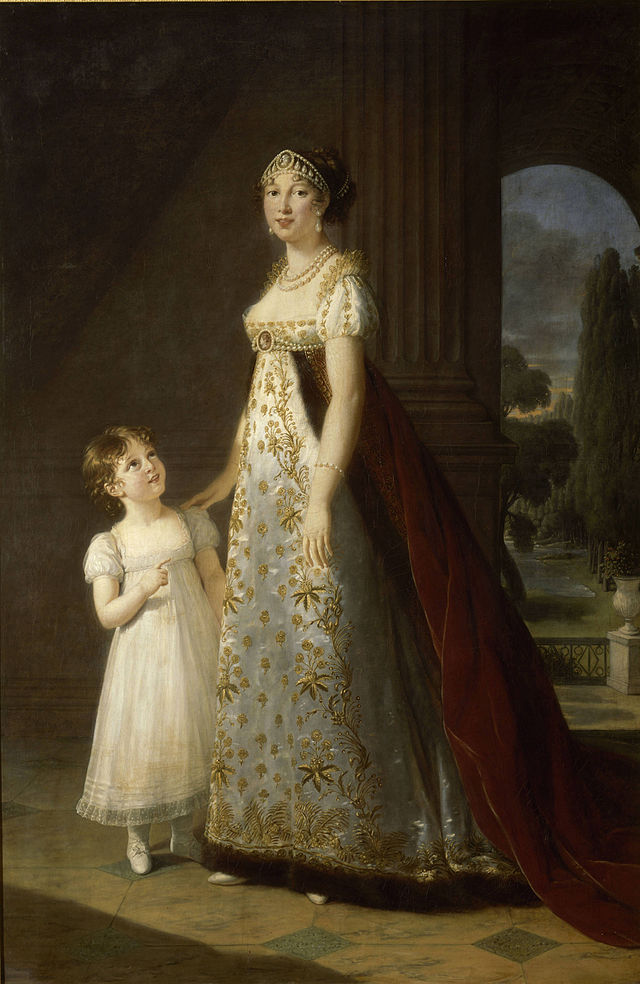
Caroline was married to Joachim Murat, a French general. Among other titles, she became the Queen of Naples in 1808 when her husband succeeded his brother-in-law Joseph on the throne. When Murat declared for Napoleon during the hundred days in 1815, he was deposed and executed. Calling herself Countess of Lipona. she lived in Austria and married again in 1830.
Of her four children with Murat, the eldest, Achille Charles Louis Napoleon Murat (1801-1847) lived in the United States, Florida in particular, where he died without issue.
Current head of the House of Bonaparte is Charles, Prince Bonaparte, b. 1950, who lives in France. He is a descendant of Jerome Bonaparte.

And finally there is Jean-Christope Bonaparte, Napoleon’s great-great-great-great-nephew through his brother Jerome and who apparently got his looks from the Canova statue of Napoleon. His father is seen in the photo above. A number of the crowned heads of Europe consider Jean-Christophe to be Head of the former Imperial House of France and heir to Napoleon’s legacy.

THE PELL MELL THEATRE COMPANY STAGES TWELFTH NIGHT AT CANARY WHARF
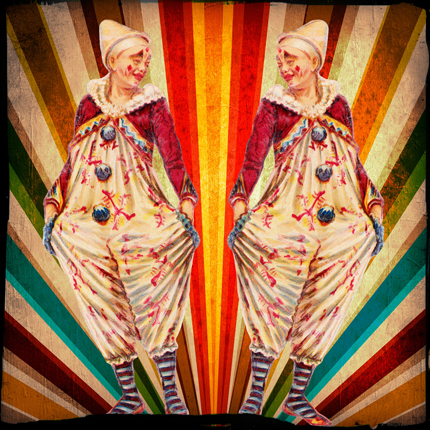
Twelfth Night By the very fangs of malice I swear, I am not that I play…
Pell Mell Theatre Company are delighted to announce their upcoming production of “Twelfth Night” at the Space Theatre. In his decadent, decaying music hall Orsino, a maniacal master of ceremonies, is desperate to pull his former leading lady Olivia, lost in a sinkhole of depression, back onto the stage and into his arms. The only one who can bring a smile back to her face is Orsinoʼs newest recruit, the clown Cesario, a youth with remarkable talents, not only for avoiding uncomfortable questions about the past but also, it seems, for appearing in two places at once…
Using Shakespeareʼs stunningly lyric text alongside a wide range of live music, dance and circus performance Pell Mell presents a bold, boisterous exploration of love, madness and identity as storms rage, families break apart and a steward called Malvolio comes to regret his choice of stockings!
Director Natalie York says “Shakespeare’s text is packed so full of music, magic and deception, for us it fitted perfectly in the world of a theatre where no one is quite who they say they are or what they want to be. The hierarchies, petty jealousies and wild emotions that drive this twisted, brilliant comedy take on a new sense of reality and absurdity amongst gossiping showgirls, arrogant leading ladies, unpredictable clowns and obsessive fans.”
Pell Mell Theatre Company brings its trademark extravagant style to bear on this rich, multifaceted play. Working with the best emerging designers and composers to draw back the curtain on a living, breathing Victorian theatre, from the opulent productions to the grimy backstage nooks and crannies. Off West End Award nominated choreographer Thomas Michael Voss will be masterminding a dazzling range of dances, acrobatics and variety entertainment to bring every moment thrillingly to life.
Committed to bringing large-scale productions to the world of fringe theatre, Pell Mell creates shows that tackle classic texts with vibrancy and nuance. Past productions have included “A Midsummer Night’s Dream” and “The Duchess of Malfi” which received 5* and 4* reviews at The New Diorama Theatre in 2014. The company also has a strong history of collaboration with various charities, including Rape Crisis and Mind UK, and relaxed performances are included as an important part of each production, where a comfortable and engaging environment is provided for audiences with mental health difficulties.
“Twelfth Night” will mark Pell Mell Theatre Companyʼs fifth London production and first time at The Space Theatre in Canary Wharf.
Praise for Pell Mell Theatre Company A totally engrossing production…
if you see any fringe theatre this year this is it! Whatʼs On London * * * * *
A triumphant gem of a production! A classic period piece that effortlessly bridges the original era and the modern day Everything Theatre * * * *
An excellent, deliciously dark production London Theatre One Shows taking place at The Space Theatre 269 Westferry Road, London E14 3RS Dates: Tues 21st July – Sat 8th August, 7:30pm (excludes Mondays & 31st July – 1st August)
Tickets: £14/£10 Book tickets via www.camdenfringe.com
Press contact: Sophie Tuck telephone: 07880912242 email: theatre.pellmell@gmail.com