What's a Manège?

If you know this blog, then you know that I spend an inordinate amount of time looking at UK property listings. From Grade I Listed historic estates to the smallest timbered cottage, I’ve taken virtual tours of just about every type house that can be found in Britain. Often, the property listings include a list of outbuildings and other features – paddocks, stabling, ornamental lakes, coach houses, conservatories, etc., etc., etc. Occasionally, I’ll find mention of something called a “Manège.” Time and again, I’ve asked myself, “Exactly what in the heck is a manège?” A manger? A manger in the French manner? Something one manages? A management office? A farm office?   Hhhhmmmm  . . . . .
 According to Merriam-Webster.com, a manège is:

1: a school for teaching horsemanship and for training horses
2: the art of horsemanship or of training horses
3: the movements or paces of a trained horse
 
 
Other than this, the availability of internet information concerning the manege is slim to none. Go on, Google the word, I’ll wait . . . . . see?
 
 
I did find a website called Equine World UK, where I found the following useful information:
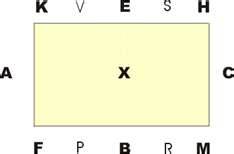
A horse riding manege or dressage arena is usually marked around the edge with letters. In the riding lesson or during a dressage test this enables instructions to be given as to when to perform a particular action. Arena sizes may vary but most riding schools have an arena that is 20 metres by 40 metres, whilst others may have an arena that is 20 metres by 60 metres.
The images below shows the location of the letters that denote a particular point in the arena. Although there may be physical markers around the edge of the arena, there are no markers to identify the positions of the internal letters and so these must be memorised.
So, a manège is an indoor riding ring or school. And should never be confused with a ménage, which is the French word for “household,” or with the French term “ménage à trois,” which may be the topic of a future post, perhaps featuring the Hamiltons or the Duke of Devonshire. 
Perhaps the most famous indoor riding school is the Spanish Riding School in Vienna, where the famous Lipizzaner stallions are trained and housed.
For more on the Stallions and their training, click here.

SAVE Britain's Heritage

An organization called SAVE Britain’s Heritage has been campaigning for historic buildings since its formation in 1975 by a group of architects, journalists and planners. Its Dare to Care: Buildings at Risk 2012-13 report, published June 1, contains almost one hundred homes in need of restoration, from castles to cottages.

Buildings featured in the 2012 report, Dare to Care, range from enchanting cottages, such as Shellards Cottage above, farmhouses and town houses to forlorn country piles, deserted chapels and crumbling mills – all crying out for restoration. These neglected treasures, ripe for sensitive repair, often lie in idyllic locations, surrounded by fields or in country villages or beside rivers and canals.

SAVE’s latest report contains almost 100 new cases, resulting from a major consultation with local authorities in England. It also features up-to-date case histories of buildings rescued since appearing in earlier SAVE reports. Finally, the report highlights the scandalous waste of several historic buildings over the past twelve months. These include the demolition of a 19th-century brewer’s villa in Hungerford, Berkshire, and the imminent destruction of Charles Barry’s elegant Royal Sussex County Hospital in Brighton.

A must read for anyone interested in Britain’s heritage and an essential tool for prospective restorers, SAVE’s reports play a critical role in the conservation of Britain’s historic buildings. Some two-thirds of the country houses included in SAVE’s first report, published in 1977, had found new owners or uses within three or four years and good news has continued ever since. Marcus Binney, SAVE’s President says, ‘This is the 23rd of SAVE’s annual reports on buildings at risk, each one illustrating a remarkable selection of endangered properties in varying states of repair, but all candidates for immediate action.’


Here are some highlights from the 2012 report:

Milton Damerell House, Devon: this treasure trove of architectural detail and history is currently on the market for £495,000. Dating back to 1500, this handsome Grade II listed house is an amalgamation of four centuries of architecture. Thought to have been a vicarage at one time, and located within beautiful countryside, this building boasts extraordinary surviving features and the promise of a mysterious hidden tunnel.

Shellards Cottage, (above) Essex: This historical gem, a charming thatched cottage built around 1500, is situated at the end of a country lane and would make a delightful home or rural bolt hole.

Ivy Cottage in County Durham: When this idyllic house – which dates back to the 17th century – was listed in 1987 the Inspector recorded that it was already empty and derelict. Two decades later, this picturesque sandstone building, in a small rural village, continues to cry out for a new owner and a new life.

The Georgian Toll Cottage at Marple, near Stockport: stands in a picturesque position next to a hump bridge at the junction of the Peak Forest and Macclesfield Canals. Pathetically boarded up, it cries out for some TLC.

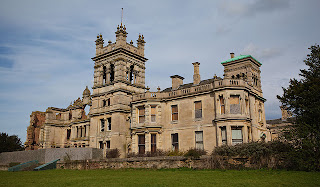
Overstone Hall, (above) on the outskirts of Northampton: is a majestic Italianate mansion in a 40 acre walled park but poses a considerable challenge. It was built in 1866 to the designs of W M Teulon, younger brother of the great Victorian ‘rogue’ architect S S Teulon. After suffering a fire it was put up for sale two years ago. It would make for a magnificent hotel, offices, or could be adapted sensitively for multiple residential use.

For further information, visit the Save Britain’s Heritage website.

Windsor Greys Jubilee Statue Appeal

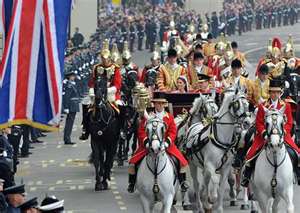
Private individuals in Windsor and Berkshire are seeking to raise funds for the Windsor Greys Jubilee project to raise a statue to a pair of Windsor Greys,  the breed of horse that always draw the Queen’s carriage, as well as all the Royal carriages – see photo below of the Greys pulling William and Kate’s Wedding Carriage. Windsor Greys are not a specific breed of horse but are rather a name applied to a group of horses that are specially bred and selected according to appearance and temperament for the ceremonial duties of the British Monarchy. At present, about thirty Greys are in Royal service and are housed at the Royal Mews.

The statue project suffered a setback when the chosen artist, sculptor Althea Wynne, was killed in a car crash. Robert Rattray, a sculptor specializing in wildlife, will now carry the project forward. It is hoped that the bronze statue will be placed on the A308/A322 roundabout adjoining the Long Walk in Windsor and will commemorate Queen Elizabeth’s Diamond Jubilee in the town of Windsor, as Queen Victoria’s Diamond Jubilee is commemorated there by the statue of that monarch at the entrance of Windsor Castle.

Rosemary Ussher, one of the driving forces behind the campaign, told The Observer, “It is very important we recognise The Queen’s contribution to our society, but the horses will now also be in memory of Althea.”

You can donate by sending a donation to Windsor Greys Jubilee Appeal, 35 Queen’s Road, Windsor, Berkshire SL4 3BQ or by clicking here.

You Animal, You!

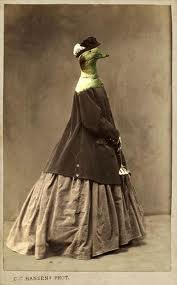
Charlotte Cory  – artist, playwright and Bronte afficianado – is the subject of You Animal, You!, an in-depth look at the world of Charlotte Cory’s art, featuring essays placing Cory’s art in context. Highly illustrated, great fun and at the same time oddly serious.

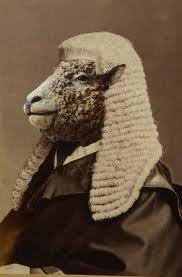
Cory’s photographic collages skillfully rework Victorian photographic visiting cards and invite viewers to speculate on the events behind the picture. Cory combines these poignant cartes-de-visite  images with portraits taken of stuffed animals from museums and her own collection. By recycling these dispossessed images and long-dead creatures, she gives them all a new lease of life. Brighter, more colourful, more interesting and more disturbing than before.

Cory’s images are accompanied by featured essays, including an introduction to the world of the Visitorians by distinguished author and historian AN Wilson. The curator of the Royal Photograph Collection, Sophie Gordon, discusses Cory’s reinterpretation of Victorian photographic ideas and innovations for our age. You Animal, You! is an in-depth look at the world of this unusual artist that will delight her fans and interest newcomers to her work in equal measure.

Cory’s work can also currently be viewed at The Green Parrot Gallery, London SE10.

A Sherlock Holmes Rant

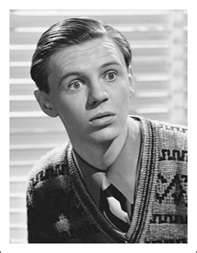
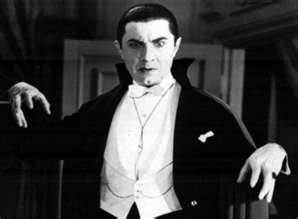
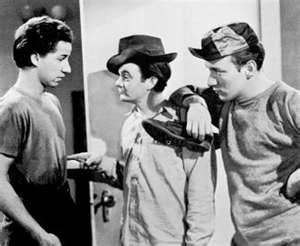
Being a child of the 1950’s, I watched alot of black and white movies on television while growing up. In fact, I watched black and white movies that were already old in the 1950’s. Maybe this is the reason that one is such a purist when it comes to certain things. For instance, in one’s mind Margaret Rutherford will always be Miss Marple

Jimmy Lydon will always be Henry Aldrich

Bela Lugosi will always be Dracula

and the Bowery Boys will aways be . . . er . . . the Bowery Boys

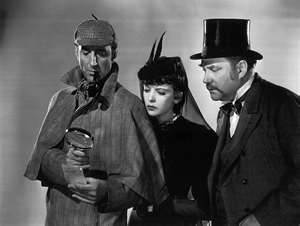
Which brings us to Sherlock Holmes and my stating here and now that, to one’s mind, Basil Rathbone will always be Sherlock Holmes. Or possibly not . . . . .

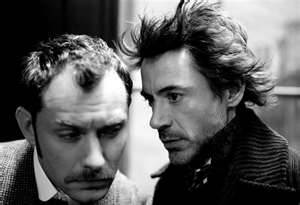
Faithful readers of this blog (God bless you every one) will recall that a while ago I ranted and raved  at the notion of Robert Downey Jr. playing Holmes in a film. Robert Downey Jr. Madness! And to compound the insanity, Jude Law was to play Dr. Watson. Tosh!

As it turned out, whilst Downey’s Holmes was more steampunk than Savile Row, one just might see one’s way clear to admitting that one was wrong about the whole Downey/Holmes casting thingy. Okay, and about the Law casting thingy, as well. After all, Downey didn’t try to be Rathbone as Holmes, but instead Downey put a new twist on Holmes and made the role his own. And Laws’ suave rather than bumbling Watson worked, as well. Who knew?


So, in the end, one learned to live with and even embrace the notion of a newfangled Holmes. The film was a novelty, enjoyable in its own right, but Rathbone still ruled. So, one went back to living one’s quiet life, satisfied that, once more, all was right in the world. No sooner had one done this than one was yet again asked by the Gods of Tampering to accept yet another assault upon Sherlock Holmes. By the BBC, no less! What had Holmes ever done to the Gods and why couldn’t they leave him well enough alone? Surely Conan Doyle was racketing around in his grave by this point, never mind simply turning over in polite fashion.
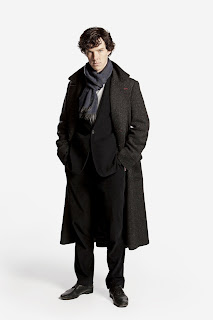
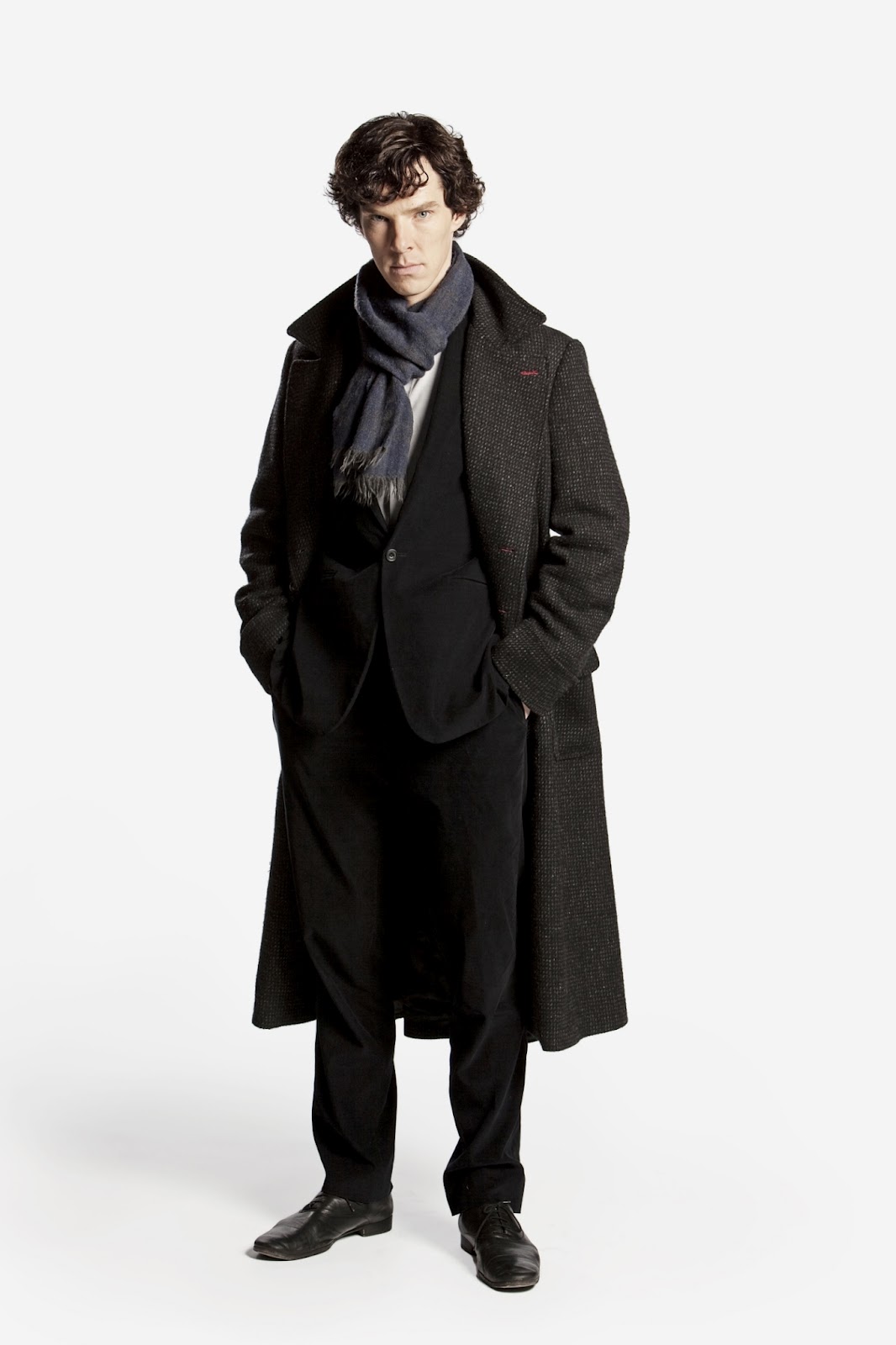
One was now being asked to accept Sherlock, the television series. Not only would it be set in present day London (madness!), but it would star a relatively unknown actor by the name of Benedict Cumberbatch. Were the Gods having one on? Cumberbatch was younger than Rathbone, even younger than Downey and as far as one could make out, the only thing he had in common with the actor who originally played Holmes was an improbable name. A positively Wodehousian name. This would not do!

One cannot recall the exact circumstances, but suffice it to say that one, at some time or another, stole one peek at A Study In Pink, the first ever episode of Sherlock. And then another. And then one had to admit that the Cumberbatch kid wasn’t half bad. And modern day London actually worked. The way Sherlock’s thoughts materialized as text and floated across the screen was brilliant, one thought. And while Cumberbatch brings an often manic edge to the character, there’s no denying he has topped Downey and succeeded in definitively making Sherlock Holmes his own. The writing is brilliant. The acting even better. Sherlock is funny, fast paced, gripping and addictive. One cannot believe that one will now be made to wait until the summer of 2013 to find out how exactly Sherlock survived a five storey fall. And whether or not Moriarity is alive, as well. Or whether or not John will suffer a complete nervous breakdown before he discovers that Sherlock is alive. . . . . or whether Mrs. Hudson finally gives the flat a good clean. To be perfectly honest, one has been converted by Cumberbatch and thoroughly SHER-locked. Rathbone was then, Cumberbatch is now. Downey is a bit of a lark, but not a serious contender to the crown.
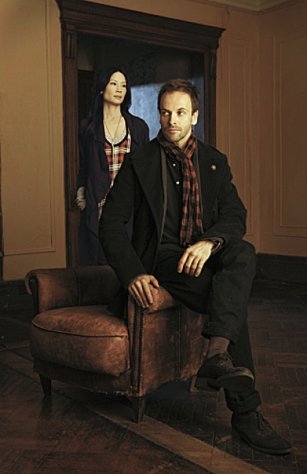
Which brings one to the question of how many truly good versions Sherlock Holmes there can be. In addition, how many versions (good or bad) of Sherlock can one be expected to accept in the course of a single year? Before you even attempt to answer that question, you should know that now there is yet another incarnation of the Baker Street Sleuth on the horizon. And this version seemingly deserves the biggest, loudest and most hysterical Sherlock Holmes rant to date – to be titled Elementary (seeing that both Sherlock and Holmes have already been used), the CBS series will star Jonny Lee Miller as Holmes and Lucy Liu as Dr. Watson and it will take place in modern day New York City (lunacy!). Bu
t one thinks all might be saved, as Miller has apparently done a lot of preparation for the role. As he so eloquently confided in a recent interview, “I looked at the books a lot.” Note that he didn’t say that he’d read any of them.
Miller, you may recall, was recently co-star to none other than Benedict Cumberbatch in the stage play Frankenstein at the National Theatre. Yes, that Benedict Cumberbatch. As well, Miller is mates with Jude Law. Yes, that Jude Law. He is also the ex-husband of that Angelina Jolie (nominally of interest, if irrelevant). I don’t know about you, but one feels that these connections put a mildly incestuous spin on the whole Sherlock Holmes franchise. The only thing missing from the mix is a guest appearance by Kevin Bacon.

To say that one is bemused by these developments would be to state the obvious. What should also be obvious, or at least as plain as the words that float from Sherlock’s mind to your television screen, is the fact that one will not be so much as peeking at the CBS series (Bored!).

The Official End of the Holmes Rant . . . for now.