Since there has been so much interest in my recent mudlarking adventures with my pal, author Sue Ellen Welfonder this past September, I thought I’d re-run my very first post on the subject, originally published July 1, 2010:
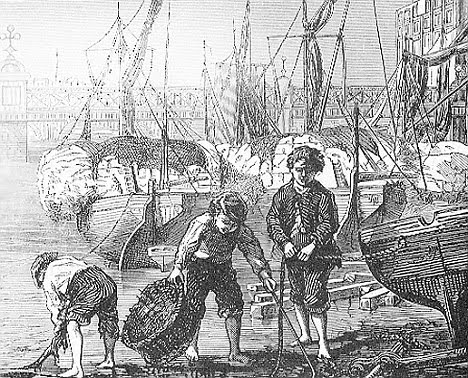
Many, many (many) years ago, when I first began doing research into London history, I was intrigued to learn about the Mudlarks of London, people from the poorer classes, typically children and the elderly, who scavenged along the banks of the River Thames at low tide looking for anything remotely valuable – clothing, coal, coins, pottery, items that had fallen off of ships and barges, etc etc. – that they could turn around and sell to the rag and bone man in order to earn enough for a meal. Mudlarking was considered to be lowest rung on the scavenger’s ladder, so it was with great surprise, and a lot of pleasure, that I found myself actually mudlarking during my jaunt in London.
Having roamed the streets and gardens of London proper and venturing as far north as Hampstead and as far west as Windsor, my daughter, Brooke, and I turned our attention one day to the area of London south of the River – to Southwark, that once desperate area known for being the den of drunken sailors, thieves, prostitutes, cut throats and the Clink Prison – now a really tacky tourist trap.

As we were walking along the River on the Queen’s Walk, a pedestrian promenade located on the South Bank of the River between Lambeth Bridge and Tower Bridge, we came upon stone steps leading down to the River. The tide was out, exposing what appeared to be a rocky beach of sorts. We made our way down and, uncertain as to whether or not we were actually allowed down there, tentatively began to walk towards the shore.
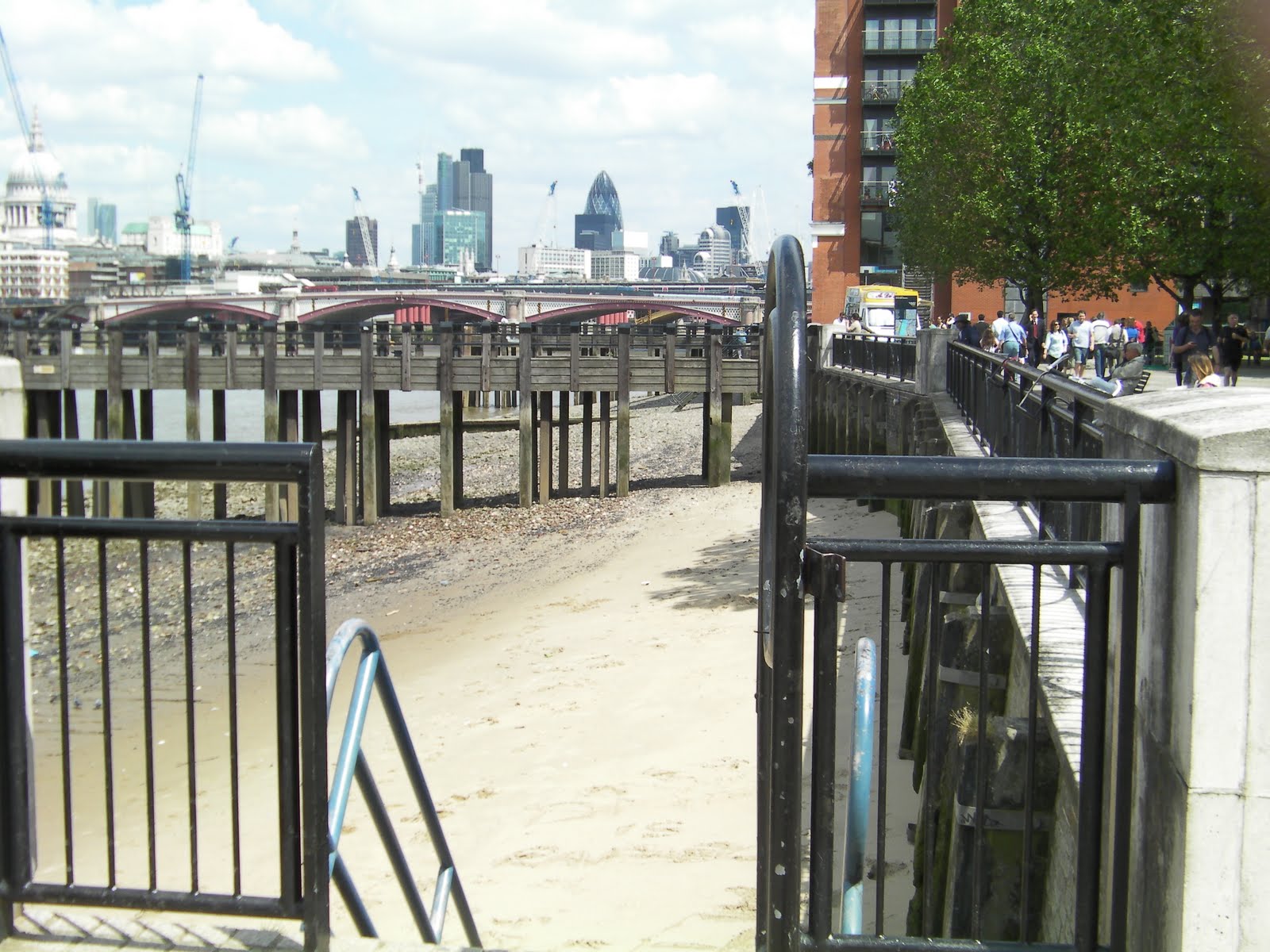
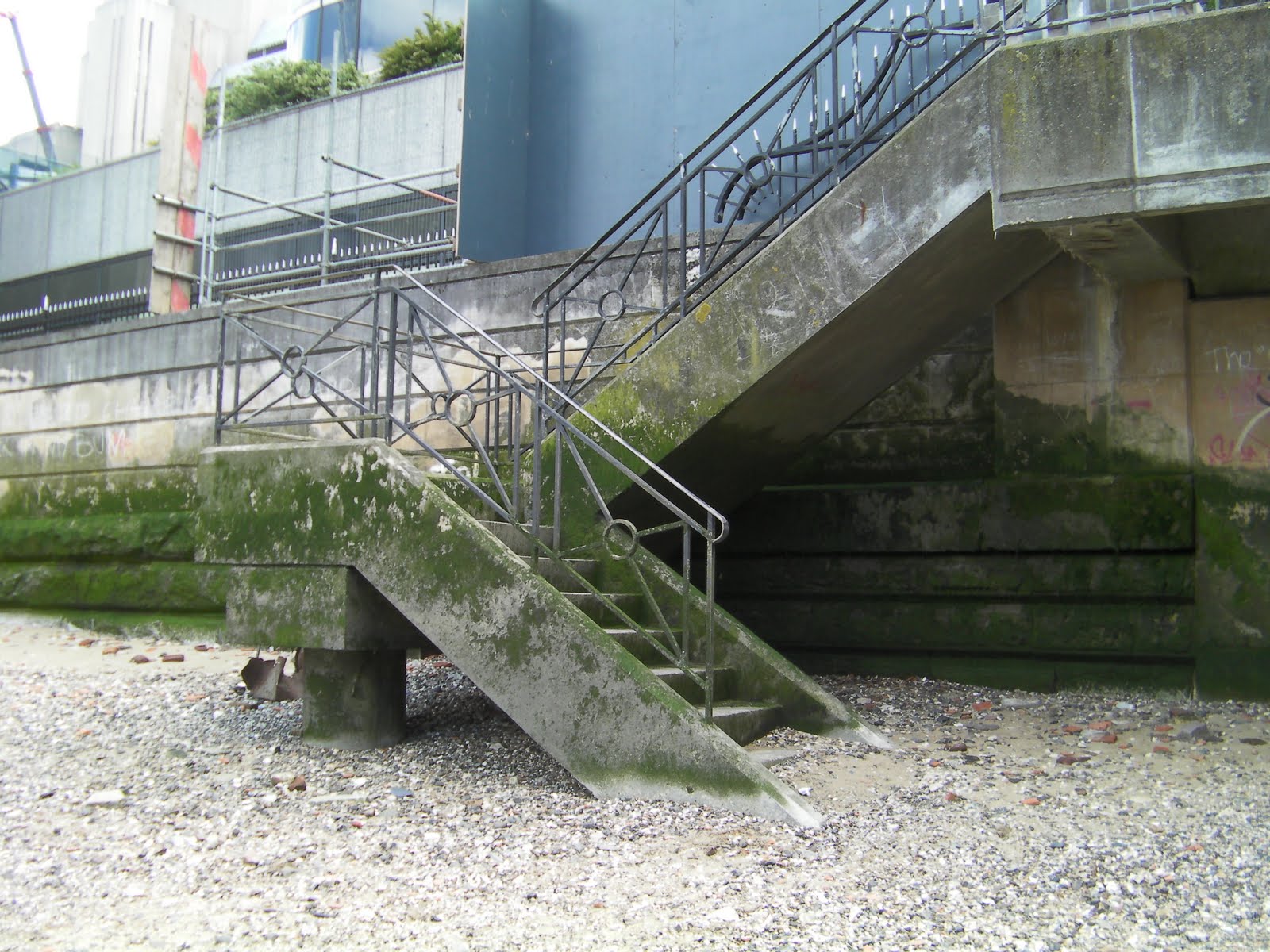
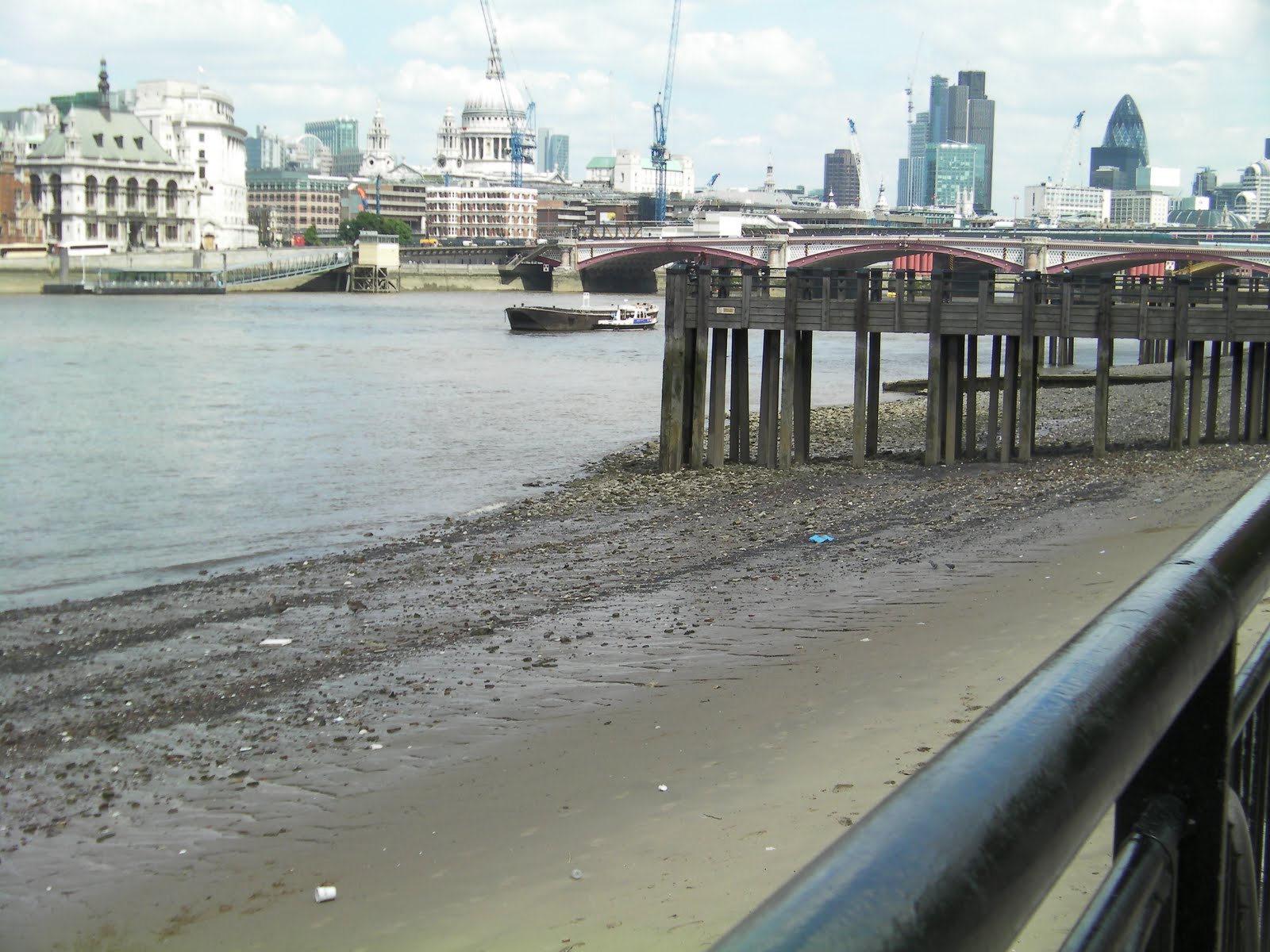
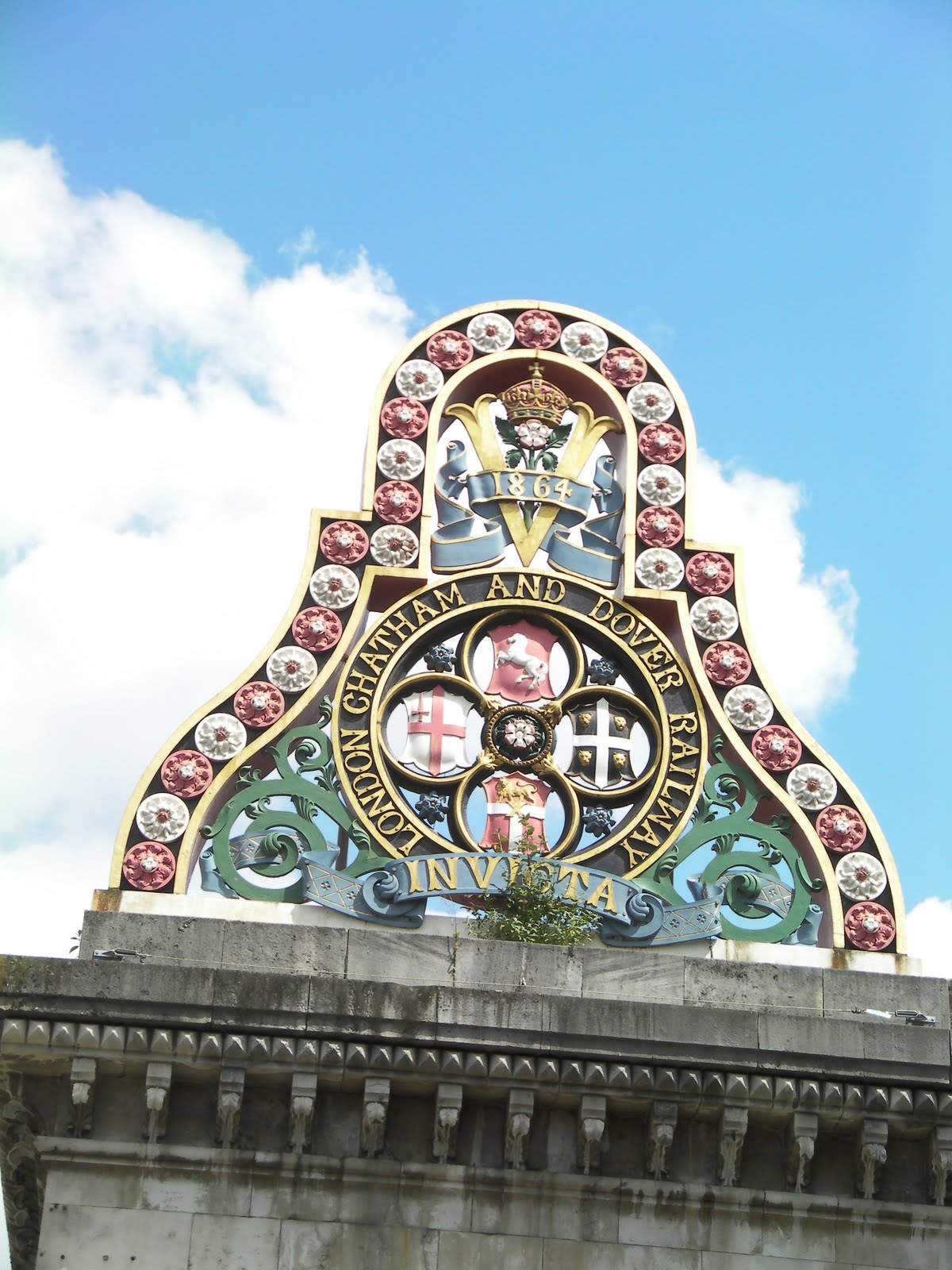
‘s a photo of the sign above the bridge we were scavenging beneath –
Leaving the sand and returning to the streets of Southwark, Brooke and I came upon a pub called . . . The Mudlark (4 Montague Close, Southwark, London SE1 9DA). I later found out that today there’s a London-based Society of Thames Mudlarks, who are granted a special license by the Port of London to excavate the beach and who must turn over finds of historic importance to the Museum of London, whose holdings include the Cheapside Hoard, an eye-popping collection of 400 pieces of Elizabethan and Jacobean jewelry, dating back to between 1560 and 1630. The hoard was probably buried in the early 17th century and discovered in 1912, by workmen digging in a cellar in the neighborhood of Cheapside. Which is why there are now lots of regulations surrounding mudlarking about which Brooke and I were blissfully unaware.
It seems that journalist Nick Curtis took to the sand by the Thames himself and wrote about his own mudlarking adventure in the London Evening Standard. Here’s a portion of his article:
My day begins with the early morning low tide, in the mud of the foreshore near Custom House on the north bank near the Tower of London. Here, with commuters trudging above, I meet Ian Smith, a leading member of London’s loose community of mudlarks. Ian deals in antiques but he’s been combing the banks of the Thames for fun since the 1970s. When we meet, he’s hip deep in a muddy hole.
Anyone can wander down to the foreshore and pick up objects from the surface, but you need a licence from the Port of London Authority to dig or to sift. “Treasure” is the property of the Crown, although, as Ian says, no one would ever deliberately conceal valuables on a silty tidal foreshore. Plus, things don’t wash up from the river, they wash out from the land. Finds of historic interest are shown to the Port Antiquities Scheme’s finds liaison officer and archaeologist Kate Sumnall and, ideally, donated or sold to the collection of the Museum of London, where she works. Ian once found a hoard of counterfeit George II coins, and has donated several exquisite medieval pewter badges — lucky charms or pilgrims’ tokens — to the museum.
Even at first glance, there is tons of stuff on the shore. Victorian spikes, nails and barrel hoops, huge oyster shells and blackened animal bones and teeth. Once I’ve got my eye in, I also spot hundreds of clay pipe fragments. The smallest are the oldest, and were given away free in the 16th century with a tiny amount of the new and expensive import, tobacco. After just over an hour I’ve also found an ornate key, a stamped lead token, a pewter button and an iron flint striker for kindling fires.
Most of these are probably 17th or 18th century, but fragments of stoneware Bellarmine jars showing a bearded face — supposedly mocking an abstinent cardinal — might be from the 13th century. I’d love to search longer but time, and the Thames tide, wait for no mudlark.
Speaking of tides, Brooke and I stumbled upon the stairs at low tide, but if you want to plan your day around mudlarking, here’s a link to the Thames Tides Table.





.jpg)















.JPG)

.JPG)

.JPG)
.JPG)
.JPG)
.JPG)
.JPG)
.JPG)