Staying With Friends – Part Two

Continuing in our quest for Stately Homes at which to stay, we bring you some of the more impressive –
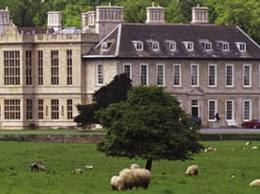


Stapleford Park


Surrounded by the magnificent 500 acres of Capability Brown landscaped grounds Stapleford Park is the perfect country sporting estate and sits in the heart of Leicestershire, near Melton Mowbray, minutes from Rutland Water. The Hall was the seat of the Sherard family, later the Earls of Harborough and from 1894, of Baron Gretton. Today, guests sleep in rooms decorated by Wedgwood, Turnbull and Asser and Crabtree and Evelyn.
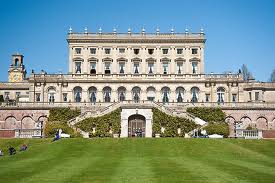


Cliveden House

Located on the River Thames just outside London in Berkshire, Cliveden House is one of those stately homes where one wishes the walls could talk. According to their website: The first house was built in 1666 by the 2nd Duke of Buckingham. A notorious rake, schemer and wit, he created Cliveden as a hunting lodge where he could entertain his friends and mistress. Since then it has twice been destroyed by fire, only to emerge, phoenix-like, more stunning than before. The house has played host to virtually every British Monarch since George I and has been home to three Dukes, an Earl and Frederick Prince of Wales.

Queen Victoria, a frequent guest, was not amused in 1893 when the house was bought by William Waldorf Astor, America’s richest citizen. When he gave it to his son and daughter-in-law in 1906 Cliveden became the hub of a hectic social whirl where guests included everyone from Charlie Chaplin to Winston Churchill, and President Roosevelt to George Bernard Shaw.
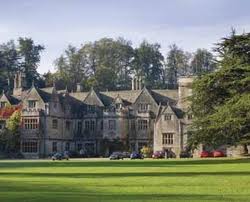


Bibury Court

 Bibury Court Hotel is set in a stunning Jacobean Mansion built in 1633. It dates from the late 16th Century, and was then extended in 1633 by Sir Thomas Sackville, the illegitimate son of the 1st Earl of Dorset who was ‘Knight and gentleman-usher in dailie waiting on the King’ (James I). Charles II is reputed to have visited the Court when he attended Bibury Races, as did the Prince Regent during the reign of George III.

The house remained in the Sackville family for several generations and through the female line passed to the Cresswells. It was them who, owing to a disputed will and years of litigation, sold the house in the last century to Lord Sherbourne. Charles Dickens is said to have written ‘Bleak House’ with this court case in mind. The interior was remodelled for Estcourt Cresswell in 1759. Later it fell into disrepair in the 1920s being refurbished for the Clark family in 1922 in whose ownership it remained until 1968 when it was sold after the death of Lady Clark, and turned into a hotel.  It is situated in the beautiful Cotswolds area which is sprinkled with historic market towns, charming villages and centuries old country manors.
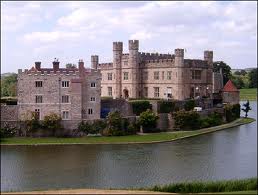
Leeds Castle

Well, really, what can one say about Leeds Castle? All you really need to know is that they have 14 bedrooms and three cottages on the estate that you can book by contacting them in advance. History? You want the history of the Castle? Click here.
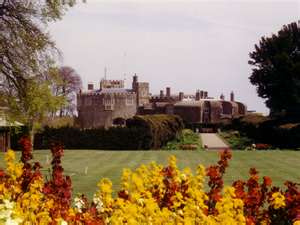
Of course, we personally think the pentultimate place to stay at is Walmer Castle, once home to the Duke of Wellington as Walmer Castle was the official residence of the Lord Warden of the Cinque Ports – a title previously held by both the Duke of Wellington (23 years) and the Queen Mother. The Duke used Walmer often and preferred it to any other home, inviting a stellar line-up of guests to stay for extended periods. The Duke’s great good friend, the widowed Charles Arbuthnot, lived with Wellington at Walmer and they regularly walked the grounds together, often strolling the battlements of the Castle. Wellington’s housekeeper at Walmer fondly called the elderly pair, “our two dear old gentlemen.” Arbuthnot died in 1850 at Apsley House, the Duke of Wellington died in 1852 at Walmer Castle. Today, guests can stay in either the Greenhouse Apartment overlooking the kitchen garden which has supplied the castle for more than 300 years or the Garden Cottage with a master bedroom overlooking the Castle. For a look at all properties available to rent from English Heritage, click here.

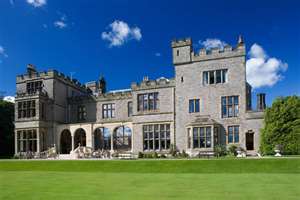
Staying With Friends

Alas, there are very few ways in which we British History afficianados can truly recreate and experience what life was like in centuries past. However, it is possible to get the flavor of what it must have been like to travel down to the country and stay with friends at their Stately Pile for a few days. We’ve found a few magnificent estates that are now hotels. True, they have modern day conveniences and you most likely won’t be greeted at the door by the family butler or offered a candelabra to light your way to your room, but it’s the closest we can come to experiencing true country house hospitality.

Oatlands Park Hotel

Located 18 miles outside of London in Surrey, Oatlands has a royal pedigree and strong Regency connections – Brummell and Alvanley were both frequent guests of the owners, the Duke and Duchess of York, who leased the property from the Crown in 1790. In 1794 the mansion was burnt down and was then rebuilt in the Gothic style of the period. After the death of the Duchess of York in 1820, the whole property was sold. It was bought by Edward Hughes (Golden) Ball Hughes in 1824 (although it was not until after the Duke’s death in 1827 that the sale was finally concluded) and again remodelled in 1830. Hughes had actually tried to dispose of the estate by public auction in 1829 but this part did not sell. He let the Mansion and the adjoining parkland to Lord Francis Egerton for a seven-year period in 1832 and renewed for a similar period in 1839. The arrival of the London and South Western Railway in 1838 made the area ripe for ‘a daily commute to town’ and in 1846 the estate was broken up into lots for building development and sold at three public auctions in May, August and September of that year. Following a period of private ownership by James Watts Peppercorne, the house became a hotel in 1856 known as the South Western (later Oatlands Park) Hotel. The present day Oatlands Park Hotel occupies the site where the Oatlands Mansion (Oatlands House) once stood and no doubt so long as you’re paying for your room, management will allow you to bring your Fat Friend along.


Armathwaite Hall

Located in the Lake District, Armathwaite Hall stands on the previous site of the Manor of Bassenthwaite, given to the illegitimate brother of Allan, the Second Lord of Allerdale and Gospatrick took on the name de Bassenthwaite. Another family, the Highmore family, who owned the Hall 1540 to 1748, offered hospitality to the infamous Bonnie Prince Charlie and the Duke of Cumberland during the 1745 uprising at their other residence in Carlisle. In 1748 James Spedding, Squire to Lord Egremont of Cockermouth Castle acquired the Hall and it stayed in his family for three generations until it was sold to Sir Frederick Fletcher-Vane in 1796. This family extended the Hall in 1817 by building a courtyard, a chapel and partially extending the building towards the lake. Four generations of the Fletcher-Vane family resided here until 1850 when it was sold to Mr. Boustead. Hotel guests can book in for a spot of clay shooting or archery.

Thornbury Castle

When Henry VIII came to the throne, the Duke of Buckingham, owner of Thornbury Castle in Gloucestershire, stood in high favour with his Royal Master. He was the most affluent and most honoured nobleman in the country – Constable of England. He was the King’s Lieutenant and commanded in his absence. He was with his Sovereign in 1513 at the Battle of the Spurs in Picardy, and in 1520 whilst on his way to France to take part in the campaign of the Field of the Cloth of Gold, he visited Tonbridge where he had a large estate and had cause to dismiss a steward called Kynvett. To avenge himself the steward passed on to Cardinal Wolsey certain indiscreet words uttered by the Duke. It is not known for certain whether Buckingham had serious thought regarding the throne, but he was the great grandson of Edward III’s youngest son, Thomas of Woodstock, and if Mary Tudor’s succession at that time was denied he thought he stood heir to the throne. Henry VIII certainly seems to have thought there was some danger because on the Duke’s return from France he was arrested and taken to London, where he was found guilty of high treason and executed on Tower Hill.

Henry VIII appropriated the castle and for 33 years it remained a royal demesne, and in 1533 he and Anne Boleyn spent 10 days here. Mary Tudor also spent some years here as a princess, and upon her death in 1554 she returned the Castle to the descendants of the late Duke. For the next two centuries the castle was unoccupied and fell into ruin. In the 1850s the Castle became once more a family residence, being home to the Howards, then the Clifford family, Kenneth Bell MBE, The Baron and Baroness of Portlethen, and now forms part of the von Essen private collection of country house hotels.

Ickworth House

Ickworth House, now the Ickworth Hotel , is simply steeped in scandal. This from Wikipedia: Ickworth House is a country house outside Bury St. Edmunds, Suffolk, England. It is a neoclassical structure topped by a giant rotunda in a park laid out by Capability Brown. Ickworth had been in the ownership of the Hervey family from the 15th century. The house, park, and a large endowment were given to the National Trust in 1956 in lieu of death duties. As part of the handover agreement, a 99-year lease on the 60-room East Wing was given to the Marquess of Bristol. The Letter of Wishes of the 4th Marquess of Bristol stated that accommodation should always be available for the head of the Hervey family (the Marques of Bristol) at Ickworth. However, in 1998 the 7th Marquess of Bristol, partly for financial reasons, and partly in response to an eviction suit stemming from his behaviour on the property, sold the remaining lease on the East Wing to the National Trust. The Trust subsequently refused to re-sell the leasehold to the 8th Marquess of Bristol on his succeeding to the title in 1999. There is now a 27-bedroom hotel in the East Wing.

Part Two Coming Soon!

Magnificence at Yale Center for British Art, Part One

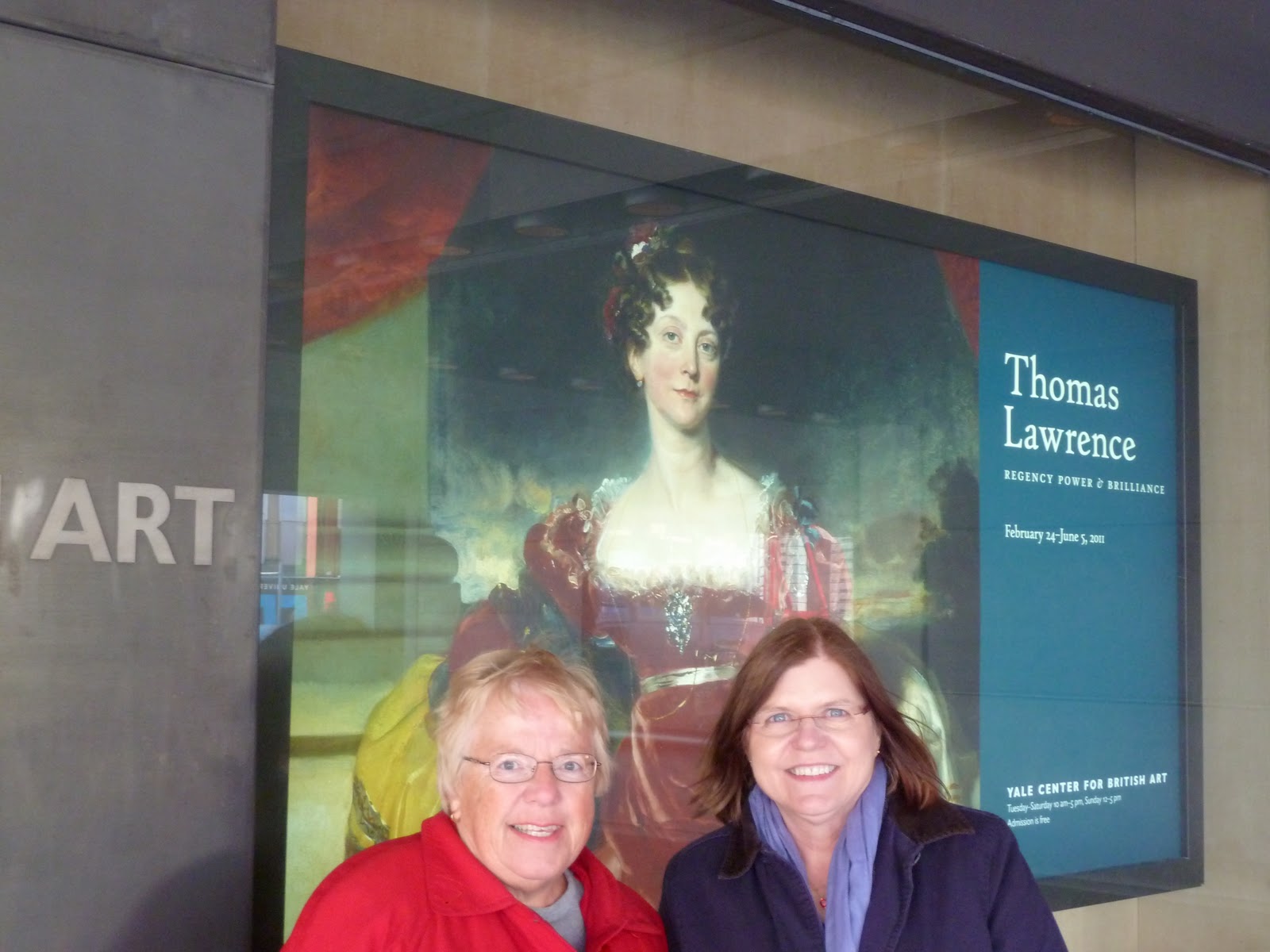
Words fail me (Victoria here) when I try to describe how much I enjoyed seeing Thomas Lawrence: Regency Power and Brilliance in New Haven CT.  Kristine wrote about the exhibition on this blog when it was in London at the National Portrait Gallery and Jo Manning did several follow-ups on Lawrence.  But it’s pretty hard to prepare oneself for standing before a larger-than-life canvas in sparkling colors and knowing there are dozens more just outside your peripheral vision. To the right, Diane Gaston and I prepare to enter the Yale Center for British Art on a bright sunny day after a long drive from Washington, DC. Many thanks to our chauffeur cum photographer, Jim Perkins, Diane’s DH.

No pictures were allowed in the exhibition, but we asked if we could take one at the entrance and they  said yes.  Behind the  entrance panel, you get a glimpse of two of the nearly-overwhelming portraits. Left is Lord Mountstuart, from a private collection, and on the right, the famous portrait of Elizabeth Farren, actress, later Countess of Derby.  Diane and I had already been through the exhibition once or we could not have stood still long enough for the shot.  Think we were excited? Oh, just a little!

John, Lord Mountstuart  (1767-94) is a stunning example of raw masculinity that shocked some viewers (like the King!) when it was displayed at the Royal Academy in 1795.  Like many of Lawrence’s portraits — if not all — the dramatic setting is enhanced by the exquisite detail and highlights of white, silver and pink. Lord Mountstuart stands on the edge of a precipice, with Spanish mountains and the Palace of Escorial in the background. Lawrence began this portrait before Mountstuart’s unexpected death at a young age.

Like several of the other portraits, I had visited before with Elizabeth Farren (1759-62-1829) in her usual home at New York’s Metropolitan Museum of Art. I want to put in a reminder here of the excellent novel about Miss Farren, the Earl of Derby (her eventual husband), Anne Damer, and other luminaries in the highest social circles of early 19th c. London, written by acclaimed novelist Emma Donoghue (author of the current best seller, Room). Entitled Life Mask, this is a fascinating fictional account of real people and their intertwined lives, some of it imagined, some of it factual. More details here. 

Lawrence is at his best, carrying on in the tradition of Van Dyke, Gainsborough and others by painting the fabrics so realistically you think you could feel the satin if you touched it.  I covet that muff, by the way.

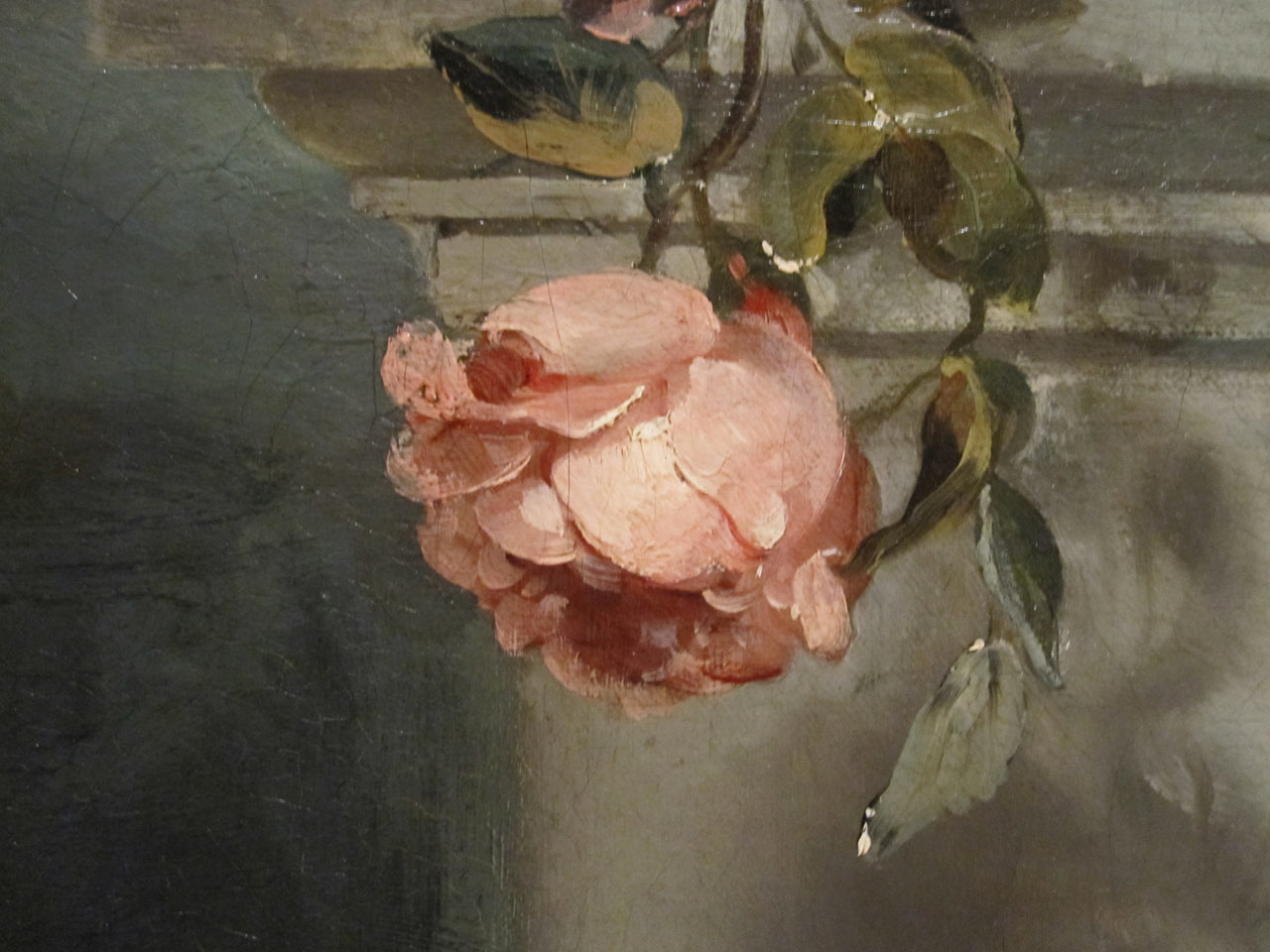
Most commentators on Lawrence make a big point of the way he flattered his sitters, sometimes outrageously so, as in the portraits of George IV.  But there were a few exceptions to his usual flattery in this exhibition. For example, the Portrait of Catherine Rebecca Grey, Lady Manners, later Lady Huntingtower (1766-1852).  It is a fine portrait, with excellent details.  But I would not say this straight on view of  her face is particularly complimentary. Instead, she looks almost surprised to find us staring at her. The brightly colored peacock beside her draws the viewer’s attention away  from her face.  The fine sheer dress fabric is painted as realistically as Farren’s satin, puddling around her feet like a wispy little cloud. And the rose in her right hand is perfection. 

I don’t mean to infer that she is not attractive, but only that a three-quarter view might have been much more flattering.  That word again. This portrait belongs to the Cleveland Museum of Art, like many of the others on loan to this exhibition.  Yale is the second and last venue for Thomas Lawrence: Regency Power and Brilliance, on view until June 5, 2011.


detail of Catherine Grey, Lady Manners

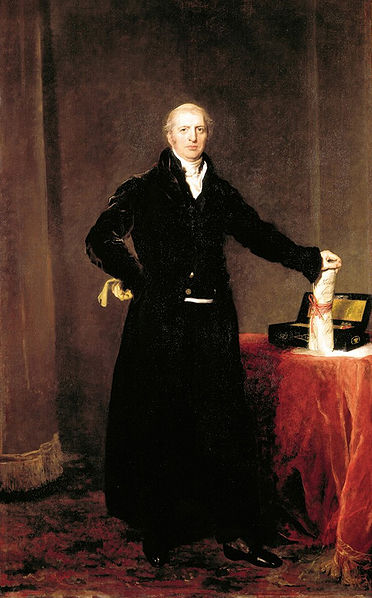
The other  portrait I find less than flattering is this view of  Robert Banks Jenkinson, later the  2nd Earl of Liverpool (1770-1828).  Again, the head-on view does not compliment him.  He seems to be frowning and his lip is slightly curled, almost as if beginning a sneer.  This painting dates from 1793-96 when Lawrence was doing many statesmen and politicians, and flattering many of them.  Another Lawrence picture (not in this exhibition) of Lord Liverpool done 33 years later, portrays him as less
confrontational yes equally sure of himself.

 At right, Lord Liverpool in 1826 as Prime Minister, in the National Portrait Gallery (not in the Yale exhibition) 

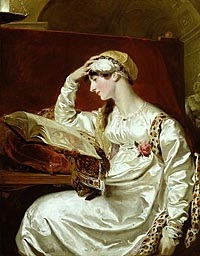
 This drawing of Isabella Wolff (c.1771-1829) is one of many Lawrence did of his close friend Mrs. Wolff.  The exhibition catalogue cautions us not to consider these sketches are preliminary to the oil portrait below, though there are similarities for sure.

Isabella Wolff and Thomas Lawrence remained dear friends for many years, and were sometimes suspected of being lovers. For more on Lawrence’s love life, go backward in this blog to Jo Manning’s essays on January 8, 9, and 10th, 2011. 

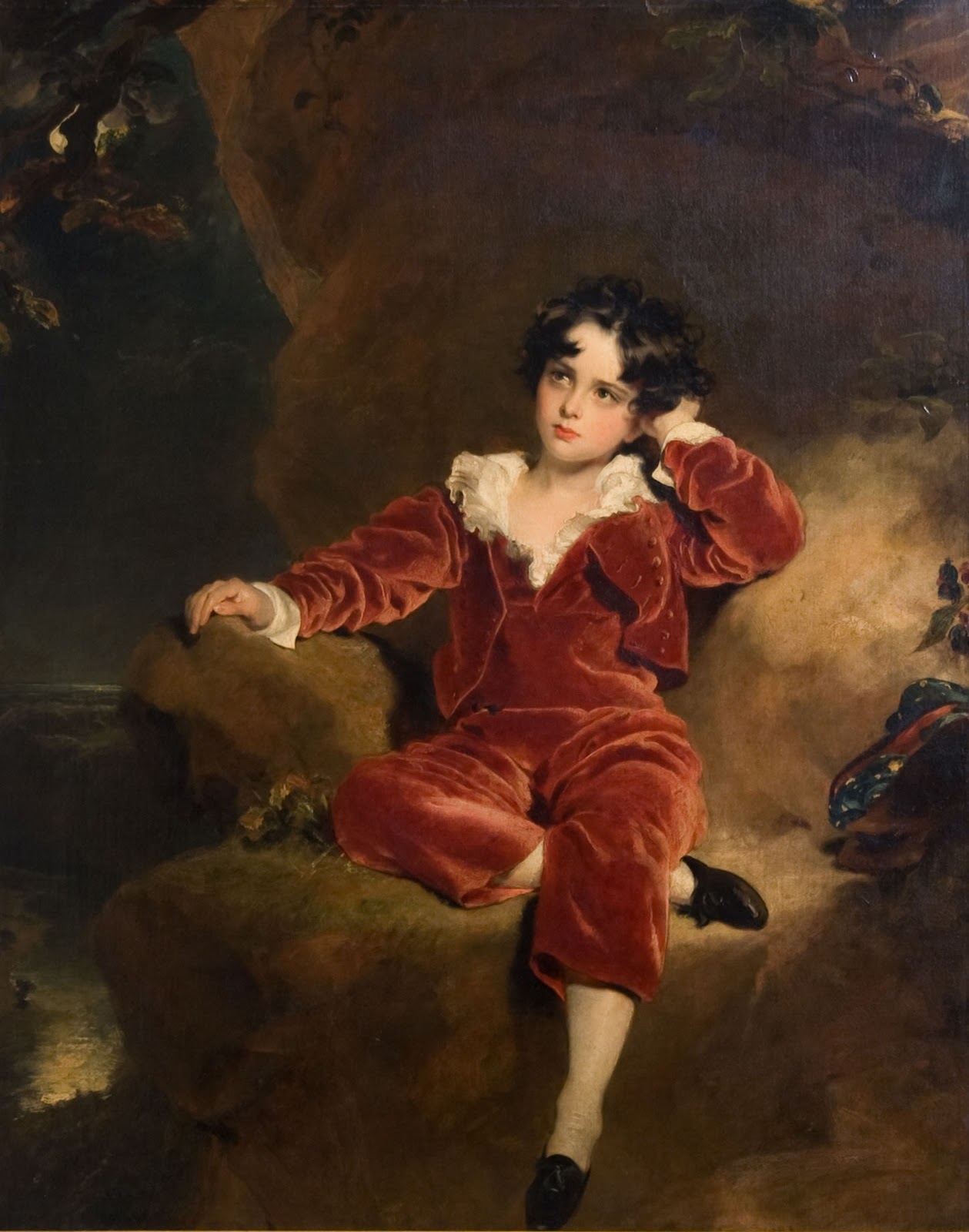
 This is probably the first Thomas Lawrence canvas I saw as a child. At the Art Institute of Chicago, it was my favorite picture.   Maybe it still is.

As one of the reviews of the exhibition said, many of us became more than familiar with some Lawrence images because we saw them on biscuit tins and other ads or labels. Or in multiple prints, even paint-by-number sets.This charming view of a thoughtful (or bored) little boy is one of those biscuit tin portraits — you’ve seen it a million times, though you can’t remember quite where.  This is Charles William Lambton, painted in 1825, now in a private collection. Charles was about seven in the portrait and he died just six years later at age thirteen. That gives a distinct poignant twist to this familiar face.

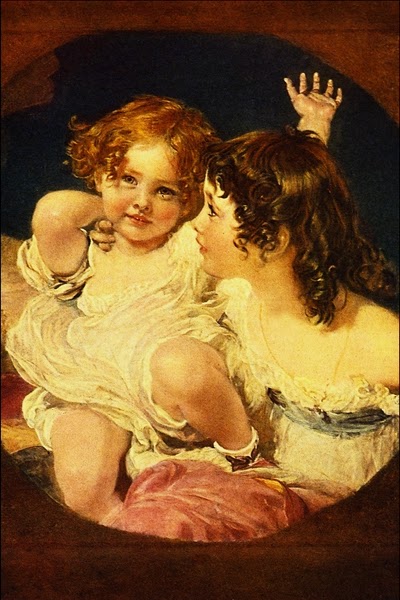
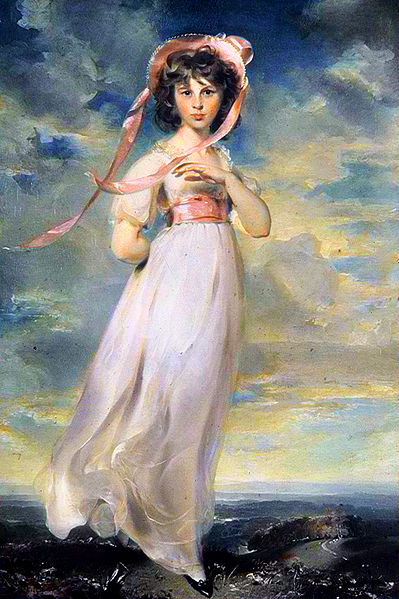
Another very familiar picture, The Calmady Children (Laura Anne and Emily), is included in the show, from the Metropolitan Museum of Art. This pose too, can be found “everywhere.”  And it is not hard to see why. Thomas Lawrence was wonderful with children. Though he had none of his own, never having married, he captured the innocence and joy of childhood in a magical way.    A picture not in this exhibition, usually known as Pinkie, is probably THE most famous, most reproduced, used and mis-used of Lawrence’s work.

Pinkie is a portrait of Sarah Barrett Moulton painted in 1794. It can be seen at the Huntington Library and Museum of Art in San Marino, CA.  It is often shown with a Gainsborough portrait called Blue Boy. (Again, this picture is not in the Yale exhibition.) I actually think I’ve seen Pinkie on a tea towel.

To conclude part one of our visit to the exhibition, here is a lovely family group, another in Lawrence’s bravura style.  The beautiful lady and her son, heir to a great title, with their faithful dog in a scene that will be a family heirloom forever. But wait!!! This is a portrait of Mrs. Frances Hawkins and her Son, John James Hamilton, painted in 1805-6. 
Mrs. Hawkins was a mistress of the imperious 1st Marquess of Abercorn and young John was his son by her.  He had several other children by his three wives. Nevertheless, the picture was displayed at the Royal Academy in 1806.  One London newspaper found it “deficient in sobriety and simplicity.”  Another  commented that the dog was too big and disliked the view through the circular wall.

Diane Gaston and I want to thank Amy McDonald and Kaci Bayless for their assistance and hospitality at the Yale Center for British Art. Everyone was cheerful, helpful and welcoming. We wish we could have attended one of the many programs accompanying the exhibition. They are listed on-line if you click here.  For more information on the exhibition, click here.
Diane has blogged on our visit and you can find her report here.

I will be back with lots more about Thomas Lawrence: Regency Power and Brilliance in days to come. Remember, the closing date is June 5, so make your plans to visit New Haven soon.


The Lady Who Went Too Far

A new film has been announced – The Lady Who Went Too Far. From the writer and producer of The King’s Speech comes the story of Lady Hester Stanhope, based on the biography “Star of the Morning,” by Kirsten Ellis. Set during the Napoleonic Wars, the story follows the life of world traveler Stanhope and contains elements of a political thriller as Hester moves through Europe and the Middle East.

“She was a female Lawrence of Arabia, a hundred years before Lawrence,” said screenwriter David Seidler, whose credits also include Tucker: The Man And His Dream.

“It wasn’t that she was trying to change the world, she was just living the life that she thought she should have been afforded, to go on these great adventures, she did have a voice that should be heard,” producer Gareth Unwin told Screen. “If you ever want to find great stories, you only have to look to our past.”


Lady Hester Stanhope

 “Hers is a very powerful story that’s never been told cinematically before,” added biographer Kirsten Ellis. “She’s an undiscovered iconic emblem and the film will lift the lid on what made Hester spend half her life in the Middle East and what she tried to achieve there.”

In reviewing the book for The Independent, Robert Irwin swipes at Hester by closing with, “Though she (Ellis) writes well, it is not clear that her subject deserves so much devotion. During communal strife, Hester sheltered refugees and could be generous, but more often she was mean. She was also histrionic, superstitious, malicious and vainglorious. One has to rid oneself of the romantic trappings in order to see Hester Stanhope as what she became before her death in 1839 – a batty and embittered old English expat living on tick. There are thousands like her all over the world today.”

Of course, Reader, we are not concerned with those living today. We are, however, always interested in a true 19th century character, and as such Hester qualifies. As does Brummell if one is going to speak of being “histrionic, superstitious, malicious and vainglorious,” not to mention living on the tick. If authors were to stick only to those subjects who were worthy of praise or plaudits, the non-fiction shelves would be bare, indeed. Brava to Ellis for taking Hester on. We wait to hear who will play her in the film.

You can find Ellis’s book at Amazon here and visit the author’s website here

Demmed Painters

From the Duke of Wellington to Lady Shelley

London, March 1, 1825.

My Dearest Lady,

” . . . . I wish that I could as easily to myself satisfy you about the picture. But I cannot describe to you the inconvenience it is to me to sit. In fact, between Cabinets, Committees of the House of Lords, conferences with foreign Ministers and our own Ministers, etc., etc., the painters take up the only time I should have, if it was not for them, to transact business of any kind, or to read anything.

“I should not, nor do I, mind attending a good artist. But really, to sit as a ‘ Study ‘ to a young one who will never paint a picture as long as he breathes; and to pass three hours with him, and to have even one’s own reflections interrupted by his impertinence during that time, is more than human patience, even mine, can bear.

“However, I have promised him one more sitting, and he shall have it. But mind, that will make the tenth for this picture—viz. six at Maresfield and four in London; and I know that, after all, it will not be worth a pin!

Ever yours most affectionately,

Wellington

The portrait referenced appears at the top of the post. Is it, or is it not, worth a pin, after all?