An Exhibition of Royal Photographers


The Princess Royal and Princess Alice, Balmoral 1856 by Fenton


A new exhibition entitled Roger Fenton and Julia Margaret Cameron: Early British Photographs from the Royal Collection, will be on display at The Arts and Crafts House, Blackwell, Cumbria until April 27 2011.

Both Queen Victoria and Prince Albert were photography enthusiasts who kept voluminous photo albums containing pictures of their own family, as well as “art” photographs of models, people and places. At her death in 1901, Queen Victoria’s collection numbered an estimated 20,000 photographs. In December of 1853, the Royal Couple attended the inaugural exhibition of the Photographic Society. Roger Fenton, founder of the Society, of which Prince Albert later became a patron, personally showed them the exhibits and was invited to Windsor Castle to photograph the royal children, the beginnings of a large collection of photos he’d take of the family. Coincidentally or not, after Prince Albert’s death in 1861, Fenton sold his photo equipuipment and gave up photography to retrun to the practice of law and relative obscurity.


Queen Victoria and Prince Albert, by Fenton, June 30, 1854


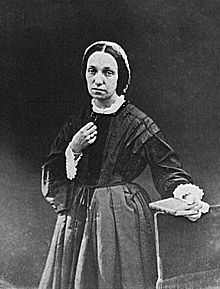
Julia Margaret Cameron (self portrait)

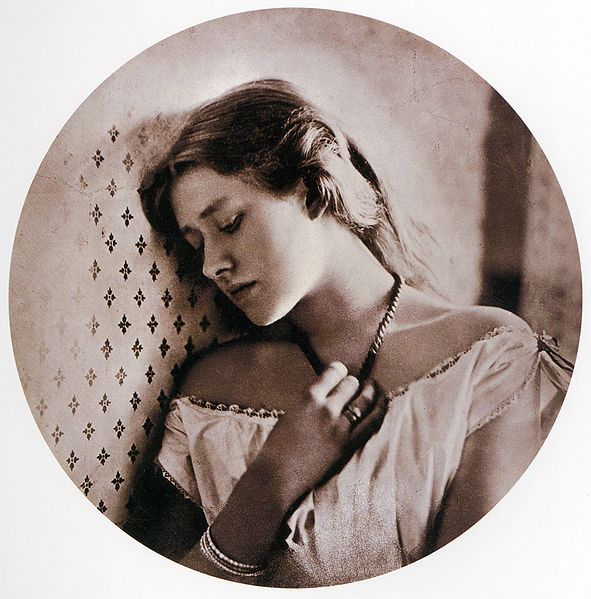
Queen Victoria first saw the work of Julia Margaret Cameron after Albert’s death at Colnaghi’s photo gallery in London and began collecting her work. Born in 1815, Cameron took up photography in 1863, when her daugther gave her a camera. Within a year, Cameron became a member of the Photographic Societies of London and Scotland. A few of her artistic photographs are show here –


The Kiss of Peace 1869


“Sadness” featurning Ellen Terry

For further information on photos of the royal family . . .


Yale Center for British Art

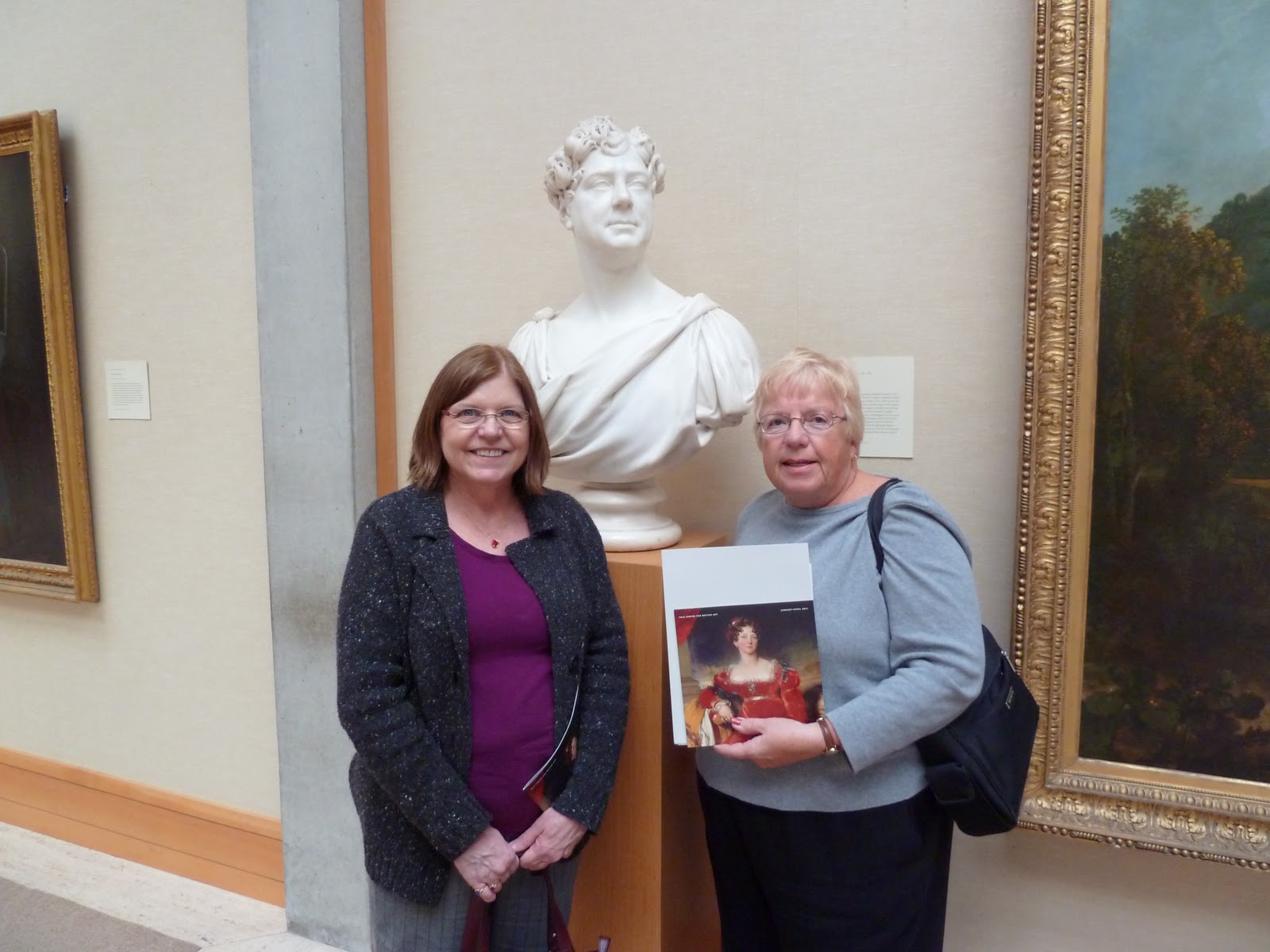
Victoria here. I cannot imagine a place I would rather be (on the U.S. side of the pond, anyway) then the Yale Center for British Art. Think of yourself surrounded by wonderful works by Reynolds, Gainsborough,  Stubbs, and many more, not to mention the current exhibition Thomas Lawrence Regency Power and Brilliance.  Here are Diane Gaston (l) and me, keeping company with George IV.  The bust, in white marble, was sculpted by Sir Francis Chantrey (1781-1841) in the year 1827. To quote the label behind my head: “George IV was greedy, spoiled, manipulative, lecherous, foolish, extravagant, and stubborn. But in his heyday during the Regency period, the king was, perhaps more than any of his Hanoverian predecessors, a bold, daring and brilliant patron of the visual arts and of architecture.”

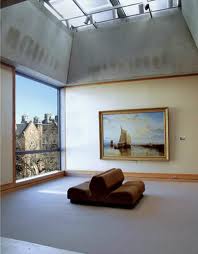
The interior of the YCBA is very comfortable and welcoming. I like a museum where there are lots of seats where one can sit and look at the pictures — and this gallery has the added advantage of windows to the outside.  The picture in the center is by Joseph Mallord William Turner (1775-1851), a work with the kind of realistic detail he later eschewed. It is titled Dordrecht, the Dort Packet-boat from Rotterdam Becalmed painted in 1818. I love almost everything by Turner but this particularly engages me.

Here is another view of the galleries, photos attributed to Richard Caspole.  Although I wouldn’t mind being the only patron for a few hours, I must say the place has never been empty when I visited.  The building was designed by was Louis I. Kahn (1901-1974), once a professor of architecture at Yale, and a leading American mid-century architect.  The YCBA is immediately across the street from the Yale Art Gallery, also designed by Kahn, now undergoing renovations.

My report on that collection will have to await a future trip to New Haven, which is actually on my agenda for 2012. That is, if I can tear myself away from the YCBA.
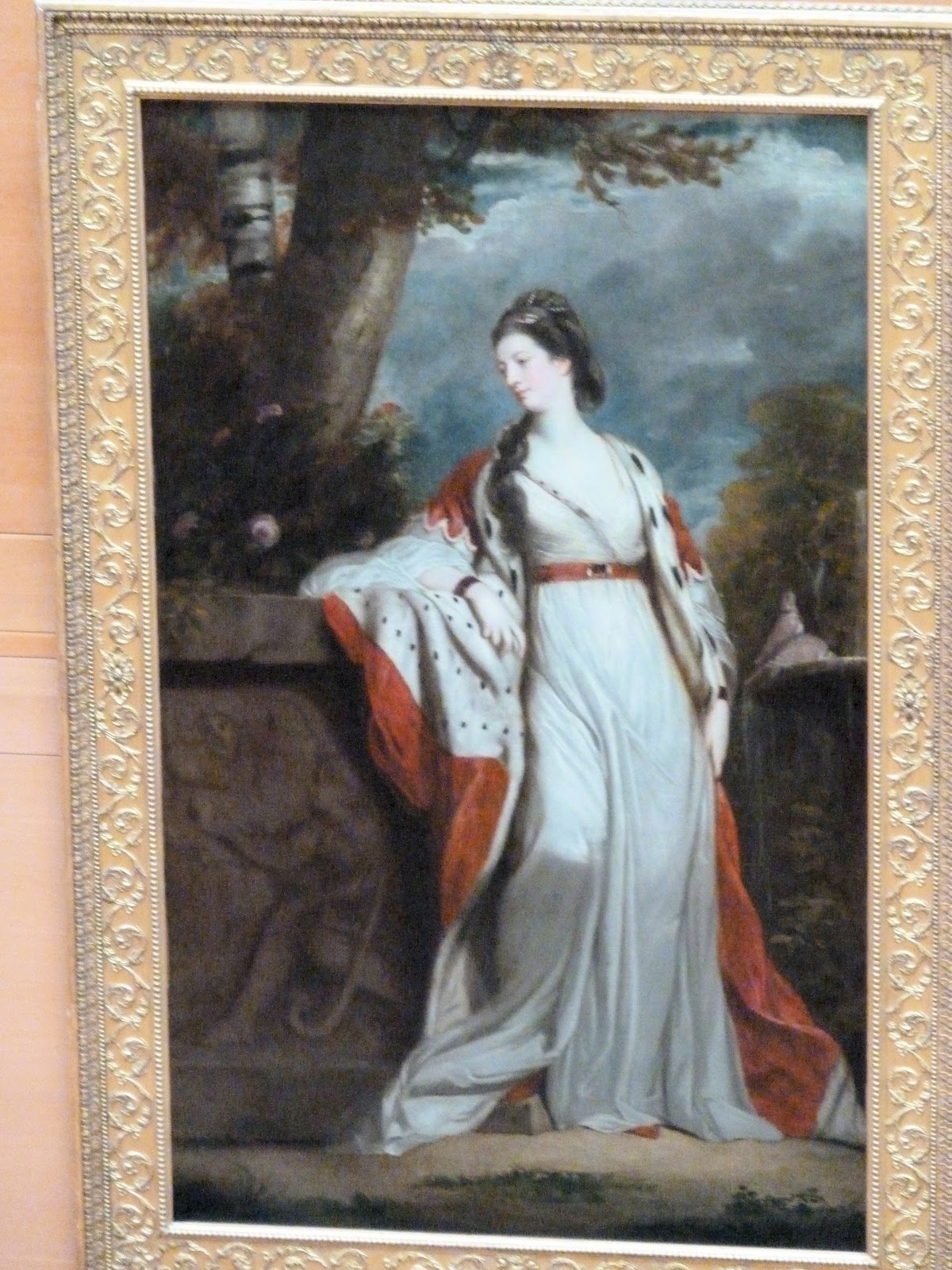
This lovely portrait by Sir Joshua Reynolds shows Elizabeth Gunning, Duchess of Hamilton, later Duchess of Argyll (1758-60).  Reynolds (1723-92) was renowned for his portraits of British society ladies, sometimes even depicted with their husbands.  He and Thomas Gainsborough competed for prominence and commissions for many years in London.   The subject of this painting was one of the famous Irish Gunning sisters, renowned for their beauty in mid 18th c. London. Both married peers of the realm, though the elder sister, Maria, Countess of Coventry (1732-1760), died very young.  Elizabeth was the mother of three children from her first marriage and five from her second.  Four of her sons were dukes.

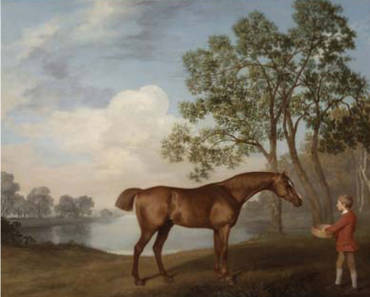
The YCBA has an excellent collection of works by George Stubbs (1724-1806).  This picture of Pumpkin with a Stable-lad was one of the first purchases of British art made by Paul Mellon (1907-1999), whose collection is the nucleus of the YCBA.  Mellon was particularly fond of sporting pictures and of Stubbs in particular.  His father, Andrew Mellon, his uncle and grandfather were the scions of the Mellon Bank and one of America’s greatest fortunes.  Andrew and Paul Mellon were responsible for the creation of the National Gallery of Art in Washington, D. C. and gave the Andrew Mellon collection as its most important bequest.

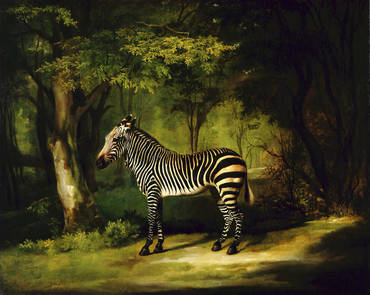
Stubbs was a favorite painter of Paul Mellon, from his racing horses (which reflected Mello
n’s interest in horseracing) to his exotic animals to his dramatically violent pictures of beasts attacking horses. The view to the left, Zebra, dates from 1762–63. Again, the photo is from the YCBA by Richard Caspole. As Zebra was the name of my former publisher, I have a special fondness for the little fellow.

Equally beautiful but shockingly violent is the 1762 painting Lion Attacking a Horse, one of several such views Stubbs painted after supposedly witnessing a similar event while traveling abroad. I guess it makes the scene even more upsetting to us to note that the horse looks much like Trigger.
 
Paul Mellon graduated from Yale University and was the major benefactor for the YCBA, both the building and the collection. 


Continuing the horsey theme with a more mellow view, this painting by Edward Landseer (1802-1873) depicts The Favourites, the property of H.R.H. Prince George of Cambridge, as seen in 1834-5.  Landseer had a way with animals, didn’t he?
A love for horses and British art are probably the only qualities I share with the late Paul Mellon, but I certainly appreciate his taste and his philanthropy. The Virginia Museum of Fine Arts in Richmond, VA, has also benefited from the Mellon’s donations of British Sporting Art.


At right is Eagle, A Celebrated Stallion,  by James Ward (1769-1859) painted in 1809. 
According to the YCBA,  the picture “exhibits Ward’s remarkable ability to create an accurate physical portrayal of a particular animal. He also evokes a transcendent romantic type suggesting the latent power of the barely tamed creature is full of drive, dash, and tension…”  As you may have guess, I am a bit horse-crazy myself.  Though, looking at these magnificent specimens, who isn’t?

Finally, here are two paintings of London by the renowned Venetian master Giovanni Antonio Canal, known as Canaletto (1697–1768). Before Diane and I visited Yale in early March, we spent the first day of the month with our pals Julie and Carol at Washington’s National Gallery to see the exhibition Canaletto and His Rivals, about which I will post soon. Canaletto was a great favorite of traveling British aristocrats and he came to London for a few years and painted many local scenes. Though I must say I wonder if the boats on the Thames looked quite so much like the gondolas and barges of his home town.

St Paul’s Cathedral by Canaletto, at right. The Italian artist lived in London from 1746 to 1755 and painted many views of England, probably none more magnificently than this.  The cathedral, designed by Sir Christopher Wren in a nearly-Italian baroque style, had been finished in 1710, after its predecessor had been destroyed in the Great Fire of London in 1666. It must have looked much more familiar to the Venetian Canaletto than other, gothic-style London churches.


Coming soon, a visit to Yale’s Beinecke Rare Book and Manuscript Library…and more Canaletto from Washington, D.C.

On The Shelf – Discovering New Authors – Part Five

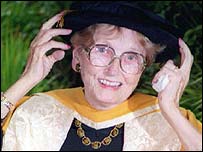
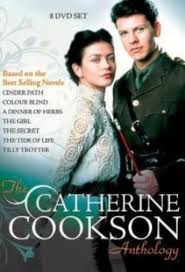
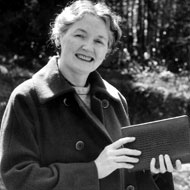
Prolific author Dame Catherine Cookson died in 1998, just nine days short of her 92nd birthday. She had rarely been out of the top ten most-borrowed books in British public libraries, and in 1997, for the second year running, nine out of ten out of the most popular library books borrowed were written by Dame Catherine. Accroding to a February 2010 article in The Guardian: “She dominated the library charts for years – but there is no trace of her among the 100 most borrowed books of 2008-9. She is still, however, the 10th most borrowed author of the decade.”
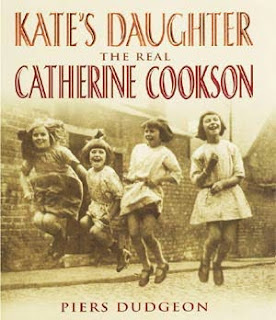
Cookson was born illegitimate in 1906 to an alcoholic mother and grew up in poverty around the towns of Shields and Jarrow in County Durham, now Tyne and Wear, the setting for most of her books. She would use the people, places and experiences of her childhood to draw sypmathetic characters and compelling plotlines that touched many a reader’s heart. A few weeks before her 84th birthday, a Sunday newspaper named her as Britain’s 17th richest woman with an estimated fortune of £14 million. And in her kindness, Cookson has left each of us a legacy – her impressive backlist of over 100 books, many of which are sagas that follow a single family through darkness and into the light.

Oh, how I love Cookson’s books. To describe them, and their effect upon the reader, is to dredge up every trite and hackneyed reviewer’s phrase: like curing up wth an old friend, the perfect book for a cold winter’s day, a compelling and moving story, etc., etc., etc. However, in Cookson’s case, these platitudes are quite true. No matter how dire consequences become for Cookson’s characters, we know that all will come right in the end and the journey is pure entertainment.
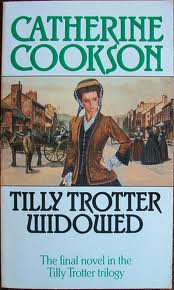
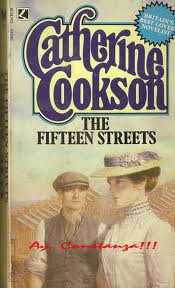
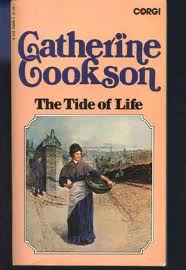
The following cover blurbs will give you the flavour of Cookson’s novels –
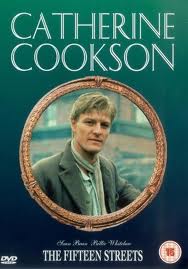
The Fifteen Streets – Life in the Fifteen Streets was a continual struggle for survival. Some families gave up hope and descended into a state of perpetual despair. Others, like the O’Briens, maintained a fierce determination to transcend the bitter poverty into which they had been born. For Mary Ellen O’Brien, hope lay in the wisdom and strength of her children. There was gentle Katie, whose bright beauty and quick mind led her to a new world of learning; Dominic, fast-tempered and strong-willed; and there was John–the most determined to escape the cruel poverty of the Fifteen Streets, the most passionate, courageous and loving of all the O’Briens.
Kate Hannigan – Dr Rodney Prince has never seen a girl who looked more out of place in the grime and squalor of the Fifteen Streets than did Kate Hannigan. He knew she had suffered at the hands of men: Tim Hannigan, her ‘father’, was a vicious bully; John Herrington, a smooth-talking seducer, had left her with his child. But Rodney Prince’s desire for a family had been frozen out by a wife who’d wanted Harley Street, not a Tyneside slum. By contrast, Kate glowed with a warmth that far outshone the hard, brittle beauty of Stella and exposed the emptiness in his heart. And so, between Rodney Prince, a wealthy man locked in an unhappy marriage, and Kate Hannigan, a bastard child of the slums, grew a love that opposed all the concepts of an Edwardian society.
The Tide of Life – Sep McGilby said Emily Kennedy has a glad face. And at 16, Emily had a lot to be glad about. She loved her job as a maid-of-all-work to the McGilby’s, and the only cloud of her horizon was her anxiety about her delicate, younger sister Lucy. But when the invalid Mrs McGilby died, and Sep was killed in an accident soon after, Emily and Lucy were forced to leave South Shields to look for work. The household of Croft Dene house, where Lawrence Birch ruled as master, was a strange one, and as Emily became more deeply involved with the family’s affairs, she grew rapidly from girl to woman, needing all her strength of will and character to get her through. And whatever happened, she clung grimly to a scrap of philosophy that had become her motto: ‘Never say die!’
You’ll find a complete bibliography of Cookson’s books at Fantastic Fiction.
Many of Cookson’s novels have been made into films, the first being The Fifteen Streets staring Sean Bean and Owen Teale, which was nominated for an Emmy in 1990. Having seen a few of these productions, I can tell you that something is definitely lost in the translation and that Cookson was simply meant to be read. And felt.

Cookson left the North East for Hastings in 1929 where she worked in a laundry. She spent forty six years in Hastings, where she met and married schoolmaster Thomas Cookson. You can read an interesting story about her home in Hastings here.

To read more about the author and her life, we suggest

Windsor Museum Finds New Home

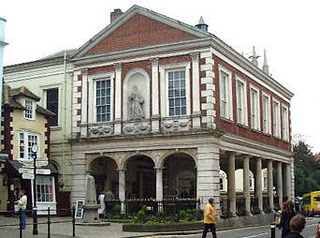
The Windsor and Royal Borough Museum has just relocated to its new home at the Guildhall in Windsor. Above is a photo of our good friend, author Hester Davenport, with two dashing opening attendees. You may recall that Hester gave Victoria and I a personally guided tour round Windsor when we were there in June. If not, you can refresh your memory by revisiting that post here.


The Guildhall, Windsor. Note the “crooked house”
butting up against the Guildhall at left.

The Museum is ‘small but perfectly formed’, with displays of artefacts from the earliest times, including everything from a mammoth’s tooth and mastodon’s tusk to objects and ephemera from before Victorian times up to World War II, the 1950s and the present day. In addition, visitors will find lots of interactive displays and a photo-opportunity to get stuck in the pillory and pelted with fruit and veg (the cuddly sort). And, as Hester is quick to remind me, the opportunity to see the very room in which Prince Charles and Camilla wed (staff availability depending).

The Museum is open Tuesday – Saturday 10 am to 4 pm and on Sundays from 12-4. You can visit the Museum website here, and you can see pictures of the Musuem and part of its collections here.

Magnificence at Yale, Part Three

I decided to do a separate blog about what I will call the POWER portraits of the exhibition now at the Yale Center for British Art in New Haven CT.  It will be on view until June 5, 2011, the second and last venue, so if you can possibly make it there, you will be richly rewarded.  Part two, posted on 3/12/11, could have been called BRILLIANCE.  What poured out of me in the 3/8/11 post covered the things that caught my eye first off.  You see, a perfectly rational way to divide up the spoils of this excellent exhibition…. 

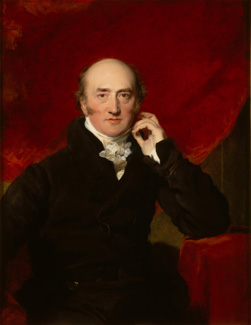
To the right is Lawrence’s view of Prince George as Prince Regent, painted about 1814.  George was florid, overweight, dissolute, and flabby, but not in this view, one of the most egregious of Lawrence’s flatteries.  It is in London’s National Portrait Gallery; some observers say that it is unfinished because it was a study for a coin or a medal, a project which never came to fruition. I’ll bet George loved it, for he looks young and vital.
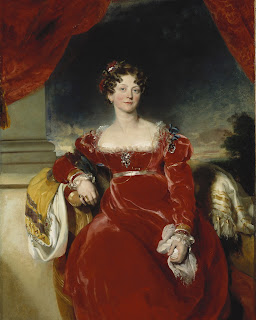

George’s sister, Princess Sophia (1777-1848) was never married, though it is generally accepted that she had a child out of wedlock.  The father may have been her father’s equerry, Thomas Garth.  Others, perhaps with political motives, said the father of her child was her brother the Duke of Cumberland.
As one of the six daughters of King George III and Queen Charlotte, Princess Sophia’s life was constrained by the demands of her parents and court life.  She could not see much of her lover, whoever he was. Not a life I would  wish on anyone. In this brilliant red dress, at age 48, I can almost feel her flirting with Lawrence as she sat for him.  He was quite the ladies’ man, having had many flirtations with princesses, actresses, titled married ladies and others, but none of his relationships grew into marriage. On the other hand, he also was very close to some of his male sitters, leading to occasional suspicions in another direction. For more on his love life,see Jo Manning’s posts here on January 8, 9, and 10, 2011.
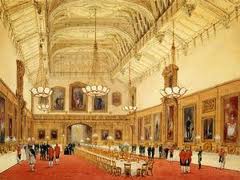

The Prince Regent knighted Sir Thomas Lawrence in 1815, about the same time as he commissioned the artist to travel around Europe and paint grand portraits of the victorious allied leaders in the war against Napoleon.  Certainly  this was one of the greatest royal commissions for one artist, and the result was suitably magnificent. Several of the paintings below were shown only at the London venue of this exhibition, but since I had seen them in situ at the Waterloo Chamber in Windsor Castle just last summer, I could forgive the Royal Collections for having kept them on their side of the pond. Above, the Waterloo Chamber painted by Joseph Nash in 1844.

In the upper center of the far wall is this painting of the Duke of Wellington who led the allied troops in the Battle of Waterloo, June 18, 1815.  This painting is not in the exhibition, but it has been reproduced so often that it is bound to be familiar. Like the watercolor of the chamber, above, and most of the other heroes below, it belongs to Her Majesty Queen Elizabeth II.
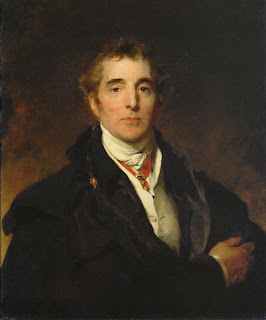
This is the portrait of the Duke to be seen in the New Haven exhibition. I must say I had to drag Diane Gaston away from him; she was sure he was about to speak to her.

This portrait, part of a private collection, was painted in 1820-21, and according to the catalogue, engraved more than any other of Lawrence’s works of Wellington. It was commissioned by the Duke’s close friends, Charles and Harriet Arbuthnot.  Mrs. A is quoted in the catalogue: “It is more like him than any picture I ever saw of him and quite different. All other pictures of him depict him as a hero; this has all the softness and sweetness of countenance which characterises him when he is in the private society of his friends. As a painting, it appears to me : the tone of coloring is so rich. The cloak is just as the Duke wears it, and  the hand is remarkably like.”

Three of the  portraits from the Waterloo Chamber were hung in the London venue of Thomas Lawrence: Regency Power and Brilliance. You will not find them at Yale, but there are several Yale portraits that were not in London, just in case you were wondering.

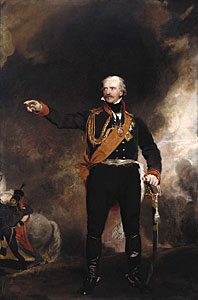
Field Marshal Gebhardt von Blucher (1742-1819) commanded the Prussian forces that cinched the Allied victory at Waterloo.  He was a courageous and forceful officer

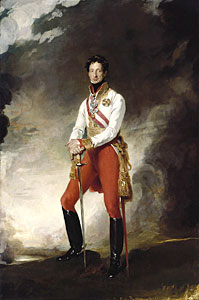
Charles, Archduke of Austria (1771-1847) was painted in 1819 in Vienna. He led the Austrian armies in many battles in which he proved his abilities as a strategist, though he both won and lost against Napoleon during his army career. He was also a distinguished patron of the arts, and Lawrence reportedly enjoyed his companionship.

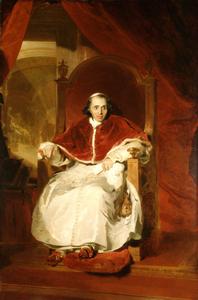
Lawrence made his first visit to Rome in 1819 to paint Pope Pius VII (1742-1823). This is often admired as the finest portrayal of the Waterloo portraits, an particular achievement, says the catalogue, when one thinks of the brilliant artists who portrayed popes in the past.  Names such as Raphael, Velazquez, Michelangelo, David and many others must have been in Lawrence’s mind as he worked.

A close examination of the portrait reveals the word PAX on the pope’s throne and classical statues from the Vatican collection in the background.

Throughout his career, Lawrence was called on to paint many political leaders of all persuasions in England. We have already seen Lord Liverpool in my post of 3/8/11.  And many of his portraits were of business leaders or scientific personages — but he certainly had more than his share of parliamentary leaders and party spokesmen sitting for him.  At right is George Canning (1770-1827), in a portrait completed in 1822 when he was Foreign Secretary. He served briefly as Prime Minster in 1827 and died in office.

In September, 1809, when Canning was Foreign Secretary, he and Lord Castlereagh  disagreed so violently over the disastrous Walcheren Expedition that they fought a duel on Putney Heath.  Neither waas injured. As Foreign Secretary from 1812 to 1821, Lord Castlereagh represented Britain at the Congress of Vienna and was painted by Lawrence himself. After Castlereagh, who had inherited the title of 2nd Marquess of Londonderry by then, committed suicide in 1821, Canning succeeded him as Foreign Secretary again.  The Londonderry title went to Castlereagh’s half-brother,  Charles William (Vane-) Stewart, later 3rd Marquess of Londonderry, whose portrait by Lawrence is in this exhibition (see post of 3/12/11).
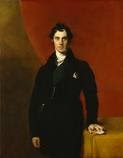
George Hamilton-Gordon, 4th Earl of Aberdeen (1784–1860), is the subject of one of Lawrence’s last portraits.  He was Prime Minister from 1852 to 1855.  The catalogue says the portrait, partly unfinished, “won widespread praise” when it was exhibited after Lawrence’s death.  Painted in 1829-30, it seems to  foreshadow the future success of Lord Aberdeen.

After a brief illness, Lawrence died  on 7 January, 1830. His body lay in state at the Royal Academy before his funeral at St. Paul’s Cathedral, where he is buried in the crypt.  Below, a watercolor of the funeral by J. M. W. Turner, 1830, belonging to the Tate Britain (not in the exhibition).

This is the third of my posts on Thomas Lawrence Regency Power and Brilliance, at the Yale Center for British Art in New Haven, CT.  It will be on display until June 5, 2011.   Soon we will have other posts on our jaunt to Yale. I wish everyone who visits Number One London could have come along. Thanks again to all the wonderful people at Yale, especially Kaci Bayliss and Amy McDonald.