RWA in New York

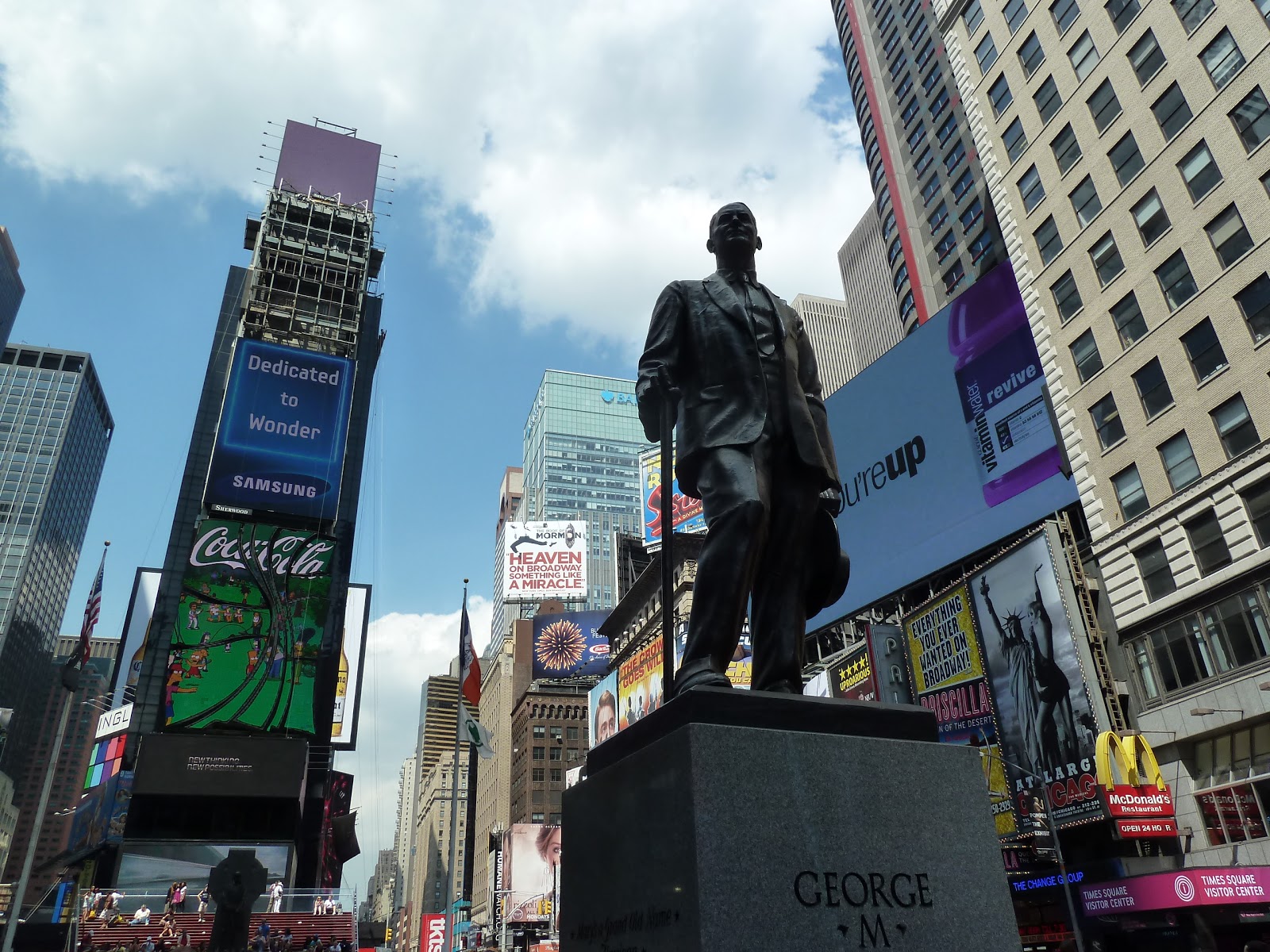
Victoria here, with my report on the Romance Writers of America Conference in New York City, June 29 to July 1, 2011, at the Marriott Marquis Hotel on Times Square.  I attended soon after returning from my European adventures so I was definitely in the early-to-bed group and probably missed half the excitement. Below, the statue of George M. Cohan, one of the fathers of the Broadway musical.

Before the official start of the conference, my roommate and travel buddy, Judith Laik, and I took in the Frick Museum at 90th and Fifth Avenue.
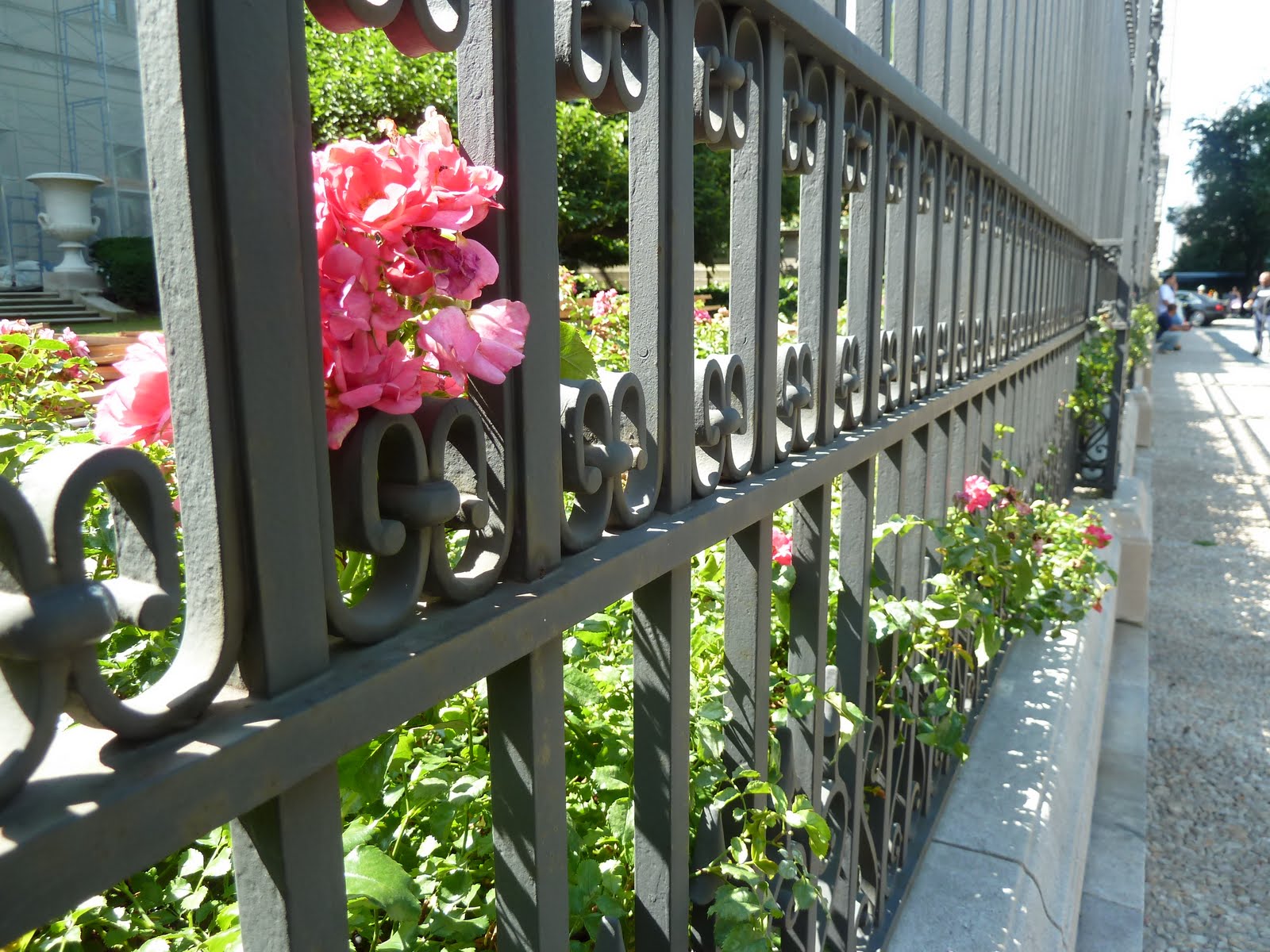
Their pretty gardens were full of scaffolding, sad to say. But a few roses clung to the fence on Fifth.

This building was the residence of the Henry Clay Frick (1849 -1919) family from its completion in 1912 to the point at which it was turned into a museum for his collection of old masters. Some additional construction was needed but part of the very nice atmosphere there is the feeling that you’re in a home – just like your very own nest, of course.  Don’t we all have Vermeers, Gainsboroughs and Rembrandts on our walls and priceless ceramics on precious antique tables? 
One must acknowledge that Frick was a notorious robber baron, but that makes his little gem in Manhattan no less delightful to visit.
After the opening luncheon, I moderated a workshop given by Jennifer Kloester (left) and Sabrina Jeffries entitled “Keeping it Real: Regency Research Georgette Heyer Could Believe In.” Jennifer is the author of Georgette Heyer’s Regency World and has a biography of GH coming out soon.   Sabrina has written more than two dozen novels, most set in the late Georgian period.

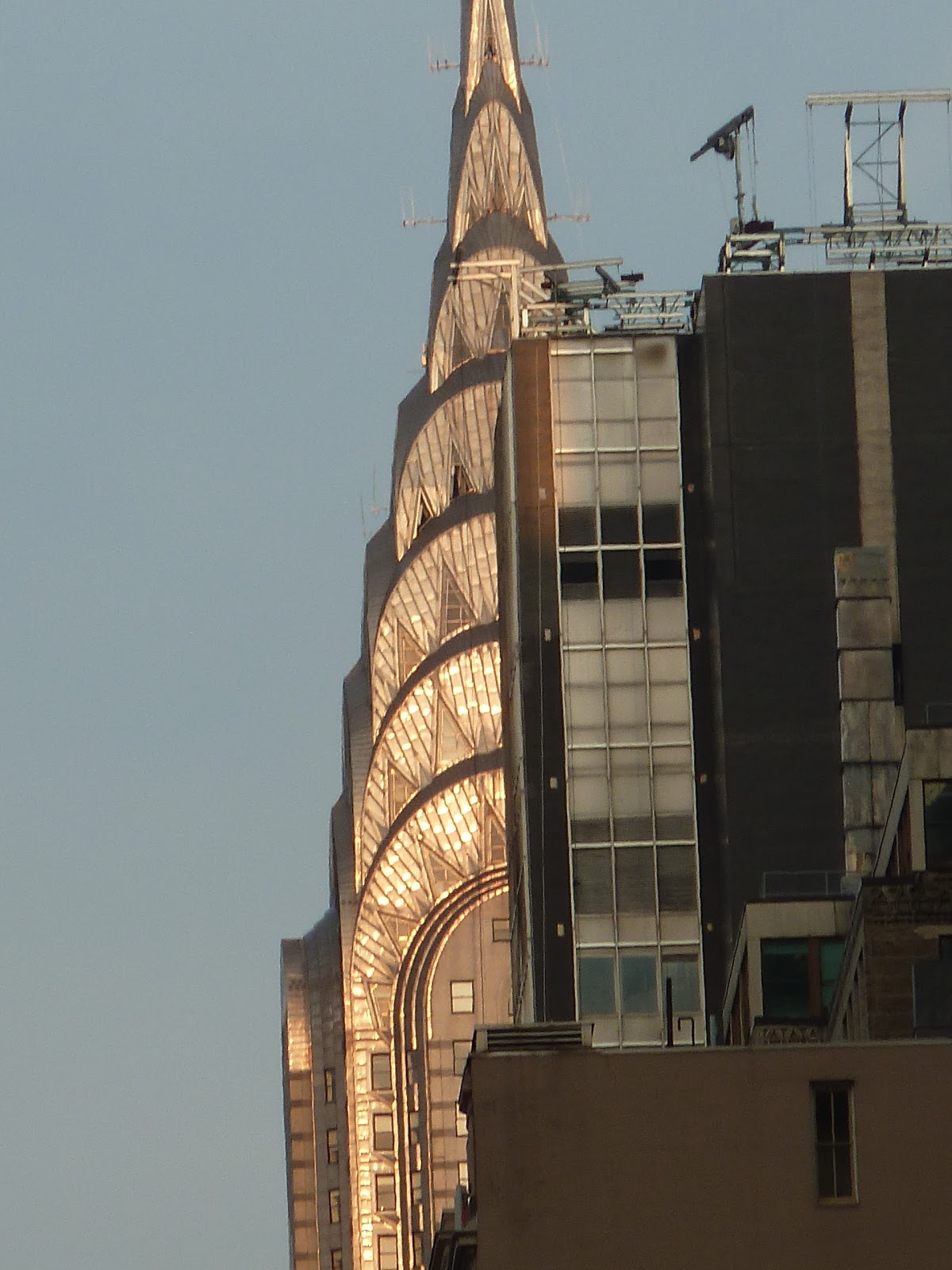
After an afternoon of meetings, we went out to catch a breath of fresh (?) air, and saw the rays of the lowering sun gild the Chrysler Building a few blocks away.
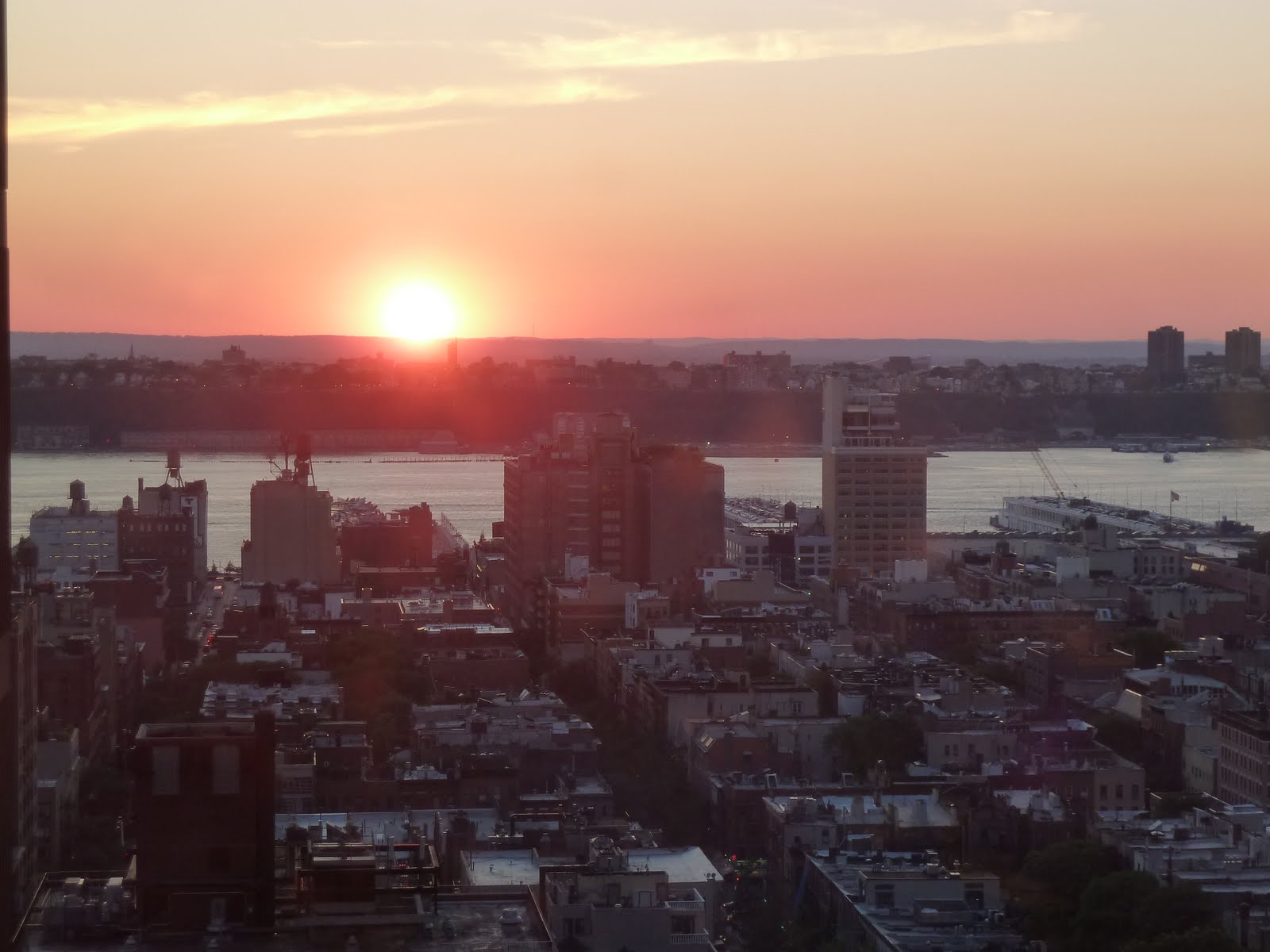
Sunset over the Hudson River from our room on the 22nd floor.

I managed to fit in a quick trip to the New York Public Library where I never fail to find an engaging snippet of knowledge in a brief visit.  Sometime I’ll spend an entire day there.  How about a month?
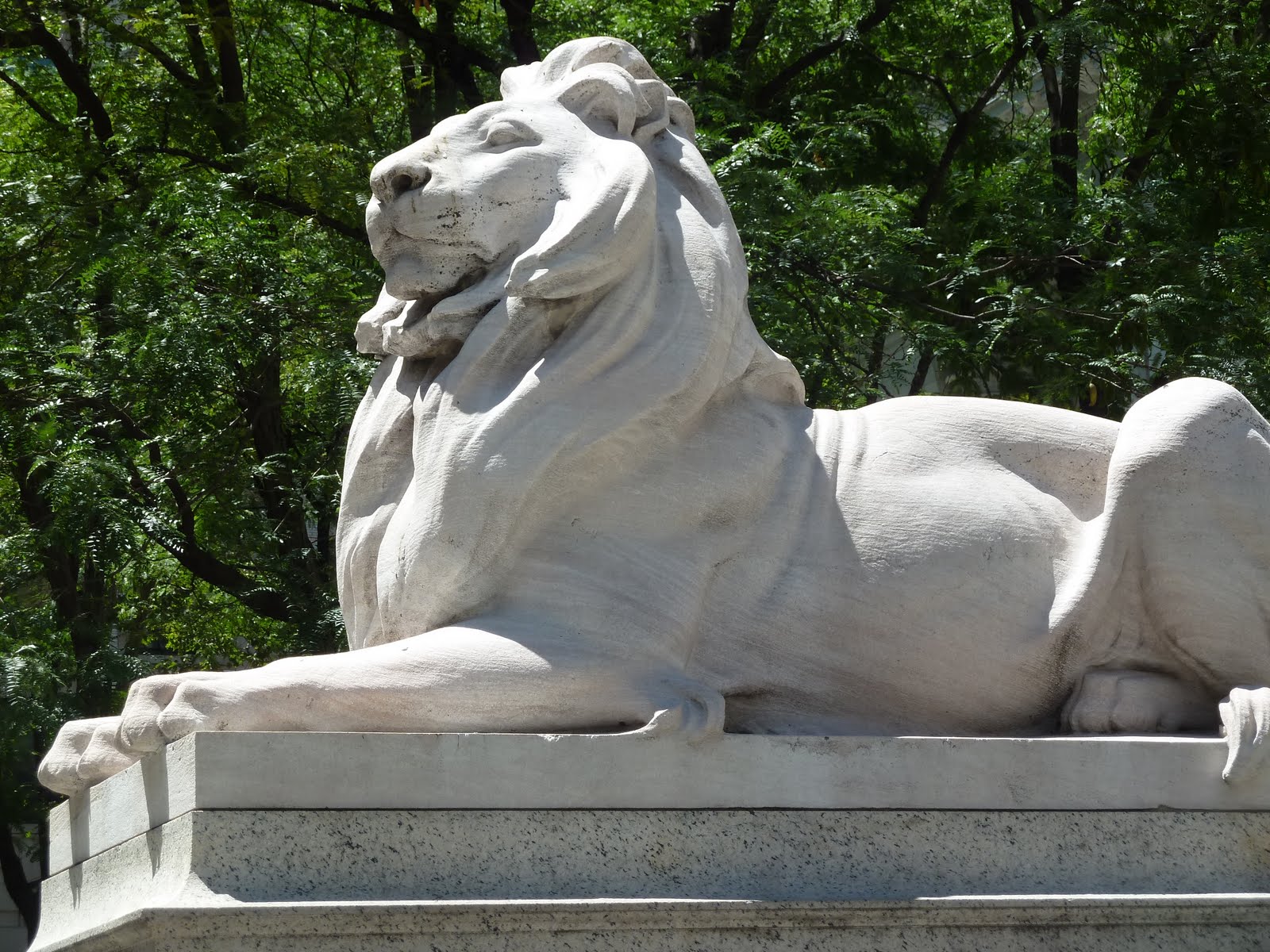
The noble beasts always get my respect.  Are they the guardians of all knowledge – or symbolic of the majesty of the contents behind them?  In case it looks like I spent most of my time flitting about the city, let it be known that I worked two full mornings as a volunteer at the editor-agent appointments desk, attended several workshops and PAN (Published Author Network) sessions and many other activities. And I spent a bundle on taxis.
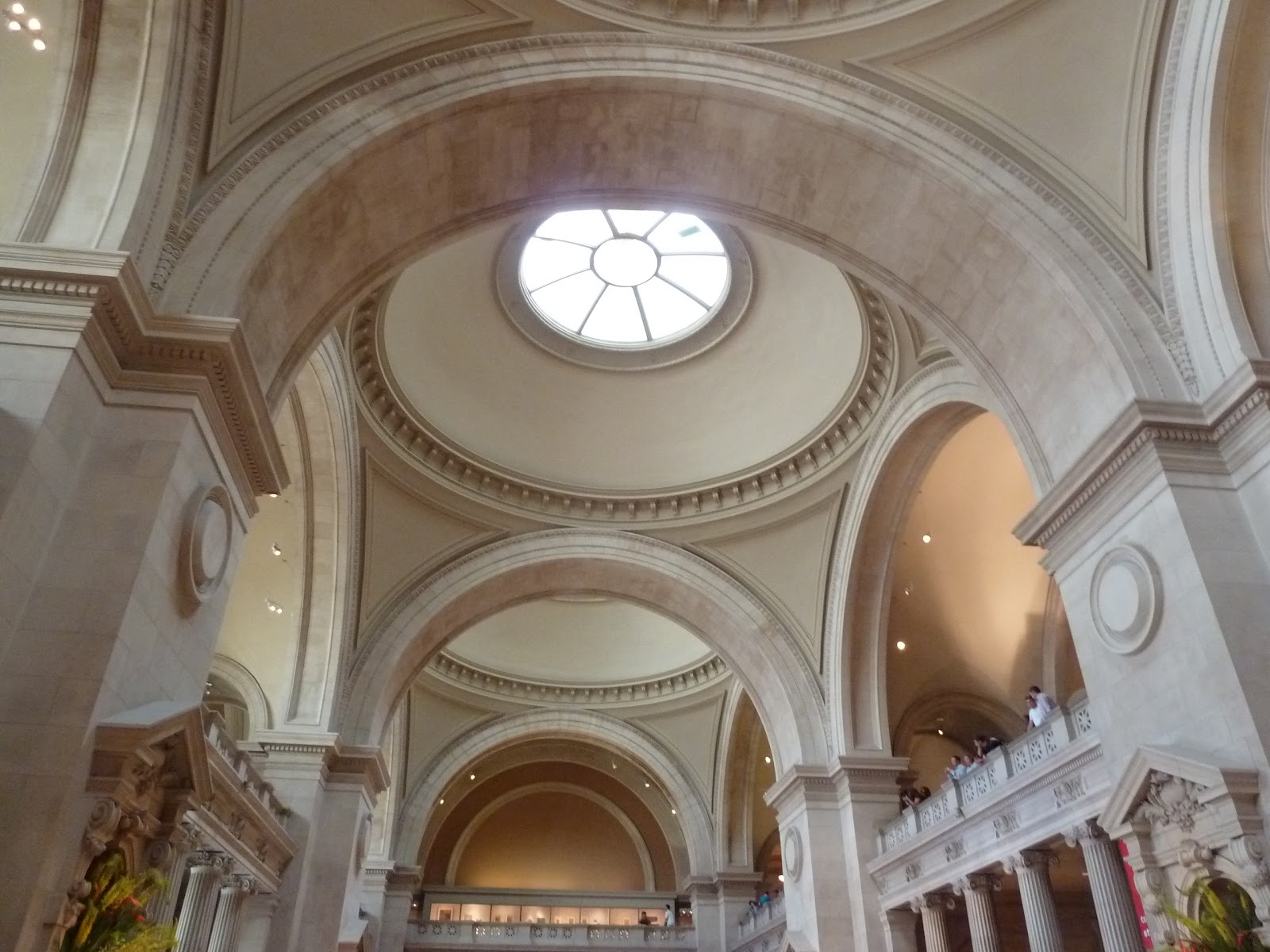
Before the RITA ceremonies on Friday night, Judith and I browsed through the Metropolitan Museum of Art. We could hardly do more than scratch the surface, but it was wonderful.

We found the British period rooms temporarily closed off, to our disappointment. As devotees of the Regency, we had looked forward to visiting a little bit of London in NYC. But in the American Wing, we found the colonial and federal period rooms almost as useful for our research.

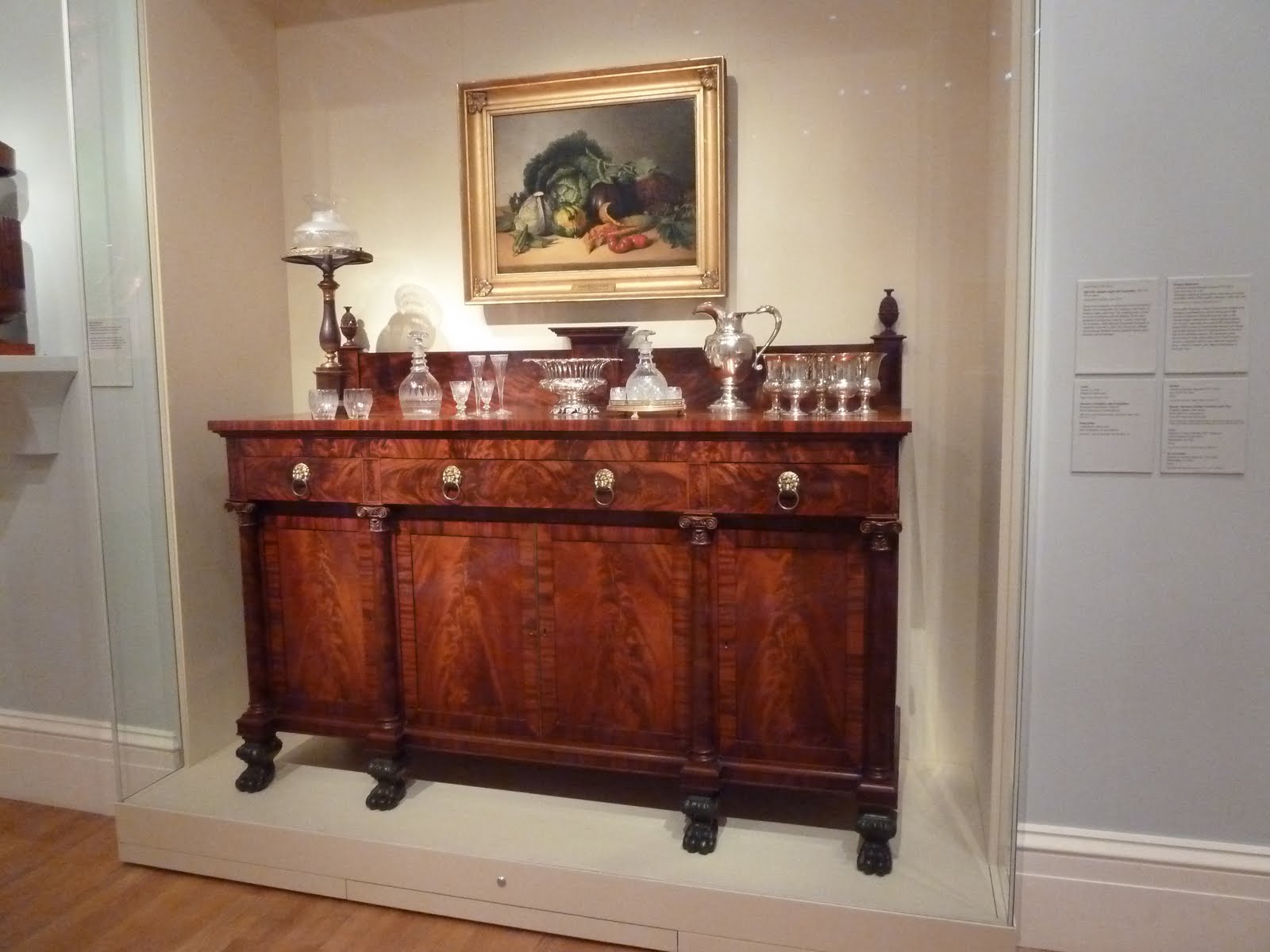
For example, this sideboard was made in New York City about 1812 by French emigre cabinet maker
Charles Honore Lannuier (1779-1819) of flame-grain mahogany veneers. Shown on top are decanters, flutes, and wineglasses, most of them made in Pennsylvania and New York.
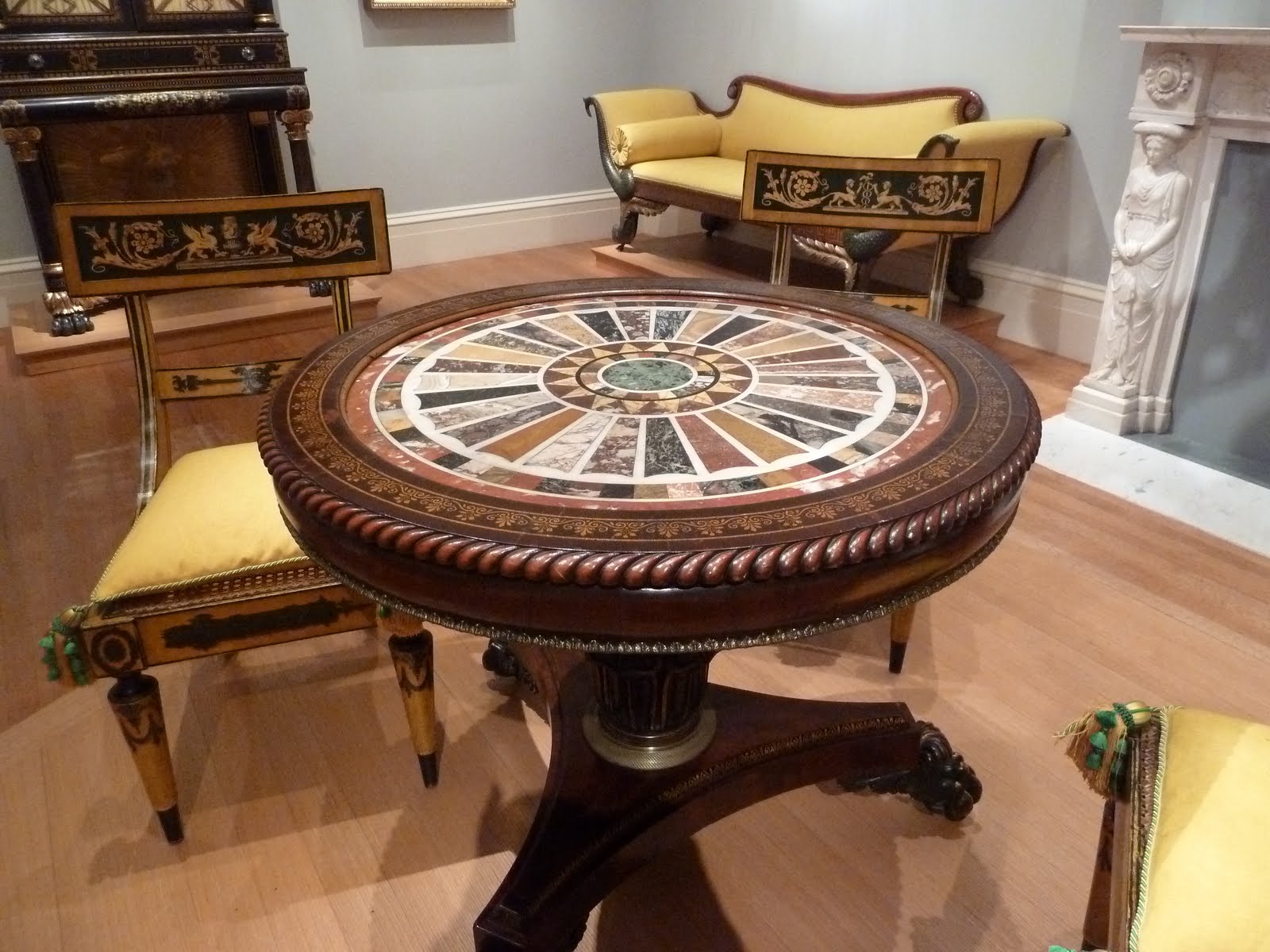
This table was made in Philadelphia, c. 1830, of mahogany, marble and brass by another French emigre, Anthony Quervelle (1789-1856). He also made tables for the East Room of the White House. The side chairs are attributed to the Baltimore workshop of John and Hugh Findlay, c. 1815-25.

Elsewhere in the Met, we stumbled upon Napoleon, in the form of a tapestry in wool, silk and metal thread, in its original pine frame. It is based on a 1805 portrait by Francois Gerard (1770-1837) of the emperor in his coronation robes. Woven in the workshop of Michel Henri Cozette (1744-1822) in the Gobelins Manufactory, 1808-11.

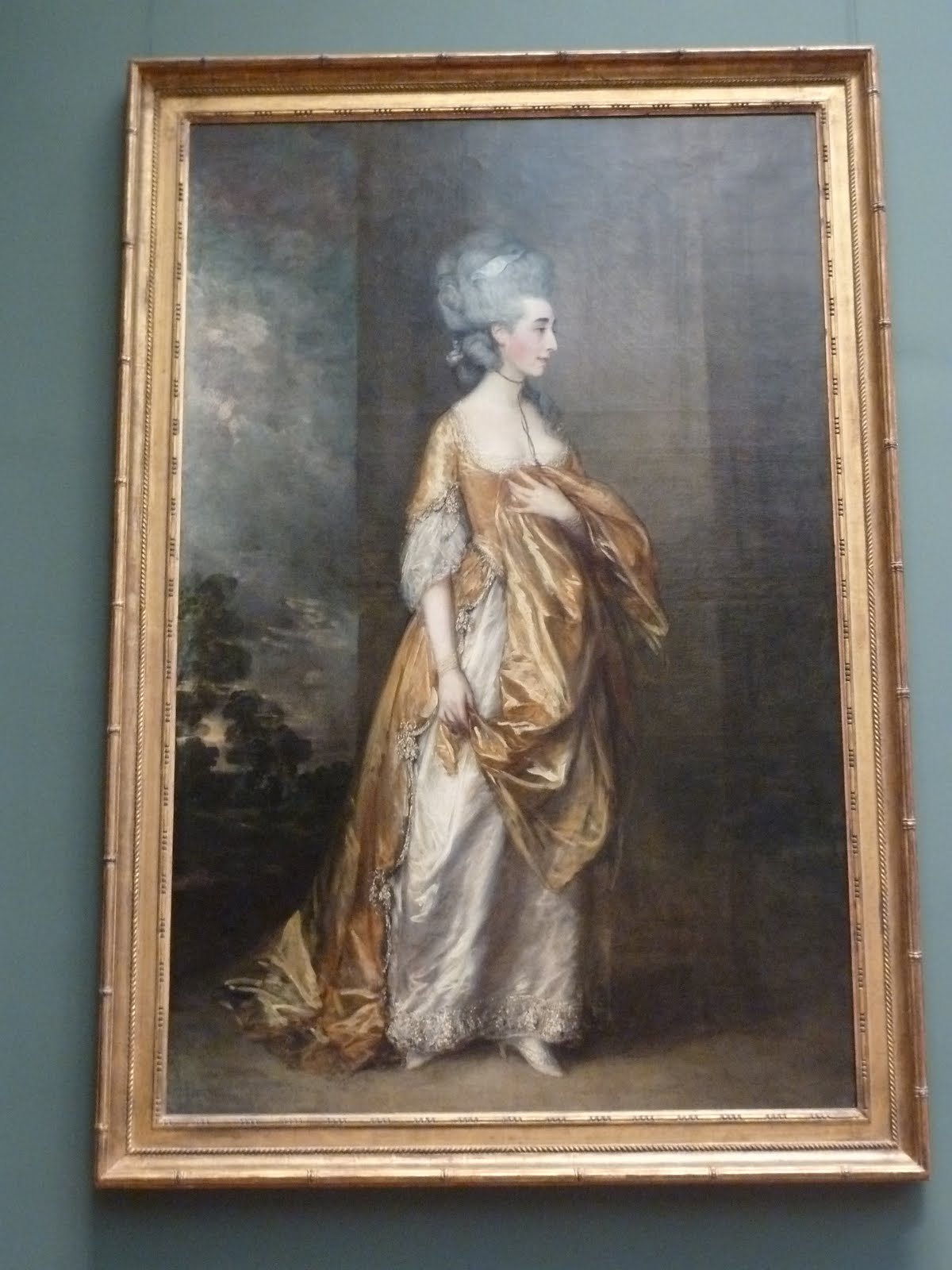
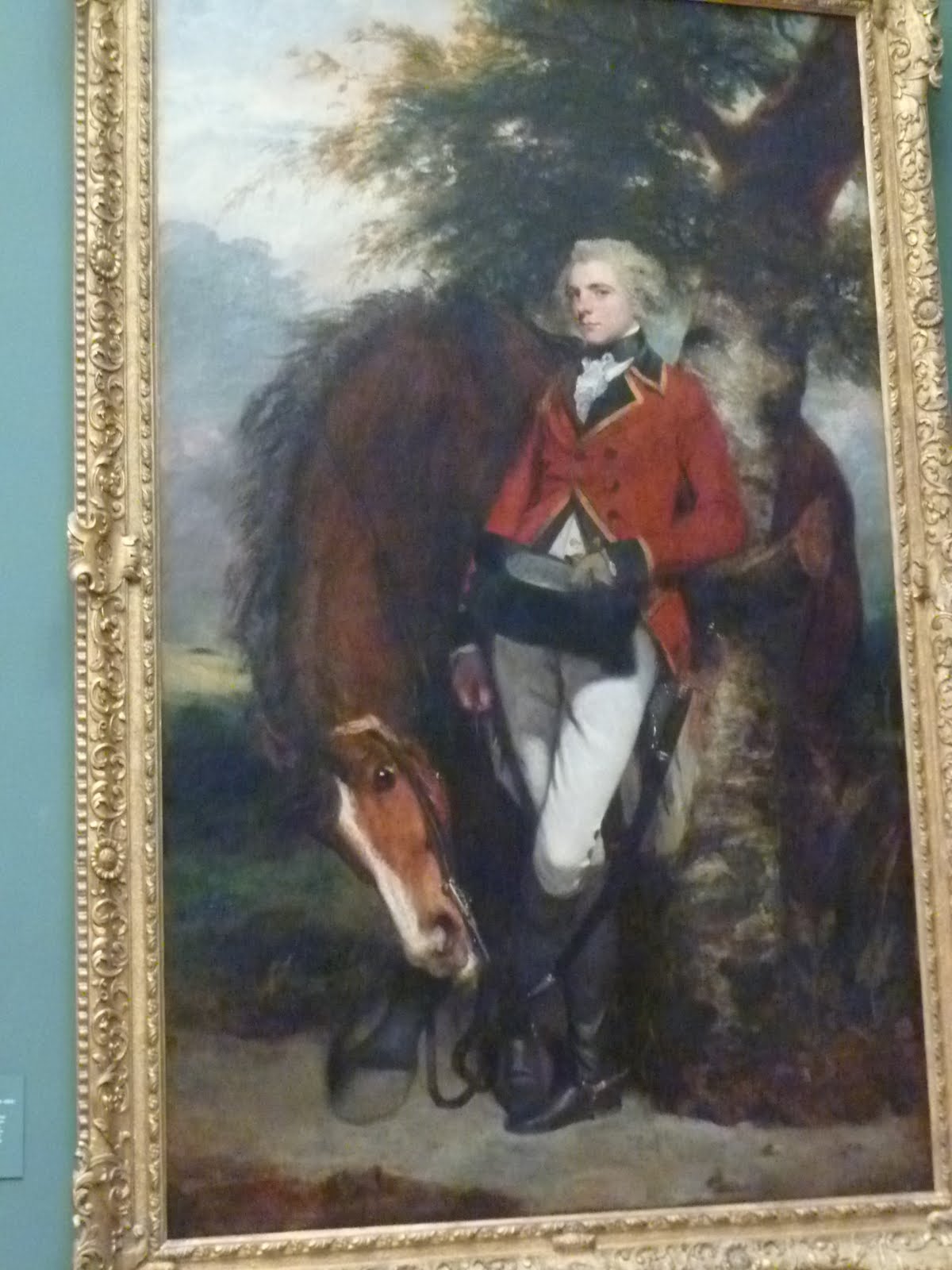
At last we found the British paintings — works by Reynolds, Gainsborough, Raeburn, Hoppner, Lawrence, and many more of our favorites.  Below, three examples.

John Hoppner (1758-1810): Mrs. Richard Brinsley Sheridan and Her Son
Thomas Gainsborough (1728-1788): Mrs. Grace Dalrymple Elliott
Sir Joshua Reynolds (1723-1792): Captain George  K. H. Coussmaker
Judith and I hustled back to the hotel for the awards ceremony which presented Ritas for published novels and Golden Hearts for unpublished manuscripts, sort of the Oscars for romance writers.
Rita

  The hustle and bustle was over for another year.  Several thousand women — and some men too — had a lot of sleep to catch up on.

Travels with Victoria: Rouen, France

Cruising the Seine — can you think of a more beautiful place to be on a warm sunny day at the end of May? Our ship navigated the broad mouth of the river and about 75 miles of curving river from the English Channel to Rouen past an idyllic countryside of neat farms, lush fields and contented cattle, past villas and villages.

Approaching the Pont Gustave Flaubert; the vertical lift bridge across the Seine at Rouen opened in 2008. At the right is the distant steeple of the cathedral (see below). 

A passing River Cruise ship, which can fit under the bridges; we saw many of these vessels which can go at least as far up river as Paris.

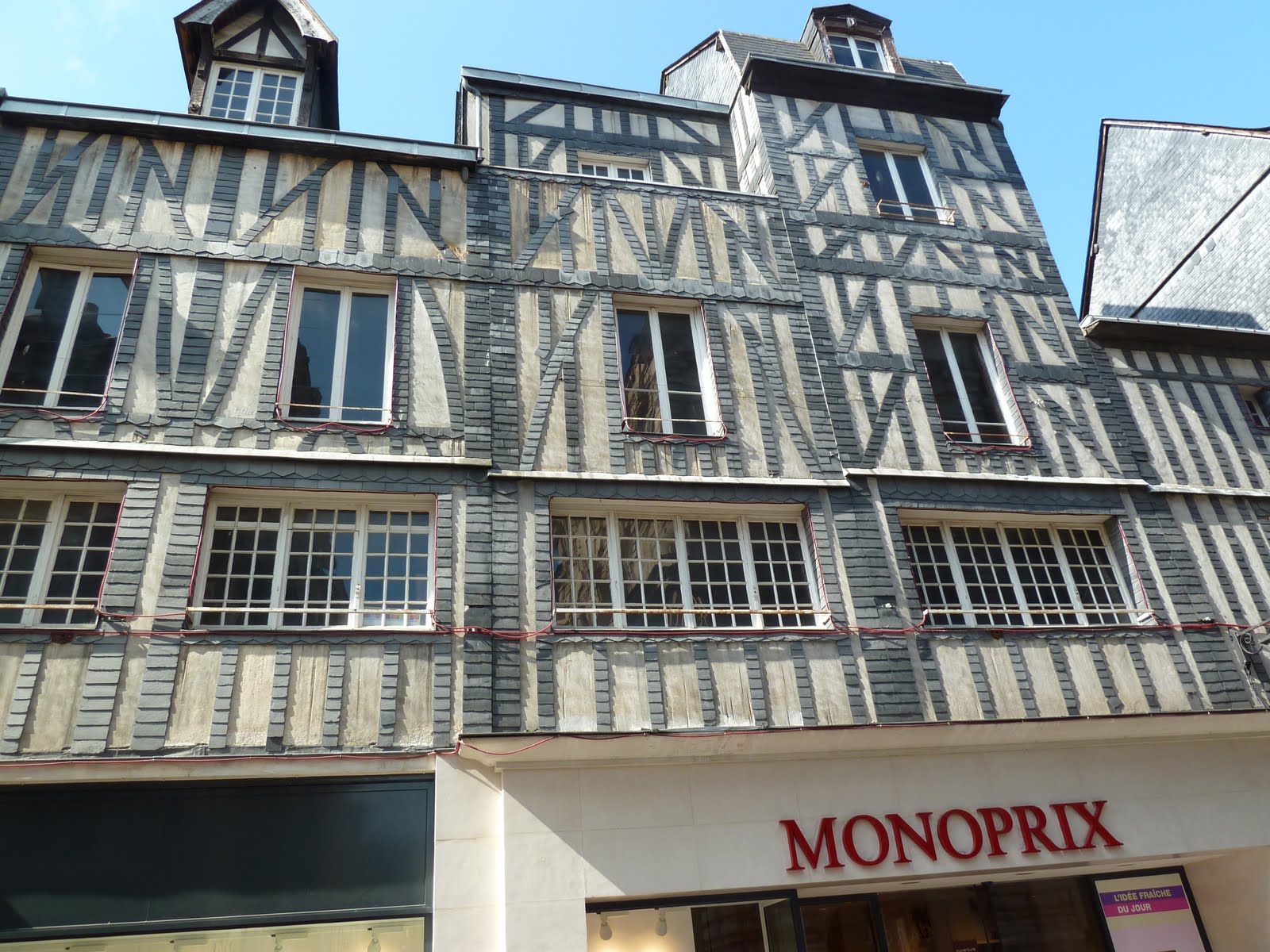
Rouen being the principal city of Haute-Normandie, one might expect the half-timbered buildings — and there were plenty of them.  This one houses a Monprix, part of a large French chain, roughly comparable to Target in the U.S.

One of the city’s more famous sights is the Gross Horologe, an astronomical clock.  It reminds me that we found a McDonald’s nearby, which we were looking for to use their worldwide free wi-fi.  In the several French McDs at which we stopped, a separate coffee bar served excellent cafe au lait. Nice sipping while we caught up on e-mail.  But that brings up another question: How come ships and hotels so often charge exorbitant rates for their internet access?  And then are so slow it costs a bundle just to read a few messages — while good ol’ Mickey D’s has good wi-fi service (most places) free, whether or not you buy a Big Mac?

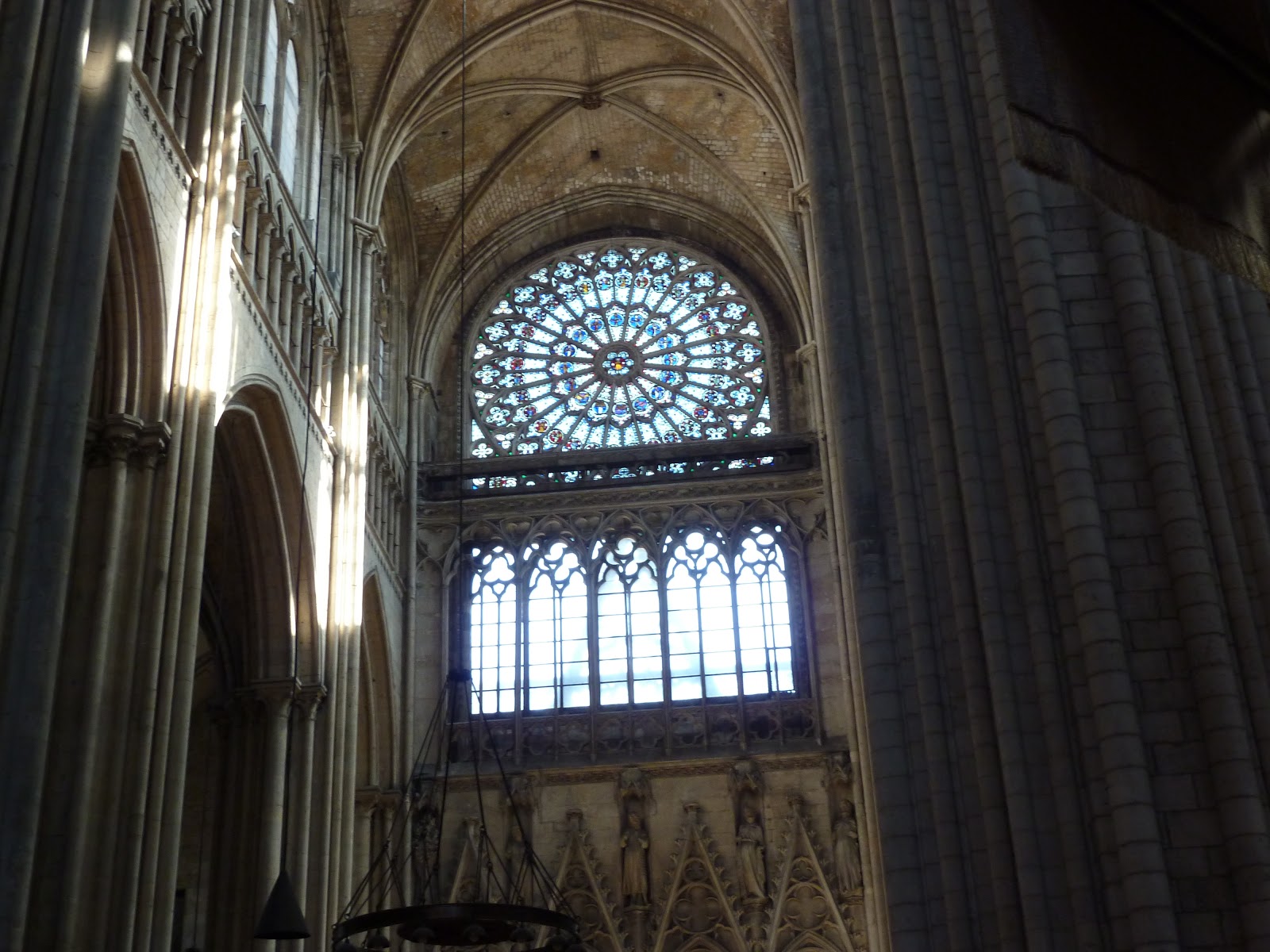
Rouen’s Notre Dame Cathedral (above) was damaged and almost half of the city was destroyed by allied bombing attacks during World War II.  Restoration is complete, but constant renovation and repairs are needed to keep the oldest parts of the structure, dating from the 12th century, intact.

The cathedral houses a tomb of Richard Coeur de Lion (the LionHeart) who lived from 1157-1199. Richard was King of England and Duke of Normandy; his heart is buried here though other remains are buried elsewhere.

Joan of Arc was tried and executed by burning at the stake in Rouen in 1431, not a claim to fame that is celebrated in the city.

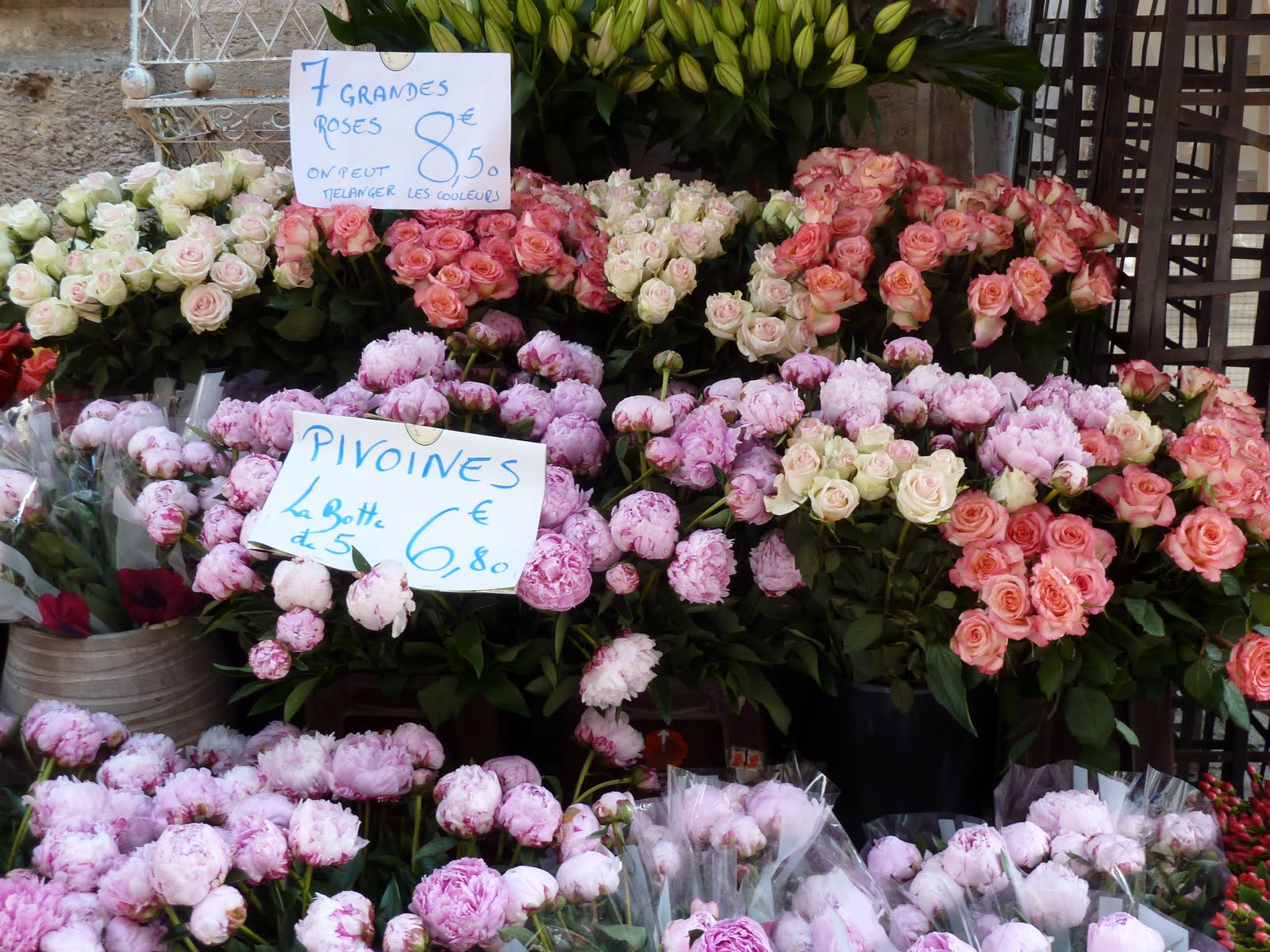
Here is a cheerier note, taken at a flower vendor’s colorful corner.

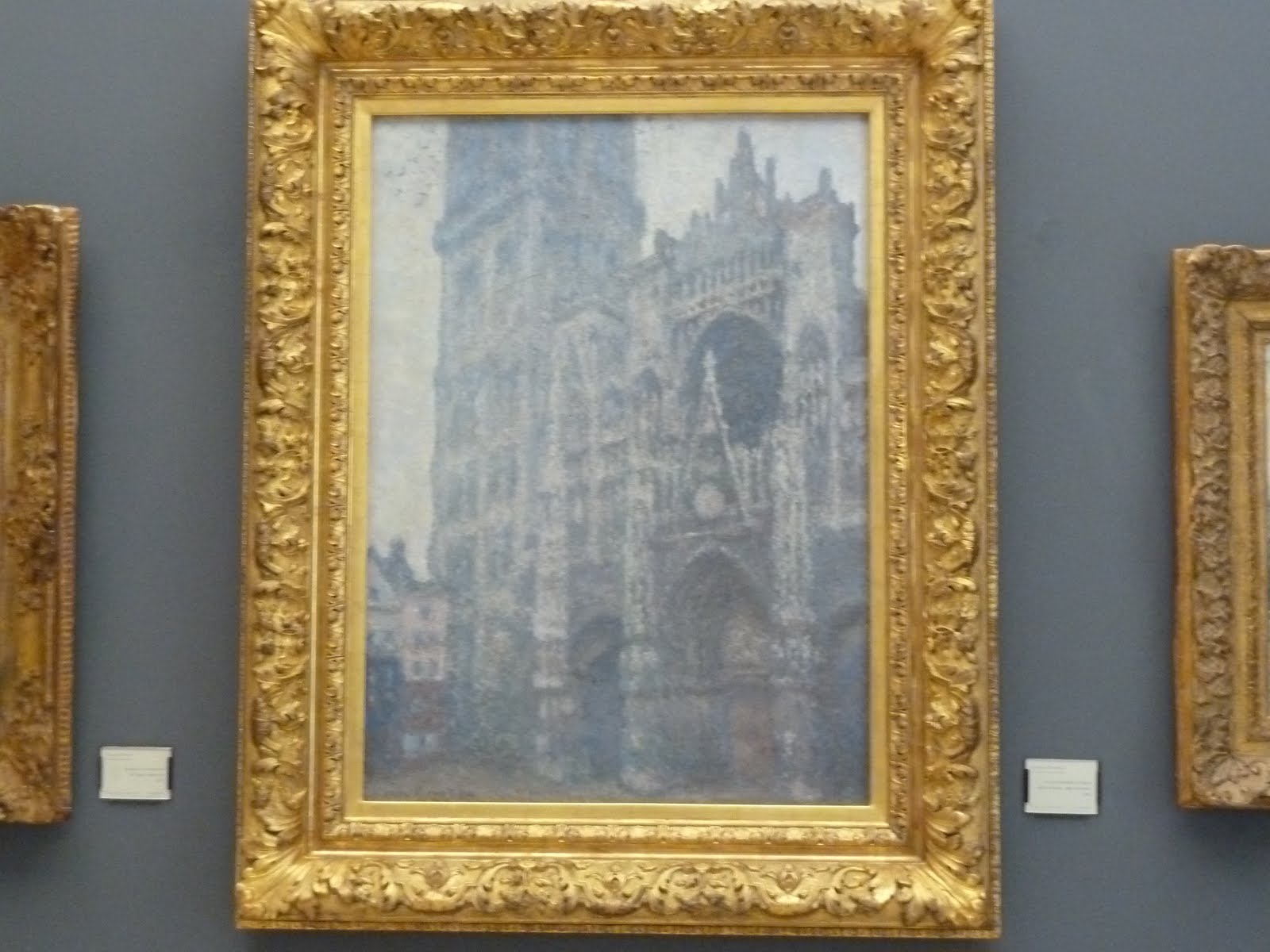
Claude Monet painted the facade of the Cathedral over and over in varying light and weather conditions.

One of Monet’s paintings of the cathedral on a misty day hangs in the Musee des Beaux-Arts de Rouen.

The above view of the Rouen Cathedral in full sunlight (1894) by Claude Monet belongs to the Musee d’Orsay, Paris.

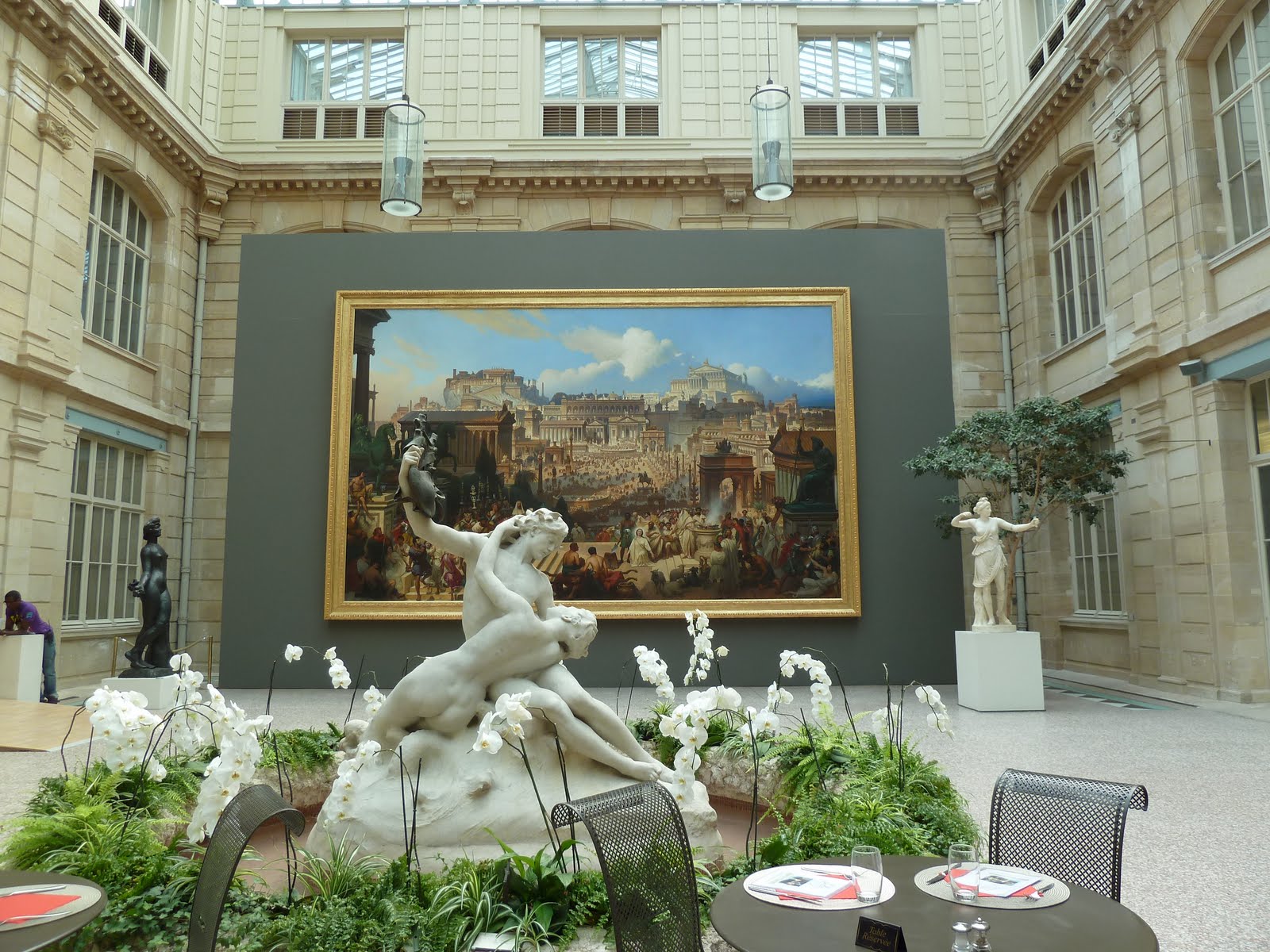
                                          The Courtyard restaurant of the Rouen Art Museum.

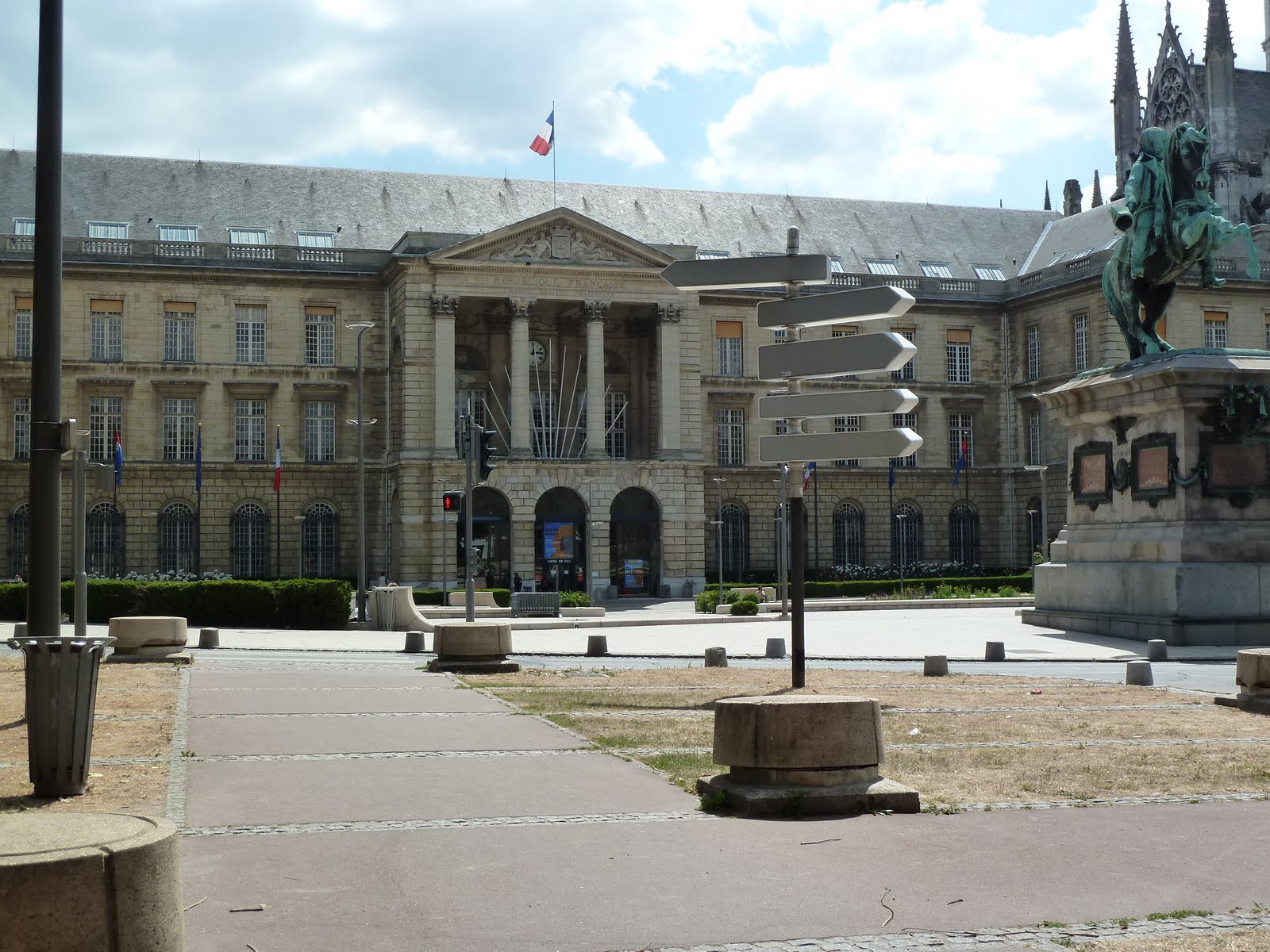
 Rouen’s Hotel de Ville, aka City Hall.
Street Scenes
  Detail of old stone carving…

Coming soon: Visiting Monet’s Garden at Giverny

Travels with Victoria: Mont St.Michel

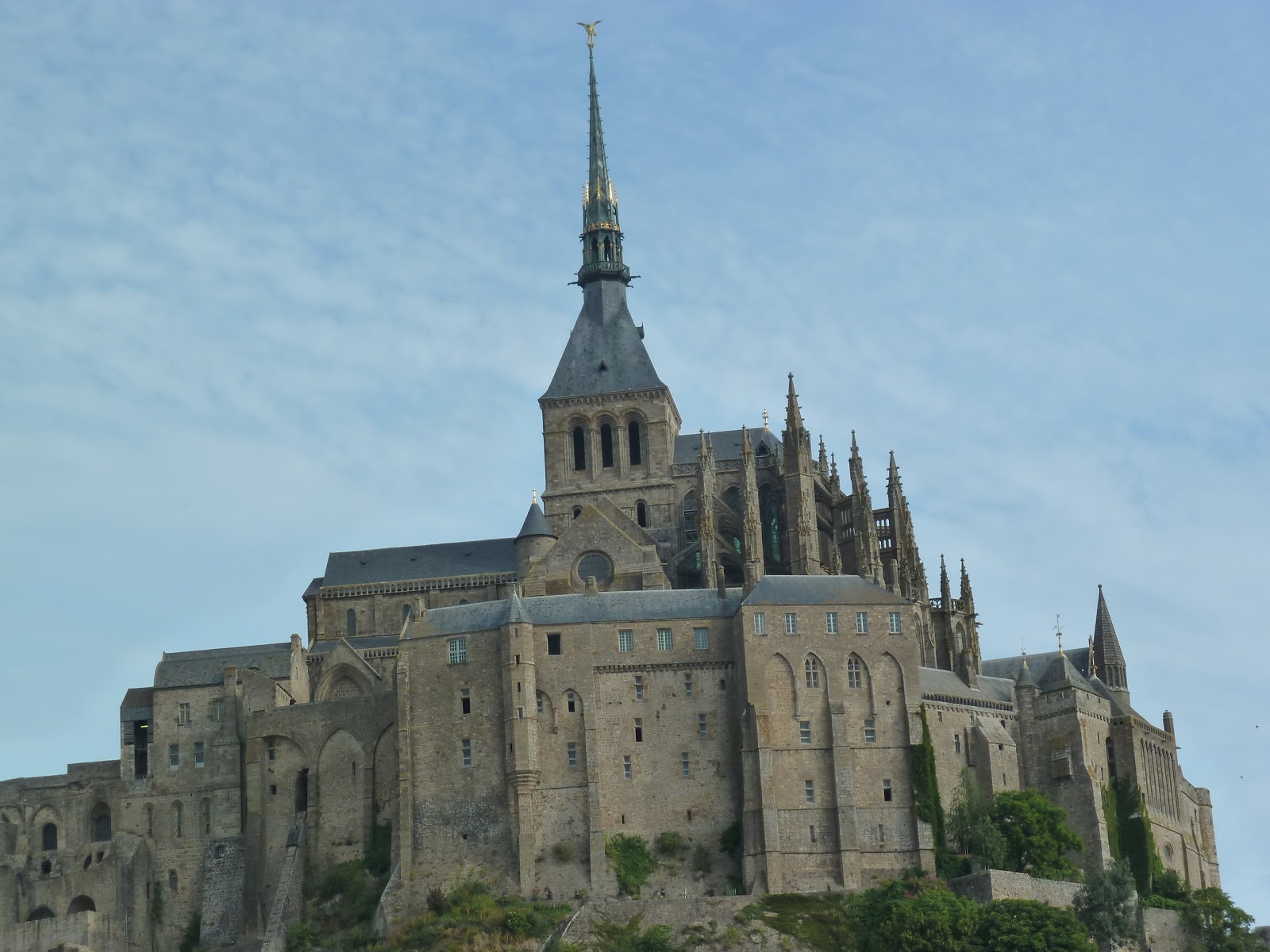
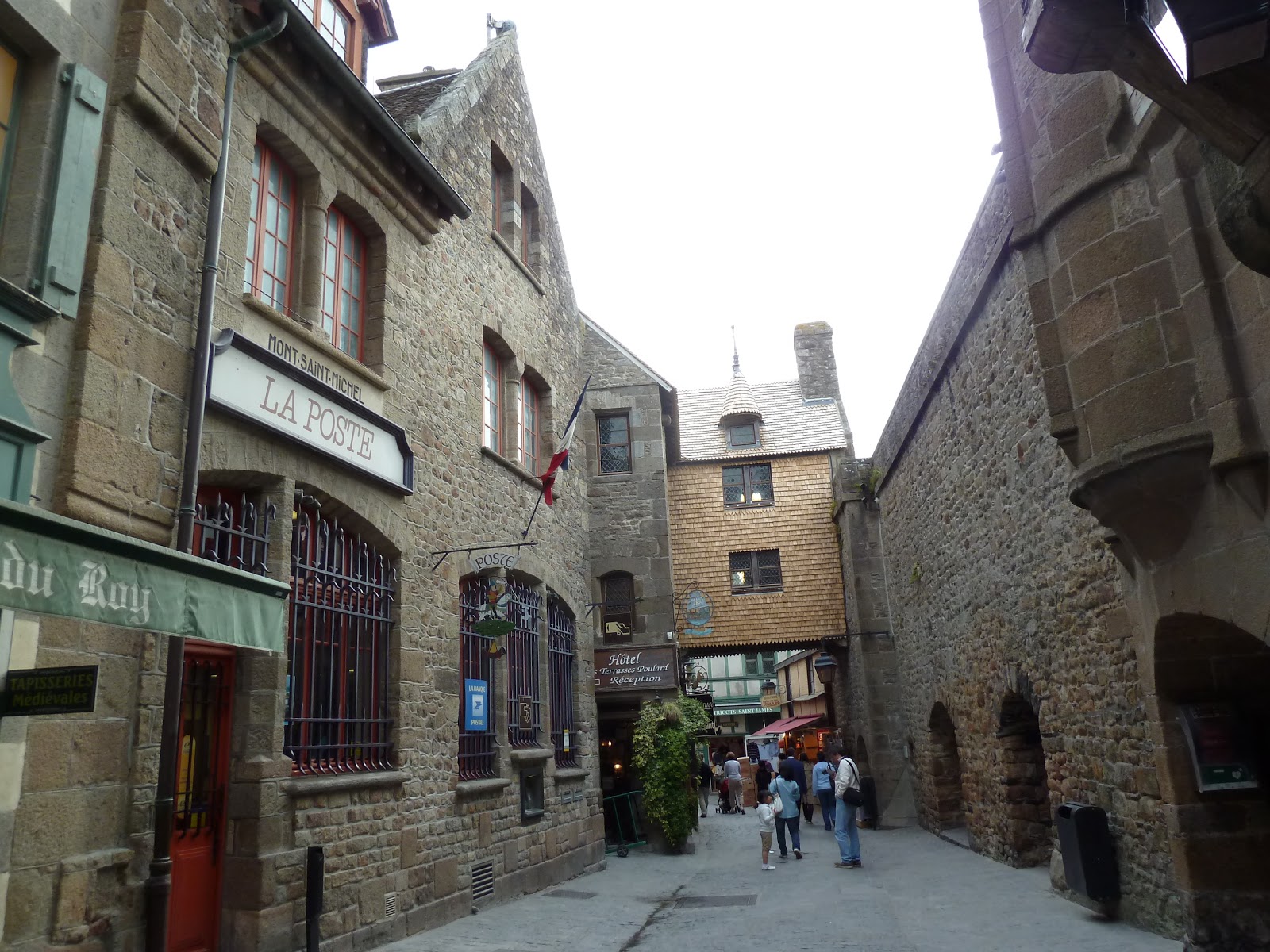
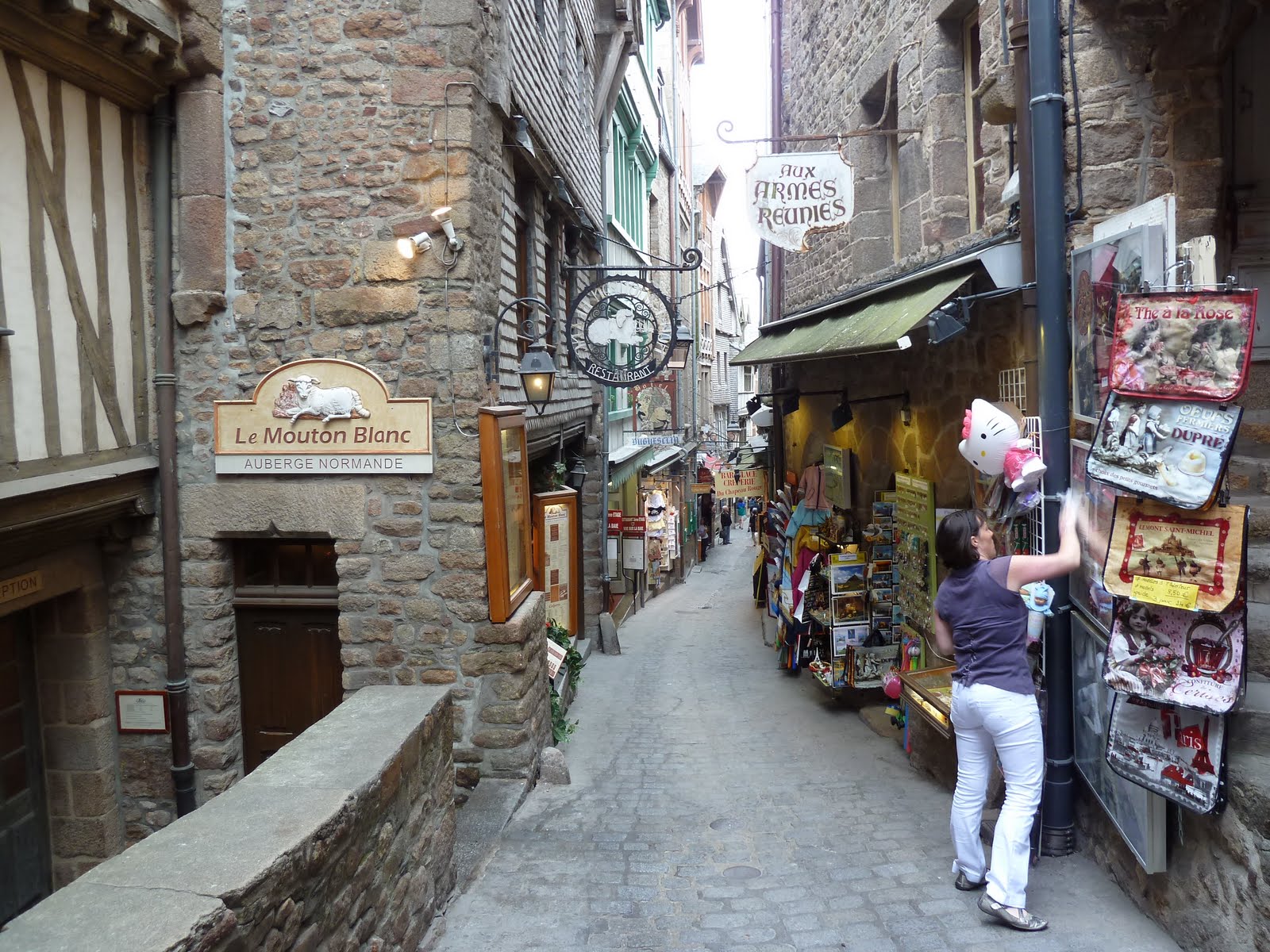
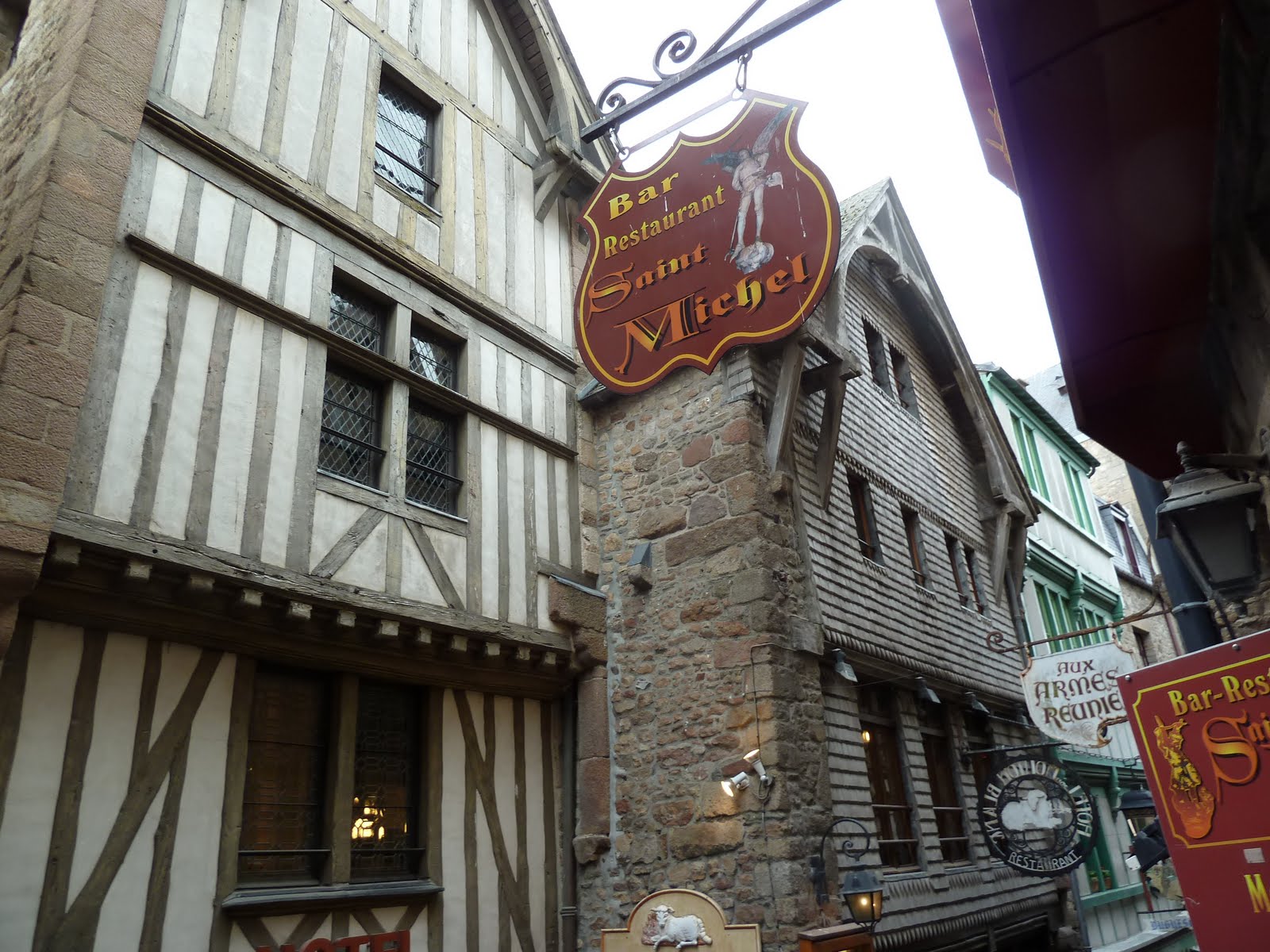
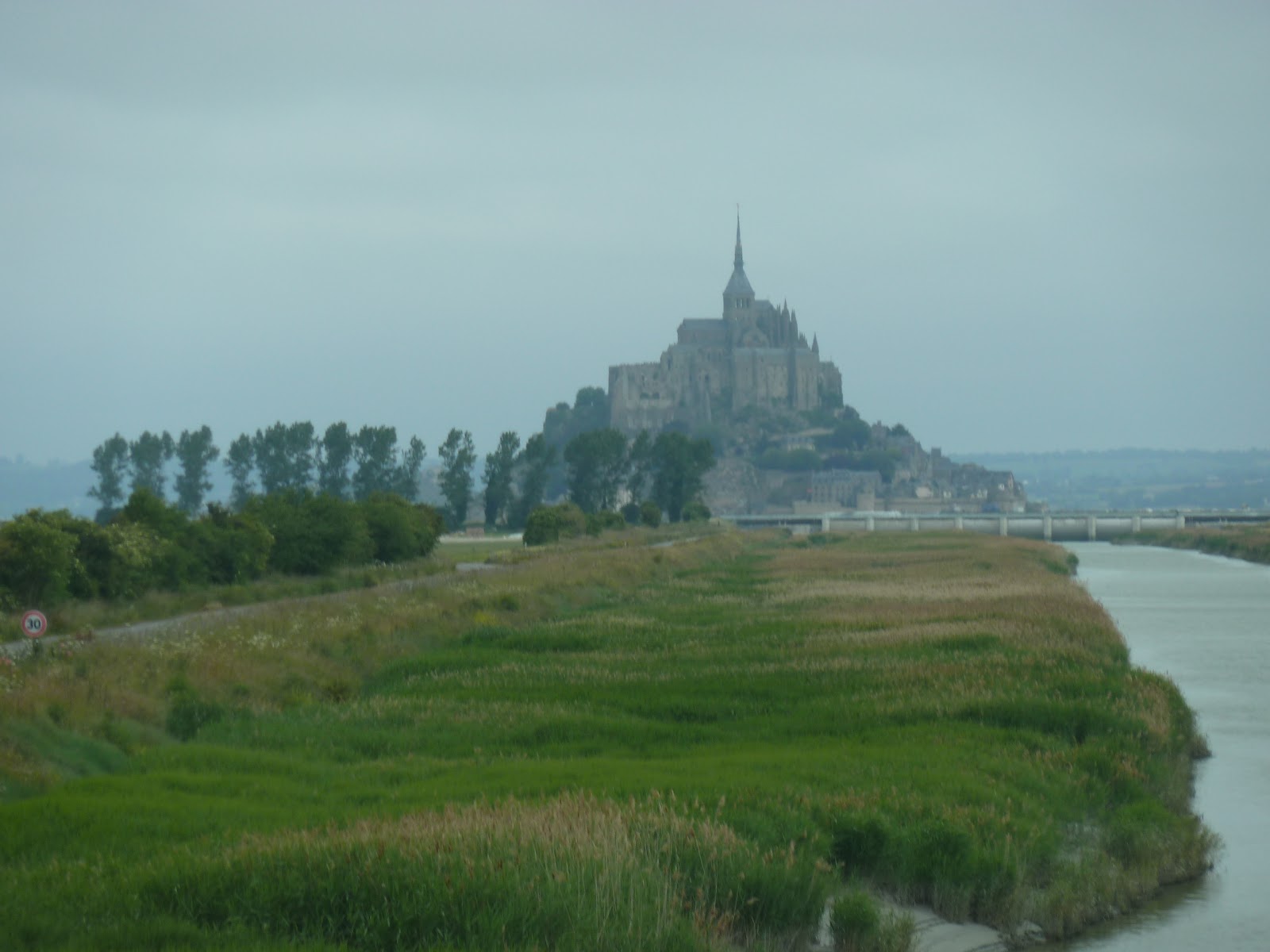
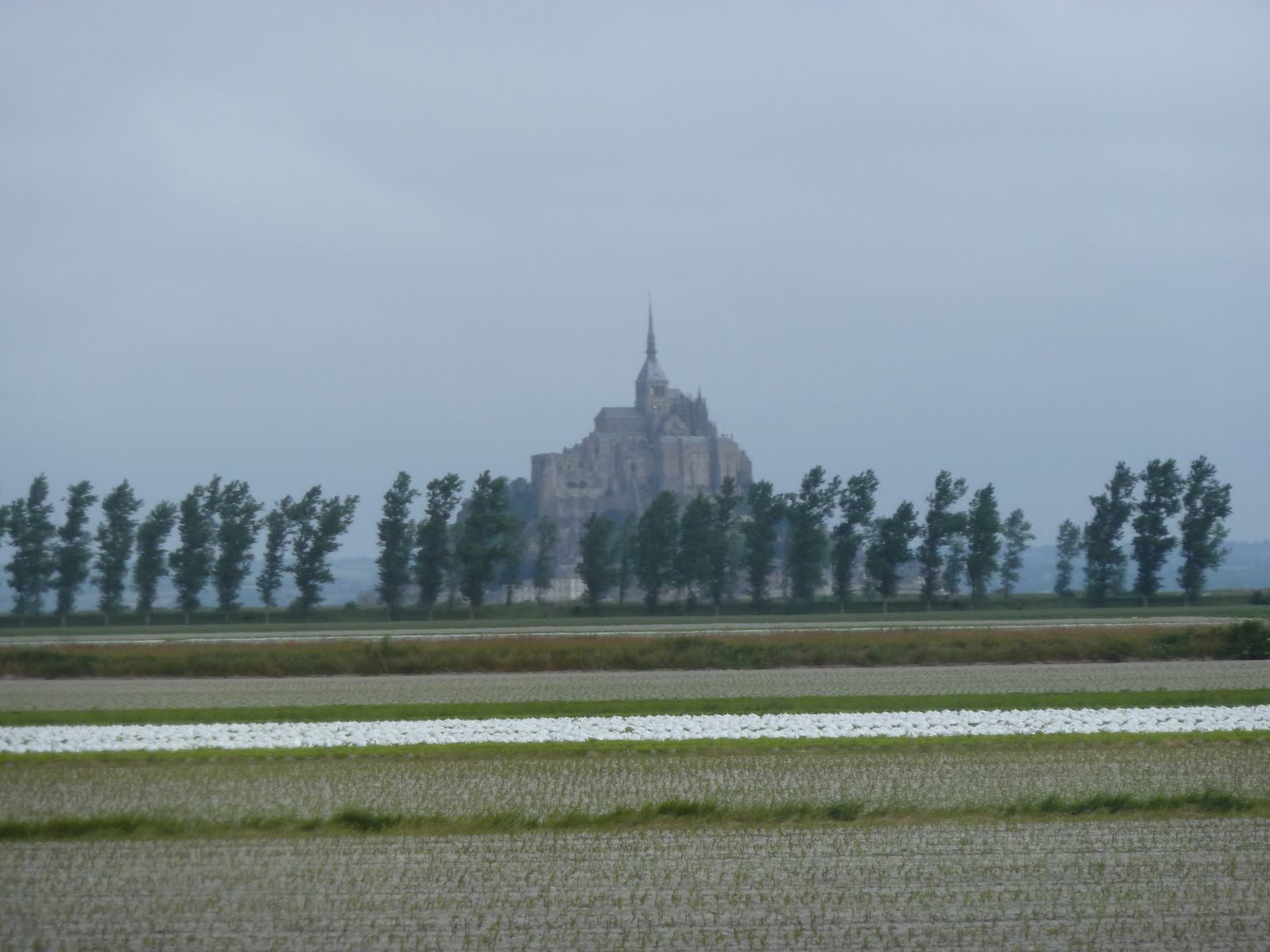
This view of Mont St. Michel (website) is such an iconic image, I truly feared that visiting would be rather anti-climactic.  Like seeing Big Ben or the Parthenon or the Grand Canyon, however, it was a new and fresh experience.  Well, yes there were hundreds of tourist buses and hordes of people from all over the world climbing the steep streets and filling the many shops and restaurants along the way.

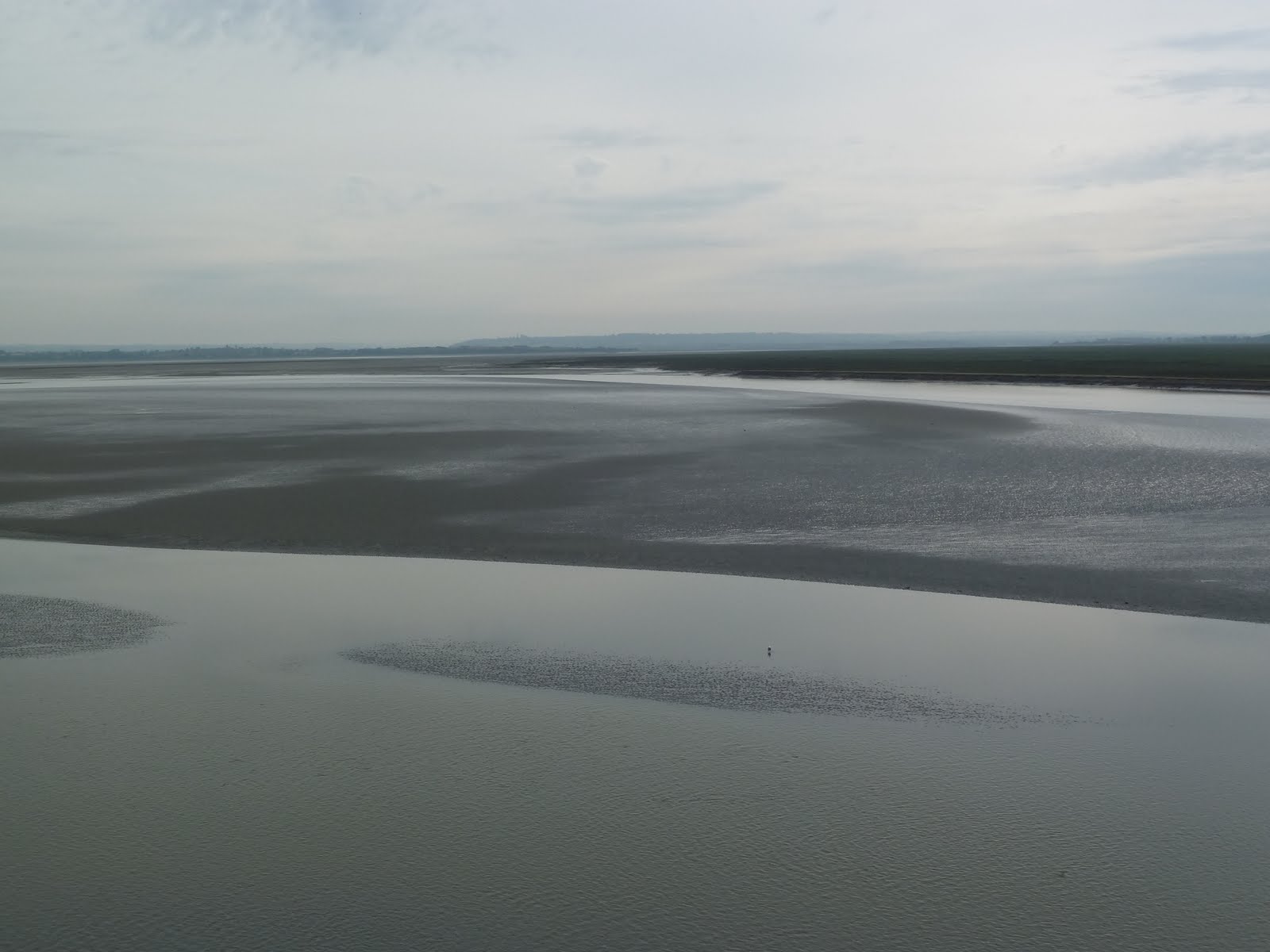
And, dear reader, I did not make it to the top. Not even close! It was the worst day of my dreadful cold and though it may not look steep in the picture above, it exhausted my clogged lungs in no time at all.  I managed to find a lovely viewpoint from which I snapped the top — and the low tidal sands that stretch for miles all around the island.

Those coming down to join us in a cup of latte said it was quite lovely at the top, a monastery that is mostly empty other than hundreds of gapers.  The monks of the early 11th century suported William of Normandy in his conquest of England. In return, the order received an island off Cornwall, also known as St Michel’s Mount, which also draws many tourists.

In reviewing my photos, I am amused to see that I managed to exclude almost all the tourists. You’ll have to take my word for it — huge groups going up and coming down, narrow streets in which it seemed one could lose balance and tumble for ages if one wasn’t very careful. With all those people, one would have taken out a regiment on the fall.

Above, a couple of visitors try to get out of the way of the little front-end-loaders they use to take supplies up and bring the trash down.  After the French Revolution, the Mont was abandoned, then turned into a prison.  In the mid-19th century, many French intellectuals, including Victor Hugo, petitioned the government to return Mont St. Michel to its original purpose as a pilgrimage site. Would I be too cynical if I said that most of the ‘pilgrims’ seemed to be more interested in taking photos (like me) or buying souvenirs than any spiritual purpose?
Restaurants on the Mont are famous for their fluffy omelets.  But not a chicken in sight.

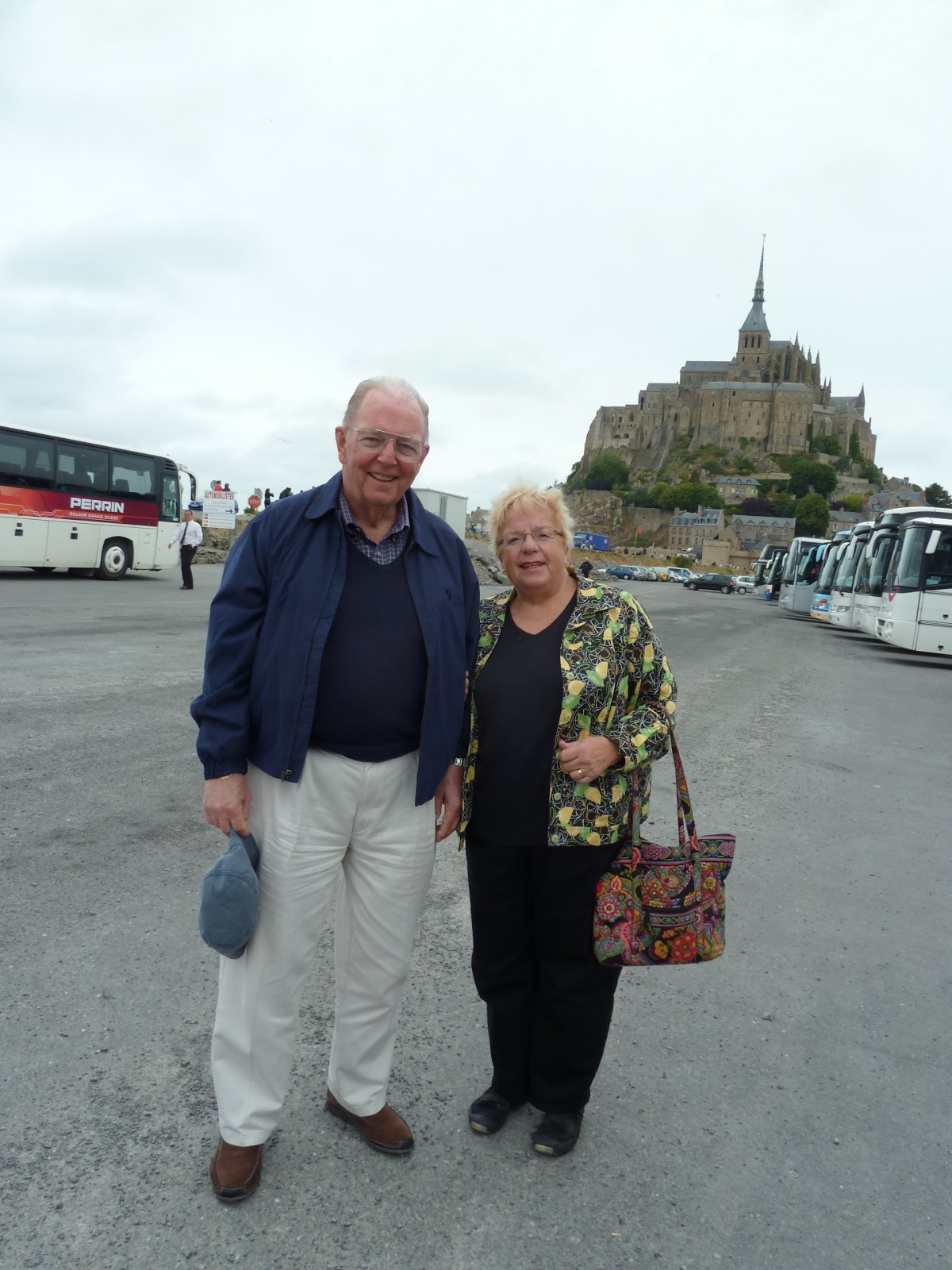
After it was all over, we posed with the Mont and a few of the coaches that filled the car park — next to a sign that said, loosely translated, “This parking lot will not flood today.”  The site is famous for its rapidly shifting tides and until the soon-to-be-rebuilt causeway was created, it was not unusual for people to be stranded on the Mont.

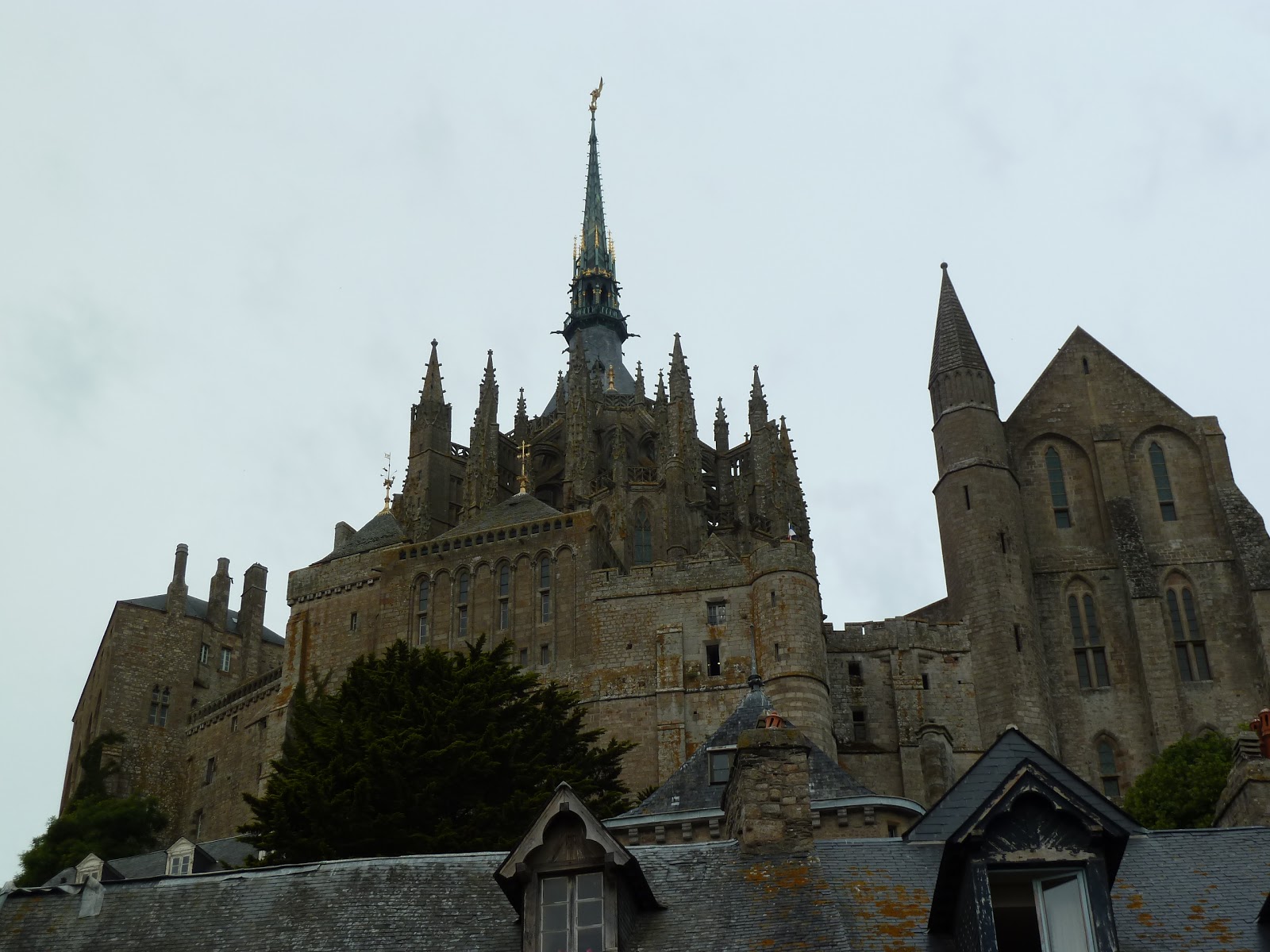
As we drove back to St. Malo, the Mont was always there, a sort of brooding presence in the mist.

Rufus Sewell on Masterpice…Sunday, July 17

Victoria, here. Be still, my heart!  I know I have been busy and preoccupied these past weeks, but RUFUS SEWELL, my #1 heart throb actor, on PBS Masterpice this week?   And I almost missed it???

Luckily, I did not fall asleep during Miss Marple last Sunday, though I came close.   Not that the show was boring — just that things have been catching up with me. So I nearly missed the promo for the next week’s presentation: Zen, the story of a detective in Rome. Here is the PBS description of the three episodes.

It will come as no surprise to regular readers of this blog that I, Victoria, am a fan of Rufus. From the first moment I saw him as Septimus in Tom Stoppard’s brilliant play Arcadia in London many years ago, I have followed his career with special interest.  See my blog of  8/11/2010 for more pictures and comments on his various film, stage and tv appearances.

Though he is admired as a versatile actor in a wide variety of roles, Rufus Sewell has never hit the pinnacle of  acting, the BIG role that thrusts a performer into the stratosphere of stardom.  Though he has played many character parts, he also excelled in the leading man roles that capitalize on his dark good looks and sexy eyes. 

Perhaps these three episodes in which he stars as Aurelio Zen, a Venetian-born detective in Rome, will do the trick. Or then again, perhaps he doesn’t care to be a household name.  The episodes ran first in the UK on the BBC, based on novels by Michael Dibdin.

The three episodes are Vendetta (screening July 17), Cabal (screening July 24) and Ratking (on July 31).  Watch with me and let me know if you think this is the break-through role for Rufus.
With The Beau Monde in New York City

On Tuesday, June 28, 2011, the Regency chapter of Romance Writers of America, met at the Marriott Marquis Hotel in advance of RWA’s national convention. More on the Beau Monde here. The day’s activities celebrated the 200th anniversary of the English Regency, which began in 1811 when George, Prince of Wales, became Regent for his incapacitated father, George III.

Mary Jo Putney, Keynote Speaker
The conference was ably arranged by Karen Erickson, chair; along with Isobel Carr, Melissa Golden,
Susan Gee Heino, Mary Gramlich, Kate Pearce, Sally MacKenzie, Janet Mulany and Sharon Sobel. Many more members contributed to the silent auction. We had a fine menu of presentations.

Jo Ferguson spoke on Location: Traveling to England for research.

Janet Mullaney’s topic was Saints, Sinners, Slavery and Sugar.

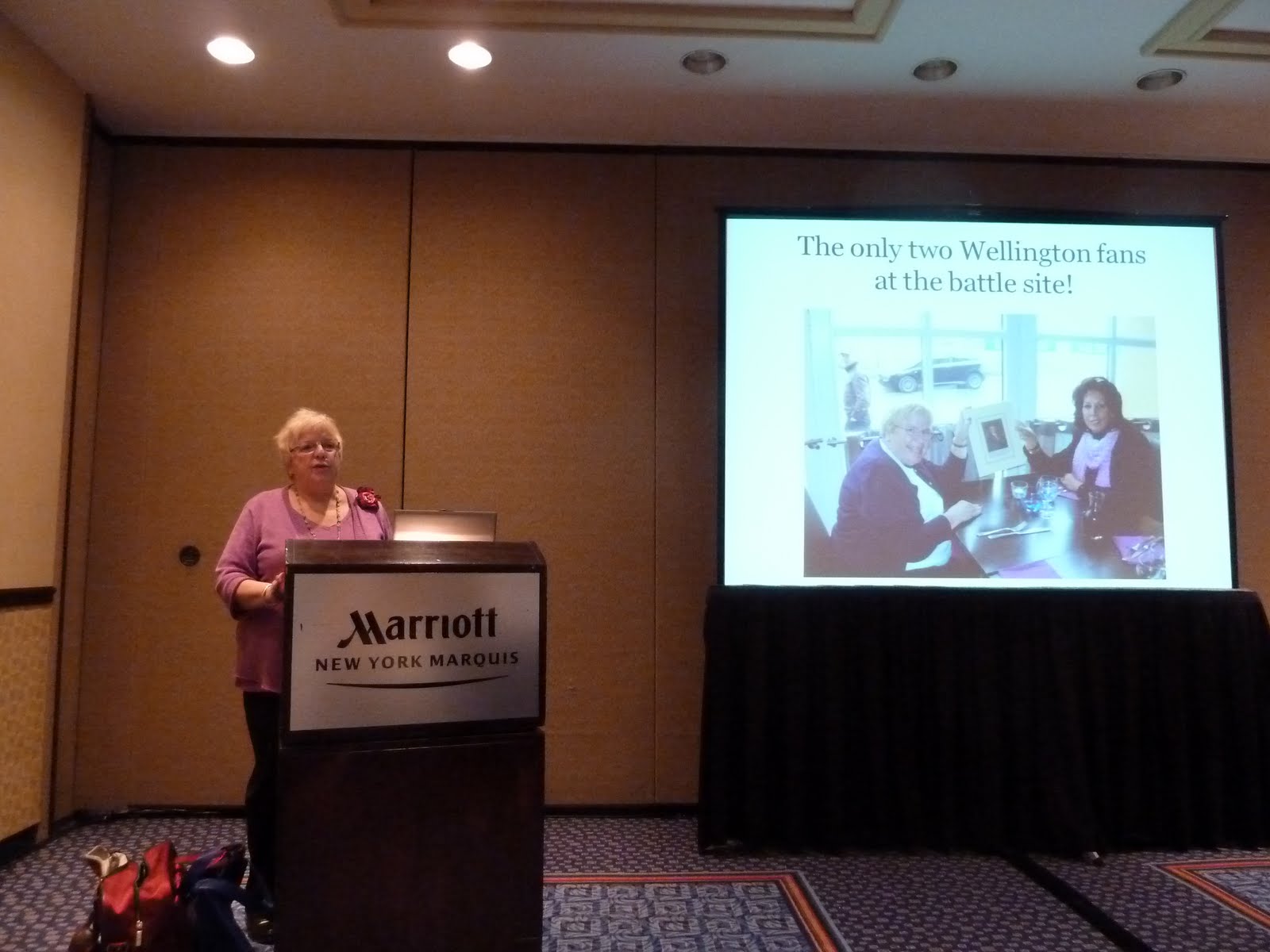
Victoria Hinshaw spoke about the Battle of Waterloo, here showing a slide of Vicky, left, and Kristine with the Duke of Wellington at the battlesite in 2010. 

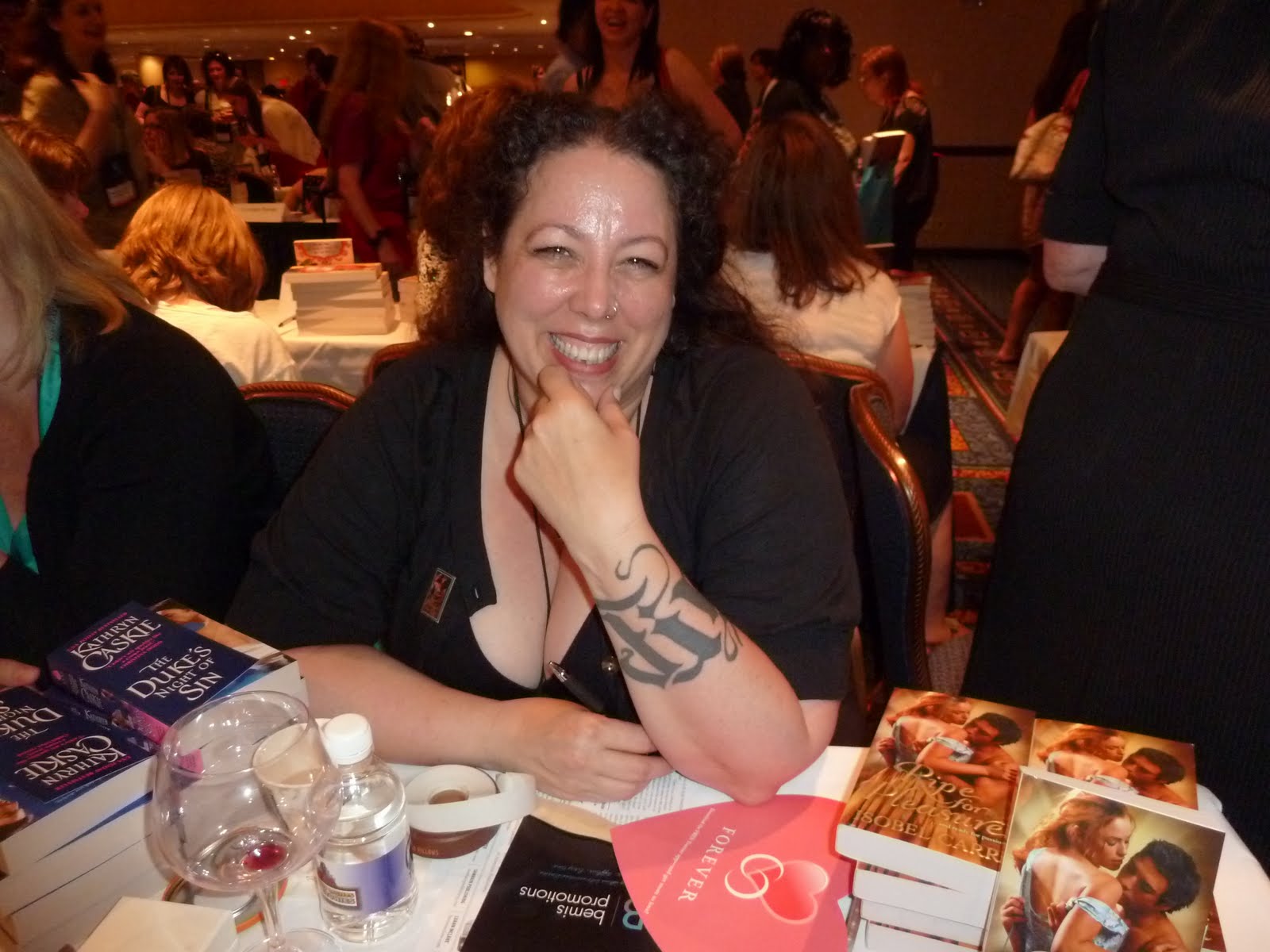
I missed a picture of Isobel Carr and Delilah Marvelle who spoke on The Culinary World of Regency England, but I caught up with Isobel later at the Literary Signing.  Sorry, Delilah!

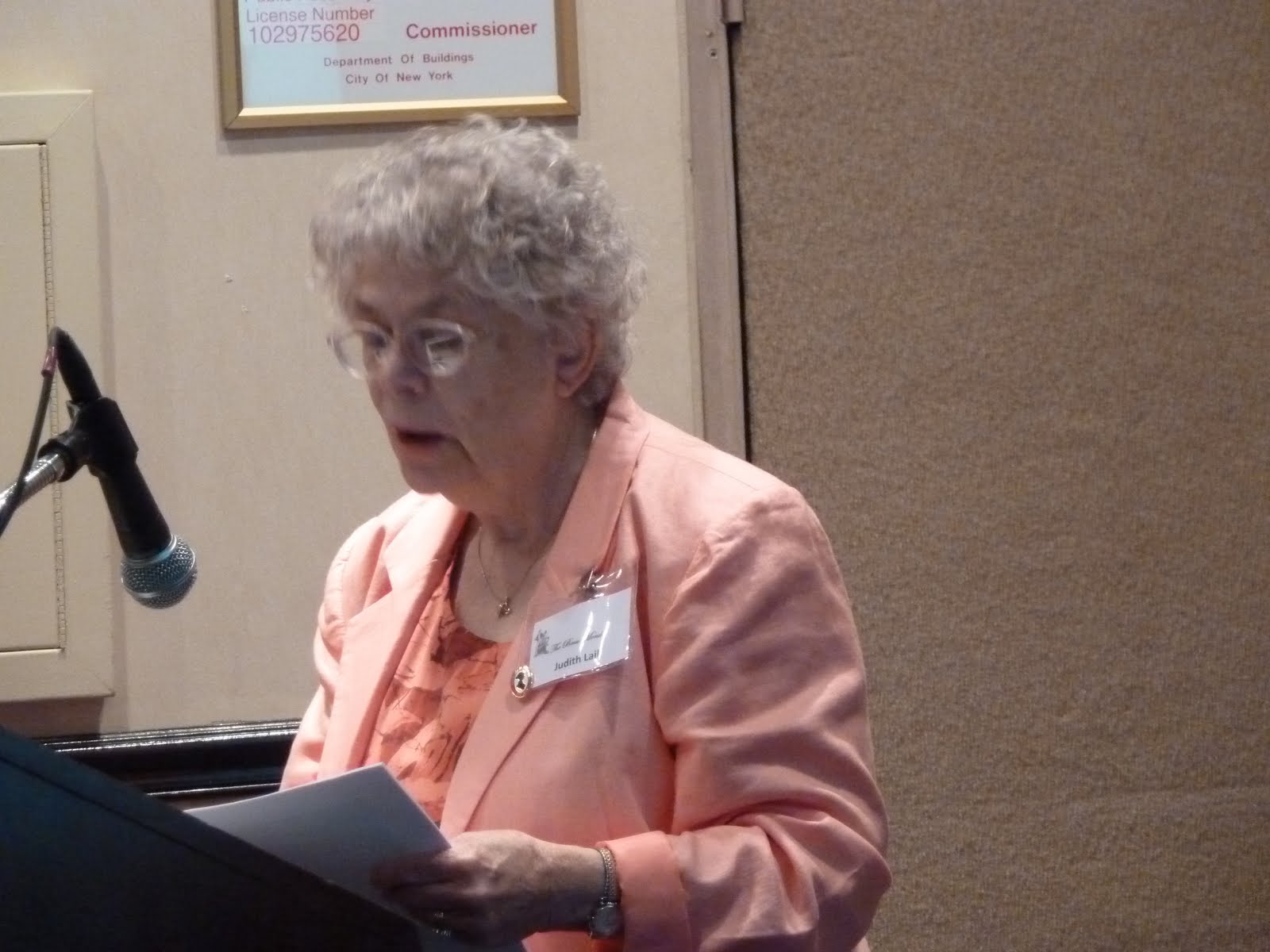
Judith Laik told us all about Women Scientists in the late Georgian and early Nineteenth Century periods.

Paula A. Baxter spoke on Setting the Scene: Putting Authentic Period Interiors and Furnishings into Your Writing.

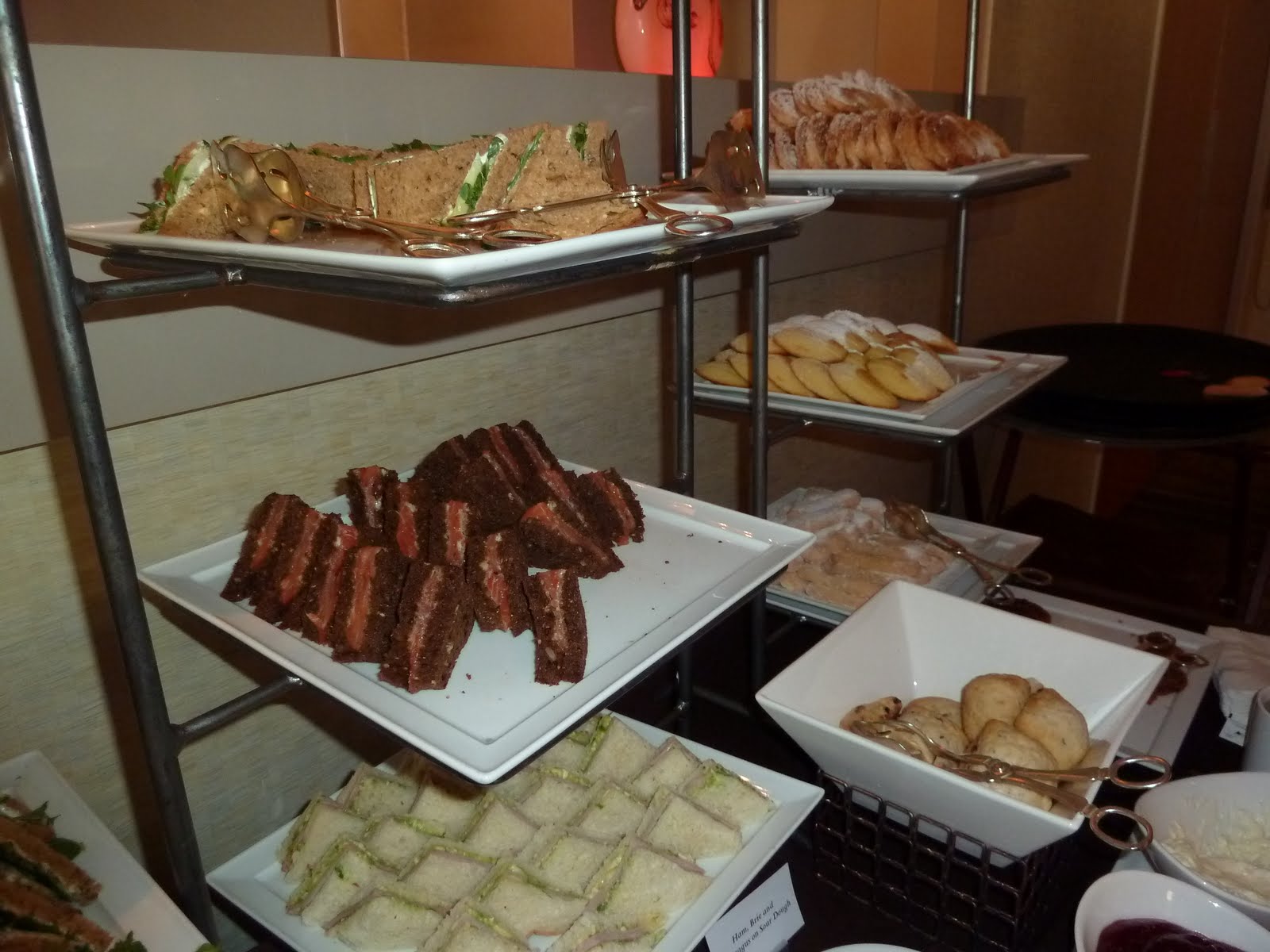
The menu at tea was equally tempting.

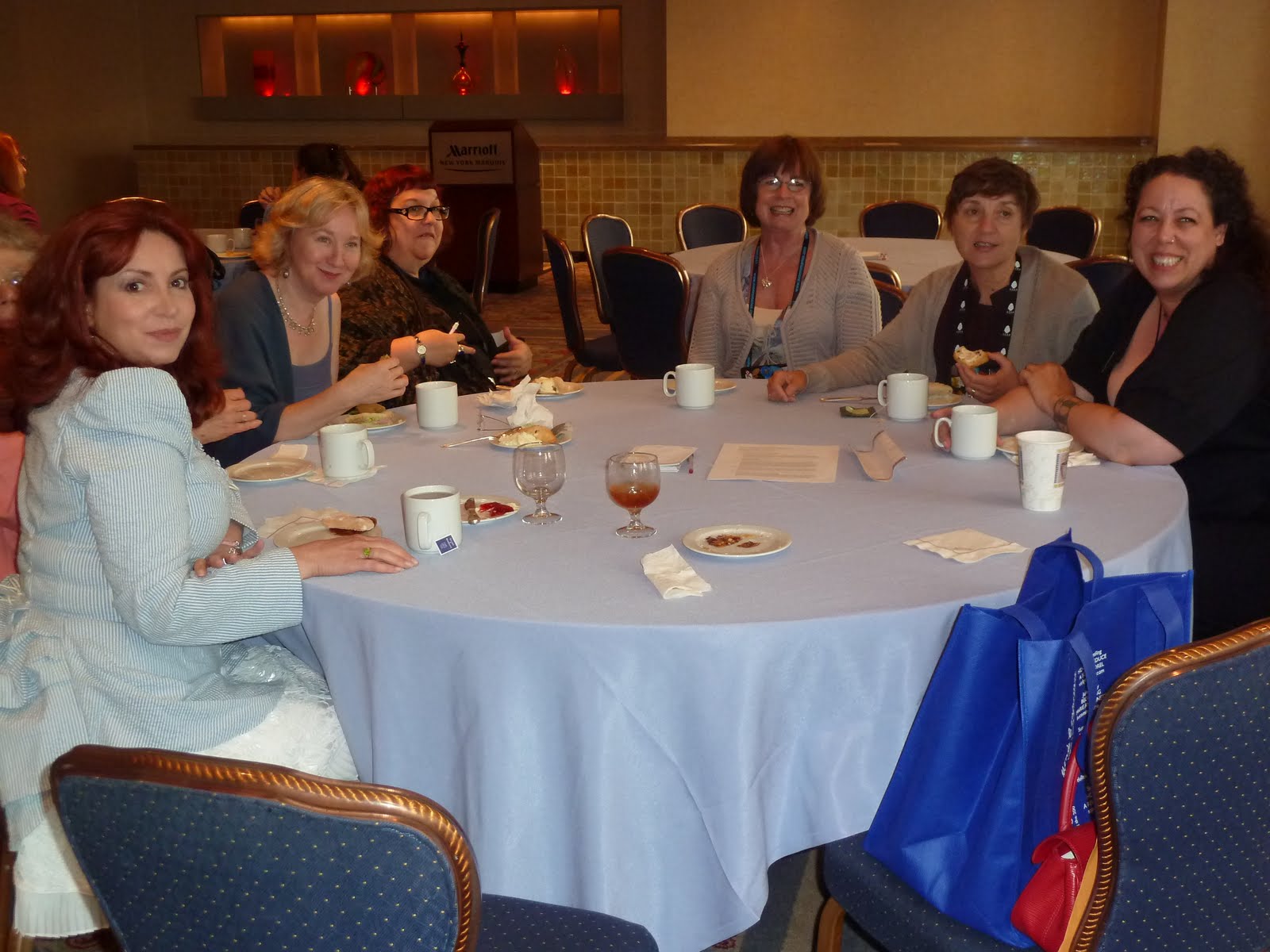
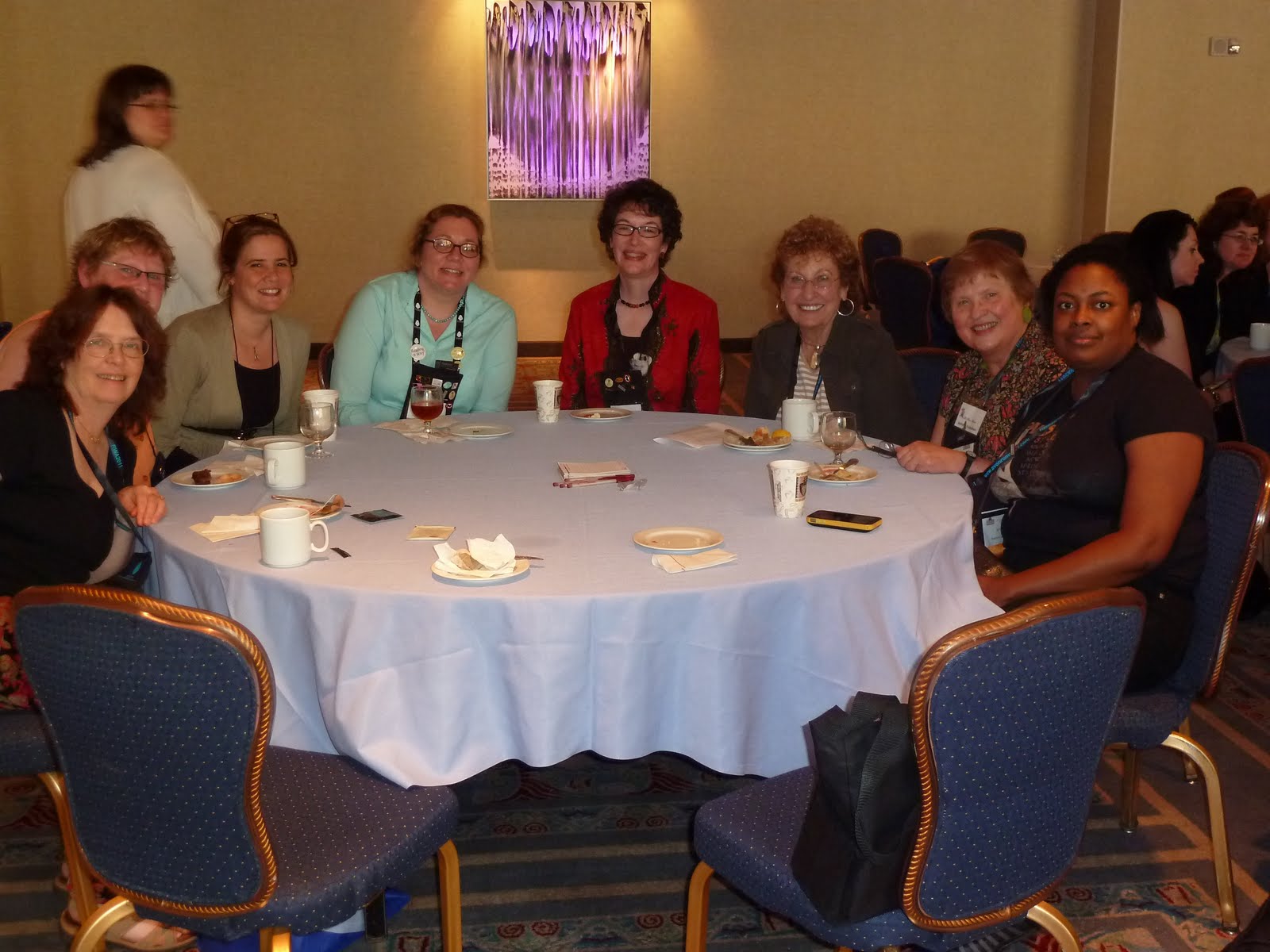
Below, a few tables of writers fulfilling two basic purposes of the meeting:  networking and noshing.

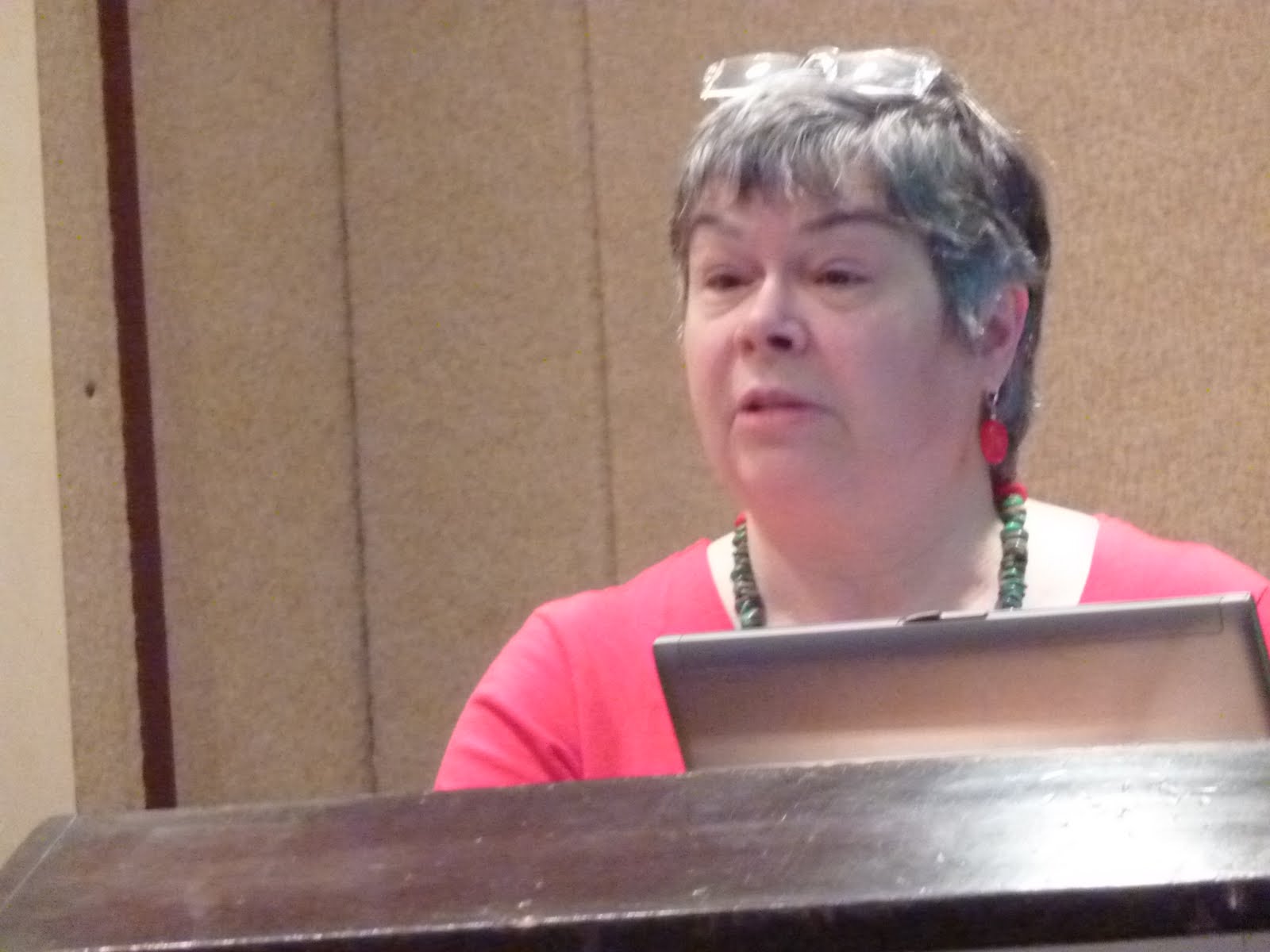
Left, our pal Louisa Cornell, and right, Victoria, who prepares to give her earlier talk.

The Beau Monde took a break for the National Literacy Signing, and Sally MacKenzie was ready to meet her fans.

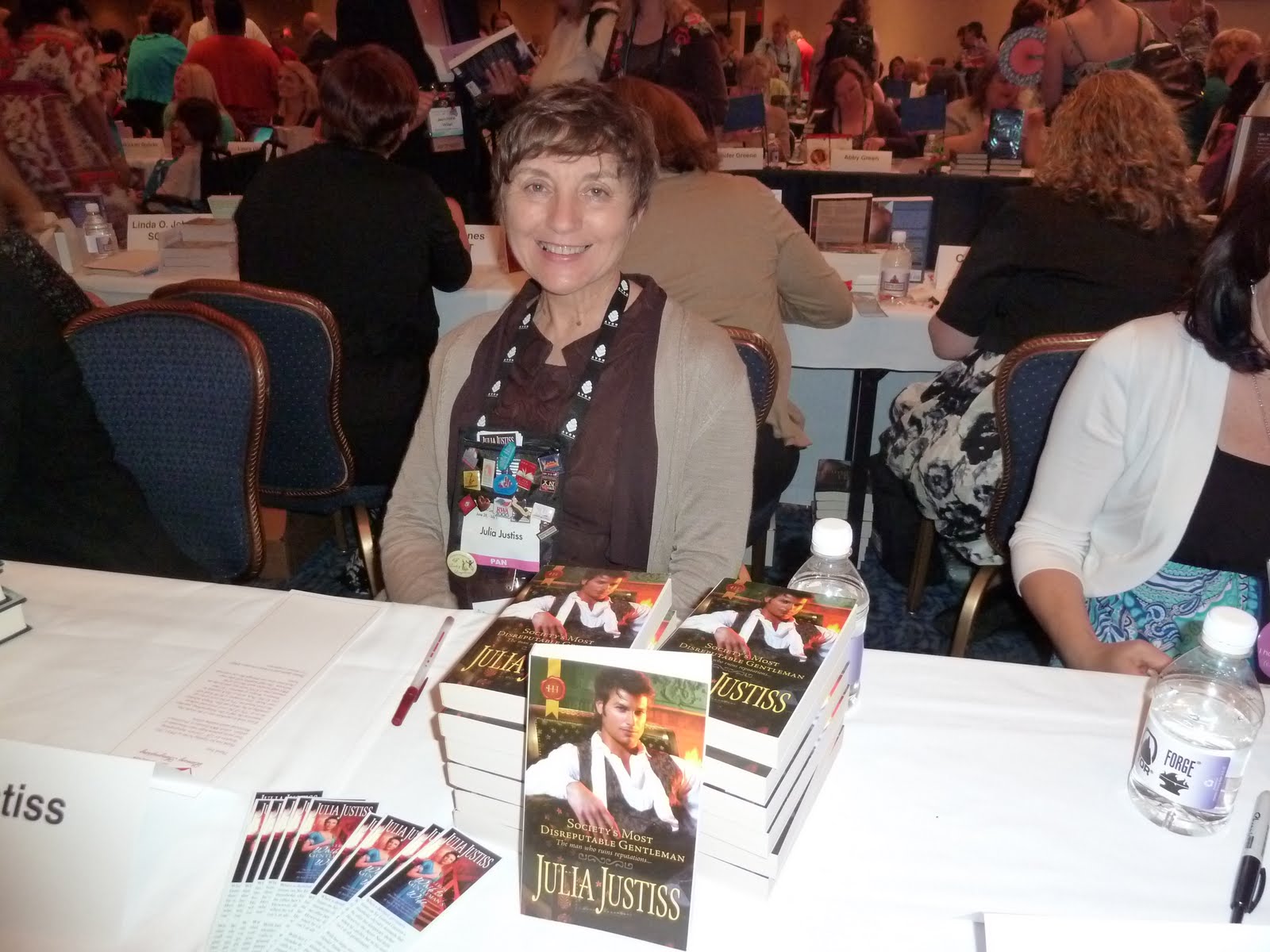
And so was Julia Justiss, another of the 100’s of authors who donated their time to benefit  literacy.

At the evening soiree, Beau Monde President Regina Scott prepared to lead the dancing. But where was Reggie, or more properly in true Beau Monde style, Sir Reginald?

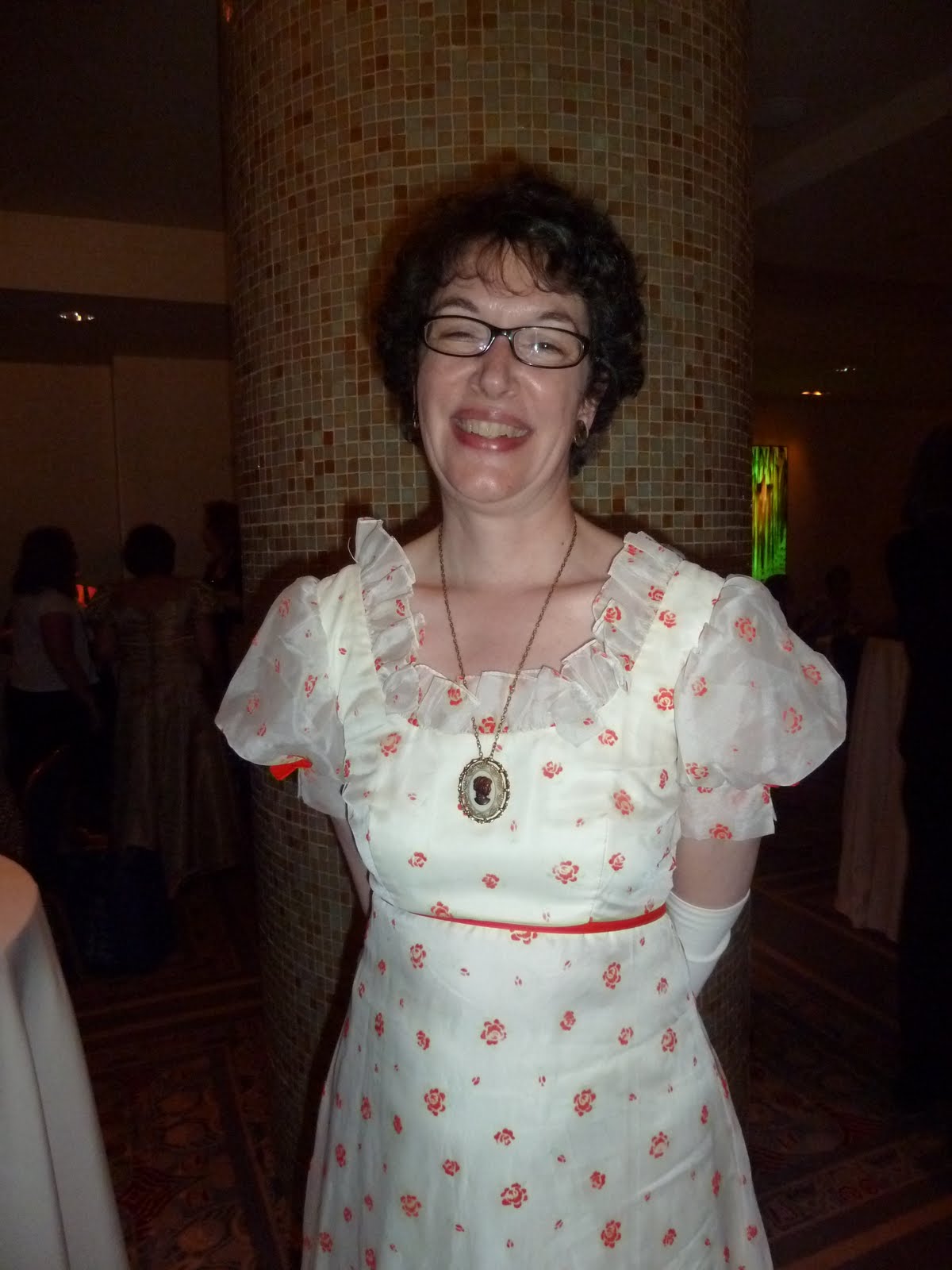
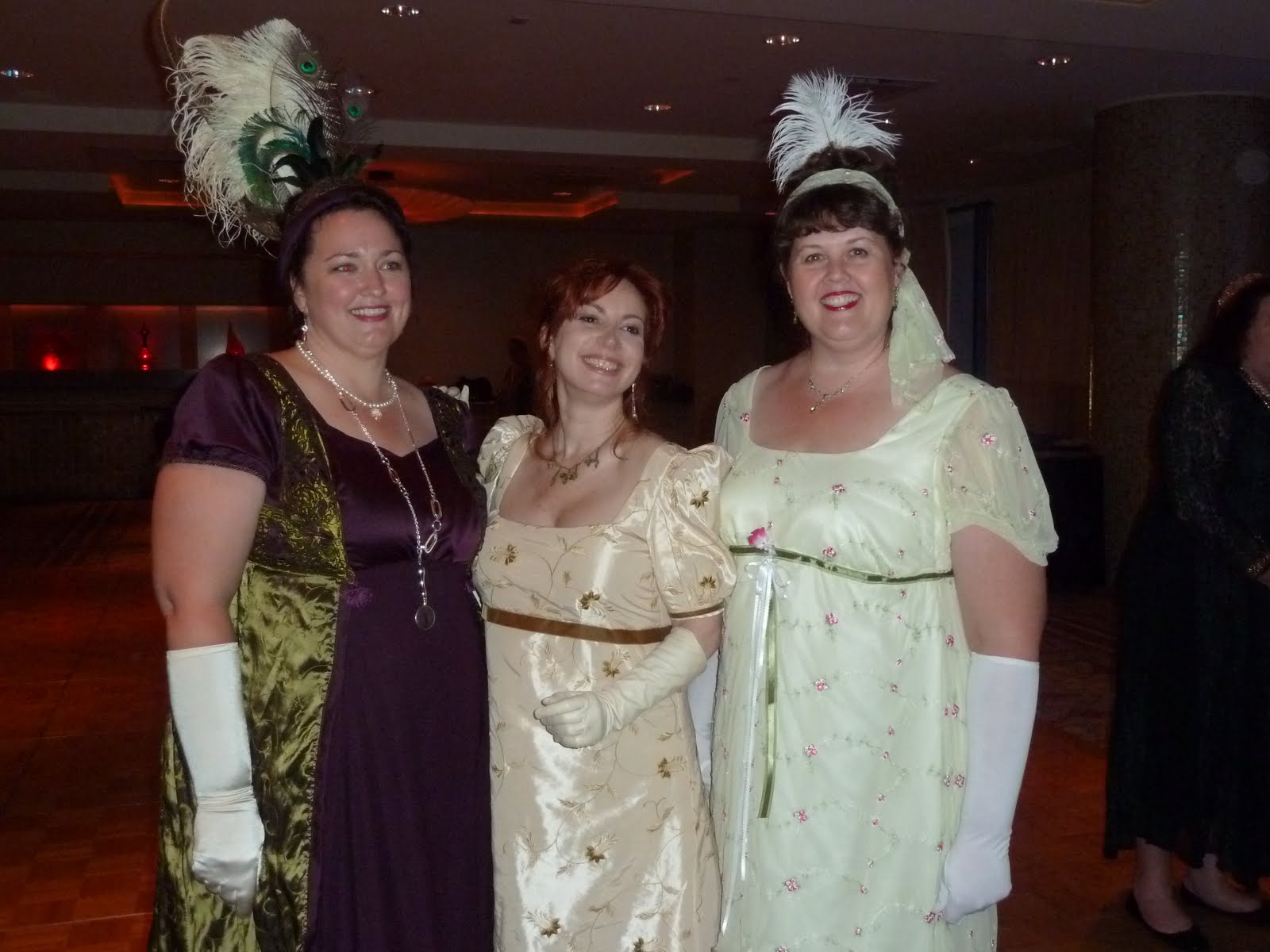
More eager dancers, l-r, Sheri (Mysterious Lady), Leslie Carroll, Susan Gee Heino.

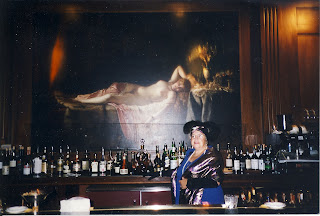
And now for a funny picture I found in a file of old RWA stuff.  This was taken at the first Beau Monde Conference held in Dallas in 1996.  A group of us had met at the last Marriott Marquis Hotel RWA conference two years before; we decided we could not arrange much for Hawaii the next year.  So we  organized for a great time in Dallas. The chapter started a pre-conference meeting tradition that continues to the present.   I appear below as The Dowager Duchess, whose late husband left her EVERYTHING because he had fallen in love when he saw the portrait of her long ago (above the bar in the penthouse of the Dallas hotel next to  the balloroom where we met).  Sadly,  the dress was later decorated by a glass of red wine and retired from the fray.