
Bridget Jones meets Pride and Prejudice. Click here to watch the video.
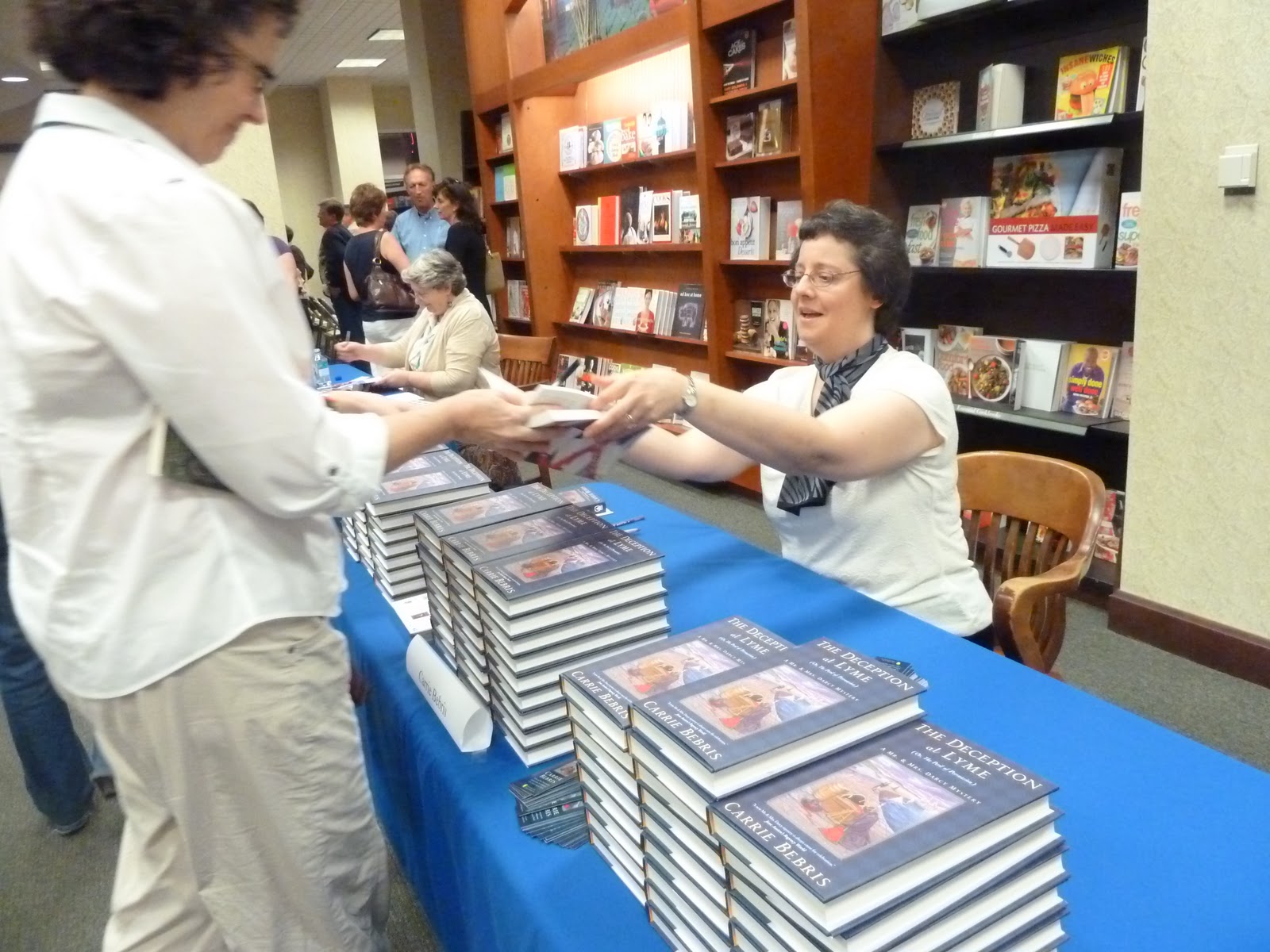
In this story, Mr. and Mrs. Darcy meet Captain Wentworth and his new wife, the former Anne Elliott in the seaside town of Lyme. When murder raises its ugly head, Darcy and Elizabeth identify the culprit, as they have in Pride and Prescience, Suspense and Sensibility, North by Northanger, The Matters at Mansfield, and The Intrigue at Highbury. In each novel, the Darcys encounter other characters created
by Jane Austen.

Janet Mullany’s Jane Austen: Blood Persuasion brings the Damned to the village of Chawton. Janet’s website is here. The story is a sequel to her 2010 novel Jane and the Damned. Janet’s voyages into Jane Austen and the paranormal follow other “straight” regencies she has written for several publishers. Born in England, Janet now lives in the Washington DC vicinity.
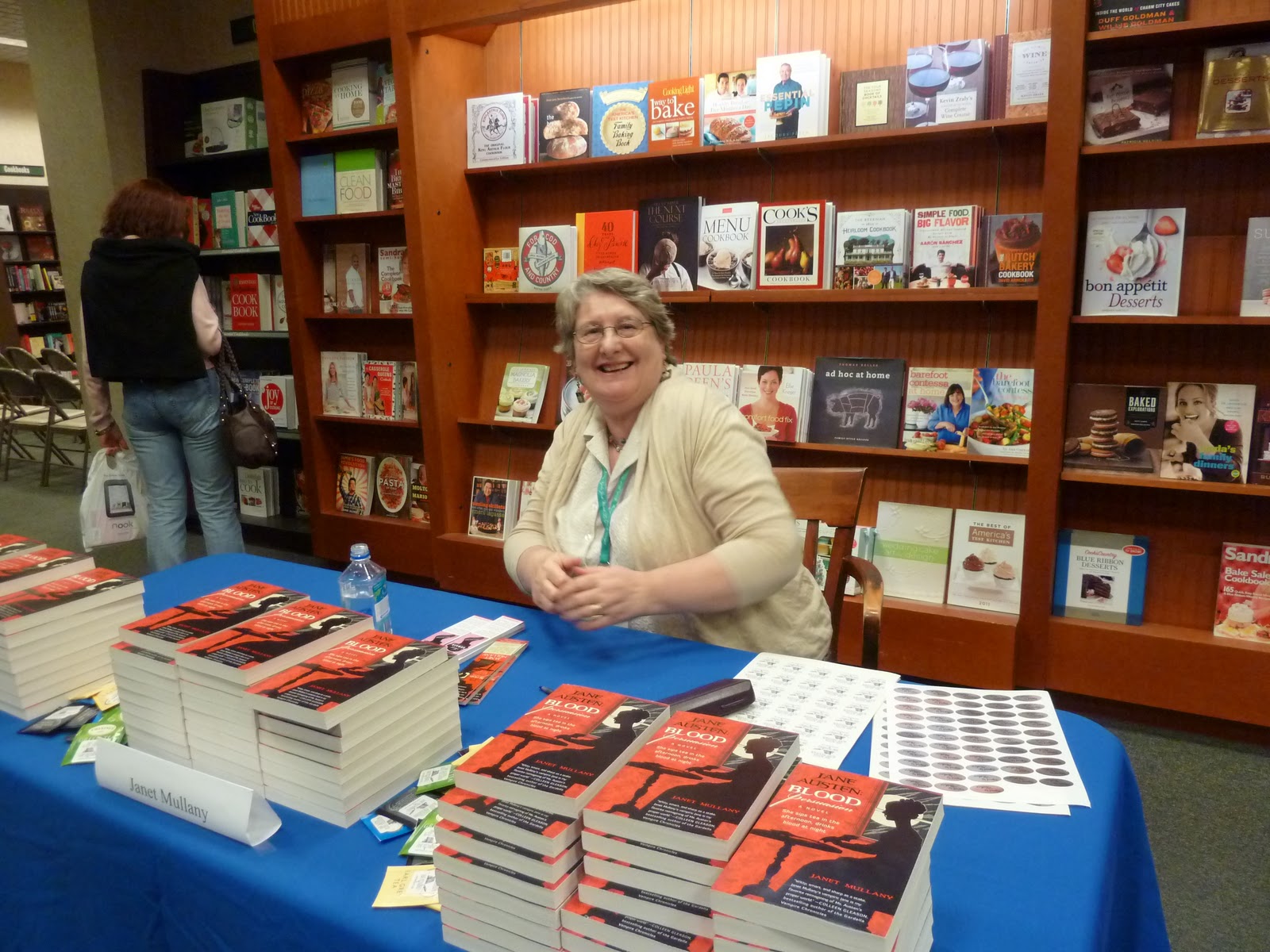
Though Jane is hoping to make progress on her latest novel, the arrival of the Damned brings her a whole host of problems — including conflict with a former lover.

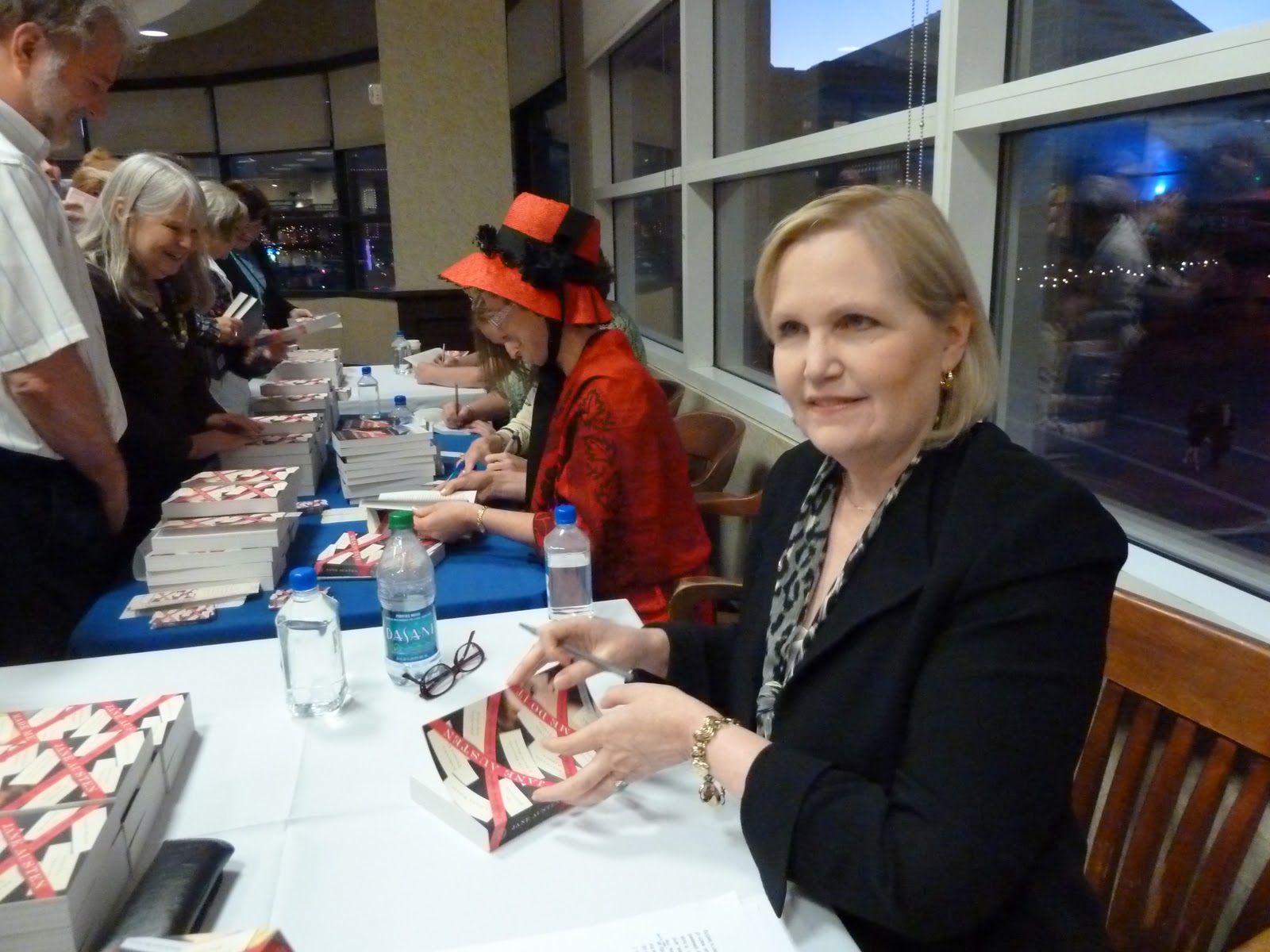
Laurel Ann Nattress is the editor and creator of a recently published antholodgy of original stories inspired by Jane Austen. Both Carrie Bebris and Janet Mullany are among the 24 authors who contributed to Jane Austen Made Me Do It.
For more information, click here. Below, Laurel meets fans. In the red bonnet behind her is Syrie James.

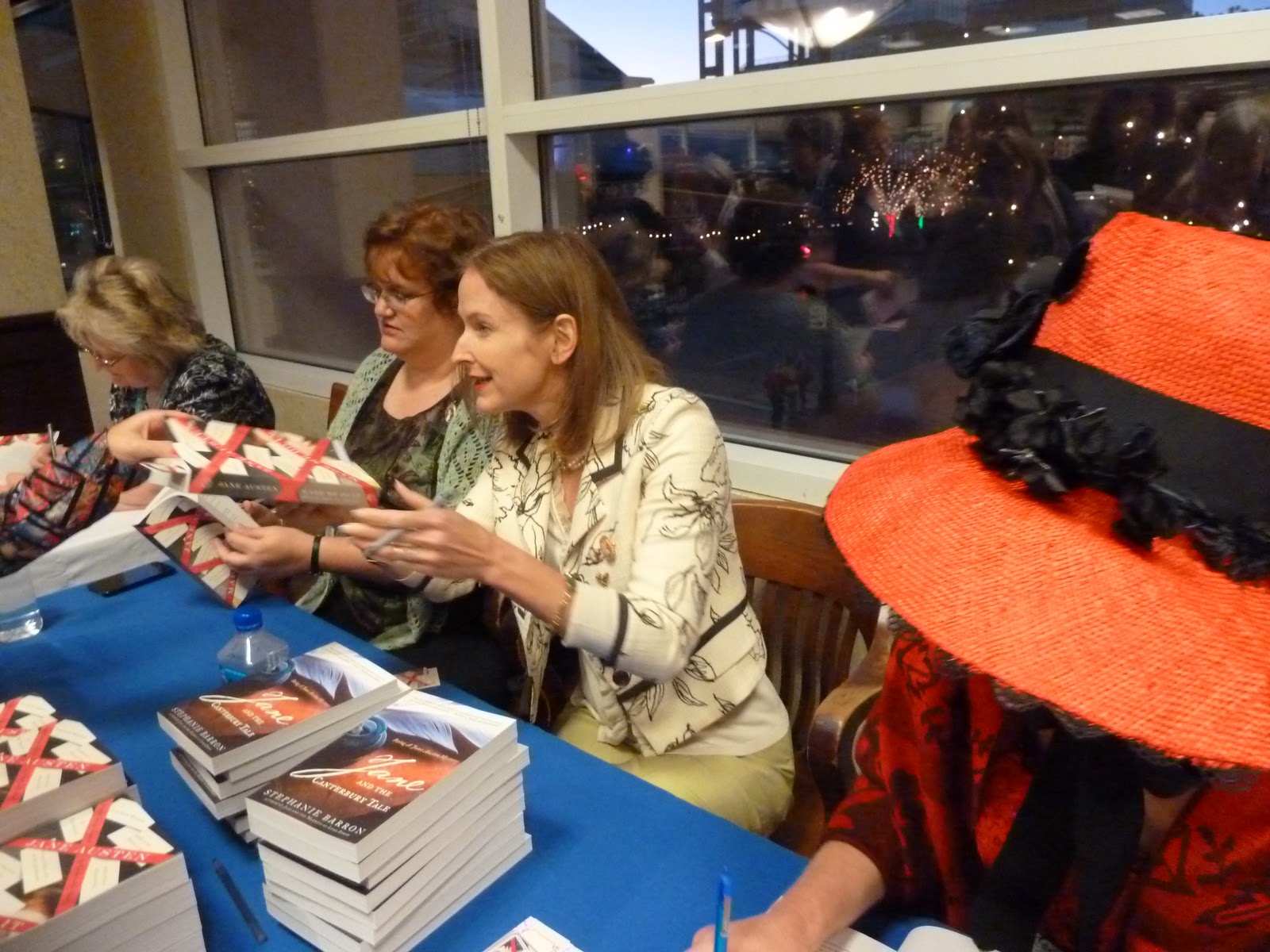
Below, Margaret Sullivan, Stephanie Barron, and Syrie’s big red bonnet!

— The King and Queen arrived at the Pavilion at Brighton on Saturday afternoon in a travelling chariot, preceded by outriders. On their Majesties’ arrival a Royal salute was fired from the battery, and a peal was rung on the bells of St Nicholas’ tower. In the evening the town was enlivened with a brilliant display of fire-works, which was seen by their Majesties and suite from the windows of the Palace.
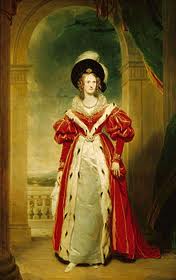 |
| Queen Adelaide |
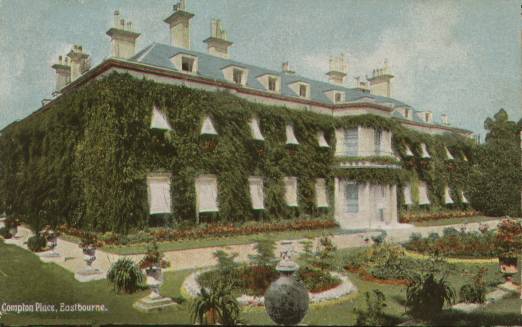 |
| Compton Place |
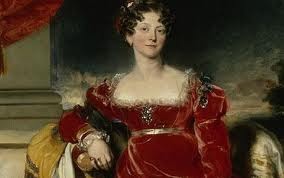 |
| Princess Sophia by Lawrence |
 |
| Haigh Hall |
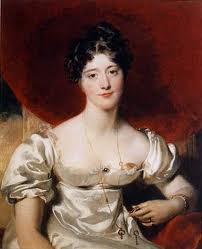 |
| Marchioness of Londonderry |
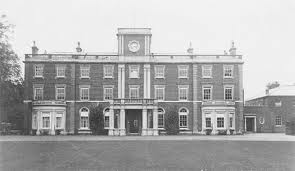 |
| Sudbourne Hall |
— Prince Esterhazy and his son have left Chandos House for Sudbourne Hall, the magnificent seat of the Marquis of Hertford, in Suffolk, which, since the departure of his Lordship for Italy, has been entitled ‘ Paradise Lost.’ The Prince from his long residence here is on the closest terms of intimacy with the Noble Marquis,who has accorded permission to his Highness and other persons of note to shoot over his preserves, which swarm with game from Sudbourne. The Prince proceeds to the Duke of Grafton’s, at Euston, for a week.
 |
| Hornby Castle |
— The Duke and Duchess of Leeds have been entertaining their relatives and friends at his Grace’s splendid establishment, Hornby Castle. Mr and Lady Charlotte Lane Pox have been staying during the last week at Gwydyr House, the magnificent mansion purchased by the Duke from Lord Willoughby d’Eresby. They return to Yorkshire in a few days.
Here we are, exactly two hundred years from the day that Jane Austen’s first published novel, Sense and Sensibility, was published. Wheeeee!!! Hurrah for you, Jane.
Last April, the 25th to be exact, I blogged here about Miss Austen’s work in April, 1811, correcting proofs for her first novel, the work she could no more forget “than a mother can forget her sucking child.” In that letter from London to Cassandra at brother Edward’s estate of Godmersham in Kent, she hoped to see the published book, if not in June, then soon thereafter. But it was delayed until the very end of October.

If you are a published author, or if you know of one, then you are well aware of the excitement with which Jane Austen must have viewed the first advertisements for her novel, then to see it for sale and hold it in her hands. Speaking for myself (Victoria here), such experiences were among the highlights of my life. And every author I have known felt the same way, so the sucking child analogy resonates, as so many people say these days (when did all these resonances become so widespread?)
Jane Austen was back in Chawton by June 811 and we have no more of her letters until October 1812, so we cannot say what her reaction to seeing — holding — clasping her first novel was specifically. We have to use our imaginations. I see her holding the volumes high and spinning around the room in high excitement — but not in front of anyone. All by herself. Perhaps only to Cassandra did she confide her delight. Or perhaps went into the garden and just stared at that title page. Sense and Sensibility, A Novel in three volumes, By A Lady.

Or perhaps, if the day it arrived in her hands was sunny, she skipped over to the walled garden of Chawton House and found a ripened apple to eat while she turned the pages of the finished product. Once when I was at Chawton (it was 2003), the gardener gave some of us a tour and he pulled some apples from the old gnarled trees, assuring us that these were the exact trees from which Jane would have picked. I felt like I was eating something VERY special. I forgot to ask the last time I was there in 2009 whether they had successfully grafted shoots from these ancient apple trees onto younger stock as the Head Gardener was planning.

This anniversary has been celebrated all over the world and I am delighted to add my tuppence to the cheers I can hear all the way from your computer to mine. Congratulations, my dear Jane. I feel a personal camaraderie with you today. Three cheers!!! Or, rather, several hundred.

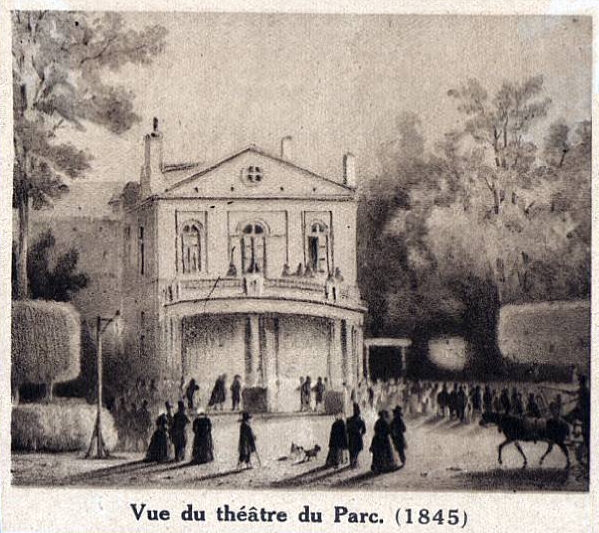 |
| copyright the Brussels Bronte Group |
From: Three Years With the Duke, or Wellington in Private Life (1853) by Lord William Pitt Lennox (younger son of the Duke of Richmond)
The theatre in the Park (in Brussels 1814) was opened, under the management of Mr. Penley, with a company of English players. The comedy of John Bull was the first performance, and attracted a most crowded and fashionable audience. Throughout the day, it had been hinted at the box-office, that the Duke of Wellington would probably attend the evening’s performance, and a private box had been kept back under this hope. The Duke’s avocations, however, prevented his making his appearance upon this occasion, as he had already informed the manager, when asked to patronise the play. This nearly led to a ludicrous mistake—a young officer and myself had been dining in company with the Duke, and, with that good-nature and consideration for which he was famed, he gave us permission to attend the theatre, telling us we might take his carriage after it had set him down. Upon reaching the Park, the carriage was recognised, and a crowd immediately followed it. As we gained the entrance of the theatre, the name of Wellington rent the air. This was communicated to the manager, who thrust his head out from behind the curtain, to give a signal to the leader of the band to play, “See the conquering hero comes!” The report spread like wildfire. The performances ceased—all eyes were anxiously fixed on the vacant box.
In the meantime, we had jumped out of the carriage, had tendered our money, and were surprised at the obsequiousness of the box-keeper, who, thinking we were the precursers of the Duke, begged us to walk into the lobby. The manager, or some official personage, had rushed into the private box to prepare the seats, and there awaited the welcome visiter. We now began to see the mistake that we had unwittingly caused; and, anxious to explain it, we approached the now open box-door. No sooner were our uniforms visible, than the band struck up the heart-stirring melody. In vain did we try to correct the error: the audience had risen, en masse; shouts re-echoed throughout the house; the curtain was drawn up, and the company came forward to sing the national song of “God save the King:” but no Duke of Wellington appeared.
For some minutes the cheers continued, when at length it was announced from the stage, that a slight mistake had occurred— that the avocations of the noble Duke had prevented his attendance; and, after the excitement had a little subsided, my young friend and myself sneaked quietly into the box, placing ourselves behind the curtain, fearful of calling the attention of the public to two mere urchins, who so unintentionally had nearly received the honours due to their chief.