Our Love Affair with Country Life

Intriguing concept?  Well, have to admit we are talking about a magazine here.  Country Life is a weekly slick publication in the UK to which a few privileged Americans (like Kristine) have subscriptions.

February 1, 2012 issue

The website is here. It give a wonderful summary of what is in the magazine — but to be honest, holding a heavy copy in your hands and turning the glossy pages provides a particular thrill.  You will find lots of information and pictures on the website, but give me a fresh issue, a cup of tea, and a hassock on which to rest my feet.  Picture a perfectly contented person, dreaming of that perfect house…or ideal estate…or a London pied a terre.  And every week, a new source for those dreams.

I assume that the lavish property ads give the magazine its primary income as well as its fantasy factor for those of us who spend hours pretending…would I prefer a townhouse…or an estate on the coast…or in the Yorkshire Dales?   A recent issue concentrating on the Cotswolds  absolutely gave me palpitations.  I simply couldn’t choose which one  I would focus my dayreams on. I had to read it over and over.
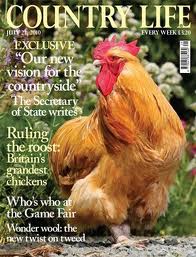
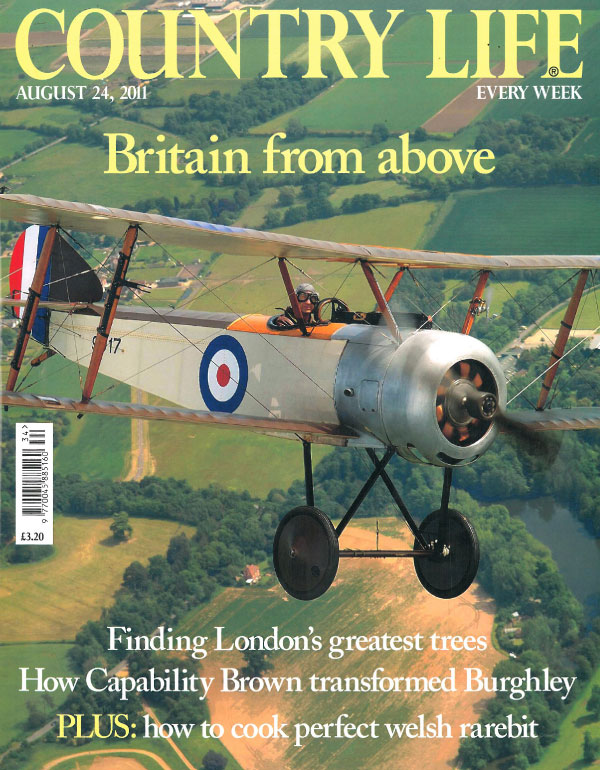
The covers are wonderful, from the Queen to the noble hen above. Or the antique airplane (a Sopwith Camel, c. 1917, I think)  below.
Not only are there  wonderful property ads — you will also find art and antiques, clothing and jewelry, all for the upper crust crowd.  But, as I say, we can dream.

The magazine’s editorial content is devoted to all the topics that might interest a country gentleman or gentlewoman.  They are sometimes unabashedly involved in political issues, taking a rather traditional approach in defending the interests of the countryside in issues such as land use, development, and agricultural and coastline policies. 
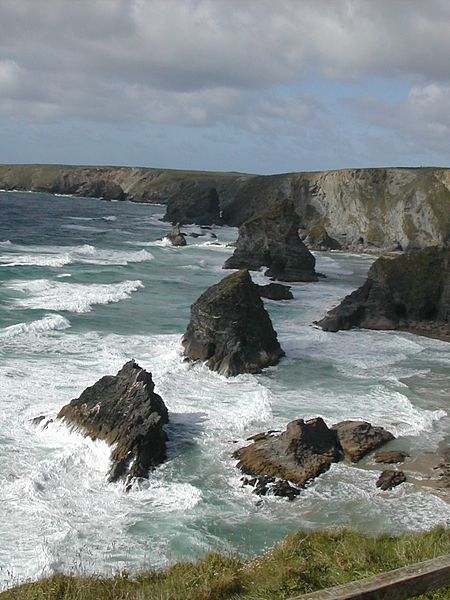
Cornish Coast, NT

Other articles describe notable gardens and give hints on growing various kinds of plants, both decorative and edible.  Or raising dogs, especially sporting and working dogs. Hunting and fishing are often discussed, as is fox-hunting.

Every issue carries a picture of a lovely young lady, sometimes about to be married, other times in business.  This has been a feature for many years.   I remember reading an Alexander McCall Smith story about a young lady who had been the “girl of the week” and was embarrassed to admit it to her university friends.

Among my favorite features are the stories of stately homes, their preservation and their presentation to the public.  It is not hard to imagine what a financial burden these piles are for the families who own them; that is why so many are English Heritage or National Trust.

After I finish my reveries (delusions?) about property, I usually flip to the back page to look at the wonderful cartoon in Tottering -by-Gently, the work of Annie Hurst.  For more views, click here.

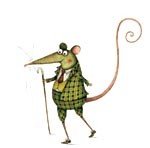
Among my other regular favoites are the columns of the Country Mouse and the Town Mouse, for random observations on life, always amusing and/or thought-provoking.
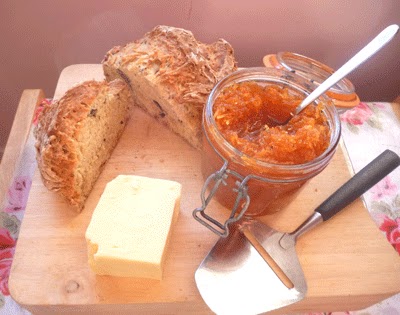
They even have recipes and restaurant reviews. Below, a suggestion for your next Tea Party.
carrot relish recipe

 Whatever your favorite magazine feature, you will be entertained and amused by Country Life.  We love to read the magazine in an aspirational mood — for almost everything here is beyond our reach, however much we admire it.  It’s delicious for wishing!! 

Kristine h
ere, who just finished reading the issue above – the piece on coaching inns was marvelous. My subscription to Country Life is an annual gift that I make to myself and I look forward to its arrival each week. Like Victoria, my favourite bits of the magazine are the real estate ads at the front, some of which I’ve posted here on the blog. Stately home articles, historic tidbits, recipes, gardening, architectural stories and, of course, the husbandry of various animals all make for a weird yet satisfying combination. Where else would find such articles as “Why the English love their chimneys” and “The quintessential gourmet experience in London” in the same issue?
Victoria – I’ve a new batch of Country Life issues to give you when next we meet.

New London Hotels

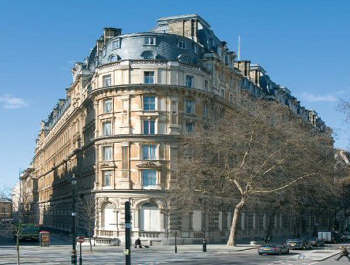
It’s always fun to hear about new hotels in our favourite city and today we bring you word of three new properties. The Corinthia London (above) recently opened its doors in Whithall Place within the former home of the Hotel Metropole, which itself opened for the first time in 1885. Currently, the hotel assures guests that it will offer “uncompromising standards of luxury within a 21st century grand hotel.” The hotel will have 294 lavishly decorated rooms, a restored Victorian ballroom,  two restaurants, and the Bassoon Bar. There is also an expansive ESPA Life spa on property. Rooms average about $500.00 a night, but a drink in the bar and a fabulous massage will be much less expensive.

Located in Mayfair, The Dorchester Collection’s ninth hotel, 45 Park Lane, boasts interiors by New York designer Thierry Despont, as well as Wolfgang Puck’s American style steak restaurant, CUT. The hotel strives to cater to the well being of their guests and offers bicycles, yoga mats, a fitness center and a Bath Menu, where guests can select from a range of aromatherapy oils, candles and herbal teas. 45 Park Lane will also house a collection of constantly evolving contemporary art and an in-house cinema. 

Looking forward to Fall of 2012, The Wellesley townhouse hotel in Knightsbridge (above) is laying claim to being London’s first ‘6-star’ property. Located just off Hyde Park next to the Lanesborough,  the 36-bedroom townhouse hotel is currently undergoing a £36 million pound renovation. The six-floor hotel will include London’s largest hotel suite with four bedrooms, a private lift, views over Hyde Park and The Cigar Terraces, which will boast the UK’s largest bespoke humidor. The MD of developer Arab Investments, Khalid Affara says: “This will be to a better standard than all the 5 star hotels in London. It will be like the first-class compartment of a plane.”

Happy Valentine's Day

From Kristine and Victoria, all our love accompanied by virtual hugs and kisses to all our faithful readers.  Be our Valentines…all year long.

Click here for last minute London Valentine’s Day shopping ideas.
Click here for “no expense spared” gifts from the likes of Lulu Guiness and Birkin.
Looking for a unique Valentine’s Day experience? Check out offers from the London Eye, complete with champers and chocs.
More romantic and/or historic London experiences can be found here.
And lastly, check out London’s most expensive Valentine’s Day package here, courtesy of the Athenaeum Hotel.
S.W.A.K.

Advertisements from La Belle Assemblee, 1816

We generally think of La Belle Assemblee, the regency-era magazine, in regard to its fashion plates. It also carred many articles about leading personalities, world events and history, interesting occurances, and as below, some fascinating advertisements in a special section.  Here are some excerpts (pictures added by this blogger);

BELL’S MONTHLY COMPENDIUM OF ADVERTISEMENTS FOR DECEMBER, 1816

THE PANTHEON FAMILY LINEN WARE HOUSE

Pantheon, London, 1816

   T. Craig begs to solicit the Nobility and Families to inspect his STOCK OF LINEN DRAPERY WHICH (without using the words “Bankrupt Stock,” – Bought for Cash !! –“ “Selling off” – “Irish Linen Company,” etc. words which are too well know to deserve any thing but contempt) will be sold at the following prices, and let the world judge for themselves:–

Irish Linen very stout ………………………………………….        1          0

Ditto Superfine ……………………………………………….         2          6

One hundred elegant Cobourg Striped Dresses, each       ……        5          6

Union Cambrics (ten Handkerchiefs each piece)………………      9          6

India Nankeens, seven yards long (the Company’s best), per piece  7          6

Merino Twilled Stuffs ………………………………………….      1          6

 Observe!! It is sometimes necessary for Ladies to bring the Advertisement with them; it will be a guide for themselves, and will at all times shew whether the Advertisement is genuine or fictitious.
  78, Oxford street, near the Pantheon

THE VERDIGONIAN ODORIFEROUS AND ABSTERSIVE TOOTH PASTE

Price 2s. 9d. and 7s. per  pot,

 Communicates the most refined and delicate fragrance to the breath, renders the teeth beautifully white, fastens those which are loose, and preserves them from decay to the latest period of life.  It is peculiarly adapted to use of Children; and employed by the fair sex in particular, it will fully accomplish the description of the poet,–

  “Her breath was sweeter than the morning gale,
  “Stoln from the rose of violet’s dewy leaves,
  “Her ivory teeth appeared in even rows,
  “Thro’ lips of living coral.”

Tooth brushes for using the Tooth Paste, 4s. 6d. per Set.

(Verdigonian: after Monsieur Verdigon whose “Celebrated Medicines are approved and recommended by all the Medical Halls in Europe”; Odoriferous: bears or diffuses scent; Abstersive:  having the quality of cleansing or purging)

TREBLE DISTILLED LAVENDER WATER

Under the August Patronage of his Royal Highness the Prince Regent; their Royal Highnesses the Princesses Augusta, Elizabeth, Sophia, and Mary; her Imperial Highness the Grand Duchess of Russia; Princes of Wirtemberg; their Graces the Duchesses of Devonshire and Wellington; his Grace the Duke of Marlborough; the Right Hon. the Countesses of Waldegrave, Darnley, and Liverpool; the Right Hon. Viscountess Powerscourt; Lady E. Bentinck; the Baroness de Montesquieu; the Hon. Mrs. Hope; The Hon. Mrs. Stapleton; Ladies Hatton, Bourne and Ball; and by the Nobility and Gentry in general.

 Manufactured by HENRY CHRISTIAN, Chemist, &c., Canterbury, the only and sole inventor (and with whom no other person is connected), of whom it may be had wholesale, retail, and for exportation; also in London of Mr. Johnston, 15, Mr. Berry, 17, Greek-street, Soho; Overton , 51, and Gattie and Pierce, 57, New Bond-street; Newbery and Sons, 45, and Prosser and Co., 20,  St. Paul’s Churchyard, Barclay and Sons, 95, Fleet-market; Leuchars, Haymarket; Wass, 12, Cheapside; and of all the respectable Perfumers, Stationers, &c., in Great Britain and Ireland.

TO THE FEMALE SEX

             The weak corporeal frame of the female sex, and the extreme sensibility of their minds, expose them to a variety of diseases, which require the assistance of an experienced
practitioner; while, on the other hand, the modest and engaging delicacy of the British Ladies renders them, in general, averse to exposing their more private ailments to the cognizance of the usual medial attendant on their families.

            To avoid this frequently unpleasant circumstance, the Ladies are assured that Dr. FISHER may be consulted by them, with the utmost confidence in his integrity, and in his long experience in female complaints of every kind, whether arising from natural weakness of constitution, from brooding over the unhappiness of life, from the unfortunate results of error of  fashionable gaiety, or from any accidental cause; and in other cases, where, although health is enjoyed, yet the parties feel a certain addition wanting to their happiness, this defect may almost always be removed by persevering in his mode of treatment.

            Dr. FISHER is at home from ten till two, and from seven till nine every day (Sundays excepted), but in many cases a letter detailing the symptoms, and inclosing a remittance for advice and medicine, will render personal communication unnecessary, and the remedies will be forward by any conveyance that is pointed out, so that the utmost degree of secrecy may be preserved.
    N. 27, Cross-street, Hatton-Garden
END OF ADVERTISEMENTS

I am not so sure I want to share my secrets with Dr. Fisher — how about you???? 


Regency Reflections: Ashton on 1812, Part II

John Ashton, in Social England Under the Regency, told of the convoluted eforts of the Prince Regent to reward his assistant, Colonel McMahon, and how various others in government circles tried to thwart the PR’s wishes. From Chapter 6, 1812:

But, be his (McMahon’s) origin whatever it might have been, he was a tool well fitted for the use of his august master, who, it must be owned, endeavoured to repay him; but, also, at the public expense. In 1811 General Fox died, and at his death, the office of Paymaster of the Widows’ Pensions became vacant. It was a perfect sinecure, the duties being done by others, and the salary attached to the office was over £2,000 per annum. The Commissioners of 1783, and of 1808, both reported and recommended the abolition of the Paymaster and Deputy-Paymaster of Widows’ Pensions, as being unnecessary, the one having very little to do, the other, nothing at all. The office of Paymaster had, in particular, been recommended to be done away with, on the demise of General Fox; but it was given to Colonel McMahon.
             On January 9, 1812, on a Motion for Supply, Mr. Creevey spoke decidedly against this appointment, and moved as an Amendment, ‘That the House would, to-morrow se’nnight resolve itself into a Committee of Supply, in order to give an opportunity, in the interim, for the consideration which he had suggested,’ namely, that they would take into their earliest consideration, the various offices of emolument recently granted by the Crown to several of their members. This amendment was lost.
Thomas Creevey (1768-1838), MP
 
            On the 22nd of February, the question of the Army Estimates being on, Mr. Bankes moved as an Amendment, ‘That the amount of the sum expected to be paid to the Paymaster of Widows’ Pensions, being 12d. in the pound on the said Pensions (£2,790 1s) be deducted from the said sum.’ This amendment was lost by a majority of sixteen.

            But on the next night, Mr. Bankes brought the matter up again, and moved the virtual abolition of the office by omitting the sum necessary to pay it–and this was carried by a majority of three.

            There was consternation among the Regent’s party at the temerity of the House in thus thwarting the Royal wishes, and, of course, the recalcitrated Commons must be taught a lesson, so McMahon was appointed Keeper of the Privy Purse, and Private Secretary to the Prince Regent; and in the caricature of ‘The Privy Purse and Political Beggars’ we find McMahon installed in his new position. Sheridan says, ‘Dear, good worthy Countryman, thou Pine Apple of Erin! consider I was burnt out,* not a penny in my purse, my credit very low–do–dear Mac, for the love of St. Patrick, give me a handful.’ Buckingham: ‘I have not above a Hundred Thousand a year, these hard times. Pray remember the Poor!’ Temple: ‘With my wife’s fortune and my own I have not above Forty Thousand a year. Pray remember the Poor! Grenville: ‘I have not above Fifty Thousand a year, a slender pittance. Pray remember the Poor!’ Mac Mahon replies: ‘Paws Off! no Blarney will do with me! I’m up to all your Gammon! and so is my dear Master. I’m cosy at last, in spite of all your speeches and paragraphs, and you may all go to the Devil, your Master!!!’

            And doubtless, he thought he was cosy, but the Commons would not stand the job, and on the 23rd of March, his appointment was brought before Parliament, and the Hon. J.W. Ward asked whether it was a fact, and, if so, what salary was he to have? Mr. Perceval, as Chancellor of the Exchequer, admitted the appointment, and pointed out that Colonel Taylor had occupied the same position towards the King for many years, and the same salary that was given to that gentleman had been continued to Colonel McMahon. Mr. Whitbread pointed out that Colonel Taylor’s appointment was owing to the infirmities of the King, and that previously there had been no such post.

McMahon, by Lawrence, Vancouver Art Gallery
            On the 14th of April, Mr. C.W. Wynn, in the House of Commons, moved for the Production of the Appointment of Colonel McMahon to the new Office of Private Secretary to his Royal Highness the Prince Regent. A very long discussion took place, and on a division, the motion was negatived by a majority of seventy-six. But the Ministry felt that the House was decidedly against them, and the appointment was not persisted in–McMahon afterwards became a pensioner on the Privy Purse.
Note from Victoria: Sir John McMahon (c.1754-1817), formerly a colonel in the foot guards, was a Privy Counselor from 1812 to his death in 1817. He was made a baronet by the Prince Regent.  Several of his bothers also occupied important government positions in England and Ireland.  In Georgette Heyer’s  1935 novel, Regency Buck, he is a minor character in Brighton and facilitates Judith’s first invitation to the Royal Pavilion.
I guess this is a sneaky way to insert one of my favorite authors, Georgette Heyer.   Regency Buck was the first of her many Regency-set novels; her research was brilliant and her accuracy meticulous, setting a high standard for the rest of us authors.