LOOSE IN LONDON: WE LOSE VICTORIA

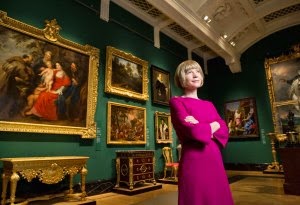
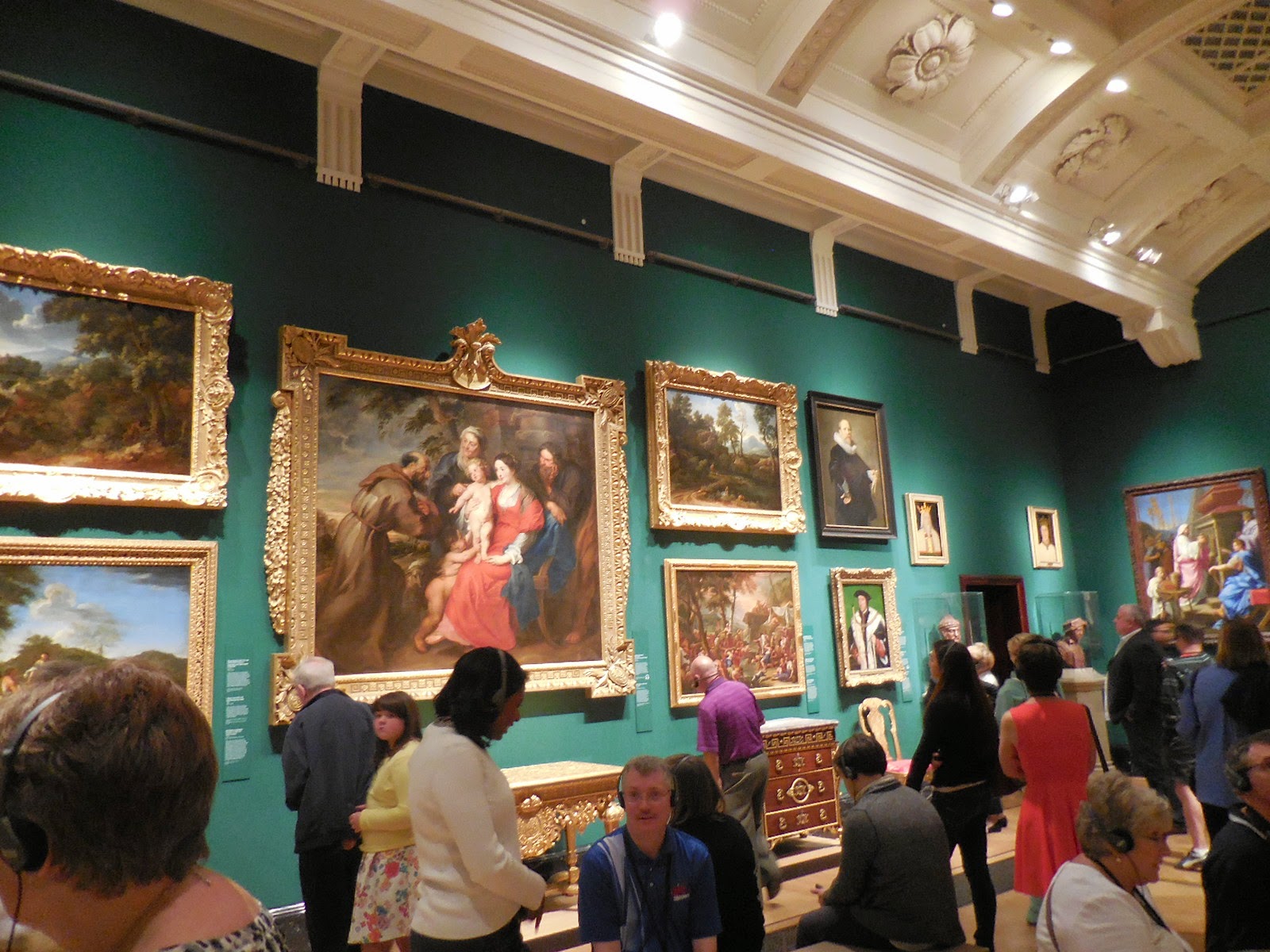
In our last Loose in London post, Victoria set the scene by describing all we had seen at the Queen’s Gallery, one of my favourite places. I love the exhibits they put on – the topics are always of personal interest, the items well chosen and the Gallery space itself of a size that still manages to seem intimate.
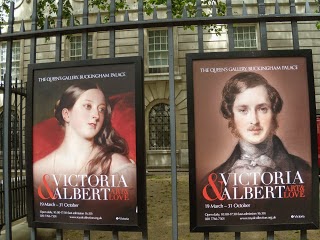
Back in 2010, Victoria and I had attended the Art In Love exhibit, which was comprised of all manner of artwork, jewels and other fabulous items that Queen Victoria and Prince Albert had exchanged as gifts between themselves on various occasions over the years. You can read the post about that visit here. 
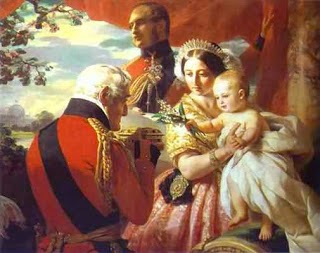
One of my favourite pictures from that exhibit was Winterhalter’s painting, above, showing the Duke of Wellington presenting a gift to his namesake, Victoria’s son, Prince Arthur, on the boy’s first birthday.
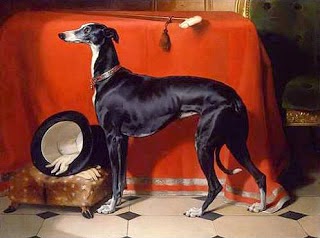
However, my favourite picture – either from that exhibit or from all time – was Landseer’s painting of Prince Albert’s greyhound, Eos. Queen Victoria had to smuggle Albert’s cane, top hat and gloves out of the Castle and over to Landseer to use in the painting without Albert discovering why until the painting was ready for gifting. This picture does not do justice to the stunning craftsmanship of the painting, which is almost photographic. I sat on a bench in front of it for nearly an hour. Then I marveled at the fact that Victoria and I were being given the opportunity to see so many favourite, and so many iconic, paintings in the same room.

The First Georgian’s exhibits we saw in September was not exactly up my alley, being, strictly speaking, before my chosen time period. Realizing that that train of thought sounded closed minded and, admittedly, faintly ridiculous if one aspires to be at all fair, I made my upstairs to the Galleries and was gobsmacked to see the complete, original series of Hogarth’s The Harlot’s Progress on display. Maybe this show wouldn’t be a miss after all.
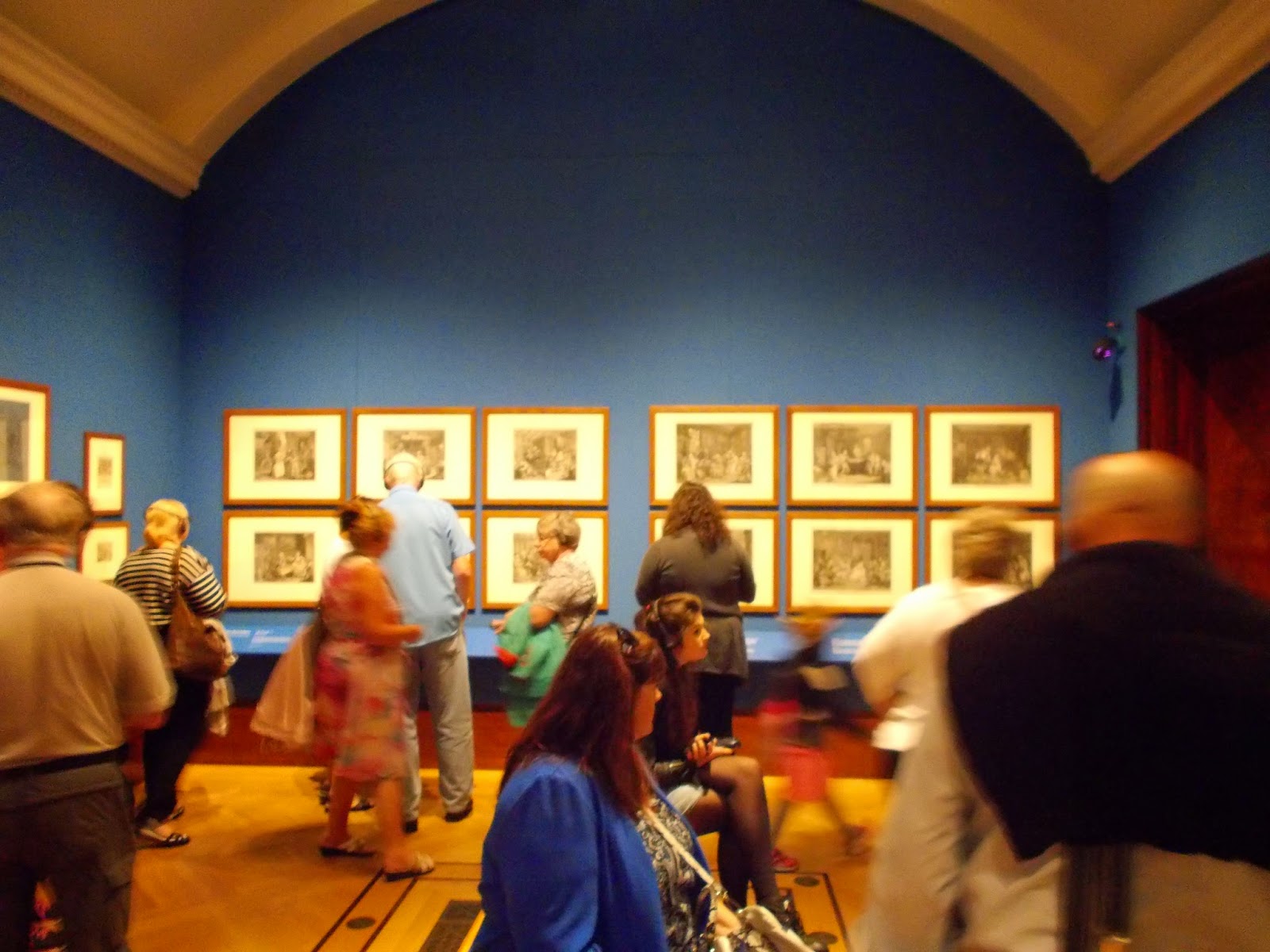
As so often happens during trips to galleries or museums, Marilyn, Diane, Victoria and I soon all went our separate ways in order to focus our attention on those things that interested us individually. After a goodly amount of time, Diane, Marilyn and myself found ourselves together once more.

“Where’s Victoria?” Marilyn asked.

“No idea,” I answered, “but come to think on it, I haven’t seen her for quite a while.”

“We haven’t, either,” said Diane. “We’ll go and look for her.”

“No,” said I, putting a restraining hand on Diane’s arm. “Let’s make a plan  first, so that we don’t lose anyone else.” I thought for a moment, channeling Wellington and hoping some of his strategic savvy would rub off on me. “Okay, here’s the deal. I’ll wait right here (we were in the largest gallery, with most rooms opening off of it). You go that way, and Diane, you go that way. What time is it?”

“10:50,” Marilyn said, checking her watch.

“Right,” I said, “both of you will be back here by 11 o’clock. I won’t move.”

So off they went. And back they came with a few minutes to spare.

“No Victoria.” Marilyn said, looking at me expectantly.

“Where on earth can she be?” Diane murmured.

“We have to be just missing her. Like something out of a Marx Brothers movie,” I said. “Tell you what, let’s go out to that half wall right outside the Gallery and wait for her there.”

So off we went, down the stairs, when Diane had a brilliant idea, “Maybe she’s in the giftshop?”
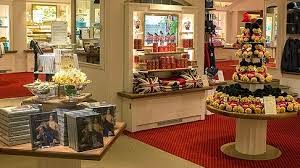
The three of us made a thorough search of the giftshop. We checked every nook and every cranny in every section of the shop. It’s a wonder we didn’t get hauled in for casing the joint. No Victoria. So off we went, out the door and over to the half wall that fronts Buckingham Palace Road. It’s hard to believe, but I haven’t a single photo of the wall. Can’t even find one on Google. Hard to believe because Victoria and I are well acquainted with the wall. We’ve sat on the wall many times. We’ve used the wall as a meeting place on numerous occasions. And you may remember that this was the exact same wall upon which Victoria had left her camera just a few days ago. I felt certain that Victoria, once realizing that we’d been separated, would make a bee line for this wall as a point of re-connection.

So, there the three of us sat.

“I can’t imagine where she can be,” mused Diane.

“How could we lose her? The Gallery isn’t that big,” Marilyn added.

“This does not bode well,” I said.

“Oh, it’s not that bad. She’ll turn up,” Diane said.

“I meant that it doesn’t bode well for the Duke of Wellington tour. It hasn’t even begun yet and I’ve lost someone. And not just someone, but Victoria, my co-guide. If I can’t keep track of a tour guide, how am I supposed to keep track of seventeen tour goers?”

We sat pondering the answer to this question for some time. Some long time.

“I’m going back inside the Gallery to see if she’s there,” I told them. “Don’t move from this spot!”

Once back inside, I cased the giftshop. Again. Then I went up to the information desk and explained my dilemma to the kind lady behind the desk, giving her Victoria’s name and telling her where we’d be waiting, just in case Victoria thought to ask at the desk. Then, I asked one of the guides if she’d go back upstairs into the Gallery and look for Victoria, which she did, using my description of Victoria to scout any lost women she may find. She came back to say that she hadn’t found anyone who looked lost or bewildered, nor anyone matching Victoria’s description, nor by discreetly having called Victoria’s name in various rooms.  She even checked the bathrooms. No Victoria.

So I want back outside and told the girls that I was going to walk down to the Palace entrance to see if somehow Victoria had left the Gallery before us and was waiting for us there. I went. I looked. No Victoria. I went back to the wall and sat down beside Marilyn and Diane.

“Where can she be?” I asked no one in particular.

“She wouldn’t just leave us there,” Marilyn said. “I mean, the plan was for the four of us to go on to the Palace together. Why would she leave without us?”

“She’s not any place that makes sense. She can’t still be inside. She wasn’t here at the wall and we haven’t crossed paths in quite some time. Weird. It’s like someone came down and abducted her.”

“Yeah, but instead of aliens, it was Prinny who whisked her away to Regency England in another dimension,” Diane said. “Maybe she’s eating ices at Gunter’s as we speak.”

“She’d better not be,” I replied. “I wish we could fast forward to when we find her so that I’d have the explanation. The suspense is killing me cause I can’t for life of me think where she could be. We haven’t seen hide nor hair of her.” I stood up, “I know it makes no sense, but I’m going to walk up to the Royal Mews gift shop and see if she’s there. Unlikely, but we’ll then be able to rule that out. Don’t move!”

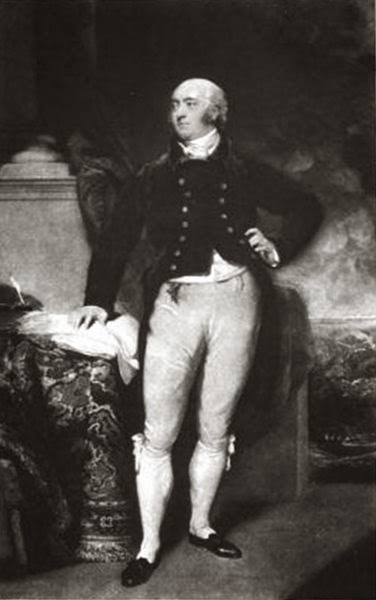
So, off I trod, up Buckingham Palace road to the Mews giftshop. No Vicky. On my way back, I stopped into the gallery again. “I know this sounds dramatic,” I said to the lady behind the information desk, “but you haven’t anyone fall ill, have you?”
“You still haven’t found your friend?” she asked.
“No, and just to cover all the bases, I wondered if something had happened to her.”
“No, sorry, we haven’t had anyone fall sick, or injure themselves or anything else. Certainly nothing that required emergency services, either. Sorry.”
Dejected, I walked back to the wall. “How long have we been sitting here?”
“Almost an hour,” Marilyn said. 
“And no sign of her,” I said. “I’m going to go out on a limb here and say that the chances of her walking by now are slim to none.”
“Well, we might as well go on to the Palace for the tour, as planned,” suggested Diane. “If worse comes to worse, we’ll find her later at our hotel.”
So off we trudged. Each of us still musing on where in the world, or in London at any rate, Victoria could be. Honest to God, if she had gone to Gunter’s without me, I’d throttle her. 
Note from Victoria: I was looking for them, and beginning to suspect I’d been ditched..a la junior high school, the mean girls had conspired to leave me behind!
More Loose In London Coming Soon!

MR. COKE OF NORFOLK

Coke of Norfolk
From Mrs. Arbuthnot’s Journal – February 25, 1822
      I have been very much astonished, in common with the whole town, at the marriage of my old friend Mr Coke of Norfolk, who at the age of 69, has taken Lady Ann Keppel, a girl of 19. It is said she first wished to marry his nephew and heir, William Coke, and, failing with him, turned her attention upon the old man. It is very disgusting, I think, in both lady and gentleman; the latter, however, called on me yesterday and seemed rather proud and to think he was going to do a very clever thing. I wish he may find it answer, but I doubt it much. 
You can read more about the Cokes in Victoria’s past posts about her visit to their home, Holkham House – Part One can be found here and Part Two here.

WELLESLEY POLE AND THE BANK OF ENGLAND

With many thanks to Greg Roberts for his kind permission to reprint this article from his fabulous website called:


Wicked William

Resources for study of the life and times of 

William-Pole-Tylney-Long-Wellesley (1788-1857)

The Mint with a Pole – Part 4
or
When Wellesley-Pole made money quicker than his son spent it
In 1816 the euphoria of victory at the Battle of Waterloo wore off and Britain entered a period of unrest. Corn prices were set at an artificially high level by the Importation Act (1815) – or Corn Laws as they became known – benefitting wealthy landowners at the expense of the poor. A bad harvest, the return of thousands of soldiers from Europe, and demonstrations against working conditions combined to increase tension, leading to repressive counter-measures from the Government. Against this backdrop, the Coinage Bill was passed on 22 June 1816, and Wellesley-Pole was ordered to draw up a plan to replace the silver coinage.
Wellesley-Pole’s schedule detailed how he proposed to design, manufacture, and distribute the new coinage. It also outlined a system for recovering the old money for the Bank of England. He started entirely from scratch after realising there was ‘no collection of British coins in His Majesty’s Mint…not a single Proof.’ To ensure this would never happen again, he founded a Museum to house ‘every coin and medal which, from this time forth, shall be struck’. In July 1816 Banks supplied Wellesley-Pole with old coins as a basis from which the new currency could be created.This collection now forms the backbone of the Royal Mint Museum.

Joseph Banks donated coins to enable Wellesley-Pole to set up Mint Museum

The key problem was how to undertake an operation of this magnitude without alerting the nation as to what was afoot – and once the coinage was manufactured – how to distribute it to the four corners of Britain so that it might appear simultaneously on ‘Great Re-coinage Day’. Wellesley-Pole had to do this at a time of immense social unrest, using the most rudimentary of transport and communication systems. Some boxes of coin were shipped to northern ports but the vast majority went by carriage up and down Britain’s roadways – with accompanying detailed instructions to be acted upon at each and every destination. Getting the new coinage to these outlets was one thing, but Wellesley-Pole was also tasked with rounding up all the old silver currency in exchange for new crowns, shillings and sixpences. This redundant money had to return to the Mint by the same arduous process after the two-week exchange period expired.
                     The Bank of England – Pivotal to Wellesley-Pole’s plans
The National Archive reveals that Wellesley-Pole submitted his plan on 16th September. He confirmed an agreement with Governor of the Bank of England that banks throughout Britain would assist in the transfer ‘without looking for any remuneration… Considerable expense must be saved from the many applications that have been made in favour of persons wishing to be employed in the issue and exchange of the new money’. He further curtailed costs by creating accounts with every participating bank for the money distributed to and collected from them. Sir Joseph Banks described his plan as
excellently arranged…I have seen a multitude of public men, but no one whose conduct has been as energetic and so perfectly successful’.
A week later Wellesley-Pole received approval from the Prime Minister Lord Liverpool, subject to proceeding in complete secrecy until the money was ready to be circulated.
Pistrucci was unable to draw mad King George III from life – This ‘bull head’ image was heavily criticised
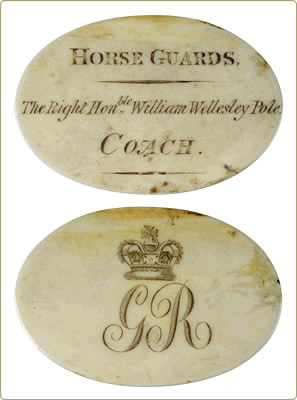
Each coin was approved by the Prince Regent prior to manufacture. Wellesley-Pole enthused the coins were ‘absolutely divine’. Every last detail was meticulously planned. Coins were labelled and bagged in sums of £100. Bags were then packed into a sturdy box containing £600 comprised of one bag of half crowns, four bags of shillings and one of sixpences. The destination of each box was labelled and arrangements were made for them to be re-used for the return of old coinage after the exchange was completed. 57 million coins were ready for distribution by January 17th 1817. A few days later Wellesley-Pole called a meeting of the bankers of London proposing:
  1. That all 72 London banks be ‘furnished with money to exchange the silver coin…by opening all their shops to the public at large. Inspectors from the Mint to be established in each shop for selecting…the old coin to be recovered…by which means Bankers would be exonerated from any responsibility.
  2. Every Banker in England, Scotland and Wales to employed in likewise manner but ‘the Country Bankers’ to recommend such persons for inspectors as they conceive to be trustworthy.
Wellesley-Pole earmarked the operation for 3rd February, but the London Bankers, worried about civil unrest, feared that by opening to the general public ‘their property would be endangered’. So the Master of the Mint was compelled to hastily arrange alternative locations for public distribution. He ensured tha
t a comprehensive network of outlets were created in every principle town in England and Wales, which received almost £1.8M by February 3rd.
announcement
Cat out of bag 18th Jan 1817 – Wellesley-Pole announces Great Re-Coinage
The exchange for Scotland was undertaken by the Bank of Scotland who acted under a letter of instruction from the Master of the Mint, so the entire operation hinged on Wellesley-Pole’s meticulous planning.
The Cabinet eventually deferred the exchange until February 13th. But it was completed in 14 days as planned and the old currency ceased to be legal tender on March 1st. These remarkable statistics bear testimony to the success of this operation
Of £2,6000,000 delivered not one bag or box of new coin was mislaid and there does not remain a single complaint of deficiency of money for exchange in every part of Great Britain.  In carrying the measure through, the Mint dealt with over 14000 letters and employed 1000 inspectors. 469 accounts with individual banks were reconciled ‘to the penny’ when the old currency was returned.
By any standard this operation was an astounding success. Because it went without a hitch it was soon forgotten, perhaps the biggest single reason why Wellesley-Pole is  mired in obscurity. It was only when the House of Commons debated currency in 1842, that the enormity of his achievements were highlighted against shortcomings in current procedures.
As we have seen in Pole and Pistrucci the Great Re-Coinage failed to ignite public excitement, and the press preferred to continue their campaign of back-biting and ridicule against both men.
The only reply either man can give in answer to their critics is to emphasise that the silver coinage remained in circulation until 1971 – Yes that’s 154 years!
In my final part I will look at Wellesley- Pole’s departure from the Mint and round up his legacy…..
So you have seen how, at least for a few years, Wellesley-Pole made money faster than his feckless son Wicked William of Wanstead House was able to spend it. Follow Wicked William to the Epping Hunt, or off to War with Wellington or find out what happened when Wellesley-Pole’s rage got the better of him.
Finally, I have written the remarkable history of Wellesley-Pole’s house
I hope you enjoy this post and would be most grateful to hear any feedback.
Sources Used
  1. Royal Mint Website
  2. The National Archives (Kew) Mint 1/56
  3. Bagot J., George Canning and Friends (London: Murray, 1909)
  4. Senate House Library, Mint Book MS499
  5. Greg Roberts unpublished dissertation The Forgotten Brother (2009)
  6. Image of Sir Joseph Banks by William Wyon courtesy of the Royal Mint Museum

You’ll find Greg’s website Wicked William here.

 Follow Greg Roberts on Twitter @geggly
ROYAL DAY OUT, PART TWO: THE QUEEN'S GALLERY

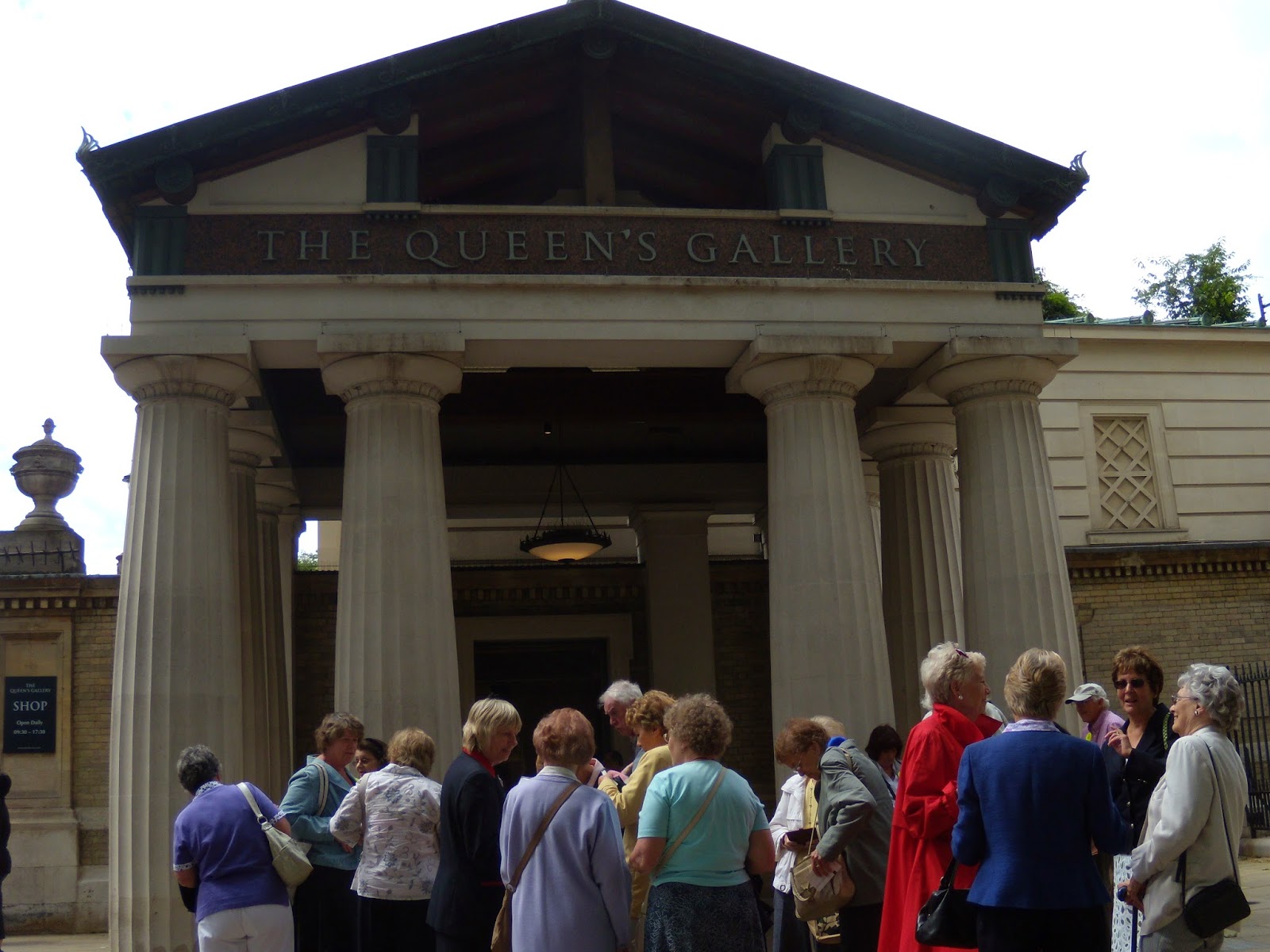
Victoria here.The second venue in our Royal Day Out was the Queen’s Gallery, actually, like the Mews, a part of the Buckingham Palace complex, and one that you may visit almost year-round.  

Below, a view of the entrance to the Queen’s Gallery when Kristine and I visited for the exhibition Victoria and Albert: Art and Love in 2010.

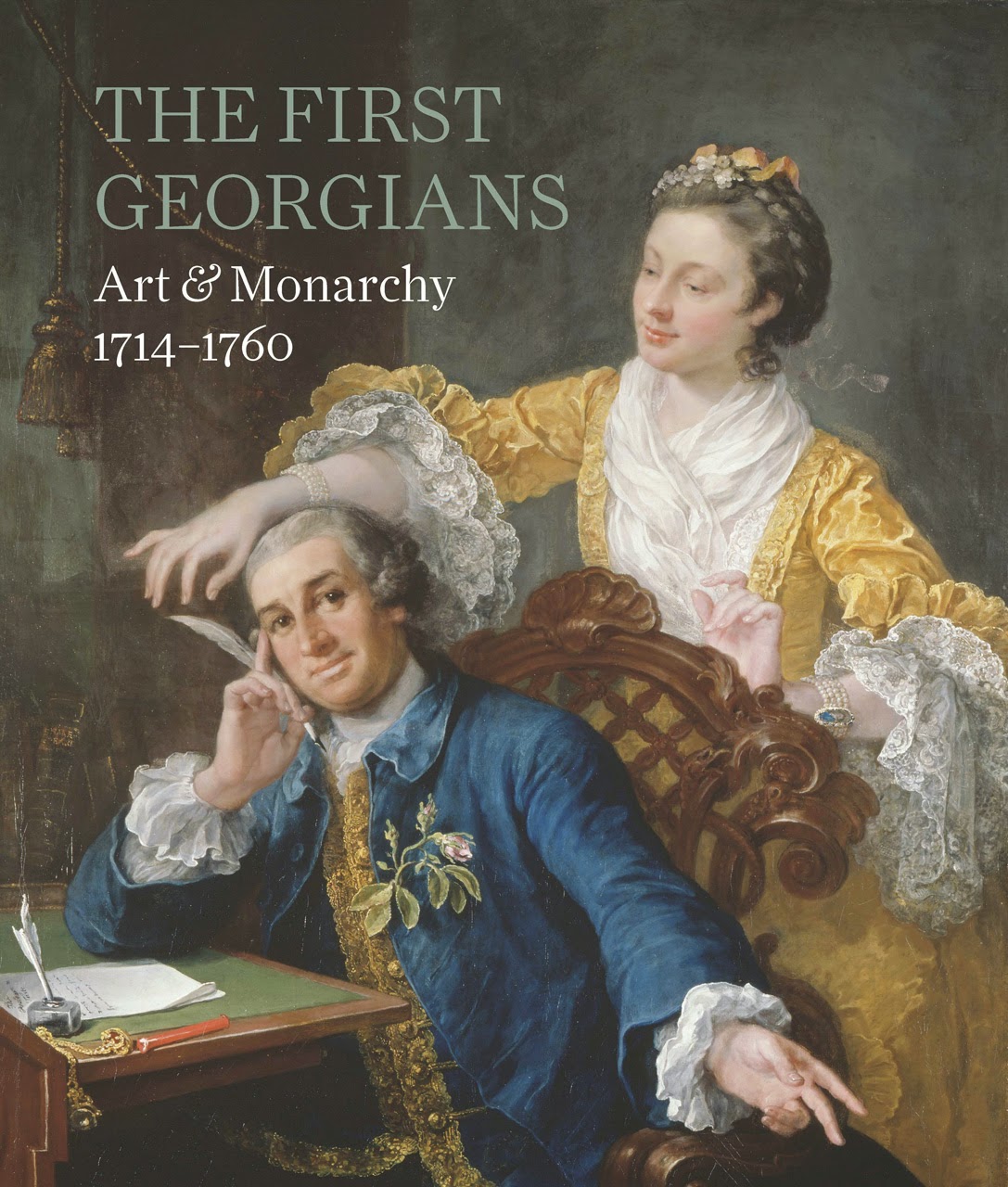
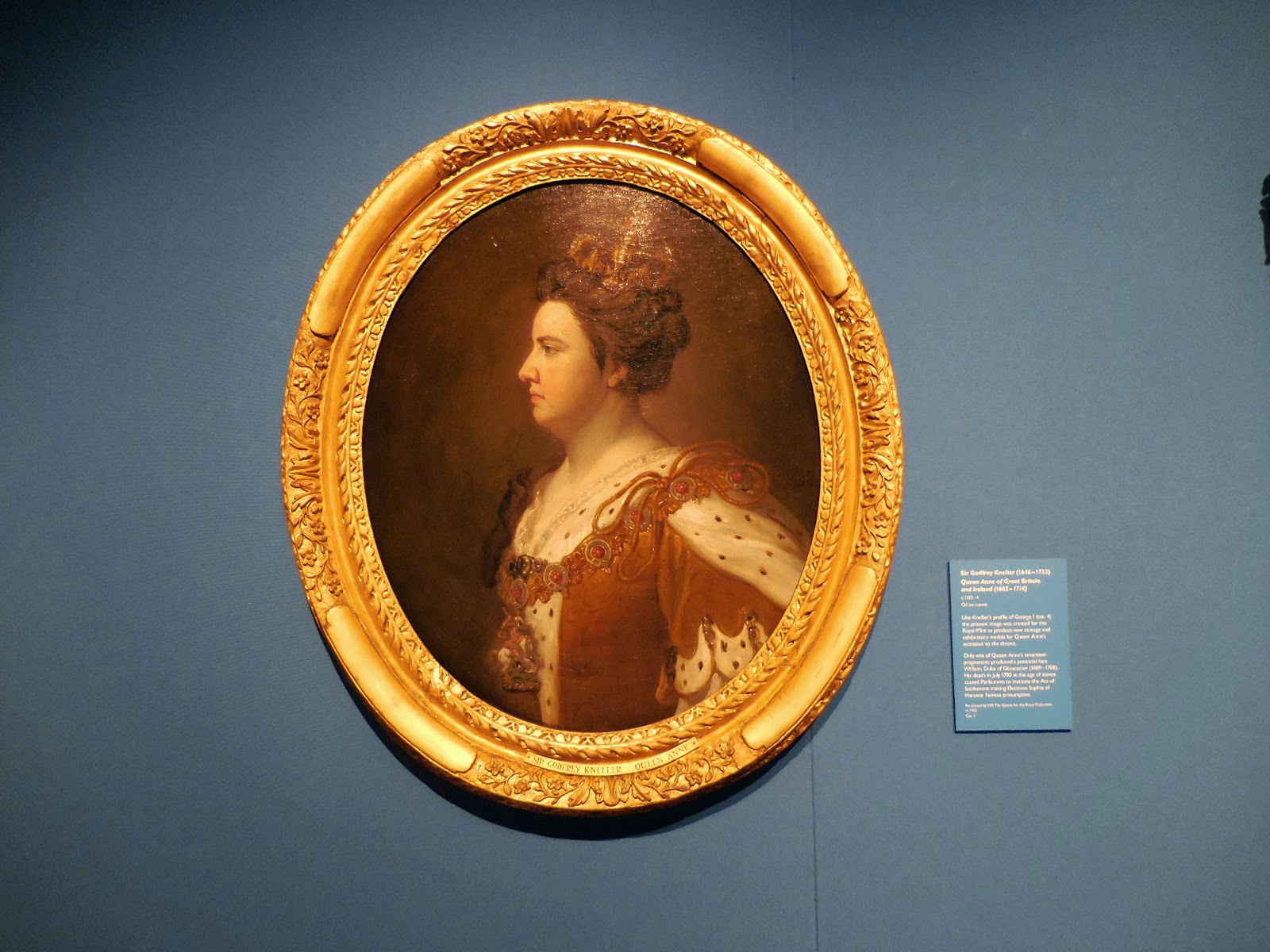
The First Georgians celebrated the tricentennial of the accession of the House of Hanover to the English Crown, When Queen Anne died in 1714, it had been decided that her successor would be Electress Sophia of Hanover or her issue.  Despite at least seventeen pregnancies, none of Anne’s children had survived to adulthood.  The British Parliament was determined the monarchy would not go to a Roman Catholic so they disallowed all the family of the former king, James II and the Stuarts.

Queen Anne of Great Britain and Ireland (1665-1714) c. 1702-04
by Sir Godfrey Kneller (1646-1723)
Sophia Electress of Hanover (1630 -1714)
attributed to Noel III Jouvenet
Sophia was the granddaughter of King James I.
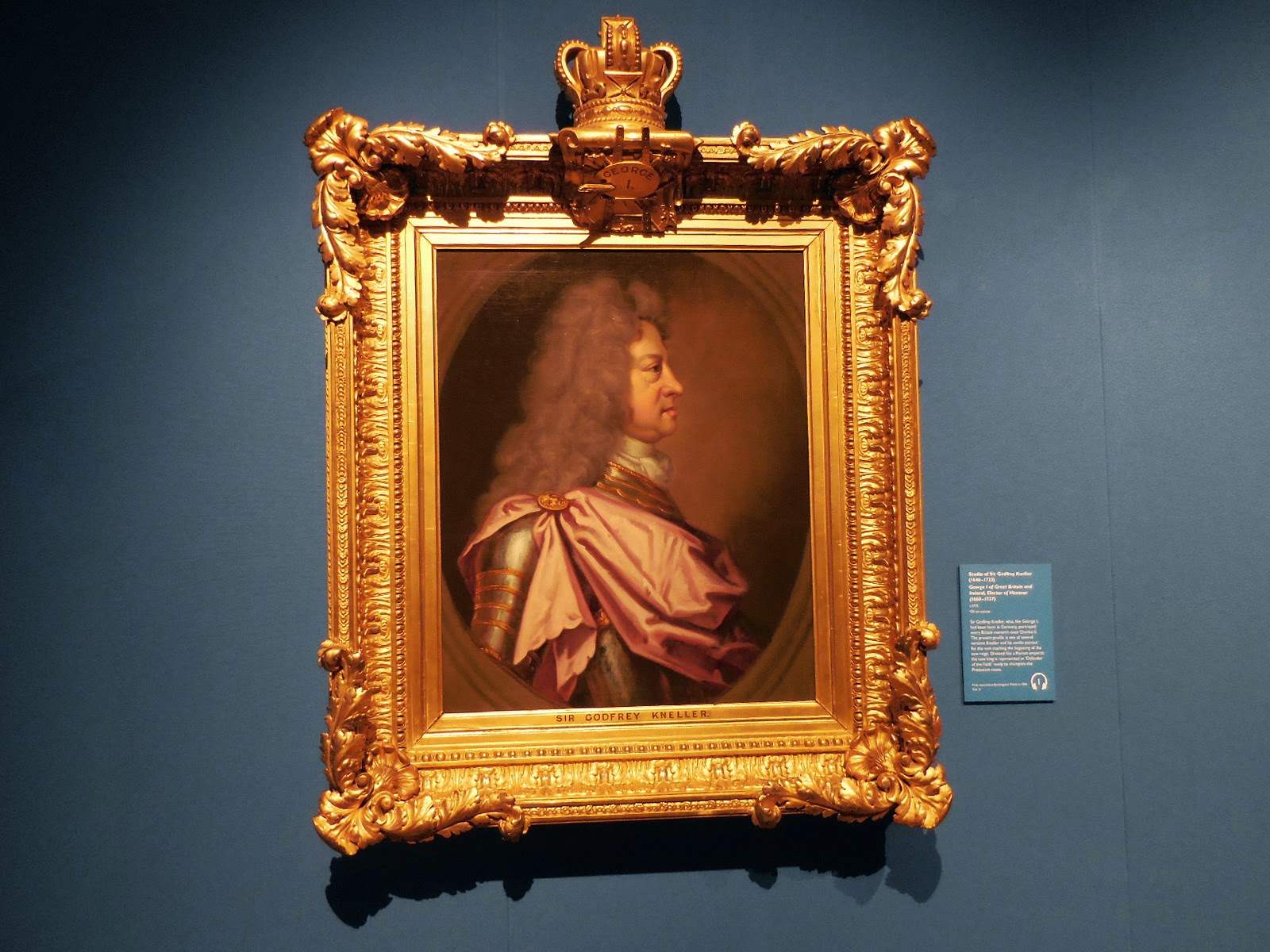
George I of Great Britain and Ireland (1660-1727)
Studio of Sir Godfrey Kneller
To quote from the text panel, “Dressed like a Roman Emperor, the new king is represented as ‘Defender of the Faith’ ready to champion the Protestant cause.” George I never learned to speak English well and spent a great deal of time in his home state of Hanover.

Dr. Lucy Worsley’s series The First Georgians ran on the BBC in  2014.
Click here to watch.

From Dr. Worsley’s website: “The series tells the story of George I, George II and their family…  I was given access to treasures from the Royal Collection as they were prepared for a new exhibition at the Queen’s Gallery, Buckingham Palace – providing a rare and personal view of George I and his feuding dynasty.The Hanoverians arrived at a moment when Britain was changing fast. We looked at satire, gin-drinking, smallpox, the slave trade, the crushing of rebellion and the building of an empire – all at a time when Britain was embracing freedom of speech and modern cabinet government.”

Dr. Worsley, chief curator at Historic Royal Palaces, also writes of the First Georgians on her blog, here.

Two pictures above: Mirror, Table and Candle-Stand
by John Gumley and William Turing, c. 1727

George II 1683-1769, c. 1760
by Louis-Francois Roubiliac 1702-62
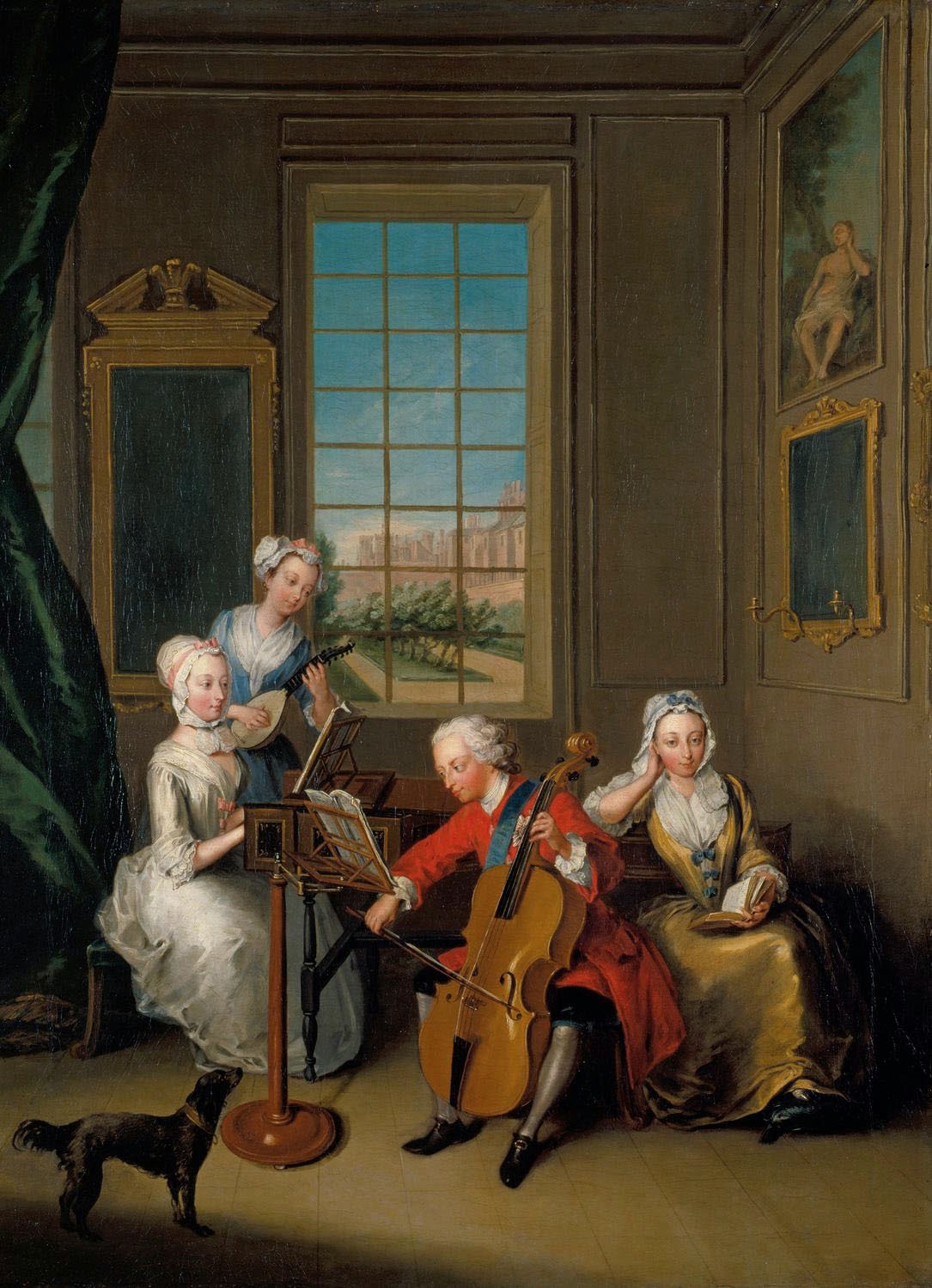
The Music Party: Frederick, Prince of Wales with His Three Eldest Sisters, 1733
by Philippe Mercier (1689-1760)

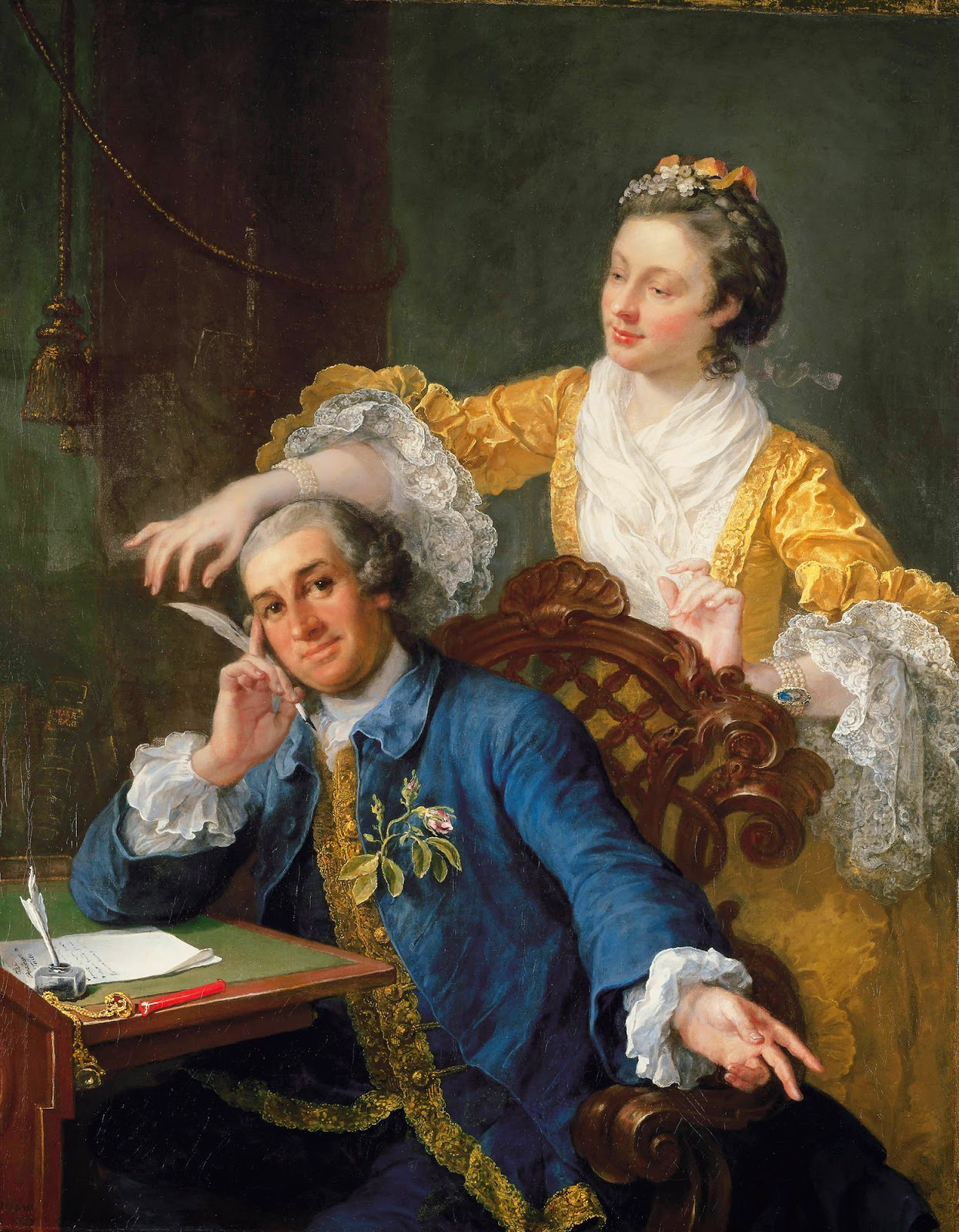
David Garrick with His Wife Eva-Marie Veigel c. 1757-64
by William Hogarth 1697-1764
The Queen’s Gallery was crowded with viewers, most eager to get along to the next stage of the 
Royal Day Out: Buckingham Palace.  But wait until you hear what happened to me! Remember, I am the one who insists on reading (almost) every word of every text panel along the way.

More Loose In London Coming Soon!

WATERLOO WEDNESDAY – THE ITALIAN CONNECTION

From  Adventures In Historyland 

Waterloo being what it is, all you hear about in terms of British allies, is the Prussians, the Belgians and the Dutch. It may of interest to you good readers, to hear about the Italian connection and the story of a little known Waterloo Man.

To begin with there is the Corsican. As British contemporary caricaturists loved to point out, Napoleon was French by adoption rather than birth. To me this still makes him more French than Italian but on a purely factual level they were correct. Napoleon was not the only Corsican on the field however, on the other side of the shallow valley of Mont St Jean was Count Pozzo di Borgo, Russian diplomat and Military observer for the Tsar, attending on Louis XVIII at Ghent, who suffered a contusion while riding with Wellington’s staff at Waterloo. The Duke asked him to write the letter to Louis confirming Napoleon’s defeat that evening.
Paolo Francisco, Count De Sales, was doing a similar job to di Borgo. He was born in Savoy but he owed his allegiance to the King of Piedmont Sardinia and he is remembered as one of the men who organised the Sardinian Army. He was one of the last men on the Duke’s overstretched and badly reduced staff, still available at the end of the day.
One of the most interesting is a young lieutenant of about 24, that Reese Gronow saw riding along the position with Wellington’s staff before the battle started. His name was Count Paolo Ruffo and he was the second son of the Neapolitan Ambassador to London, Fabrizio, Prince of Castelcicala. Paolo was born in Richmond in 1791 and educated at Eton and he left school in 1811 to join the British army. His father moved in elevated circles and arranging a commission for his son would not have been an obstacle. Paolo joined the 6th (Inneskilling) Heavy Dragoons and on the 3rd of May 1815 advanced to the rank of Lieutenant. A young man who would one day become a prince could be expected to be quite popular amongst fellow officers, he appears to have been fairly well known through the army in Belgium, and it is intimated that he had friends enough to gain invitation to ride on the General Staff, (Perhaps as an orderly). Wellington preferred to populate his “Military family” with bright young things from good backgrounds and Paolo certainly qualified as both.
Young Ruffo’s actions during the momentous day are rather vague, though he is supposed to have garnered praise for his gallantry. Gronow saw him on the staff and he is further supposed to have “Galloped” for Wellington at least twice during the day, which rather discounts him from being with his regiment during their famous charge against D’Erlon’s Corps. Nevertheless though line officers might deride staffers for their perks and cushy appointments, in action, staff officers had one of the most dangerous jobs in the army and Wellington’s were usually with him were the fighting was thickest. Sometime after his second assignment Ruffo received a wound, I have not confirmed where he was hit, but it took him out of the battle. Indeed the inference may be that he was left on the field overnight and rescued as he is listed as “Missing”. Even if he was not lost amongst the piles of corpses, his wound was serious, a fact testified to by Dr. Samuel Cooper and the fact it took him about a year to fully recover. When news of the battle reached his mother, Giustina, she became very concerned for his safety as word came that he was missing, and then that he had been wounded, which would give her cause to thank God for small mercies.
Ruffo’s singular status as heir to a distinguished title and son of a diplomatic official singled him out for help in his recovery. In 1816 the Prince Regent instructed Horse Guards to grant him a year’s pay, (£164 5s), and had his medical bills paid for. His presence at the Battle made him eligible to receive the Waterloo Medal, which was placed on his coffin at his funeral, and in 1817 he resumed his military duties, making a transfer to a more senior (and prestigious) regiment, the 4th Dragoon Guards. He served in Ireland, participating in a courts martial as Dept. Judge Advocate General, and served honourably until 1821 when he retired for health and family considerations. Though he was second son (Edward had been a Cornet in the 2nd, Queen’s, Regiment of Dragoon Guards but died in 1821) he went on to inherit his father’s title after he died of Cholera in 1832 and to serve 3 Kings of Naples, as a diplomat, (Much like the Count de Sales and di Borgo did after the war) to Russia, Britain and Austria between 1831 and 52, and became “Luogotenente generale dei reali domini al di là del Faro” of Sicily in 1855.
Paolo Ruffo di Bagnaria, Prince o
f Castelcicala by William Salter 1834-40.
National Portrait Gallery.

While serving in his father’s old position as Neapolitan ambassador, smoothing out a rather unctuous diplomatic ruffle between Naples and London, he reacquainted himself with the Duke of Wellington who greeted him as an old friend, gaining invitations to dine with him.
Despite his energy and readiness to serve he required a personal letter from the King to get him to Palermo to take the post as Viceroy, were he was faced with calming tensions that had arisen from his predecessor’s heavy handiness. He had married married the daughter of the Swiss ambassador to Paris, Madmoiselle Taddea Wilhelmina de Zeltner in 1832, and they had a daughter, Giustina Ruffo in 1839, when Wilhelmina died in 1855 he had sank into a deep depression, but he felt it his duty to obey the King.
Though a firm but conciliatory policy and his efforts to modify and modernise to make better living conditions, which included putting lights in the port cities of Sicily, building a new port at Milazzo, and decreasing taxes, he became very popular. In 1857 Commissioners reported the kingdom in a perfect state, and in 1859 he was elevated to the order of St Ferdinand. He served as chief of Staff to the Bourbon army when Garibaldi invaded Sicily, the subsequent debacle prompted the Prince to tender his resignation which was accepted, and he returned to Naples where the title of Counsellor of State was conferred on him. In 1865 he was sent to Rome to await further orders which never came due to the fall of Gatae, and he went to Paris where he stayed until his death in 1865.
While in London, between 1841 and 1852, he was a regular at the later Waterloo Banquets, where he was a welcome addition to the ever dwindling pool of officer’s that had been present at the battle. He was a guest at the very last dinner at Apsley House in 1852, where he sat on his host’s right. At the meal the Duke rose to falteringly gave his health.
“I will give you, the health of an illustrious foreigner whom I had the honour of having under my command at Waterloo, Prince, Prince ” here, unsure as how to pronounce the title he stopped, and though all knew who he meant none had the courage to prompt him. At last Lord Sandys, who, has been Lord Arthur Hill, at Waterloo called out, “The Field-Marshal gives the health of Prince Castelcicala.”
“Exactly so,” said the Duke, “That’s the name. Prince Castelcicala.”
I found out about the good Prince by accident, as I did the other Italians I mentioned, I hope you enjoyed reading about this Waterloo Man as much as I did writing about him.
Sources:
The Sydney Morning Herald (NSW : 1842 – 1954) Friday 19 Oct 1849
The Tablet, 13, 24th June 1848.
The Illustrated London News, Volume 1.
History of the French Revolution and of the Wars… By Christopher Kelly
The Battle, By Alessandro Barbero
Fifty years of my life, George Thomas Kepple.
The Spectator, 22 JUNE 1850,
Le Prince de Castelcicala, 1866.
Many thanks again to Josh at Adventures in Historyland for allowing us to reprint this fabulous article. 

Contact Josh via email – adventuresinhistoryland@gmail.com
Or follow him on Twitter @LandOfHistory