PRIDE OF DUTY (Book 2 in the Men of the Squadron Series) More Regency Navy Seals!

Napoleon After Waterloo

Andrea K. Stein

Bellerophon was a famous Greek hero, mostly known for defeating Chimera, a fire-breathing, mythical monster. By some quirk of fate and history, the H.M.S. Bellerophon was also the name of the ship where the monster Napoleon, who bloodied two continents in his obsession to rule the world, turned himself over to the Royal Navy after his defeat at Waterloo.
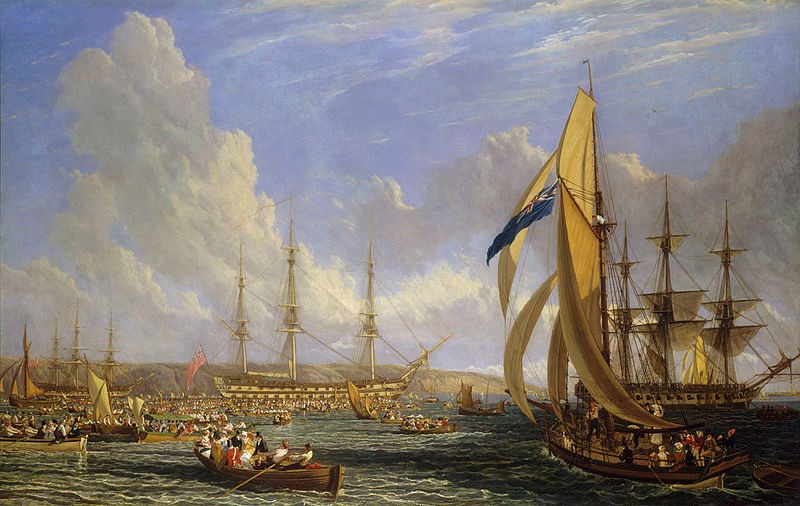
The Bellerophon (center 74-gun ship) surrounded by sight-seers in Plymouth Sound
Painting by John James Chalon

Stories surrounding the final, decisive battle of Waterloo abound, but have you ever heard an account of what happened to the little megalomaniac emperor in the days following his massive defeat? He somehow thought after all the horrors he’d wrought, everyone would overlook his misdeeds. He variously dreamed of living the life of a country gentleman in England or managing an escape to America.

Napoleon fled to Paris after the June 18, 1815, battle, arriving there on June 21. When he tried to rally what troops he had left, his friends and commanders either abandoned him or turned against him. He had to abdicate two days later. He then fled to Rochefort in the coastal area known as Basque Roads. He’d hoped for a French frigate to take him to asylum in America, but the Royal Navy blockade of the area was too tight for French ships to evade. With French Royalists hot on his heels, he ran out of options, and on July 15, he surrendered to Captain Frederick Lewis Maitland on the Bellerophon.
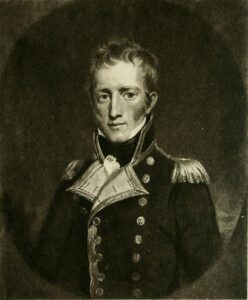
Captain Frederick Lewis Maitland

With its famous prisoner aboard, the Bellerophon, heavily guarded by other Royal Navy warships, made its way to Brixham in Devon, arriving the morning of July 24. John Smart, a schoolboy who later wrote a memoir of the day, described rowing out to the 74-gun ship with a baker from the town to sell loaves of bread. They were warned away, but he claimed a sailor aboard the ship secretly threw a corked bottle overboard with a small piece of paper inside rolled up with the message, “We have got Bonaparte on board.” Smart recalled, “in five minutes after we reached shore, there was not a soul in Brixham, except babies, ignorant of the news.”

Ultimately, the allies decided to send him to remote St. Helena, a rocky island about halfway between Africa and South America, owned by the East India Company. Why didn’t they simply execute him? Perhaps this quote from Wellington might shed some light:

The Duke of Wellington to Sir Charles Stuart, Orvillé

28 June 1815—

“I send you my dispatches, which will make you acquainted with the state of affairs. You may show them to Talleyrand if you choose. 

General ——— has been here this day to negotiate for Napoleon’s passing to America, to which proposition I have answered that I have no authority. The Prussians think the Jacobins wish to give him over to me, believing that I will save his life. Blücher wishes to kill him; but I have told him that I shall remonstrate, and shall insist upon his being disposed of by common accord. I have likewise said that, as a private friend, I advised him to have nothing to do with so foul a transaction; that he and I had acted too distinguished parts in these transactions to become executioners; and that I was determined that if the sovereigns wished to put him to death they should appoint an executioner, which should not be me.”

Napoleon’s charisma, and his effect on the people around him, is legendary, not to mention somewhat hard to fathom. Captain Maitland of the Bellerophon, to whom Napoleon surrendered, wrote this in his memoir of the event:

“It may appear surprising, that a possibility could exist of a British officer, being prejudiced in favour of one who had caused do many calamities to his country; but to such an extent did he possess the power of pleasing, that there are few people who could have sat at the same table with him for nearly a month, as I did, without feeling a sensation of pity, allied perhaps to regret, that a man possessed of so many fascinating qualities, and who had held so high a station in life, should be reduced to the situation in which I saw him.”
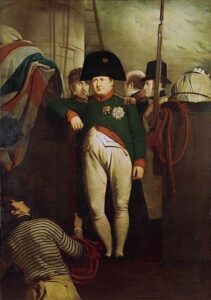
Probably the most accurate portrait of Napoleon at his surrender – the Plymouth artist Sir Charles Lock Eastlake was taken to the ship to create this shortly after the ship’s arrival


Captain Maitland was not alone in his apparent fascination. The former French emperor so charmed the ship’s Irish surgeon, Barry Edward O’Meara, that he accompanied Napoleon to St. Helena and became his physician there. After Napoleon’s death in 1821, O’Meara wrote Napoleon in Exile, or A voice from St. Helena in 1822. His allegations of mistreatment of the former emperor by his gaoler, Governor Hudson Lowe, caused a small sensation back in England as well as the rest of Europe.


Letters leaked to newspapers while Napoleon was still alive, about alleged deprivations such as insufficient firewood, caused an uproar among the very people who suffered throughout the Napoleonic Wars. The imprisoned dictator who’d wanted to conquer the world seemed to evoke romantic notions once he’d been exiled.

However, there were also many Britons who voiced strong opposing opinions, as evidenced by this letter published by The Times on July 26:

“What is to be done with him? Is he after all his crimes to be suffered to go unpunished; or in what way is he to be brought to justice?… He has, for a long succession of years, deluged Europe in blood, to gratify his own mad vanity, his insatiable and furious ambition. It is calculated, that every minute he has reigned, has cost the life of a human being…”

A lieutenant taking dispatches to London from Brixham spread the news while changing horses in Exeter. By the next day, the Bellerophon was surrounded by all manner of craft from local ports, and even further away, hired by people trying to catch a glimpse of Napoleon.

Officers going ashore from the ships were treated like celebrities. One Midshipman Home recalled he was asked questions like “Was he really a man? Were his hands and clothes all over blood when he came aboard. Was his voice like thunder? Could I possibly get them a sight of the monster?” The former emperor had been portrayed as the devil incarnate in stories and caricatures in the English papers for years.
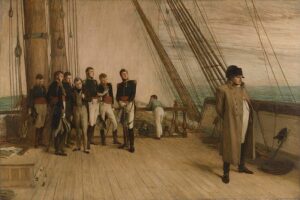
Another probably fairly accurate portrayal of him on his evening walk on deck with his loyal officers who followed him into exile – depicts Napoleon watching French shoreline recede – By Sir William Quiller Orchardson

The Admiralty decided the Bellerophon should be moved to Plymouth for extra security against any rescue attempt. On July 31, a letter arrived with the official decision of the British government – exile to St. Helena. The former emperor was to be transferred to the Northumberland, a ship the Admiralty deemed more sea-worthy for the long voyage. On August 4, the Bellerophon set sail from Plymouth along the south coast of Devon where it met the Northumberland off Start Point on August 6 for transfer of Napoleon and his entourage. The next day, he sailed toward his last exile.

After his final imprisonment, there was one cork-brained plan to smuggle him to Chile from St. Helena to try to re-conquer the world from there. That plan never materialized, due to Napoleon’s deteriorating health. An attempt to spirit him off the remote island by submarine was also cut off when British agents seized the invention whilst being tested in the Thames. The submarine, manufactured by Tom Johnson, the smuggler, was ostensibly to be towed all the way to St. Helena by a larger ship.

Sources:

“The War for all the Oceans” by Roy and Lesley Adkins

“Commander” by Stephen Taylor, a biography of Captain Edward Pellew

“Cochrane – Britannia’s Sea Wolf” by Donald Thomas

“The Command of the Ocean” by N.A.M. Rodger

“Narrative of the Surrender of Buonaparte and of his residence on Baord H.M.S. Bellerophon” by Captain F.L. Maitland, C.B.


AUTHOR – ANDREA K. STEIN

Andrea K. Stein is the daughter of a trucker and an artist. She grew up a scribbler. The stories just spilled out.

After writing and editing at newspapers for twenty-five years and then a short, boring stint as a consultant to commercial printers, she ran away to sea for three years to deliver yachts up and down the Caribbean.

She earned her USCG offshore captain’s license, but perversely, now writes romance set at sea while wrapped in sweaters and PJs in her writing room in Canon City, CO.

She has multiple published romance novels available on Amazon. Three of those titles have been honored with awards. “Secret Harbor” earned a first place in the Pikes Peak Writers Fiction Contest in the romance category; “Fortune’s Horizon” finaled in the Rocky Mountain Fiction Writers Romance category; and the latest novel, “Pride of Honor,” finaled in the national 2018 Beau Monde Royal Ascot Contest.


Book Three in The Men of the Squadron Series – PRIDE OF VALORDebuted on February 23, 2021. Visit your favorite purveyors of fine books and spend some time with the Men of the Squadron!
https://www.amazon.com/Pride-Honor-Men-Squadron-Book-ebook/dp/B084FTRVCZ/ref=sr_1_1?dchild=1&keywords=Andrea+K.+Stein&qid=1614982134&sr=8-1


https://www.amazon.com/Pride-Duty-Men-Squadron-Book-ebook/dp/B08HCHTT37/ref=sr_1_2?dchild=1&keywords=Andrea+K.+Stein&qid=1614982183&sr=8-2


https://www.amazon.com/Pride-Valor-Men-Squadron-Book-ebook/dp/B08PJSWZ9D/ref=sr_1_3?dchild=1&keywords=Andrea+K.+Stein&qid=1614982244&sr=8-3

John Singer Sargent – The British Portraits


John Singer Sargent, the son of an American doctor, was born in Florence in 1856. He studied painting in Italy and France and in 1884 caused a sensation at the Paris Salon with his painting of Madame Gautreau. Exhibited as Madame X, people complained that the painting was provocatively erotic.

The scandal persuaded Sargent to move to England and over the next few years established himself as the country’s leading portrait painter. Sargent had no assistants; he handled all the tasks, such as preparing his canvases, varnishing the painting, arranging for photography, shipping, and documentation. He commanded about $5,000 per portrait, or about $130,000 in current dollars. Following are portraits representative of Sargent’s prolific, and much prized, portraiture featurning British subjects.

Lady Agnew of Lochnaw
1892-93
National Gallery of Scotland, Edinburgh
In late 1892, Sargent began work on the portrait of Lady Agnew, commissioned by Andrew Noel Agnew, a barrister who had inherited the baronetcy and estates of Lochnaw in Galloway. The sitter was his young wife, Gertrude Vernon (1865-1932).


Hon. Victoria Stanley – 1899
Winifred, Duchess of Portland (Winifred Dallas-Yorke) – 1902

Countess of Warwick and Son (Frances Evelyn ‘Daisy’ Maynard) – 1905


The Countess of Essex – 1906


Theresa (‘Nellie’) Marchioness of Londonderry – 1912


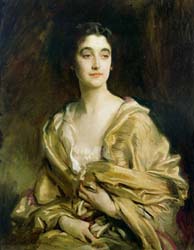
Sibyl Sasson-Countess of Rocksavage  (later Marchioness of Cholmondeley)  – 1913


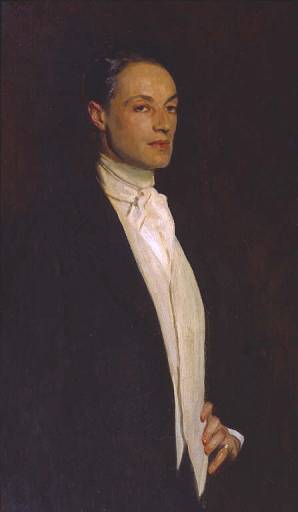
Sir Philip Sassoon – 1923 (Sybil’s brother)
Tate Gallery, London


Mrs. George Nathaniel Curzon (Grace Elvina, Marchioness Curzon of Kedleston) – 1925


The Hon. Lilian Maud Glen Coats, later Duchess of Wellington
For a complete online catalogue of the works of John Singer Sargent, click here.

London’s Notable Black Citizens by Guest Blogger Nina Davis

In light of the pop cultural phenomenon of Netflix’s Bridgerton series and its multicultural alternative reality take on the books, Kristine has graciously allowed me to revisit and update this article, originally published in 2011.

I once had a dream, as I devoured Regency romance after Regency romance in my college years. Or more accurately a question. Could I write a Regency with a heroine who was Black? It was born perhaps from being a child of the ‘70’s who remembered the momentous day she first saw a Black actor in a toothpaste ad, as though Madison Avenue had finally realized we used such products too. And also, perhaps, because of a seed planted by a college history class that spoke of Lord Dunmore’s promise to take slaves who fought the British back to England in victory, but never knowing whatever came of it.

The research began telling its own stories. Of Queen Elizabeth I’s unenforceable decree to remove “blackamoors” from England to ease the burden of the poor on the country. Of Black courtiers taken from Portuguese vessels in King James IV Scottish court, including the Black Lady of the Tournament of the Black Knight and Lady. How Lord Dunmore’s promise indeed landed many Black soldiers, not unlike other soldiers without family returning from war, into London’s poorer streets. Of African princes educated at university, of Ignatius Sancho, a shopkeeper who left behind his own unique vision of England’s middling class. Of the blurring of free Black and slave within England itself, highlighted by the tales of Mary Hylas, stolen from her husband because her former masters changed their minds about her freedom, and the famous Somerset Case, a cornerstone in the fight to abolish slavery, presided over by James Murray, Lord Mansfield and Chief Justice. Of Lord Mansfield’s own unique brush with race within his household. Of a queen whose reflection buoyed a cause and spoke to how intertwined we all truly are.

So began an eternal obsession with all things Black in Britain (and in other parts of Europe for that matter). I claim not so much to be an expert as an enthusiast, but like all enthusiasts I can’t help but to talk a bit about a favored subject, one to underscore why I like keeping the idea of Black History Month, and not trying to relegate it to African-American History Month or dismiss it altogether, because there’s so much more to the story than ever happened on American shores.

Many books have been written on the history, the social mores: a fascinating blend of class and race that resembled more 20th-century America’s struggles than the oversimplified, misapplied stereotype of a pre- and post-antebellum South. Far more than one could squeeze into a single blog. So I’ll spotlight some notable men and women, focusing on the Georgian and Victorian eras. A list of books follows for those who may want to indulge their own curiosity further.

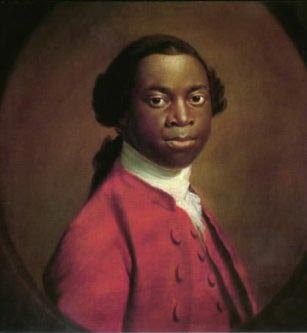
Olaudah Equiano, c. 1745-1797, Anti-slavery Activist

Kidnapped from what is now Nigeria and sold into slavery in childhood, he was a slave to a Royal Navy captain and a Quaker merchant before earning the price of his own freedom.  He then traveled the world, including in an aborted attempt to reach the North Pole. Coming to London, he became involved in the abolitionist movement which led to his writing and publishing his famous autobiography, The Interesting Narrative of the Life of Olaudah Equiano, or Gustavus Vassa the African (1789), considered to be the first known English account by an African on his native country.

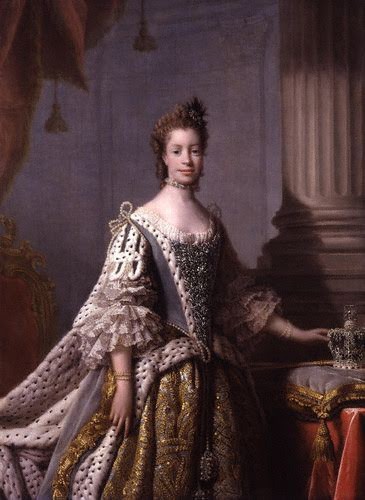
Queen Charlotte Sophia, 1738-1820, Consort of King George III

Her Majesty was not Black in the sense of self-identity, or of one being born of direct or closely mixed heritage. Her ancestry is still debated. Commonly her ancestor, Margarita de Castro e Sousa of Portugal, is identified as the reason for Queen Charlotte’s appearance. Multiple family lines can be traced between the queen and Margarita, who was of Moorish or Mozarabic descent, with the idea that extensive inbreeding among noble houses led to Charlotte’s unexpected appearance. Both of those ethnic religious groups include Berbers, who are native to a broad area of North and West Africa. As for the term “Moor,” by the 1500s, it was used to mean Muslims or anyone with dark skin, though sometimes “blackamoor” and “White Moor” were used to distinguish between the two.

What is documented is that the queen’s “negroid” or “mulatto” features were remarked upon by her contemporaries — including her personal physician —  and likely used as a symbol by some in the anti-slavery movement. Sir Allan Ramsay, an abolitionist himself, was the artist responsible for the majority of her portraits and his representations of her were the most decidedly African. He also married the niece of Lord Mansfield and was therefore related by marriage to Dido Elizabeth Belle.

The queen was a patron of the arts, supporting Bach and Mozart, and an avid amateur botanist, taking great interest in expanding what became Kew Gardens.

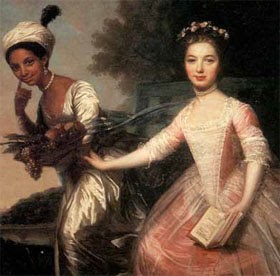
Dido Elizabeth Belle, aka Elizabeth Lindsay, Daughter of Gentry, c. 1763-1804

In 1772, William Murray, 1st Earl of Mansfield and Chief Justice, ruled in the Somerset case that slavery in England had “no binding in law.”  It did not abolish slavery in England but made it illegal to remove a slave from England against that person’s will. No record exists of what Dido thought of her great-uncle’s landmark slave case. But surely some of the ramifications crossed her mind as she went about tending the chickens and what other genteel chores were hers in Kenwood, his country estate.

She was born of a West Indian slave, Maria Bell, later spelled “Belle,” and Captain Sir John Lindsay of the Royal Navy, Mansfield’s nephew. Her very existence in Mansfield’s home became a prism of attitudes of the day. Some merely noted her presence. American visitors remarked in surprise when she joined the family after dinner. Scholars have argued whether she was tolerated or beloved family. It was ironic that her great-uncle felt the need to reiterate her status as a free woman in his will, in which he also left her £500 plus £100 per year. This in addition to the £1000 her father had left her in his will.

In 1793, she married John Davinier, a steward, or senior servant, likely of a friend of the Murray household.

George Augustus Polgreen Bridgetower, Violinist, c. 1779-c. 1840

Born in east Poland, Bridgetower debuted in Pairs at the age of nine, playing a violin concerto by Giornovichi. Soon after he was taken to England by his father and performed in concert. However, many in Society felt the senior Bridgetower mistreated his son, and in 1791, the Prince of Wales (later George IV) paid the father to leave the country. From that point, Bridgetower was under royal protection. For 14 years he was first violinist in the prince’s private band. He became friends with Ludwig van Beethoven in 1803 while on concert tour in Austria. He accompanied Beethoven in the first public performance of Violin Sonata no. 9, later known as the Kreutzer Sonata, having never seen the piece before. It was originally dedicated to Bridgetower — the Sonata Mulattica — but the dedication was changed after the two quarreled. He was elected to the Royal Society of Musicians in 1807 and would later perform with the London Philharmonic Orchestra.

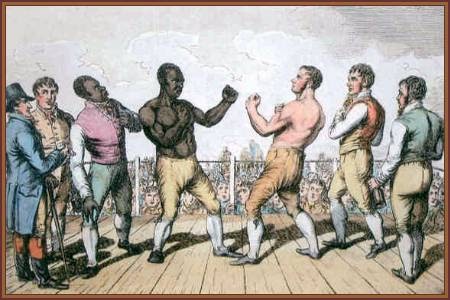
Tom Molineux (or Molyneux), 1784-1818, Renowned Boxer

The first American to fight for the London Prize Ring championship, Molineux was a slave who was reportedly given his freedom after winning a match on which his owner had placed a large bet. He sailed to England in 1809 to become a professional prize fighter. In London, he met another Black American, Bill Richmond, a former boxer who became his trainer. He fought his way up the ranks, eventually meeting the British champion, Tom Cribb, on December 18, 1810. He seemed to be winning handily, and in the 23rd round he apparently knocked out Cribb. However, Cribb’s corner claimed he had been fouled, and the long argument that ensued gave the champion a chance to regain his senses. Cribb eventually won by knockout in the 33rd round. It was later discovered at one point in the 30th round that Molineux had fractured his skull.

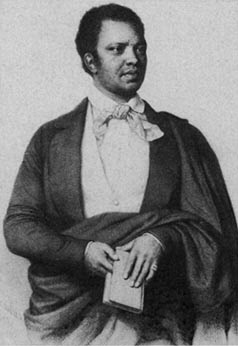
Ida Frederick Aldridge, Shakespearean Actor, 1805-1867

Born in New York City, Aldridge moved to England in the 1820’s and studied acting. Despite setbacks early in his career in London due to racism, he became famous across Europe for his leading roles in Shakespearean plays including King Lear, Macbeth and Othello (pictured). He returned from his European tours so loaded with honor even the London West End stage could no longer exclude him and he finally played the famed Lyceum. In 1858, Aldridge became the first actor to be knighted when he was bestowed the Royal Ernestinischen House Order by Duke Bernhard of Saxe-Meiningen (now part of Germany) becoming Chevalier Ira Aldridge, Knight of Saxony.

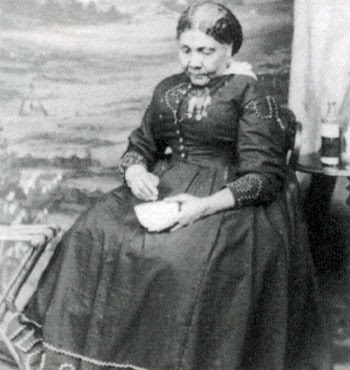
Mary Seacole, 1805-1881, “the Black Florence Nightingale”

A native of Kingston, Jamaica, she learned her nursing skills from her mother who kept a boarding house for invalid soldiers and from trips with her husband to mainland America and England.  In 1854, she asked the English war office to be sent as an army nurse to Crimea. Because of her ethnicity she was refused.  Undaunted, she funded her own trip to Crimea where she established the British Hotel, an officers’ convalescent hospital, near Balaklava. On the battlefield she nursed the wounded and was known as “Mother Seacole.”

Further Reading

Black Africans in Renaissance Europe, edited by T. F. Earle, K. J. P. Lowe, 2010 reissue.

Black Victorians/Black Victoriana, edited by Gretchen Holbrook Gerzina, 2003.

Britain’s Black Past, edited by Gretchen H. Gerzina, 2020.

Freyer, Peter. Staying power: the history of Black people in Britain, 1984, fifth printing 1991.

Gerzina, Gretchen. Black England: Life Before Emancipation, 1995. Also published as Black London.

Kaufman, Miranda. Black Tudors, 2018.

Lorimer, Douglas A. Color, Class and the Victorians, 1978.

Scobie, Edward. Black Britannia, 1972.

Walvin, James. Black and White: The Negro in English Society, 1555-1945, 1973.


The Wellington Connection – Beer

Once upon a time in England, an alehouse/tavern licence was very expensive and was based upon the size of the premises. Many who sought to open such an enterprise were financially prohibited from doing so until the Duke of Wellington’s Beer House Act of 1830 changed the playing field dramatically. The Act reduced the licence fee to two guineas, permitting the sale of beer and cider only. The main object of the Act was to reduce the consumption of spirits, such as gin and other strong liquors.

As the website Exeter Memories tells us: “During the 18th-century, the production and consumption of gin exploded, especially amongst the poor, causing violence and misery for many. Government attempts to prohibit the production of gin with the Gin Act of 1736 had little effect. Distilling changed from straight gin to “medicinal” spirits to circumvent the Act, and fanciful names such as Cuckold’s Comfort and My Lady’s Eye Water were used to describe the new drinks.

“The introduction of the Beer House Act of 1830 tried a different approach to reducing gin consumption and hence, public drunkenness. Anyone, on payment of 2 guineas to a magistrate could obtain a license to open a beer house. Permission was only granted for six days a week, with Sundays excepted. Only beer and cider could be sold.

“The result was a huge growth of beer houses and beer sellers, many from the front rooms of terrace houses and cottages. Another provision of the act was that existing taverns, inns and pubs could also brew their own beer on the premises. This had a knock effect, for there was a growth of demand for hops and barley for malting, thus bringing a new market for many farmers. Within eight years of the act being passed, 46,000 beer houses were opened, almost equalling the number of existing, pubs, taverns and inns.”

Midlands Pubs picks up the story from there – “Following the 1830 Act, beer production went through the roof. Large common brewers engaged travelling sales people to find new trading locations. These agents actively encouraged householders to open up a part of their property, usually the front parlour, in order to sell beer. They even offered to pay the two guinea licence on their behalf and would offer credit terms to their clients.

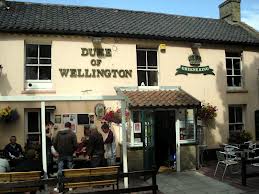
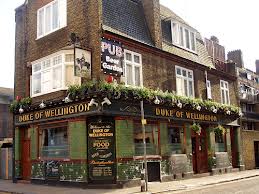
“Many of the new beer houses throughout the land named their pubs in honour of the Iron Duke. Their pub signs tended to display Wellington in his military roles and often celebrated his battle achievements that had captured the imagination of the public. However, more often than not, the new publicans were showing appreciation to the man who had helped them set up in business. Not all houses bought their beers from common brewers. Some chose to brew themselves whilst others employed a travelling brewer who would go from pub to pub producing the house ales.
“Naturally, some beer houses were more successful than others. Those who gained a reputation for their ales enjoyed good trade. The licensee would often use the profits to buy the neighbouring cottage into which the family would move whilst the existing house was expanded. Indeed, there are some pubs that have expanded into a full row of a terrace, the rooms being used as separate bar, parlour, smoke room, lounge and family room. The early beer house movement was all very laissez-faire.
“Although many beer houses were eradicated under later legislation, many survived and evolved into fully licensed premises. Accordingly, in addition to beer and cider, they were allowed to sell wines and spirits. 1869 was a key cut-off point, after which it was not so easy to obtain a full licence. Indeed, the 1869 Wine and Beerhouse Act was designed to curtail the number of pubs that were opening around the country. However, pubs that had obtained licences before this date did have a degree of protection in terms of magisterial control.
“Many houses that did not obtain a full licence managed to continue in business providing that the house conformed to all legislation and was kept orderly. These continued to simply sell beer and cider. For example, by 1890 almost half of Birmingham’s 2,178 public houses were beer houses. In fact, beer houses continued up until the 1950’s when finally a full licence was granted to those that had survived.”
The Duke of Wellington . . . what a guy!

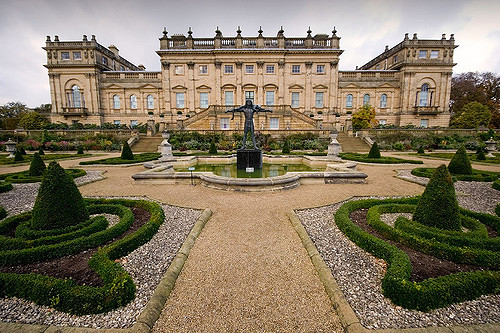
THE TREASURE HOUSES OF ENGLAND – HAREWOOD HOUSE

Harewood House

There are ten stately homes that have been designated as “The Treasure Houses of England,” and three of them are included on our 2021 Country House Tour – Harewood House, Castle Howard and Chatsworth House.

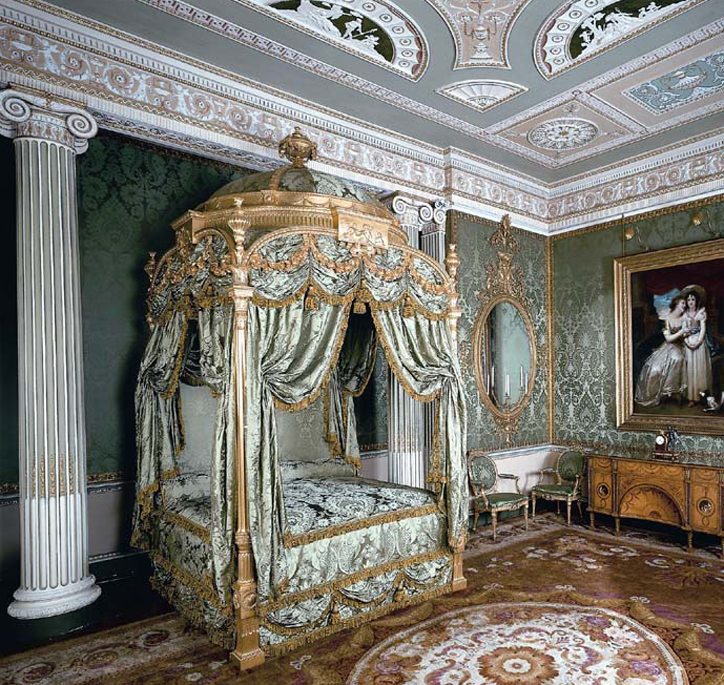
Edwin Lascelles, 1st Baron Harewood, started building Harewood House in 1759, selecting Robert Adam as architect who, in turn, selected Thomas Chippendale as his furniture maker. This illustrious foundation was built upon once the house was completed, with the Baron filling it’s rooms with only the best. In addition to housing the single best collection of Chippendale furnishings in the UK, Harewood House also boasts a stellar porcelain collection, including many Sèvres pieces once belonging to the French royal family.

The State Bedroom


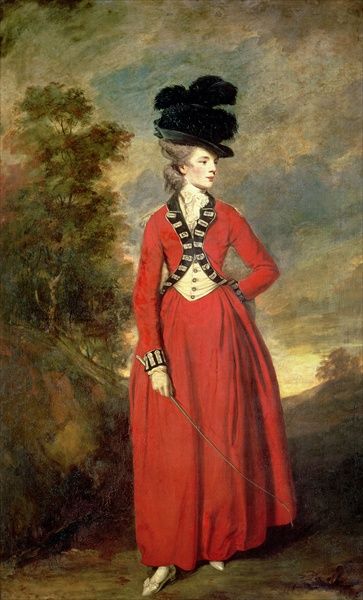
The art on display at Harewood House includes works by Turner, Gainesborough, Lawrence, Titian, El Greco and many other masters, but this may be the most famous, and most recognizable, painting in the collection –

Lady Worsley by Sir Joshua Reynolds

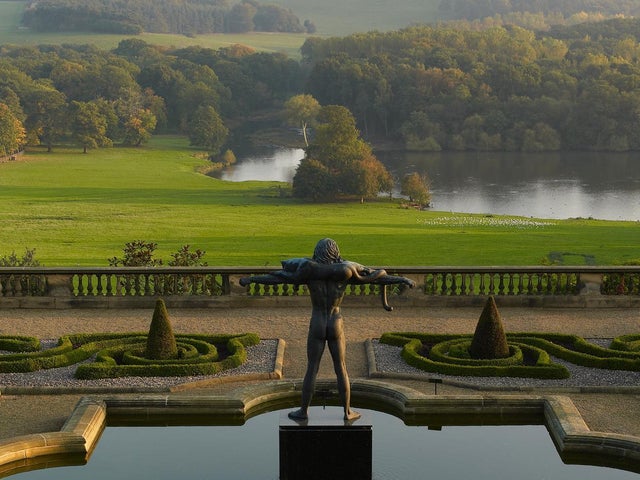
Outside, Harewood House is surrounded by 100 acres of gardens set amidst a landscape created by Capability Brown, who may or may not be surprised to learn that Harewood now has a Bird Garden featuring 80 species of exotic and endangered birds.

Click here to watch a video featuring the highlights of Harewood House.