
George Gordon Byron, 6th Baron Byron, later George Gordon Noel, 6th Baron Byron, FRS
22 January 1788 – 19 April 1824
by Louisa Cornell
Anyone who reads our blog knows I write Regency romance. I met Mr. Darcy at the age of nine and I have been writing my own version of him ever since. Because of my love of all things British – especially British history – I strive to make certain my Regency romances are as true to the era as possible. Without reading like a history book on steroids. The romance is always first, but it is possible to write a historical romance with historical accuracy and simmering passion.
I read Regency romance voraciously – good, bad, and unfortunately, some ugly. And I realize my tastes in Regency romance will not be everyone’s tastes. Regency romance can be written without a great deal of historical information included in the story. I’ve seen it done, and some of it is done quite well. Conversely, I’ve seen Regency romance written with heavy historical content that had even me nodding off. Balance is probably the best a writer of Regency romance can strive to achieve. In order to know how much or how little historical background and information to include, a writer must have a great grasp of what they know and an even greater grasp of what they do not.
I will confess I have read some historical romance that made me wonder if the author simply woke up one day and said :
I think I’ll write a Regency romance!
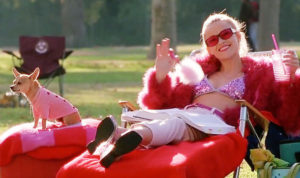
Rather like I would get up one morning and say :
“I think I’ll take up downhill skiing!”

Now before all of those aspiring, new or even established Regency romance authors panic – I do not think every Regency romance author should camp out somewhere like this –
 – never to be seen again.
And Regency romance authors shouldn’t look like this –

And spend all of their time and money on this.

However…
There are certain things I find in the Regency romances I read, some by new authors and some by long-established authors, that make me cringe. And after reading some of these blatant historical errors I am fairly certain I felt a tremor in the earth that was Jane Austen rolling over in her grave. Of course, it was slightly easier for her to write Regency romance. Our Regency romance was her contemporary romance. No problem. Writing her style of Regency romance as our contemporary romance. BIG PROBLEM !!
So…
In the interest of offering some tips to authors who do not want to spend their entire lives reading every book written about every aspect of the Regency era, (No, I haven’t done that, but I’m not dead yet.) I will be posting some brief reviews of books in my considerable Regency Romance Library here at Number One London from time to time. I will try to group these books by topic.
Caution!
I have been told that my book reviews have caused some people to fall into the same horrid addiction from which I suffer. This affliction may necessitate hiding your credit cards, avoiding all bookstores – online and off – especially those that specialize in old books and history books. And should your spouse discover my role in your sudden Regency research book fetish, I will deny everything!
PROJECT REGENCY ROMANCE – REGENCY LONDON
The London Rich : The Creation of a Great City from 1666 to the Present
Peter Thorold
This is an excellent reference should one want to know where to situate a character’s home or where to situate a lunatic asylum or a children’s home or any number of institutions. After the Great Fire in 1666, London rebuilt and expanded. This book follows the migration of London’s wealthiest citizens, the establishment of exclusive neighborhoods around certain squares and the construction of stately homes within the boundaries of what eventually became the entire city of London. And as is the nature of the wealthy, once the city and lesser mortals began to encroach upon a neighborhood the wealthy picked up and moved to establish their elite conclaves somewhere else. This is a study of class differences in 17th through 20th century London, but for the most part in the context of the architecture and city planning aspects of class distinction. The maps and illustrations – color and black and white photographs – are beautiful and very informative. Also of great value is the author’s research into what happened to the beautiful homes – town houses and town mansions – once the wealthiest Londoners moved on. There is also great information on how the iconic Regency neighborhoods – Grosvenor Square, Berkeley Square – and others came to be. Hardbound copies can be had for very little and it is definitely a worthwhile addition to any Regency Research Library. You can buy the book here.
The Years of Grandeur -The Story of Mayfair
Mary Cathcart-Borer
A beautifully written history of that most hallowed of Regency era neighborhoods – Mayfair. The author traces the evolution of the area from a little village within the confines of London to the most prestigious address in England, especially from the late eighteenth through the mid-nineteenth centuries. She divides the book into chapters on the most well-known landmarks and divisions of the area, which makes it a very useful resource for a Regency romance author. There are wonderful illustrations and maps. Making use of diaries, journals, newspaper articles, and documents from city planning the author creates an intimate picture of this elite section of London – how it was created, why, the evolution in prestige of the different addresses even within Mayfair. Most valuable, I believe, is the power of these pages to pull the reader into the atmosphere and character of Mayfair. Writing about it is far easier once you learn the living, breathing air of what Mayfair was during the Georgian era and how it acquired that character. Hardbound copies can be had fairly cheaply here.
Down and Out in Eighteenth-Century London
Tim Hitchcock
Its title denotes its concentration on the 18th century, the century leading into the Regency. However, much of the information in this book applies to the Regency era in that a great deal of what the book covers still existed during the Regency and indeed was cause and catalyst for much of life in Regency era London. At turns heartbreaking, shocking, comical, and horrifying – this book covers the lives of the “other side” of London. The author explores the lives of the match sellers, the sweeps, the tavern maids, and all of those eking out a living in the numerous poverty-stricken neighborhoods of London. It is an intriguing read and replete with ideas for minor characters, period flavor, and most of all – a great understanding of what life was like for the majority of London’s citizens from the eighteenth century going into the Regency era. Used hardbound copies are a bit pricey, but still fairly reasonably priced – click here.
by Victoria Hinshaw
What is more magnificent than Chatsworth House? How about a fashion exhibition of clothing shown in the very rooms in which they were worn?
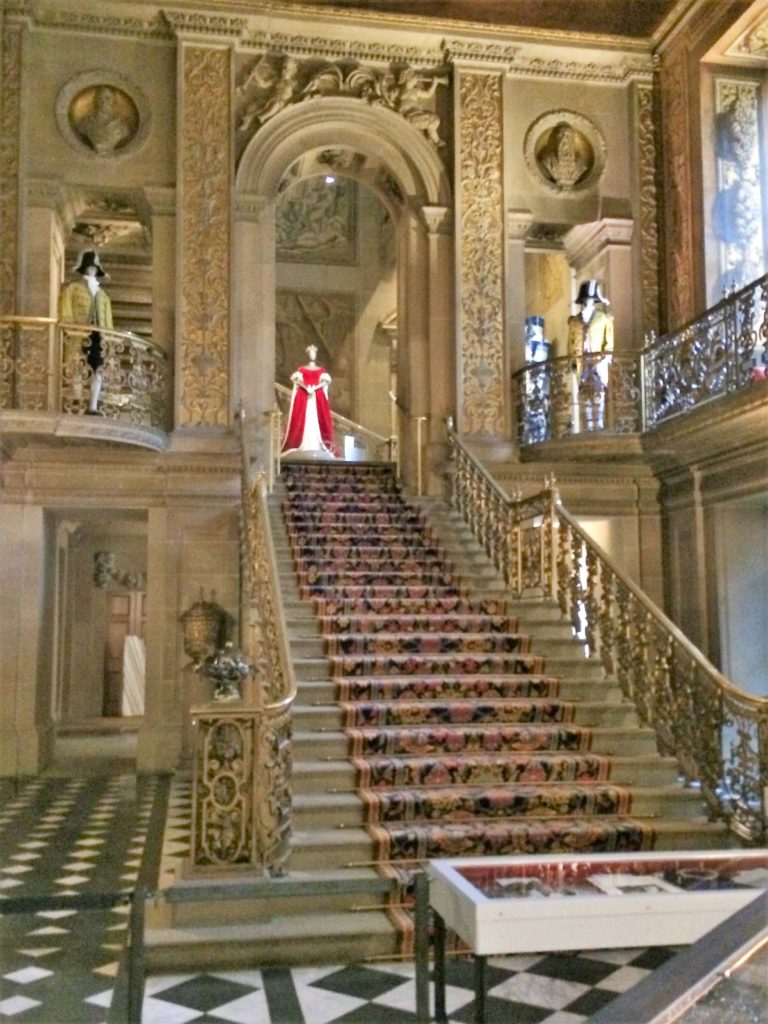
The exhibition House Style: Five Centuries of Fashion at Chatsworth was on show and we felt really fortunate to see all these wonderful garments long stored away, in most cases.
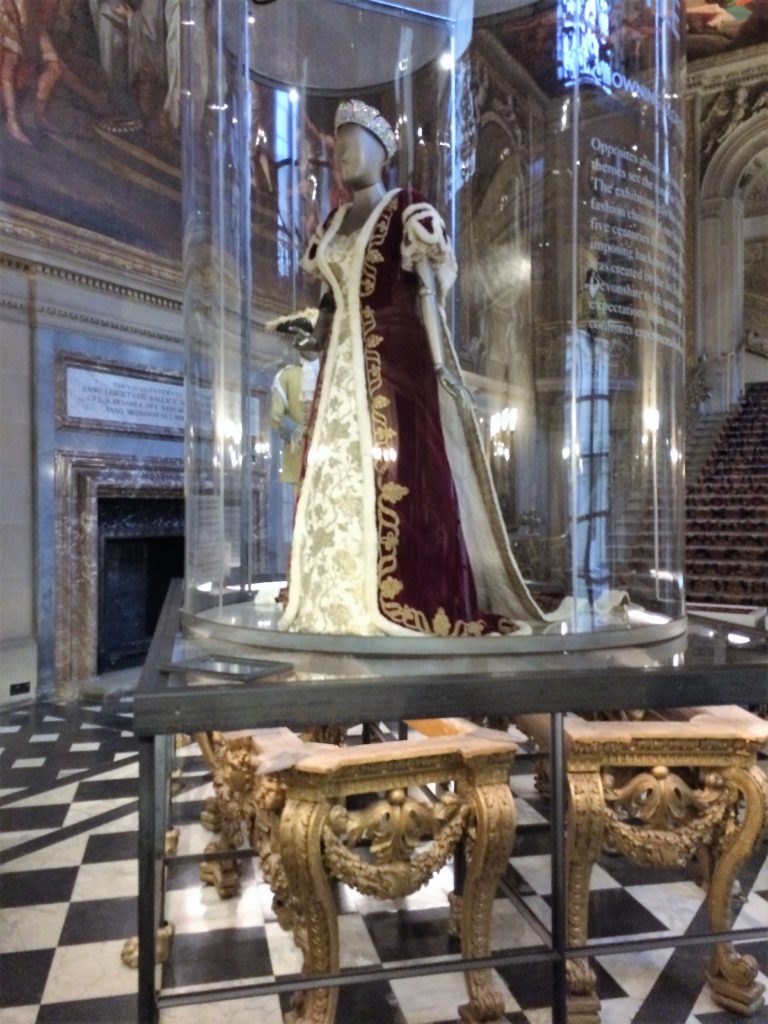
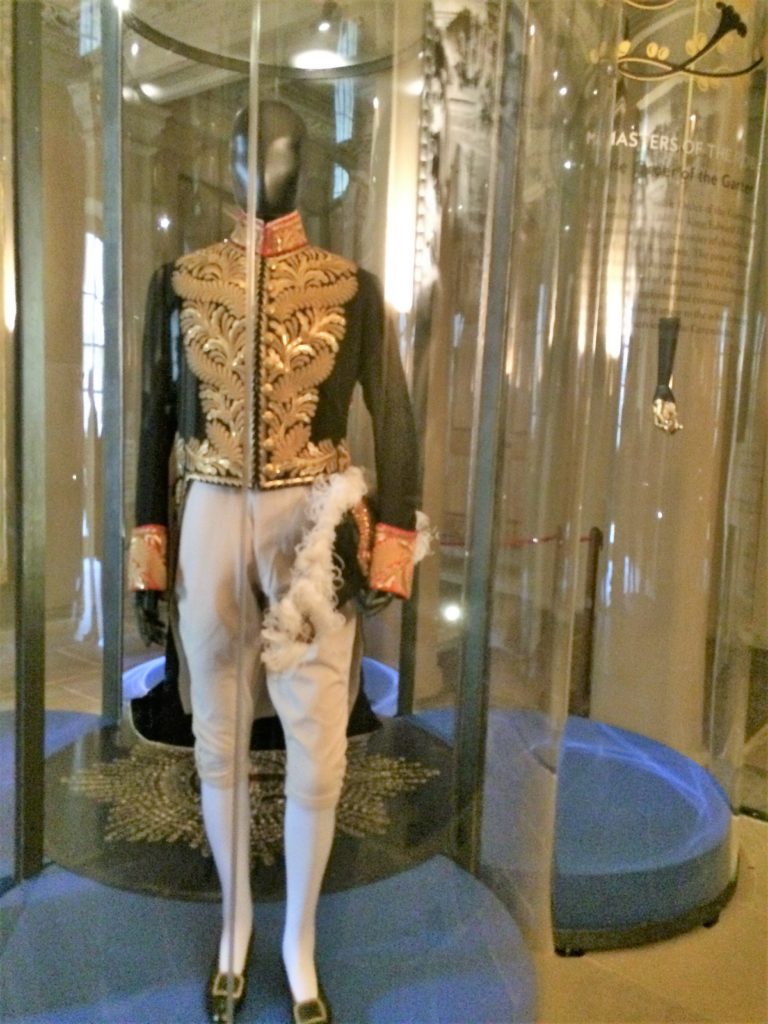
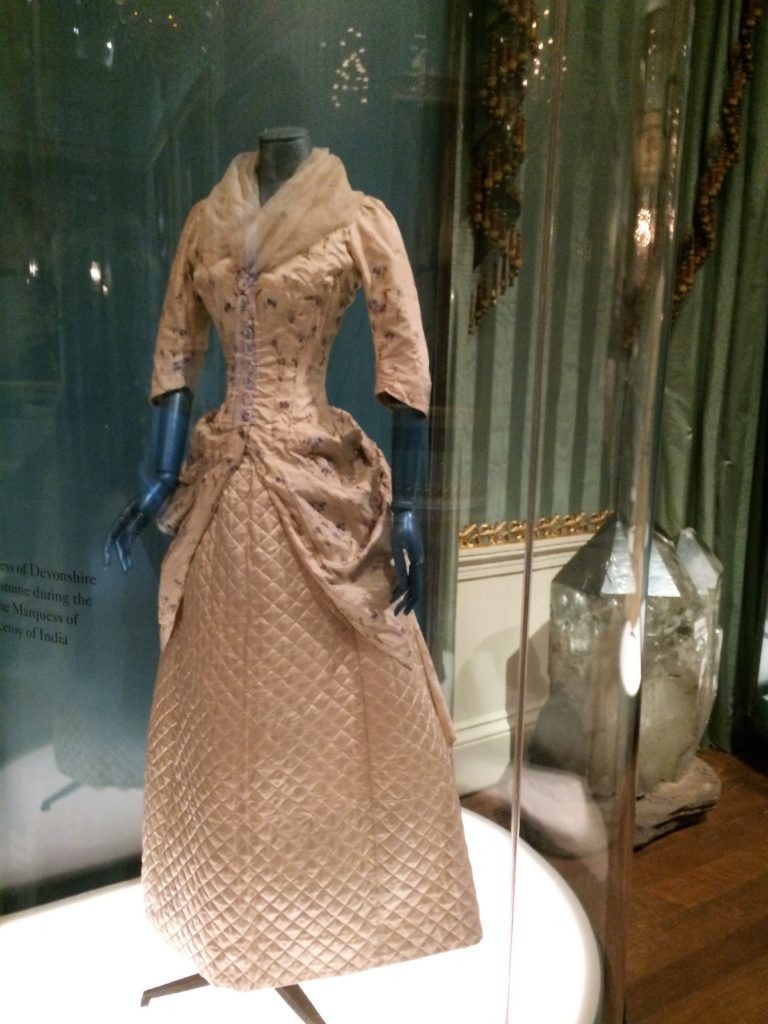
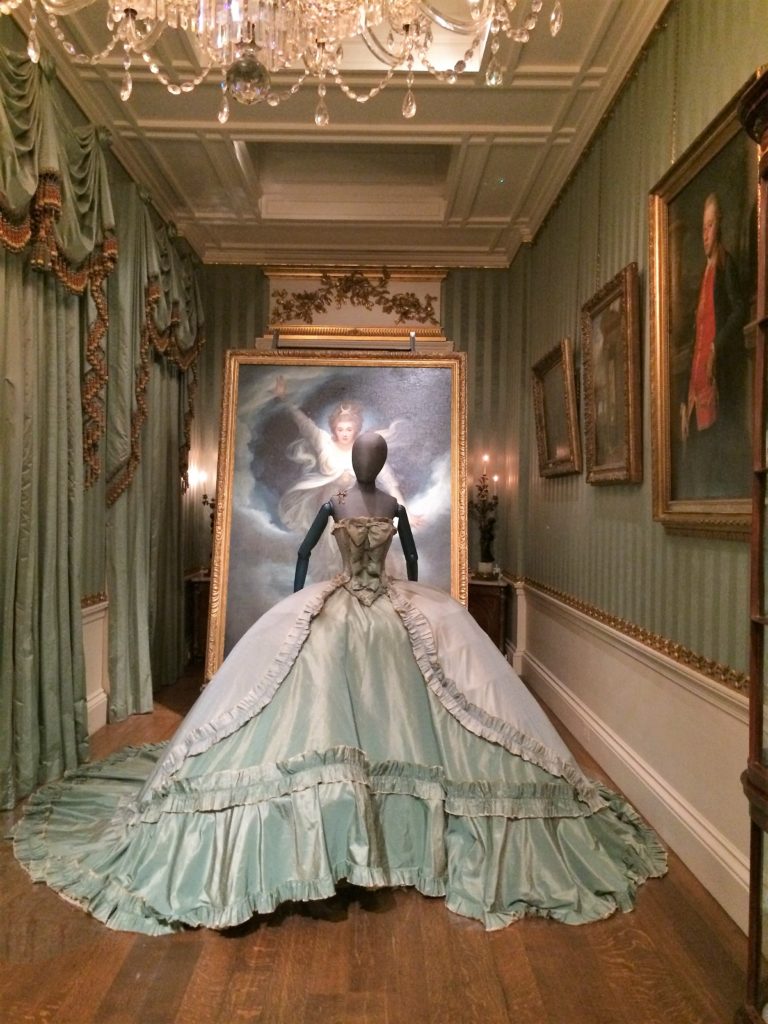
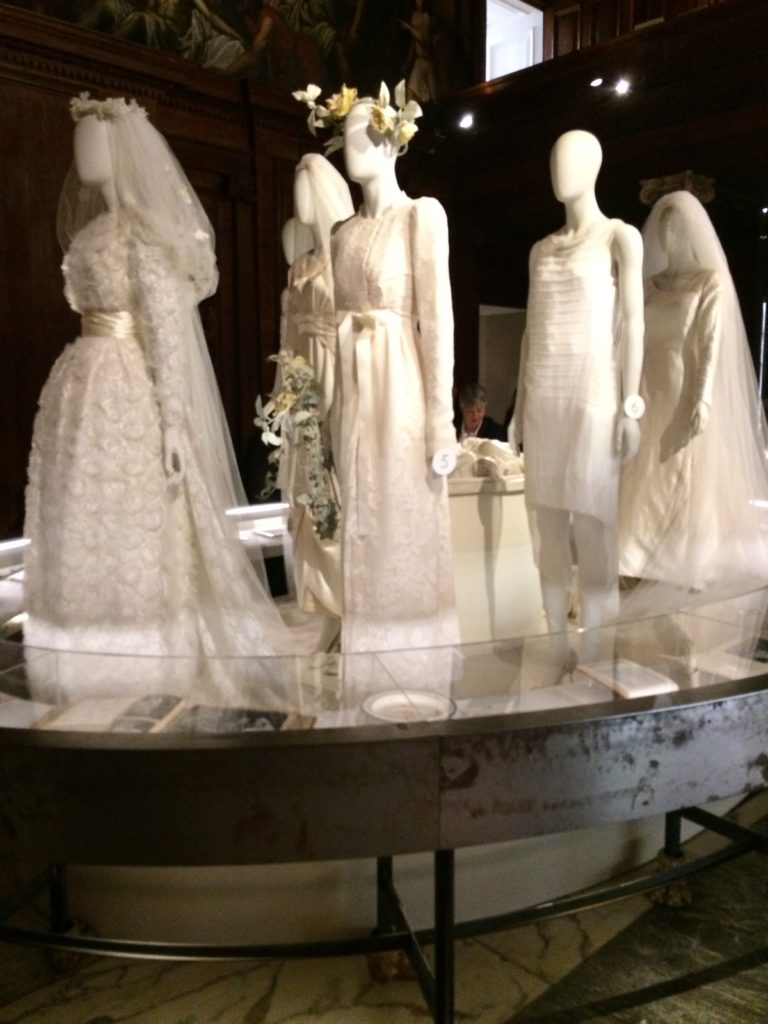
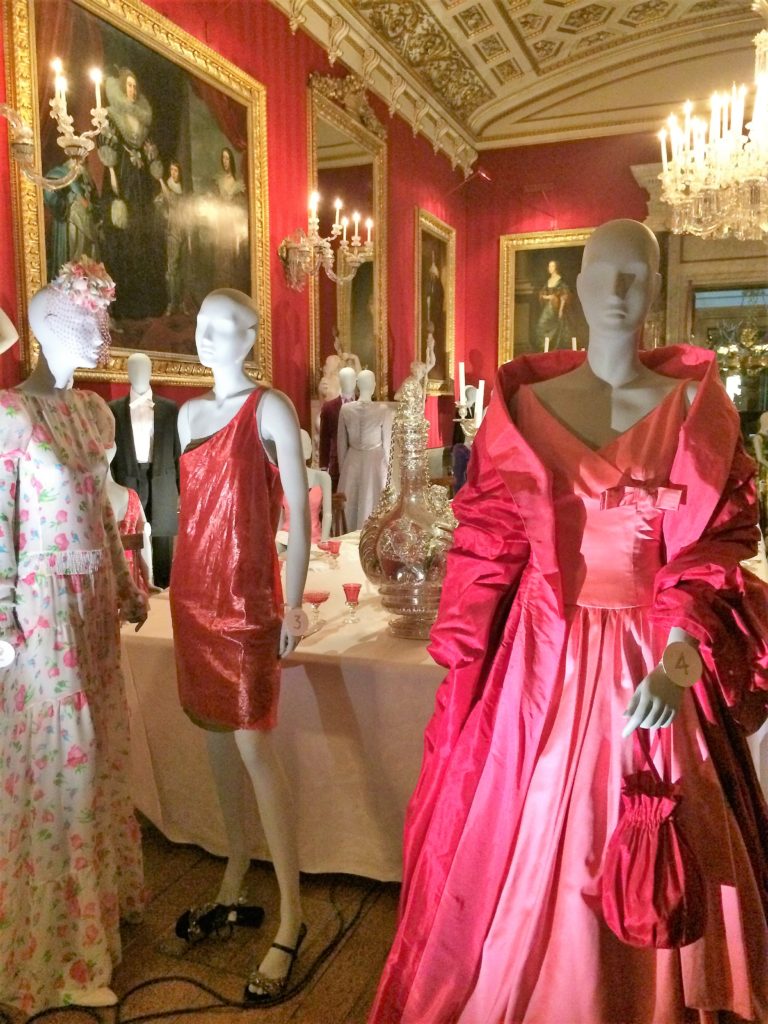
Many other treasures are permanently on display at Chatsworth, not to mention the art, gardens, restaurants and shops which delighted us.
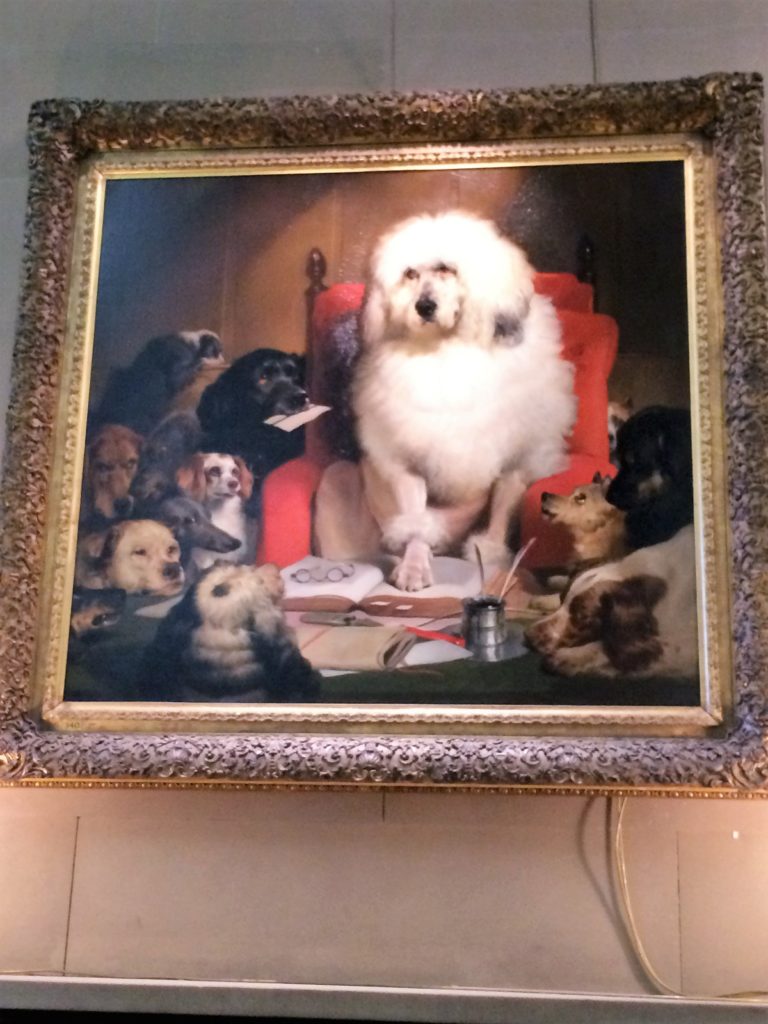
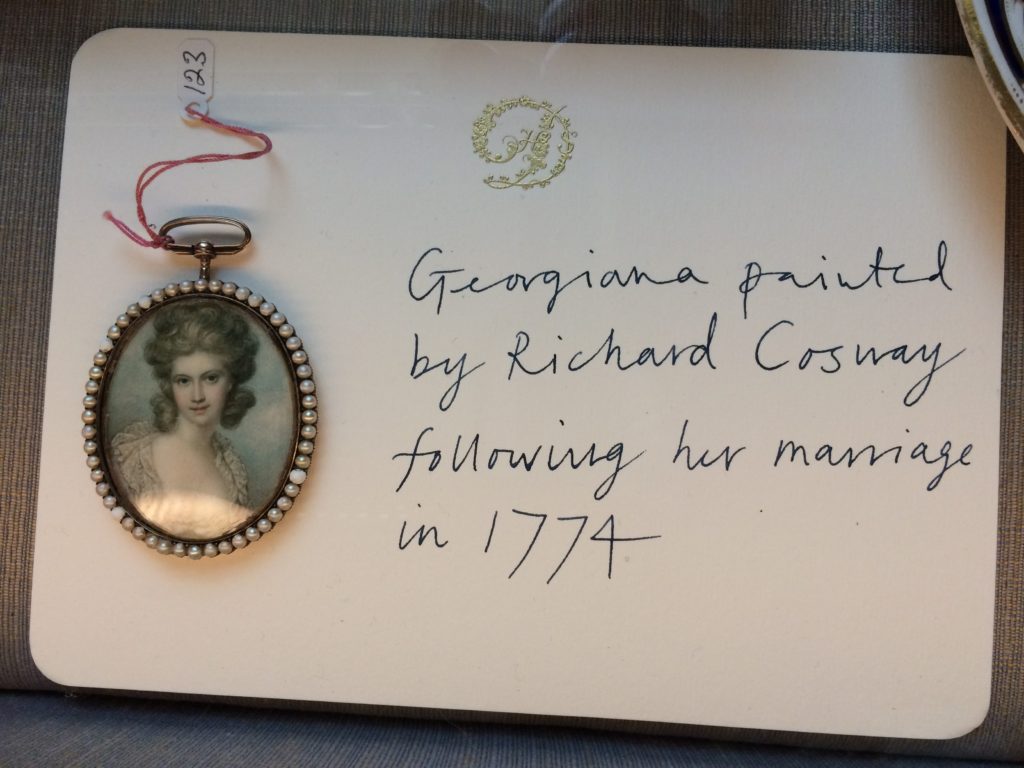
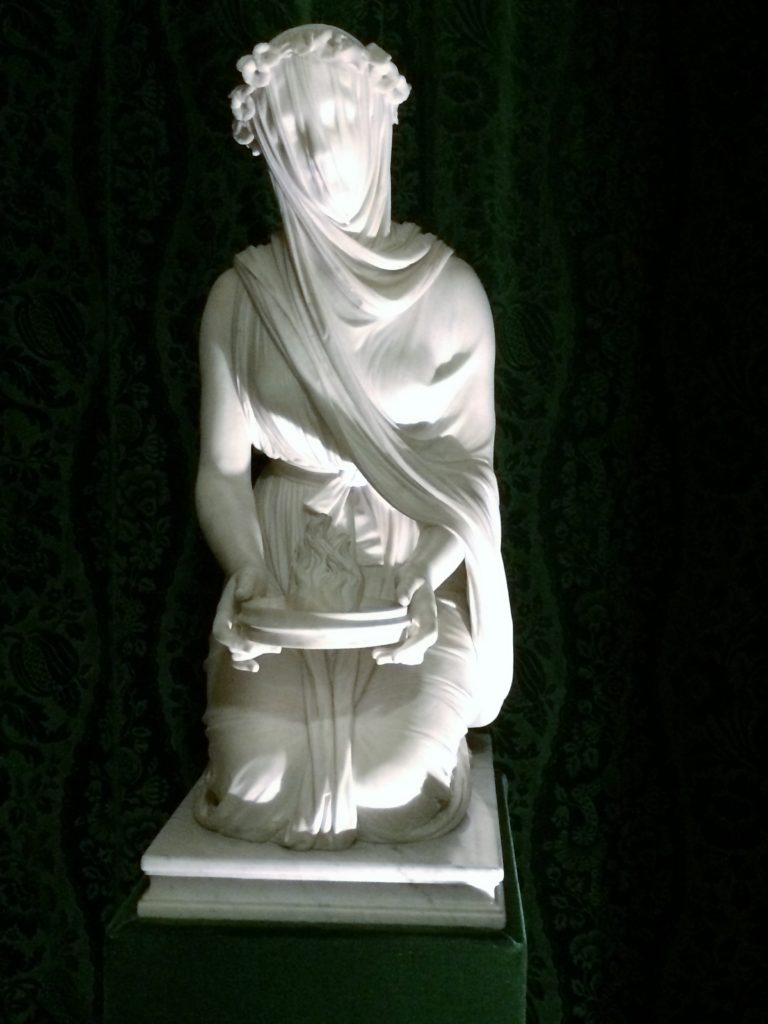
The Cavendish family and Dukes of Devonshire descended from the marvelous Elizabethan lady known as Bess of Hardwick. At age 70, after surviving four husbands (Cavendish was #2), and assisting her fourth husband, the Earl of Shrewsbery, in holding Mary Queen of Scots under house arrest for many years, Bess built herself one of the finest “prodigy” houses of the age.
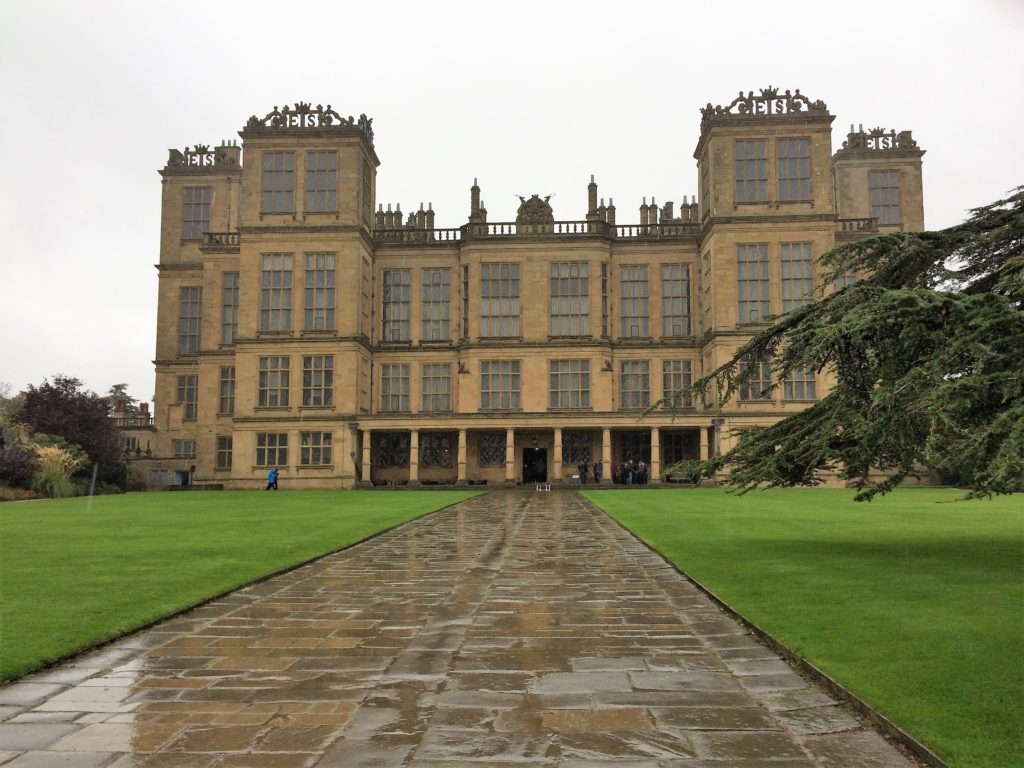
Architect Robert Smythson designed Hardwick, one of England’s earliest structures in the Renaissance style. Bess chose the sight on a high hill next to the Old Hall, which is partially in ruins today.
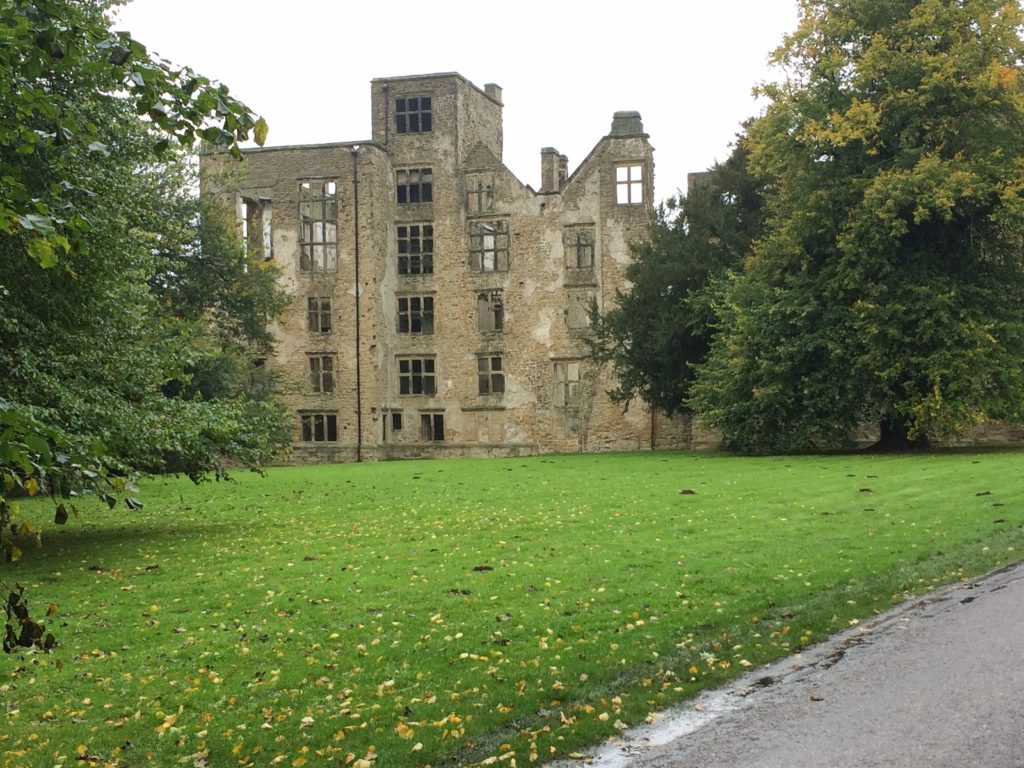
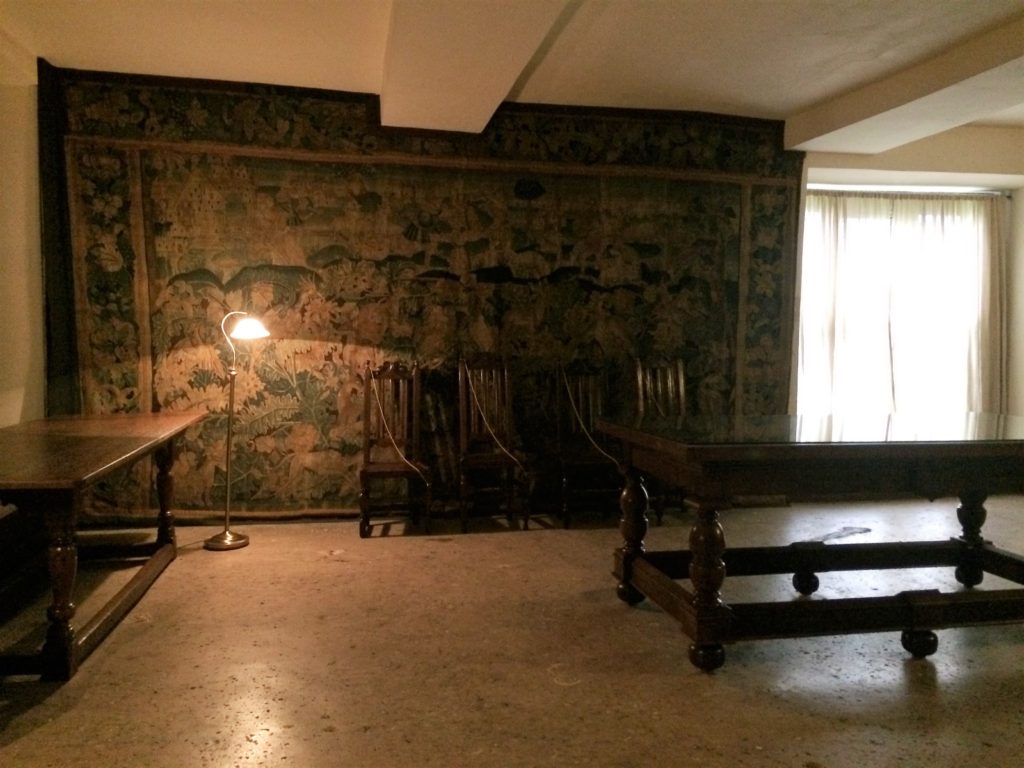
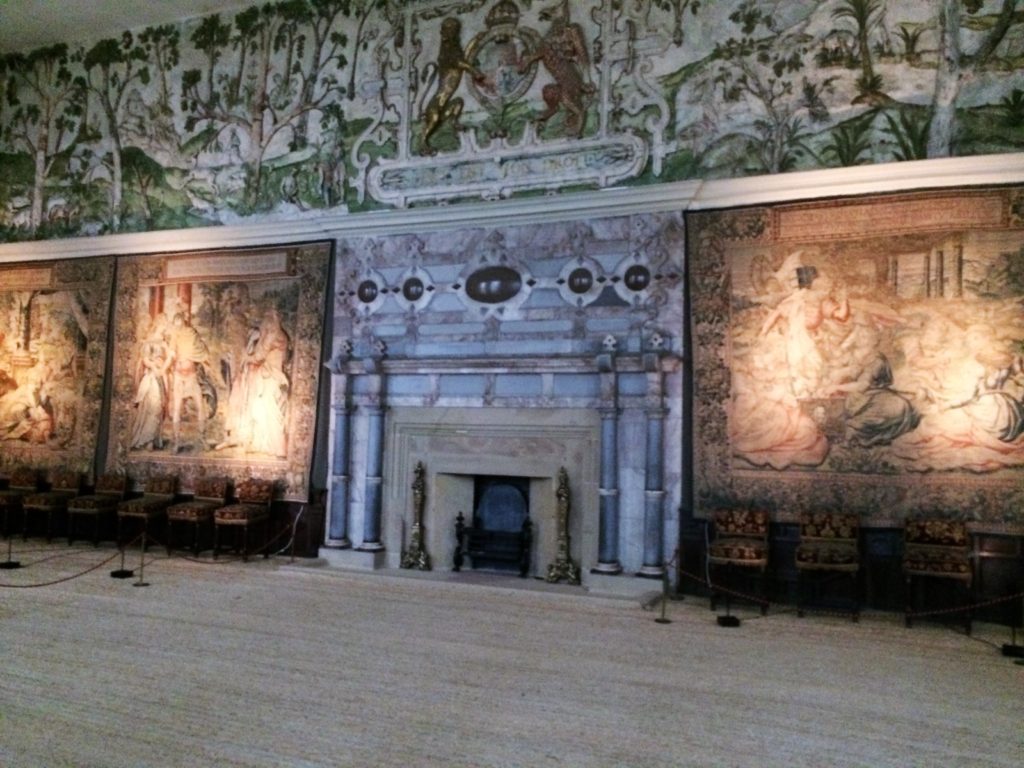
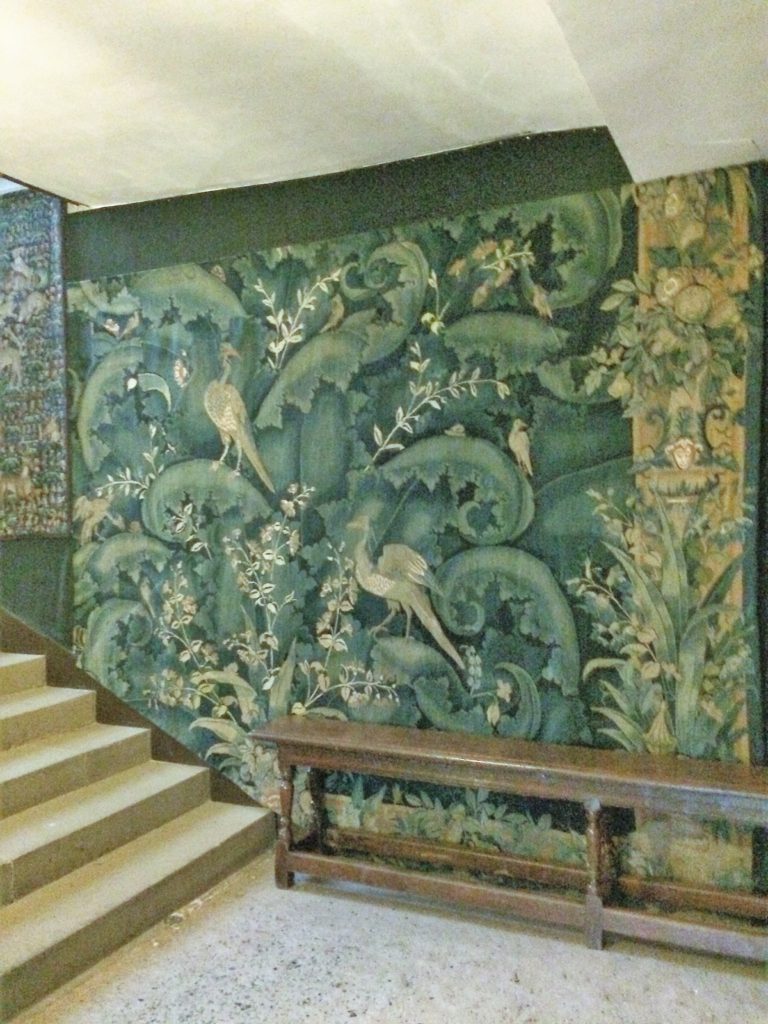
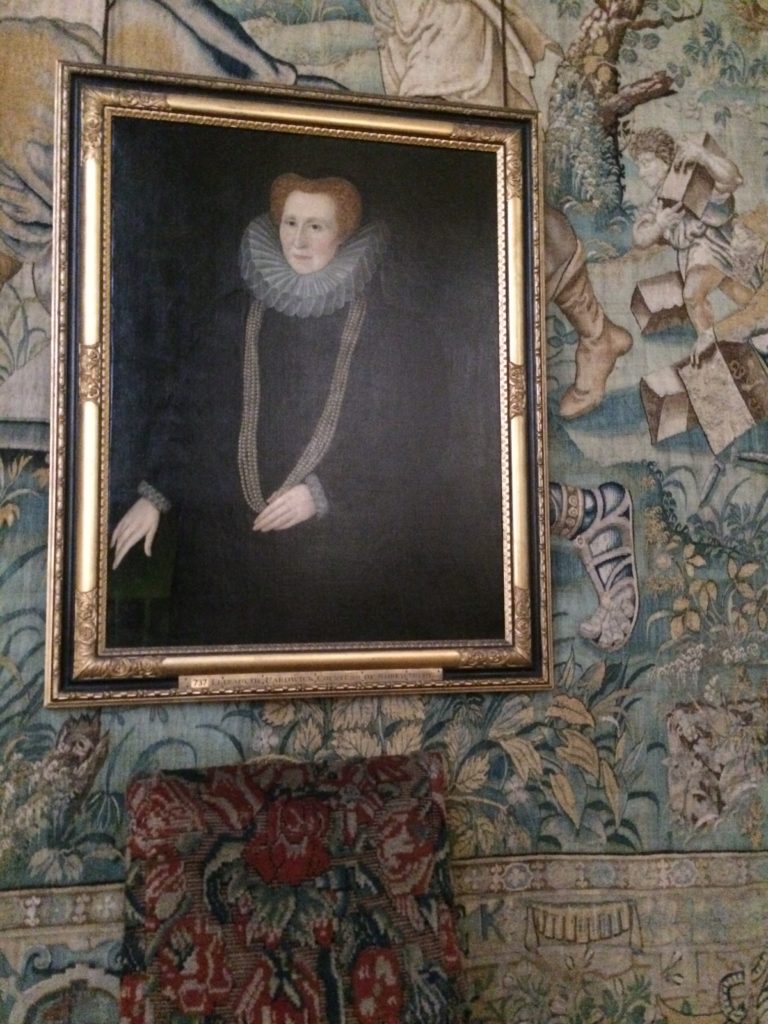
Huge windows bring light into the rooms, astonishing her contemporaries. Despite her age of 70 years, Bess lived here for about ten years, dying in 1608. The property was left to her son William Cavendish, 2nd Earl of Devonshire. Among the treasures in the house are fine portraits and excellent tapestries, shown under reduced illumination for their protection.
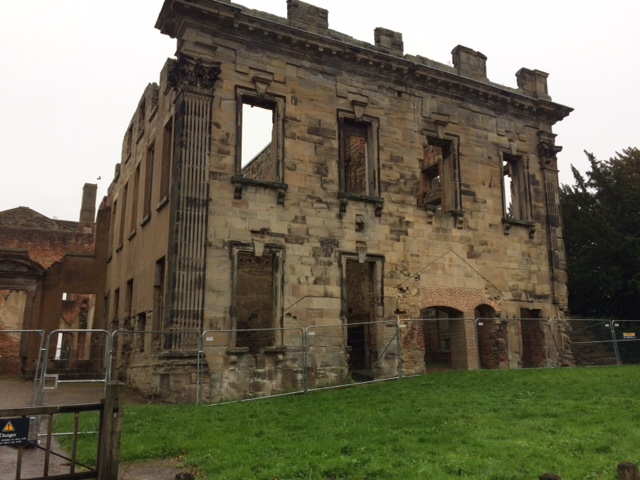
We made a quick stop at the ruins of Sutton Scarsdale, a fine Georgian mansion now roofless and in ruins, in order to appreciate the state in which some houses are in when they are handed over to the National Trust, English Heritage or a civic or government body. Built in 1727, the house contents were auctioned in 1919.
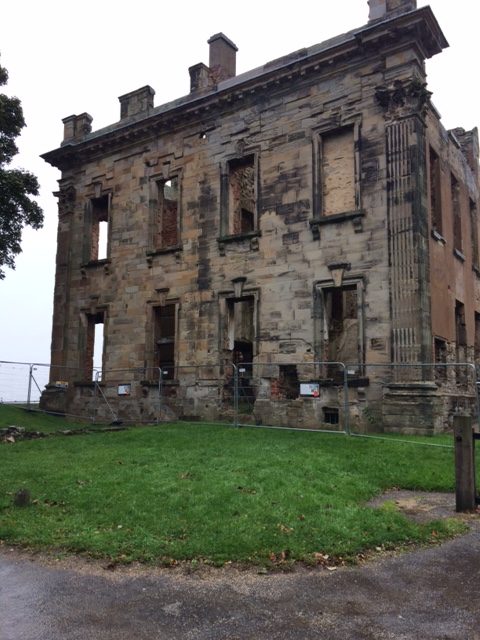
The estate is owned by English Heritage, which is in the process of conserving some of the remaining plasterwork and other features. It is a sad reminder that houses such as these may be lost forever unless they are funded and maintained by governments or heritage organizations.
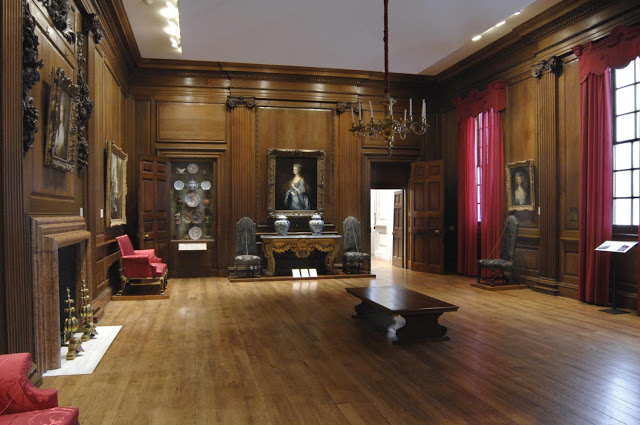
Though the whereabouts of most of the contents are are unknown, at least one room has been recreated and adapted at the Philadelphia Museum of Art, probably a reception room from the ground floor.
Our final day with Number One London Tours in 2017 was spent at Tatton Hall, another Georgian house, this time carefully cared for. I neglected to get around to the front for a photo, but here is an excellent replacement.
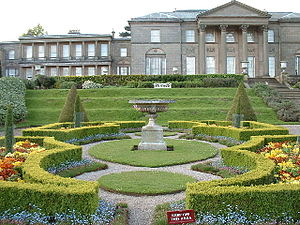
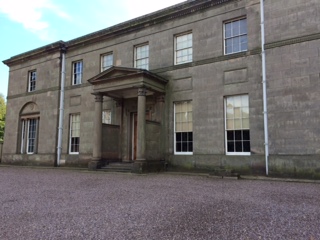
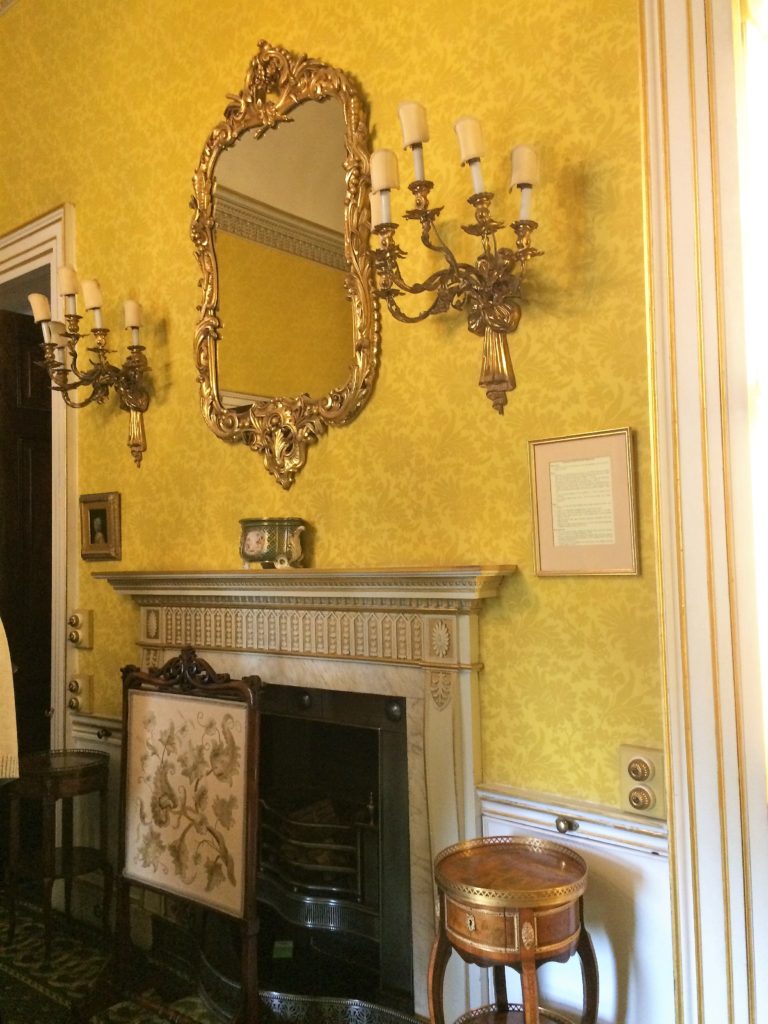
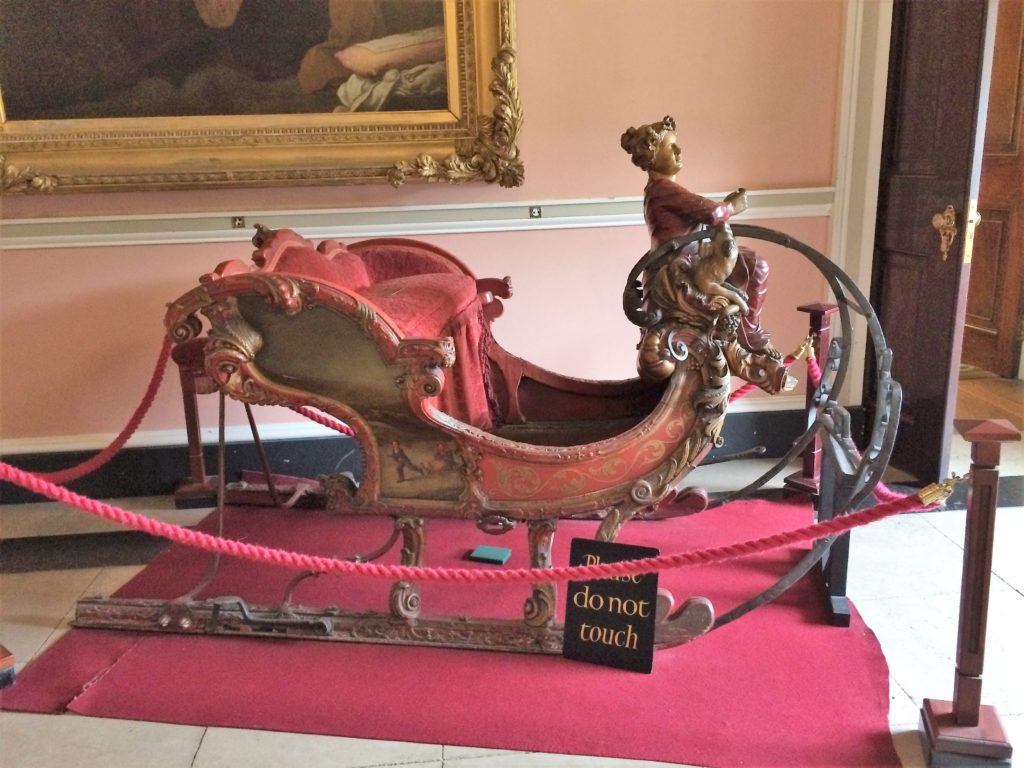
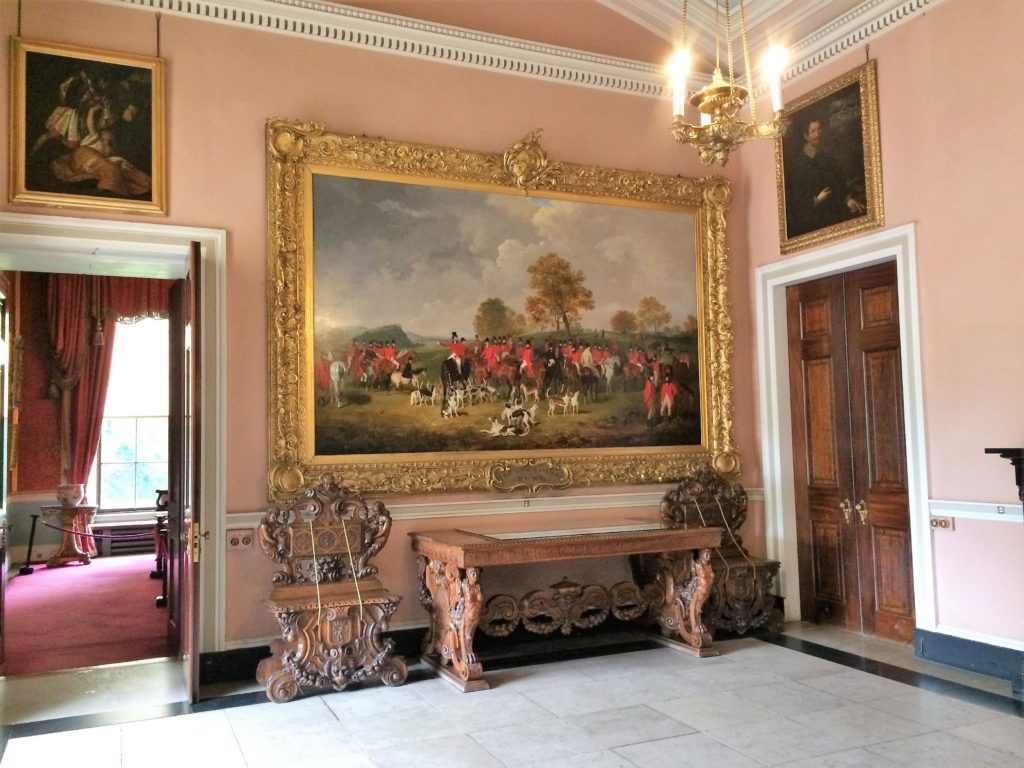
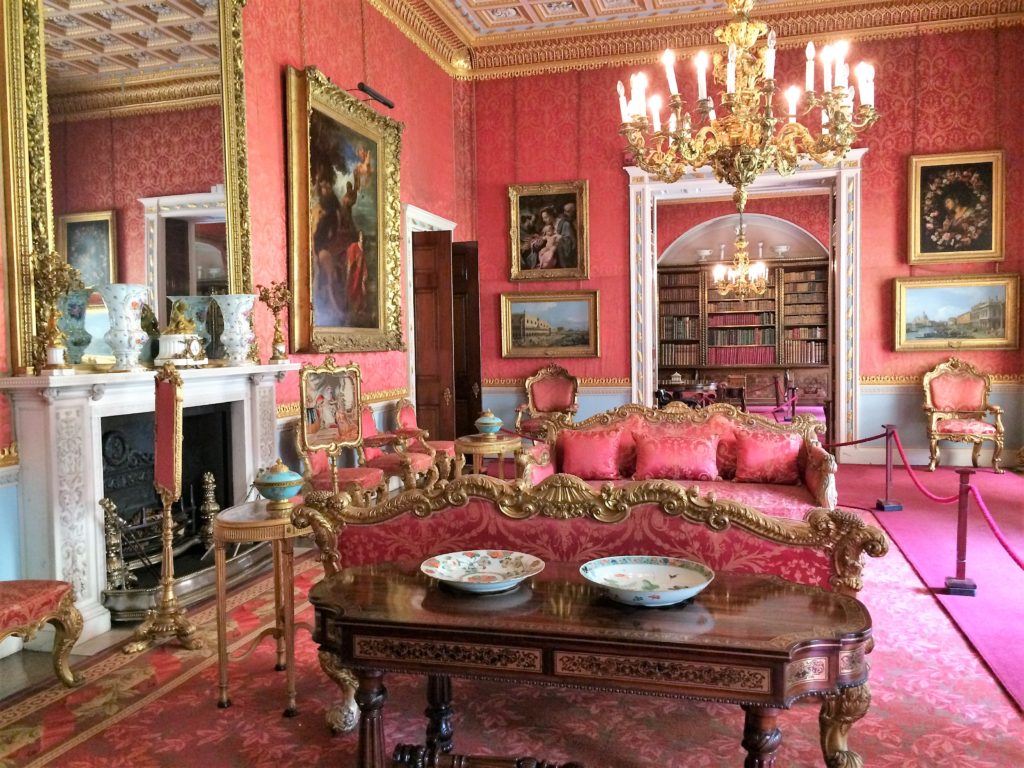
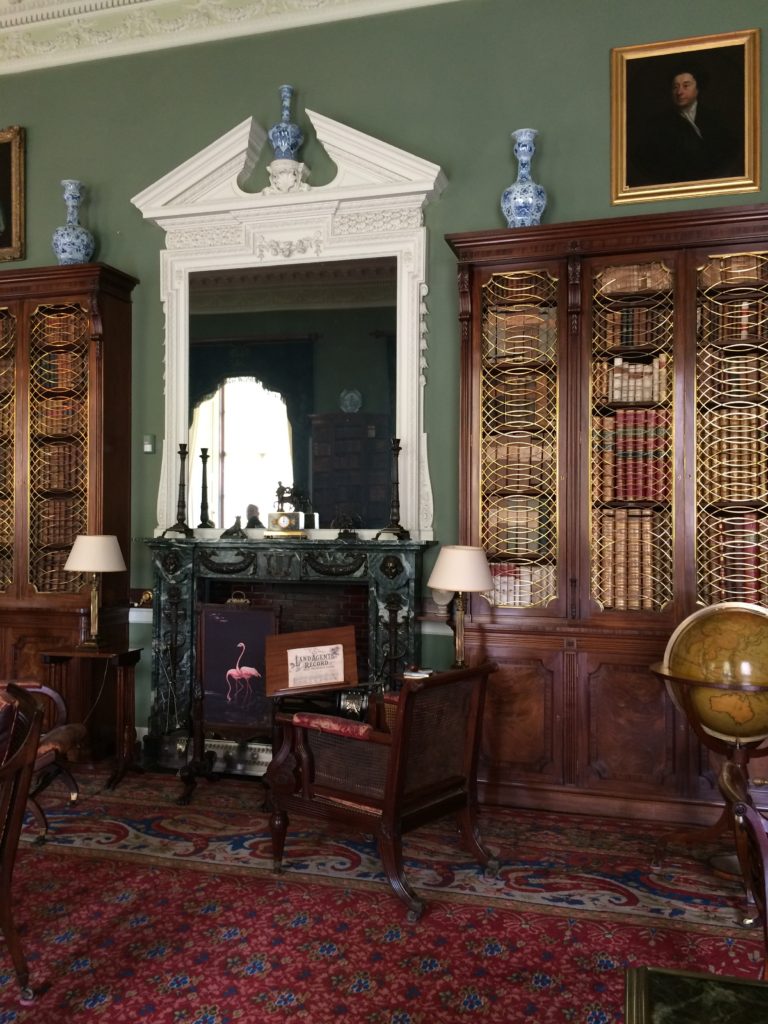
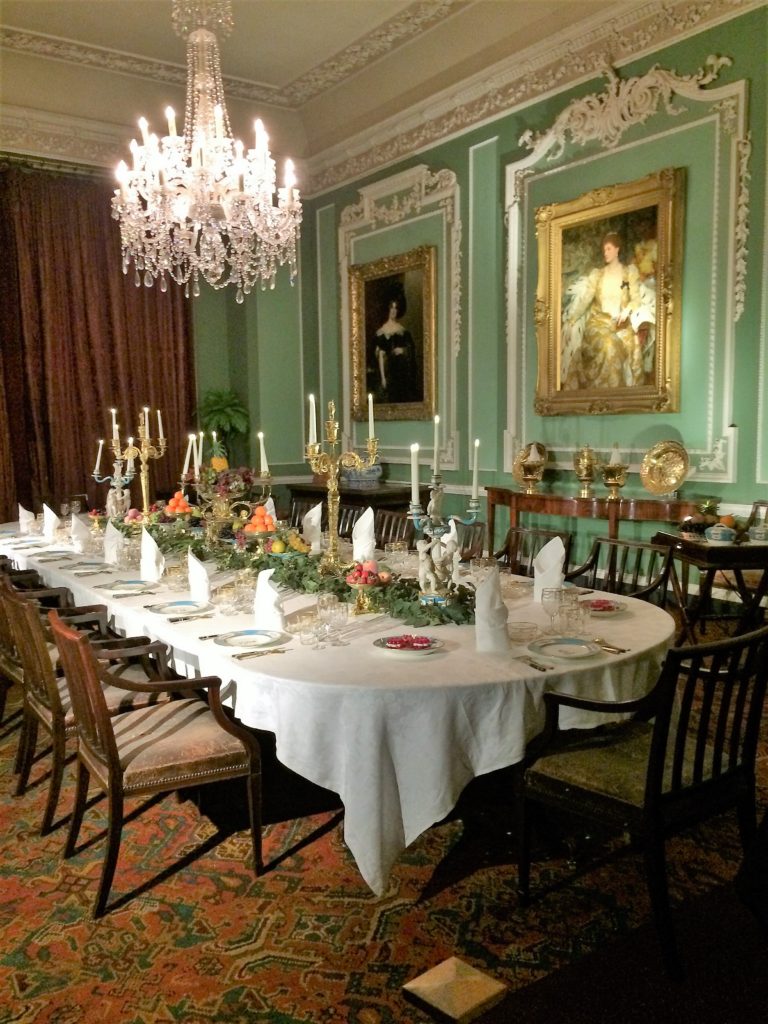
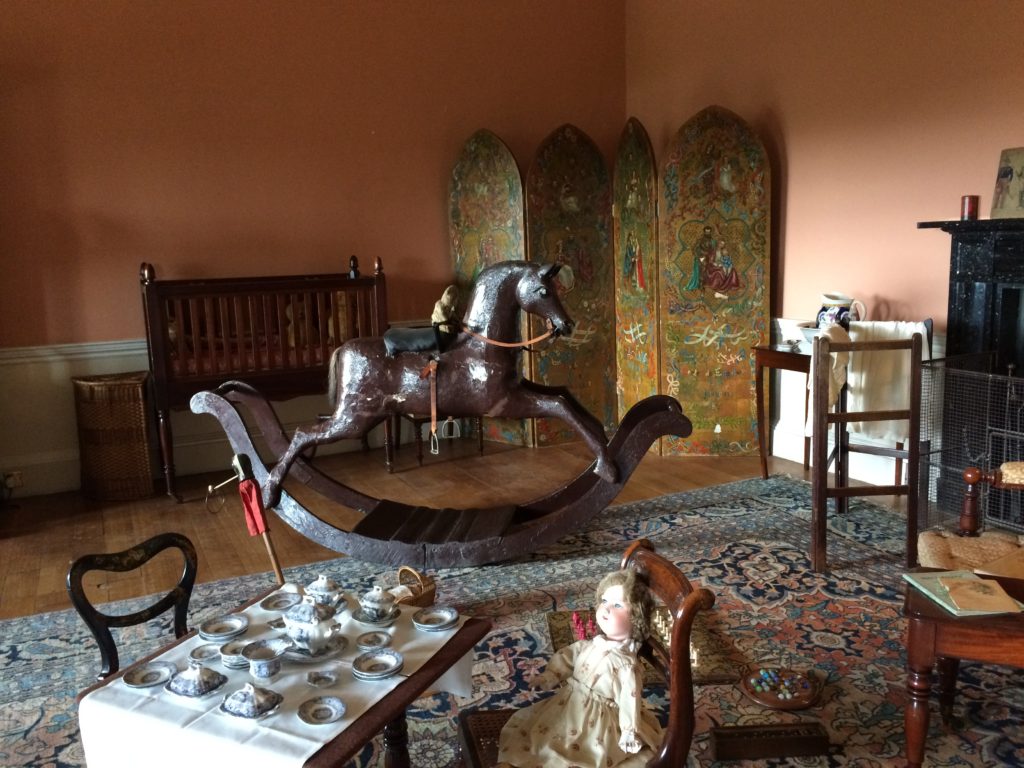
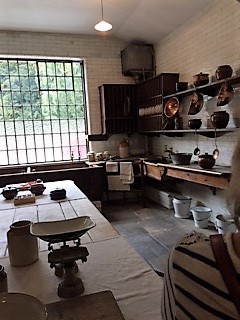
We ended our visit with tea at the Gardener’s Cottage, sad that our visit was almost at an end, but already looking forward to our next Number One London Tour.
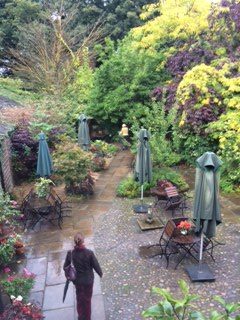
Find details regarding Number One London’s 2019 Country House Tour here.
Number One London’s 2017 Country House Tour included visits to nine country houses, beginning with Wentworth Woodhouse, followed by Kedleston Hall, one of Britain’s finest houses.
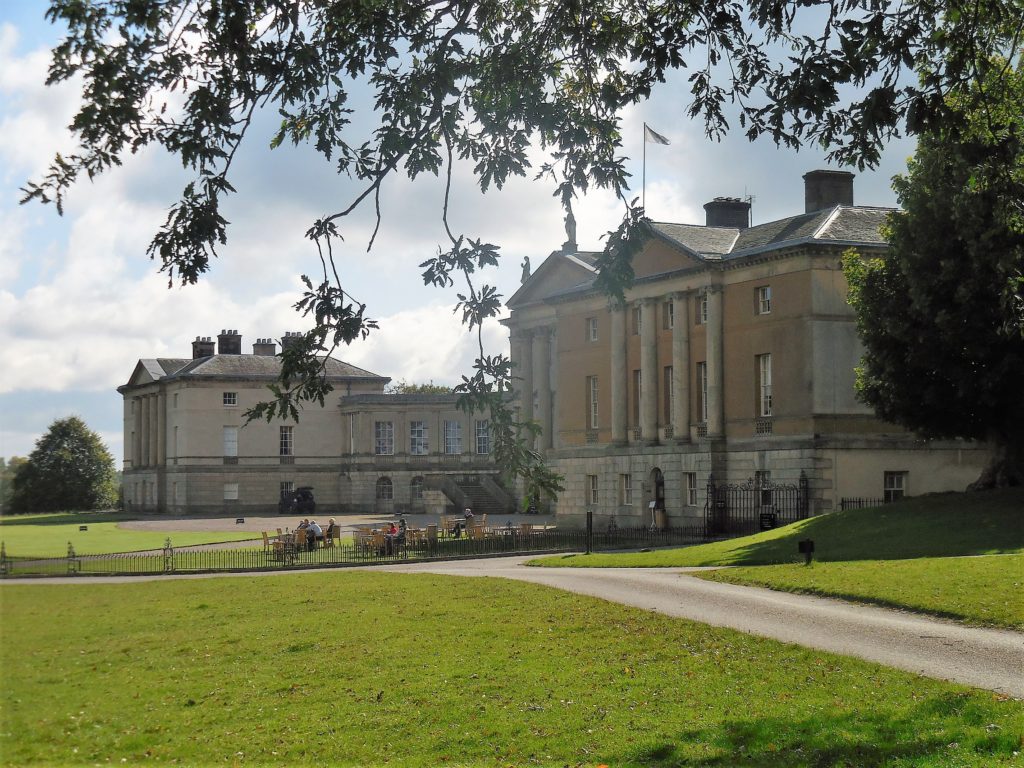
The estate of the Curzon family since the 12th century, the present hall was built in the mid-18th century. The original architects, James Paine and Matthew Brettingham, laid out a sober Palladian block with four (eventually, just two) side villas all attached by colonnades. Scottish master designer Robert Adam altered the plan and re-designed the more “rococo” south or garden facade.
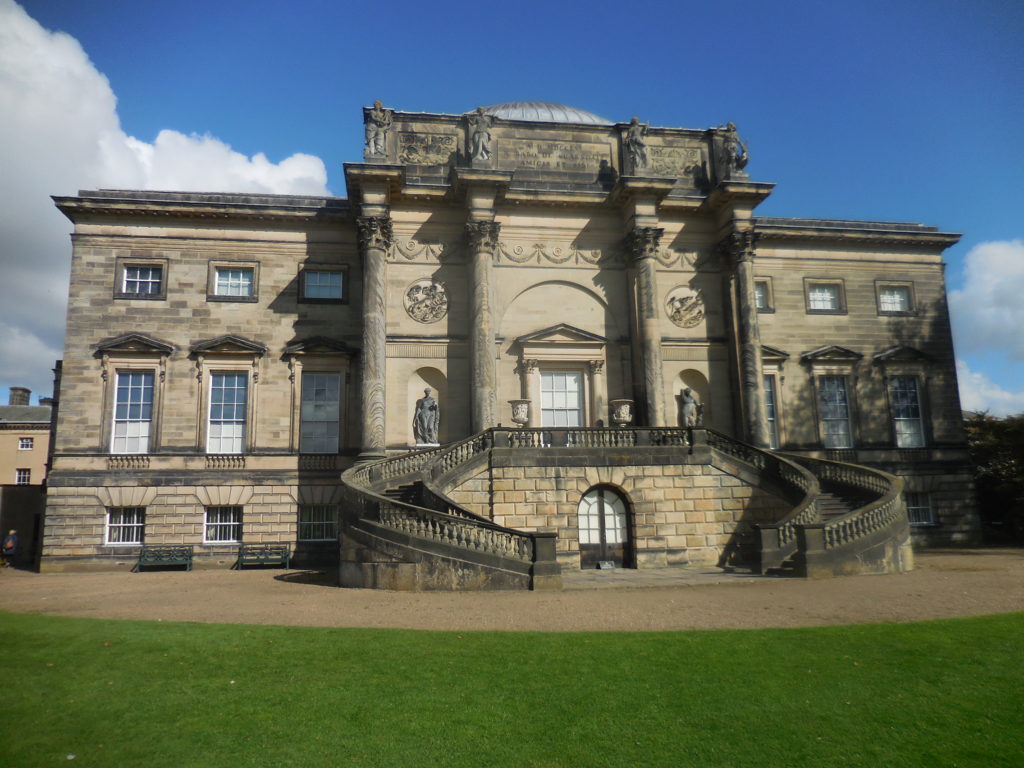
The house has a spectacular interior, intended for entertaining on a grand scale.
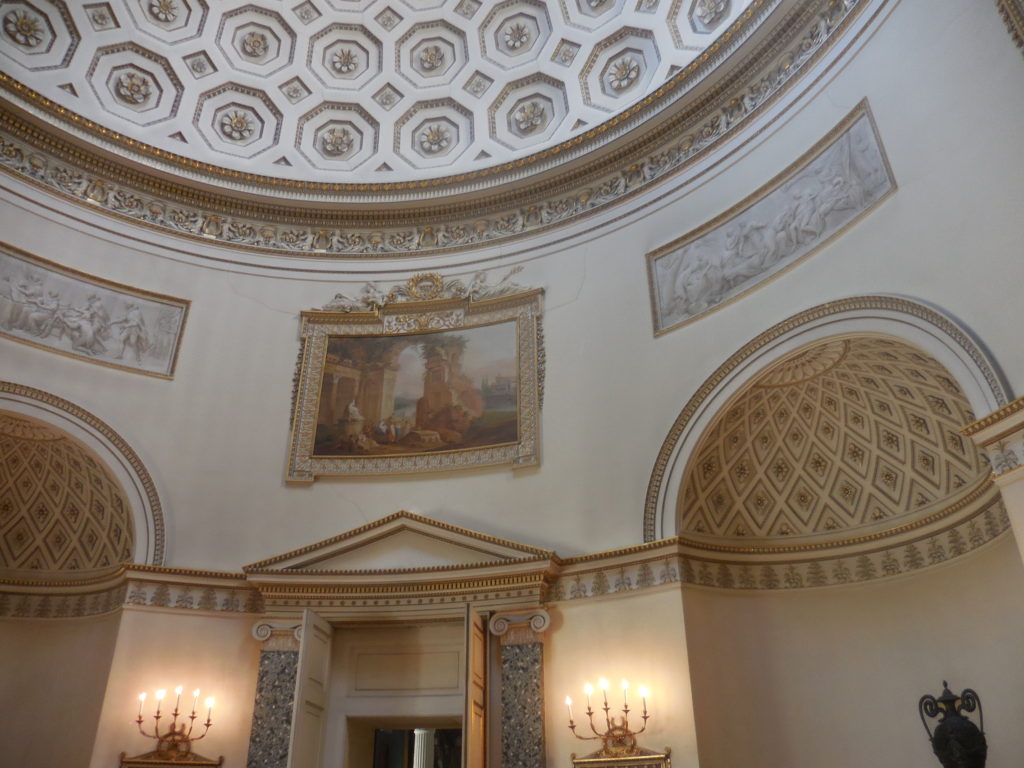
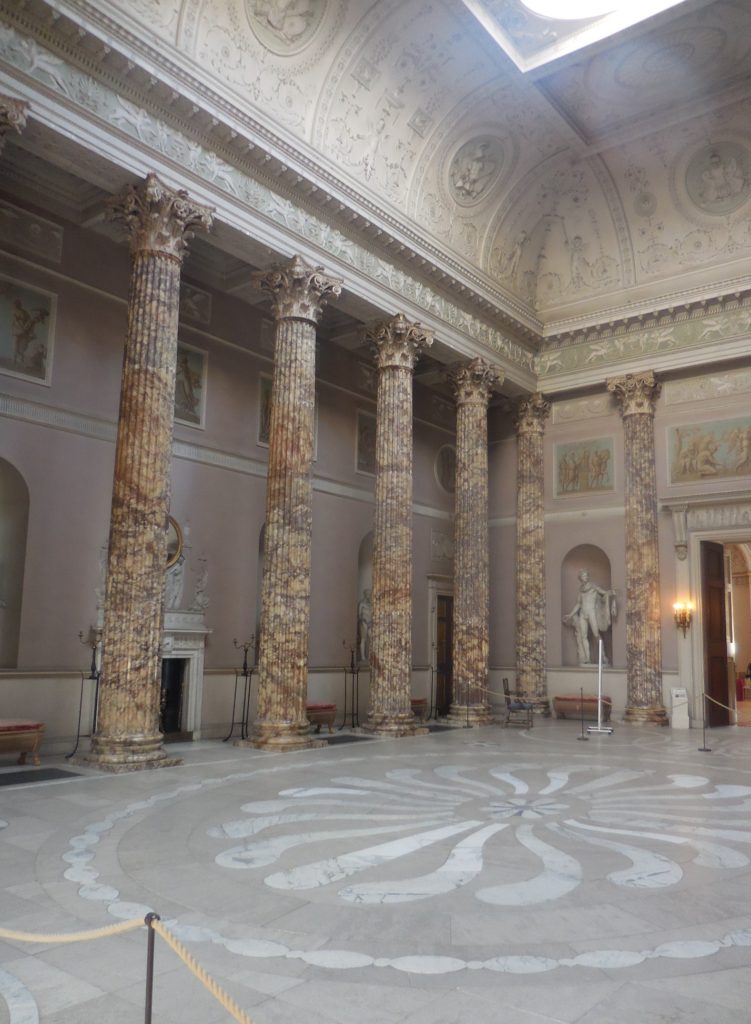
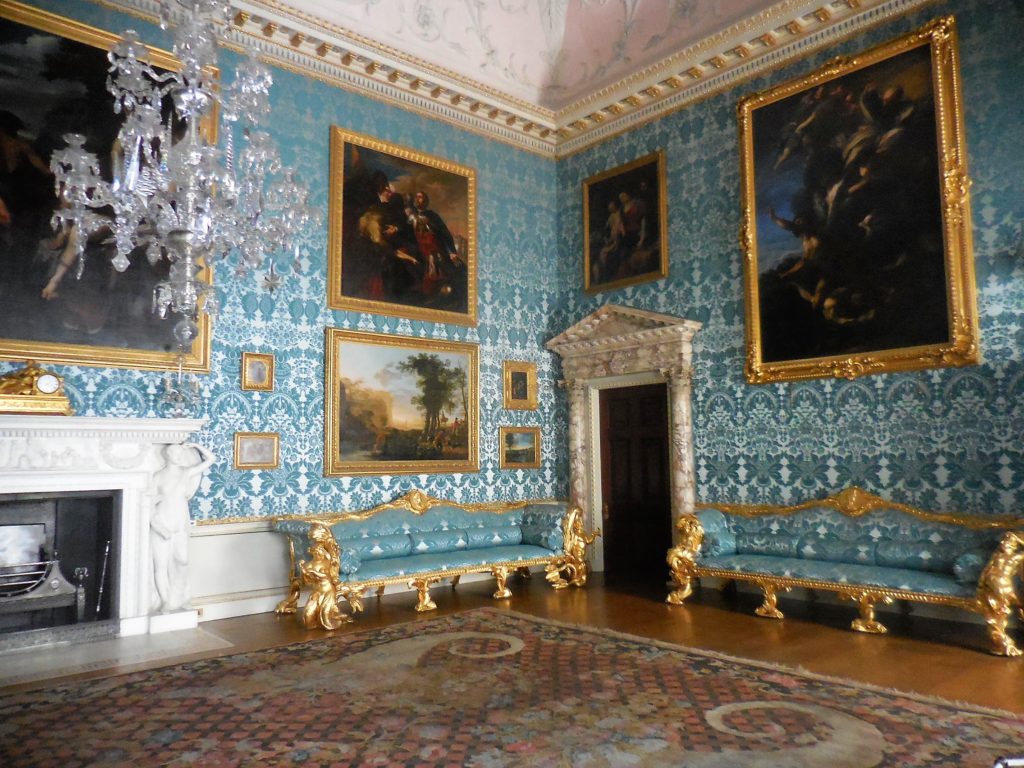
The house, inside and out, is flawless. And, like almost all stately homes, the residents are equally fascinating.
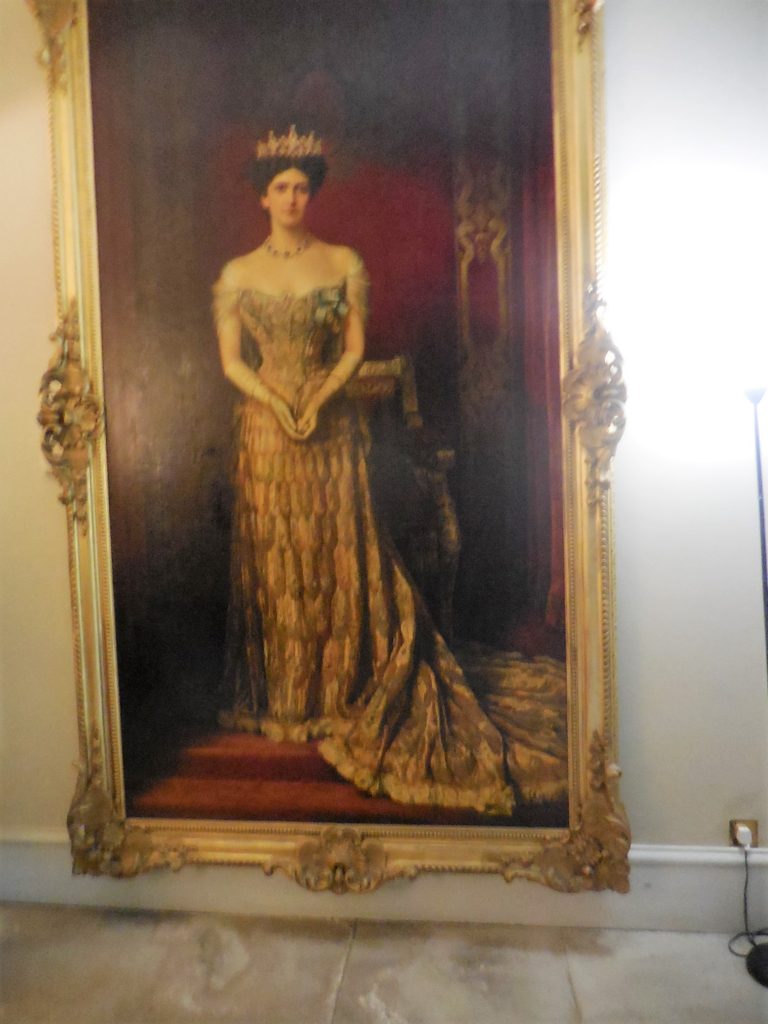
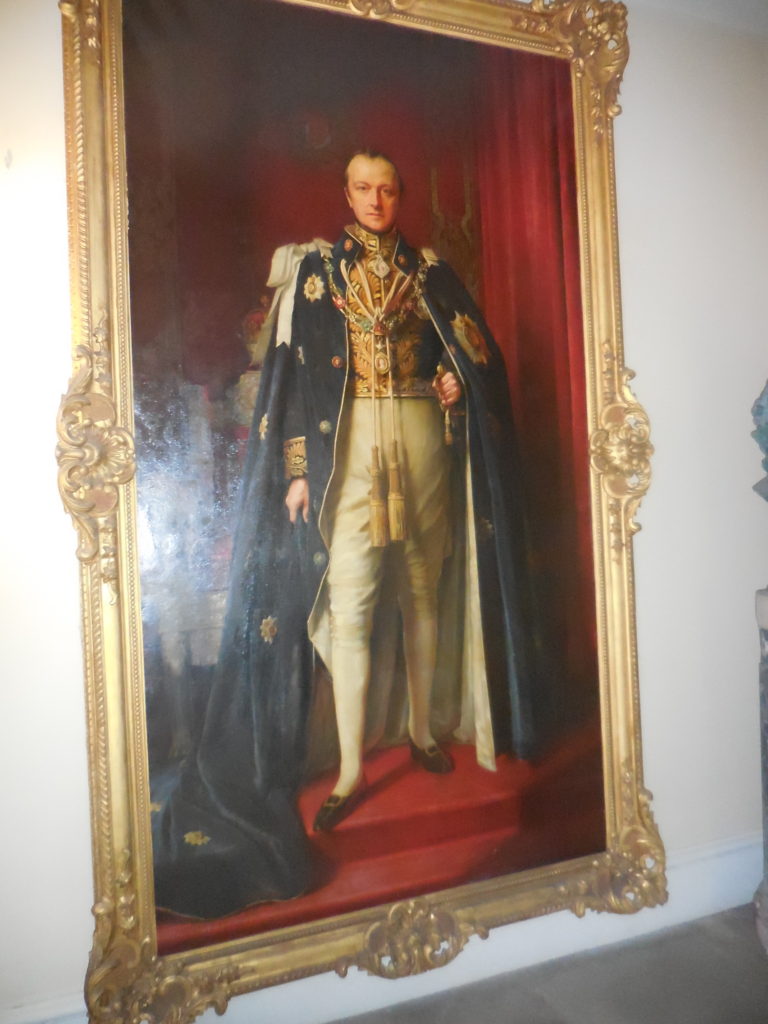
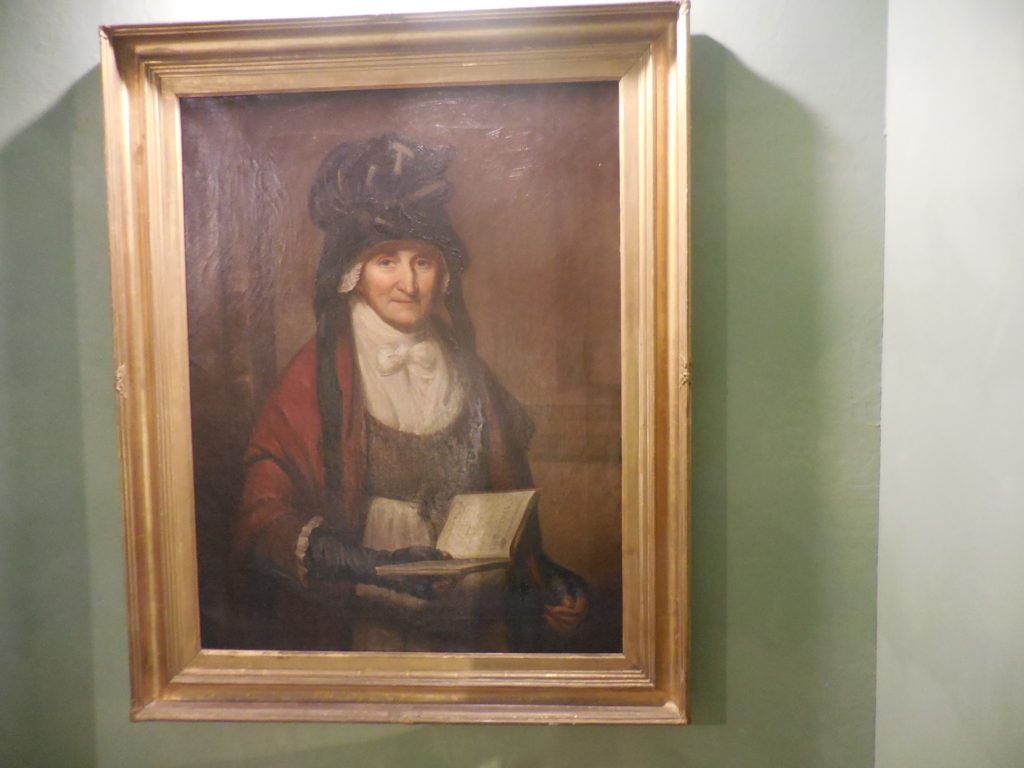
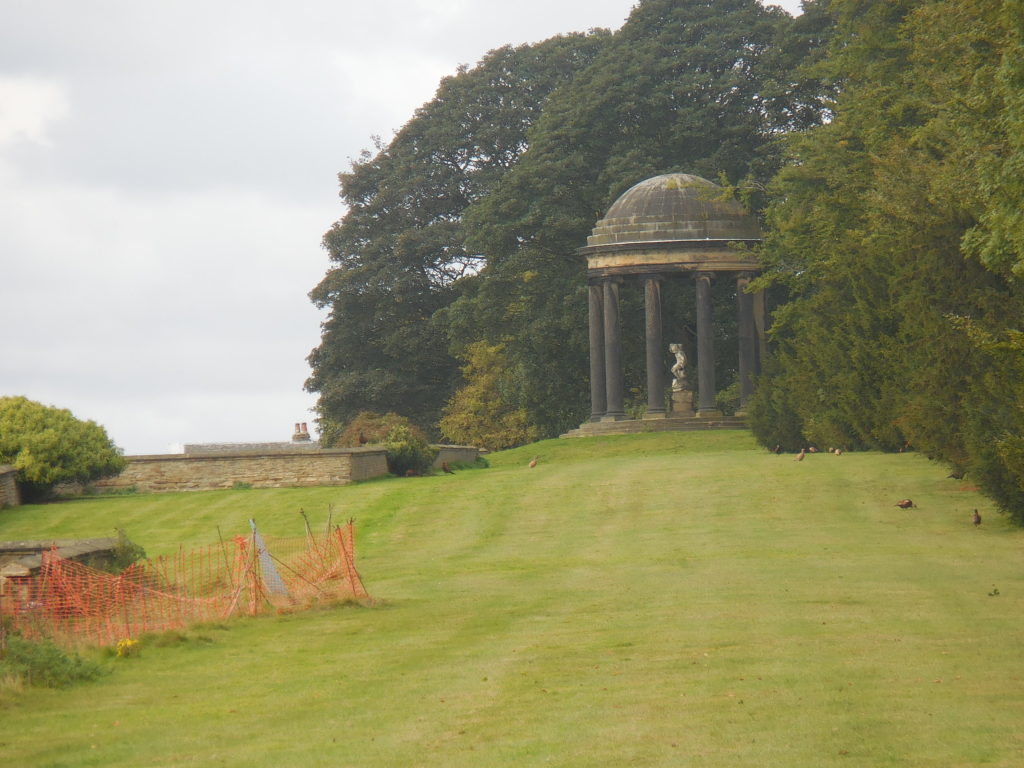
The gardens are extensive and dotted with statuary and follies, as well as sweeping lawns featuring the requisite sheep.
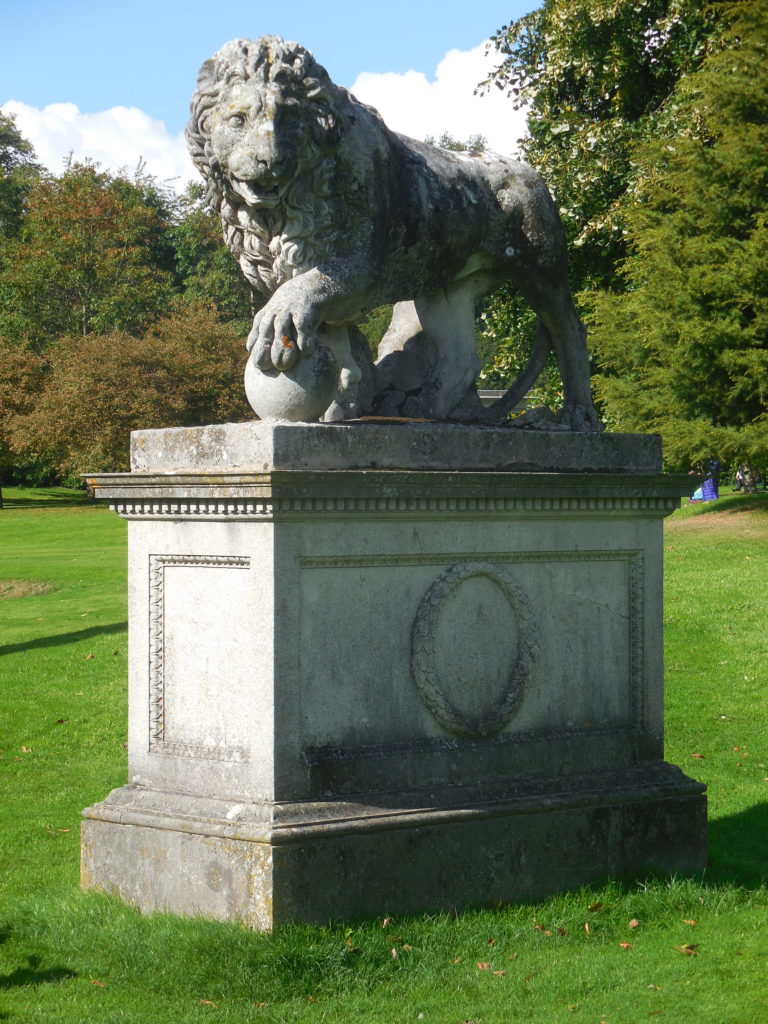
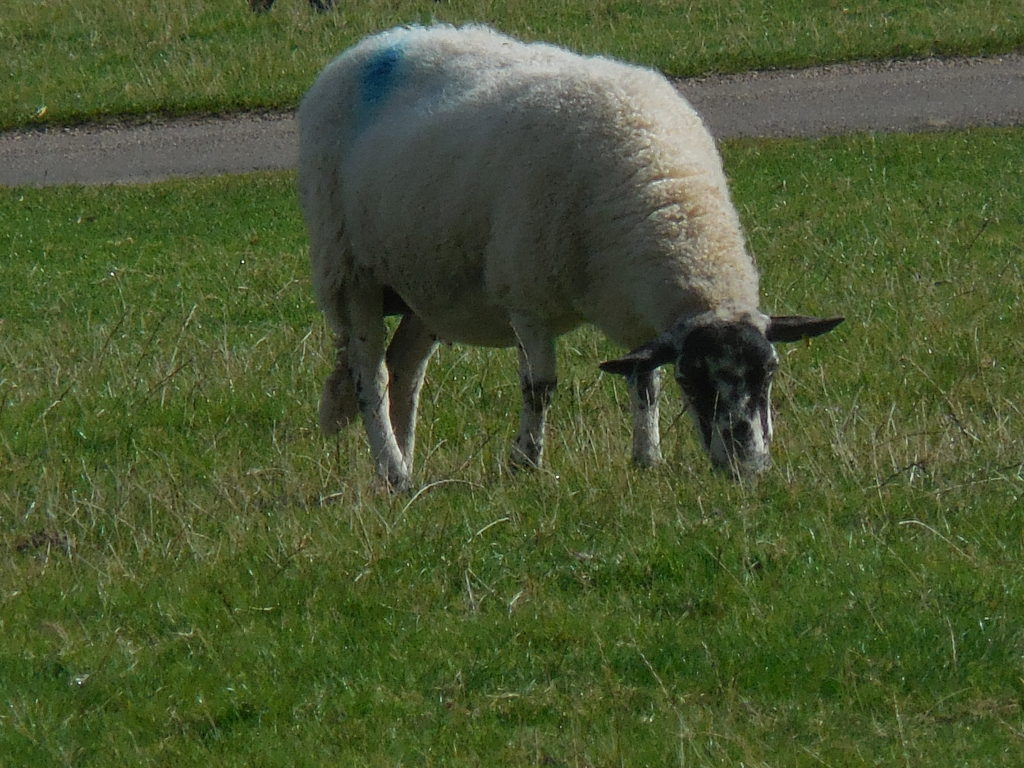
Kedleston Hall belongs to the National Trust, given to the NT in lieu of death duties in 1970. Our next stop, Calke Abbey. is a house of a different color. As is often the case, by the time a family must offer a property to the government or the NT, it is in wretched condition. This time, taking the dilapidated house and its land, the NT decided to keep it as the “unstately home.”
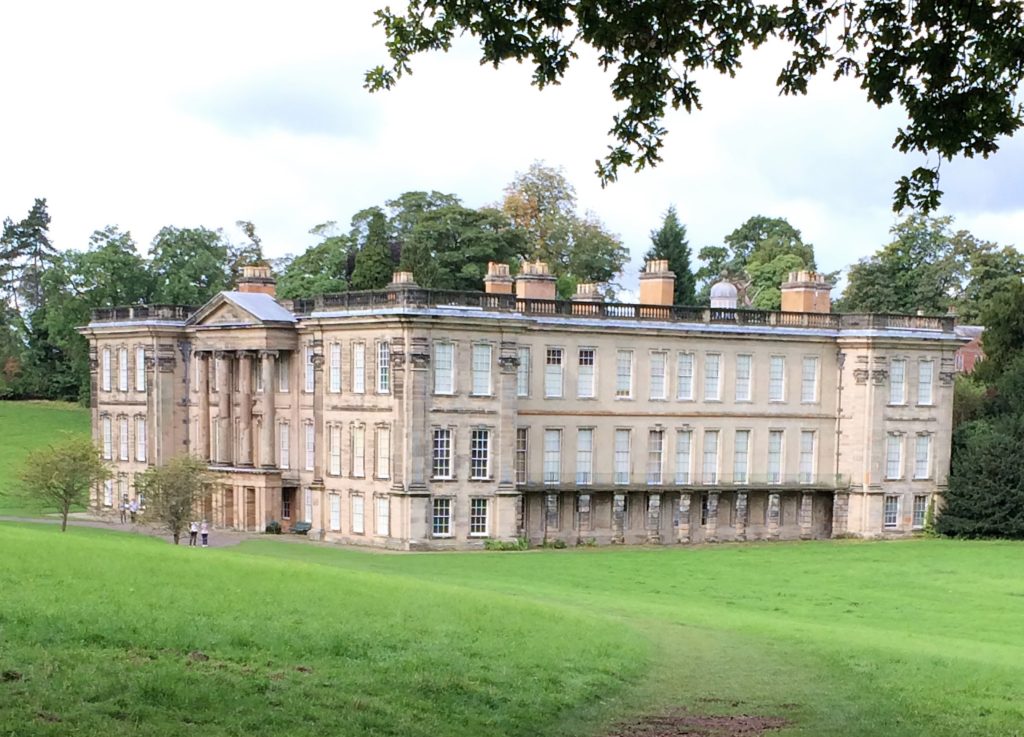
In the words of the website, visitors “explore the tales of an eccentric and reclusive family who amassed a huge collection of hidden treasures.” We wandered the stables, full of dusty reminders of former equine residents.
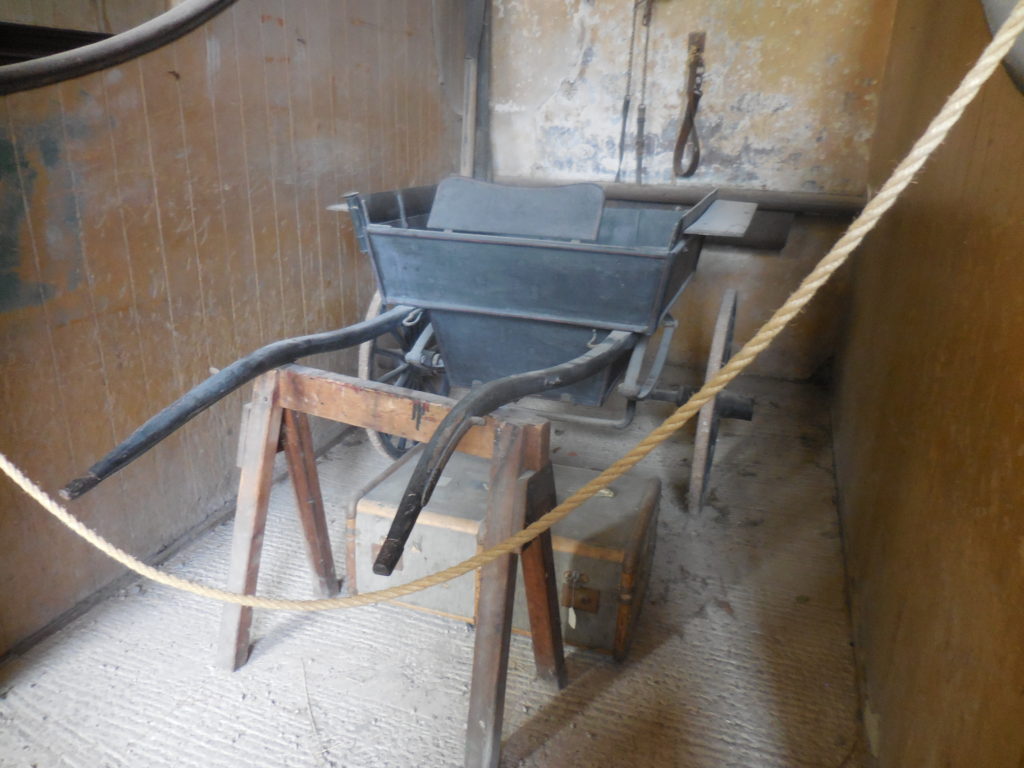
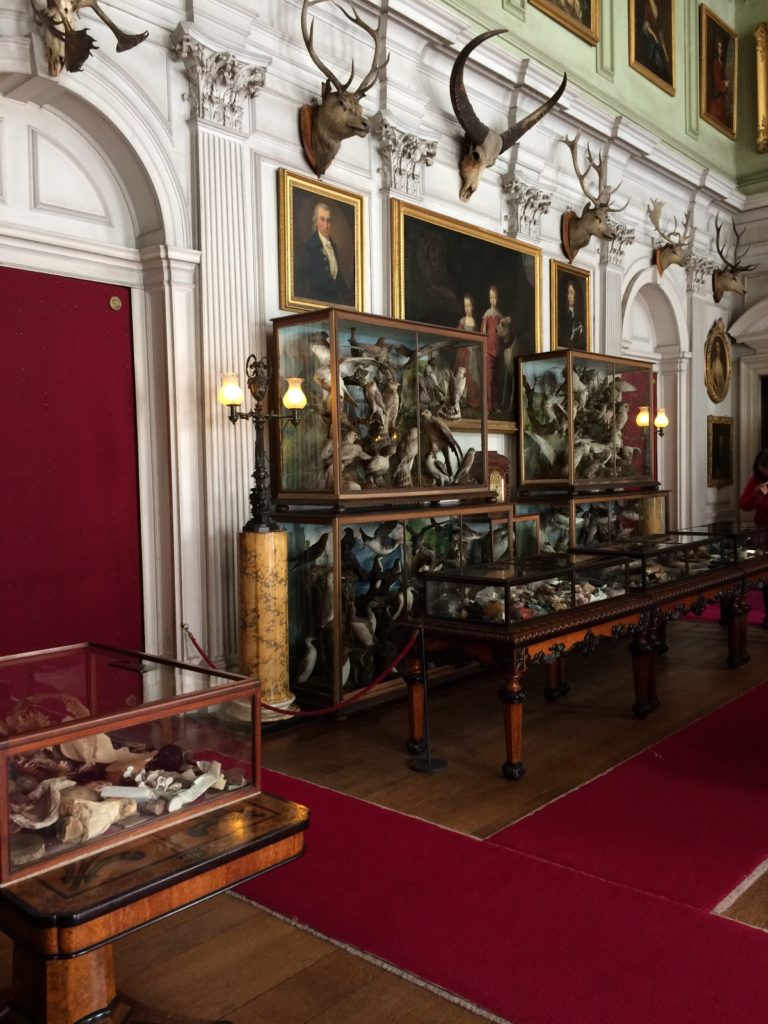
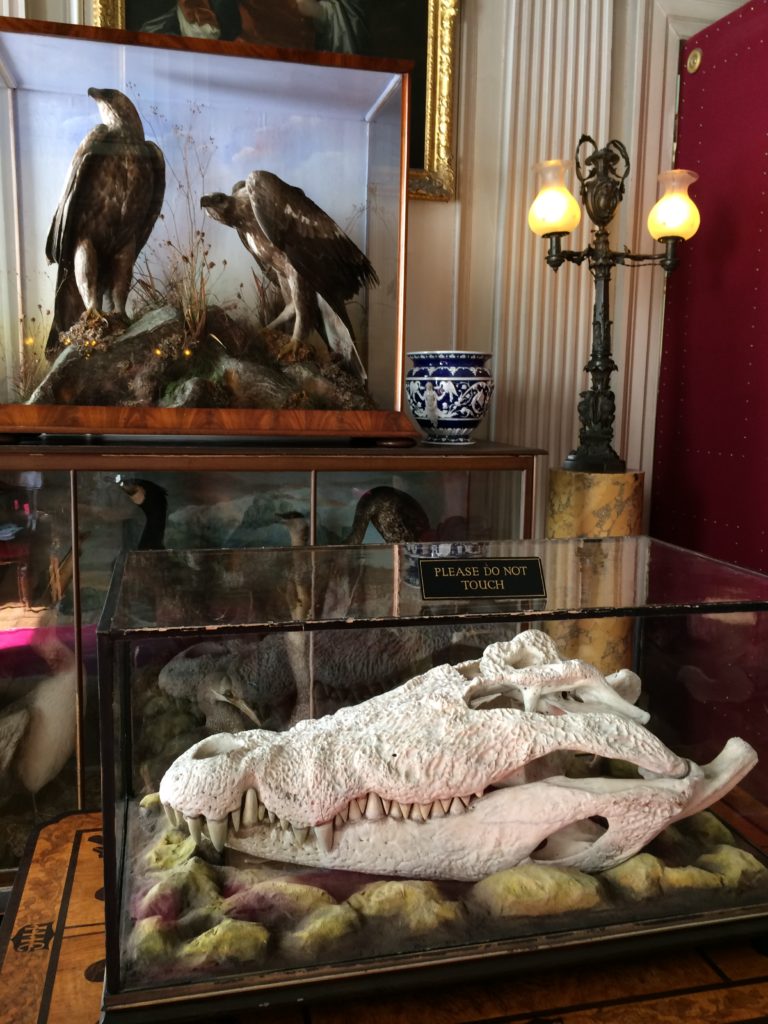
The house is better dusted but jammed with furniture, knick-knacks, old magazines, long forgotten boots, pictures dimmed by time, and a hideous collection of hunting trophies, particularly stuffed birds.
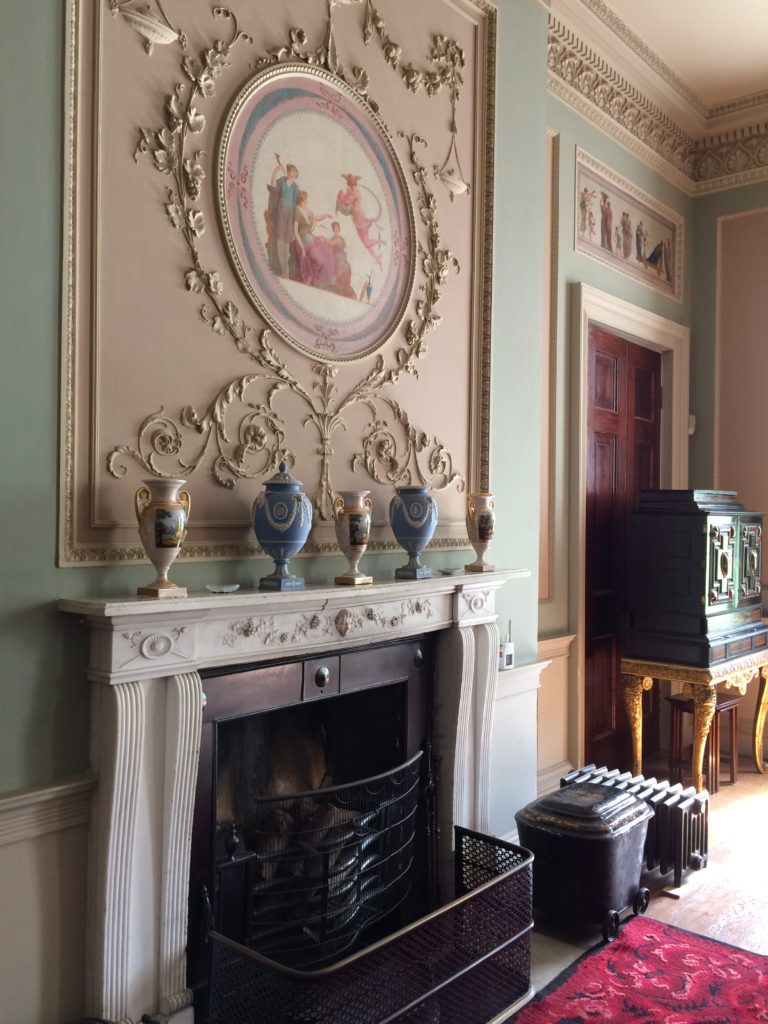
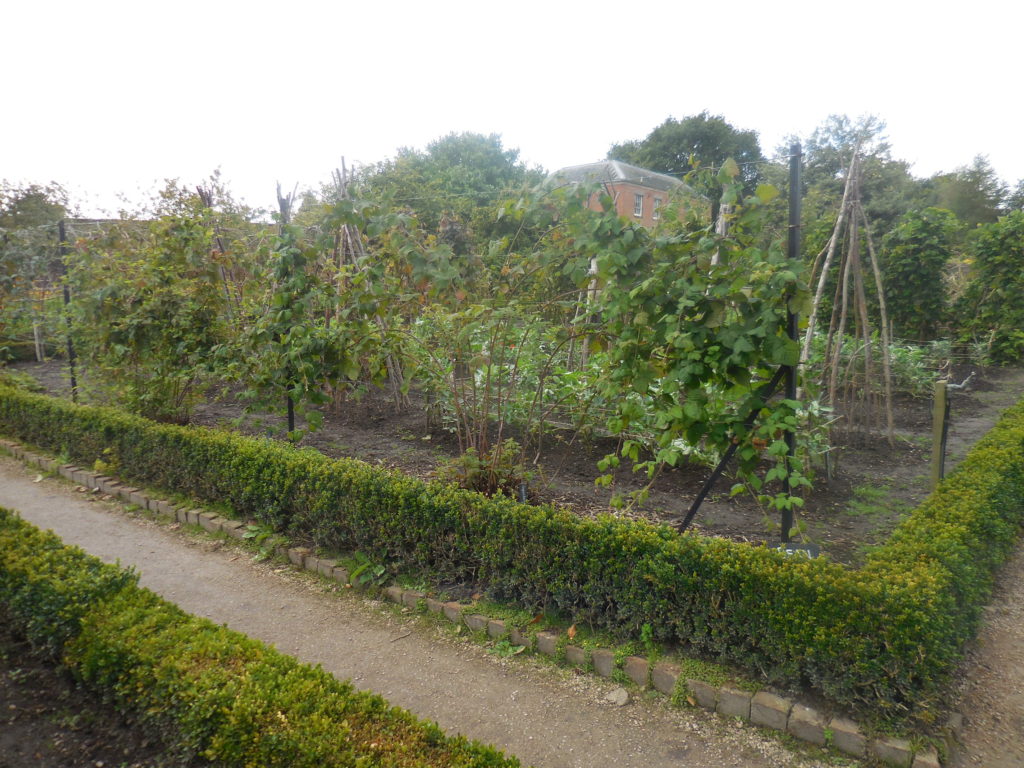
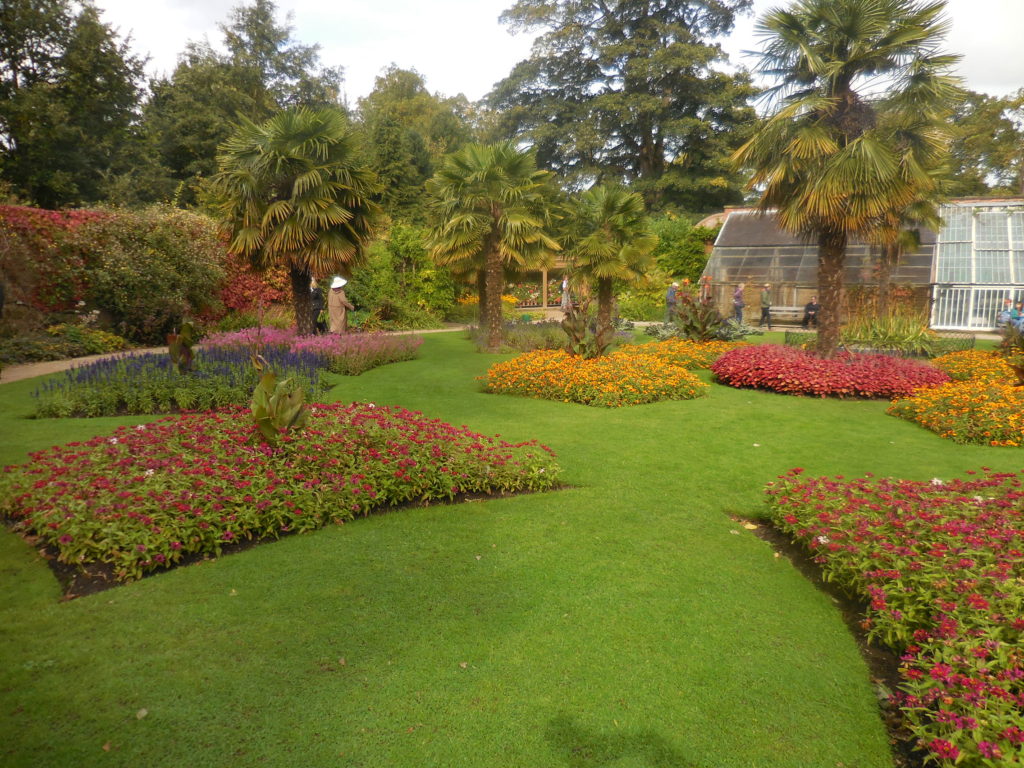
The extensive gardens, however, were spacious and well-tended.
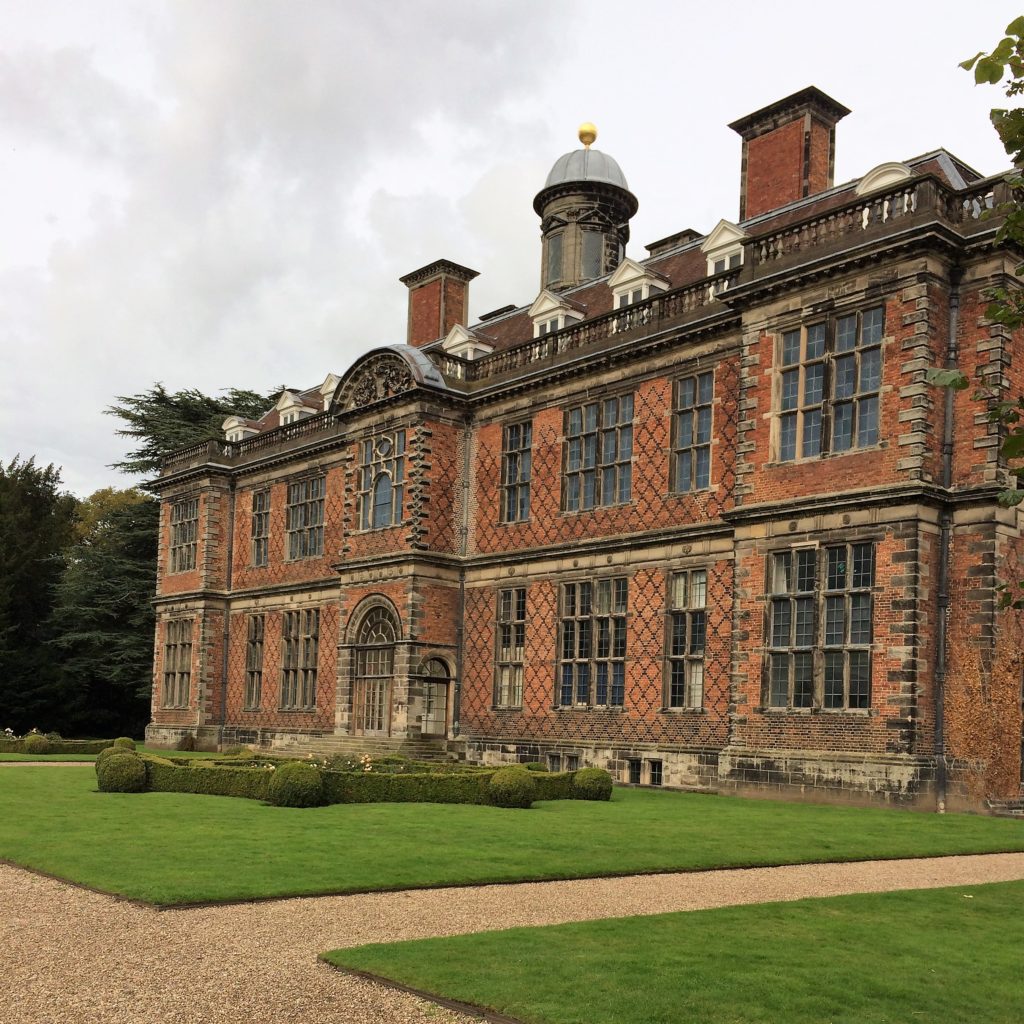
The third house we toured was Sudbury Hall, a 17th century Restoration house, but it carries features from the earlier Tudor style, such as the blue patterned design (diapering) on the front, or northeast facade.
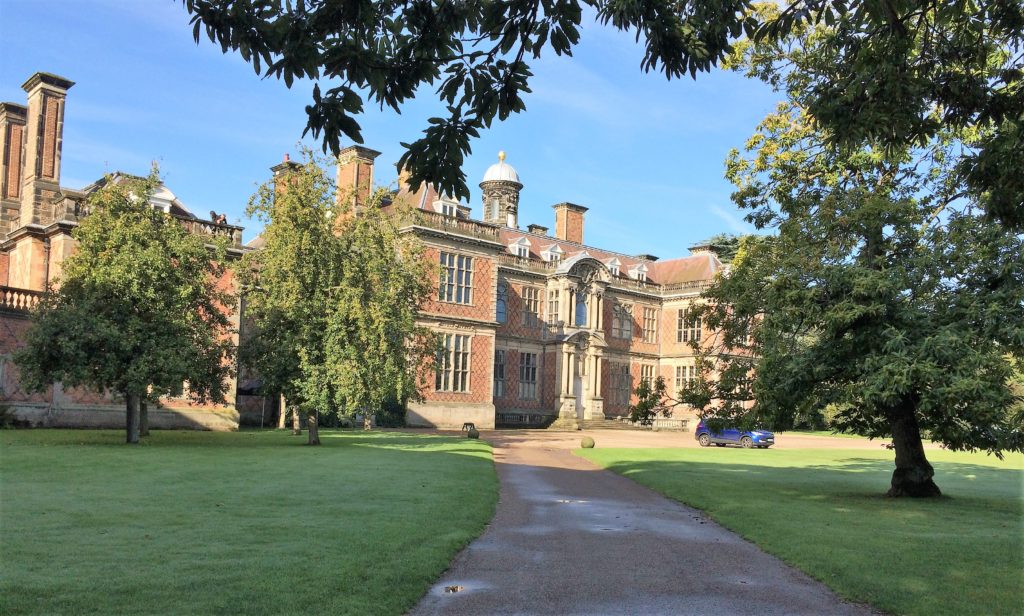
Contrasting with the Tudor features are Jacobean and baroque elements as well.
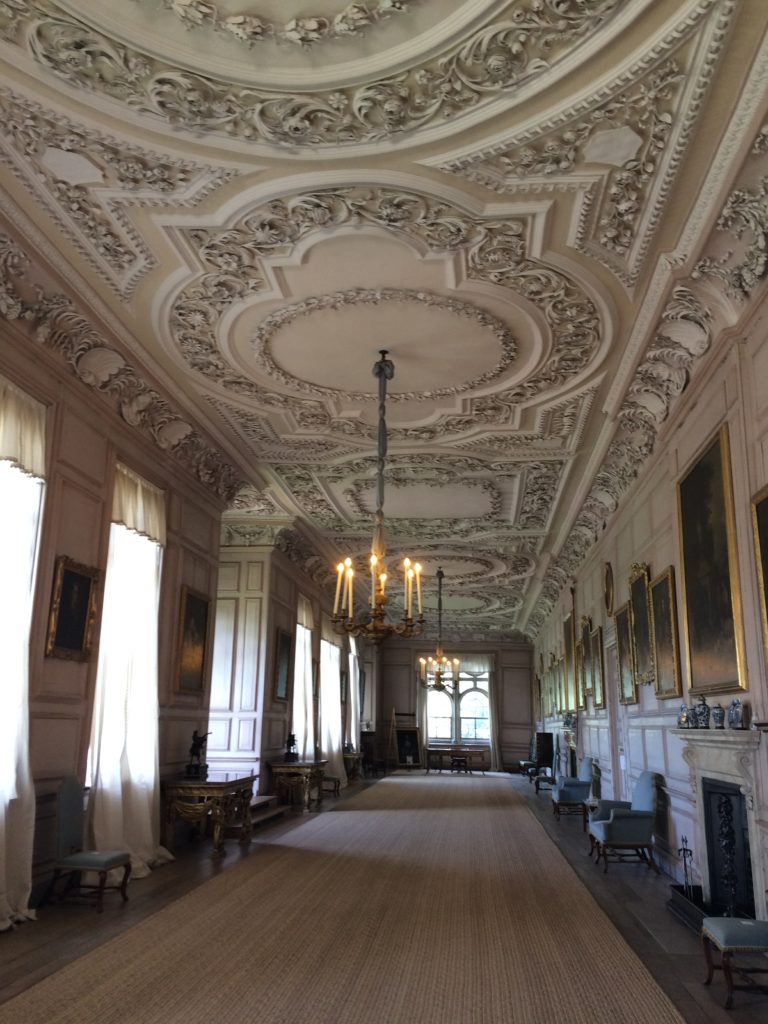
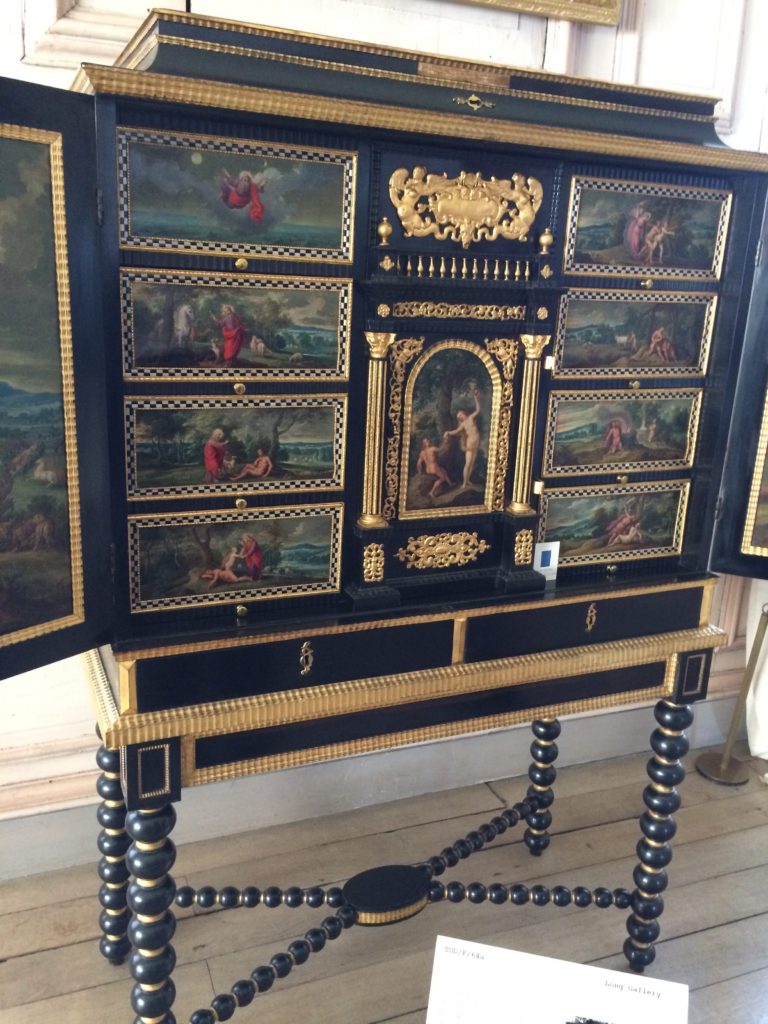
On the uppermost floor is a Long Gallery, probably the last one built in a British stately home. The brilliant plasterwork and sweeping length, more than 160 feet long, forms a beautiful setting for a collection of portraits and fine furniture.
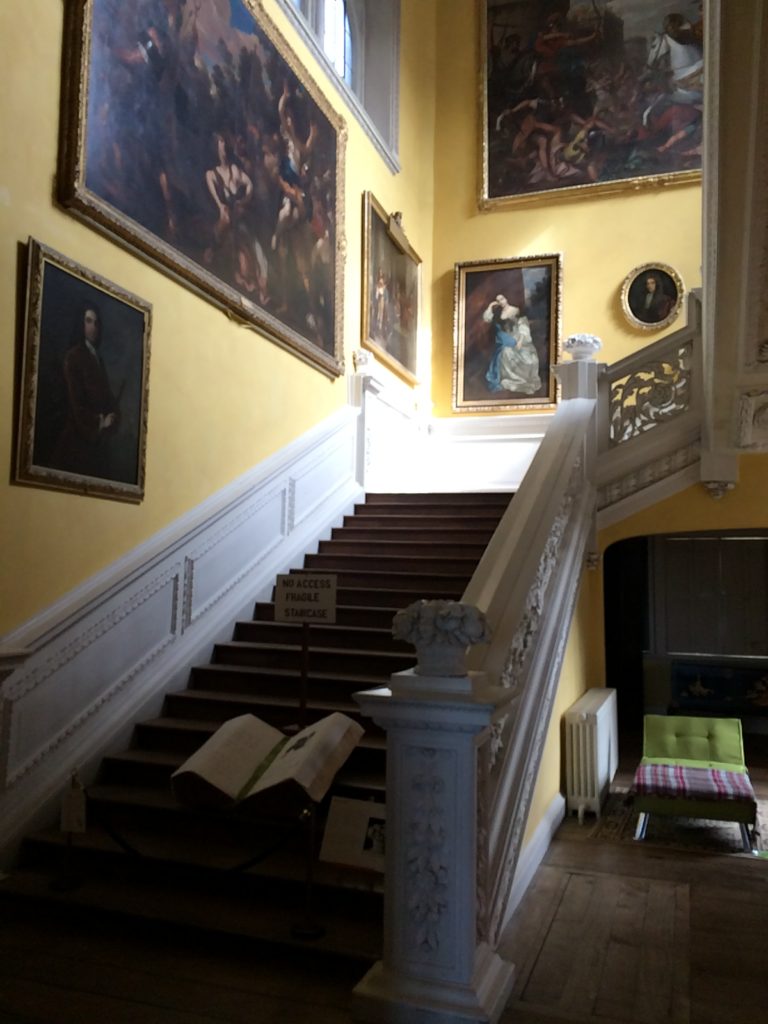
The Great Staircase is particularly praised, though due to its fragility, it is no longer used except for the occasional appearance in film.
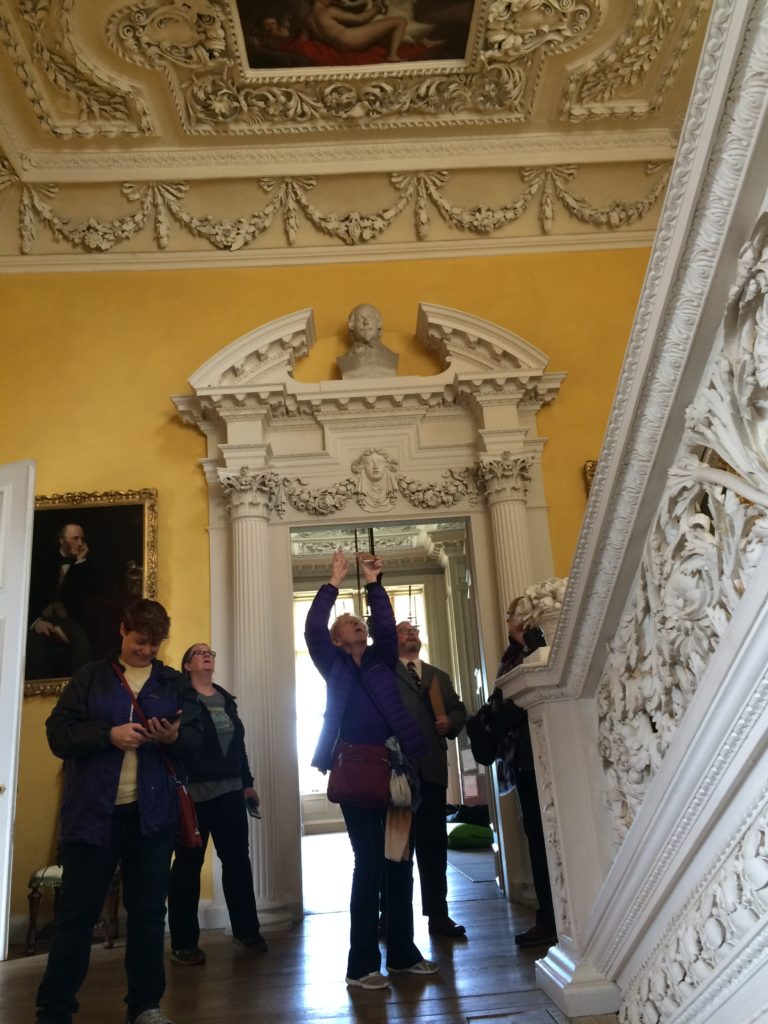
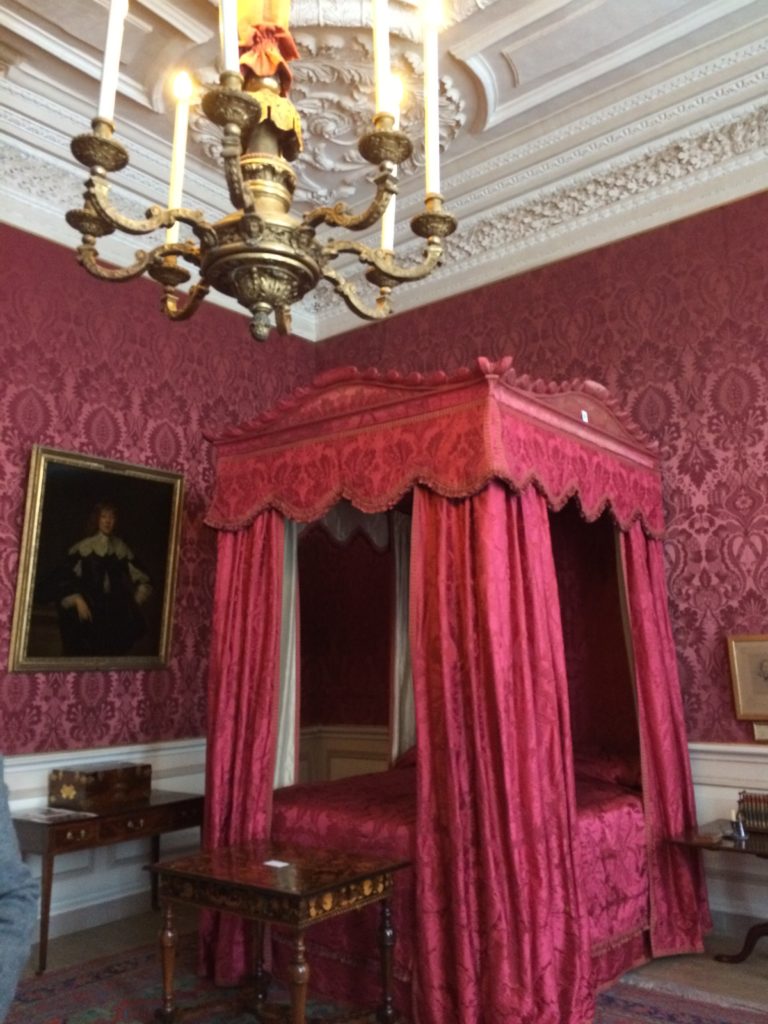
The magnificent Red Room was once the home of the Dowager Queen Adelaide — as well as the place where Darcy changed his coat in the 1995 BBC production of Jane Austen’s Pride and Prejudice.
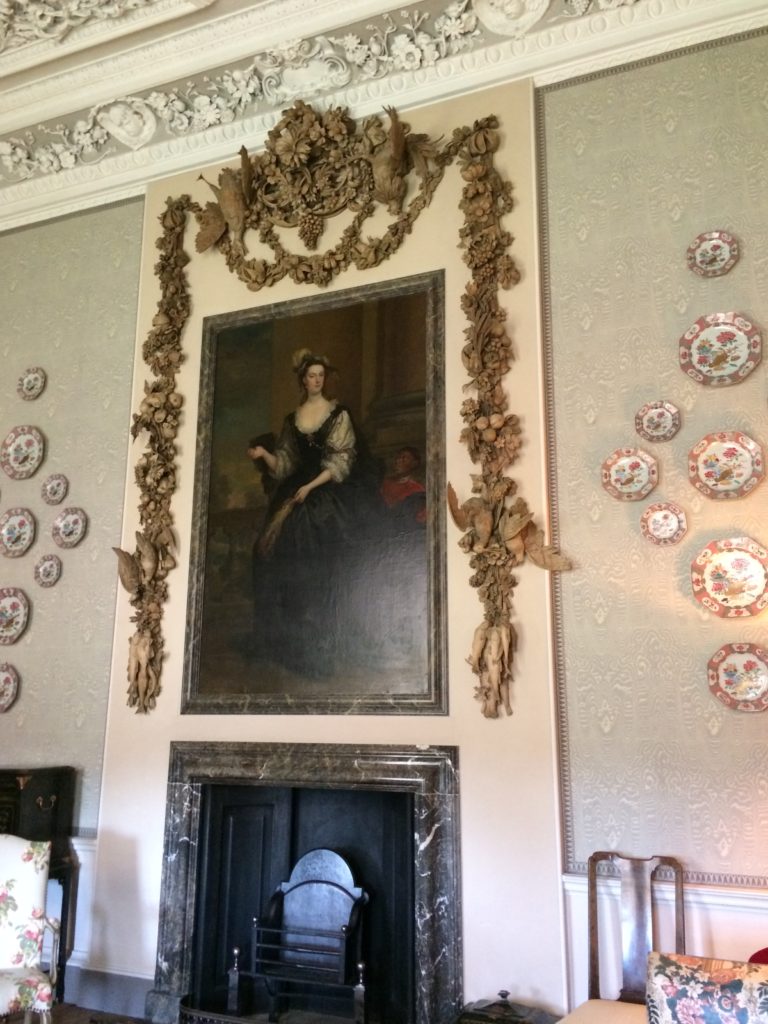
In the Drawing Room, the chimney piece is adorned with one of Grinling Gibbons’ finest carvings, dated 1678.
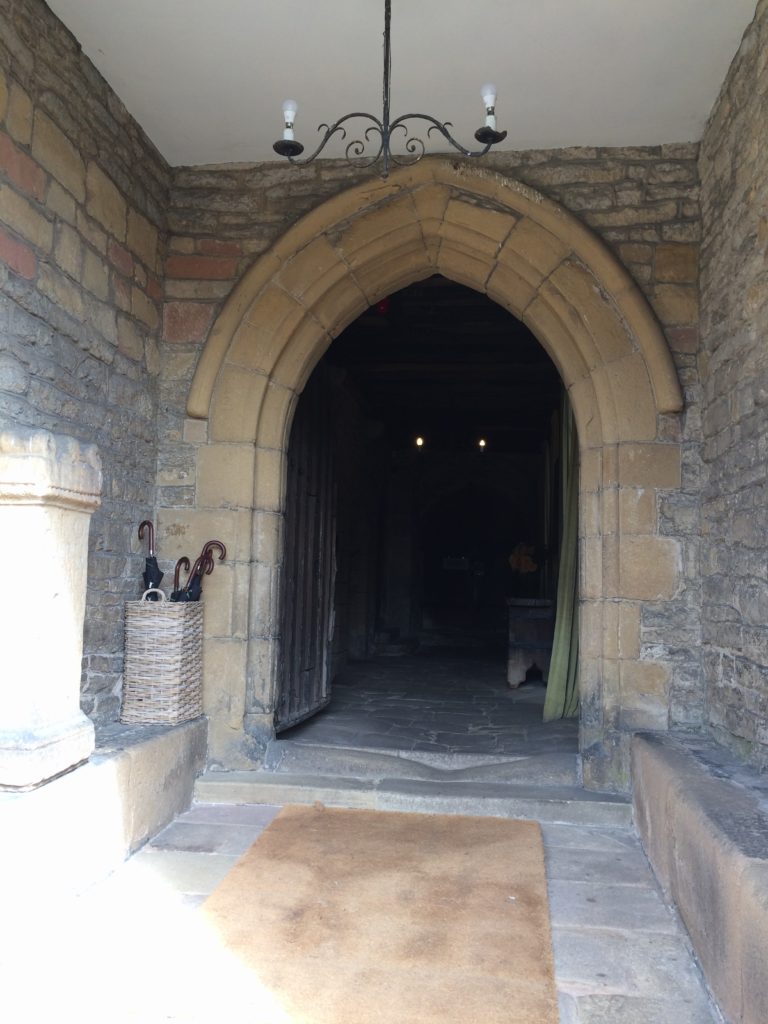
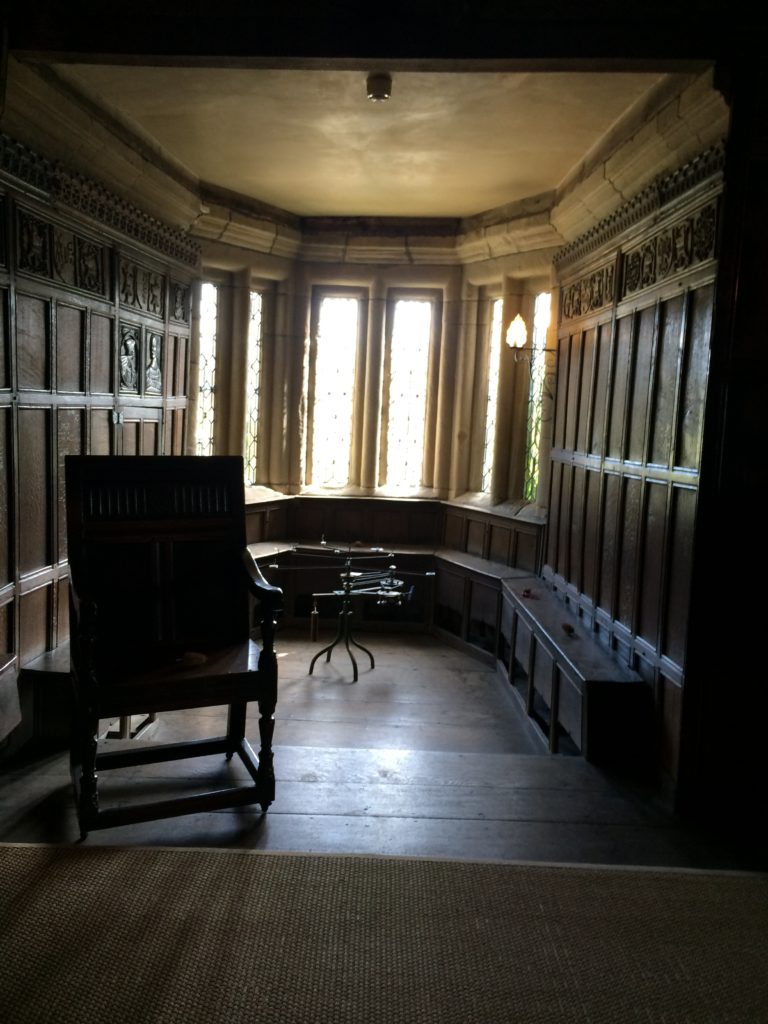
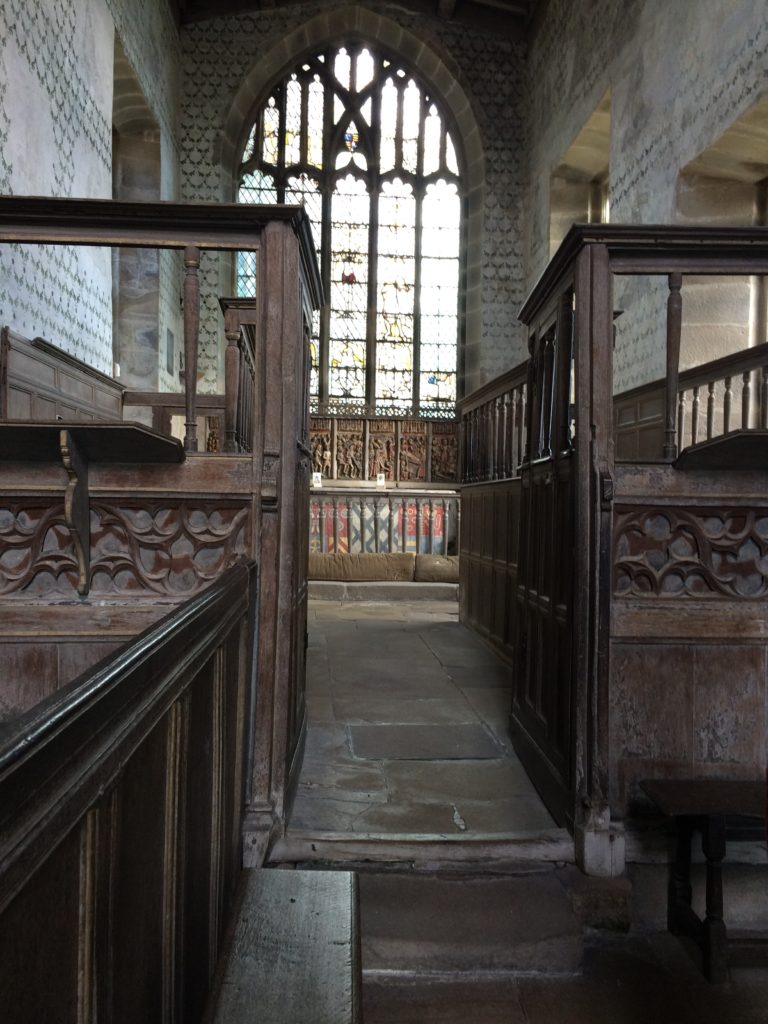
From the the 17th century, our Number One London Tour of country houses in or near Derbyshire traveled backward in time to medieval days at Haddon Hall, one of the best preserved houses of its day.
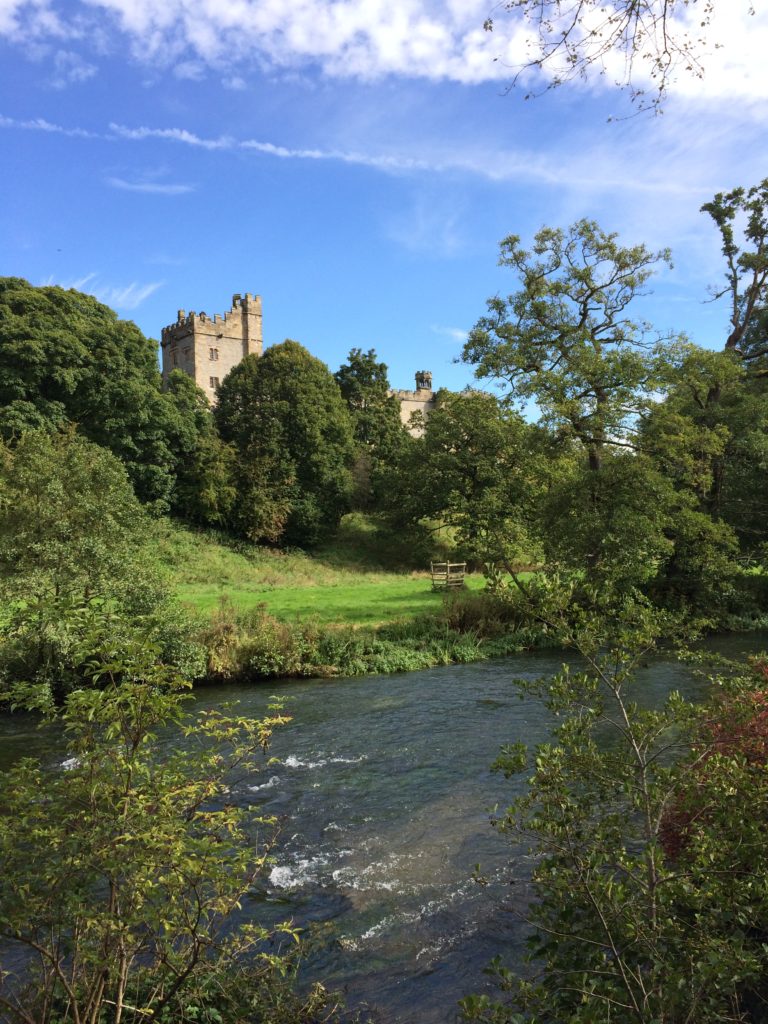
Like many of the remaining examples of medieval residences in Britain, Haddon Hall came to the Manners family by marriage to an heiress, Dorothy Vernon, in 1562; the Vernon family had acquired the manor in the 12th century by a similar marriage to an heiress. Being a secondary home of the families, it remained relatively untouched and thus it is a fine example of period architecture.

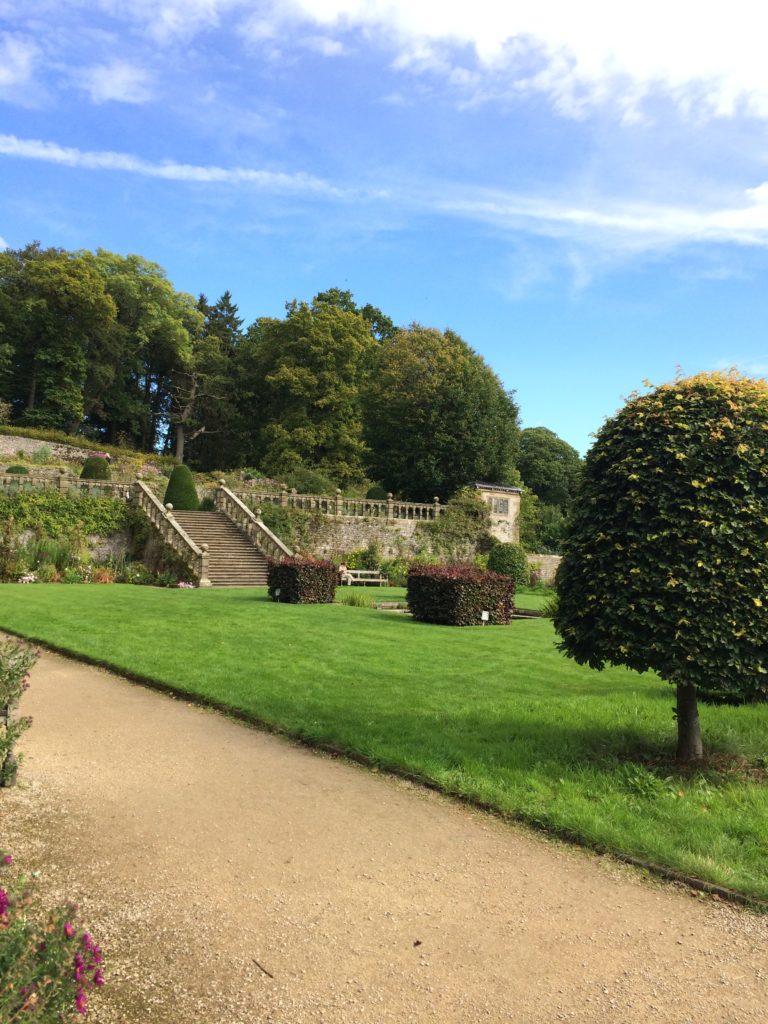
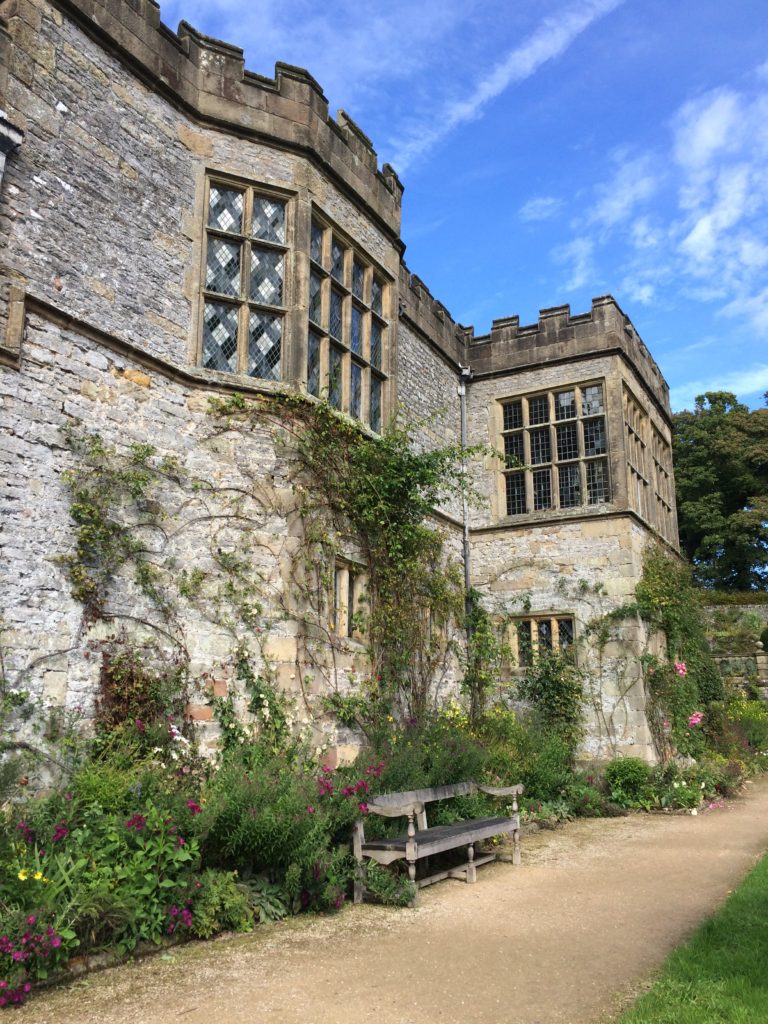
In our next post, Act Three, Number One London Tours takes on Chatsworth, Hardwick Hall, and Tatton Hall.
Find details regarding Number One London’s 2019 Country House Tour here.
by Victoria Hinshaw
This is how I felt for almost the entire 2017 Number One London Country House Tour. I love visiting English Stately Homes and this Tour offered a stellar variety of periods, architectural styles, and decorative arts. Plus, our group was remarkably compatible and full of historical curiosity. We had great food, accommodating drivers, fun hotels, etc. etc. etc. Only thing I wished for was more energy!!!
See how our first hotel’s wall recognized our goals!
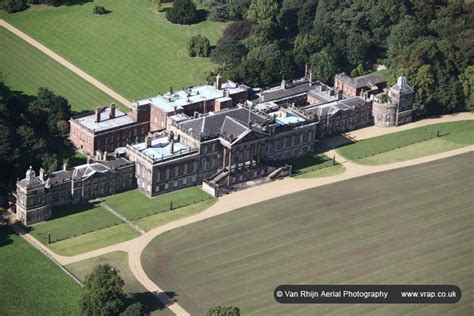
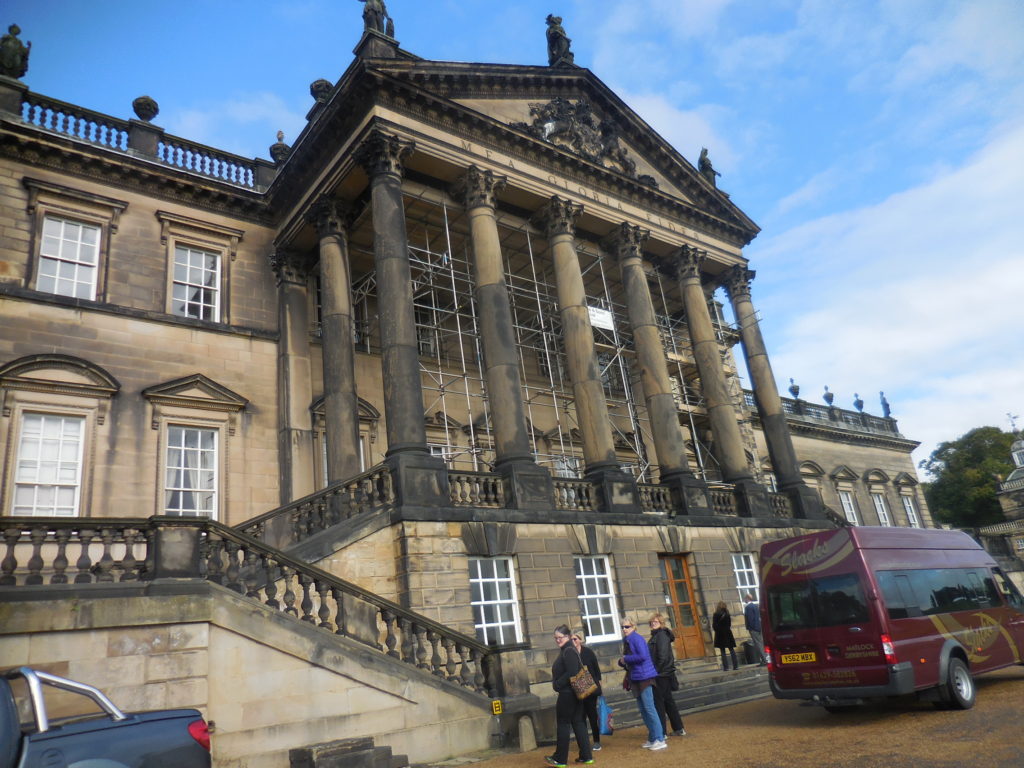
Our first stop was one I had been eagerly anticipating for several years. Wentworth Woodhouse has only recently opened to the public. As you can see from the pictures of the south facade, you have to get back a long distance to photograph the entire house, and this is only half of it.
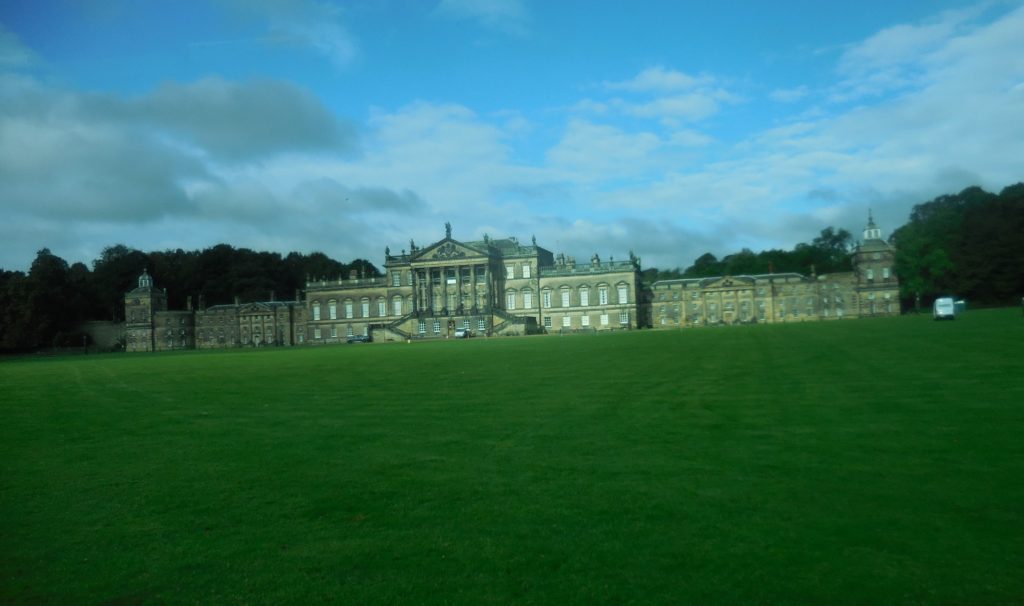
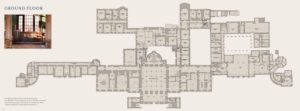
Said to be the largest private residence in Europe, Wentworth-Woodhouse in fact is two houses joined. The earlier west-facing house was begun by the 1st Marquess of Rockingham in the 1720’s in mellow red brick in the baroque style. A few years later, the same Marquess chose to build an even larger house, the east facade, constructed of sober grey stone in the Palladian style.


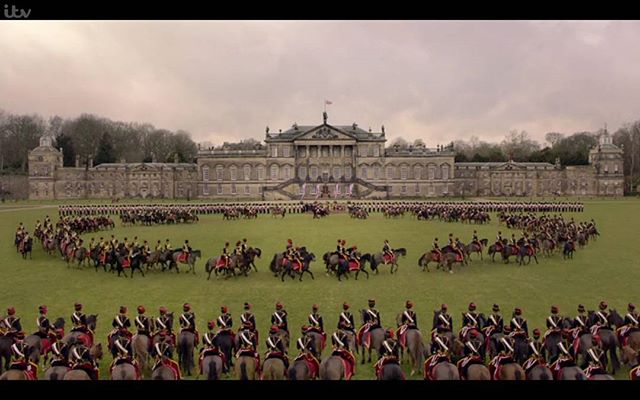
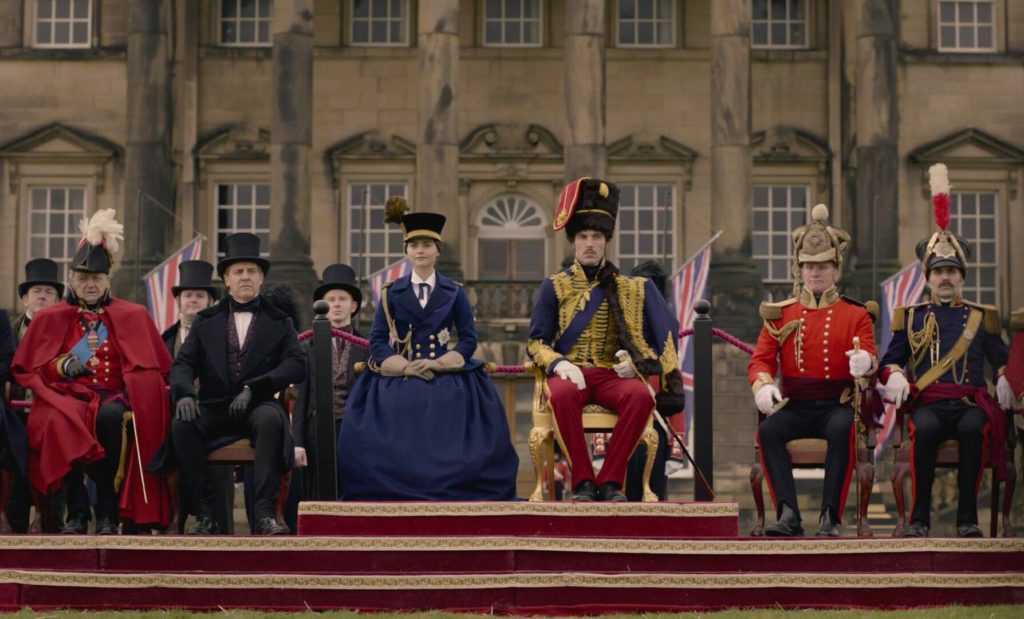
Recently WW, as I will refer going forward to Wentworth Woodhouse to save my fingers, has been seen in several films and on television. In Episode One of Season Two of Victoria, the scenes of the royal couple reviewing the regiment were staged in front of WW.
 I will relate the full story of WW soon, and a long complicated tale it is. For the time being, just know that touring it was fascinating. Recently, the estate has been acquired by a Preservation Trust after many years as a school and then standing empty and abandoned for some time. Fortunately, the Trust will preserve and restore the house and the gardens.
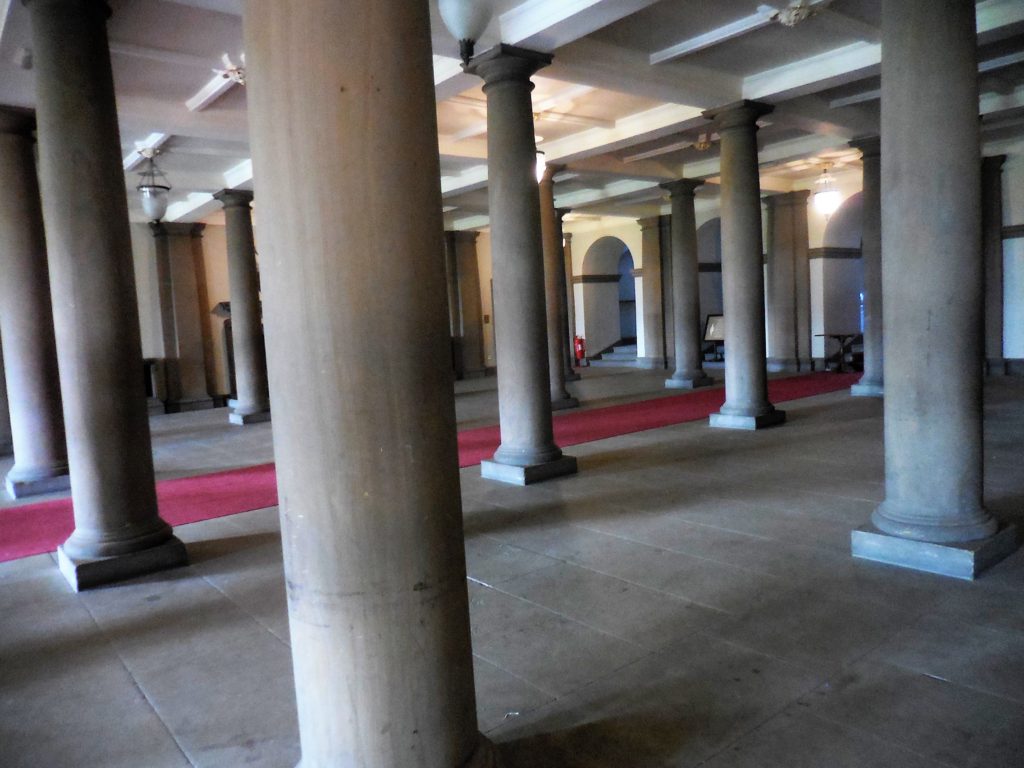
We entered on the ground level, to find a great forest of pillars, cleverly named the Pillared Hall.
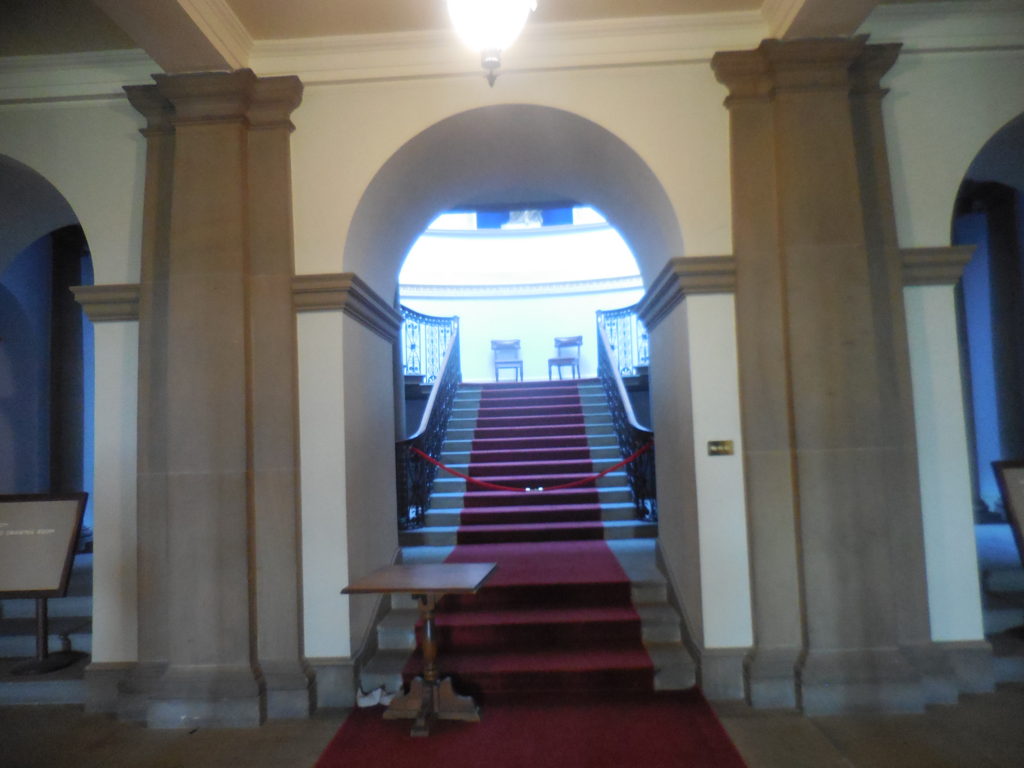
 And a noble staircase leading to the Piano Nobile, that is, the State Rooms.
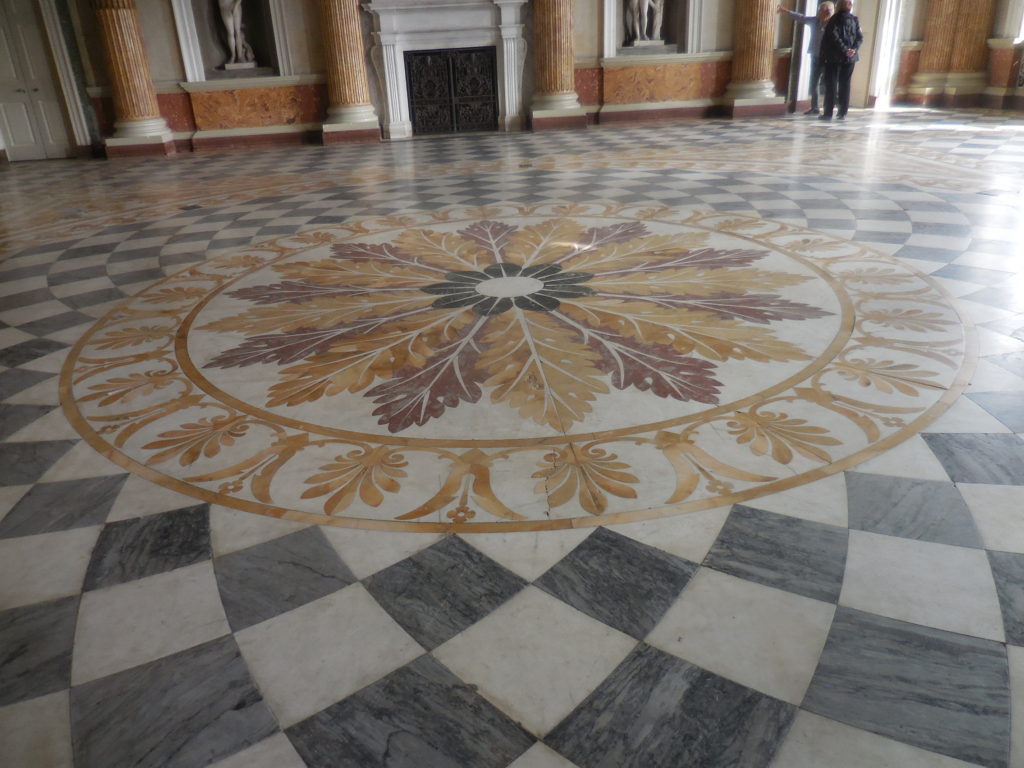
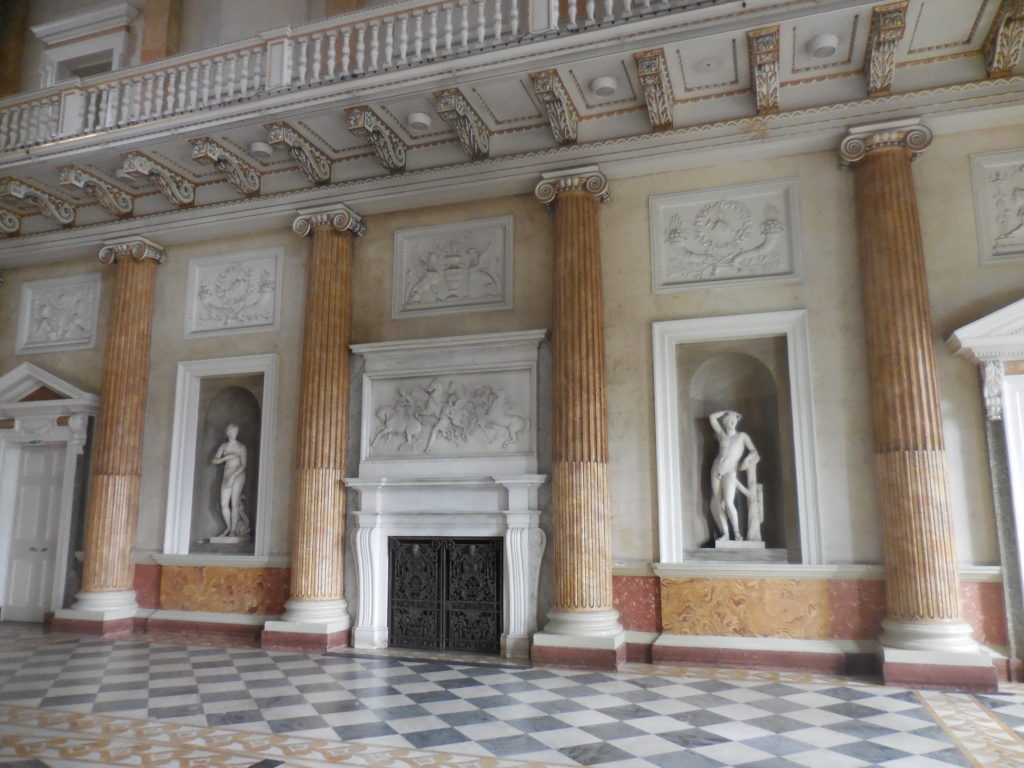
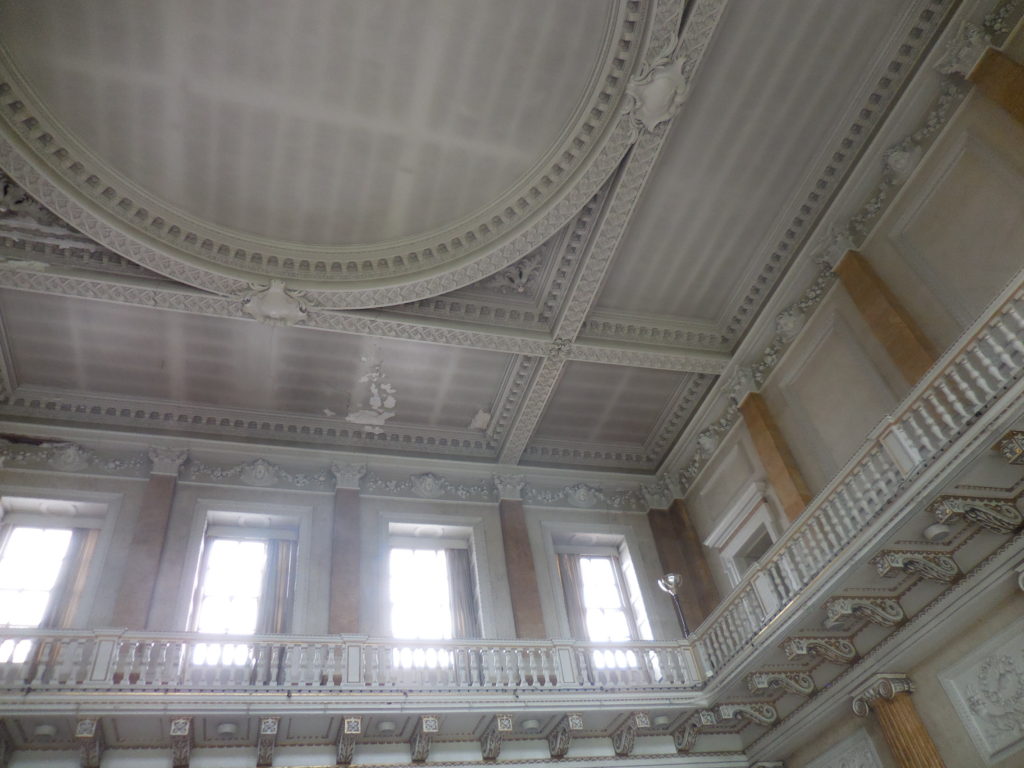
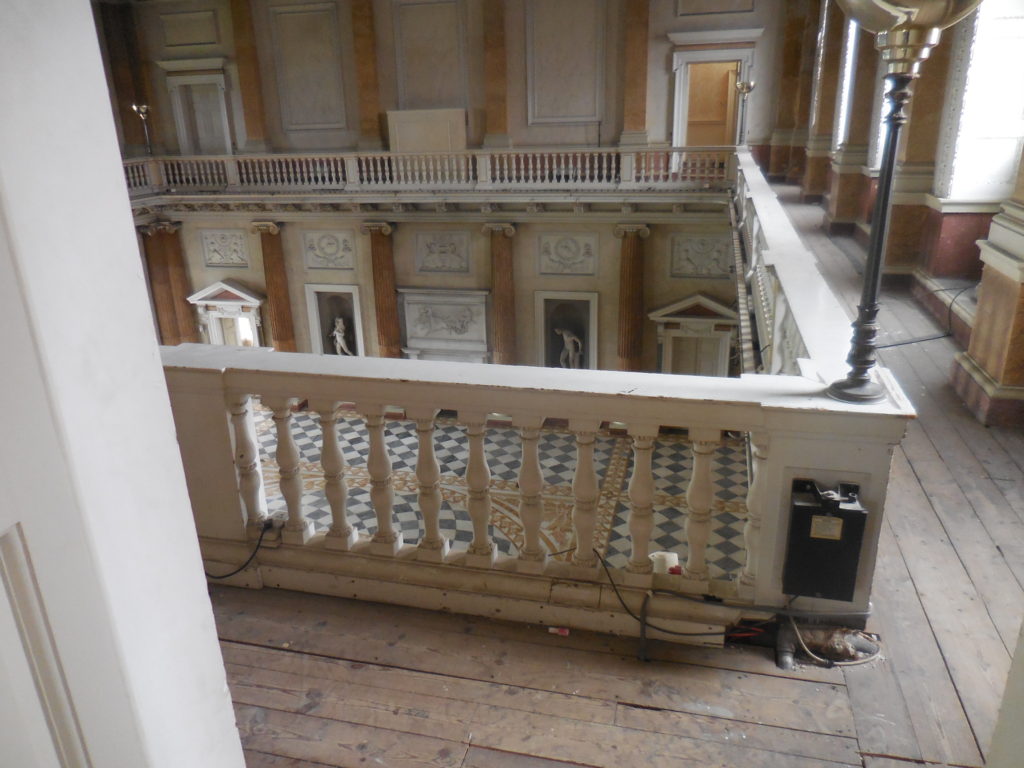
It is easy to see why there are so many pillars holding up this vast room, which was used for all sorts of gatherings, as a grand ballroom, as a gymnasium for the women’s college, and it also stands in for Buckingham Palace in the film Darkest Hour.
Most of the rooms are now empty, previous furnishings sold, stored, or lost. WW is a venue for business meetings and weddings, with the facilities able to accommodate either intimate gatherings or a virtual mob.
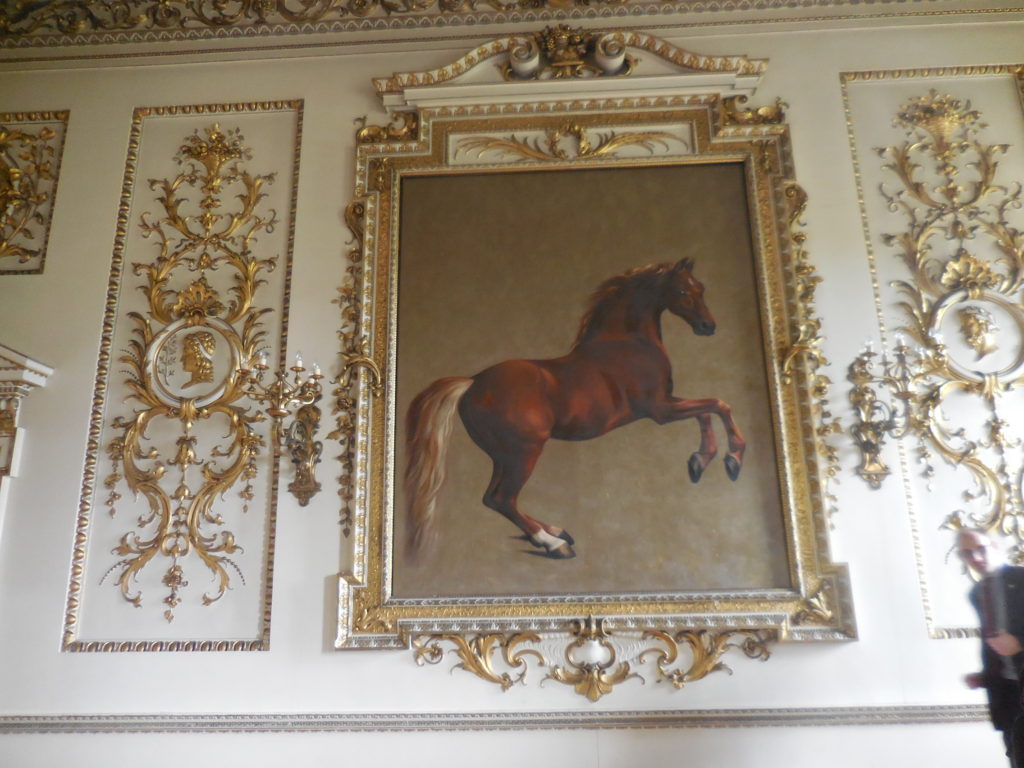
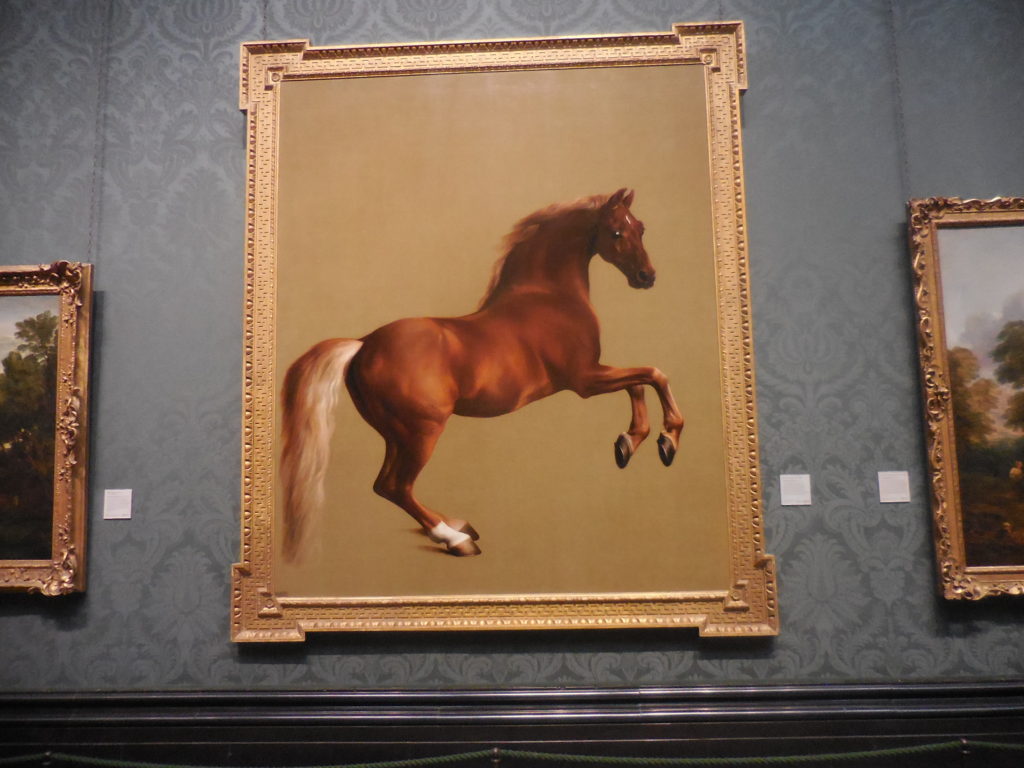
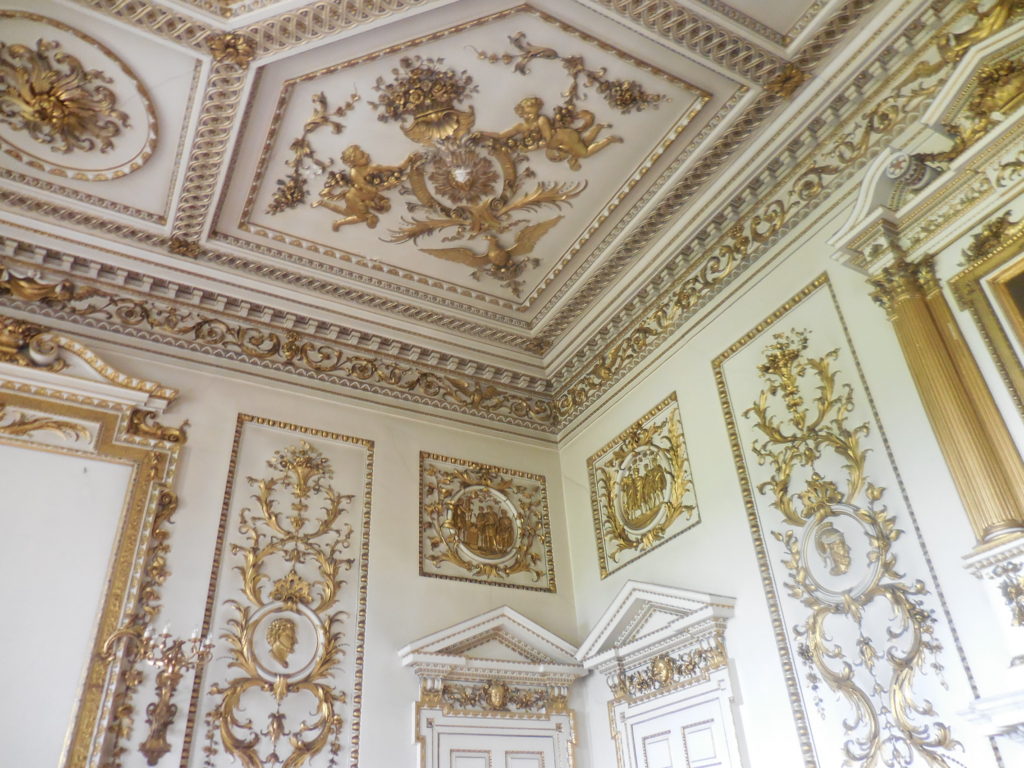
The gilded walls of this room once held the famous 1762 painting by George Stubbs of Whistlejacket, a champion racehorse owned by the 2nd Marquess of Rockingham. Sold to partially fulfill death duties, the canvas now hangs in London’s National Gallery, where I had visited at the beginning of my trip. The version at WW is a copy.
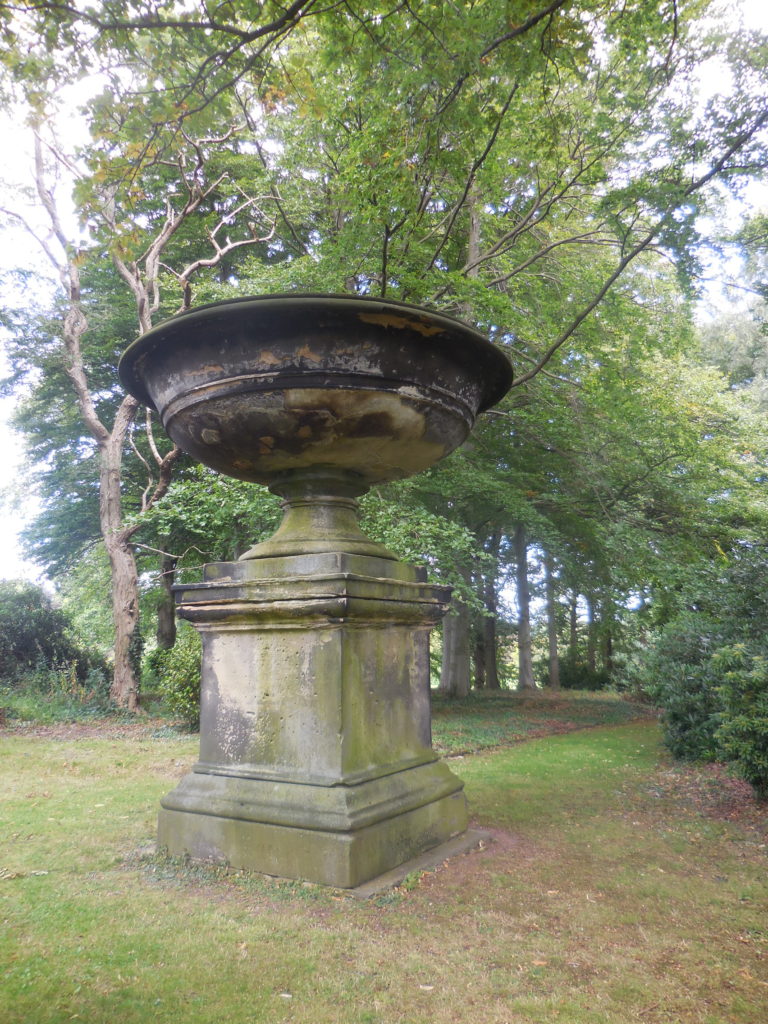
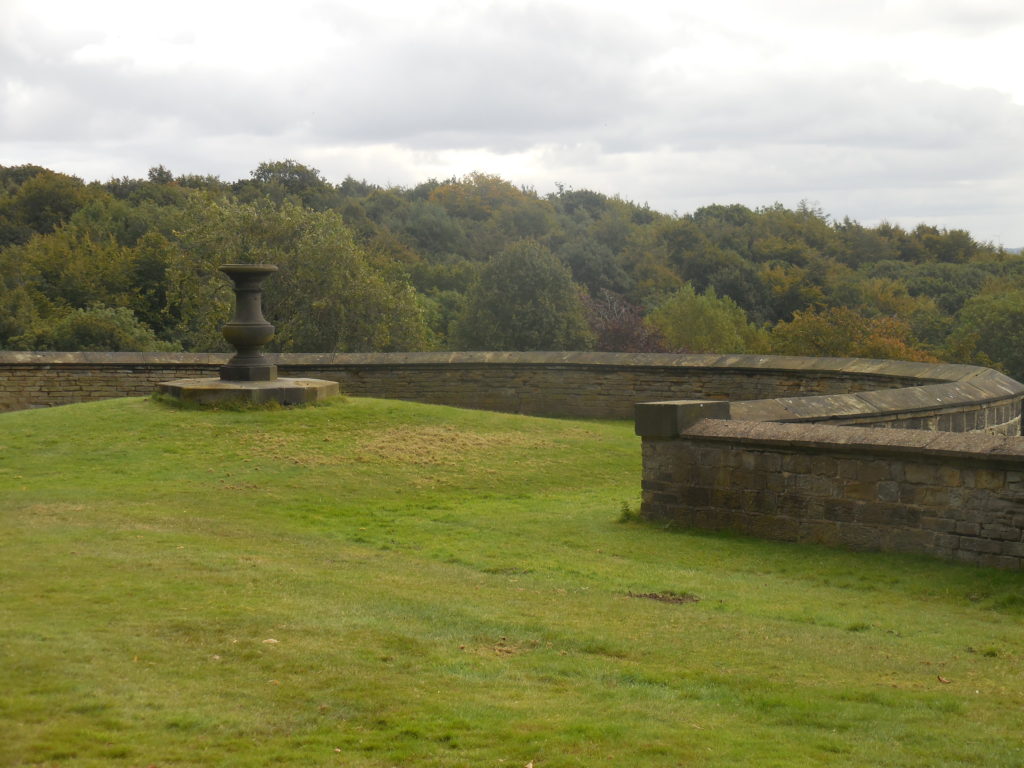
I will close with three views of the extensive gardens, which are being restored after wholesale destruction for strip mining of coal. Next time I will cover, more briefly, other houses we visited on Number One London’s 2017 Country House Tour.
Find details regarding Number One London’s 2019 Country House Tour here.