WATERLOO TEETH

Perhaps the most famous set of false teeth are the ivory set once worn by George Washington, pictured at left. Ivory dentures were popular into the 18th century, and were made from natural materials including walrus, elephant or hippopotamus ivory. These ill fitting and uncomfortable ivory dentures were replaced by porcelain dentures, introduced in the 1790’s, which weren’t much more successful due to their brightness and tendency to crack. In fact, the most favored material for false teeth was . . . . real teeth.

Presiding at the annual meeting of the British Dental Association held in Dublin in 1888, Mr. Daniel Corbett, Dental Surgeon, stated : “Six weeks was the usual time spent in the manufacture of a complete denture when working bone and natural teeth. When human teeth were in fashion, our supply was usually had from the graveyard, and I recollect what attention was paid to the gravedigger at his periodical visits to my father’s residence with his gleanings from the coffins he chanced to expose in the discharge of his avocation. His visits were generally at night, and no hospitable duty in which my father might chance to be engaged was permitted to interfere with the reception of this ever welcome visitor into the sanctum sanctorum of the house.The gravediggers every Monday morning made their way to the dental depots, each with his sack on his back containing the ghastly burdens collected during the previous week . . . we can scarcely realize the horror of the scene of these men bringing the jaws which they had turned up in “God’s acre” in their daily avocation; but mankind required teeth, and to meet the need most of those put in the mouth came from the jaws of the dead.”

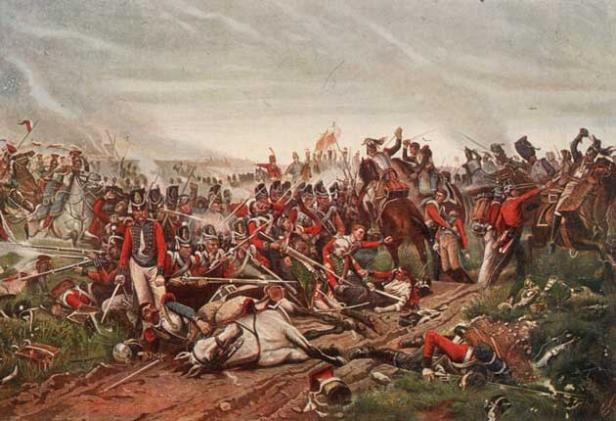
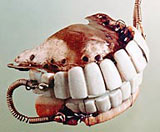
While graveyards were a profitable source for cadever teeth, the quantity of teeth typically on hand was limited. Enter the Peninsular Wars and the Battle of Waterloo. Of the 50,000 men who fell at the Battle of Waterloo, most were young and healthy and their teeth were of a generally good standard, much better than the teeth employed in the majority of dentures. Having been plundered from the battlefield, most of these teeth made their way back to Britain, the country best placed to afford the new top-quality dentures which would incorporate them. These then became known as ‘Waterloo Teeth,’ a set of which are pictured at right. The name quickly established itself as applying to any set of dentures made from young and healthy teeth taken from a Napoleonic battlefield and continued as a term on into the 19th Century.

The Quarterly Review 1842 refers to a portion of Bransby Cooper’s biography of his uncle, surgeon Sir Astley Cooper, and runs – “Tooth hunters followed the armies, moving in as soon as the living had left the field. `Only let there be a battle and there will be no want of teeth; I’ll draw them as fast as the men are knocked down,’ says one such hunter in The Life of Astley Cooper. There were so many spare teeth that they were shipped abroad by the barrel. In 1819, American dentist Levi Spear Parmly, the inventor of floss, wrote that he had `in his possession thousands of teeth extracted from bodies of all ages that have fallen in battle.’

“This seems always to have been a regular though subordinate pursuit with them even at home. One of our author’s acquaintances, Mr. Murphy, robbed the vault under a London meeting-house, in one night, of teeth which he sold for 60 pounds. No wonder, then, if We find in a subsequent page that one of these fellows returned from Waterloo with a box of teeth and jaw-bones valued at 100 pounds. Did the autumnal beauties of 1816 suspect this? But the most precious harvest of all was, we are told, that of 1813. ‘ The German universities,’ says a French dentist, ‘turned out many youths in their very bloom; and our conscripts were so young that few of their teeth had been injured by the stain of tobacco.’ The Polish Jews were very active at this work during Napoleon’s later campaigns; and we remember a British dentist who was nicknamed Dr. Pulltuski from the notoriety of his dealings with them.”

On a more humorous note, it’s interesting that at least two books, Modern England 1820-1885 By Oscar Browning and Sir Spencer Walpole’s History of England both refer to George IV’s false teeth. It seems that the King was set to deliver a speech to Parliament in February of 1825, but had lost his false teeth and so it was delivered, instead, by Lord Eldon.

Separate mineral teeth, designed to be mounted on gold or other plates, which finally gave the death blow to the use of the gleanings of the graveyard, were the invention of a M. Audibran, of Paris, and were introduced into England by Mr. Corbett and their manufacture was taken up by Mr. Claudius Ash, of London, in 1837, who rapidly wrought a marvellous improvement in their strength and beauty, and severed once and for all the gravediggers’ connection with the dental surgery. In America, the Civil War continued to provide a source for human teeth.

The following ad appeared in The Solicitor’s Journal and Reporter of June 4 1859

TEETH
 
NO. 9, LOWER GROSVENOR-STREET, GROSVENOR-SQUARE,
(Removed from 61). By Her Majesty’s Royal Letters Patent.
NEWLY-INVENTED APPLICATION of CHEMICALLY PREPARED INDIA-RUBBER in the construction of Artificial Teeth, Gums, and Palates.
 
 
MR. EPHRAIM
MOSELY, SURGEON-DENTIST, Sole Inventor And Patentee.
 

A new, original, and invaluable invention, consisting in the adaptation, with the most absolute perfection and success, of CHEMICALLY-PREPARED WHITE and GUM-COLOURED INDIA-RUBBER, as a lining to the gold or bone frame. The extraordinary results of this application may be briefly noted in a few of their most prominent features:—All sharp edges are avoided; no spring wires or fastenings are required; a greatly increased freedom ot snction is supplied ; a natural elasticity, hitherto wholly unattainable, and a fit,perfected with the must unerring accuracy, arc secured; while from the softness and flexibility of the agent employed, the greatest support is given to the adjoining teeth when loose or rendered tender by the absorption of the gums. The acids of the mouth exert no agency on the chemically-prepared India-rubber, and, as it is a non-conductor, fluids of any temperature may be retained in the mouth, all unpleasantness of smell and taste being it the same time wholly provided against by the peculiar nature of its preparation.

The introduction of anaesthesia had a dramatic effect on dentistry. Along with ether and chloroform, nitrous oxide became the most preferred option and most surgeries were equipped with general anaesthetic equipment by the end of the 19th century. Many people were now prepared to have their rotting teeth extracted, which led to an enormous demand for cheap and efficient dentures. The introduction of vulcanite in the mid 19th century meant that dentures could be mass-produced and became affordable, replacing the expensive ivory versions. However, old false teeth apparently still had some value as we read in Methods and Machinery of Practical Banking by Claudius Buchanan Patten (1908) – It is asserted that in these days of poor teeth the average adult has at least a dollar’s worth of gold in his mouth, and that, consequently, every generation buries in the cemeteries of the United States 950,000,000 in gold. It may be that in England more economy is shown than here in the disposition of dental deposits, for I have seen in London stores any quantity of old false teeth on sale for the gold that was fixed in them. In the London `Times’ it is very common to see a long list of advertisements of second-hand clothing and secondhand false teeth for sale.

The 20th century saw an explosion of new materials, techniques and technology in dentistry. Novocaine was introduced early in the 1900’s as a local anaesthetic by a German chemist, Alfred Einhorn. The use of local anaesthetics during dental procedures did much to change the public’s attitude towards dentistry. By 1907 the British School Dental Service opened the first UK children’s clinic. Toothbrush clubs operated in London schools, and toothbrushes were issued to all serving men during World War I, which extended their use into working class families for the first time.

Originally published June 2010

SIR FREDERICK CAVENDISH PONSONBY

This post was originally published on June 18, 2010.

When one thinks of the great British soldiers at the Battle of Waterloo, one naturally conjures up visions of the Duke of Wellington, Alexander Gordon and, of course, the Marquess of Anglesey, but one rarely thinks of Sir Frederick Cavendish Ponsonby, whose Waterloo experience is, in my opinion, one of the most remarkable.

Here is the exceedingly dry manner in which Sir Frederick is summed up in The Waterloo Roll Call By Charles Dalton:

Aftds. Maj.-Gen. Sir Frederick Cavendish Ponsonby, K.C.B. and K.M.T., Gov. of Malta. 2nd son of Frederick, 3rd Earl of Bessborough, by Lady Henrietta, 2nd dau. of 1st Earl Spencer. Bn. 6th July, 1783. Cornet 10th Lt. Dgns. 1800. Maj. 23rd Lt. Dgns. 1807. At head of this regt. distinguished himself at Talavera, in 1809. Lt.-col. of the regt. 1810. At Barossa, with a squadron of German dragoons, he charged the French cavalry covering the retreat, overthrew them, and took two guns. Lt.-Col. 12th Lt. Dgns. 1811. Again signally distinguished himself at the battles of Salamanca and Vittoria.

From this, one would have nary a clue of the truly death-defying experience of this officer, a favorite of the Duke of Wellington’s. Ponsonby was the the second son of the 3rd Earl of Bessborough and Henrietta (Harriet) Spencer, whose sister was Georgiana, Duchess of Devonshire. Sir Frederick’s own sister was the notorious Lady Caroline Lamb. Talk about your Regency soap opera – Lady Bessborough had had a brief affair with Richard Brinsley Sheridan and another with Lord Granville Leveson Gower, with whom she had two children before marrying him off to her niece, Lady Harriet Cavendish.

But I digress . . . . . .

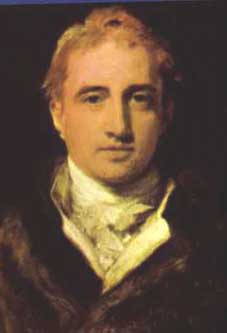
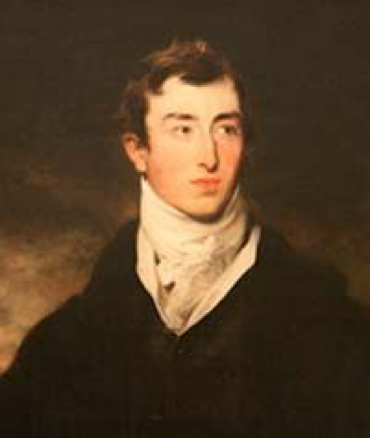
In 1815, Frederick was 33 years of age when he was called to accompany Lord Castlereagh (above) to the Congress of Vienna, which sat after Napoleon’s first abdication to restore the balance of power in Europe and to divide the spoils. The Congress was showing signs of violent disagreement, when to the horror and amazement of Europe, Napoleon escaped from Elba and landed at Cannes. The French Army rallied to him regiment by regiment as he marched through France toward the capital. He entered Paris on March 20, while the King and his family fled. Those English familites who had gone to Brussels to economize after the war knew that they were in a terrible position when Napoleon, who by then commanded an army of 535,000 men, marched to join it on the Belgian frontier on June 12.

At Waterloo, Sir Frederick was attached to the 12th Light Dragoons, who were ordered, along with the 16th Light Dragoons, to charge down a slope to support the withdrawal of the Union Brigade of heavy cavalry, which was being led by his second cousin, William Ponsonby, who lost his life that day. It would have been all too easy for Sir Frederick to have met his own death, as well. In fact, he would presently, and within a very short span of time, be presented with several ways in which he could have lost his life.

The best account of what occurred is the one given by Sir Frederick himself, as written in a letter to his mother by Lady Shelley:

Dear Lady Bessborough,

You have often wished for some written account of the adventures and sufferings of your son, Colonel Ponsonby, on the field of Waterloo; the modesty of his nature is however no small obstacle in the way. Will the following imperfect sketch supply its place until it comes? The battle of the 18th of June was one morning alluded to in the library at Althorpe, and his answers to many of the questions which were put to him are here thrown together, as nearly as I can remember in his own words.

“The weather cleared up at noon, and the sun shone out a little just as the battle began. The armies were within 800 yards of each other; the videttes, before they were withdrawn, being so near as to be able to converse. At one moment I imagined I saw Bonaparte; a considerable staff was moving rapidly along the front of our line. I was stationed with my regiment, about 300 strong, at the extreme of the left wing, and directed to act discretionally; each of the armies was drawn up on a gentle declivity, a small valley lying between them.

‘”At one o’clock, observing, as I thought,unsteadiness in a column of French infantry of 1,000 men or thereabouts, which was advancing with an irregular fire, I resolved to charge them. As we were descending at a gallop we received from our own troops on the right a fire much more destructive than theirs, they having begun long before it could take effect, and slackening as we drew nearer. When we were within 50 paces of them, they turned, and much execution was done amongst them, as we were followed by some Belgians who had remarked our success. But we had no sooner passed through them, than we were attacked in our turn before we could form, by about 300 Polish Lancers, who had come down to their relief—the French artillery pouring in amongst us a heavy fire of grape-shot, which, however, for one of our men killed three of their own. In the melee I was disabled almost instantly in both my arms, and followed by a few of my men who were presently cut down—for no quarter was asked or given—I was carried on by my horse, till receiving a blow on my head from a sabre, I was thrown senseless on my face to the ground. Recovering, I raised myself a little to look round, being I believe at that time in a condition to get up and run away, when a Lancer, passing by, exclaimed : ” Tu n’es pas mort, coquin,” (You’re not dead, naughty) and struck his lance through my back. My head dropped, the blood gushed into my mouth; a difficulty of breathing came on, and I thought all was over. Not long afterwards (it was then impossible to measure time, but I must have fallen in less than ten minutes after the charge) a tirailleur came up to plunder me, threatening to take away my life. I told him that he might search me, directing him to a small side pocket, in which he found three dollars, being all I had. He unloosed my stock, and tore open my waistcoat, then leaving me in a very uneasy posture. He was no sooner gone, than another came up for the same purpose, but assuring him I had been plundered already, he left me. When an officer, bringing on some troops (to which probably the tirailleurs belonged) and halting where I lay, stooped down and addressed me, saying he feared I was badly wounded, I replied that I was, and expressed a wish to be removed into the rear. He said it was against the orders to remove even their own men, but that if they gained the day, as they probably would, for he understood the Duke of Wellington was killed and that six battalions of the English army had surrendered, every attention in his power should be shown me. I complained of thirst, and he held his brandy bottle to my lips, directing one of his men to lay me down on my side, and placed a knapsack under my head. He then passed on into the action, and I shall never know to whose generosity I was indebted, as I conceive, for my life. Of what rank he was I cannot say; he wore a blue great-coat. * By-and-bye another tirailleur came, and knelt down and fired over me, loading and firing many times, and conversing with great gaiety all the while. At last he ran off, saying: ‘Vous serez bien aise d’entendre que nous allons nous retirer. Bon jour, mon ami.’ (You will be glad to hear that we are going to withdraw. Good day, my friend)

“Whilst the battle continued in that part, several of the wounded men and dead bodies near me were hit with the balls, which came very thick in that place. Towards evening, when the Prussians came up, the continued roar of cannon along their and the British line, growing louder and louder as they drew near, was the finest thing I ever heard. It was dusk when the two squadrons of Prussian cavalry, both of them two deep, passed over me in a full trot, lifting me from the ground, and tumbling me about cruelly—the clatter of their approach and the apprehensions it excited may be easily conceived. Had a gun come that way, it would have done for me. The battle was then nearly over, or removed to a distance. The cries and groans of the wounded all around me became every instant more and more audible, succeeding to the shouts, imprecations, and cries of ” Vive l’Empereur,” the discharges of musketry and cannon, now and then intervals of perfect quiet which were worse than the noise. I thought the night would never end. Much about this time one of the Royals lay across my legs—he had probably crawled thither in his agony—his weight, convulsive motions, his noises, and the air issuing through a wound in his side, distressed me greatly—the latter circumstance most of all, as the case was my own.

“It was not a dark night, and the Prussians were wandering about to plunder, and the scene in “Ferdinand Count Fathom” came into my mind, though no women, I believe, were there. Several Prussians came, looked at me, and passed on. At length one stopped to examine me. I told him as well as I could, for I could speak but little German, that I was a British officer, and had been plundered already. He did not desist, however, and pulled me about roughly before he left me. About an hour before midnight I saw a soldier in an English uniform coming towards me. He was, I suspect, on the same errand, but he came and looked in my face. I spoke instantly, telling him who I was, and assuring him of a reward if he would remain by me. He said that he belonged to the 40th Regiment, but that he had missed it. He released me from the dying man, and being unarmed, he took up a sword from the ground, and stood over me, pacing backwards and forwards.

“‘At 8 o’clock in the morning some English were seen at a distance. He ran to them, and a messenger was sent off to Colonel Harvey. A cart came for me—I was placed on it, and carried to a farmhouse, about a mile and a half distant, and laid in the bed from which poor Gordon, as I understood afterwards, had been just carried out. The jolting of the carriage and the difficulty of breathing were very painful. I had received seven wounds; a surgeon slept in my room, and I was saved by continual bleeding—120 ounces in two days, besides a great loss of blood on the field.

“The lances from their length and weight would have struck down my sword long before I lost it, if it had not been bound to my hand. What became of my horse I know not. It was the best I ever had.”

As it happened, Lord and Lady Bessborough had been on a Continental tour in the months prior to Waterloo and were coming slowly home when the news reached them on July 8 that their son had been desperately wounded at the Battle of Waterloo. Lady Bessborough (at right) made a forced journey to Brussels to nurse him, and Lady Caroline Lamb joined her there. To her credit, Lady Bessborough nursed her son as he recuperated, but Lady Shelley’s letter quoted above indicates that mother and son had not the opportunity, or the inclination, to then discuss Posonby’s harrowing experience.

A few days later, that old gossip Creevey wrote:  “On Tuesday the 20th . . . Barnes and Hamilton would make me ride over to see the field of battle, which I would willingly have declined, understanding all the French dead were still on the field—unburied, and having no one to instruct me in detail as to what had passed—I mean as to the relative positions of the armies, etc. However, I was mounted, and as I was riding along with Hamilton’s groom behind me about a mile and a half on the Brussells side of the village of Waterloo, who should overtake me but the Duke of Wellington in his curricle, in his plain cloaths and Harvey by his side in his regimentals. So we went on together, and he said as he was to stop at Waterloo to see Frederick Ponsonby and de Lancey, Harvey should go with me and shew me the field of battle, and all about it. When we got to Waterloo village, we found others of his staff there, and it ended in Lord Arthur Hill being my guide over every part of the ground.”

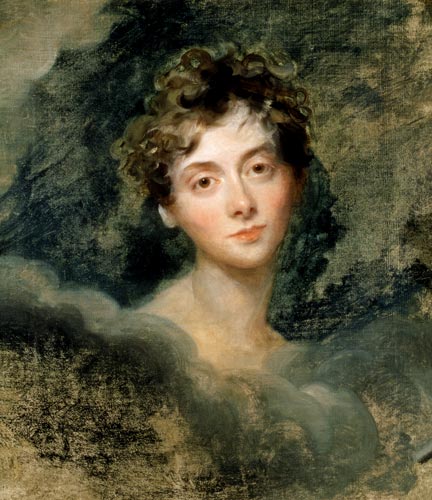
If Creevey’s tour of the ground so soon after the battle seems goulish, here’s a letter written by the recuperating Sir Frederick’s own sister, Lady Caroline Lamb (above), to the Viscountess Melbourne from Brussels, 1815. It is a pouty letter which brilliantly displays Caroline’s petulance and immaturity in the face of so much heartbreak.

“Dearest Lady Melbourne  . . . The great amusement at Bruxelles, indeed the only one except visiting the sick, is to make large parties etc; go to the field of Battle and pick up a skull or a grape shot or an old shoe or a letter, etc.; bring it home. W[illia]m has been, I shall not go —unless when Fred [Ponsonby] gets better,etc; goes with me. There is a great affectation here of making lint etc.; bandages—but where is there not some? etc; at least it is an innocent amusement. It is rather a love making moment, the half wounded Officers reclining with pretty ladies visiting them—is dangerous. I also observe a great coxcombality in the dress of the sick— which prognosticates a speedy recovery. It is rather heart-breaking to be here, however, etc; one goes blubbering about—seeing such fine people without their legs etc.; arms, some in agony, etc; some getting better. The Prince of Orange enquired much after all his acquaintance; he suffers a great deal, but bears it well. The next door to us has a Col. Millar, very patient, but dreadfully wounded. Lady Conyngham is here—Lady C. Greville—Lady D. Hamilton, Mrs. A. B. Smith, Lady F. Somerset, Lady F. Webster most affected; Lady Mountmorress, who stuck her parasol yesterday into a skull at Waterloo. . . .”

Sir Frederick recovered and went on to enjoy a close relationship with the Duke long after the battle, as shown in the following letter the Duke wrote to Lady Shelley:

London, September 21, 1821


My Dear Lady Shelley, I write to tell you that there is some prospect that the King will go out of town on Saturday, and in that case we might be able to go to you on Saturday evening, and stay till Tuesday or Wednesday. I will let you know positively to-morrow. Shall I bring down Frederick Ponsonby, who was going with me to S. Saye? Ever yours affectionately,  W.

Sir Frederick married Lady Emily Charlotte Bathurst, daughter of Henry Bathurst, 3rd Earl Bathurst of Bathurst and Lady Georgina Lennox, on 16 March 1825. On 27 May 1825, he was promoted major-general, commanding the troops in the Ionian Islands and on 22 December 1826, he was appointed Governor of Malta, holding that post for eight and a half years. Sir Frederick died on 11 January 1837 at the age of fifty-three.

* This French officer was Major de Laussat of the Imperial Guard Dragoons, as Sir Frederick would learn in 1827 when the two met socially and soon after, through a conversation regarding the experiences of each during the Battle, discovered the coincidence of their first meeting upon the field.

COUNTESS BROWNLOW’S WATERLOO RECOLLECTIONS

From Slight Reminiscences of a Septuagenarian From 1802 to 1815 By Emma Sophia Edgcumbe Cust Brownlow (Countess of)

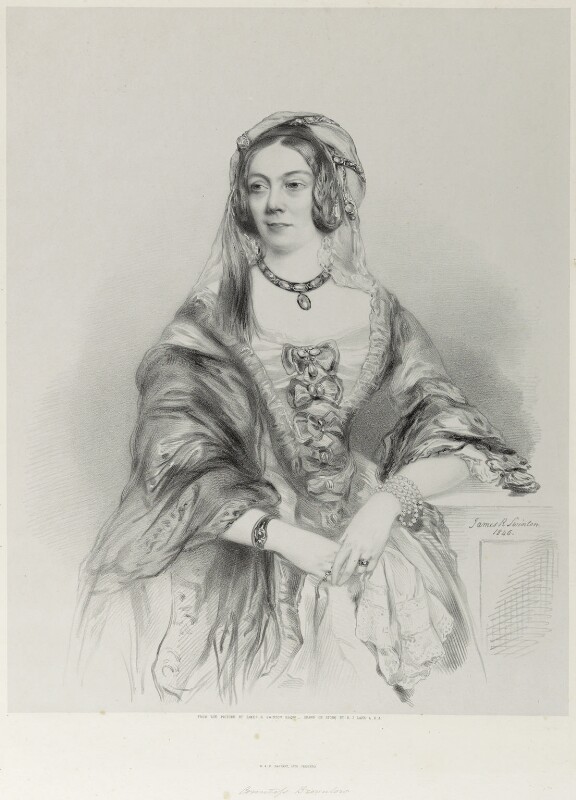
Countess Brownlow by Richard James Lane, printed by M & N Hanhart, after James Rannie Swinton, lithograph, 1846 – National Portrait Gallery
June.—My father went to Mount Edgcumbe, and I remained, as I frequently did, with Lord and Lady Castlereagh. As days passed on, news came of Bonaparte, at the head of a formidable army, being on his march to the Low Countries, where the Duke of Wellington, with the English, Brunswick, Belgian, and Hanoverian forces, and the Prussian army under Marshal Blucher were ready to receive him.

Reports of battles succeeded each other, all equally unfounded, but on the 19th or 20th, at an evening party at Lansdowne House, much sensation was caused by the report that great battle had certainly been fought, and that the intelligence had been brought, it was said, by pigeon to the Rothschilds.

This suspense ended on the 21st . Never shall I forget that evening! Lord and Lady Castlereagh were dining two or three doors from their own house with Mrs. Boehm, to meet the Prince Regent, and I was sitting quietly alone, when suddenly there came the sound of shouting and the rush of a crowd, and running to the window to discover the cause of all this noise, I saw postchaise and four, with three of the French eagles projecting out of its windows, dashing across the square and to Lord Castlereagh’s door. In moment the horses’ heads were turned, and away went the chaise to Mrs. Boehm’s; leaving me in state of excited wonderment,  but feeling conviction that this haste, and the three eagles, and the cheering of the people, announced victory. Shortly after I received a from Lady Castlereagh, telling me to dress and to join her at Mrs. Boehm’s—this I did quickly.

The ladies had left the dining-room, and I learnt that Major Henry Percy had arrived, the bearer of despatches from the Duke of Wellington, with the intelligence of a glorious and decisive victory of the Allies over the French army, commanded by Bonaparte in person. The despatches were being then read in the next room, to the Prince Regent, and we ladies remained silent, too anxious to talk, and longing to hear more. Lord Alvanley was the first gentleman who appeared, and he horrified us with the list of names of killed and wounded; and such names! great and distinguished in the campaigns of the Peninsula, and become almost household words. There were several for whom I felt true regard. The Guards, he said, had suffered severely—my brother Ernest was in them, but the fate of a subaltern could not be known! I had wished to hear more, and what I heard stupified me; I could scarcely think or speak.

Presently the Prince came in, looking very sad, and he said, with much feeling, words to this effect: ‘It is glorious victory, and we must rejoice at it, but the loss of life has been fearful, and I have lost many friends;’ and while he spoke the tears ran down his cheeks. His Royal Highness remained but short time, and soon after the party broke up; and I must, in justice to Lady Castlereagh, state that the account I read in some book that she went from Mrs. Boehm’s to a ball at Sir George Talbot’s, and spread the news (so heartrending to many) there, was totally false, for immediately on hearing the details from Lord Alvanley, she made me write a note of excuse to Sir George Talbot both for herself and me, as she properly felt that going to a ball under such circumstances was quite out of the question. Lord Alvanley had slipped out of the room, and went to the ball, and he certainly had the credit of having sent half the ladies into fainting fits and hysterics.

I was very anxious to learn something of my brother, and my friends were most kind in going to the Horse Guards and making enquiries respecting him; and they soon assured me that from all they could hear, I might be at ease as to his safety. few evenings after the 21 st (I forget the exact date) I was sent for by Lord Castlereagh and found him writing despatches to the Duke, and Major Percy in full uniform standing on the opposite side of the table ready to start with them. Lord Castlereagh instantly gave me long despatch to copy, which I did as fast as I could, standing by his side, feeling very nervous all the while, with Major Percy staring and looking somewhat surprised at seeing me in the character of secretary. So absorbed was I in the mere mechanical act of writing rapidly, that I had no idea of the subject of the despatch; the only words I remembered being ‘Bavarian Contingent.’


Note: Lord Castlereagh was Emma’s uncle:

Lady Emma Sophia Edgcumbe, Countess Brownlow (1791-1872), eldest daughter of Richard Edgcumbe, 2nd Earl of Mount Edgcumbe (1764-1839) and Lady Sophia Hobart (1768-1806), third daughter of John Hobart, 2nd Earl of Buckinghamshire (1723-1793); married in 1828, as his third wife, John Cust, 1st Earl Brownlow (1779-1853), but bore him no children. She had spent her youth trailing around Europe with her uncle, Lord Castlereagh, on his official visits as Foreign Secretary. She held the office of Lady of the Bedchamber to Queen Adelaide between 1830 and 1849 and formed a close relationship with her. The widowed Adelaide came to stay at Belton and a bedchamber was redecorated for the occasion and duly renamed the Queen’s Bedroom. Lady Emma wrote Reminiscences of a Septuagenarian which was published in 1868.

THE WELLINGTON CONNECTION: CREEVEY AND WATERLOO

The following is diarist Thomas Creevey’s account of his meeting with the Duke of Wellington after the Battle of Waterloo originally published in The Creevey Papers (1909):

“About eleven o’clock, upon going out again, I heard a report that the Duke (of Wellington) was in Bruxelles; and I went from curiosity to see whether there was any appearance of him or any of his staff at his residence in the Park. As I approached, I saw people collected in the street about the house; and when I got amongst them, the first thing I saw was the Duke upstairs alone at his window. Upon his recognising me, he immediately beckoned to me with his finger to come up.*

Arthur Blundell Sandys Trumbull Hill, 3rd Marquess of Downshire

“I met Lord Arthur Hill in the ante-room below, who, after shaking hands and congratulation, told me I could not go up to the Duke, as he was then occupied in writing his dispatch; but as I had been invited, I of course proceeded. The first thing I did, of course, was to put out my hand and congratulate him [the Duke] upon his victory. He made a variety of observations in his short, natural, blunt way, but with the greatest gravity all the time, and without the least approach to anything like triumph or joy. —’ It has been a damned serious business,’ he said. ‘Blucher and I have lost 30,000 men. It has been a damned nice thing—the nearest run thing you ever saw in your life. Blucher lost 14,000 on Friday night, and got so damnably licked I could not find him on Saturday morning; so I was obliged to fall back to keep up [regain ?] my communications with him.’

“Then, as he walked about, he praised greatly those Guards who kept the farm (meaning Hugomont) against the repeated attacks of the French; and then he praised all our troops, uttering repeated expressions of astonishment at our men’s courage. He repeated so often its being so nice a thing—so nearly run a thing, that I asked him if the French had fought better than he had ever seen them do before.—’ No,’ he said, ‘they have always fought the same since I first saw them at Vimeira.’ Then he said:—’By God! I don’t think it would have done if I had not been there.’

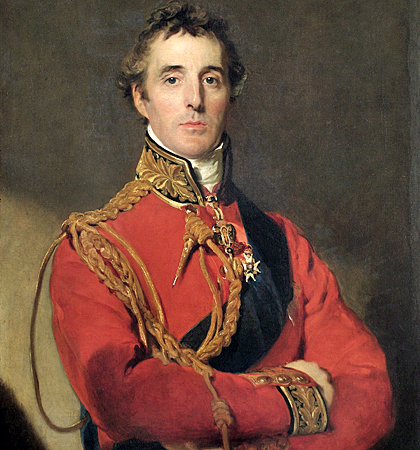
Arthur Wellesley, 1st Duke of Wellington c.1815 by Sir Thomas Lawrence

“When I left the Duke, I went instantly home and wrote to England by the same courier who carried his dispatch. I sent the very conversation I have just related to Bennet.  I think, however, I omitted the Duke’s observation that he did not think the battle would have been won had he not been there, and I remember my reason for omitting this sentence. It did not seem fair to the Duke to state it without full explanation. There was nothing like vanity in the observation in the way he made it. I considered it only as meaning that the battle was so hardly and equally fought that nothing but confidence of our army in himself as their general could have brought them thro’. Now that seven years have elapsed since that battle, and tho’ the Duke has become—very foolishly, in my opinion—a politician, and has done many wrong and foolish things since that time, yet I think of his conversation and whole conduct on the l9th—the day after the battle—exactly the same as I did then: namely—that nothing could do a conqueror more honor than his gravity and seriousness at the loss of lives he had sustained, his admission of his great danger, and the justice he did his enemy.

“I may add that, before I left him, I asked whether he thought the French would be able to take the field again; and he said he thought certainly not, giving as his reason that every corps of France, but one, had been in the battle, and that the whole army had gone off in such perfect rout and confusion he thought it quite impossible for them to give battle again before the Allies reached Paris.”
* It may seem improbable that the Duke should have made himself so accessible to a mere civilian on such a momentous morning; but there is ample confirmation of Mr. Creevey’s narrative from the Duke’s own lips. In 1836 he described the circumstance to Lady Salisbury, who noted it in her journal  as follows:
“‘ I was called,’ said the Duke, ‘about 3 in the morning by Hume to go and see poor Gordon’ (in the same inn at Waterloo),’ but he was dead before I got there. Then I came back, had a cup of tea and some toast, wrote my dispatch, and then rode into Brussels. At the door of my own hotel I met Creevey: they had no certain accounts at Brussels, and he called out to me :—” What news?” I said :— “Why I think we’ve done for ’em this time.”
The dispatch was begun at Waterloo and finished at Brussels, evidence of which remains in the draft of the original now at Apsley House, which is headed first “Waterloo,” that is struck out and “Bruxelles ” substituted.

WONDERFUL, WONDERFUL COPENHAGEN . . . .Part Two

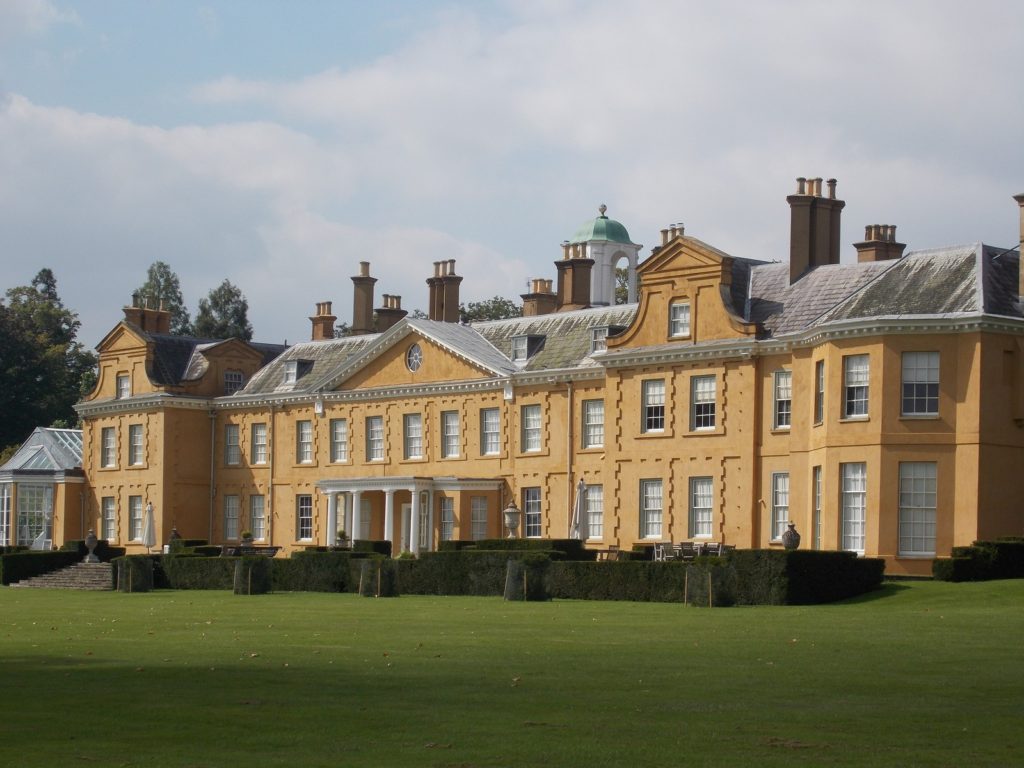
In retirement Copenhagen must have become somewhat mellowed because he was regularly ridden by friends and children at the Duke’s country estate of Stratfield Saye (above), although Lady Shelley said he was the most difficult to sit of any horse she had ever ridden. The Duchess (of Wellington) often fed him with bread and this it was said gave him the habit of approaching every lady with the most confiding familiarity. Over the years hair had been taken from the horse and made into bracelets for the ladies.

Lady de Ros, the last survivor of those who danced at the Duchess of Richmond’s ball in Brussels on the evening before the battle of Waterloo, also the last among those who had mounted “Copenhagen,” published a little volume of recollections of Wellington which contained the following extract:

“We often stayed with the Duke at Abbaye, Mount St. Martin, Cambrai, and one morning he announced that there would be a sham battle, and that he had given orders to Sir George Scovell that the ladies riding should be taken prisoners, so he recommended our keeping close to him. I had no difficulty in doing so, as I was riding the duke’s Waterloo charger “Copenhagen,” and I found myself the only one within a square where they were firing. To the Duke’s great amusement, he heard one of the soldiers saying to another: “Take care of that ‘ere horse; he kicks out. We knew him well in Spain,” pointing to Copenhagen. He was a most unpleasant horse to ride, but always snorted and neighed with pleasure at the sight of troops. I was jumping with him when the stirrup broke, and I fell off. In the evening the Duke had a dance, and said to me, “Here ‘s the heroine of the day—got kicked off, and didn’t mind it.”

This passage from a letter by Lady Shelley indicates that she concurred with Lady de Ros regarding Copenhagen’s merits as a mount:  “I dined at three o’clock to-day, in order to ride with the Duke, who offered to mount me on Copenhagen. A charming ride of two hours. But I found Copenhagen the most difficult horse to sit of any I had ever ridden. If the Duke had not been there I should have been frightened. He said: “I believe you think the glory greater than the pleasure in riding him!”


The first Duchess of Wellington (above), with whom Copenhagen was a great favorite, wore a bracelet of his hair, as did several of her friends. Her daughter-in-law, the second Duchess, who was much admired by the great Duke, accompanied author James Grant Wilson on his last visit to the field of Waterloo and gifted him with a bracelet and breastpin made of Copenhagen’s mane. On his last visit of several days at Strathfieldsaye in September, 1883, Wilson received from the second Duke as a parting gift a precious lock of the Waterloo hero’s hair and a sheaf of the charger’s tail.


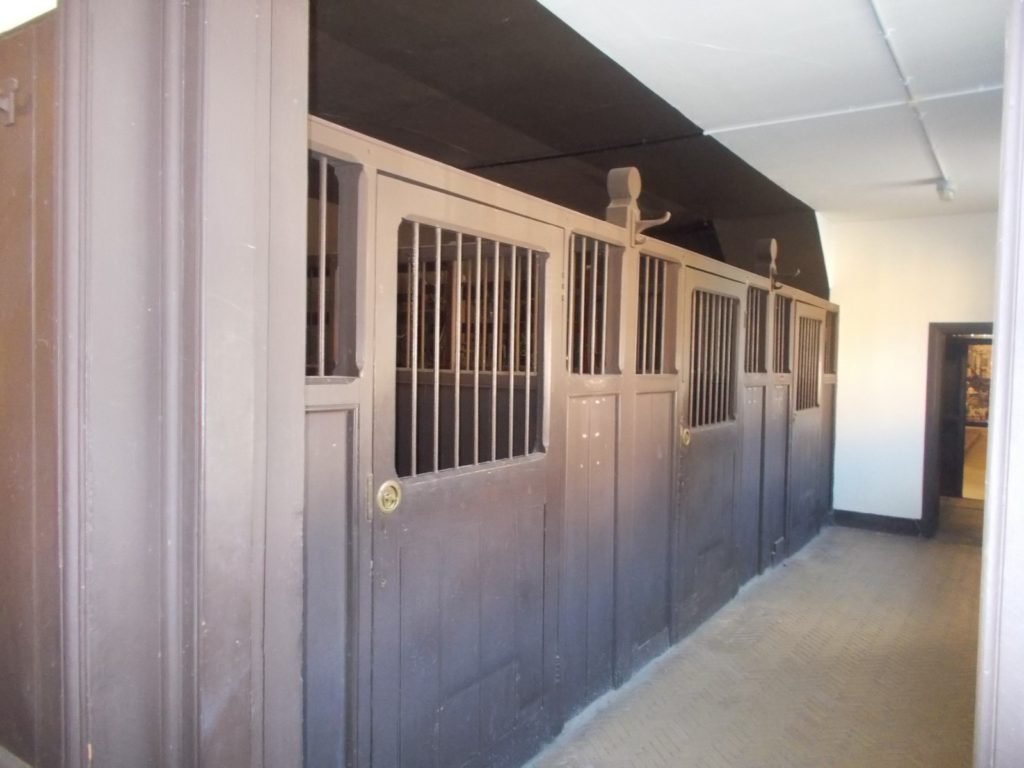
A portion of the old stables at Stratfield Saye, as seen in 2010.

In his latter days, Copenhagen became blind and his oats were broken for him, and “the Duchess” used regularly to hand feed him bread. When the great horse died in 1836, at the remarkable age of 29, the Duke of Wellington directed that he be given a funeral with full military honors.

But the day of the burial was worsened for the Duke, who noticed that one hoof had been removed from the body and flew into a  terrible passion about the mutilation. After the Duke’s own death, the guilty servant who had taken the hoof as a memento came forward to confess and presented it to the second Duke who had it made into an inkstand. As the second Duke explained, “Several years after my father’s death an old servant of the family came to me in the library, and, producing a paper parcel, spoke as follows: `Your Grace, I do not believe that I have long to live, and before I die I wish to place in your hands what belongs to you.’ With no small degree of surprise I inquired what it was, and when he opened the package and produced a horse’s hoof he said: `Your Grace, when Copenhagen died I cut off this hoof. None of us imagined that the duke would trouble his head about the body of the war-horse, but, to our great surprise, he walked down to the stables on his sudden return from London to see him buried. He instantly observed that his right forefoot was gone, and was in a fearful passion. No one dared tell him how it happened. I have preserved the hoof carefully for thirty years, and I now return it to your Grace.’ The inkstand is now on display at Apsley House, London.

Copenhagen’s grave, which can be seen today, is marked by a magnificent turkey oak tree planted in 1843 by Mrs. Apostles, the Duke’s housekeeper. As a mark of respect the second Duke erected a stone marker on the grave where it remains to this day. A few years ago, Victoria and I had the honour of placing roses on the grave during Number One London’s Duke of Wellington Tour.

At one time, the War Museum approached the Duke about disinterring Copenhagen in order to keep his skeleton in the Museum alongside the skeleton of Napoleon’s horse, Marengo. But the Duke thwarted the idea by saying he was not sure exactly where the horse had been buried. Of course, he knew precisely where Copenhagen’s remains were under the turkey oak in the Ice House Paddock at Stratfield Saye, but he obviously preferred to keep his loyal friend at home with him.

When the painter Haydon was working on a portrait of the Duke and Copenhagen after the horse’s demise, he ran into creative difficulties before he could design his rough sketch of the horse and his rider. These would have been greatly increased if Lord FitzRoy Somerset had not been induced by Lady Burghersh to call at the painter’s studio. Here are some extracts from Haydon’s Diary:

“July 8th, 1839.—Lord FitzRoy Somerset called yesterday with his daughter to see my sketch of Copenhagen, whom I had studied from the pictures of other artists who had painted him, and especially that done by Webb in 1824. Lord FitzRoy’s daughter is as good a judge of a horse as he is, and they both thought Copenhagen too leggy and too big in the body, which gave him a heavy look. Lord FitzRoy said:
‘The Duke never holds his own horse. Copenhagen came out to Lisbon with Lord Londonderry, and the Duke bought him for 200 or 250 guineas. . . . the Duke never rode upon a battle-field without being accompanied by an orderly dragoon. At Waterloo his dragoon was killed, and Major Canning asked, ‘What shall I do with the Duke’s little desk, now the orderly is killed?’ ‘ Keep it yourself,’ answered Lord FitzRoy. Presently Major Canning was also killed, and the desk was found next morning with the lock broken open. This was the rough little wooden desk which attracted so much notice at Apsley House when it was first opened to the public.”

A few days later, Count D’Orsay (left), a painter in his own right who had himself painted a portrait of the Duke, called on Haydon, having been asked to do so by Somerset.

“July 10th, 1839.—Count D’Orsay  came to my studio, and pointed out several things to correct in the horse. I hastily executed them, but he took my brush in his dainty gloved hand and lowered the hind-quarters by bringing in a bit of the sky. Such a dress! White great coat, blue satin cravat, hair oiled and curling, hat of a wonderful curve; gloves scented with eau de jasmin, primrose in tint, skin-like in tightness. Yet this primest of dandies took up a nasty, oily, dirty hog-brush, and improved Copenhagen by touching the sky. After he had gone I thought, ‘This will never do ! A Frenchman sketching Copenhagen !’ So I rubbed out all he had touched, and adopted his hints myself with modifications.”

After Copenhagen’s death, the horse the Duke preferred during the last twenty years of his life was a hunter class of animal, a good walker, ridden in a snaffle-bridle, like a huntsman’s horse, without a thought of showing off the animal’s paces. Before age had bent him the Duke’s seat was remarkably upright; lost in thought, he passed along, mechanically acknowledging with his upraised forefinger the many hats raised to salute the Great Duke.

Count D’Orsay’s portrait of the Duke of Wellington.

As he grew old and infirm, instead of bending forward like most old men, he leant back in the saddle and literally hung on by the bridle, generally going down St. James’s Park to the Horse Guards at a huntsman’s shog-trot.


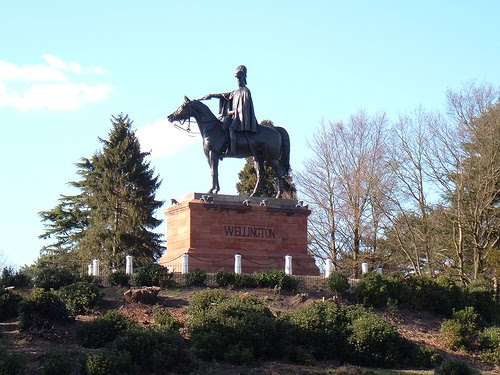
Wellington and Copenhagen have been immortalized as a pair in various art mediums. The statue of Wellington astride Copenhagen now at Aldershot was first destined to stand at Hyde Park Corner. Wellington himself sat for the sculptor, Wyatt. Fittingly, much of the bronze in the statue is derived from French cannon captured at Waterloo and remelted in Wyatt’s foundry. Copenhagen, however, had died and a substitute horse, a mare called Rosemary was used as a model, offending many at the time who saw a poor likeness to Copenhagen in the statue. In 1846 the statue was moved with great pagaentry from Wyatt’s workshop to Hyde Park Corner. It was moved on a huge low carriage that had wheels 10 feet (3.0 m) in diameter and had been constructed by H. M. Dockyards at Woolwich. The carriage was hauled by a hundred men of the Scots Fusilier Guards; as it emerged onto the road, it was greeted by enthusiastic cheers from the crowd of sightseers. Twenty nine horses then drew the carriage to Hyde Park Corner. It took some hours to get the statue into position for hoisting and the final lift and fixing into position on the as yet unfinished victory arch was completed the following day.

This lock of hair resides at the Willis Museum in Basingstoke, near the Duke of Wellington’s home, Stratfield Saye, and is said to come from the mane of Copenhagen and to have been presented to Miss Charlotte Pigot by Wellington himself. Miss Pigot was an ancestor of the Hon. Mrs Bunbury, who gave the hair to the Museum. Also on display is one of Copenhagen’s horseshoes and a piece of the Wellington oak, said to have come from the tree under which Wellington established a position at Waterloo.

As a further memorial, the Copenhagen Building in Glasgow, Scotland, was named for the Duke’s horse and his contribrution to British history. There is a memorial to the horse in the lobby.