HOW TO ELOPE LIKE A GEORGIAN by Guest Blogger Gina Conkle

by Guest Blogger Gina Conkle

Oh, the naughtiness of a quickie wedding! Early Georgian England teemed with elopements, creating scores of under-aged brides and pesky bigamists. During that era, people could marry wherever and whenever they wanted, as long as a clergyman presided over the ceremony.

By the 1740s, fast weddings in England became a booming industry thanks to shady clergymen in London’s Southwark ward. Because of those few bad apples, people called for lawmakers to correct marriage license loopholes. But first…

A Little History behind the History

In medieval times, people were expected to say their vows in either the bride or groom’s home parish. The church required banns* read from the pulpit for three consecutive weeks. The purpose of the banns? If anyone knew why the bride and groom shouldn’t wed, that was the time to speak up for things like consanguinity or if one of the parties was already wed.

If no objections came to light, the bride and groom wed on the church steps. Weddings were supposed to be public, not secret affairs. This worked in agrarian England.

But, the church allowed another avenue—the marriage license.

As London grew, so did the number of weddings by marriage license.

Then Came the Money

Lawmakers of the 16th and 17th century decreed fees must be paid for marriage licenses. Since marriage was considered a lifelong compact, the marriage license fee was not small. Tradesmen paid a week’s wages to wed their true love.

By the mid-17th century, marriage by license increased dramatically. Saying those hallowed vows became an industry. Illicit marriages spread. And one parish church caused courts and families many a headache—St. George’s in Southwark.

With problems such as bigamy on the rise and clergyman overlooking parental consent for the underaged, citizens demanded parliament act. Lord Hardwicke’s “An Act for the Better Preventing of Clandestine Marriage” was the answer (called The Marriage Act of 1753 but passed March 25, 1754).

No one under 21 years of age could get married without parental consent. Clergymen who broke the law were subject to 14 years transportation (i.e. shipped off to the colonies to serve the Crown there). Fleet Prison marriages were shut down too.

Quickie weddings came to a screeching halt in England but not in Scotland.

Stubborn Scots

Scotland, the convenient northern neighbor, did their own thing. Scotland allowed for irregular marriages if two witnesses were present. The term “anvil weddings” was popular because many a Scottish blacksmith presided over the vows. What you might not know is fishermen, weavers, horse saddlers, cobblers, and mole-catchers did too. Blacksmiths got the most press with one famously telling the London Times in 1843 that he performed more than 3500 weddings.

Most romance readers know of Gretna Green. Lots of romance novels use Gretna Green. It’s the capital of fast weddings just over the western side of the border. But there was another famous wedding village—Coldstream on the eastern side of the Scottish-English border.
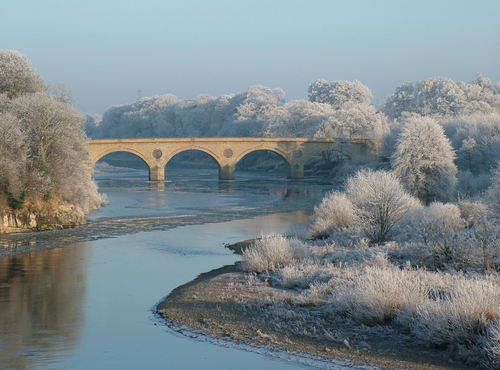
The Bridge to Love

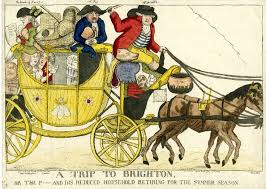
Coldstream was a sleepy Scottish village during Georgian times. Just over the border on the English side, was Cornhill with the River Tweed running between them. Both towns are small to this day, but things changed in 1768 when the government built the Coldstream Bridge. The wide stone bridge was perfect to accommodate booming stagecoach business. The popular London to Edinburgh line was a major artery with several stops at small villages along the way.

Fast travel opened the door to fast weddings. Other villages saw wedding traffic, but Gretna Green and Coldstream were the two famed places.

You could say Gretna Green was the Vegas of elopements, and Coldstream was the Georgian Reno.

*Banns were a proclamation done in church from late 12th century

Gina Conkle writes lush Viking romance and sensual Georgian romance. Her books always offer a fresh, addictive spin on the genre with the witty banter and sexual tension that readers crave. She grew up in southern California and despite all that sunshine, Gina loves books over beaches and stone castles over sand castles. Now she lives in Michigan with her favorite alpha male, Brian, and their two sons where she enjoys recreating recipes from the past.

Gina’s website can be found here and you can also find her on Twitter, Facebook, Pinterest and BookBub. You can also subscribe to Gina’s newsletter for Bonus Reads.


THE NEW ROYAL ACADEMY – Part Two

by Victoria Hinshaw

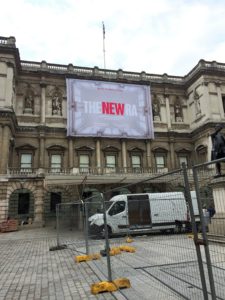
I recently visited the new addition to the Royal Academy in London and concentrated on the addition of the building at 6 Burlington Gardens to the campus, in a very sympathetic renovation.

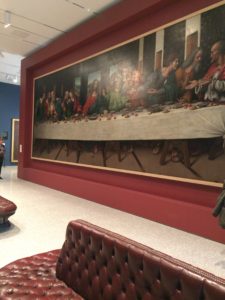
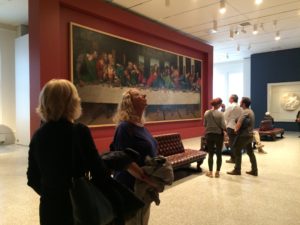
An exhibition showing early works, founding members, and methods of teaching emphasized learning to paint and sculpt by copying great works of art, as seen in the first part of this post.  Another great work of art used for copying purposes was Leonardo de Vinci’s Last Supper in a copy made in the 16th century by the master’s students. It was purchased and hung in the RA in 1817 as an inspiration for the students and fellows.

Copy of The Last Supper

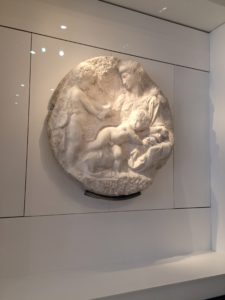
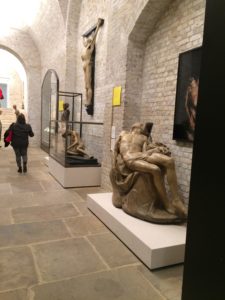
Several  copies of works by Michelangelo were included in a section of the exhibition called “Michelangelo as Muse.”

The Taddei Tondo, a.k.a. The Virgin and Child with the infant St. John

In the words of current RA President Christopher Le Brun, “The Taddei Tondo has become one of the great icons of the Royal Academy. Many people consider it to be one of the greatest works of sculpture in the UK.”

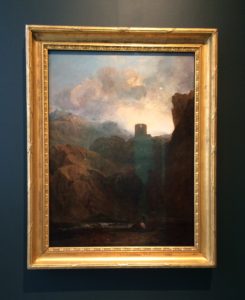
J.M.W. Turner, Dolbadern Castle, North Wales, 1800

Turner’s Diploma work, given permanently to the RA as all academicians must do when elected, depicts a remote Welsh castle; He accompanied it with a poem:

How awful is the silence of the waste,

Where Nature lifts her mountains to the sky,

Majestic solitude, behold the tower

Where hopeless Own, long imprison’d, pined.

And wrung his hands for liberty in Vain.

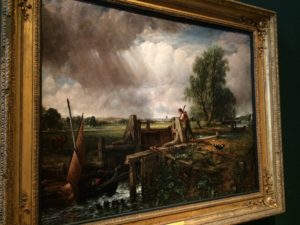
John Constable, The Lock, 1834

Like Turner, Constable was more inspired by nature and landscape than by studying great works of art.  Although Gainsborough was better known for his portraits than his landscapes, he too preferred to work from nature.

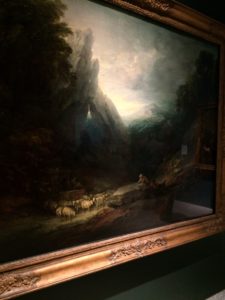
Thomas Gainsborough, Romantic Landscape 1783

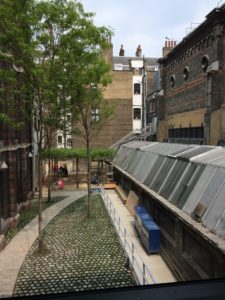
The new part of the RA is connected to the old part by walkways and bridges, allowing outdoor spaces for the students as well.

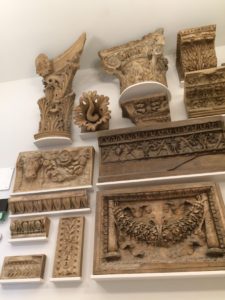
Architectural fragments from the vaults are found in hallways, for the use of architectural students, as are casts of famous statues as examples for sketching.

Venus de Milo
Farnese Hercules

“Old” fans of the Royal Academy will be pleased to know that the Burlington House section remain much as before with exhibition galleries, the Fine Rooms, and other features still in evidence, as well as provocative new offerings from the latest artists.

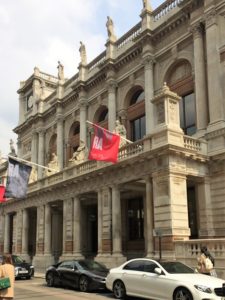
The familiar facade of Burlington House in Piccadilly
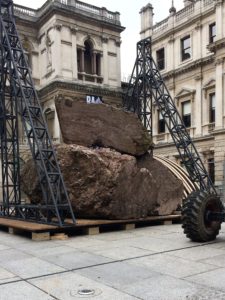
Preparing for the Annual Summer Exhibition

I look forward to visiting in July to see the entire display: 250 years of the Summer Exhibition.  Good show, RA!

THE NEW ROYAL ACADEMY

Victoria Hinshaw, here.

After two hundred fifty years, the Royal Academy of Arts (RA) is celebrating its anniversary by adding an adjacent building to increase its exhibition space.  The new look, not quite completed, opened May 19, 2018.  I visited on May 24 and was delighted with newly added facilities. The annual Summer Exhibition will open June 12, 2018.

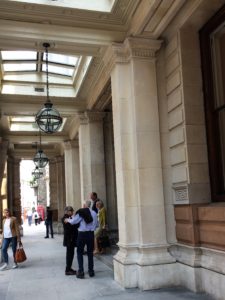
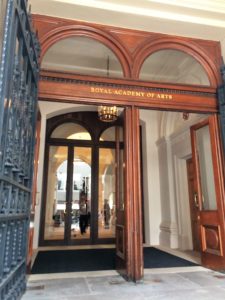
Burlington Gardens Entrance

The newly added building once held the Museum of Mankind, located “behind” the Piccadilly site of Burlington House, home of the RA since 1868. The Museum of Mankind, an adjunct of the British Museum, moved out of the building in 2004. The RA subsequently bought it and held a competition for a design to merge the two structures. After a complicated series of setbacks,  the eventual winner, architect David Chipperfield succeeded admirably. More building pictures are below, after the story of one of the opening exhibitions I enjoyed so much.

The exhibition The Making of an Artist: The Great Tradition intrigued me.  As a researcher into the art and architecture of the Georgian, Regency, and Victorian periods, I was familiar with many of the early RA fellows, but had never seen the works shown, drawn from the vaults of the RA.

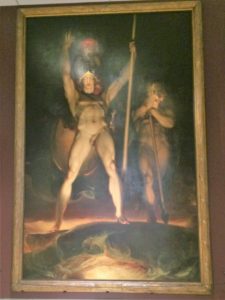
Satan summoning his Legions 1796-97 by Sir Thomas Lawrence, RA

The huge, almost monumental painting leads the visitor into a selection of works by some of the earliest members. Lawrence, largely self-taught, studied briefly at the RA before earning fame as a portraitist and becoming a full member. He was the fourth president of the RA.

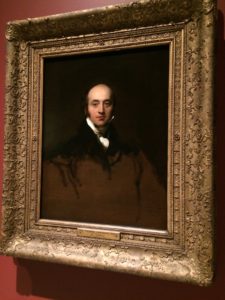
Thomas Lawrence, RA, self-portrait, c.1820

At the beginning of the exhibition, a text panel explains The Royal Academy Foundations: In 1768 a group of painters, sculptors and architects convinced King George III to support the creation of the Royal Academy of Arts. Their aim was to improve the quality of art in Britain and to raise the status of British artists and architects. The new Academy had three key functions that continue today:

Run an art school, training the next generation of artists

Hold an exhibition, selling contemporary art annually, now the Summer Exhibition

Elect as Royal Academicians a small number of leading painters, sculptors and architects (and eventually printmakers)

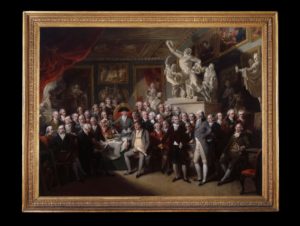
Royal Academicians by Henry Singleton, 1795,  picture from the RA

The full title is The Royal Academicians Assembled in their Council Chamber to Adjudge the Medals to the Successful Students in Painting, Sculpture, Architecture and Drawing. In the back row are the two female founding members, Angelika Kauffmann and Mary Moser. They were not allowed to participate in the life drawing classes.

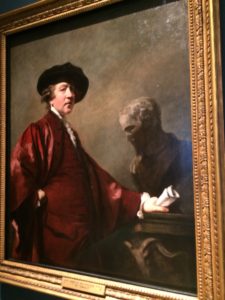
First RA President, Joshua Reynolds, Self Portrait, c. 1780

The esteemed portraitist Joshua Reynolds was elected the first RA President.

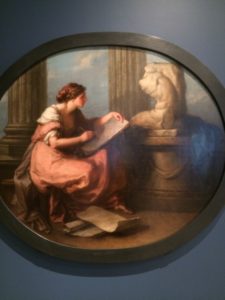
Angelika Kauffmann, among the founding members of the Royal Academy

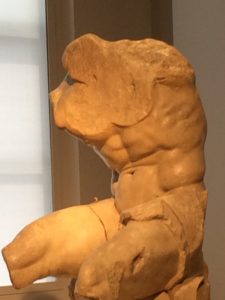
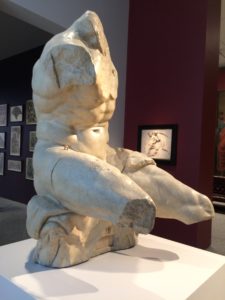
Kauffmann is shown sketching the torso, one if many sculptures or copies used as models by RA members and students to hone their drawing skills.  The torso, like others of its ilk, has been in the possession of the RA for 250 years.  It stands nearby, seen below in two views.


Note how the light changes the hue of the photograph, according to the angle.

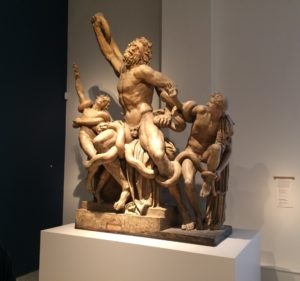
In the painting of the RA members above, you will see a model of the Laocoon, an ancient Greek statue used for the same purpose as the torso.  The exhibition asks the question: “Does great art begin with studying nature, or studying great art of the past?” One must decide for oneself! But Reynolds considered the study of great art essential for artists.

Cast of Laocoon and his Sons, from a Roman version of a Greek original, c. 10-20 AD

Part Two, further adventures at the RA, coming soon.


A LETTER FROM MRS. SIMPSON OF BRIGHTON

It is my pleasure to introduce you to Mrs. Simpson, cook at the Regency Town House in Hove, who has kindly consented to write us a letter regarding herself and her seaside slice of England. 

Dear Mesdames. January 16 1830.

Having but lately come to the art of reading and writing, I have not had cause as yet to write a letter. Even if I had though, ‘twould not have been a letter to a group of Ladies, I’m sure! I feel that honoured to be asked to write this, though I know not what a Cook in Sussex might say to interest Ladies from the New World. By rights, methinks, ’tis you honoured Ladies who should be writing to me, to instruct me in how life is lived in the Colonies.

Later: I have just been speaking with Mary-Ann. She be Ladies Maid to our Mistress and so, – especially in The Season – meets lots of maids from other countries.  She has just informed me that people Over There cannot abide to be referred to as from “The Colonies”. So please excuse any other mistakes I may make: ’tis from pure ignorance and not malice, I do assure you.

Well then: – the town I live in be called Brighton and be in the County of Sussex. ‘Twas an old fishing village until the time of my Great-Grandam.

But then came here an Indian gentleman. Mary-Ann says there be Indian people Over There too, but they be not of the same make as this Gentleman who came from the large country  which gave us cotton. But there! Now she says too there is cotton grown where you live as well, so I know not how this difference between our Indian Gentleman and your Indian people comes about. No doubt ’tis some distinction from the world of Men which doth not interest me  much: – the world of Women be far less complicated, it seems to me.

Howsomever, what does this Indian Gentleman do when he arrives in our ancient village (for that ’twas all it was before-times) but to tell the Gentry that there be properties in the water and the air here which do bring about good health and that only he knows the way of it, which is through natural spring waters and sea-bathing!

Now this be not a tarry-diddle I am certain-sure; for all who live in coastal towns and hamlets do indeed fare well and so any Woman with The Knowledge can say. (In case not many of our sort hath ventured to your shores, I should explain that The Knowledge is that which is passed down from certain women to woman through the ages as to healing, and easing pain, and all Women’s Matters – of which these God-rotted Barber-Surgeons and Men-midwives are surpassingly ignorant!)

Well, once he hath hung his shingle and claimed to have the Healers knowledge did a very stampede of the sickly gentry whip up their horses and have themselves carried to Brighton. Ho! The old folk say there was a veritable procession of gouty Land-Owners, and syphillictic Young Bloods, and addle-pated Old Ladies,all of whom needed victualling,some and accommodation and a BathHouse, and the fortunes of the ordinary folk began to prosper.

But what changed the fortunes of all was when our putridly plump Princeling and his accompanying Mistresses and cronies and Macaroni Boys did come to visit. Which they did because Gorgeous George – as folk did name him locally – was a veritable treasure trove of ailments such as gout and pox and liver complaints; and the flux and the sweats and lethargy.

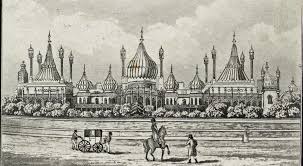
Now, this pallid Prince hath many a castle and home to his name, but nothing would do for it than that he build the most whimsical, fairy-like palace in all Christiandom, methinks, right in the middle of our town!

And from then on there were no way of keeping out all the gentry, and their attendants, and their friends, and the Soldiers, and the hangers on, and the miliners and mantua makers, and cobblers and hosiers (and Uncle Tom Cobly and all, I shouldn’t wonder) and Brighton be now a real city!

In fact it be whispered abroad that this new-made invention of the Steam Train will be put on a service from London to Brighton – so people could take that long, rumbly journey here and back again in ONE day!! I scarse believe it, myself.

Mary-Ann hath also told us that in the Col…excuse me…”Over There” you have no Royalty or Gentry at all, but that a families station in life depends singly on the money they have? Oh how we did laugh, the two of us!! For ours do depend on Breeding: for all the world as though they was prime bloodstock horses or hounds! And as for money? Half the Gentry in England sit in their crumbling manors, eating of bread and cheese and trying to marry off their chinless progeny to the highest bidder  simply in order to make the roof sound again!

But there! I know not what more to say and have taken up much of your time, I’m sure, that you could be putting to better cause. Howsomever, do any of you gentle women have a query or a quiz for me to address, I should consider it a right honour to respond as best I can.

With humble felicitations,

Yours faithfully,

Mrs. Simpson, Humble Cook of Brighton, England.

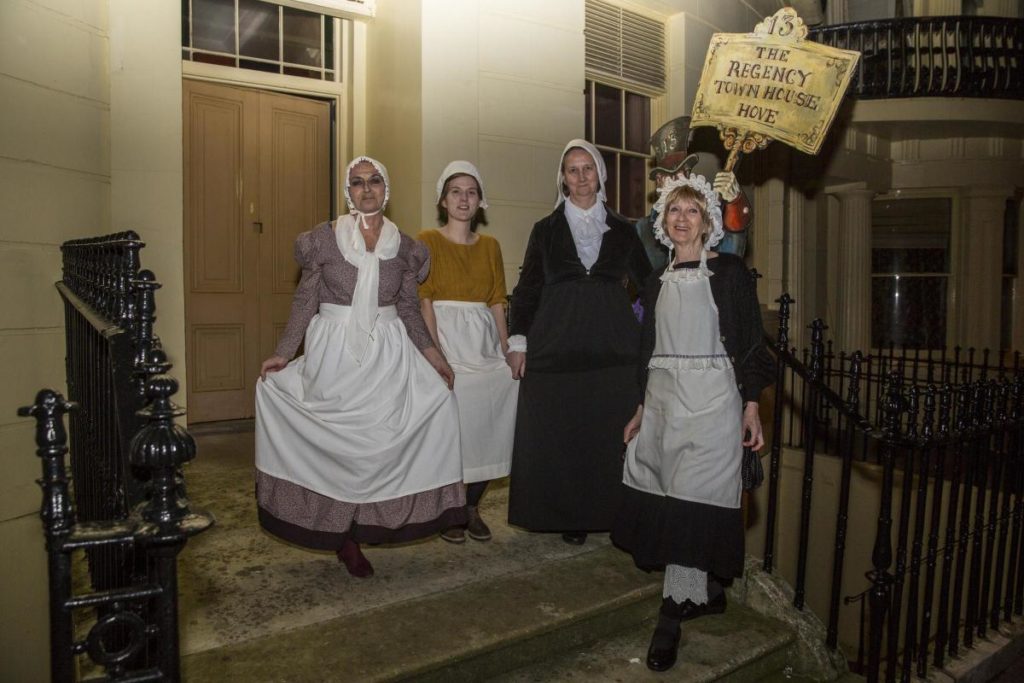
Here I be, a-making of my curtsy, with our two scullions and our Housekeeper, Mrs. Ainslie.

We’ll be meeting Mrs. Simpson in person on Number One London’s 2020 Regency Tour, when we visit the Regency Town House in Hove – complete itinerary here

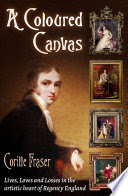
ON THE SHELF: A COLOURED CANVAS

Guest post by author Corille Fraser


A Coloured Canvas, Lives, loves and losses in the artistic heart of Regency England

This is a novel about Sir Thomas Lawrence but, as the sub-title suggests, it is much more than a biography of the 18th/ 19th century portrait painter who was only six when he started impressing patrons at his father’s Black Bear Inn by sketching their pictures. The story is full of engaging characters and is told with humour and insight into the world of Regency Bath and London in the years from the American and French Revolutions, through the Napoleonic Wars and the accession of George IV to the coming of the railway, but it touches also on some of the political events and personalities of the era.

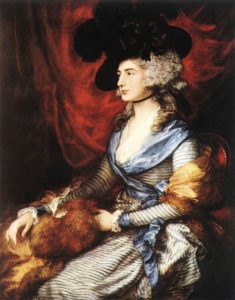
All sorts of people stopped at the Black Bear on their way from London to Bath, among them actors including David Garrick and, perhaps, the young Sarah Siddons, as yet unknown but on her way to becoming the leading tragedienne of the period. Did he draw her likeness then? Did she recognise in the boy and herself potentials for greatness? Was that the beginning of the long and tempestuous relationship between the renowned artist and the Siddons family?

Sarah Siddons

Using extensive research into letters, newspapers and comment of the time, I explored the influence his father and many close friends exerted on Lawrence’s career as it developed from West country sketcher to portraitist of Kings and Queens, Popes and Emperors, Prime Ministers, distinguished ladies, diplomats and sportsmen. I singled out some of his subjects for their particularly intriguing stories. Among those are the beautiful but confused Mr Bell, the unprepossessing but clever Irish politician, Mr Curran, the irascible artist, Henry Fuseli, neither rival nor admirer. Children and their pets were particular favourites as of course were members of the Siddons/ Kemble family.

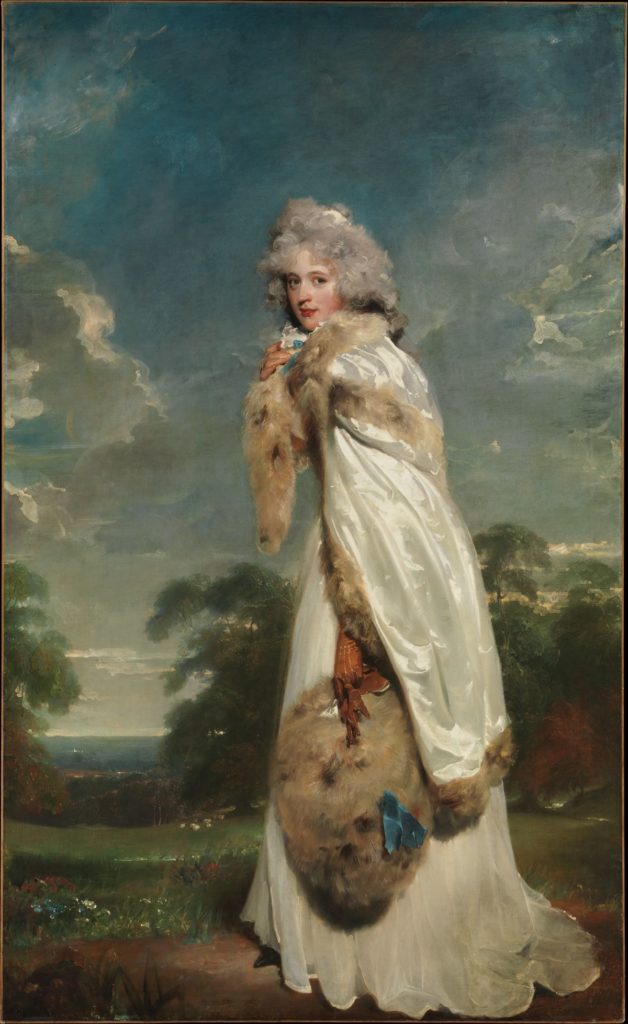
Elizabeth Farren, later Countess of Derby, by Sir Thomas Lawrence, 1790

Every year from 1789 when he was twenty, his work was to be seen at the Royal Academy Exhibition. His best known studies though not always his best liked were ‘Pinky’, a wintry portrait of Miss Elizabeth Farren and the gigantic ‘Satan’ in which he blended the most imposing features of two friends: the handsome head of actor John Philip Kemble and the powerful body of champion boxer ‘Gentleman’ John Jackson.

The distinguished career was not without its problems. Despite his huge output and ever-increasing income, he was never out of debt and yet he was known to be far from profligate in his personal life. His family, which he supported, not unwillingly, for most of his life, was a financial burden; he spent, often unwisely, on works of art and the latest domestic innovations like a plumbed (but cold water) bath. His friends and advisers, Joseph Farington and John Julius Angerstein helped him organize his budget and kept him out of the bankruptcy court.

And throughout his life at all its stages, Sarah Siddons, her actor brothers Kemble, her husband-manager William who disliked and disapproved of Thomas, and above all her two daughters, sweet Sally and selfish Maria, contenders for his love in their different ways. An intense, difficult triangle that drove him to the brink of madness—or was it a quadrangle? Lawrence was to live out his life as a bachelor, his name, probably but not certainly, platonically linked with several women. His friendship with Sarah Siddons diminished but endured till his death at the age of 60 in 1830.

Note: A Coloured Canvas is available on both Google Books and Amazon.  Corille was born in Scotland, lives in Australia and has a background in theatre and radio. You can visit her website here.