Byron's Birthday, January 22, 1788

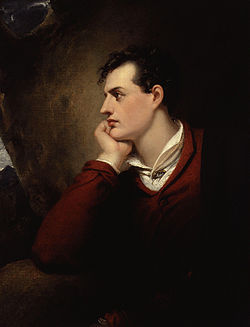
Byron by Richard Westall

To celebrate the birthday of George Gordon, Lord Byron, the renowned poet, we present an account of him by Captain Gronow, from his Reminiscences, published in 1862, written long after the events he describes.  Rees Howell Gronow (1794-1865) was  a captain in the Welsh Grenadier Guards.

From Gronow’s Reminiscences:
I knew very little of Lord Byron personally, but lived much with two of his intimate friends, Scrope Davis and Wedderburn Webster; from whom I frequently heard many anecdotes of him.  I regret that I remember so few; and wish that I had written down those told me by poor Scrope Davis, one of the most agreeable men I ever met.
When Byron was at Cambridge, he was introduced to Scrope Davis by their mutual friend, Matthews, who was afterwards drowned in the river Cam. After Matthews’s death, Davis became Byron’s particular friend, and was admitted to his rooms at all hours.  Upon one occasion he found the poet in bed with his hair en papillote, upon which Scrope cried, “Ha, ha!  Byron, I have at last caught you acting the part of the Sleeping Beauty.”
Byron  by Thomas Philipps (1770-1845)
Byron, in a rage, exclaimed, “No, Scrope; the part of a d—-d fool, you should have said.”

“Well, then, anything you please; but you have succeeded admirably in deceiving your friends, for it was my conviction that your hair curled naturally.”

“Yes, naturally, every night,” returned the poet; “but do not, my dear Scrope, let the cat out of the bag, for I am as vain of my curls as a girl of sixteen.”
When in London, Byron used to go to Manton’s shooting-gallery, in Davis street, to try his hand, as he said, at a wafer.  Wedderburn Webster was present when the poet, intensely delighted with his own skill, boasted to Joe Manton that he considered himself the best shot in London. “No, my lord,” replied Manton, “not the best; but your shooting, to-day, was respectable;” upon which Byron waxed wroth, and left the shop in a violent passion.
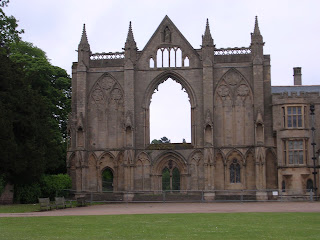
Newstead Abbey, Byron’s estate, 12 miles north of Nottingham
Lords Byron, Yarmouth, Pollington, Mountjoy, Walliscourt, Blandford, Captain Burges, Jack Bouverie, and myself, were in 1814, and for several years afterwards, amongst the chief and most constant frequenters of this well-known shooting-gallery, and frequently shot at the wafer for considerable sums of money.  Manton was allowed to enter the betting list, and he generally backed me.  On one occasion, I hit the wafer nineteen times out of twenty.
Byron lived a great deal at Brighton, his house being opposite the Pavilion. He was fond of boating, and was generally accompanied by a lad, who was said to be a girl in boy’s clothes. This report was confirmed to me by Webster, who was then living at Brighton.  The vivid description of the page in Lara, no doubt, gave some plausibility to this often-told tale.  I myself witnessed the dexterous manner in  which Byron used to get into his boat; for, while standing on the beach, I once saw him vault into it with the agility of a harlequin, in spite of his lame foot.
On one occasion, whilst his lordship was dining with a few of his friends in Charles Street, Pall Mall, a letter was delivered to Scrope Davis, which required an immediate answer.  Scrope, after reading its contents, handed it to Lord Byron.  It was thus worded:–
“MY DEAR SCROPE,–Lend me 500L. for a few days; the funds are shut for the dividends, or I would not have made this request.  “G. BRUMMELL.”
The reply was:–
“My DEAR BRUMMELL,–All my money is locked up in the funds. “SCROPE DAVIS.”
This was just before Brummell’s escape to the Continent.
Dining Room Fireplace, Newstead Abbey
I have frequently asked Scrope Davis his private opinion of Lord Byron, and invariably received the same answer–that he considered Lord Byron very agreeable and clever, but vain, overbearing, conceited, suspicious, and jealous.  Byron hated Palmerston, but liked Peel, and thought that the whole world ought to be constantly employed in admiring his poetry and himself: he never could write a poem or a drama without making himself its hero, and he was always the subject of his own conversation.
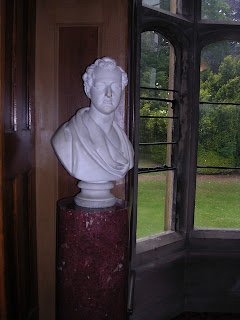
Bust of Byron, Newstead Abbey
During one of Henry Hobhouse’s visits to Byron, at his villa near Genoa, and whilst they were walking in the garden, his lordship suddenly turned upon his guest, and, apropos of nothing, exclaimed, “Now, I know, Hobhouse, you are looking at my foot.”  Upon which Hobhouse kindly replied, “My dear Byron, nobody thinks of or looks at anything but your head.”
Abbey Ruins, Newstead Abbey

For a two-part filmed tour of Newstead Abbey, click here. Look for the Guided Tour on the right.

Happy Birthday, Lord Byron…

Captain Cook Reaches Hawaii

On the 18th of January, 1778, Captain James Cook (1728-1779), leading an expedition on HMS Resolution and HMS Discovery, became the first European to discover the territory of what we now know as the Hawaiian Islands. Victoria here, now resident in her own little paradise in Florida, writing about a place she has never been!

Captain Cook, c. 1775
Cook led several voyages of discovery to Newfoundland, Australia, New Zealand and throughout the Pacific Islands.  After his career in the British Navy in North America, the famed cartographer and navigator sailed through vast uncharted territories. On his ships, he carried scientists such as Joseph Banks and others who collected specimens of unusual plants, insects, animals and fossils which greatly expanded contemporary knowledge of natural history.  The tales of resident peoples and their customs fascinated Europe.
Hawaiian Beaches, a touch of paradise
Cook named the “new” cluster of islands the Sandwich Islands, after John Montagu, 4th Earl of Sandwich (1718-1792), who was a sponsor of the voyage.
4th Earl of Sandwich
 
The 4th Earl of Sandwich is, perhaps, even more famous for his invention of the meat and bread combination named after him.  It is said that he wanted his meat wrapped in bread so that he could munch while staying in place at the gambling table; if that legend is not the truth, I sincerely doubt that it will ever be disproved.

The Hawaiian Islands are the northern-most islands of Polynesia, formed eons ago of volcanoes erupting through the Pacific waters.  After Cook’s first visit, he explored further northward, looking for that fabled northwest passge from the Atlantic to the Pacific.  Unsuccessful, the ships returned to the “Sandwich Islands” in 1779. While their first visit had been peaceful, the second soon descended into trouble, ending with the death of some of the natives and Europeans, including Cook.

More pretty pictures

Following publications of the journals of Cook’s voyage and other accounts of the islands, more European explorers, whalers, and traders arrived, bringing with them the germs of deadly diseases such as influenza, measles and smallpox, and causing a precipitous decline in the native population.

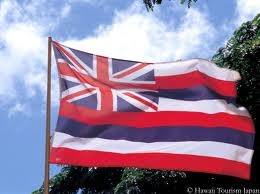
I will not attept to catalogue all the events in Hawaiian history. Suffice it to say that after a period of consolidation, the islands became a kingdom and eventually were annexed to the United States as a territory in 1898.  In 1959, Hawaii became the 50th (and last) state of the union.  The role of the British in the development of the islands is commemorated in the Hawaiian flag, with the design of the Union Jack in the upper left corner.

I admit I have always wanted to visit the Hawaiian Islands, but every time I consider the amount of time it would take to fly there, I realize that in the same number of hours, I could be back in England.  Guess where I go!  But someday — I’ll make it.  If you have been to Hawaii, please share your impressions of the islands and convince me to book it!!

Or maybe I should just go to see George Clooney in The Descendants????

Visiting Belton House

Victoria, here, inviting you to come along on a visit to Belton House, sometimes chosen as the penultimate example of the perfect English Country House.

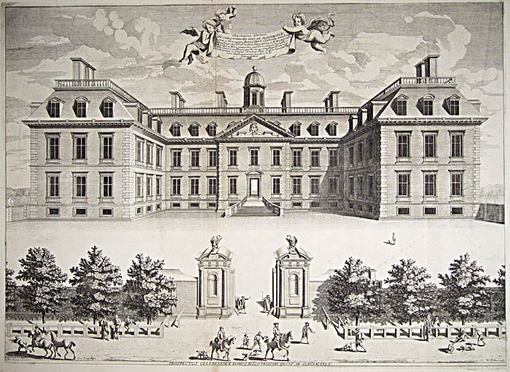
Belton House in Lincolnshire (south  front, above) was built in the late 17th century for Sir John Brownlow (1659-97); although the house was once attributed to Sir Christopher Wren, the architect was probably William Winde (d. 1722). The house resembles the now-demolished Clarendon House, Piccadilly, built by Sir Roger Pratt for the Lord Chancellor a decade or so before Belton was designed.

Clarendon House (drawing above) was very influential in Restoration architecture; but it lasted just a few decades before it was pulled down for the creation of several Mayfair streets.

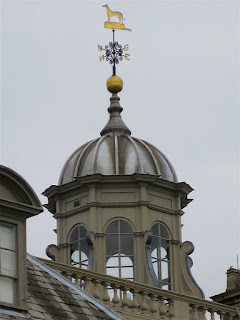
In various remodelings during the centuries, Belton lost its first cupola, but it was replaced in the 1870’s when the 3rd Earl Brownlow restored the house to its original appearance.

                                                              ©National Trust

Belton remained in the Brownlow-Cust family for three hundred years before Edward John
Peregrine Cust, 7th Baron Brownlow, gave the house to the National Trust in 1985. Above is the charming conversation piece portrait of the family by Philippe Mercier, c. 1725, showing the family in the park with the house in the background.

 For more information in Belton House, click here.   For more about the collections and interiors, click here.  The park and gardens at Belton are beautifully laid out and maintained.

The Orangery, above and below, was designed by Sir Jeffry Wyatttville in 1811-19. Wyattville is probably best known as the architect for the George IV’s remodeling of Windsor Castle.

Below, Adelaide, Countess Brownlow (1844-1917), and her husband, the 3rd Earl Brownlow, restored Belton to its original appearance.  She was painted by the brilliant Victorian artist Sir Frederick Leighton.

                                                                      © National Trust

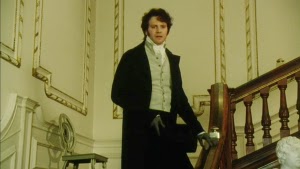
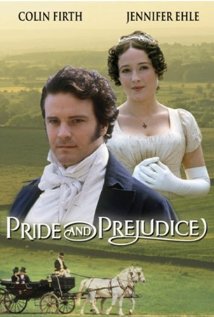
In the 1995 film version of Pride and Prejudice, Belton House played the role of Rosings, the estate of Lady Catherine de Bourgh.  Quite a few important scenes were shot here, during which Darcy deepened his regard for Elizabeth. Below, he stands on the staircase, observing his beloved.


In this view of the staircase, the portrait of Adelaide, Countess Brownlow, can be seen at the top.

Above, the North Front of Belton House; below, the view of the garden from the steps. 

Doesn’t this beckon you to explore? I am sure that, like Elizabeth Bennet, if I just ambled down this path, I might find my own Darcy waiting in the shrubbery.  Well, we all can dream…

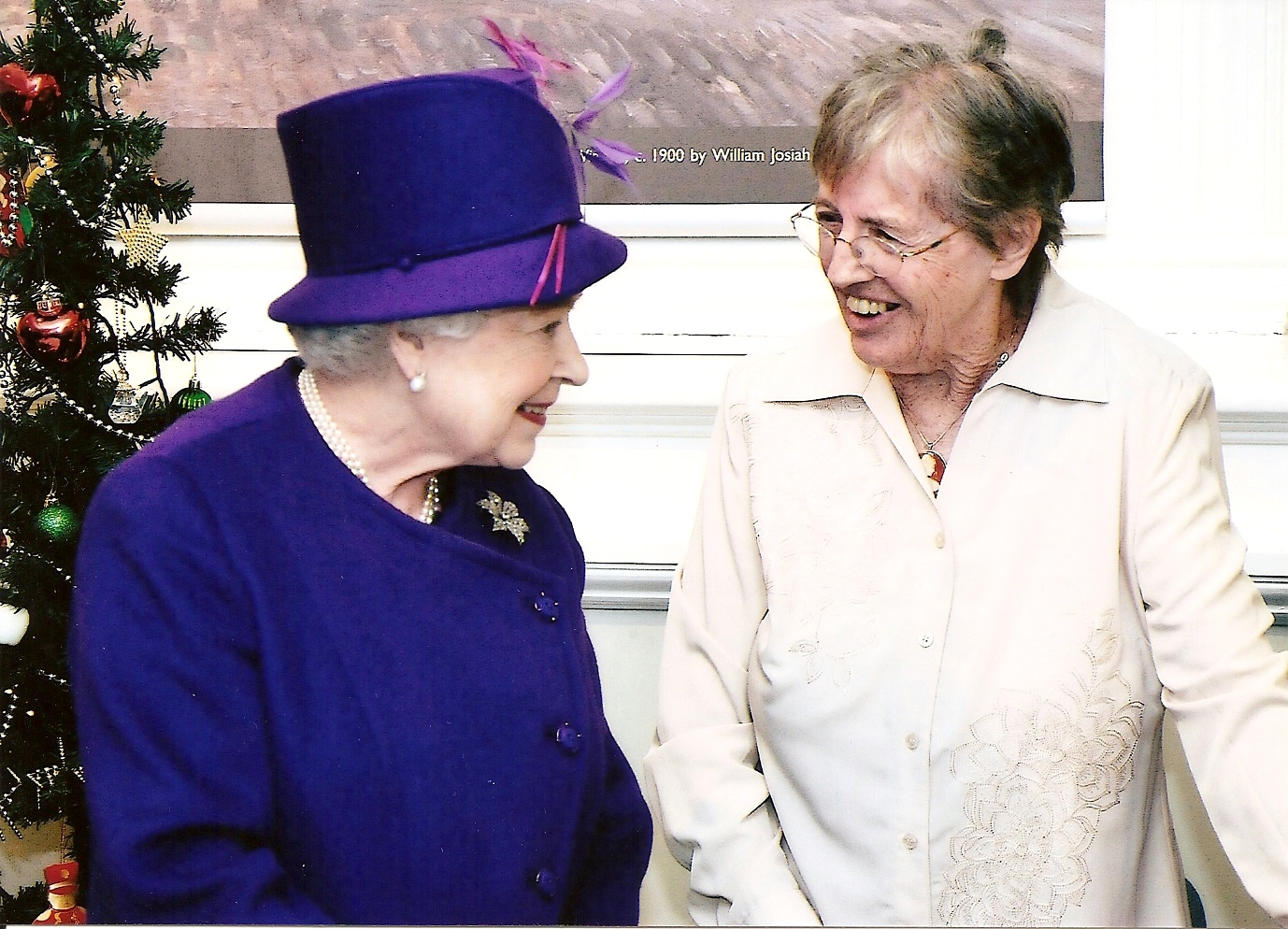
Hester and the Queen

As many of our loyal readers will know, we have had a link to the new Windsor and Royal Borough in our sidebar for some time now. Our dear friend and frequent blog post contributor, Hester Davenport, was a moving force in making the Museum a reality and on Friday, December 9th, the Queen officially opened the museum, located in the Berkshire town guildhall where Prince Charles married Camilla Parker Bowles in 2005. The £300,000 museum is housed in the Maidenhead room of the 17th Century Grade I listed Windsor Guildhall.

After the official ceremony, the Queen was shown a selection of displays and was introduced to our Hester, who actually got to touch the Royal Glove, above.

The foundation stone of the Guildhall was laid on 5 September 1687 and the extension in which the museum is housed was completed in 1830. Markets were held there until 1901 when the ground floor was enclosed. Sixty years ago, in 1951 the Queen, who was then Princess Elizabeth, opened the refurbished Windsor Guildhall.

You may recall that it was Hester who acted as our guide during the visit Vicky and I made to Windsor, but if not, you can read our blog post about the day here. It was due to Hester’s Royal knowledge that Vicky and I were able to see the Queen up close as her procession left Windsor Castle for the Ascot Races. Vicky and I are dead chuffed that Hester was able to top herself and to get thisclose to the Queen, who Hester told us confidentially seemed very nice as well as very interested in the Museum. As Hester keeps one upping herself in the Royal stakes, Vicky and I can only imagine what she’ll have in store for us on our next visit – tea at the Palace, perhaps?

Victoria here — just checking the mail for the invitation to that tea.  Not here yet!   I had another wonderful day with Hester last June, 2011, at the Museum. All the details are here.  Hester and I had a wonderful time discussing, in addition to the museum, the Queen and many other topics, our favorite authors Fanny Burney, Jane Austen, and Perdita aka Mary Robinson. 

Happy 2012 to Hester and all of our readers!

The Wellington Connection: War Horse

I went to see War Horse in the movies recently and got a few surprises. Firstly, I was under the impression that no one recognizable was in the cast. Imagine my surprise when I saw Benedict Cumberbatch on screen as Major Jamie Stewart who, by the way, is the antithesis of the Duke of Wellington as far as military strategy is concerned.

Tom Hiddleston, who first came to my notice in the 2001 version of Nicholas Nickleby, played Captain Nicholls in War Horse. He is the officer who first takes possession of Joey, or the War Horse, when he’s intially sold to the Army. He vows to keep the horse safe and to return him at the end of the war.

Worth an honourable mention is Eddie Marsan as Sgt. Fry.

Another surprising thing about War Horse – I found myself crying at odd moments when no one else did. My first tear was shed at the opening when they showed wide shots of the hedgerows and fields of the English countryside. Next, I choked up when I saw the village in the scene where Joey is led away with the Army.

It was so iconically English. Turns out that the scene was shot in Water Street, Castle Combe, Wiltshire, below.

Then there was the scene where Cumberbatch and Hiddleston race for the gold ring during a practice charge. The entire regiment draws their swords and gallops forward, the ground thundering beneath them as thousands of hooves tear up the turf. It was so reminiscent of Waterloo that I couldn’t help tearing up. Not that I was actually at Waterloo, mind you. Well, I was at Waterloo, but not during the battle. Well, okay, I was at Waterloo during a battle, but not during the Battle of Waterloo in 1815.

And then Benedict Cumberbatch, as Major Stewart, leads the regiment in their first battle charge in France, telling his men that their initial charge must at all costs be decisive, as it was at Waterloo, et al. And then, they begin their charge in a field of wheat, a la Waterloo.

Oh, the humanity! As I choked out a sob, my husband said, “What are you crying for? Nothing’s happened yet.” Little did he know that it had happened. In 1815. In Belgium. In my mind. But the Wellington Connection was other than simply in my mind – it turns out that portions of War Horse were actually filmed at the Duke of Welllington’s country home, Stratfield Saye, a fact pointed out to me by Jo Manning, who apparently sat through all the credits and noted that the producers thanked Lord and Lady Douro for their cooperation in filming. Wikipedia tells us that “Filming of War Horse began with the cavalry scenes being filmed at Stratfield Saye House in north Hampshire, the estate of the Duke of Wellington, where incidentally Wellington’s war horse “Copenhagen” is buried. Here a cavalry charge involving 130 extras was filmed.”

So, there you have the Wellington Connection. For anything and everything else about War Horse, check Wikipedia here.