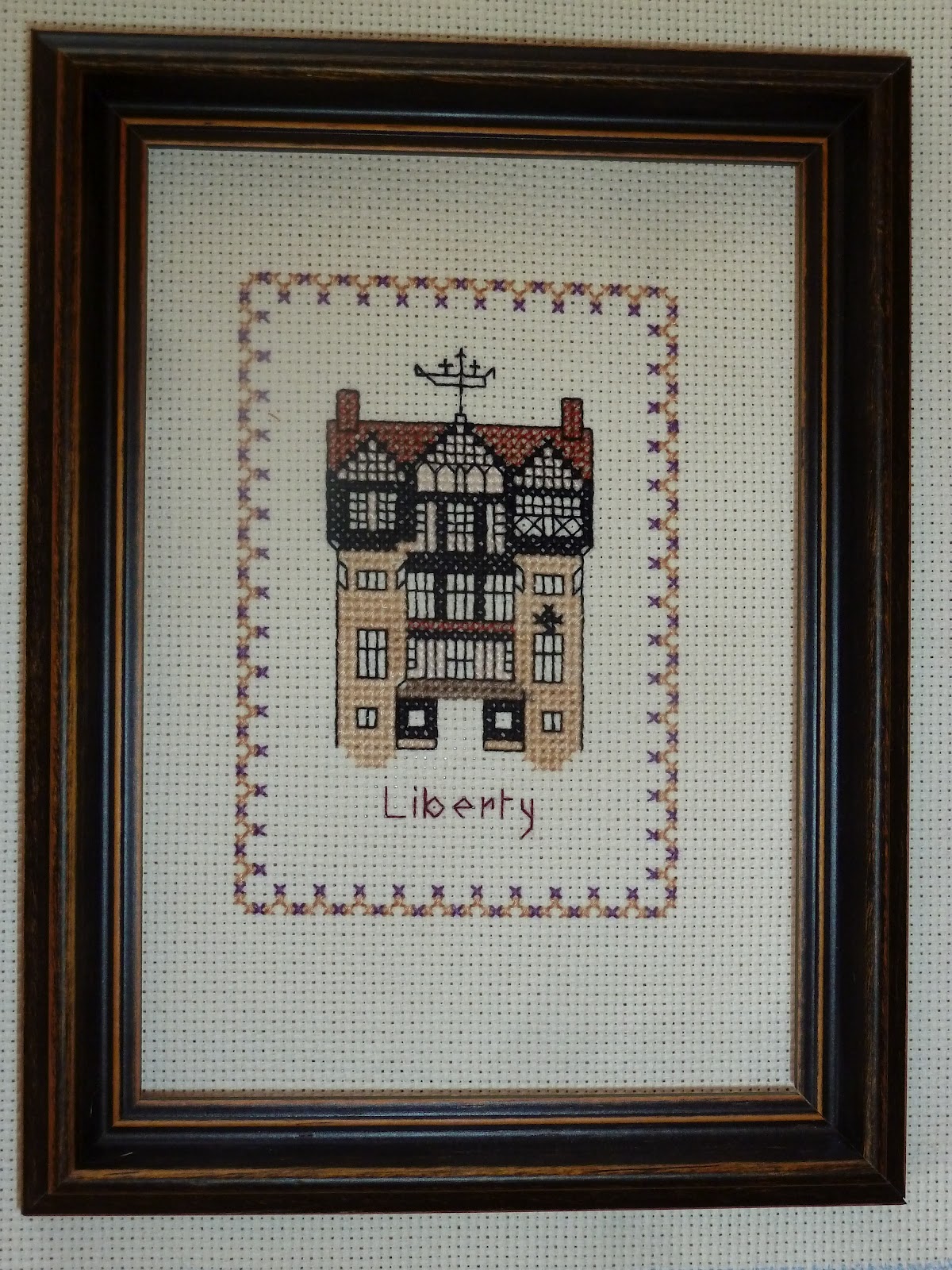
I came across this colorful book, most recently updated and published in 2012, in the library. The full title is Royal London: A Guide to the Capital’s Historic and Iconic Royal Sites. More than 100 locations are described from the Buckingham Palace we all know to a Coronation Stone in the Royal Borough of Kingston Upon Thames where seven Saxon Kings were crowned in the 9th and 10th centuries.
The Naturalist's Diary, October 1826
The Naturalist’s Diary 1826 October
At the beginning of this month, or latter end of September, some summer birds of passage, of which the swallow is the first, take their departure for warmer regions. The time of their leaving this country varies in different seasons; it is sometimes protracted till the end of October or the beginning of November, and swallows have been seen, in mild weather, to congregate previously to taking their departure, so late as the middle of December. A great diversity of opinion has existed respecting the torpidity and migration of this bird; it is an established fact, that, although the greater part of the swallows that visit England quit the country before the approach of winter, many remain and continue in a state of torpidity till the enlivening sun of April wakes them from their long sleep.
The throstle, the red-wing, and the field-fare which migrated in March, now return; and the ring-ouzel arrives from the Welsh and Scottish Alps to winter in more sheltered situations. About the middle of the month, the common martin disappears; and, shortly afterwards, the smallest kind of swallow, the sand-martin, and the stone-curlew, migrate. The Royston or hooded crow (Corvus cornix) arrives from Scotland and the northern parts of England, being driven thence by the severity of the season. The woodcock returns, and is found on our eastern coasts.
Small birds now begin to congregate, and the common linnet is the first to lead the way. Various kinds of waterfowl make their appearance; and, about the middle of the month, wild geese quit the fens, and go to the rye and wheat lands to devour the young corn; frequently leaving a field as if it had been fed off by a flock of sheep.
Rooks sport and dive, in a playful manner, before they go to roost, congregating in large numbers. The starling sings. The awk or puffin visits for the purpose of incubation, some of the rocky isles of Britain, in amazing numbers.
That singular appearance in nature, the gossamer, occurs in this month. Amid the floral gaieties of autumn, may be reckoned the Guernsey lily, which is so conspicuous an object in October, in the windows and green-houses of florists in London and its vicinity.
In mild seasons there are many flowers still in blow in this month. Generally speaking, however, the ‘last day of summer’ has passed away.
Hips and haws now ornament the hedges. The berries of bryony and the privet; the barberry, the blackberry, the holly and the elder, from which an excellent winter wine may be made
—with sloes, bullaces, and damsons, are now in great plenty.—Blackberries also are ripe in this month, and the collecting of them affords an agreeable pastime to the younger branches of the peasant’s family, as well as some small profit to the parents. These are the fruits of the poor;–they who are more highly favoured with the gifts of fortune revel on the patrician peach and nectarine, the pine and the grape, whose purple clusters contrast so beautifully with the dazzling white of the silver epergne.
But these transient pleasures, –the rose-crowned bowl,–the smiles of beauty, the music’s enchanting voice,–soon, too soon, flit away from our grasp and leave us nothing but the memory of a former day, those ‘blossoms of the past.’ During the months of October, November and December, at the fall of the leaf, insects become less numerous, but many of the Hemiptera may be found in the woods, by beating the ferns and underwood, also many very beautiful Tineae and Tortrices; and aquatic insects may be taken in ponds, in great numbers. Roots of grass, decayed trees may again be resorted to.
October, like the proceeding month, is generally spent by the sea-side or in traveling over the varied surface of the United Kingdom. The lakes of Cumberland are an object of high attraction to the lover of the picturesque; the Highlands of Scotland also have a strong claim on his notice, and are frequently visited by our tourists in search of the sublime and romantic scenery of Nature. Scotland, indeed, is eminently entitled to our attention; and whether we take a trip by steam to the ‘modern Athens,’ and return by the land-route through the northern counties of England, or extend our journey and sail on the placid bosom of Loch Katrine, or climb the Alpine heights of Ben Nevis, we shall be amply repaid for the fatigue and expense of the tour.
William Morris Gallery Reopens
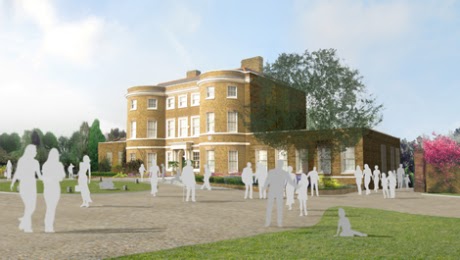
Victoria here, delighted to hear that the William Morris Gallery in Walthamstow, part of northeast London, reopened last month (August, 2012) after a £5m ($8.1m) renovation. I visited the museum a few years ago as an admirer of Morris and his many activities, so an upgrade is welcome news. The website of the museum is here. The museum is operated by the Waltham Forest Council and received assistance from the Heritage Lottery Fund.
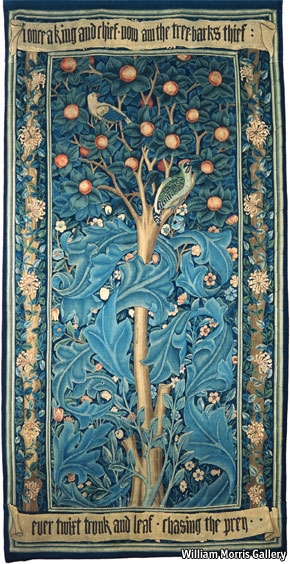
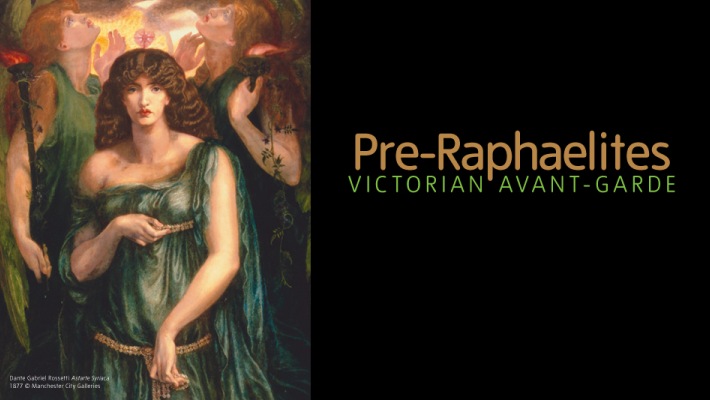
The Economist magazine wrote (More than Just a Pretty Swatch: Homage to a Colourful and Complex Victorian Polymath) recently of the museum’s renovation, here. In addition to a collection of more than 10,000 Morris objects, the museum runs education programs, exhibitions of contemporary artists, and many more events, not to mention (naturally) the SHOP and the tea room.
I fell in love with William Morris Designs — fabric, tapestries, wallpaper, etc. — long before I even knew his name. His art simply spoke to me on a personal level.
Upcoming Masterpiece Theatre
Call the Midwife is a moving and intimate insight into the colorful world of midwifery and family life in 1950’s East London. We are introduced to the community through the eyes of young nurse Jenny Lee as she arrives at Nonnatus House to live and work as a midwife alongside an Order of Nuns.
As Jenny comes to terms with her new life, we meet some phenomenal people who prove that their warmth, resilience and determination are to be admired beyond measure. At the heart of this world are the Sisters of St. Raymond Nonnatus who have been active in the East End as Anglican nursing nuns since the beginning of the 20th century.
The Sisters and the midwives of Nonnatus House carry out many nursing duties across the community. However, with between 80 and 100 babies being born each month in Poplar alone, their primary work is to help bring safe childbirth to women in the area and to look after their countless newborns.
The drama is based on the best-selling memoirs of the late Jennifer Worth and garnered good reviews, with the Daily Mirror hailing a “new ratings champion at the BBC.” A second series already commissioned and talks have now reportedly begun to keep the programme running beyond 2014.
Gas masks are issued and long-buried secrets about the staff are revealed against an increasingly uneasy political backdrop. While the house staff struggles with the juxtaposition of patriotism and conscience, Sir Hallam stands firm in his diplomatic convictions, helping to negotiate what may be the final chance to avert war. But as the possibility of maintaining peace becomes more apparent, will England be able to sleep quietly for long?
Paul and Thomas Sandby, Painters of Britain
Victoria here, sorting out bookshelves…yes, that’s sort of like cleaning, but not quite. And I found a treasure. Couldn’t remember when I bought it, but I found a copy of a wonderful book: Views of Windsor: Watercolours by Thomas and Paul Sandby. Of course, I had to quit the sorting and sit down to enjoy it.
Paul Sandby (1731-1809) was chief draughtsman for the Board of Ordnance’s 1747 project of mapping the Scottish Highlands. In the 1750’s, Paul and Thomas Sandby created hundreds of views of Windsor, the castle, the royal grounds, the town and other scenes. Their work was admired by artists such as Gainsborough, who appreciated the details they captured. More than 500 of their paintings and drawings are held in the Royal Collection. Paul was chief drawing master to the Royal Military academy and published several volumes of his works over the years. At his death, he was called “the father of modern landscape painting.”
Though it may be difficult to see without enlarging these views (which can easily be done with the zoom feature of the Royal Collection), one of the major interests of the Sandbys’ work goes beyond the exactitude of the buildings in time. The figures in the foreground, pedestrians, workers, riders…all provide a perfect picture of what people wore, what they did, even what they ate at the time. They provide a rich source for those of us who obsess over minute details of the period.


.guernseylily.jpg)


_London_UK.jpg)