How the Duke of Rutland Spent His Birthday

The Court Circular
Thursday January 10 1835
THIS JOURNAL. BEING STAMPED, CIRCULATES POSTAGE FREE TO ALL PARTS OF THE UNITED KINGDOM. ORIGINAL PAPERS.
CELEBRATION OF THE DUKE OP RUTLAND’S BIRTH-DAY, AT BELVOIR CASTLE, ON MONDAY LAST, THE 5th INSTANT
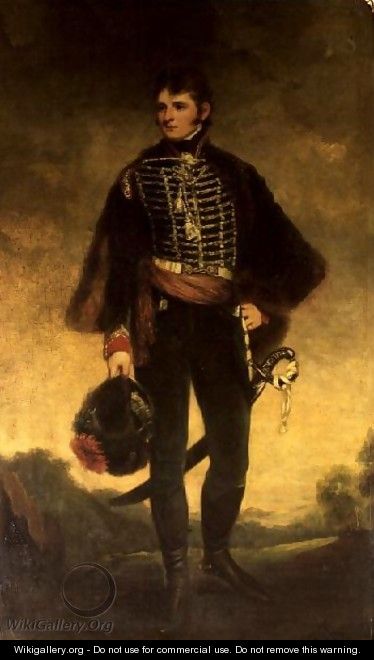
John, 5th Duke of Rutland
We are ever gratified in having to record the particulars of this truly English festival, presenting, as it does, a combination of all that is splendid and hospitable, and including in its circle of participators not only the titled, but the intire of the more humble friends and dependents of the Duke of Rutland, than whom a more popular Nobleman does not exist . . .
The natal day of his Grace falling on Sunday, occasioned the postponement of the general celebration to the succeeding day. Covers were, however, laid on the 4th instant, for a numerous circle, amongst whom was the illustrious hero of Waterloo, who had arrived late in the afternoon from Apthorpe, in Northamptonshire, the seat of the Earl of Westmorland. On Monday the leading guests at the Castle enjoyed a protracted day’s shooting. The fine woods which encircle the Castle abound with pheasants, and repeated discharges re-echoed throughout their extent till nightfall. The Duke of Wellington was remarkably successful, seldom missing his aim. When darkness began to prevail, the illumination of the interior of the Castle commenced, and proceeded until it assumed one continuous blaze of light. The Guard Chamber, the lengthened gothic Corridors, the two Staircases, the Dancing Gallery, Picture Saloon and State Dining-room, and the Regent’s Gallery, wherein the guests assembled previously to dinner being announced, presented, «”ith the various treasures of art they contained, > series of attractions of no ordinary character. Within the area of the great staircase the military band of the Leicestershire Militia was stationed. Their commencement of ” O, the Roast Beef of Old England,” was the signal that all the arrangements for the repast were completed. The Duke of Rutland, with the Countess of Denbigh on his arm, led the way to the banQDetting-room, followed by the intire of his guem. As the cortege passed through the Picture Saloon, the many spectators who had there assembled, warmly greeted his Grace as well as the Duke of Wellington, with reiterated plaudits. The Duke of Rutland took the centre of the table, with the Countesses of Denbigh and Brownlow on either hand; immediately opposite sat the Duke of Wellington, between Lady Adeliza Manners and his niece the Viscountess Burghersh.
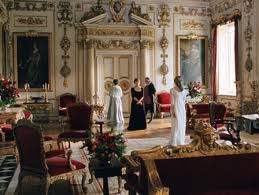
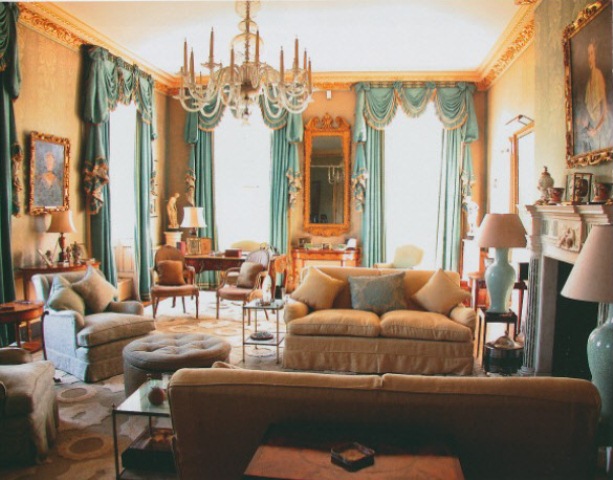
Interior, Belvoir Castle
We have before had occasion to enter into a minute description of this fine apartment, so much admired for its very appropriate and classic enrichments. On this occasion it appeared to peculiar advantage. The gold and silver vessels on the tables and sideboards were arranged with consummate taste, and finely relieved with beautiful vases, containing the rarest flowers, whilst the immense mirrors at cither end reflected fairy-like vistas of seemingly immeasurable extent. On a lofty pedestal, covered with scarlet drapery, appeared the famous antique wine-cooler. The golden tripods each bore lights as well as the magnificent chandeliers which descend from the elaborately sculptured roof. Most of the gentlemen wore the uniform of the Belvoir Hunt, scarlet coats lined with blue, and the ladies exhibited great taste in their respective costumes. The Countess Brownlow wore a lustrous suit of diamonds of the finest water and oriental costliness. The following were amongst the distinguished assemblage which would have been doubled but for the untoward circumstance of the election occurring at this juncture:—Duke of Rutland, Duke of Wellington, Earl and Countess Denbigh, Right Hon. John Wilson Croker, General Upton, Earl and Countess Brownlow, and the Lady Sophia Cust, Viscount and Viscountess Burghersh, Mr and Lady Elizabeth Drummond, Lord and Lady Manners of Easton, Lords Charles and Robert and Lady Adeliza Manners, Earl and Countess Jermyn, Lord Forester, Rev. Charles Roos Thornton, Miss Goodwin, Lord Rokeby, Hon. Mrs Howard, Sir F. French, Marquess of Granby, etc.
Whilst the banquet is in progress let us take a glimpse at the festivities in other quarters of the Castle. A very numerous and delighted party, after enjoying most excellent dinners, and having partaken of coffee, had assembled in the ball-room, where dancing began, to the fine music of the Militia Band, so early as eight o’clock; in the pauses of which refreshments and supper were liberally supplied. About the hour of eleven, His Grace of Rutland entered, and, bowing on all sides to his gratified friends and dependants, proceeded to the top of the room, and with the Countess of Denbigh led off his favourite contre dame — ‘ The Campbells arc coming.’ The Duke of Wellington followed, with Lady Adeliza Sutton, the Marquess of Granby and Lady Sophia Cust; indeed, nearly the intire of the Ducal party promiscuously joined in
the
general dance of more than forty couples, with that unaffected condescension which is ever the attribute of true nobility. With such aids we need scarcely remark the time flew with unwonted rapidity and another dance was called for—and yet another, and it was not until the musicians were fairly overcome with fatigue, that the coming of the final hour for a separation became apparent.
The next morning, the Duke of Wellington said farewell to his munificent Host, and quitted Belvoir Castle, it was understood, for Oxford. His Grace left at seven o’clock, and passed through Melton Mowbray, where, however, he made no long tarrying. The Duke of Rutland will continue to receive a constant succession of visitors at the Castle until the first Newmarket Spring ing, which occurs in April.

Sense And Sensibility in Milwaukee

Sense and Sensibility

At The Milwaukee Rep through January 13, 2013

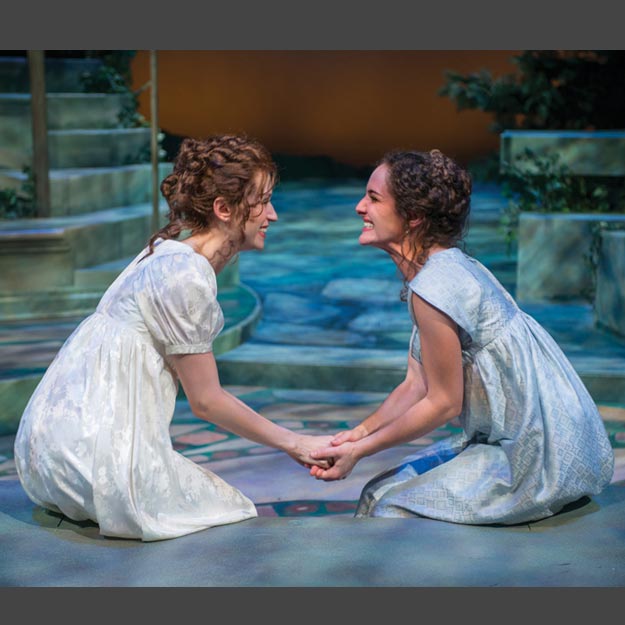
l-r Kate Hurster (Elinor), Laura Gordon (Mrs. Dashwood), Victoria Mack (Marianne)

Victoria here…while Kristine cavorts in Windsor, I am at home, but enjoying a particularly rewarding cultural scene here in Milwaukee.  As you might have noticed, the Milwaukee Art Museum is currently showing Rembrandt, Van Dyke and Gainsborough: Treasures from Kenwood House about which I have written several posts (see 12/20/12, 12/14/12, 10/15/12).

And for theatre-lovers, the Milwaukee Repertory Theatre is currently presenting Sense and Sensibility, adapted from Jane Austen’ s 1811 novel by Mark Healy and directed by Art Manke.  All pictures on this post are by Michael Brosilow.

Here is the Rep’s promotional “blurb:”

From the author of Pride and Prejudice comes this heartwarming, humorous tale of two sisters struggling to move past a family disaster. Sensible, reserved Elinor and passionate, impulsive Marianne find the road to true love beset with dashing suitors and well-meaning relatives, devoted friends and devious rivals, and scandalous secrets and unexpected twists in a period-perfect adaptation that captures all of the deliciousness, flirtation, and folly of Austen’s well-loved novel.

Mack and Hurster

This is the premiere of Mark Healy’s adaptation; he is a well-known actor in the UK (stage: Woman in Black, Hamlet, Pride and Prejudice, et. al.; television: Ghost Squad, Doctors, Family Affair) and has written several other adaptations for the stage of literary works, including John Fowles’ The French Lieutenant’s Woman and Austen’s Persuasion.

Like many Austen fanatics, I approach anything other than the original novels with some trepidation. As a friend of mine observed, “After all, if you want Austen, read her.”  However, again like many Austen fans, I find it impossible to resist television, film and stage versions of the novels…as well as some of the sequels, prequels, etc. so widely in evidence today.

Nevertheless, I liked it very much, as did the near-capacity audience for the performance I attended.  The Rep, by the way, broke all their attendance records with the adaptation of Pride and Prejudice a few years ago.  Healy’s version of S and S was remarkably true to the novel although some obvious cuts were necessary.  The sets were effective and the costumes — well, since I was sitting up close, I could not miss the zippers on the gowns and the less than well-tailored men’s jackets.  Had I been farther back, I probably would have loved them for the “look” was excellent.  Suspend disbelief, I tell myself.
 
The only real problem I had was rooted in the novel itself — the explanations by Col Brandon of the Eliza matter and the confession and mea culpa of Willoughby — both delivered to the patient Elinor. Neither scene bothers me as I read the words, but both seem long-winded and static on the screen or stage.  No one else, however, seemed to be bothered.

Mack and Hurster as Marianne and Elinor

For more on the Milwaukee Rep’s cast and crew and all about the play, click here.

Among the sites suggested for more information is this:
http://www.janeausten.org/
which was new to me.  Where have I been?  I don’t know anything about the creators of this site, but perhaps one of our readers can enlighten me.  WHO is janeausten.org?  So far, a mystery.

Anyway, it seems to me that good old Milwaukee is rather the center of late 18th century activities for another two weeks!  And we deserve it!


Happy New Year!

Victoria and I would like to take this opportunity to wish you all a very happy, and healthy, New Year. We are blessed and honoured to have so many loyal readers – we’re currently averaging 1,000 hits a day. And as a thoroughly unexpected New Year’s gift, Number One London has been nominated for the One Lovely Blog Award by author Susan Ardelie, whose fabulous 18th Century blog, Life Takes Lemons, can be found here. Thank you, Susan!  An added bonus was that we discovered other historical blogs that we were unaware of via her site and which have been added to our “Amusing Blogs” section in the right hand sidebar.

  1. Thank the person who nominated you.
  2. Add the ‘One Lovely Blog Award’ image to your post.
  3. Share seven things about you.
  4. Pass the award on to seven nominees.
  5. Include this set of rules.
  6. Inform your nominees by posting a comment on their blogs.

    Seven things about us:
     Victoria:
    Despite appearances to the contrary, I live in the early 19th century – except for the plumbing.
    I am incredibly lazy.
    I hide it as well as I can.
    I am a super procrastinator.
    I never go anywhere without a book in my bag.
    I alternate between being obsessively neat and horribly messy.
    I buy a lot of make-up but wear very little.
    Kristine:
    My current addiction is York peppermint patties.
    And Farmville.
    I’m incredibly lazy and rarely worry about hiding the fact.
    I cannot live without books.
    Or botox.
    I love Ralph Lauren.
    When I die, my ashes will be scattered in London.

    US:
    We’d rather be in London.
    We’re more likely to be at our computer keyboards rather than anywhere else.
    We will brave sore feet and any other hardships to take in one more sight (in England only).
    Our husbands basically understand, though they like to pretend they don’t.
    We are bound and determined to own a UK bolthole before we die.
    We are both working under the assumption that she who dies with the most books wins.
    We are both sorely tried by the fact that we weren’t born in the 19th Century. Although if we had been, there wouldn’t be any peppermint patties. Or botox. Or indoor plumbing. Or really good make up . . . . .

    7 Blogs to Recognize:


English Country House Interiors

Victoria, here. I recently met Jeremy Musson, author of a beautiful new book from Rizzoli: English Country House Interiors.  As part of the programming at the Milwaukee Art Museum for the exhibition Rembrandt, Gainsborough and Van Dyke: Treasures from Kenwood, Mr. Musson presented stunning photographs and his accounts of writing this lovely volume.

I should come as no surprise to readers of this blog, that I am an eager student of all-things-stately-homes-and-British.  So you can imagine the delight with which I met Mr. Musson, listened and watched his presentation, and devoured his book. 

Jeremy Musson, at the Milwaukee Art Museum
Mr. Musson chose fourteen houses to chronicle in his study of the evolving interior styles from the 16th to the 21st centuries.  I was pleased to find I had visited exactly half of his subjects, and just as happy to learn of seven more I can put on my to-do list for upcoming trips across the pond.
King James Library, Hatfield House, Hertfordshire
As a preface to my comments on this splendid volume, I have to apologize to Mr. Musson, to the primary photographer Paul Barker, and to the Country Life Archive collection.  I did not have access to their photographs, which are far, far better than those shown in this blog, most of which originate from my camera or ordinary website views.  The photos in English Country House Interiors are far, far better in every way — more detailed, more creative, more comprehensive and a feast for the eye.  Please find an opportunity to see for yourself.  Most houses in this volume remain as family homes, maintained by families for themselves as well as for the public.  They were chosen specifically because these houses continue to evolve and change, not just as museums but as residences.
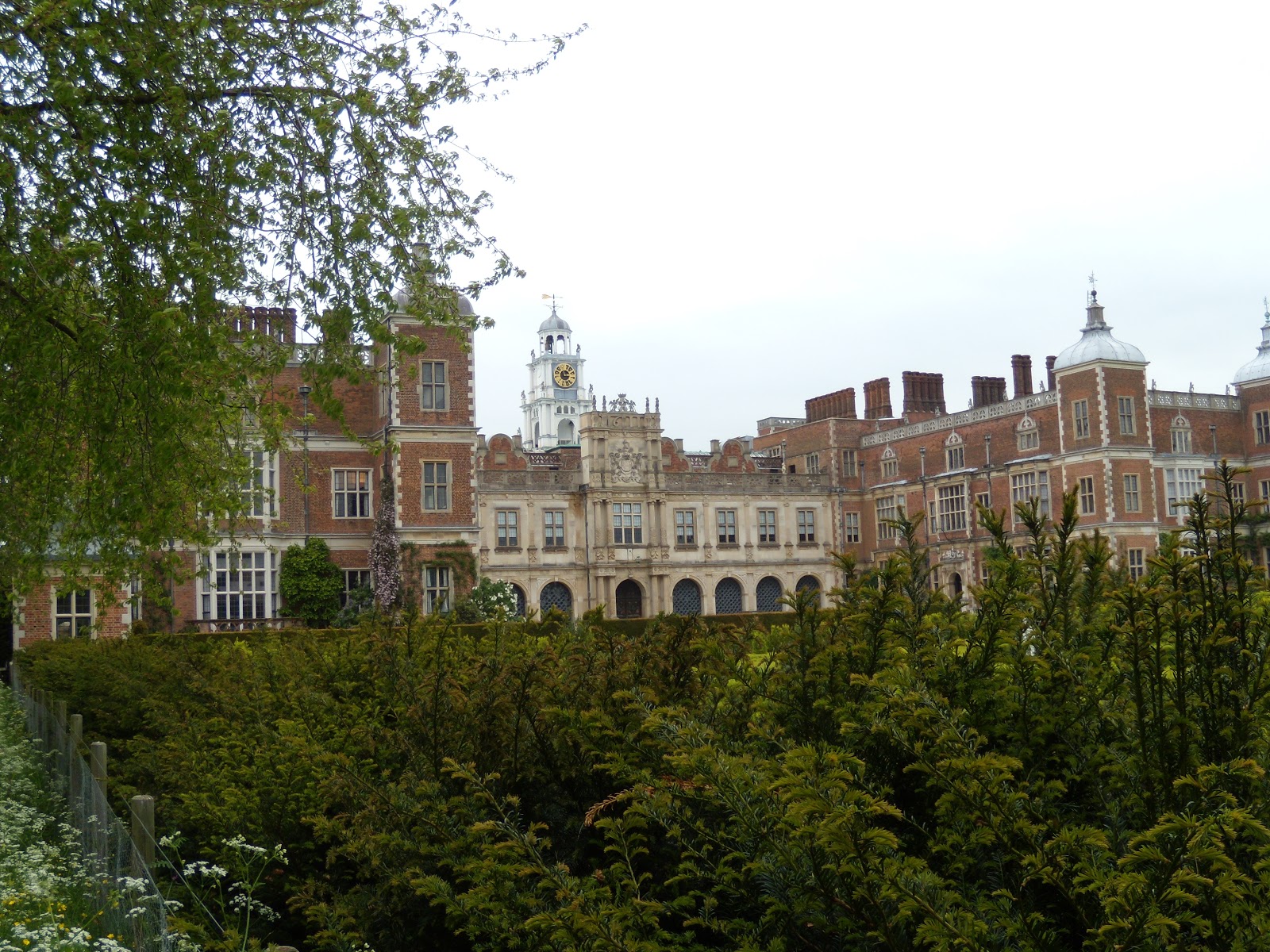
Hatfield House South Front

Hatfield House, first of Musson’s examples, was built in the early seventeenth century by Robert Cecil, Lord High Treasurer to King James I. Once owned by the crown, the estate was also the site of a palace which was a residence of the young Princess Elizabeth before she became Queen.  Cecil’s house was sumptuous evidence of his importance; he hired the best of continental craftsman to create his decor.  The Library above with the life-size statue of King James over the fireplace, was rehung with tapestries and paintings in recent years.

The house is a magnificent example of what we now call Jacobean architecture, bringing to domestic architecture all the extravagance of the High Renaissance.  Next on Musson’s agenda is “The Courtly Caroline Interior” of Wilton House.  The ivory and gilt interior is widely renowned for the Single and Double Cube rooms, which contain furniture made in a later period, by William Kent.

Wilton House, as used in the 2005 film version of  Pride and Prejudice
I will not try to summarize the changing fashions of interior decoration as Mr. Musson explores Boughton House, Chatsworth , Castle Howard, Houghton Hall, and Holkham Hall. 
His discussions of Harewood House and Syon House center on the “Genius of Robert Adam,” whose styles have influenced all interior design ever since. 
Harewood House, Yorkshire
The gallery, below, was completed in the 1770’s for the Lascelles Family, whose fortune was rooted in Caribbean sugar business; they later became the Earls of Harewood and married into the royal family.  The house was constructed for the family in the Palladian style and most of the decor was completed by Adam with much of the furniture supplied by Chippendale.
Harewood Gallery
Syon House, on the other hand, was a  monastery before the Dissolution; as a possession of the Percy family, it was totally re-modeled and redecorated by Adam in the 1770’s.
Syon House, Long Gallery (Library)
Syon is the London area residence of the Duke of Northumberland, who took a few of his personal guests through the library one day in my presence, whilst completely ignoring the gaggle of  tourists gazing at his fine rooms.  He never once glanced our way.  We were all duly impressed. And giggling.
After discussing the “Regency Revolution in Taste” at Goodwood House, Mr. Musson revisits a few houses to see various innovations made in the 19th century, then visits Arundel Castle, Waddesdon Manor, Berkeley Castle and Parham House. At each stop, he informs the reader about changing tastes and styles of interiors, whatever the exterior of the house might say.
Waddesdon Manor, Buckinghamshire
built in 1874 in the French Chateau style
In the spirit of Mr. Musson’s final chapter “Living Interiors: The English Country House Interior Today,” the picture below (not from the book), shows a drawing room redone at Waddesdon recently by leading English designer David Mlinaric.
You will love every word and every photograph in this book, and I must encourage you to take a look.  Jeremy Musson’s website is here.

The Tour of Dr. Syntax in Search of the Picturesque, Part 6

The Tour of Dr. Syntax in Search of the Picturesque, Part 6

Excerpts from Canto 8

Dr. Syntax, having entirely misunderstood his night’s accommodation at the sumptuous home of a lord, goes forward in his quest, determined to seek the picturesque and thus, with his trusty pen and ink, earn his fortune:

“…Thus Syntax, with reflection fraught,
Soliloquiz’d the moral thought;
While Grizzle, all alive and gay,
Ambled along the ready way.
Last night she found it no disaster
To share the fortune of her master;
She, ‘mong the finest hunters stood,
And shar’d with them the choicest food:
In a fine roomy stable plac’d,
With ev’ry well-trimm’d clothing grac’d.
Poor Grizzle was as fair a joke
To all the merry stable-folk.
As the good Doctor’s self had been
To the kind gentry of the inn.

True to his consistently inconsistent mind, Dr. Syntax wastes away half the day in contemplation and eventually asks a shepherd boy for direction to an inn:

“Keep onward by the church-yard wall.
When you will see a house of call;
The sign’s a Dragon — there you’ll find
Eating and drinking to your mind.”
Across the Down the Doctor went,
And towards the church his way he bent.
“Thus,” Syntax said, “when man is hurl’d
Upwards and downwards in the world;
When some strong impulse makes him stray.
And he, perhaps, has lost his way —
The Church — Religion’s holy seat,
Will guide to peace his wand’ring feet!

But, hark! the death-bell’s solemn toll
Tells the departure of a soul;
The Sexton too, I see, prepares
The place where end all human cares.
And, lo, a crowd of tombs appear!
I may find something curious here;
For oft poetic flowers are found
To flourish in sepulchral ground,
I just walk in to take a look,
And pick up matter for my book.”

Dr. Syntax Meditating on the Tombs

Dr. Syntax looks through the tombstones in the churchyard and reads a few:

“EPITAPHS.

Here lies poor Thomas and his wife,
Who led a pretty jarring life;
But all is ended, do you see?
He holds his tongue, and so does she.”

“If drugs and physic could but save
Us mortals from the dreary grave,
‘Tis known that I took full enough
Of the apothecary’s stuff.
To have prolong’d life’s busy feast
To a full century at least;
But, spite of all the doctor’s skill,
Of daily draught and nightly pill,
Egad, as sure as you’re alive,
I was sent here at twenty-five.”

“Within this tomb a lover lies,
Who fell an early sacrifice
To Dolly’s unrelenting eyes;
For Dolly’s charms poor Damon burn’d;
Disdain the cruel maid return’d :
But, as she danc’d in May-day pride,
Dolly fell down, and Dolly died.
And now she lays by Damon’s side.
Be not hard-hearted, then, ye fair!
Of Dolly’s hapless fate beware!
For sure, you’d better go to bed
To one alive than one who’s dead.”

” Beneath the sod the soldier sleeps,
Whom cruel War refuis’d to spare:
Beside his grave the maiden weeps,
And Glory plants the laurel there.
Honour is the warrior’s need,
Or spar’d to live, or doom’d to die ;
Whether it is his lot to bleed.
Or join the shout of victory;
Alike the laurel to the truly brave,
That binds the brow, or consecrates the grave.”

“Beneath this stone her ashes rest.
Whose memory fills my aching breast!
She sleeps unconscious of the tear
That tells the tale of sorrow here;
But still the hope allays my pain
That we may live and love again:
Love, with a pure seraphic fire,
That never, never, shall expire.”

After a long chat with the sexton at the church, Dr. Syntax continues on his way:

“Syntax along the village pass’d.
And to the Dragon came at last;
Where, as the shepherd-boy had said.
There seem’d to be a busy trade;
And, seated in an easy chair.
He found that all he wish’d was there.

Excerpts from CANTO IX.

Having spent the night at the inn safe from a raging storm outside, Dr. Syntax decides to write to his wife:
“Nor can I pass the morning better,
Than to indite this wife a letter.”
He paus’d and sigh’d ere he began.
When thus the fond epistle ran: —
“My dearest Doll, — Full many a day
From you and home I’ve been away;
But, though we thus are doom’d to part.
You’re ever present in my heart…
And know the truth which I impart,
The offspring of my honest heart,
That wheresoe’er I’m doom’d to roam,
I still shall find that Home is home:
That, true to Love and nuptial vows,
I shall remain your loving spouse.
Such are the tender truths I tell;
Conjux carissima — farewell! ”

Thus he his kindest thoughts reveal’d —
But scarce had he the letter seal’d,
When straight appeared the trembling host,
Looking as pale as any ghost: —
” A man’s just come into the town.
Who says the castle’s tumbled down,
And that, with one tremendous blow.
The lightning’s force has laid it low*”
” What castle, friend?” the Doctor cried.
” The castle by the river side ;
A famous place, where, as folk say,
Some great king liv’d in former day:
But this fine building long has been
A sad and ruinated scene.
Where owls, and bats, and starlings dwell,—
And where, alas ! as people tell.
At the dark hour, when midnight reigns,
Ghosts walk, all arm’d, and rattle chains.”

“Peace, peace!” said Syntax, “peace, my friend.
Nor to such tales attention lend. —
But this new thought I must pursue:
A castle, and a ruin too!
I’ll hasten there, and take a view.”

…Around the moss-clad walls he walk’d.
Then through the inner chambers stalk’d,
And thus exclaim’d, with look profound.
The echoes giving back the sound  …
I’ll try to take the view,
As well as my best art can do.”

“A heap of stones the Doctor found,
Which loosely lay upon the ground.
To form a seat, where he might trace
The antique beauty of the place:
But, while his eye observ’d the line
That was to limit the design. “

Dr. Syntax Tumbling into the Water

“The stones gave way, and, — sad to tell! —
Down from the bank he headlong fell.
The slush, collected for an age,
Receiv’d the venerable Sage;
For, at the time, the ebbing flood
Was just retreating from the mud:
But, after floundering about.
Syntax contriv’d to waddle out,
Half-stunn’d, amaz’d, and cover’d o’er
As seldom wight ha
d been before.
O’erwhelm’d with filth, and stink, and grief,
He saw no house to give relief;
And thus, amid the village din,
He ran the gauntlet to the inn.
… Glad in the inn to find retreat
From the rude insults of the street.
Undress’d, well wash’d, and put to bed,
With mind disturb’d, and aching head.
In vain poor Syntax sought repose,
But lay and counted all his woes.
The friendly host, with anxious care.
Now hastes the posset to prepare: —
The cordial draught he kindly gives;
Which Syntax with a smile receives:
Then seeks, in sleep, a pause from sorrow,
In hopes of better fate to-morrow. “

Poor Dr. Syntax has yet to create his picturesque views…and more adventurs await. To be continued