The Book of Fashionable Life – Collar Days

From The Book of Fashionable Life by A Member of the Royal Household (London, n.d.)
COLLAR DAYS.
 
   The Drawing Room is more than usually brilliant on what is emphatically termed “a Collar Day,” when the Knights of the Garter, St. Patrick, the Thistle, and indeed of all orders, appear in the presence of the Sovereign in their respective collars and jewels, thereby heightening the rich display of magnificence at all times visible at a Drawing Room. The following is the rota of Collar Days held at the ancient palace of St. James:—January 1st and 6th February 2nd and 24th; March 1st, 17th, and 25th April 23rd and 25th; May 1st, 24th, and 29th June 20th, 24th, 28th, and 29th; July 25th August 24th; September 21st and 29th; October 18th and 28th; November 1st, 5th, and 30th; December 21st and 25th; together with Easter Sunday, Monday, and Tuesday; Ascension Day; Whit Monday and Tuesday; and also Trinity Sunday.
 
GENERAL REMARKS.
 
No one should presume to go through the ordeal of presentation without much preliminary training; for, with the best social education and self-possession a person may be utterly at fault in the Queen’s drawing room. It is surprising, nevertheless, with how much tact the amiable sex acquire the conventionalities of this grand reunion; while men, who have been admired for ease and grace elsewhere, are at first little removed from gauche. A person of great nerve once informed us that he never felt himself so completely deserted by this quality, as when he was presented to George the Fourth. And still more of gallantry and delicacy are requisite in paying respect to a young, lovely, and accomplished Queen.
In kissing Her Majesty’s hand, the left arm of the party presented (while kneeling) should be placed under the Queen’s right arm, just above the wrist, so as to support it. The utmost grace should be exercised in this act of homage. The kiss should be merely a movement of the lips. Excepting on rare occasions, the Queen always stands to receive the company at the Drawing Room; and we lay the more stress on this, as many have most erroneously asserted that Her Majesty sits during the whole time of reception.
One of the most splendid coups d’ceilat the Drawing Room is that afforded in witnessing the vast assemblage of the beauty and elegance of the English aristocracy, whilst waiting in the corridors of St. James’s Palace for their carriages. This spacious avenue is generally so crowded as to cause a great delay to those who have attended the Drawing Room; and these titled personages have been known to wait upwards of two hours before theircarriages have been enabled to approach the palace.
A very general mistake prevails as to the Dress of gentlemen at drawing rooms. “Silk stockings” are supposed to be indispensable, whereas the Prince, as Field Marshal, wears the high boots; as do also the Duke of Cambridge, and His Grace the Duke of Wellington. Boots, too, are proper for all in military costume.
In the quadrangle, facing Marlborough House, is placed the Guard of Honour, furnished by the Life Guards, attended by their splendid band, in their State clothing, with their silver kettle drums (valued at one thousand guineas), the gift of King George III. and George IV. to these gallant regiments. The elegance of the carriages and horses of the Foreign Ministers, Cabinet Ministers, and great Officers of State, in the Ambassadors’ Court at St. James’s Palace, is proverbial; the ensemble has a striking appearance, and is worthy inspection. We now conclude, having entered elaborately into a review of this most august ceremonial, and with the consciousness that our statements are unimpeachably correct.

A Couple In England – Day One – Part One

After a fairly uneventful red-eye flight to England on the night of December 25th, we landed at Heathrow next morning and then headed for the Green Park Hilton, our hotel in Half Moon Street. This is a little gem of a place, located in a row of townhouses between Piccadilly and Curzon Street and backing onto Shepard’s Market.

Though it was much colder, and wetter, than the Husband or I had anticipated, we were given a warm welcome by the hotel staff and shown to our room, which wasn’t badly sized, as London hotel rooms go. Once I’d unpacked (i.e. put the suitcase on the luggage stand and the duffel in a corner) I urged the Hubby to get a move on.
“Come on, let’s go,” said I.
“Go? It’s freezing. Where are we going? You’re taking me to Apsley House, aren’t you?”
“Apsley House is closed till Saturday. We’re going outside. We’re in London. In Mayfair.”
I should probably tell you now that we spent three days with my family in New Jersey before flying to England. During those three days, my daughter, Brooke, had ample time and opportunity to warn the Husband against Apsley House, home of the Duke of Wellington. Boring is what she called it. Have you ever? She did allow that it was tolerable the first few times I’d taken her there, but that by now she would be grateful to never darken its doorway again.
“Really, Ma, how many times are you going to see it? And why do you always have to drag me along?” Kids.
So Hubby and I venture outside and make it all of a few hundred feet up to Curzon Street, where Hubby spots a Caffe Nero on the corner. I can take a hint as well as the next chap, so inside we go and order an Americano (Hubby) and a mocha (moi). We take them outside and sit at one of the little cafe tables on the pavement. We sip. We light up. And I begin to grin like a Cheshire Cat.
“Is it me, or is this the best coffee you’ve ever tasted?” asks Hubby.
“It’s pretty demmed good. Better than Starbucks, even.”
“Why is it so good,do you think?”
“It’s not made with regular coffee. It’s made with two shots of espresso and boiling water. Strong.”
“Is that why you’re smiling like that?”
“No. I could be drinking bilge water and I’d still be grinning like this. I’m in London. Finally. London. In England.” I looked across the street at the G. Heywood Hill bookshop. “Nancy Mitford worked there.”
“Eh?”
“A writer. Sister to the Duchess of Devonshire.”
“My good man,” said the Husband. His usual response to most of my remarks about British history, as he tends to feel as though I’m lecturing him whenever I attempt to explain what I think are interesting bits of trivia.
“Come on, let’s walk around the corner to Shepard’s Market,” I said, getting my things together.
“Shopping?” the Husband asked.
“Only if you want sheep. It used to be where they sold sheep in London. Now it’s full of restaurants and pubs. I just want to go and look.”
“Look at what?”
“Shepard’s Market,” I sighed. “We’re in London. We’re going to go and look at London. Starting with Shepard’s Market.” I refrained from explaining that I just wanted to walk the streets, any streets, in order to just be in London. I wanted to soak up the atmosphere. Personally, I didn’t care that it was cold, or grey, or wet. All I wanted was to walk aimlessly through Mayfair, to examine every nook and cranny as the whim took me, to peek down service entrances and read blue plaques and imagine Fanny Burney and Beau Brummell having strolled these same streets. Egad, but I’d never missed Victoria so much in all my life.
We walked up Curzon Street and through the alley there that leads to the Market. Unfortunately, it being Boxing Day, everything but one lone pub was shut up tight.

So I walked Hubby down the alley that leads to Piccadilly, where we came out just beside the In and Out Club, now almost obscured by sidings.

Peeking through the gates, I told the Husband that it was soon to be the most expensive private home in Mayfair, that the people who’d bought it were planning to do a massive remodel and that the building alone sold for one hundred and fifty million pounds.
“It was originally built for the Earl of Egremont,” I went on, even though I knew that Hubby might feel he was being lectured. “Then it was sold to the Duke of Cambridge. Adolphus. Brother to George the IV.” I was in full spate. “Then it was bought by Lord Palmerston. Who was Prime Minister. Twice.” I couldn’t have stopped myself if I’d tried. “Finally it was bought by the Naval and Military Club. They painted the words In and Out on the two gates and so the place came to be called the In and Out Club instea
d.”
“My good man.”
Part Two Coming Soon . . . . . .

6th Jane Austen Festival – Louisville

cid:16C1C740-7820-4313-B4B7-6971AC18C298@medicalcity.com
6th Annual Jane Austen Festival
July 20 & 21, 2013
10 a.m. – 5:00p.m. each day
Admission $12
Historic Locust Grove
561 Blankenbaker Lane
Louisville, KY 40207
502-897-9845
Join us as we celebrate the bicentenary of Pride & Prejudice!
Regency Style Show, Regency Emporium, Four Course Afternoon Tea,
Grand Ball, Workshops, a Duel between Gentlemen, Bare Knuckle Boxing Demonstration, Music & other entertainment and a NEW theatrical presentation – Elizabeth & Darcy-A Love Story,
Plus an encampment of His Majesty’s Royal Navy
Plan to attend in Regency attire!
On Saturday a Regency Promenade will take place in an effort to break the Guinness Book World Record number of people in Regency attire
Sponsored by: Greater Louisville Region, Jane Austen Society of North America
www.jasnalouisville.com (to register, begins June 1)
6th Annual Jane Austen Festival, Saturday, July 20 & Sunday, July 21, 2013 at Historic Locust Grove, Louisville, Kentucky
The 6rd Annual Jane Austen Festival will take place at beautiful Historic Locust Grove located at 561 Blankenbaker Lane, Louisville, KY (www.locustgrove.org)
Inside the Visitors’ Center a four-course Afternoon Tea will take place each day and is $20 per person. Also a Silent Auction of lovely Regency era items and Jane Austen memorabilia will be offered.
Back by popular demand is the special children’s tea which will take place on Sunday afternoon at the last tea time. Children aged 4-12 are invited to attend with an adult and have their own special menu sure to please. They will have their photo taken with Mr. Darcy & Miss Elizabeth Bennett, have a regency themed craft project, and take home their own pretty cup and saucer-all for $15.00
“The Shoppes of “Meryton” will be set-up outside and will have vendors from throughout the Midwest and Canada who specialize in Regency era wares such as fabric, shoes, bonnets, patterns, jewelry, tea sets, tea and much, much more!
New this year, “Elizabeth & Darcy-A Love Story, a play written by Greater Louisville member, Alana Gillett. The 45 minute presentation requires a separate ticket ($10).
Also new, a Regency Promenade on Saturday. Come dress in your Regency attire as we attempt to break the Guinness Book World Record number of people in Regency attire. $1 per person registration fee, which will be donated to the Jane Austen House Museum in Chawton, England.
Engage with the crew of the HMS Acasta, members of His Majesty’s Royal Navy who will demonstrate the real lives of sailors as they go about their business, ie signal flag demo, playing cricket, sextant demos and more!
The log and stone buildings on the grounds will host the Regency men’s club called the “Hellfire Club”, and The Earl of Sandwich snack shop. Common Stock Entertainment will entertain young and old alike with shadow puppets, old-fashioned, kid-friendly peep shows, and other 18th century entertainments.
Other talks and demonstrations to be held under the tent include “Dressing Mr. Darcy” and the ever-popular Regency Style show. While a display of Regency fashion will be located in the Grand Parlor in the house all-day both days.
At the Village Green each day demonstrations of Bare Knuckle Boxing, a Duel Between Gen
tlemen and a Fencing Demonstration.
A Grand Ball will take place on Saturday, July 20 in conjunction with the local English Country Dance Society at Spalding University. Advance reservation required ($20 per person) and not included with festival admission.
Workshops will be offered: Regency Capote Bonnet, Regency Straw Poke Bonnet and Turbans Through Time. ($30, $30 & $25 each)
Admission to the festival is $12 each day and includes admission to the ca. 1790 Locust Grove, a National Historic Landmark. Recently intensive research and restoration has completely changed the interior of the home to the period when Revolutionary War hero, George Rogers Clark, lived in the House, 1809-1818.
The Greater Louisville Region of the Jane Austen Society of North America (JASNA) was founded in July of 2007. They meet monthly at Historic Locust Grove. The Jane Austen Festival has become a very successful event with approximately 1,700 attending from 18 states and Canada in 2012.
For information about JASNA, visit www.jasna.org and to purchase tickets for workshops, the ball, afternoon tea and admission, visit www.jasnalouisville.com On-line pre-registration begins June 1st.
Media questions can be forwarded to Bonny Wise, Regional Coordinator at wises4@insightbb.com or call 502-727-3917 (cell) Mrs. Wise can provide high res photos and is available for interviews.

Court and Fashionable Life – January 1835

From

The Court Journal: Gazette of the Fashionable World
Saturday, January 24, 1835

COURT AND FASHIONABLE LIFE
— The Duchess of Kent and the Princess Victoria leave St Leonard’s for Kensington Palace on Tuesday next.
— The Duchess of Gloucester remains in town. Her Royal Highness receives visits occasionally from the Duke of Cumberland and the Princesses Sophia and Sophia of Gloucester, but in other respects lives in a very retired manner.
— The Duke of Wellington has been prevented by a cold from leaving Apsley House during the last day or two.
— Sir George Murray was expected to return to town in the middle of last week from Scotland; by letters received in town from Edinburgh, however, it appears that the stay of Sir George in the North will be prolonged for some time.
— Mrs Wynn and family arrived in town from Wales in the early part of the week, to join Mr Wynn, whose presence in town, as a Cabinet Minister, will be necessary till the meeting of Parliament.
— Lord and Lady Sidney arrived at Thomas’s Hotel, Berkeley Square, yesterday, from Paris.
— The Duke of Manchester left town, yesterday, for his seat, Kimbolton Castle, Huntingdonshire (above).
— Laleikin Pacha, the new Turkish minister, is expected to arrive here early in the ensuing month. Namik Pacha, on the arrival of his successor, will immediately take his departure for Constantinople.
— A Cabinet Council was held at three o’clock, yesterday afternoon, at the Foreign Office, which was attended by Sir Robert Peel, the Earl of Rosslyn, Mr Secretary Goulburn, the Earl of Aberdeen, Lord Ellenborough, Earl de Grey, the Right Hon. J. Herries, and Sir Edward Knatchbull. The Ministers were in deliberation till half-past four o’clock.
— Mr Thomas Miller, Keeper of the Records of Honduras, has arrived in town, and had an interview with Mr Under Secretary Hay, at the Colonial Office, on Thursday.
— Lord Rosslyn, as Lord President of the Council, gives a grand dinner in the early part of next month to the Ministers and a select party, on the occasion of arranging the List of Sheriffs for England and Wales for the present year, previously to its being submitted to the King.
— The Duke of Cumberland, accompanied by Sir Charles Manners Sutton, paid a visit to the new Houses of Parliament a few days since. Both Houses are now nearly finished. The walls of the House of Commons are lined throughout with canvas, covered with varnished crimson paper, handsomely ornamented. The paper of the House of Peers is a striped pattern, and has also a very elegant appearance. The stoves for warming both with steam have been finished and tried, and answer all the purposes intended.
— The Duke of Sussex intends prolonging his visit to his friend Lord Dinorben, at Kinnoull Abbey, till within a few days of the opening of Parliament.
— Lord and Lady Granville arrived at Devonshire House on Monday afternoon, from Paris.
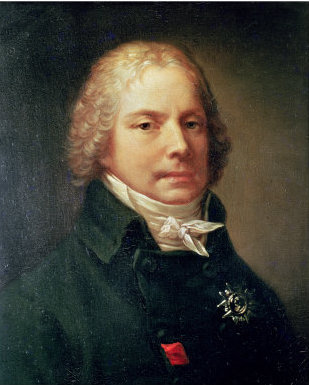
— Prince Talleyrand (above) is about to pay a visit to Rochelle, the seat of the Duchess de Dino, in Germany.
— Sir C. Wetherell had a dinner party on Monday, to meet the Duke of Cumberland, at the Chambers of the Hon. and Learned Knight, in Stone Buildings, Lincoln’s Inn.
— We regret to state that the Princess Leiven is suffering from severe indisposition.
— Armi Bey Achmet Effendi and Mr Urquhart, arrived in town on Sunday, from Constantinople.
— Earl and Countess Howe are staying at Gopsal Hall, near Atherstone, where they will remain till the meeting of the new Parliament.
— Lord Granville Somerset (First Commissioner of the Woods and Forests) has returned to town from attending his election. His Lordship, on his arrival, paid visits to the Duke of Wellington and Sir Robert Peel.
— The Duchess of Berri gave birth to a daughter last month, at Brandies, in Bohemia. The child lived but a few hours.
— Lord De Lisle and Dudley has resigned his Equerryship to the King, having been appointed one of the Lords in Waiting to his Majesty.
Serious Illness of his Royal Highness the Prince of Orange,—We regret to learn by the last advices from Holland that the Prince of Orange is alarmingly indisposed. His complaint is influenza; and it said that although the attack was exceedingly violent, yet his Royal Highness treated it with indifference, refusing medical aid till it was feared that all assistance would be unavailing.— The Prince’s illness was not publicly known at the Hague until Sunday evening, nor officially announced till Monday morning, though he had returned to his residence there on Saturday evening. Its announcement produced a very general gloom’over the public mind. It now appears, that the Prince has been indisposed at his headquarters for a fortnight past. All the accounts speak despondingly of the Prince’s illness, and the bulletins issued seem to intimate that the worst was to be feared.
— Lord Fitzroy Somerset’s list of visitors on Tuesday, were—Major- General Mawby, Colonel Parker, Colonel Dickson, Colonel Tovey, MajorGeneral Bradford, Major Taylor, and about thirty other officers.
— The Marchioness of Conyngham (above), we understand, is about to pay a lengthened visit to the South of France.
— The Earl and Countess of Carlisle and the Ladies Howard, arrived at Carlisle House, Grosvenor place, on Monday afternoon, from Castle Howard, Yorkshire.
— Earl de Grey returned on Monday, to his residence in St James’s Square, from his seat at Wrest Park, where his Lordship went to entertain a shooting party. Countess de Grey has been on a visit to the Earl and Countess Cowper, at Pansanger. His Lordship will shortly commence his official dinner parties to his colleagues in office.
— Lord Durham is not expected to return to town from Durham Castle, until a week before the meeting of Parliament,
— The Earl of Aberdeen gave his first Cabinet dinner, on Wednesday, at Argyll House. There were present the Duke of Wellington, Sir Robert Peel, the Lord Chancellor, Earl of Rosslyn, Earl de Grey, Lord Wharncliffe, Lord Ellenborough, Sir George Murray, Right Hon. Messrs Herries, Baring, C. W. Wynn, and H. Goulbum, Sir Edward Knatchbull, &c.
— The new Paymaster-General, Sir Edward Knatchbull, has resigned the Chairmanship of the East Kent Quarter Sessions.
— On Tuesday last, Mr and Mrs Skinner, of Portland place, left their hospitable residence there, for their charming country seat, Shirley Park, near Croydon.
— A splendid fete was given at Wynyard Park (above) on Monday last in honour of the birth-day of the Marchioness of Londonderry, who, on the Saturday preceding, completed her thirty-fifth birth day.
— His Excellency the Baron d’Ompteda, gave a grand banquet on Sunday evening, in Grosvenor place, to the Duke of Cumberland, Sir George Quentin, Sir Robert Peel, Baron Blome, Count Seckendorff, Count Medem, M. de Huminelauer, Count Ludolff, Count d’Aglie, Count Jennison, Lord Cowley, Chevalier Dedcl, Sir George Rose, Baron Zuylen, Colonel Bentinck, Sir Edward Cust, and Mr Lichtenbcrg.
— Armi Bey and Achmet Eft’endi, the Ottoman Nobles, just arrived from Constantinople, are understood to have been entrusted by the Sultan on a mission to acquire the information which may enable him to establish a military school for the education and improvement of young officers, for which purpose they will visit Woolwich, Sandhurst, Addiscombe, &c. They both hold high rank in the Turkish army, and travelled through Germany and part of France, on their way to England.
— We regret to announce the decease of the Lady Susan Lygon, which took place on Friday last, at Port Elliot, in Cornwall. Her Ladyship had long been in a declining state of health, but no serious apprehension of danger was entertained till a very short time previous to her dissolution; indeed the first intelligence that reached Colonel Lygon of the dangerous state of his Lady, was on the day of her decease, while he was attending his election duties, at Worcester. The gallant Colonel instantly ordered post-horses, and proceeded to Port Elliot, but, unfortunately, not in sufficient time to find her Ladyship alive. The demise of Lady Susan Lygon has put several Noble families into mourning, including those of Earl Beauchamp, Earl of St Germans, Earl of Longford, &c. Her Ladyship was only in her 36th year, and has left a numerous family to deplore her loss.
Senatorial Costume of Belgium. — The Chamber of Representees met in a Secret Committee on Saturday last, for the purpose of deliberating in what costume the Members should appear at a ball at Court, on the 10th of February, at which they are invited to appear in costume. On Monday there was another Secret Committee for the same purpose, in which the following resolution was adopted by a large majority, after a long debate :—” The star adopted by the Chamber, worn on an ordinary dress, is a recognised costume, and forms the costume of the representatives. It is to be understood that on no occasion, either the Chamber, or any of its members, will be obliged to wear the costume.”

The Thames is Freezing: 1811

The Thames is Freezing: 1811

Two Hundred and Two years ago

January 8, 1811

The Chronicle in 1811 Annual Register

“The Thames is now nearly frozen, there being only a narrow channel in the centre of the river free from ice. Two men walked on the ice yesterday from Battersea-bridge to Hungerford stairs.”

From Victoria:  However, the Thames did not freeze completely in 1811…it was an infrequent happening.  Below, a painting from the Museum of London, showing the frozen river in 1677 by artist Abraham Hondius (1631-1691)

The Frozen Thames, 1677
Below, a painting of the last great Frost Fair of 1814, held on the frozen Thames on February 1-4, 1814.  Since then, various bridges and other alterations in the river’s natural flow, combined with unsuitable temperatures, mean that the river never completely freezes.