Walking Sticks: A Fine Collection

One of the treasures of the Naples (Florida) Museum of Art is the Ruth Gordon Collection of Walking Sticks.


The Naples Museum of Art is part of The Philharmonic Center for the Arts which includes a large concert hall and a smaller performance space as well. 

 Looking into the Courtyard, the Concert hall is on the left and the art museum on the right.
 

I love the sign at the door, above.
 
To visit the Naples Museum of Art online, click here. 
 
 
Beau Brummell on Jermyn Street, London
 
 
No well dressed male in the 18th or 19th Century went out without his walking stick.  Of course, the idea of a staff or cane is as old as human beings themselves…we can imagine cavemen carried them (perhaps as cudgels as well) an certainly many Biblical characters are portrayed with some sort of stick. But they became fine art just a few hundred years ago.

 
Victorian-era Romanian handle set with turquoise and garnets
 
 
The Romanian handle to a ladies walking stick (above) has a compartment in the top for its owner to store her perfume.  The stick is made of partridge wood.
 
According to the museum’s brochure, “All of the United States Presidents from George Washington to Harry S. Truman carried a walking stick. They were considered a symbol of discipline, leadership and respect.”
 
Dagger Stick, 16th C.
 
The bronze top of the stick above must be unscrewed to remove the dagger.  It was considered a good luck charm and was passed down through generations of
British actors.
 
Ruth Gordon (1914-2005) began to acquire her many walking sticks on a trip to Brighton, where she bought parasols at antique markets to protect herself from the sun. She presented the collection to the Naples Museum of Art in memory of her son, Martin Gordon, who founded the Gordon’s Print Price Annual.
 
 
Chinese Cloisonné Handle
 
Above is a rare French enamel lid which opens to a working watch and delicate artwork.  Inside the watch is an engraving of the makers name.
 
The second from the left in the opening picture is a swordstick, one of those blades concealed in a walking stick, so beloved by historical fiction fans.
 
 
Carved Ivory Handle
 
Above, the intricate carving of “Hear no evil see no evil, speak no evil” in ivory, from China and several centuries old.
 
 
Ladies handle
 
Above is a stunning handle of amethyst quartz and rock crystal capped with French enamel, an elegant accessory for a great lady.
 
 
Three Walking Sticks from the Ruth Gordon Collection
 
 
The center stick above is the collection’s oldest, carved from the dried sap of a cinnabar tree. It is an ancient Chinese design, representing a tradition of using cinnabar to create potions ensuring longevity. On the left and right are Chinese and Japanese examples of cloisonné handles.
 
For a good long, close-up look at these fantastic walking sticks visit the Naples Museum of Art, 5833 Pelican Bay Boulevard, Naples, Florida


A Couple In England – Day Four – Part Four

Hubby and I entered our hotel and made a bee line for the bar, where we picked up a bucket of ice before heading up to our room. Once upstairs, I made us each a rum and coke, which we gratefully sipped while relaxing – me in a chair, Hubby on the bed.
“What are we doing tonight?” Hubby asked once he’d gotten some of the nectar down his throat.
“Dinner and the theatre.”
“What theatre?”
“One Man, Two Governors. It’s a comedy. It’s supposed to be truly funny. We could have dinner at Burger and Lobster before the show.”
Hubby gave me a look that I imagined was usually reserved for death row convicts.
“Why are you looking at me like that?” I asked.
“Would you be really mad if I didn’t go to the theatre?”
“Not go to the theatre? It’s the Theatre Royal Haymarket,” I told him. Why I should tell him that, I’ve no idea. It just came out. “What’s wrong? Don’t you feel well? We have tickets. Already booked. For months now.”
“I’ve had enough fun for today. We’ve been on our feet all day, Hon. My back hurts, I’m tired and I’m old. You keep forgetting that I’m old.”
 
“You’re not old,” I told him, topping up our drinks. “Do you want to go to Burger and Lobster for dinner then?”
 
“Can we just eat downstairs in the hotel restaurant?” This was not good. Hubby must be well and truly tired to turn down a repeat visit to Burger and Lobster. Which was just in the next street, bear in mind.
 
So after finishing our cocktails, we made our way downstairs to the Tiger Green Brasserie for dinner, walking through the bar on our way to the dining room.


We were seated and menues were produced and before too much longer Hubby and I had ordered further drinks (a Black Russian for him, a glass of Pinot Noir for me) and a steak each. As we waited for our meals to arrive, I glanced around the room, recalling that the hotel had been created by knocking together several adjoining townhouses. I fell into a familiar reverie – if I were given this space, how would I make it livable? I usually do this when I’m killing time in a space with some history. Which is odd, as I don’t have any sort of a design background, but there you have it. I’d restore the fireplaces, first off and, as always, my mind ranged round the room while I decided which walls I would cover with bookshelves.
 
“You’re mad at me because I don’t want to go to the theater, aren’t you? Is that why you’re not talking to me?” Hubby’s voice brought me back to the present.
 

“No. Not at all. I’ll just go by myself. It would be more fun with you, but I can still go.”
 
Our steaks arrived and we began to eat. “What are we doing tomorrow.”
 
“Tomorrow we take the train to Bath. I can’t wait for you to see it. It’s a gorgeous city, the architecture is fabulous and the surrounding countryside is just like a picture postcard.”
 
“Is that where you want to live one day? Where are we going to live? Not London? I couldn’t take the crowds.”
 
“No, not London. I don’t have a particular place in mind,” I said, sipping my wine. “When the time comes, we’ll make a circle round London that represents a two hour train journey to town. Once we see what falls within that circle, we can make a more educated choice.’
 
“You. You can make the choice. I don’t know anything about living in England. Just pick somewhere peaceful, will you? What’s Bath like? Is it going to be as crowded as London?”
 
“No! It’s nothing like London. Oh, it’s going to be fabulous,” I said. “Bath at New Year’s. Fireworks over the Abbey. The Wellington Suite at Duke’s Hotel. And a few surprises.”
 
Hubby actually groaned. “Oh, God, no surprises. Please, no surprises.”
 
After dinner, we went up to our room, where I bundled up in my outerwear, gave Hubby a farewell kiss and left for the theatre. First, I stopped in at Boot’s and got Hubby some Nuromol (ibuprofen and paracetamol) and a box of those things you stick on your back that heat up and are supposed to help aches and pains. Reader, I had anticipated my return to Bath for months and was not about to let Hubby’s ailments throw a damper on all that I had planned.
 
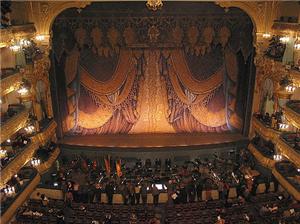
I arrived at the Theatre Royal Haymarket and found my seat, placing all my belongings on Hubby’s empty seat beside me. I settled in and looked around at the gorgeous interior of the Theatre, which began life as a theatre in 1720. Samuel Foot
e acquired the lease in 1747, and in 1766 he gained a royal patent to perform dramas in the summer months. The original building was a little further north in the same street. It has been at its current location since 1821, when it was redesigned by John Nash. In 1873, the first ever matinee performance at a theatre was put on here, a custom soon followed by theatres world wide.

 
 Should you wish to learn more about Samuel Foote, I direct you to Ian Kelly’s fabulous biography, which can be found here.
 
The theatre began to fill and I began to cough. Hack, hack, hack. I fished around in my bag and found a candy to suck on. The lights dimmed and the play began just as I was beginning to suspect a sore throat coming on.
 
As to the play, here’s the most concise review of the plot I found on the web:
 
“One Man, Two Governors is set in Brighton in 1963 and centres around Francis Henshall, a man hard up for cash, desperate to know where his next meal is coming from and who is easily confused. Henshall accidentally ends up being the personal minder for two separate employers, one Rosco Crabbe, a well known gangster (of sorts), and Stanley Stubbers a criminal who is fleeing the police. But of course, Rosco is actually Rachel, his sister, disguising herself as her Rosco, who is now dead, in order to retrieve cash that is owed to Rosco so that Rachel can run away with her criminal lover, who is none other than the aforementioned Stanley Stubbers.


As the play unfolds we see a frantic Henshall, completely unaware of the connection and indeed that Rachel is in disguise, desperately trying to keep the two separated so neither one realises he’s taken a job with two employers.
 
It’s a silly, slapstick comedy play, which are often either way too over the top and put on that they feel strained or borderline lame. Not this one though – we were laughing out loud almost from the moment we were seated, right the way through the end. With a good balance between a structured plot, planned gags, audience participation and improvisation this play had me in stitches and included clever dialogue which, while British, was easily understood and translatable.”
You can read the complete review here. The play was fabulous, laugh out loud funny in many places and it thoroughly took my mind off my cough. As the curtain came down, I bounded from my seat and ran down the stairs and out into the rainy night so as to avoid the exiting crowd. Waiting just in front of the theatre was a young man on a bicycle propelled rickshaw.
 
“Where to?” he asked, apparently unaware of the drizzle and frigid temperature.
 
“Half Moon Street,” I said, out of politeness.
 
He looked puzzled. “Half Moon Street . . . . let me see . . . . is that over by . . . . . ?”
 
“Thanks anyway,” I said over my shoulder as I hopped into the first cab in the waiting rank. I made it back to our hotel without further incident, but really this was a day for strange cab encounters.
 
Hubby was still awake when I returned. “How was it?” he asked.
 
“Hysterical. You would have loved it. How do you feel?”
 
“I feel okay. I just wasn’t up for any more fun.”
 
I kissed him and then made a start on packing. Later, after a long, hot shower I got into bed and contemplated all the joys that were in store for us tomorrow. I would miss London, of course, but Bath awaited. And the Wellington Suite. And fireworks. Oh, joy!
 
To Be Continued . . . . . .


The Secrets of Bloxley Bottom, Episode 9: Polly Is Ready for a Risk

We’ve had eight episodes of The Secrets of Bloxley Bottom since our launch on Feb. 15, 2013.  Time to take a look back at the story so far.

The Secrets of Bloxley Bottom

Lots of secrets are swirling around the village.  Miss Prudence Newton guards her ambitions behind a facade of propriety…a façade which might be breached before long.  Major Monty Twydall has been keeping his fiscal difficulties close to his vest …and the French émigré artist Pierre Tournell is consumed with his undisclosed ambitions in all their varieties. Lionel, Lord Bloxley needs to protect several casual encounters from his wife’s knowledge, and in turn, Elizabeth, Lady Bloxley has surprises of her own  she may yet share someday.

The Bloxley daughters, Daphne and Valeria, shared a secret about their grandmamma, the Dowager Baroness – and also about their parents, which they found delightfully romantic. Aurelia and Millicent enjoy collecting tidbits of gossip, secret or not, and sharing them with everyone.  Miss Anne Humphrey, companion to the dowager baroness Bloxley has a deep and significant secret she will guard with her very life.

Whilst it is no secret at all that Lady Louisa openly organizes many of the village’s concerns, people would be amazed to know how the Dowager honors the many secrets of others. And what she has in store for Prudence. Exactly the same is true of her dear friend, Arthur Wellesley, the first Duke of Wellington.  Like Lady Louisa, the Duke knows when to watch his words.

The only resident of the village who appears to be entirely without secrets is the large and decidedly odd looking stray dog called Spot, although no one has a clue where he came from.

We hope you are enjoying our blovel – a serialized story  The Secrets of Bloxley Bottom. A new episode will appear each Friday.  We will shortly putting a link to the Bloxely Bottom page in our sidebar. Be sure to look for it, as it will contain links to every chapter, as well as brief biographies of the principal characters.

Please share your comments on The Secrets of Bloxley Bottom and tell us what you think of the story so far.


 The  Secrets of Bloxley Bottom
 Episode 9: Polly Is Ready for a Risk
 
Polly Sawyer, maid of all work at the Crowing Cock, tucked the package addressed to Mrs. Oldstead-Parker into her wide apron pocket and began walking. At times like this she wished she had a wagon with a quick-stepping mare to hurry through her deliveries and chores. 


Today she was eager to talk to Aurelia Gammersgill, a lady who was always kind and often offered her excellent advice. Because this time Polly’s problem was more than just a small question of how best to deal with her grandfather’s cantankerous moods or the unwelcome advances of men in the tap room. Today Polly had questions she was completely unprepared to answer. She had the feeling the requests of the artist, Mon-sir Tournell, would not be easily answered. Whether she said yes or no would have consequences far beyond her ability to see. But she yearned to say yes to him. Polly’s large green eyes and masses of curly, copper coloured hair usually brought her more attention than she wanted. Not to mention her generous curves. She knew the gazes of many men came to rest upon on the scarf she crisscrossed over her chest or the sash of her apron as it hung over her bottom.
Mon-sir Tournell was the first person from France Polly had ever spoken to and she had to listen carefully when he spoke, for though he had a rich deep voice, his words were not pronounced quite as she expected them to be.
He’d been at the inn for several days, eating alone some nights, others with Major Monty and his friends. He was always polite and smiled at her. Mam-zelle, he called her.
She trudged up the gentle hill, past the
bower of pink roses on a thatched cottage. A cat sunning herself on the stone wall raised her head and opened one eye for a moment before stretching and curling back into a ball. The street was quiet. Only a few ladies stood near the linen draper’s store and they were women who would not especially appreciate her greeting, so Polly kept her eyes on the road.
This morning she’d brought Mon-sir a pot of strong coffee and a pitcher of warm milk along with a large cup and he had encouraged her to try his combination of part coffee and part milk. It was not half bad. He drank several before he wanted her to serve his morning bread and ham.
When she set down the tray, Tournell had spoken companionably to her, asking after her health and that of her grandfather. Maybe Mrs. Winston, proprietor of the Crowing Cock, had told him about her grandfather and how he sometimes wandered off.
“Perhaps you might tie a little bell onto his hat?” Polly had smiled at the suggestion. “Mam-zelle,” he’d said. “I would very much like to paint you.”
She thought she’d misheard him. “Paint?”
“I mean, make a picture of you.”
Polly felt her cheeks warm remembering the way he’d looked at her when he said it. But she couldn’t tell Mrs. Gammersgill that. Aurelia Gammersgill did not approve of men who grinned at young gels and made them blush.
Once at Aurelia’s kitchen door, Polly’s knock was answered by Bess, Mrs. Gammmersgill’s maid of all work, who stuck her head out the door and tried to grab the package.
“Miz Winston sez I gotta give these into Mrs. Gammersgill’s hands,” Polly said. Actually she’d said nothing of the kind, but if Polly let her, Bess would keep her from seeing her friend and valued advisor.
“Wait here.” Bess trudged into her kitchen.
In moments, Aurelia drew Polly around the house to enter by the front door.
“I saw you coming up the hill, my dear Polly,” she explained. Aurelia bustled Polly into the parlour and dispatched the sulky Bess to brew a pot of tea.
Aurelia took the package and carefully inspected the information written there. She was always curious about Millicent’s mail order purchases, but would never stooped to unwrap one of them. Millicent would want to open it herself. She and Millicent Oldstead-Parker rubbed along very well, and Aurelia had no intention of rocking the boat. Only by sharing expenses could either of them live in a home as nice as Hilltop House, where they could enjoy all the privileges of a comfortable home, membership in a comfortable parish, visits with comfortable friends and a full gamut of comfortable gossip about the other residents of the comfortable neighborhood. There would be no boat rocking on her part. As intriguing as it looked, this package was Millicent’s and Aurelia now set it aside.
Polly wore her white mob cap, the cap that Aurelia had advised her to change every day, along with her apron, which was always to be washed and carefully pressed. The sign of a good worker is a well turned out mode of dress. Like all her suggestions, Polly followed Aurelia’s advice faithfully.
“Mr. Tournell asked if he could draw my picture, or paint me.”
Aurelia immediately heard alarm bells ringing in her head. “He wants you to be his model?”
“Yes, ma’am.”
“And where would he paint you? At the inn?”
“He didn’t say, but he usually paints at Major Monty’s, don’t he?”
Aurelia was more than suspicious. But she did not want to frighten Polly. She was hardly more than a child. Only a Frenchman would be so wicked as to risk a young gel’s reputation, even a maid’s.
“Now Polly, my dear, I would not recommend that you comply with the painter’s request unless he agrees to take your image at the inn, where you work and where there might always be others in close proximity. Under no conditions should you go to Major Monty’s to sit for him. Worse yet, do not have him come to your house. Think of how he would upset your grandfather.”
Polly sat in silence for a few moments, thinking about what Mrs. Gammersgill said. “So you think I should agree if he does my pitcher at the inn?”
“I think you might like him to make a picture of you. Am I correct?”
Polly nodded. “I don’t know of anyone in Bloxley Bottom who wuz in a pitcher.”

“I daresay you do not. I understand that you would like to see a picture of yourself, and I cannot say I blame you. Just be very careful, my dear. Mr. Tournell is from France and more than that need not be said.” 

After a cup of tea, her head spinning, Polly departed on her next errand for Mrs. Winston, heading to Hammersley’s farm to pick up a few skinned rabbits for the inn’s stewing pot.