MEN'S CLOTHING WAS A POPULAR SUBJECT AT THE JANE AUSTEN SOCIETY MEETING

MEN’S CLOTHING WAS A POPULAR SUBJECT OF THE JANE AUSTEN SOCIETY MEETING

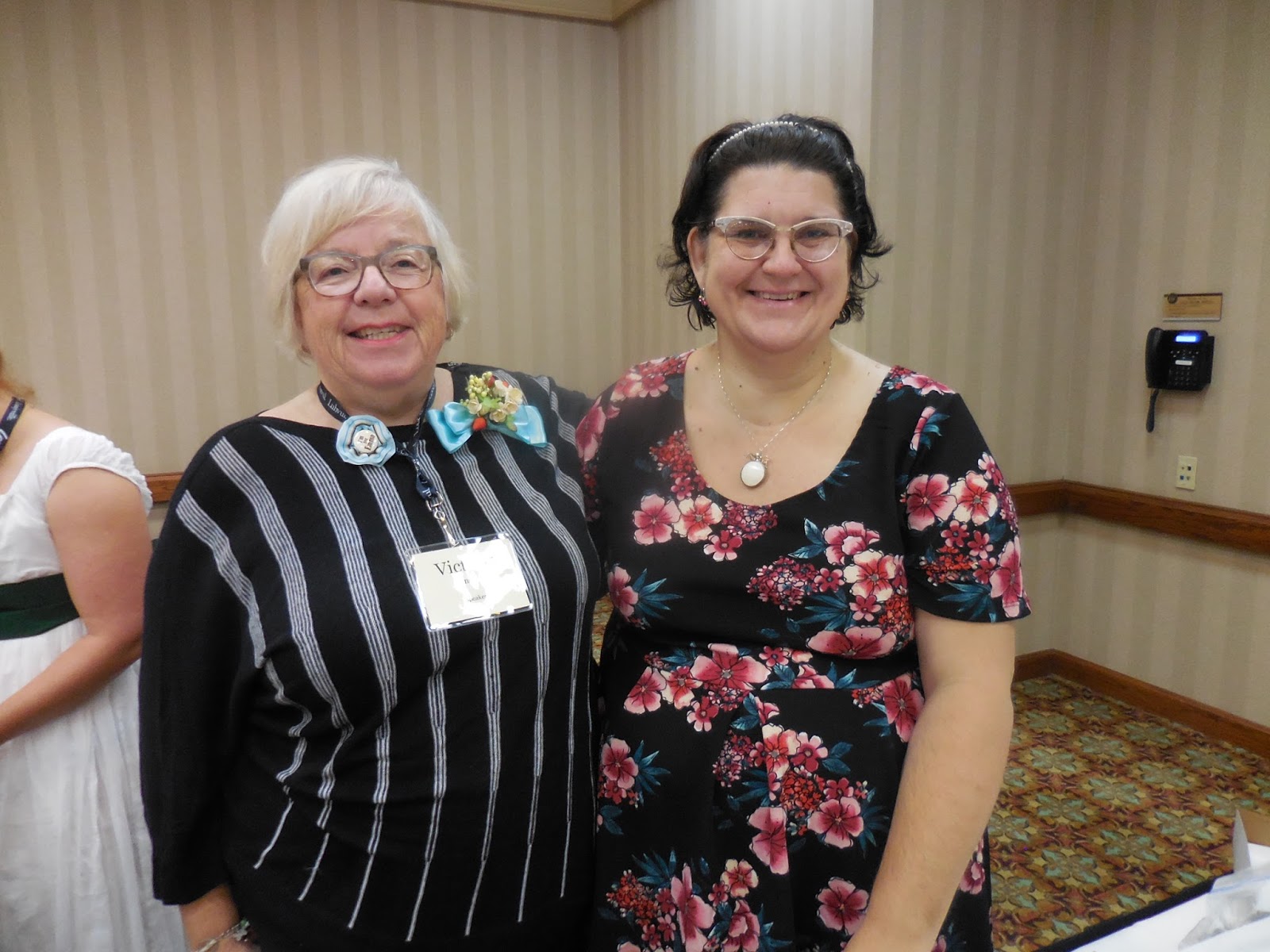
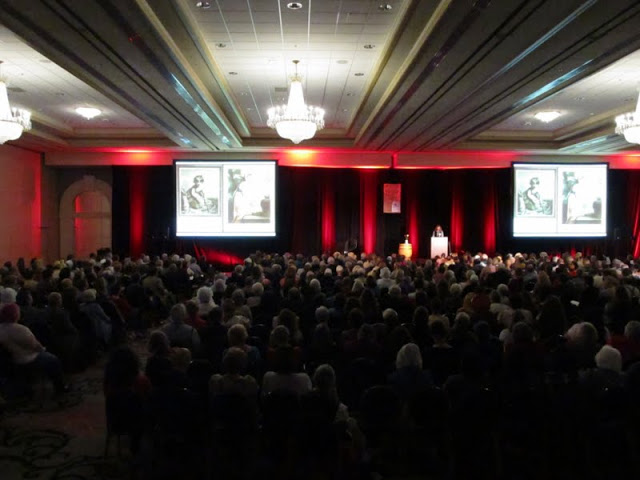
Victoria here, reporting again from the Louisville, Kentucky, meeting of the Jane Austen Society. Unfortunately I missed the presentation on women’s clothing, but I have to admit I liked all these presentations on men. Okay. No excuses.
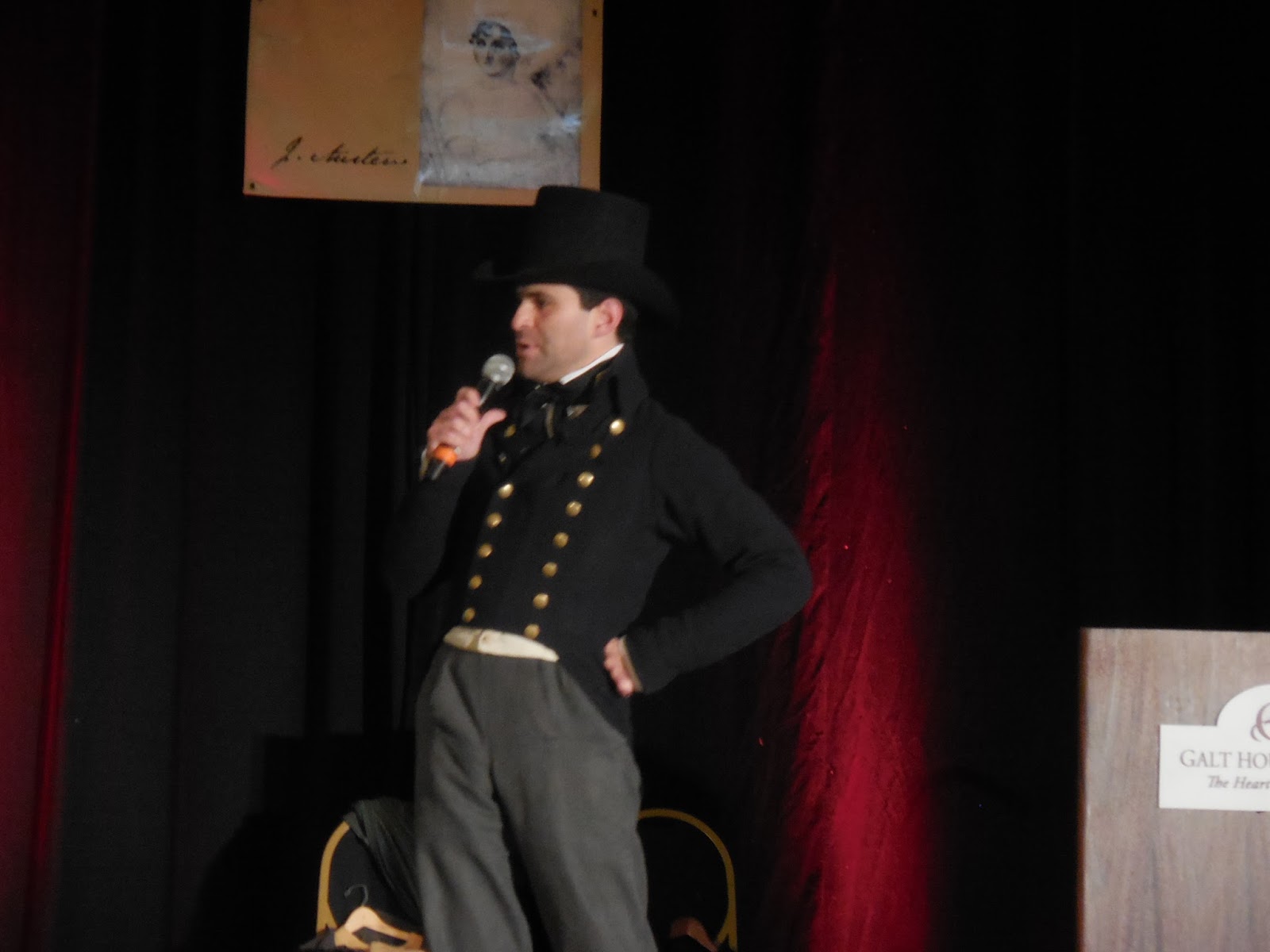
First up was Brian Cushing with his Special Interest Session “Dressing Mr. Darcy.”

He started fully turned out, though he had to put his walking stick aside for the talk.

Under the coat was a handsome waistcoat and black neckcloth or cravat.

Removing the cravat
Left in his shirt he talked about how it did not open up all the way down, had extra long sleeves and tails which were pulled up to use as underwear beneath the trousers.

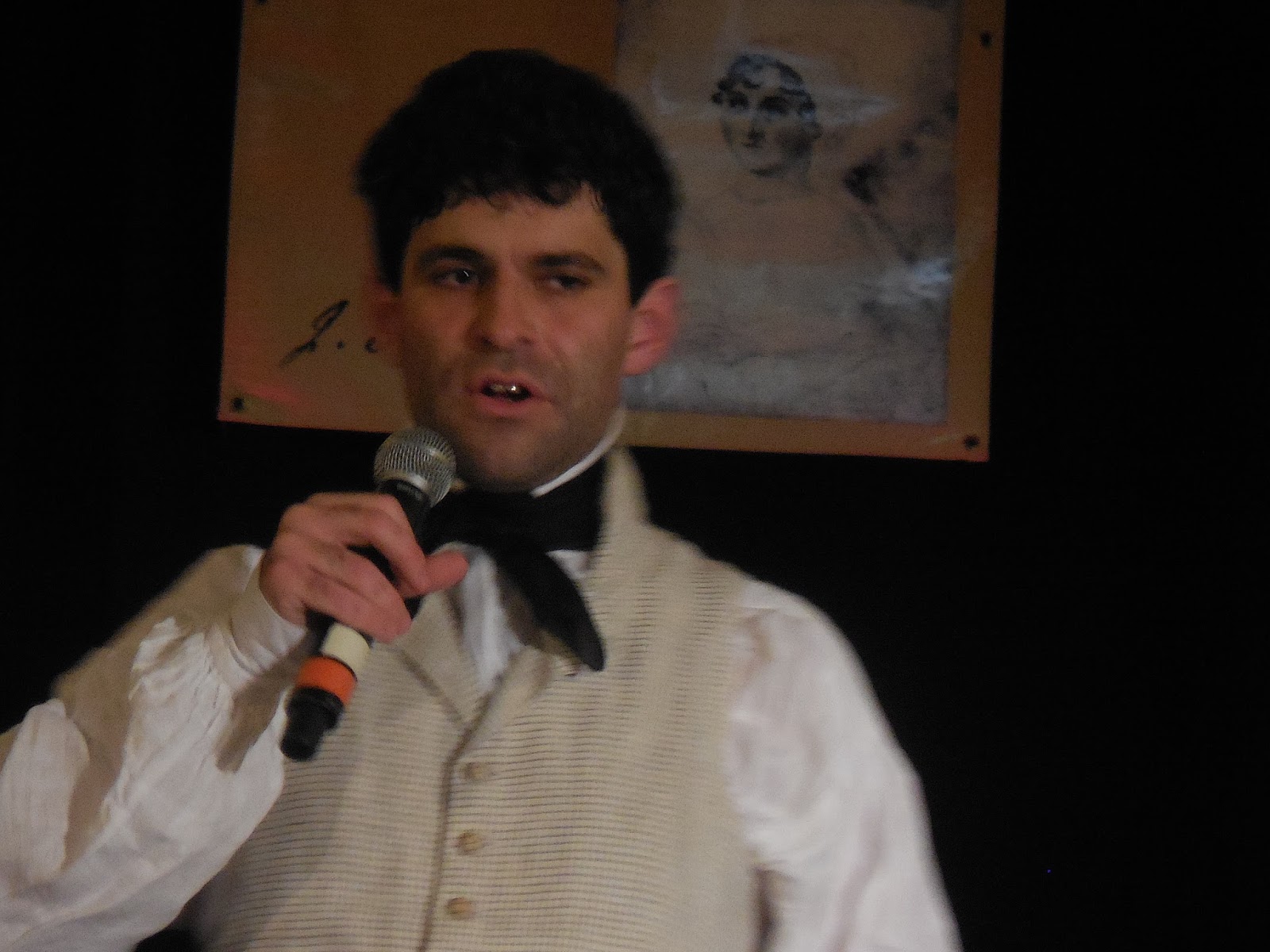
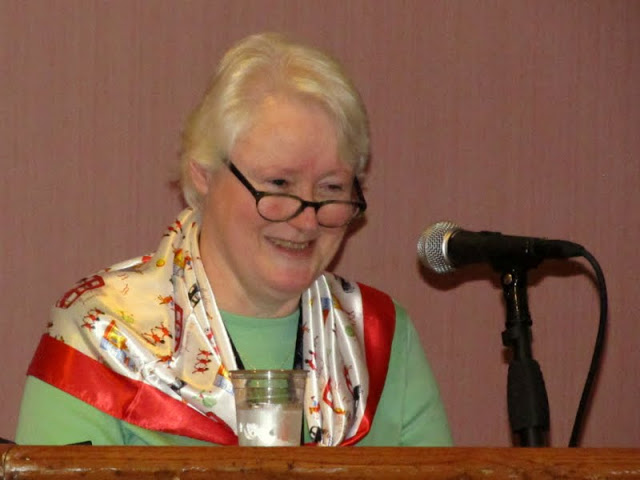
Michael Ramsey presented a Special Interest Session: Hero, Scoundrel, or Dandy: How to step back into Regency England.

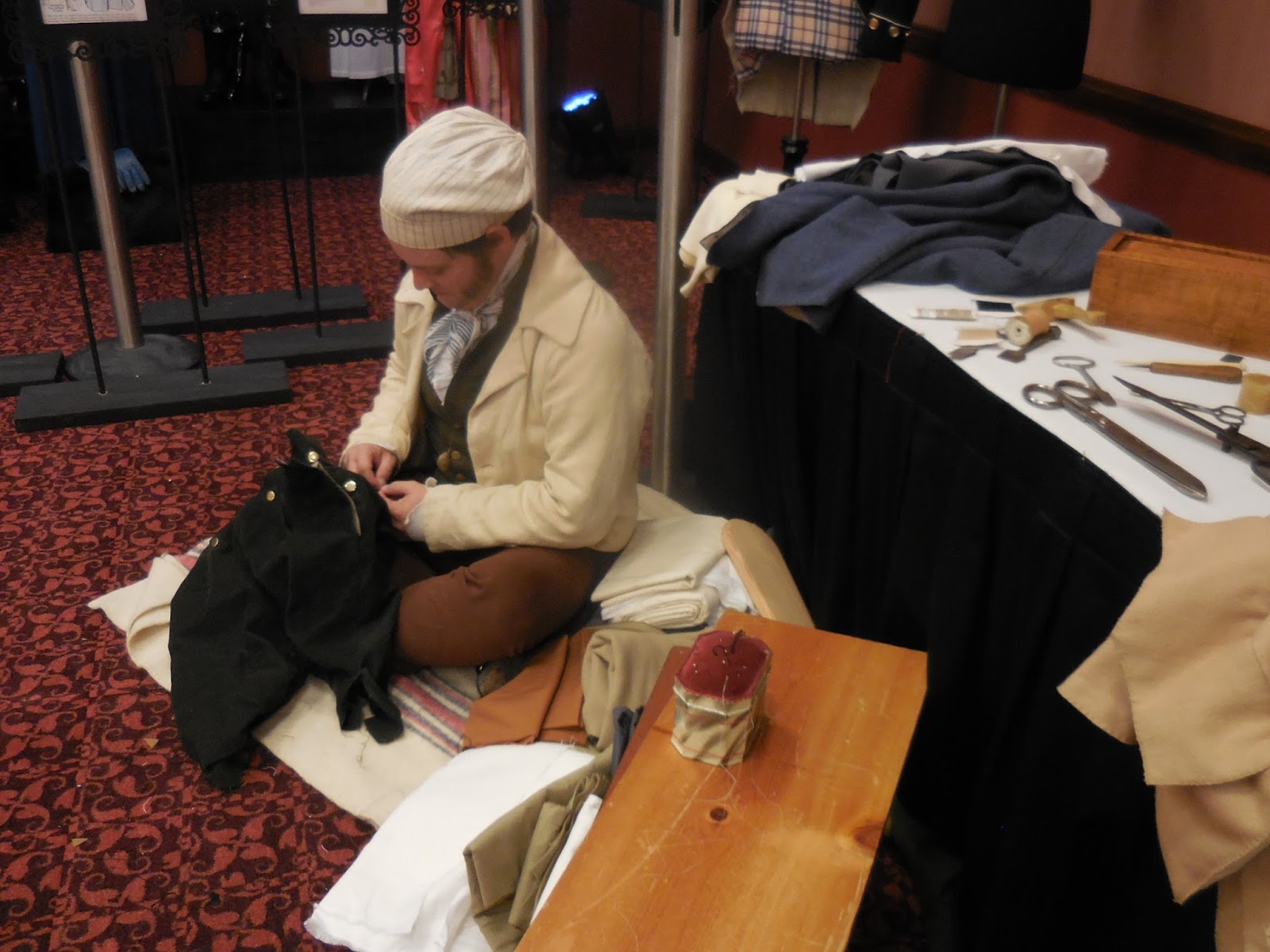
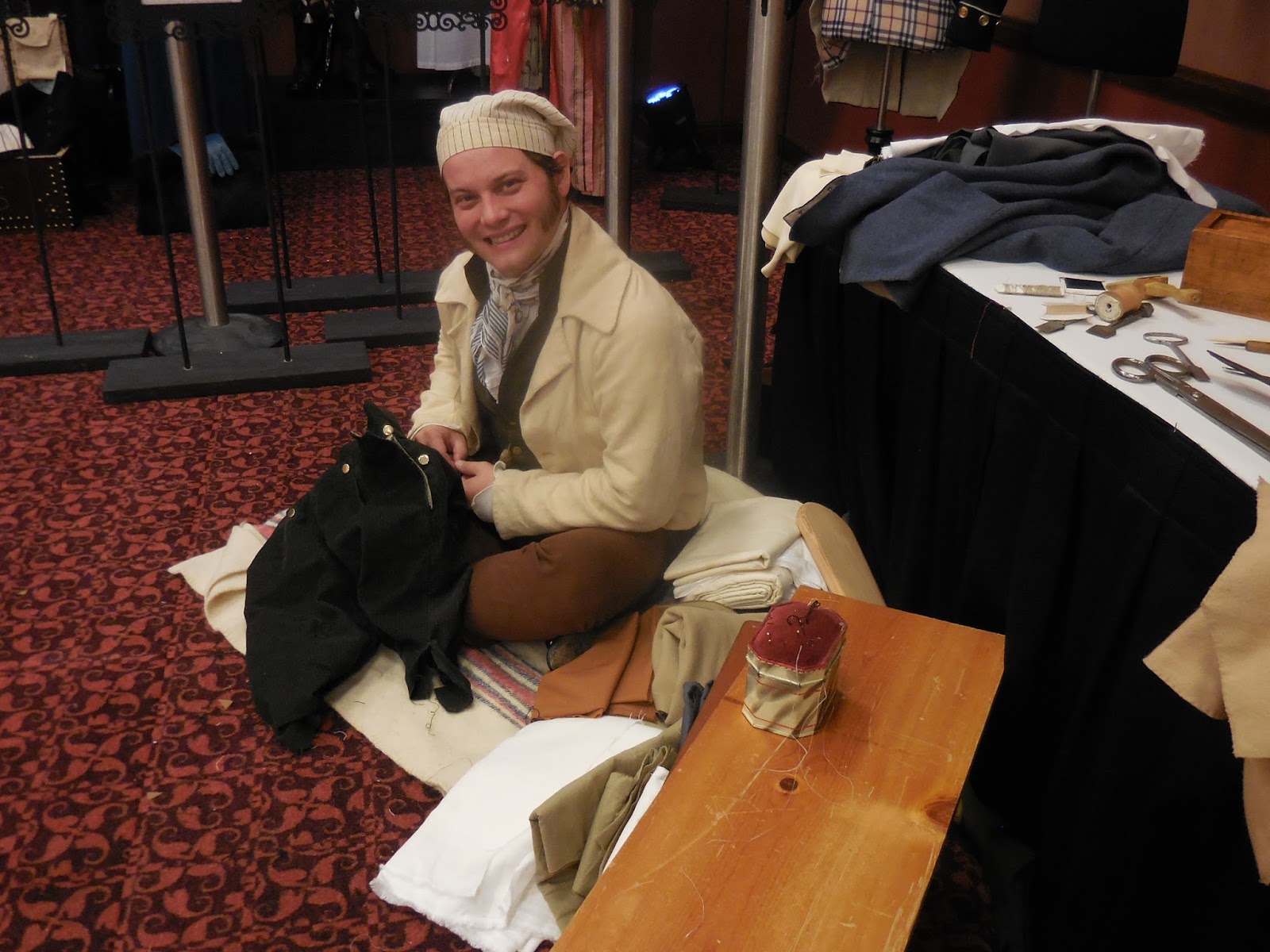
He is himself a tailor of Regency-era apparel.

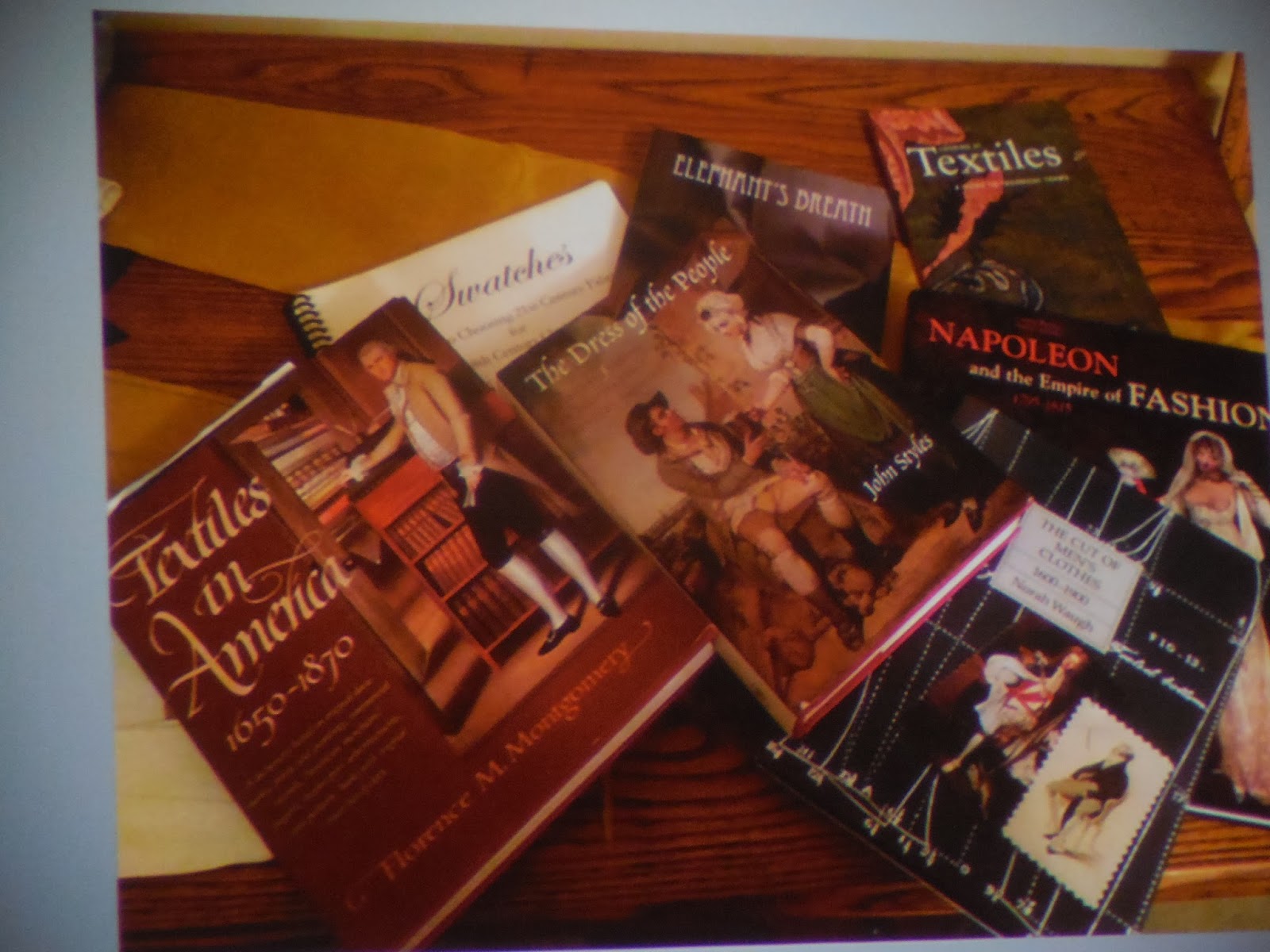
Some of his sources on regency clothing and behavior

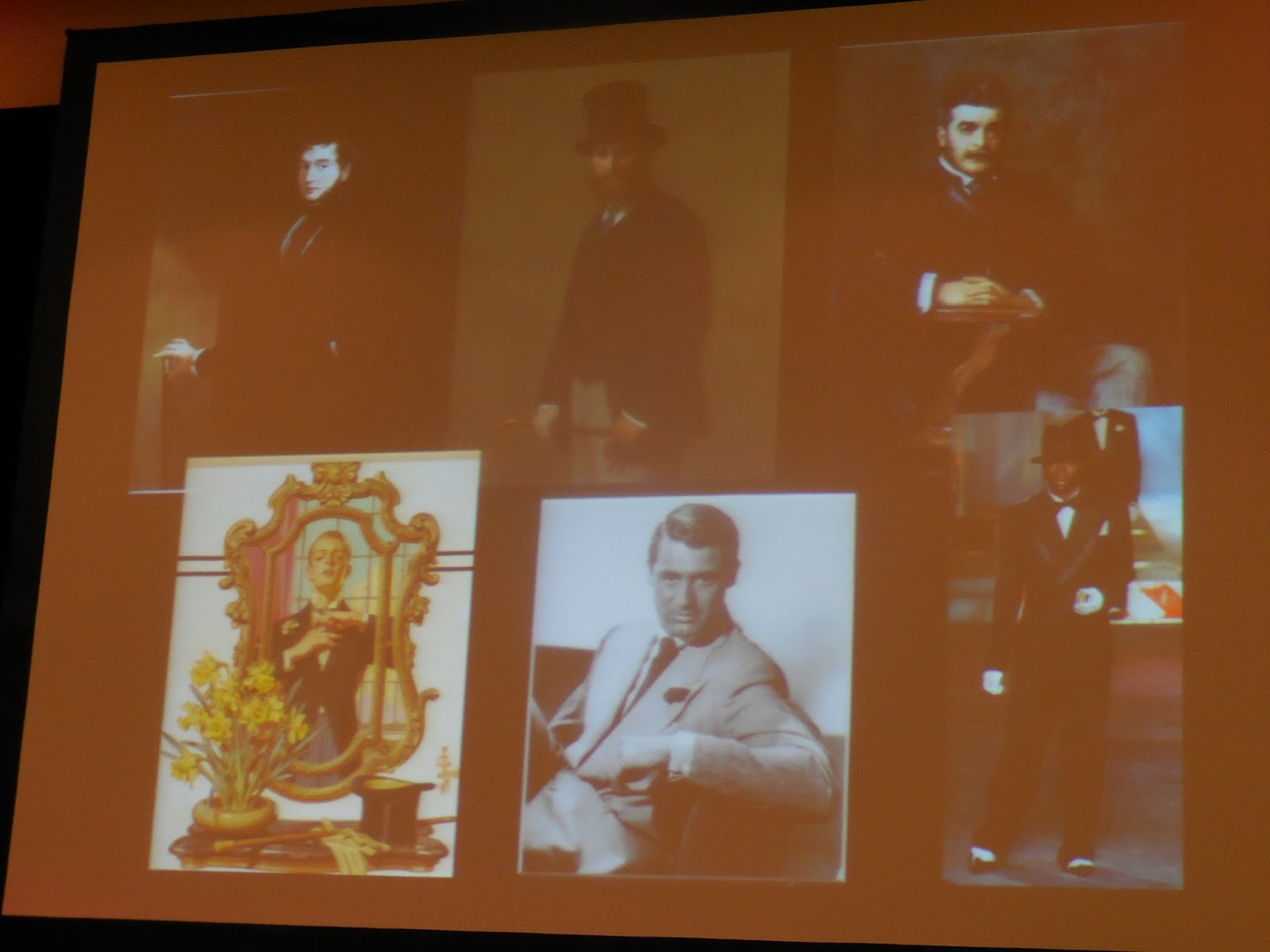
A few of the men;s fashion he showed.

He particularly emphasized the importance of fabric quality in delineating the status of a fellow in regency days.  Re-enactors and costumers need to avoid modern fabrics wherever they ca and be sure the quality of their wool, cotton, and silk is suitable for the character they portray,

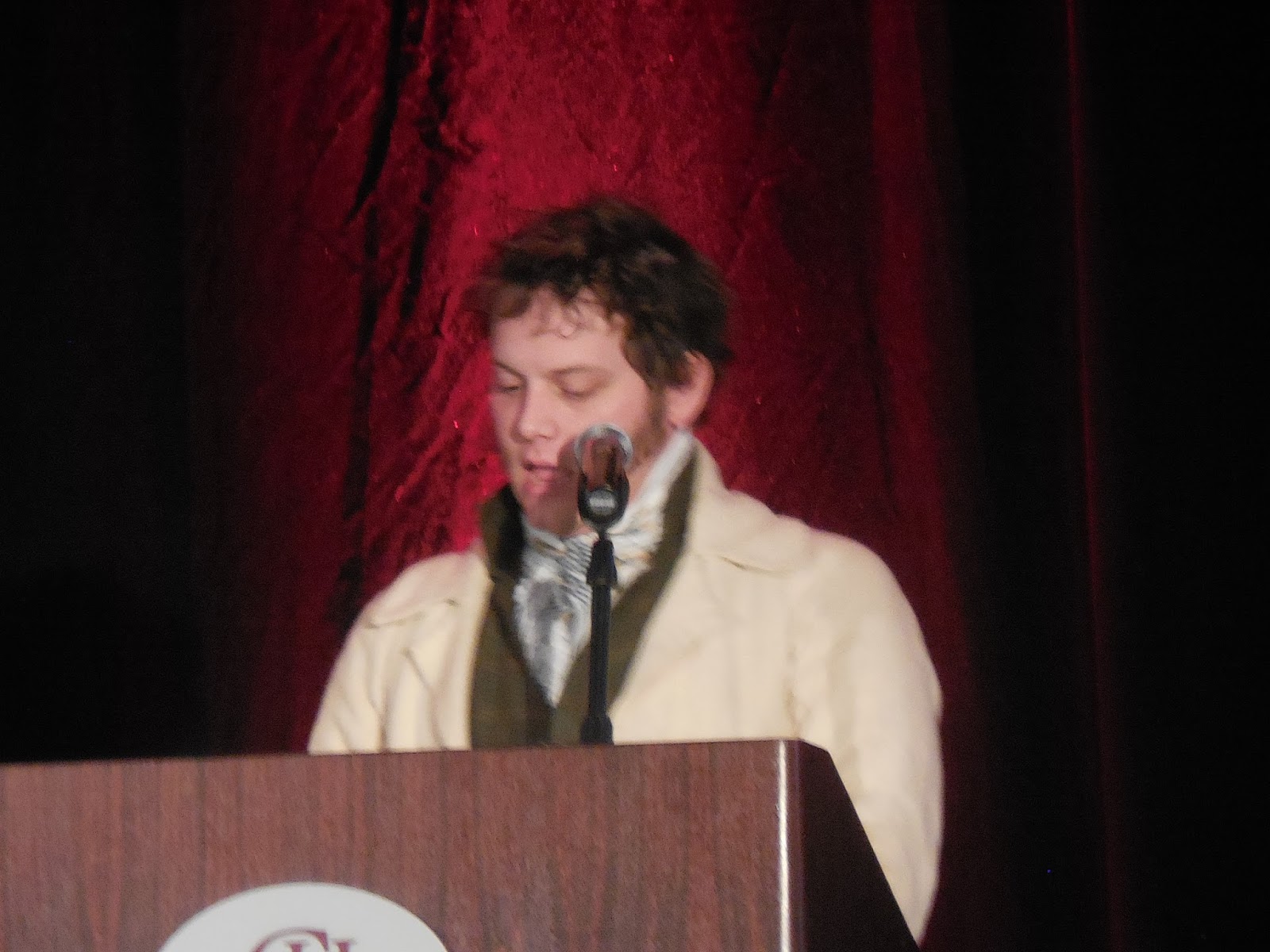
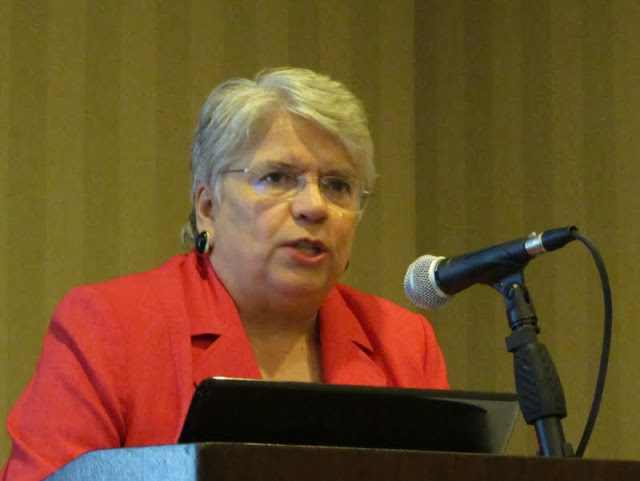
Jeffrey Nigro and William Philips of Chicago  spoke on “A Revolution in Masculine Style: How Beau Brummell Changed Jane Austen’s World”

Jeff Nigro left, and William Philips, at the microphone.

In many ways, the regency era was a time of revolutionary change; for example, determination of a person’s status was changing from his amount of land ownership to his personal merit.

George Bryan Brummell
a.k.a. Beau Brummell 1778-1840
Caricature by Robert Dighton, 1805 Present whereabouts unknown
Though George Brummell attended Eton, he liked to pretend he came from nowhere; he thus created his own style and persona, calling himself “Beau” to indicate his spiritual excellence rising above the ordinary. Restrained elegance, superiority of bearing, and a ready wit combined to form his style of ostentatious understatement. 
Philip Dawe The Macaroni, a real character at the late masquerade 
1773 British Museum
The style of the Macaroni was extreme, and often ridiculous. It was a revolt against this style that Beau Brummell created. He shunned hair powder and cut his hair much shorter. His clothing was subdued in in quiet colors rather than the bright brocades of the past.
Enrapt listeners
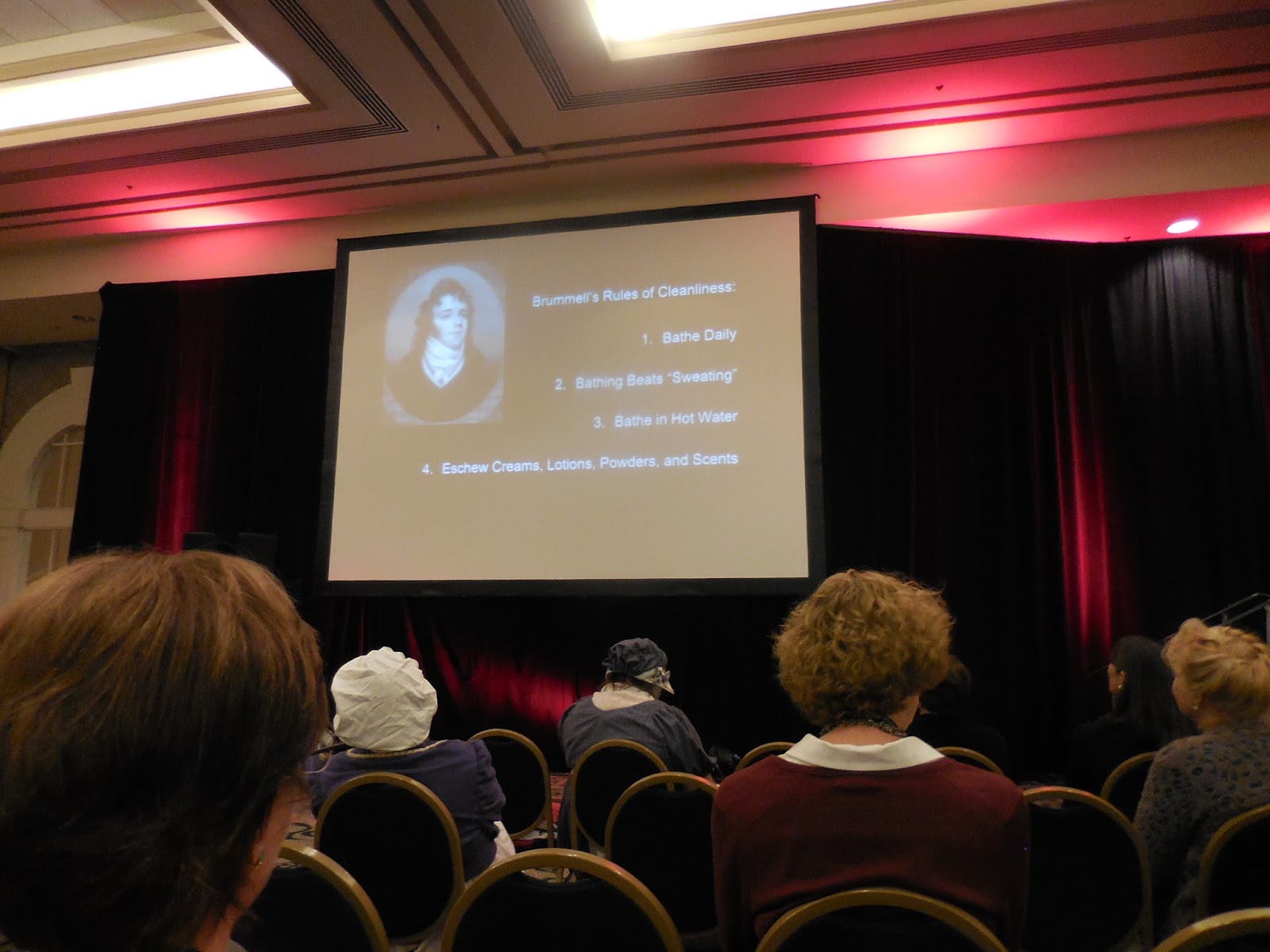
One of the most important features of Brummell’s style was personal cleanliness. Instead of infrequent bathing, he promoted daily baths in hot water and avoided lotions, powder, and scents.

George Cruikshank, published by George Humphrey
Hummingbirds, or a Dandy Trio, published July 15, 1819
Beau Brummell 
Wearing high collars and elaborate high cravats facilitated Brummell;s haughty attitude of looking down at others, enhanced by peering through his quizzing glass.
Francis Alleyne, Portrait of Two Eton Schoolboys in Ad Montem Dress

One source for Brummell’s ideal of male fashion was the Eton “uniform.”

William Philips in a traditional Japanese jacket, a haori

Jane Austen rarely described a gentleman’s clothing in details, but the particulars of demeanor and attitude were often reflected in her delineation of character.

Sir Walter Elliott in Persuasion is vain and self-centered — elaborately dressed.
The worthy Mr. Darcy in Pride and Prejudice is the epitome of understated elegance like Brummell’s.
Mr. Frank Churchill’s coat is not described, but the fact he goes to London for a haircut perfectly characterizes him in Emma.
Jeffrey Nigro in a business suit directly evolved from Beau Brummell

How the Brummell Style has evolved through the years.
2013 G8 Summit, Lough Erne, Northern Ireland

Still with us is the essence of the Brummell style, white shirt, dark coat, dark or buff trousers.

This is just  brief taste of what the presenters gave us….celebrating the men in Jane Austen’s World.

MORE FROM JASNA AGM

ASSORTED TIDBITS FROM JASNA AGM

IN RETROSPECT:

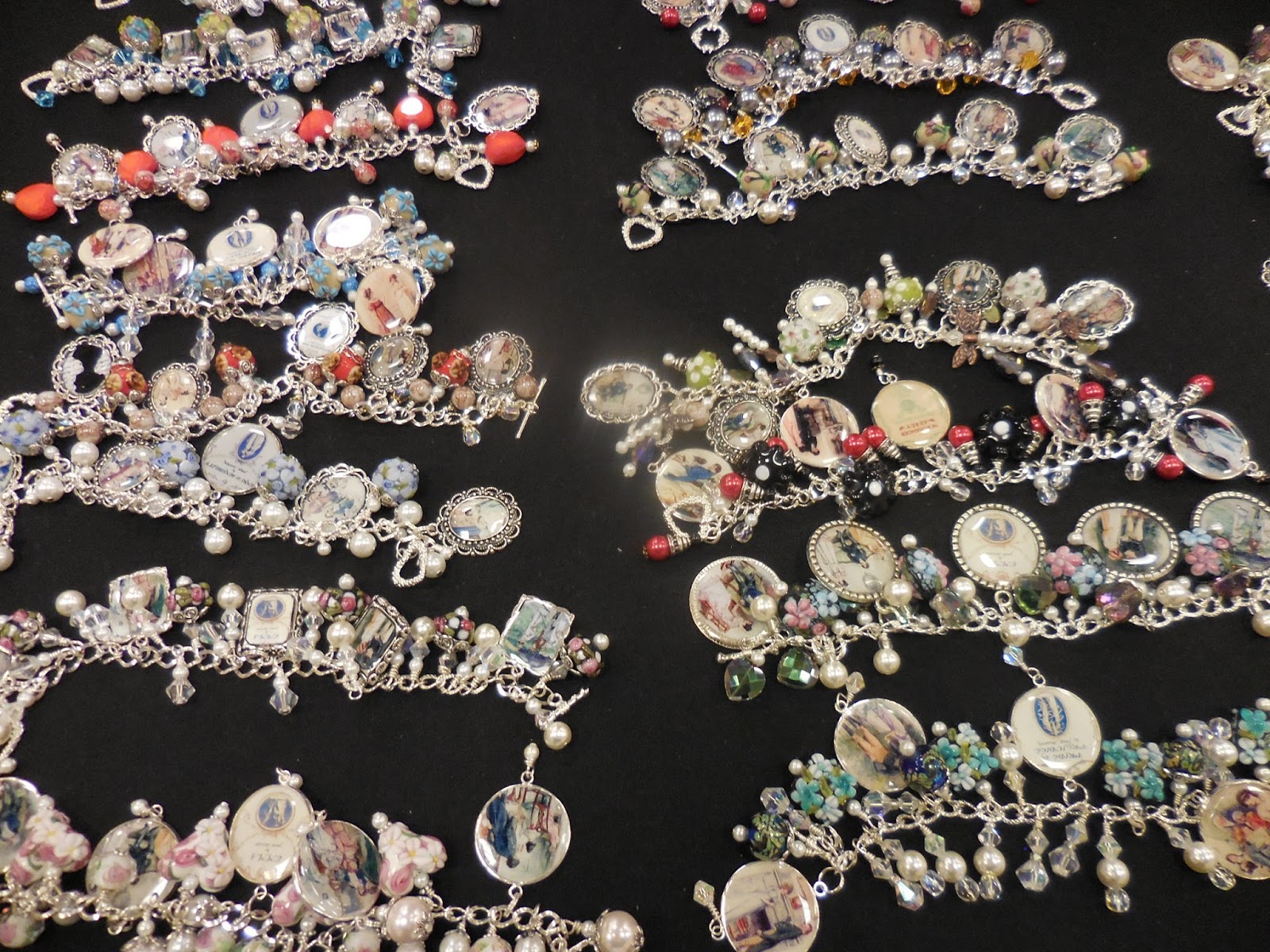
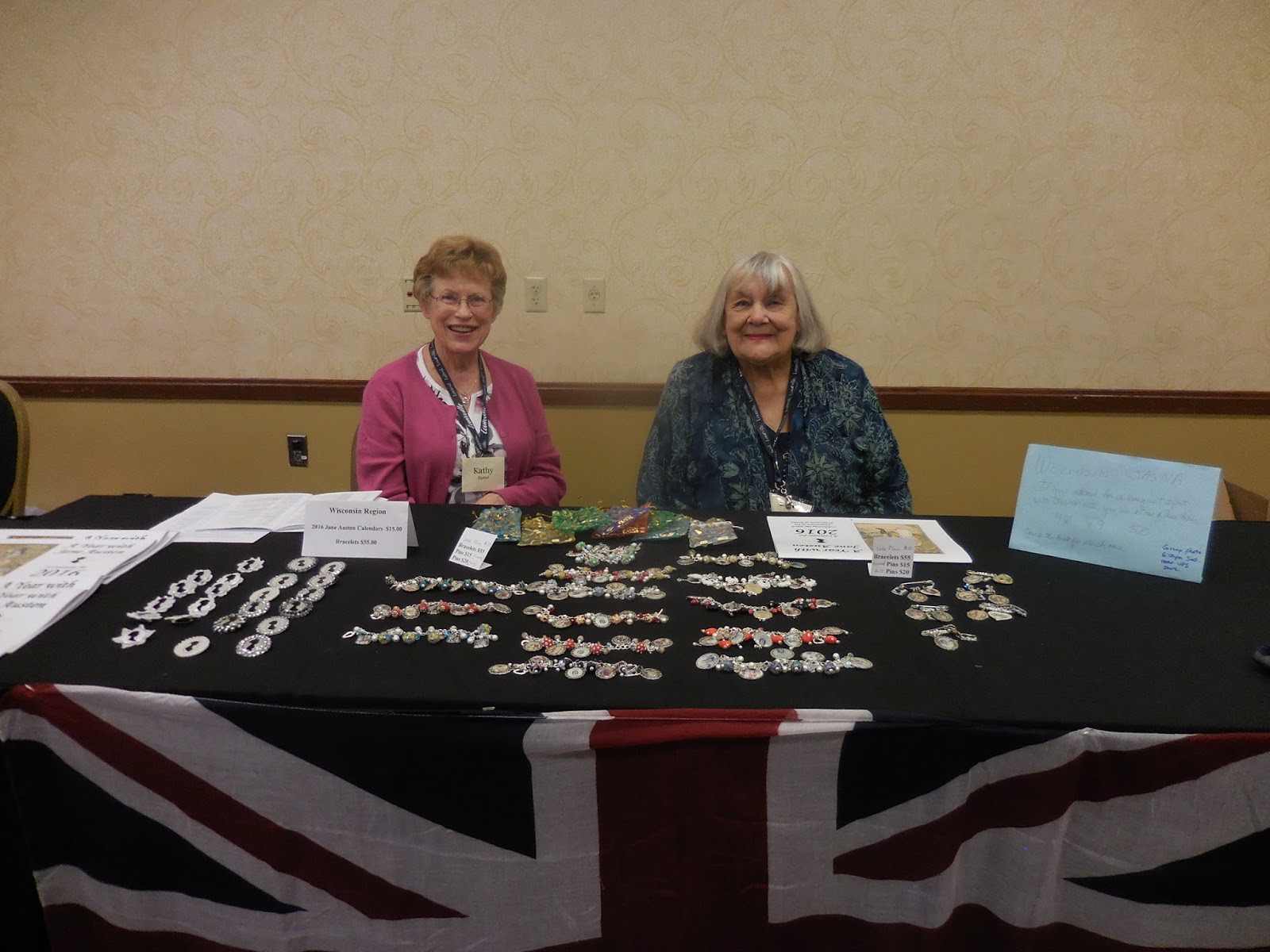
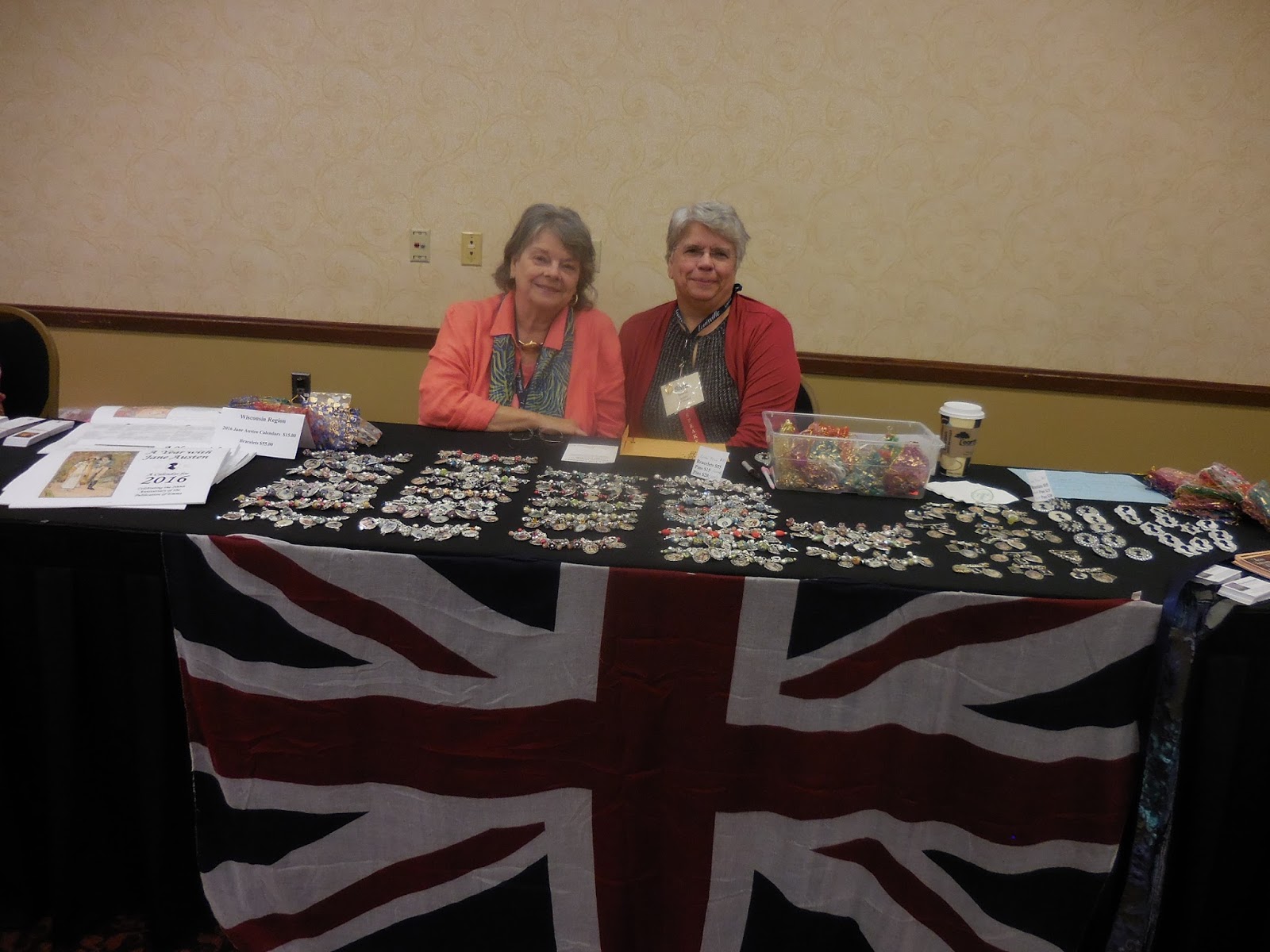
1. Sitting at  the Emporium Wisconsin Table Selling Calendars and jewelry

Mary and Sara ‘man’ the table

Kathy and Mary Anne at the WI table

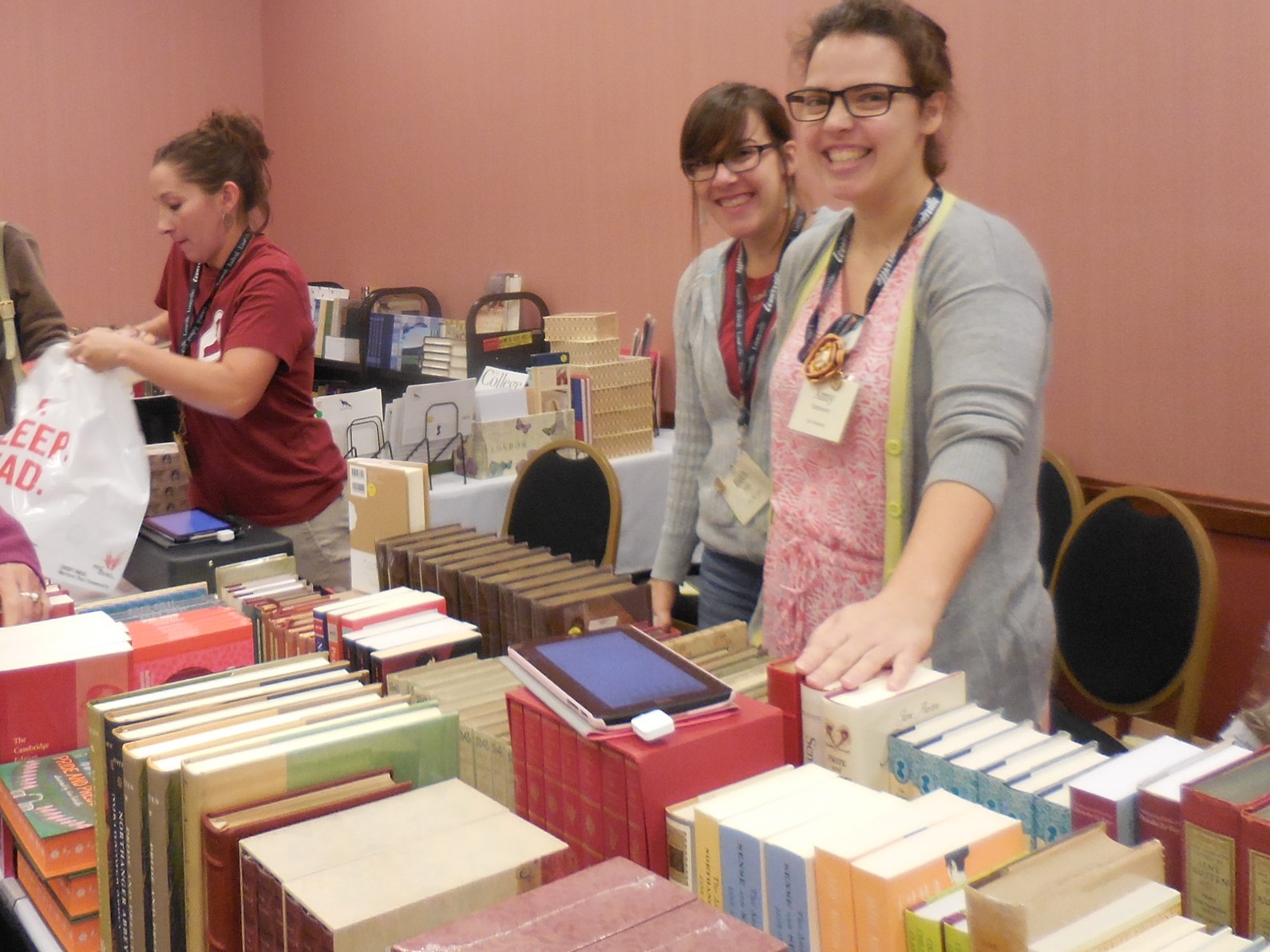
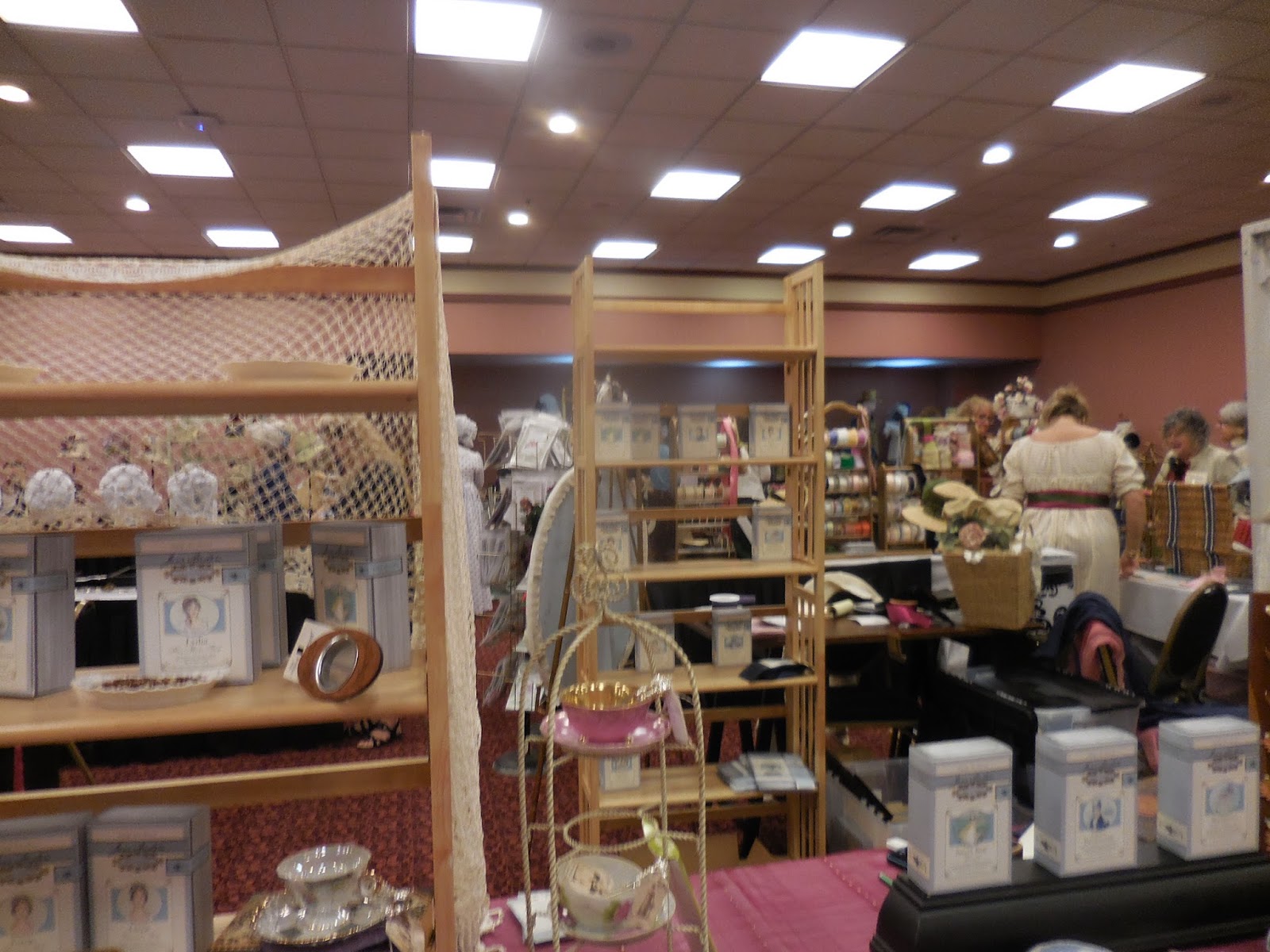
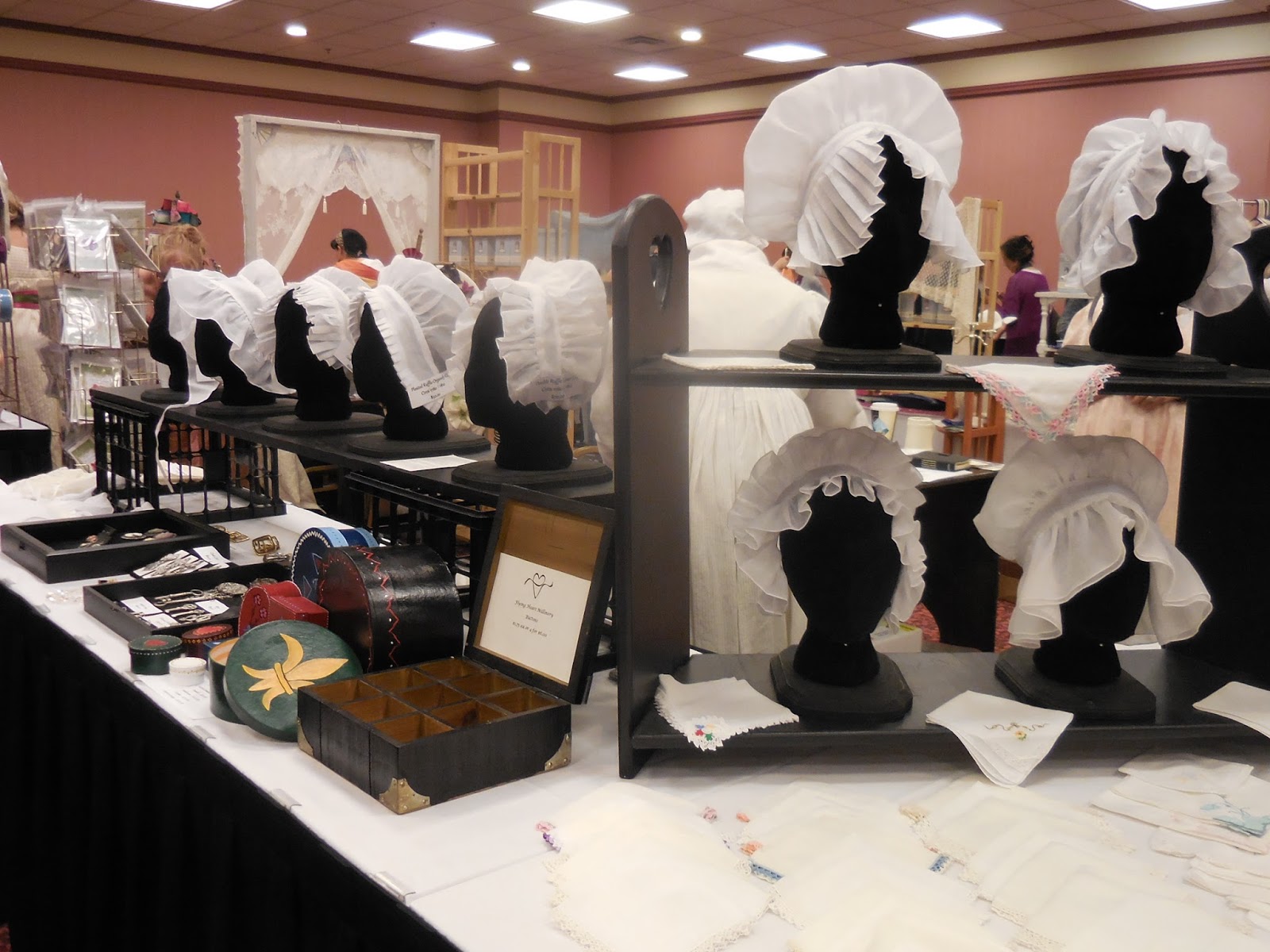
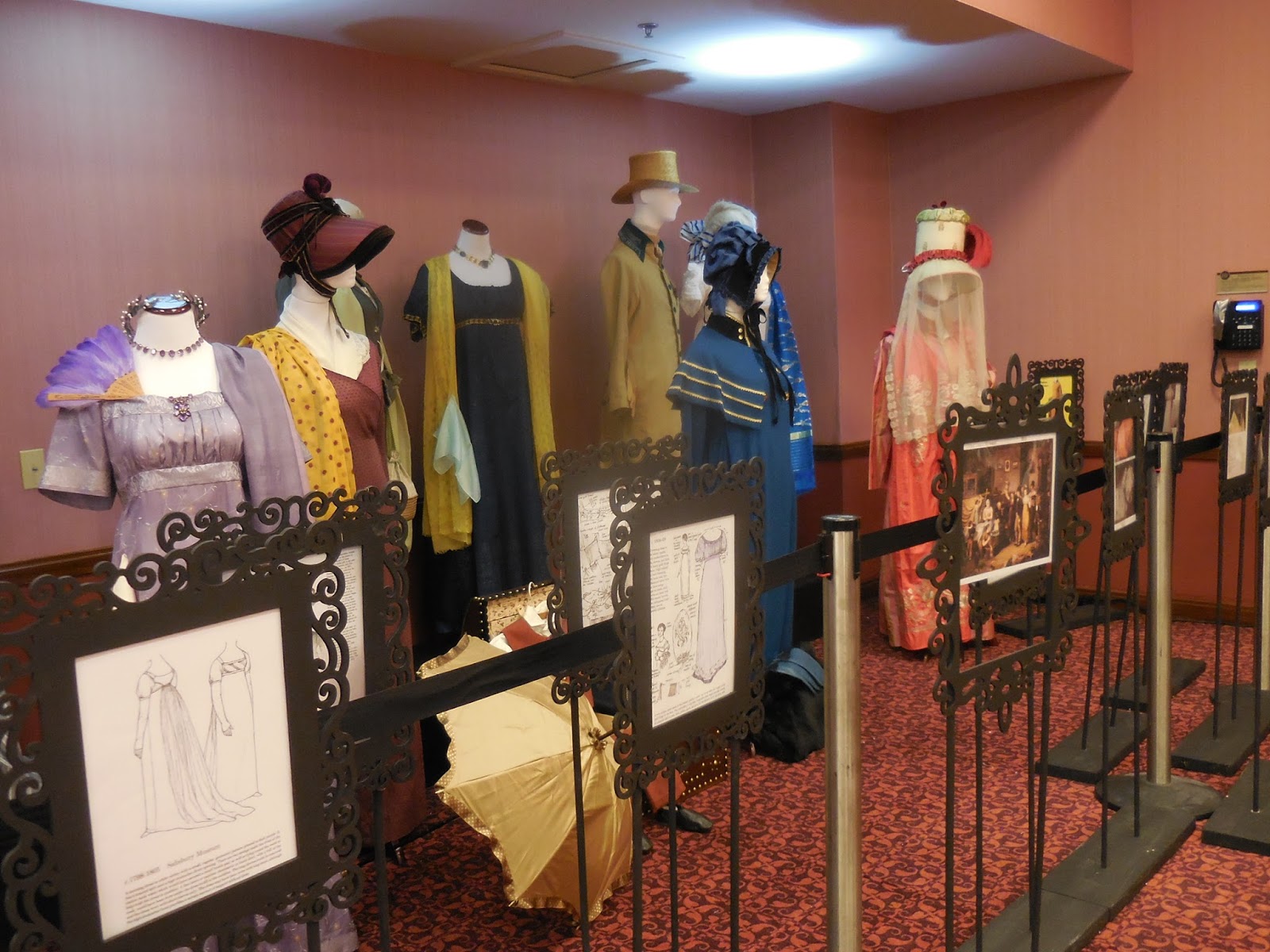
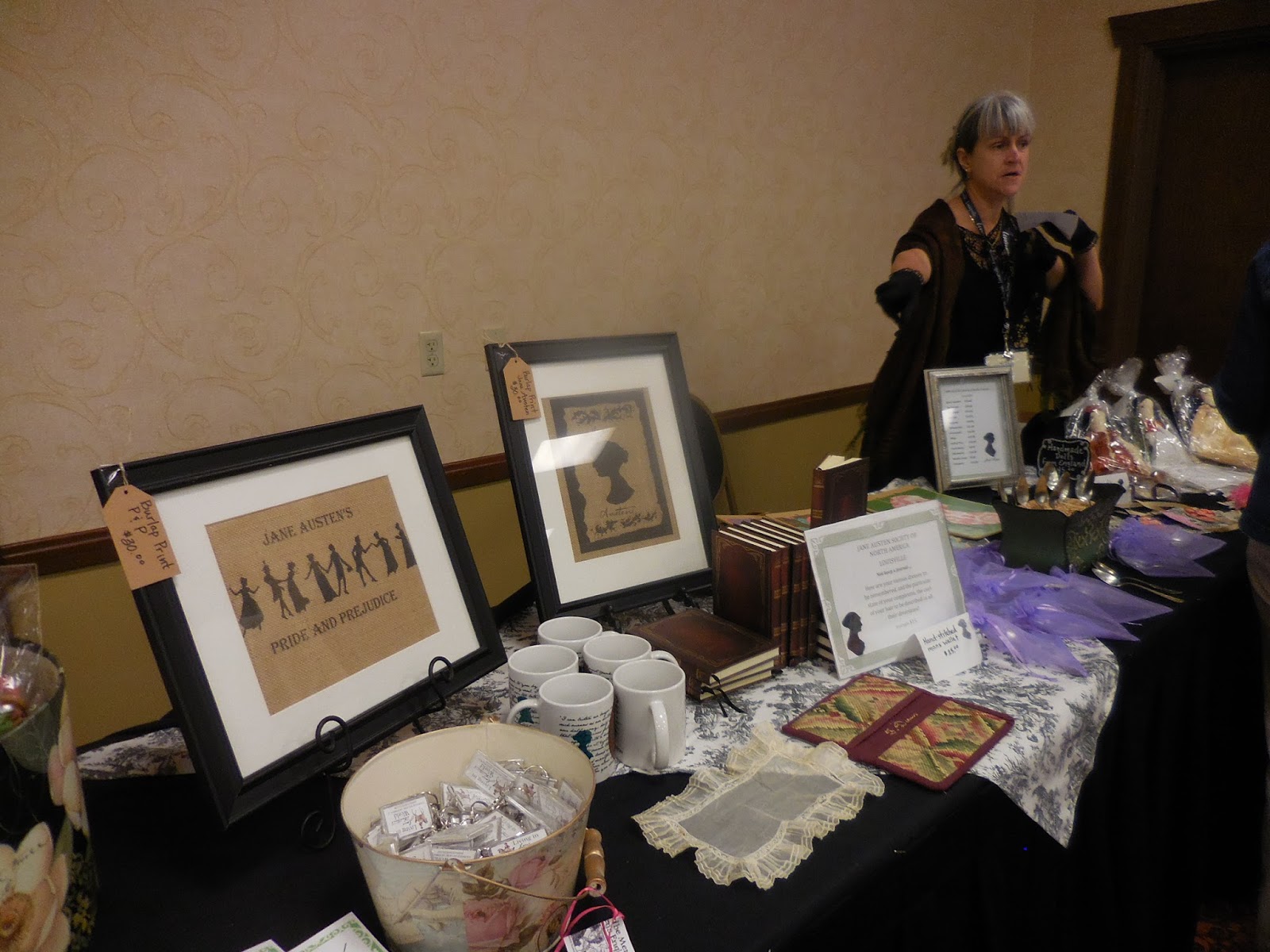
2. Shopping in the Emporium

At my favorite Jane Austen Books
Visit them here.

Teas and ribbons….

Gowns of all sizes and shades…

Mob caps
More gowns

The gentleman’s tailor

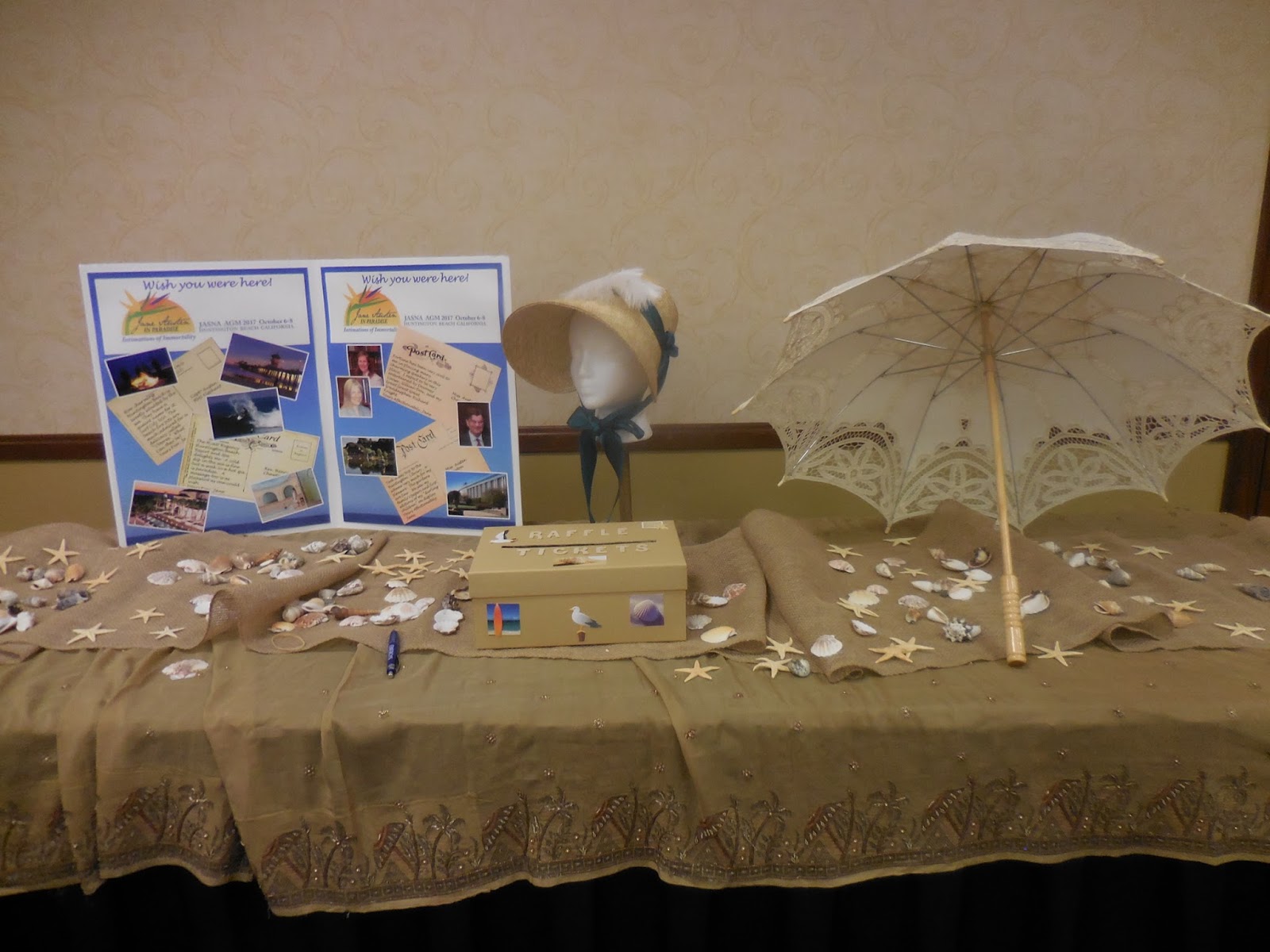
A display inviting us to the 2017 JASNA AGM in Huntington Beach, CA
For More information click here.

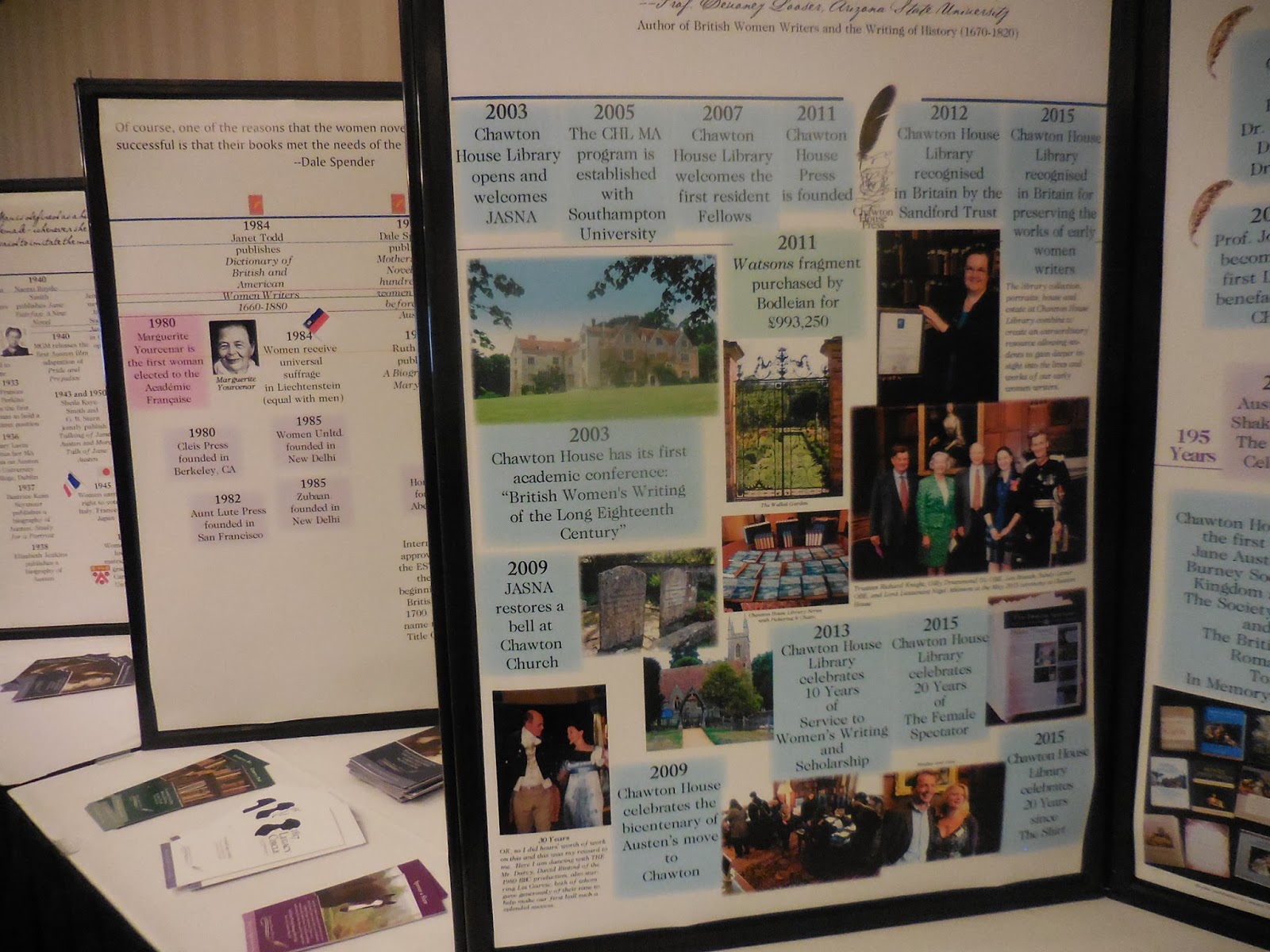
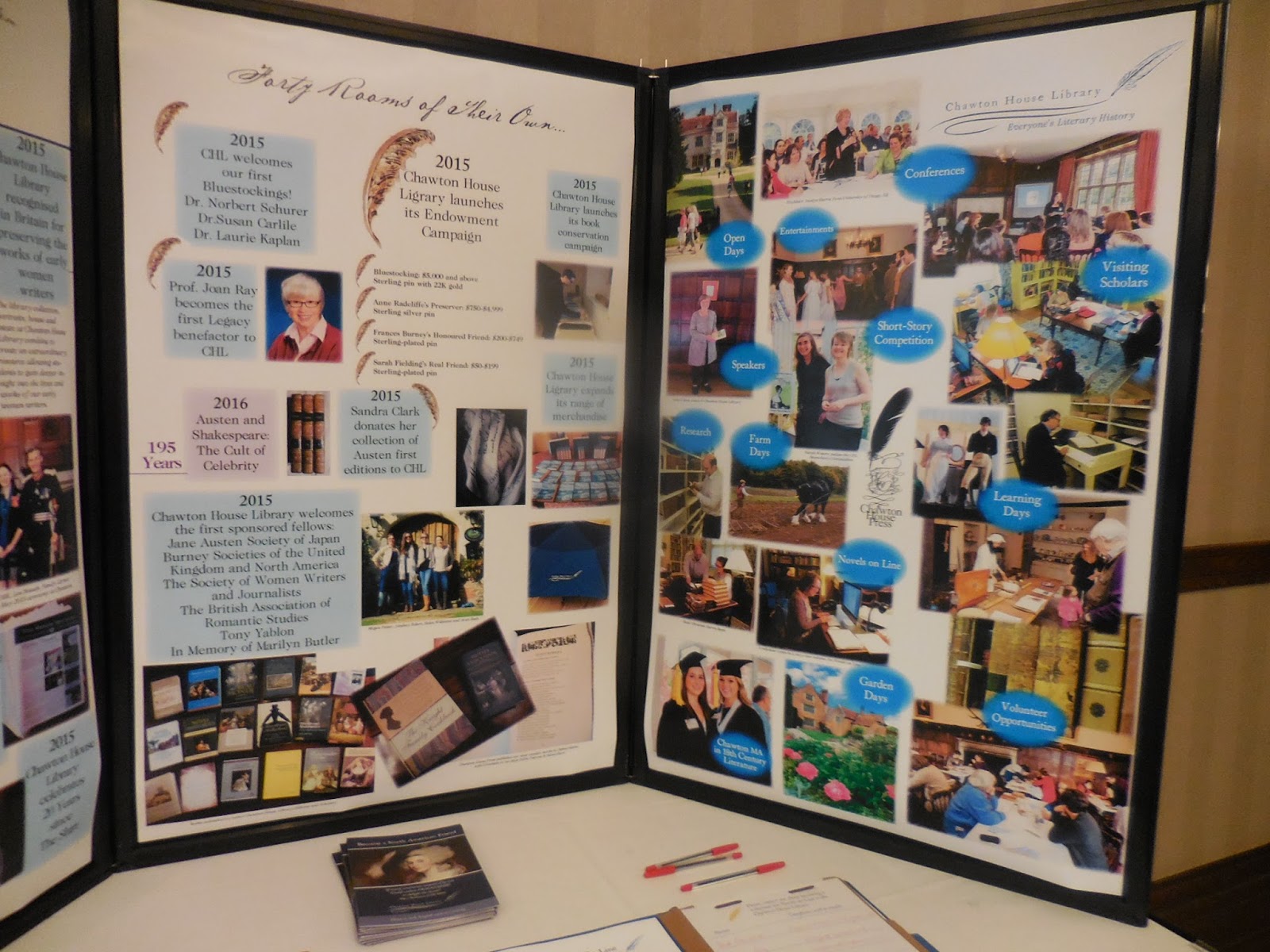
Our Friends from Chawton House Library
for more information, click here.

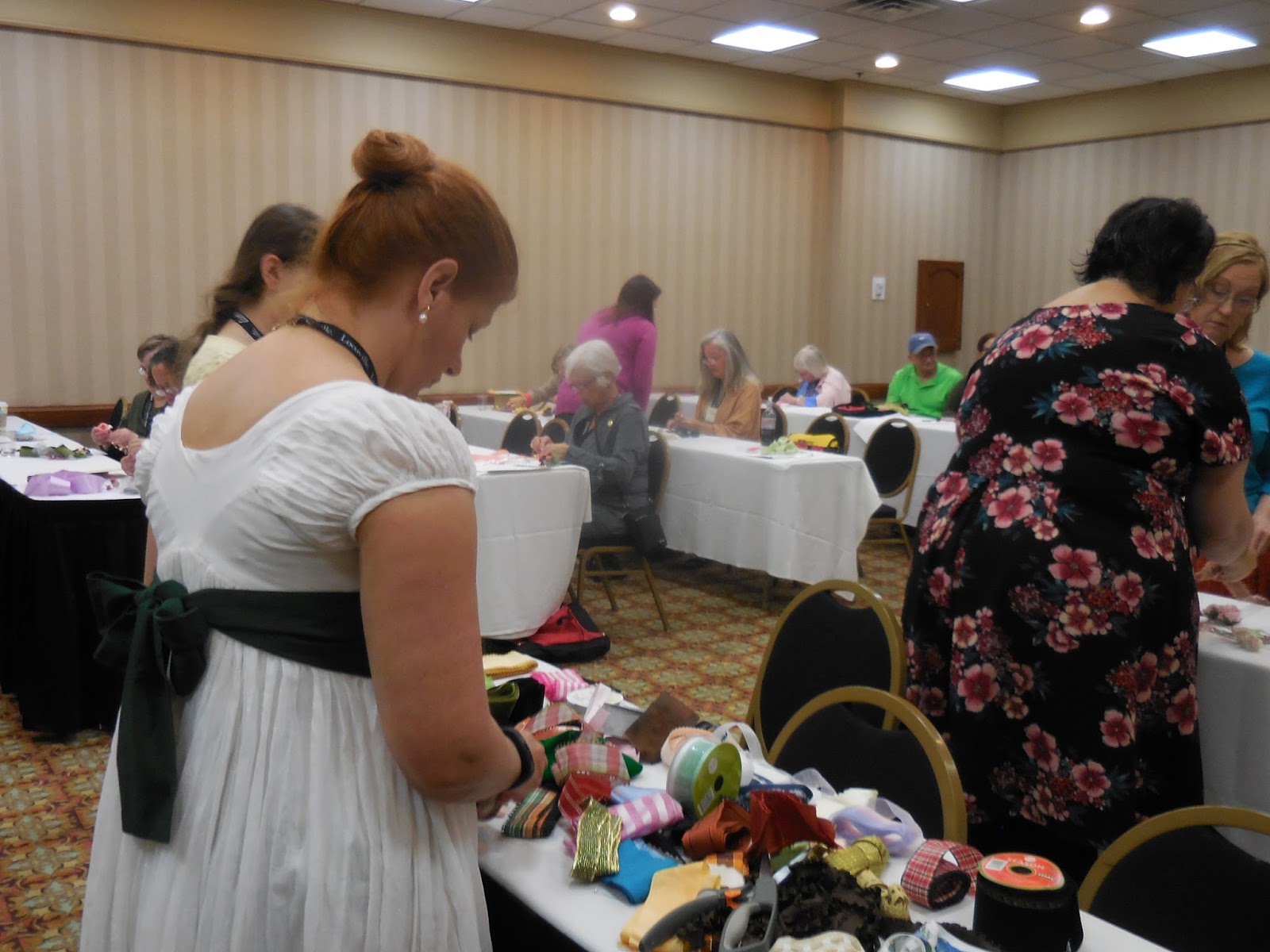
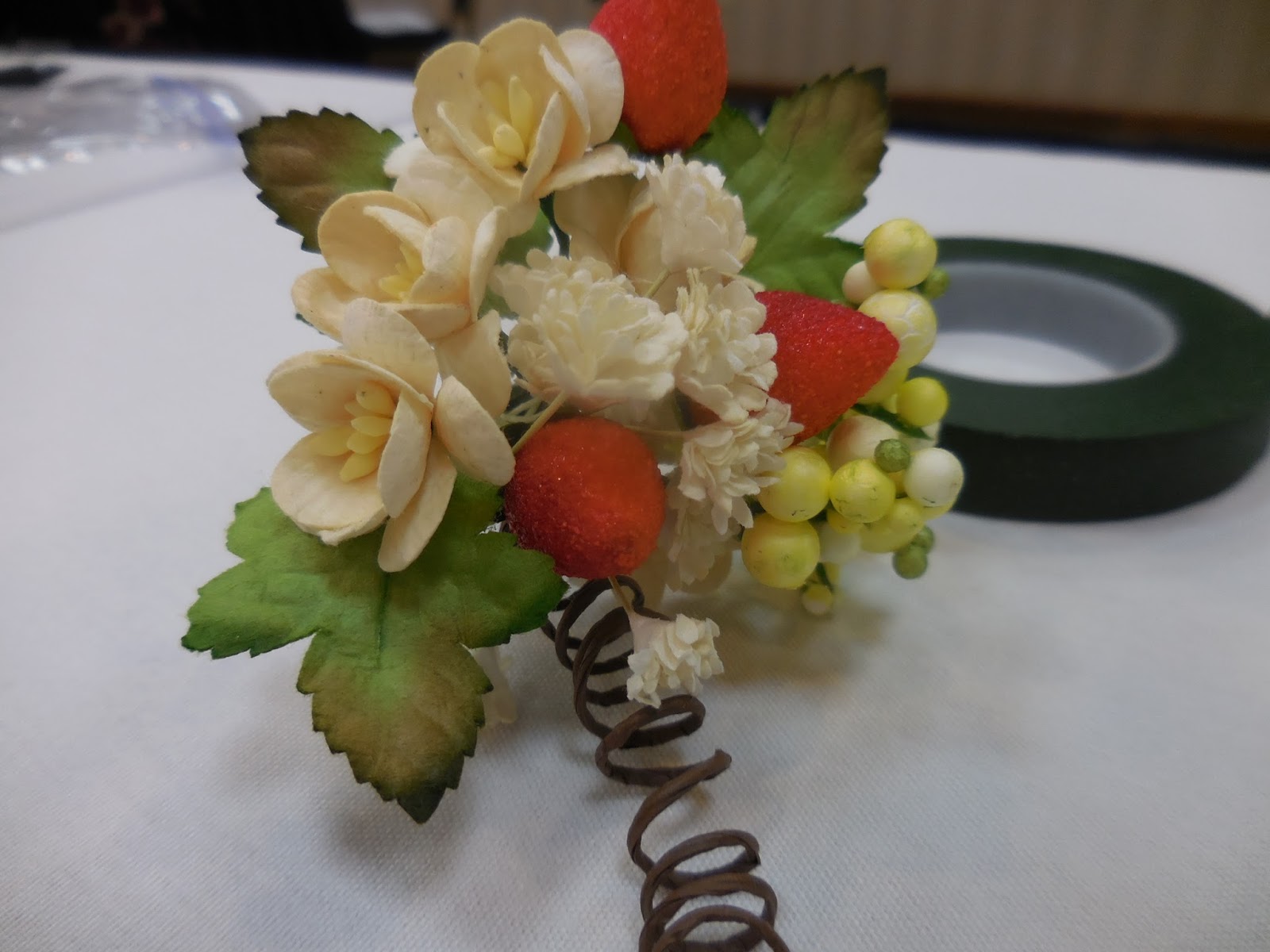
3. Making my “Breast Knot” otherwise known as a beribboned posey

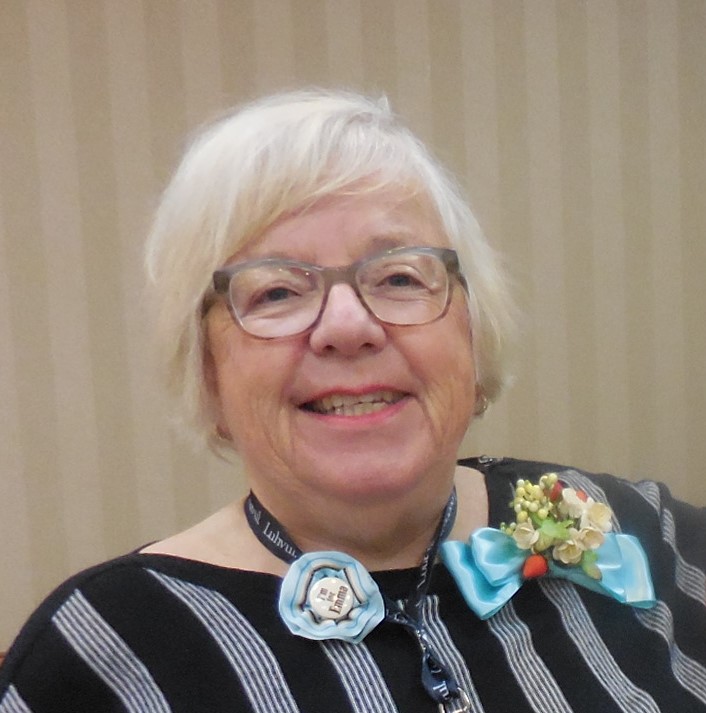
Victoria wearing her creation  with instructor Julie Rockhold
It’s the one on the right, ribbons and flowers,
(The smaller one says ‘I’m for Emma,’ advertising the 2016 AGM.)

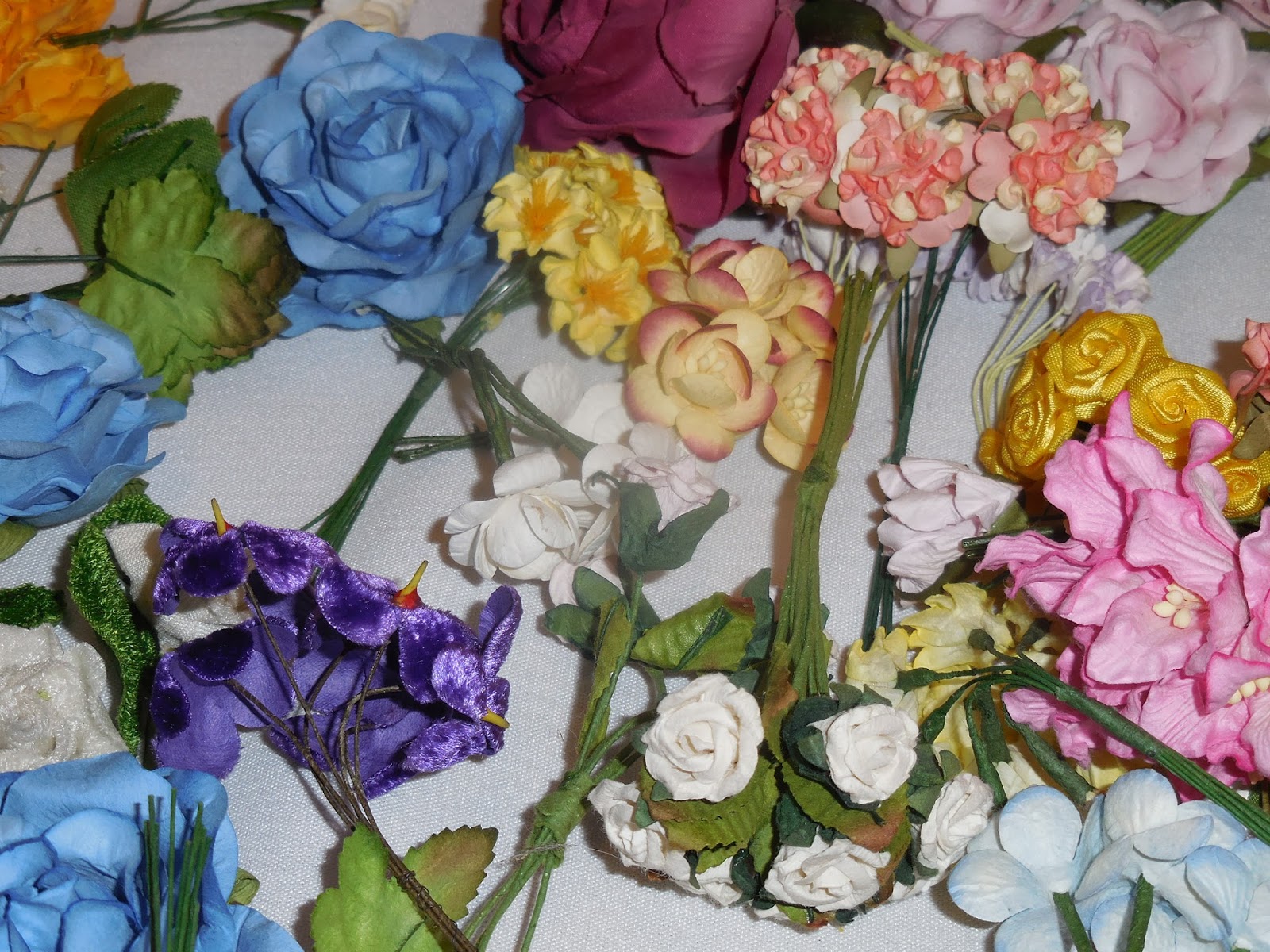
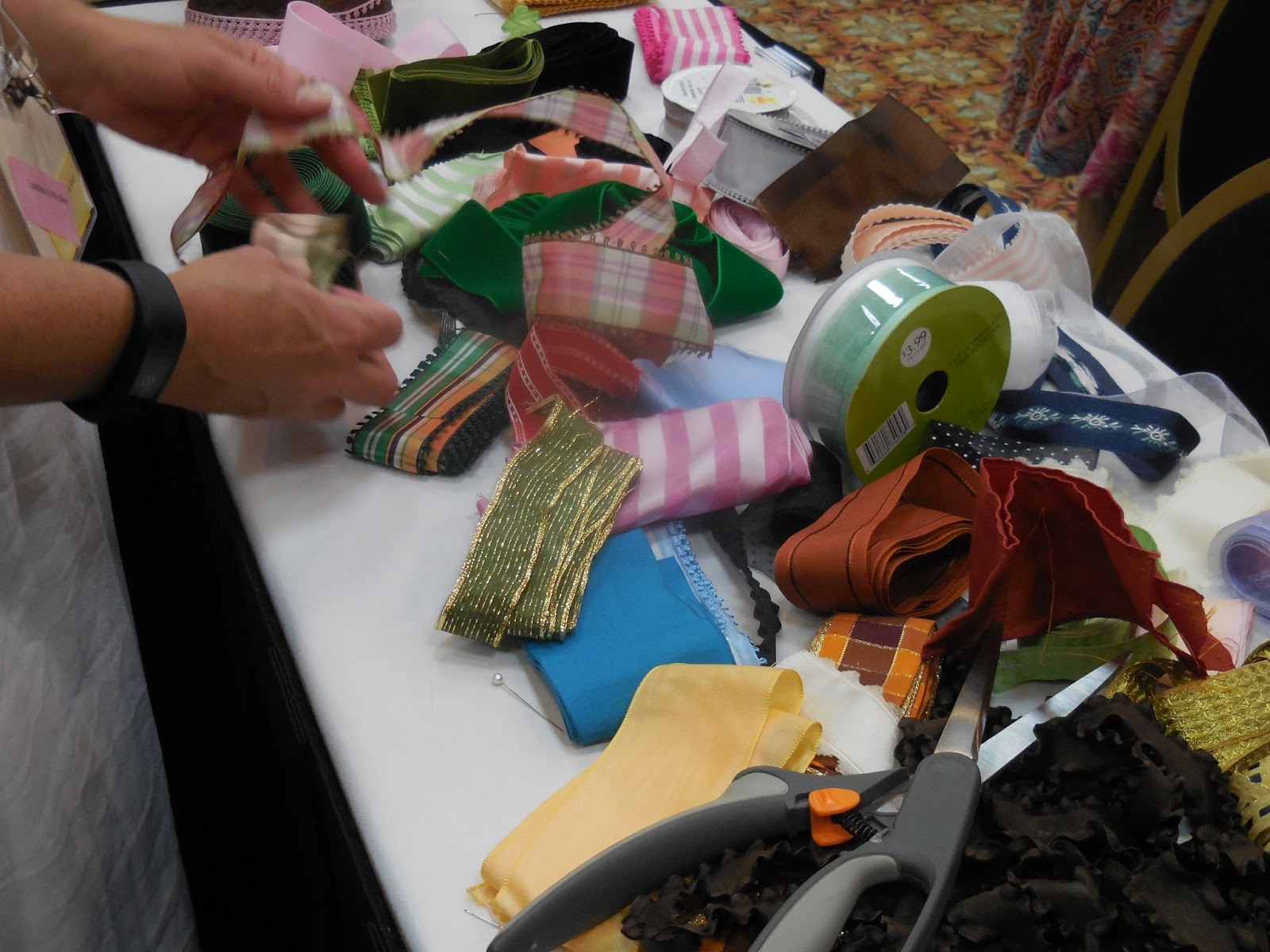
Choose flowers and ribbons

My choices, above and below

4. Studying the ‘History of Women’s Writing’ Panels

5. Listening to wonderful speakers

Inger Brodey presented the AGM Opening Plenary
“Making Sense of Sensibility in Jane Austen’s World”
photo courtesy Dave O’Brien
A Full House
photo courtesy Dave O’Brien

Sara Bowen presented “Village Life in Jane Austen’s World: The View from the Parsonage.”
photo courtesy Dave O’Brien
Amanda Vickery gave a plenary session, the Carol Medine Moss Keynote Lecture
“No Happy Ending? At Home with Miss Bates in Georgian England”
photo courtesy Dave O’Brien

Sheryl Craig spoke on “Jane Austen and the Master Spy.”
photo courtesy Dave O’Brien
Ed, Victoria, and Susan Forgue after our presentation
“London High Society in Austen’s Novels”
photo courtesy Dave O’Brien
Burney Society Luncheon speaker Hilary Havens of the University of Tennessee
Her topic for our meeting was “Two Decades of the Burney Society and Burney Studies.”
Back at JASNA
Above and below, slides from the excellent presentation by Shannon Campbell of the Edmonton Region: The Beast That Made Britain Strong.”
Somehow I missed getting her picture.
Hint: That beast goes ‘Baaaaaa.’

I have previously reported on the closing talk by Dr. Rachel Brownstein (here)
and I will report on several presentations concerning the men of the regency era soon.

The AGM was truly memorable. Thanks again, Louisville!

LOCUST GROVE KENTUCKY

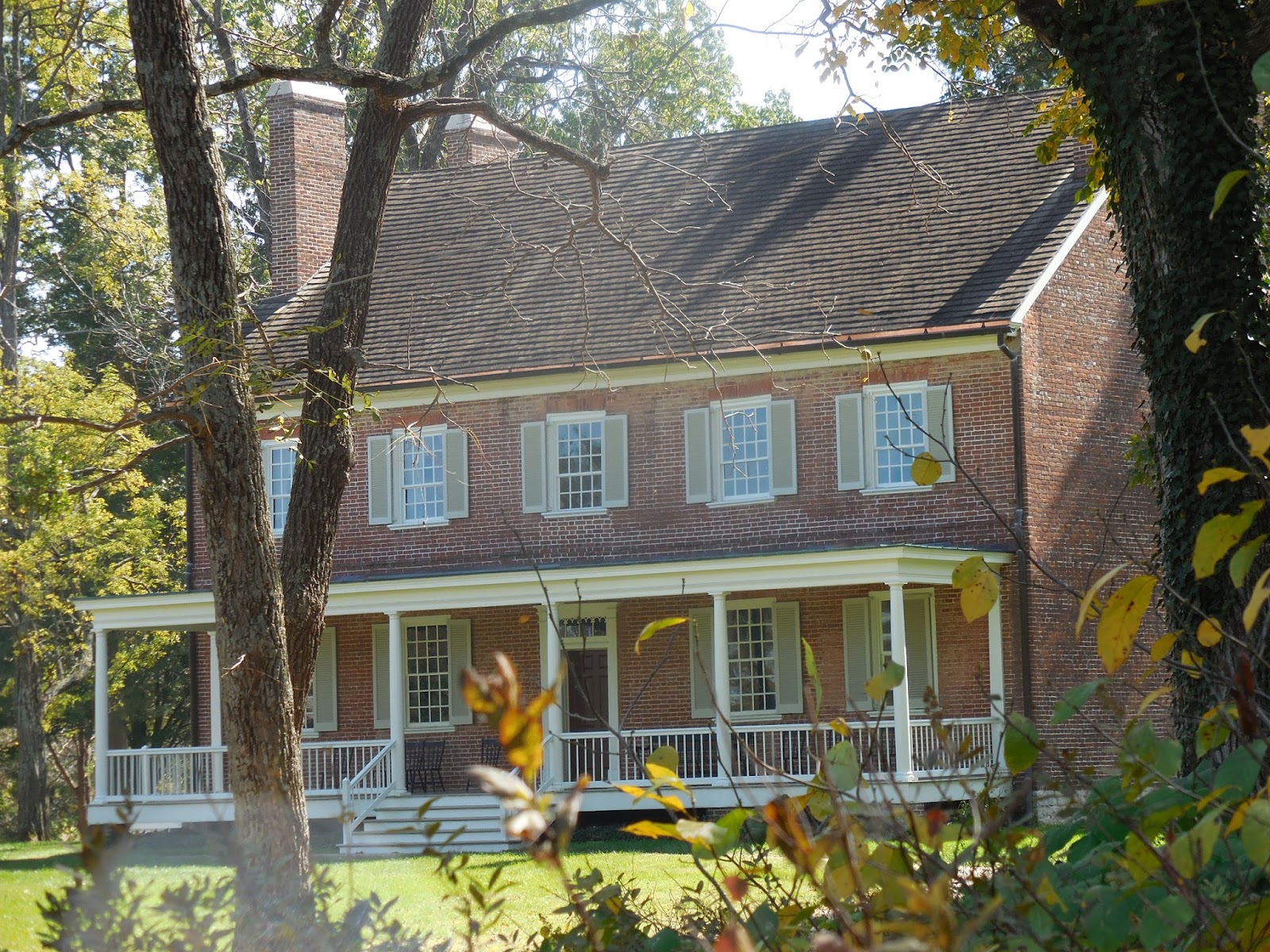
Locust Grove is advertised as “where Louisville  began.” The mansion was built in the 1790’s by William and Lucy Croghan. They raised their family here and a frequent resident was Lucy’s brother, General George Rogers Clark, a hero of the Revolutionary War.

The lovely bright sunshine prevented me from photographing this side of the mansion.
This view is from their website, here.
Also from the  website: “This c.1792 Georgian mansion tells the story of its builders, William and Lucy Clark Croghan, and the story of American beginnings.  William and Lucy Clark Croghan, along with Lucy’s brother, General George Rogers Clark, welcomed a generation of American luminaries to their home to rest, dialogue, campaign, and duel.  Presidents James Monroe and Andrew Jackson, John James Audubon, Cassius Marcellus Clay, and Lewis and Clark—among others—all passed through Locust Grove. Now a National Historic Landmark, Locust Grove is a unique example of early Kentucky architecture, craftsmanship, and history.”

The rest of the pictures are mine.  And a perfect day for the camera it was.

The garden was moving into its post-harvest phase.

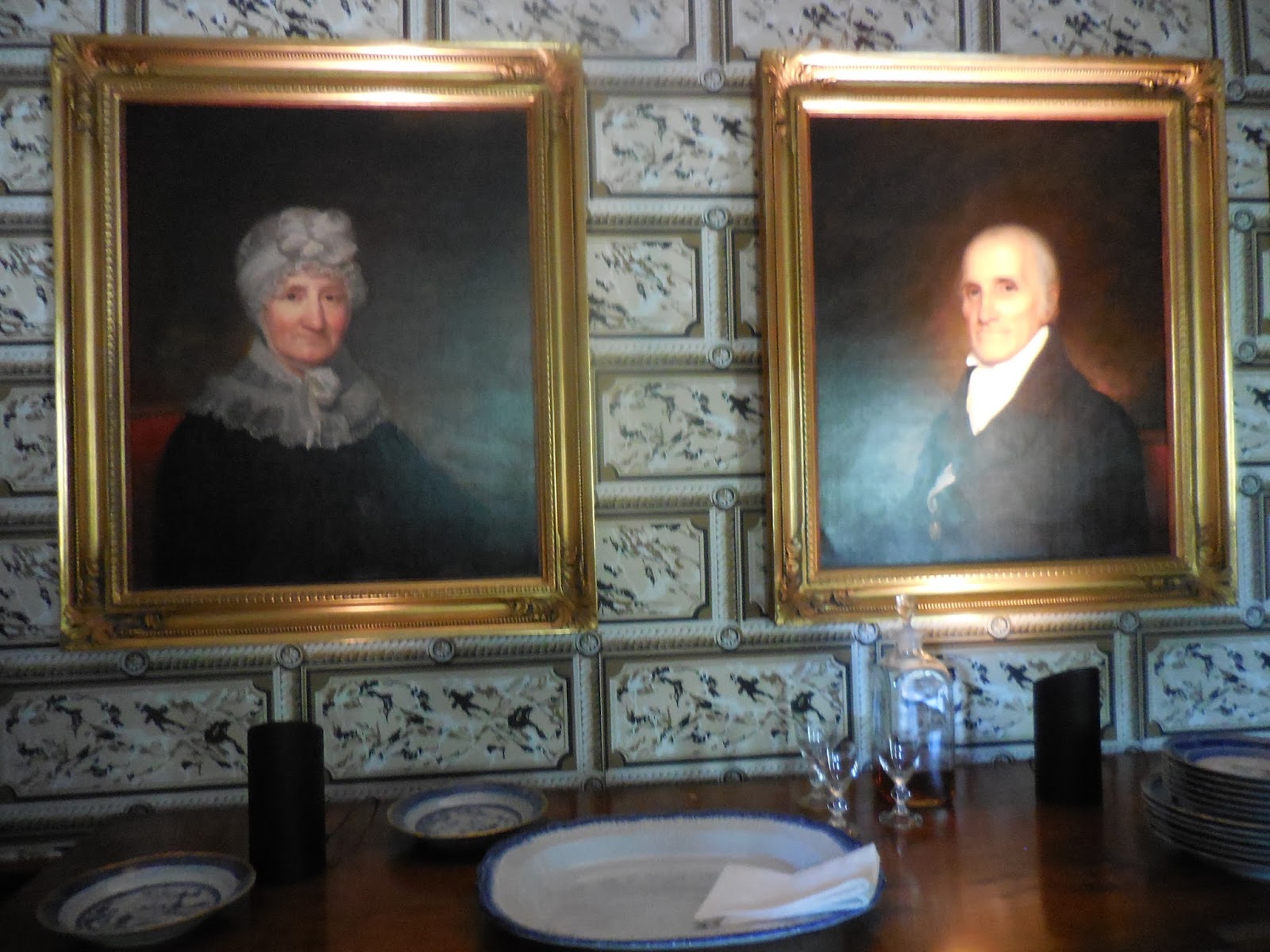
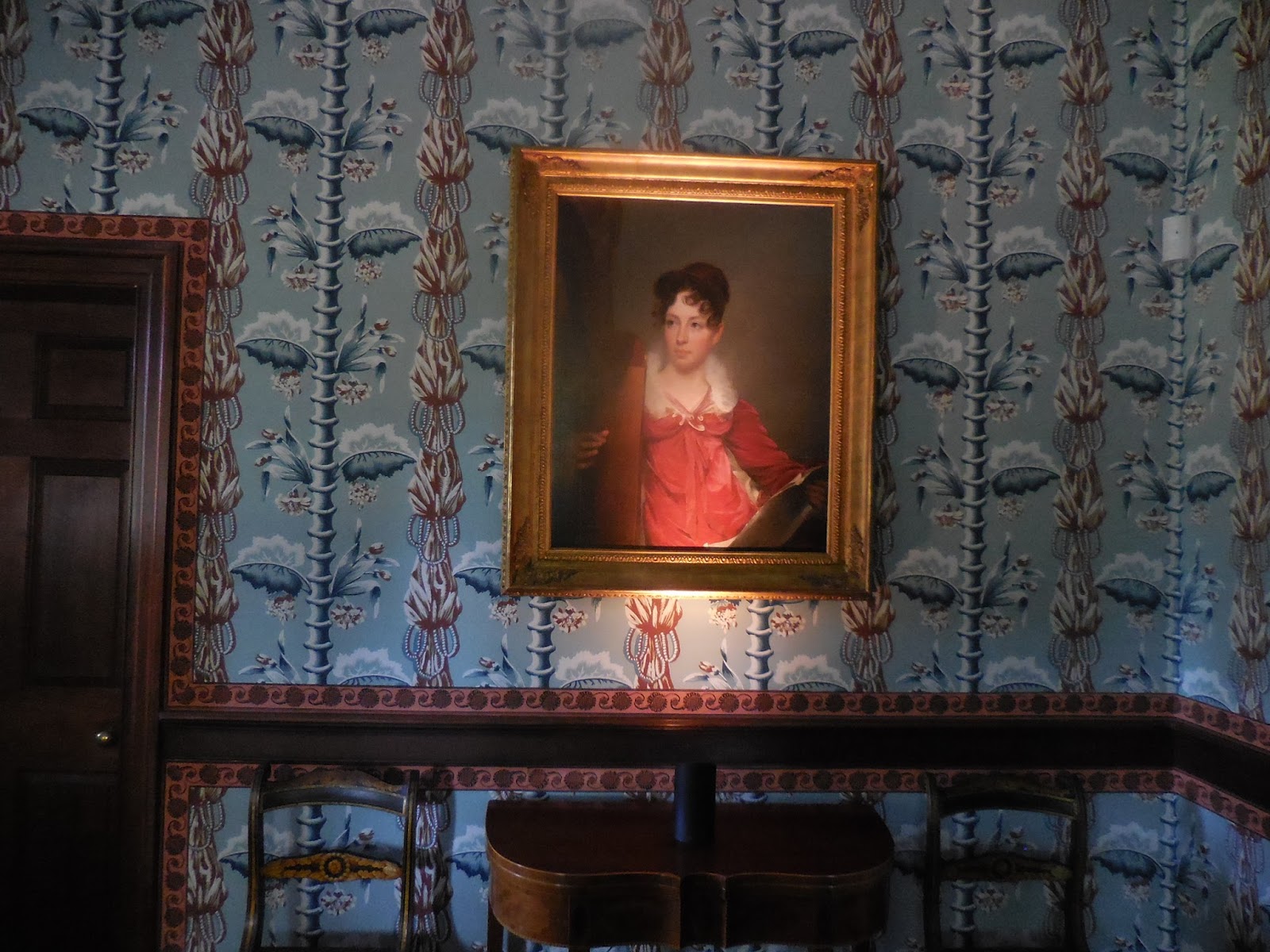
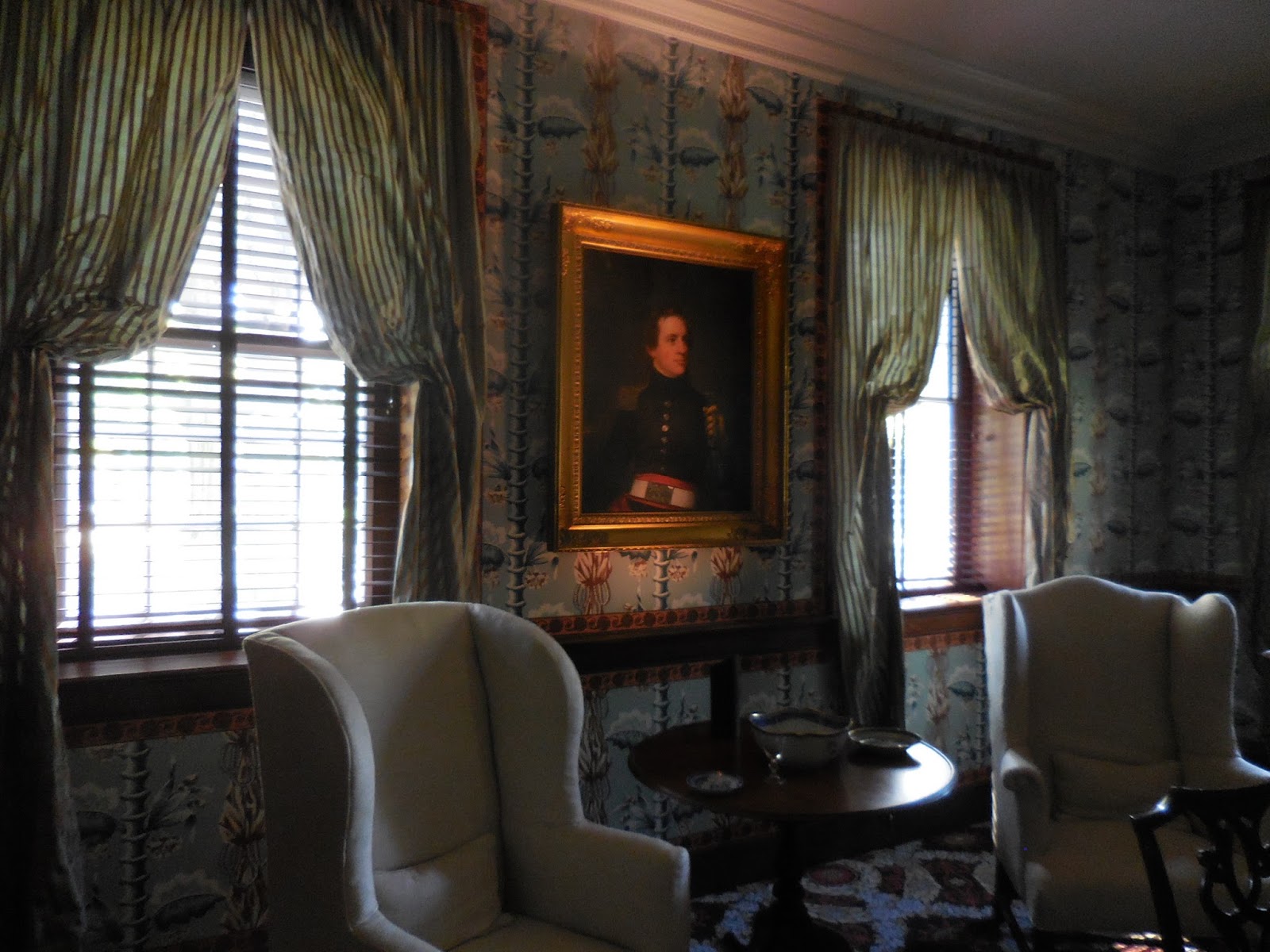
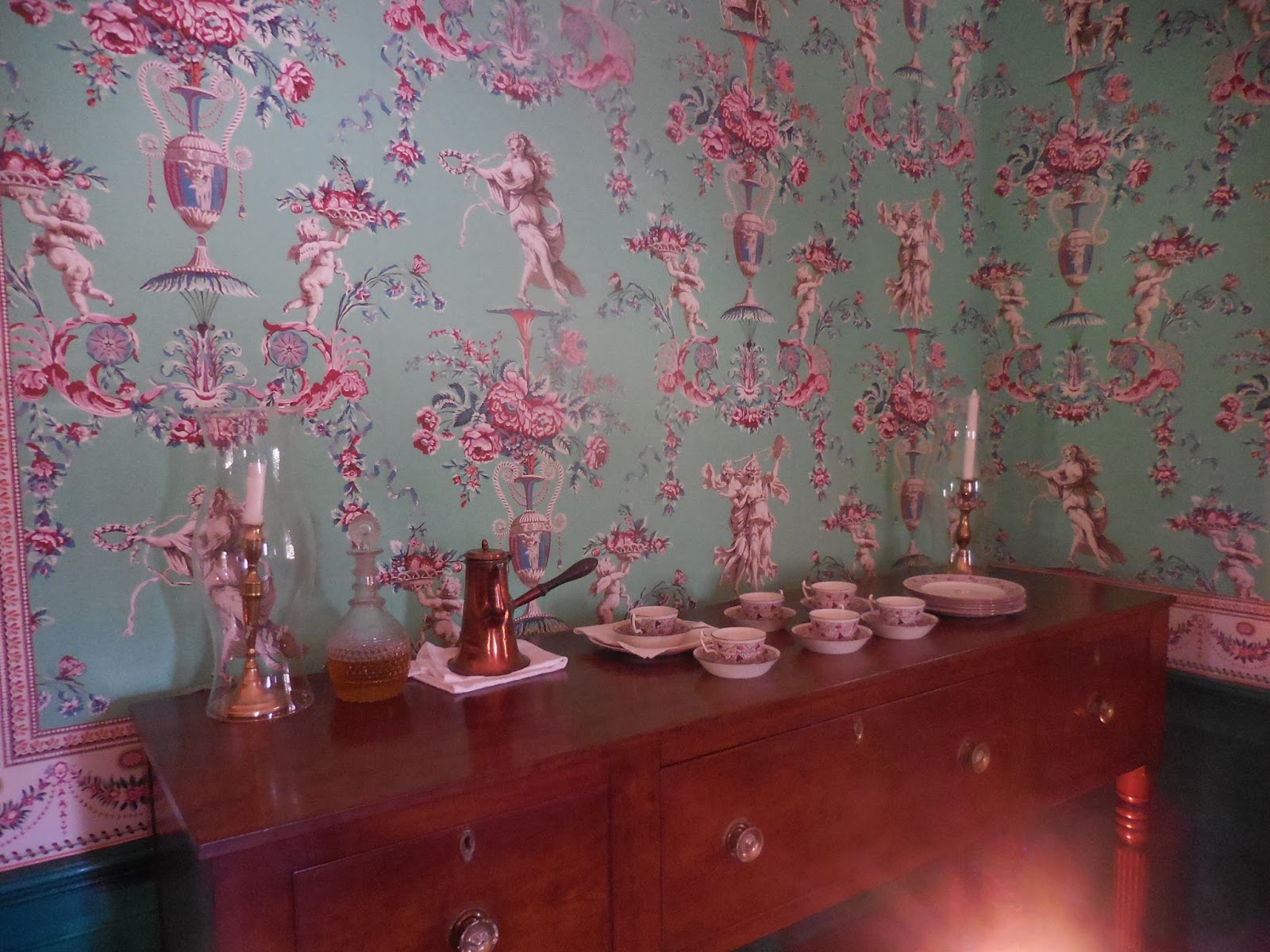
Below are portraits of Lucy Clark (1765-1838) and William Croghan (1752-1822)  in the Dining Room.

Note the the hand-blocked wallpaper design.

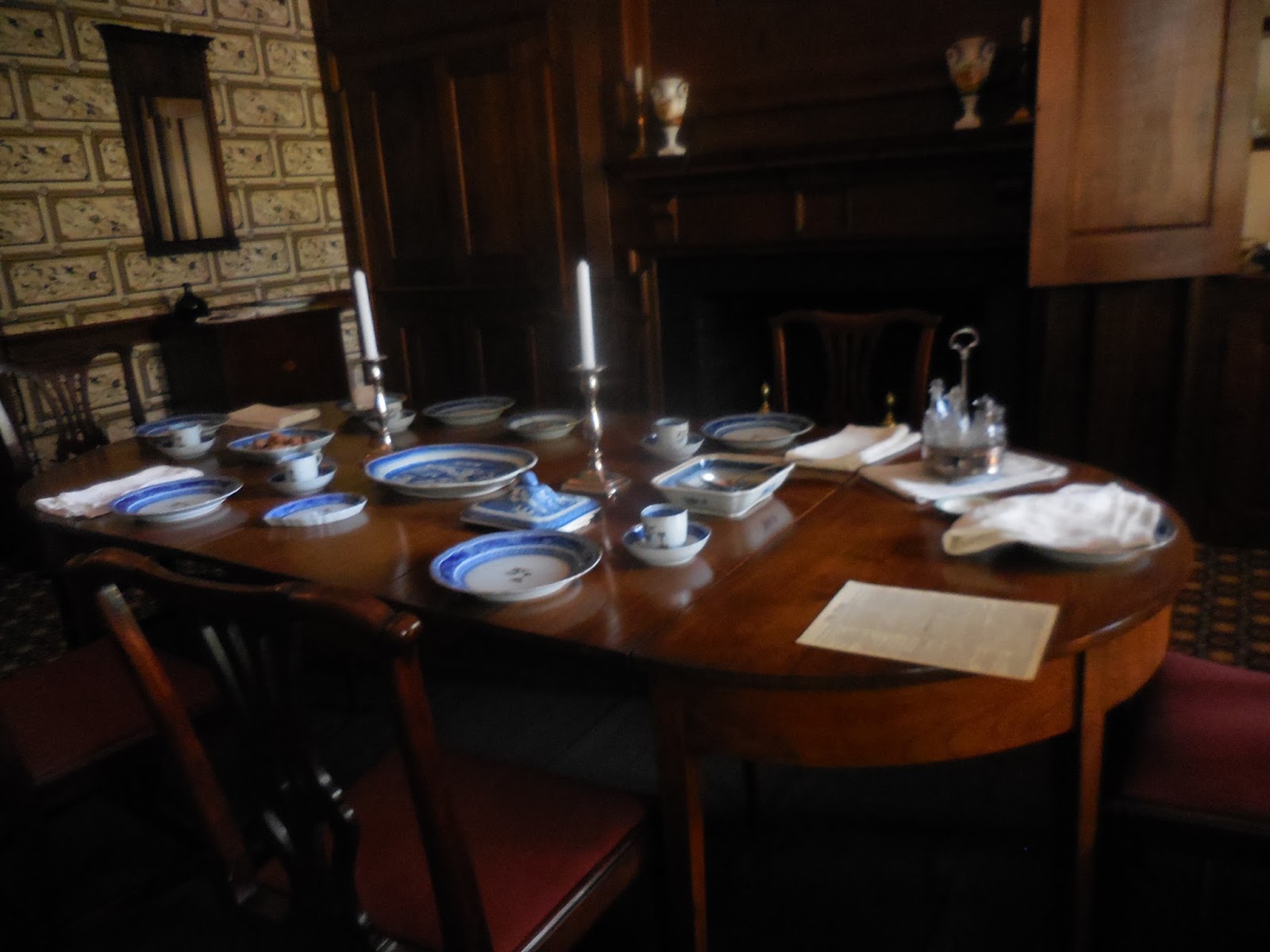
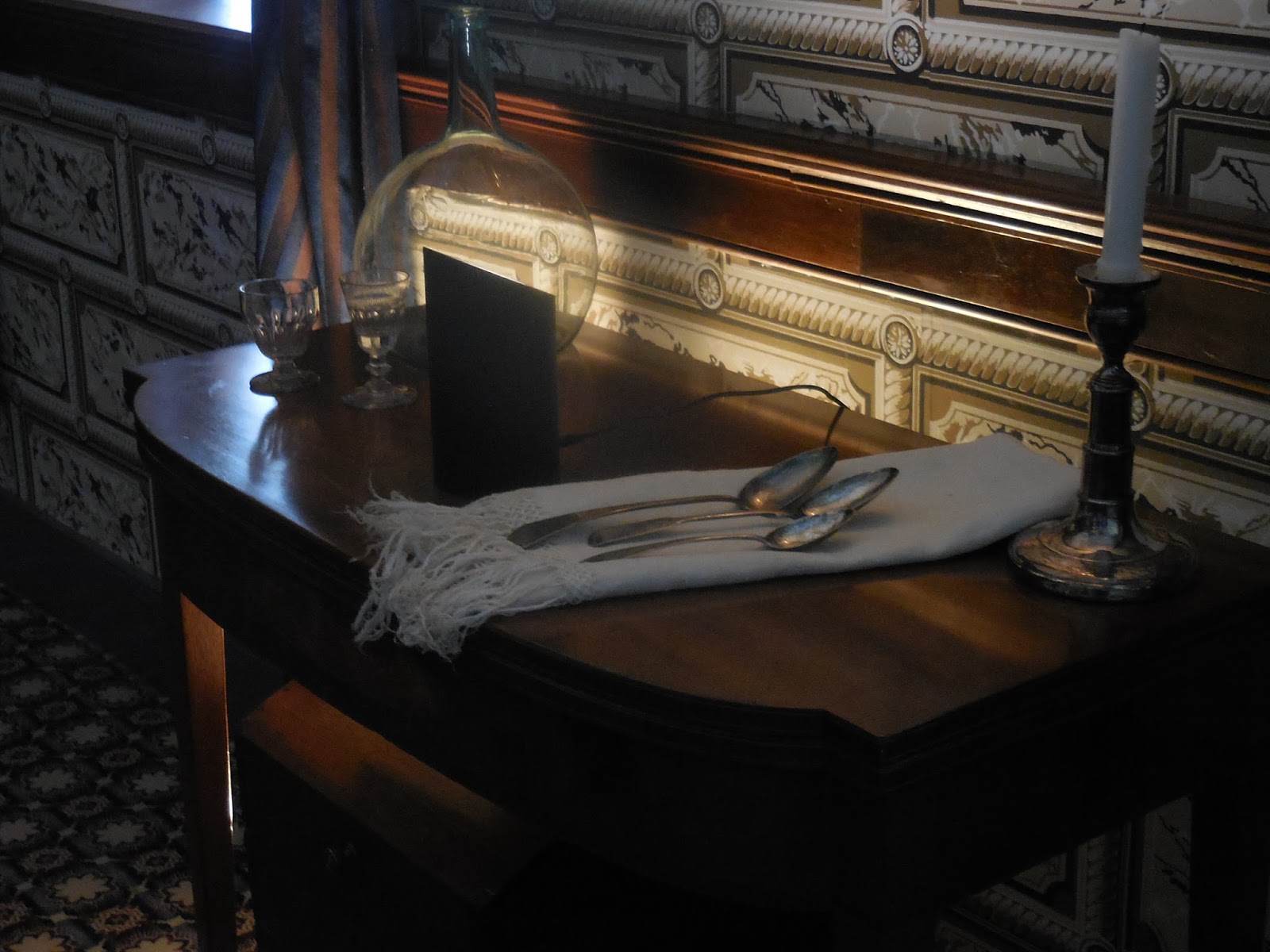
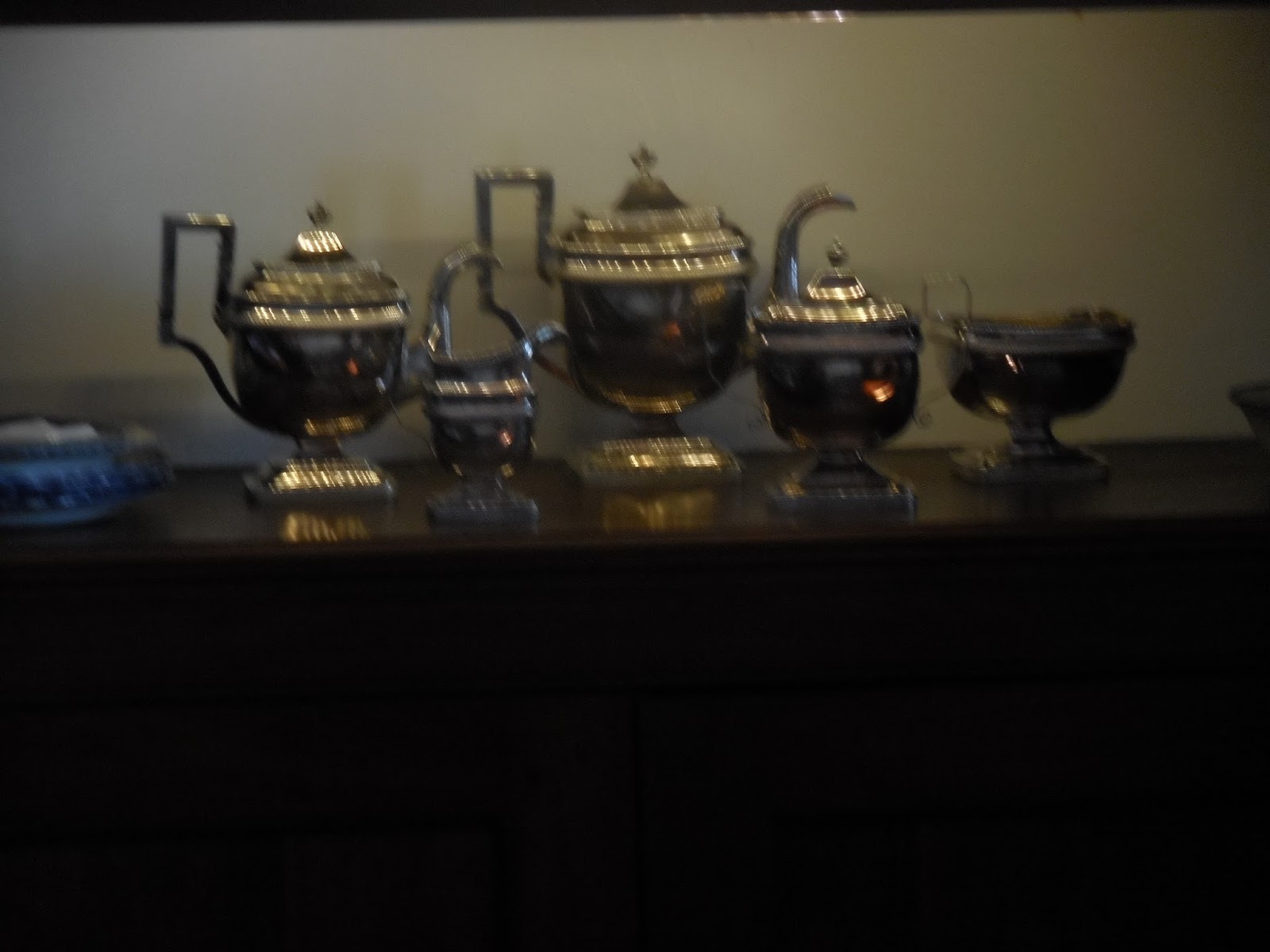
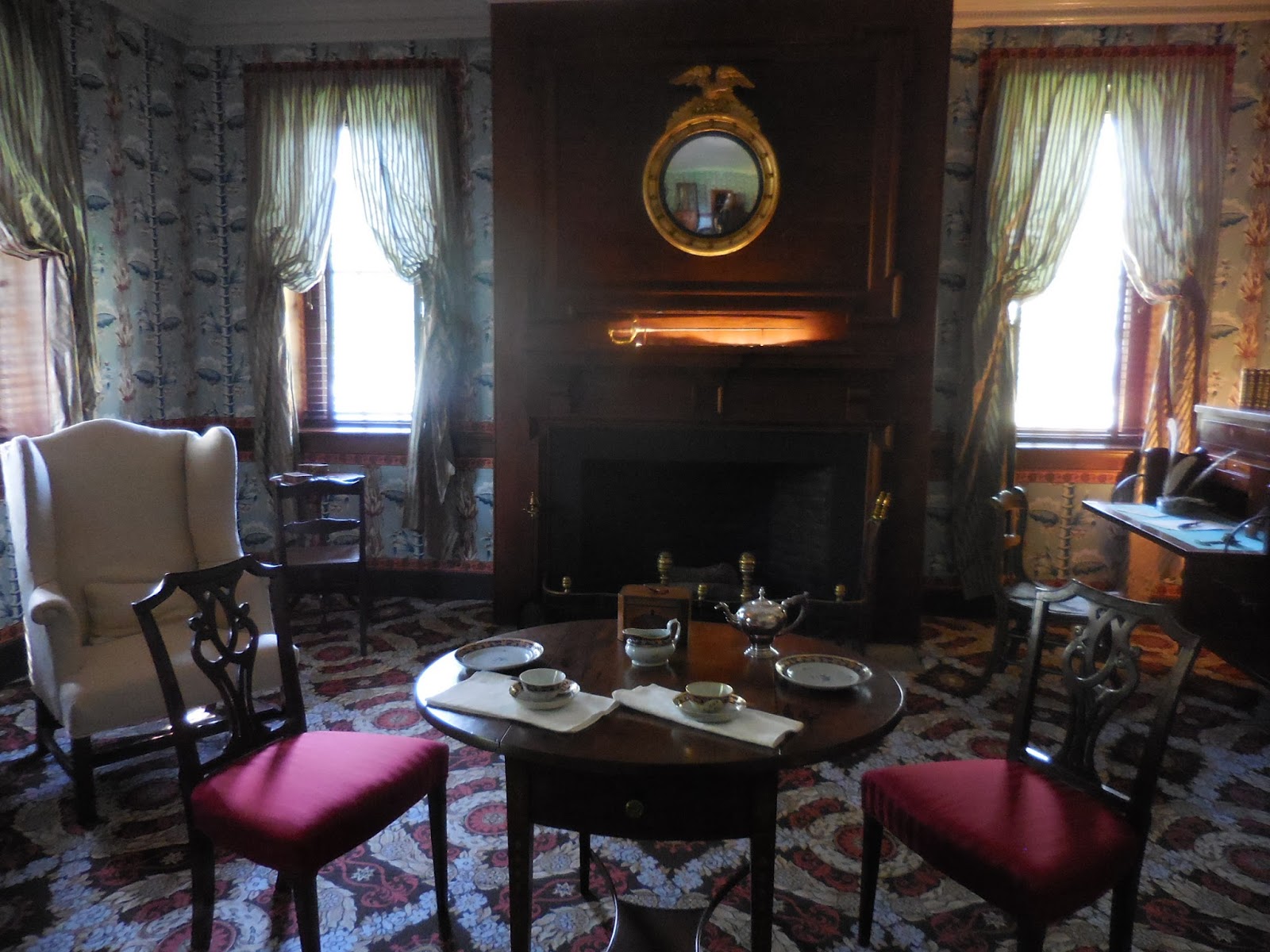
The silver coffee and tea service was made in Philadelphia with the family crest.

Dining Room, as it was in 1811

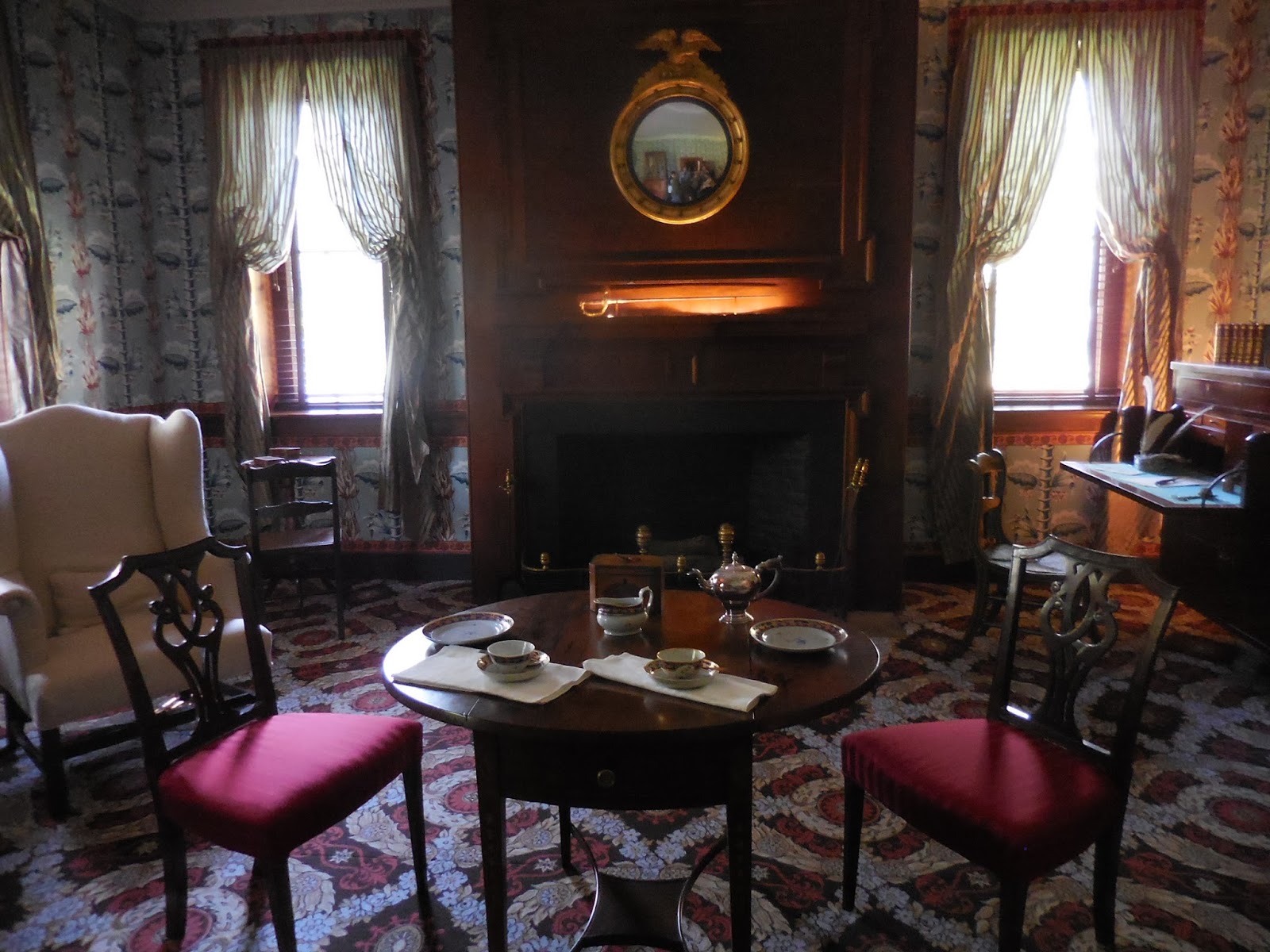
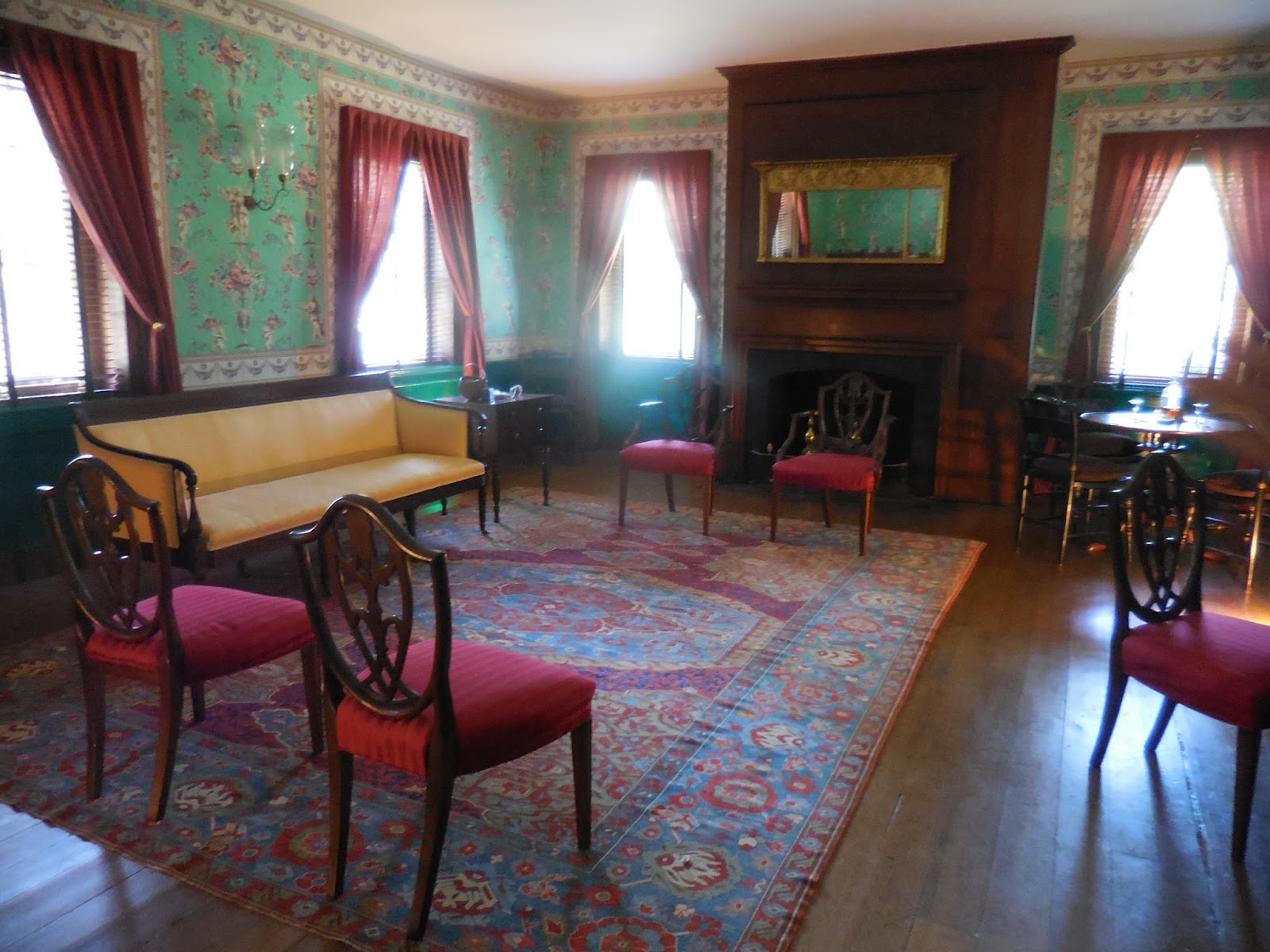
Small parlor, as of 1815

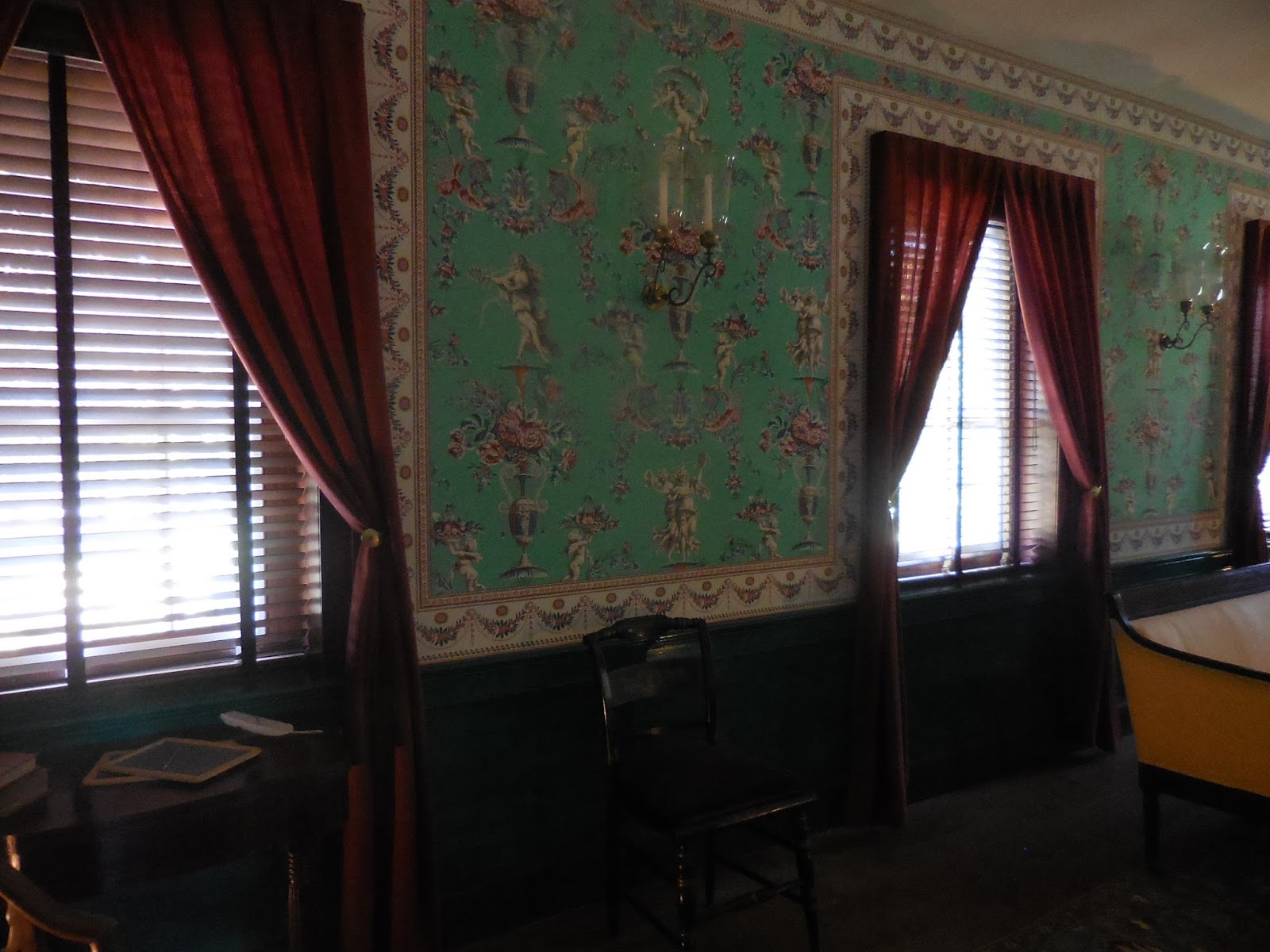
Again, the drawing room wallpaper is worthy of note.

The imported Brussels carpet is particularly fine.
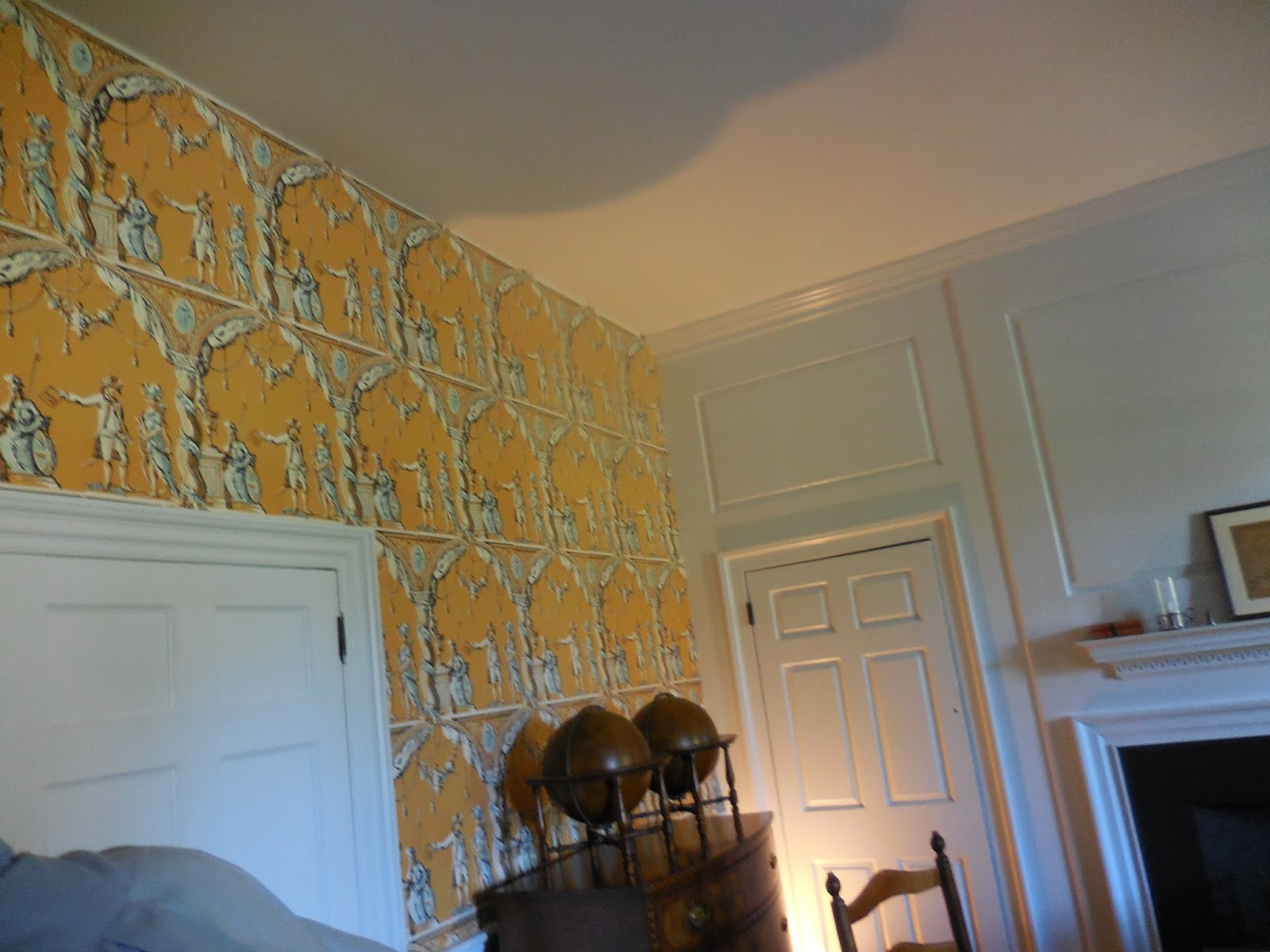
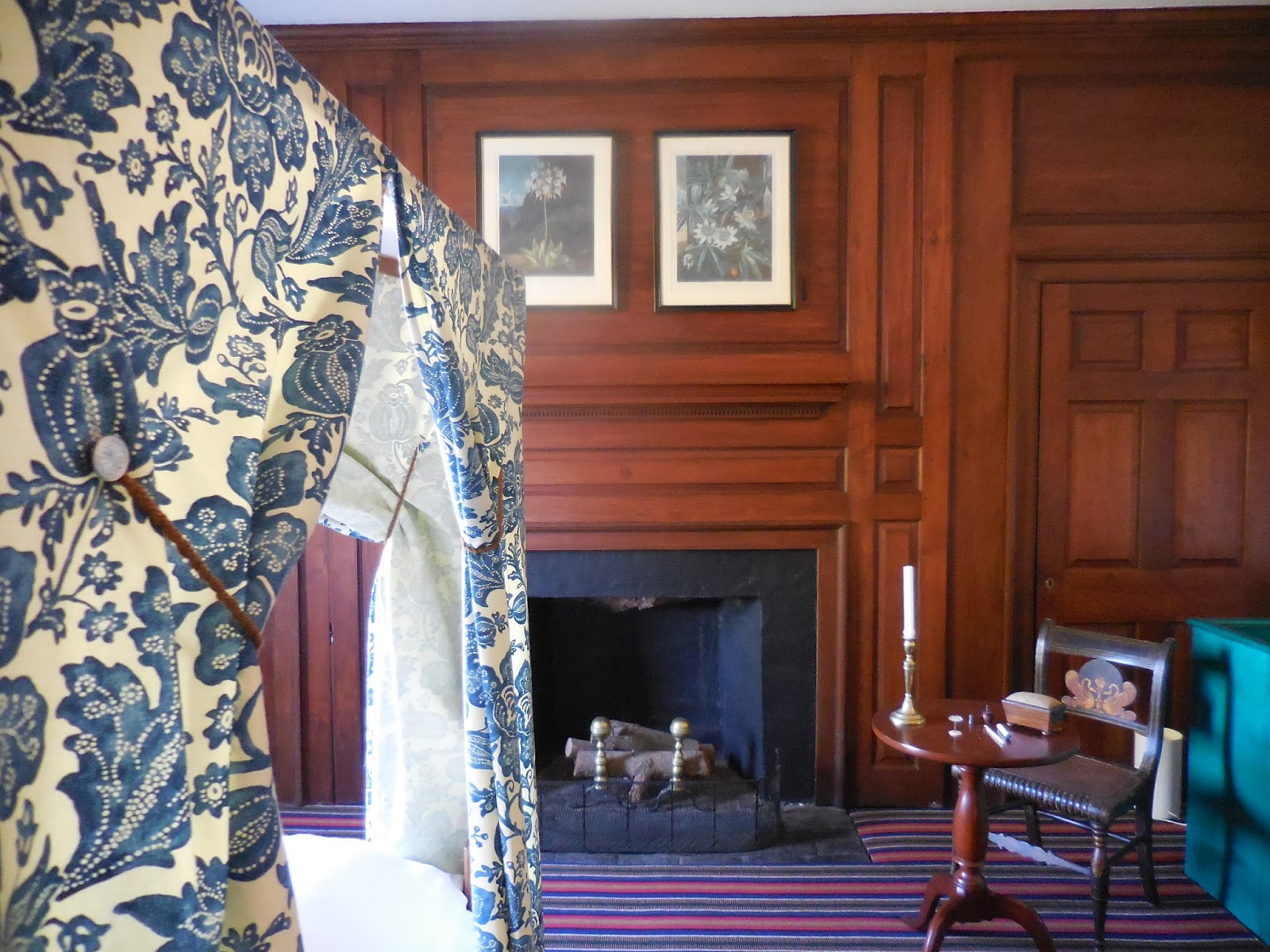
Bedroom of George Rogers Clark from 1809 until his death in 1818

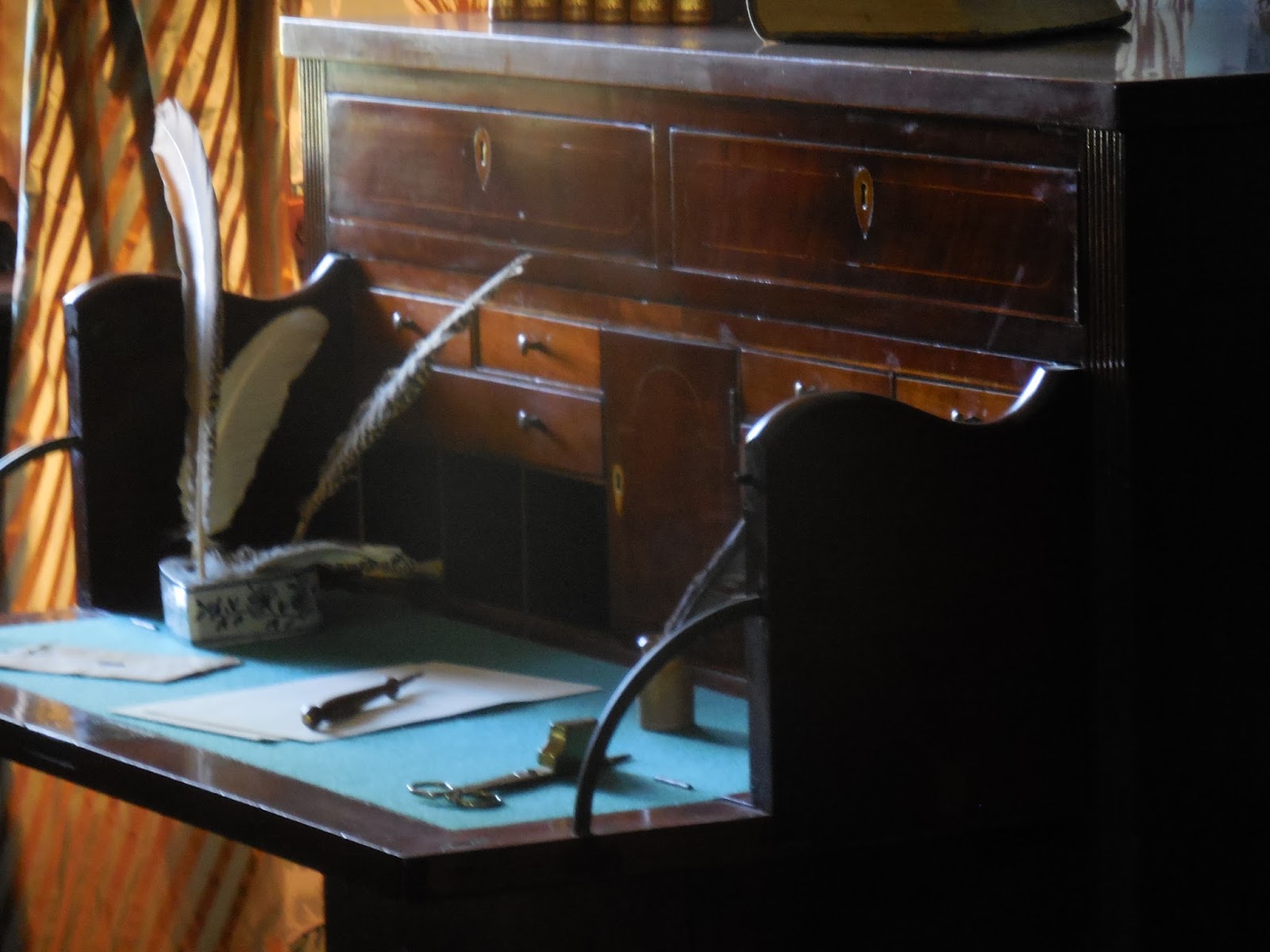
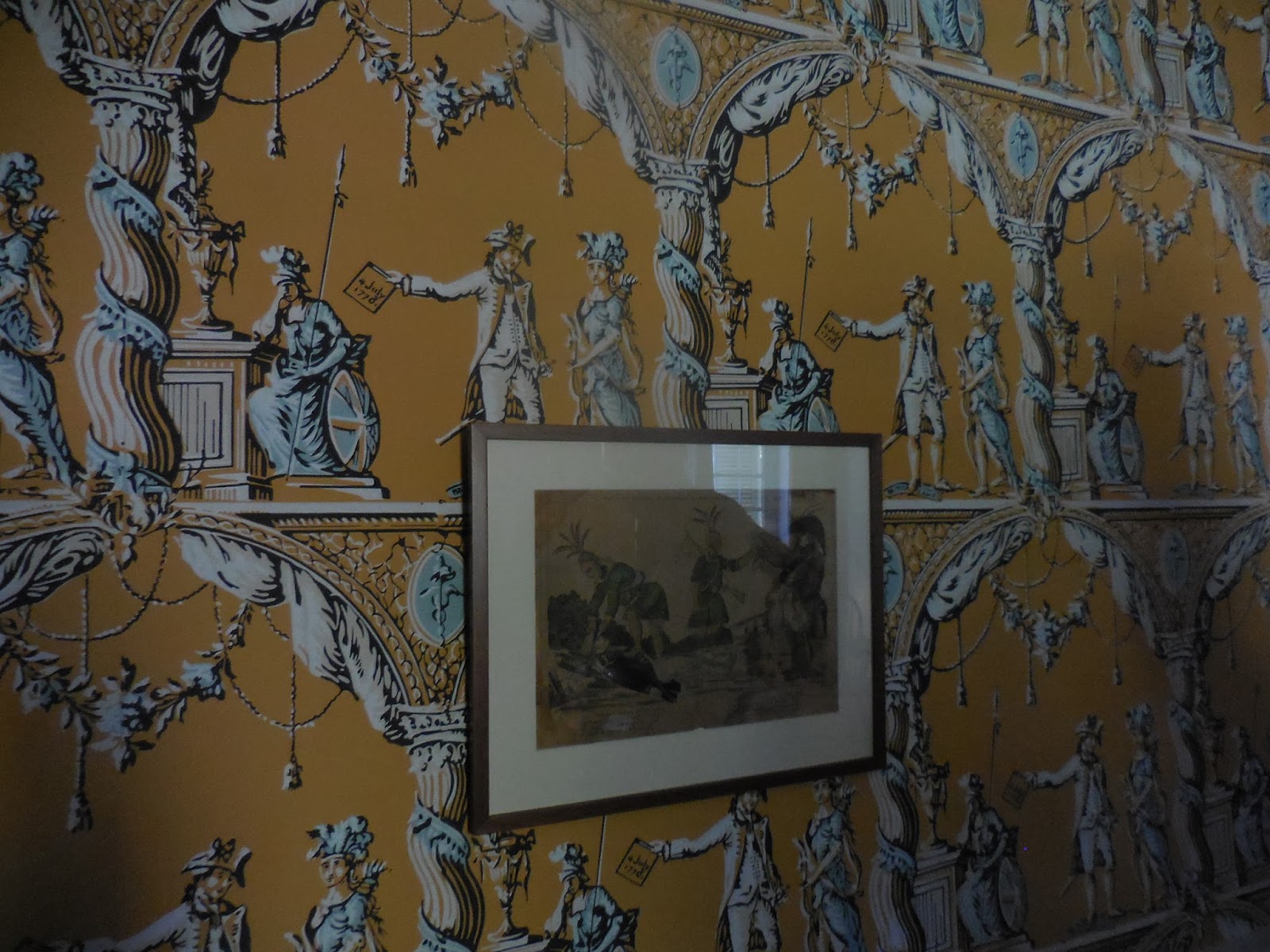
More fascinating wallpaper, with an American Revolutionary theme

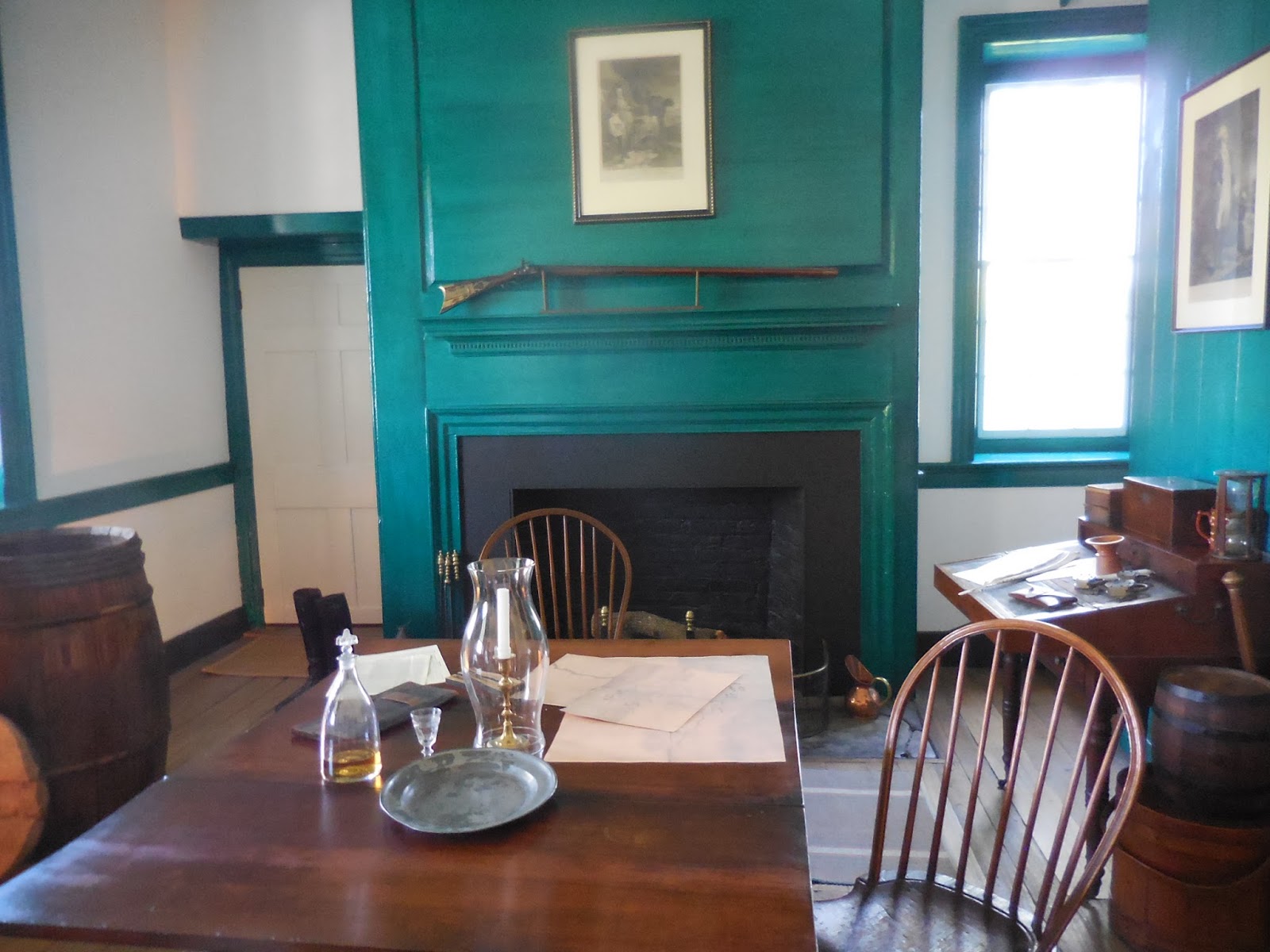
These walls of the Farm Office are painted in verdigris, which was explained as an odiferous compound in which one part was urine or excrement.  Rarely used in bedroom I presume.
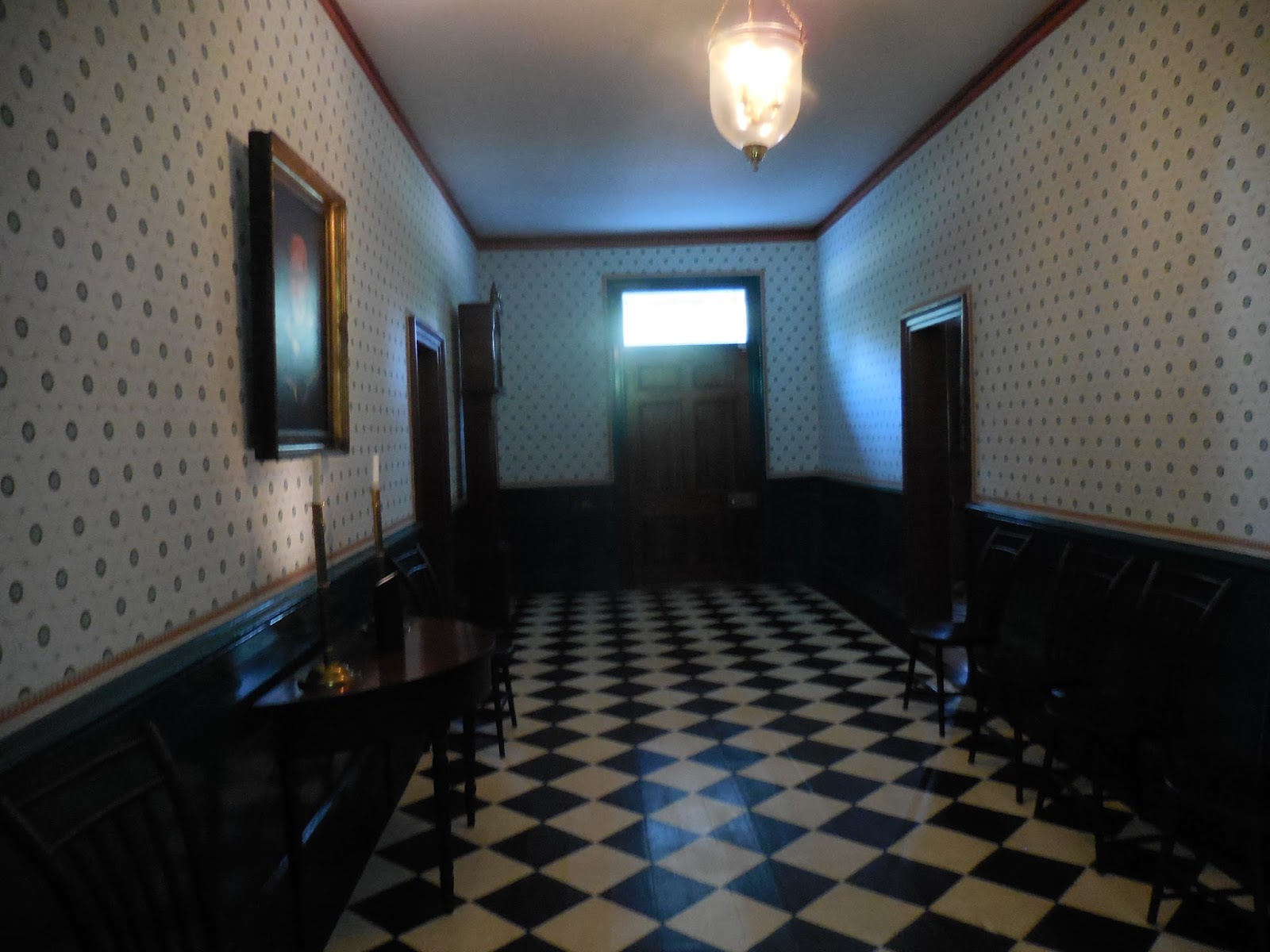
Central Hall on the Ground Floor
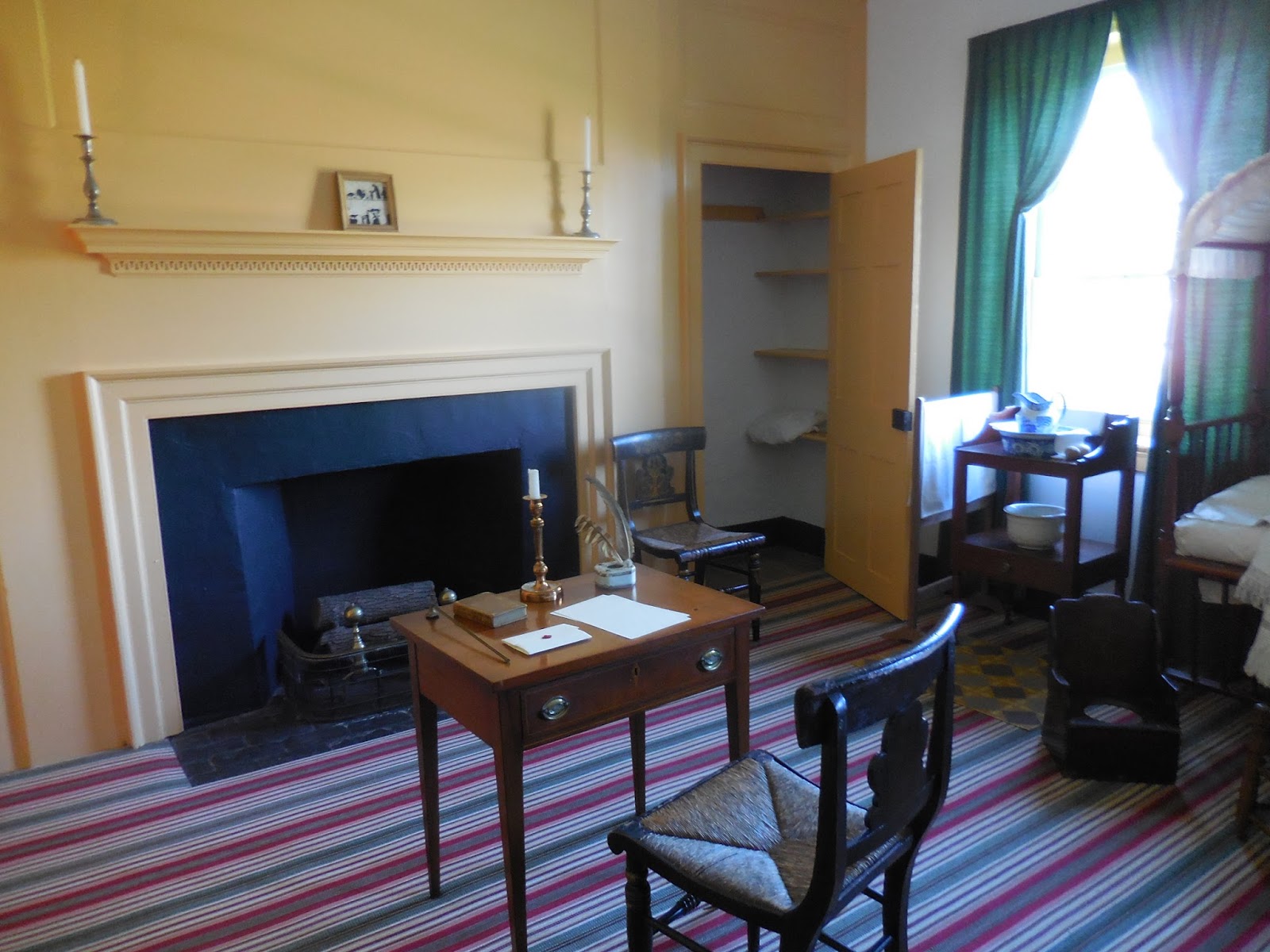
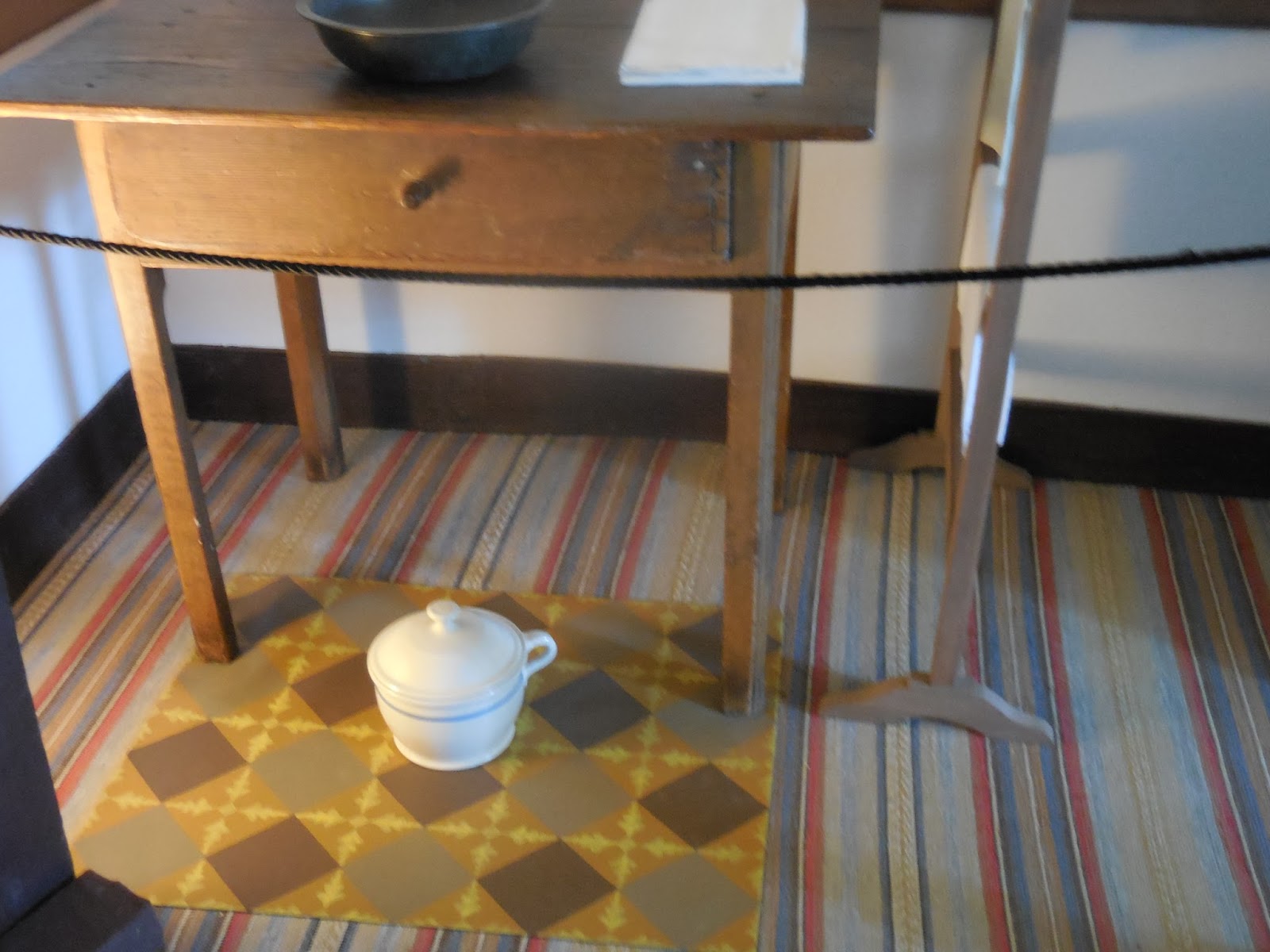
Family Guest Room: I found the striped carpeting interesting.

Great Parlour on the second floor, as of 1811, used for family gatherings, as a ballroom, for playing games and many other activities.

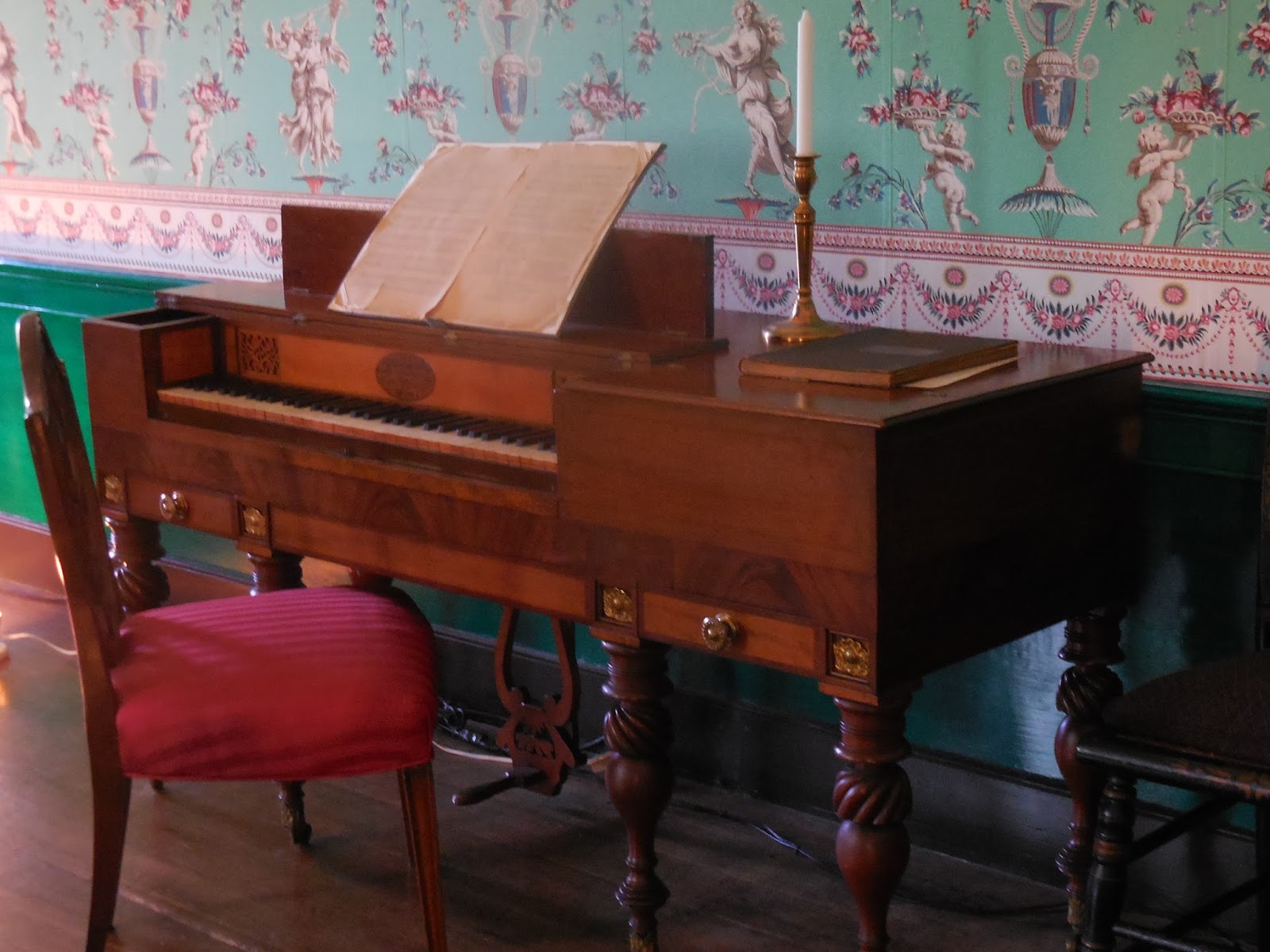
According to the website, ” The fortepiano was made by Broadwood in London in 1806
 and is still used for concerts.”

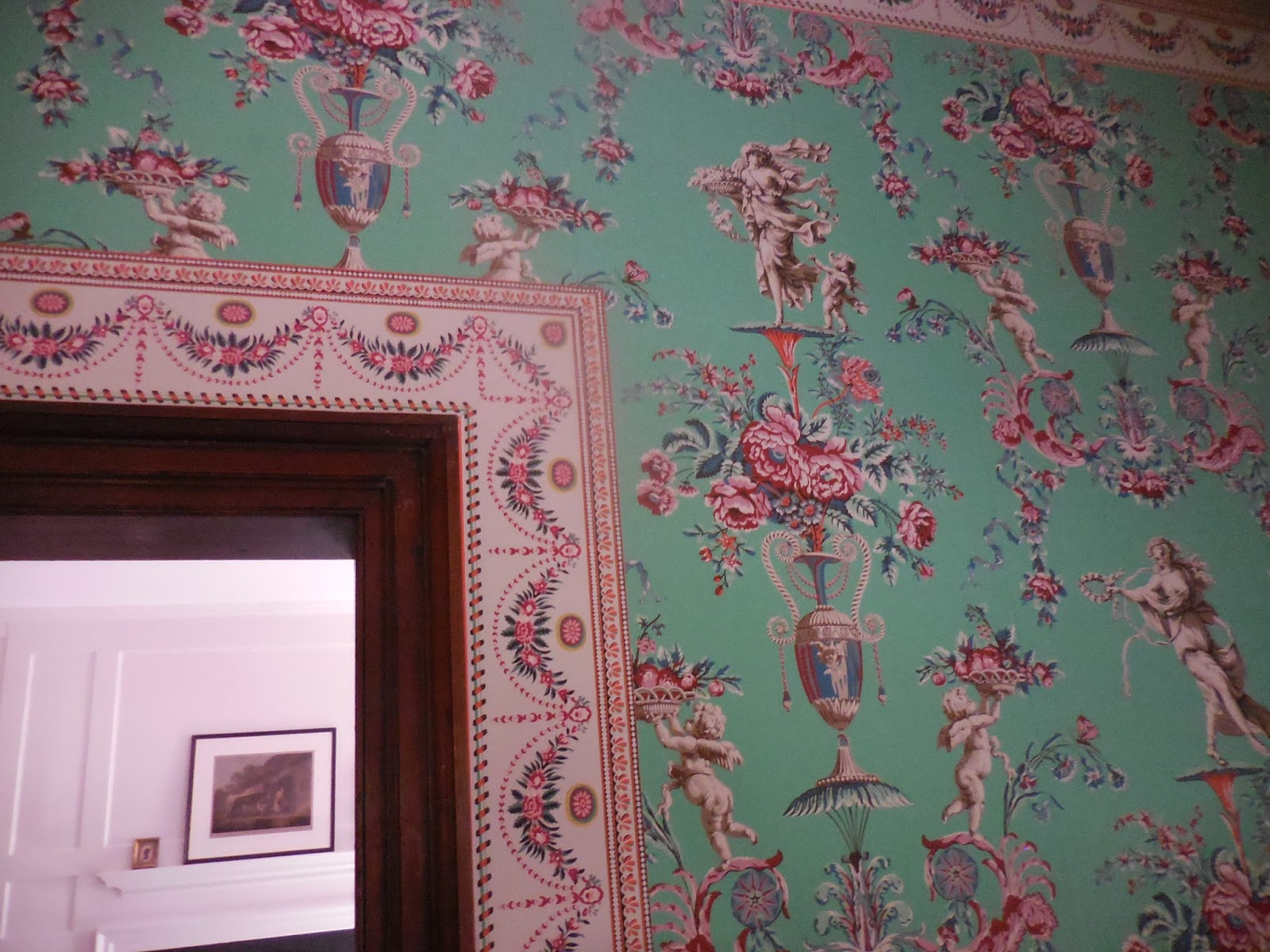
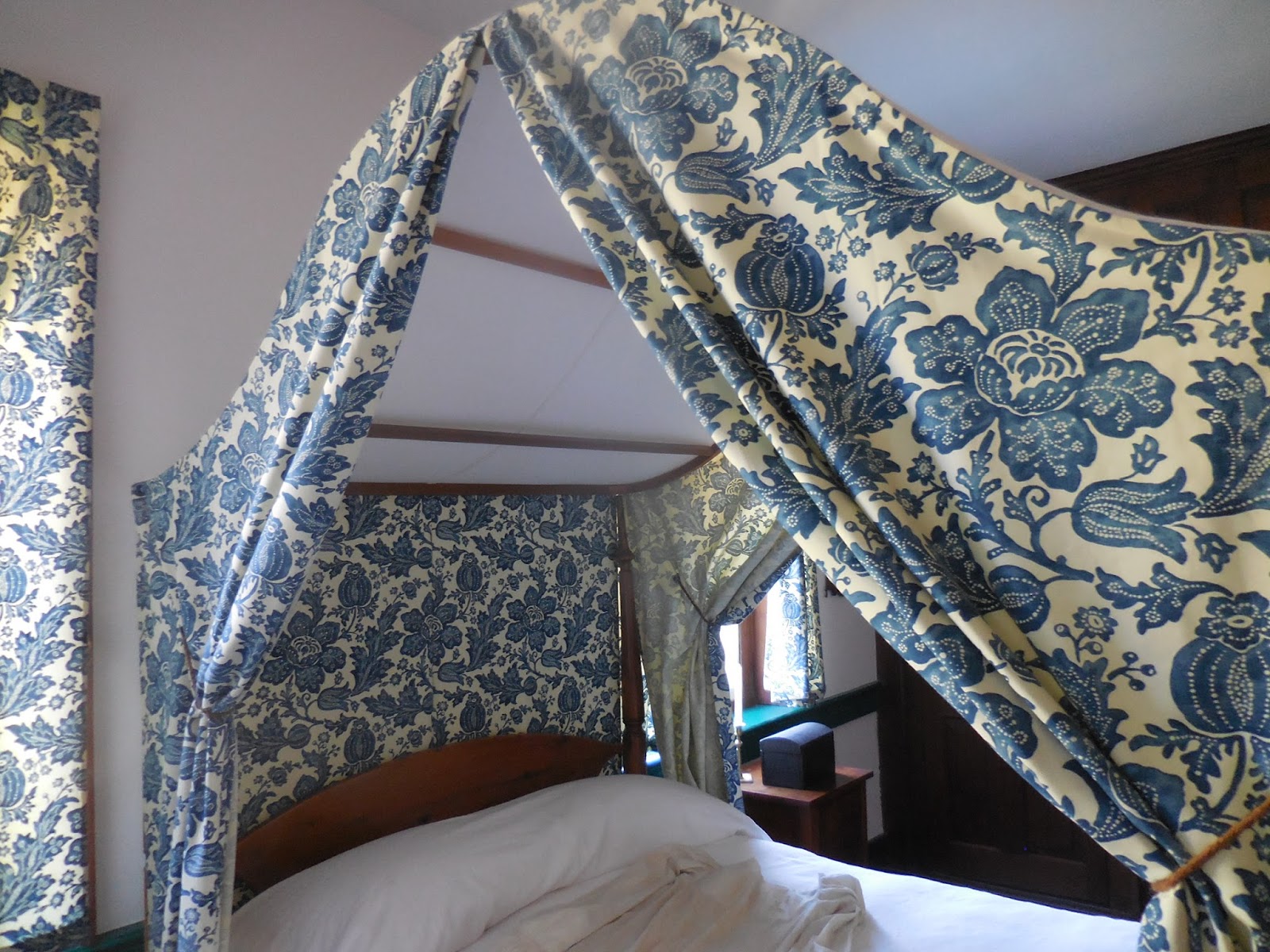
The wallpaper is a reproduction of the original Arabesque pattern. 
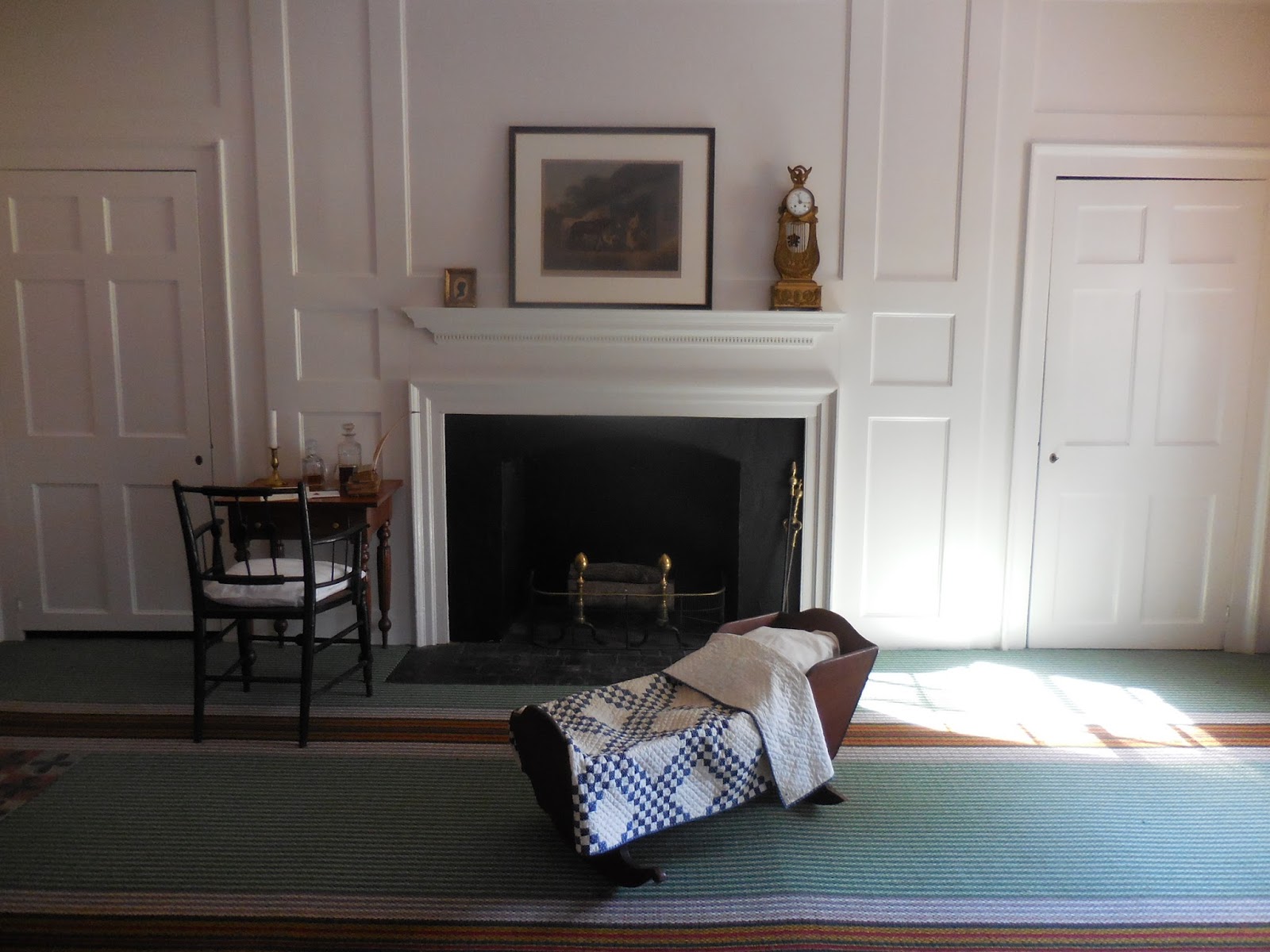
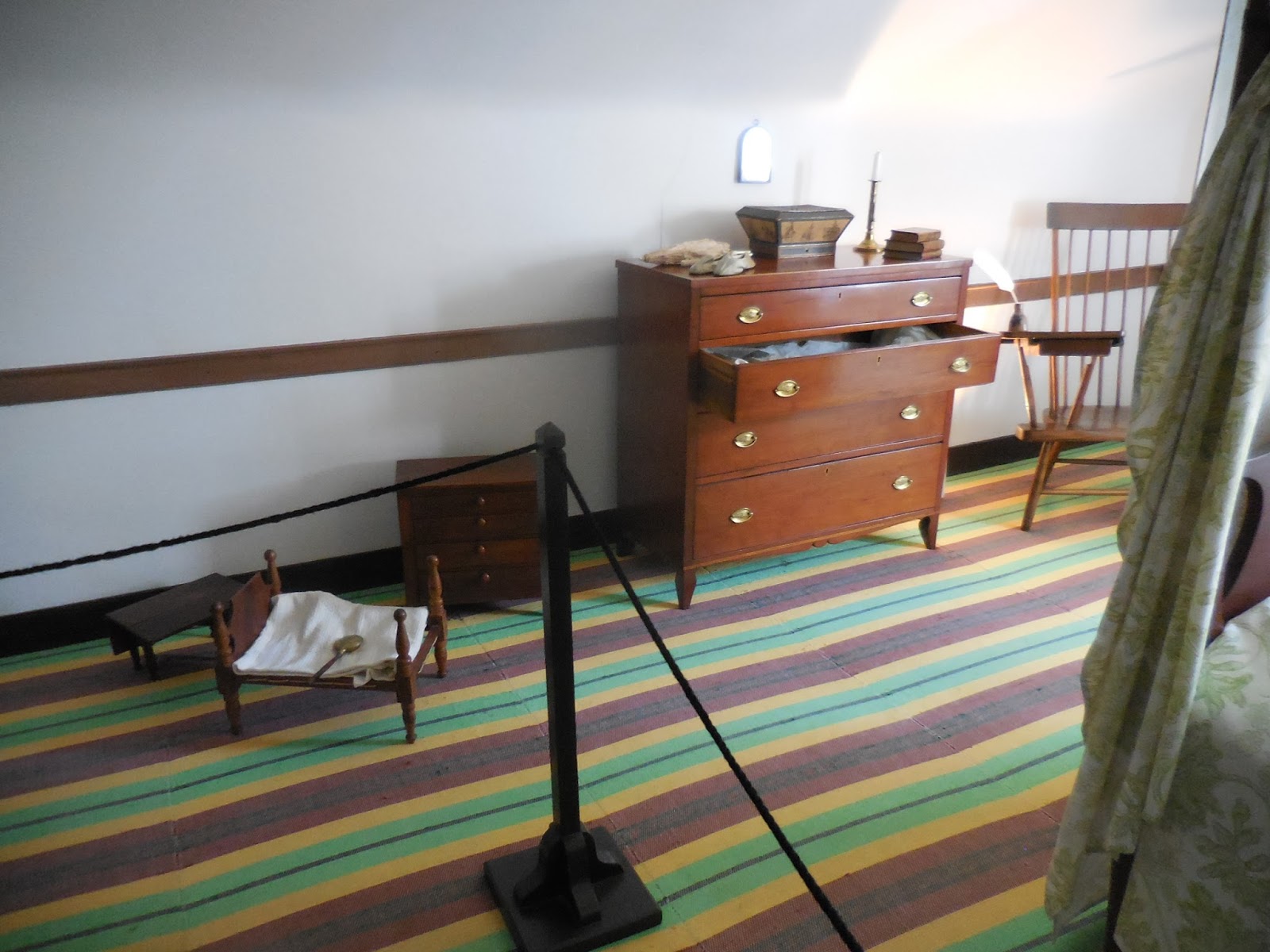
The Rose Room, with cradle, below

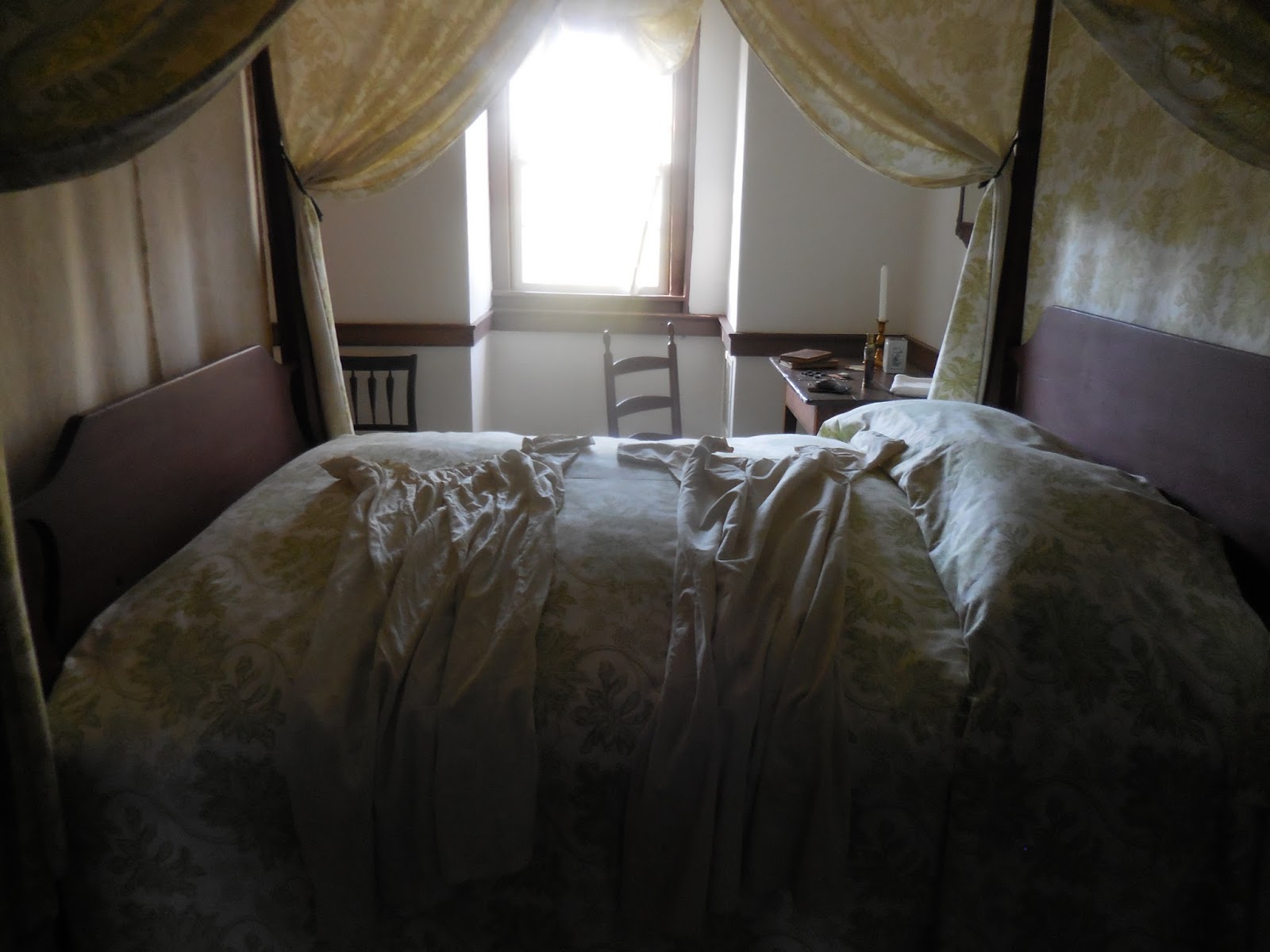
The Croghan bedroom

Above and below,  the third floor girl’s bedroom

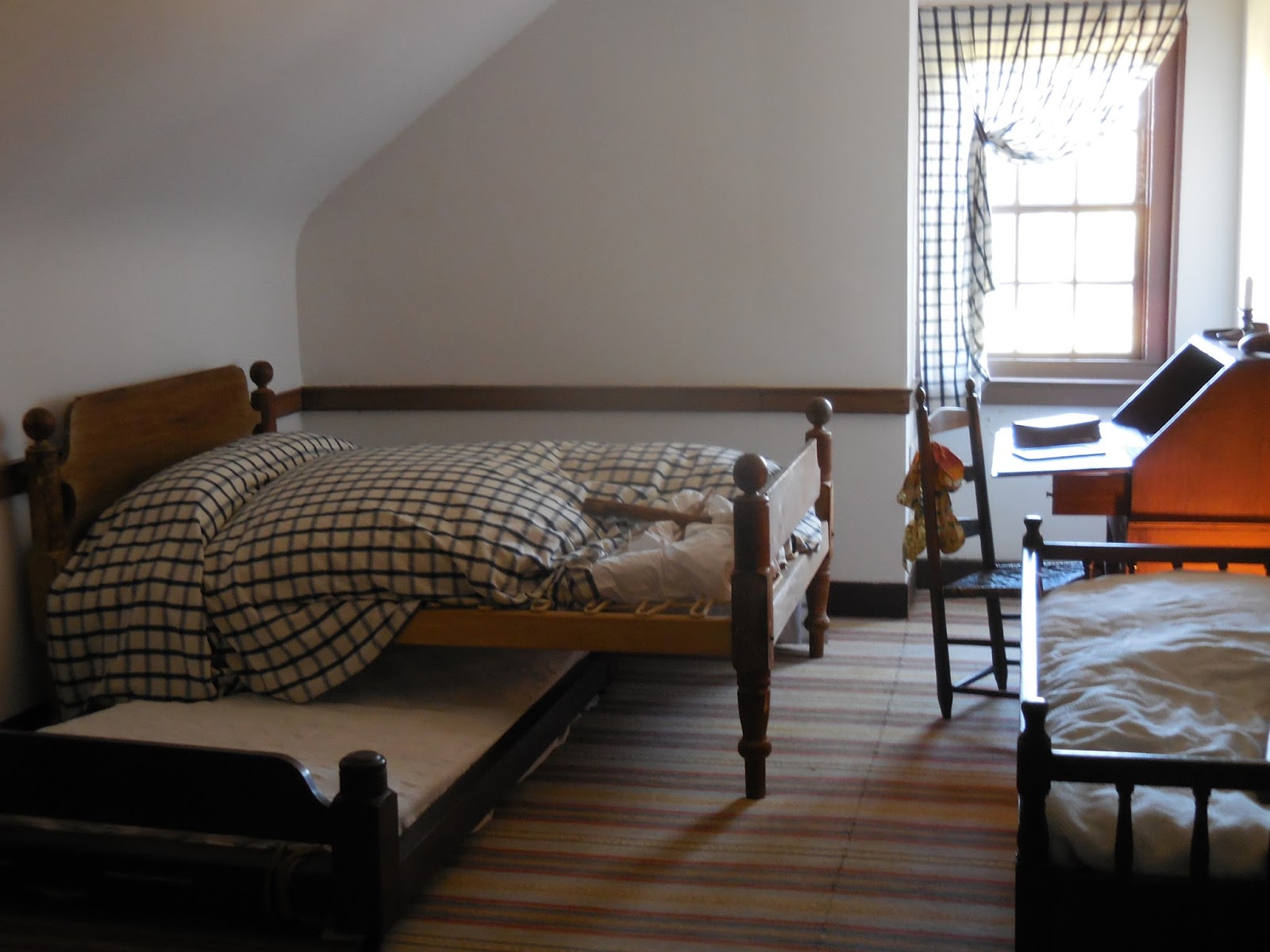
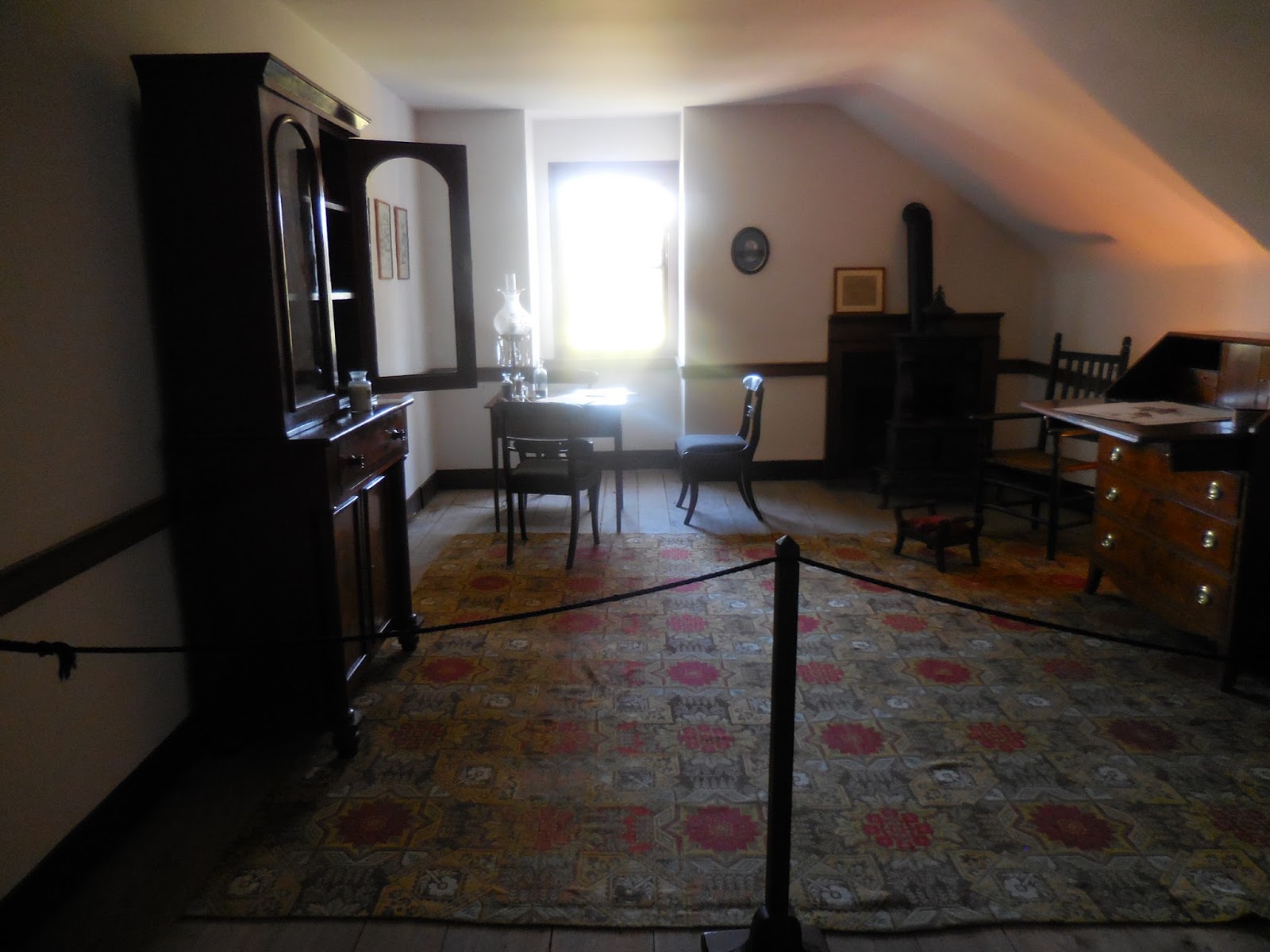
Above and below third floor boy’s bedroom
From the website: “In this room, out of our usual time frame, it’s the 1840s. This represents the history of the house after William Croghan’s death in 1822, when the next generations moved in and out of the shared house. This room focuses on John Croghan (the eldest son), and his work as a doctor and as the owner of Mammoth Cave.”
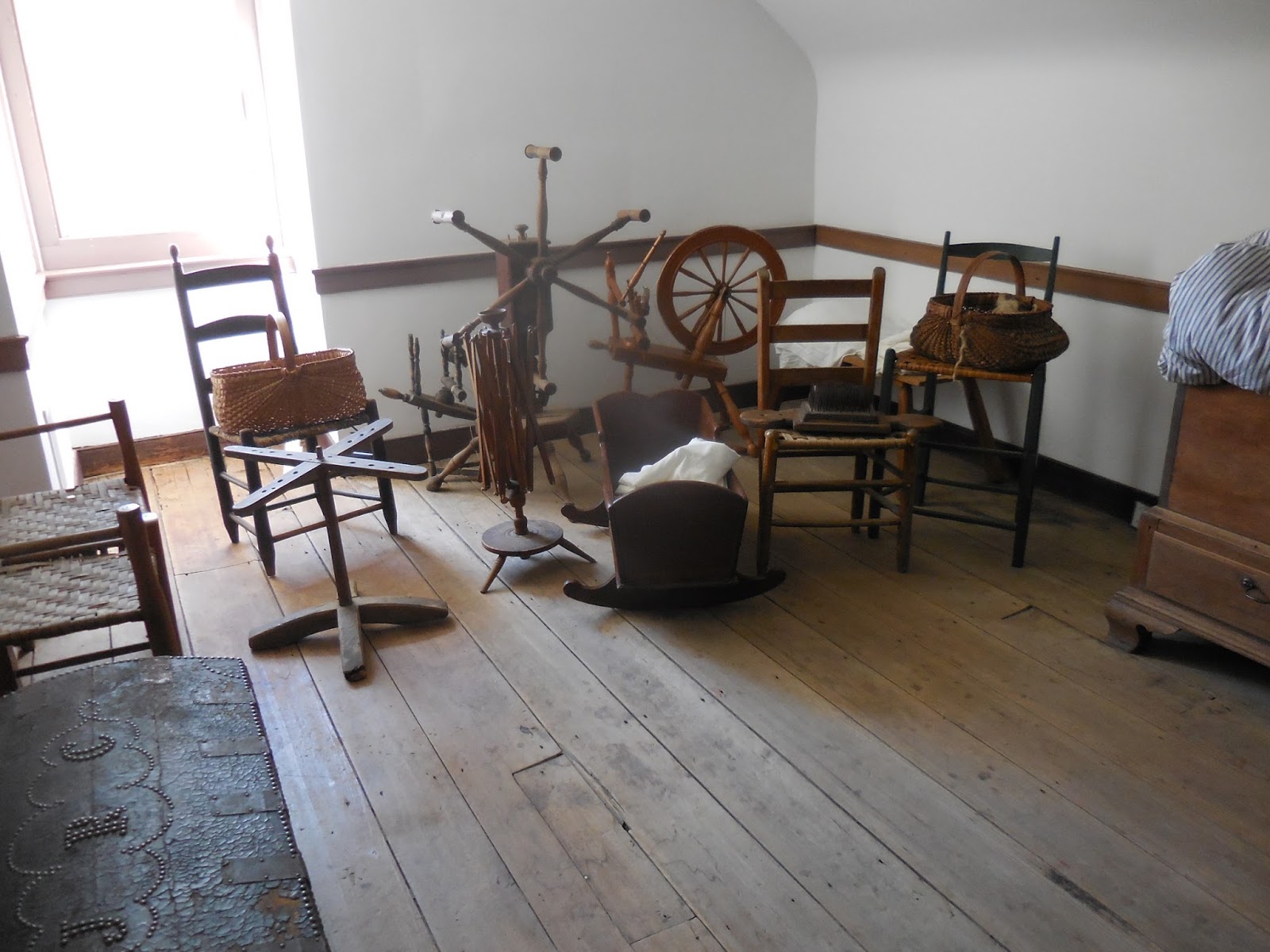
Third floor Storage Room (wish I had one of these)
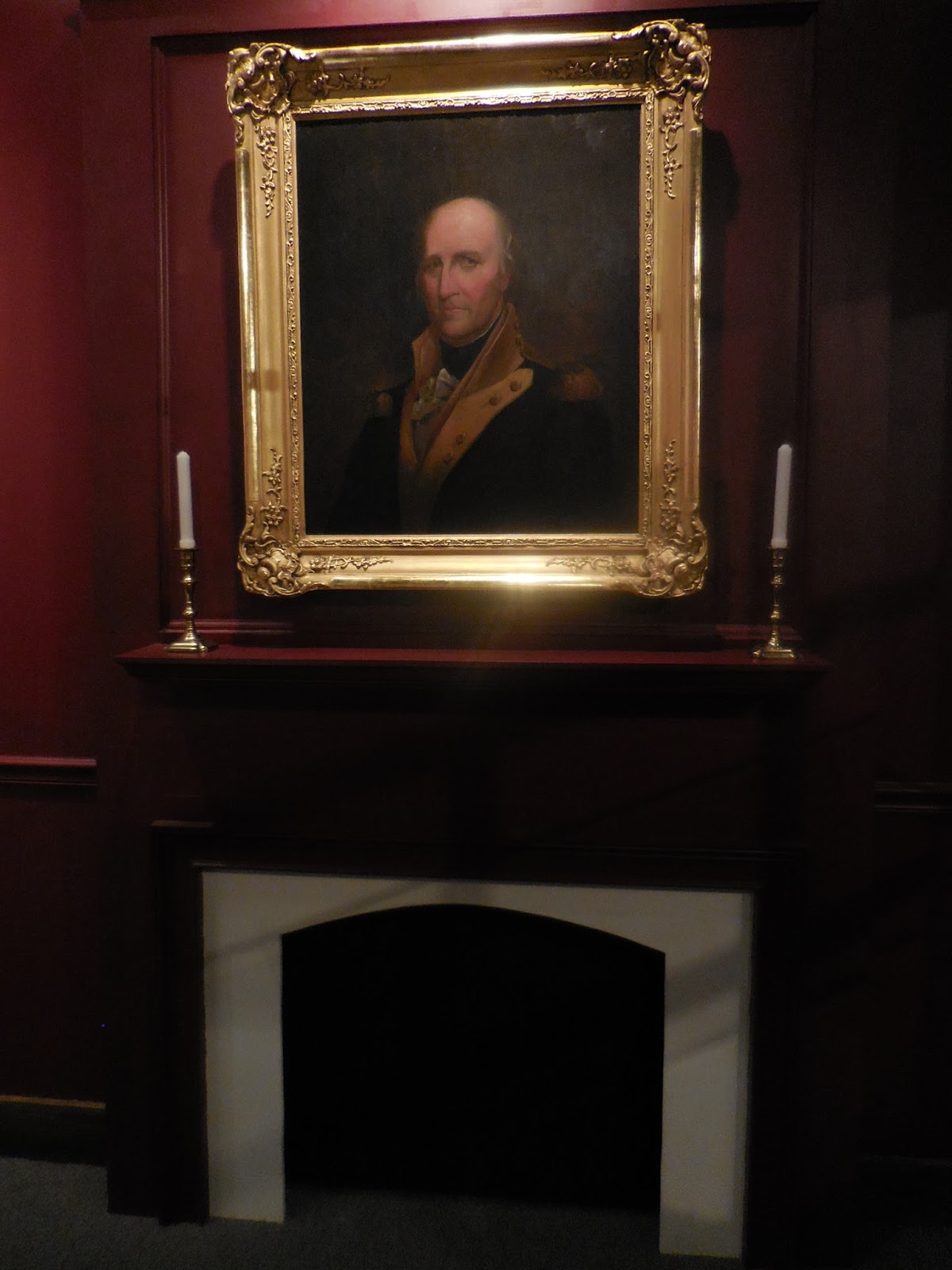
In the Museum, a portrait of General George Rogers Clark by Matthew Jouett, ca. 1825
Also in the Museum, a dollhouse model of the house
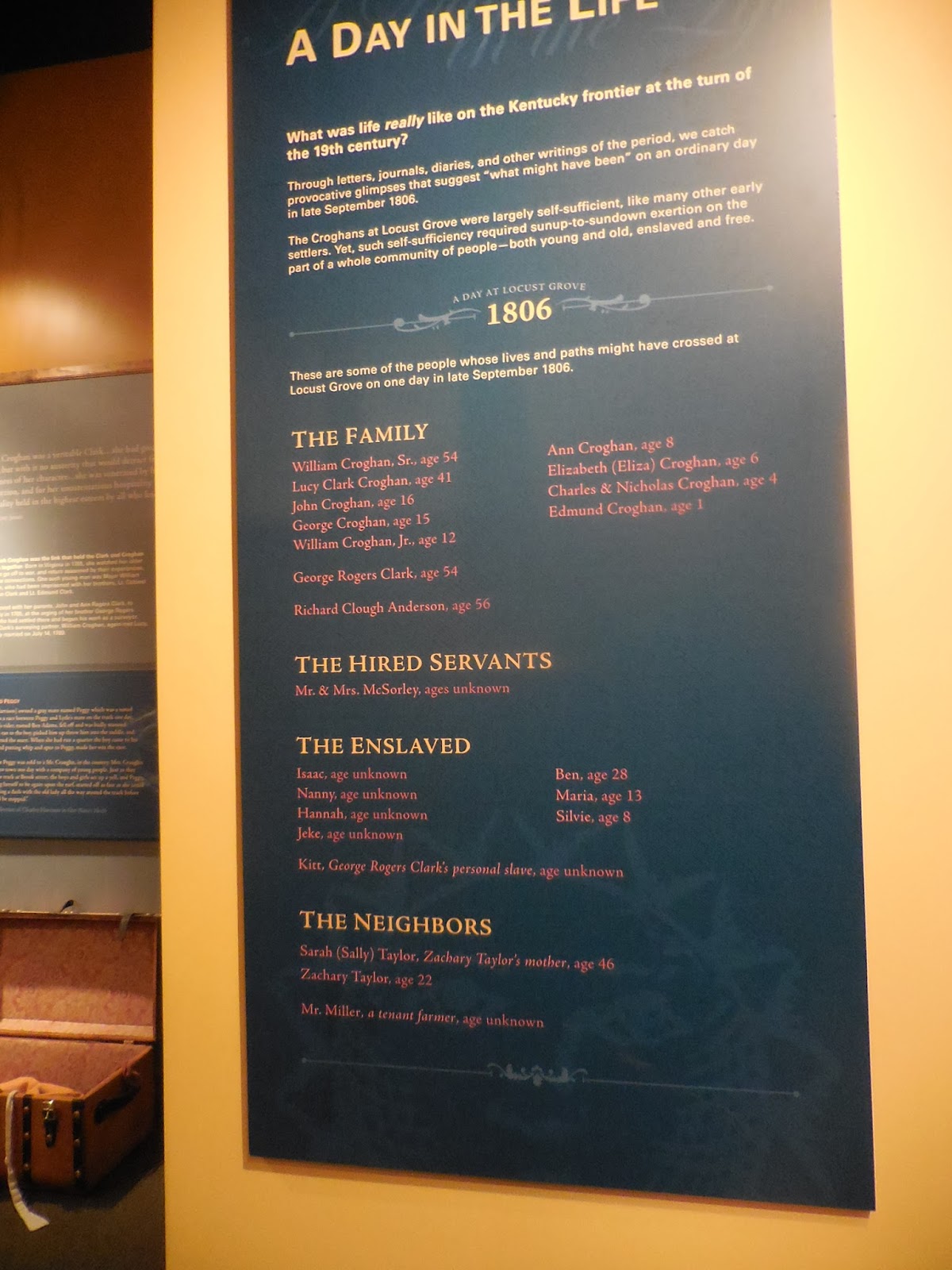
Text Panels n the Museum tell the story of the farm, the family, and early life in 18th century Kentucky, as well as the story of General Clark and William Clark, a cousin who explored to the Pacific with Meriwether Lewis in 1804-06.
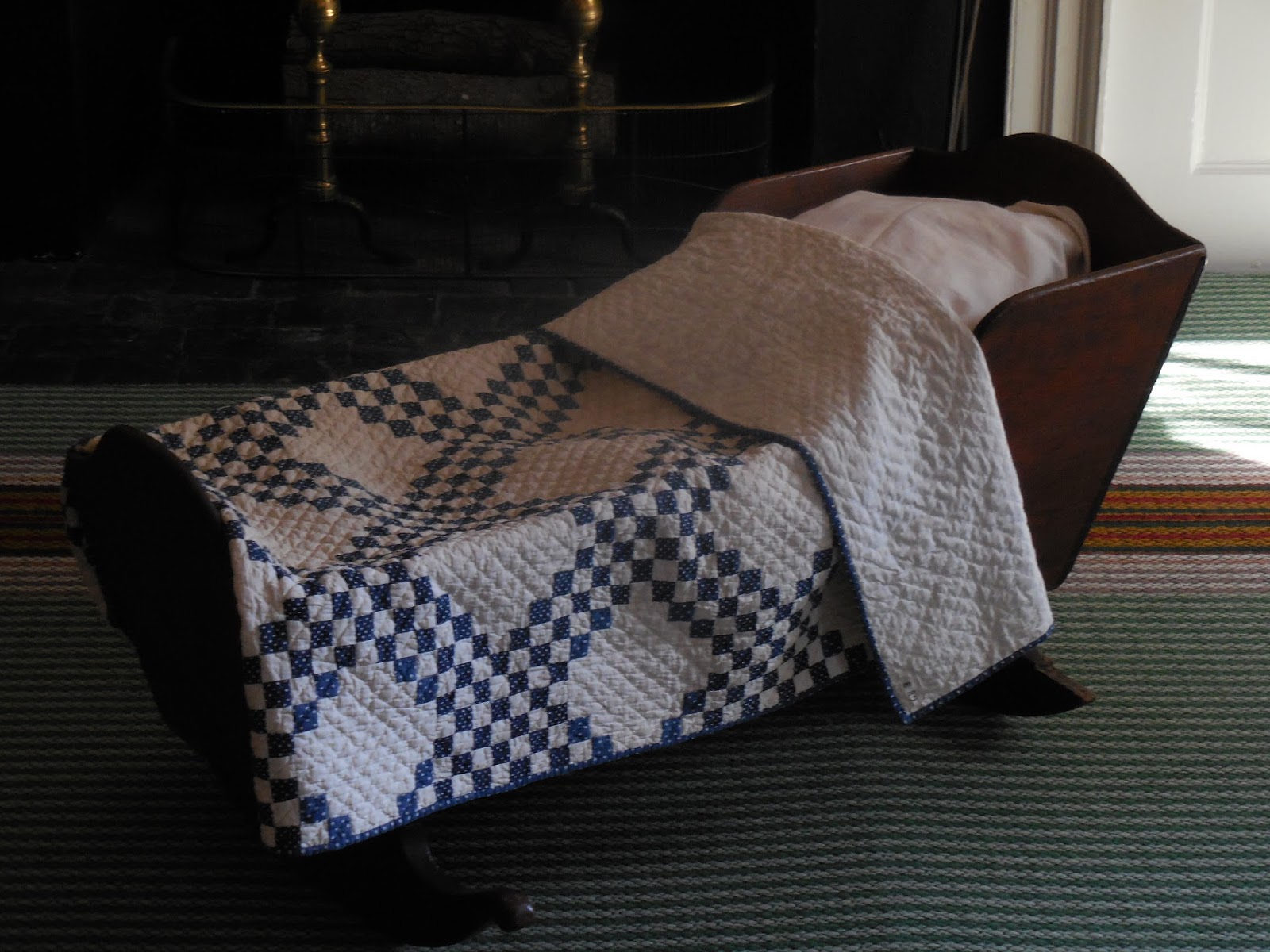
Family Quilt made for the museum
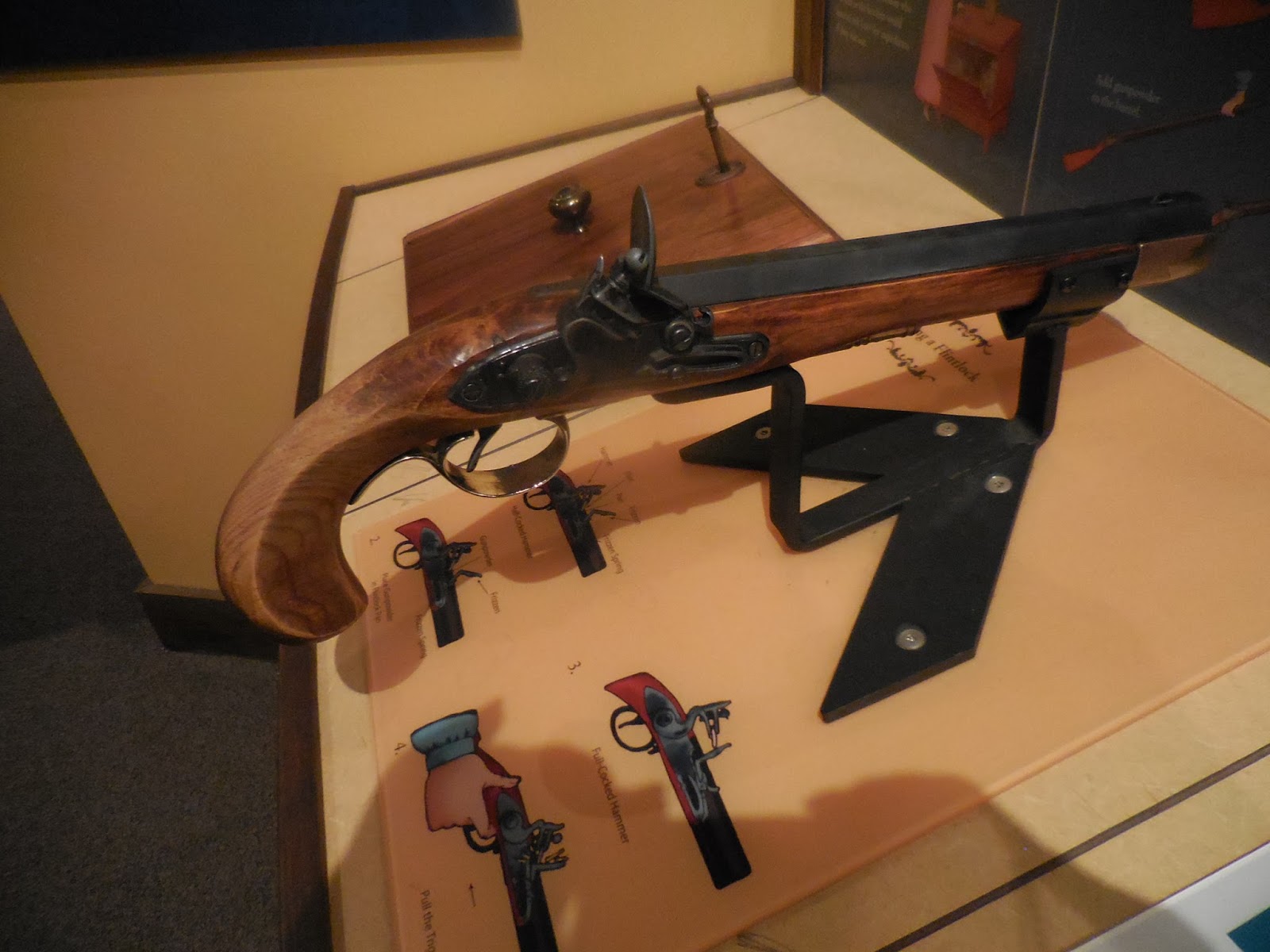
18th C. Pistol
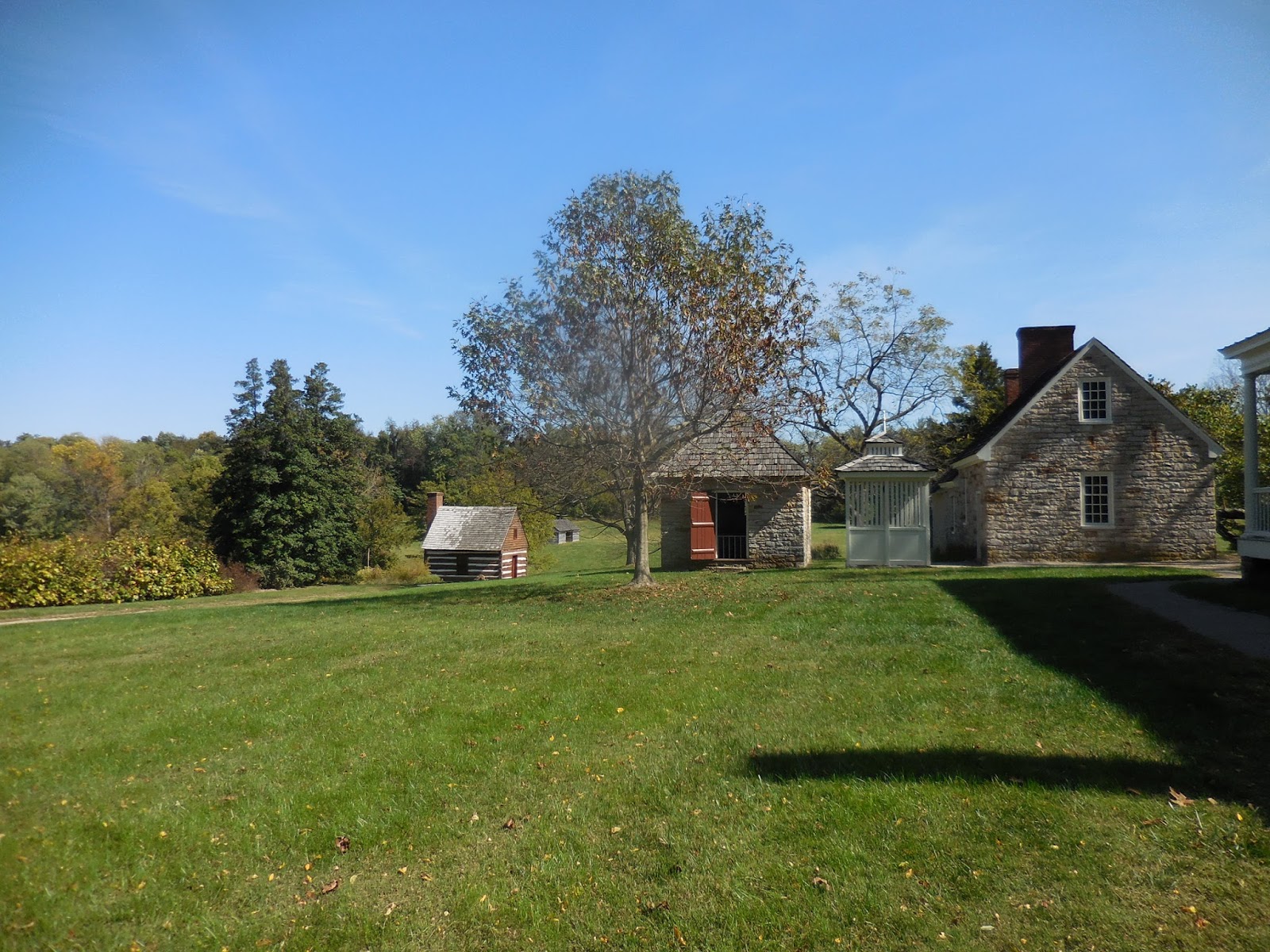
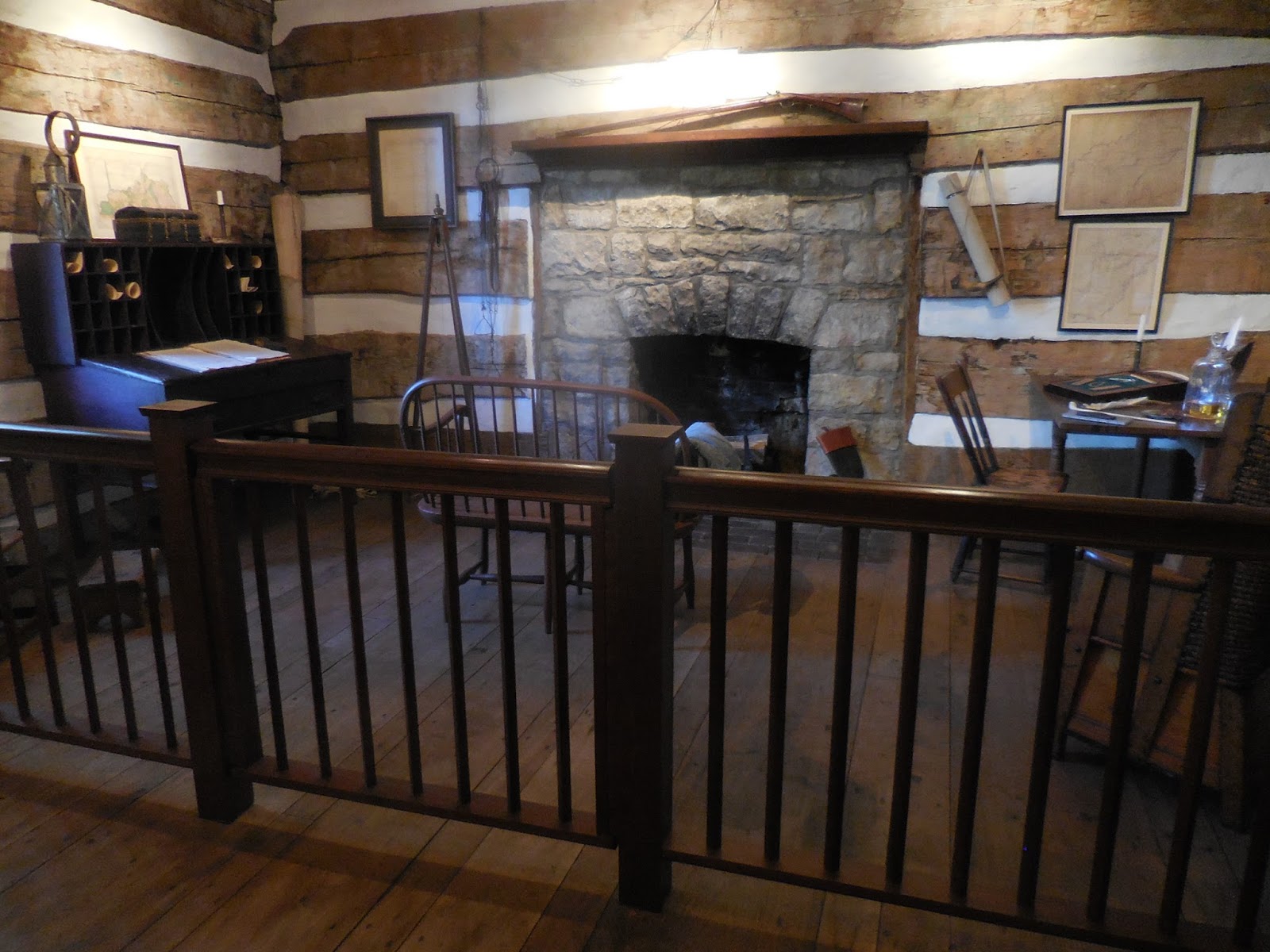
Approximation of an 18th C. Surveyor’s Cabin, such as William Groghan would have built on his property; remnants of such a building were discovered in the garden a few years ago.
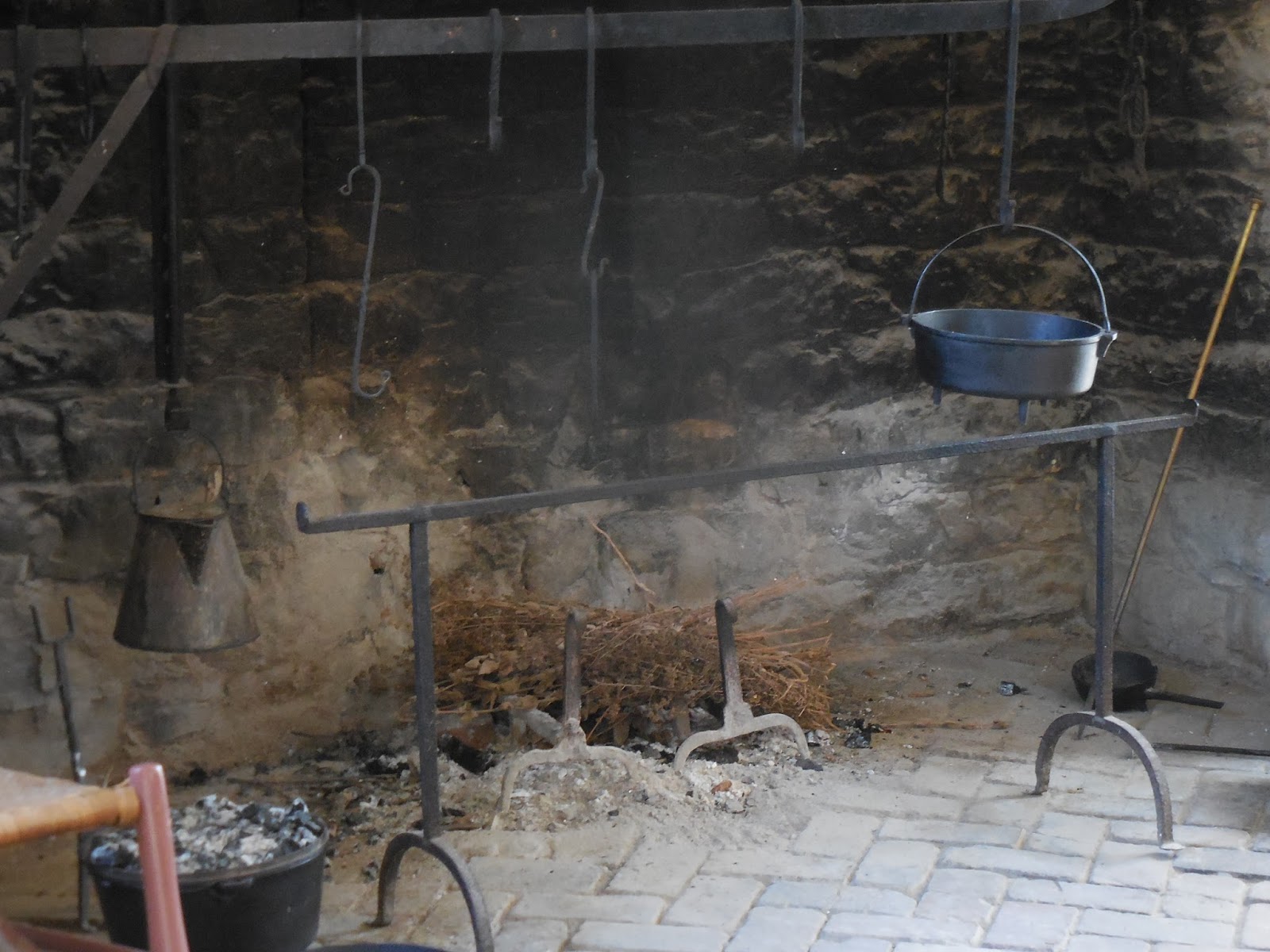
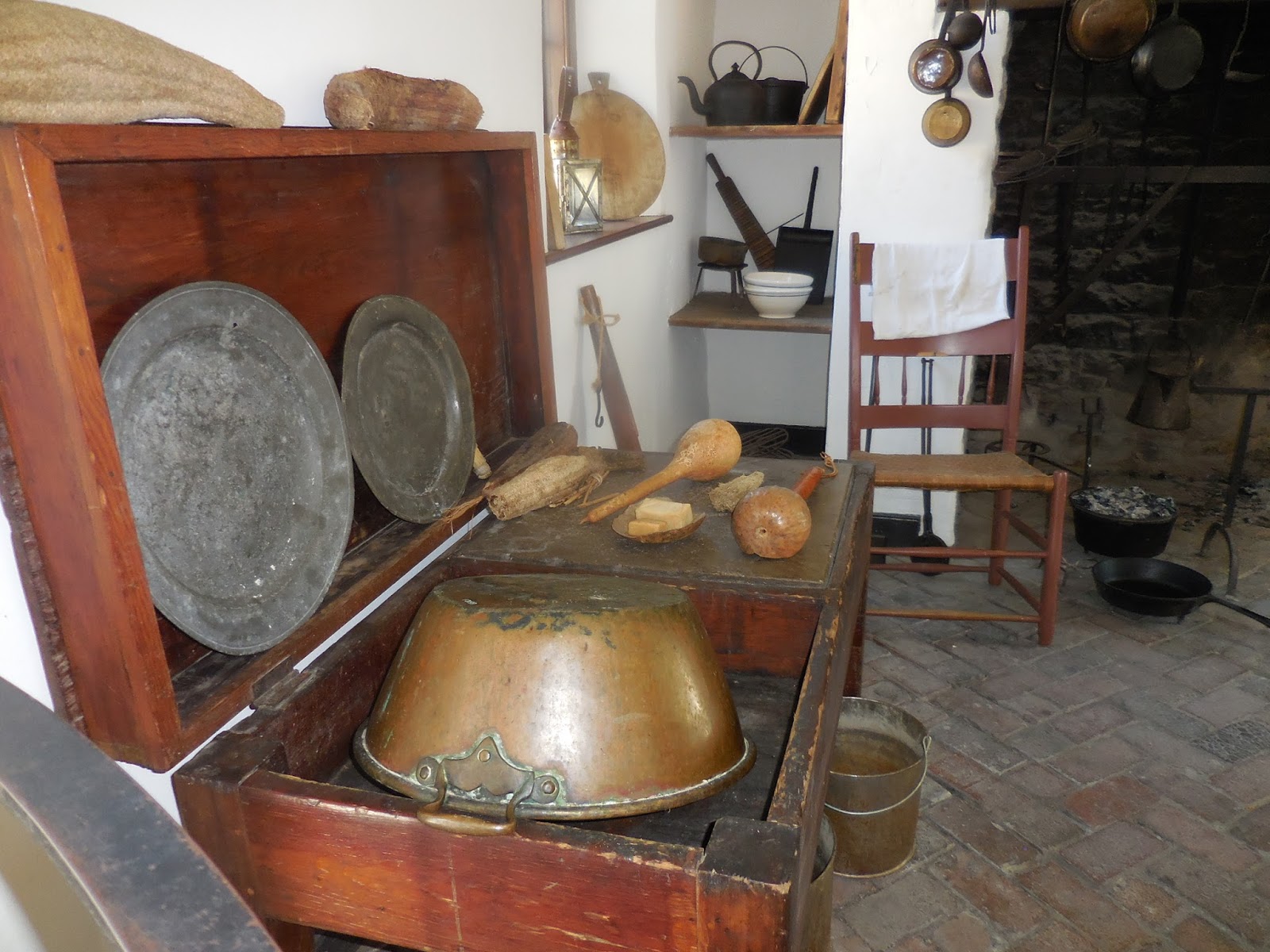
The kitchen is in a nearby outbuilding, as would have been usual in the 18th C.

Above and below, other views of the kitchen

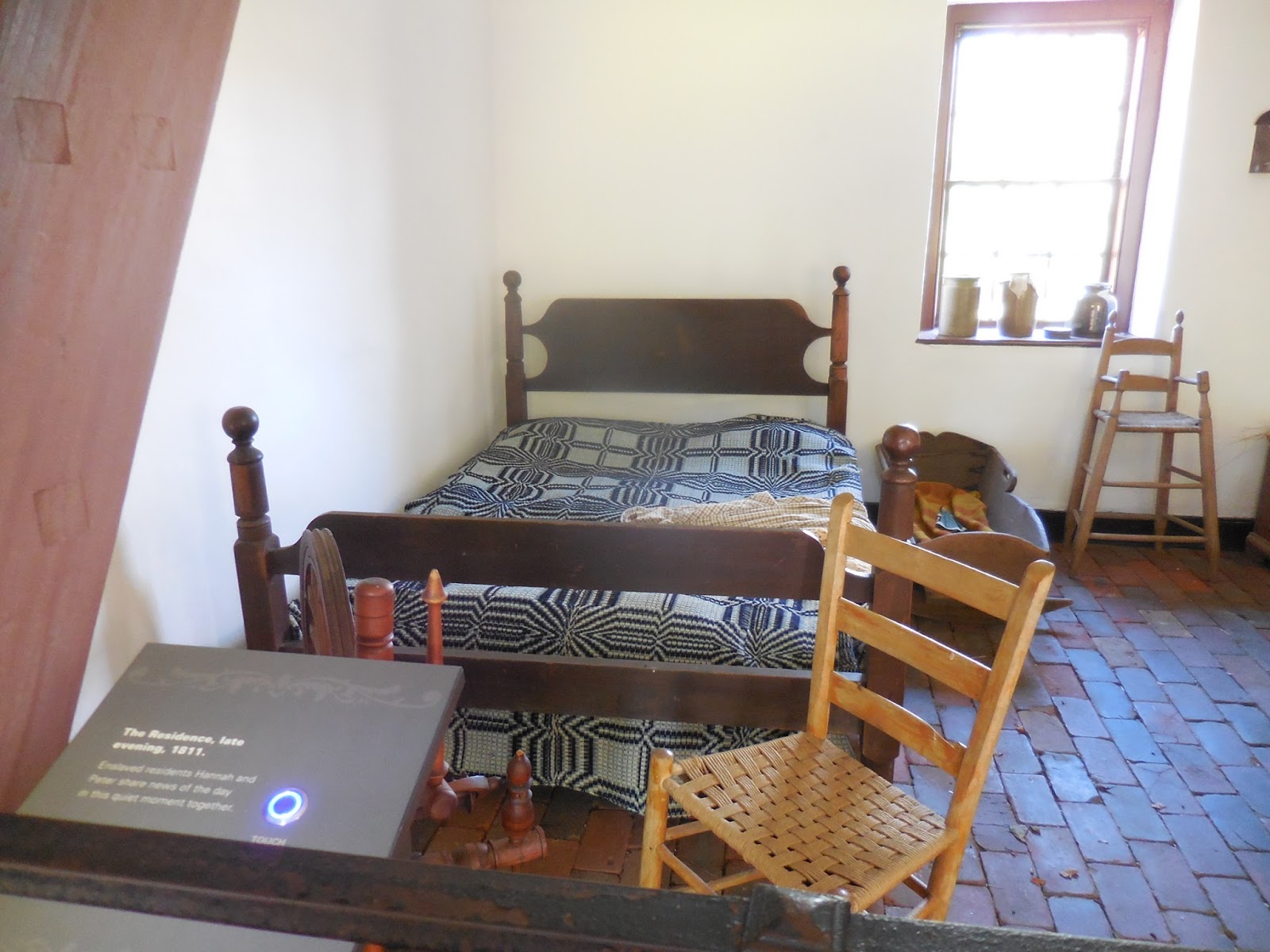
Adjacent to the kitchen is a room set up for a servant or a slave, above and below.

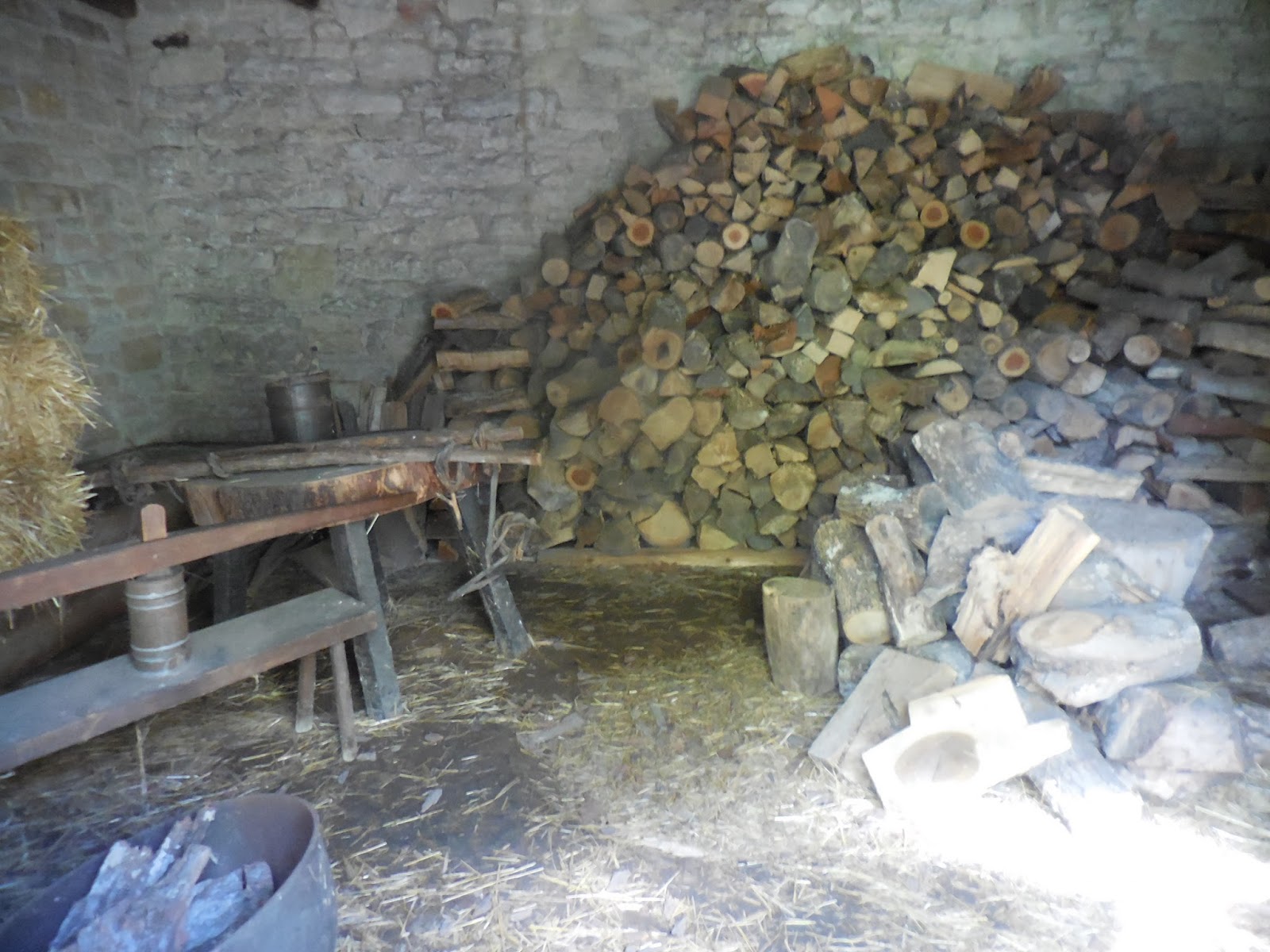
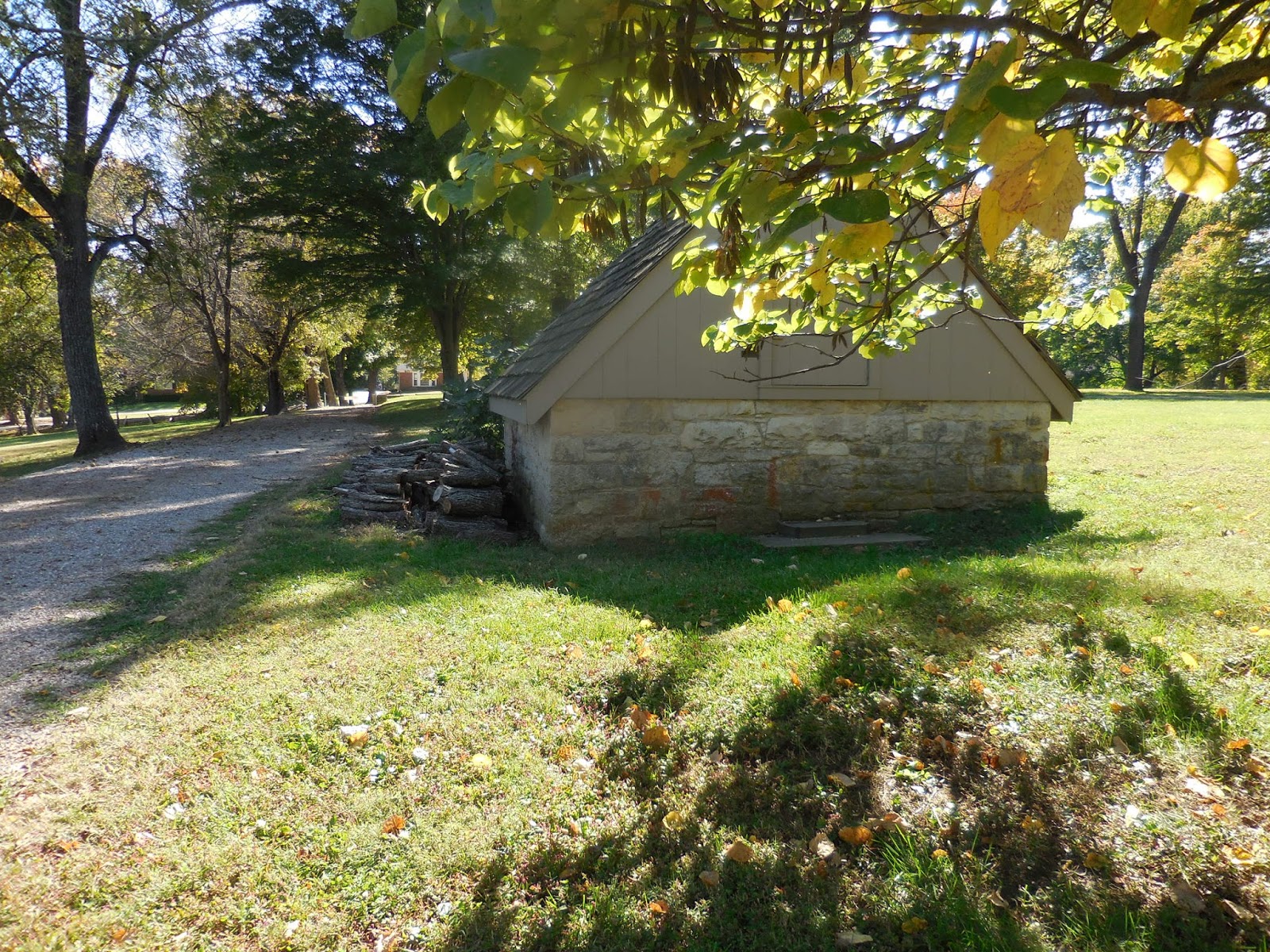
Wood storage 
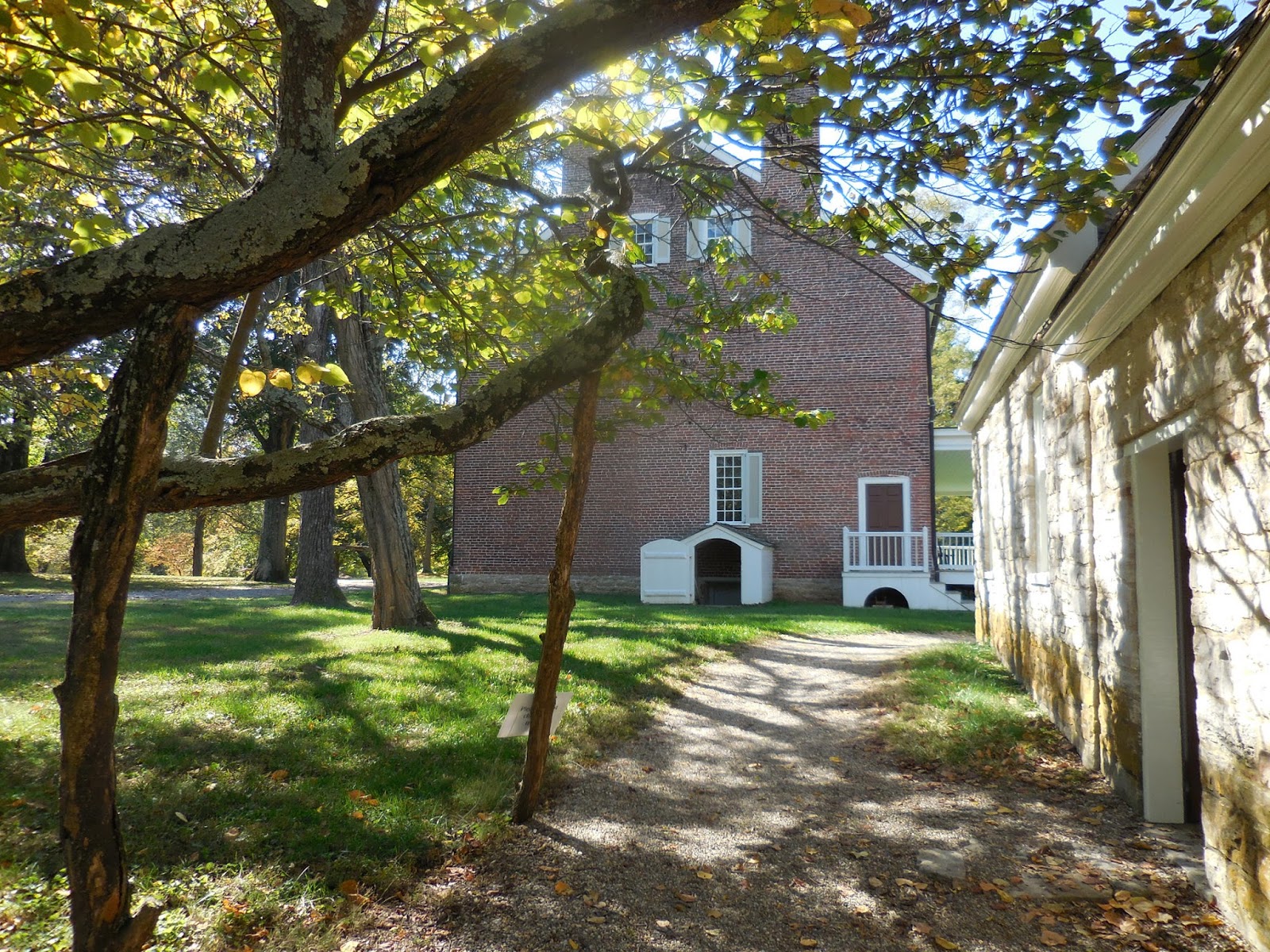
showing the outbuildings (right) and cellar door

Ice House
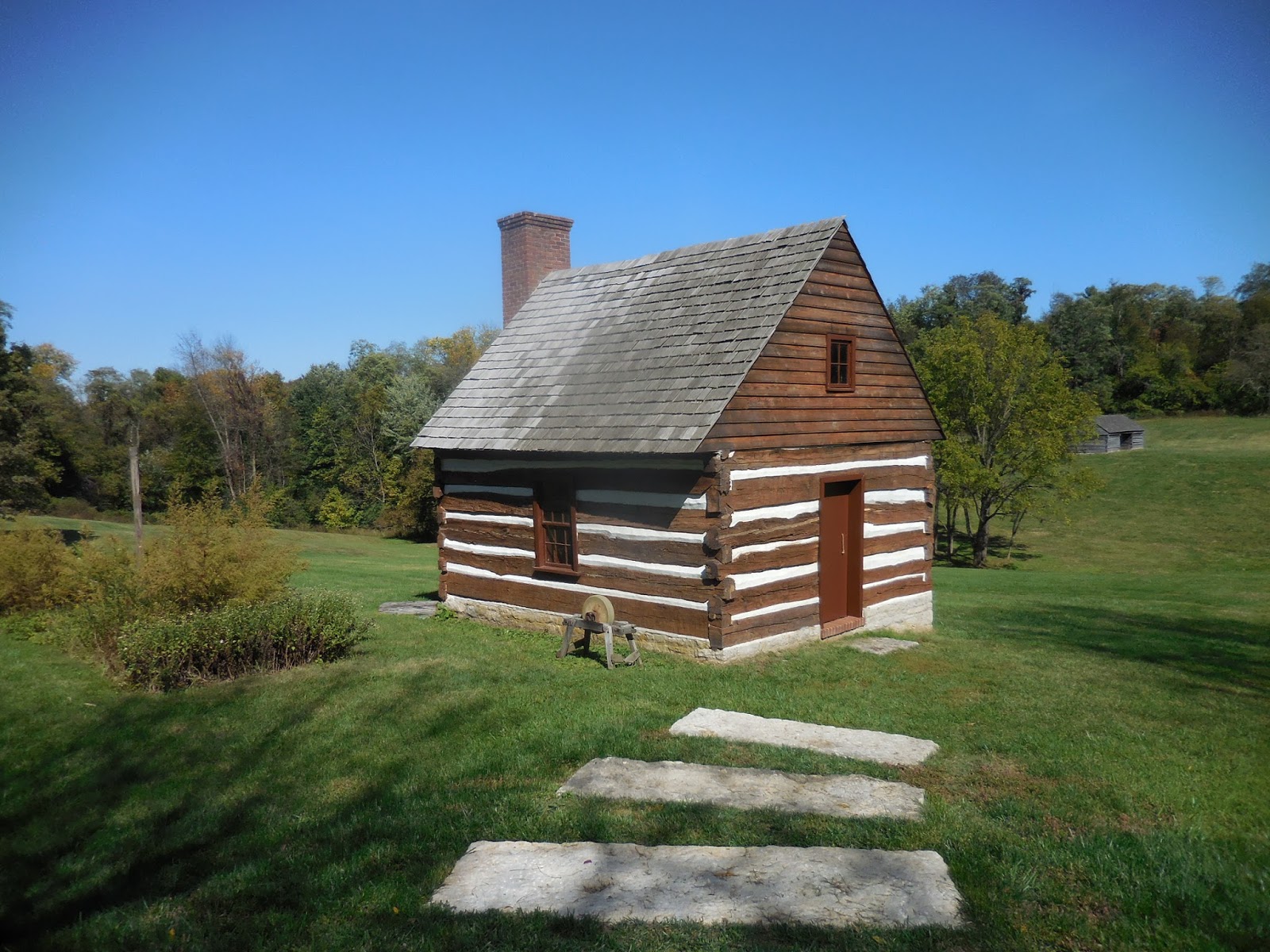
above and below, cabin built in 1815

Take a virtual tour of Locust Grove here.
To read about slave life at Locust Grove, click here.
Locust Grove is a National Historic Landmark, operated by a foundation for the City of Louisville.
If you can make it to Louisville, be sure to consult the on-line schedule of events, and visit when the place is teeming with reenactors, antique dealers and/or more tourists! 

ON THE SHELF: DO YOU GET BOOKS? PART TWO


I’m happy to report that the built-in bookshelves are done and painted and my library is back where it belongs. Although most books can now be found on the internet, I’m never parting with my core library, consisting primarily of books on London, Wellington, Brummell, period diaries and letters and Queen Victoria. For those of you who have expressed an interest in browsing my bookshelves, here’s a good representation of what they hold.