JANE AUSTEN'S BIRTHDAY CELEBRATION A LITTLE EARLY

JANE AUSTEN’S BIRTHDAY CELEBRATION A LITTLE EARLY…

Yes, JASNA-WI pushed ahead a month or so so that we could  hear the Jane Austen Society of North America’s President Claire Bellanti address us.  The weather cooperated and it was a sunny and warm day for our usually dreary November in Wisconsin. I guess Claire brought her California weather along for the trip.

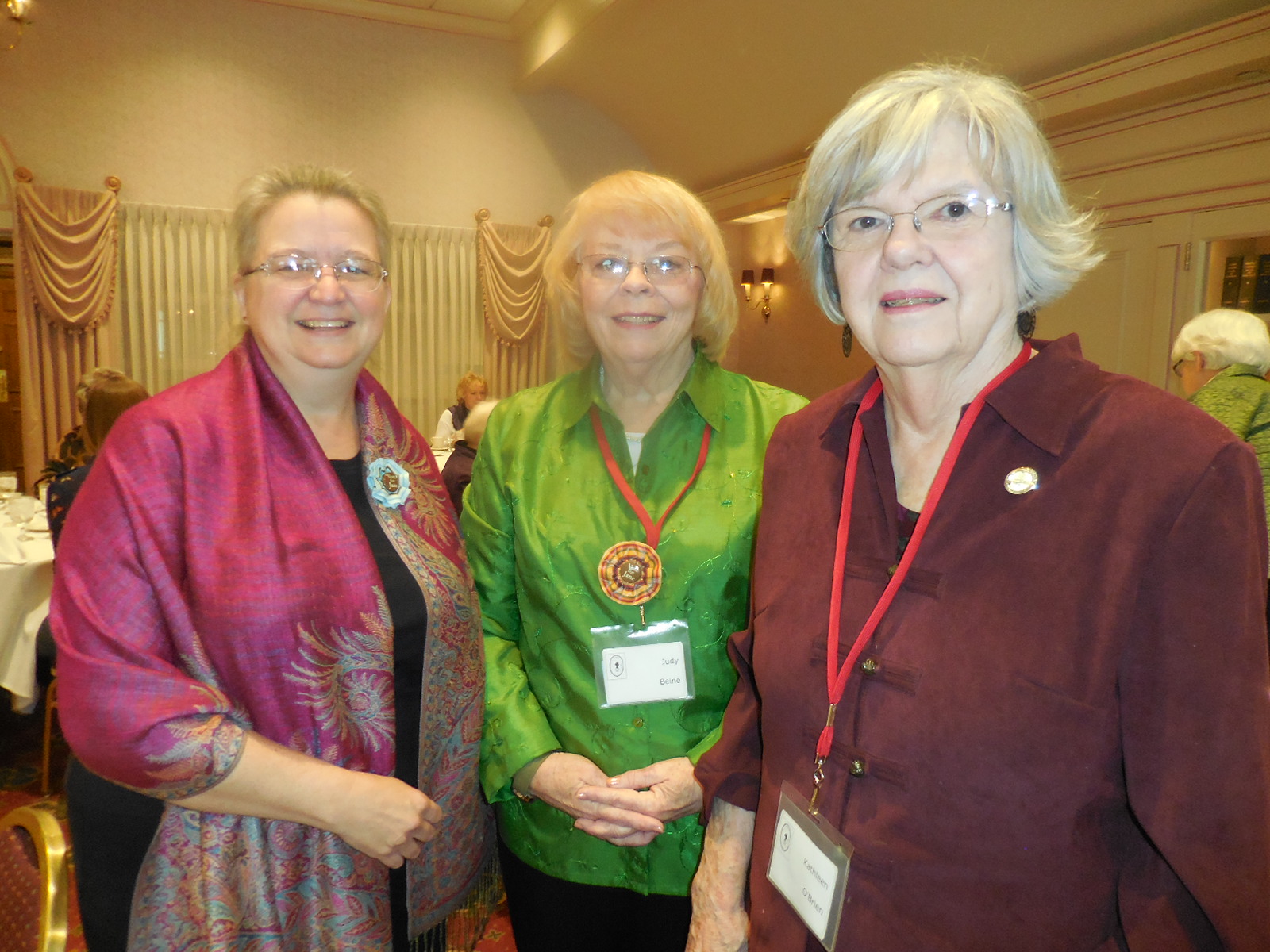
Jane Glaser, Liz Cooper, and Clair Bellanti chat before luncheon

Carolyn Hippert, Regional Coordinator Judith Beine, and Kathleen O’Brien
Beef Wellington is always a favorite
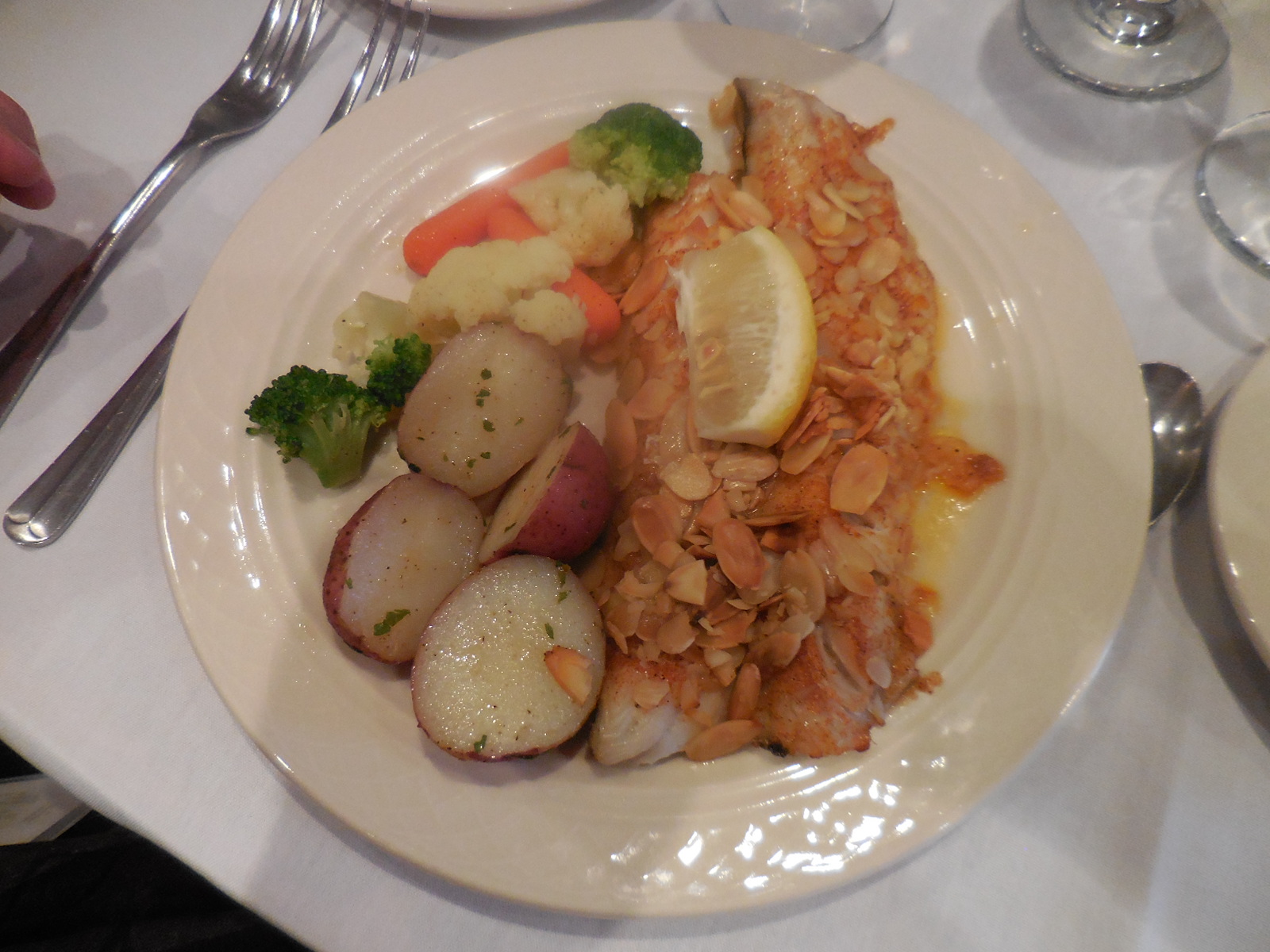
I opted for the Walleyed Pike and it was delicious
JASNA President Claire Bellanti shows off the cake for Jane’s 240th year
though her actual birthday is not until December 16
Judy Beine convenes our celebration
Liz Philosophos Cooper. JASNA Vice President for Regions
introduced our speaker 
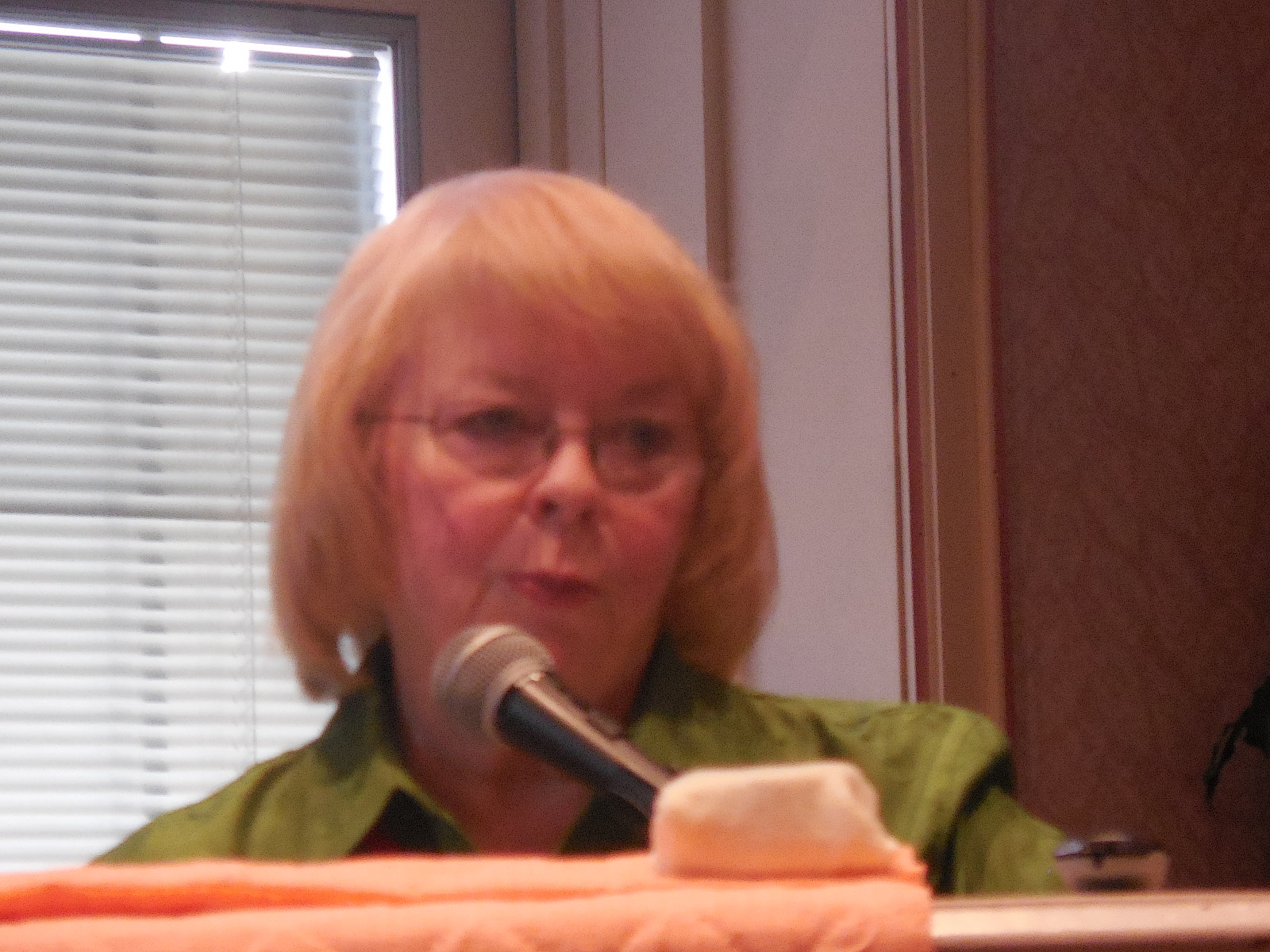
Claire Bellanti told us

“You Can Get a Parasol at Whitby’s”: Circulating Libraries in Jane Austen’s Time 

In her unfinished novel Sanditon, Jane Austen has her characters observe the many fine services offered at the local circulating library as indicative of the prospects for a happy future in the developing seaside resort. Jane and her sister Cassandra used circulating libraries, a major source of reading material for individuals of the late 18th and early 19th centuries. A fee was charged for subscriptions that could be by the year or for shorter periods of time. 
Hall’s Circulating Library, Margate

Ms. Bellanti discussed the forces that created the circulating libraries; of course there were no public libraries in Britain in those days. And the costs of paper, printing and binding were high. So the main impetus for the sharing of books was economic.  The costs of subscriptions varied widely but were probably no more than the price of one book. 
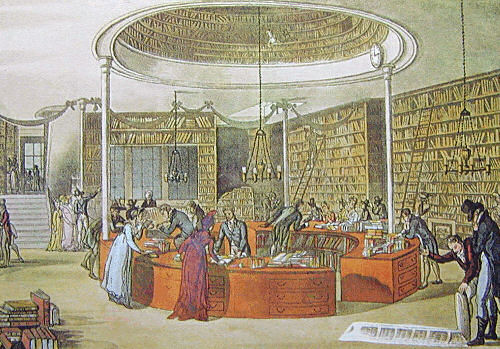
Temple of the Muses, Lackington Allen and Co., Finsbury Square, 1809

The above print from Ackermann’s Repository of Arts shows the premises of Lackington Allen and Company in the late 18th C. James Lackington’s bookshop was one of the illustrious sights of London. The sales and rental of books grew dramatically from the middle of the 18th century as the number of readers grew with the increase in literacy and the widespread use of whale oil lamps to provide evening light suitable for reading, a great improvement over candles.

A close look shows you Pride and Prejudice fifth from the bottom of this list.

Jane Austen’s family members were novel readers, but not all persons in the period admired novels in general and particularly the Gothic novels written by many women authors which were  very popular. As with today’s romance novels, many people look down their noses at the female-centered stories, grouping them all together. A  writer of historical romance myself, I must say such people are denying themselves a comforting form of varied entertainment…but that is another lecture for another day!


Ms. Bellanti distributed a list of library references found in Jane Austen’s six novels along with Sanditon, the unfinished work.  For Austen, the library was an essential of life, and so it was for her characters.

The Circulating Library in Scarborough, c.1818


In conclusion, Ms. Bellanti suggested that in moving her publication to John Murray in 1816, Jane Austen and Henry Austen may have ensured that her novels were taken seriously, for Murray was a serious and distinguished publisher of fine works of both fiction and nonfiction.
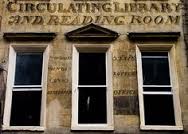
Image from Milsom Street, Bath


In honor of the topic of the day, libraries, Susan Flaherty created favors for all with illustrations from Austen;s novels and a “gone but not forgotten” checkout card we all loved to see again.
Great idea, Susan.


Thank you Claire Bellanti, President of JASNA, for taking the time to share our celebration of our favorite author’s 240th birthday.

Clair Bellantil JASNA President


GEORGIAN ART AT THE CINCINNATI ART MUSEUM

GEORGIAN ART AT THE CINCINNATI ART MUSEUM

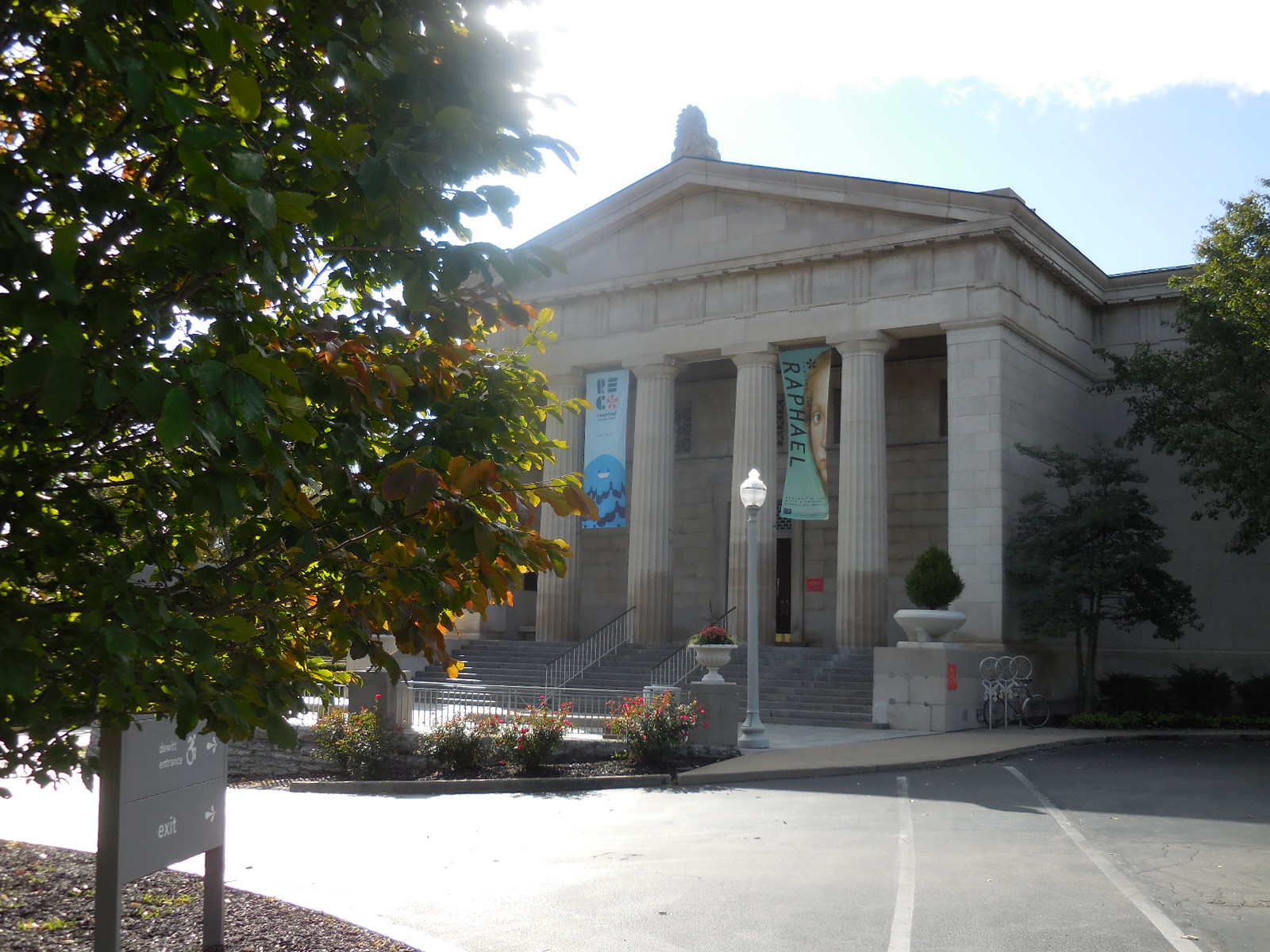
Victoria here. Following the meeting of the Jane Austen Society of North America in Louisville, Ed and I spent a day at the Kentucky Horse Park in Lexington, then drove to Cincinnati. The art museum was a goal of mine for a long time, since they had a fine exhibit of Gainsborough portraits in 2010 that I could not travel to see.  So the next day, I decided to take a look!
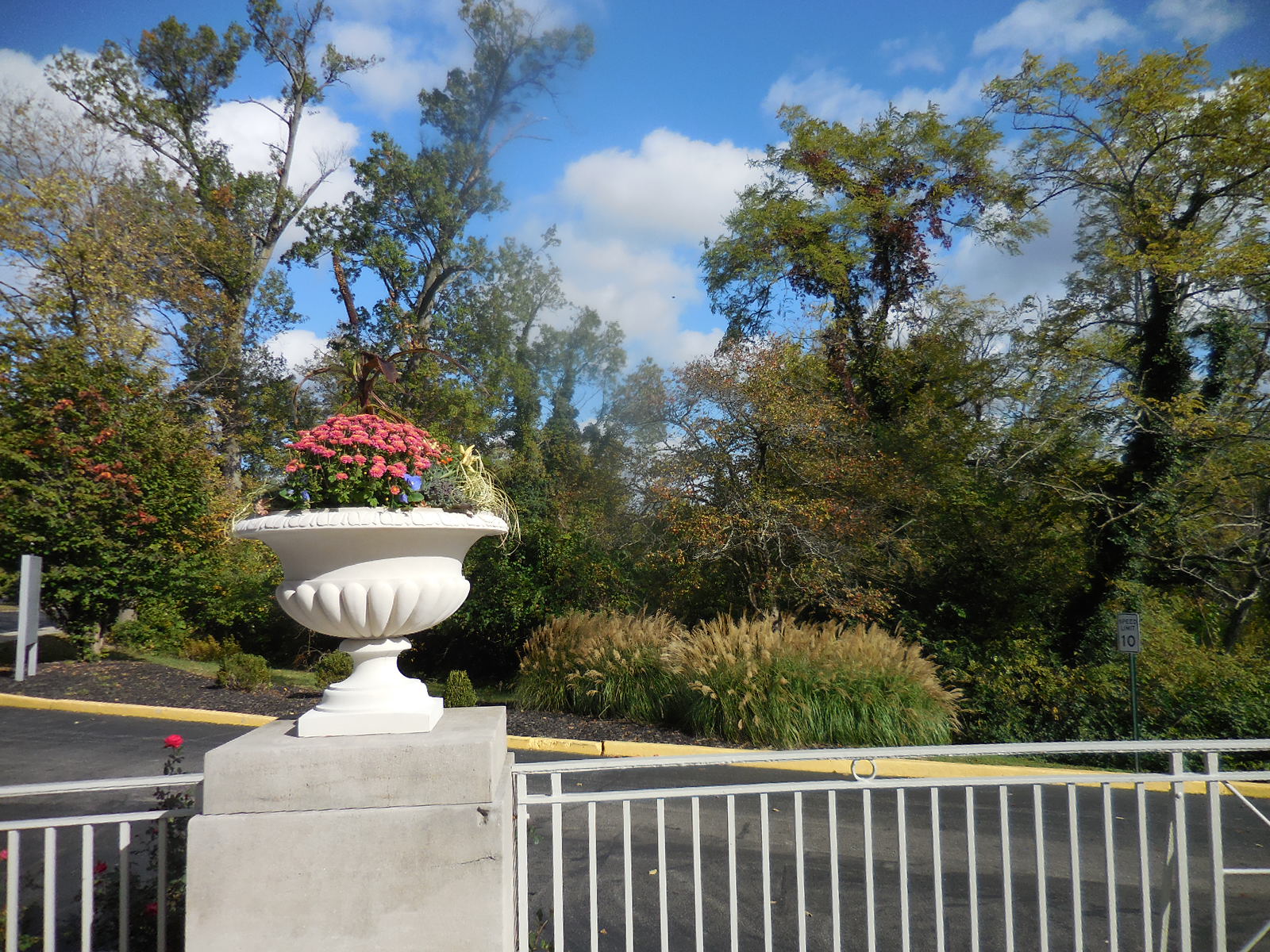
Perfect weather

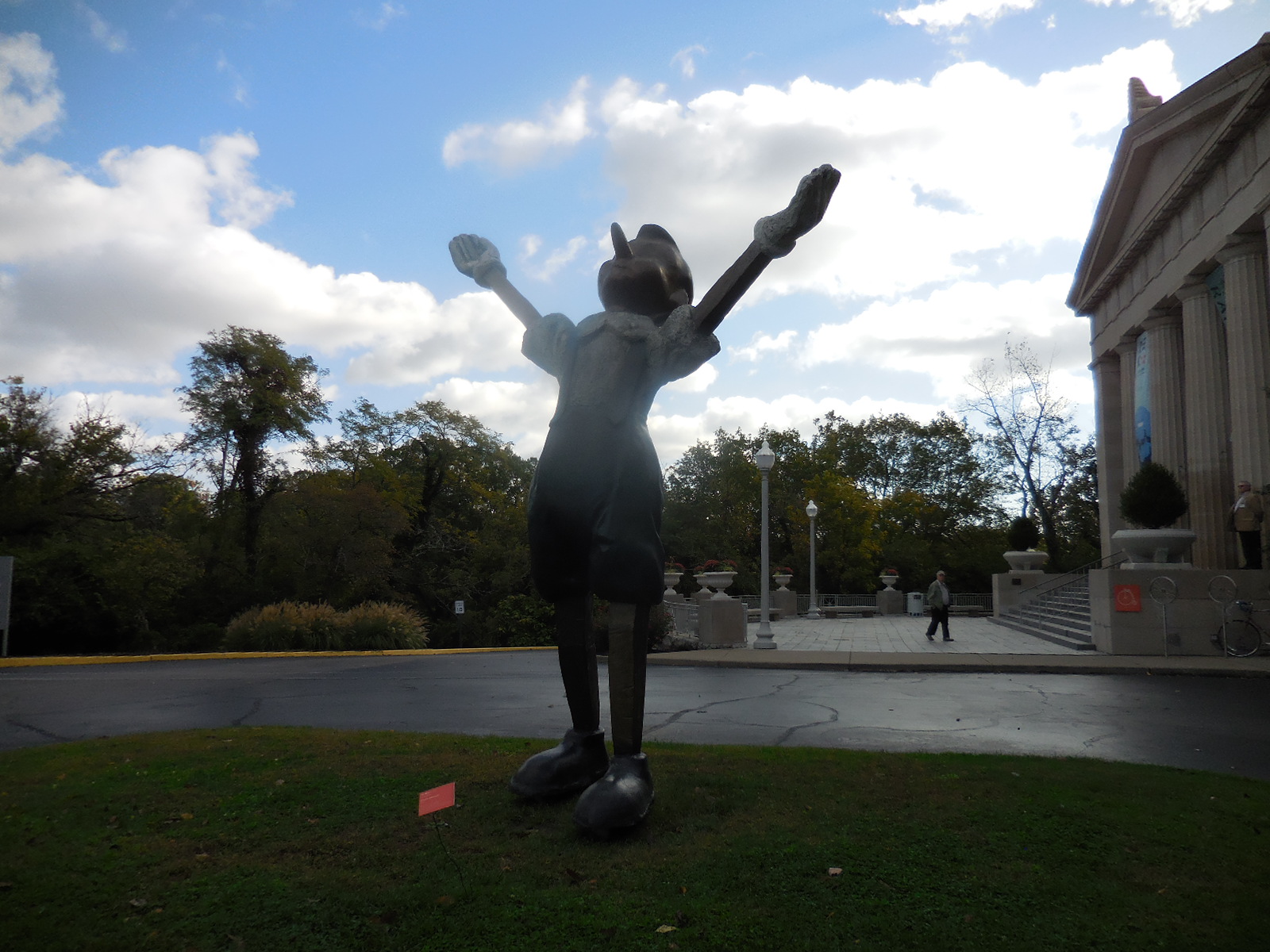
Not exactly Gainsborough — but Jim Dine’s Pinocchio from 2007.
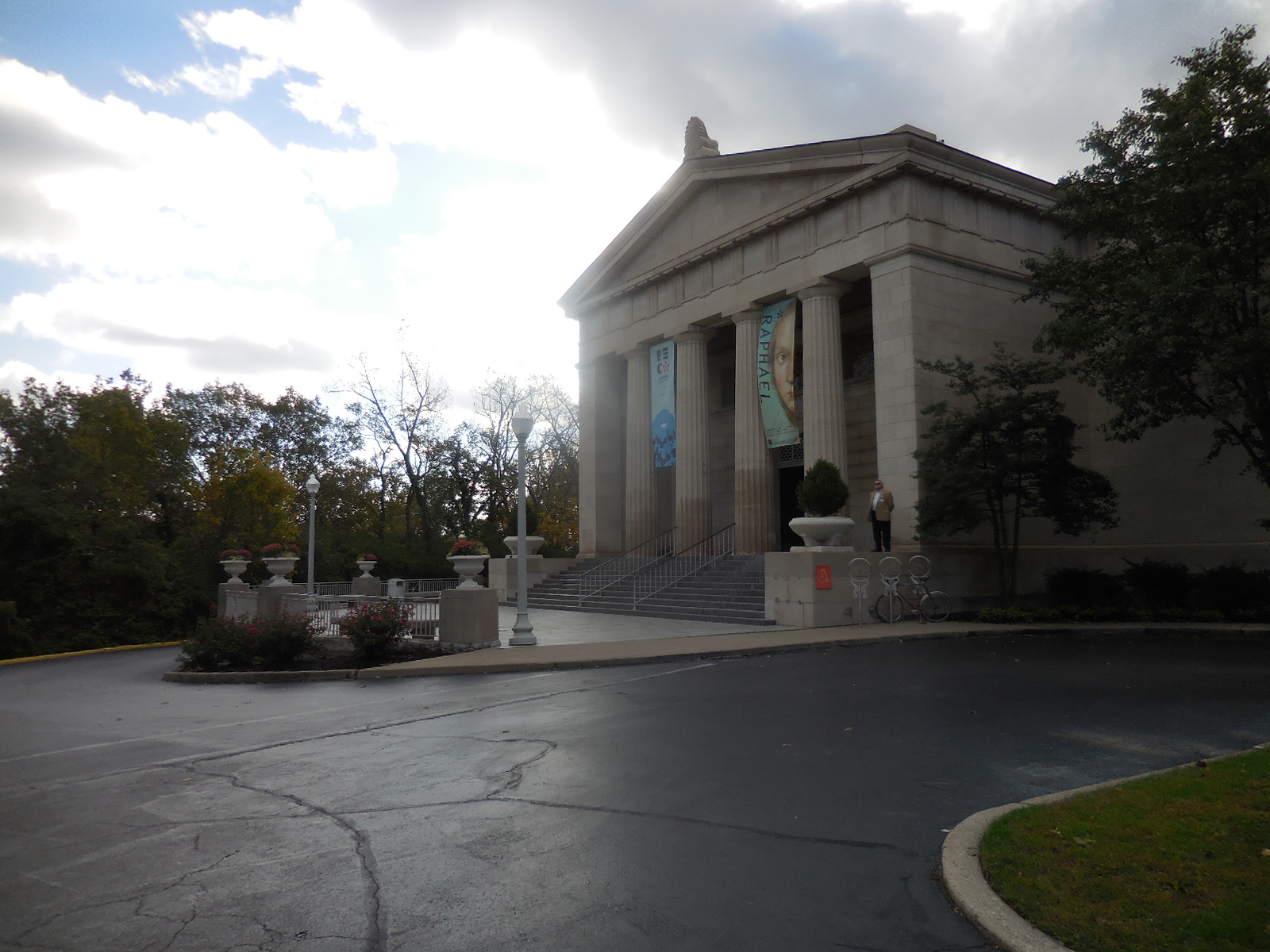
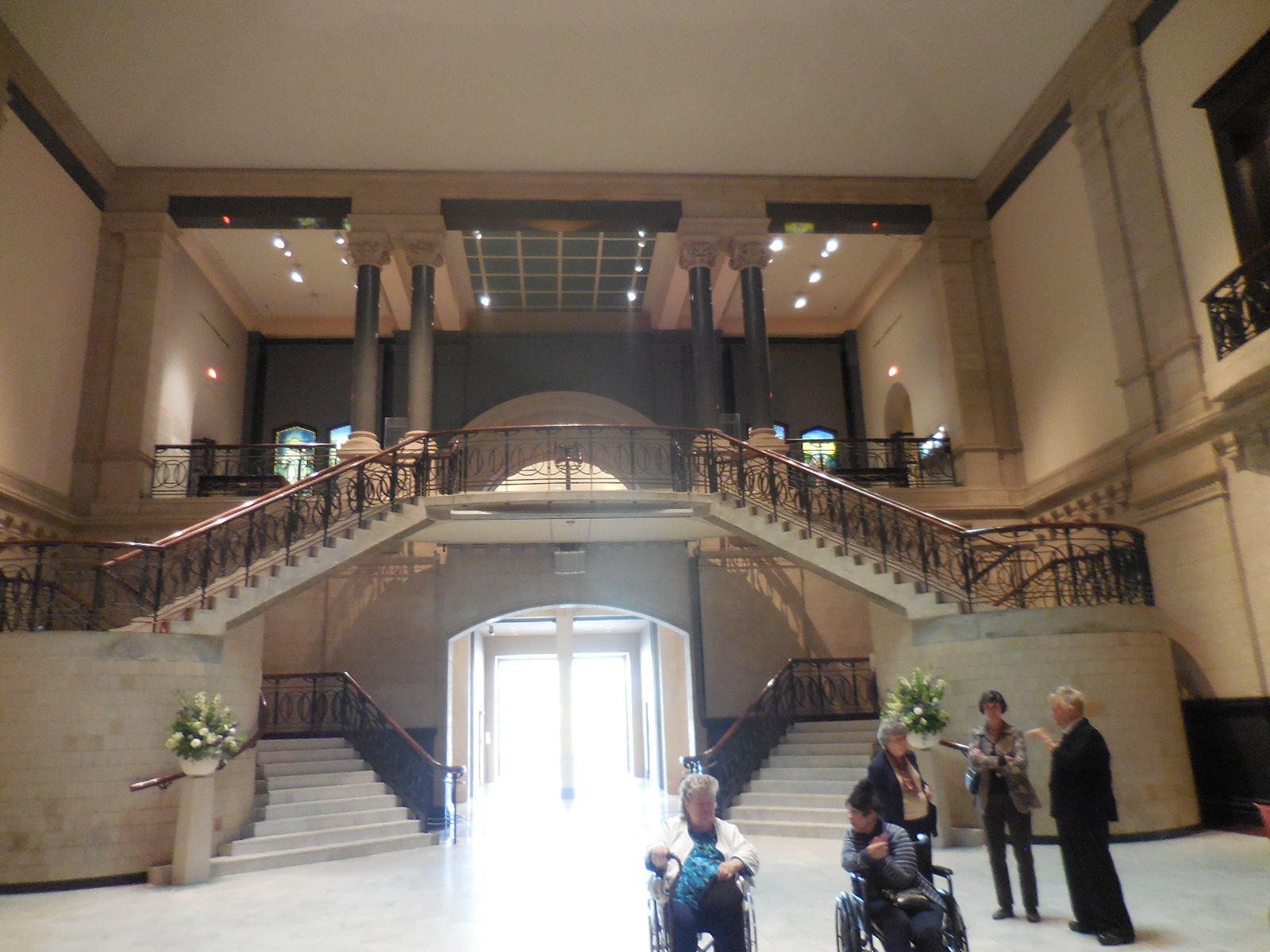
The museum, now greatly expanded, opened in 1886 in Eden Park


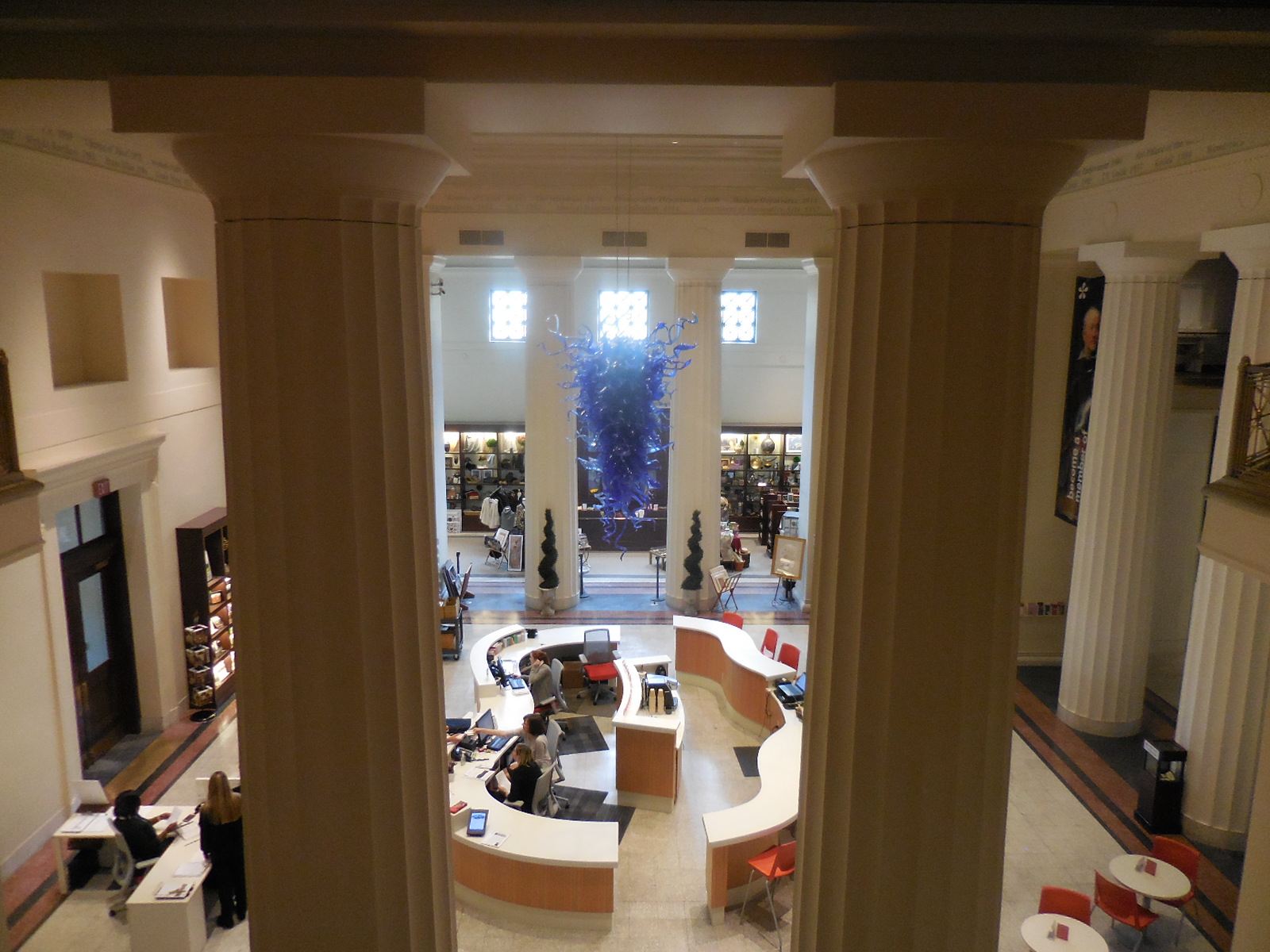
The entrance from above

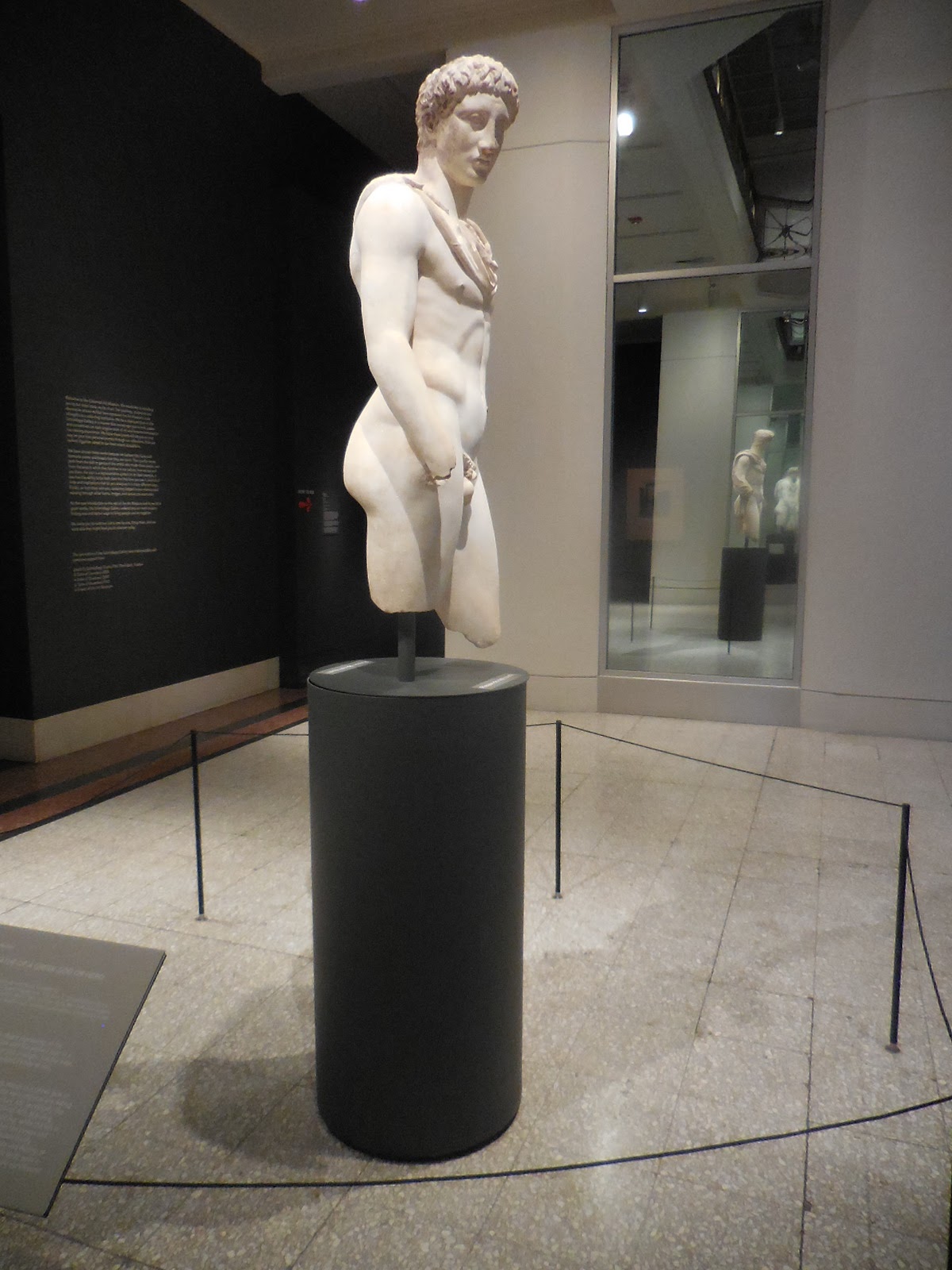
Inside, a statue of a Greek God or Hero, 1st century A.D.

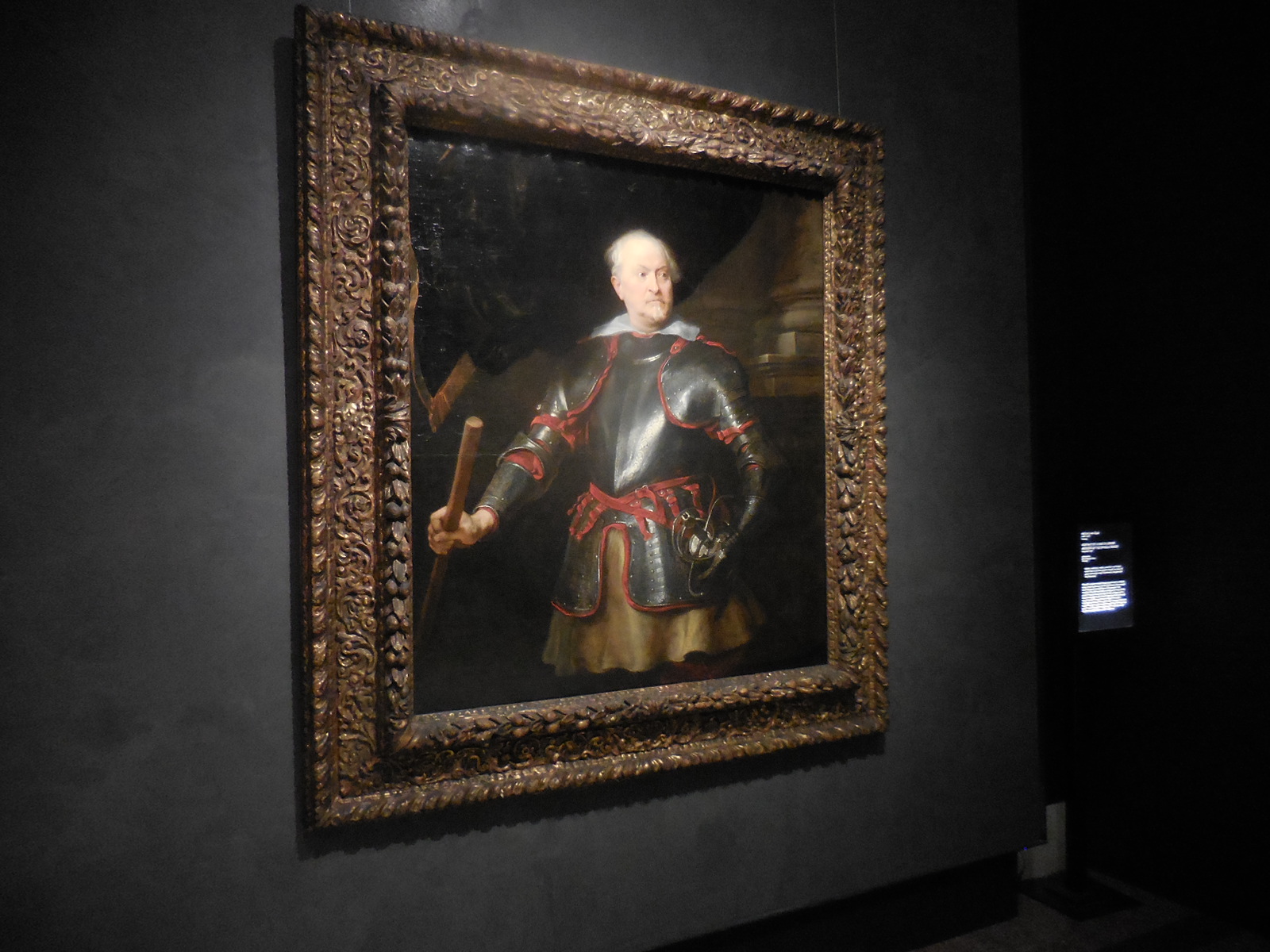
Anthony Van Dyck, Portrait of a Man in Armor, c. 1621-27

At last, a Gainsborough!
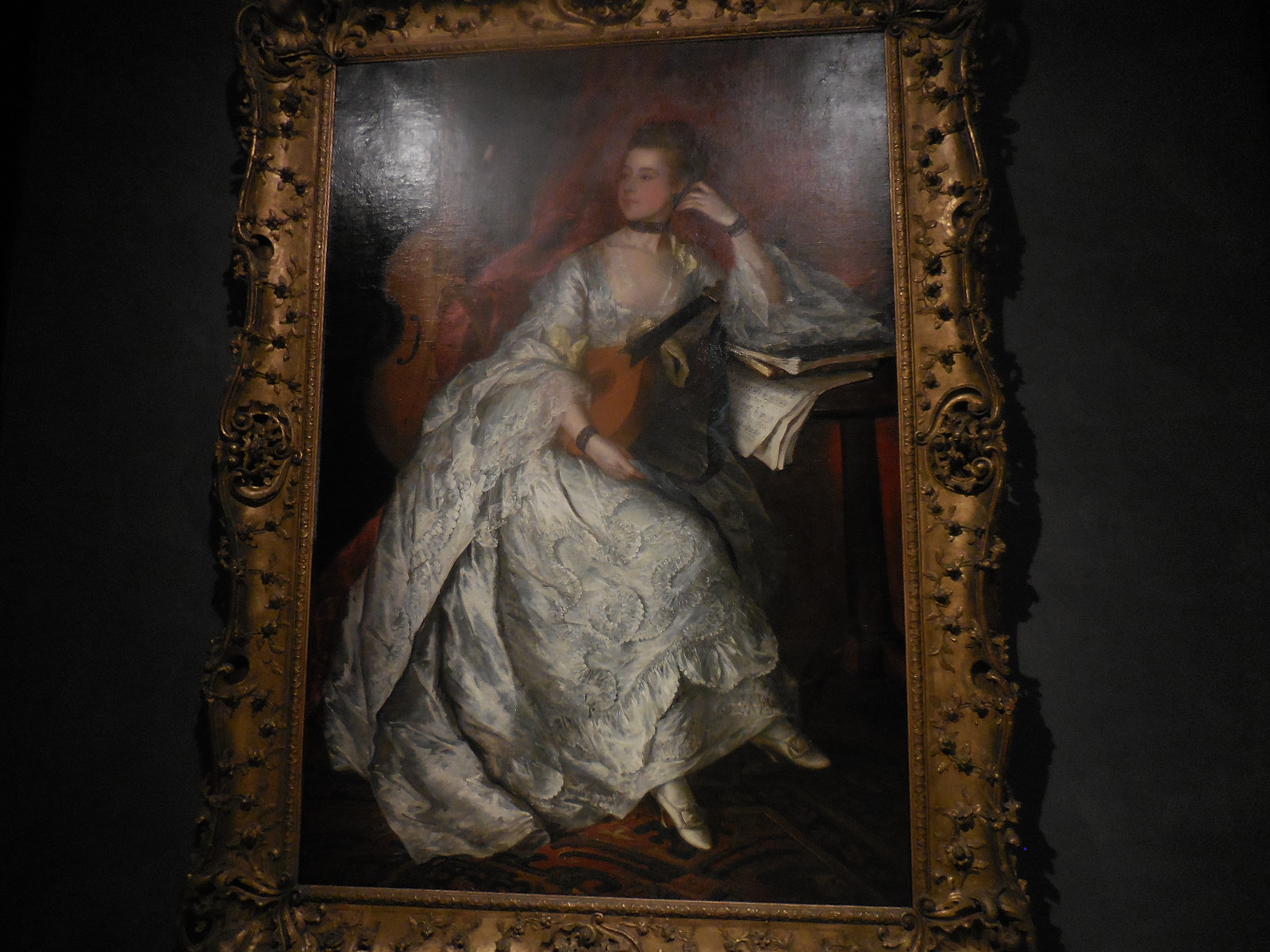
Ann  Ford, later Mrs. Philip Thicknesse, 1760
From the text panel: “Thomas Gainsborough, feminist. Conspiring with fashionable ladies of artistic talent, the artist’s unconventional portraits of elegant ladies helped to shape the image of the modern woman…The sitter’s crossed legs and fashionable dress display a loose style of applying paint that was in opposition to conventional standards of decorum and dress.”
Below, the unreflected image from Wikimedia Commons:

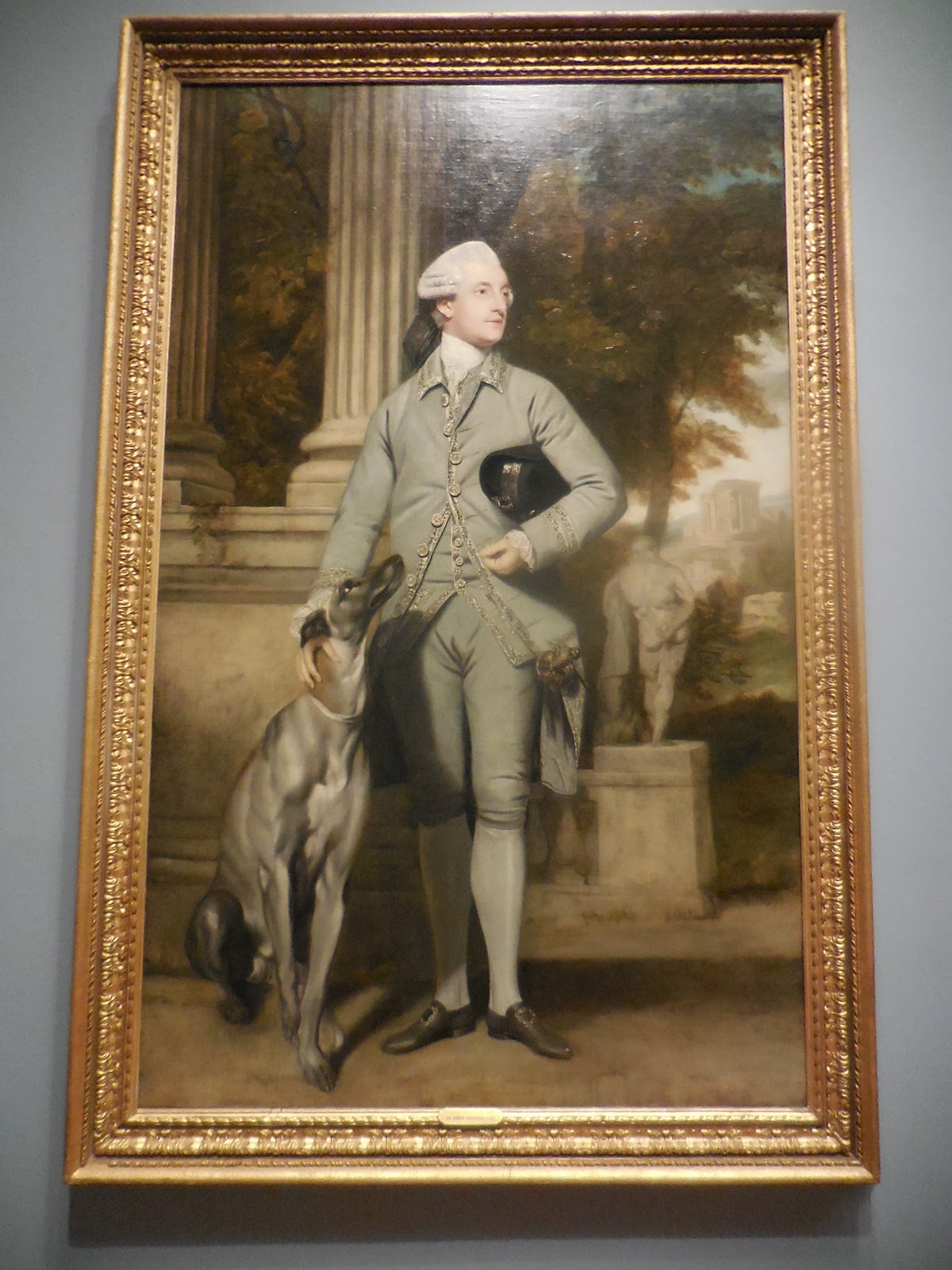
Sir Joshua Reynolds, Richard Peers Symons,M.P. (later Baronet) 1770-71
William Hogarth, Southwark Fair, 7133

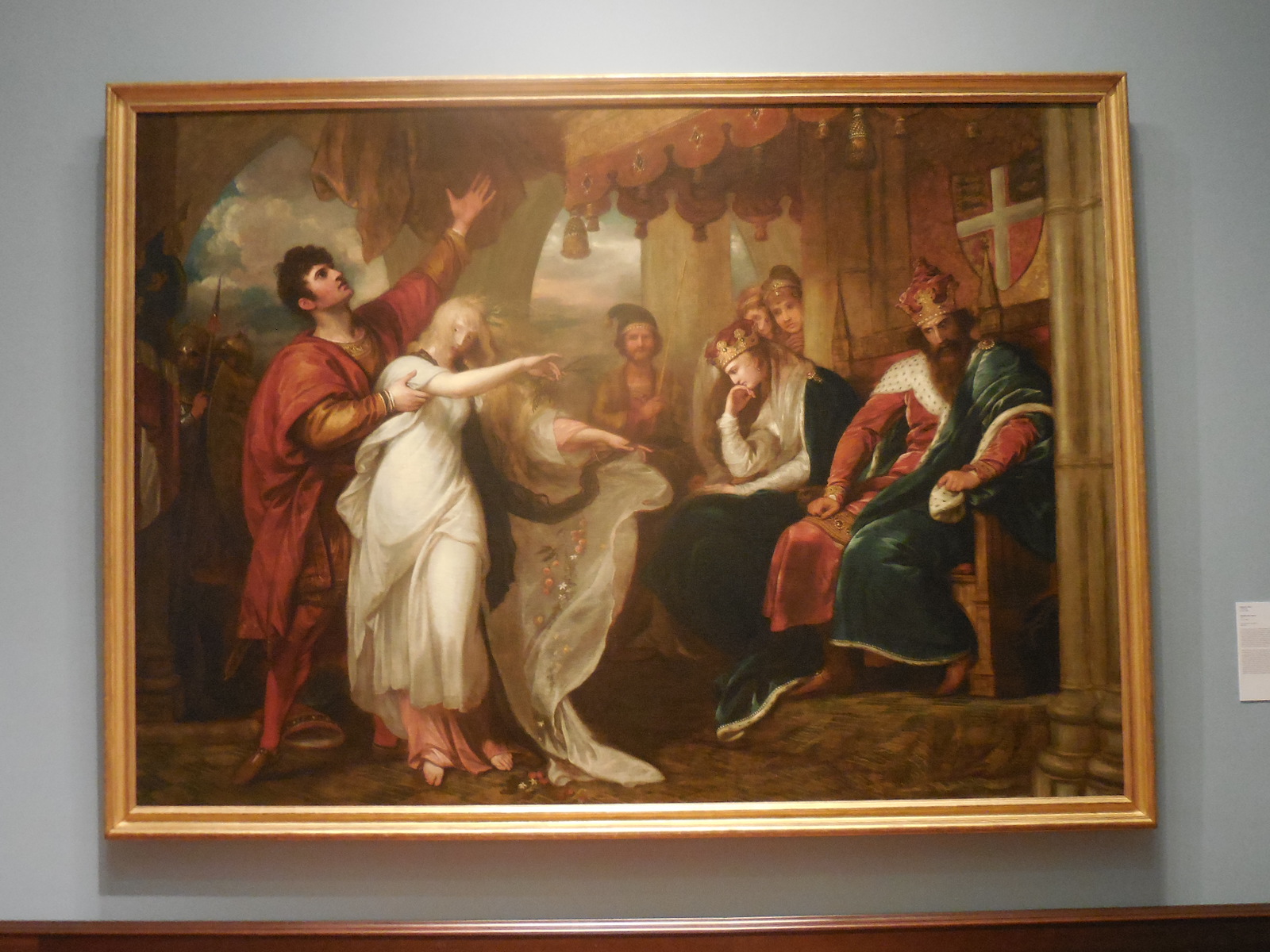
Benjamin West, Ophelia and Laertes, 1792
From the text panel: “West’s monumental painting was part of an ambitious plan to mount a permanent exhibit in a London Gallery of paintings depicting all of Shakespeare’s plays. The project failed, however, and the paintings were dispersed. …Oral tradition maintains that the painting was brought down the Ohio River on a flatboat. One of the first paintings to enter the Cincinnati Art Museum…”
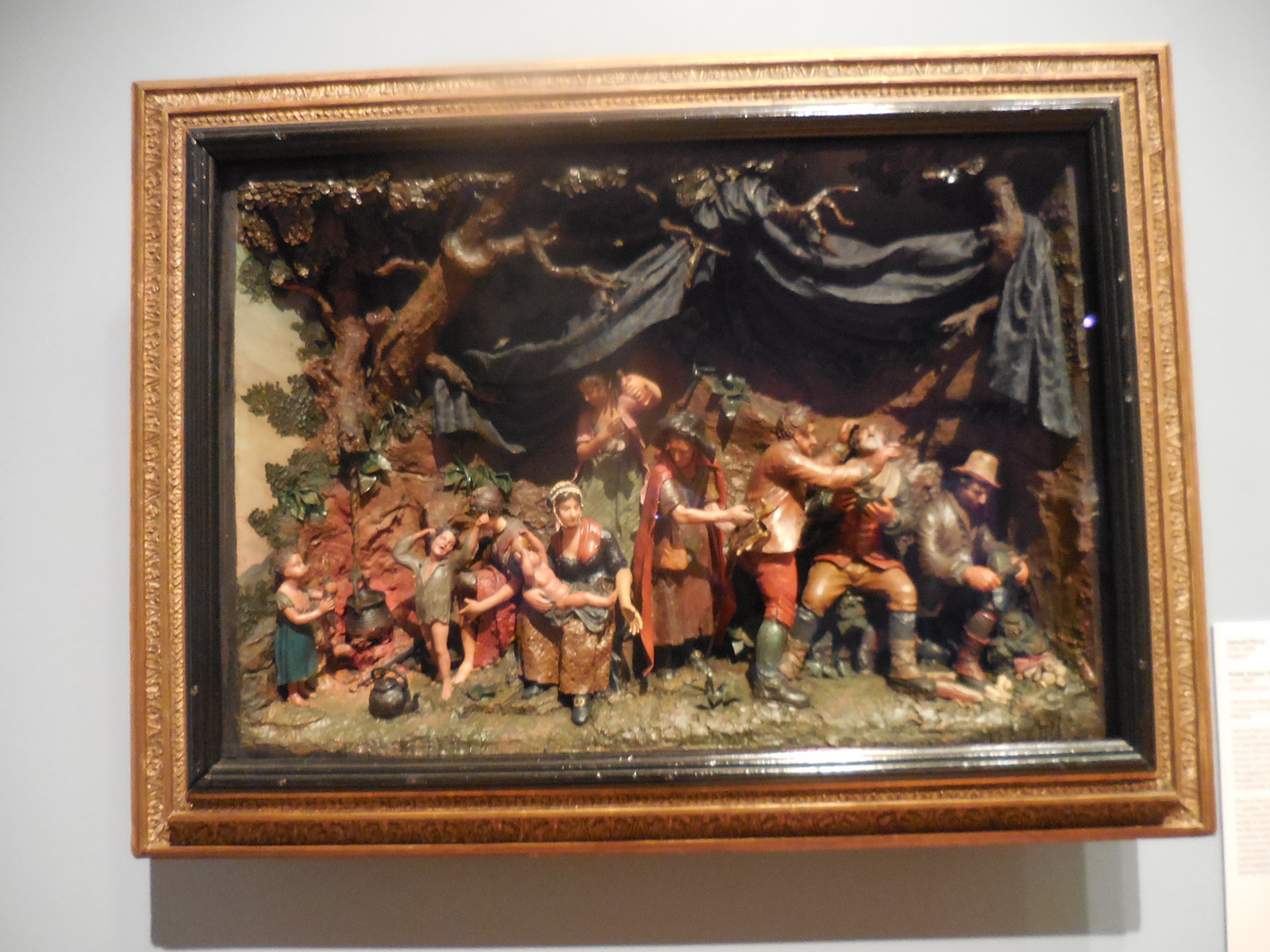
Samuel Percy, Rustic Scene: Gypsy Encampment, c. 1800, polychrome wax
Skillful wax modeling in this unusual (to me) scene.

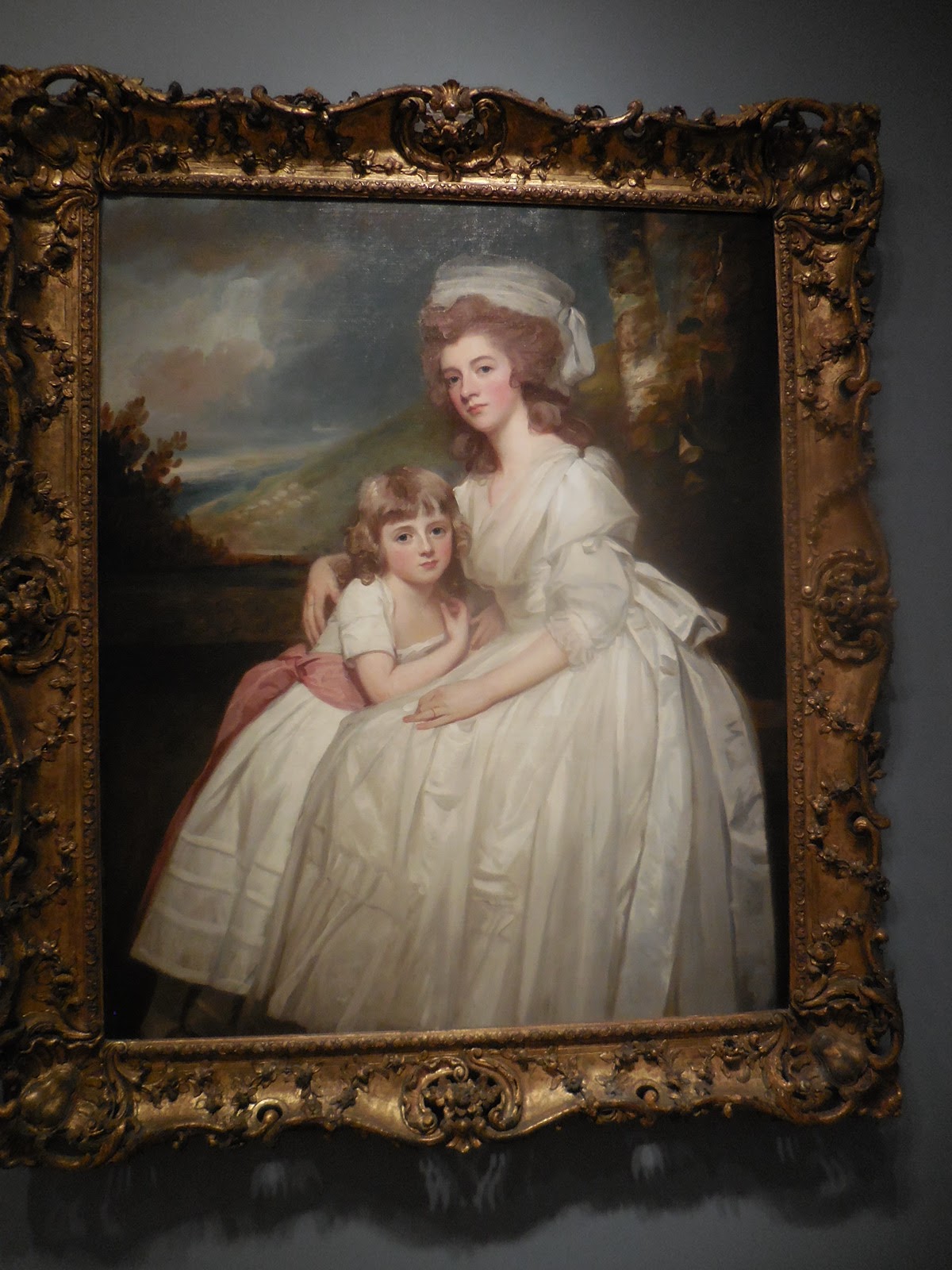
George Romney, Portrait of Mrs. Richard Pryce Corbet and Her Daughter, 1780

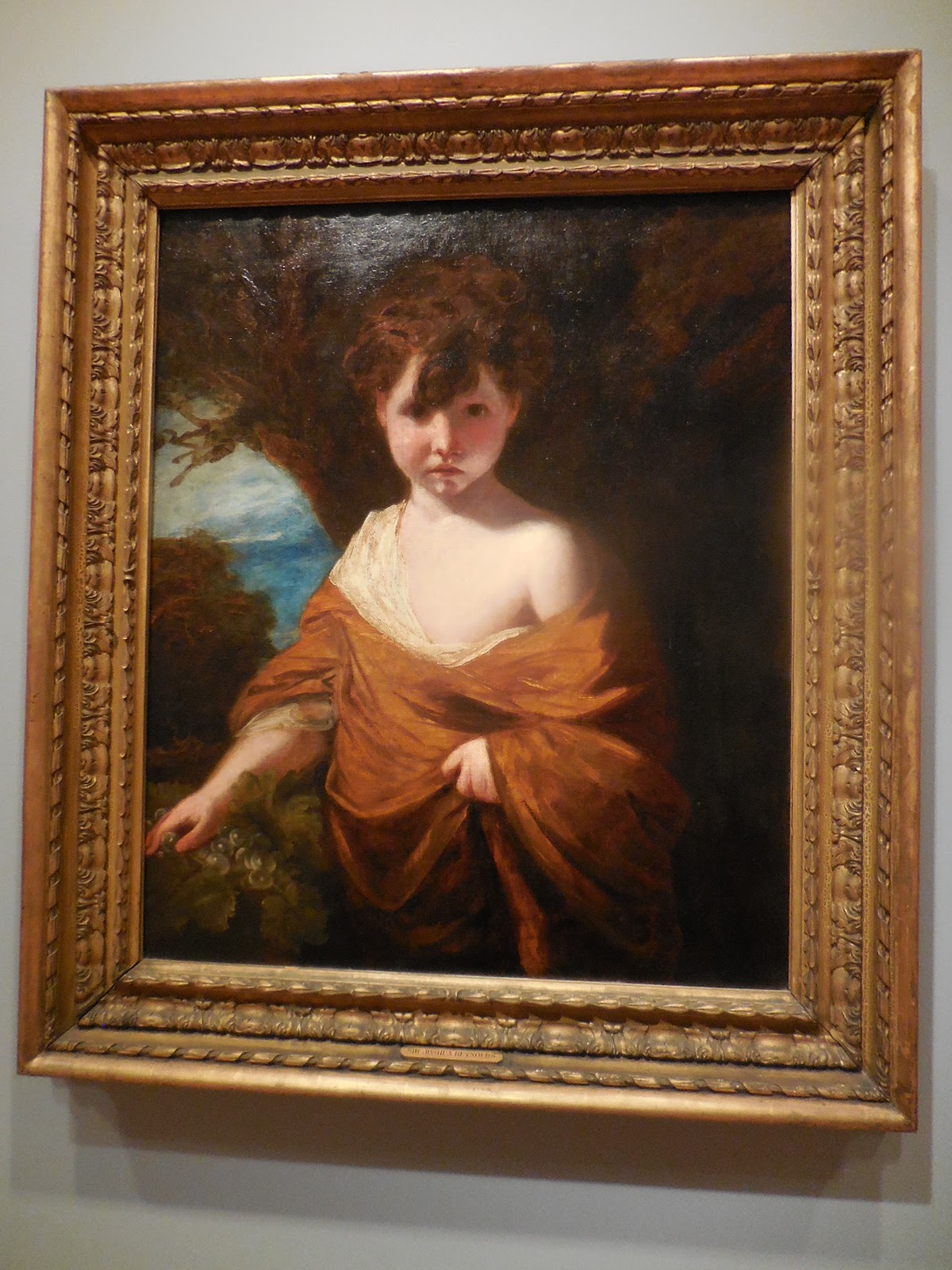
Sir Joshua Reynolds, Boy with Grapes, 1773

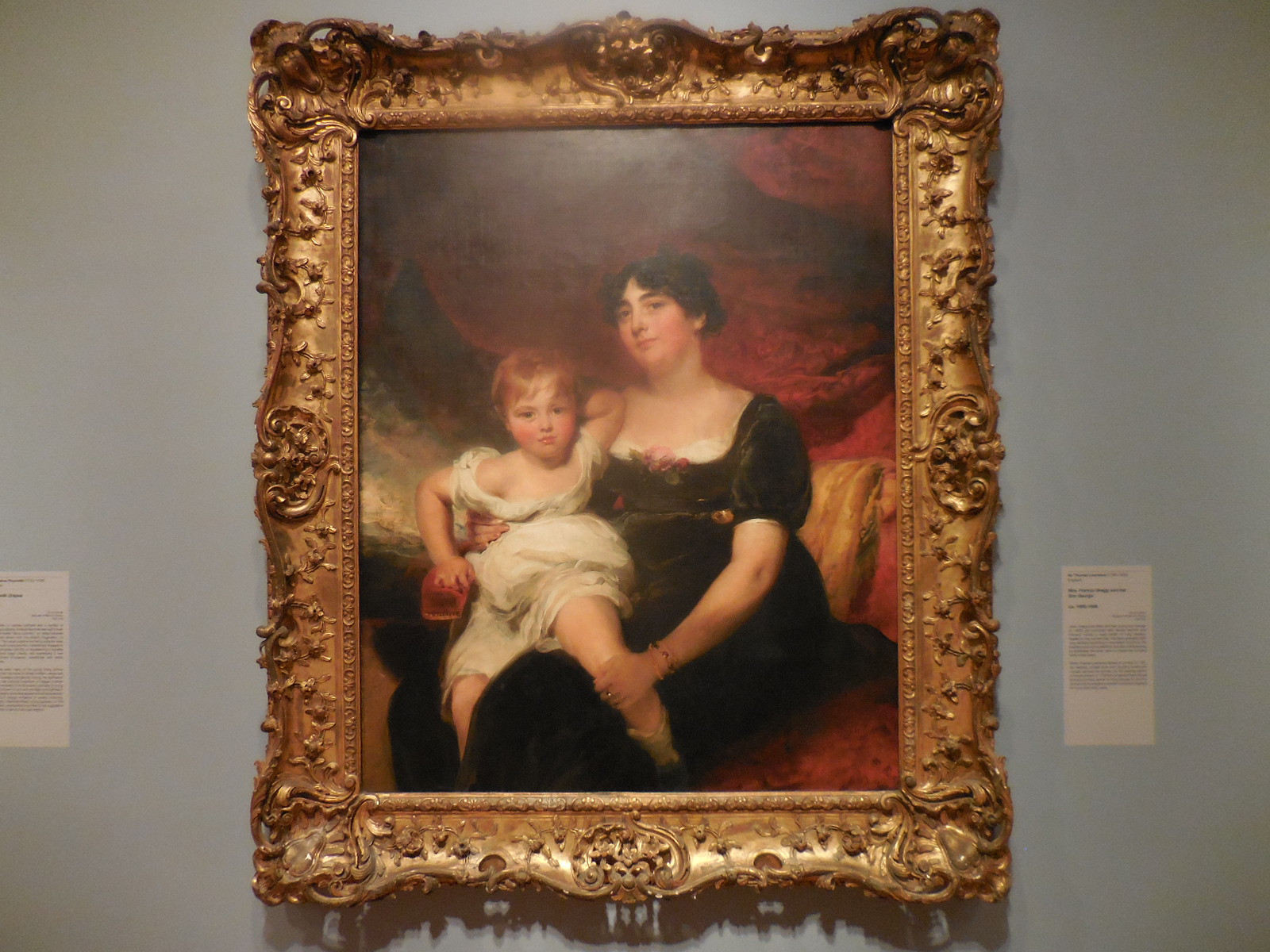
Sir Thomas Lawrence, Mrs. Francis Gregg and her son George, ca. 1805-06
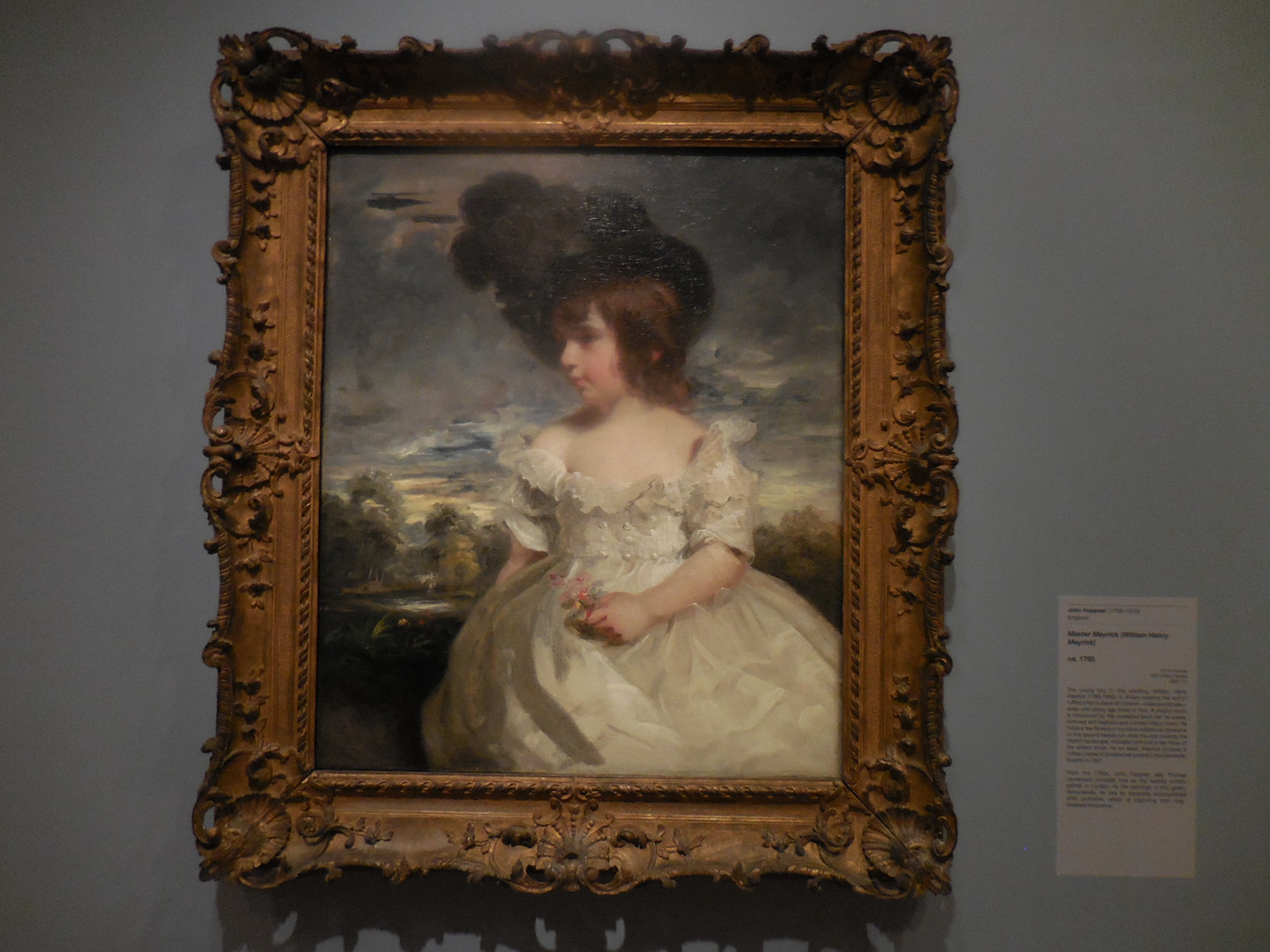
John Hoppner: Master Meyrick (William Henry Meyrick), ca. 1793

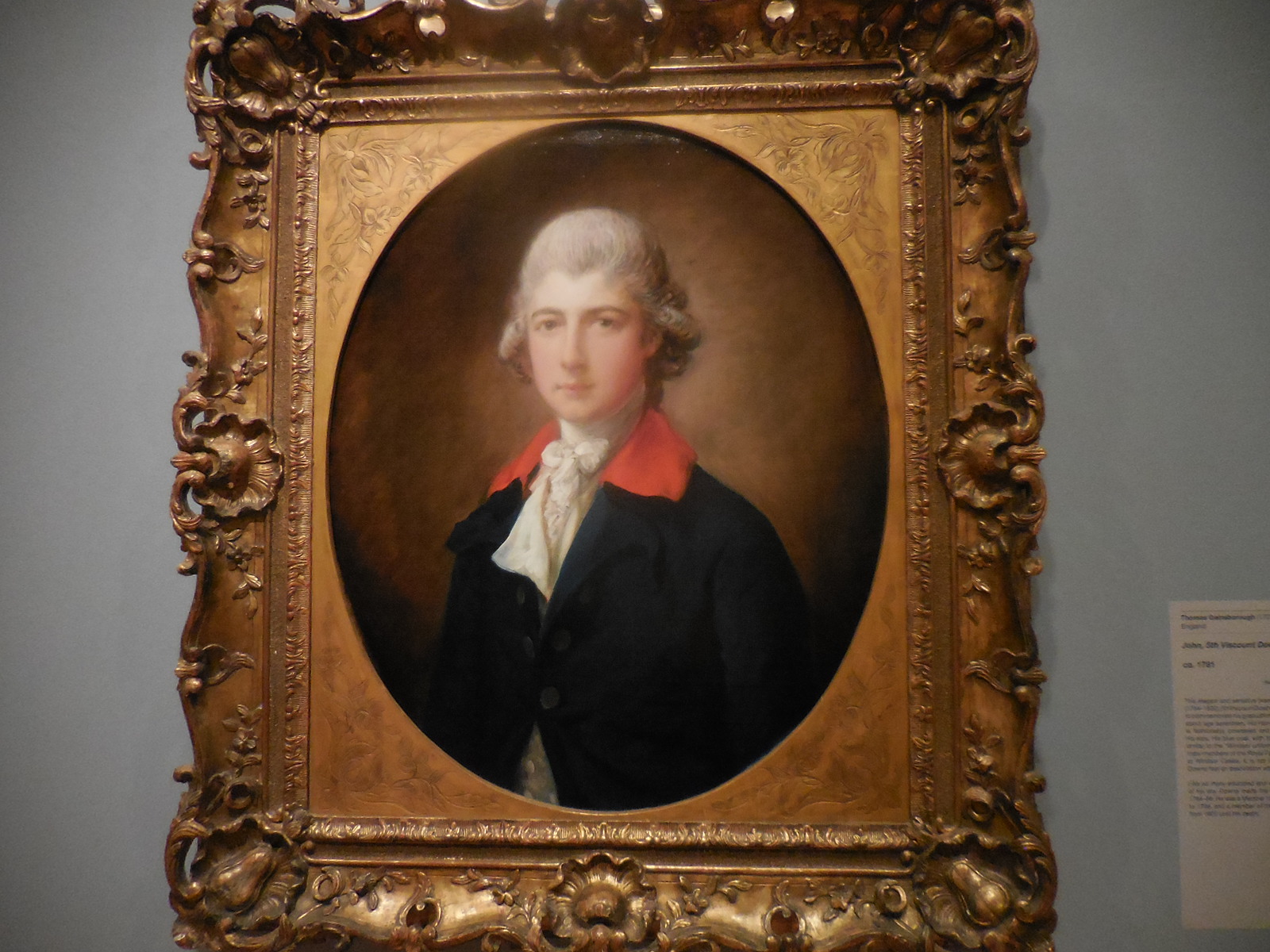
Thomas Gainsborough, John, 5th Viscount Downe, ca. 1791

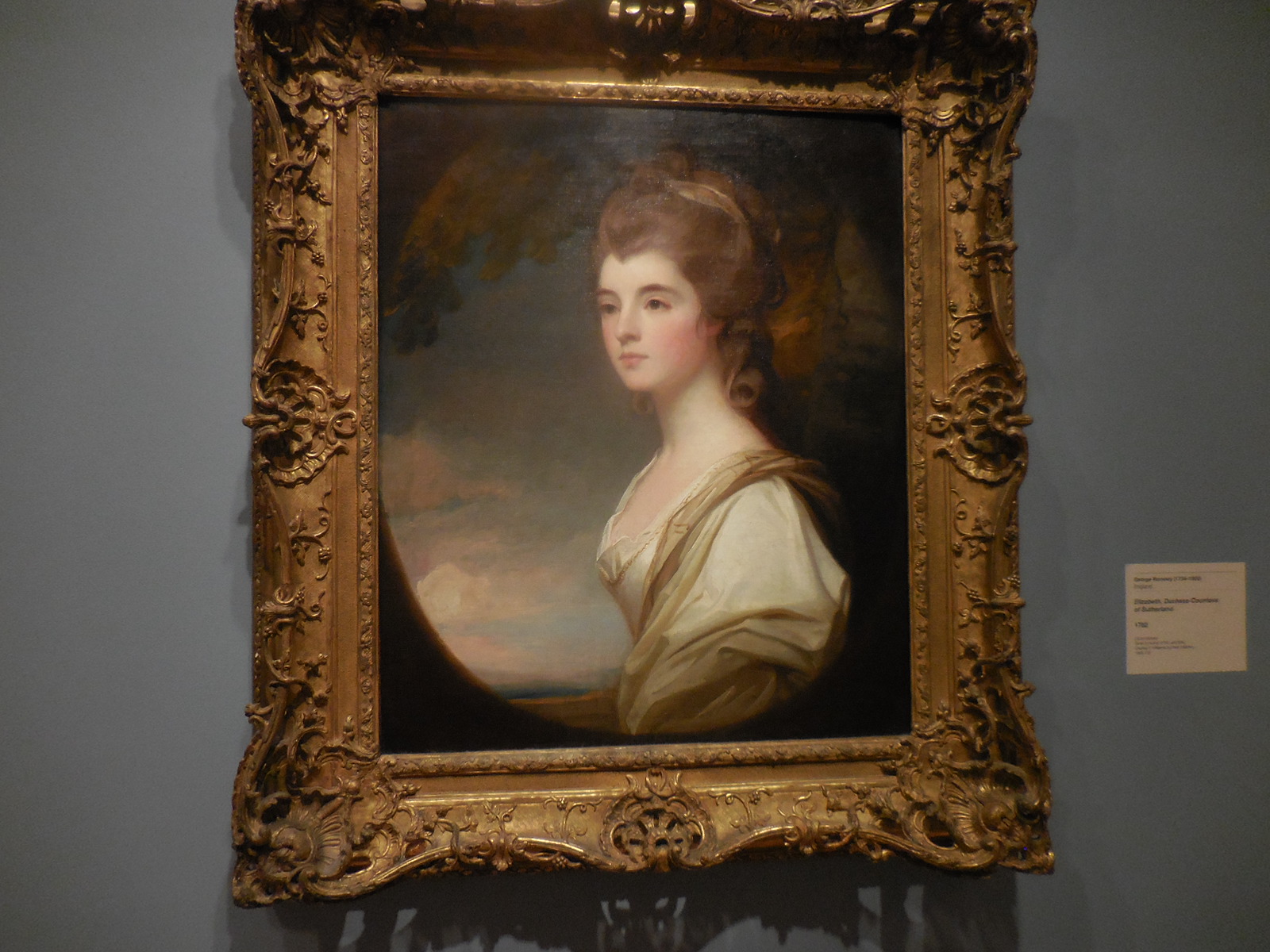
George Romney, Elizabeth, Duchess-Countess of Sutherland, 1782

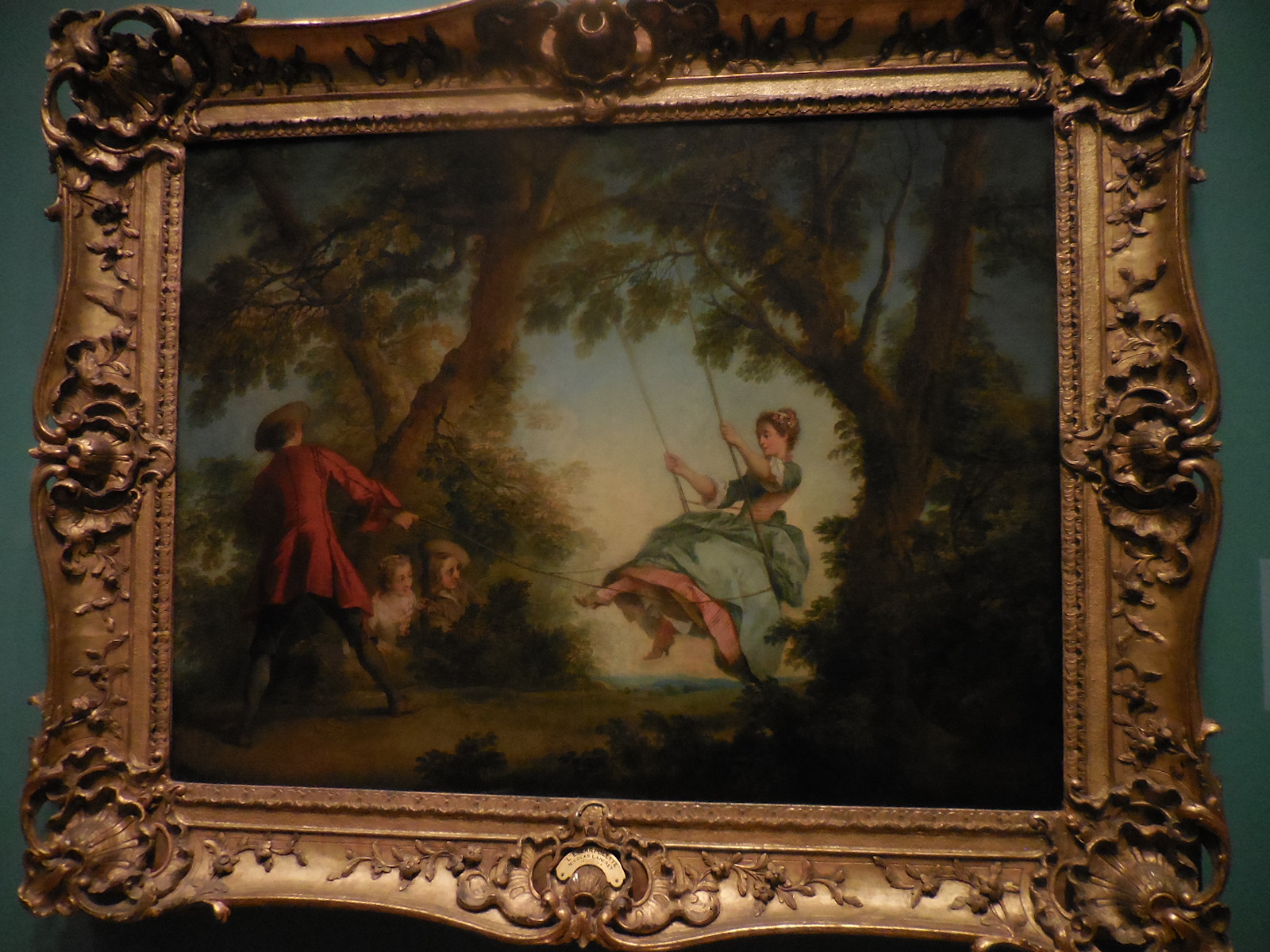
Nicolas Lancret, The Swing, 1730-35

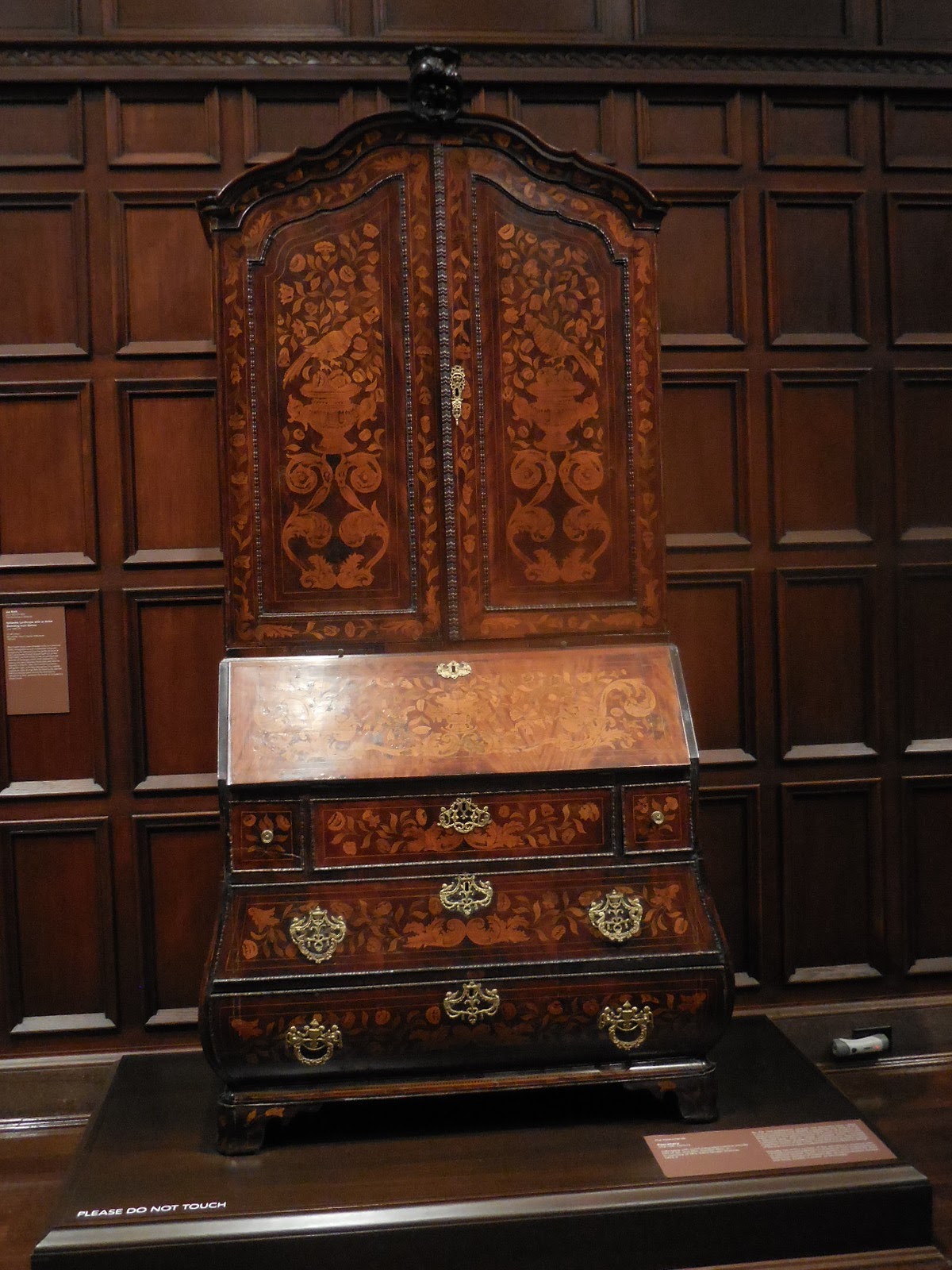
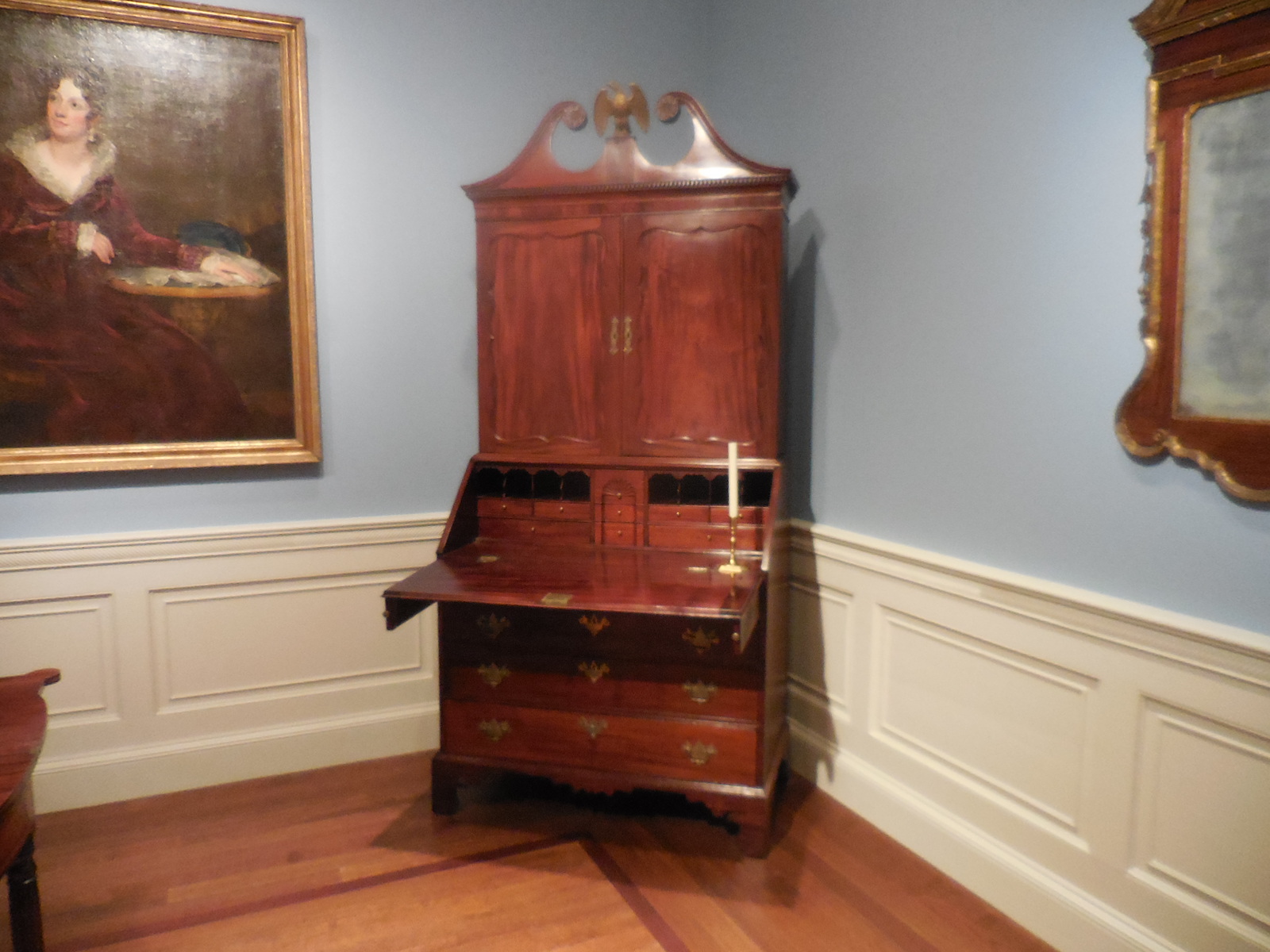
 Secretary, mid-18th C, The Netherlands
Below, some snaps from the American Decorative Arts Collection.
Possibly John Chipman, Secretary, 1785-1800, in the Massachusetts style

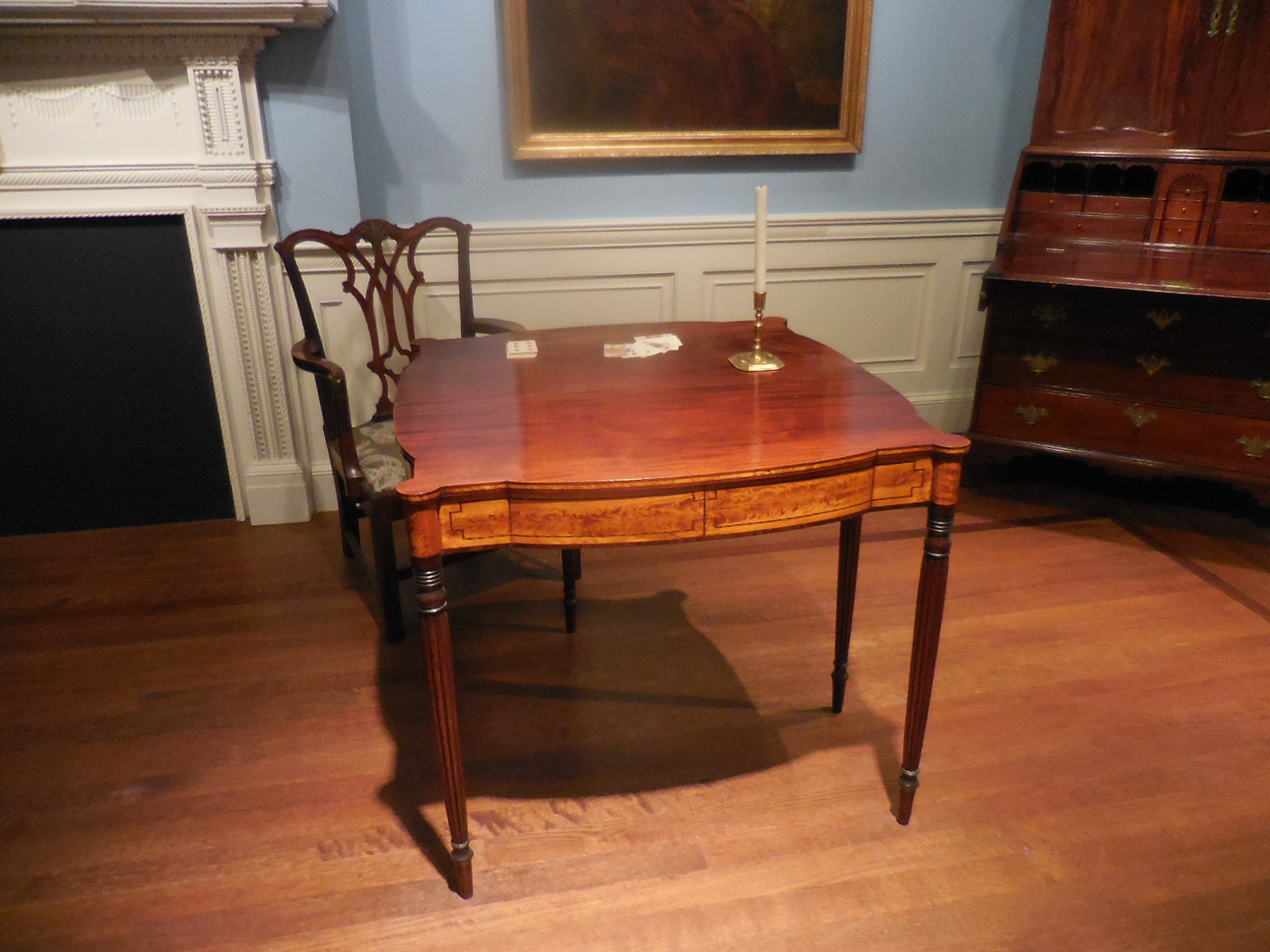
Card Table, circa 1800
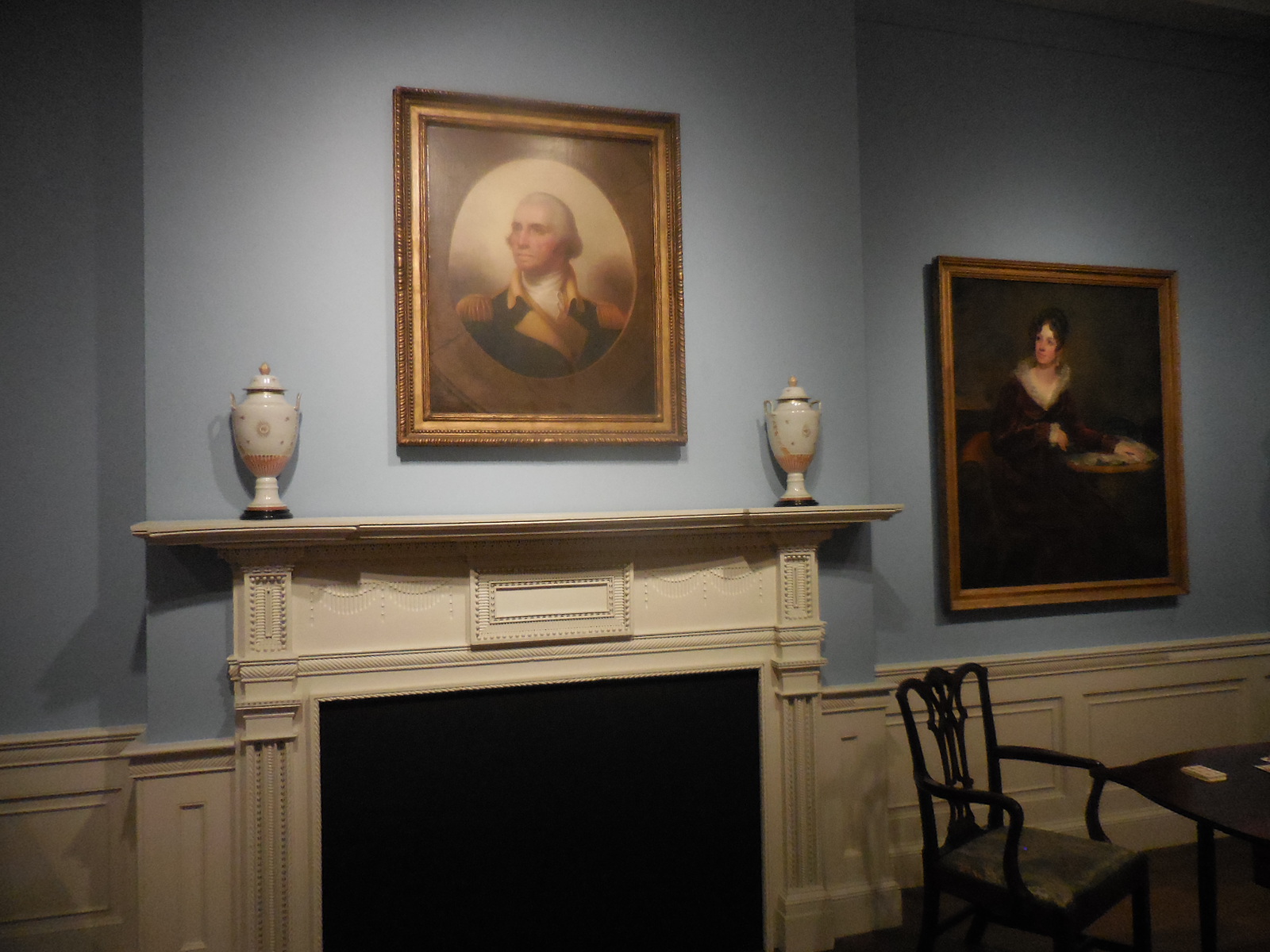
Above the fireplace, Rembrandt Peale, George Washington, c. 1845

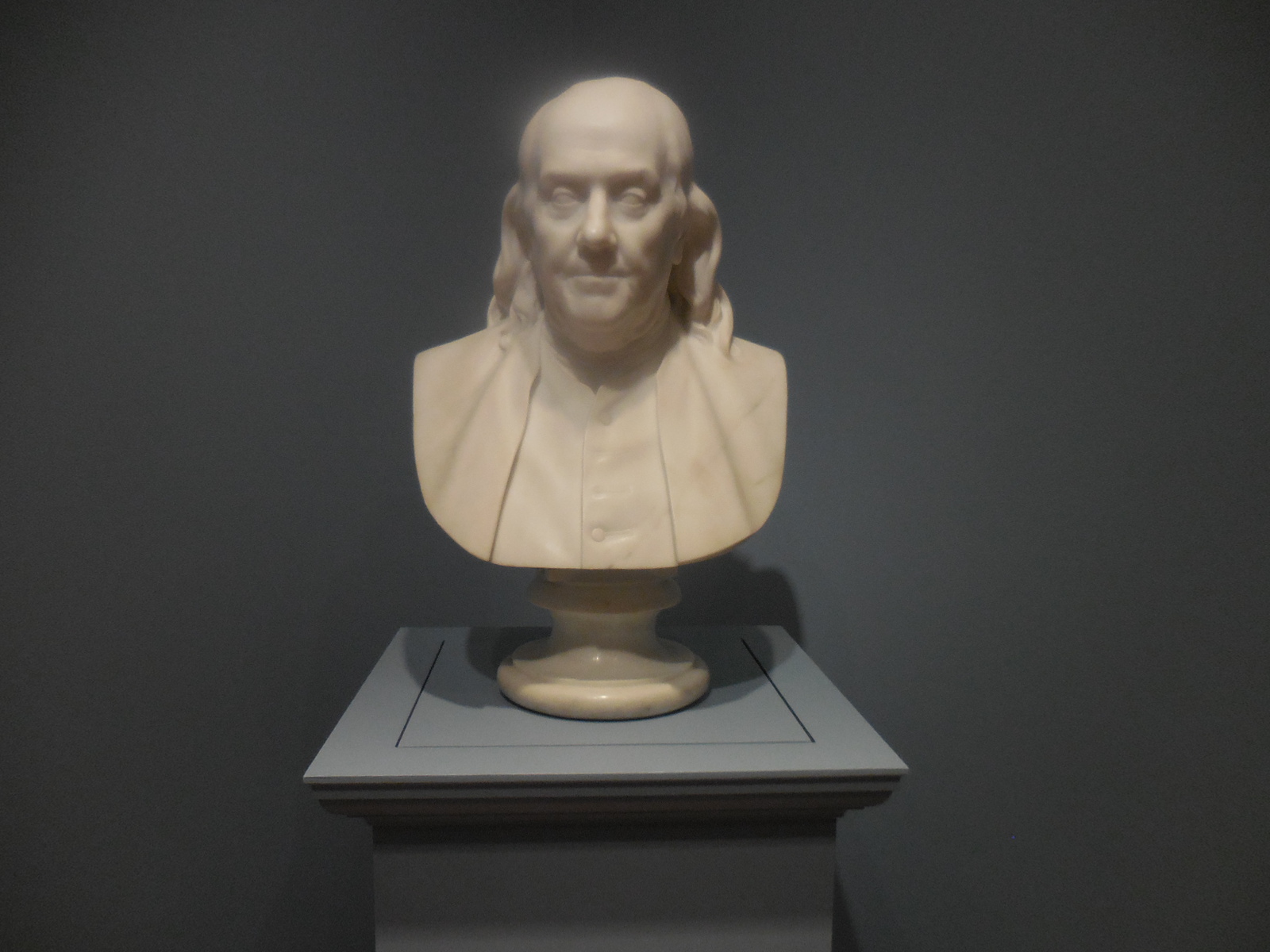
Hiram Powers, Benjamin Franklin, modeled 1848-49, carved after 1850
At least seventeen of these busts were created by Powers based on studies for the bust carved from life by Jean-Antoine Houdon in 1788.

Though it’s considerably later than the Georgian period in Europe and the U.S., I enjoyed seeing these two lovely landscapes by Corot, recalling the day long ago when a pal and I traipsed all over the Louvre looking for the Barbizon School — and found literally hundreds of examples eventually, by which time we were really too exhausted to do more than stumble to a bench and stare at them from a distance.
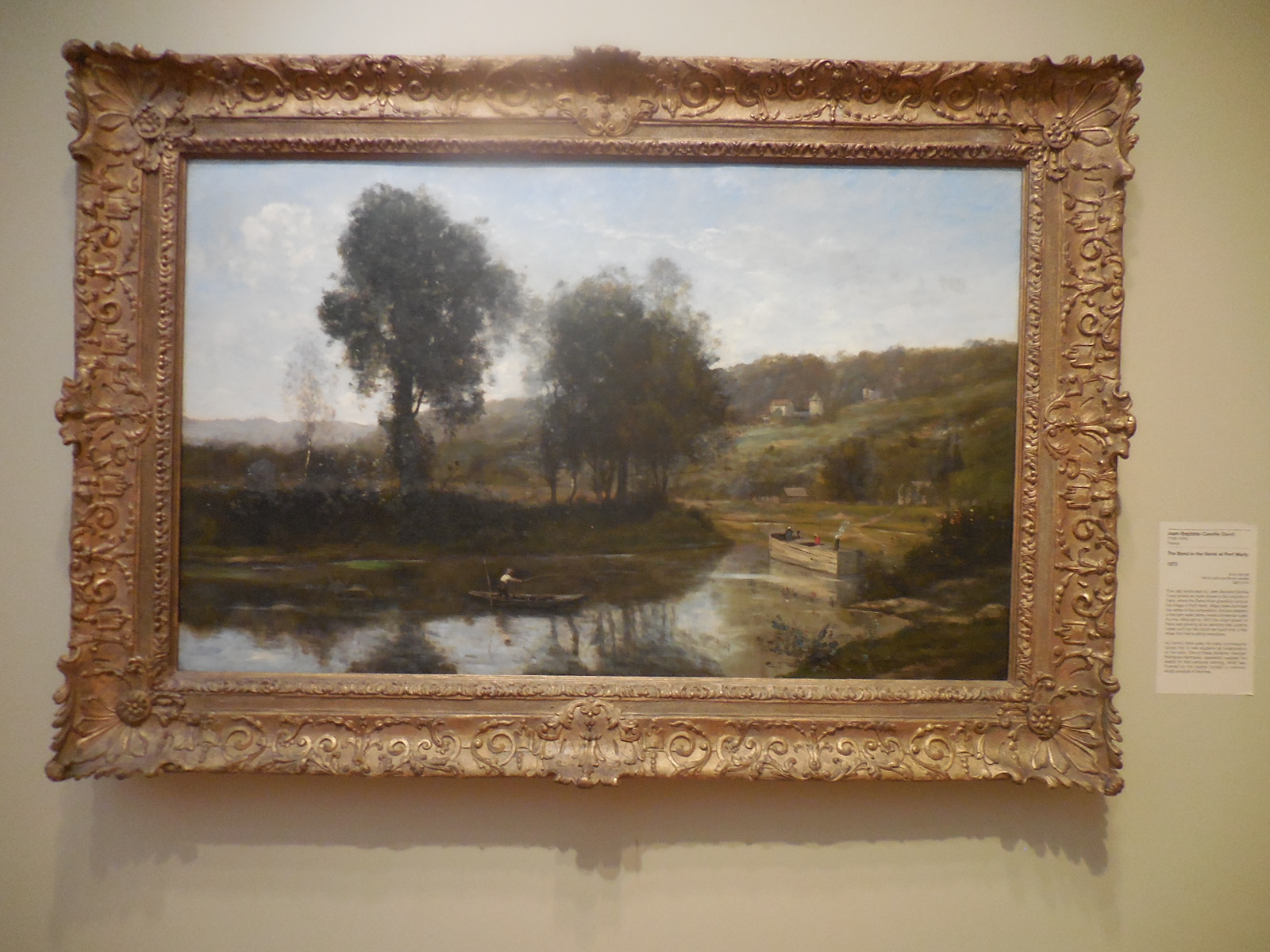
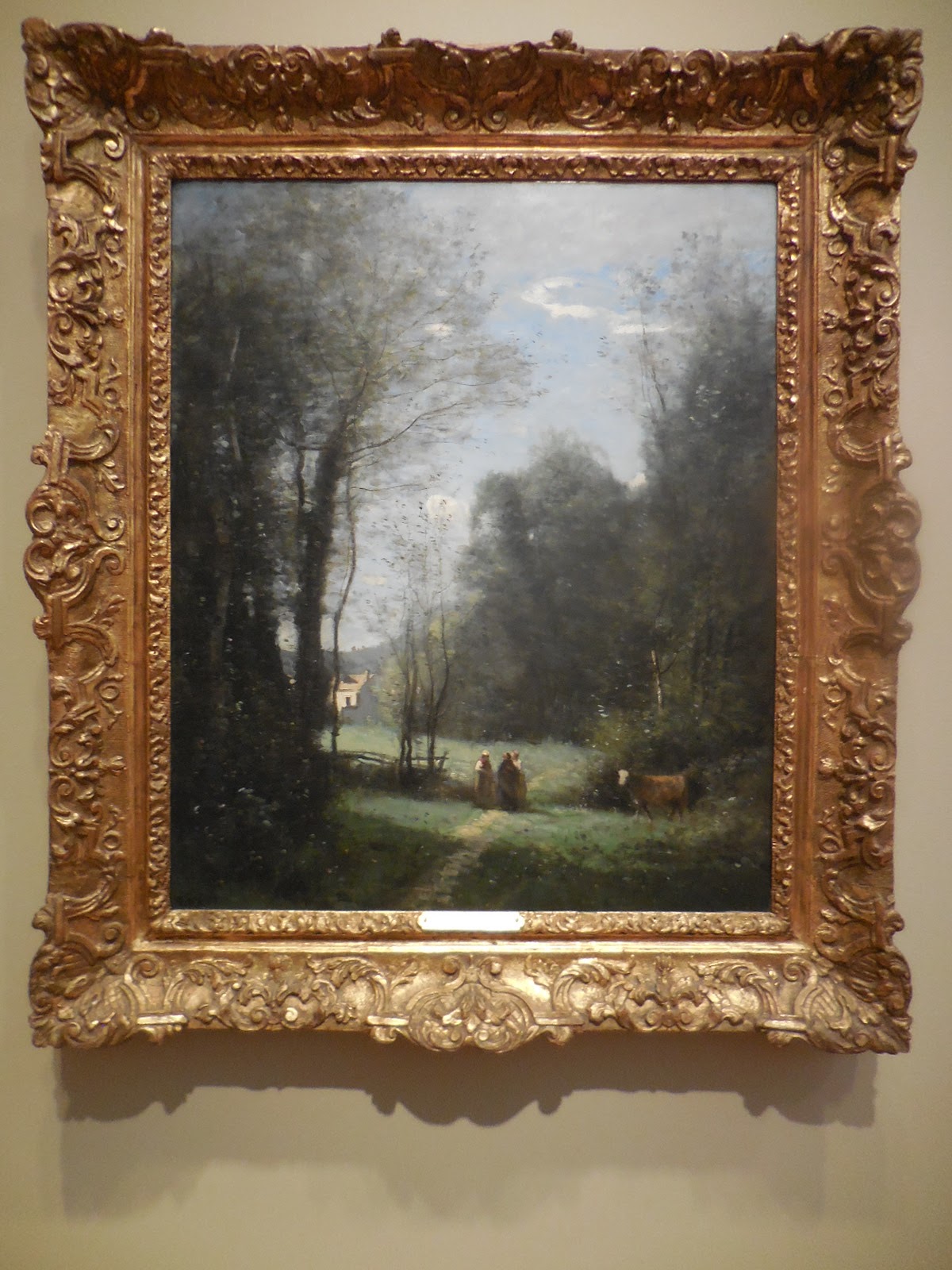
Jean-Baptiste-Camile Corot. The Bend in the Seine at Port Marly, 1872

Jean-Baptiste-Camille Corot, The Maison Blanche of Sevres, 1872
The Cincinnati Art Museum was also showing a special exhibition of Raphael’s Portrait of a Lady with a Unicorn. painted about 1505-06 from the Galleria Borghese in Rome. The image below is from Wikipedia Commons.

The exhibition is entitled “Sublime Beauty: Raphael’s Portrait of a Lady with a Unicorn” and will run until January 03, 2016. Here is the museum’s description: “The Cincinnati Art Museum and the Fine Arts Museums of San Francisco in collaboration with the Foundation for Italian Art and Culture, presents Raphael’s Portrait of Lady with a Unicorn on loan from the Galleria Borghese in Rome. Painted about 1505, this mysterious blond and blue-eyed sitter epitomizes Raphael’s excellence in female portraiture during his Florentine period.”

For more, click here.

And to conclude, later in the day, we drove through Chicago under the usual signs! 

Road Construction Ahead. All lanes.

THE DUKE OF WELLINGTON TOUR VISITS BASILDON PARK

THE DUKE OF WELLINGTON TOUR

 VISITS BASILDON PARK

We have written about Basildon here in the past.  Click here to see our previous post.

Victoria here. This trip in September 2014, my second visit to Basildon, was indeed a delight. Not only was I with a wonderful group on the Duke of Wellington Tour; the National Trust now allows non-flash photographs and I went wild with snapping with both my camera and my phone.
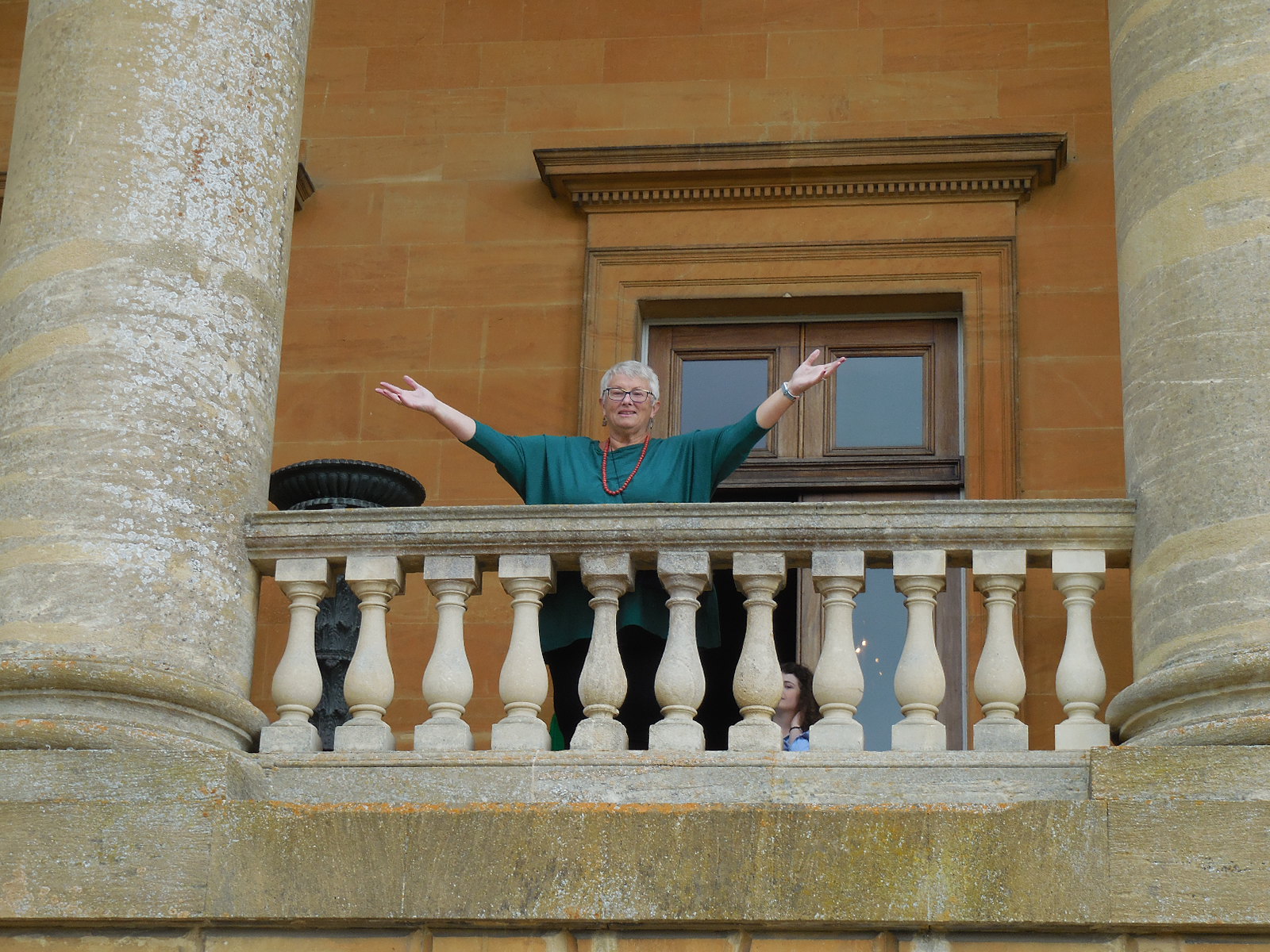
Susan dashed ahead to welcome us from the Piano Nobile Balcony
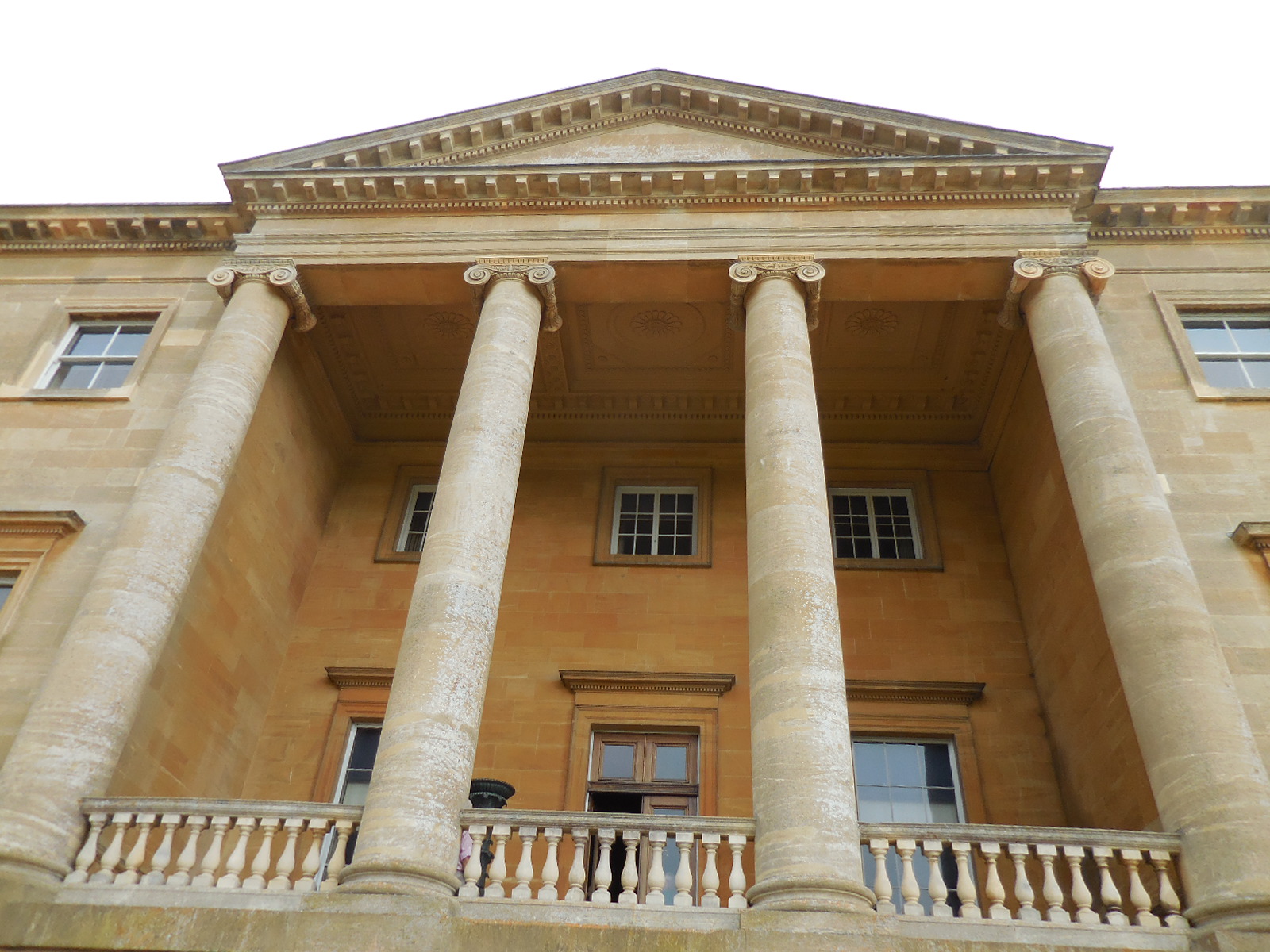
The East Front
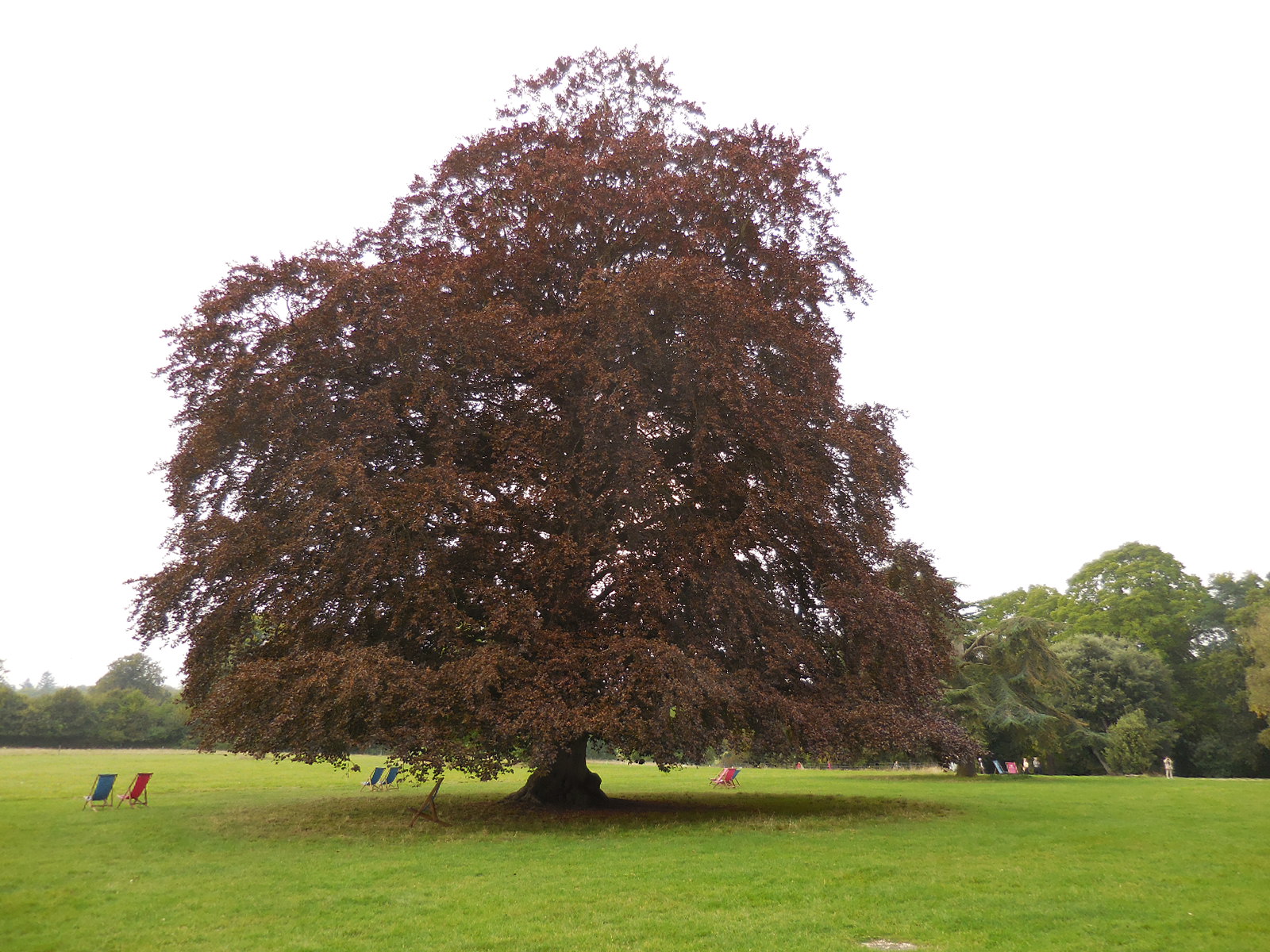
Copper Beech, I assume

Basildon Park was built between 1776 and 1782 by Sir Francis Sykes, created a baronet in 1781. His roots were in Yorkshireand he chose architect John Carr of York (1723–1807) to build his house, a classical Palladian villa with a main block of rooms joined to pavilions on either side. The Sykes fortune was made during his service in India.
Carr had previously worked with Robert Adam, and Adam’s style clearly influenced the Palladian exterior as well as the decor of many rooms in the interior. The house as it stands today is the survivor of multiple owners, periods of abandonment, and occupation by soldiers and war prisoners in World Wars I and II. So it combines dazzling restorations of original features with comfortable furnishings and artwork from the 1950’s when the house was acquired and restored by Lord and Lady Iliffe.

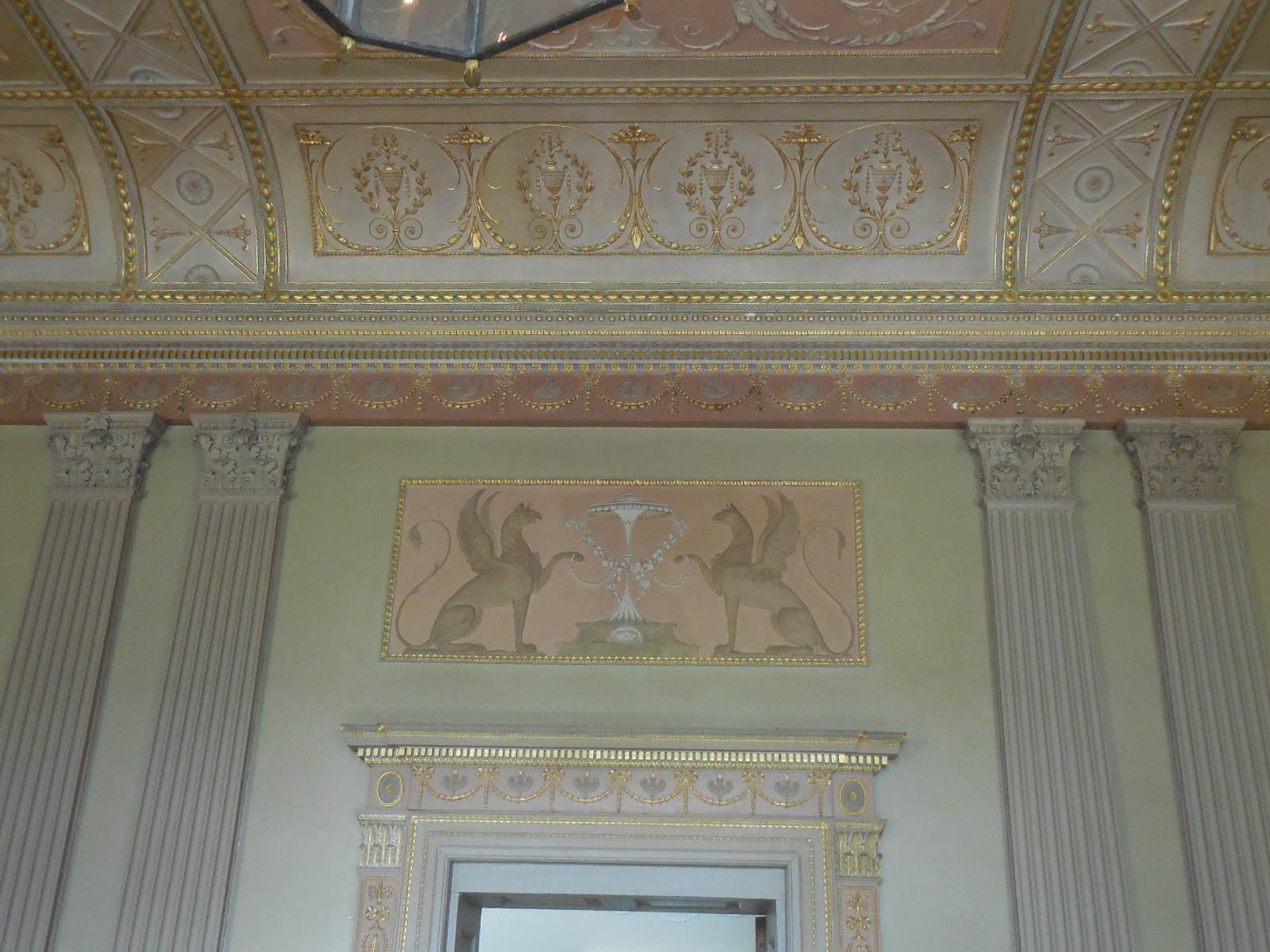
Etruscan panels in the Hall

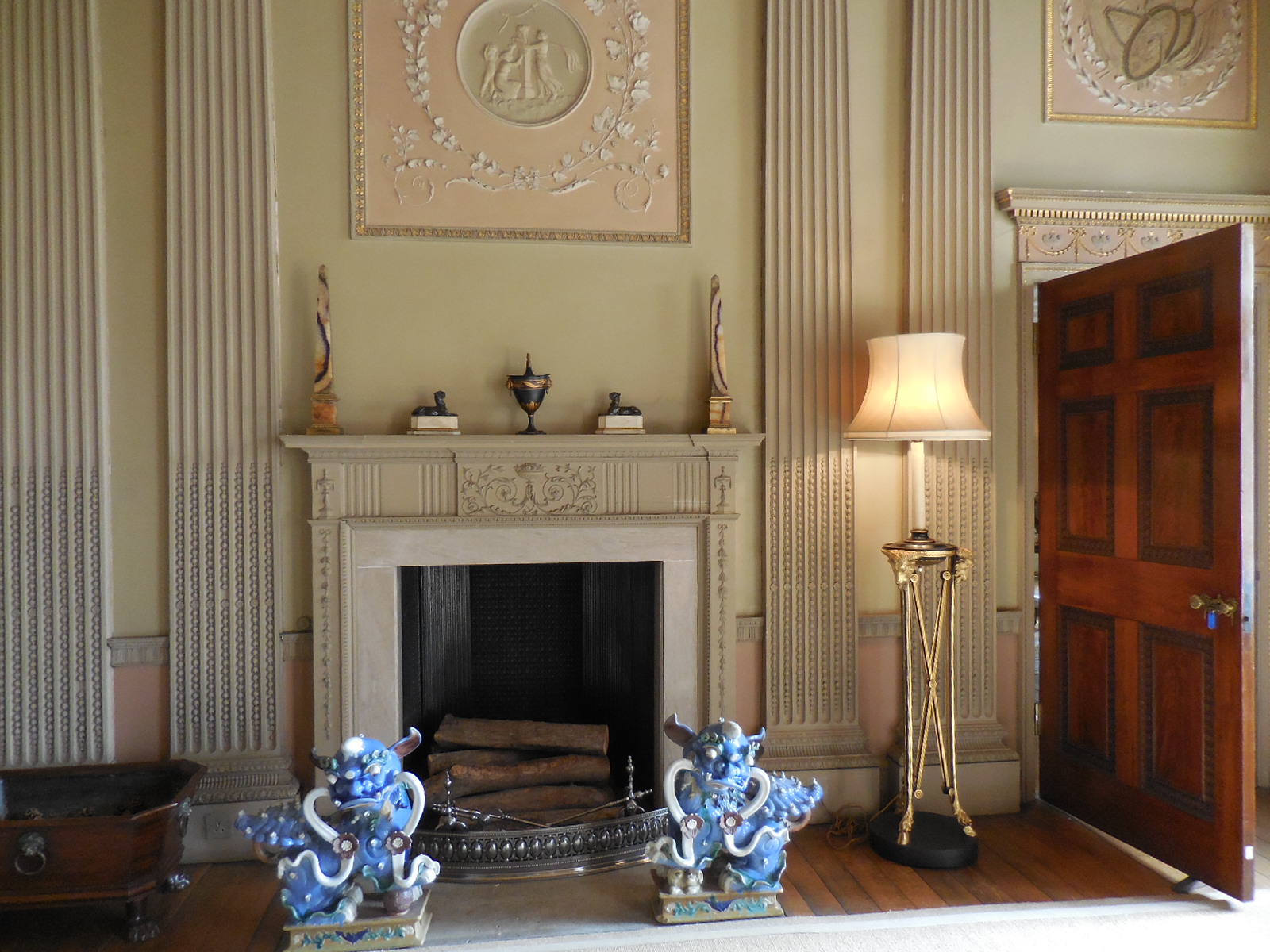
Above the fireplace

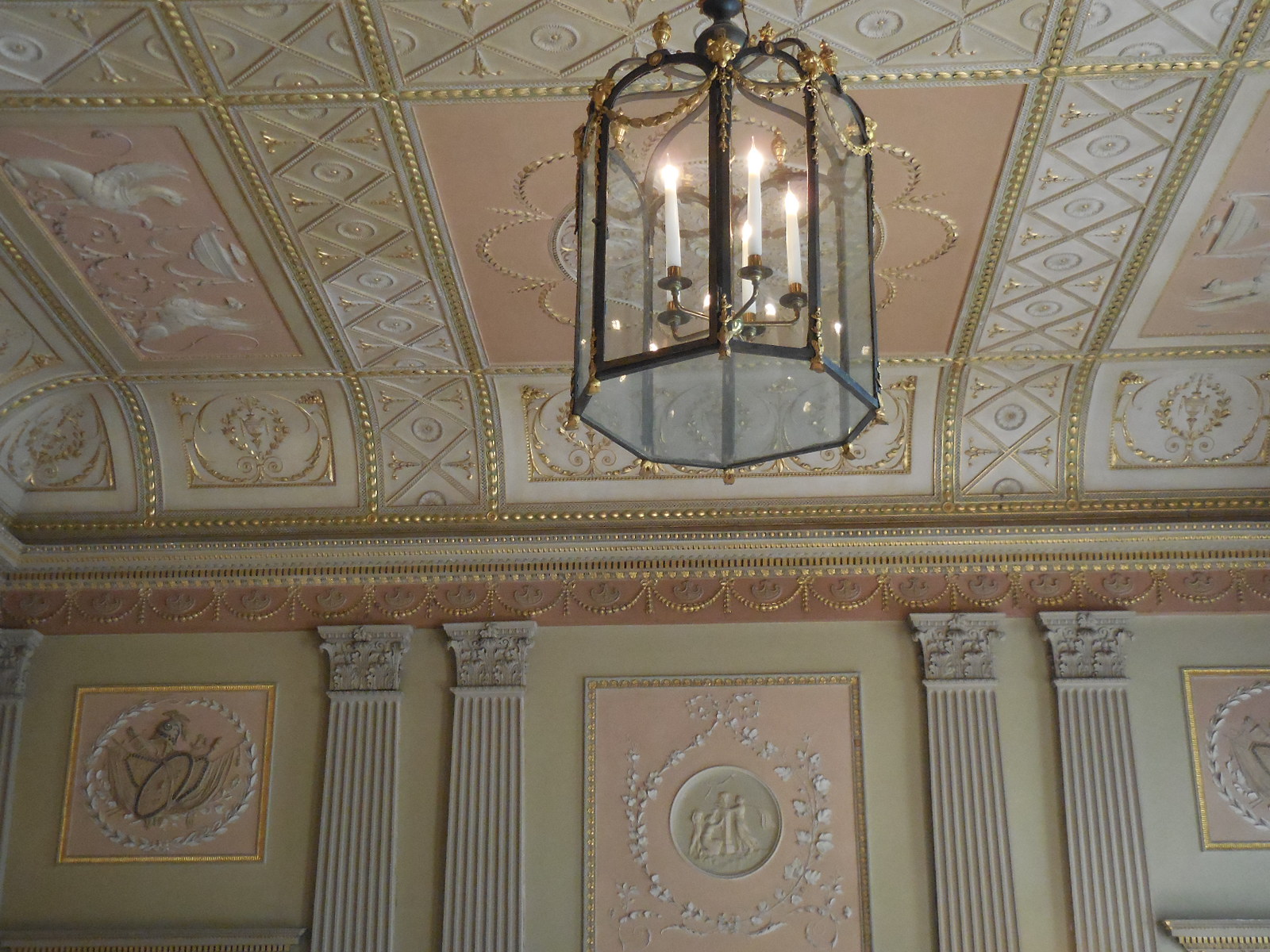
Ceiling

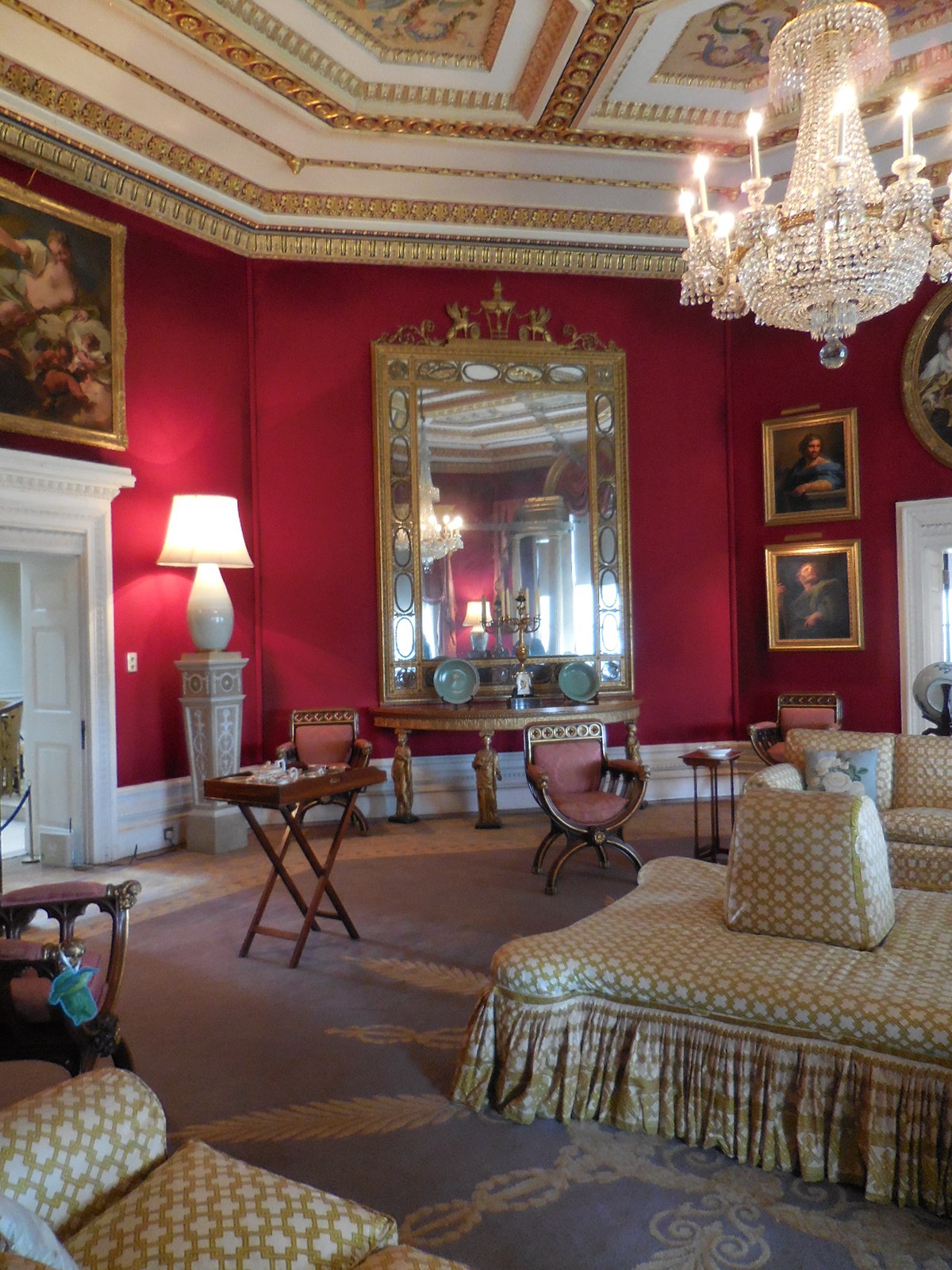
The library opens off the hall, magnificent yet cozy with its scarlet walls and huge book case. Who among us could resist sinking into the sofa with some selections from the shelves?

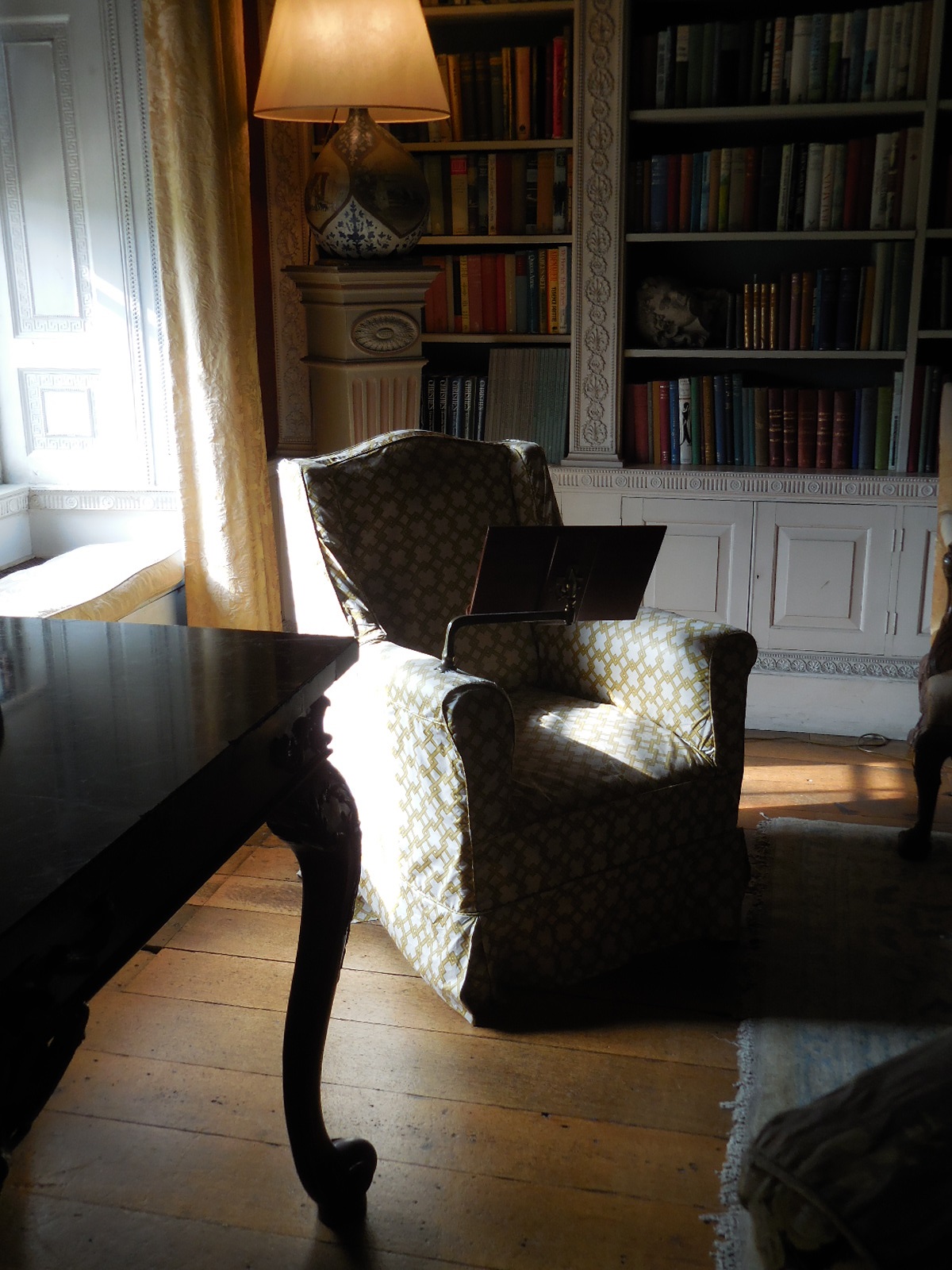
My corner?

The chimneypiece and other architectural features came from Panton Hall in the 1950’s
 to replace the originals which were lost in a fire in 1946. Panton Hall in Lincolnshire had been remodeled by Carr of York; it was demolished in 1964

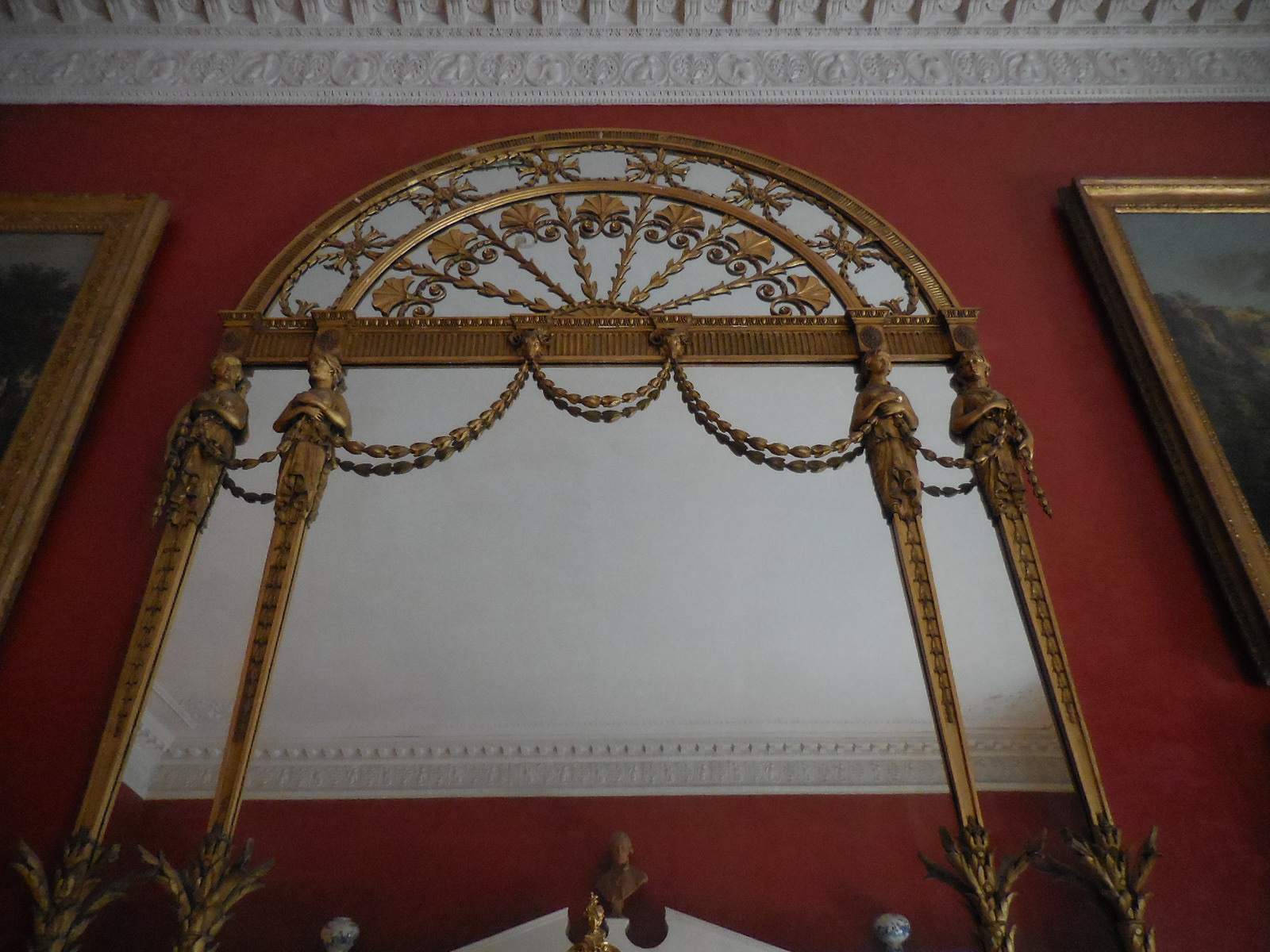
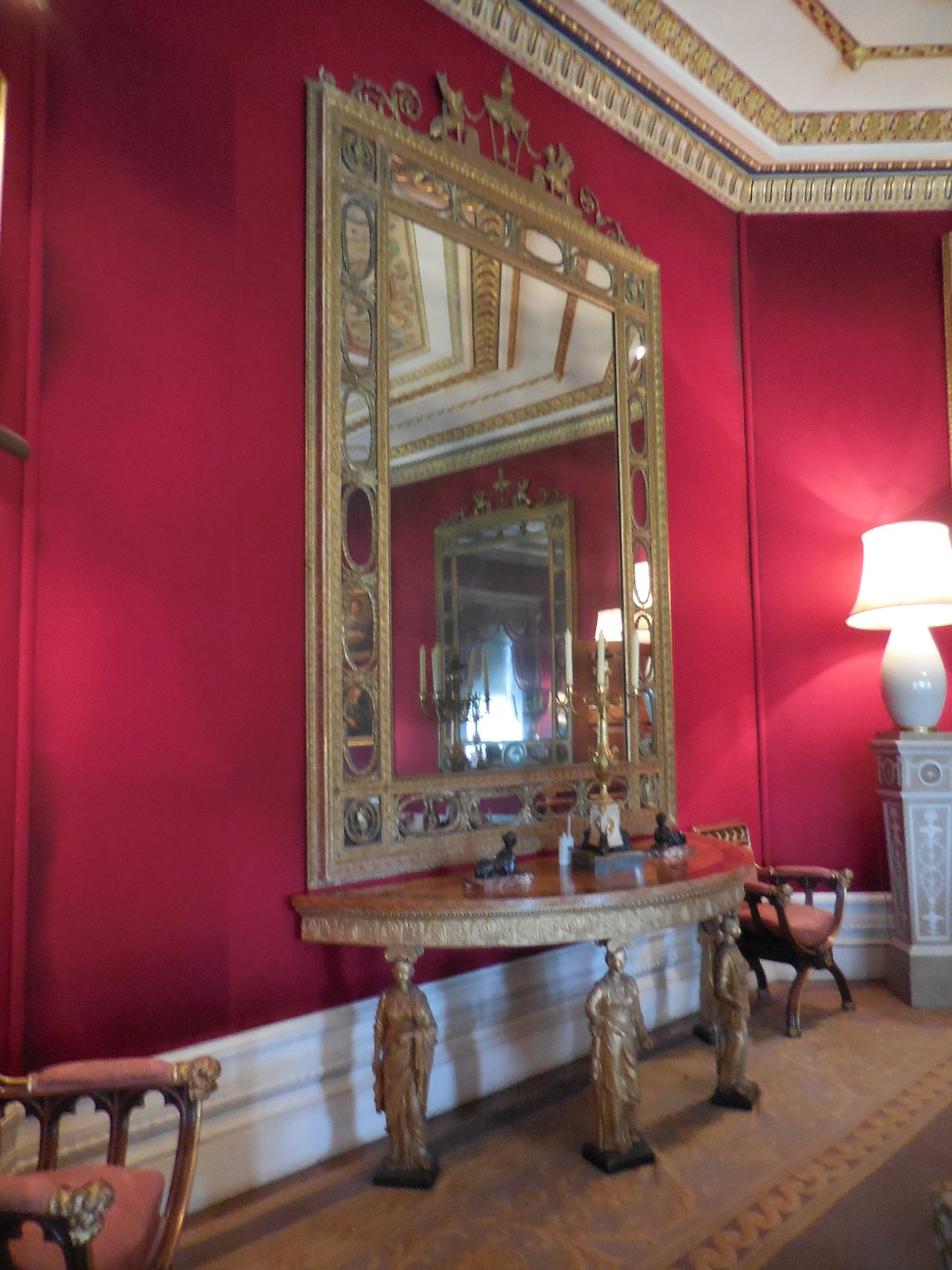
Library Mirror

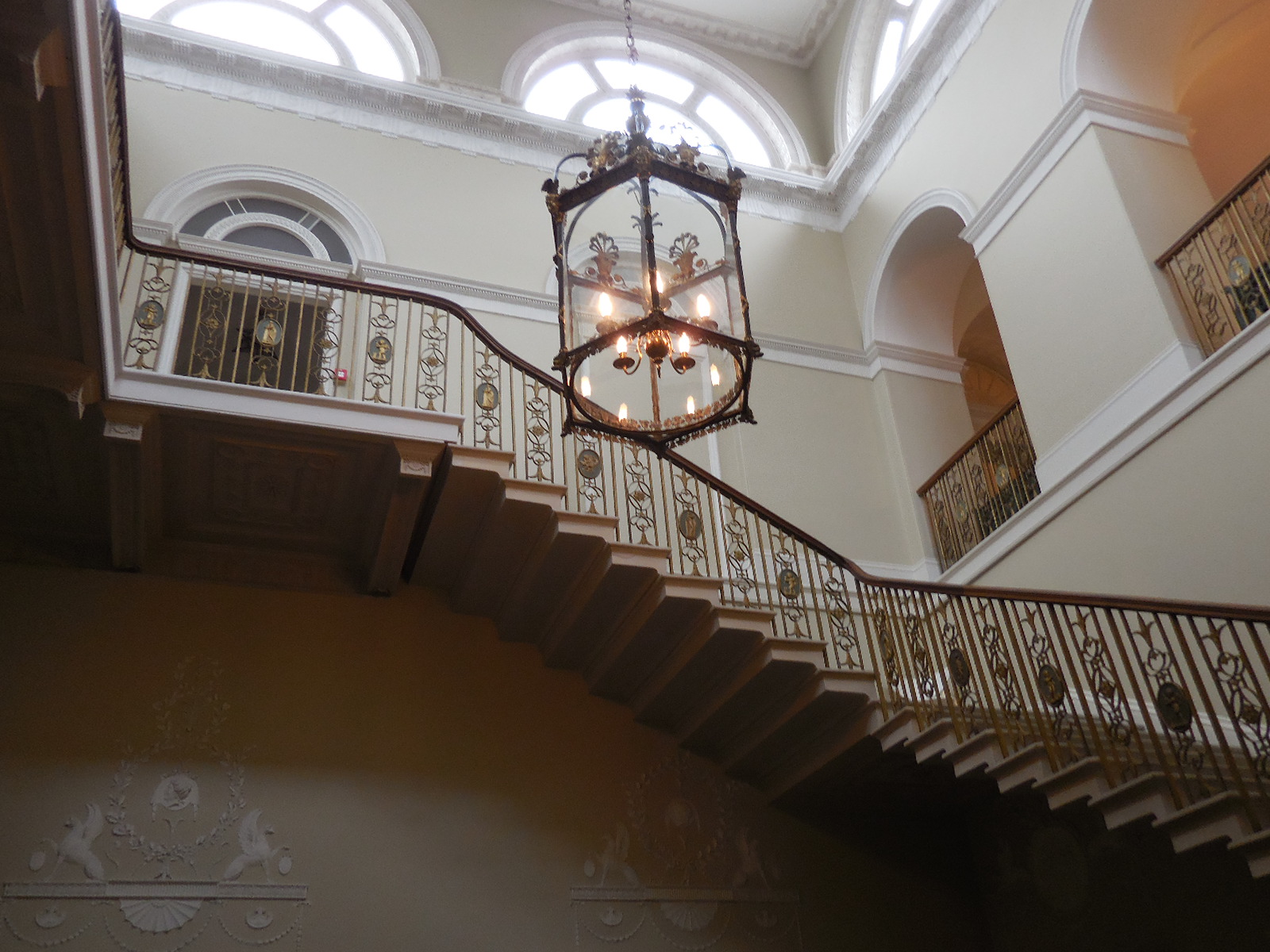
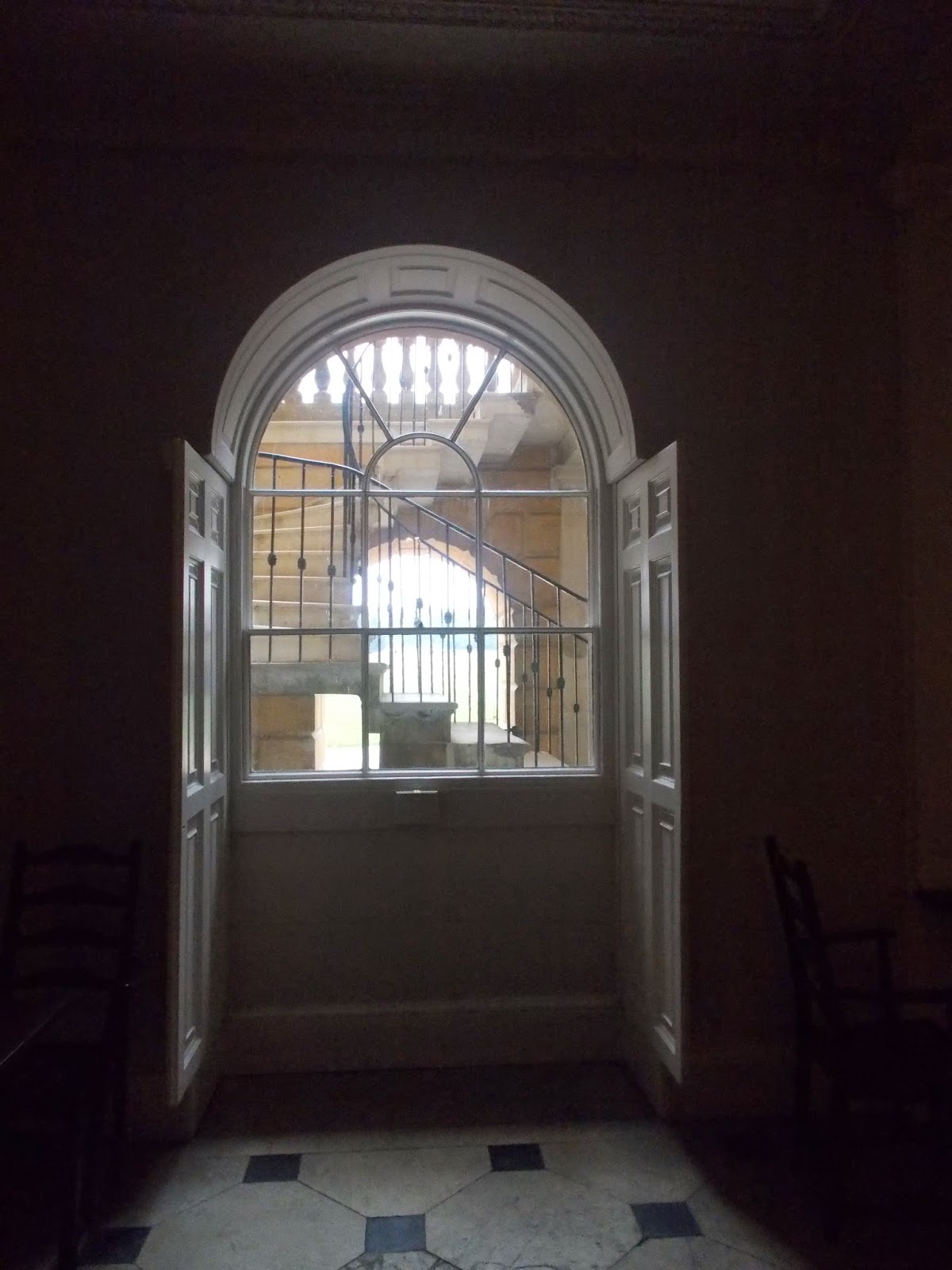
In the center of the house is the grand staircase, and Donna is shown admiring the piano and pianist who entertained us as we roamed the rooms.

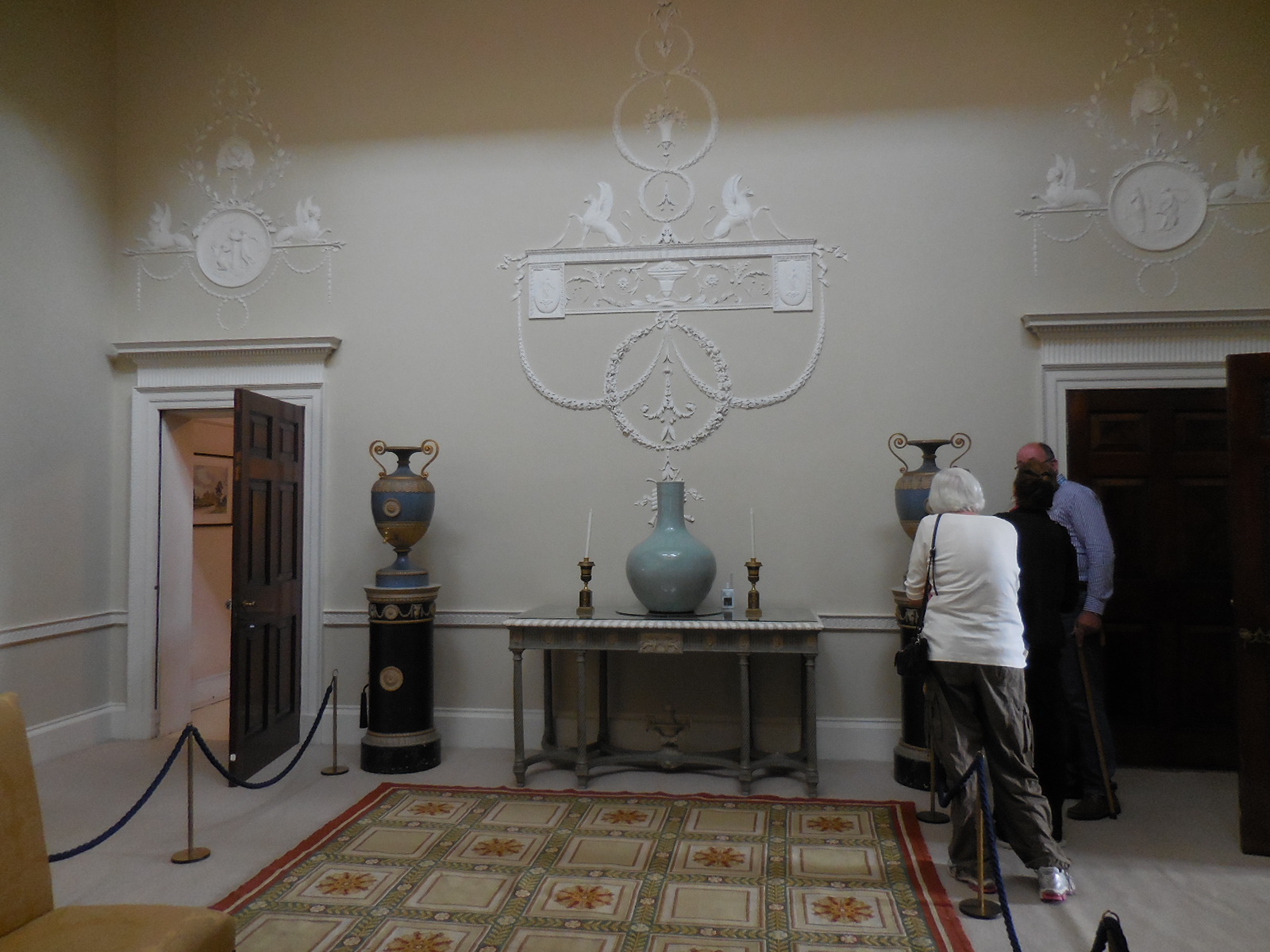
Marilyn and others admire the furnishings

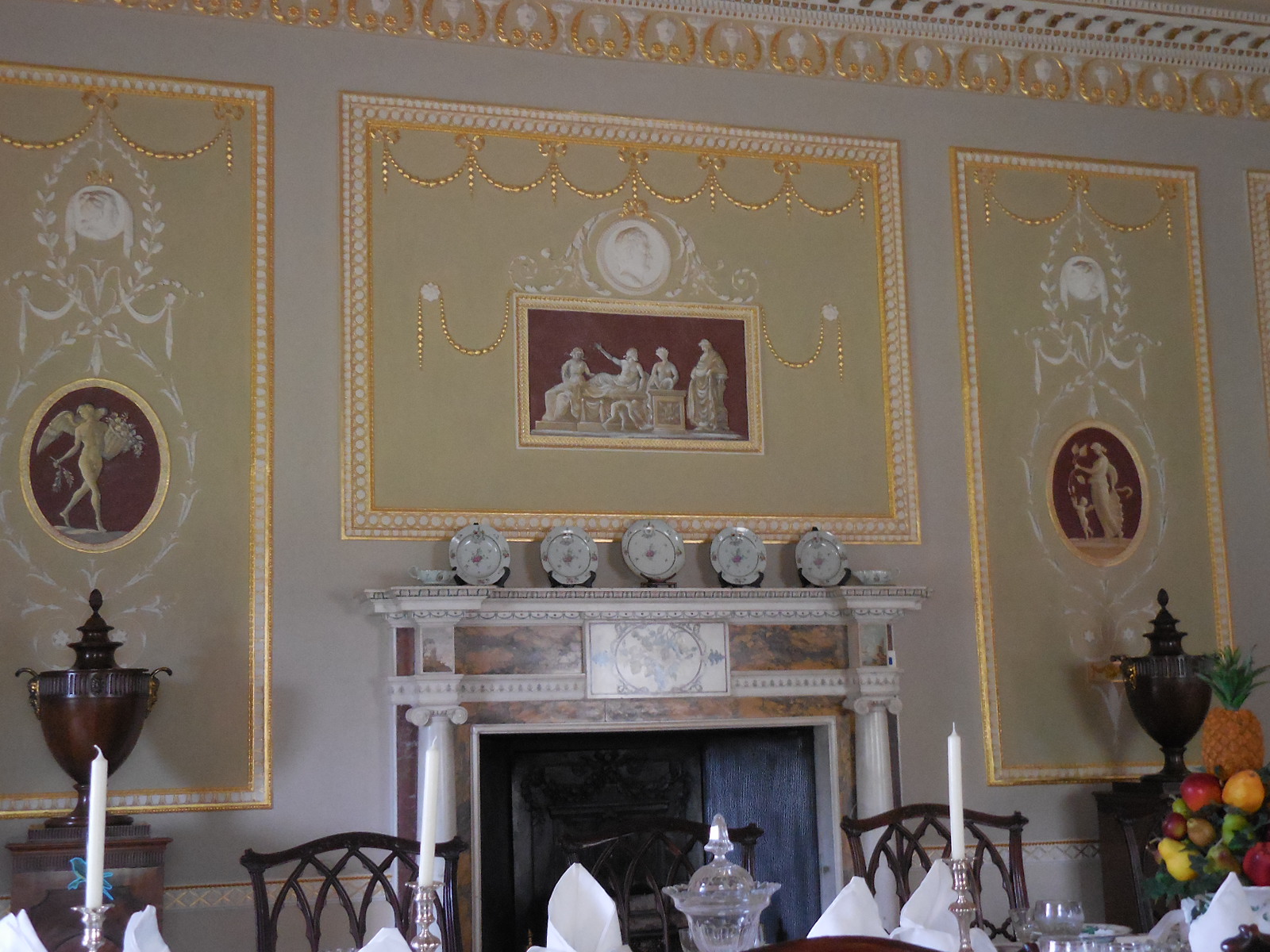
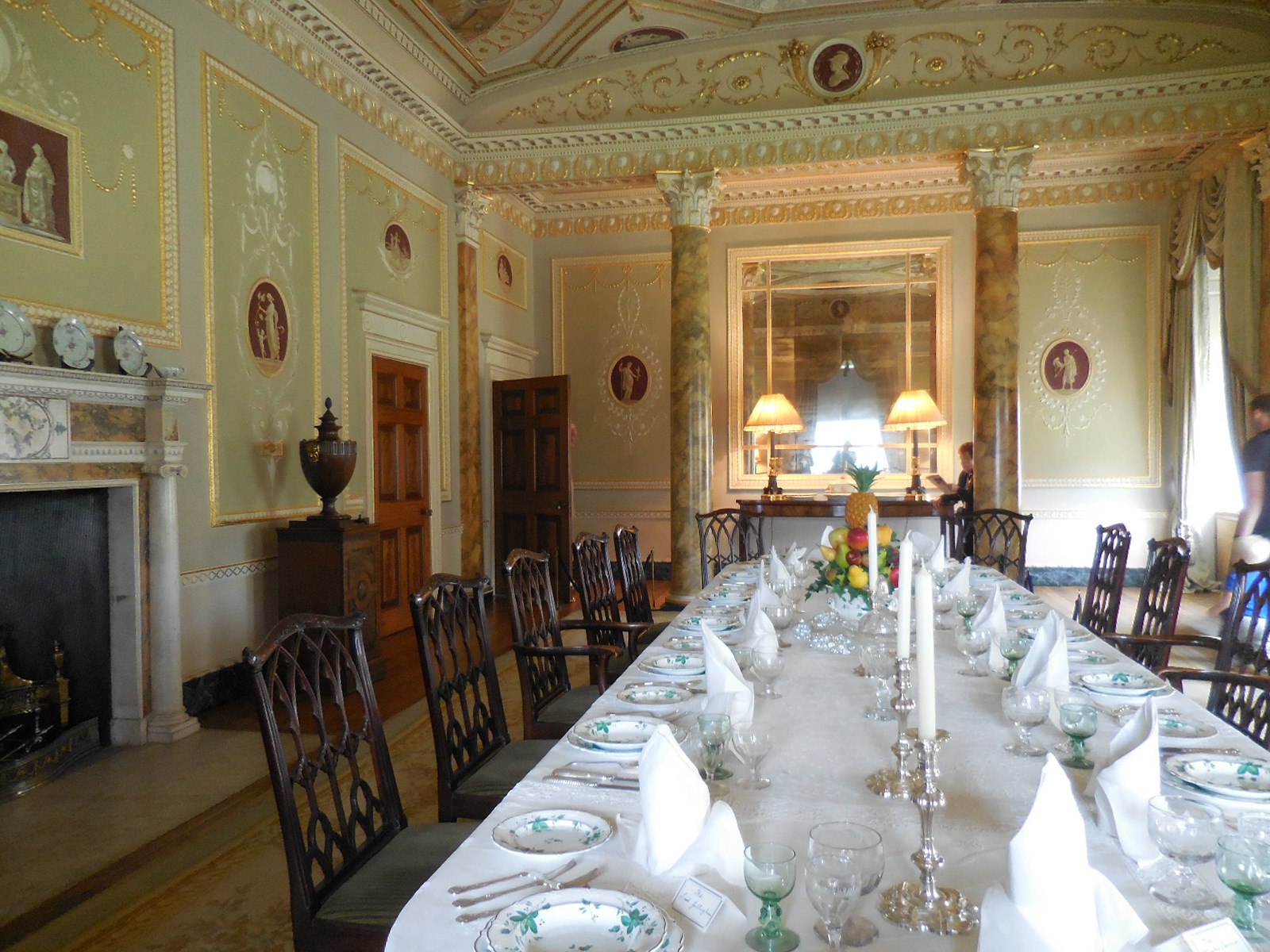
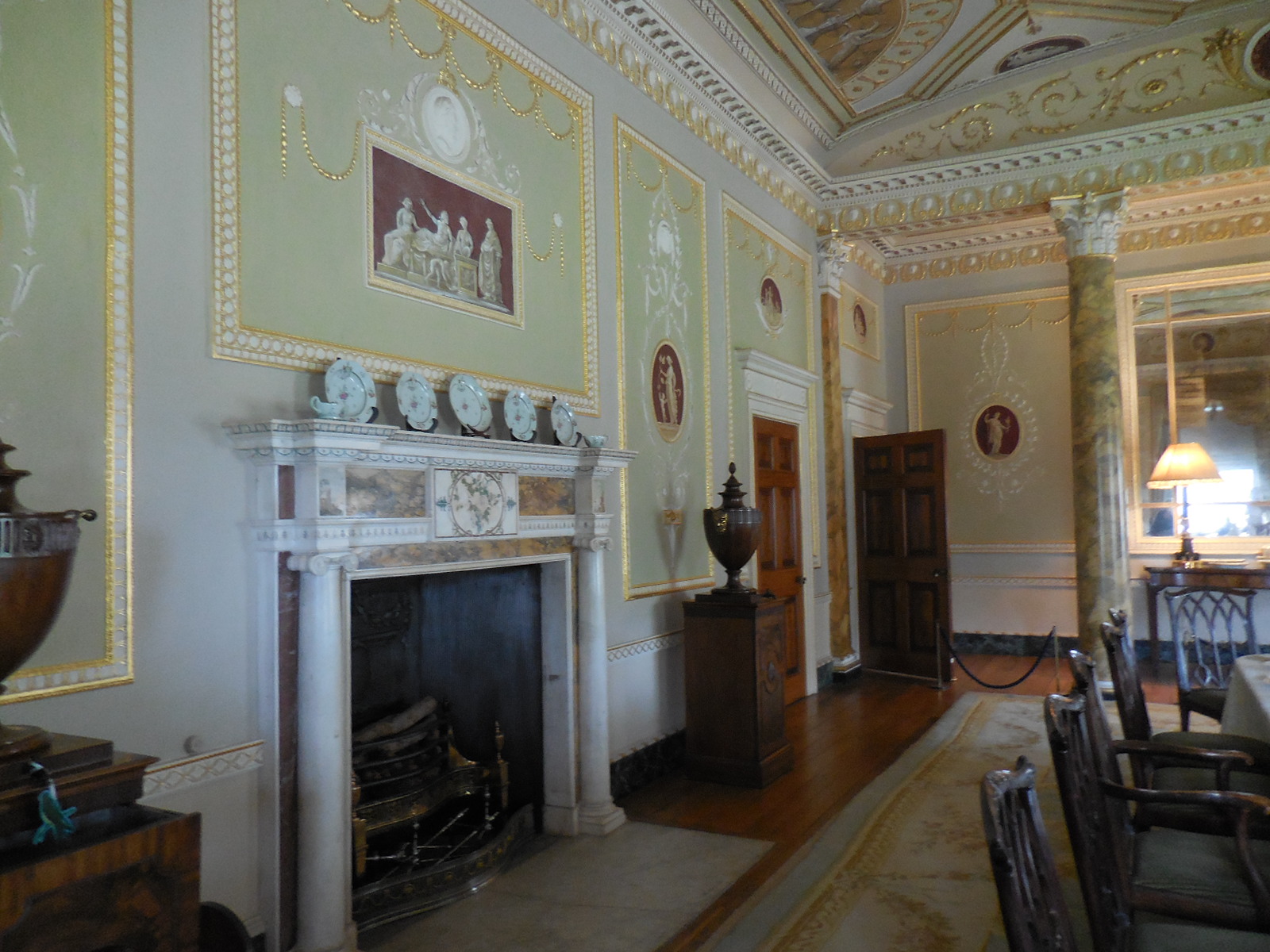
Dining Room

In the dining room, more influences of the Adam Brothers are found in the wall decoration.  
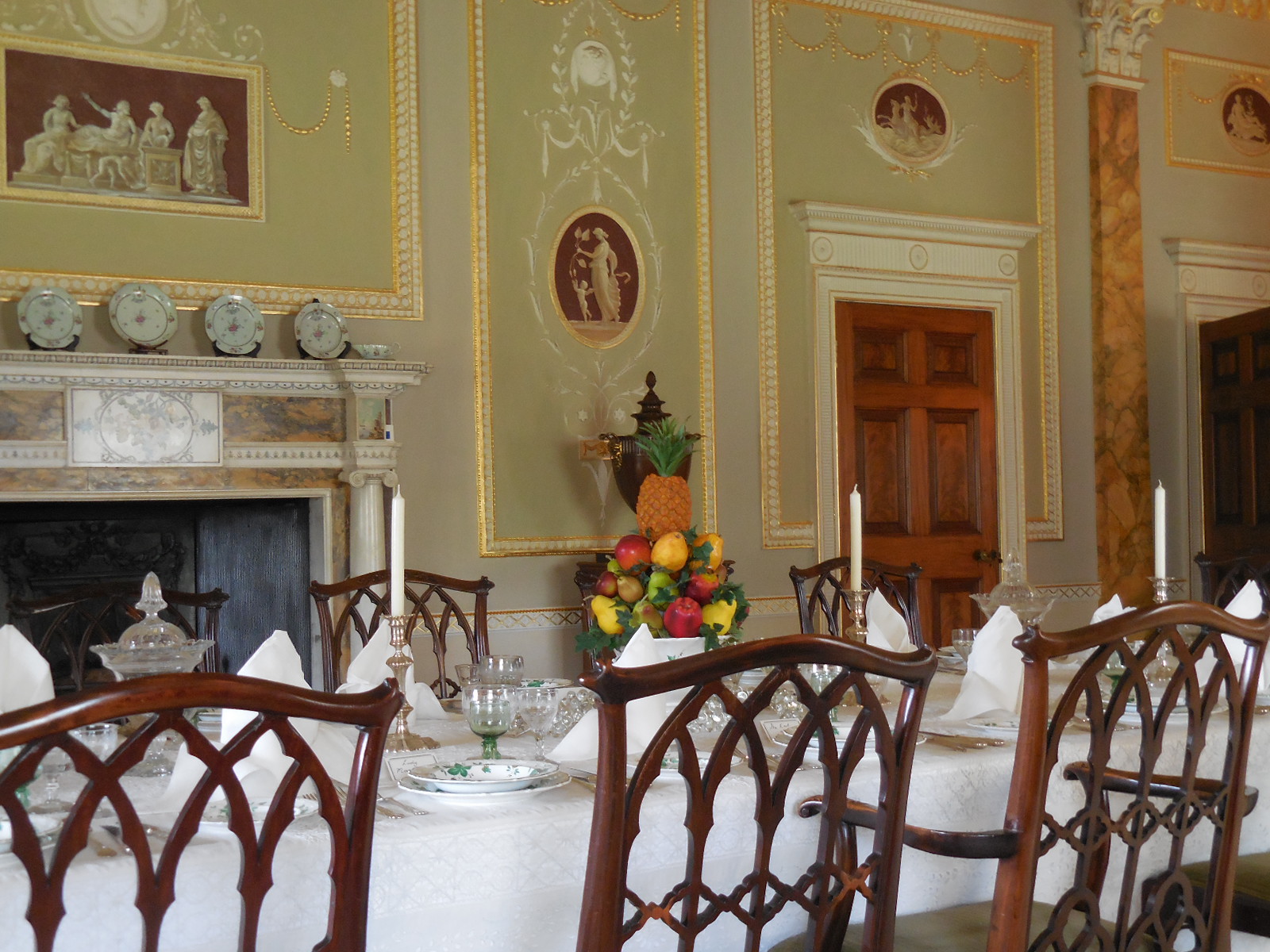
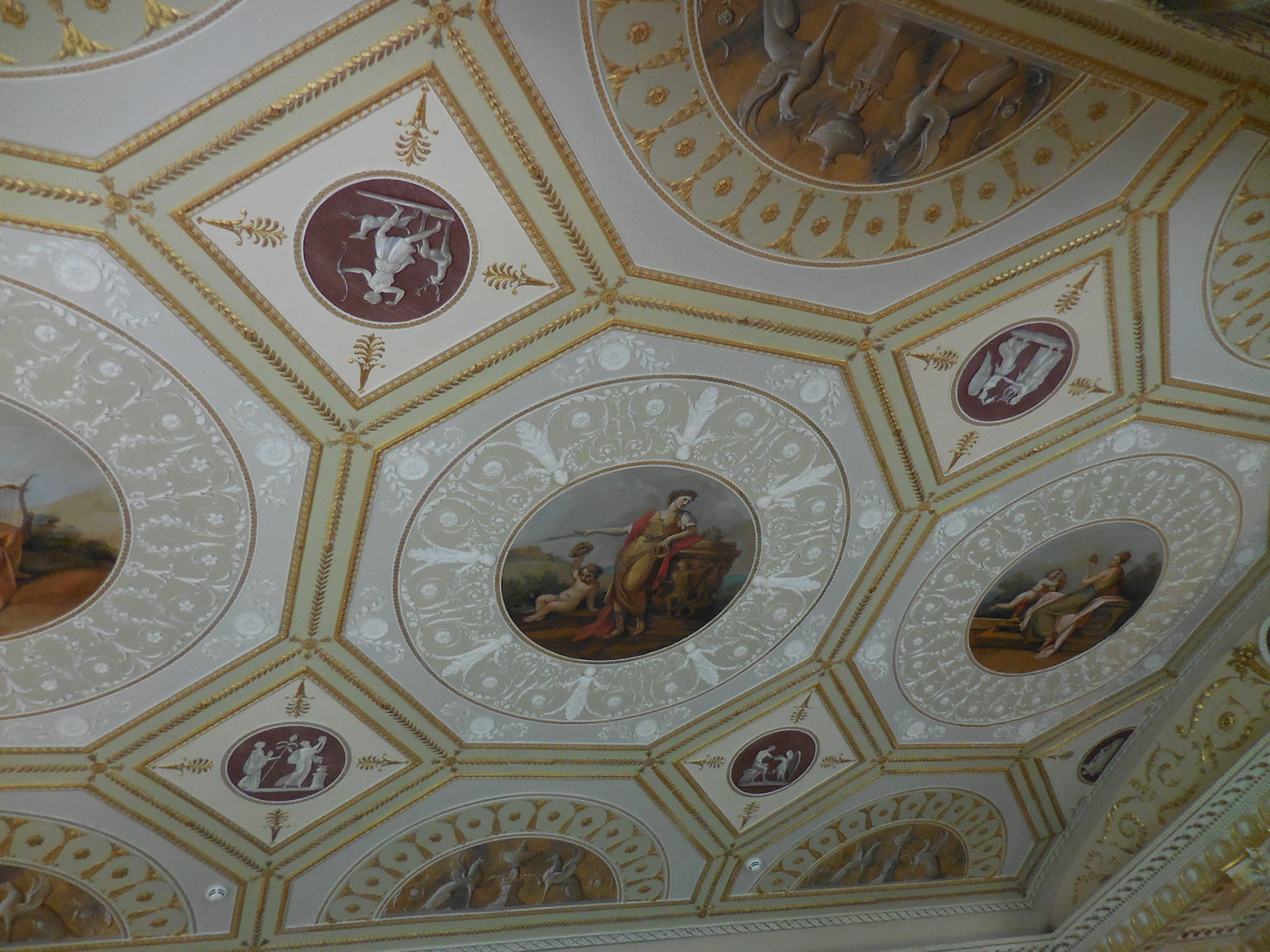
The ceiling lunettes and medallions show Roman scenes.
A screen of scagliola columns at one end of the dining room.

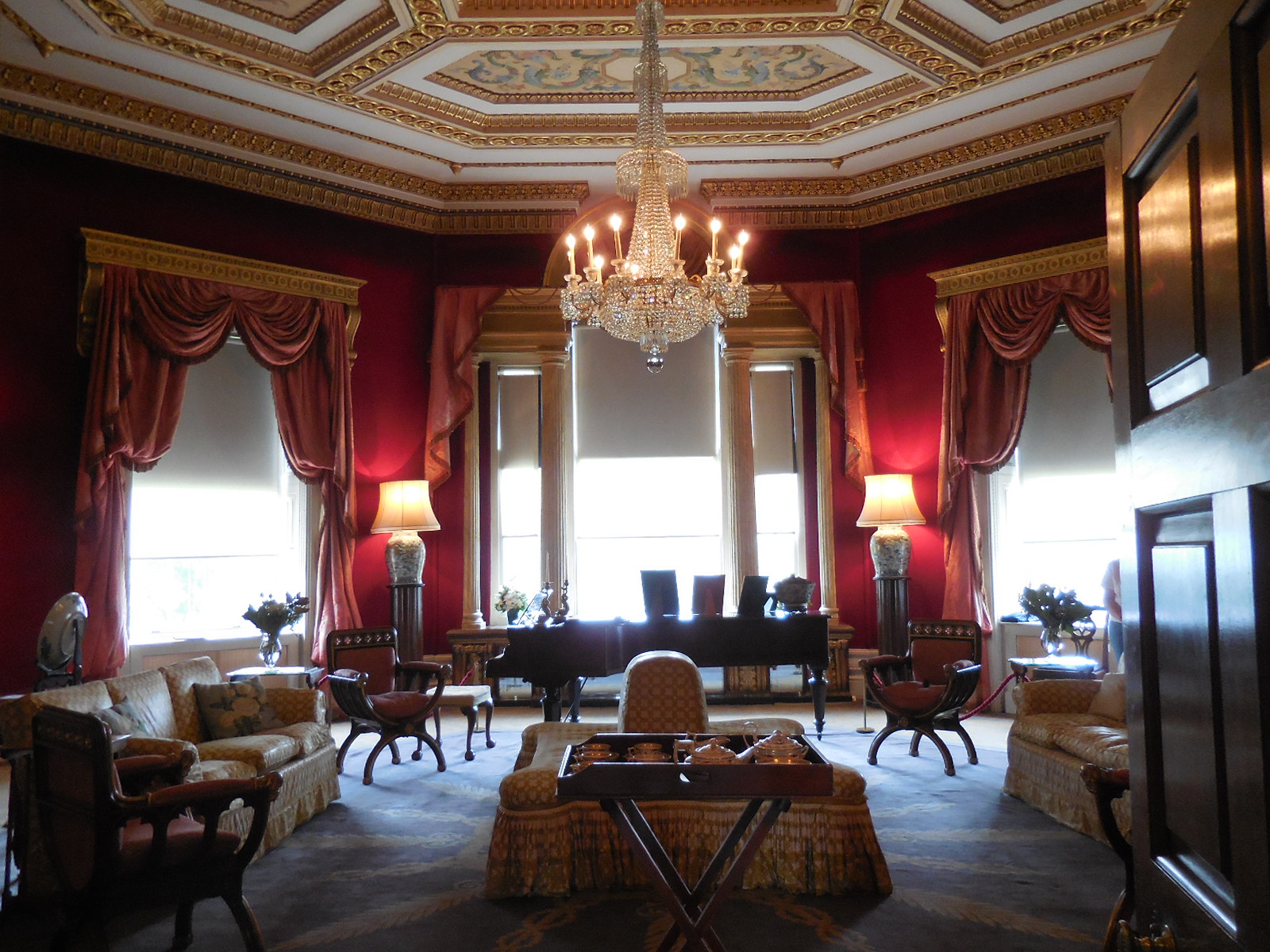
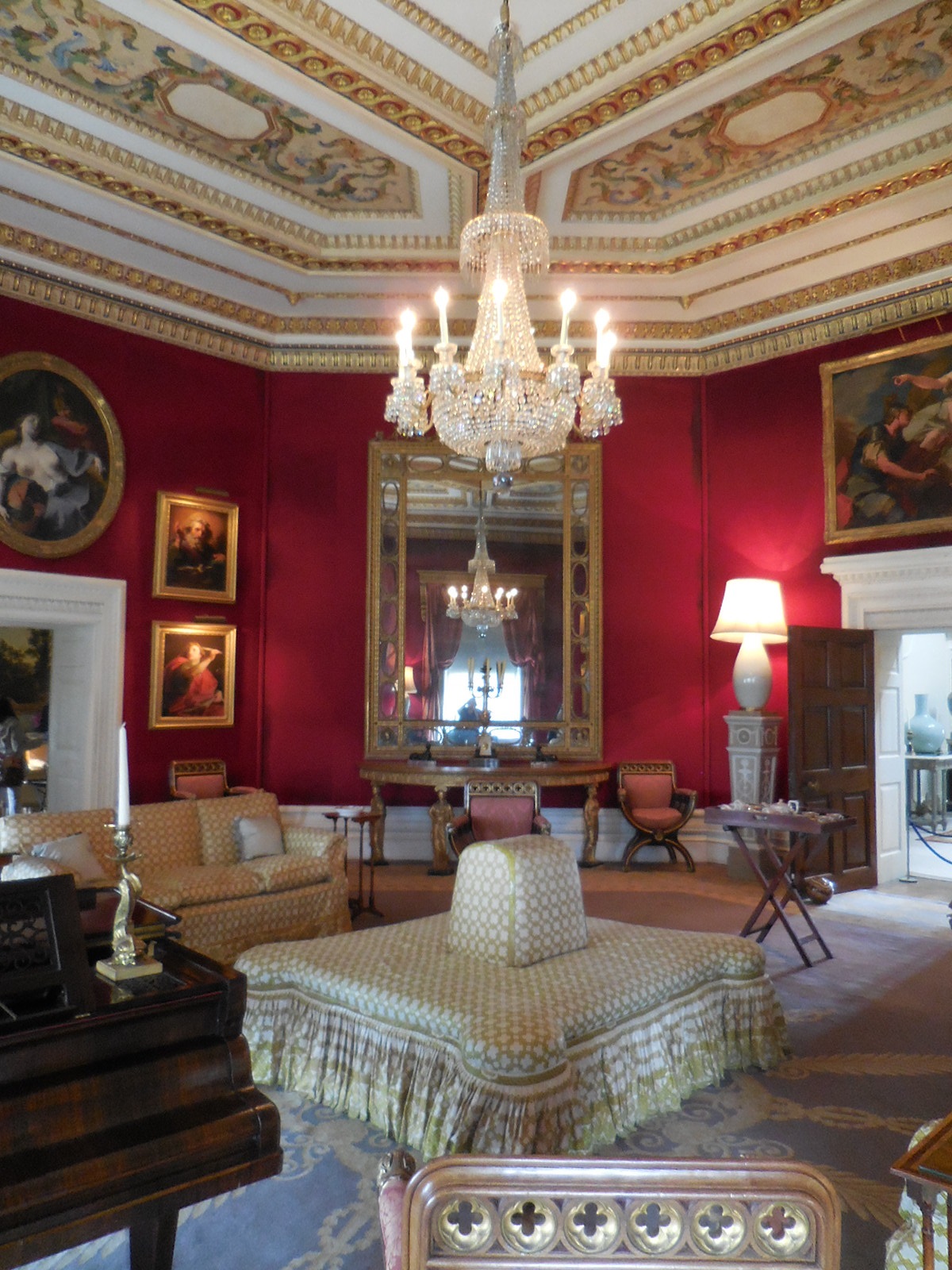
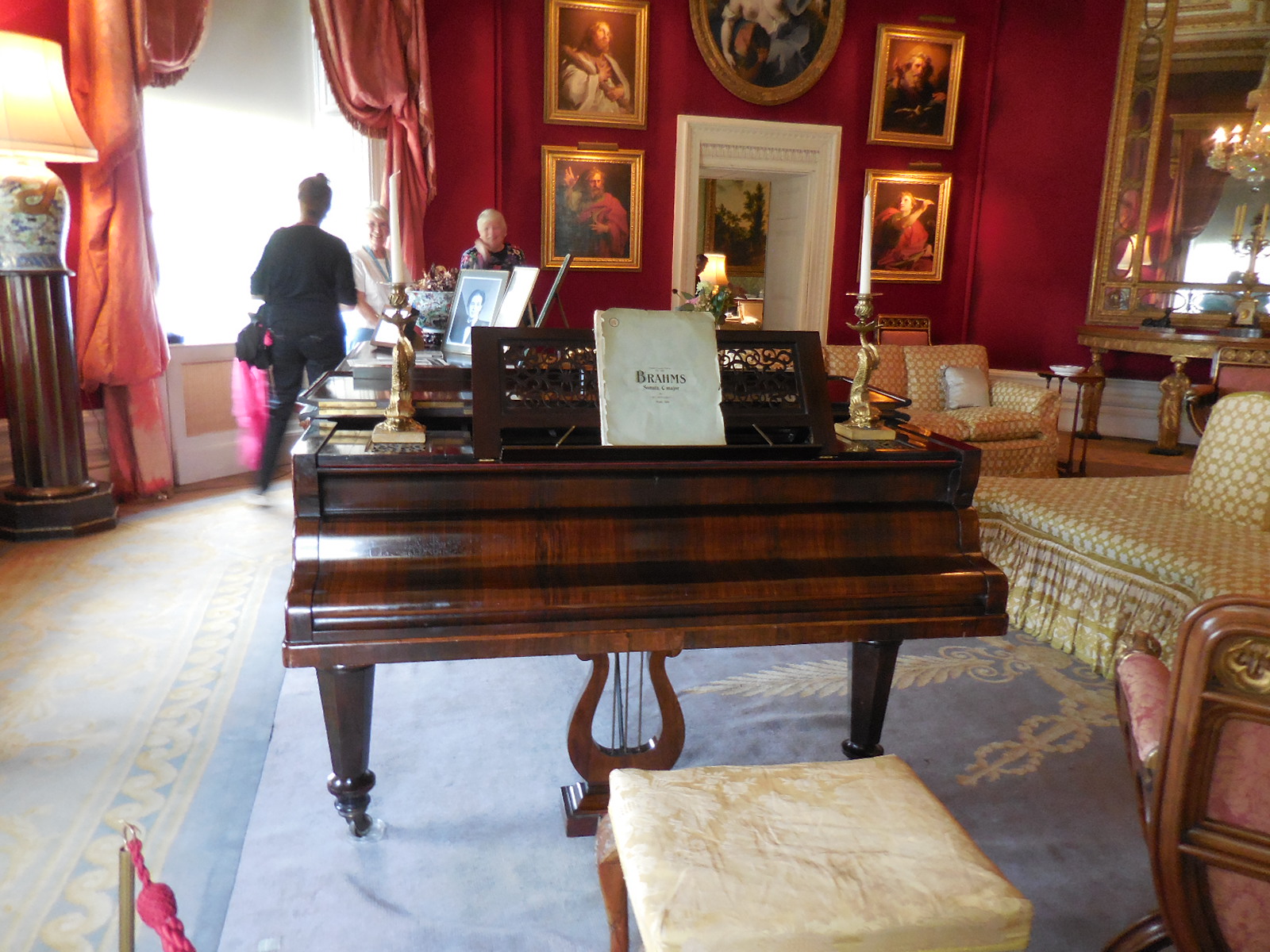
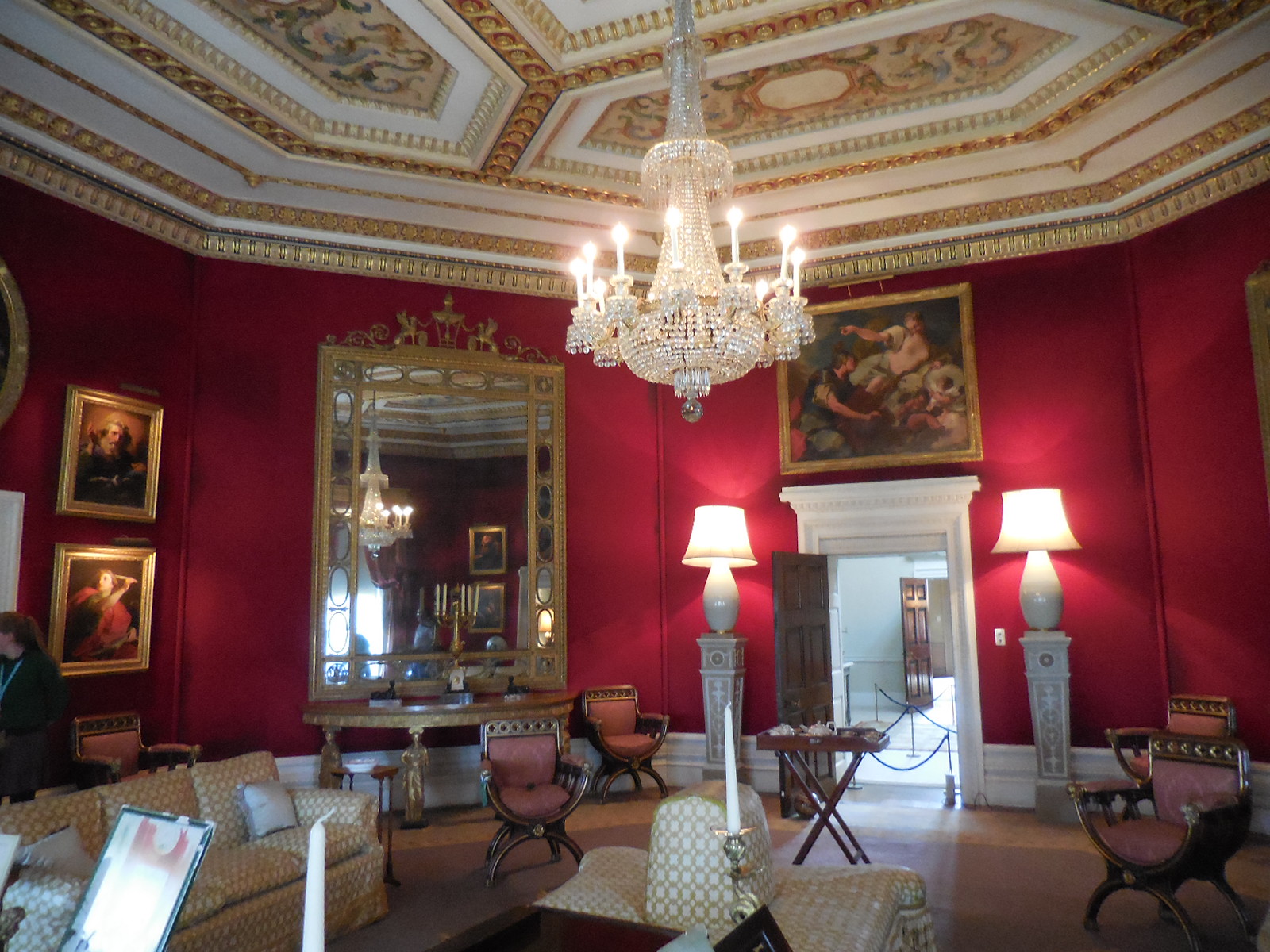
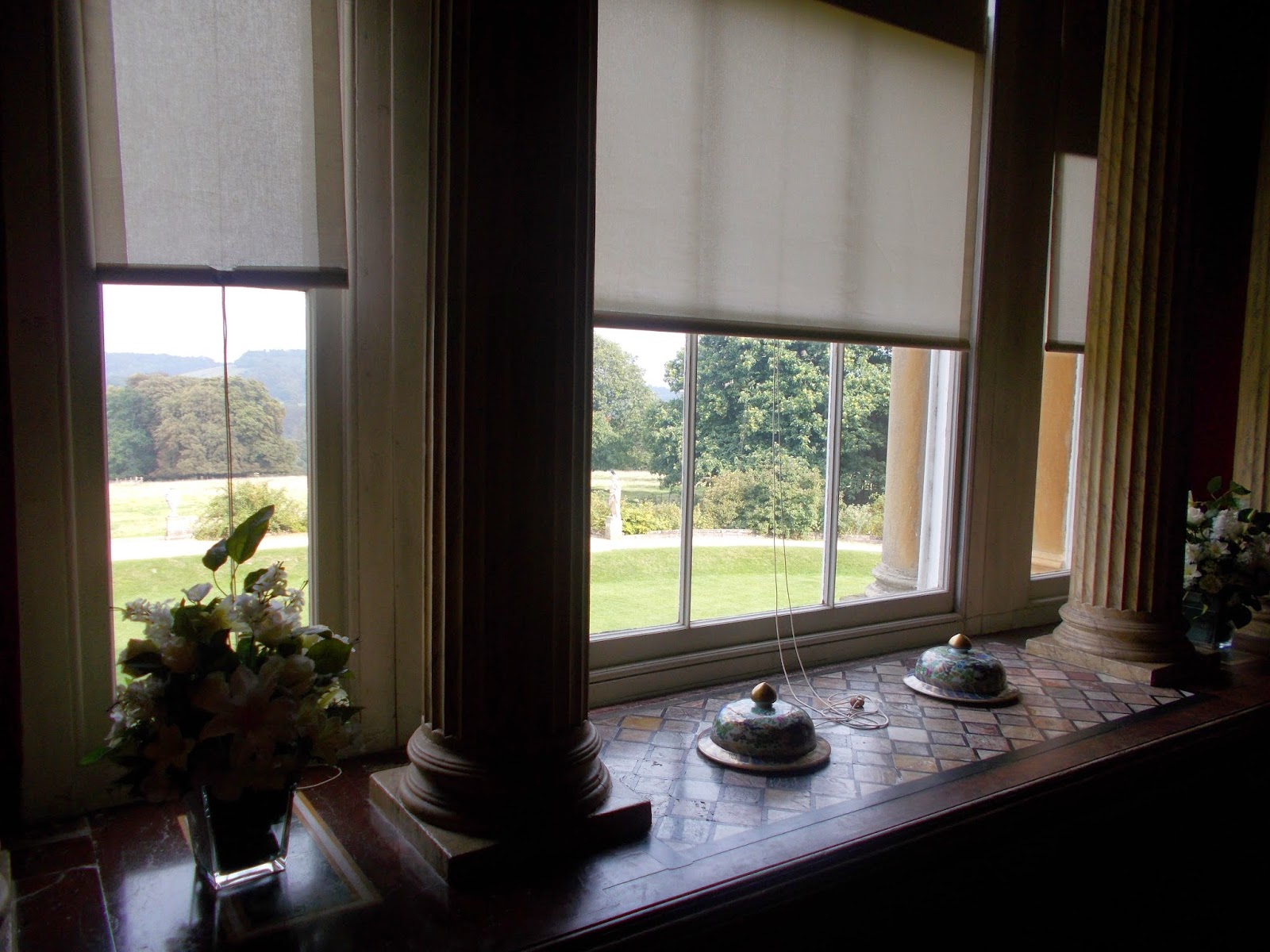
At the center back of the house is the Octagon Drawing Room. Venetian windows overlook the park and beyond to the Thames.  

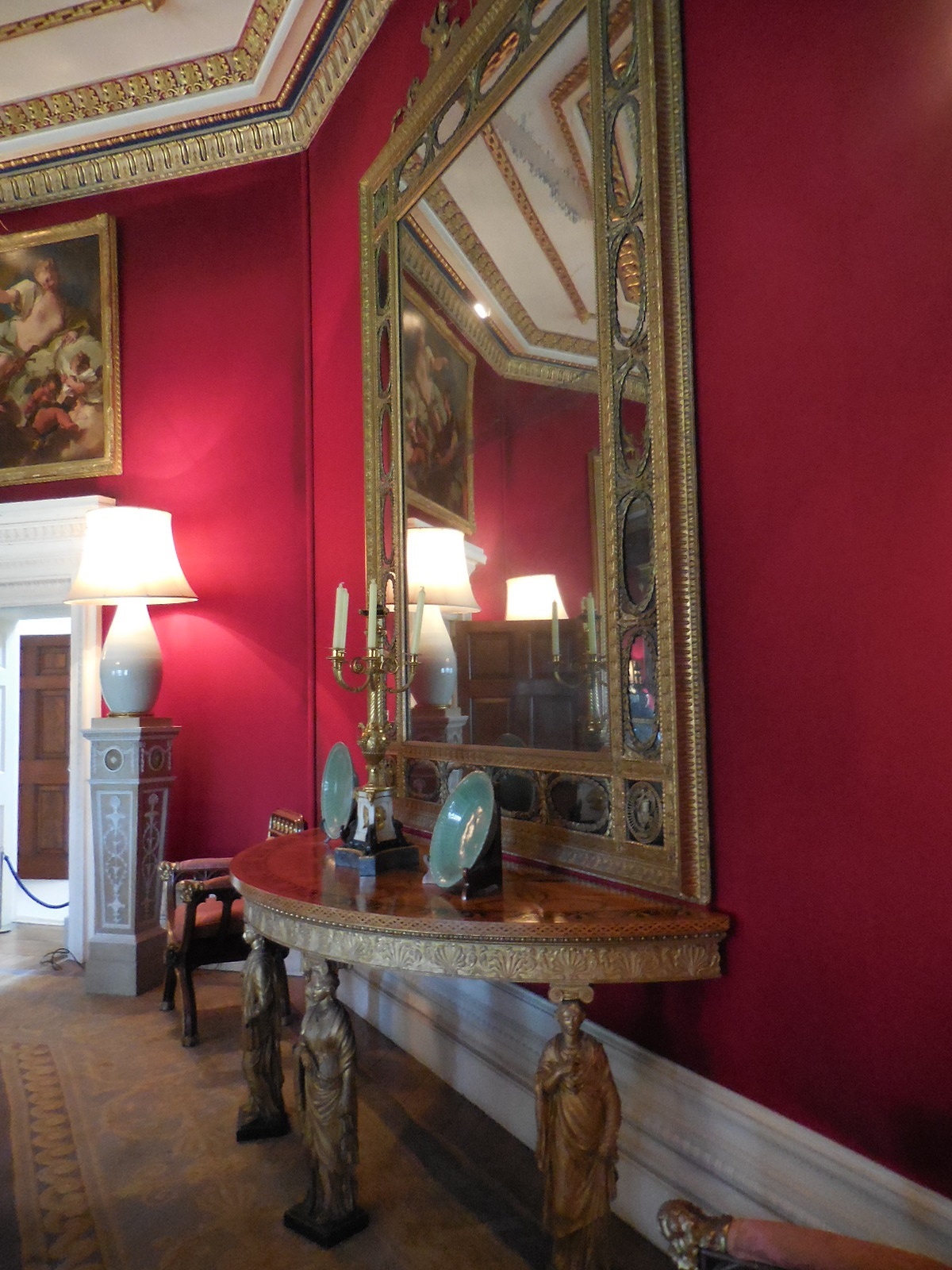
Pier Glass and table
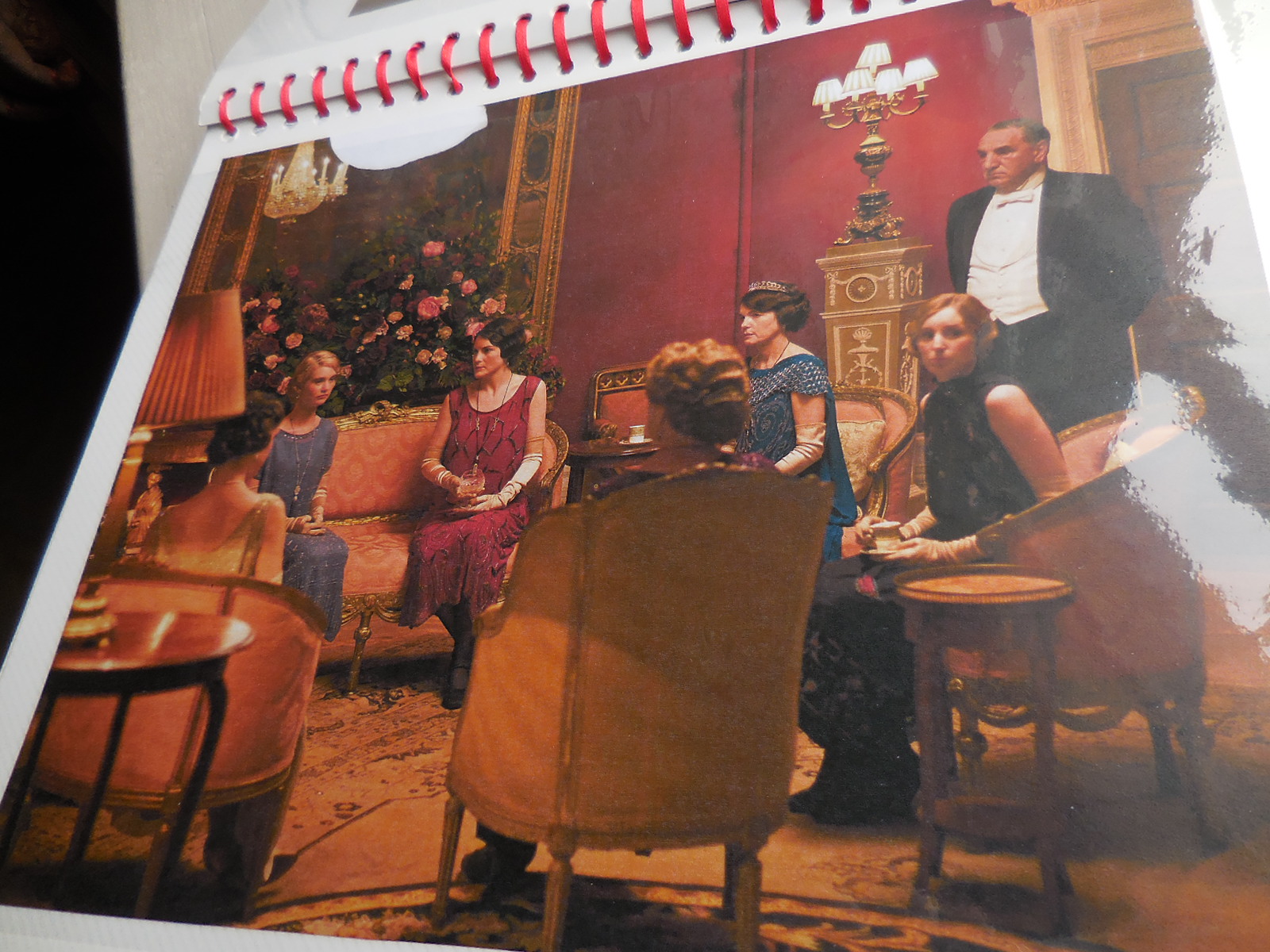
Display of shots from filming of Downton Abbey which used the Octagon Drawing Room to serve as the drawing room of the Grantham House, the family’s London residence. The dining room was also used in DA for ballroom scenes.
Perfect for the center, and quite clearly 20th century.
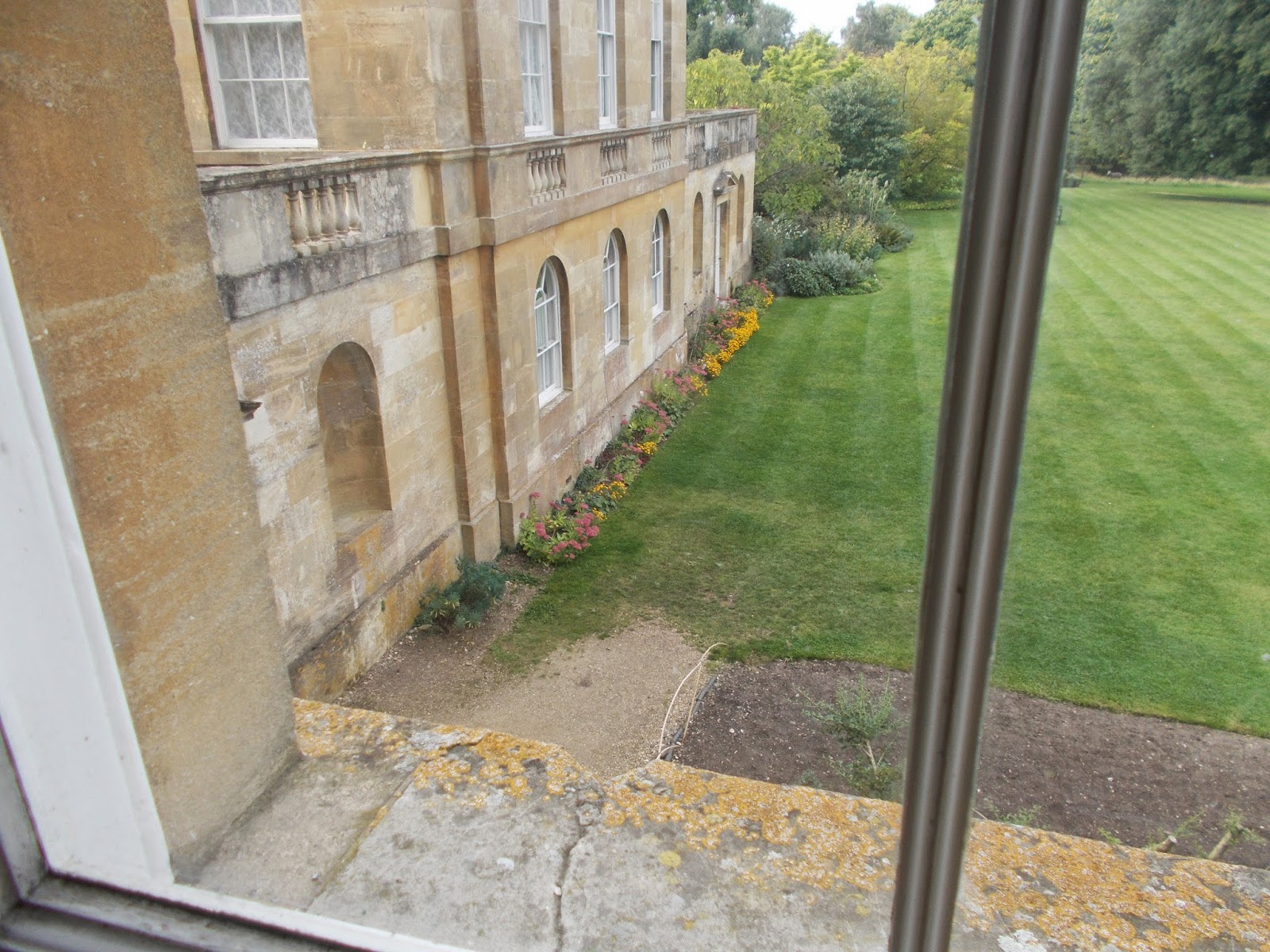
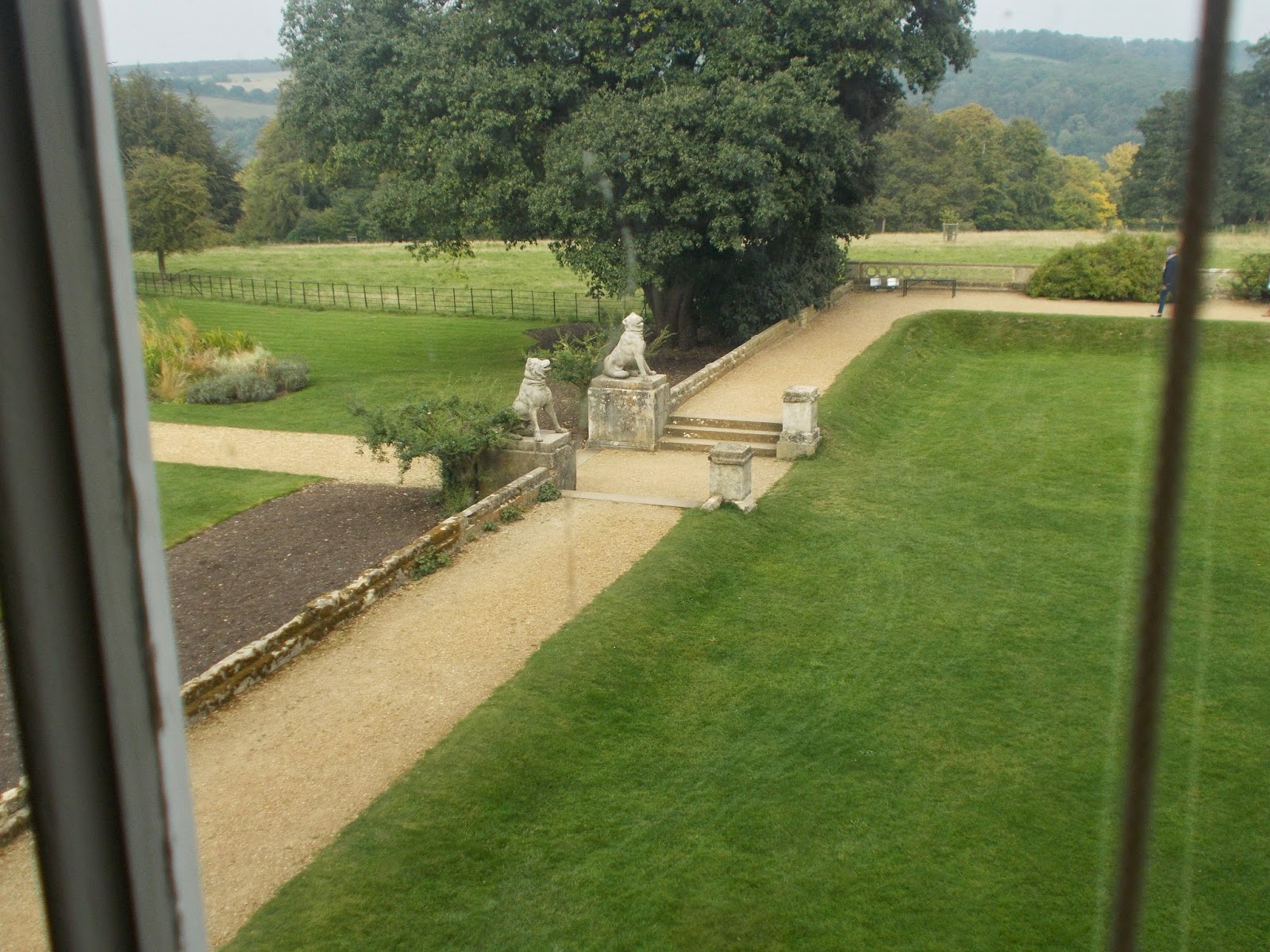
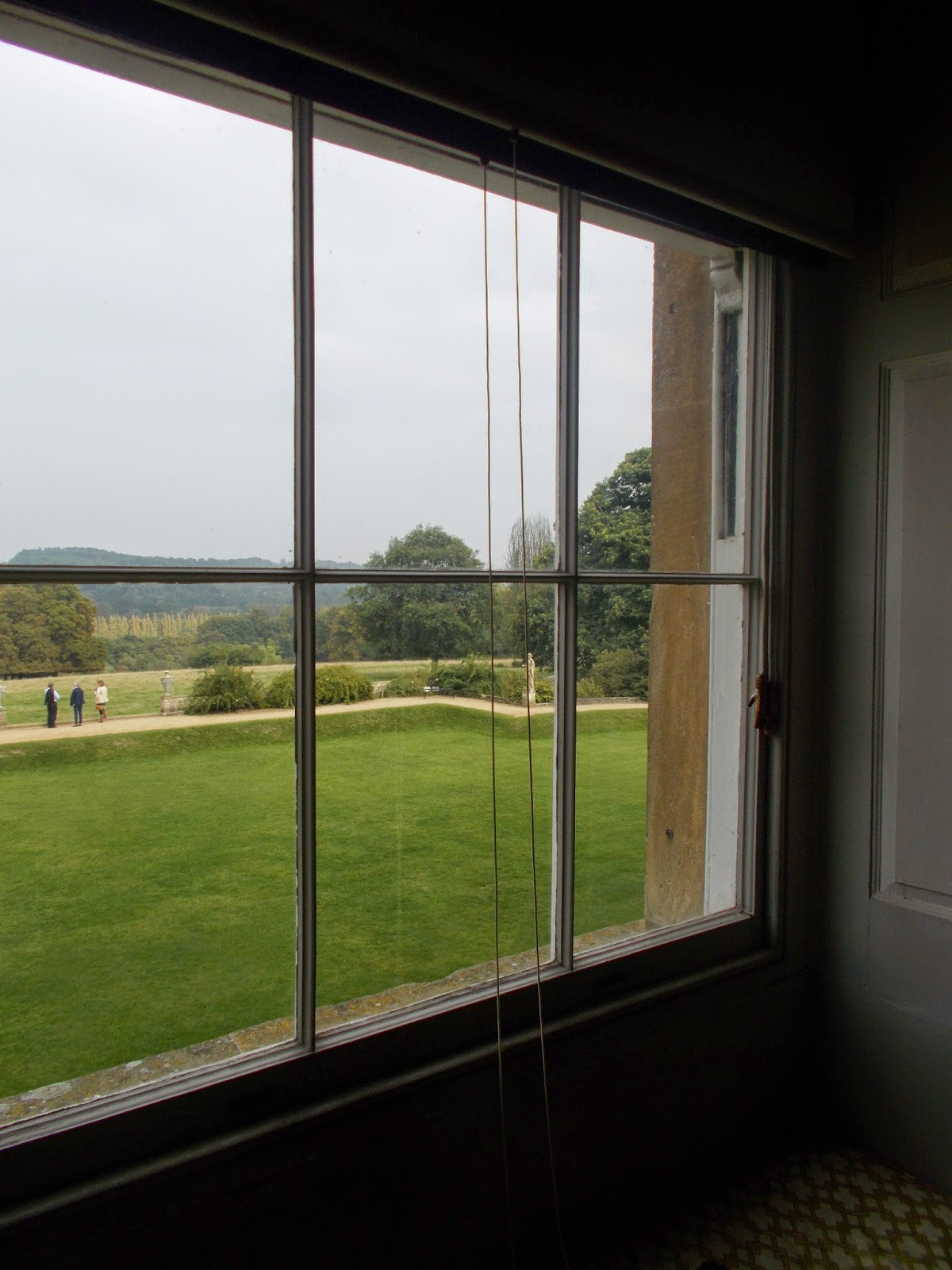
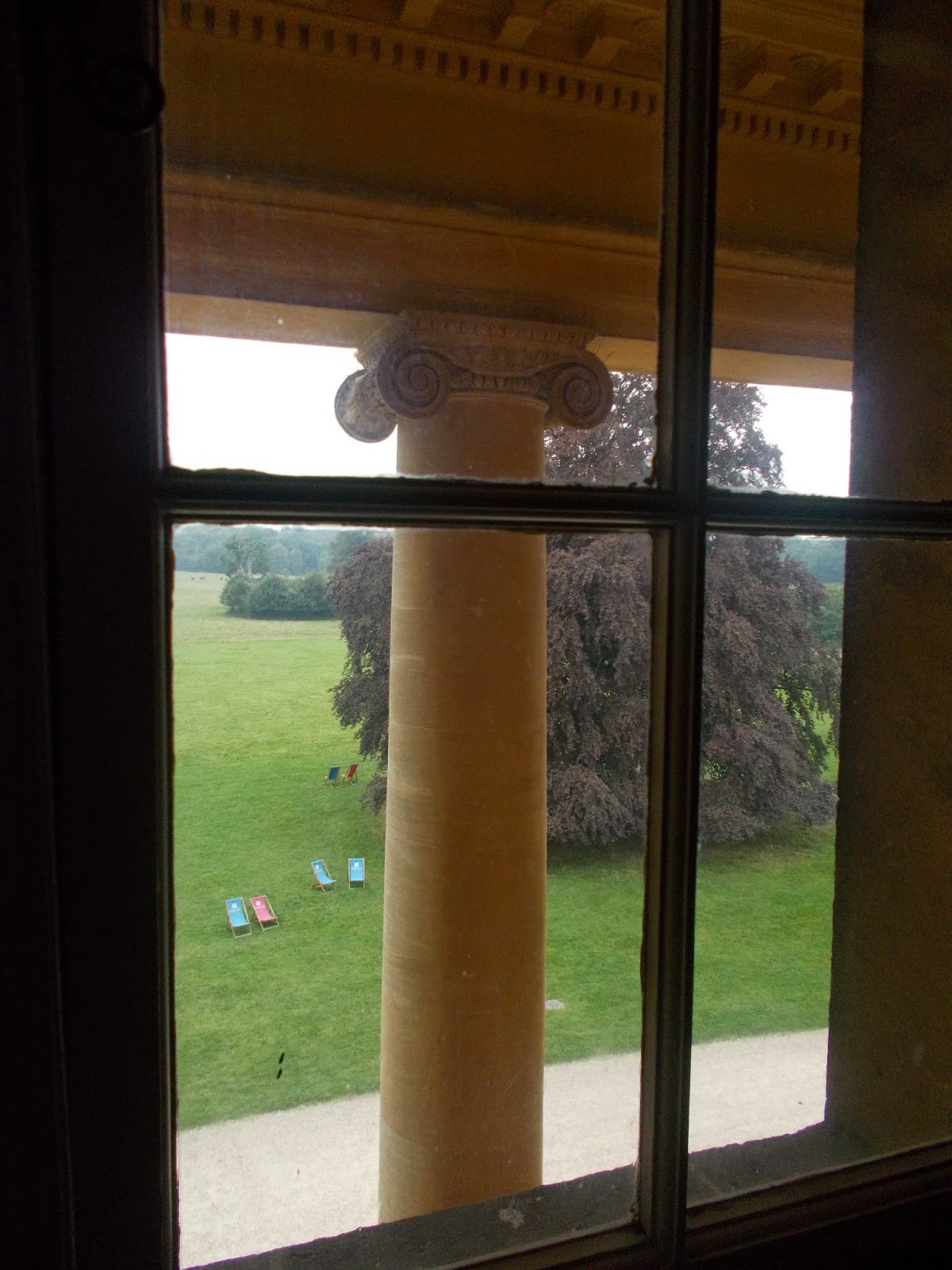
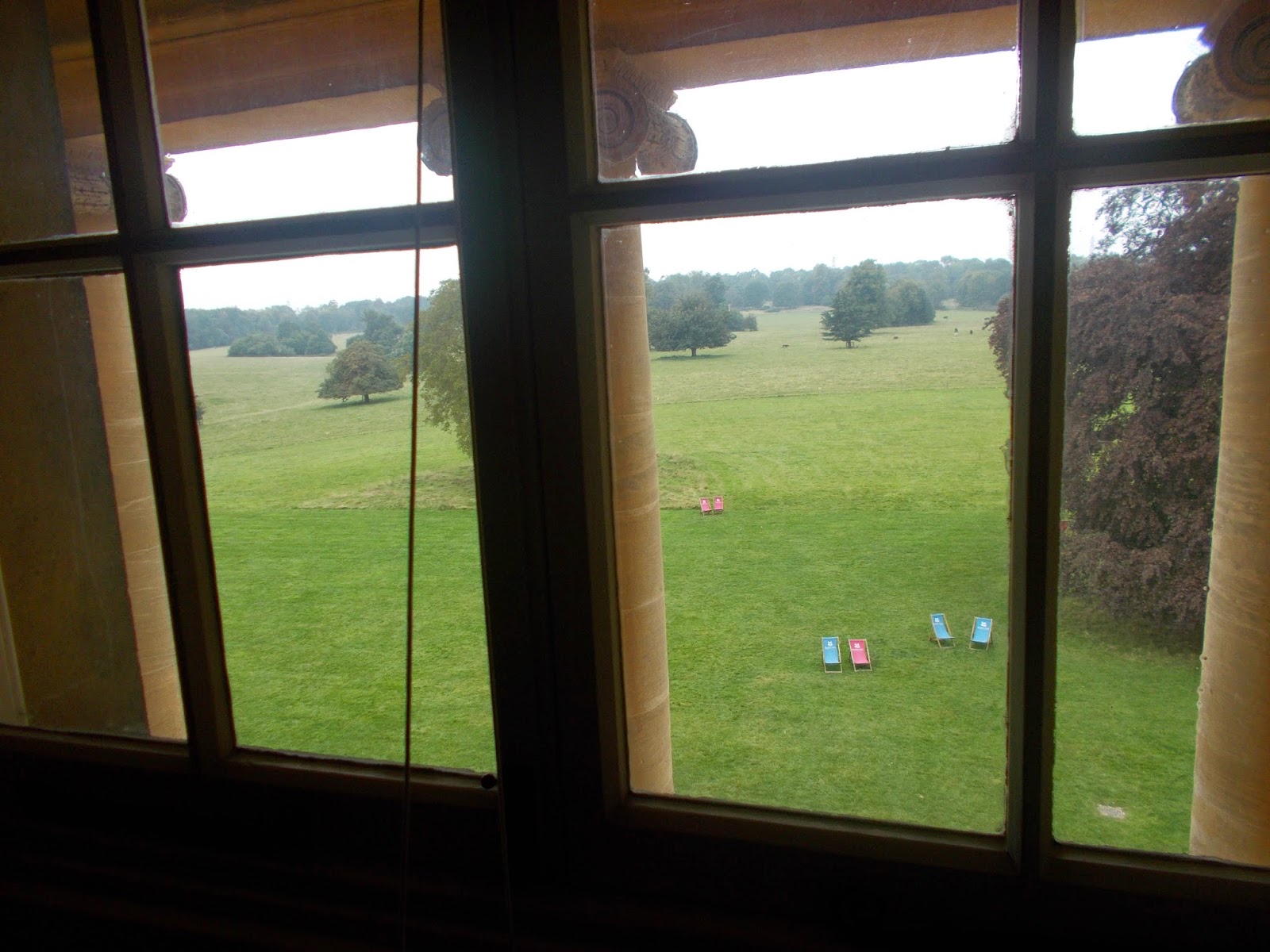
Kristine and Nancy have been peeking out the windows.

So I had to have a peek too!

Pier glass and table

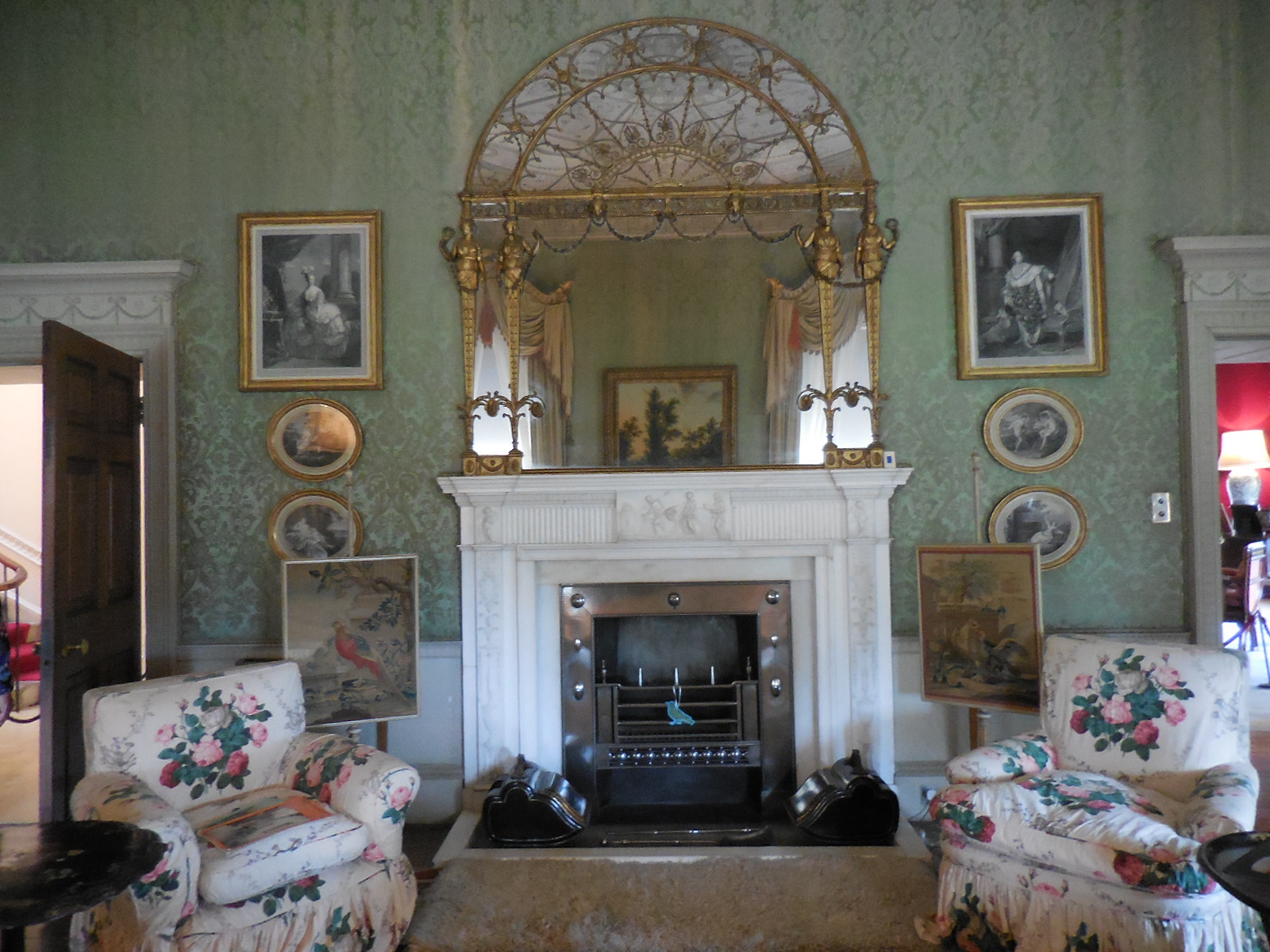
Adjacent to the Octagon Room is the Green Drawing Room, originally the breakfast room. 

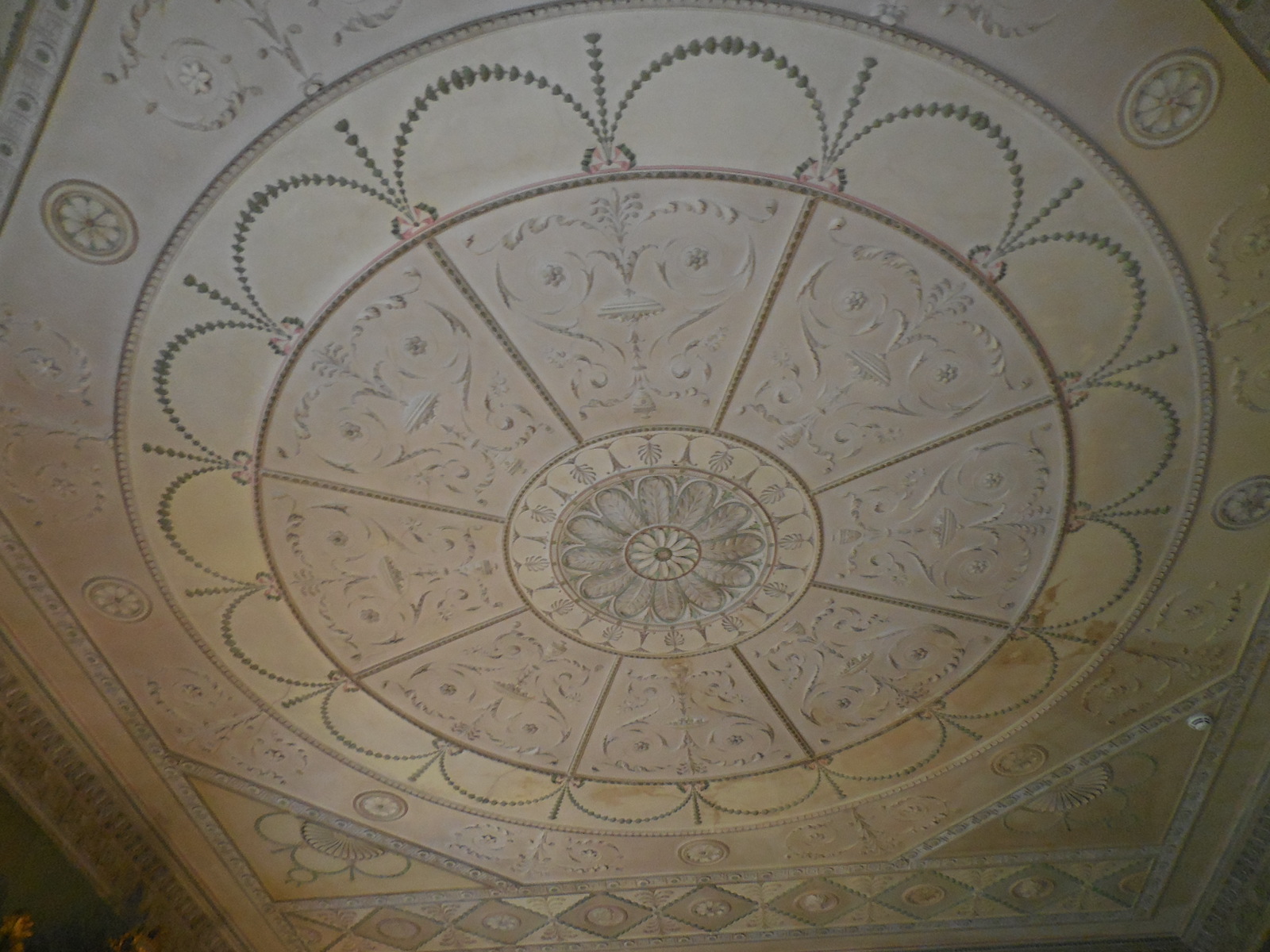
Ceiling medallion in the Green Drawing Room.

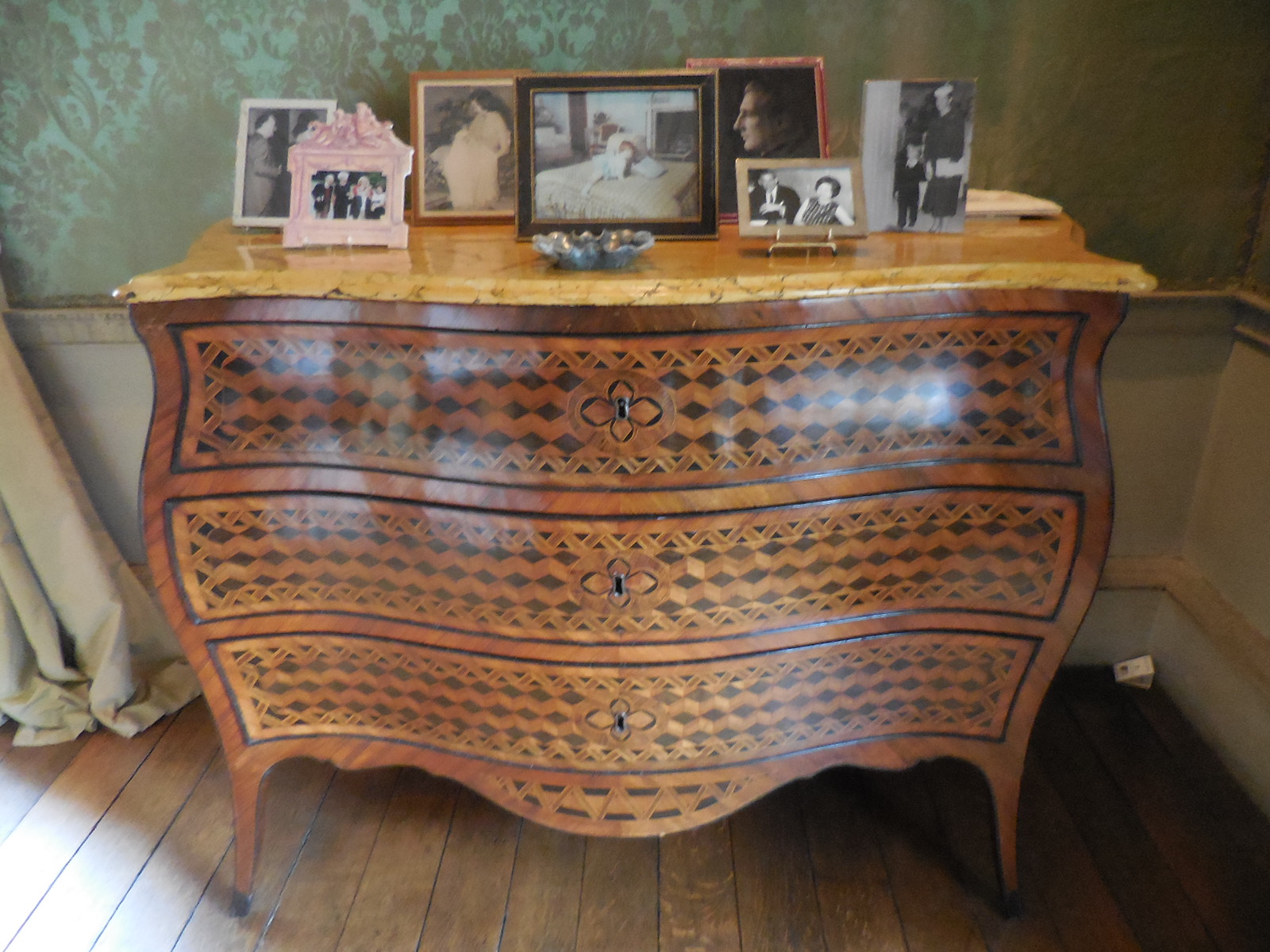
A serpentine marquetry commode with marble top shows photos from the Iliffe days.

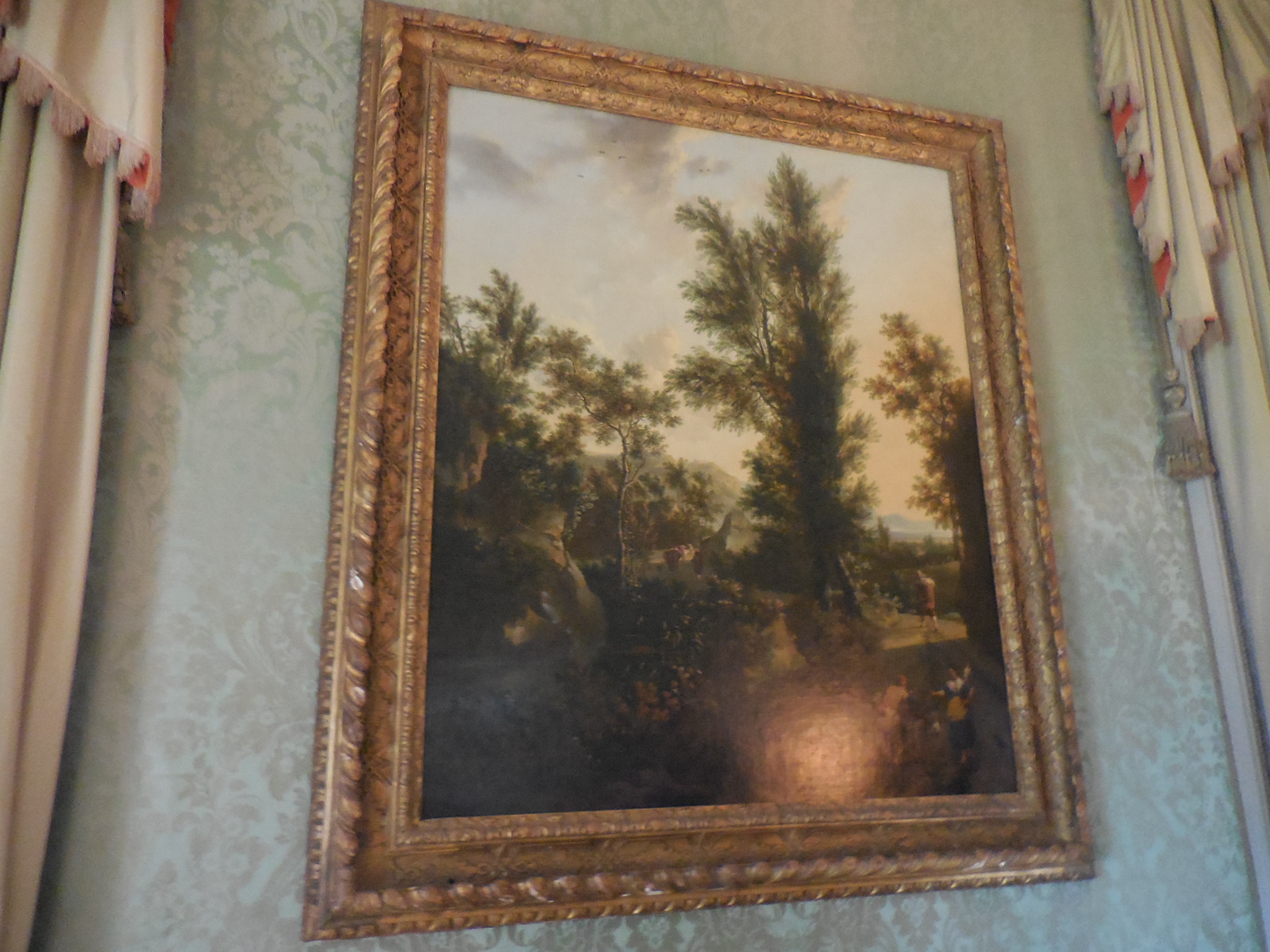
One of the collection of landscapes in the room

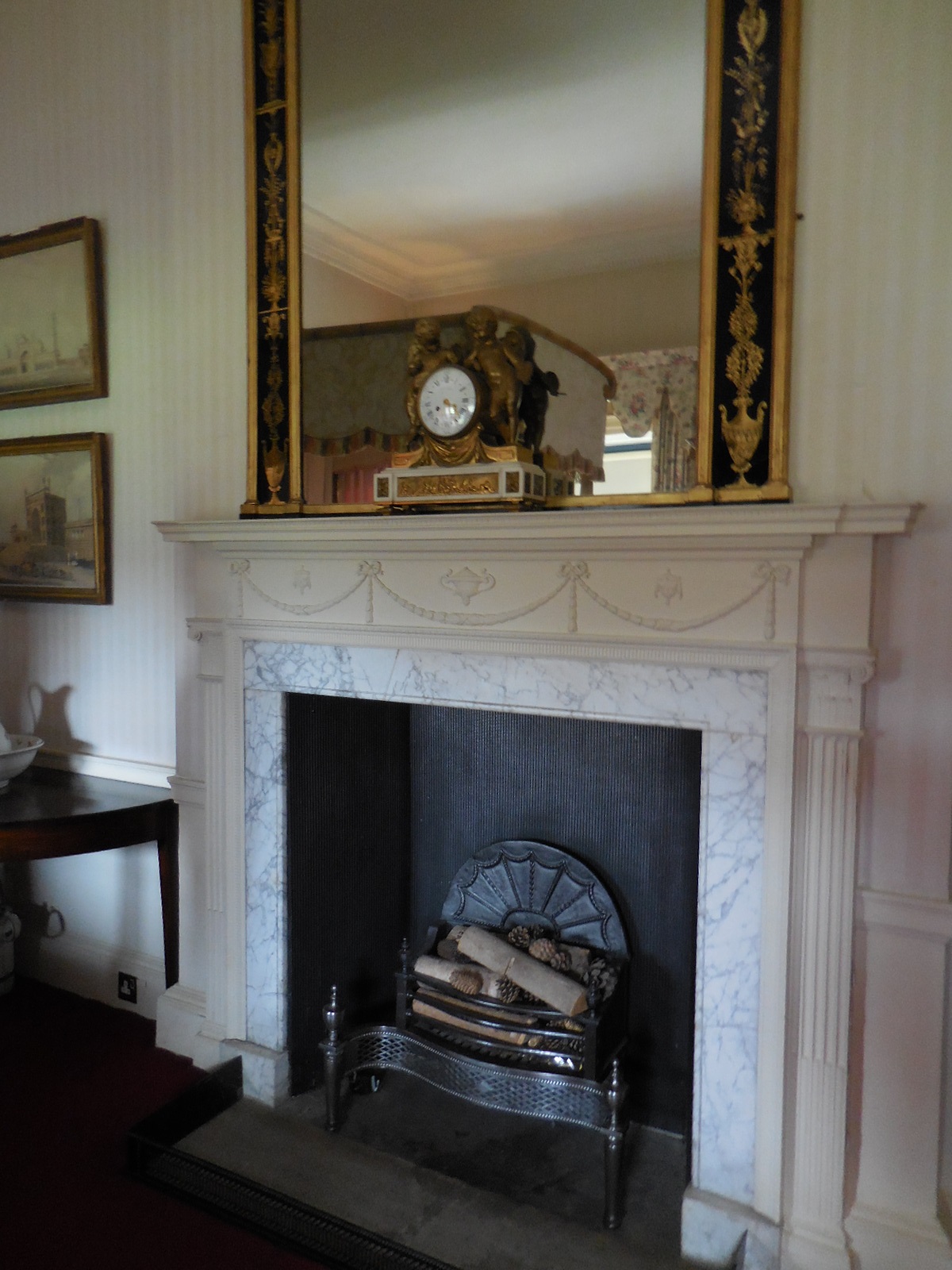
The chimneypiece is original to the house and
 may be the work of sculptor Richard Westmacott the elder

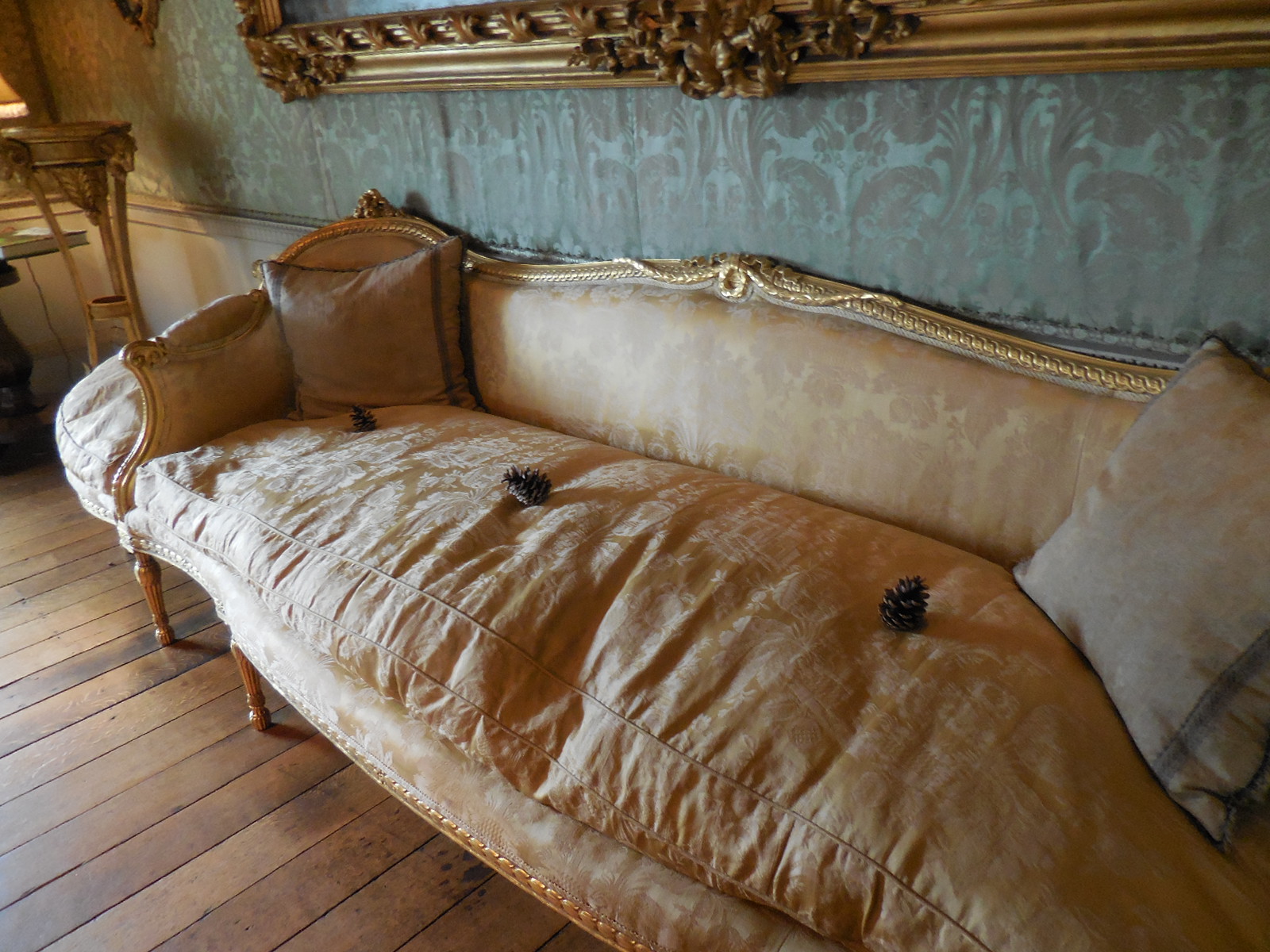
Dried thistles reminded us not to sit on the damask sofa

Cupids play on the panels of this commode

Diagram of the Piano Nobile (1st floor) from Wikipedia

The first floor. 1: The four service courts; 2: Portico and West front; 3: North Pavilion; 4: South Pavilion; 5: Entrance Hall; 6: Staircase Hall; 7: Octagon Drawing Room; 8: Dining Room; 9: Study; 10: Library; 11: Sutherland Room (formerly lady Iliffe’s sitting room); 12: Kitchen (since 1952); 13: larder (?); 14: Green Drawing Room (formerly Breakfast or Small Dining Room).
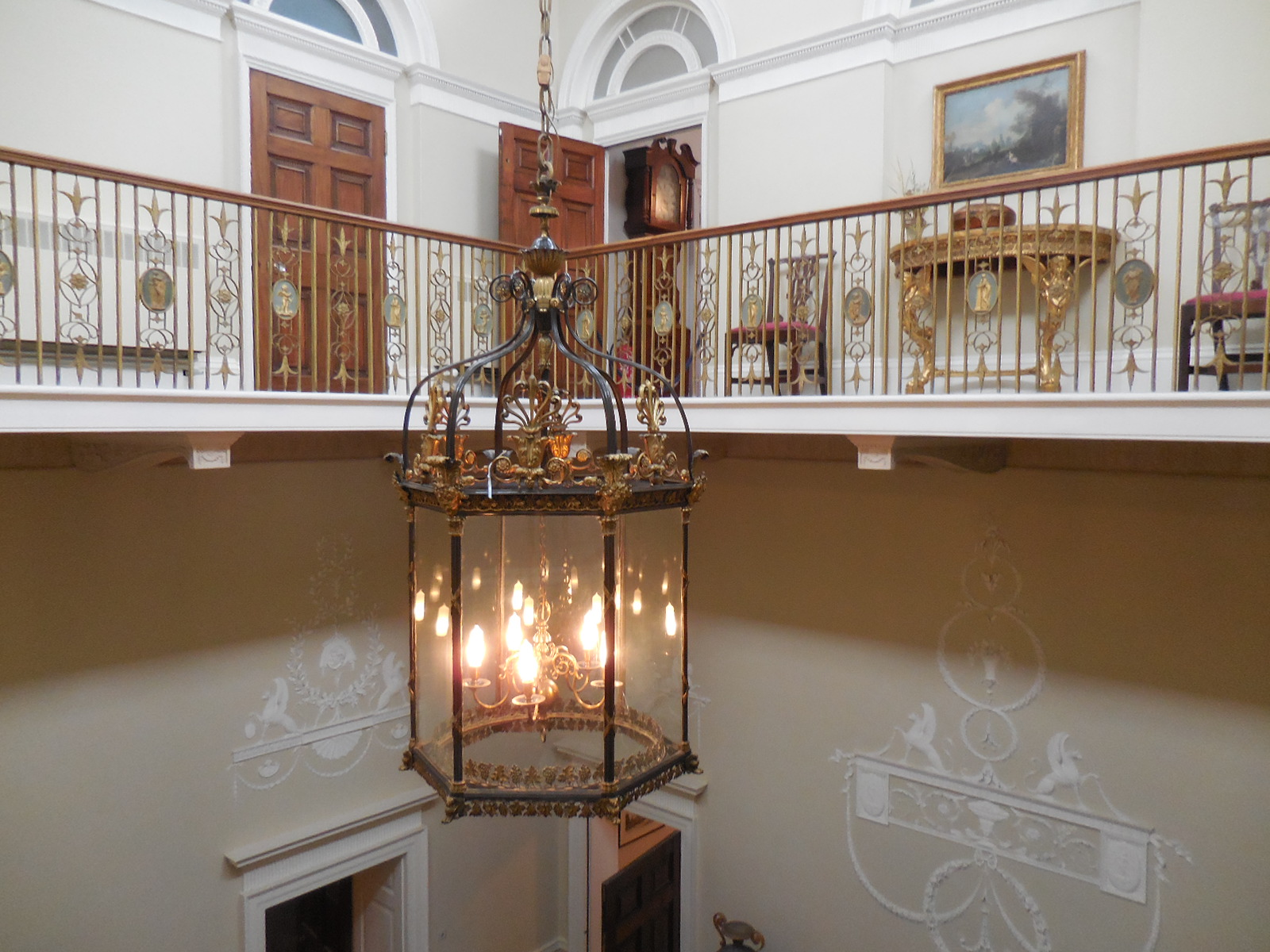
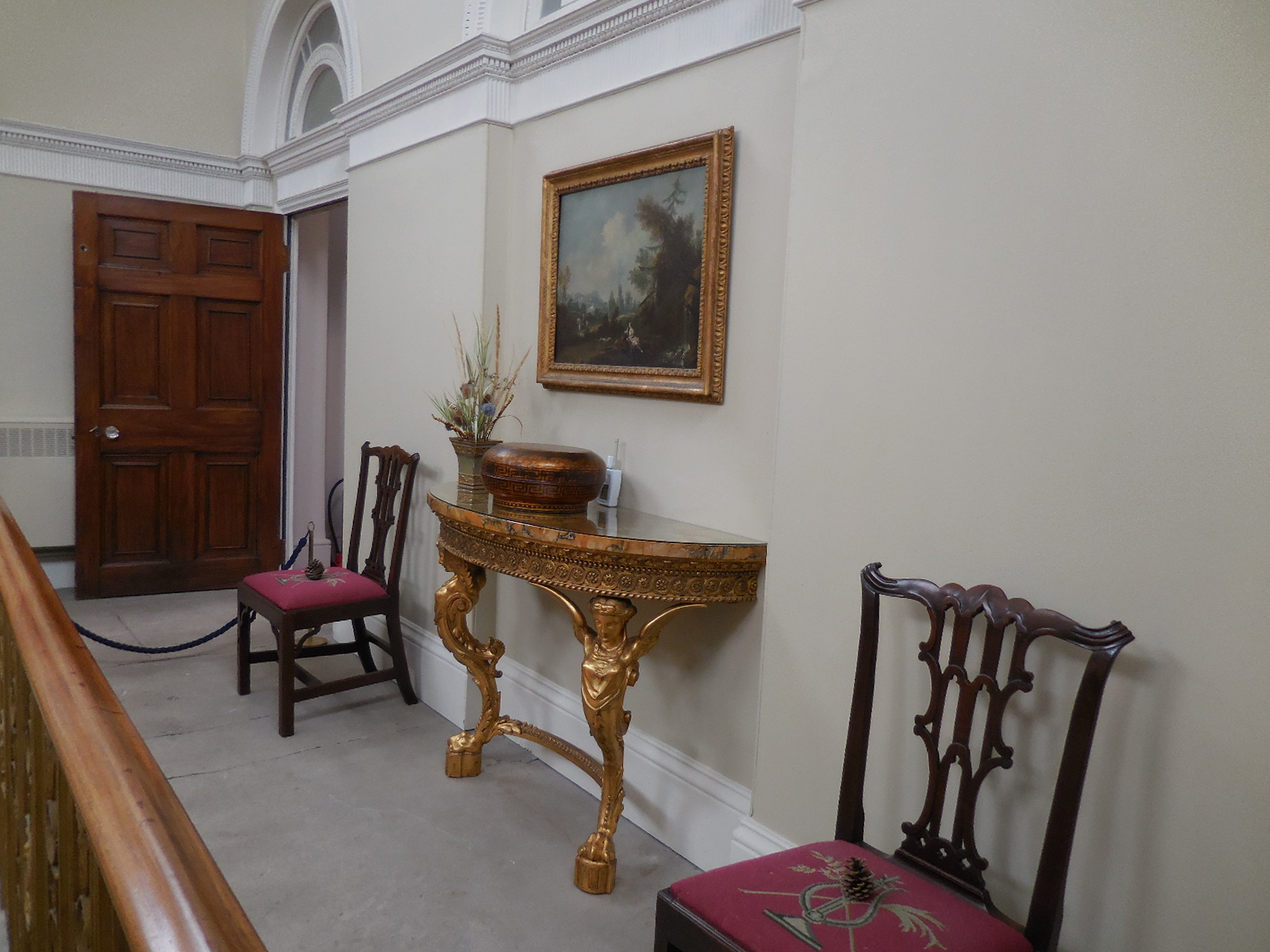
The balcony above the staircase

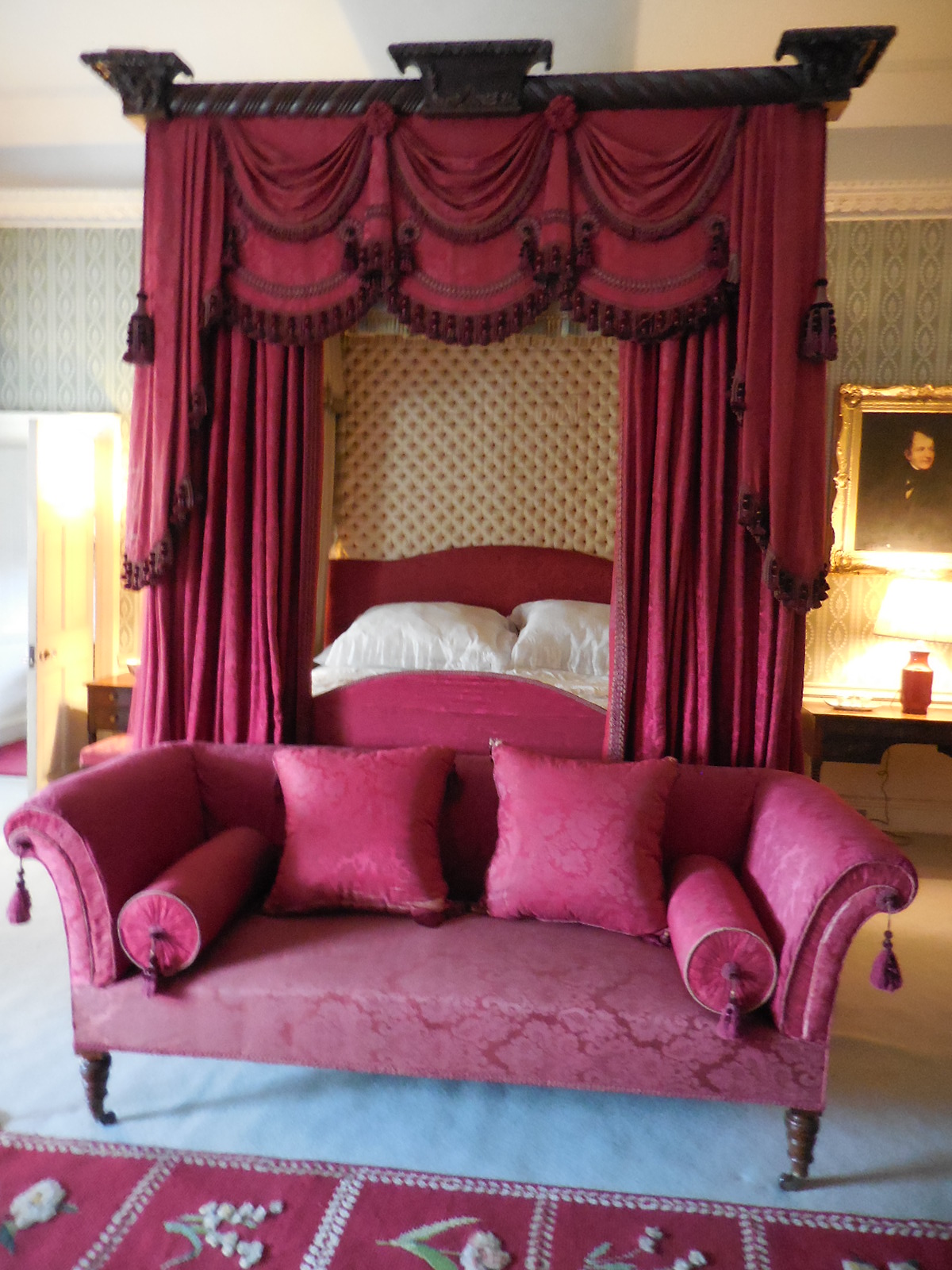
The Crimson Bedroom
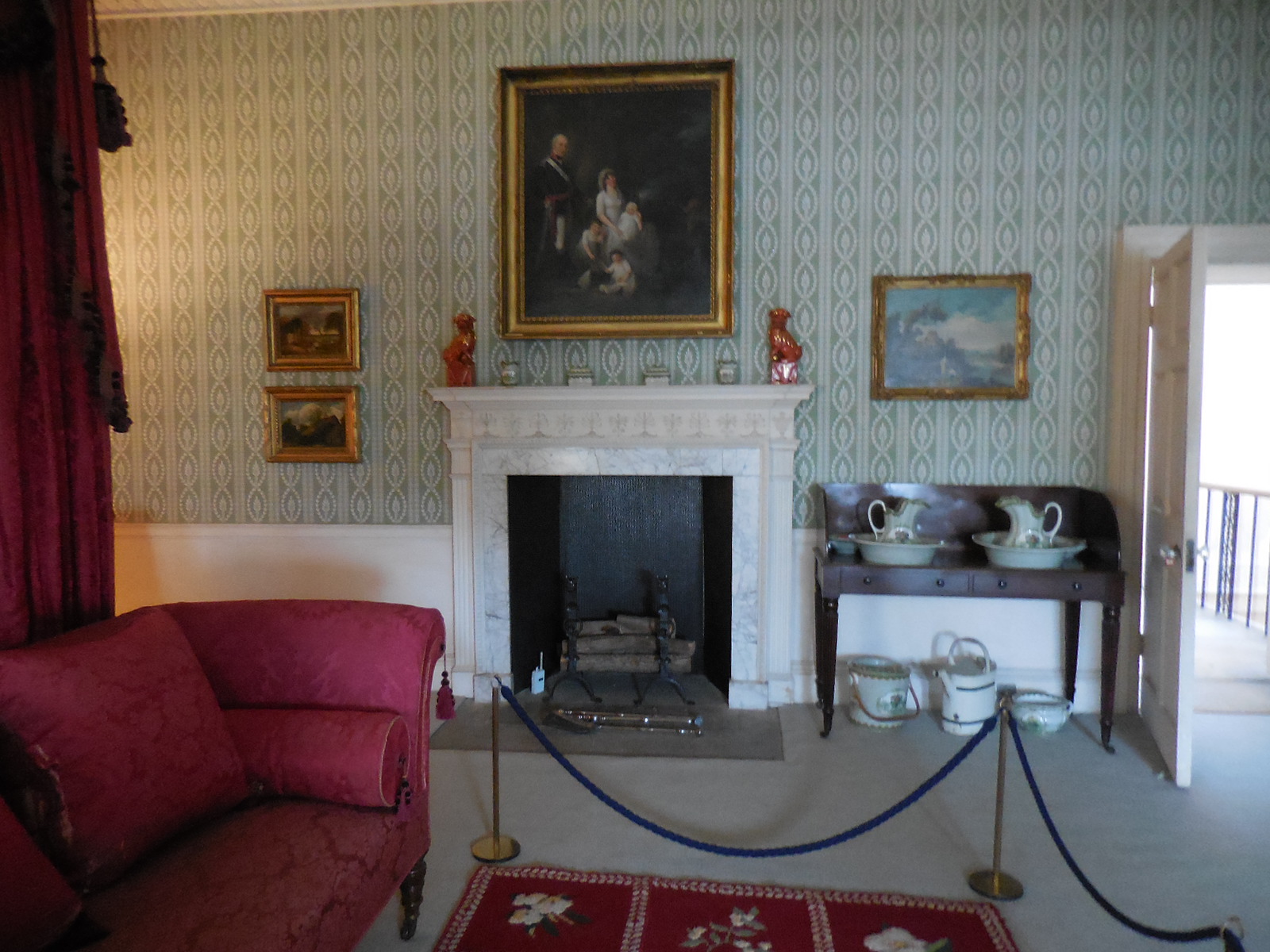
Lord and Lady Iliffe acquired this state bed form the sale at Ashburnham Place in 1953.
The Spode service on the washstand also comes from Ashburnham

Mahogany Cheval Glass

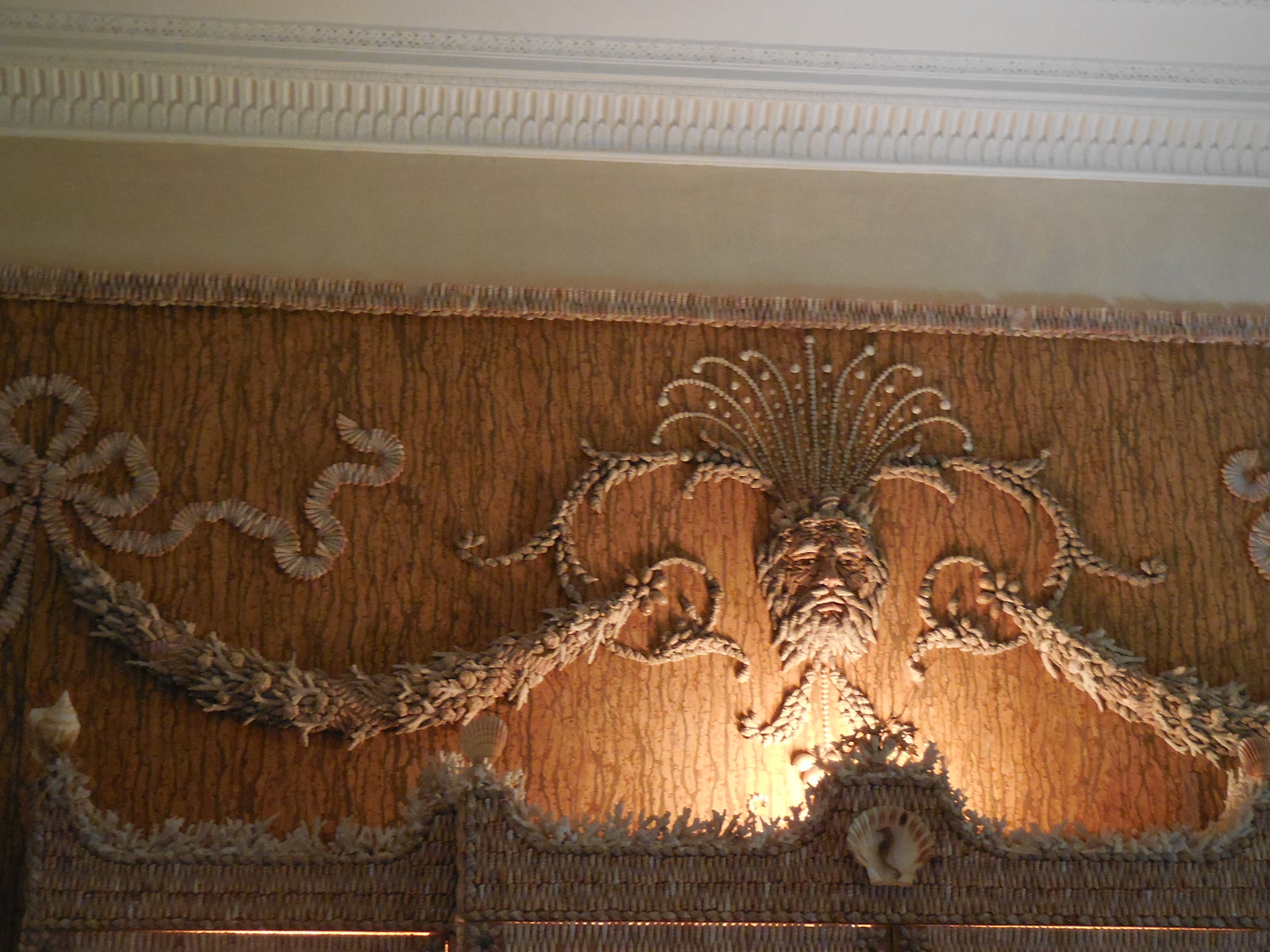
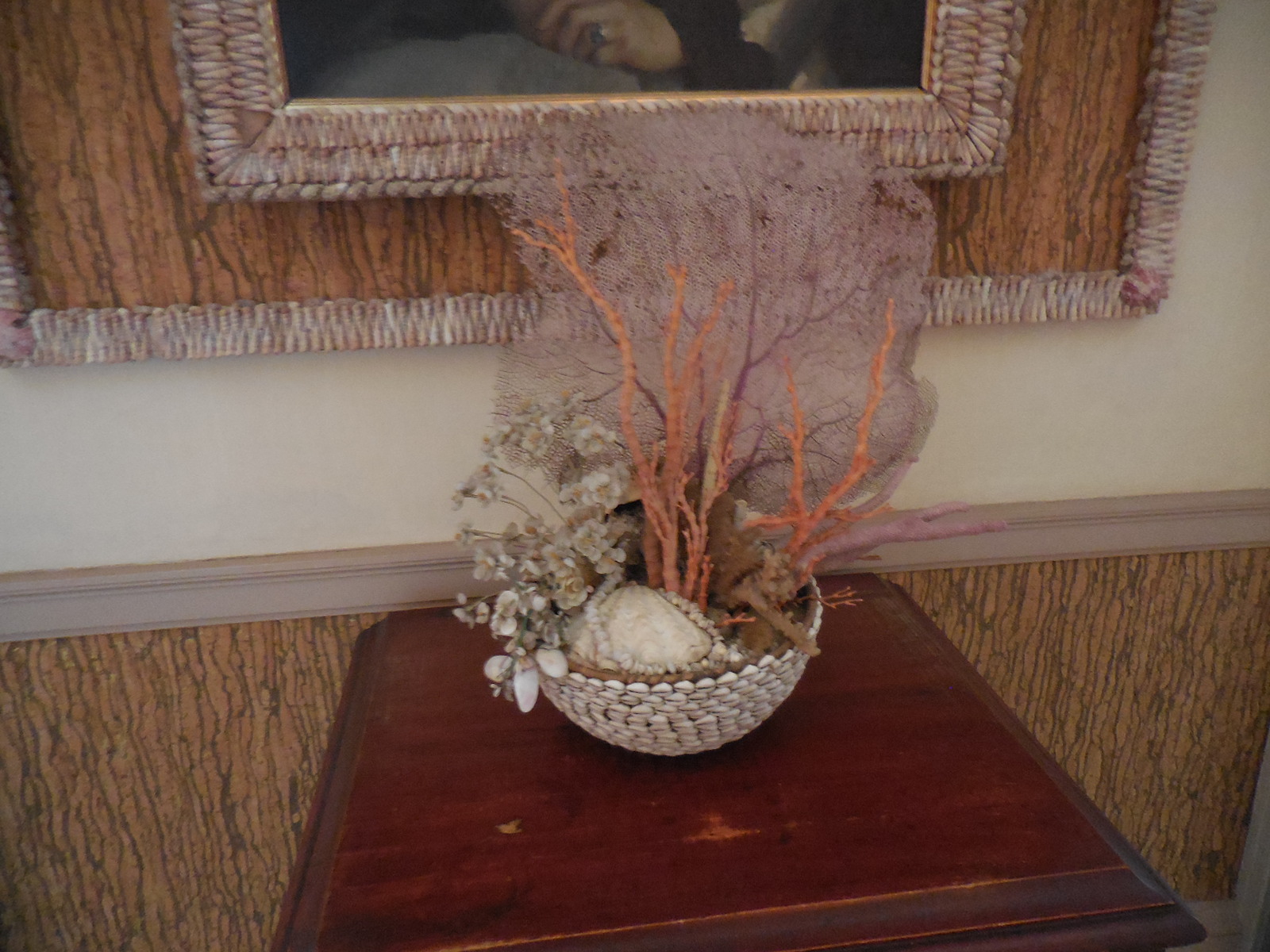
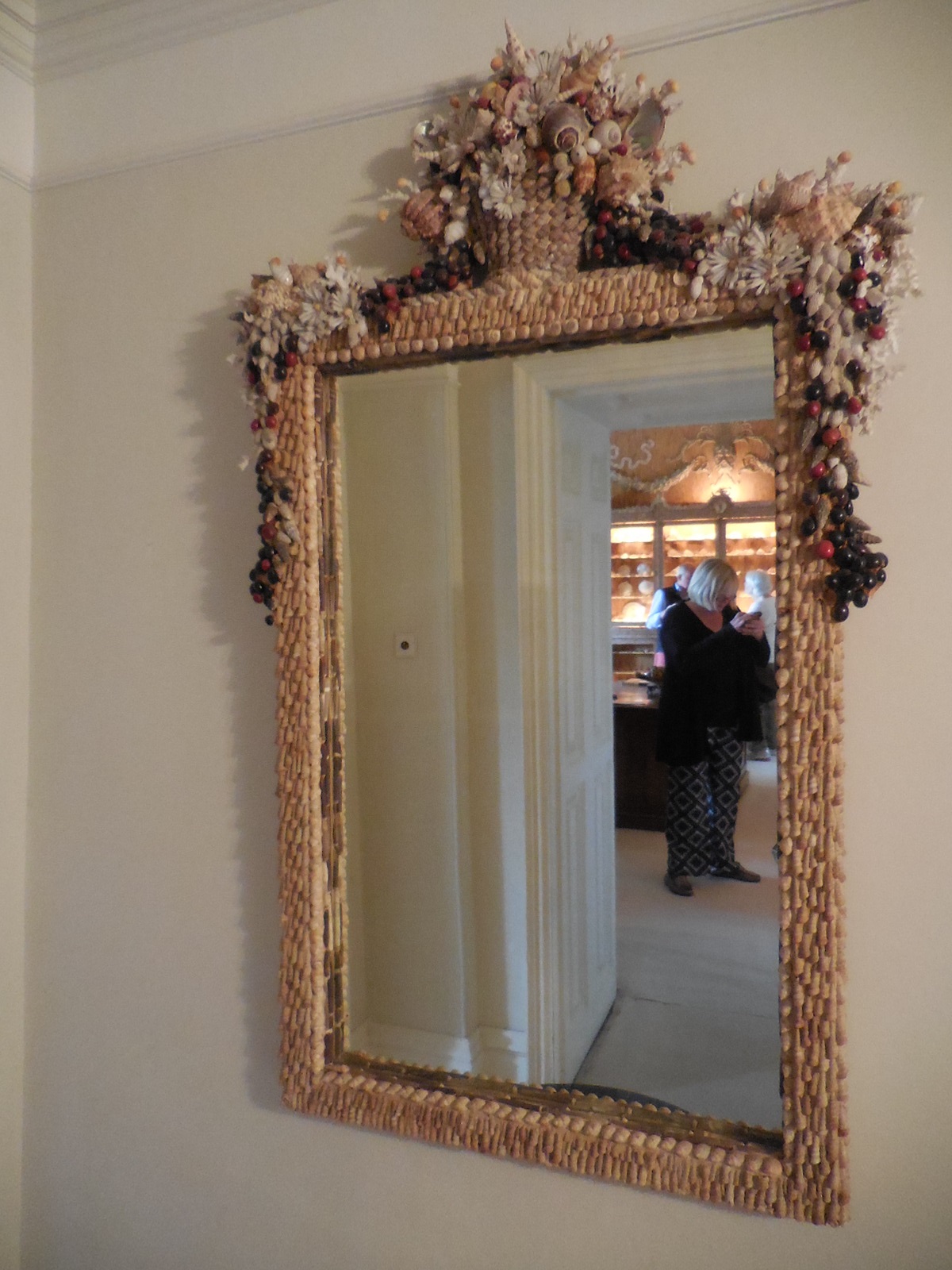
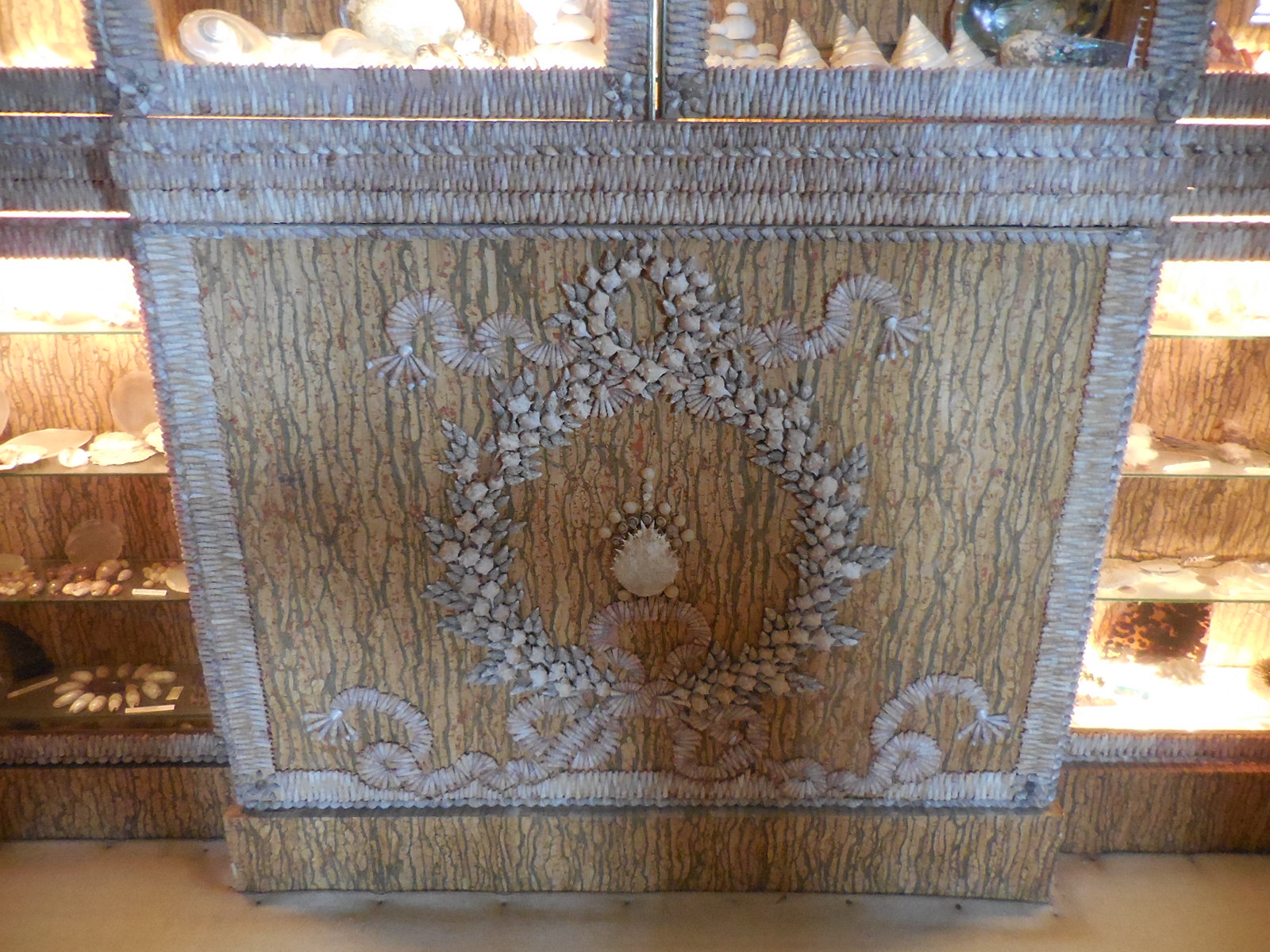
The Shell Room was probably an upstairs sitting room, now the home of a collection of shells collected by Lord Iliffe’s mother.
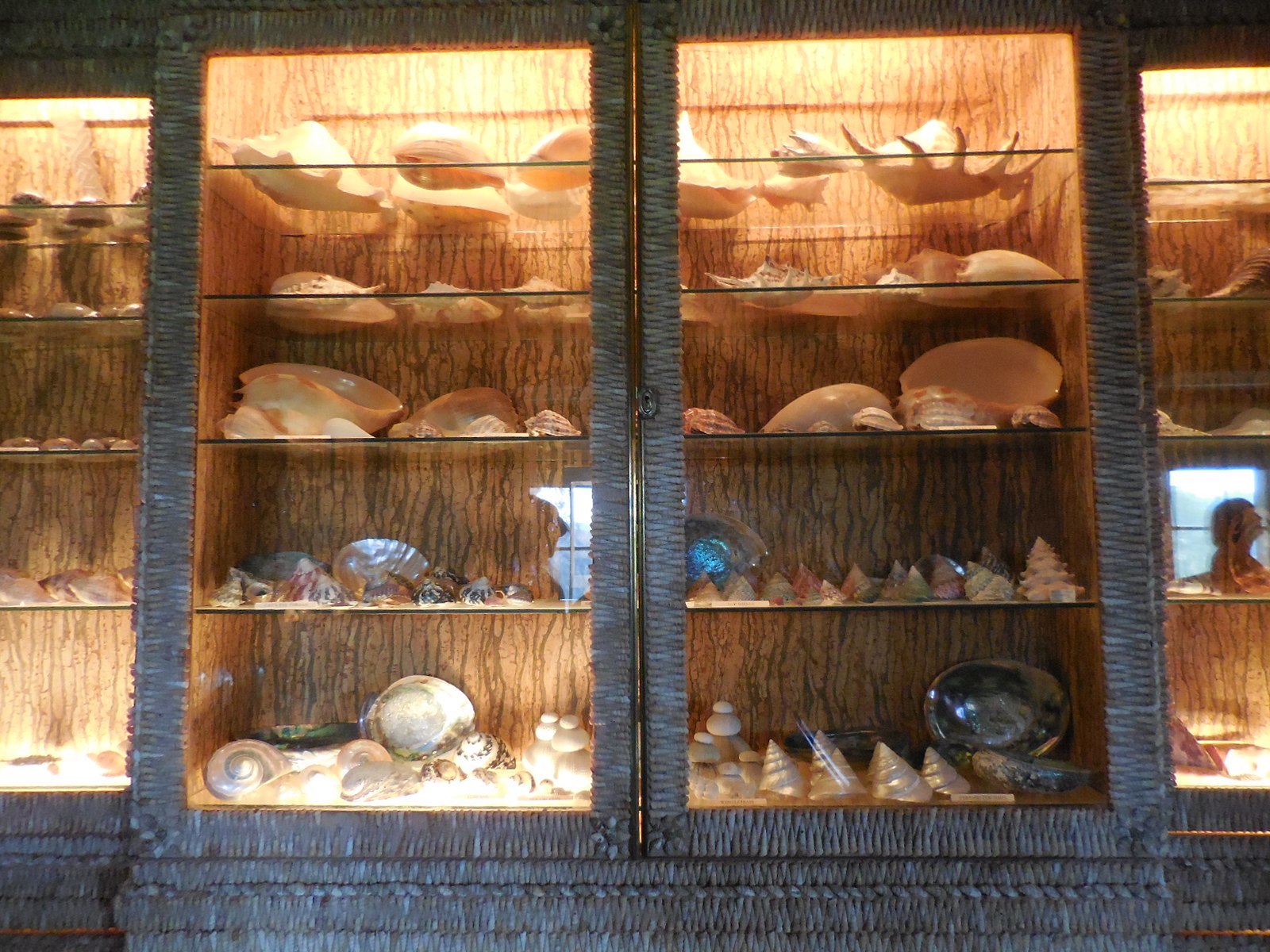
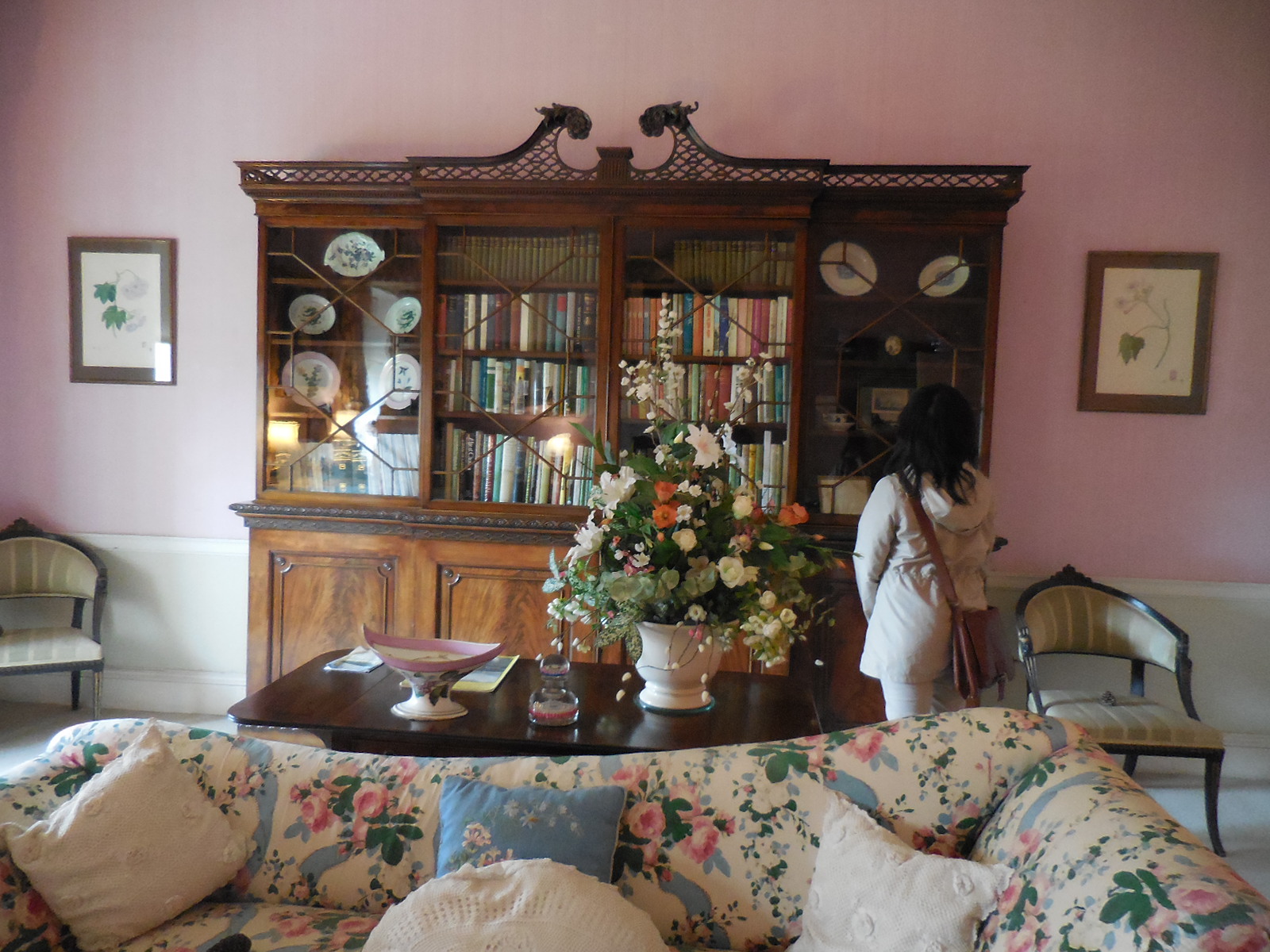
Ki admires another tempting bookcase

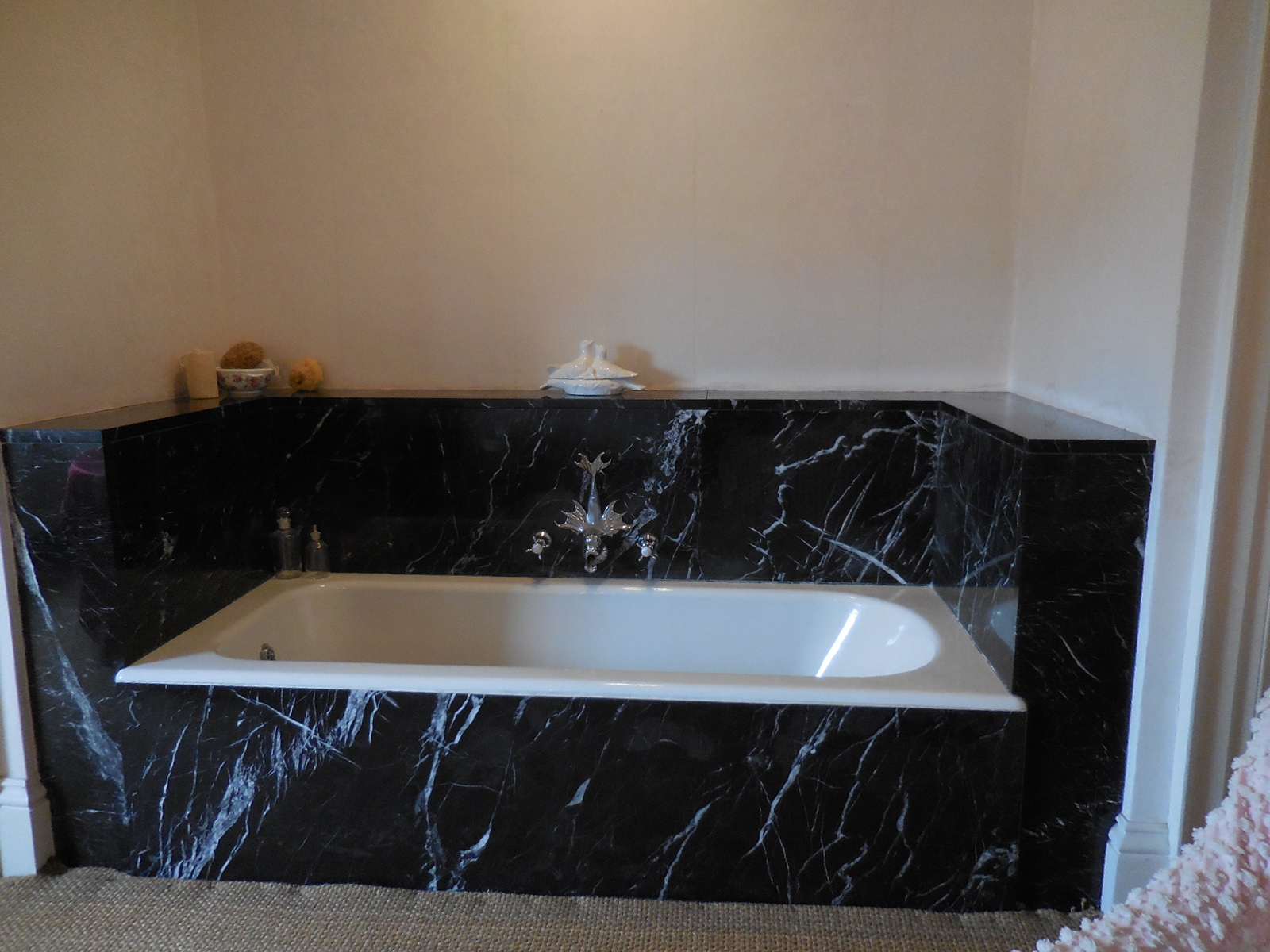
As befits a grand house of the 1950’s Basildon was equipped with luxurious bathrooms,
 definitely not in the 18th century style.

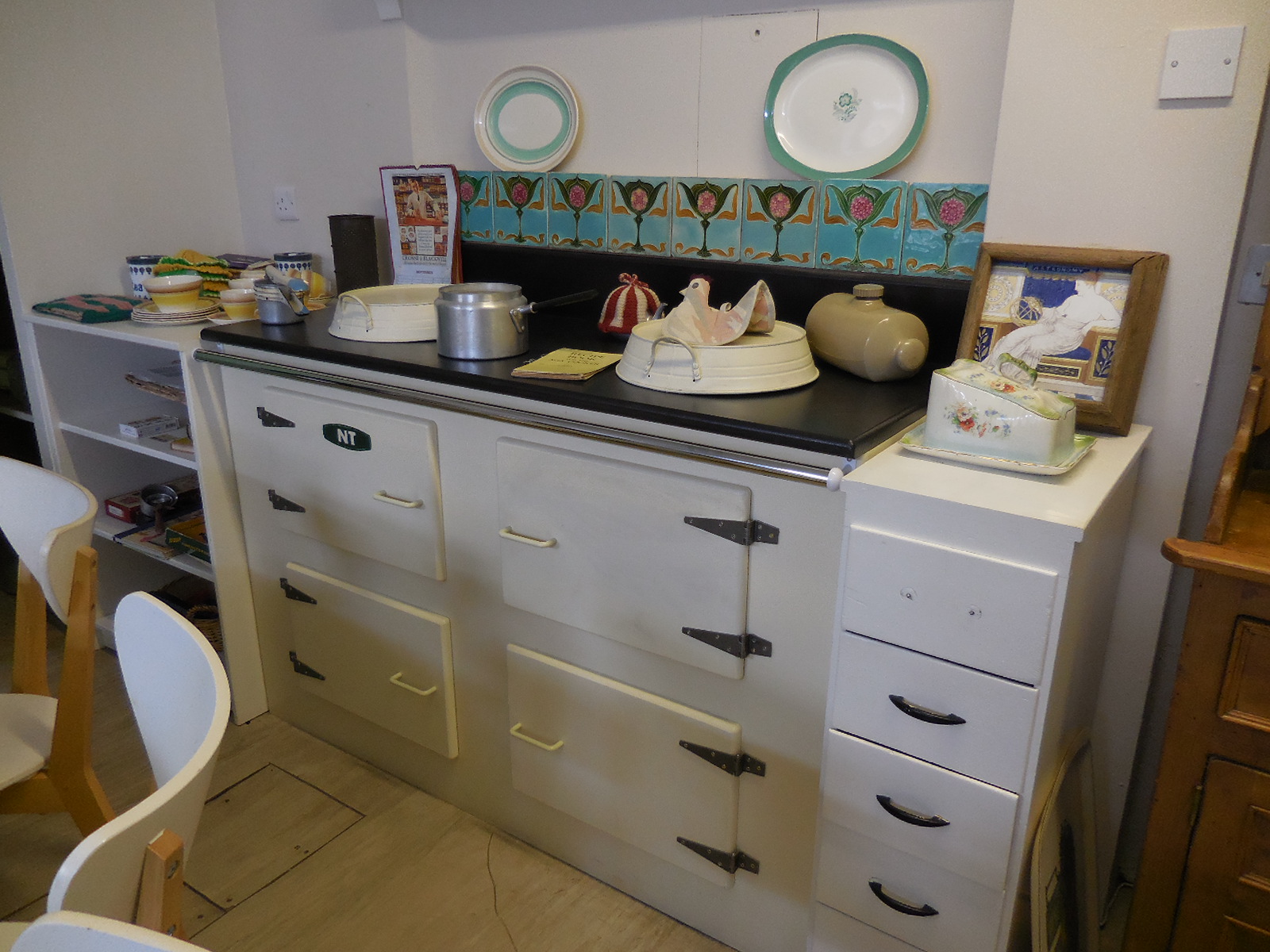
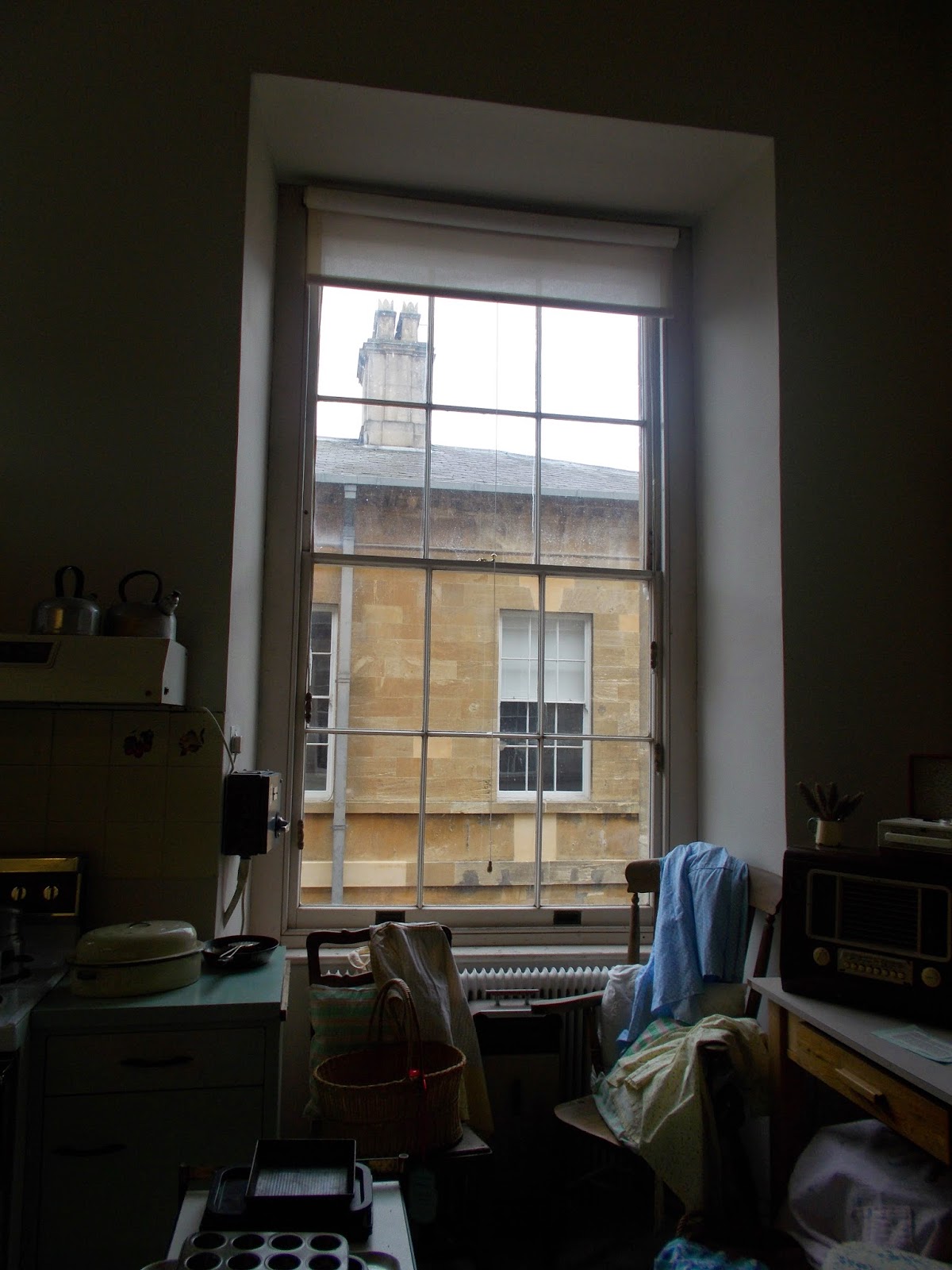
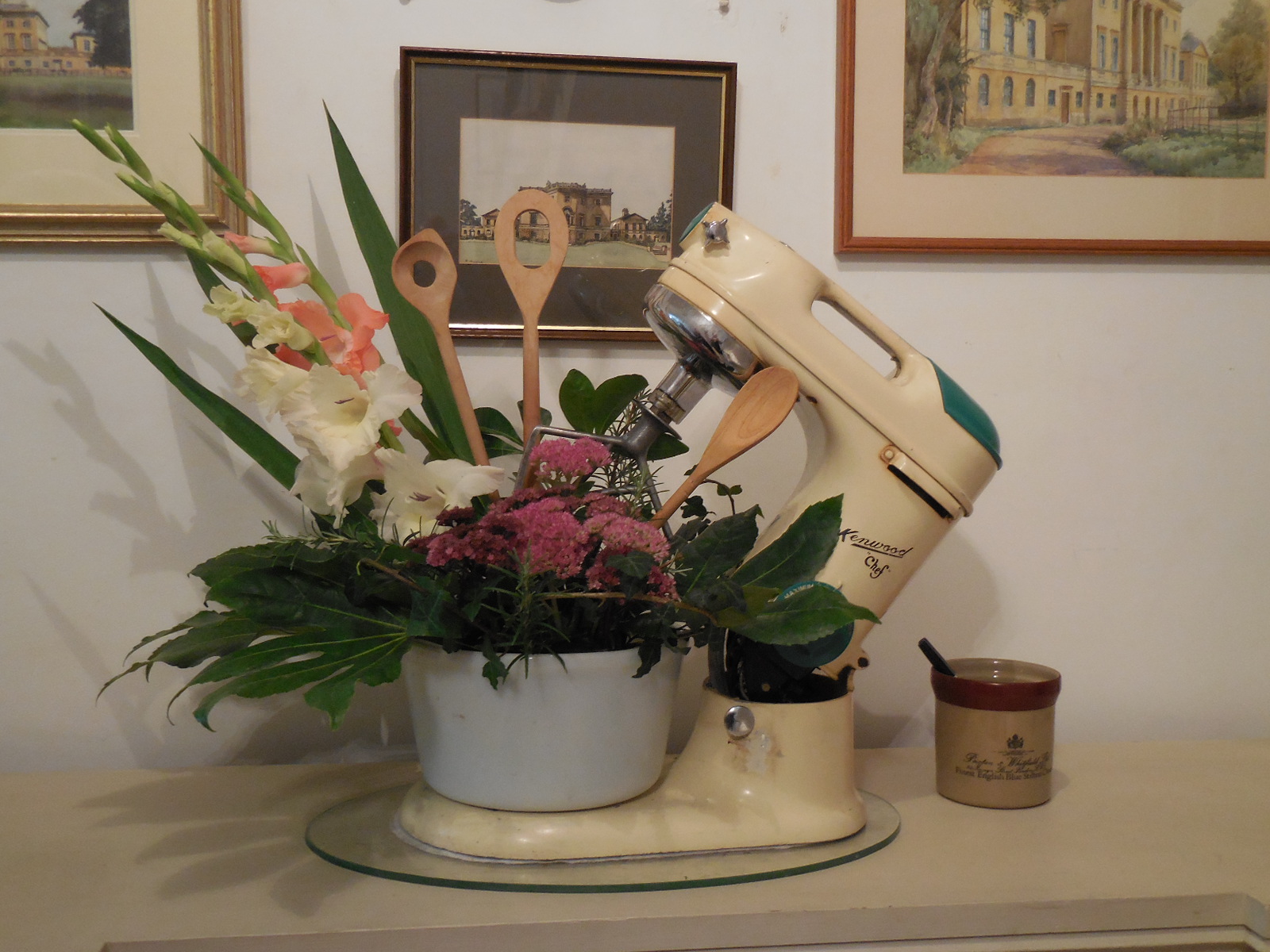
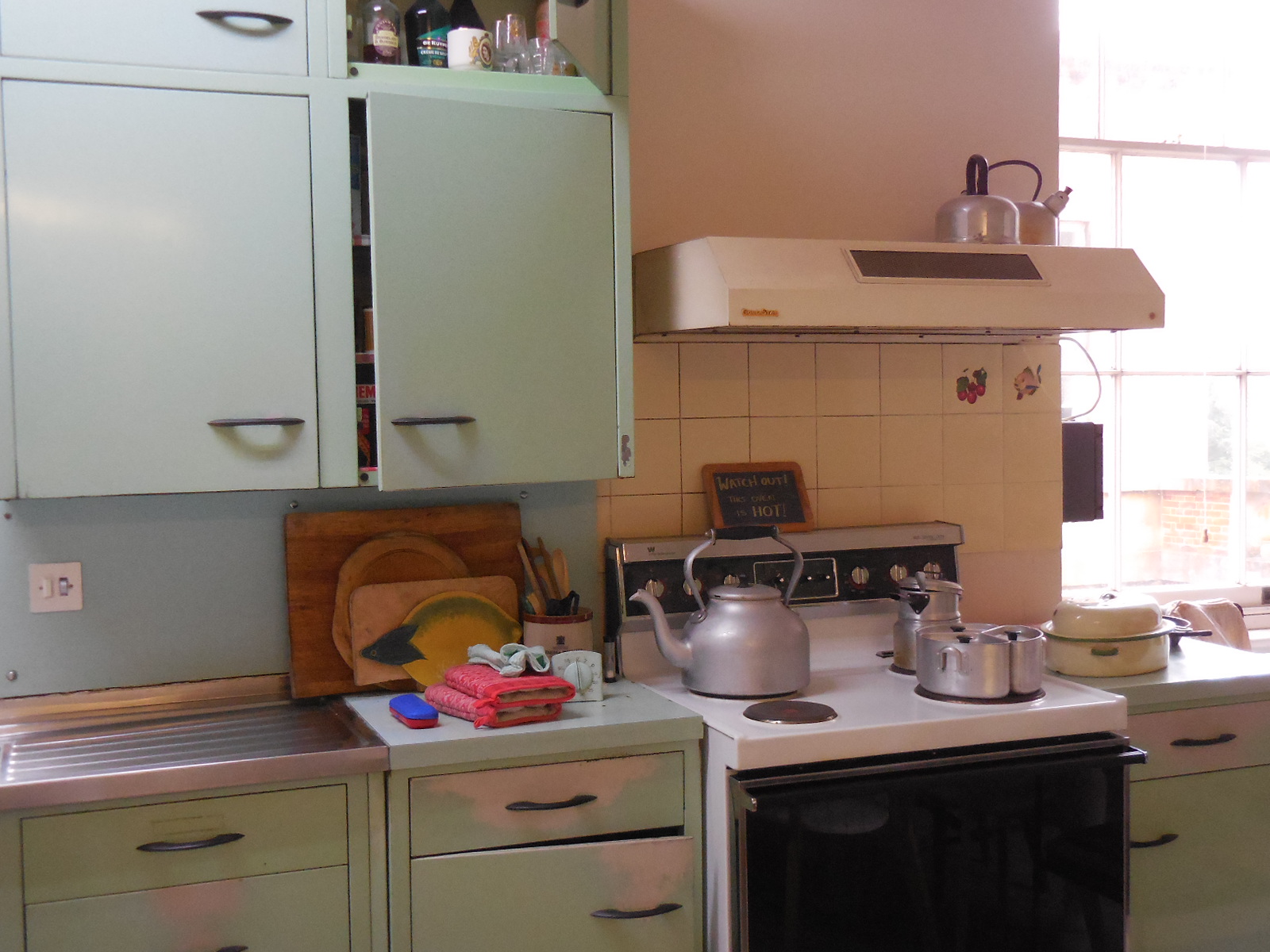
Wonderful 1950’s kitchen…added by the Iliffes and bringing back childhood memories for many of us;
Susan lags behind as we say farewell to Basildon…but wait! There’s more!

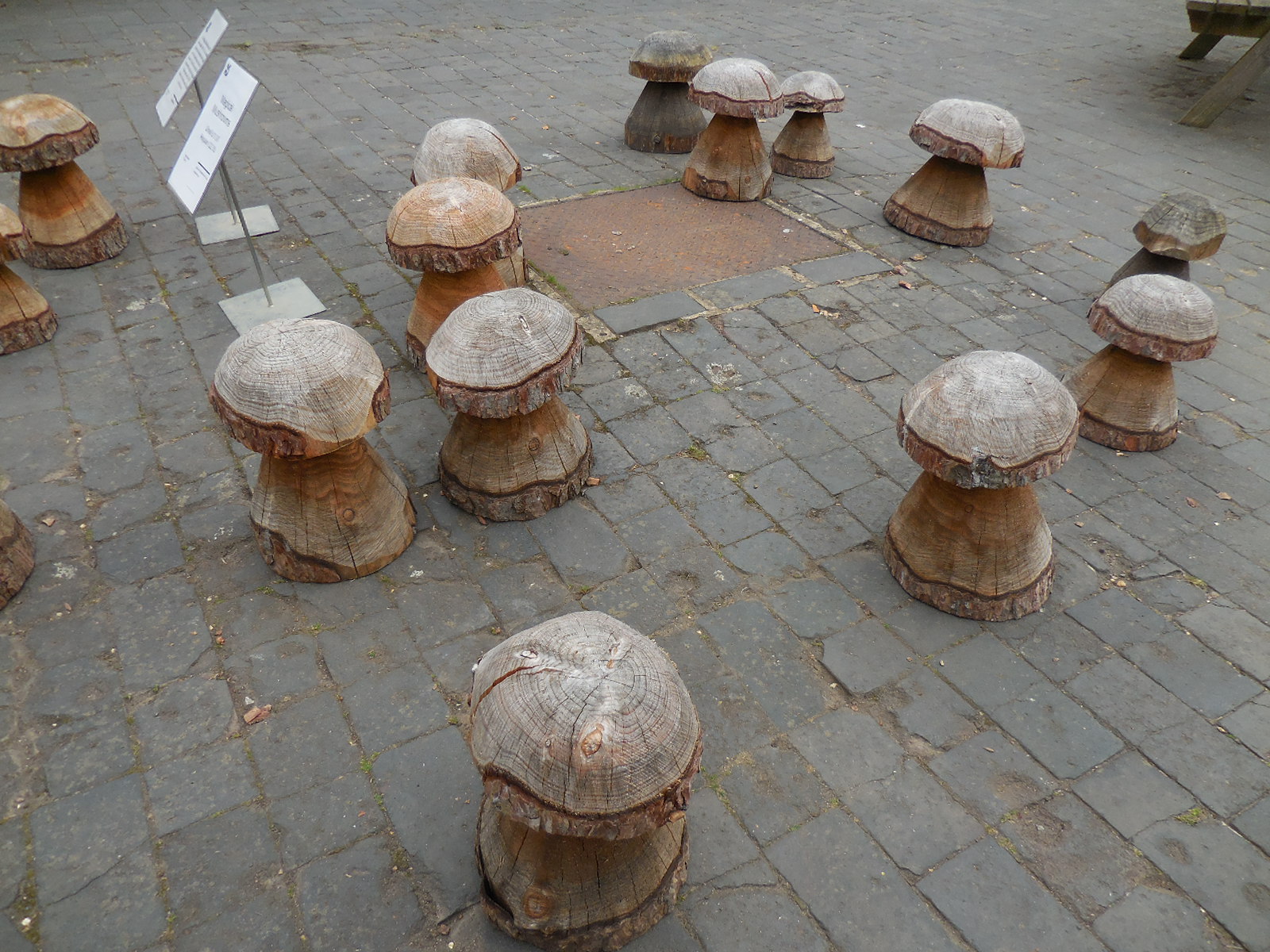
Outside the shop, we found this display of garden ornaments and we all wanted one!  or two!
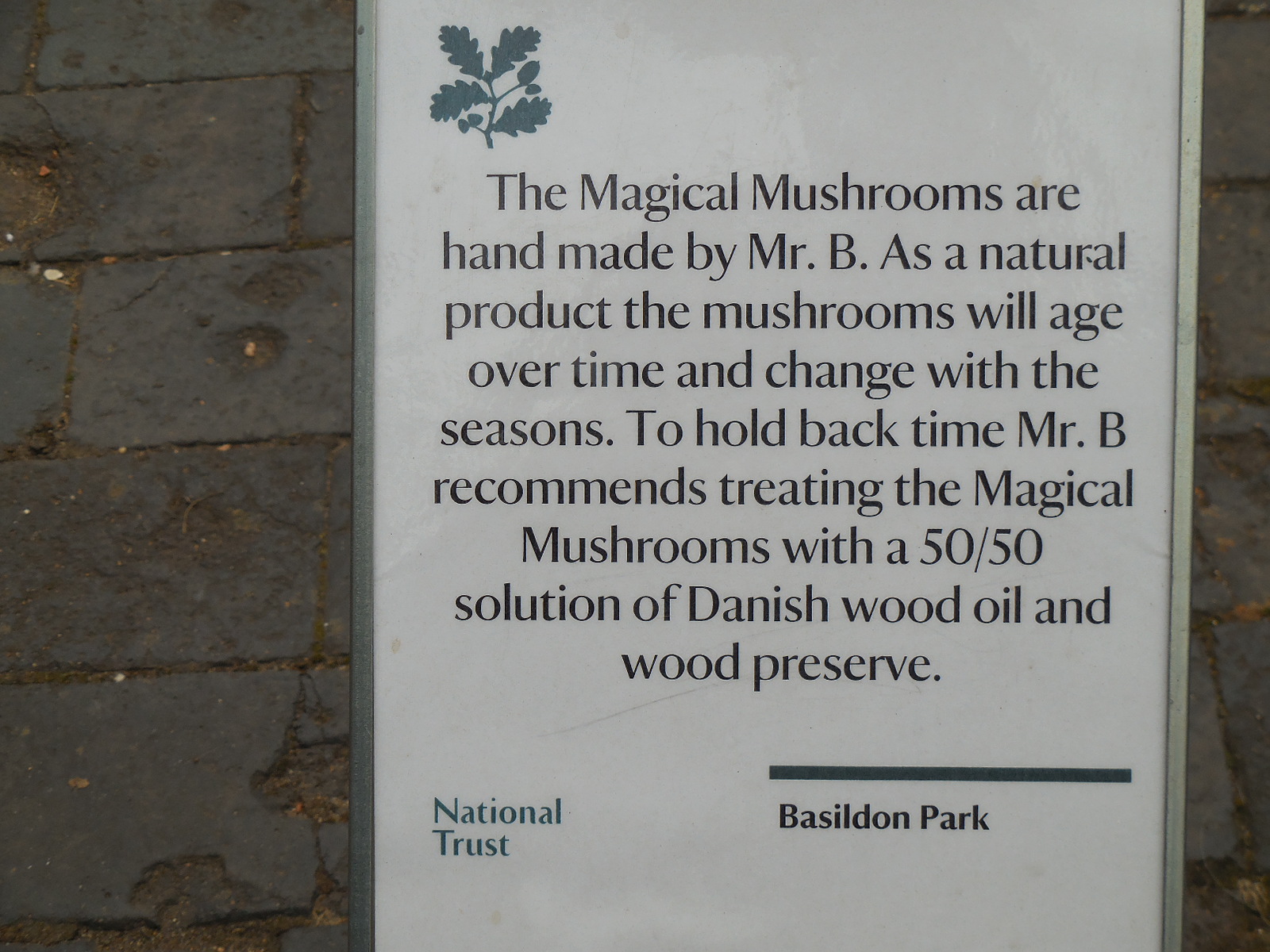
Not even Susan could figure out a way to get a magical mushroom home for her garden.
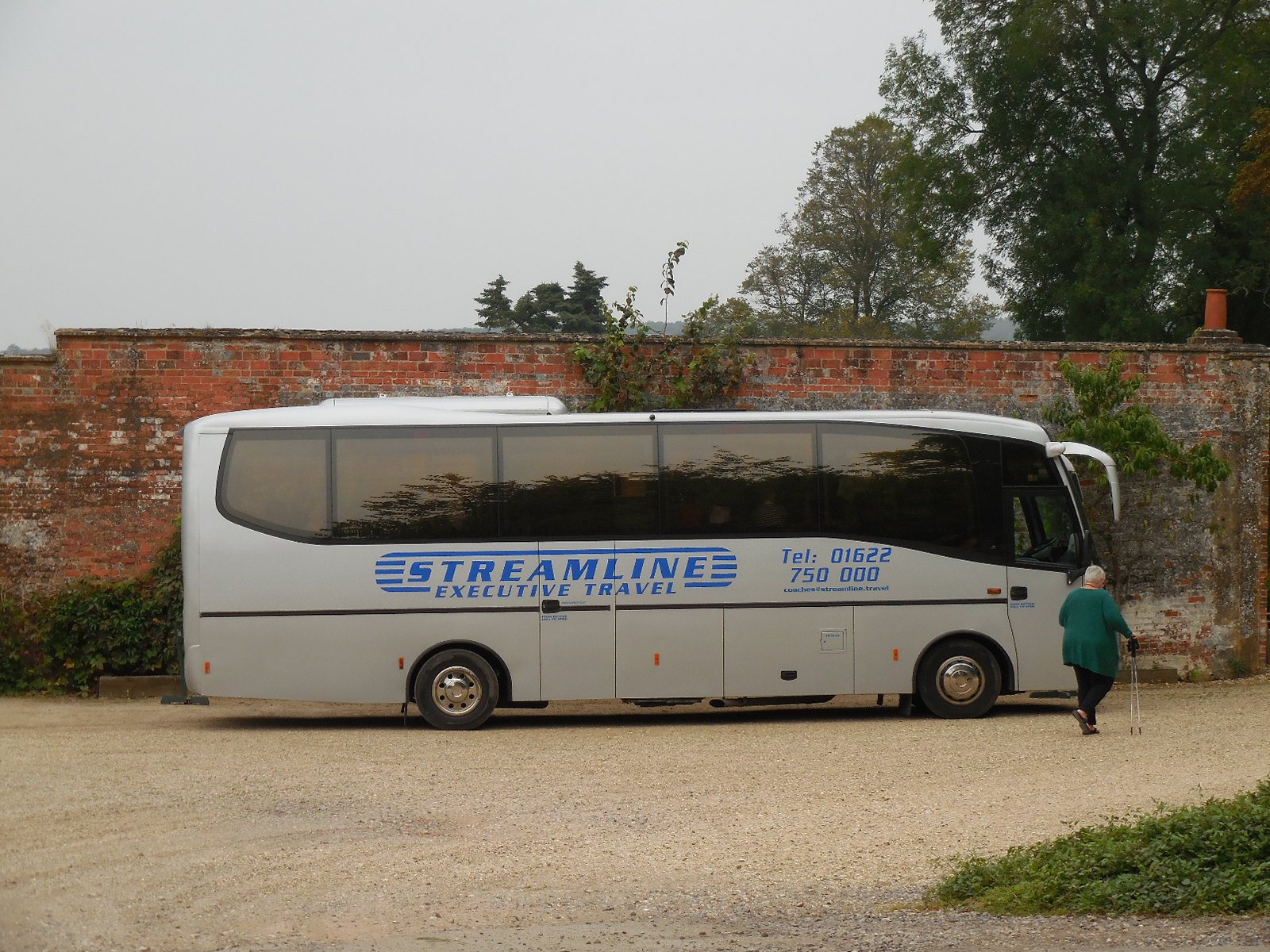
This was our bus with out esteemed driver Graham.
Though we were all tired, we had to agree that our day at two excellent houses — Highclere Castle and Basildon — had been worth every ounce of energy!
Onward to Windsor!

NICOLA CORNICK'S HOUSE OF SHADOWS

Victoria here, to share my eagerness to read the newest release from best-selling British author Nicola Cornick. The recently-published three-tiered story centers around the National Trust’s Ashdown Park in Oxfordshire, a 17th-century house filled with mystery and secrets.

Here is the official “blurb” for the books, which tells its story much more efficiently than I could do —
“Bestselling author and historian Nicola Cornick investigates the untold story of Elizabeth Stuart, the Winter Queen, and her connection to Ashdown House in Oxfordshire.  

February 1662
On the eve of her death Elizabeth Stuart hands her faithful cavalier William Craven an ancient pearl with magical properties to be kept safe for her rightful heir. Craven, distraught with grief, builds Ashdown Estate in Elizabeth’s memory and places the pearl at the centre. 
February 1801
Notorious Regency courtesan Lavinia Flyte is brought to Ashdown House with her protector, Lord Evershot, who is intent on uncovering the Winter Queen’s treasures. Evershot’s greedy pillage of the ancient house will unleash a dark power which has lain dormant for a hundred and fifty years.
February 2014
Holly Ansell’s brother has gone missing. As Holly retraces his footsteps, she discovers that her brother was researching the mystery of Elizabeth Stuart and her alleged affair with William Craven. A battered mirror and the diary of a Regency courtesan are the only clues she has, but Holly is determined to discover the truth: Where is the fabled pearl that Elizabeth gave to William Craven? What happened to Lavinia Flyte? And who is the Winter Queen’s rightful heir?”

Victoria again. Now that must excite your interest as much as it does mine!
Nicola, both an author and historian, has written many best-selling historical novels. For a complete list, see her website, here.
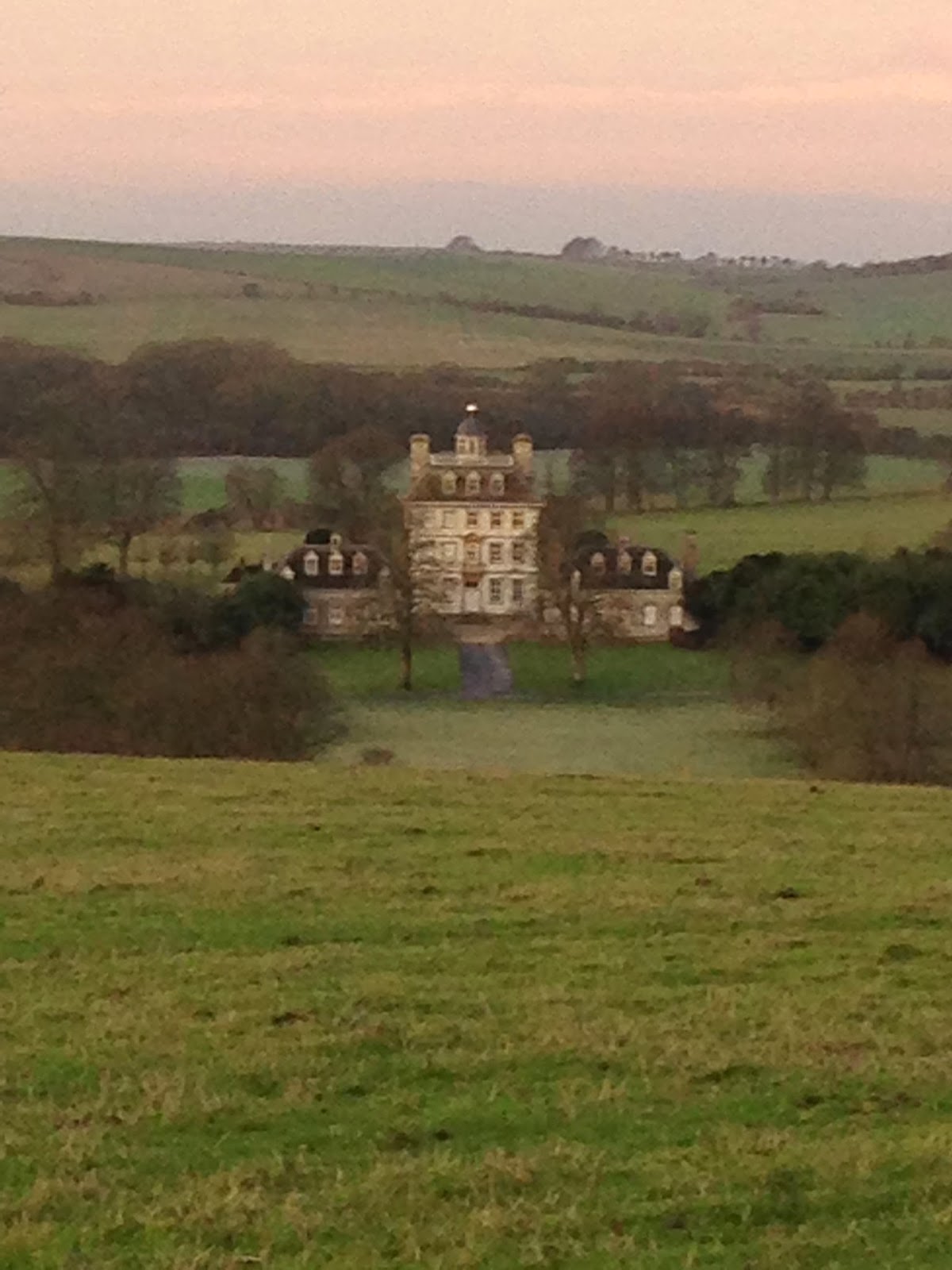
Ashdown House, Oxfordshire

Here is an excerpt from the Word Wenches Blog (where you will find wonderful news and views from some of your favorite authors). Cara Elliott a.k.a. Andrea Penrose interviews her fellow Word Wench, Nicola Cornick about House of Shadows.

“Cara/Andrea:  One of the things that struck me was how seamlessly you blended your historical research with your creative imagination. Can you talk a little about how your real-life work as a curator at Ashdown House inspired the book?

Nicola:  Thank you! Yes, House of Shadows is indeed a work of historical imagination in that I took the “facts” and filled in the gaps and in some cases, which I acknowledge, played fast and loose with reality. Over the years that I have worked at Ashdown I think I have absorbed so much of the history of the house and the people associated with it that I was able to draw on so many small aspects of that to make the whole – I met with a jewelry historian, for example, who had come to look at the pearls depicted in the portrait collection. She was the person who told me about the “cursed” pearl, which Elizabeth’s eldest daughter is wearing in one of the portraits. Then there was the fact that Ashdown is reputedly built on an ancient sacred site and its architecture incorporates a number of aspects that link it to the Order of the Knights of the Rosy Cross… I researched all these different stories as part of my work at Ashdown House and they all came together to inspire me and made their way into House of Shadows. One thing I did change, though. In the book I modeled Ashdown’s destruction on the true story of a different house—Coleshill—built at the same time and in the same style. I’m happy to say that Ashdown House is, of course, still standing and is open to visitors!”


Entrance Hall, Ashdown House

The National Trust owns Ashdown, but most of the house is occupied by private residents.  

On a blog last spring, Nicola wrote about some of the landscape surrounding Ashdown.  The entire blog post is here.Thursday, April 2, 2015.  Here are a few highlights:

“The Sarsen Field is the first thing you see on the left of the drive as you approach the car park. This is open to everyone to walk in and is a fascinating are of Special Scientific Interest where the huge, ancient sarsen stones lie amongst the grass as they have done for thousands of years. Legend says they are an army turned to stone by the magician Merlin….
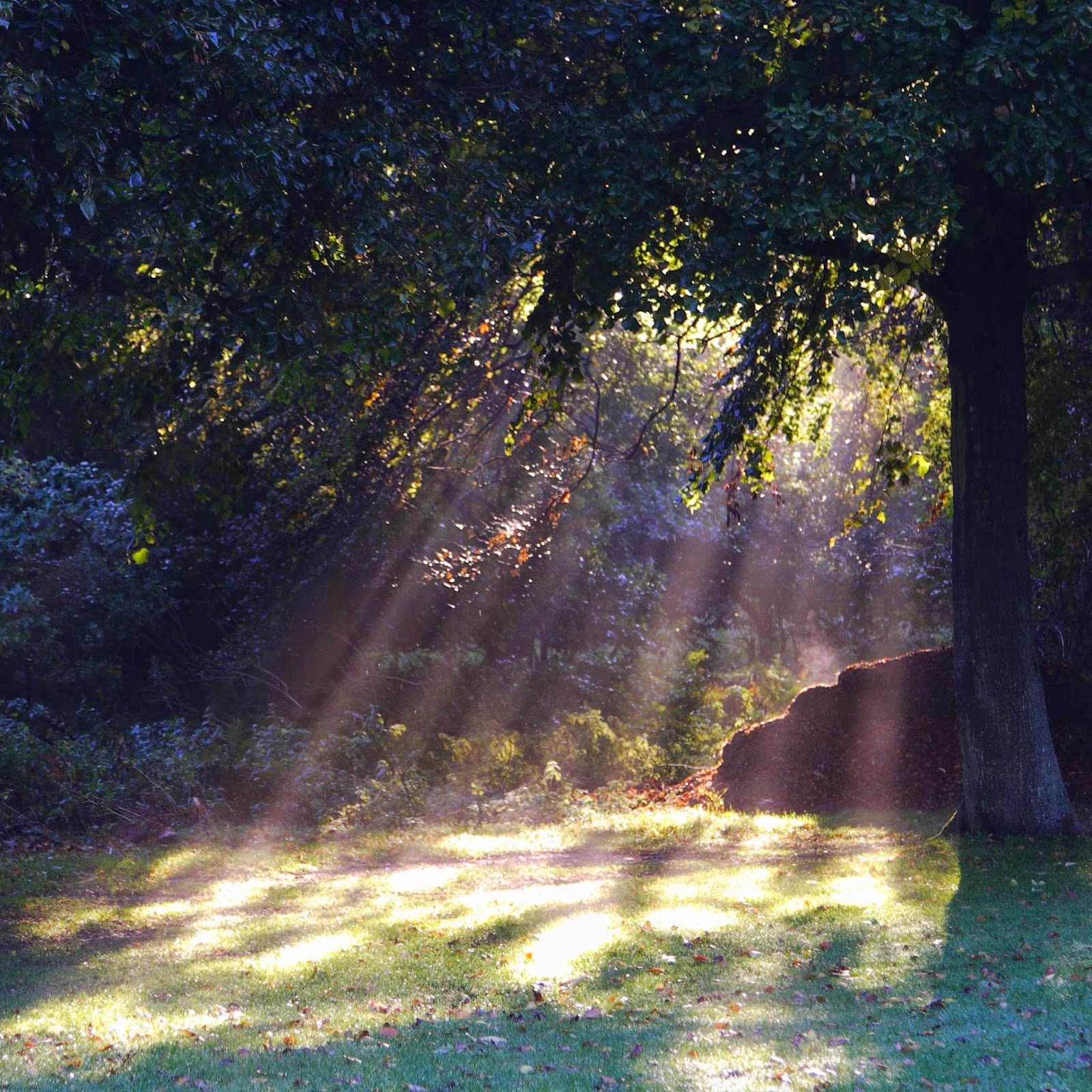
“The woodland dates back to when this was a medieval hunting ground and the deer still live here…
 The badgers have been digging up the area around the grand avenue for almost 1000 years! There are also hidden geocaches, a tree trail and our Pixie Path. In the fields behind the wood the Balleroy ponies graze…”

The Staircase

Visitors are guided up the flights of stairs to the cupola at the top where the views of the surrounding ancient landscape are stunning. Along the way, guides relate the history of the house and the family for whom it was created.

Elizabeth Stuart, Elizabeth of Bohemia, the Winter Queen

On her blog, Nicola has also written about one of her favorite secondary characters from House of Shadows, here.

Ashdown House
 The house was originally designed as a hunting lodge.According to the 1994 edition of The Blue Guide to Country Houses of England, Ashdown’s “exaggeratedly tall doll’s-house-like proportions derive from the need to treat the house as a viewing stand for the chase–hence the balustrated platform and glazed cupola at the top of the typically 1660’s hipped roof.”


At Ashdown House in Oxfordshire, Nicola has been a volunteer guide and historian for the last fourteen years. Follow her on twitter @NicolaCornick and Facebook.

Nicola Cornick
Patience required!


Now I just have to settle in and bide my time until the book arrives! I hope to report back soon with a review and an interview with Nicola. 

A HAMLET FOR THE AGES

Victoria here, so glad I was able to see the showing of Benedict Cumberbatch as Hamlet, live from the National Theatre in London. Actually, it wasn’t live (a repeat) and it wasn’t from the NT (from the Barbican Theatre), but it was nevertheless terrific.  Another showing will be in many theatres in the U.S. on November 10.

To see the upcoming schedules, click HERE

FOR THE ENCORE TRAILER, CLICK HERE. Scroll down  little for the trailer.

Hamlet might be the most well-known of Shakespeare’s tragedies and only second among the his total output to Romeo and Juliet. The role is one of those markers of an actor’s prominence — and it might even be the pinnacle of most careers.

In the conversation preceding the play from the NT, Cumberbatch is asked how he feels about reciting those most familiar lines “To be or not to be? That is the question.”  You will enjoy his answer!

Alas! Poor Yorrick!

Among the outstanding performances, actually the best of all, in my view, was Ciarán Hinds as Claudius, the Uncle/Stepfather of Hamlet.

Ciarán Hinds
At first I did not care much for Siân Brooke as Ophelia. But I warmed to her interpretation as the character’s insanity develops. By her departure, I was entranced.

Siân Brooke

Kobna Holdbrook-Smith
Also among the outstanding performances, again in my view alone, were Kobna Holdbrook-Smith as Laertes and Rudie Dharmalingram as Horatio. I also enjoyed the dual roles as acted by Karl Johnson: the Ghost of Hamlet’s father (the late king) and the grave digger.  In addition to many other appearances, Johnson previously played Twister, a favorite from Lark Rise to Candleford.
Karl Johnson
I can’t begin to count how many times I’ve seen Hamlet.  Being of a certain age, it has been more than I can count on my fingers. Maybe even my toes.

Here is a comment on the Cumberbatch version,  directed by Lyndsey Turner, from a review in the New York Times by Ben Brantley on August 25, 2015:  “Full of scenic spectacle and conceptual tweaks and quirks, this “Hamlet” is never boring. It is also never emotionally moving — except on those occasions when Mr. Cumberbatch’s Hamlet is alone with his thoughts, trying to make sense of a loud, importunate world that demands so much of him.”

Sometimes the “conceptual tweaks” got in the way of the play, in my opinion, as when the characters in the darkened background moved as in slow motion, which drew my attention — but perhaps would have been unnoticed within the theatre.

For obviously, watching the play from the stage is a very different experiences from sitting there live, but I’ll take it when it gives me the opportunity to attend “live” theatre in London from my local movie  seat, armed with popcorn and a fizzy drink.

The Telegraph reviewed the show and added a list of ten great recent Hamlets. To see their ratings, click here.

Jude Law, Wyndham Theatre, 2009

I remember well being enchanted with the film of 1996, made by Kenneth Branagh and featuring Blenheim Palace as part of the set. Other actors in that excel
lent film were Kate Winslet, Derek Jacobi (who had performed the title role in years past), Julie Christie , and many other famous  names making cameo performances. For the Branagh Hamlet trailer, click here.

Although his portrayal is definitely in an earlier tradition of the stage, it is also interesting to see Hamlet portrayed by Laurence Olivier, a true film classic from 1948. Click here for Olivier with Hamlet’s famous soliloquy.

Laurence Olivier
Just in case I have whetted your appetite for more Hamlet, YouTube has many, many versions and the films are widely available at all the usual places.
Good Night, Sweet Prince!