THOMASINA'S NOTEBOOK, A TALK BY DR. GLYNIS RIDLEY

Back in October, I attended the 2015 Annual General Meeting of the Jane Austen Society of North America, held in Louisville, Kentucky. I have reported here on several of the presentations there (Ship’s Surgeon, JASNA  AGM Tidbits,  Mary Crawford at Almack’s?,  Age of Caricature,  men’s clothing) and associated jaunts to Locust Grove, the Kentucky Horse Park, and the Cincinnati Art Museum.

One of my favorites of the Special Interest talks at the AGM was “Thomasina’s Notebook and Thomas Lefroy’s House: Life of a Young Woman in Austen’s Dublin.”

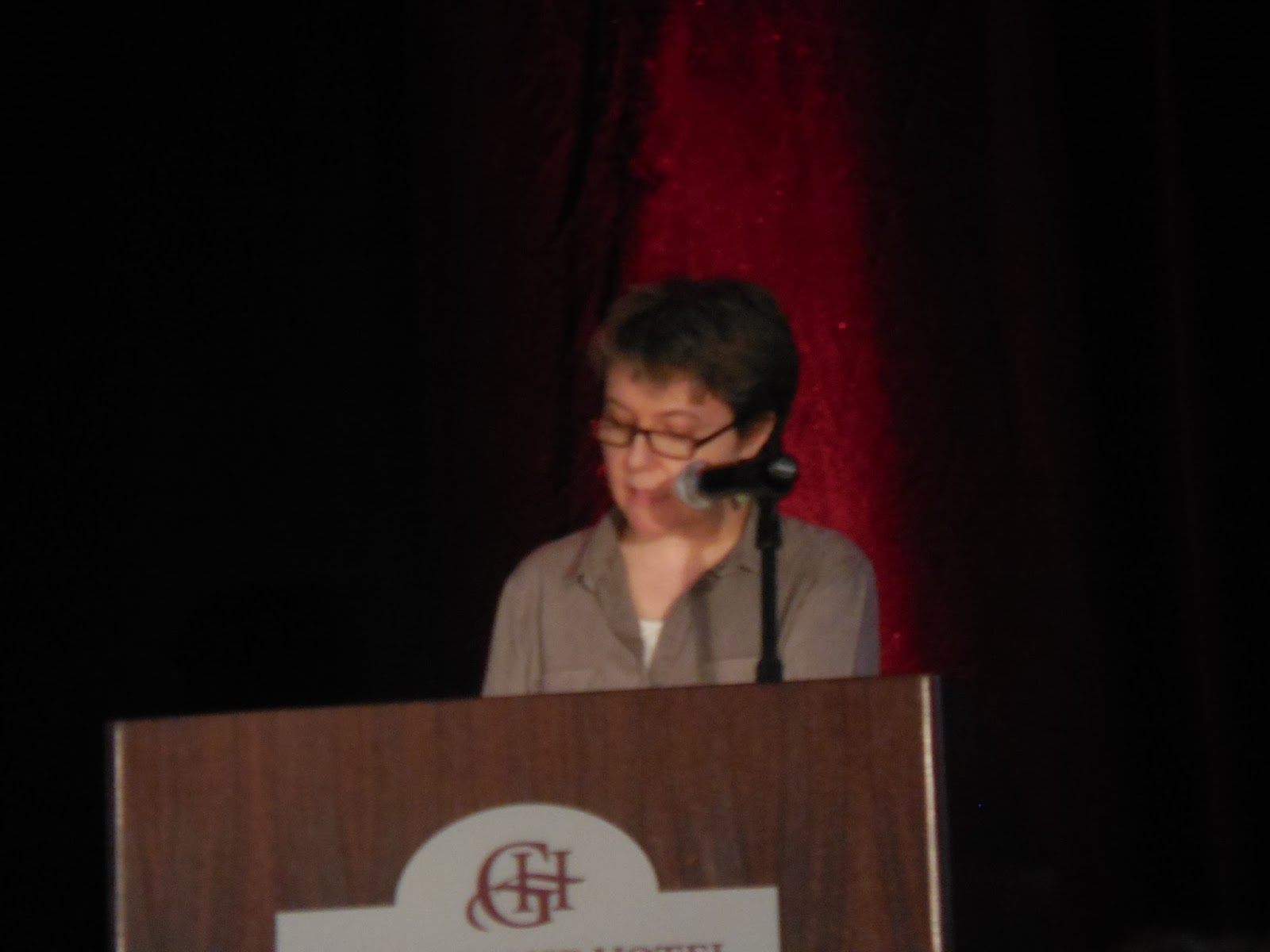
Glynis Ridley, PhD, Professor of English, at the University of Louisville

Dr. Ridley spoke about a book found in a Paris Flea Market by her husband, and the fascinating mystery she is uncovering.

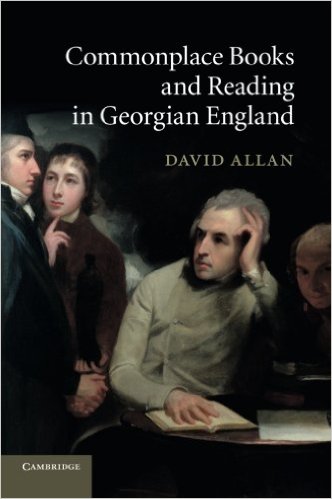
A commonplace book is a compendium of poems, prose excerpts, original observations, and daily commentary often belonging to a young woman of some status in the Georgian era. She might write in it herself, or ask various friends and acquaintances to enter material.

Literary historians have found many examples of commonplace books.

When he brought the book to his wife, Dr. Ridley’s husband was not fully aware of just what he had discovered. Only after considerable research has Dr. Ridley begun to unravel the stories of the owner and her family. And even more exciting, she discovered a link with Jane Austen.

The notebook belonged to Thomasina, daughter of Thomas Gleadowe-Newcomen, 2nd Viscount Newcomen (1776–1825) and his long-time mistress Harriet Holland, who bore him eight children. Like peeling an onion, layer by layer, more mysteries are revealed.

Newcomen was an unmarried banker and lived in a grand Dublin mansion with Harriet and their children; why did he and Harriet never marry? Obviously, from clues in Thomasina’s commonplace book, the family associated with Dublin’s leading citizens, some of whom wrote in the book. They lived together as a family in a fine Dublin mansion, and their country home was  Carrigglass, aka Carrickglass, about which more later.

The former Newcomen Bank, Lord Edward Street, Dublin

In 1825, the Newcomen Bank failed and Lord Newcomen killed himself, at age 48. Still to be tracked down are the movements of Harriet and her children, at first to France, then back to England.  In later years, where did they all end up, and particularly what happened to Thomasina? Dr. Ridley has a few leads and perhaps some clues, and we await her findings eagerly.

And now for the Jane Austen connection, a serendipitous a matter indeed. Carrigglass, the country home of the Newcomens, was purchased by Thomas Lefroy (17876-1869) in the 1820’s after the demise of the bank and its owner. Thomas Lefroy was the student whose flirtation with Jane Austen in 1796 has been the object of much attention in the last few years, turned into a romantic film (Becoming Jane, 2007).  After his “interlude” in Hampshire with Jane, Thomas Lefroy returned to Dublin, became a member of the bar and eventually Lord Chief Justice of Ireland. In 1837, he had the house rebuilt in the Tudoresque style.  He and his descendants lived at Carrigglass until its sale in  2005.

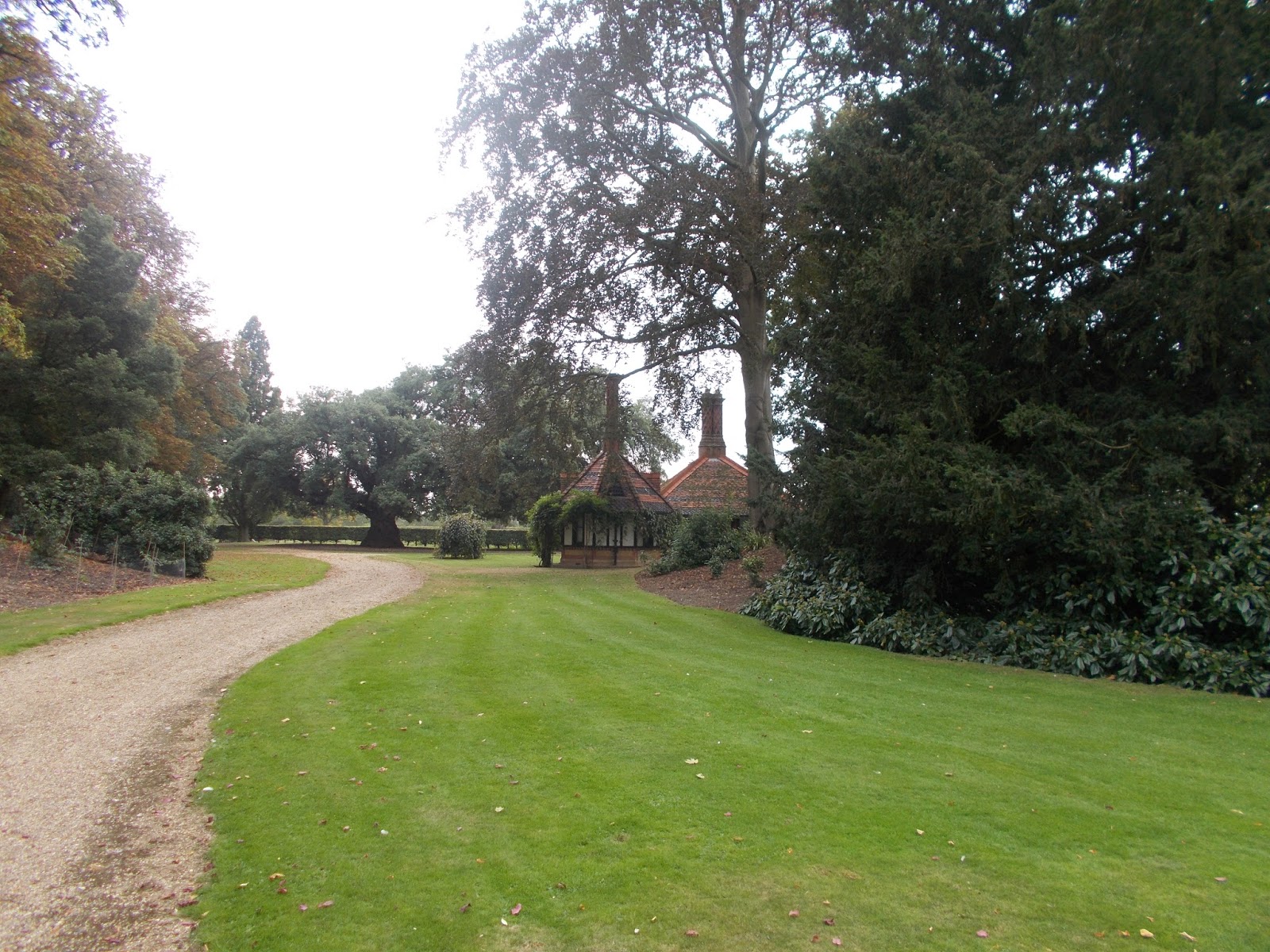
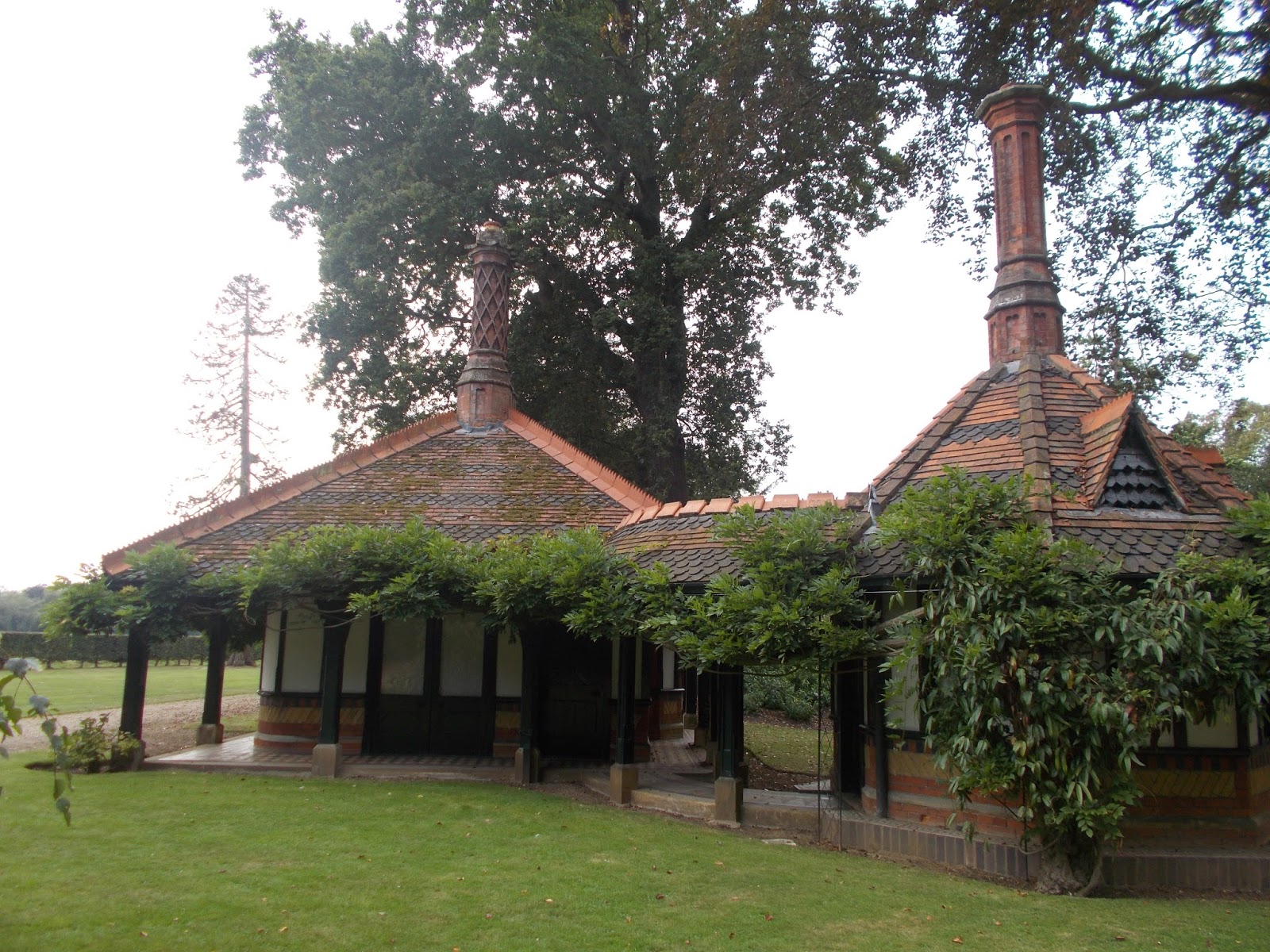
Carrigglass, Co. 

As a sad postscript about this property, one version of the wretched fate of Cairrgglass, can be found here.

Dr, Ridley certainly presented us with a fascinating account of her research mysteries and the need for further investigation. Along the way, she presented many comparisons to the characters in Jane Austen’s novels. We could easily identify a Marianne (SandS) and a Harriet Smith (Emma).  We continue to wonder, did Harriet Holland or Thomasina ever find themselves a Mr. Darcy or a Mr. Knightley?

Previous books by Glynis Ridley:
AGATHA CHRISTIE'S MOUSETRAP

AGATHA CHRISTIE’S MOUSETRAP

Victoria here, reporting on the recent presentation of this venerable play  as the holiday offering of the Milwaukee Repetory Theatre

jonathan Gillard Daly

Featuring
Jonathan Gillard Daly

Laura Gordon

and Laura Gordon

A CELEBRATION OF THE 125TH ANNIVERSARY
OF AGATHA CHRISTIE’S BIRTH

The Mousetrap by Agatha Christie, Directed by J.R. Sullivan

Here’s the Rep’s blurb:  “A classic whodunit mystery for the whole family!
Playing to sold-out houses in London’s West End for over 60 years, The Mousetrap has been released to American audiences through a limited number of authorized productions – including at Milwaukee Rep! A murder is committed at a newly opened rooming house, and the snowbound hosts and guests—with the aid of a police inspector—must determine who the killer is before he or she strikes again. Agatha Christie’s masterful whodunit weaves an intricate plot filled with nerve-rattling suspense, all leading up to an unforgettable final twist!”
For all of you who have seen the play in London — or elsewhere — I’m sure you remember the experience fondly. I can’t remember how many times I’ve attended a London performance, but enough that I remember the characters including the perpetrator. But no spoilers here!

The Mousetrap opened in 1952 and is still running, the longest run in London history.

Here is an interesting article about some things you might not know. Even if you’ve seen it as many times as I have!

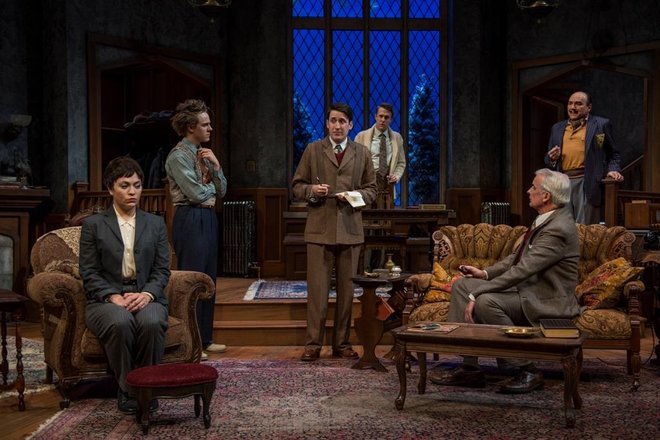
This American production was well done, with the shabby genteel set, the characters with all their secrets, and of course, our unexpected twist at the end.

Milwaukee Journal Sentinel photo by Michael Brosilow

In the J-S, critic Mike Fischer wrote of one of the characters, “‘Who am I?,’ he asks. ‘You do not know. Where do I come from? You do not know.’ When everyone is acting all of the time, how can we, ever? Forget the occasional creak in Christie’s plot. In this Mousetrap, the thrills and chills are timely and psychological, living as we do in a world where none of us is ever quite what we seem — leaving all of us caught in a trap of our own devising.”

It’s all fun — and as a wish for 2016, you could do no better than to hope for another evening of enjoyment at the hands of the skilled Miss Christie.

GEORGIAN ART FROM THE NEW MILWAUKEE ART MUSEUM

SOME GEORGIAN ART FROM

THE NEW MILWAUKEE ART MUSEUM

Following a major renovation and rehanging of the entire collections, it was time to celebrate…at one of several Opening Parties, we met for cocktails and canapes in the Calatrava addition (completed 2001). After the  official ribbon-cutting, we proceeded into the Older but newly renovated sections to view the entire collection in a new format.

MAM notice!
The Milwaukee Art Museum website is here.
Victoria here. As a long-time member, docent, volunteer, and staffer at the MAM, I was eager to see old friends in a new setting…and to enjoy the refreshed facilities, from the building itself, the HVAC system, lighting, and re-organisation of the collection. 
European Galleries

One (or three?) of those old friends: 
Triple Profile Portrait, C. 1560-80
French, School of Fontainebleau
Most of the galleries were closed for several years to complete the 6-year, $34 million for the renovation and expansion.  Special exhibitions went on in the Calatrava Wing, but we were very happy to see some of our favorites on display again.

The Age of Enlightenment–Immanuel Kant, 2008
by Yinka Shonibare, English, b. 1962
mixed media, purchase by the Contemporary Art Society

The MAM has a particularly fine presentation of American furniture, much from the Chipstone Foundation, as well as the Layton Art Collection. Read about the Chipstone Foundation here

Another of my personal favorites: London Visitors, 1874, by  James Tissot
French (1836-1902) A view on the steps of the National Gallery with the the Church of St. Martin-in-the-Fields in the background.

And now to some promised Art from the Georgian Period, in both Britain and the U.S., her  colonies during much of the period 1714-1837

Miss Frances Lee, 1769
Francis Cotes (English, 1726–1770)
Portrait of Jane Emma Orde, ca. 1806
John Hoppner (English, 1758–1810)
    Puzzle Jug, ca. 1820
    Sunderland or New Castle, England
    Attributed to John Barry (British, active 1784–1827)
    Landscape, n.d.
    John Constable (English, 1776–1837)
    Thomas Lawrence (English, 1769–1830)
    Frederick, Duke of York, n.d.
    William Blake (English, 1757–1827)
    Portrait of a Terrier, The Property of Owen Williams, ESQ., M.P. (Jocko with a Hedgehog), 1828  Edwin Landseer    (English, 1802–1873)
    Charles Willson Peale (American, 1741–1827)
    Gilbert Stuart (American, 1755–1828)
    Philadelphia, High Chest of Drawers, 1760-75
    John James Audubon (American, b. Santo Domingo [now Haiti], 1785–1851). Entrapped Otter (Canada Otter), ca. 1827–30. 
    John Singleton Copley (American, 1738–1815)
    Alice Hooper, ca. 1763

     Also on view until May 31, 2016 are two more portraits by Copley.  The MAM states, “For the inaugural exhibition in the Constance and Dudley Godfrey American Art Wing’s Focus Gallery, the Milwaukee Art Museum will show two rare paintings never before exhibited in the United States: a pair of pendant portraits of American colonists Anne and Duncan Stewart by the country’s first old master, John Singleton Copley. Painted by Copley in 1767, the portraits show the Scottish couple who were prominent in Boston and Connecticut politics until the American War of Independence, when t
    hey took the loyalist side. In honor of their support, the English king restored their estates confiscated during the Jacobite Uprising, and the couple returned to Scotland, taking the portraits with them. Now owned by Edinburgh’s Stewart society—descendents of the sitters—the works will be returning to the United States for the first time in almost 250 years.

    Duncan Stewart of Ardsheal, d. 1793
    by John S. Copley, 1767

    Anne Erving, Mrs. Duncan Stewart (1740-after 1802)
    by John S. Copley

    I hope I didn’t miss too much — I am delighted to say there will be many return visits to the newly re-hung galleries!

      For now, just a few pictures of the magnificent building in three parts:
    A view of the first War Memorial Center from the south) by Eero Saarinen, opened in 1957, which included the Milwaukee Art Center
    The recently expanded and renovated Kahler Wing (1975 and 2015)
    from the east
    Two views of the Calatrava Wing and the two other sections;
    looking north from Lake Michigan