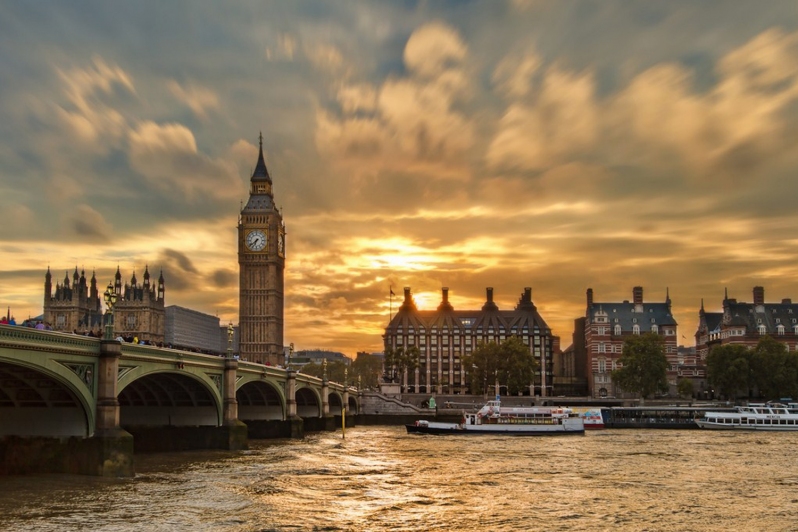
The day after the recent attacks on Westminster Bridge in London, I was contacted by a journalist from the Travel Market Report for my views on how the events would impact travel to the UK. In short, my considered opinion as a UK Tour Operator was “not at all.”
Random acts of violence will not keep Londoners and Anglophiles from enjoying one of the greatest cities on earth. We are made of sterner stuff. Unfortunately, in the present world climate, tourists must be aware of their surroundings, wherever they may travel.
In the great scheme of things, random acts of senseless violence will no doubt continue to periodically occur. We cannot allow them, or the people behind them, to change our lives, our daily activities or to limit our enjoyment of the things we love and that bring us joy, wherever they may be. The Duke of Wellington did not allow terrorists to change his way of life, nor did Queen Victoria or the Queen Mum, or Princess Anne or Queen Elizabeth. It did not stop Winston Churchill, whom I quoted in the above referenced piece for Travel Market Report, fromurging the British public to “Keep calm and carry on.” You can read the full article here.
Bibliomania or Book Madness and the Gentlemen of Regency England
By Louisa Cornell
I will confess to a certain amount of obsessive behavior when it comes to books. Especially books written about or during the Regency era. My antique books are located in a bookcase next to a window. In case of fire, those precious volumes are coming out of the house quickly, one way or another. I have those stickers on my windows and doors that say “Firemen, please save my pets.” I have yet to find one that says “Firemen, please save my books.” However, I am still looking.
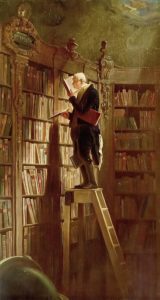
During the late 18th and at least the first half of the 19th century, book collecting became quite common among gentlemen, and some women, mostly in Britain and for the large part in the upper echelons of Society. As with all things, the lines between hobby, pursuit, and madness are easily crossed, more often than not blurred, and sometimes only separated by space and money. There are a number of reasons these people collected books. Allow me to introduce you to the most interesting ones. Bibliomania had many forms.
As powerful as my obsession is, it cannot hold a candle to the dark, at times frightening, pseudo-psychological madness that swept through the upper classes in Europe, and most especially England, in the nineteenth-century. At its height this strange madness was such that a number of satires were written on the subject – none of them flattering to the victims of this affliction, to be sure.
Gustave Flaubert’s Bibliomanie dramatized the legendary Spanish monk biblio-criminal who murdered a rival bookseller. Probably the most famous satire of this oddity was that of Thomas Frognall Dibdin, an English cleric, who in 1809 published his Bibliomania, or Book Madness : A Bibliographical Romance. In it, he goes so far as to ascribe actual symptoms to this disease.
Thomas Frognal Dibdin
He dramatizes a convincing pathology and uses medical language to describe the behaviors and idiosyncrasies of various sufferers of this malady. He presents as evidence rambling fictional dialogues based on conversations and real collectors he encountered. He categorizes those infected into classes based on the particular books they collected – First Editions, True Editions, Black Letter Editions, Large Paper Copies, Uncut Books (edges not sheared by binders’ tools,) Illustrated Copies, Unique Copies (those with specific bindings like morocco leather or specific linings like silk,) and Copies Printed on Vellum.
Dibdin’s work may have been fiction, but the characters in his book bear an uncanny resemblance to some of the better known book collectors of the time. In a particularly ironic twist, the book was very popular among book lovers and sparked reckless bidding wars over copies of it at auction. One particular copy started a 42-day auction at the 1817 Roxburghe sale. Most of the readers of Dibdin’s satire were from the upper class. To be certain they recognized many of their own in reading it. And why wouldn’t they? Dibdin was one of the founding members of the Roxburghe Club and a known bibliomaniac in his own right. Takes one to know one. Having read the book, I can say I recognize a few people I know today. Not mentioning any names for fear someone might mention mine. What happens at the Bibliomaniac Club or the House of Artie Collectors stays there.
As early as the 1730’s, there were those who purchased books as a symbol of wealth and power. Members of the socially elite and many who fancied themselves as scholars collected books, no matter the price, in order to build their own personal libraries. Where did you think all of those gorgeous libraries in stately homes came from? Once again, never underestimate the power of the mine-is-bigger-than-yours challenge, especially between men with ridiculous amounts of disposable income.
Beginning in 1804, English book collector Richard Heber (1773-1833) began to amass his collection of 146,000 rare books – books he stored in eight houses bursting at the seams. The cost of his impressive multi-house library? Over 100,000 pounds of his personal fortune.
Sir Thomas Phillipps (1792-1872) sacrificed most of his fortune (250,000 pounds,) his living conditions, and his wife’s company to his ambition to own “one copy of every book,” in vellum manuscripts, no less. One of his contemporaries declared the man’s house a “dilapidated swamp of books.” His country home, Middle Hill in Worcestershire, had twenty rooms. Sixteen of the rooms were given over completely to books.
“The state of things is really inconceivable. Lady P is absent, and were I in her place, I would never return to so wretched an abode. Every room is filled with heaps of papers, books, charters, packages, and other things lying in heaps under your feet, piled upon tables, beds, chairs, and ladders.”
Still not convinced it was about power? He made it a point to outbid his most powerful rival, the British Museum, for entire lots of books at auctions. He accused his own son-in-law of being a “book thief” and had it written in his will no Catholic could look upon his book collection after his death. “Book thief” the son-in-law was Catholic. So strong was his attachment to his books, he wrote his will in such a way it took over 100 years of legal maneuvering to disperse his collection.
My Precious
The difference between eccentric and crazy? Money,my dear. Money!
After the French Revolution in 1799, French aristocrats emptied their library shelves and flooded British auction catalogues with French books before they fled France. Many of these collections arrived on the market as libraries were liquidated posthumously. However they arrived, the books brought staggering prices at auction. Prices of antiquarian texts preserved in the libraries of French nobles brought quadruple the price they had before the Revolution. Owning large sections of French books, especially rare and antique texts, added prestige and continental flair to an aristocrat’s library. Whether he read the books or not.
The 1812 auction of the library of John Ker, third Duke of Roxburghe, was an unforgettable moment in the history of book collecting. The flames of auction fever were fanned by both advertising and the wartime shortage of books. England’s wealthiest peers and even a representative of Napoleon attended the auction which lasted 47 days and included a large selection of books printed prior to 1500 – incunabula.
Dibdin wrote of the event as being full of “courage, slaughter, devastation, and phrensy.” Thomas de Quincy, author of Confessions of an English Opium Eater and a man well-acquainted with the throes of addiction, described the “literary addicts” he saw at this event as irrational and governed by “caprice” and “feelings” rather than reason. He called the method by which prices were determined pretium affectionus or “fancy price.” In his mind the book collector was nothing more than a dandy ruled by his emotions.
Michael Robinson in his upcoming book Ornamental Gentlemen : Literary Antiquarianism and Queerness in British Literature and Culture 1760-1890 speaks to an interesting side-note to the aristocratic book collecting phenomenon. Whilst Robinson concedes 1812 is too early to speak of a “gay” subculture, he does agree there was an “uncanny queerness of the stereotypical representation of the 19th century bibliophile.”
Translation?
Men who collected books were often seen as effeminate. Heaven forbid a young English lord be more interested in collecting and reading books than he was in riding to hounds, drinking, and wenching. As late as 1834, the British literary magazine the Athenaeum published an anonymous attack implying one of the prominent members of the Roxburghe Club was homosexual. Dibdin’s language, both in Bibliomania or Book Madness and in his epic Bibliographical Decameron, was replete with sexual double entendre and some phrases that can be seen as almost raunchy. Apparently men who wrote or enjoyed such language had to be homosexual. Who knew? Some of these people really would have done well to read the books in these libraries. Sexual innuendo was not unique to any portion of the population. Where do you think all of those heirs, spares, vicars, fourth, and fifth sons came from?
There were those aristocrats who collected books and built their libraries out of a serious love of the written word and a desire to preserve books not only for their own use, but for the use of scholars, their tenants, their neighbors, their children, and ultimately posterity.
Men such as Robert Harley, Earl of Oxford, who commissioned the creation of ballad collections like The Bagford Ballads and amassed large collections of Renaissance literature, Middle English literature, and Anglo-Saxon literature. His library and that of his son, Edward, was sold to the British museum in 1753 by the Countess of Oxford and her daughter, the Duchess of Portland.
Mark Masterman-Sykes of Sledmere House amassed one of the finest libraries in England and was considered both well-read and extremely knowledgeable in the areas of literature and art.
I’ll be discussing some of the more important stately home libraries of this era in a later post.
Until around 1814, when the mass printing of books became more practical and affordable, many saw the book collecting of aristocrats as denying their fellow countrymen a part of their literary heritage. The rich dilettante as conspicuous consumer of books he might never read was seen as having an antisocial disease that kept him from sharing his riches with the intellectual commoner. Perhaps.
However, whether they needed a serious intervention from the Hoarders crew, or were just too greedy for their pantaloons, or were in search of power and prestige – the Bibliomaniacs of the Georgian era saw to it many pieces of our literary heritage survived, stored up as the treasures they truly are. New ones are being discovered every day in the libraries and collections of National Trust houses and aristocratic stately homes all over the UK. But that is a story for another post.
A bibliophile caring for his extensive collection. Carl Spitzweg, 1850
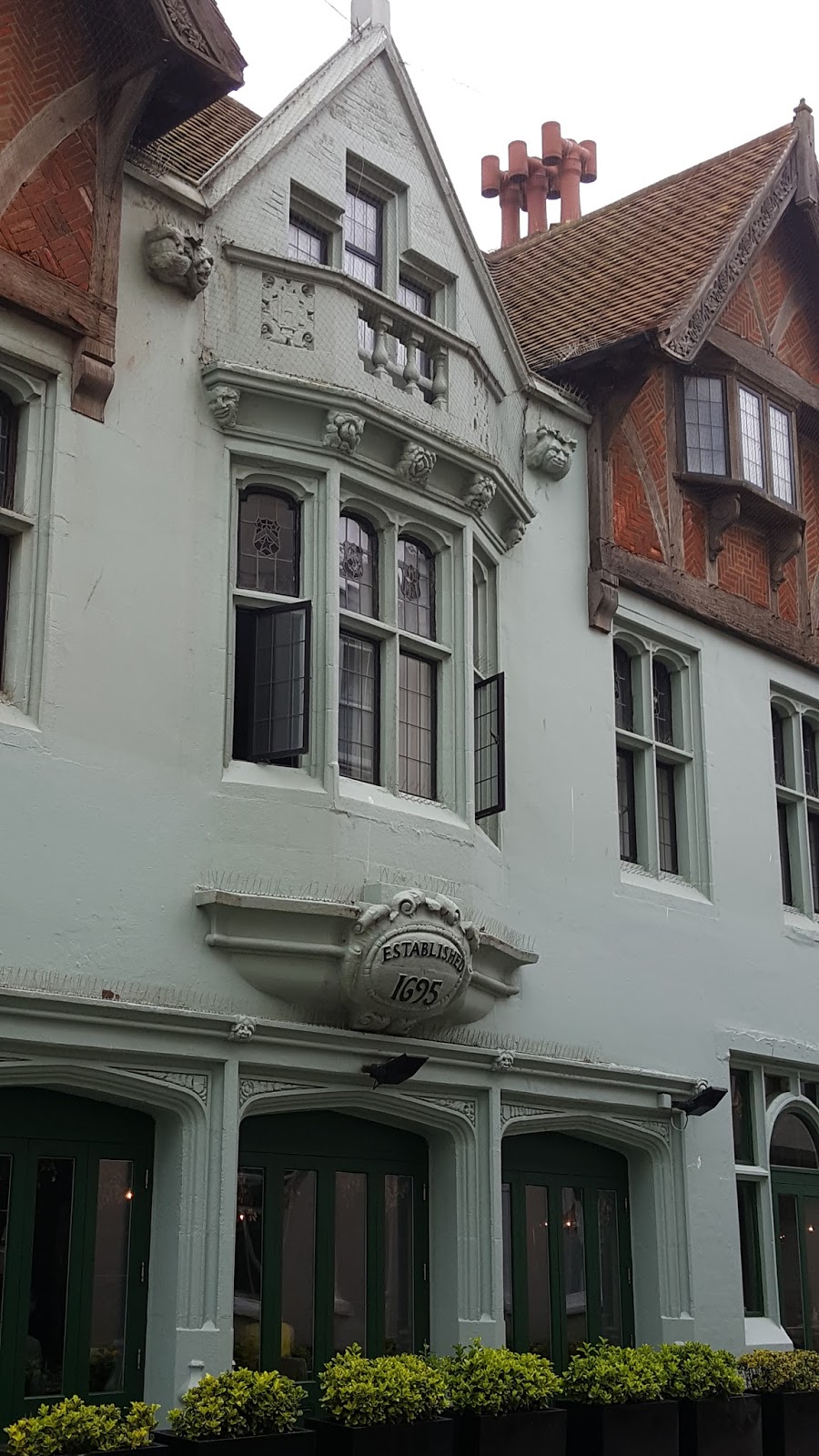
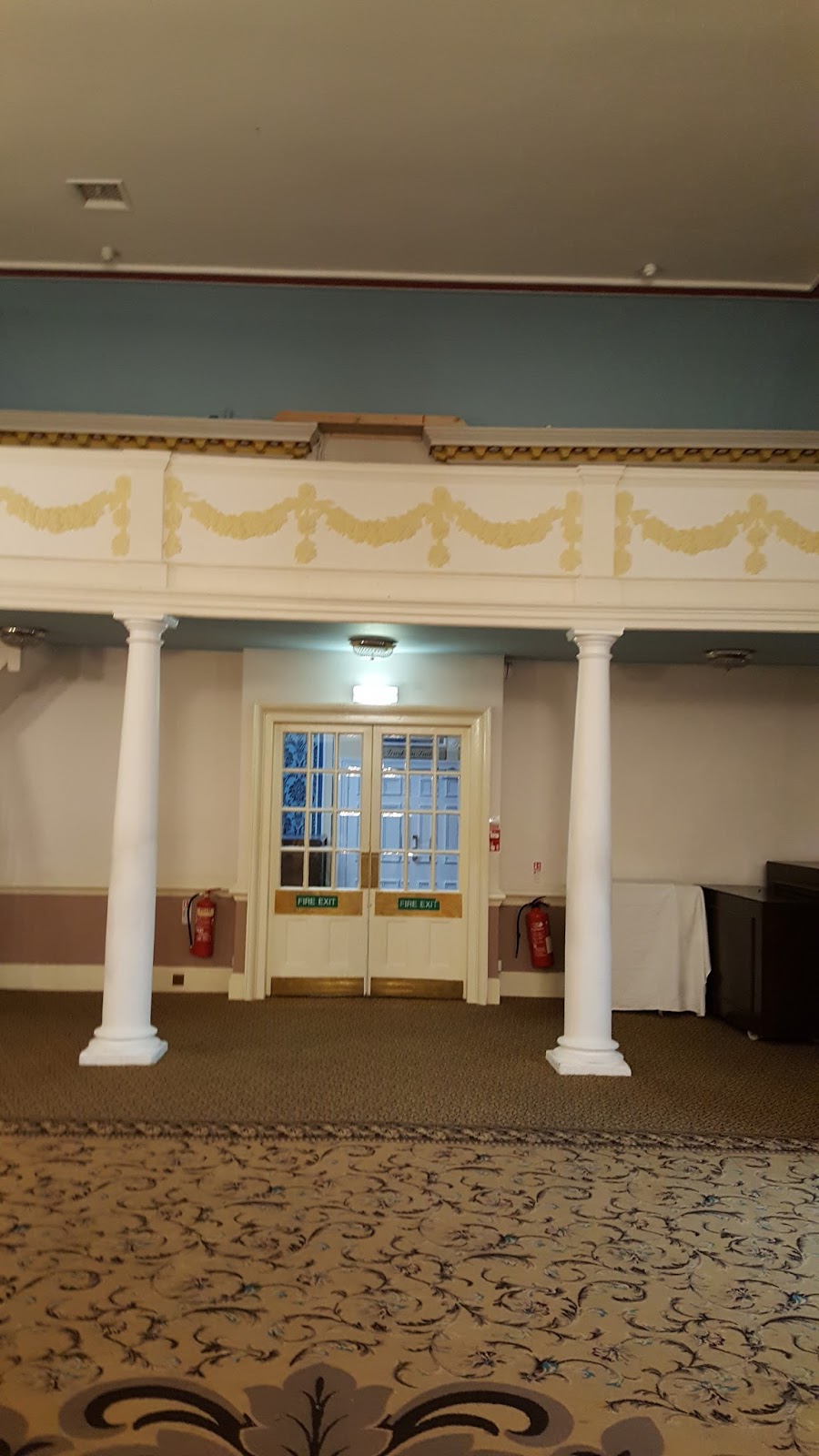
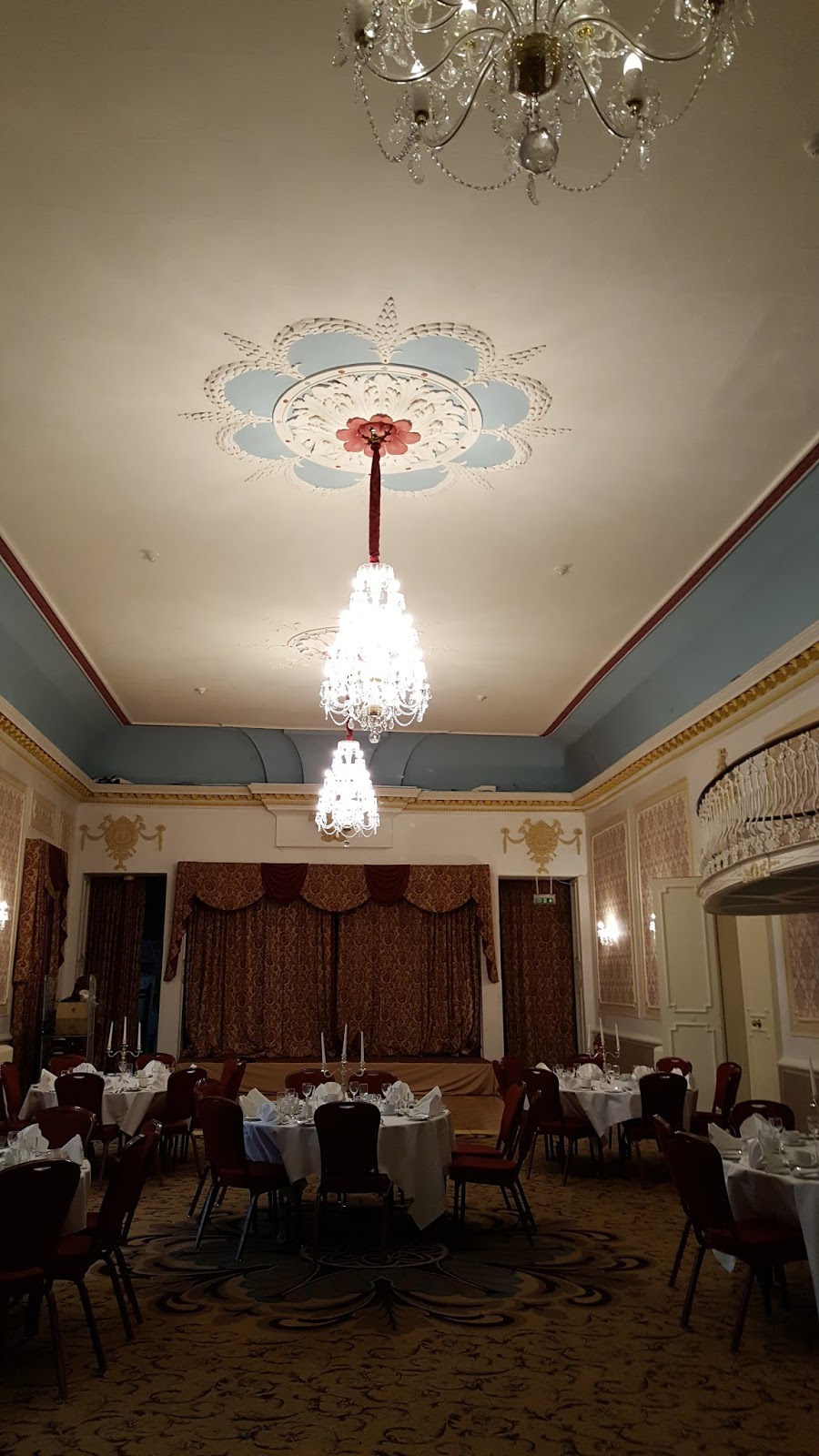
The Regency Assembly Rooms, Old Ship Hotel, Brighton seafront
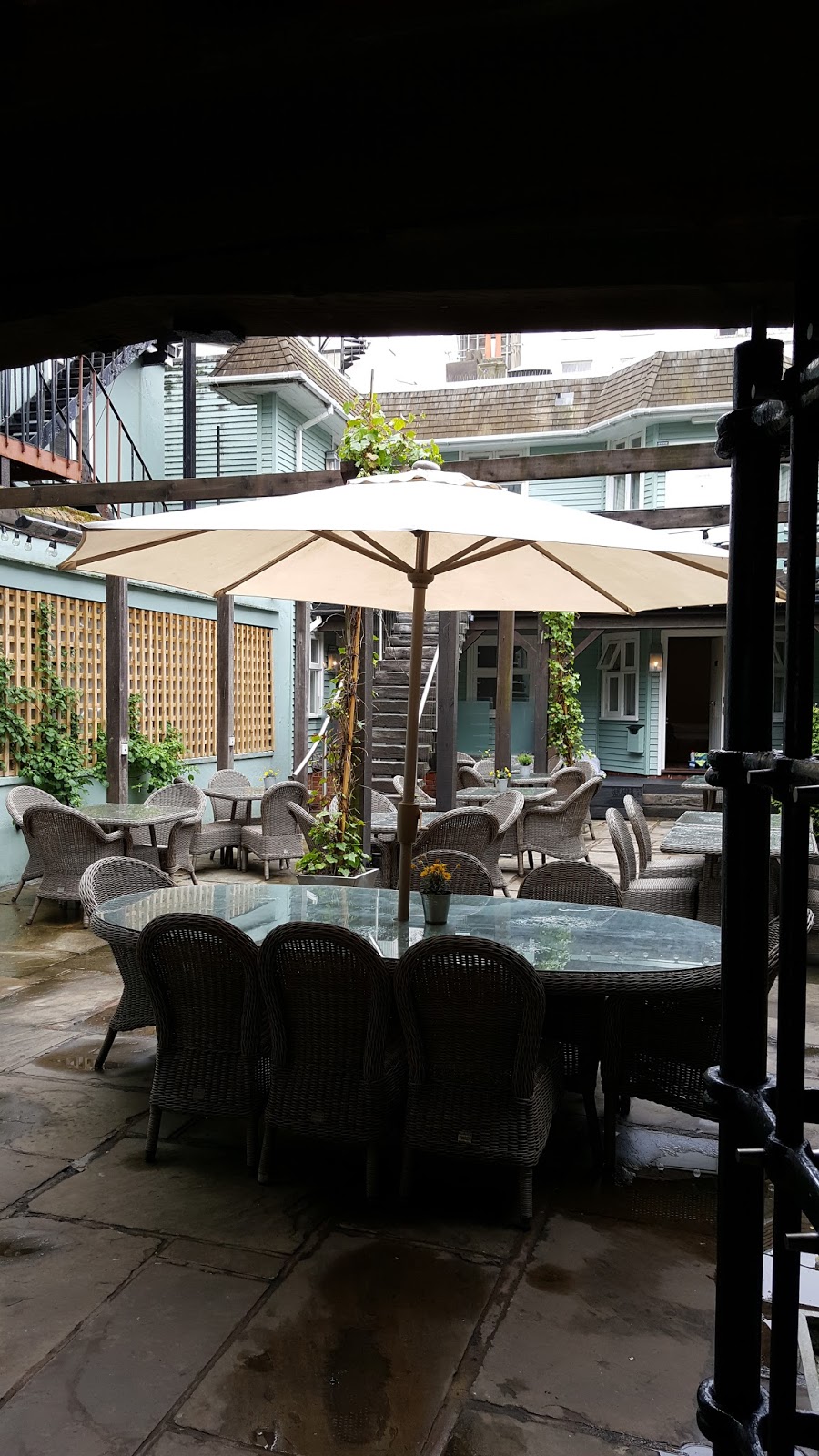
The old Cellars beneath The Old Ship Hotel
The dining room in the cellars at the Old Ship Hotel, reputed to have once been used by smuggler’s along the Brighton coast. We will be staying at the Old Ship and dining in the cellars during Number One London’s Regency Tour and Queen Victoria Tour.
‘Haute Couture is like an orchestra whose conductor is Balenciaga. We other couturiers are the musicians and we follow the direction he gives.’
Christian Dior
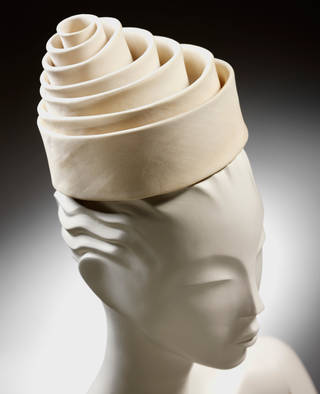
This May, the V&A will open the first ever UK exhibition exploring the work of Cristóbal Balenciaga and his continuing influence on modern fashion. It will be the first of its kind to look at his unique approach to making and will showcase pieces by his protégés and contemporary designers working in the same innovative way today. The exhibition marks the centenary of the opening of Balenciaga’s first fashion house in San Sebastian and the 80th anniversary of the opening of his famous fashion house in Paris.
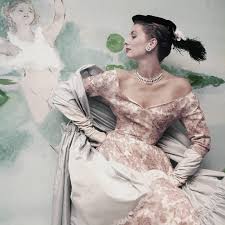
Balenciaga: Shaping Fashion will focus on the latter part of Balenciaga’s long career in the 1950s and 1960s, arguably one of his most creative periods. It was during these years that he not only dressed some of the most renowned women of the time, but also introduced revolutionary shapes including the tunic, the sack, ‘baby doll’ and shift dress – all of which remain style staples today. Highlights will include ensembles made by Balenciaga for Hollywood actress Ava Gardner, dresses and hats belonging to socialite and 1960s fashion icon Gloria Guinness, and pieces worn by one of the world’s wealthiest women, Mona von Bismarck, who commissioned everything from ball-gowns to gardening shorts from the couturier.
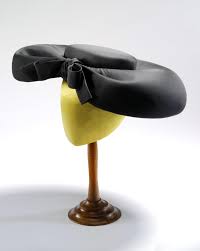
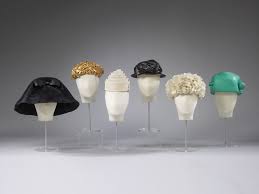
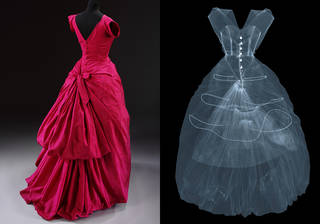
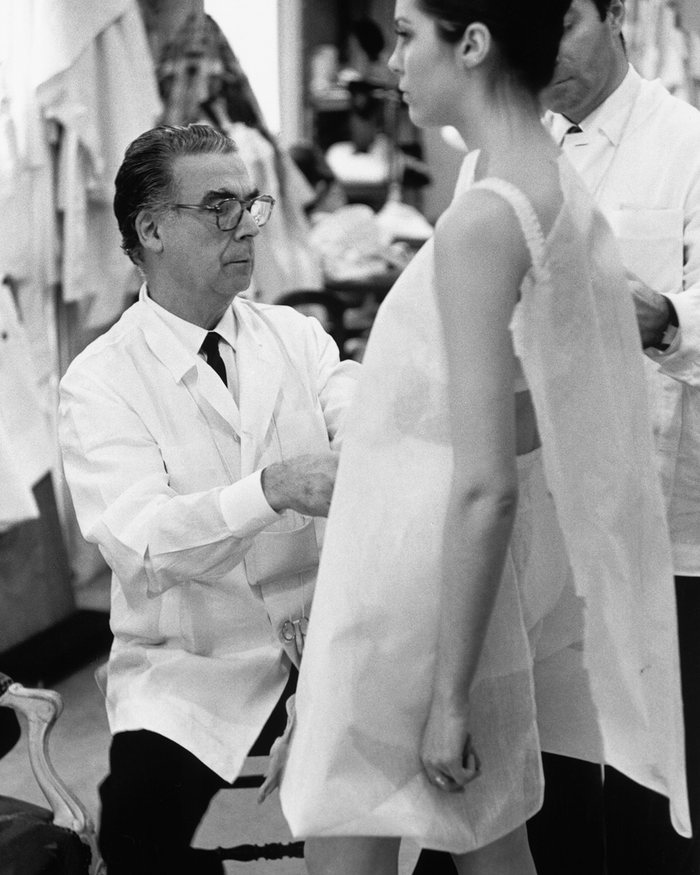
On display will be over 100 garments and 20 hats, many of which have never been on public display before. These will be accompanied by archive sketches, patterns, photographs, fabric samples and catwalk footage revealing Balenciaga’s uncompromising creativity. In addition x-rays, animated patterns and short films on couture-making processes will uncover the hidden details that made his work so exceptional. The exhibition will draw mostly on the V&A’s fashion holdings – the largest collection of Balenciaga in the UK. The collection was initiated for the Museum by Cecil Beaton in the 1970s.
Cassie Davies-Strodder, V&A exhibition curator, said: “Cristóbal Balenciaga was one of the most influential fashion designers of the 20th century. Revered by his contemporaries, including Coco Chanel and Hubert de Givenchy, his exquisite craftsmanship, pioneering use of fabric and innovative cutting set the tone for the modernity of the late 20th century fashion. The exhibition will show his lasting impact on fashion through the work of those who trained with him and through recent garments by designers including Molly Goddard, Demna Gvasalia and J.W. Anderson who reflect the legacy of his vision today.”
For the first time the V&A has used x-ray technology to take a forensic look at the hidden details inside Cristóbal Balenciaga’s garments. These images, made with x-ray artist Nick Veasey, show structures invisible to the naked eye, including dress weights strategically placed to determine the exact hang of the skirt in one of Balenciaga’s most minimal designs, and boning in dress bodices, dispelling the myth that he did not use such structures. In partnership with the London College of Fashion, pattern cutting students have taken patterns from some of the most iconic Balenciaga garments in the V&A’s collection. These have been digitised and animated to show how these building blocks come together to form the finished piece. In a number of cases, the patterns reveal that the main body of the garment has been crafted from one single piece of fabric, demonstrating Balenciaga’s mastery of materials. Three of these animations will be displayed alongside Balenciaga’s original garments to give a deeper understanding of each.
The exhibition will be organised around three main sections: ‘Front of House’, including Balenciaga’s salons, behind the scenes in Balenciaga’s ‘Workrooms’ and the lasting impact of ‘Balenciaga’s Legacy’. The Balenciaga brand still references its founder today, yet his influence spreads far wider. The ‘Legacy’ section will feature the work of over 30 designers of the last 50 years tracing the influence of this most revered figure in fashion right up to the present day. Themes include an exploration of his minimalist aesthetic reflected in the work of his former apprentices André Courrèges and Emanuel Ungaro, and more recently revived by designers such as Phoebe Philo for Celine and in the strong lines of J.W. Anderson. Balenciaga’s perfectionism and attention to detail are reflected in the work of Hubert de Givenchy and Erdem. His pattern cutting and explorations of volume can be seen in the work of Molly Goddard and Demna Gvasalia, while his creative use of new materials is referenced in the work of former Balenciaga creative director Nicolas Ghesquière.
Balenciaga: Shaping Fashion
27 May 2017 – 18 February 2018
To be accompanied by a new V&A publication and a series
of related events, courses and creative workshops.