Regency Reflections: The Regency Era Begins

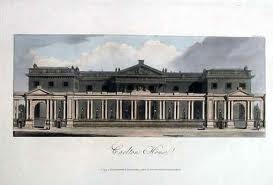
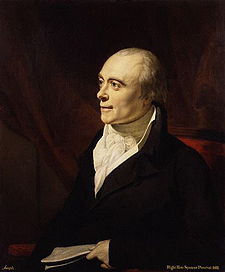
Two hundred years ago today, the English Regency began. George, Prince of Wales, swore his allegiance to King George III followed by oaths of office as Regent according to Parliamentary Acts, and as protector of the  Protestant religion. The solemn ceremonies at the Prince’s residence, Carlton House, were attended by the Royal Dukes, the Archbishop of Canterbury, and Parliamentary ministers led by the Prime Minister, Spencer Perceval.
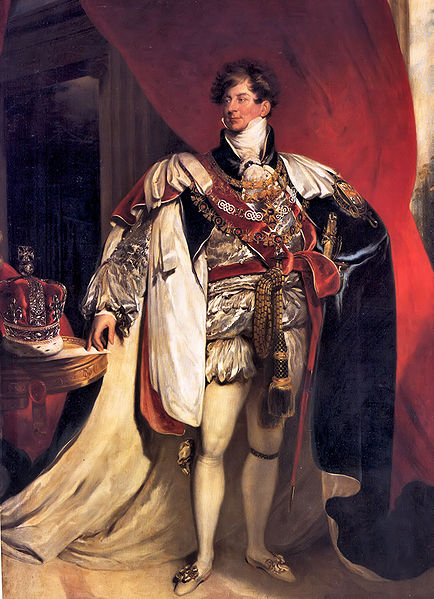
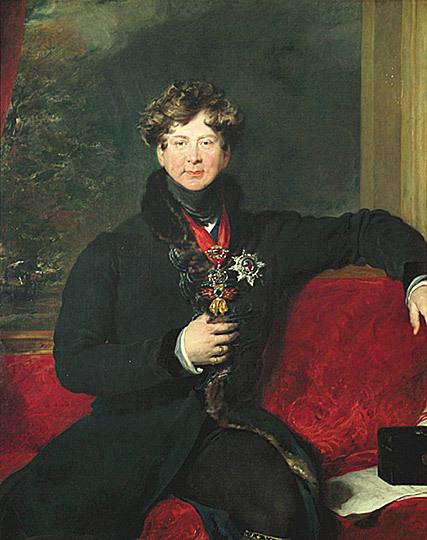
At right, a highly flattering picture of George, Prince of Wales, by John Singleton Copley, displayed at the Royal Academy in 1810. George always yearned to be a military leader but, sadly for Copley, he did not purchase this picture. It now hangs in the Museum of Fine Arts, Boston. Its official nme is Portrait of HRH The  Prince of Wales at a Review, attended by Lord Heathfield, General Turner, Col. Bloomfield, and Baron Eben; Col. Quinton in the Distance. The Prince never took the battlefield, however much he tried to convince the Duke of Wellington that he’d been at the Duke’s side at Waterloo.
Up to the time of his Regency, the Prince’s closest friends were associated with the Whigs, a political group of prominent aristocrats and their associates, who favored some “liberal” ideas, though one would never say they were radical reformers.  The differences between the Tories and the Whigs in the early 19th century today seem rather minor. The Whigs wanted reform but just a little bit! Gradually, the Whigs came to stand for extension of the voting franchise, Catholic emancipation, abolition of slavery, and other forward-thinking policies. But, unexpectedly, the new Prince Regent did not dismiss the Tory government and appoint his old friends. Needless to say, the old buddies were not pleased.
Jane Austen, NPG
Is it just my bias, caused by my admiration of Jane Austen and Georgette Heyer, or were there really an unusually brilliant collection of characters in the Regency? Here are a few of the personages who capture my fancy.
Jane Austen (1775-1817), brilliant author.  Nuff said.

The Duke of Wellington, Waterloo victor

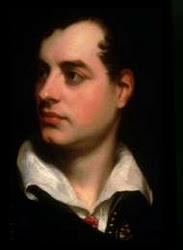
Lord Byron, mad, bad and dangerous to know
George “Beau” Brummell, fashion arbiter

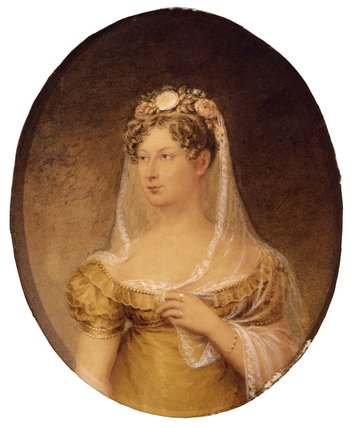
Princess Lieven, by Lawrence, c. 1813
sees all, tells all?

Earl Grey, led the Whig opposition

Sir John Soane, brilliant architect

Sir Thomas Lawrence, self-portrait; he painted them all

Above is just a sliver of the fascinating characters of the Regency Era. Who is your favorite?  Let us know…
Regency Reflections: On 5 February, 1811, the Regency Begins…


By February 5, 1811, both houses of Parliament had passed the Regency Act, making George, Prince of Wales, the Regent for his incapacitated father, George III, who was under doctors’ care at Windsor Castle. The Prince took the royal oath on February 6, 1811.

He was 48 years old. He had a legal wife, Princess Caroline, whom he despised, and from whom he had been estranged since shortly after the wedding.  Their daughter, Princess Charlotte of Wales, was 15 years old, and suffered from the great inconsistencies in her father’s attention and attitude.  She was most often ignored by him, but occasionally she was flaunted before the public, which adored her and loathed him.


Princess Charlotte by Richard Woodman,
1816,  NPG
Charlotte was a lively girl who had limited contact with both her mother and father.  She was often with her aunts, the Princesses, and her grandmother, Queen Charlotte, and only rarely with girls of her own age. From time to time, the Prince spent time with her, but he complained that her looks reminded him, painfully, of his wife.  Little wonder she had the German/Hanoverian stamp, since her George and Caroline were first cousins, both grandchildren of Frederick, Prince of Wales (1707-1751), the son of George II.
Princess Charlotte led a lonely life, though surrounded at all times by attendants and court-appointed companions.


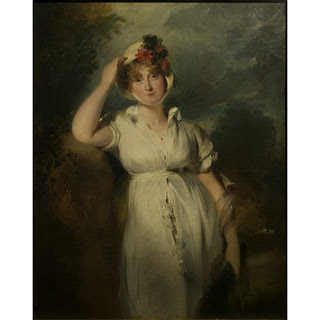
Caroline,  Princess of Wales
by Sir Thomas Lawrence, 1798, VandA

Caroline, by 1811, had set up a separate establishment where she entertained and socialized. Some of her behavior was reported to be scandalous, and her access to her daughter was often restricted. Caroline enjoyed — and often flaunted — her personal popularity with the people. She resented her position as a cast-aside wife with little or no access to court and none of the honors due her. Little wonder that there were constant rumors  circulating in London society.


Mrs. Fitzherbert by Gainsborough, 1787

Prince George had another wife, Maria Fitzherbert, though the union was not legal according to the requirements of the laws regarding royal marriages. Maria put up with a lot of misbehavior from George too. He left her not only for a legal wife, however temporarily, but also had numerous mistresses while he was associating with her. Like Caroline, Maria loved children; both women adopted other children on whom they poured their maternal love. One hopes that all three of these women – Maria, Caroline and Charlotte – managed some degree of happiness in their lives as they were consistently disappointed by the whims and caprices of George, Prince of Wales.

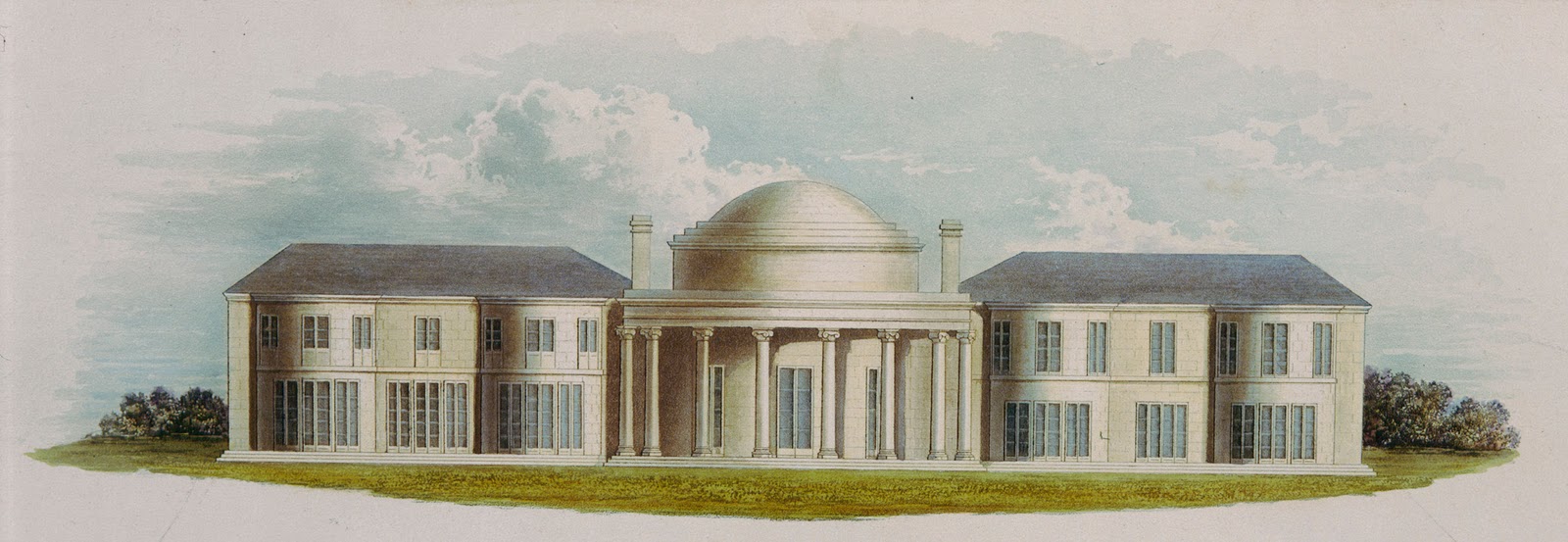
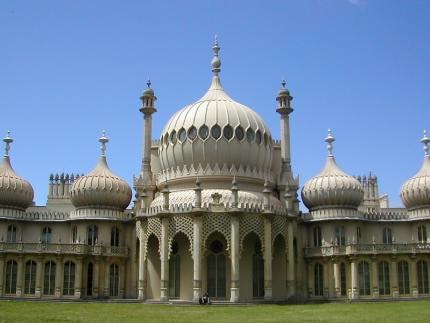
 Prince George resided at Carlton House in London, a building he had turned into a palace filled with magnificent art works and sumptuous furnishings. Typical of his over-indulgence in all matters, as King, George IV had Carlton House demolished in 1825 for a new plan to enhance the new Regent Street. Meanwhile, he turned his Marine Pavilion in Brighton, from  the tasteful building completed by Henry Holland in 1787, below, into a fantastical building in which the interior is Chinese style while the exterior is Indian-Mughal, whatever that is. Rev. Sydney Smith remarked upon seeing the Pavilion, “It looks like St. Paul’s Cathedral came down and pupped.”

The Marine Pavilion, Brighton
 Henry Holland, Architect, 1787

 Brighton Pavilion, as remodeled by John Nash, after 1811

England at the beginning of 1811 had been at war with France on and off for decades. British armies were fighting in the Peninsular Wars in Portugal and Spain. Shifting alliances among the continental European powers kept Britain’s diplomats busy negotiating and re-negotiating treaties and mutual support pacts.  The Prince Regent left the hard jobs to his ministers while he concentrated on his social life, his collections, his designs for army uniforms, and other even more trivial matters.  We will dip further into some of these in future posts.  

But George never was very popular. Sometimes the press was full of praise, but between the essayists, satirists and artists of caricatures, the Regent took his full share of criticism.
Here is a fragment of the praiseful poem published by the Morning Post newspaper in honor of the new Prince Regent:

Adonis! In thy shape and face,
A liberal heart and Princely grace
In thee are seen combined …

But Leigh Hunt and his brother John, editor of a literary magazine called the Examiner, published a different view:
“… An Adonis of 50 … a violator of his word, a libertine over head and ears in debt and disgrace, a despiser of domestic ties, the companion of gamblers and demi-reps, a man without a single claim to the gratitude of his country or the respect of posterity …”

Though many hailed them as heroes for their position, the Hunts were sued for and convicted of libel and served time in jail. Among the visitors to Leigh Hunt in prison were the poet Lord Byron, Lord Brougham, and essayist Charles Lamb.

Leigh Hunt, essayist and critic, 1784-1859

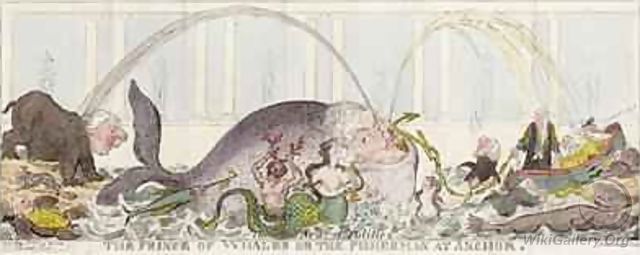
“The Prince of Whales, or The Fisherman at Anchor:
George Cruikshank,  1812

We will look at the Prince, or Prinny as many called him, and his reign many times in the upcoming months.  It was a time of excess in many ways, and he certainly led the pack. We will see many more caricatures — they were in their glory in those days — and we will look at the real achievements of the Prince, particularly in assembling his collections of art and decorative arts.

At his Pavilion in Brighton, a new exhibition is about to open: Dress for Excess, Fashion in Regency England.  suitable title, don’t you agree?  It will include the magnificent Coronation Robe worn by the Prince as he became George IV in 1921. Below, the King’s portrait by Sir Thomas Lawrence (who else?).

On The Shelf – Discovering New Authors – Part Two

Victoria, here, continuing the Gentle Reads section of our book recommendations.  Angela Thirkell is a delight. But then, you already knew I thought so, didn’t you? As a card-carrying member of The Angela Thirkell Society, I really love her books. The Barsetshire novels are wonderful — witty and liberally dosed with snippets of biting social satire – please try them! But she also wrote some other works — one I particularly enjoyed was A Tribute to Harriette — The Surprising Career of Harriette Wilson published in 1936 in England as The Fortunes of Harriette. This, perhaps not totally gentle and thus ineligible for this particular blog, is the story of the famous Regency Courtesan. But back to Thirkell’s Barsetshire novels, here’s the blurb for Wild Strawberries taken from the Thirkell Society website, where you can also find synopsis of all the books in the series: “Action in Thirkells third Barsetshire novel centers around the extended family of the Leslies of Rushwater House. Lady Emily reigns behind a self-generated thicket of confusion and turmoil. There is no event so settled that Lady Emily cannot throw it into chaos at the last moment. Mr. Leslie has been known to take off on a cruise to the “Northern capitals of Europe” when it all becomes too much for him. Their daughter Agnes, a matriarch-in-waiting, has already produced three children despite a husband who seems to be perennially abroad on some unspecified activity. The French tenants and Mr. Holt, the consummate social leech, are skillfully and humorously dealt with as is the household struggle for control between Housekeeper and Nannie. Even the small children, James, Emmy, and Clarissa are fully defined and serve to reveal the character of the adults as they interact with them. As usual we have the ” young man with crush on older woman”, one match completed, and others set up for the future.”


I will add three more of my old faves for this gentle blog: Mazo de la Roche, Rosamund Pilcher, and Mary Stewart. I won’t write here — but soon — about Georgette Heyer. I could add lots more — both my mother and my grandmother had excellent noses for historical fiction: think Victoria Holt aka Jean Plaidy and several other pen names, whose real name was Eleanor Hibbert; Frances Parkinson Keyes; Kathleen Winsor; Catherine Cookson, Frank Yerby and many more. You can google these names for lists of their novels and more details.

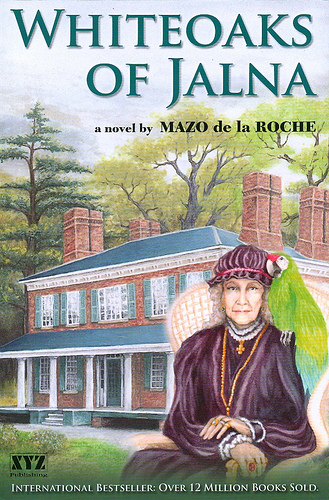
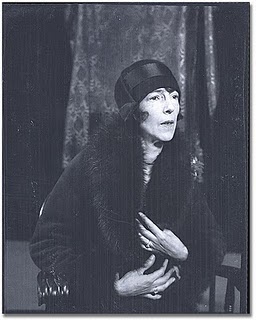
Mazo de la Roche (1879-1961), born in Canada, wrote a continuing family saga about the Whiteoak family at Jalna, an estate in Ontario, through many generations. Jalna, her third novel, published in 1927, brought her fame, best-sellerdom, and fortune. The last of the series, Centenary at Jalna, came out in 1958. A film was made of Jalna in 1935 and the CBC presented a series on the books, sometimes known as the Whiteoak Chronicles, in 1958. Sadly, these books have not been reissued since the 1970’s and are now long overdue for a revival.


Mazo de la Roche


The fictional Whiteoaks family originated in England, made a fortune in India, and came to Canada to establish the North American version of a country estate. The series was not written in chronological order, but can be read that way for ease of keeping the various branches of the Whiteoaks from tangling. My grandmother treasured these books and they were among my earliest grown-up reads, carefully and secretly eased from her bookshelves and spirited away to be read outside of the view of any adult. Not that the writing was particularly shocking, but some of the themes — affairs, homosexuality, incest, e.g. — were not for childish eyes (at least back then!).
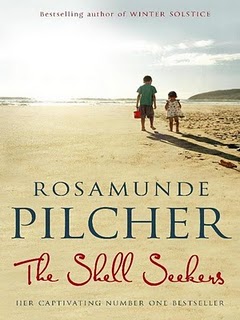
Rosamund Pilcher’s most famous book is probably The Shell Seekers published in 1988. Born in 1924 in Cornwall, she had written many romances as Jane Fraser for Millls and Boon. She served in the British navy in WWII before marrying and turning to fiction. Many of her stories have been made into films and tv series, bringing enojyment to viewers all over the world; according to various websites, she is particularly popular in Germany. The Shell Seekers was a worldwide bestseller, the reminiscences of Penelope Keeling, daughter of a famous artist. In the movie version (1989), she was played by Angela Lansbury and in the tv version (2006) by Vanessa Redgrave. That should give you some idea of the quality of the story and the character. I think I will go to the library next week and take it out again. Definitely worth a re-reading.
 
 
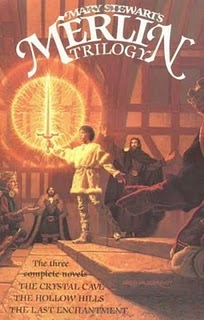
Everything you want to know about Mary Stewart and her wonderful novels can be found here. She has written many, including the Merlin books, a wonderful re-telling of the King Arthur saga in five volumes. She is also well known for her romantic suspense novels, some once known as neo-gothic or woman-in-jeopardy. Lots of suspense and a happy ending, the perfect gentle result even if the action can be bone-chilling from time to time. Born in 1916, Mary Stewart was awarded an honorary doctorate in 2009 from her alma mater Durham University, where she also taught before her marriage to Sir Frederick Stewart in 1945. Perhaps the most gentle of her books is Rose Cottage, 1997. But I think my favorite, aside from the Merlin books, is Touch Not the Cat, from 1976. Here’s the marketing blurb: “Bryony Ashley knows that her family’s grand estate is both hell and paradise — once elegant and beautiful, yet mired in debt and shrouded in shadow. Devastated by her father’s sudden strange death abroad, she is nonetheless relieved to learn the responsibility of running Ashley Court has fallen to a cousin. Still, her father’s final, dire warning about a terrible family curse haunts her days and her dreams.”
Part Three Coming Soon!

Regency Reflections: Leading up to the Regency of Prince George, 1811

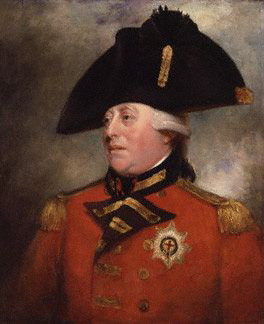
George III, c.1809; studio of Sir William Beechey, NPG

After the first regency crisis in 1788-89, George III had occasional relapses of illness and mental incapacity. However, each time he would gradually recover, and he retained the powers of his office for more than two decades.


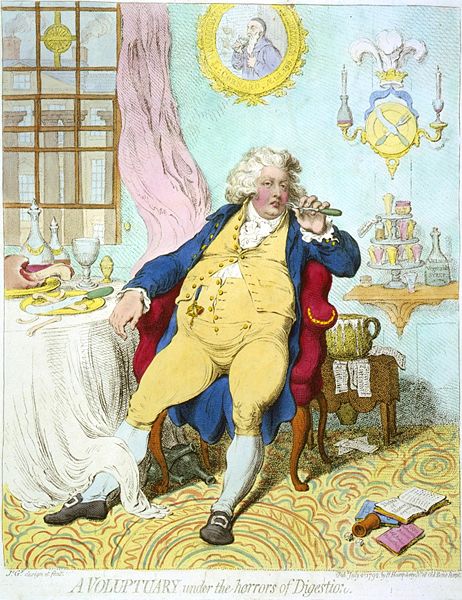
George, Prince of Wales, bided his time, indulging in his characteristic excesses. He was not esteemed by the common people. He complained that he was not given an important post in the Army, like his brother Frederick, Duke of York, or in the Navy like his brother William, Duke of Clarence. This is how he was caricatured by James Gillray (1757-1815) in 1792 as A Voluptuary Under the Horrors of Digestion.

James Gillray, 1792
Caroline, Princess of Wales by Lawrence

Acceding to his father’s and Parliament’s wishes, and to pay his debts,  in 1795 he married his cousin Caroline of Brunswick, a marriage which lasted only a few days or weeks before they were effectively estranged forever. Nevertheless, a child was born nine months after the ceremonies, Princess Charlotte. At last there was a legitimate grandchild who could inherit the throne.


Marriage did nothing to improve Prince George; in fact it may have increased his reckless behavior.


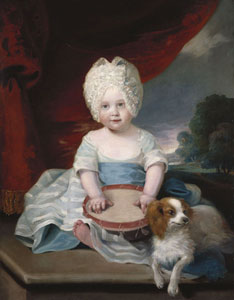
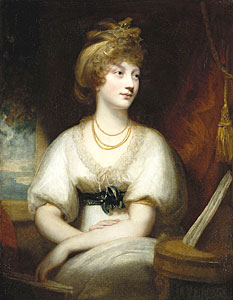
Princess Amelia, Hoppner, 1785

The leaders of both political parties died in 1806, William Pitt, the Tory Prime Minister in January and Whig leader Charles James Fox in September, leaving a new cast of characters to assess the need for a regency.

Princess Amelia, 1783-1810, by William Beechey

 The British people had grown fond of their old king and his jubilee, celebrating 50 years on the throne, was widely acclaimed in 1809. The next year, King George III’s madness recurred. He was much distressed by the fatal illness of his youngest daughter, Princess Amelia. Though she chafed at the strictness of her parents and her virtual imprisonment at Windsor, she loved her father. Anticipating her death, she had a special jewel set for him including a lock of her hair. The very sight of it caused him tears.

The Prime Minister in 1810-11 was Spencer Perceval (1762-1812), who presided over a fractious set of ministers. Perceval, who called himself “not a Tory but a follower of Pitt”, did not like the Prince. The feeling was mutual. Perceval had taken the side of Caroline, Princess of Wales, in her disputes with her husband, and George was not a forgiving man.


But after much discussion and examination of the King by doctors and politicians alike, Perceval told the Prince that the Parliament would discuss a bill to establish a regency. George was to be ruler in the name of his father. The prince was not pleased with the restrictions placed on his actions by the bill, which was very similar to the one passed by Commons and almost passed by the House of Lords in 1789. These restrictions had mainly to do with the creations of peerages and other offices, awards and pensions. The Queen would be responsible for the care of the King.

For some of the members of both Commons and Lords, the bill gave too much power to the Prince. But despite the bill’s shortcomings, it passed in early February, 1811, and the Regency was established. The Prince took the Royal Oath on February 6.


To the surprise of almost everyone, the Prince Regent did not choose new ministers from his close friends, the Whigs. The Parliament had many issues on its agenda, such as continuation of the Peninsular War, the problems of Ireland, and banking concerns.

Meanwhile, the Prince Regent continued his spendthrift ways. He prided himself on his connoisseurship; he built, remodeled, bought, collected and wasted incredible amounts of public money. However, for the remainder of the regency and his ten years as George IV, his tastes and his extravagances gave Britain a lasting legacy in the royal collections and palaces. Whether it had anything to do with his influence or not, there was a flowering of literary talent on his watch. Byron, Keats, Shelley, Austen, Scott – an endless list. And the painters Constable, Turner, Lawrence and many others were at the top of their games. Architecture, the decorative arts, and garden design developed brilliantly.

We will investigate many of these topics further over the year.

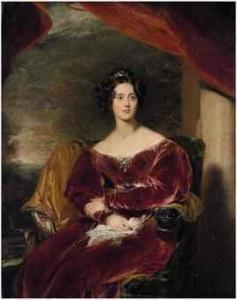
Thos. Lawrence's Countess of Wilton Fetches £1,777,250

In light of the recent posts on this blog by Jo Manning and others regarding Sir Thomas Lawrence, we thought we’d let you know that Lawrence’s portrait of Mary, Countess of Wilton (1801-1858), above, recently sold for £1,777,250 at Christie’s in London.

Of special note is the fact that the Countess of Wilton was the daughter of Edward Stanley, 12th Earl of Derby, and his second wife, the celebrated Irish beauty and actress Elizabeth Farren (1759-1829), whom Lawrence painted early in his career and whose full length portrait won Lawrence name recognition and kudos when it was exhibited at the Royal Academy in 1790. You can read my prior post about the Farren portrait and the Regency Power and Brilliance Exhibition at the National Portrait Gallery in London here.


Elizabeth Farren, later Countess of Derby

Elizabeth (the daughter) married Thomas Egerton, 2nd Earl of Wilton, the second son of Robert Grosvenor, 1st Marquess of Westminster. The Countess of Wilton sat for her portrait in 1829, the year before Lawrence’s death. On the Countess’s death, we have the following:

“At Egerton-lodge. Melton Mowbray, the Countess of Wilton. The deceased lady had been for some time a little indisposed, but fatal results were not anticipated until shortly before her death. The late Countess was very highly esteemed at Melton, both in aristic circles and among the poor, to whom she was endeared by her active charity. The deceased lady was the youngest (and onlv survivor) of the three children of Edward, 12th Earl of Derby, by his second countess (Miss Eliza Farren, the celebrated actress). Her Ladyship was born on the 23rd of March, 1801, so that she was in the 58th year of her age. She was married to the Earl of Wilton on the 29th of November, 1821, and her ladyship leaves two sons and three daughters. The present Earl of Derby (the 14th Earl) stands in the relation of half-nephew to her ladyship, and (being born on the 29th of March, 1799) is two years older than his half-aunt.” —Manchester Guardian.

For full notes and provenance on the Countess’s portrait, visit the Christie’s site here.