And the Winner is….Pride and Prejudice!

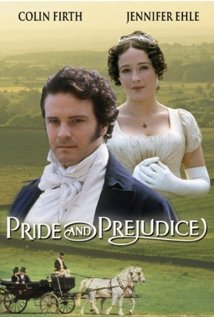
Colin Firth is a favorite for the best actor Oscar to match his Golden Globe and BAFTA awards — for his role in The King’s Speech.  But apparently he has already won our hearts, in 1995, in the BBC’s miniseries of Jane Austen’s Pride and Prejudice.  Who can forget his memorable Fitzwilliam Darcy?

Victoria here; the January issue of the BBC History Magazine caught up with me and I was amused to see their list of favorite “Best Television Costume Dramas.”  None of us will be surprised, I am sure, to find this 1995 production in first place.  The magazine reports that 14.1% of their 3,229 respondents  voted for P and P. 
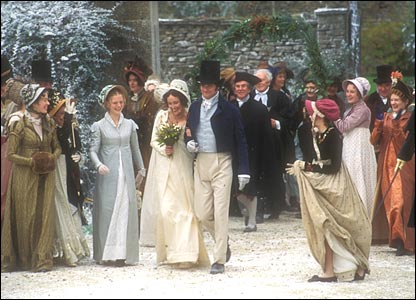
The conclusion of Pride and Prejudice, the miniseries
Watch the “Colin in lake with wet shirt” video here (1,605,694 views so far).


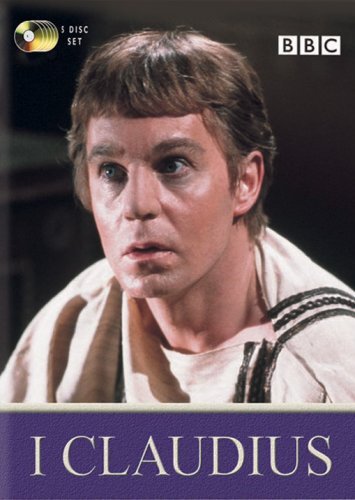
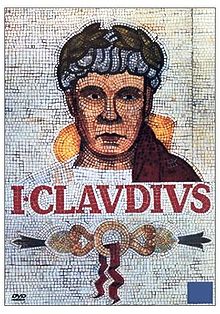
In second place, and this was a bit of a surprise to me, was I, Claudius from 1976.  How young Derek Jacobi looks in this DVD cover picture of him in the title role. 

I remember this wonderful series about the supposedly mad Claudius and the wild history of the Rome of which he eventually became the Emperor.  I particularly remember the role of Livia, wife Augustus, played by Sian Phillips. She was the  personification of malevolence.  The series was based on the novel by Robert Graves and ran for several seasons.  It might have been high in the memory of viewers because the BBC has recently done a radio drama of the novel.
Upstairs, Downstairs, which began in 1971, took third place.  Again, it is familiar to viewers because it has recently returned in a new version, yet to be seen on this side of the pond.  The adventures of the Bellamy family and their servants was required watching for me for many years, and I have enjoyed the  dvds too.  Kristine saw a couple of the new episodes when she was in London at New Year’s and says we will all love them when they arrive here.

In fourth place was Downton Abbey, which was a distinct disappointment to me. It sounded like it had everything I would adore — script by Julian Fellowes, actors such as Hugh Bonneville and Maggie Smith, a huge pile of a country house that made Wretched Excess look tasteful…what could possibly be  unsatisfactory?  Cliche-ridden story, unconvincing characters, silly disagreements masquerading as substantial — I can only think that people voted for it because they remembered it so well, not because it was GOOD.  I just felt I’d seen it all before, and Fellowes packed so many “tried-and-true” situations into it that I wanted to scream.  Of course, I have to say it is much better than almost anything else on tv. Damned with faint praise???  I do look forward to improvements next season. Never say die.

Cranford, from 2007, won fifth place.  And this one I really enjoyed. Taken from several novels by Elisabeth Gaskell, the story revolves around life in an 1840’s English Village. The coming of the railroad challenges a number of traditions but life — birth, courtship, marriage, and death — continues to absorb the villagers.  Of course, anything with Judi  Dench will by on my ‘must” list — but I used to feel that way about Maggie Smith too.

The  BBC History Magazine (in an article by David Musgrove) expressed some surprise that The Tudors only ended up in 14th place. Given the current fascination with all things Tudor and Elizabethan, perhaps that was unexpected by many. But, though I enjoyed every episode and never had the irritation I felt at Downton Abby’s trite story, I really didn’t think The Tudors was all that great. Costumes were wonderful; and the cast was good. But how many  of us could really see Jonathan Rhys-Meyers as Henry VIII.  Even when they padded him up at the end, he looked like a hunky stud with pillows tied around his waist.  Give me Charles Laughton as Henry any time!
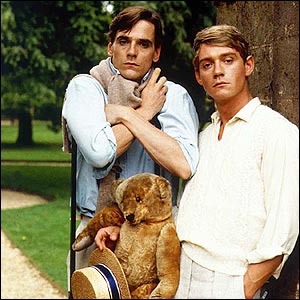
Sixth place went to another of my favorites, Brideshead Revisited (1981) and seventh went to The Forsyte Saga from 1967, which I watch every 3 or 4 years,whether I need to or not!.

To see the complete list of also-rans, click here.
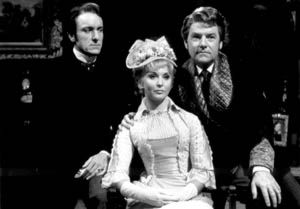
Soames, Irene and Young Jolyon
The Forsyte Saga

Sherlock Holmes Returns – Thrice

(1) Robert Downey Jr. will once again play the British detective in Sherlock Holmes 2, (2) a new, authorized Sherlock Holmes mystery novel will hit the stands in September of this year (3) Benedict Cumberbatch returns as Masterpiece Mystery’s 21st century incarnation of the detective. 
Sherlock Holmes II (the film) is set in the year 1891, a year after the events in the first film, and will have Holmes chasing Moriarity and Dr. Watson pursuing his love life whilst assisting the detective. Downey says: “Unlike last time, where Holmes kept getting Watson into trouble, this time Watson is getting Holmes out of trouble, and they’re both in deeper trouble than I think the audience could have imagined we could go…. All manner of nastiness has just occurred.”

This time out, the duo are joined by the feisty Sim, played by actress Noomi Rapace. Also making an appearance is Sherlock’s brother Mycroft Holmes, played by actor Stephen Fry, a character who producer Susan Downey (Robert’s wife) describes as “stranger and perhaps even more brilliant” than the English detective. Fry recently said, “I play Mycroft, Sherlock Holmes’ brother – the smarter brother, I hasten to add. He’s so lazy that he never gets the reputation that Sherlock does. Historically it’s a very interesting character, and as a lover of Sherlock Holmes since I was a boy I’ve always enjoyed that character myself. I hope that people enjoy it. It’s certainly been fun making the picture.” And how does Fry feel about a Yank playing the iconically British Holmes? “To some extent, but he’s such a charismatic and likeable screen presence, Robert, that you very soon forget it. More than most, he owns every second of screen time. He’s just wonderfully likeable. He’s the real thing.”
The film opens in October in the UK and in December in the US.
Meanwhile, author and screenwriter Anthony Horowitz has been tapped by the Arthur Conan Doyle Estate to write a brand new Sherlock Holmes mystery novel. Horowitz said he’s writing “a first-rate mystery for a modern audience while remaining absolutely true to the spirit of the original.” Orion publisher Jon Wood promised the author’s “passion for Holmes and his consummate narrative trickery will ensure that this new story will not only blow away Conan Doyle aficionados but also bring the sleuth to a whole new audience.”
This is the first time that the Estate has tapped anyone to continue the Holmes tradition and it’s no wonder they chose Horowitz, who has proven his story telling abilities by creating Foyle’s War and contributing to several other crime drama series, including Midsomer Murders and adaptations of Agatha Christie’s Poirot novels.

And finally, we can all look forward to Benedict Cumberbatch’s return as Holmes in three new Masterpiece Mystery episodes this Autumn. The game is certainly afoot.

Sir Thomas Lawrence Arrives at Yale


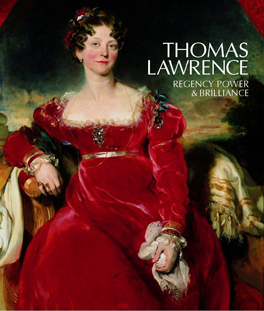
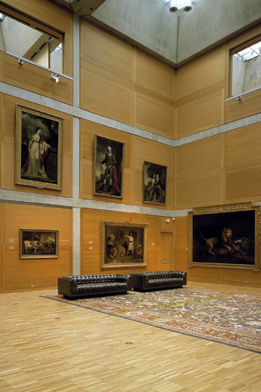
Opening today, February 24, 2011: Thomas Lawrence: Regency Power and Brilliance will be on view at the Yale Center for British Art until June 5, 2011.


Kristine and Jo Manning both saw the exhibition in its first venue at the National Portrait Gallery in London.  Victoria hopes to be there in a few days…and I will report on my visit.  You can read our previous posts on this blog on 10/20/10, 1/7-8-9-10/11, and 2/2/11.  We find Sir Thomas to be a fascinating subject and the exhibition equally so.

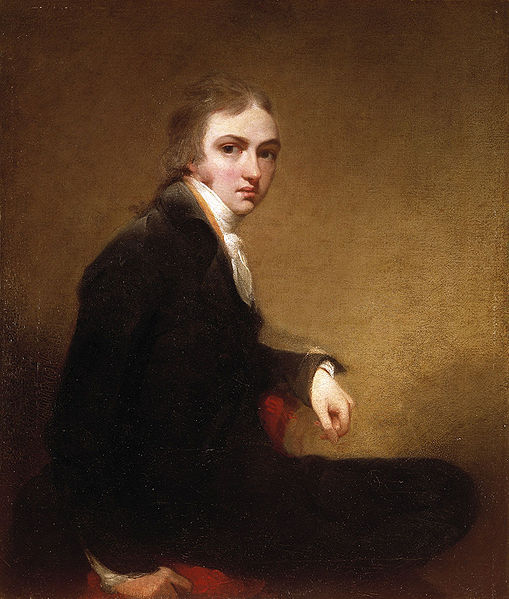
Thomas Lawrence, self-portrait from 1788, right, was born in Bristol in 1769. He was a child prodigy and by age 10, when his family moved to Bath, he supported then with his drawings in pastels.  He moved to London at age 18 and was soon hailed as an up and coming talented successor to Sir Joshua Reynolds, then Britain’s leading portraitist.

One of his fine portraits, of a friend’s wife, Mary Hamilton, is shown in the exhibition, and makes one eager for more of the early pastels. But clients were eager for portraits in oils, and Lawrence excelled here too. He drew Mary Hamilton in pencil, red and black chalk in 1789. The British Museum, which owns the work, writes, “This important drawing of Mary Hamilton is arguably the most beautiful female portrait of its type remaining in this country.”  A detail of the drawing was used as the cover for a 2008 exhibition at the British Museum The Intimate Portrait, below.


Lawrence’s portrait of Queen Charlotte,  wife of George III, brought him fame and eventually fortune. Exhibited at the Royal Academy in 1790, the canvas was praised for its detail and its fine brushwork.

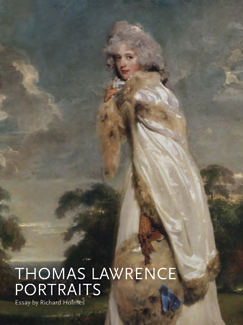
The stunning portrait of actress Elizabeth Farren, later Countess of Derby, exhibited at the RA in 1790, is one of the exhibition posters offered for purchase.  For information on the Yale exhibition, the catalogue, posters and more, click here.   Elizabeth Farren (1759-1829) began her London stage career in 1777, appearing in Goldsmith’s She Stoops to Conquer. She became the object of Lord Derby’s affections, and after his first wife died, Farren married him in 1797. She thus retired from the theatre and became a countess, wife of a prominent Whig member of the House of Lords. They were parents of three children.

Jonathan Jones, reviewing the exhibition as shown in London, wrote in The Guardian: “Lawrence is a painter who triumphed in his lifetime, yet was forgotten afterwards. Why was he neglected? The question echoes through this extremely interesting exhibition… It is because he associated with the wrong royal… Raddled and bloated and unpopular, George IV looks out of Lawrence’s Wallace Collection masterpiece as if he knows full well that in centuries to come, people will joke that ‘there are pieces of lemon peel floating in the Thames that would make a better monarch’.”

But Lawrence’s relationship with the Prince Regent, later George IV, was lucrative and certainly added to his fame. The Regent sent Lawrence around Europe to paint the leaders of the allied victory over Napoleon. The paintings hang in Windsor Castle, though many copies executed in Lawrence’s studio, can be seen in palaces, mansions and museums worldwide.

The Duke of Wellington was the real hero of the  battle, but many, including a coalition of European leaders contributed to the long-sought defeat of Napoleon. Lawrence painted the Duke a number of times, including here on the back of Copenhagen, the horse who carried him throughout the day-long Battle of Waterloo.

Victoria has long adored this painting, from the collection of the Chicago Art Institute. As a child, she often stood in front of Mrs.Jens Wolff and wondered what made this elegant lady so sad. The portrait was commissioned in 1802 or 03 by the sister of Mrs. Wolff and exhibited at the Royal Academy in 1815.  Isabella Wolff was the wife of the Danish Consul in London; they divorced in 1813. She is portrayed as the

Erythraean Sibyl (similar to the Sistine Chapel version) and she gazes at a book of engravings by Michelangelo. Lawrence and Isabella Wolff may have been romantically involved for some years, though why it took the artist a dozen years to complete the portrait is a good question. They continued to write to one another until her death.

Thomas Lawrence: Regency Power and Brilliance will be on display at the Yale Center for British Art, New Haven, CT,  until June 5, 2011.  We will report  again after our visit. For more information on the Yale Center for British Art, click here.

Sending Our Prayers

Number One London has many regular visitors from New Zealand and Victoria and I want to take this opportunity to let you all know that our thoughts are with you during the aftermath of the earthquake, which struck Christchurch at 12.51pm on Tuesday local time.
The Queen, who is also New Zealand’s head of state, expressed her sadness at the 6.3 magnitude quake, saying she was “utterly shocked” by the news.
“Please convey my deep sympathy to the families and friends of those who have been killed; my thoughts are with all those who have been affected by this dreadful event,” she said.
“My thoughts are also with the emergency services and everyone who is assisting in the rescue efforts.”
 We pray that you and yours are safe.

Guest Blogger Judith Laik Carves Coade-Stone

Our guest blogger today is Judith Laik, who has traveled with us in England and loves all things Regency.  She is the author of two Regency romances with Kensington Publishing Corp., and other works of fiction. The second edition of her co-authored book of quotations, Around the Circle Gently, has been released. Judith is a columnist for 1st Turning Point . She is currently working on a Regency historical and other projects.
She lives on a small farm in Washington state with her husband, daughter, and various animals. Visit her website here.  Written sections of this post: ©Judith Laik.
  

Coade-stone lion at Westminster Bridge, London;

Near location of early 19th c. Coade Stone manufactory


First, thanks to Vicky and Kristine for posting my article on their blog, and the credit for the amazing photos that accompany the article also goes to them. Kristine also found some additional information about the Coade Stone company that adds a lot to what I had found.
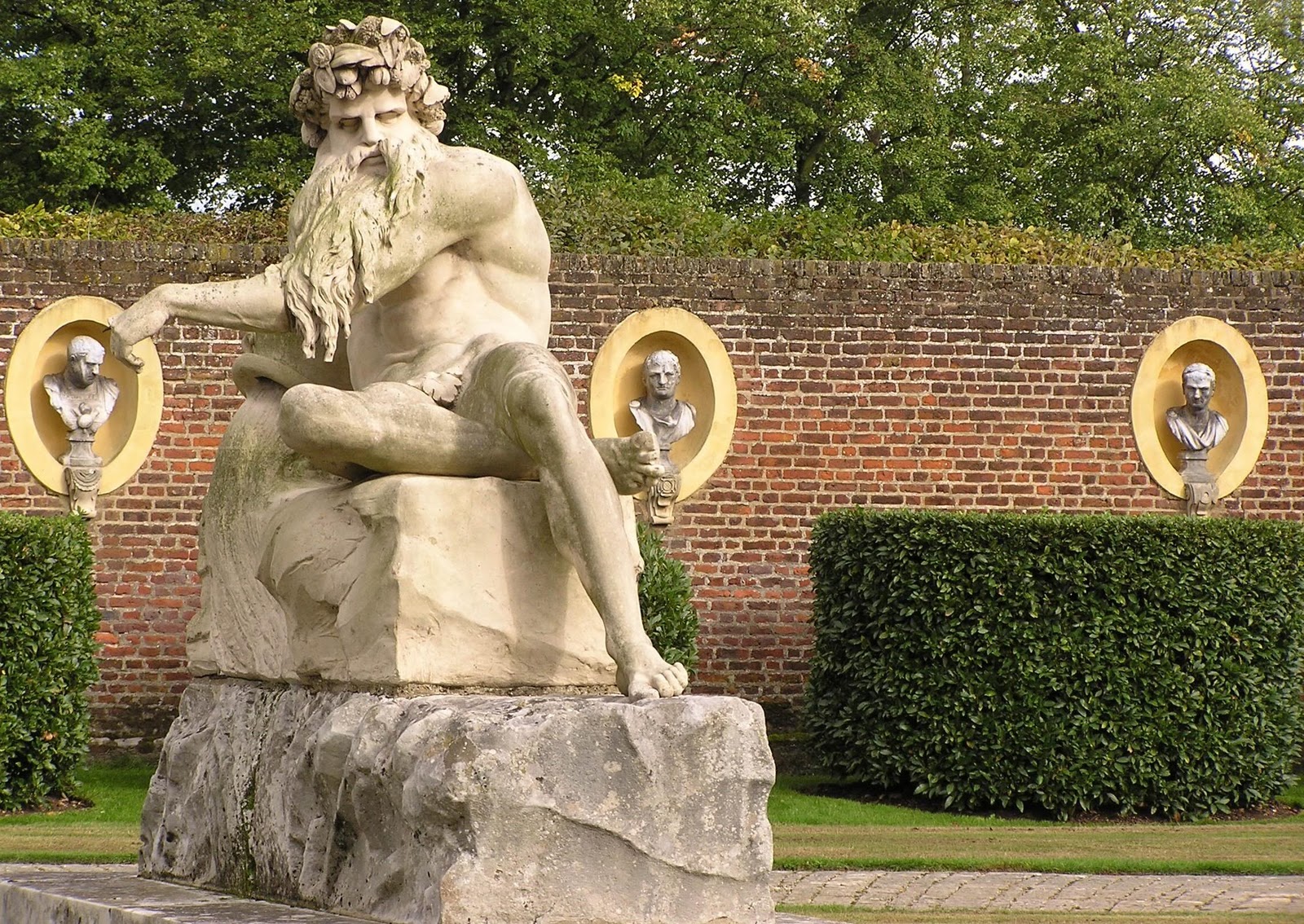
Father Thames in Coade-stone, Ham House Garden
Sculptor: John Bacon 

Eleanor Coade combined scientific and business success. She ran the Coade Stone business for twenty-five years after her husband died until it was taken over by the daughter, also named Eleanor (or Elinor in some sources). Or his business might have been unrelated to the construction material and it was the daughter who became involved in the artificial stone business and ran it.


Researching the two Eleanors is an example of a researcher’s nightmare. Some of the sources have the two women confused. But the researcher’s nightmare is the fiction writer’s delight, because after a serious attempt to run down the truth, someone writing fiction can choose the preferred version, fictionalize a bit more, and have fun with it.


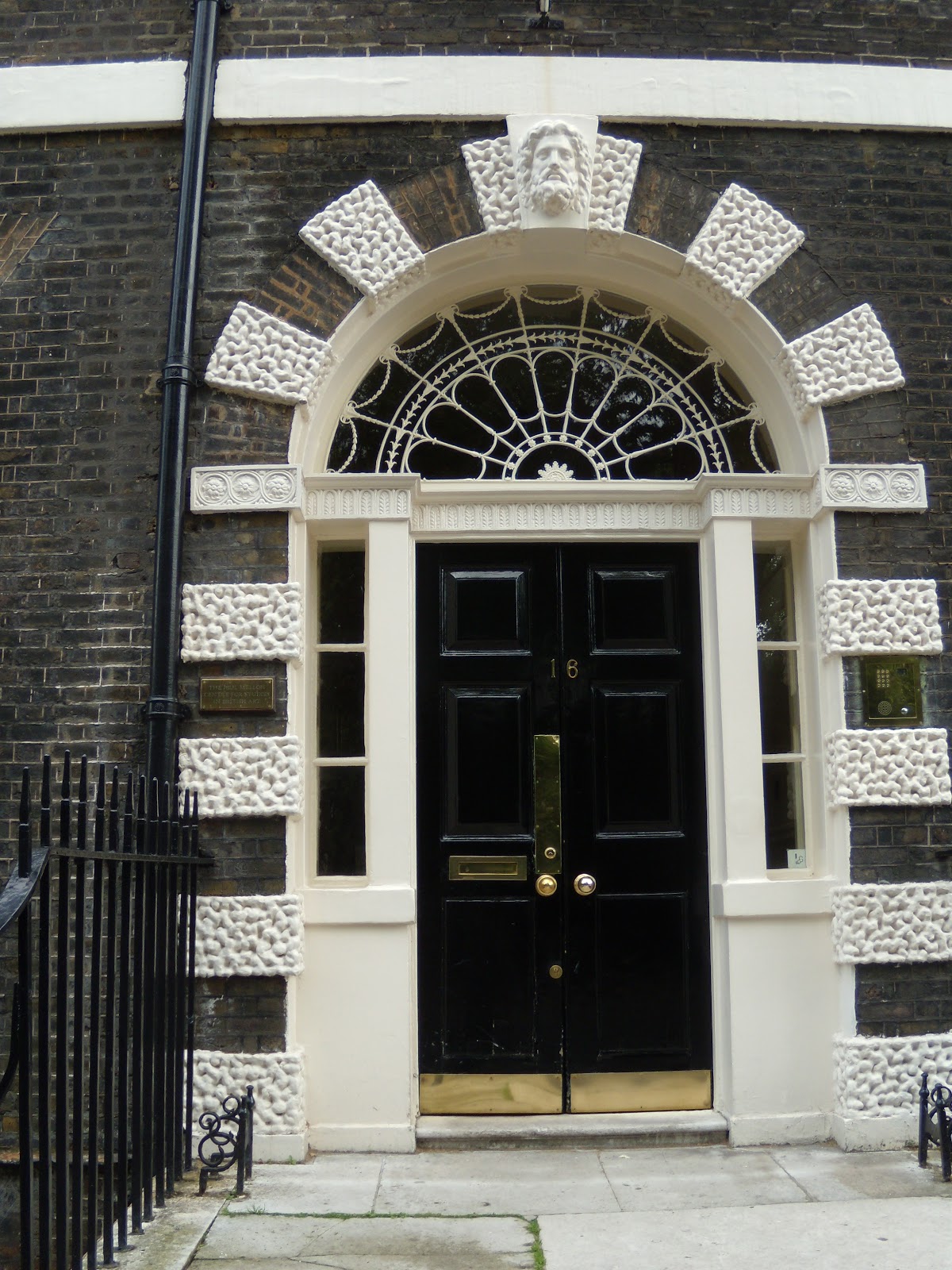
Entranceways in Coade-stone in
Bedford Square


Tomb of Captain Bligh in Coade-stone
Garden  Museum, London

Coade stone was a spectacularly durable cement-like product (actually a ceramic material that is created by subjecting it to considerable heat in a kiln) building material which still looks new even today. It was very popular during the first half of the 19th century, and used by many of the noted architects and builders of the period.

The following account is from Some Account of London by Thomas Pennant (1813) -&n
bsp;
In a street called Narrow Wallis Mrs. Coade’s manufactory of artificial stone. Her repository consists of several very large rooms filled with every ornament which can be used in architecture. The statue, the vase, the urn, the rich chimneypiece, and, in a few words, every thing which could be produced out of natural stone or marble by the most elegant chissel, is here to be obtained at an easy rate. Proof has been made of its durable quality.

A look at the inner workings of the Coades business is provided in The History of Ceramic Art in Great Britain by Llewellynn Frederick William Jewitt (1878) –

Coades.—Coade’s Artificial Stone Works, at Pedlar’s Acre, King’s Arms Stairs, Narrow Wall, Lambeth, opposite Whitehall Stairs or Ferry, were established about 1760 by Mrs. or the Misses Coade, under the name of “Coade’s Lithodipyra, Terra Cotta, or Artificial Stone Manufactory.” This material was intended to take the place of carved stone for vases, statues, and architectural enrichments. In 1769 the two Misses Coade took into partnership their cousin, a Mr. Sealy (the nephew of Mr. Coade), and by these the works ere carried on. In 1811 the firm was still “Coades & Sealy.” At the death of Mr. Sealy, who survived the Misses Coade, a Mr. Croggan, who had for a long time been a clerk or manager attached to the business, became the proprietor of the works, which he continued for many years. He then disposed of the business to Messrs. Routledge, Greenwood, & Keene, who were succeeded by Messrs. Routledge and Lucas. These gentlemen, about 1840, dissolved partnership and sold off all their moulds, models, plant, etc, by auction, by Messrs. Rushworth and Jarvis, of Saville Row. Many of these moulds and models were bought by Mr. Blashfield and by other manufacturers, among whom was Mr. H. M. Blanchard of Blackfriars Road (which see), and who, being an apprentice with the Coades, and possessing many of their models, etc. claims to be their successor.

Coade and Sealey’s Artificial Stone Factory, by Thomas Hosmer Shepherd

The Coades are said to have come from Lyme Regis, in Dorsetshire, and probably it was for the purpose of turning their native clay to good account in London that induced them to establish this manufactory. Bacon, Flaxman, Banks, Rossi, and Panzetta, the sculptors, were employed to model for these works, and many of the old mansions and public buildings in London and in the country, as well as abroad—including the bas-relief in the pediment over the western portico of Greenwich Hospital, representing the death of Nelson, designed by Benjamin West, and modelled by Bacon and Panzetta; and the rood-screen of St. George’s Chapel, Windsor; the statue of Britannia on the Nelson monument at Yarmouth, &c— were executed at these works. The works principally produced at Coades were capitals of columns, statues, vases, bassi-relievi, monuments, coats of arms, key-stones, angle rusticated blocks, balustrades, &c They were of durable quality and excellent manufacture.

Another person employed at Coades was William John Coffee, who afterwards attained some celebrity as a modeller at the Derby China Works, and as a terra cotta maker, for a short time, at Derby. I believe he was employed as a fire-man at Coades, and here, no doubt, being a clever fellow, picked up his knowledge of modelling and of mixing bodies. The following curious letter and “information,” from the originals in my own possession, give some highly interesting particulars regarding Coades’ and Sealy’s manufactory in 1790 :—

“The information got from the fire-man that work’d at the Artificial Stone Manufactory, Lambeth:—There is three kilns, the largest is 9 feet diameter and about 10 feet high, the other two are sizes under; they have only three fire-holes to each, and they are about 14 inches in the clear. They make use of no saggers, but their kilns are all muffled about two inches thick, which was always done by this fire-man. They always was four days and four nights of fireing a kilns, and the moment the goods are fire’d up he always took and stop’d the kilns intirely colse from any air whatever without lowering the fires at all. He has been use to fire intirely with coal (which are call’d Hartley coals—they are not much unlike yours at Derby). He never made use of any thermometer, but depended intirely on his own knowledge. Tne composition shrinks about half an inch in a foot in the drying, and about the same in the firing. A great deal of the ornaments are 4 inches thick when fired, and he has fired figures 9 feet high. This man has had the intire management of building the kilns, setting and firing them for many years; his wages was one guinea per week, and for every night when he fired he had 2s. 6d. for the small kiln, 3.1. . . . “

One of the four Coade stone caryatids that stand atop the
columns of the east front of Pitzhanger Manor

Click here for an interesting article about Coade stone and Mrs. Coade. Further articles can be found here and here.