Best Exotic Marigold Hotel

Best Exotic Marigold Hotel, the movie, opens in the UK and Ireland 24 February. Those in the States will have to wait until summer to see the film, although the novel will be available in stores in March.

The movie, directed by John Madden, sees a group of retirement age Brits move to India to see out their elderly years in colorful Jaipur and take up residence in what they believe is a newly restored hotel. Less luxurious than its advertisements, the Marigold Hotel nevertheless slowly begins to charm in unexpected ways. Dev Patel, of “Slumdog Millionaire” fame, plays the guy who entices them to take the adventure and the film also features Dame Judi Dench, Dame Maggie Smith, Penelope Wilton and Bill Nighy.

Deborah Moggach is the author of sixteen successful novels, including the bestselling Tulip Fever, and two collections of stories. The book on which this film is based was originally titled These Foolish Things. Her screenplays include Pride and Prejudice, which was nominated for a BAFTA. She lives in North London.

You can watch the movie trailer here.

And Now for Something Completely Different…

Victoria here, with a completely off-topic post. It’s completely shameless self promotion as a matter of fact.

My first novel, originally published in 1983, is now available as an e-book on Kindle, Nook and Smashwords. BirthRights: A Dangerous Brew is a family saga about three generations of  Milwaukee, Wisconsin, brewers – of beer, not baseball players. Starting in 1870, the novel concludes in 1920 as prohibition and the Volstead Act take over the nation, ending the era of the great breweries until 1933.

Pabst Brewing Company
Milwaukee was first settled by New Yorkers and New Englanders, known as Yankees.  They followed the explorers like Father Marquette and the French fur-traders like one of the city’s founders, Solomon Juneau.  By the 1840’s, however, the city attracted thousands of German emigrants and took on a distinctly German flavor for decades.  Many breweries filled the thirst of the new residents, with more coming on every ship that landed at the Lake Michigan waterfront.
The authors in the Pabst Brewhouse, 1983
In the early 1980’s, my co-author, Reva Shovers, and I were inspired to write a book when we when couldn’t find much that interested us on bookstore shelves.  That first attempt will never see the light of day, but we sort of taught ourselves what to do, with the help of our agent and many others. Although he probably despaired of our eventual success, Al Zuckerman suggested we write a story about the great brewing fortunes in Milwaukee. 
Along with dozens of small breweries —  and today many boutique breweries and brew-pubs — four of the largest breweries in the U.S. called Milwaukee home:  Pabst, Miller, Schlitz, and Blatz.  Though all these beers are still on the market, only one of the great old breweries still operates on a large scale in Milwaukee – and it is a very large scale indeed.  The Miller-Coors  brewery annually turns out ten million barrels of beer at its great complex on State Street in the Miller Valley where more than 700 employees work.  Miller is a popular tourism site. Their website is here.
Writing BirthRights: A Dangerous Brew was truly a labor of love. Lots of research and lots of fun.  Eventually, the book was sold to Pocket Books and came out as BirthRights in 1983.  We had a ball promoting it.  And we started working on a sequel. Wouldn’t you know that we got caught in the revolving door of changing editors – and our option book fell through the cracks. We picked up the pieces and went on to other things.  Reva is truly a contemporary art maven, serving the Milwaukee Art Museum  in multiple capacities.  Victoria turned her efforts toward regency romance and published 8 novels and 3 novellas for Kensington Zebra.
1983 Pocket Books Edition
Now we have re-issued BirthRights (with a subtitle attached – A Dangerous Brew) as an e-book.
Back when it was first written, of course, it was pre-computers and done on a typewriter.  We had to have the book scanned and we had to re-edit it to find all the glitches in the type – then we had James Bolen, techno-expert extraordinaire, prepare it and upload it to Smashwords, Kindle and Nook.  Many thanks to Bo and his colleagues at http://ebookeditorpro.com/. Bo also created the wonderful new cover, at the top of this post.  We recommend them enthusiastically.
 
Back in ’83, we did our promotion work by snail-mailed press releases and included a  black and white glossy photo (as above).  We offered ourselves as speakers and went to a number of groups to talk about the book. And we cooked a dinner with every course made with beer. It was featured on the front page of the Home section of the Milwaukee Journal with color pictures and our recipes.  Sometime I will put those recipes on the Summit Wahl blog. We did many signings in  bookstores.
How times have changed!!!  Now we are tweeting and doing Facebook and blogging — amazing!!  Here is the blog: http://summitwahl.blogspot.com where there  is an excerpt of the novel.
And you can look for us on Facebook as Summit Wahl and twitter @summitwahl 
And now we return you to our regularly scheduled program of British-oriented material!! As we say in Milwaukee, Prosit!

Naturalist's Diary for March

From the Times Telescope, an annual almanac, here is the entry for March, 1826, with a few quite optimistic pictures:

March, though the hours of promise with bright ray

May gild thy noons, yet, on wild pinion borne,
Loud winds more often rudely wake thy morn,
And harshly hymn they early-closing day.

            The cutting blasts of March, so trying to the invalid, are equally injurious to the progress of vegetation; and the ‘sweet flowers’ are compelled to await the smiles and tears of gentle April to encourage their growth, and to bring them to perfection. Some more bold than the rest, who dare to brave the warrior front of Boreas, often perish in his chilly embrace. The winds of March, however, are highly beneficial to drying up the superabundant moisture of the earth; and although they may retard the delights and beauties of Spring, these are rendered more valuable to us, because they are less fugacious.

            The russet-brown dress of the hedges is now spotted with green, preparatory to their assuming the complete vesture of Spring.—The leaves of the lilac begin to peep from beneath their winter clothing, and gooseberry and currant trees display their verdant foliage and pretty green blossoms. The yew-tree, ‘faithful in death,’ as it protects our tombs from the gaze of every passing stranger, when our more gaudy floral acquaintances have deserted us, opens its blossoms about the beginning of this month.

            The melody of birds now gradually swells upon the ear. The throstle, second only to the nightingale in song, charms us with the sweetness, and variety of its lays. The linnet and goldfinch join the general concert in this month, and the golden-crowned wren begins its song. The lark also, must not be forgotten.—While the birds delight us with their song, the bees read us a lesson of industry, for they are to be seen collecting materials for their elegant condiment of honey on every fine day throughout the year.
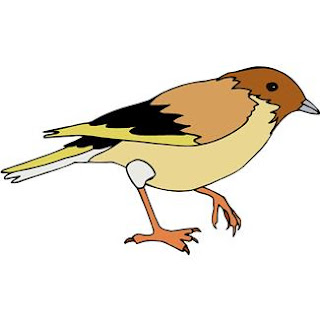
Goldfinch

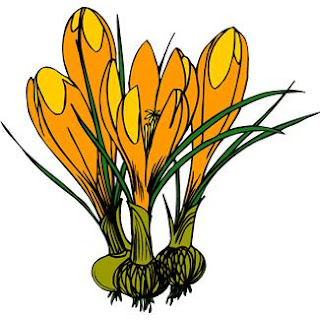
            Each succeeding week pours forth fresh beauties from the lap of Flora, and furnishes the botanist with new sources of delight. Golden tufts of crocuses, expending their corollas to receive the genial warmth of the sun, interspersed with pink and blue hepaticas, and the garden daisy, with its little tufts of crimson velvet, united with the blossoms of last month, greatly ornament our flower borders. The alpine wall-cress is still in bloom; the mezereon puts forth its leaves; and the primrose peeps from the retreating snows of winter: it forms a happy shade of distinction between the delicate snowdrop and the flaming crocus.

            Daffodils, yellow auriculas, coltsfoot, with its brilliant golden and sometimes pink or silvery stars, and hounds-tongue, are in blossom about the middle of the month. The American cowslip, with its beautiful rose-coloured blossoms, growing in thick branches in the form of a cone, flowers in March. The charming violet, whose attractions have been the theme of many a poetic effusion, makes her appearance this month, but not in full perfection, for the chill winds of March are not very congenial to the expansion of so delicate a blossom.

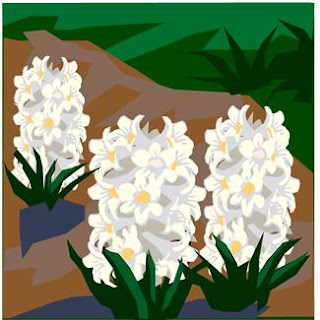
            If the weather be mild, the rich hyacinth, the noble descendant of the modest harebell—the sweet narcissus, delicately pale, and some of the early tulips, are now in bloom. The peach and the nectarine begin to show their elegant blossoms.

            Protected from inclemency of the weather by our green-houses, roses, hyacinths, heliotropes, and geraniums, are now in full blossom, regaling the senses with their varied hues and rich perfumes.

            In this month, black ants are observed; the black-bird and the turkey law; the house pigeons sit. The greenfinch sings; the bat is seen flitting about; and the viper uncoils itself from its winter sleep. The wheatear, or English ortolan (Sylvia oenanthe) again pays its annual visit, leaving England in September. Those birds which have passed the winter in England now take their departure for more northerly regions; as the fieldfare, the red-wing, and the wood-cock.

            On the 20th, the vernal equinox takes place, and all nature feels her renovating sway, and seems to rejoice at the retreat of winter.

            The general or great flow of sap in most trees takes place in this month; this is preparatory to the expanding of the leaves and ceases when they are out. The ash now puts forth its grey buds; and the hazel and willow exhibit some signs of returning life in their silky, enfolding catkins. The leaves of the thornless rose and of the hawthorn are gradually becoming determinate. The field daisy is now seen scattered over dry pastures. This pretty flower, the poet’s darling, from Chaucer to Wordsworth and Montgomery, has claimed for itself many an elegant tribute.

            The planting and sowing of Forest Trees is generally concluded in this month. The mixing of fir-trees with oaks (except in very sheltered situations) is now frequently adopted by the planter.

            In March, trouts begin to rise, and blood worms appear in the water. The clay hair worms is found at the bottom of the drains and ditches, and the water-flea may be seen gliding about upon the surface of sheltered pools. Bats now issue from their places of concealment. Peas appear above ground; the sea-kale (Crambe maritima) begins to sprout. The male blossoms of the yew-tree expand and discharge their farina. Sparrows are busily employed in forming their nests. Young otters are produced, and young lambs are yeaned this month.

            The equinoctial gales are usually most felt, both by sea and land, about this time.

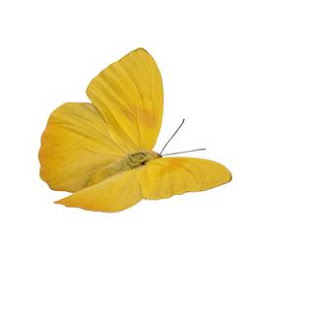
            The brimstone-coloured butterfly (Gonepteryx rhamni) which lives throughout the winter, is usually seen in March. It is found in the neighbourhood woods, on fine and warm days, enjoying the beams of the noonday sun. Some of our most beautiful butterflies, belonging to the genus Vanessa, as V. atalanta, Io, Polylcholoros, and Urticae, are seen in this month; and the Antiopa, or Camberwell beauty, has once been captured at this season.

Preserved Kitchens from the Past

A few months ago, the Daily Mail reported on the discovery of a Victorian kitchen in the basement of a large home in Wales. The room, closed off for decades, will be preserved as an excellent example of how the servants once lived and worked.

Cefn Park, Wales

The entire article is here.  Imagine discovering such relics right down in the basement!

Which got us thinking about other historic  kitchens  we’ve visited in Britain.  There are many — send us your favorites!

The Hampton Court Palace kitchens are among the most popular parts of the oft-visited palace.  On many days, costumed works demonstrate Tudor cookery and prepare treats for the sightseers.  We remember imbibing chocolate drinks, far different than what we enjoy at Starbucks, but still delicious (when you get used to it!).

Above, the larder where the butcher received game and began to prepare the meat for feeding the hundreds of royal guests, court functionaries and palace staff.  Imagine keeping 600 people fed — 24/7.

The kitchen complex includes bakeries, breweries, larders, boiling and roasting rooms, pantries, confectories, spicery, and many more. Not to mention sculleries I suppose. For more on Henry VIII’s kitchens, click here.

Another wonderful kitchen that prepared royal meals is in the Brighton Pavilion, home of the Prince Regent, later George IV.  For a panoramic Tour, click here.  For more on the Brighton Pavilion, try this.

When it was constructed in the early 1800’s, it was the epitome of innovation with its high ceilings.  Our friend Ian Kelly wrote a book about Careme, the most famous chef who worked here, among other places. For details, click here.

 Below, the kitchens at Burghley House, home of Queen Elizabeth I’s trusted advisor William Cecil.

The kitchens at Burghley House are filled with copper pans (Kristine and Victoria and their companions almost swooned at the thought of keeping all of them so shiny!) On the right above, are the collected skulls of turtles, who were no doubt privileged to sacrifice their lives to the soup pot.  To see more on Burghley House, click here.
As a matter of fact, displays of gleaming copper pots are typical of the kitchens in stately homes.  Petworth has a wonderful collection.  Details on Petworth here.
 Petworth, National Trust
Harewood House, above, in Yorkshire also boasts shelf after shelf of bright copper utensils. This kitchen, too, is often the site of special events which include tasty treats.  Harewood’s excellent website is here.
Uppark, NT
 There’s a special twist to the downstairs facilities displayed at the National Trust’s Uppark House. The mother of the brilliant author H. G.Well
s (1866-1946) worked here as housekeeper in the 1880’s and the young Wells grew up in the servants quarters.  More on Uppark is here.
 The tunnels at Uppark were constructed to shield the delicate sensibilities of the owners from viewing the servants bustling about between the kitchens and the stables. But imagine how much fun it would be to play hide-and-seek here. Or chase the toads that often invade. Nevertheless, we should not try to romanticize the lives beneath the stairs — it was never easy and often brutal.

However, if you insist upon romanticizing the life of a servant, you can always try your hand at various below stairs tasks at the very interactive Lanhydrock House (above) in Cornwall, where they urge visitors to “have a go at napkin folding, laying a place setting and hat brushing on our touch and discover tables around the house.”

For an authentic look at the life of the country house staff, the National Trust has this and other volumes available at their bookstore, here
So what are you having for dinner?  I’m thinking carry-out!