Historical Research Meets Social Media

Immediacy is not a word one typically used when describing historical research back in the day. I remember when you had to read an entire book, and take copious notes, in order to discover nuggets of interesting and/or usable information. Prior to that, one had to first track down a useful bibliography, preferably one put together by someone who came before you in your field and whose research you could trust; then you had to track down each individual book, whether it be in a library, through inter-library loan or from an antiquarian or used book shop. When you were done with the book, you then scoured the bibliography for more leads on research possibilities. It took time. Don’t get me wrong – I still love doing research the old fashioned way. In fact, if I could, I’d spend my days in some cobwebbed basement archive blowing the dust off contemporary sources and making notations with a fountain pen. Which is why Victoria had to practically drag me into the 21st century and into the scary world of social media.
 
First there was this blog. Oh, the angst of creating it! What’s Blogger and what does one do with it? Step by step, Victoria and I fumbled our ways through the mysteries of writing, saving, scheduling, linking and posting each post. Later, like cubs finally leaving the den, we boldly tested our new found skills and added gadgets to our sidebars. And they actually worked – woot woot! After a while, Blogger became second nature to us and I in particular settled into it comfortably and congratulated myself. You did it, I told myself, you mastered Blogger, you have a working blog and you can now sit back on your laurels and enjoy your success.
 
Like the devil on ones shoulder, Victoria was not content with this success. “We should branch out,” she soon whispered into my ear. “We should establish a presence elsewhere,” she cajoled.
 
“Huh? Like where, for instance?”
 
“Oh, I was thinking Twitter, maybe.”
 
“Twitter!? Tweet? Us? Me? What’s a tweet, anyways? I mean, I’ve heard of it, but what is it, exactly? And why do we need it? Would using Twitter make us twits?”
 
You may believe that I hemmed, hawed and dragged my 19th century feet for quite some time before finally taking the Twitter plunge. I went in and set up an account – auspiciously, NumberOneLondon was still available.
 
 Kristine Hughes Kristine Hughes @NumberOneLondon
 
My first tweet was a repost of that week’s installment of “A Couple In England.” Within minutes, I saw this tweet:
 

Hstry.org@HstryOrg 11 Apr

We’ve had a couple of requests to create a timeline for the Battle of Waterloo. What do you think? Yay or nay?

to which I replied
 
Kristine Hughes @NumberOneLondon 11 Apr
@HstryOrg Yay, my good man.


Hey . . . this Twitter lark was pretty okay. I mean, I’d only just shown my face and I was already being asked my opinion on a Waterloo timeline. Right up my street, what? I entered a couple of search terms in the box at the top of the Twitter page and found some other likely suspects, people with descriptions that pegged them as having an historical bent.
 
I emailed Victoria. “Hey, this Twitter thing is pretty okay! Already found some really interesting history thingys to follow.”
 
To which Victoria replied, “Good for you! See, I told you it wouldn’t be hard.”
 
“History.org wants to know if Waterloo timeline good idea.”
 
“Woo Hoo! Hope you said yes.”
 
“You may depend upon it, madam.”
 
Within the hour, I was being followed by Sir Arthur Wellesley@TheFirstDuke ,   Apsley House@ApsleyHouse and DukeofWellington@PillarofState
 
 I emailed Victoria. “I’m being followed by Apsley House.”
 
“Yay.”

“No kidding – the real Apsley House. And a couple of Dukes of Wellington.”
 
“But not the real DoW.”
 
“Probably not. But real Apsley House.”
 
“Excellent. Go to bed now.”

Over the course of the following days, the benefits of Twitter became obvious to me – it was a bit like having one’s own `London, England, Regency, Georgian, Victorian, Historical Research, Interesting Tidbits’ ticker tape machine. Little nuggets of historic information arrived on my screen every few minutes – if not seconds. These nuggets pertained to everything from historic house preservation to museum exhibits, from research materials to pop-up walks in major cities, from gripes about scholarly work loads to historic trivia. For example, below is an exchange I had recently with author Rachel Knowles, which began with my tweet re: Brummell’s birthday:


Kristine Hughes @NumberOneLondon 7 Jun

Happy Birthday to Mr. Beau Brummell. http://fb.me/1X2tY7U8y

RegencyHistory
Georgiana, Duchess of Devonshire, was born #onthisday 7 June 1757 and married 17 years later on the same day

Kristine Hughes @NumberOneLondon 7 Jun

@RegencyHistory Georgie and the Beau? An auspicious date, indeed.
 

RegencyHistory

Absolutely! @numberonelondon
RegencyHistory
Amazingly enough the Dss of Devonshire and Beau Brummell died on the same day too – 30 March
 
I don’t know about you, but I hadn’t put that together before. Born and died on the same dates!? Hhhmmm. If you don’t find that interesting, you’re reading the wrong blog.
 
Just when I came to believe that using Twitter was a bit of a doddle, it dawned on me that the immediacy of Twitter lent itself to a Facebook page. I could use all the interesting bits and bobs I found on Twitter and elsewhere to keep our FB page current, relevant and, with luck, interesting. Now I was the one playing devil’s advocate. And whispering into my own ear. I emailed Victoria.
 
“Hey, we should do something with all this great stuff coming in over Twitter.”
 
“Like re-tweet?”
 
“Like a Number One London Facebook page.”
 
“We have a blog, remember?”
 
“Blog is more static. Doesn’t lend itself to constant, real time change.  Whereas you’re meant update FB page on fairly consistent basis. So it would be the blog in a different, more immediate format.”   
 
“Uhm . . . . okay?”
 
So in I dove and found myself navigating my way through creating yet another page on yet another social media platform. Not only did I manage to get it up and going, I even figured out how to link my Facebook posts to Twitter. At this rate, I might try my hand at neurosurgery next week. Within days, I had found some really diverse items to post on the FB page and it was starting to look like something. Please take a moment to log on and see – you’ll find our Facebook page here. Do “like” us if you find yourself so inclined. You can find us on Twitter here. We hope you’ll become a follower.

Upon finishing this post, I emailed Victoria. “Finished post. Go in and look at it, will ya?”

“Looks good!”

“I think I’ll go in and fiddle with Pinterest for a while.”

“Go to bed.”

I signed off. And only then realized that Victoria had never answered my question – are we now twits?


.

The Secrets of Bloxley Bottom, Episode 19: "Le Thé"


Prudence Newton wore her very best dress to take tea at the Dower House. It was one Lady Louisa had given her and, without doubt, had once belonged to one of that Lady’s granddaughters.  Prudence had discovered long ago that it was no good refusing the Bloxley girls’ cast offs, as otherwise her own mother would never rouse herself enough to arrange for anything near as fine for Prudence to wear. Ever practical, Prudence had also learned early on that it was no good cutting off one’s nose in order to spite one’s face. However, spite did still enter into the matter, as both Valeria and Daphne never lost the opportunity to comment upon the fact that an ensemble worn by Prudence had once been worn by themselves. Although, to be fair, Valeria, the eldest sister, was by far more spiteful than Daphne, who occasionally surprised Prudence with a kind word.
The dress that Prudence wore today was a lovely shade of rose and made Prudence feel quite fashionable, despite the fact that she had disliked it upon first inspection, for it had had a flouncy lace collar and trim down the front of it and had looked for all the world like something an old woman might wear. Prudence had no doubt that the Bloxley sisters had been glad to see the back of it. Her mother had carefully removed the lace trimming and collar, saving it for something else, perhaps her own Sunday gown.  However, altering the dress any further was far beyond her mother’s skill or energy. Prudence had then taken the gown to Mrs. Wilson, a widow who lived in the almshouses and who had, in her younger days, been apprenticed to quite a fine dressmaker in Dover. Mrs. Wilson welcomed Prudence’s commissions, as the work kept her occupied and helped her to feel as if she was yet of some use to someone. In return, Prudence supplied Mrs. Wilson with eggs and other odds and ends so that both women were happy with the arrangement. As usual, Prudence had also brought along some of the magazines that Lady Louisa kept her supplied with for educational purposes. These contained fashion plates and descriptions of the latest mode of trim and embellishments and allowed Prudence and Mrs. Wilson to come to an education decision as to how the dress should be altered. Some deeper rose cording was added to cover the removed stitches, and once re-trimmed, Prudence thought the dress much prettier. With its wide sleeves and tiny ivory buttons, it looked very good on her, indeed.
As always when she visited Lady Louisa and Miss Anne Humphrey, Prudence was expected to be upon her very best social behaviour. After all, these ladies had made it their missions for the past few years to school her in manner, speech and deportment, amongst other things. Conversation was paramount with Lady Louisa, who typically broached subjects that would have been contained in the magazines she had give Prudence the week prior.  Today, after the tea had been poured, Lady Louisa asked, “Tell me, Prudence, did you read the biographical sketch on Queen Adelaide in La Belle Assemblee?” Prudence smiled. She had read the entire piece on the German princess who married King William IV years ago. And had almost fallen asleep. “I did, Lady Louisa. I found it quite interesting.” Lady Louisa raised a brow. “Really? I wonder what you found most interesting about it?”
“Well, actually I wondered how it was that she learned to speak English?” Prudence asked.

Lady Louisa grimaced. “Do try not to begin a sentence with the word well, my dear. As to Adelaide, what I always wonder is why those silly little German fiefdoms are more suitable than our own counties as breeding grounds for the wives of English princes?  They are several generations removed from living in Hanover…”

As Lady Louisa went on in this vein, Prudence glanced about the drawing room, which to her young mind was the height of elegance. To sit here among the portraits, china statues and jewel-tone carpets, the mellow tables laden with little statues and bowls of roses…this indeed was a life Prudence wished she could aspire to…

“… but they must marry some preposterous title from a miserable little principality,” Lady Louisa went on. “There ar
e hundreds of alleged princesses. What could it possibly mean to be a German princess?  Certainly nothing as significant as it is to be an English lady.”

Prudence was trying to think of a suitable response to this when the butler opened the door and announced Miss Bloxley and Miss Valeria Bloxley. 
This sisters both kissed their grandmothers’ cheek and greeted Anne before bestowing the merest of nods in Prudence’s direction. Tea was offered and poured and then Lady Louisa said, “I’m surprised that you called today. You know very well it’s Prudence’s day for lessons.”
“Are we not welcome, Grandmama? Do you wish us to leave in order that you may devote your full attention to Miss Newton?” Valerie asked.


Lady Louisa was well aware of her granddaughters’ dislike for the rector’s daughter. No doubt it was based on some bit of adolescent jealousy or some other female nonsense, but it did not sit well with Lady Louisa, who said, “Nonsense.”
“We have been cooped up all morning sitting for our portrait,” Daphne explained, “so I suggested that we take the air and walk over to see you.”
“And how are your sittings with Monsieur Tournell progressing?” Lady Louisa asked.
“They are quite dull, Grandmama,” Daphne said.
“Yes,” Valeria agreed with a sniff. “Monsieur Tournell may be a fine painter, according to Papa, but his conversational skills are greatly lacking.”
“Other than greeting us when we first come into the studio, Monsieur Tournell says nary a word to either of us during the entire session.” Daphne added.
Prudence covered a bubble of laughter with a cough. Oh, but it was laughable to hear Monsieur Tournell spoken of so. She and Tournell always found interesting topics to discuss whenever they met and Prudence found him to be very entertaining and most willing to speak to her on any subject she broached to him. In addition, he was a very kind man. After learning that she wanted very much to learn to speak French, Monsieur Tournell had written out a few words for her to learn and to then use conversationally. He had written them out both in their French spelling and also in English, as they were spoken. Monsieur Tournell had explained to Prudence that she would learn the words phonetically. Another new word for Prudence’s ever evolving vocabulary.
“Have you had any more sittings with Monsieur Tournell, Prudence?” Anne asked.
Valeria’s eyes widened, “You? You are having your portrait done by Tournell?”
Prudence smiled, “Not a portrait, no. As you are aware, my family could never afford that. But Monsieur Tournell was kind enough to agree to do a few sketches of me so that I may give one to Mama for her birthday.”
“Well, at least he’s charitable, if not talkative,” Daphne allowed. Like so many of Daphne’s comments, this one left Prudence to speculate as to whether it was meant to be kind. Or not. Valeria, on the other hand, left no doubt as to her intentions.
“That’s a lovely dress you are wearing, Miss Newton,” she said now.
“Why thank you. It needed but a few alterations to bring it into fashion.”
“Oh, it is more than that,” Daphne said. “It never looked so well on Valeria.” Valeria, as one may expect, turned a death glare upon her sister, who seemed to take no notice. “You have a much fuller figure, Miss Newton, and it does justice to the gown.”
“Thank you,” Prudence said simply as she stood. “I will make my farewells, Lady Louisa, Miss Bloxley, Miss Valeria.  And Miss Humphrey.  I must…”
“Deliver your eggs?” Valeria asked sweetly. 
Prudence kept her smile as gracious as possible.  “No, I have something else to attend to today.”
“Pray, do not let us detain you.”
Prudence said her goodbyes to Lady Louisa and Anne, thanking them for having her to tea, and she bade goodbye to Daphne before heading to the door.
“Good day, Miss Newton!” Valerie called out, acknowledging the cut.
Over her shoulder, Prudence called back, “Au revoir, mademoiselle!”

 

The Lewis Walpole Library

 
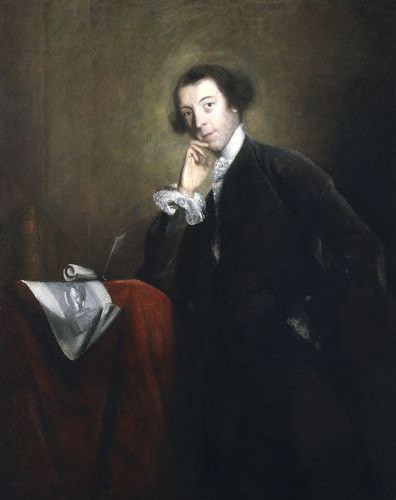
Horace Walpole, by Sir  Joshua Reynolds, 1756, NPG
Victoria, here, always fascinated by Horace Walpole (1717-1797) — aren’t you?   I first blogged about him here about him here in 2010.
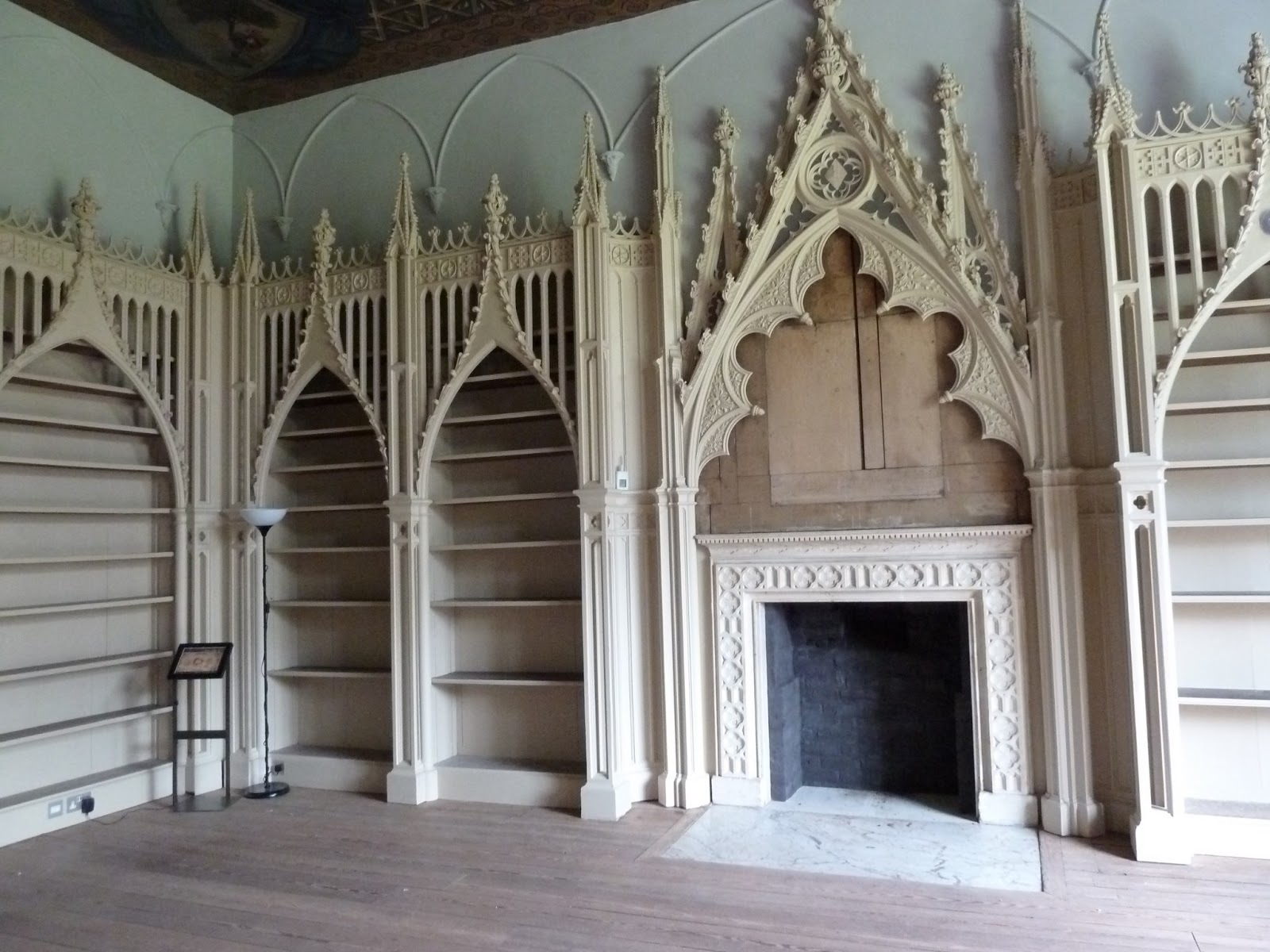
It was that year I attended an exhibition at the V and A in London feautring items from the collections of Horace Walpole — long ago dispersed by sale and auction.  Many of them had been acquired by the Lewis Walpole Collection in Farmington, Connecticut, which is part of the Yale University Library system.  In 2011, I visited Strawberry Hill, Walpole’s restored villa in Twickenham.  See my post here.
 

Library, Strawberry Hill, 2011
Recently, I discovered the wonderful blog that the Lewis Walpole Collection publishes, with pictures from their acquisitions of 18th C. letters, diaries, books, pictures, caricatures, and other objects.  Be careful or you will lose HOURS enjoying their blog and their website.
 
 
You can also enjoy their Facebook page and receive frequent updates. 
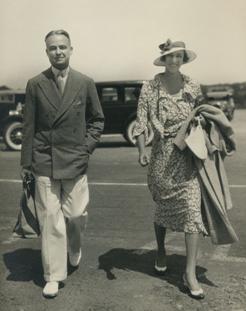
W.S. and Annie Burr Lewis, ca. 1928
 
 
The Library was founded by Wilmarth Sheldon Lewis (1895-1979) and his wife Annie Burr Lewis (1902-1959).  It began with W. S. Lewis’s collections of Walpole’s correspondence and continued as a lifetime activity, among many others, of the couple.
 
 
One of their caricatures, posted on Facebook when a snowstorm required the library to close temporarily; I love this sense of humor!

Here, FYI, is a brief description, from their website:
“The Lewis Walpole Library, a department of the Yale University Library since 1980, is an internationally recognized research collection in the field of British eighteenth-century studies. Its unrivalled collection of Walpoliana includes half the traceable volumes from Horace Walpole’s famous library at Strawberry Hill and many letters and other manuscripts by him. The Library’s book and manuscript collections, numbering over 32,000 volumes, cover all aspects of eighteenth-century British culture.”
 
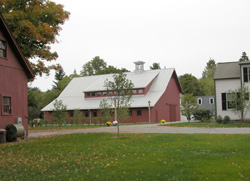
barn, recently built

“The Library is also home to the largest and finest collection of eighteenth-century British graphic art outside the British Museum; its 35,000 satirical prints, portraits, and topographical views are an incomparable resource for visual material on many facets of English life of the period.
Located in Farmington, Connecticut, forty miles north of New Haven and within easy distance of Boston and New York, the Lewis Walpole Library’s collections also include drawings, paintings, and furniture, all housed on a 14-acre campus with four historically important structures and extensive grounds. The Library runs an active fellowship program and sponsors conferences, lectures, and exhibitions in cooperation with other Yale libraries and departments.”
I will be off to Europe in a couple of weeks, during which visit I intend to visit Houghton Hall, the home of Horace’s father, Sir Robert Walpole (1676-1745), England’s first Prime Minister.  After his death, his collection of Old Master paintings was also dispersed by heirs, mostly sold to Catherine the Great of Russia.  The website is here.
I will report further in the coming months.