Victoria at Houghton Hall: The Kindness of Strangers, Part One

I had already planned to include Norfolk on my summer visit to England when I chanced upon the Vanity Fair magazine of May, 2013, describing the successful efforts of the Marquess of Cholmondeley to return the paintings collected by his ancestor Sir Robert Walpole to Houghton Hall for an exhibition (click here for the article). I literally salivated at the thought!

Click here to visit the website. Everything about this event appealed to me — the opportunity to see the Hall and its grounds, the glorious paintings to be seen, the fascinating story of Sir Robert Walpole and his career as England’s first Prime Minister in the reign of George I, and the equally interesting story of how his great collection of Old Masters was sold to Catherine the Great and subsequently a few of them re-sold by Stalin’s government to western museums, leaving most of them in the Hermitage and other Russian venues.

 
A work by Paris Boldone (1500-1571),
variously titled Two Women and a Soldier or
Venus, Flora, Mars and Cupid (Allegory), c. 1550
State Museum The Hermitage, St. Petersburg
 
 
Ed and I left Cambridge by train on another sunny, warm morning in July and arrived a bit over an hour later at King’s Lynn, a charming town I am sorry we had no time to explore.  In lieu of renting a car someplace along our route, we had decided to travel by taxi.  We’d left most of our gear in London, but had along a suitcase and a big computer bag.  Therein, the dilemma.  What to do with the bags while we toured Houghton? 
 
 
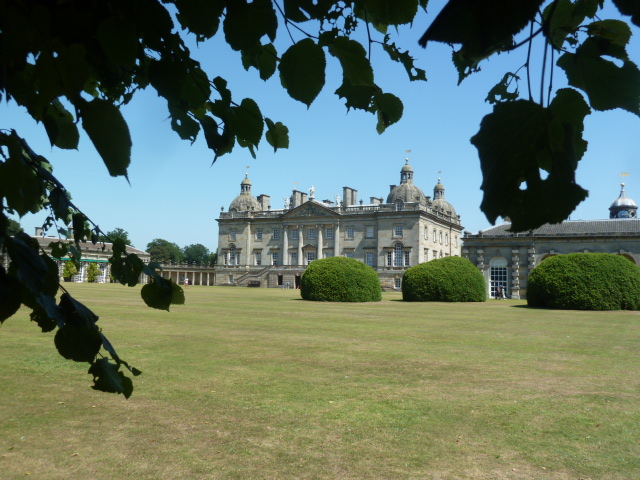
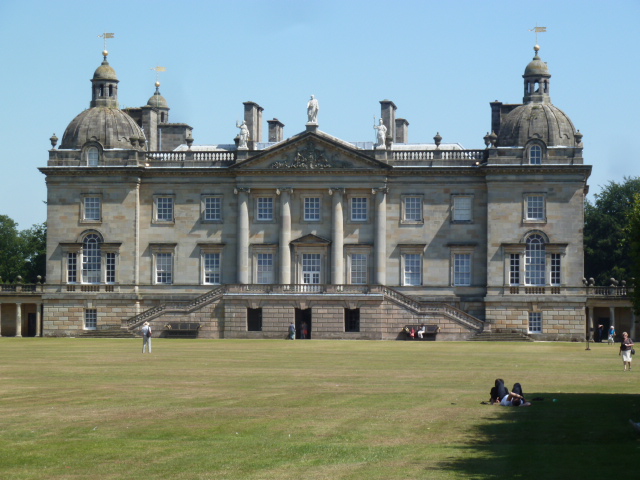
Houghton Hall, July, 2013
 
 
 Going first to our hotel at Holkham was considerably out of the way and would add time and many £££s to our trip.  Our taxi driver offered us an alternative.  We could leave our bags with him and he would return to meet us in the late afternoon and drive us to Holkham.  Well, we’d be in very deep trouble if our bags disappeared, wouldn’t we?  Ed and looked at each other, eyed the driver who seemed like a hearty Norfolk fellow, entirely trustworthy, and so we thanked him profusely and accepted his kind offer.  After all, it was England where everyone is honest — we hoped!  We set a rendezvous time — late in the afternoon so we could see everything!
 
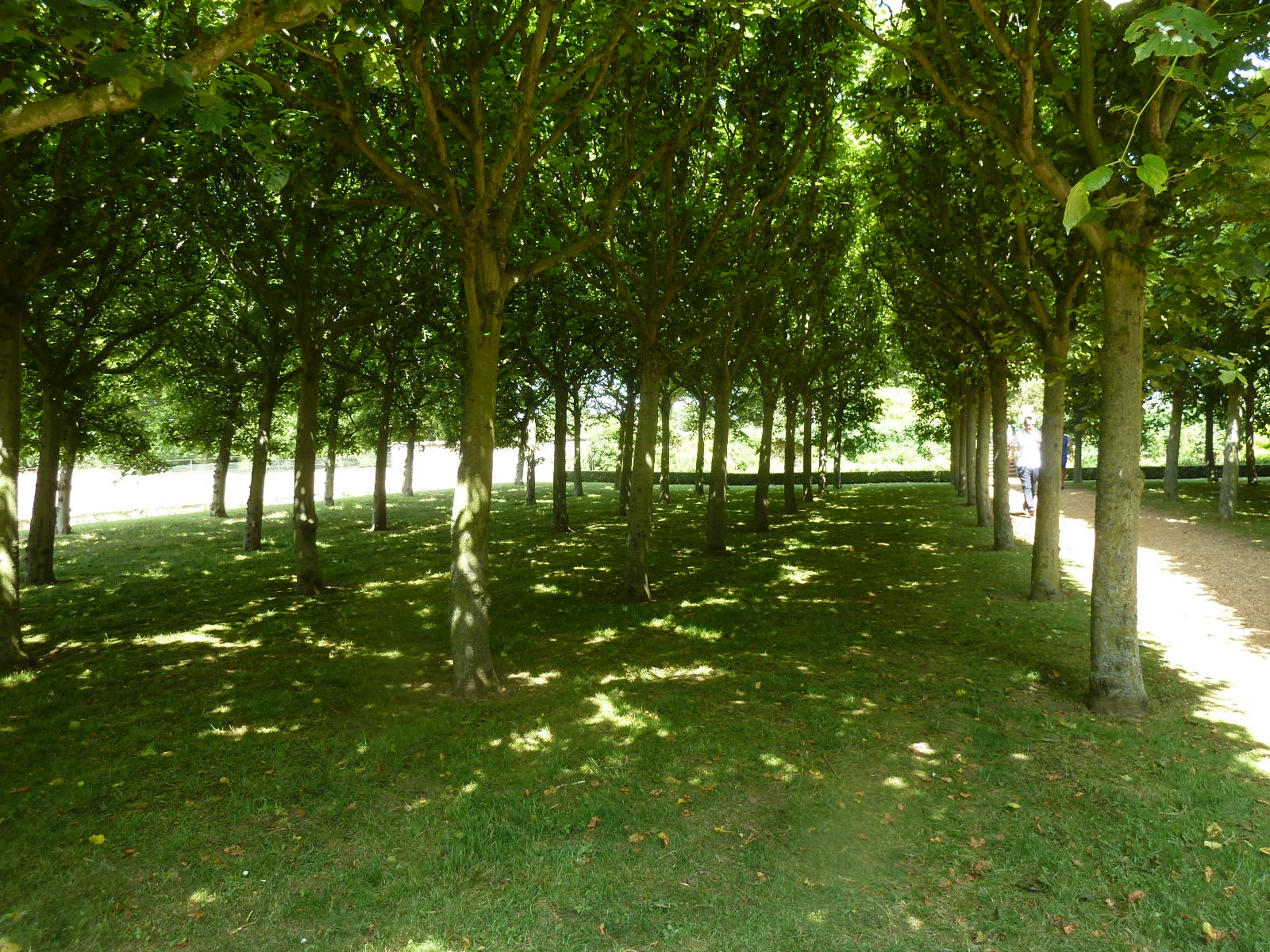
We had plenty of time before our timed tickets were scheduled, so we wandered the gardens and had lunch in the convenient teashop. Lots of spots for Ed to take the weight off his foot.  More about the gardens in the next post.  I will skip ahead to entering the Hall itself, approaching through a cool grove of trees.


Coming in to the ground floor and surrendering our tickets, we realized the crowds were large, and seating would probably be at a premium. We were right
.  
 
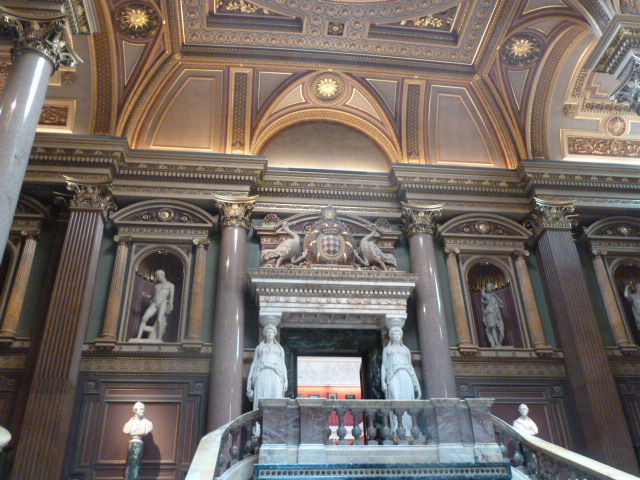
Borghese Gladiator, in the Great Staircase

We began with the great staircase, which dimly turns around a magnificent life-size bronze sculpture of a gladiator.  

Sir Robert Walpole
workshop of Van Loo 


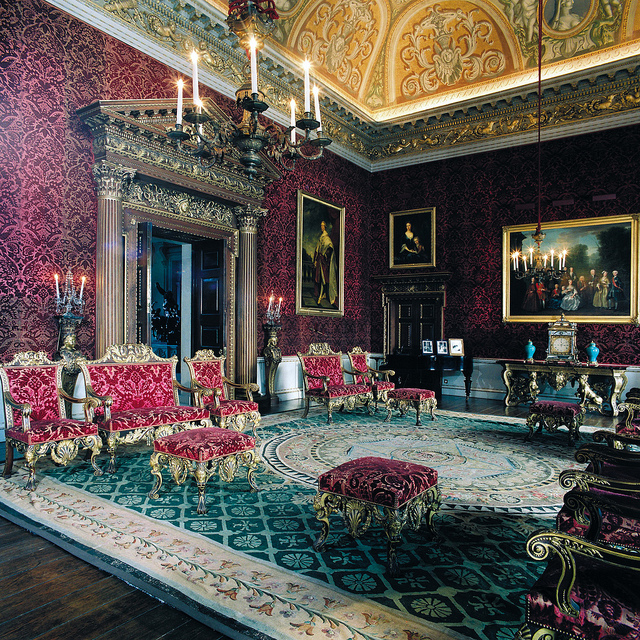
Houghton Hall was built by Sir Robert Walpole (1676-1745), Britain’s first and longest-serving Prime Minister, later the 1st Earl of Orford.  Over the many years of his power during the reigns of George I and George II, Walpole purchased a superb collection of Old Master paintings with which he filled the walls of his magnificent country house.  The splendor of house itself and its outstanding contents – paintings, tapestries, sculpture, furniture, even china, were part of Walpole’s technique of acquiring and maintaining political and cultural power among the peers of the realm.


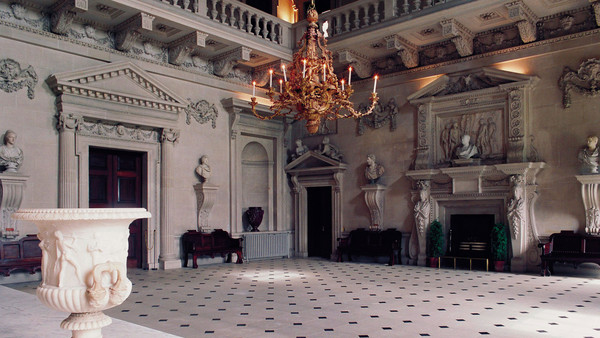
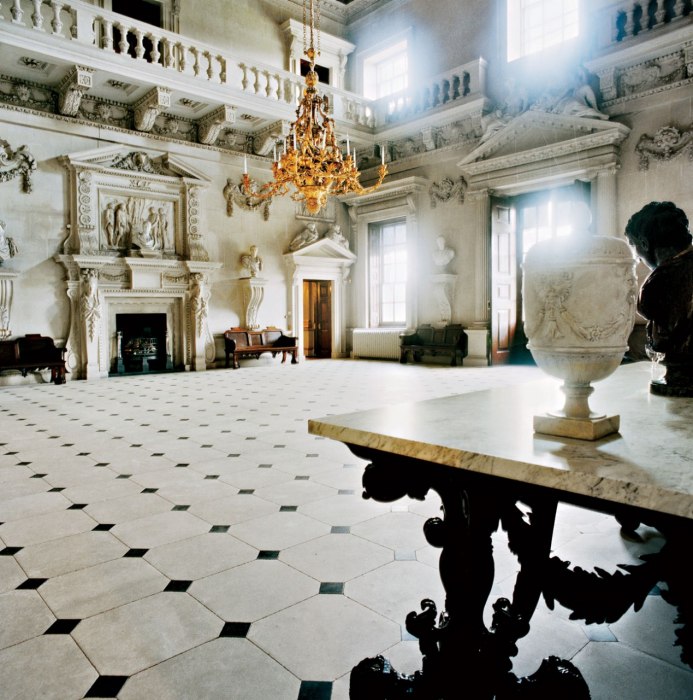
The Stone Hall
 
 
Walpole’s grandson, the 3rd Earl of Orford, sold a large portion of the great collection in 1779 to Catherine the Great, ruler of Russia, to pay off  accumulated family debts.  At the time, as well as today, it was considered a great loss for the British people, and it was one of the situations which led to the creation of the National Gallery, now presiding majestically over Trafalgar Square in London. At last, there was a non-royal venue for depositing the finest art of British collections.
 
 
The Stone Hall, ©Vanity Fair
 
 Houghton’s Stone Hall displays a collection of marble busts, some from ancient sources, others of Walpole himself and his colleagues.  The startling white of the Stone Hall is one of those abrupt changes in atmosphere that country house designers like, a complete change of atmosphere from subdued lighting to brilliance.
 
 
The Saloon

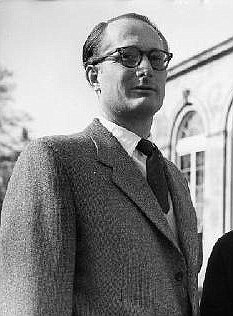
Built in the 1720’s, Houghton Hall results from the combined efforts of architects James Gibbs and Colen Campbell, in the Palladian style, somewhat imbued with the baroque.  William Kent designed the interior décor and furniture. The current resident of Houghton Hall is the family of the 7th Marquess of Cholmondeley (pronounced Chumley), a descendant of Walpole’s daughter Mary, who became the wife of the 3rdEarl of Cholmondeley in 1723. David Cholmondeley (b. 1960) serves as the Lord Great Chamberlain of the U.K. and is seen every year leading the Queen to the State Opening of Parliament.
 
In 2007, Queen Elizabeth II and the Lord Great Chamberlain,
 the 7th Marquess of Cholmondeley
  
 
The Marquess reportedly discovered an original plan of hanging the collection, so the paintings from the Hermitage have been hung much as they originally were when Walpole lived at Houghton Hall. The collection includes works by Rembrandt, Rubens, and Van Dyck as well as Poussin, Velazquez, and Murillo.
 
  
The Maratta Room

A whole room of the exhibition is given over to the work of Carlo Maratta. Most well known of his works might be the portrait below of Pope Clement IX.

 
Carlo Maratta, Portrait of Pope Clement IX, 1669
 
 
The Maratta portrait contrasts interestingly with the Portrait of Pope Innocent X, by Velazquez (1599-1660) which usually hangs in the National Gallery in Washington, D.C


Velazquez, Portrait of Pope Innocent X, 1599-1600, NGA
 
 
A second National Gallery painting in the exhibition is Franz Hals (1581-1666) Portrait of a Young Man. These two paintings were sold by the USSR to Andrew Mellon, who gave them to the NGA.
Frans Hals, Portrait of a Young Man, 1646/48, NGA
 
 
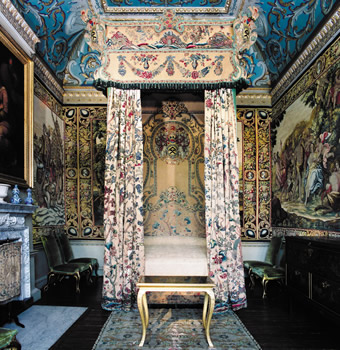
Green Velvet Bedchamber
 
Frankly, the splendor is far more than one can comprehend in a single visit.  I spoke with one lady who was there for the second time and she planned to return at least once more.  If only I’d had that opportunity! Not only are the paintings worth long contemplation; the house itself, the furnishings and décor are stunning.  I was so entranced by the whole scene that I forgot about Ed and his throbbing foot, but he managed to negotiate the crowds and dim light, even snagging a chair now and then (hopefully only those reserved for the guides and not one of the William Kent originals).
 
 
Embroidered Bedchamber
 
 
Not only the paintings but all the furnishings, the tapestries, the molded ceilings, every inch of Houghton Hall is worth contemplating. I valiantly tried to keep it all in my head, but I probably missed a great deal of it.  An abundance of riches indeed.
 
 
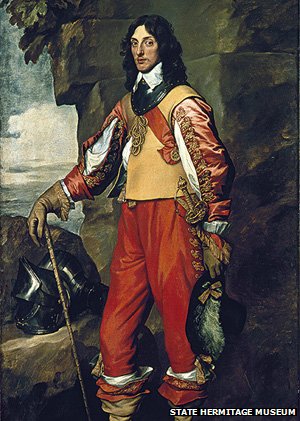
Portrait of Sir Thomas Wharton (detail)
by Anthony Van Dyck, 1639
State Hermitage Museum, St. Petersburg
 
The Exhibition has been extended to 24 November 2013.  I lingered as long as I could in each room but the press of the crowds required pretty constant movement.  I will spend many more hours looking at the catalogue and enjoying the memories.  I found Ed outside enjoying the breezes, as the house had been quite warm.


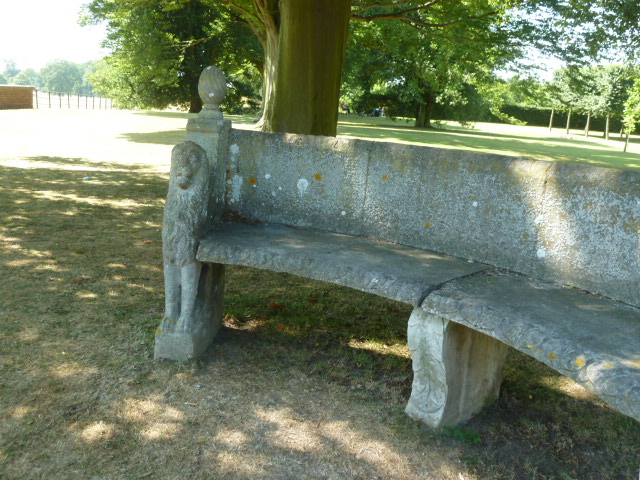
 He found a shady bench where we sat and simply tried to absorb what we’d seen.  Astonishing. Overwhelming. And we still had some of the garden to visit too.  More about that coming soon. 


The Wellington Tour – London By Night

Recently, Victoria and I embarked on another of those musing, rambling, disjointed conversations we often have about London.

“We’d better figure out exactly what we want to do in London on the Tour so Patty will be able to start blocking out all the travel details,” I said to Victoria.

“What travel details?” she asked.

“Hotel rooms, motor coach and driver, meals, admissions. Like that.”

“Thank God we have Patty and Novel Explorations for all that. We can concentrate on all the fun stuff instead.”

“We should stay in either Victoria or Mayfair. That way, we’ll be in walking distance to everything.”

“Yeah,” Victoria agreed before staring off into the distance, no doubt dreaming of walking the streets of London again. I began thinking of London myself. In my mind’s eye, I walked down Buckingham Palace Road – the Royal Mews, the giftshop next door, down the sidewalk and round to the left in order to stare through the gates at Buckingham Palace. Sigh.

We sat in silence for a time until I finally said, “We have to take the Tour to see the Palace at night.”

“Definitely,” Victoria agreed. “But what happens if some of the people on our Tour have already seen the Palace?”

“How many times have you seen it?”

“Jeez, I don’t know. Lots.”

“And we still go back and gawk at it every time we’re there, right? Believe me, no one will complain about seeing the Palace at night.”

“Then we can toddle our way up to Apsley House and see that at night,” Victoria sighed.

“Then we can walk down Piccadilly to St. James’s Street and do all the Lions.”

Victoria gave me an odd look. “The lions are in Trafalgar Square.”

“Not those lions. The pubs. The Red Lion, the Golden Lion . . . . . “

“Oh, we’ve got to take them to the Golden Lion, it’s like stepping back in time. And if we do that, then we’ve got to walk down the street to Almack’s.”

“Definitely. We can tell the group about Wellington’s being refused admission because he was wearing boots.”

“I thought it was because he arrived after eleven o’clock.”

“Depends which version of the story you want to believe,” I said. “I can just see Wellington strolling through the Park to Almack’s. Can you picture it?”

“Walk? Wouldn’t he have ridden there?”

“Nah. Then he’d have to put his horse somewhere. Much faster and easier to walk. Think about it. He’d only have had to cross the road in front of Apsley House and then cut through Green Park diagonally and he’d have been in King Street.”

“He’d have had to cut through somewhere to get to St. James’s Street,” Victoria mused.

“He could easily have cut through the back of Spencer House.”

“Spencer House? Cut through Spencer House?”

“We’re talking about the Duke of Wellington here. Do you really think Earl Spencer was going to tell him that he couldn’t cut through his yard?”

In response to this, Victoria said, “If we’re going to go to King Street, then we might as well just walk down another block to St. James’s Palace.”

“I love seeing London by night,” I sighed.

“Yeah. The streets are empty, it’s quiet and you can actually imagine that it’s 1805 again.”

“Cobblestones.”

“Hmmm. Damp cobblestones,” Victoria said.

“Damp cobblestones shining in the lamplight. And it’s got to be the tiniest bit chilly.”

“Definitely. Not actually cold, though.”

“No,” I agreed, “not cold. Just nippy.”

“Just nippy enough for us to be able to drop into the Golden Lion and casually order a glass of port.”

“Ooooh, port.”

“So Wellington, no?” Victoria asked.

“Oporto,” I said, prompting both of us to stare off into the middle distance for the next few minutes.

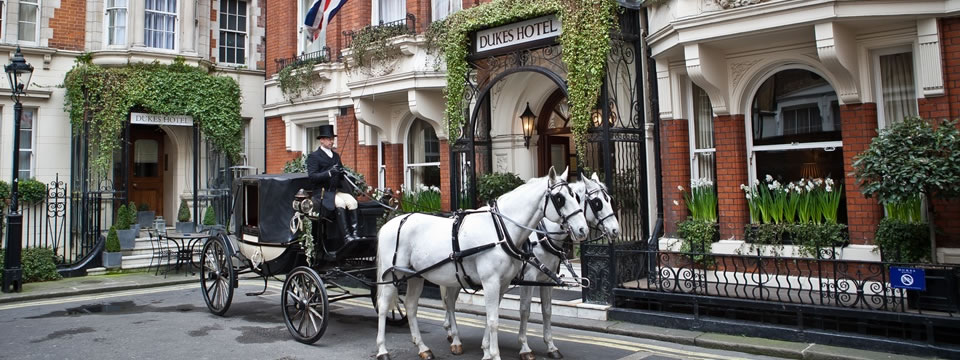
“Have you ever been to Duke’s Hotel?” I finally asked.

“No. Why?”

“They’re supposed to have a fabulous bar. I’ve always meant to go, but time just gets away from me when I’m in London. We should stop in there for a drink.”

“What’s the Wellington connection to Duke’s?” Victoria asked.

“Er, it’s called Duke’s?”

“Yes, but not that Duke, is it?”

“I don’t think so, but it’s definitely a part of Wellington’s London. Not to mention that it’s in the same street as Spencer House, so Artie would definitely have known it. I think it was lodgings for wealthy bachelors back then. And Mrs. Delaney lived in the street, too.”

“Isn’t that where Domenico Angelo had his school?” Vicky asked.

“Who?”

“Angelo. The fencing master.”

“Ah. Could be. Google it,” I suggested.

Victoria Googled, using her tablet. “St. James’s Place. Let’s see . . . . Spencer House . . . . Duke’s Hotel . . . . Oh, God, listen to this, there’s a Blue Plaque in St. James’s Place for William Huskisson!”

Our William Huskisson?”

“Yes, our William Huskisson, the one who was run over by the train right in front of Wellington. England’s first railroad fatality.”

“Well that seals the deal then. We’re going. And we’ll drink a toast to him in the bar of Duke’s Hotel.”

“Oooh, this is such fun!”

“It is. And we’ve got the whole rest of the tour to flesh out. This is just about three hours of it, so far.”

“I can’t wait to go,” Victoria said wistfully.

“Don’t get too excited. We have almost an entire year to wait. Why did we plan it so far in the future? What were we thinking?”

“I guess we’re just gluttons for punishment.”

You are cordially invited to join us September 4-14, 2014!
Find Complete Itinerary and Details of the Wellington Tour Here

Victoria's Day in Cambridge

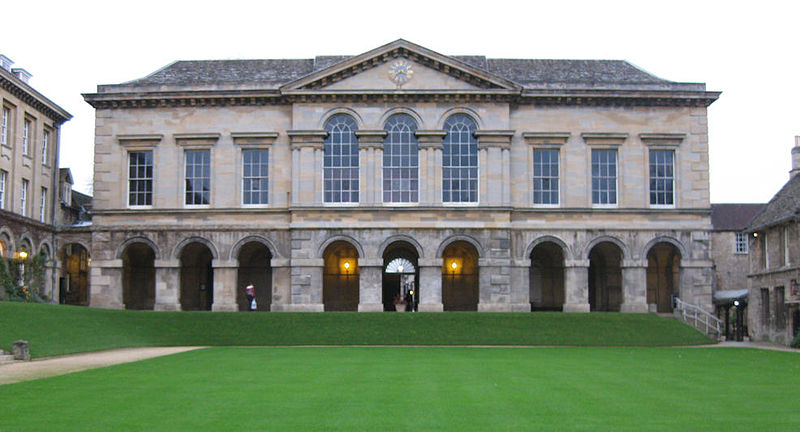
Several years ago, some friends and I spent two weeks in residence at Worcester College, Oxford, for a course on “English Country Houses.”  It was a marvelous experience, and it put me on a list of Oxford Alums asked every year or so for a contribution to the University.  Hmmm.

Worcester College, Oxford University

Nevertheless, I was anxious to see Cambridge, almost as good as studying there (NOT!).  After all, it’s the other half of Oxbridge, that most English of all mash-ups! So after two nights and one full day in London, we trotted off to King’s Cross Station for a train to Cambridge, a trip of just about an hour. I use the term “trotted” loosely.  Ed was limping from his sore foot, but he was game to proceed. 
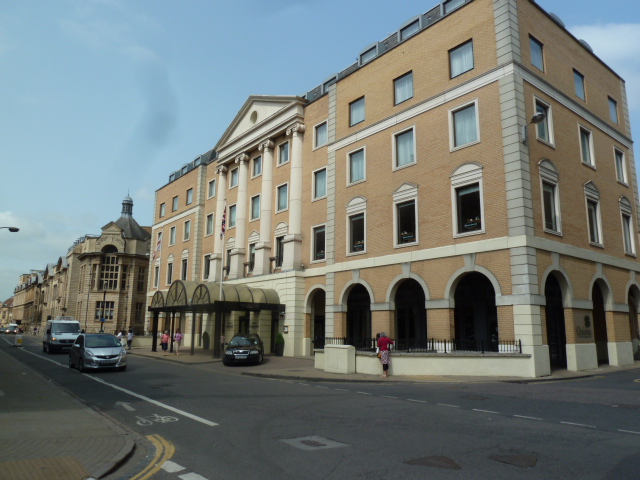
Cambridge City Hotel
 

On arrival, we checked into the Cambridge City Hotel, right in the middle of the colleges, museums and shopping streets of this lively city.  Cambridge was full of talk about the impending Royal Birth — the first Prince or Princess of Cambridge in many a year.  Our taxi driver was one nay-sayer however.  She said she could not care less about the Royals.  But she admitted she was almost the only one in Cambridge who felt that way.

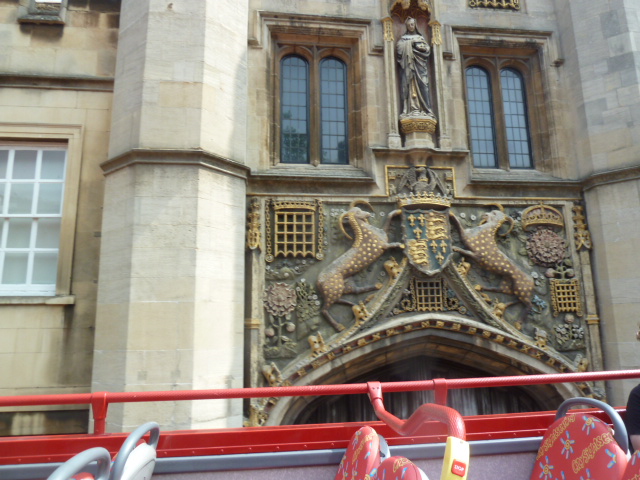
Atop the on-off bus

Our first gambit was to take the on-off bus around the city. It was another warm, sunny, even hot day, and I insisted on climbing the stairs to the open seats where I could see everything and listen on the earphones to the recorded commentary.  Ed muttered, but finally, one step at a time, hauled himself painfully to the top. Muttering.

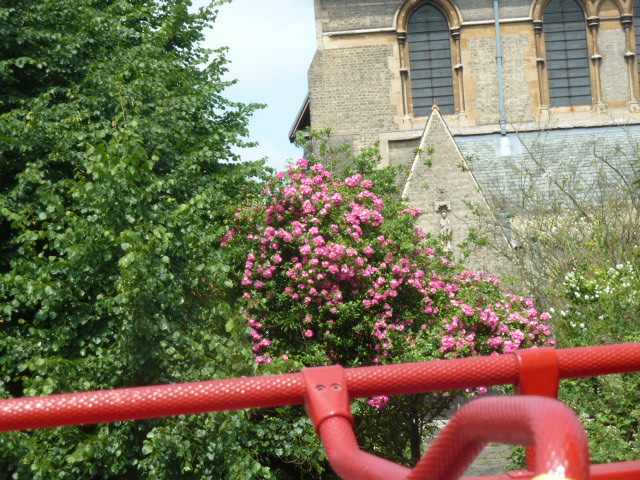
Beautiful Views in every direction

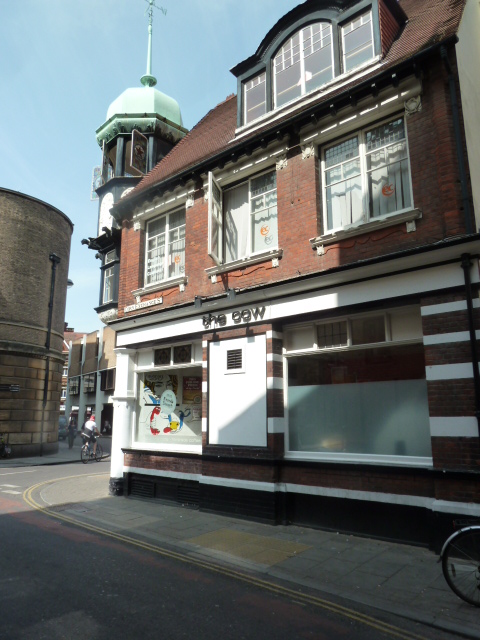
Quaint and picturesque
 

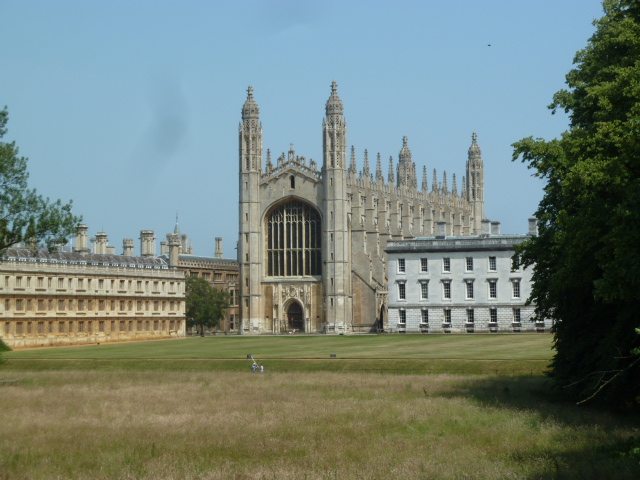
King’s College Chapel


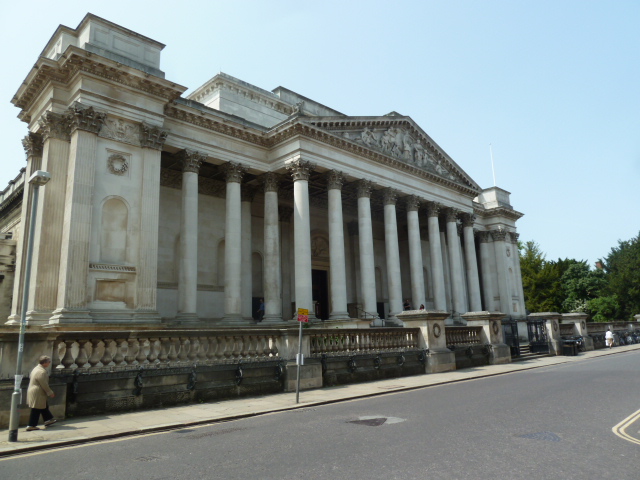
Eventually we arrived at the Fitzwilliam Museum, for which I had a definite yearning.  Ed sighed and followed me off the bus and into the building.  I promised to limit my wanderings and to keep an eye out for benches!

Fitzwilliam Museum


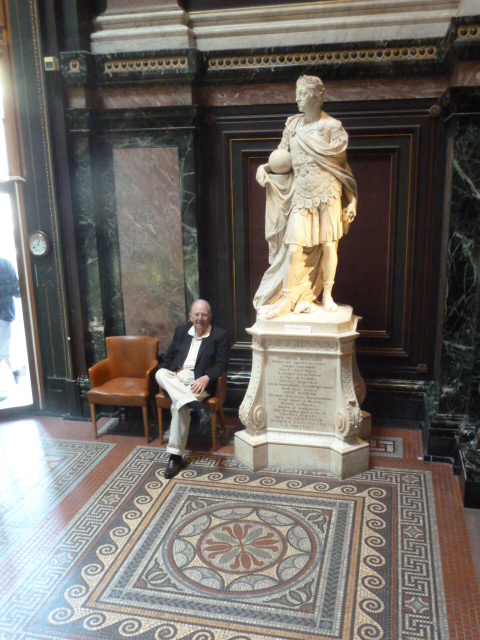
The Elegant Entrance Hall
Ed on one of the benches
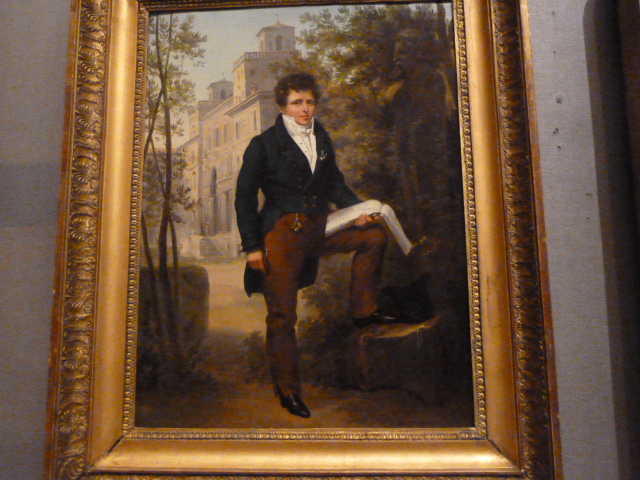
A familiar Regency Portrait, of Nicolas-Pierre Tiolier, c. 1817
by French painter Francois-Edouard Picot (1786-1868)

 
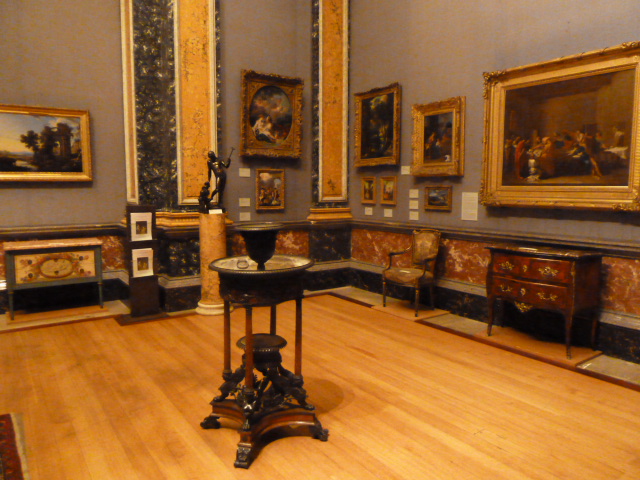
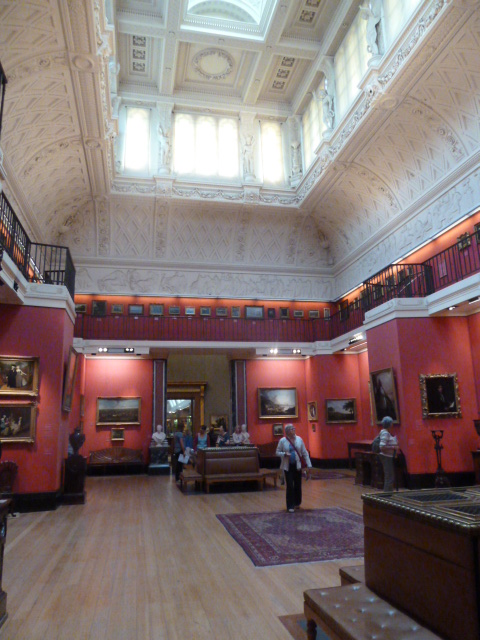
Gallery Two
 
 
Gallery Three
 
 
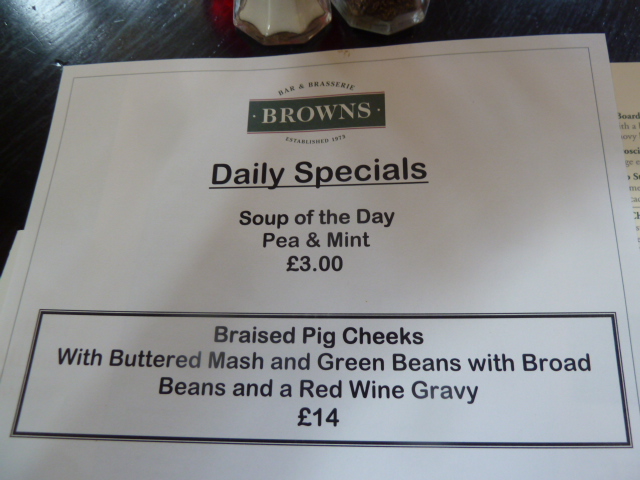
I could have stayed here for days, but creature comforts beckoned and we had sighted Brown’s, a lovely restaurant almost directly across the street, so I bid the marvelous museum good bye and accompanied the suffering hubby to the watering-hole.   


Braised Pig’s Cheeks?
 
We  settled for something far less adventurous, but quite delicious.  And after a reasonable rest, we rode the bus around the town to return to our hotel.  Soon, I was ready to set off alone, but Ed gamely came along, almost as eager as I was to get a closer view of the colleges on foot through the central city streets which were mostly pedestrian-only zones.
No cars, but lots of bicycles to watch for
 
 
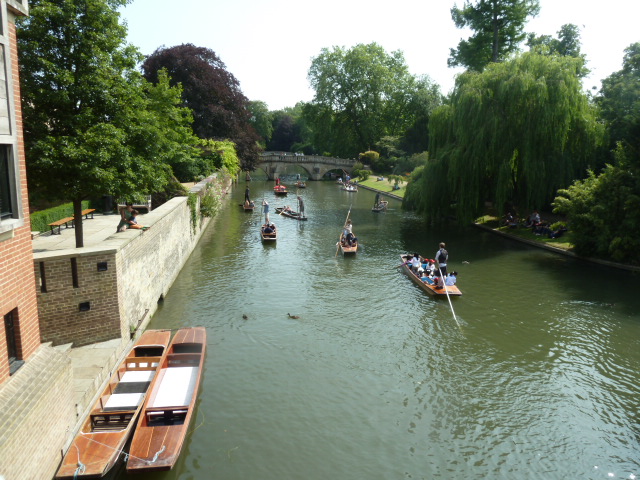
Punting on the Cam
 
 
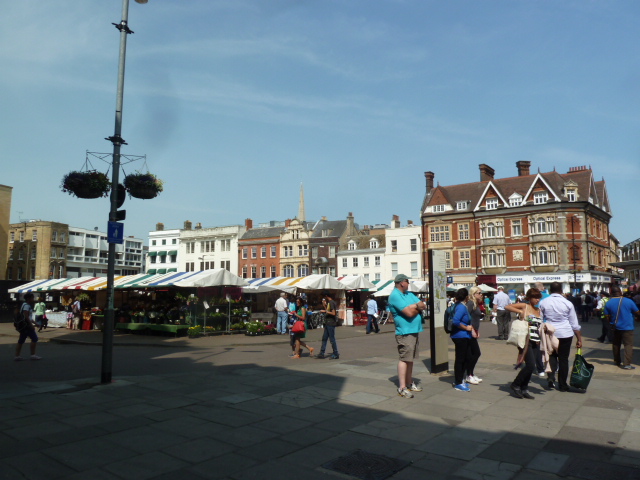
A market in the central square
 
 
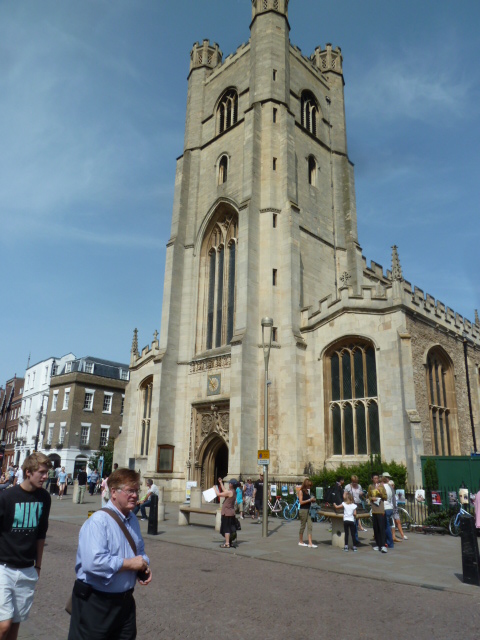
Great St. Mary’s Church, the center of Cambridge
 
 
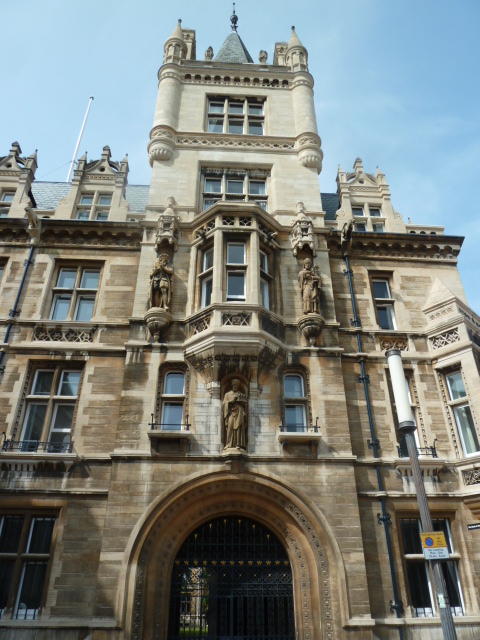
Gonville and Caius College, est. 1348

 
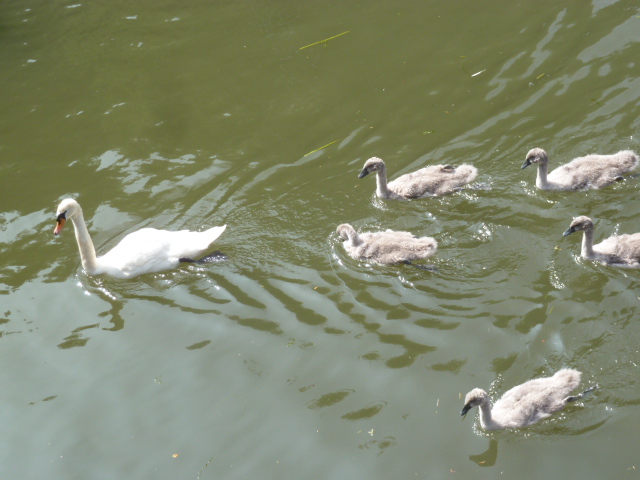
Cam River swan and her teen-age brood
 
 
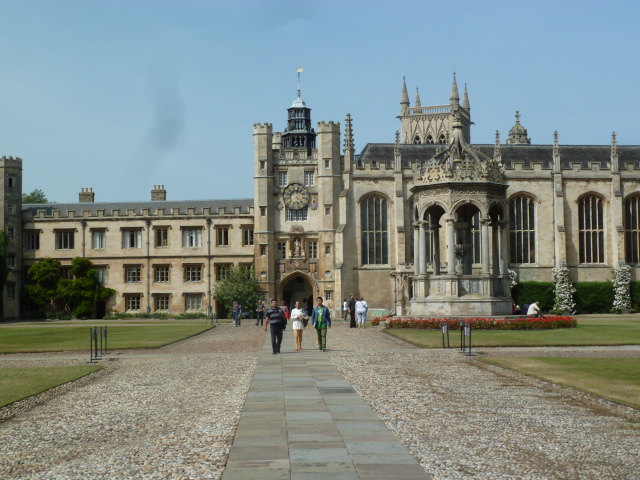
Trinity College, est. 1546
 
 
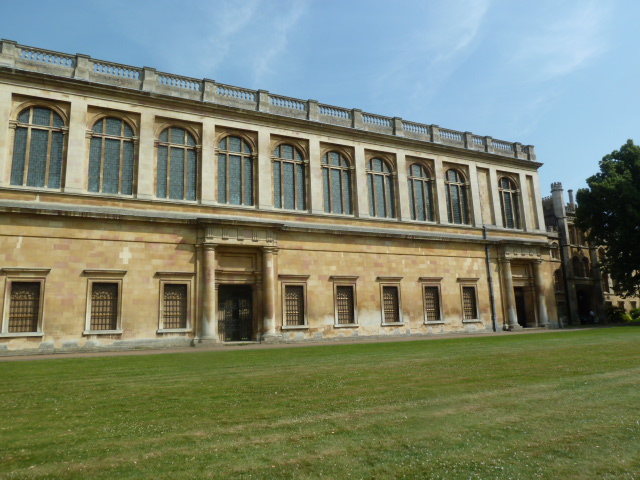
Trinity library, Sir Christopher Wren, architect
 
 
At some point in the above wanderings around the various colleges and shop-lined streets of Cambridge, Ed found a chair or a bench and some ease from his painful steps.  I don’t think I sat down until we returned to the hotel — at which point, I believe we both collapsed.
 
After all, tomorrow was another day, Scarlett, and we had another excursion — to see Houghton Revisited, the exhibition and estate of Houghton Hall.  Reports to come.
 
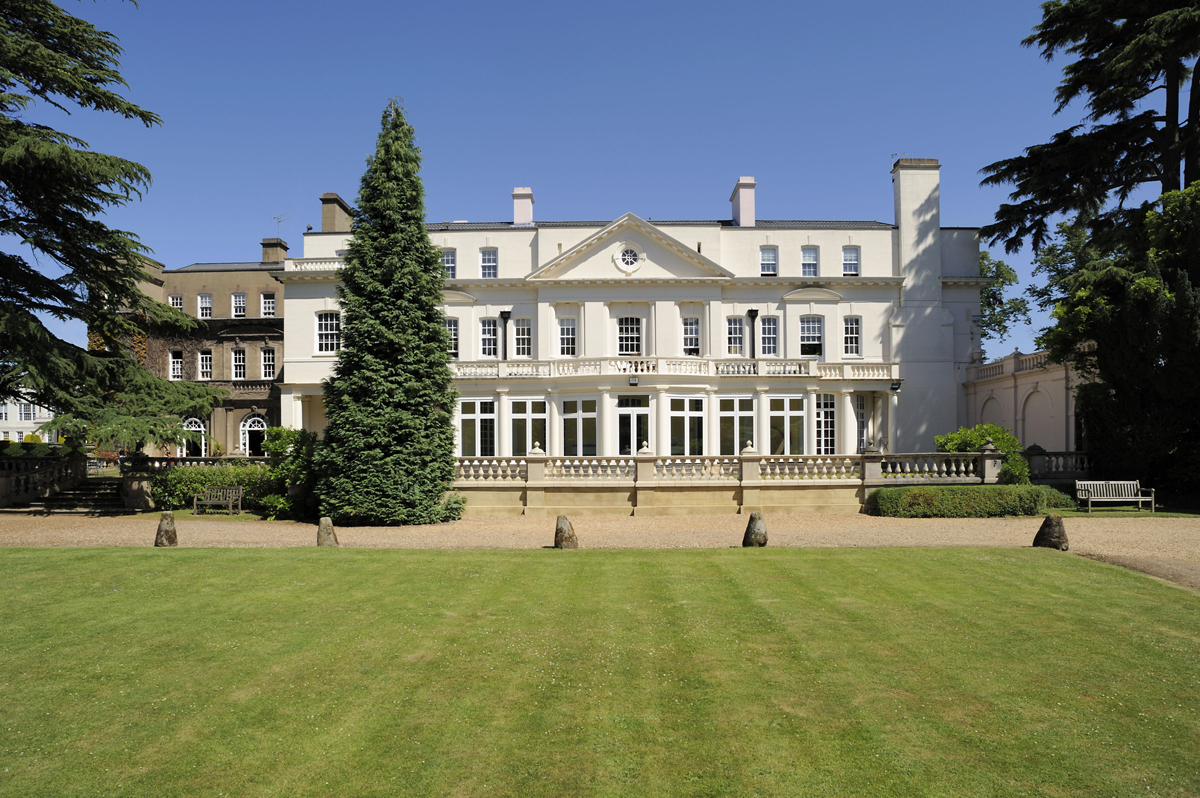
Houghton Hall, Norfolk

Video Wednesday

 
Watch the Duke of Bedford get dressed in 90 seconds


The Duke of Connaught hunts tigers in the Indian jungle – 1921


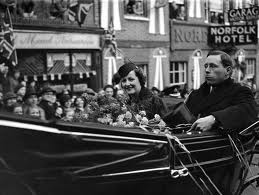
Arundels welcome the Duke and Duchess of Norfolk home after their honeymoon – 1937


64 Year old Duchess of Bedford leaves in her famous Fokker (in which she flew to India and back) piloted by Captain Charles D. Barnard – 1930


A slideshow history of the Wellington Arch, built to commemorate the
Duke of Wellington’s victory over Napoleon – it boasts the largest bronze sculpture in Europe.