NEW LONDON PASS


New London PassInfographic Provides
Virtual Snapshot of London’s Historic Royal Residences


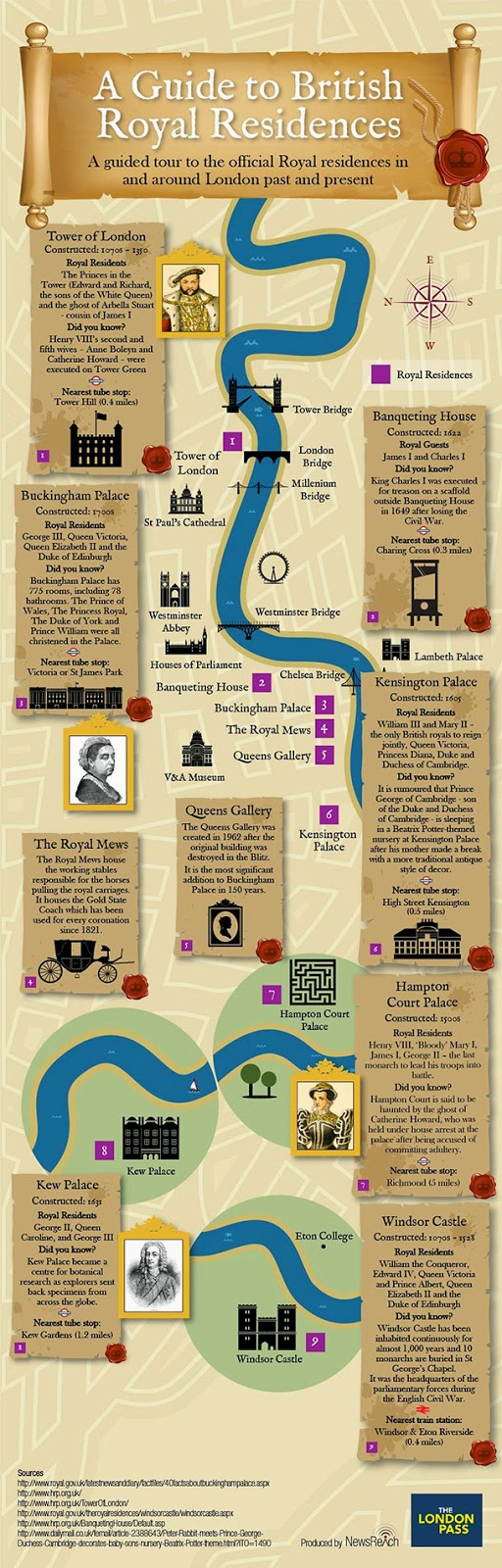
With international interest in the UK monarchy at an all-time high following the birth of Prince George, sightseeing specialist The London Passhas produced a brand new infographic offering a virtual introduction to all of the city’s historic Royal residences. The infographic explores all nine different Royal residences including BuckinghamPalace, The Tower of London and Kensington Palace, and celebrates nearly 1,000 years of fascinating heritage from Norman times to the present day.

London has a very rich and varied Royal history.  Almost all of the main Royal residences are based there and most are open for tourists to visit.  The LondonPass infographic enables visitors to the city to gain a quick insight into the stories behind each site, ensuring they choose the residences they will enjoy most on arrival in the UK’s capital.

Monarchy is the oldest form of government in the United Kingdom. Today, however, the Crown is a constitutional monarchy which means that while the sovereign is head of state, only an elected parliament has the ability to pass legislation. Each year, thousands of people meet members of the Royal Family and various events are held in Royal residences across Londonwhich boost tourism and help to draw in visitors. Buckingham Palace, the home of Queen Elizabeth II, is perhaps the most famous residence of them all. Kensington Palace has been a residence of the British Royal family since the 16th century, and today is the home of the Duke and Duchess of Cambridge, Prince George of Cambridge, Prince Harry and Princess Michael of Kent, among others.

Royal history has often had a dark side and Royal residents in the Tower of London were usually not there by choice: it was here that the young ‘Princes in the Tower’ allegedly met their end, while two of Henry VIII’s wives were executed on Tower Green.  ElizabethI was also briefly imprisoned here by her sister Mary but survived to become one of England’s greatest monarchs.

Other residences featured in the infographic, each with its own unique story to tell, are Banqueti
ng House, The Queens Gallery, The Royal Mews, Hampton Court Palace, Kew Palaceand Windsor Castle.

 The London Pass is a sightseeing card which gives tourists entry to a choice of over 60 popular tourist attractions in the city.  Once purchased, visitors simply show their card at the entrance or ticket office of any included attraction and are admitted with nothing further to pay; saving money on individual attraction admission fees and avoiding wasted time queuing for tickets.


Joining us on The Wellington Tour

Victoria here. As our previous posts have explained. Kristine and I have been gorging ourselves on tour books, maps, websites and playing with Pinterest (here) to plan a once-in-a-lifetime tour schedule for ourselves.  And FOR YOU!! So look at the website, read the fine print, and SIGN UP!

1st Duke of Wellington

With the help of Novel Explorations’ Patty Suchy, travel maven extraordinaire, we have put together an exciting — and do-able itinerary.  We plan to spend lots of time at each site, with knowledgeable guides and browsing time, all designed to maximize our enjoyment. 

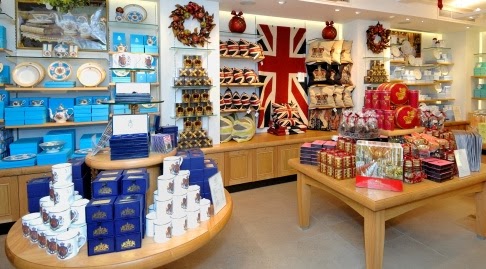
Which brings up the ever-popular subject of gift shops.  Oooooh, do we love gift shops and bookstores.  And the best part is that you rarely have to carry off your purchases.  You can either have them shipped, or make a list and order from home on their websites. Or, if you want to be thoroughly briefed on sites we’ll visit, you can order the guide books before we embark.


I have to admit that I buy a lot of postcards.  Not necessarily to send to anyone, but to be sure that my photo albums have perfect views of each spot we visit. Postcards have the advantage of being inexpensive and easy to carry.

 One of my favorite purchases made at the Buckingham Palace Queen’s Gallery gift shop was a dozen carrier bags with the palace logo.  Some of my friends still love to tell about the comments they get from people in the grocery stores who see them carrying out their Buckingham Palace bags filled with carrots, bread, and peanut butter. Seems some folks expect them to be filled with caviar and truffles.

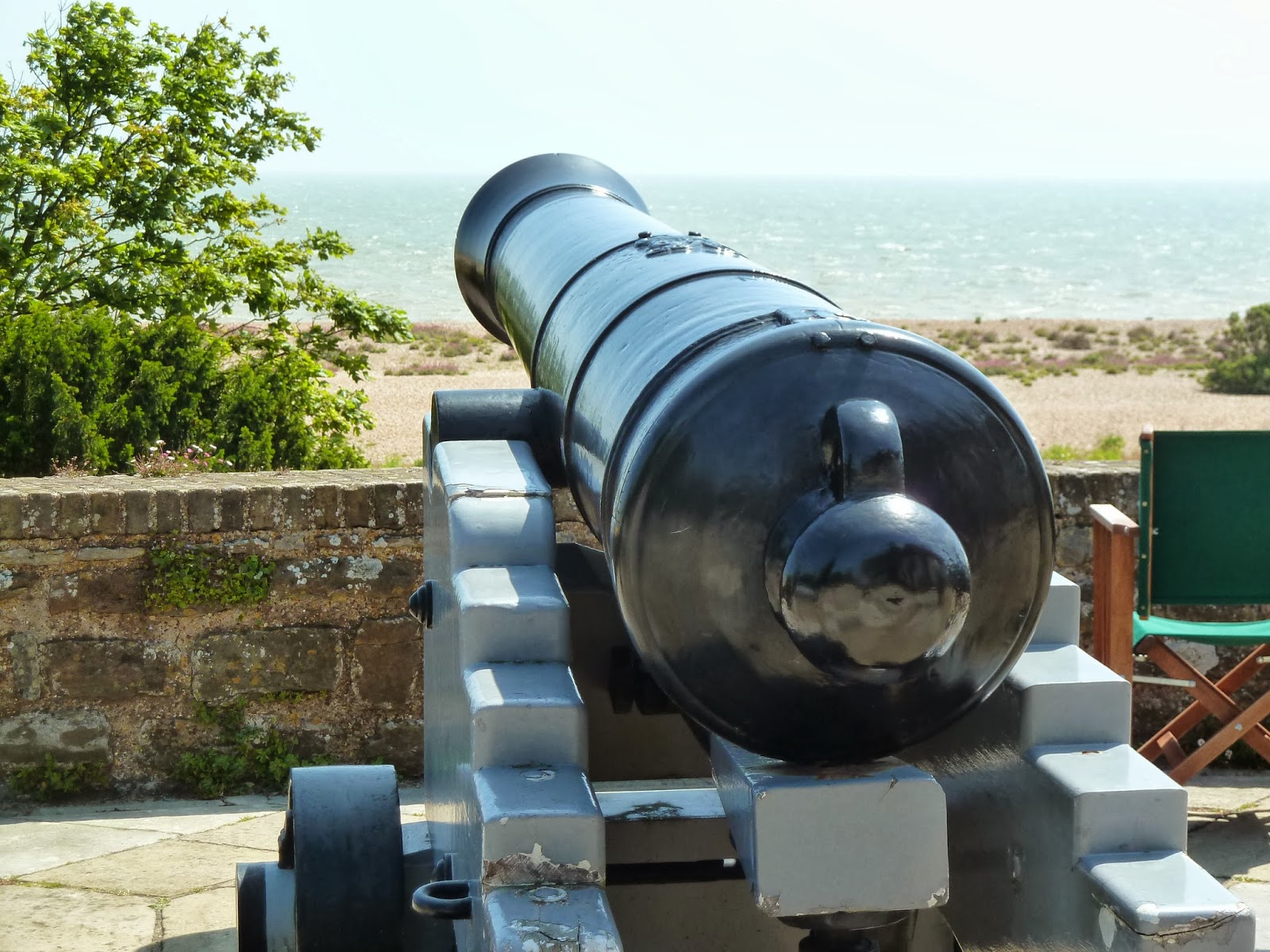
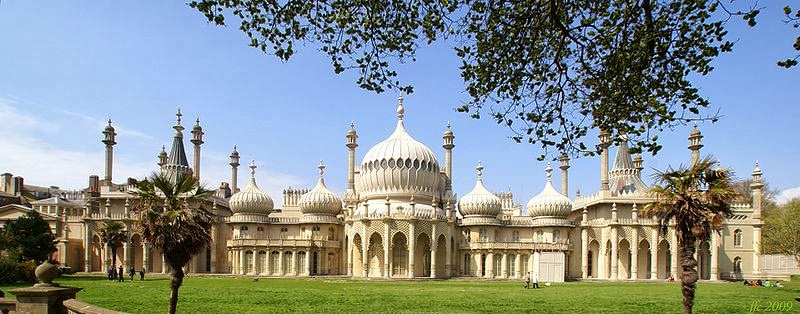
With two exceptions, I have visited all of our destinations, at least once. And I can’t wait to go back.  Who could ever get enough of Walmer Castle, its gardens and lovely view of the Channel from comfy chairs on the ramparts?  And prepare to be dazzled — and amused — by the extremes of the Brighton Pavilion.  It stands as a perfect representation of the excesses of the Prince Regent, later George IV. 

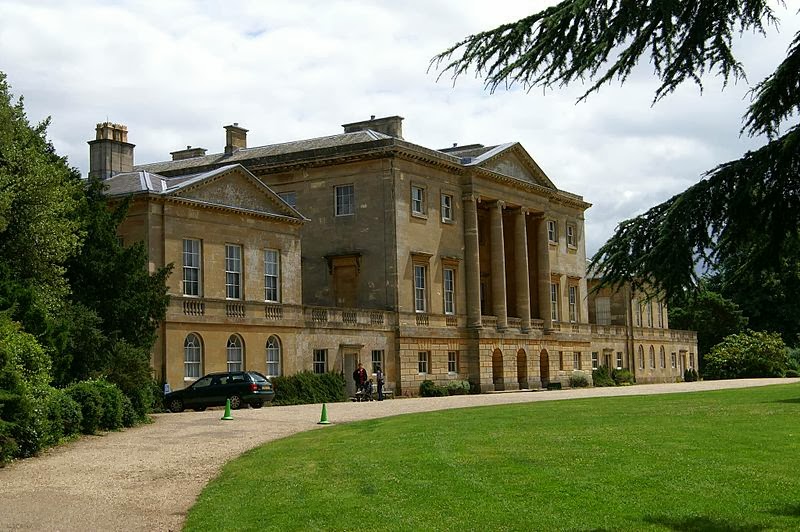
One of the most interesting things I remember from my previous visit to Basildon Park is the story of its restoration.  Major elements of the doors, windows and fireplace surrounds had been removed or damaged in the years it was given over to the war effort — and left derelict for a time. Though the house was over one hundred years old, fittings from demolished houses also designed by Carr of York, were perfectly adaptable, many fitting precisely.  In this day of so little standardization (have you ever tried using an unfamiliar mobile phone?), such precision is unusual.  But Carr did it in the mid 18th century.

Stratfield Saye, the country home of the 1st Duke of Wellington, greets you with a great statue. 

And inside, in the Hall, are the tattered battle flags of the French regiments Wellington conquered at
Waterloo almost 200 years ago. The stables still house that huge funeral car that carried the body of Wellington to his final resting place in St. Paul’s Cathedral in 1852.

The two places I have not visited will be a real treat.  Frogmore House in Windsor Park is rarely open. We will explore more about this “private hideaway” for the Royals in a future blog post.  We are lucky to be allowed in!  Like at Stratfield Saye, you can see how real people enjoyed their privacy and leisure in the comfortable rooms, quite a contrast to the Pavilion.

And of course, I am already salivating over the chance to see Highclere Castle, aka Downton Abbey.  To me, the best part of that series are the settings and costumes.  I love some of the actors, others not so much.  And darn it, too many characters have died off.  Plus, let’s face it, melodrama reigns.  Anyone for soap opera????  But who can resist that great house — or castle or abbey?

You are cordially invited to join us September 4-14, 2014!
Find Complete Itinerary and Details of the Wellington Tour Here

 .

Victoria at Houghton Hall: The Kindness of Strangers, Part Two

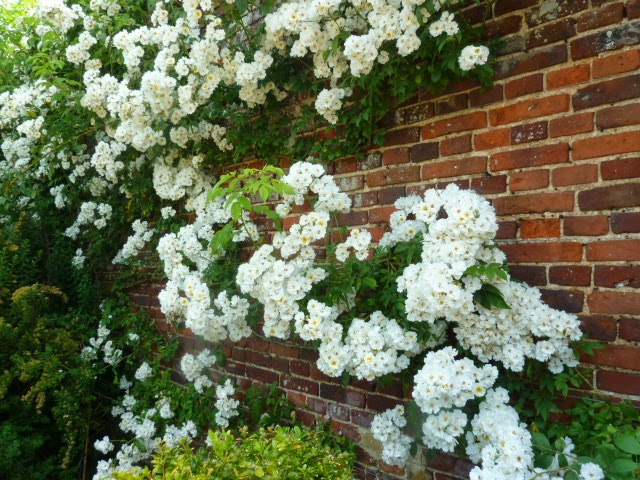
White Roses

Houghton Hall is a large estate of more than 1,000 acres.  After spending over an hour in the house, I wanted to see it all.  Ed, my husband (the one with the sore foot), was much more interested in sitting in the shade on a hot afternoon than tramping through the stables, the sculpture park, the lawns, the walled garden, and the wilderness.  But I was determined!

In a few years, there will be more shade
 
For the most part, Ed found plenty of shady resting spots.  I needn’t remind you that he was suffering,  trying not to limp, and keeping up a brave front while muttering under his breath.  I should have been more sympathetic, but when would I ever have another chance to roam around Houghton Hall?  I appreciated the fact he’d made it through the house and art exhibition, but nevertheless I simply had to see the whole thing.


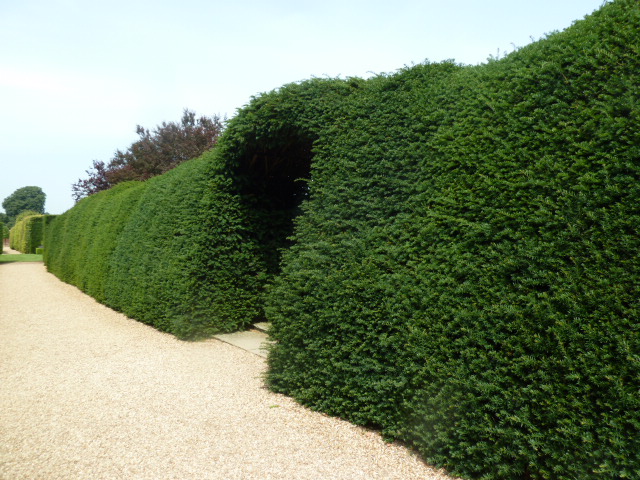
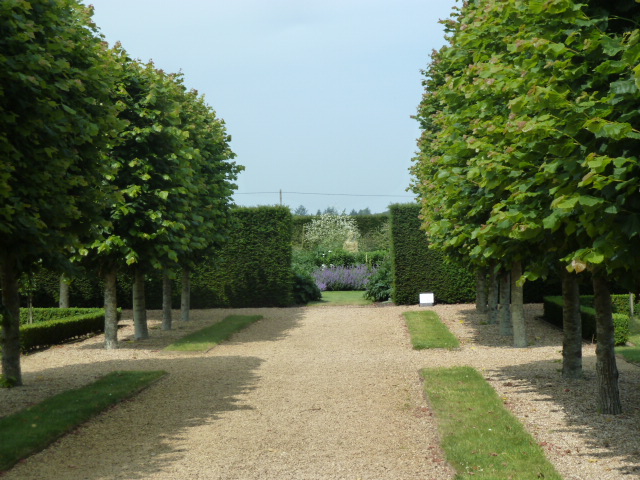
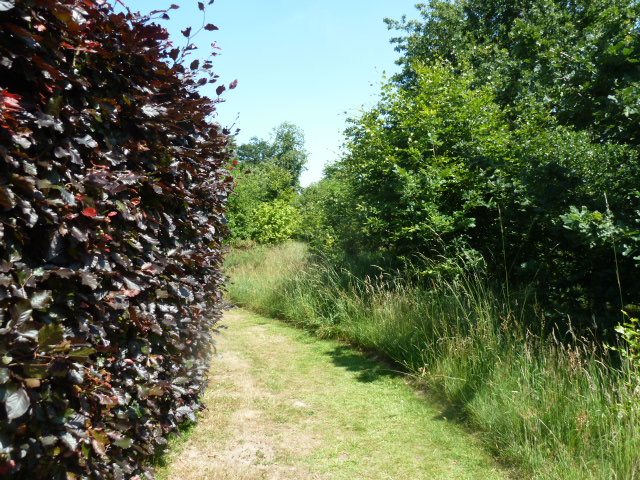
Amazing hedges
 
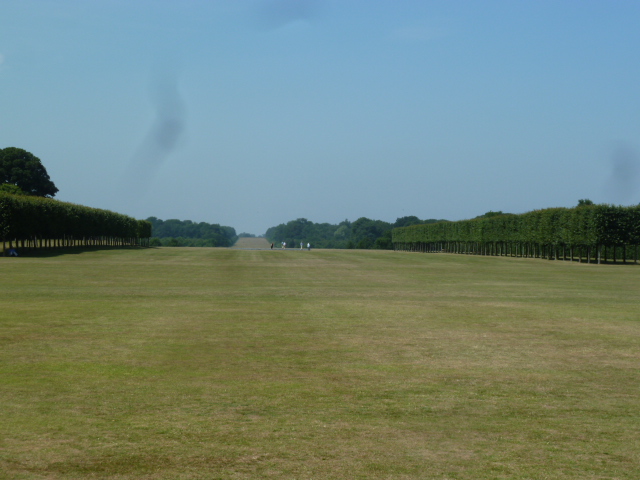
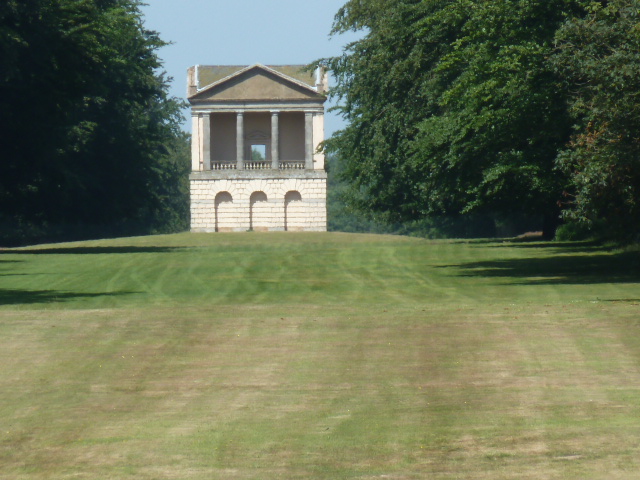
Let me be clear.  I didn’t make it through all 1,000 acres.   But I tried — sort of.  There is a wonderful folly at the end of a park view, below…I didn’t get there any closer than the photograph.
 

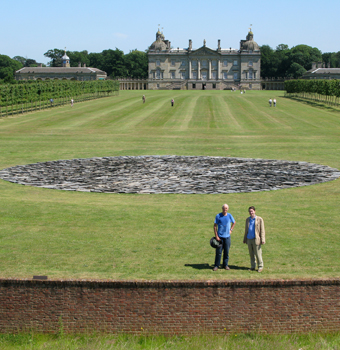
photo from the website showing the sculpture and the house
 
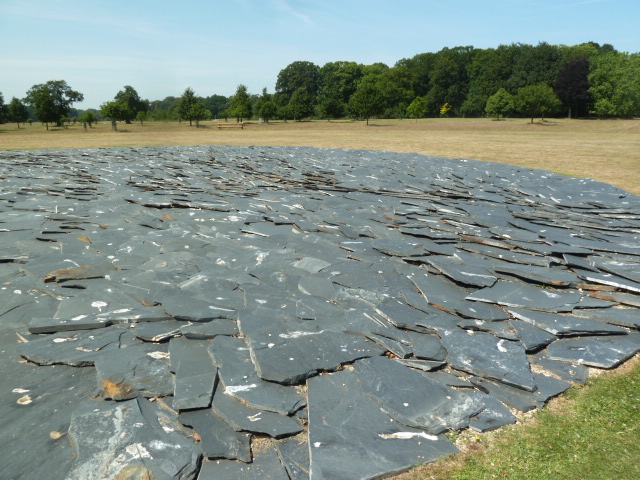
Full Moon Circle, by Richard Long, 2004
The folly I didn’t get to!


Lovely paths through the trees

 
the wilderness
 
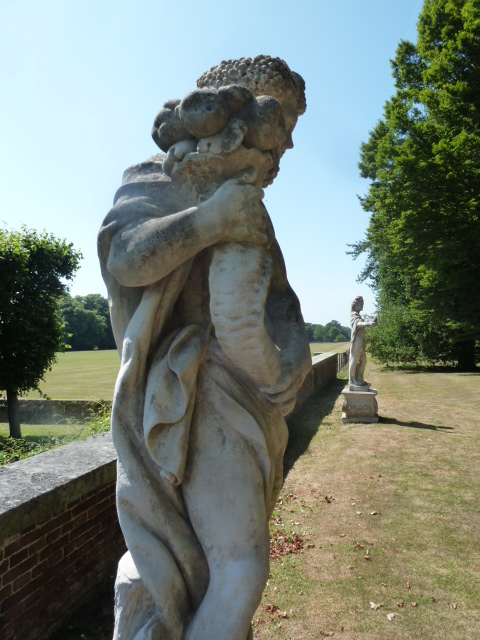
statuary

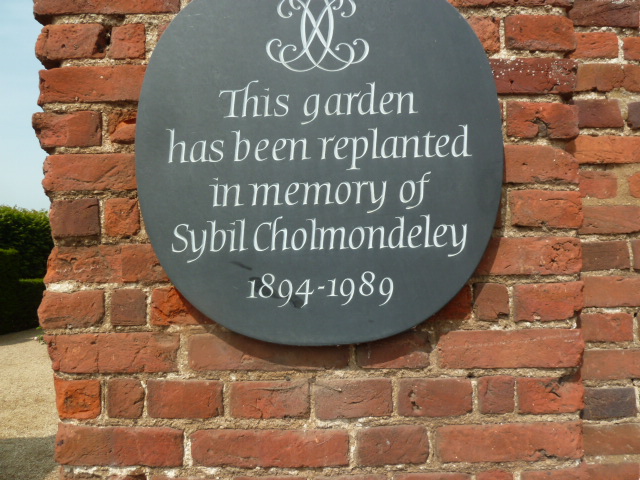
After the current Marquess of Cholmondeley inherited his title and estates in 1990, he began plans to open the house to the public and to create news gardens in honor of his grandmother, Sybil Sassoon, Marchioness of Cholmondeley (1894-1989).  She was the wartime superintendent of the Women’s Royal Naval Service (Wrens) and held other important posts.


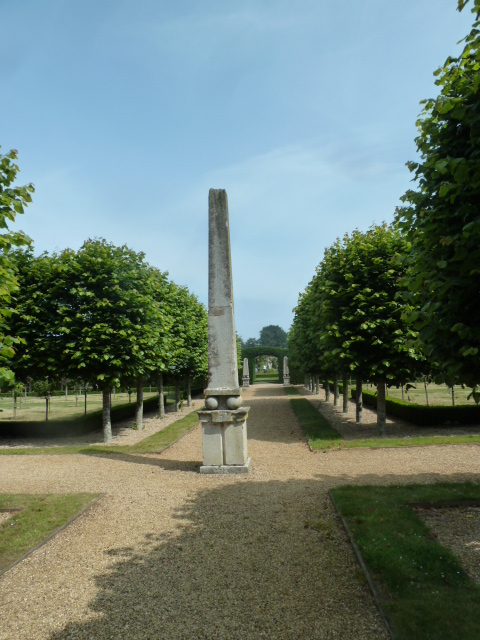
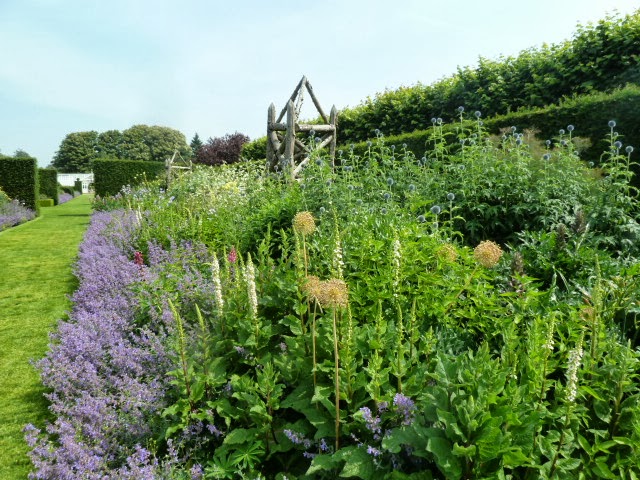
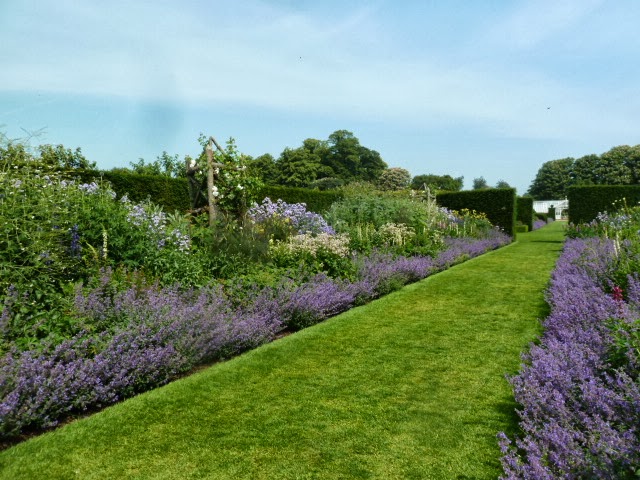
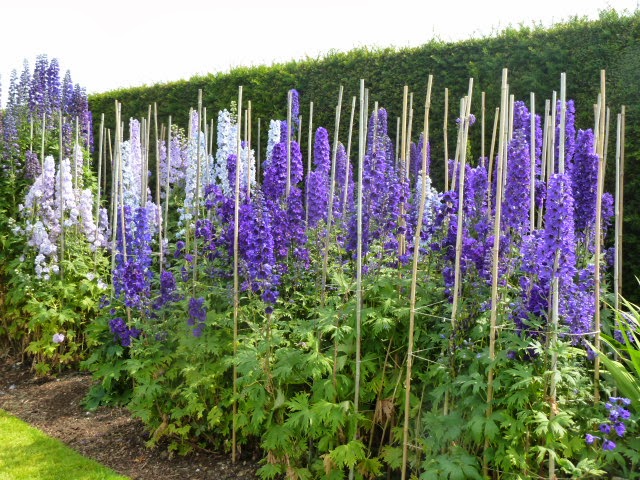
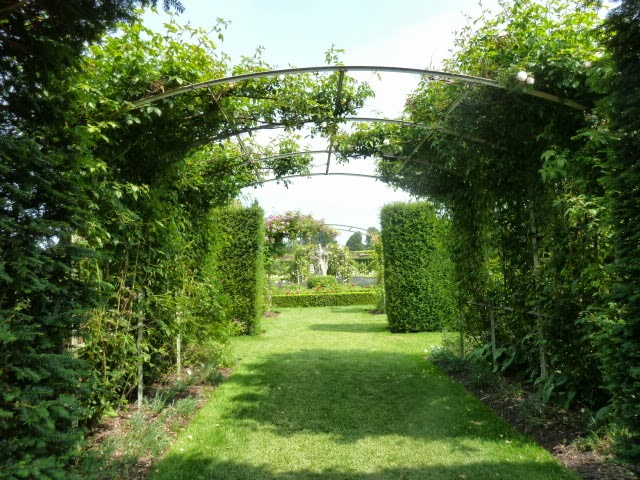
In the walled gardens are many beautiful “rooms” with various flowers and vegetables, pergolas, and sculptures, both ancient and contemporary. all joined by grassy paths and perfectly maintained. More than 150 varieties of roses can be found, though I didn’t count.


The Herbaceous Borders


,

An abundance of roses

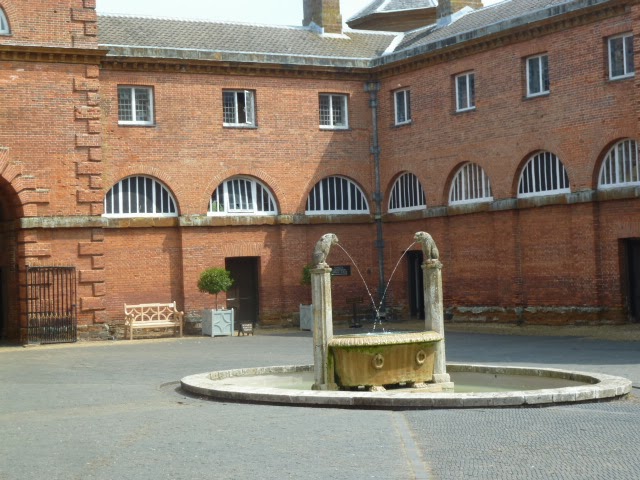
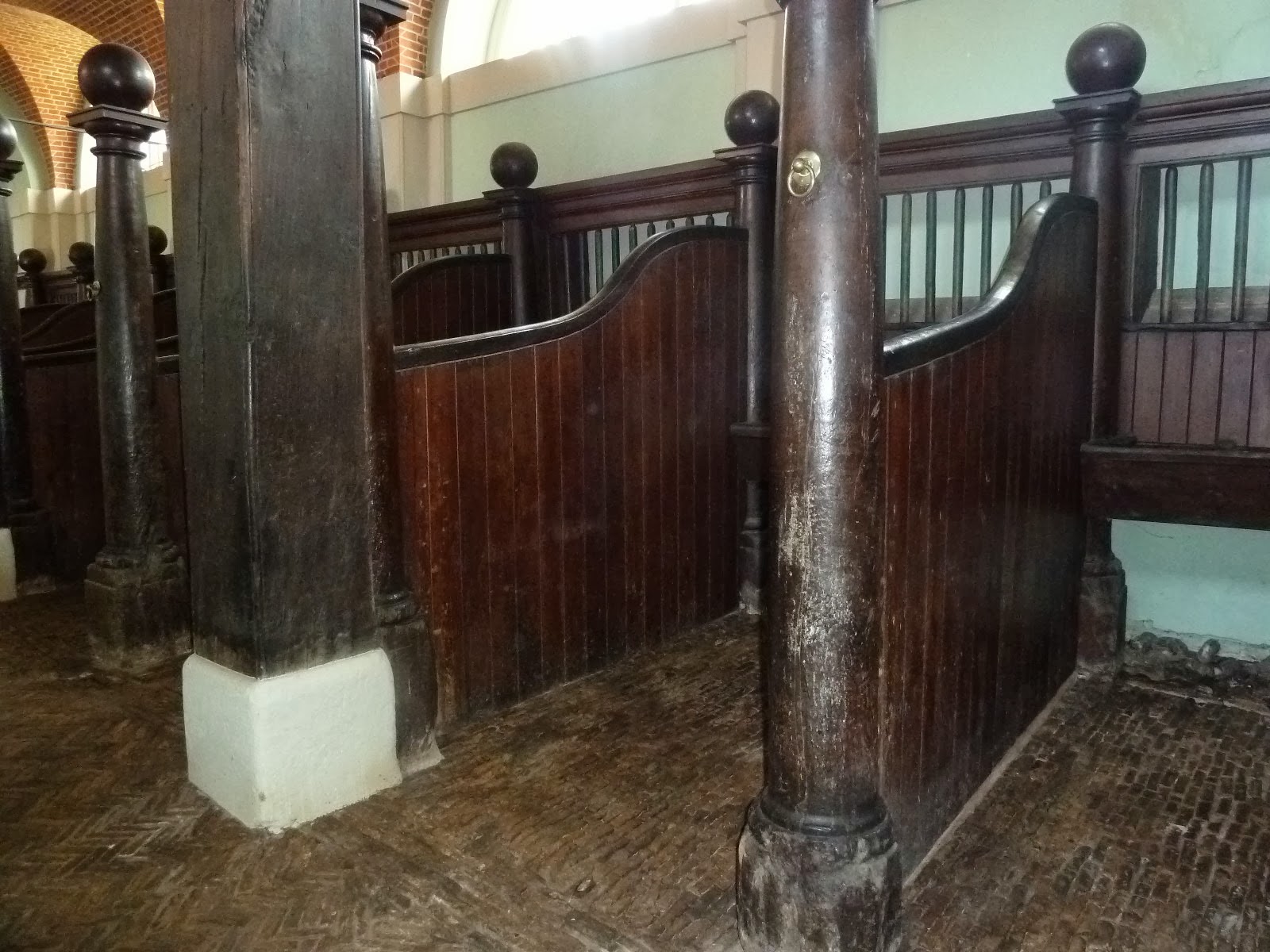
The stables date from 1735 and may have been designed by William Kent.  Now they are open for visitors, but  without their former residents!

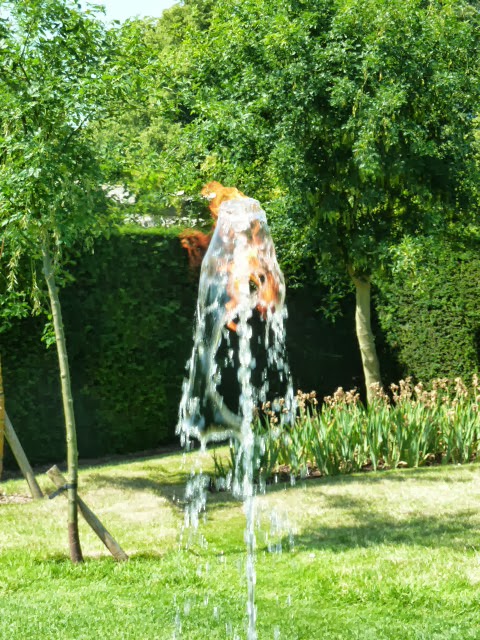
On display throughout the gardens are various contemporary works of art, including the Waterflame by artist Jeppe Hein. A rather astonishing column of water shoots into the air carrying an active fire.  I can only guess at how it is accomplished; it’s certainly unique among fountains I’ve seen anywhere.


In addition to the Hall, the pictures always there and those on special display, the gardens, the sculptures, and the stables, we enjoyed the tea room and the fantastic collection of the sixth Marquess’s  model soldiers, in which no pictures were allowed, sadly.  Those displays alone would be worth the trip!

HH114
Battle of Waterloo display
 
Visit the Houghton Hall Website here.
 

To finish off our day at Houghton Hall, our taxi driver appeared right on time and drove us to the Victoria Hotel at nearby Holkham Hall, where the next adventure awaited us.  Our confidence in the Kindness of Strangers was indeed fulfilled.  Ed was delighted to have a restful night, but I wonder how much walking he anticipated for the next day?  Maybe he had nightmares!!

A Guest Post – “Better it is to Get Wisdom than Gold.”

By Guest Blogger Mandi


Images and the journey itself courtesy of amitours.co.uk

Recently I took a ride in a cab through the Borough of Kensington and Chelsea. I was tasked with producing photos of the taxi in action; an out and about photo shoot. South Kensington in particular is an area I felt I was already very familiar with having gotten to know it well during my time at the Royal College of Art, where I’d studied two years previous. I was quite wrong! It’s quite interesting how used to your surrounding environment you get without ever actually paying it any particular attention. At the time I would walk around with my mind fixed on a destination, not necessarily absorbing myself with what was around me in the present.

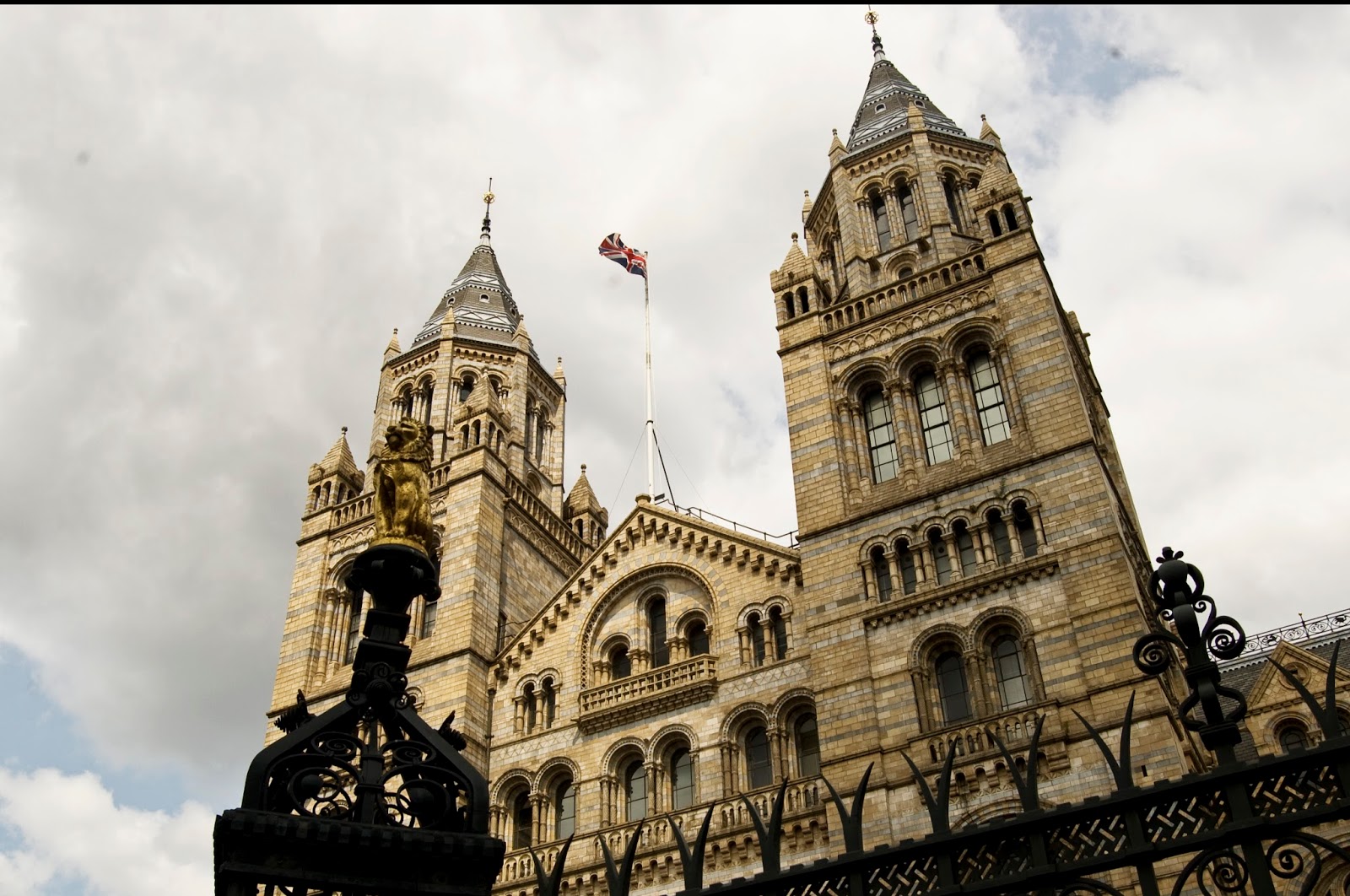
I already understood the anatomy of the area. The Royal college of Art, the Royal College of Music, the Imperial College, the V&A, the Natural History Museum (above), the Science Museum and the Royal Albert Hall. To me these were just all convenient nearby attractions. I had never thought of the reasoning for their close proximity until researching the area for the photo shoot. So here we are, the reason.

 Albertropolis!

In the summer of 1851 the Great Exhibition brought a celebration of creativity – the best of human creativity – to this small borough of London. Pulling together two realms that previously could not have been further apart: Science and Art. 

 
The Victoria and Albert Museum
 
 
The reconciliation between the two began at The Great Exhibition in nearby Hyde Park, then shortly after Prince Albert pushed for this area to be bought by the Royal Commission with the profits made. This area was then built up to encourage a community where science and art could coexist, if not crossover. The nearby museums could aid the practitioners of science and art alike.

Of course this was all built up overtime and a lot of the original institutions have long since vanished.  Interestingly the central axis of the Imperial College, the Royal Albert Hall and the Albert memorial are all aligned, appearing set to stay. This slight detail that goes unnoticed to the everyday visitor as it is only viewable from the Queen’s Balcony (rarely open to the public). The axis ties together the marriage of art and science: an arts institution, a science institution to the facilitator: Price Albert.

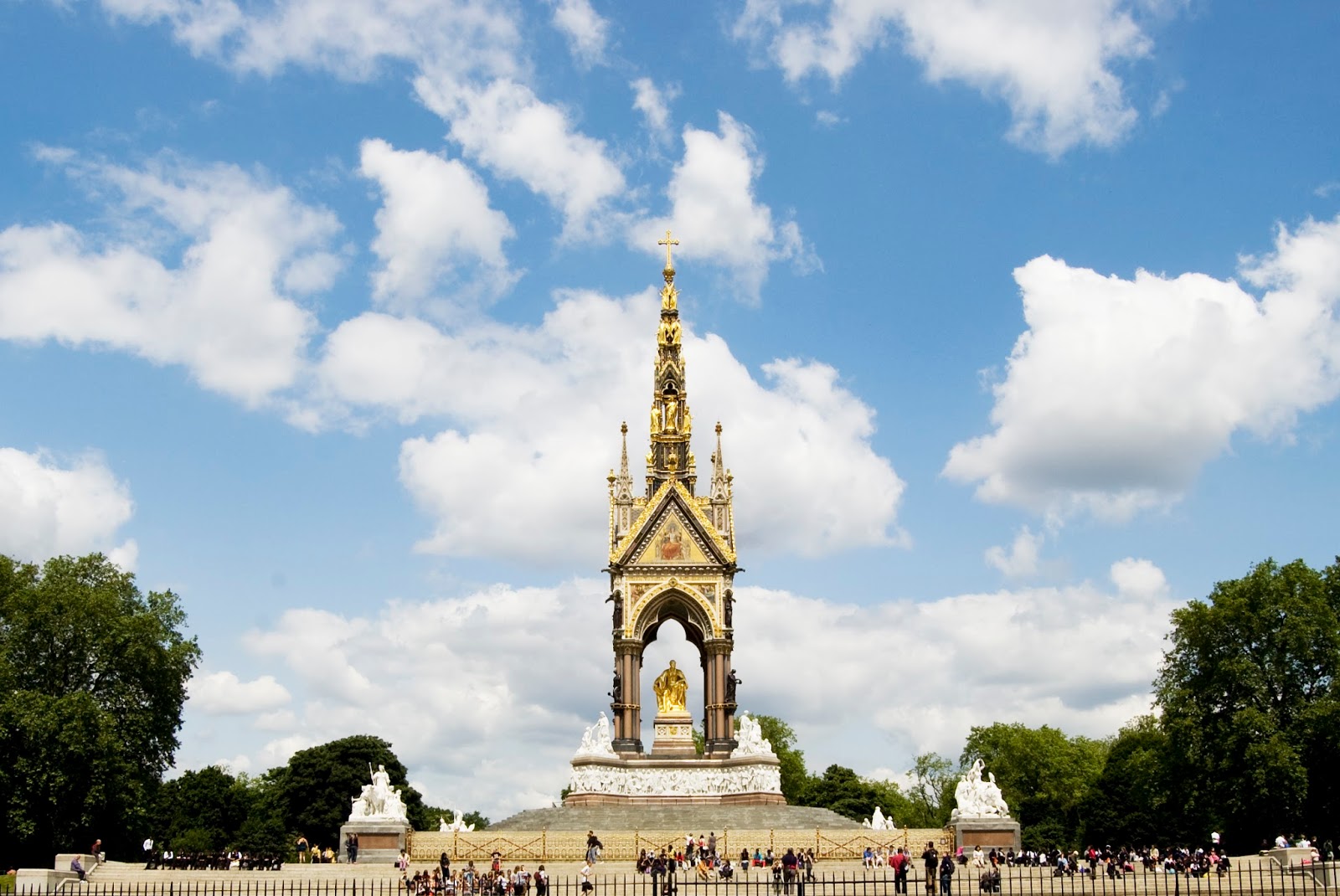
The Albert Memorial

“Better it is to Get Wisdom than Gold”

The memorial was commissioned ten years after The Great Exhibition because of Prince Albert’s sudden death in 1861. The area was affectionately named Albertropolis, although this is more or less forgotten these days as the area has become known as South Kensington. It’s a shame as we have a lot to owe him. Prince Albert was an advocate of self learning and encouraged the opening of museums and libraries to the public – before which these were places of the academic, the researcher. This was a truly ground breaking endeavour; one which we now take for granted.

Without Prince Albert I may have not received the education I did in one of the world’s most densely populated and successful cultural quarters. 
 
Visit the Amitours website, the friendliest taxi fleet in London, for all your taxi, minicab and airport transfer needs.

The Wellington Tour – Tea, Anyone?

Once Victoria and I had hammered out the itinerary for The Wellington Tour, we handed it over to Patty Suchy of Novel Explorations and asked her to work her travel agent magic as far as pricing and logistics were concerned. Before long, it was time for Victoria and I to call Patty and learn how she’d made out with the plans.

Patty:  Hello?

Victoria: Hey, Patty, it’s Kristine and Vicky.

Patty:  Well hello! You’re together?

Victoria: Yes, we’re together and ready to hear how you made out.

Patty:  I’ve got to tell you, this hasn’t been easy. You two picked several spots that are terribly difficult to get into.

Kristine: What do you mean, difficult to get into? Are you referring to Stratfield Saye, which seems as though it’s only open one day a year?

Patty: Yes, and Frogmore House, which is also rarely open. Not to mention Highclere Castle.

Victoria:  What about Highclere Castle?

Patty: It seems that since the all the Downton Abbey hoopla reached a fever pitch, they’ve been inundated with visitor and tour requests. They’ve had to limit visiting times and then there’s having to work around the shooting schedule for the show itself. They’re having to restrict admissions and they’re already booked up for months ahead of time. It’s very difficult.

Kristine: Are you saying we can’t get in?

Patty: No. I’m telling you that I’m still working on getting all the stars to line up as far as opening days for several of the places you want to include. The rest of the tour is no problem, but these three places are tricky. I’m still waiting to hear back from the people at Highclere.

Kristine: I was thinking it might be nice to have tea while we’re there.

Patty: Tea? You can have all the tea you like. They have tea rooms on site. Tea shouldn’t be problem.

Victoria: No, we meant an afternoon tea in the house or gardens. You know, little sandwiches and cakes and things.

Patty: Well, I’ll ask when I speak to them, but a special, dedicated tea service for the tour group might be costly.

Kristine: We’ll just tack it on to the tour price. It’s something Vicky and I would like to do and I think everyone would really enjoy it. It’s one of those once in a lifetime things.

Patty: I agree, it would be fantastic. Alright then, I’ll ask when I speak to their representative. Do you have any idea on dates for the tour?

I looked at Victoria, who shrugged her shoulders in reply.

Kristine: Let’s try to shoot for sometime when it won’t be freezing cold.

Patty: I’ll keep that in mind, but remember that one of the tours you and I did together a few years ago was in June and we all froze.

Kristine: Who could forget? Why don’t you see how the opening times work out and we’ll talk again in a few days?

And so a few days went by, with Victoria and I waiting on pins and needles, before we called Patty again.

Patty:  Hello?

Kristine: Hey, it’s Kristine and Vicky.

Patty:  Well, I have to tell you, I’ve had a rough few days trying to work all of this out. It’s been a struggle.

Victoria: I can appreciate that and we do appreciate all you’ve done, Patty.

Kristine: What’s the bottom line?

Patty: Bottom line is we keep Frogmore, Stratfield Saye and Highclere Castle on the itinerary.

Kristine: You’re a star!

Patty: But there isn’t going to be a Downton Abbey tea.

Victoria: There’s isn’t?

Patty: No. It’s just too expensive.

Kristine: How expensive?

Patty: Over a thousand dollars.

Kristine: So? What’s that, like fifty dollars added to the tour price per person?

Patty: That is the per person price.

Victoria: What’s the per person price?

Patty: Nearly a thousand dollars. Per person. Not in total.

Kristine: Are you telling me they’re charging at least twenty thousand dollars for afternoon tea? Who’s serving it, Bates and Mr. Carson themselves?

Patty: Mr. Bates can’t serve tea. He’s got a gimpy leg.

Victoria: For twenty thousand dollars, I’d better be seated next to Maggie Smith.

Patty: There are always the tea rooms.

Kristine: I suppose. More importantly, what did you hear from Stratfield Saye?

Victoria: Maybe we can have tea there with the Duke of Wellington. He’d probably charge less than twenty thousand dollars.

Patty: We can get into Stratfield Saye. Not a problem. However, in order to get into all of these places on the same tour, we’d have to schedule the Tour for September.”

Victoria and I looked at one another, trying to work out the pitfalls of a September Tour. We couldn’t come up with any.

Victoria: What’s wrong with September?

Patty: Nothing’s wrong with September. It’s really an excellent time to visit England. It just means that you two wouldn’t have a choice of the other months.

Kristine: You got anything planned for next September?

Victoria: Not that I can think of at the moment. And if I did, I’d rearrange it.

Kristine: We have no problem with September.

Patty: Good. I’ve blocked the tour out for the fourth through the fourteenth.

Victoria: Sounds good.

Patty: Okay. Now that we have our dates, I’ll work on firming up all the details.

We hung up and it wasn’t till much later that I realized the last day of the Tour would coincide with the last day of the Duke of Wellington’s life – September 14, 1852.

Click Here For Complete Details on